Free Printable Multiple Representations Worksheets for Grade 9
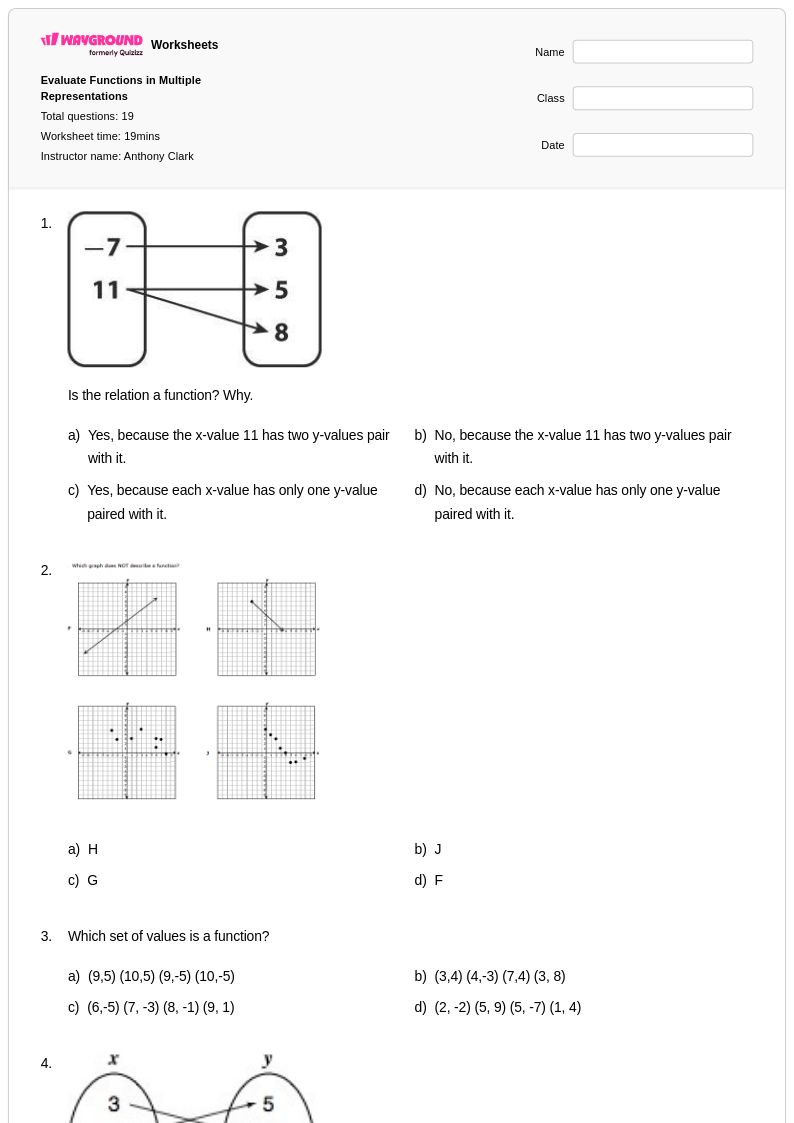
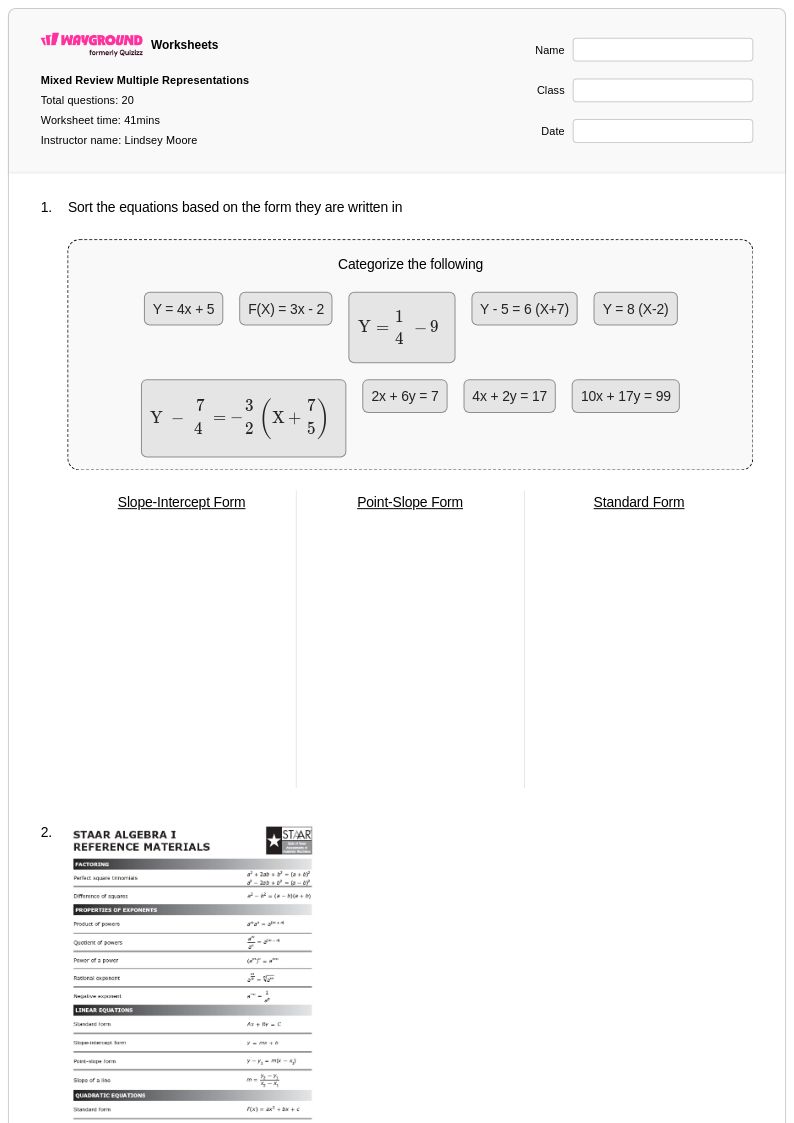
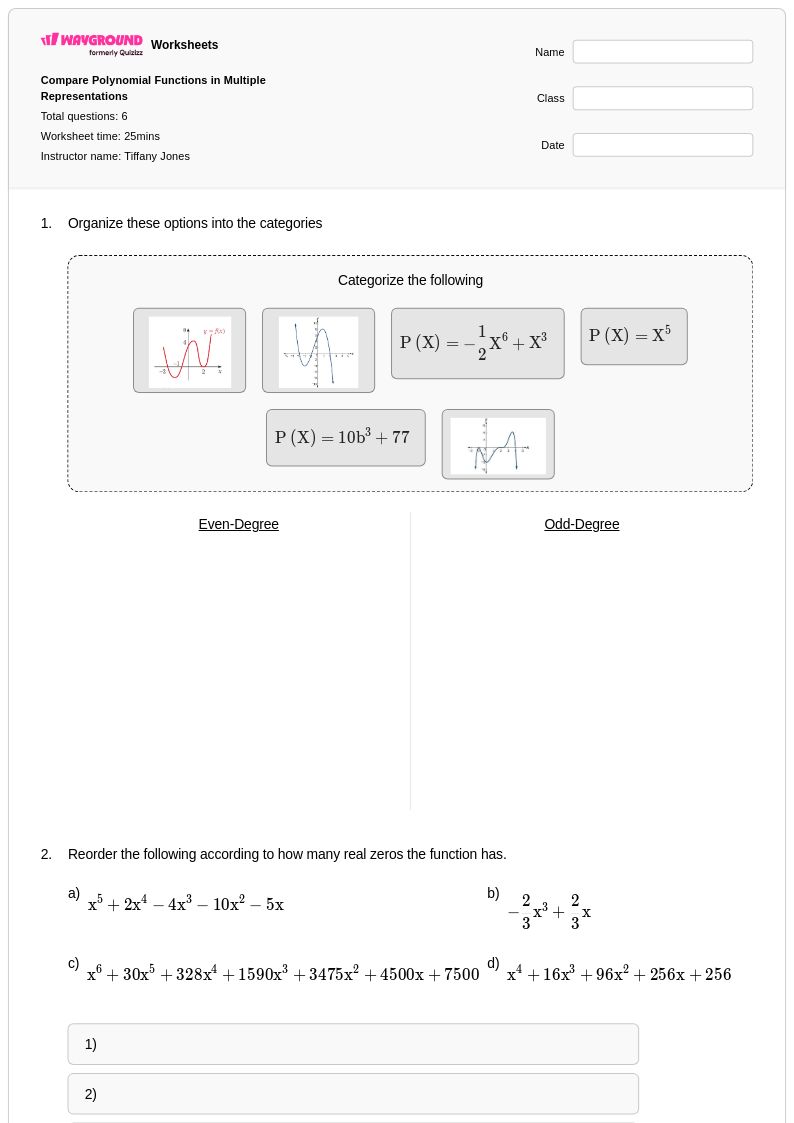
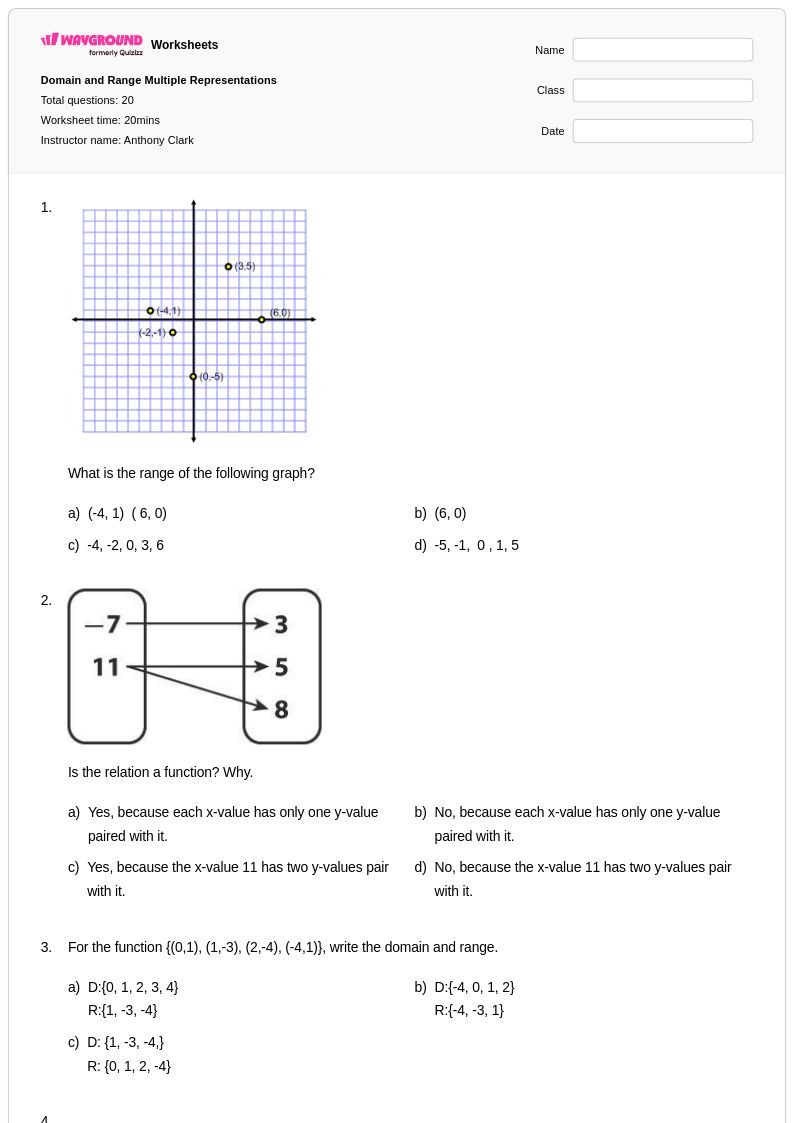
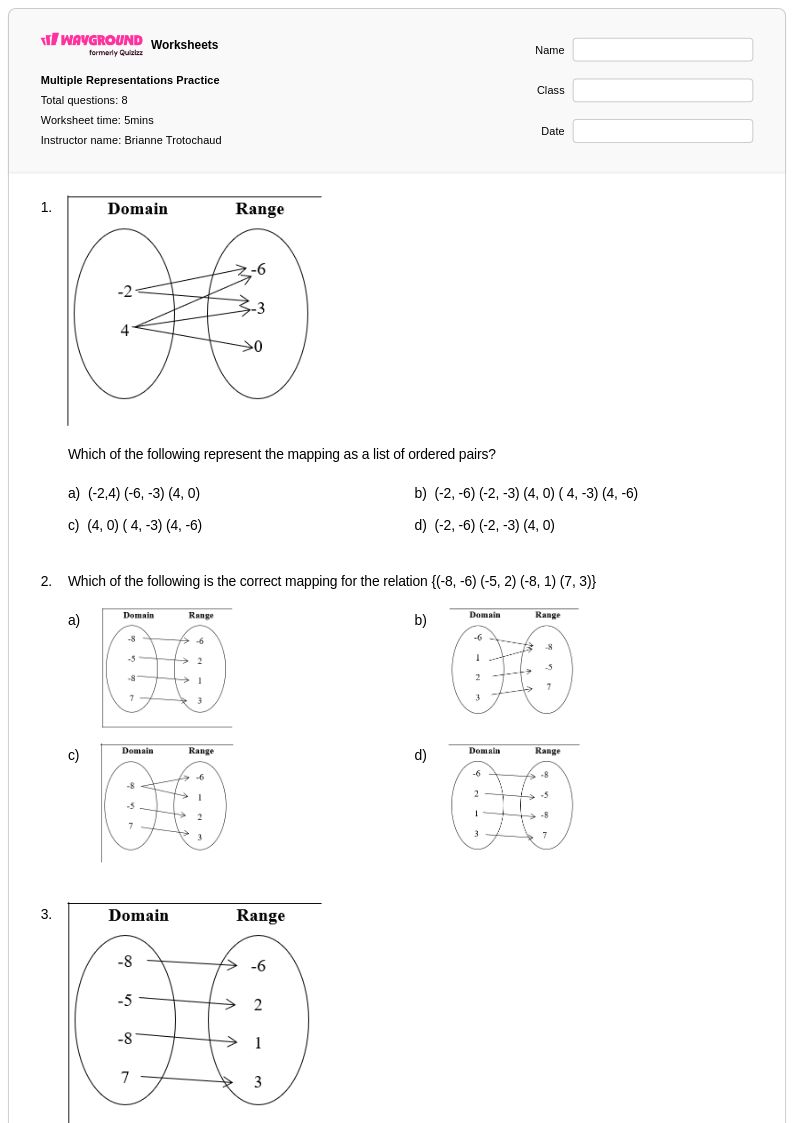
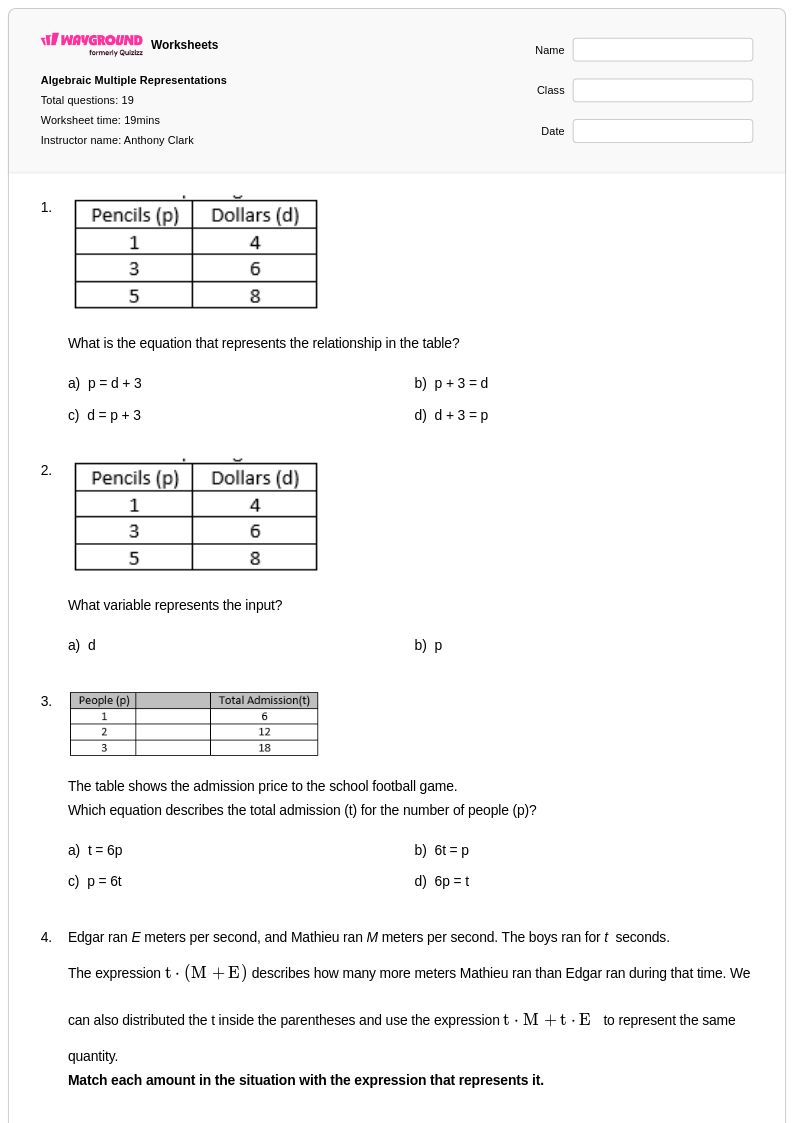
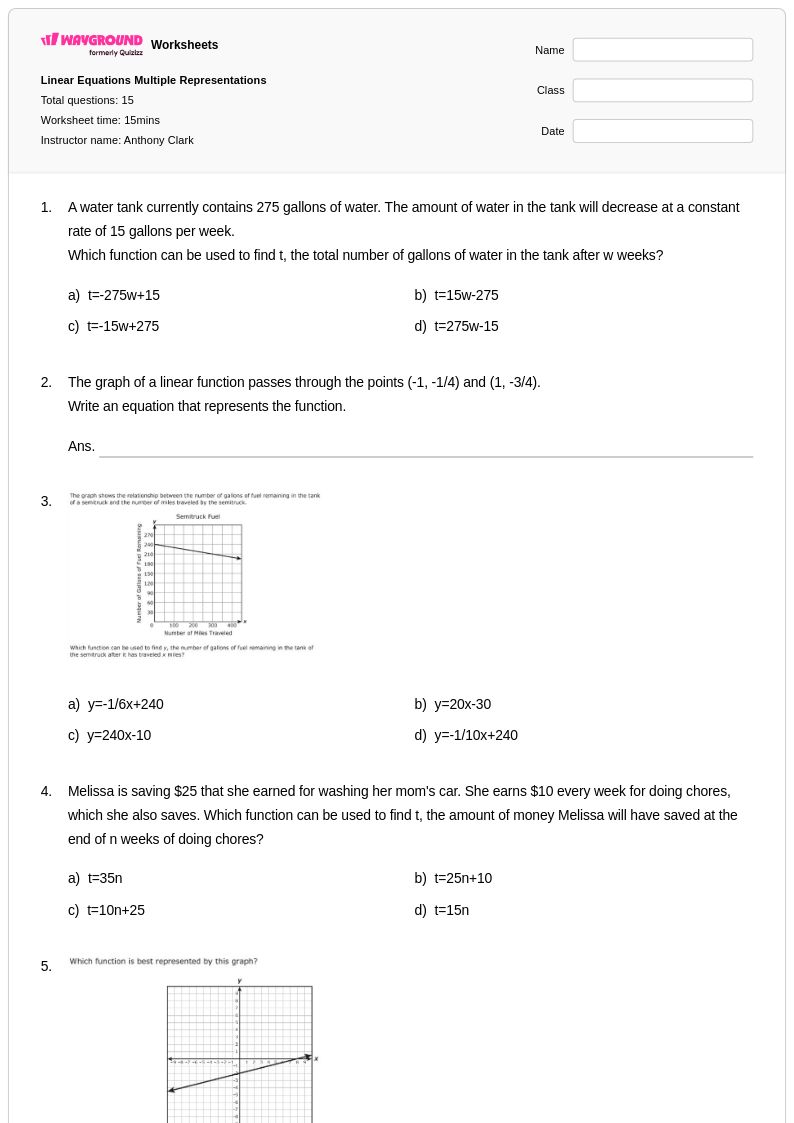
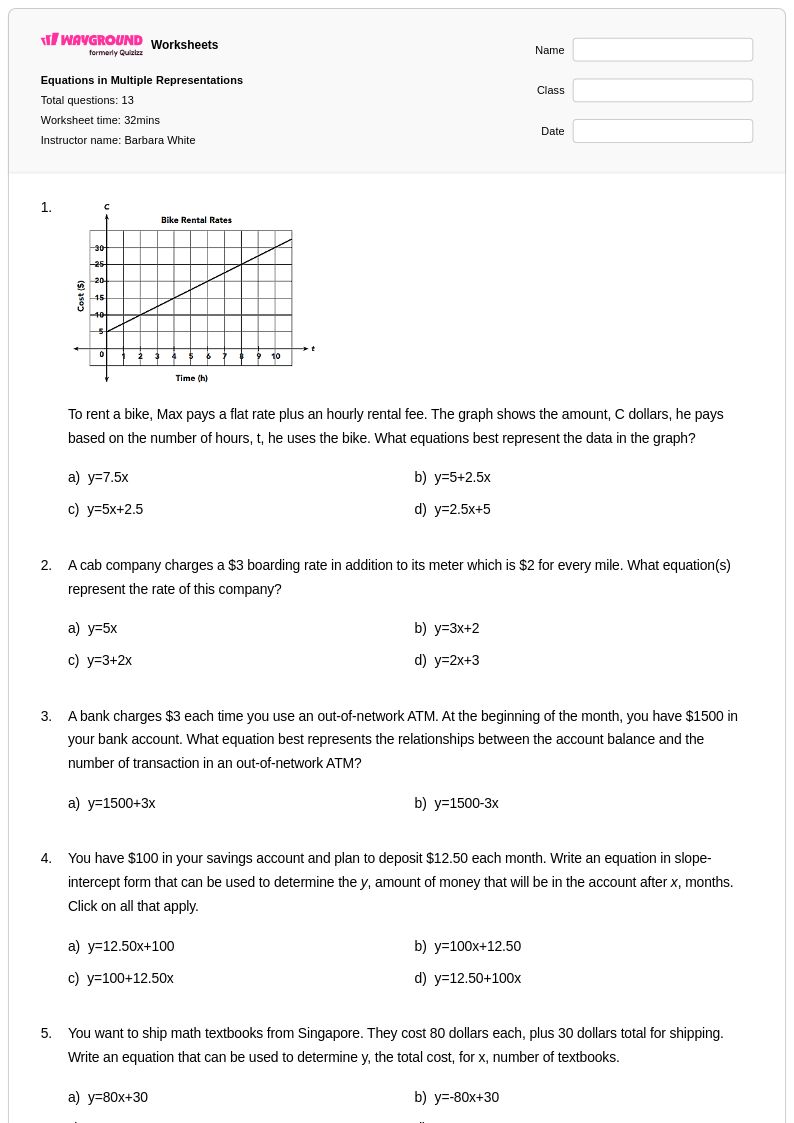
Explore Wayground's free Grade 9 multiple representations algebra worksheets with printable PDFs, practice problems, and answer keys to help students master expressing mathematical relationships through tables, graphs, equations, and verbal descriptions.
Explore printable Multiple Representations worksheets for Grade 9
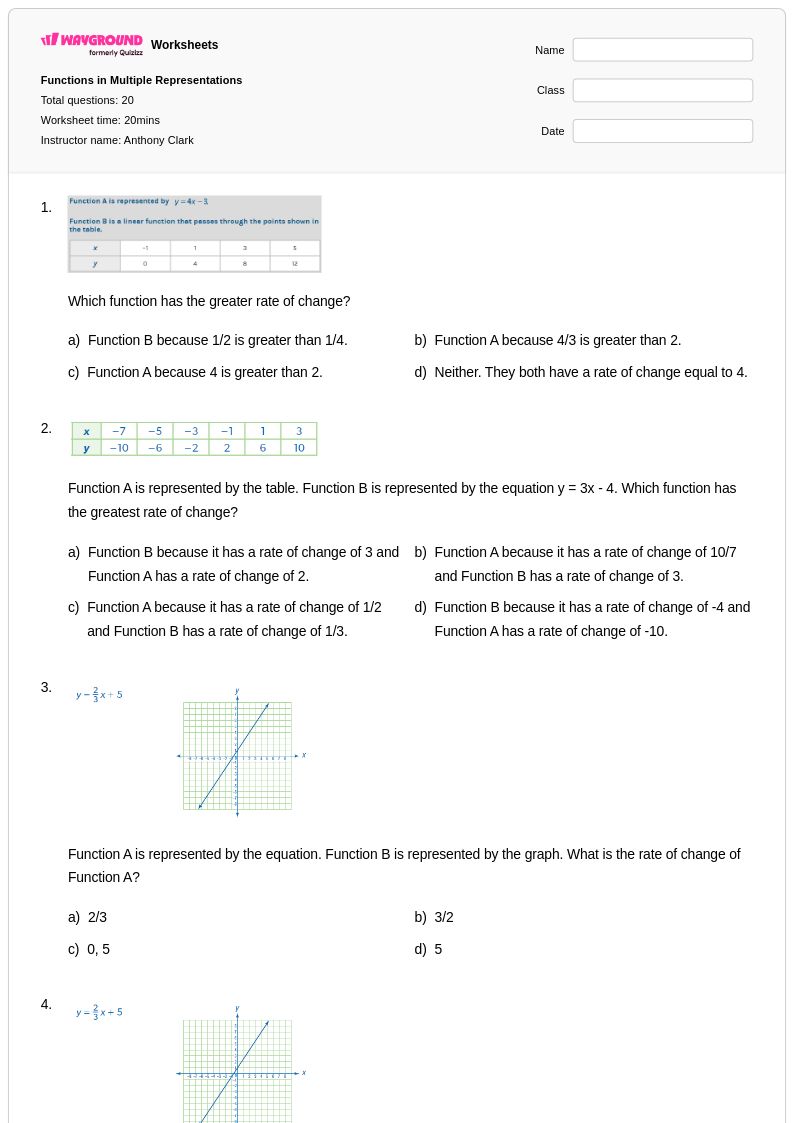
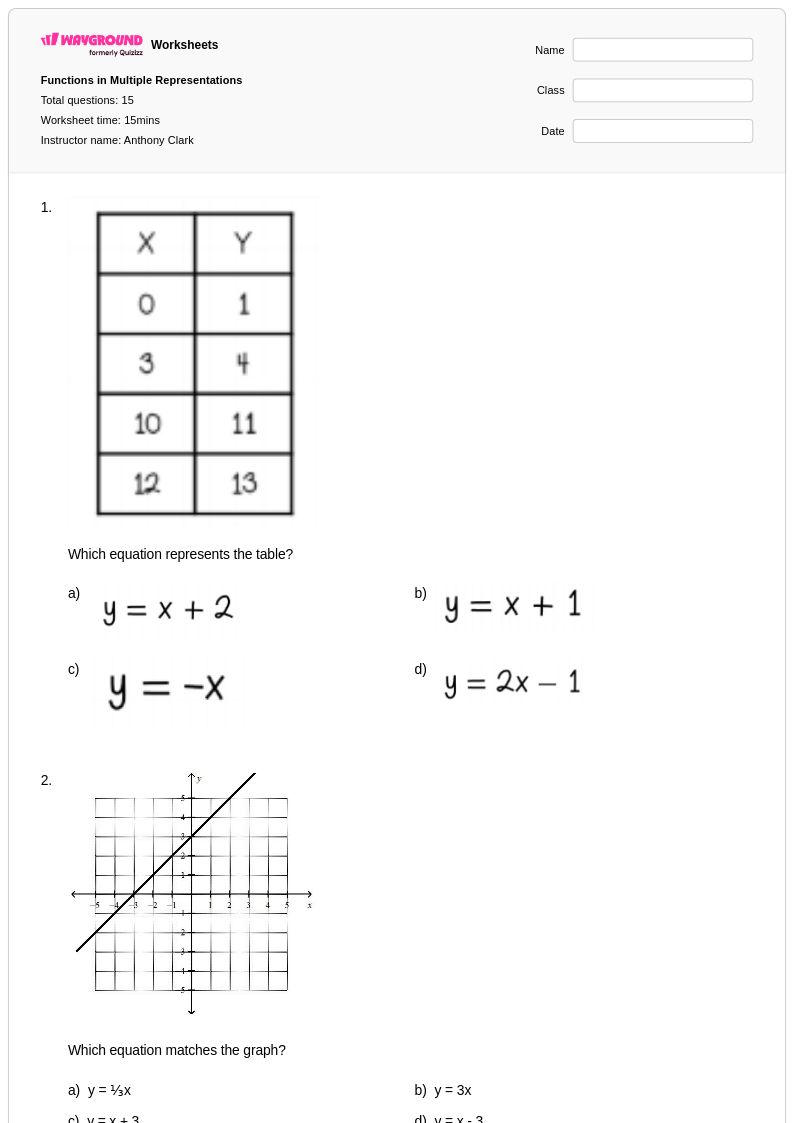
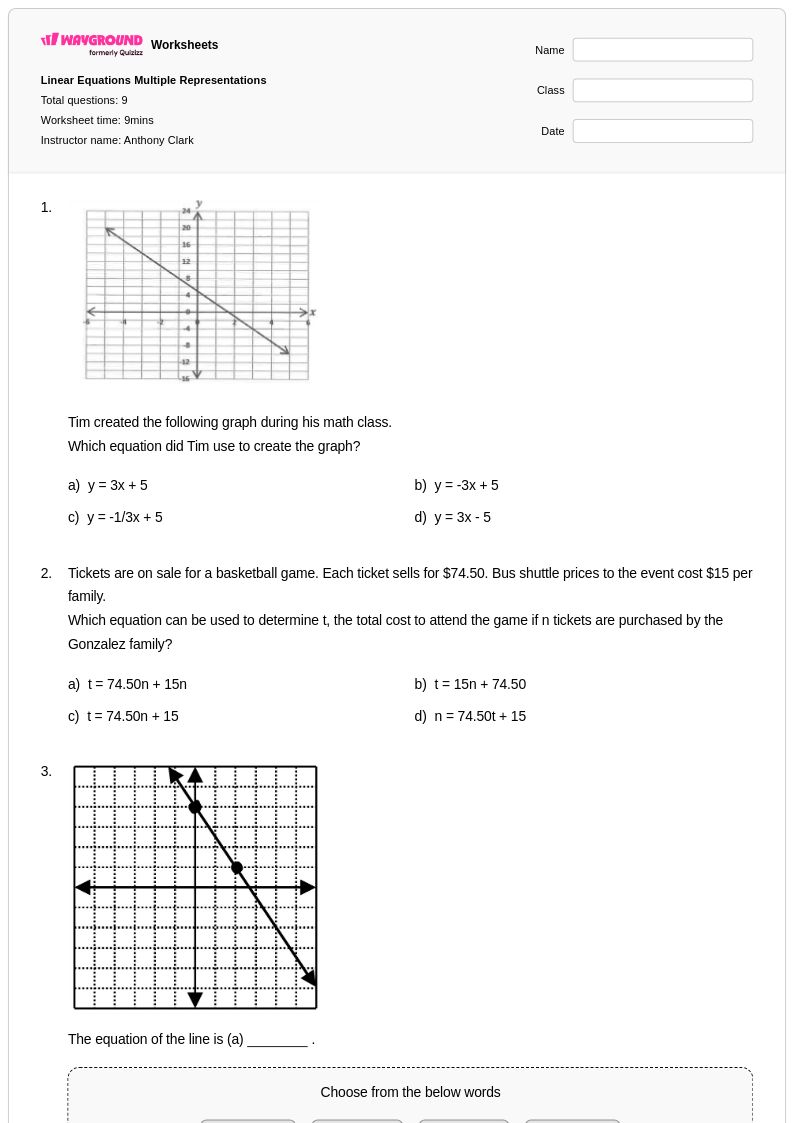
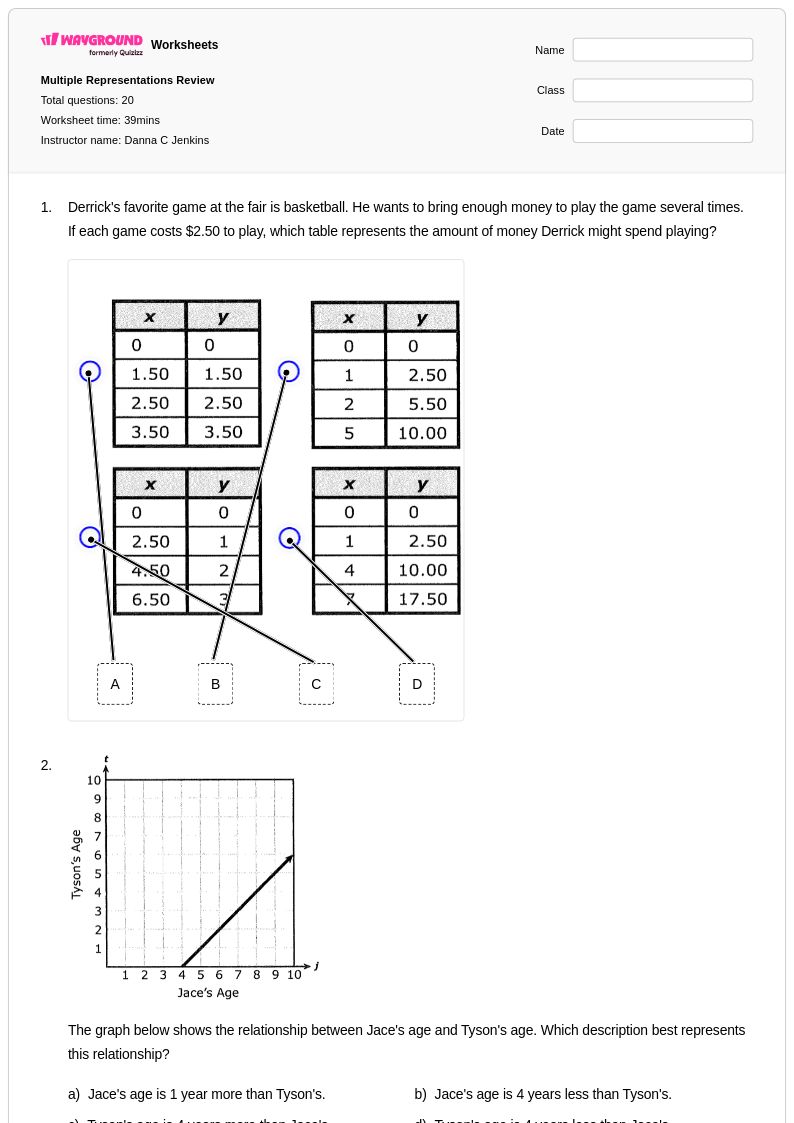
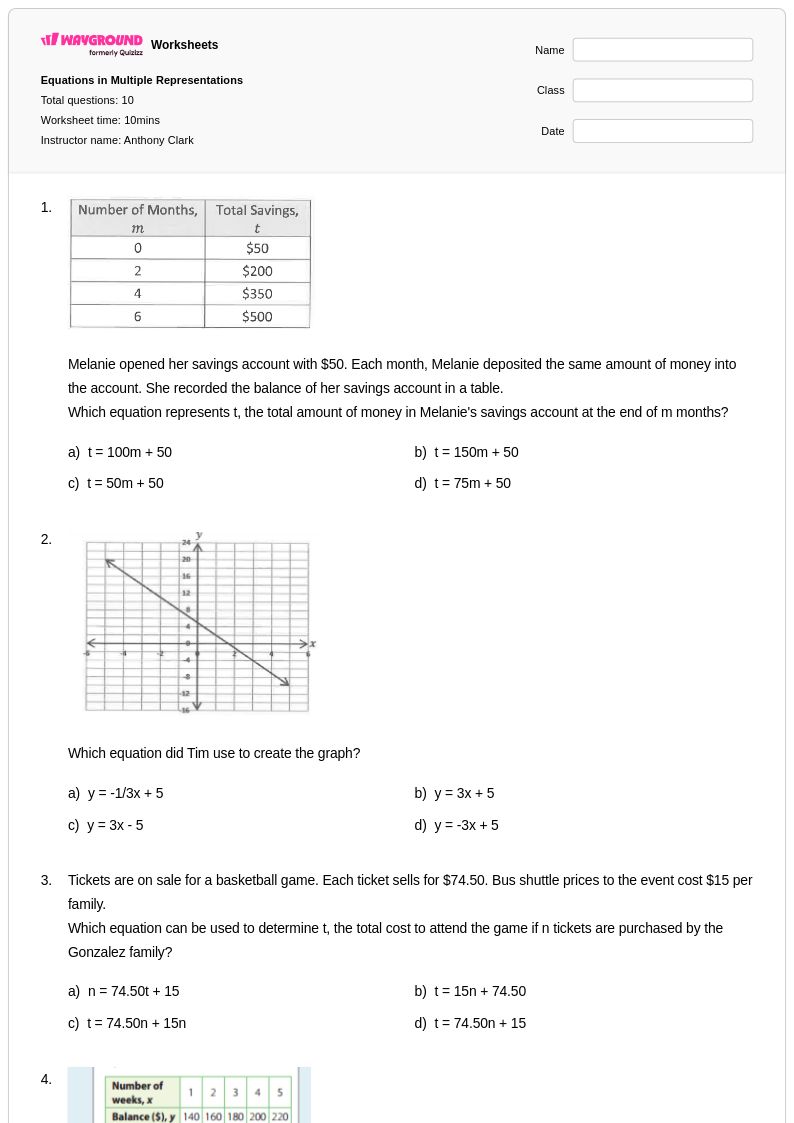
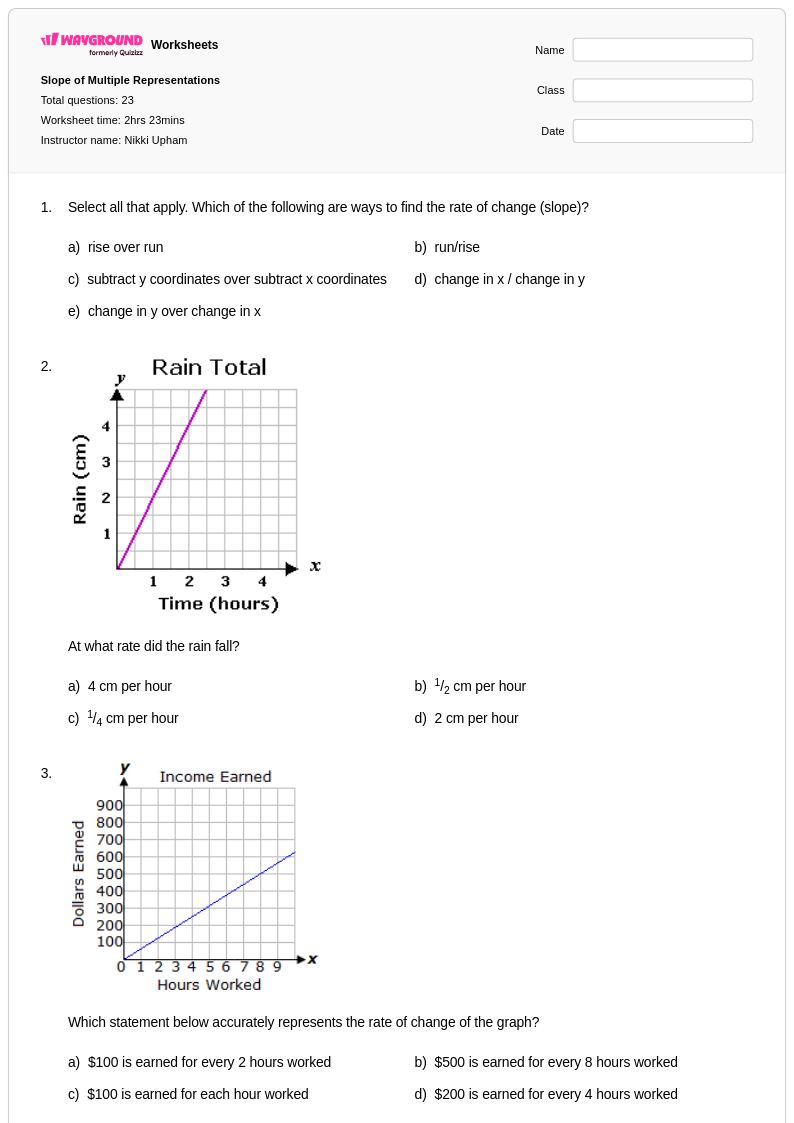
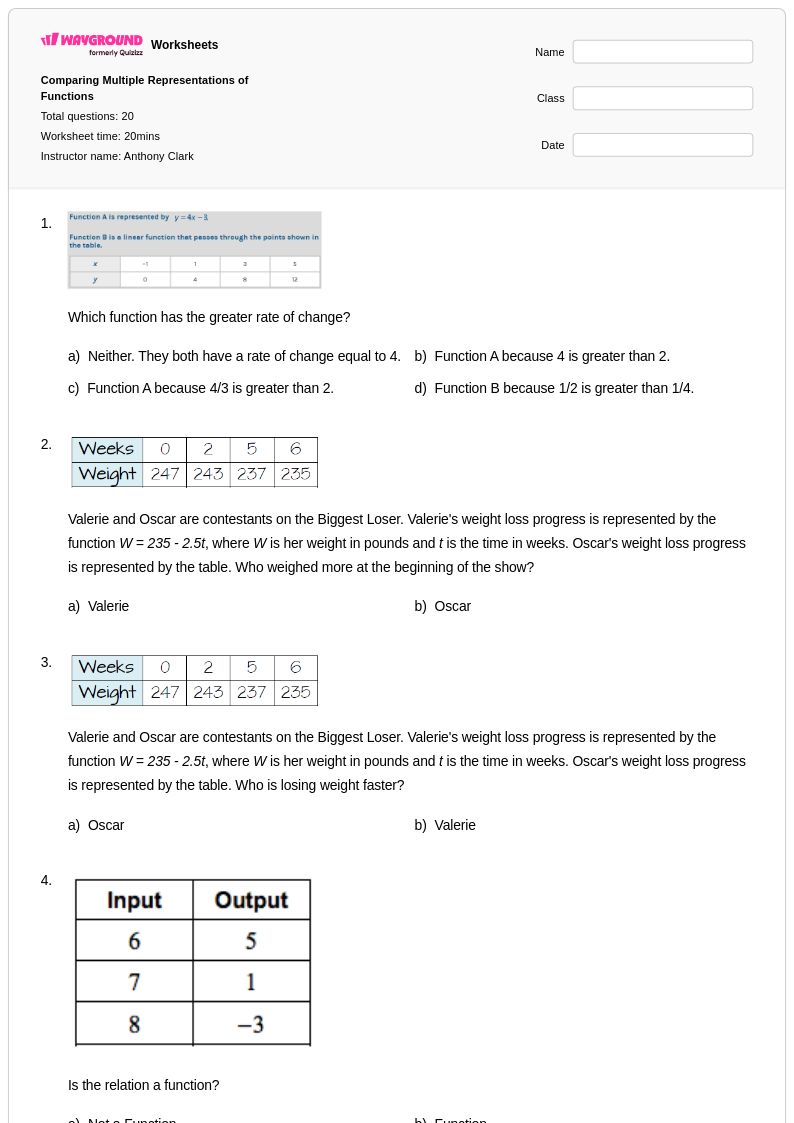
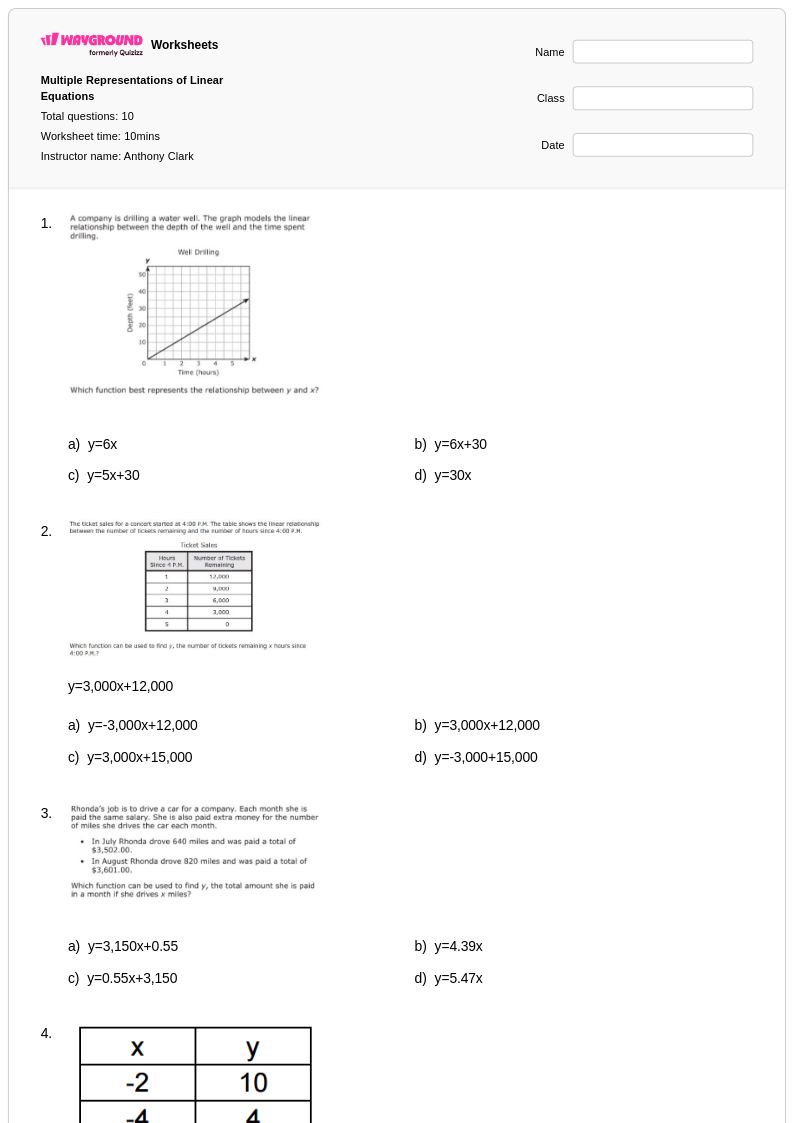
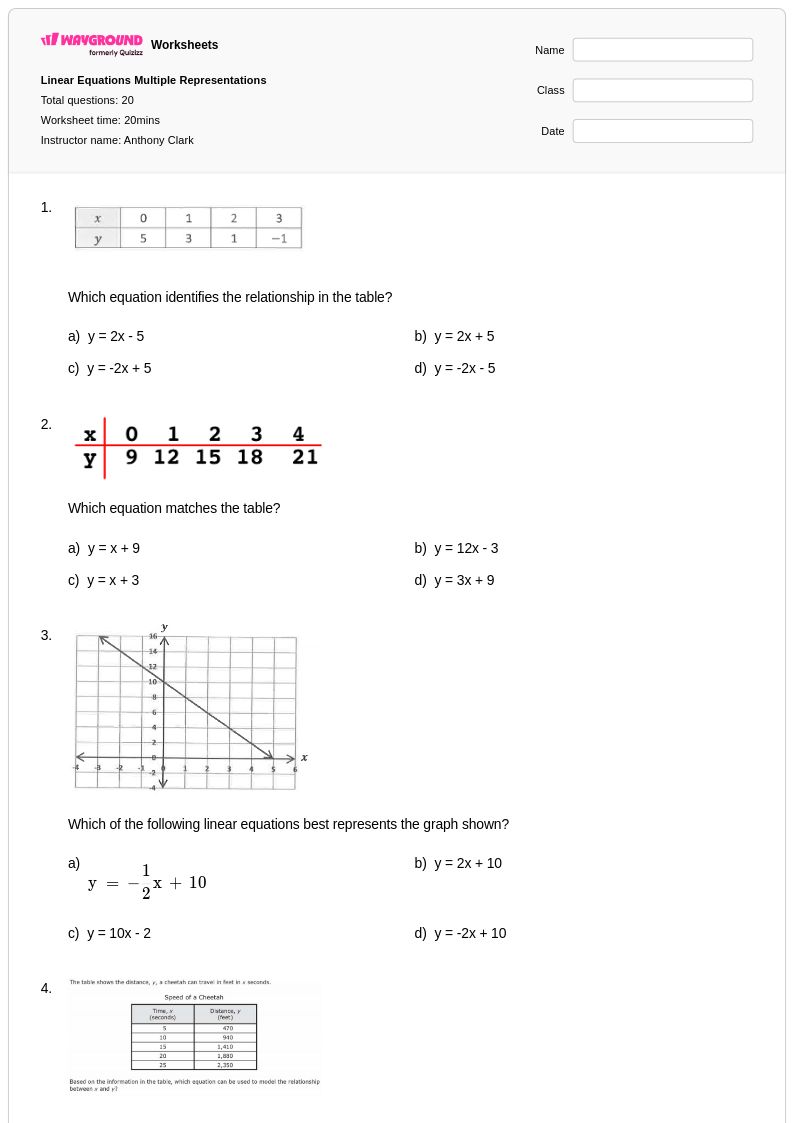
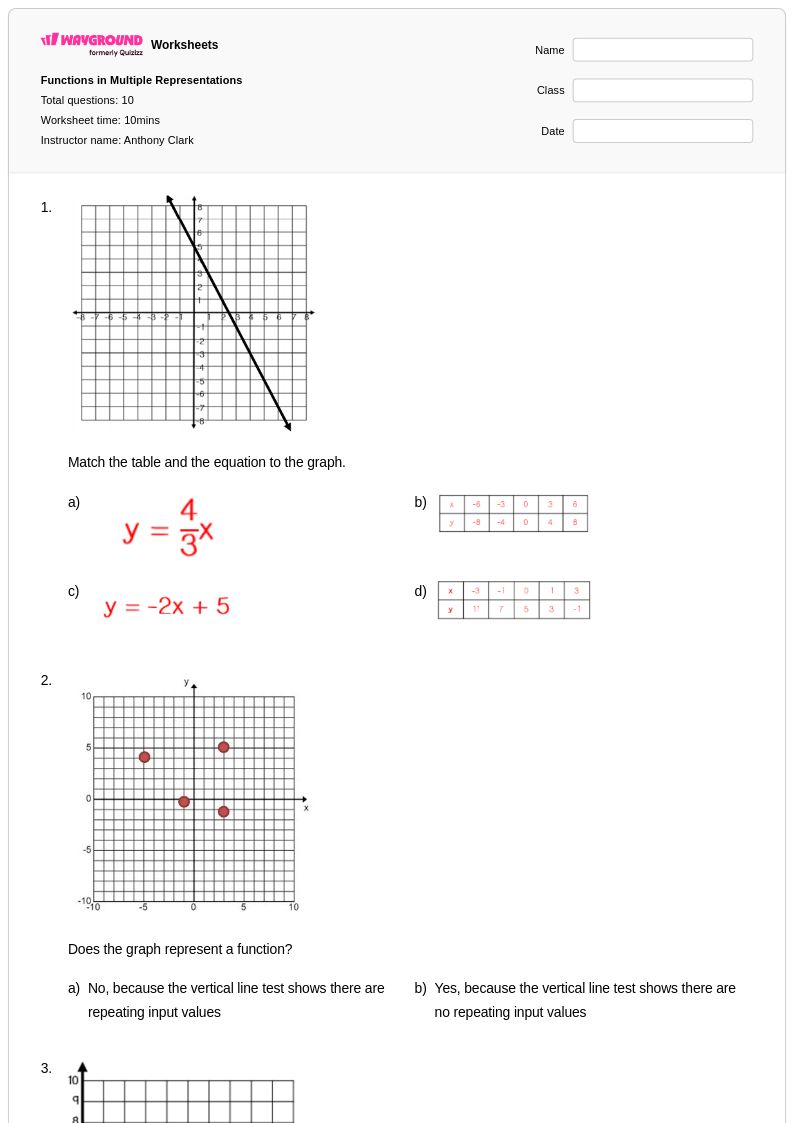
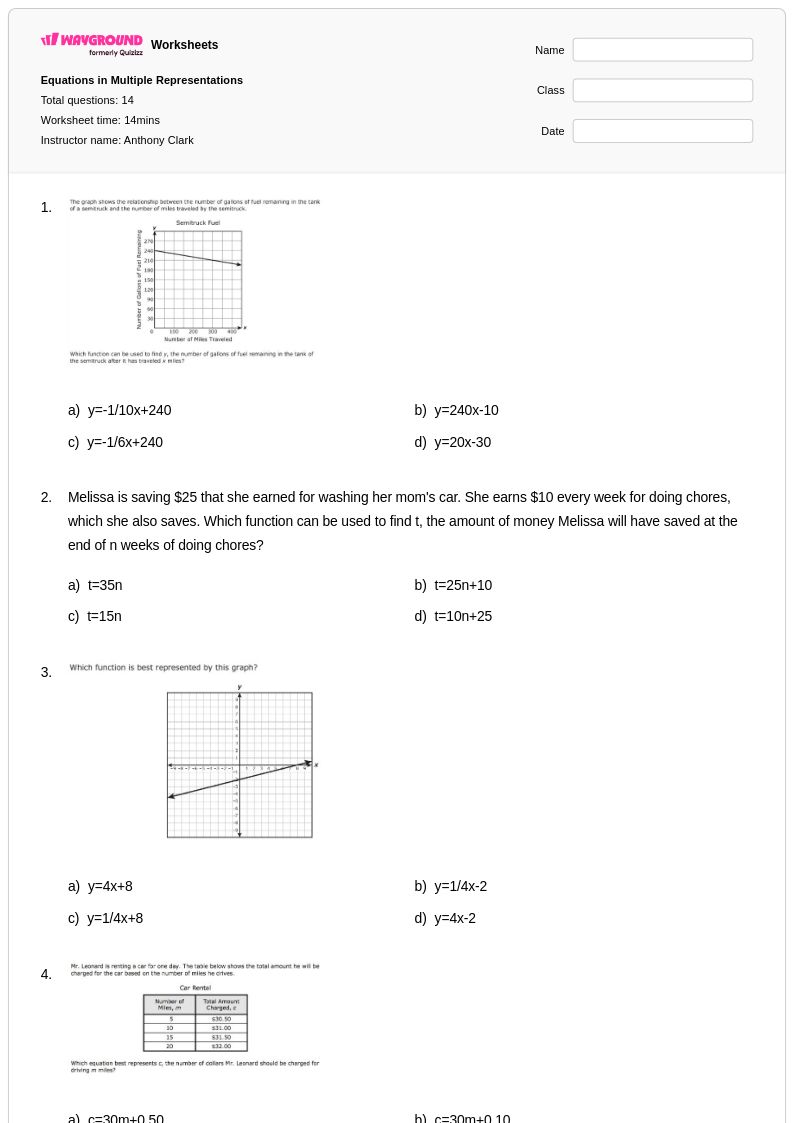
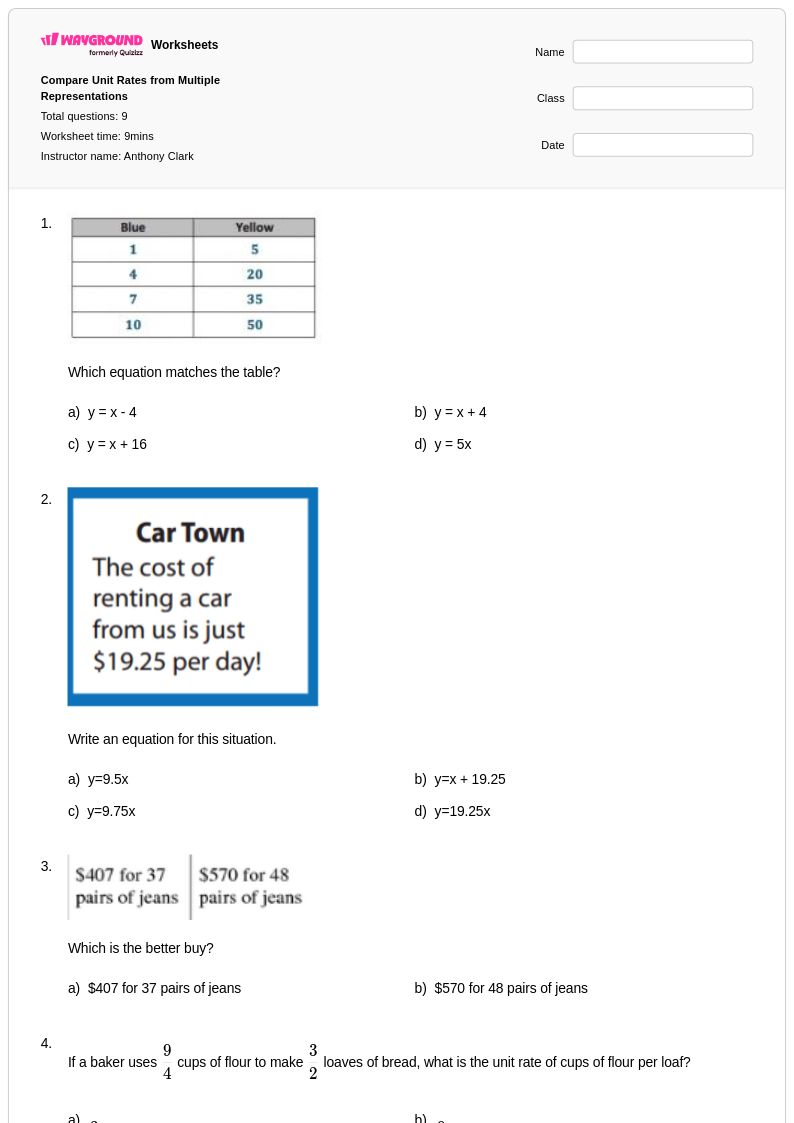
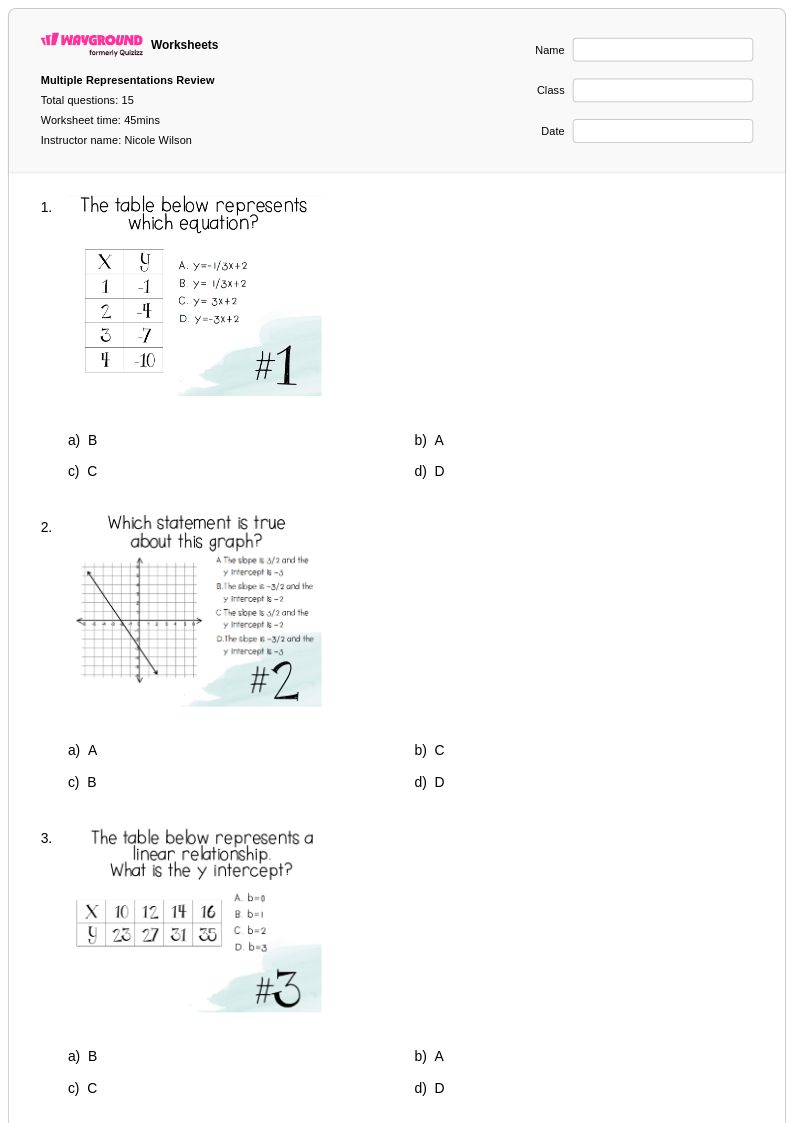
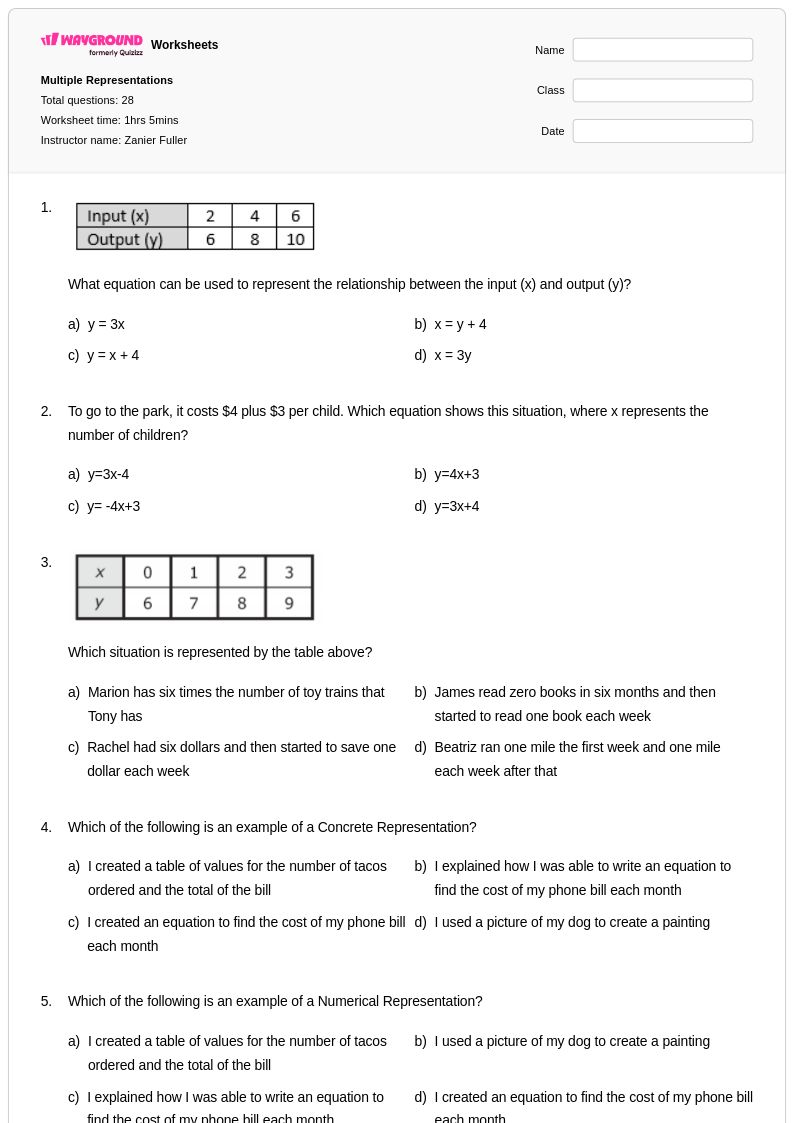
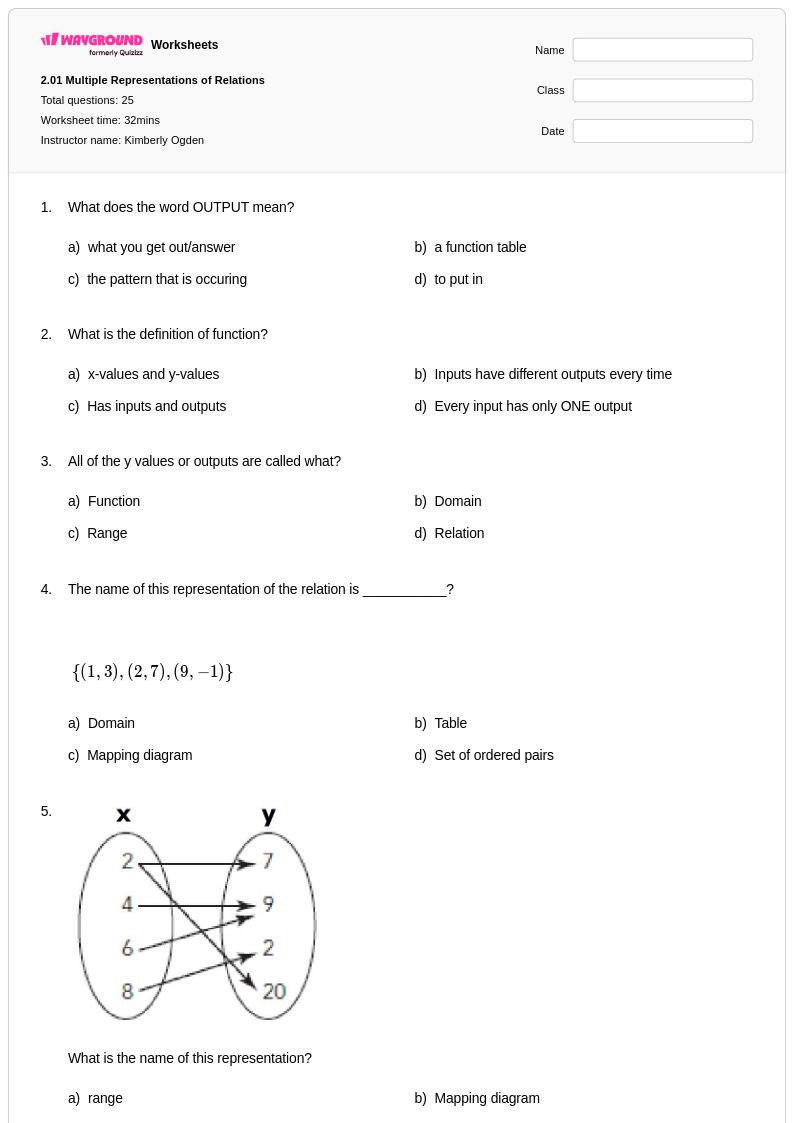
Multiple representations worksheets for Grade 9 algebra through Wayground (formerly Quizizz) provide students with comprehensive practice in expressing mathematical relationships through various formats including tables, graphs, equations, and verbal descriptions. These expertly designed worksheets strengthen critical thinking skills by requiring students to translate between different mathematical representations, recognize patterns across formats, and develop deeper conceptual understanding of algebraic functions and relationships. Each worksheet includes detailed answer keys and is available as free printable PDFs, offering practice problems that range from basic representation identification to complex multi-step translation tasks that challenge students to demonstrate mastery of equivalent mathematical expressions.
Wayground (formerly Quizizz) empowers educators with access to millions of teacher-created multiple representations resources, featuring robust search and filtering capabilities that allow instructors to locate materials perfectly aligned with Grade 9 algebra standards and learning objectives. The platform's differentiation tools enable teachers to customize worksheets for diverse learning needs, while flexible formatting options provide both printable and digital PDF versions for seamless classroom integration. These comprehensive resources support effective lesson planning by offering varied difficulty levels for remediation and enrichment, allowing educators to target specific skill gaps in representational fluency while providing abundant practice opportunities that reinforce students' ability to work fluidly across mathematical formats and deepen their algebraic reasoning capabilities.
FAQs
What is the focus of multiple representations in Grade 9?
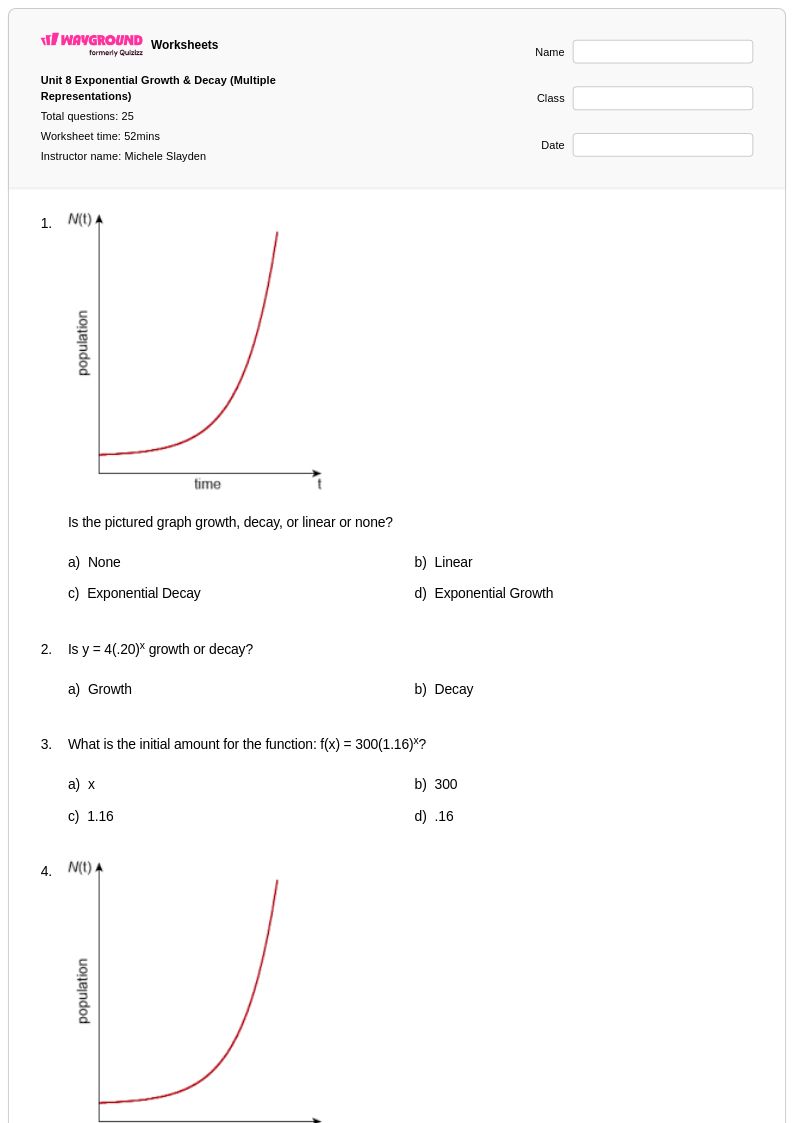
In 9th grade or Algebra 1, the concept expands beyond linear functions to include non-linear functions, primarily quadratic and exponential functions. Students learn to identify key features of these new function types—such as the vertex of a parabola or the horizontal asymptote of an exponential curve—from their graphs, tables, and equations.
How do I teach multiple representations for non-linear functions?
Introduce one function family at a time. For quadratics, start with the parent function y = x². Have students create a table of values (including negative x-values), plot the points to reveal the parabolic shape, and discuss key features like the vertex and axis of symmetry. Contrast this with the constant growth of a linear function.
What kind of practice do 9th graders need for this topic?
Worksheets should include exercises that require students to match graphs of parabolas and exponential curves to their equations, identify key features from a table, and compare the properties of different function types. For example, a problem might ask students to determine from a table whether the data represents a linear, quadratic, or exponential relationship.
What are common errors when students move to non-linear functions?
A frequent mistake is applying linear thinking to non-linear situations. For example, students might incorrectly assume a quadratic function has a constant rate of change because they are used to working with lines. They need practice analyzing the patterns of change in tables to see the difference.
How can I use this worksheet for my Algebra 1 class?
You can assign it as a digital quiz on Wayground for instant feedback or print the PDF for collaborative work or homework. Every worksheet includes a full answer key to support grading and allow students to self-assess their understanding.
How does this align with high school algebra standards?
This topic directly supports the Common Core standards for high school Functions (HSF-IF.C.7), which emphasize graphing functions expressed symbolically and showing key features. Analyzing functions using different representations is a critical skill for understanding the behavior of various function families throughout high school math.
How can I support diverse learners with these more complex functions?
Wayground's digital format offers a 'Read Aloud' feature, which is helpful for complex word problems describing non-linear scenarios. For printable versions, you can use the platform to create a version with a dyslexia-friendly font or wider spacing to improve readability and reduce cognitive load.