
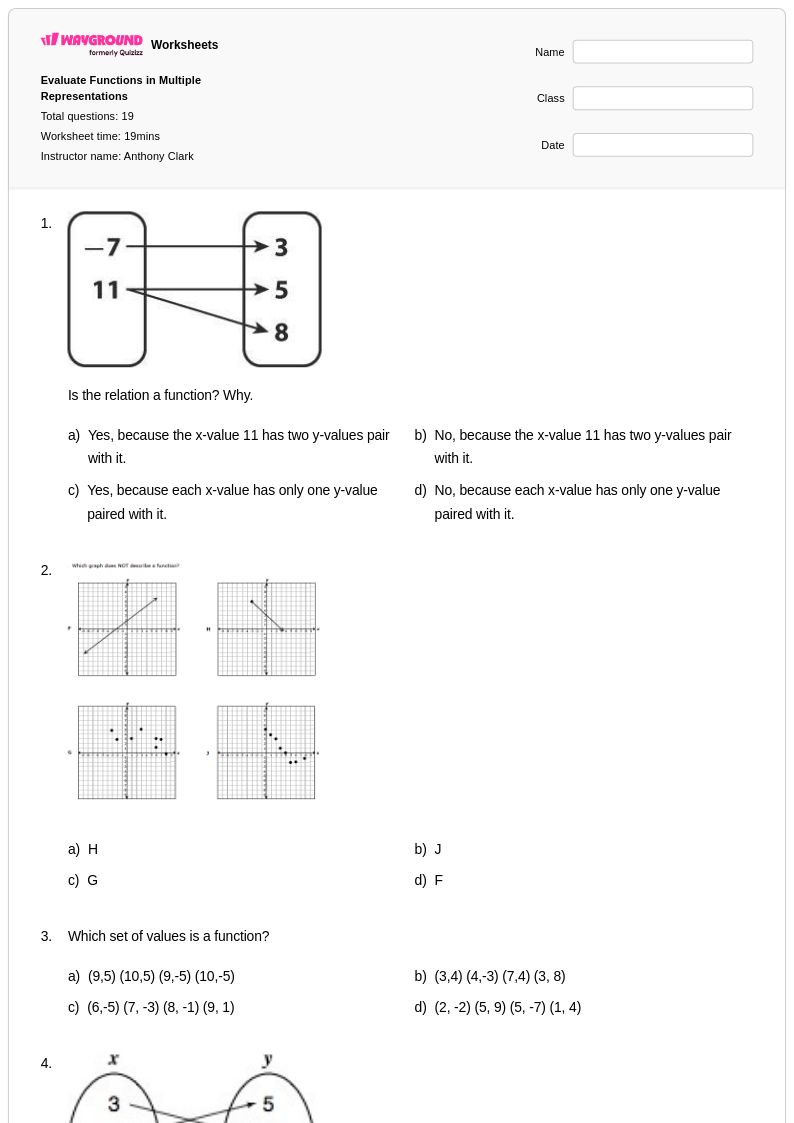
19 Q
8th - Uni
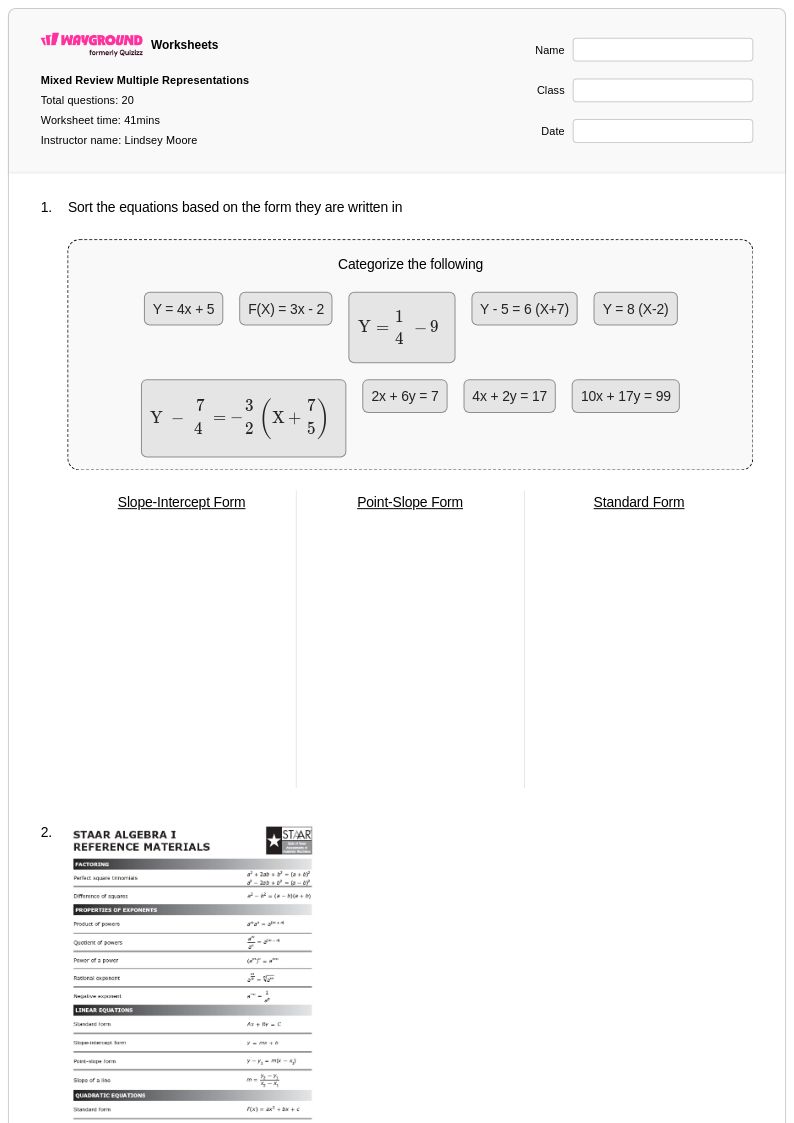
20 Q
9th - 12th
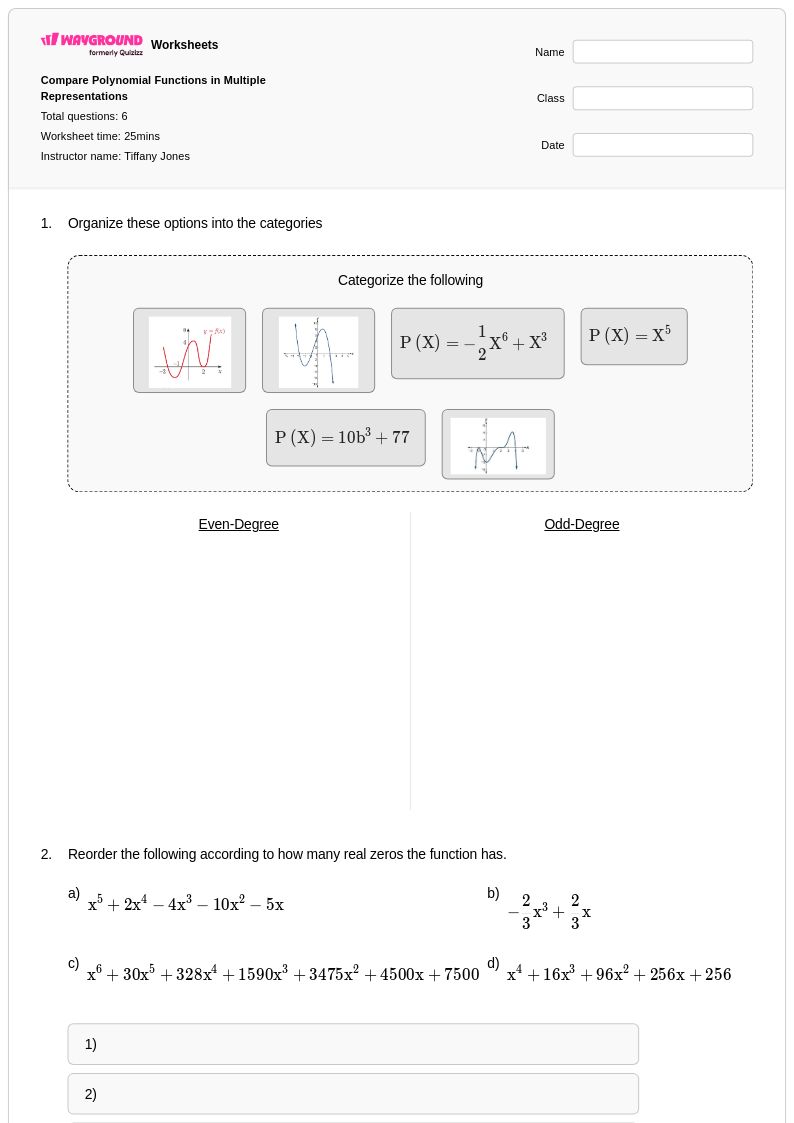
6 Q
9th - 12th
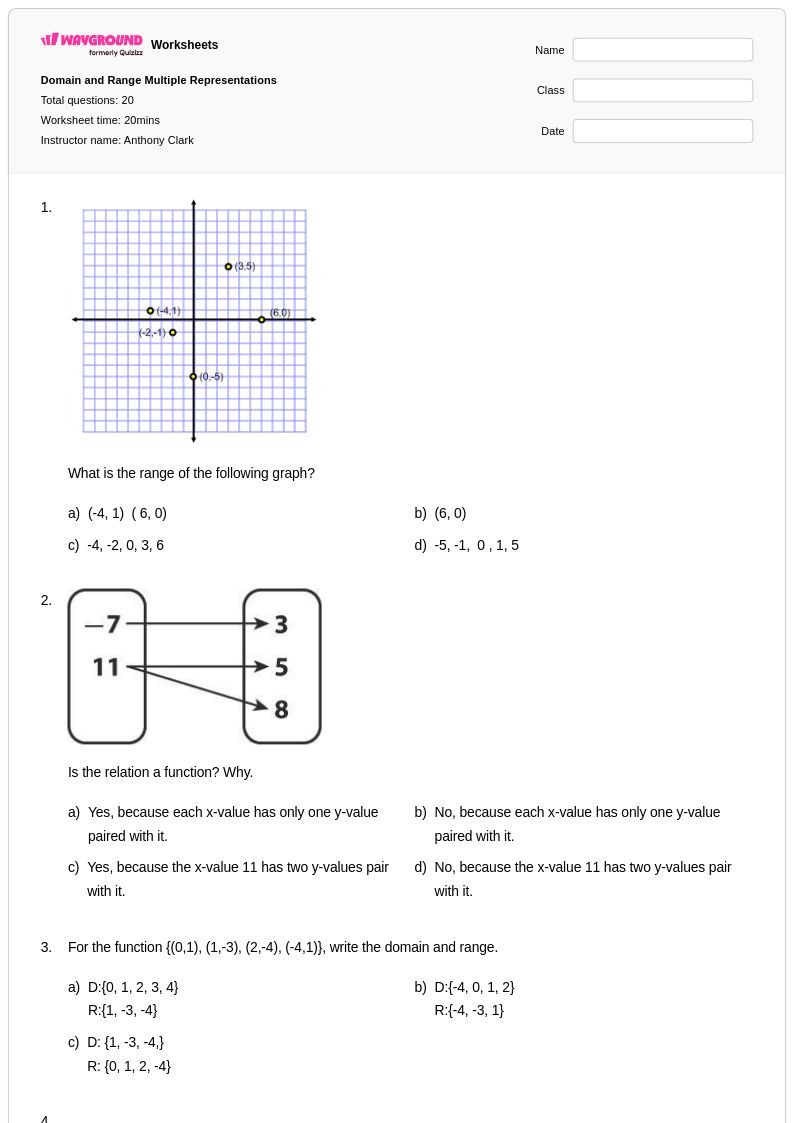
20 Q
9th - Uni
20 Q
8th - Uni
15 Q
8th - Uni
9 Q
9th - Uni
20 Q
6th - Uni
19 Q
6th - Uni
15 Q
9th - Uni
10 Q
6th - Uni
10 Q
8th - Uni
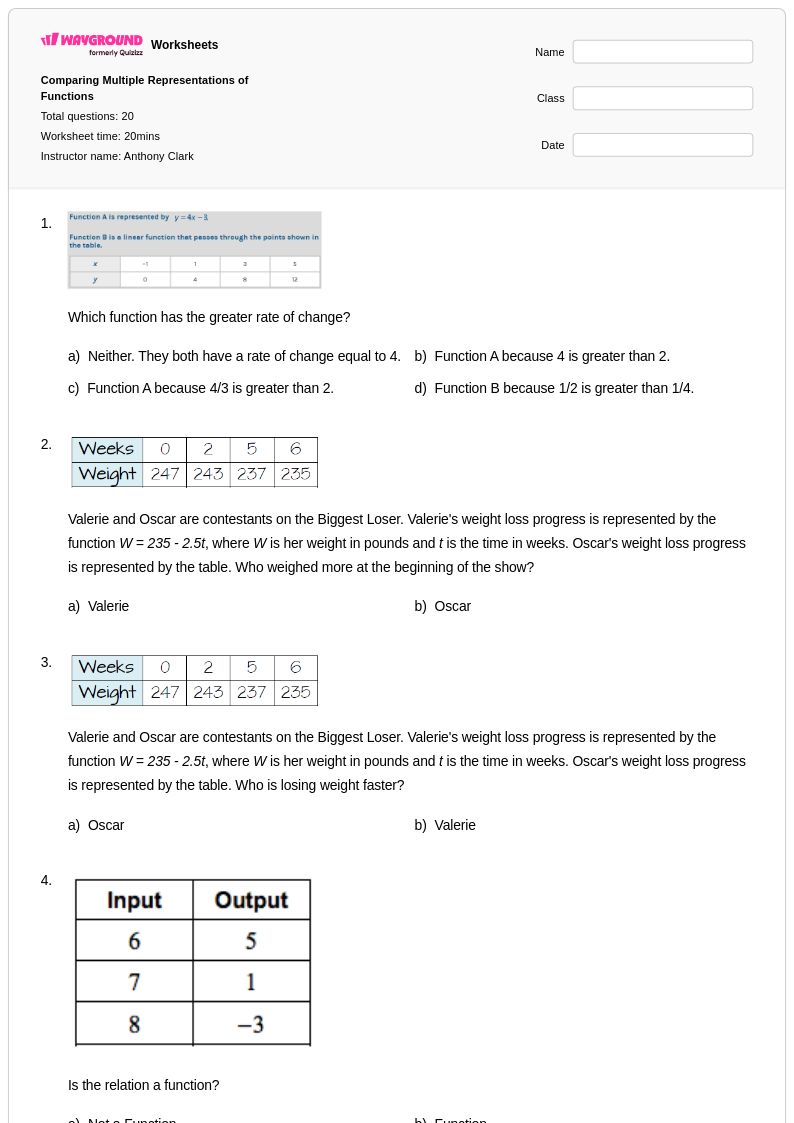
20 Q
8th - Uni
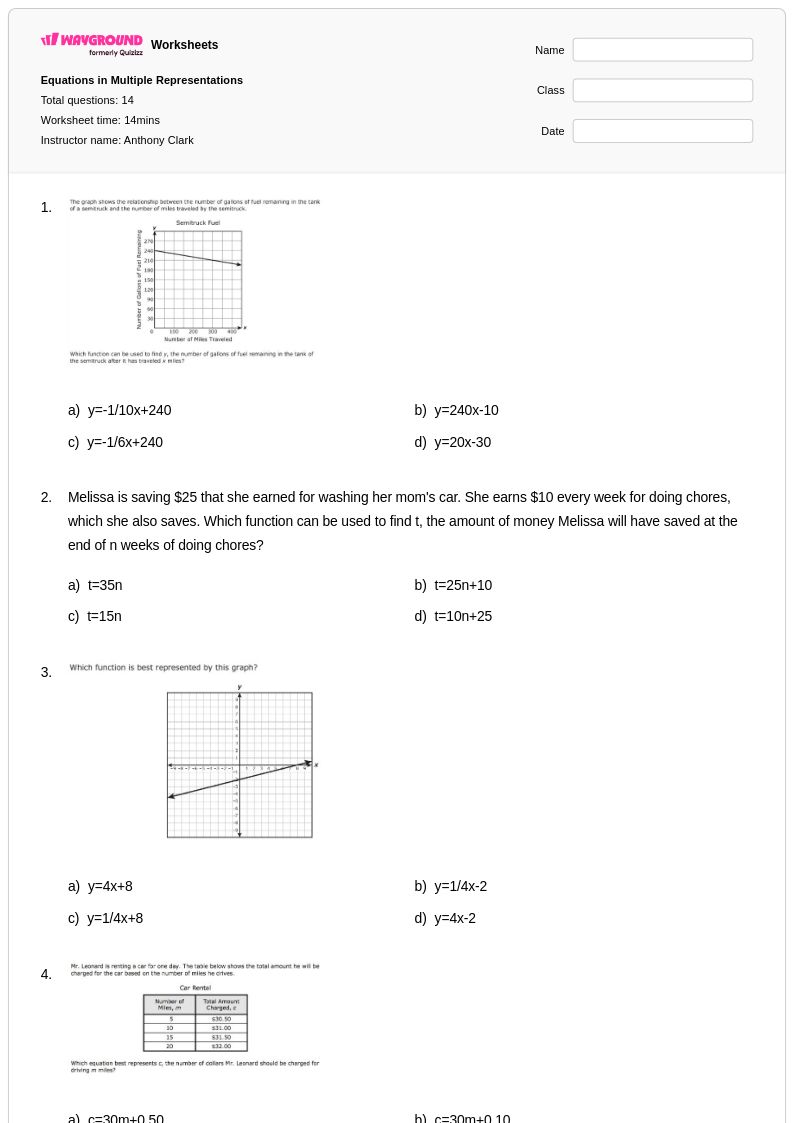
14 Q
6th - Uni
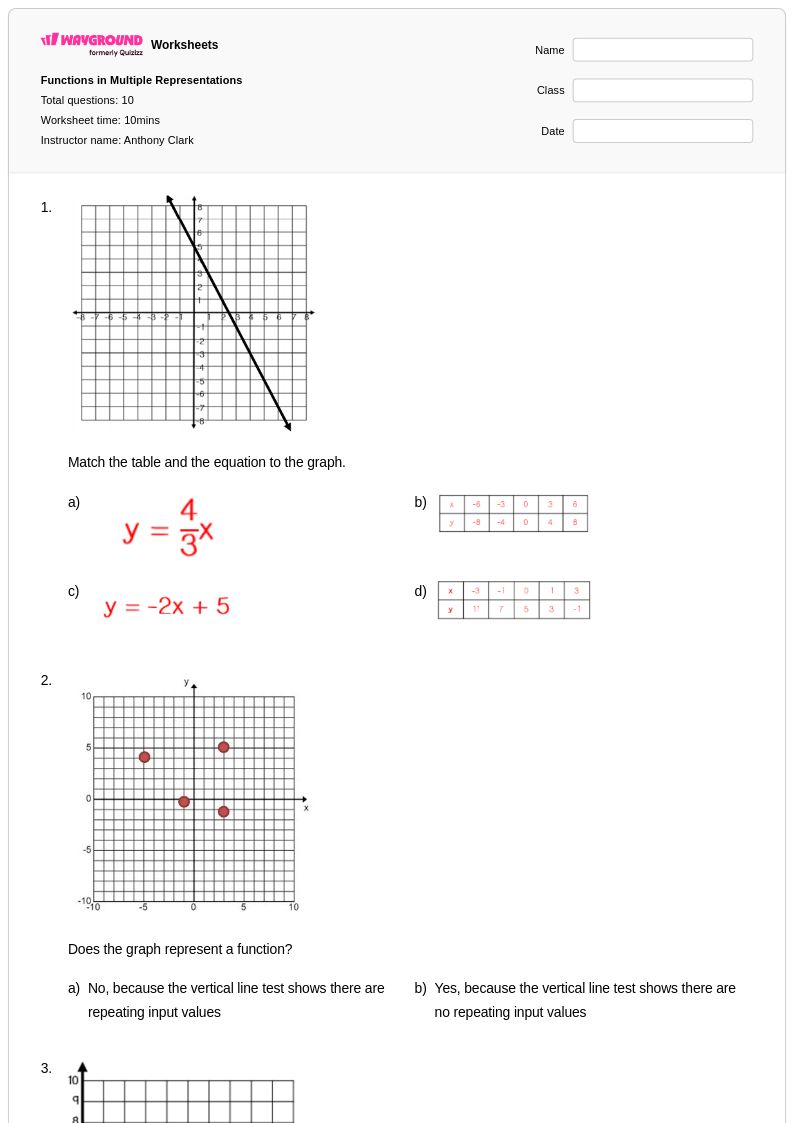
10 Q
8th - Uni
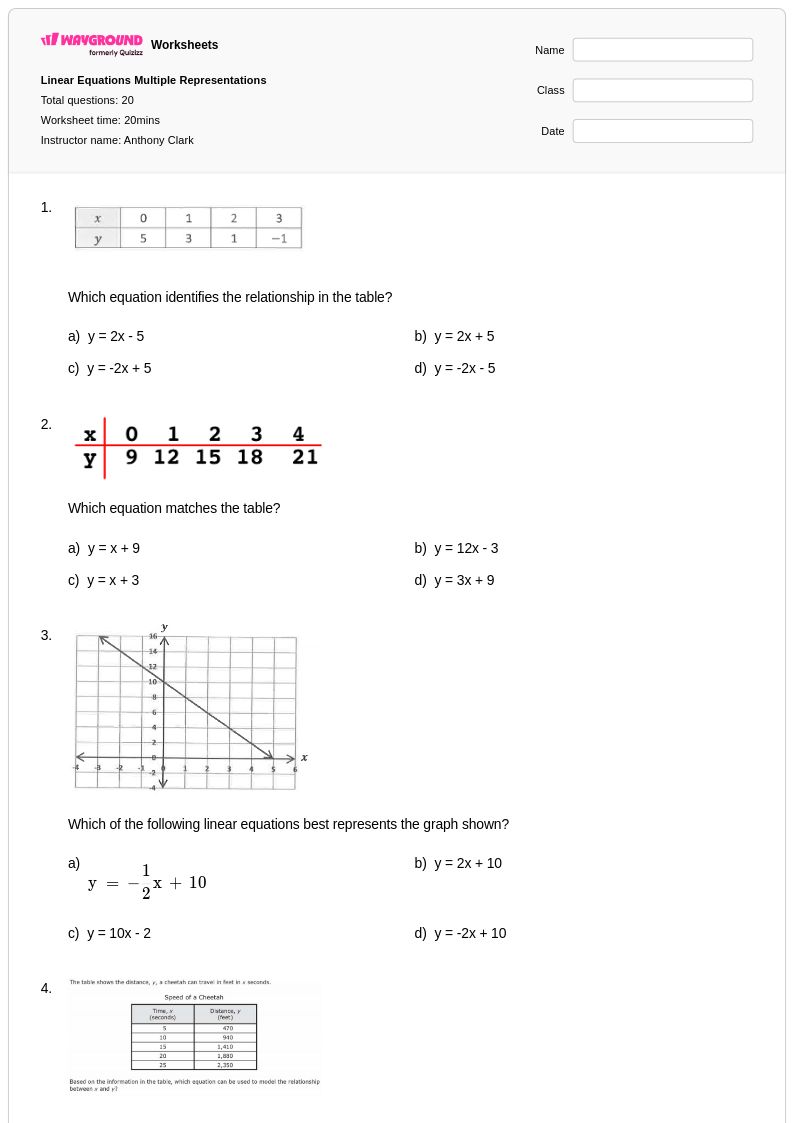
20 Q
9th - Uni
9 Q
8th - Uni
10 Q
12th
13 Q
10th - 12th
20 Q
8th - Uni
10 Q
6th - Uni
15 Q
6th - Uni
14 Q
9th - 12th
17 Q
7th - Uni
Explore Multiple Representations Worksheets by Grades
Explore Other Subject Worksheets for grade 12
Explore printable Multiple Representations worksheets for Grade 12
Multiple representations worksheets for Grade 12 students through Wayground (formerly Quizizz) provide comprehensive practice in translating mathematical concepts between algebraic, graphical, numerical, and verbal forms. These advanced algebra resources strengthen students' ability to analyze functions, equations, and relationships across different representational formats, helping them develop the conceptual flexibility essential for college-level mathematics. The worksheets feature practice problems that challenge students to convert between tables, graphs, equations, and contextual descriptions, while comprehensive answer keys support independent learning and self-assessment. Available as free printables and digital formats, these resources reinforce critical thinking skills by requiring students to recognize equivalent representations and understand how algebraic concepts manifest across multiple mathematical formats.
Wayground's extensive collection of multiple representations worksheets draws from millions of teacher-created resources, offering educators powerful search and filtering capabilities to locate materials perfectly aligned with Grade 12 algebra standards and learning objectives. The platform's differentiation tools enable teachers to customize worksheet difficulty levels and content focus, accommodating diverse student needs within the same classroom while maintaining rigorous academic expectations. Available in both printable pdf format and interactive digital versions, these resources support flexible lesson planning whether used for initial instruction, targeted remediation, or enrichment activities. The comprehensive organization and alignment features help mathematics educators efficiently identify and deploy appropriate practice materials that reinforce students' ability to work fluidly across algebraic representations, ultimately preparing them for success in advanced mathematics courses and standardized assessments.
FAQs
How do I teach multiple representations in Grade 12 math?
What exercises build fluency with multiple representations in Grade 12?
What errors should I look for when assessing multiple representations?
How can I use these Grade 12 multiple representations worksheets in class?
How does Grade 12 work with multiple representations fit Common Core math?
How can I accommodate different learners during Grade 12 function practice?
Why do Grade 12 students still need multiple representations practice?