
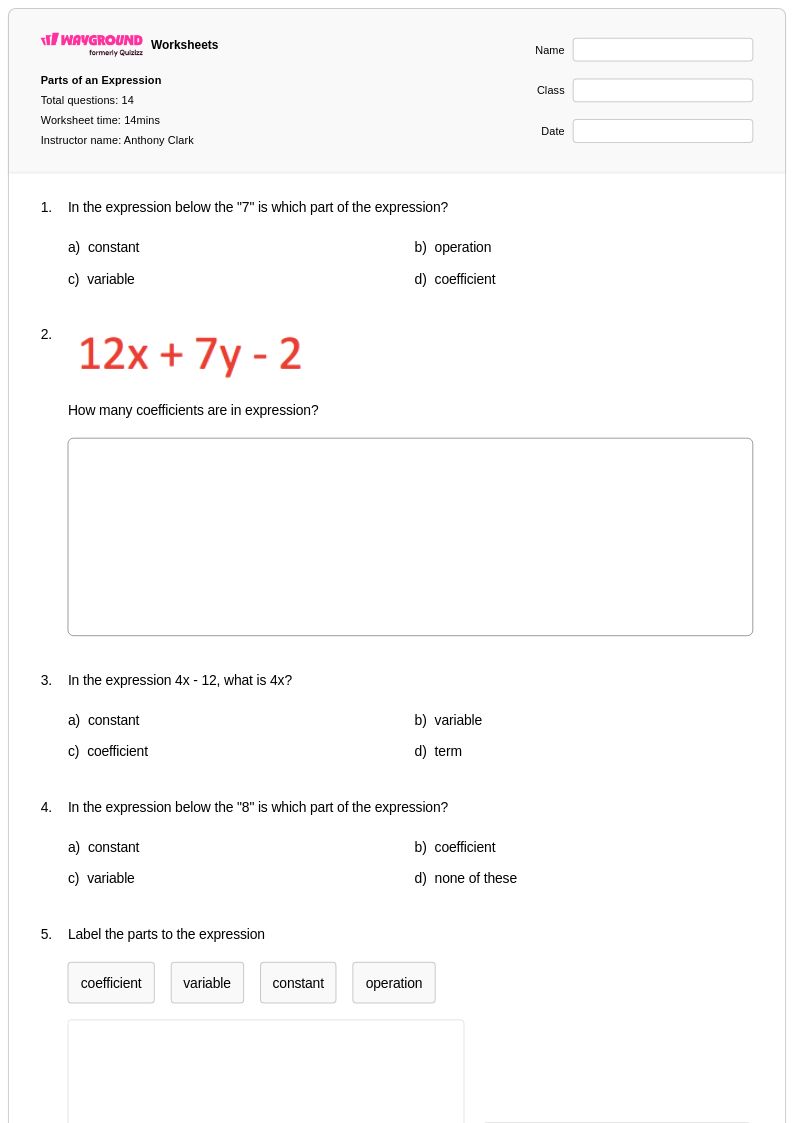
14 Q
6th - Uni
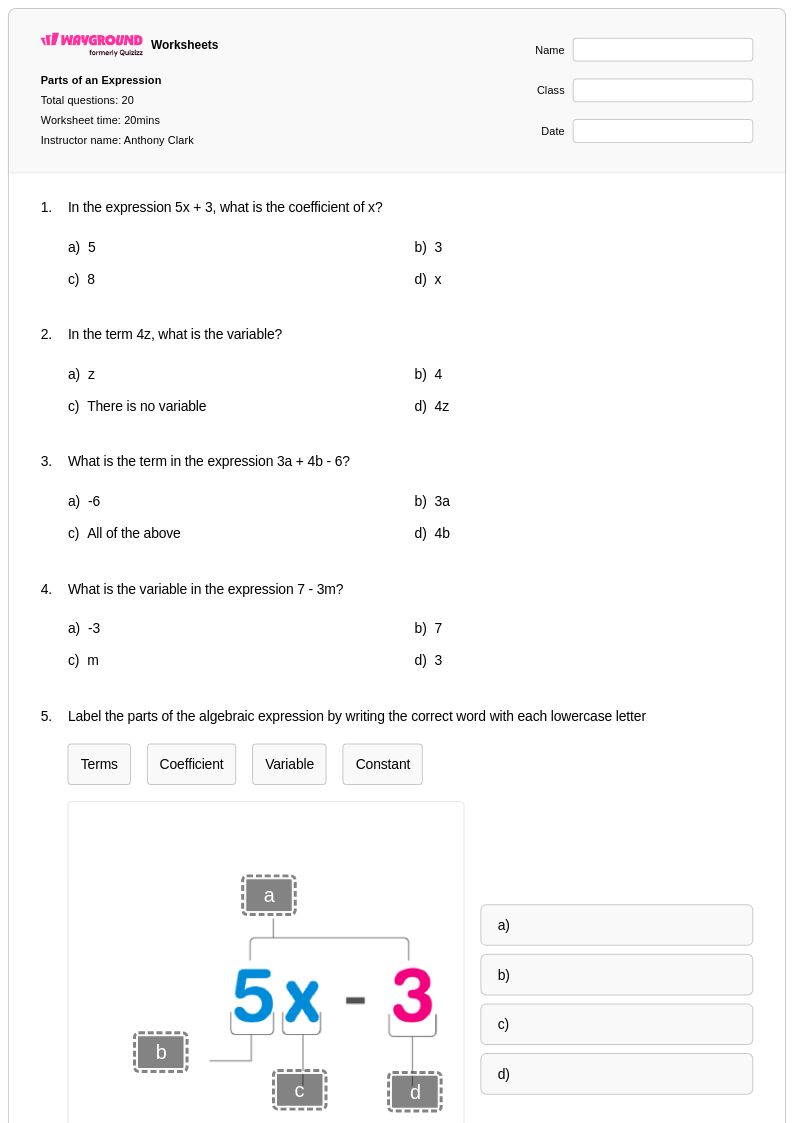
20 Q
6th - Uni
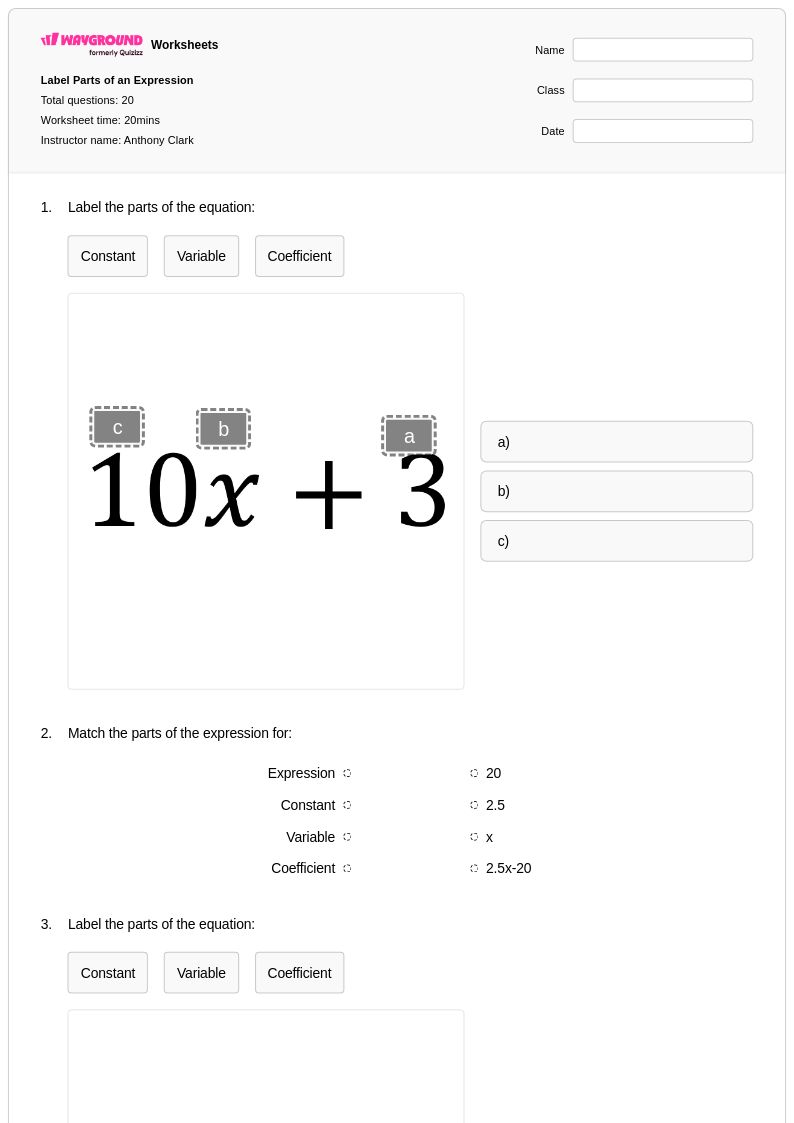
20 Q
6th - Uni
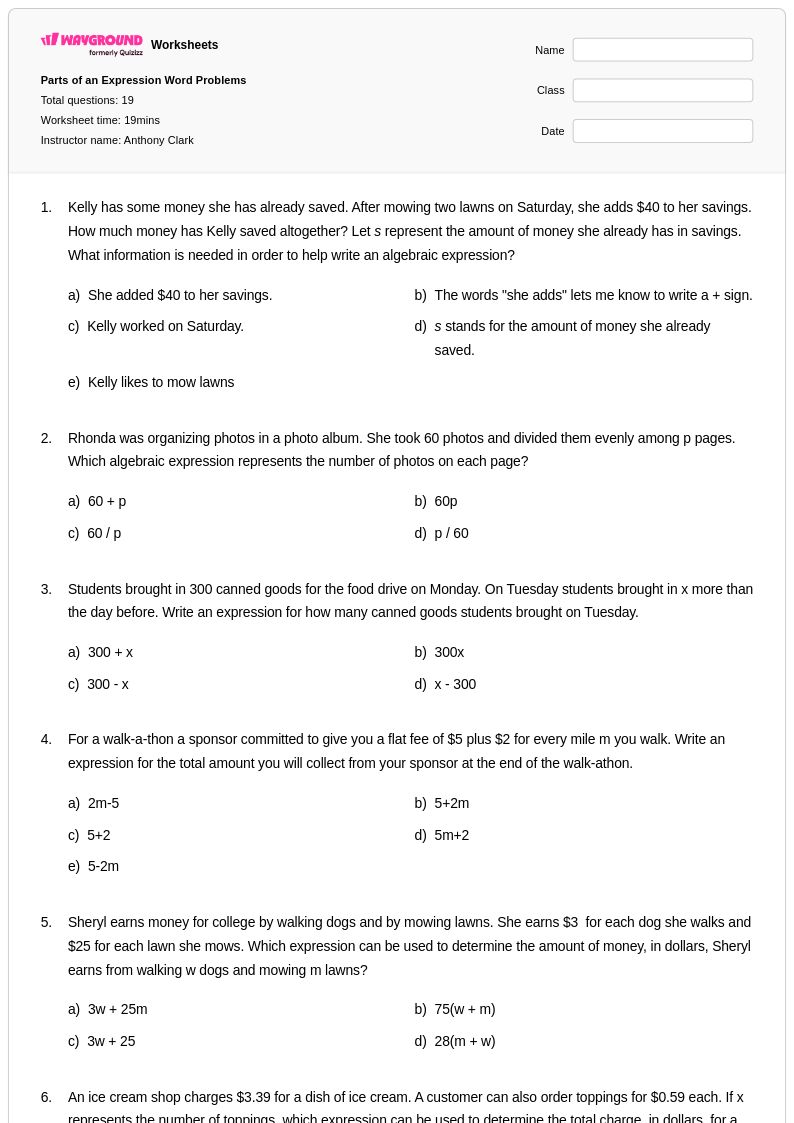
19 Q
7th - Uni
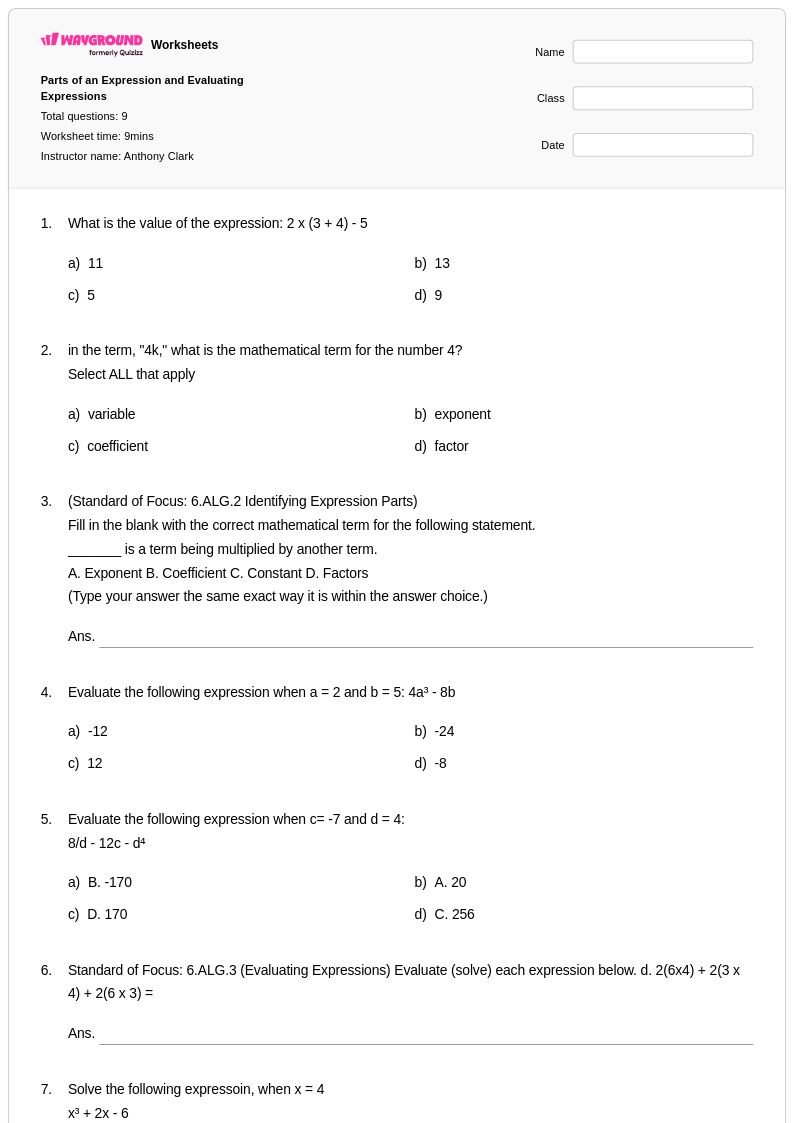
9 Q
6th - Uni
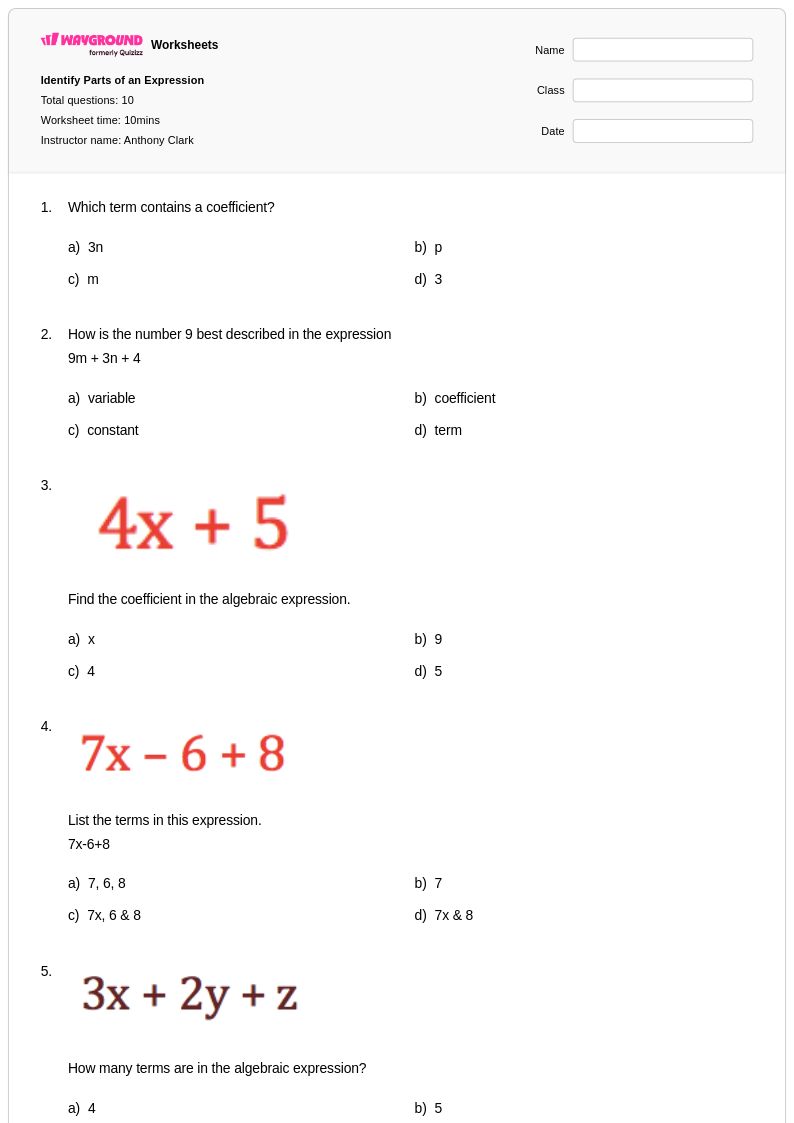
10 Q
6th - Uni
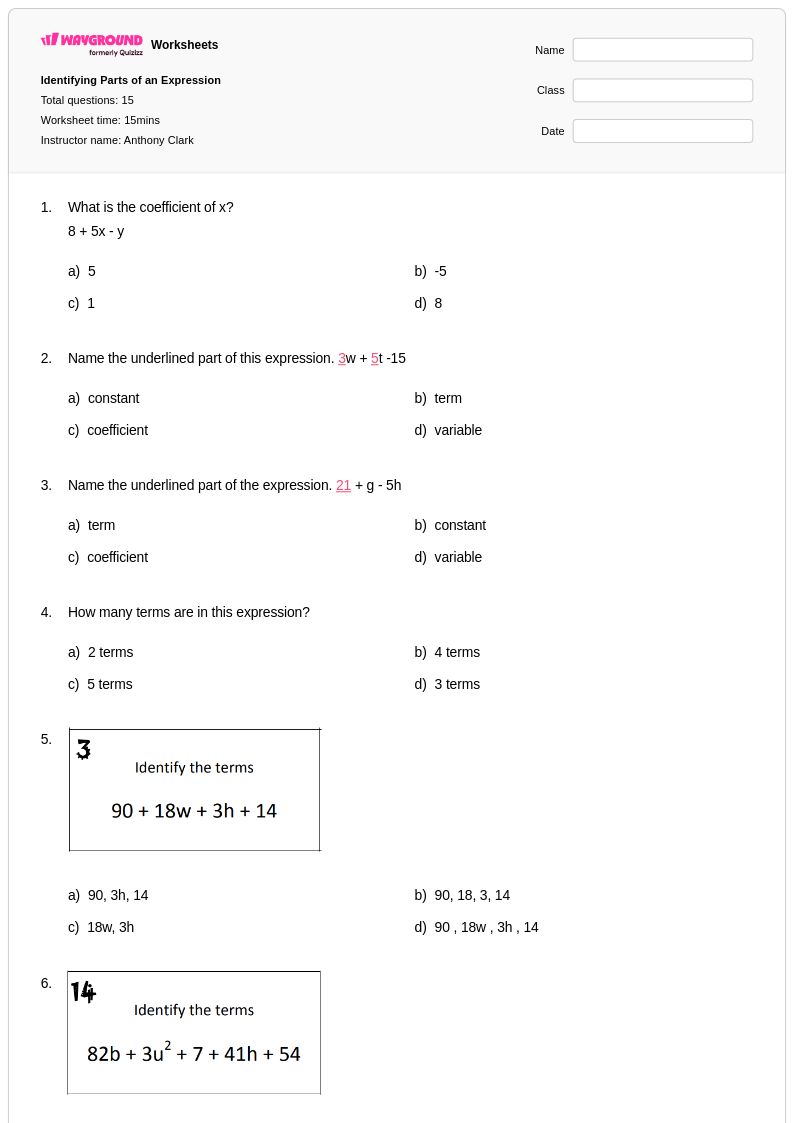
15 Q
6th - Uni
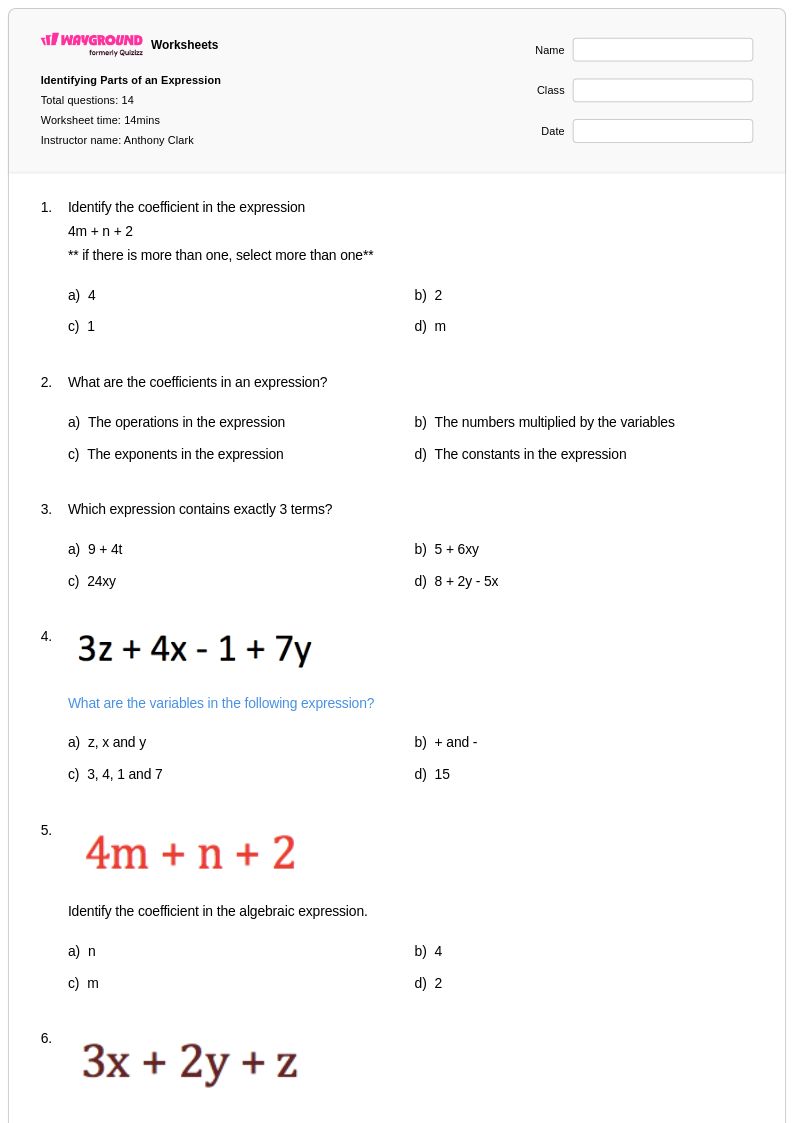
14 Q
6th - Uni
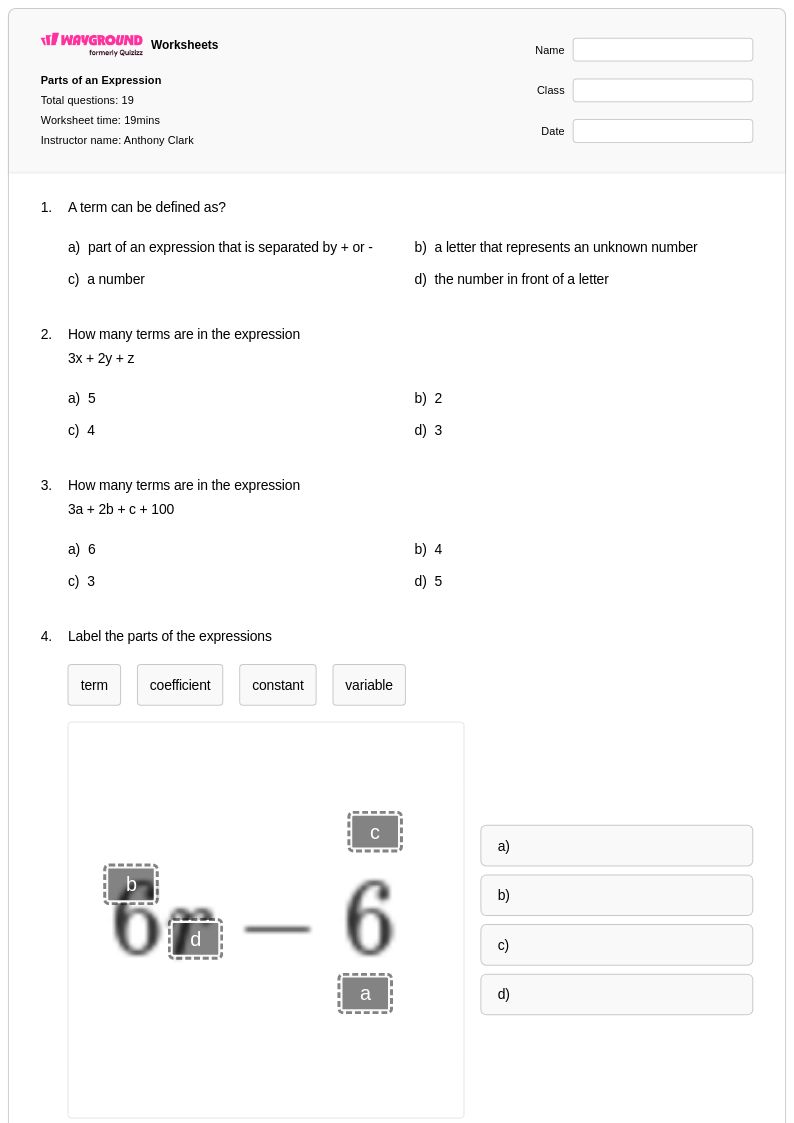
19 Q
6th - Uni
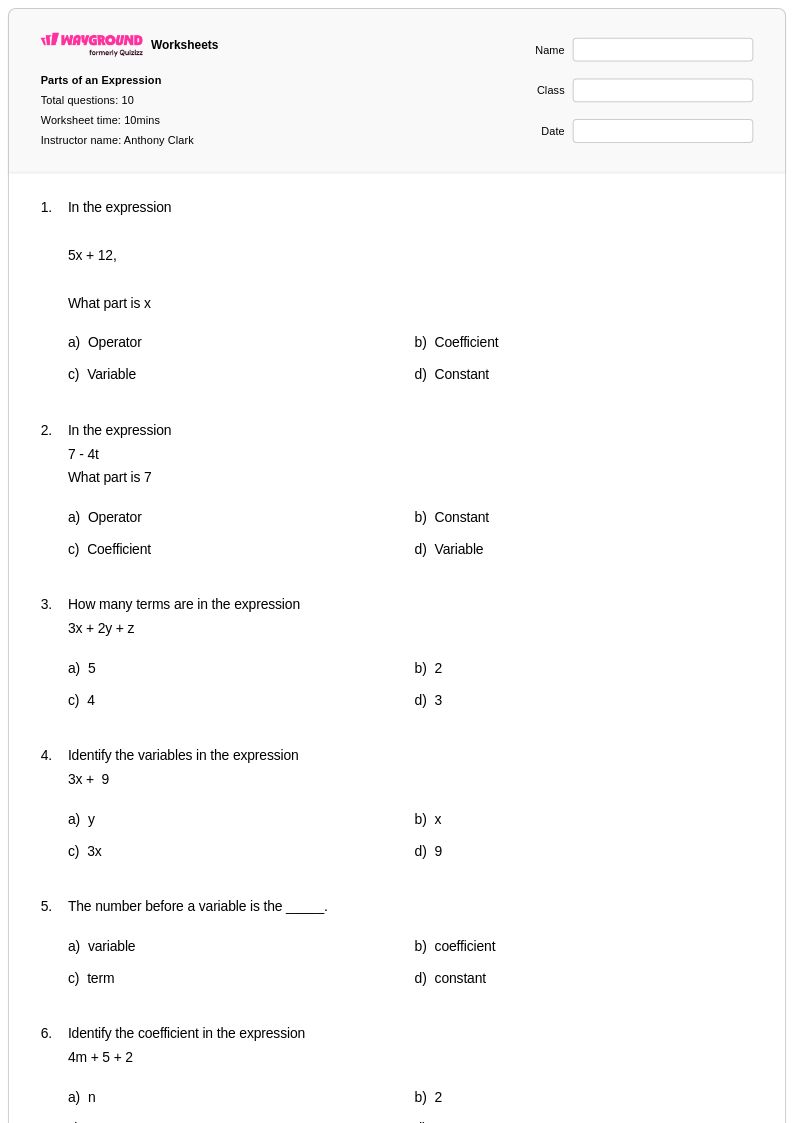
10 Q
6th - Uni
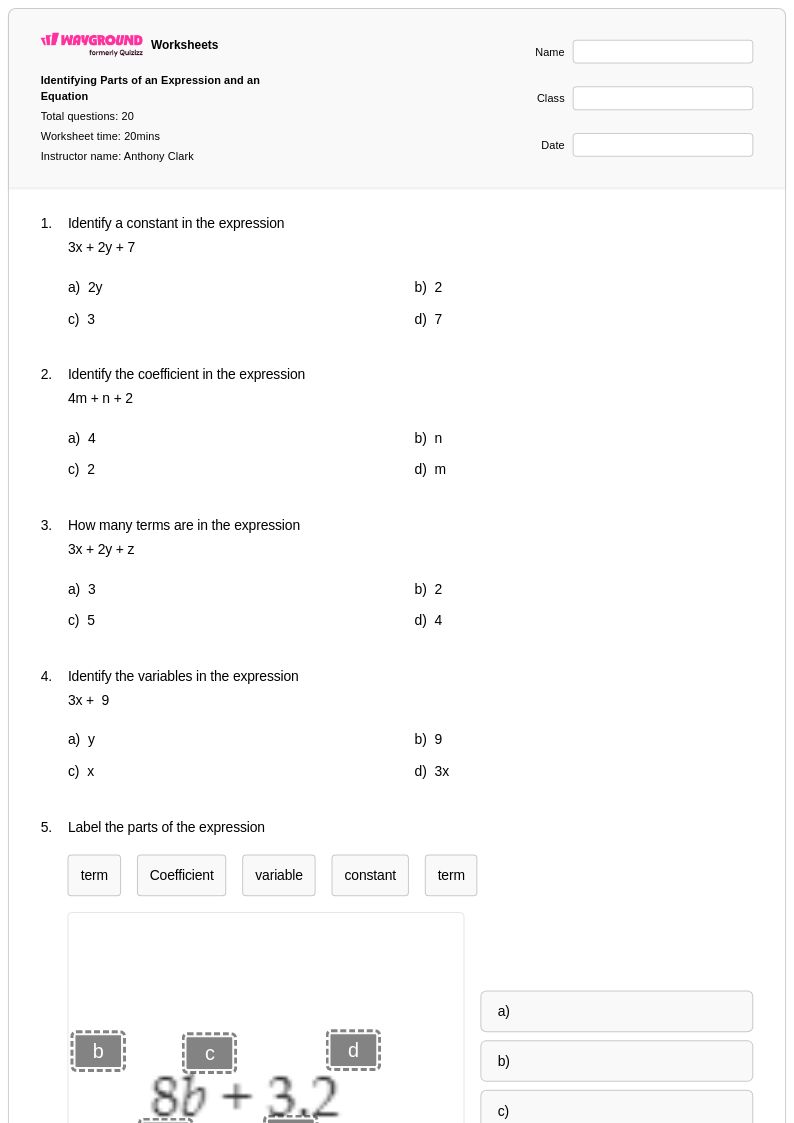
20 Q
6th - Uni
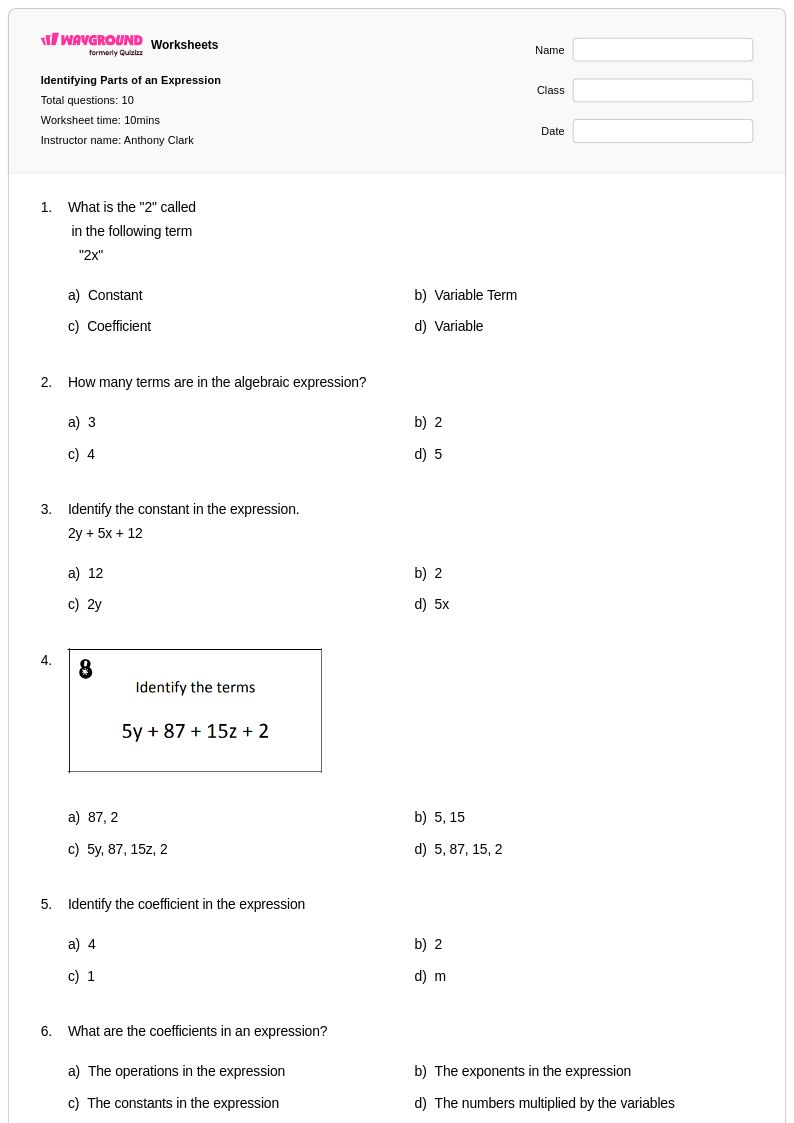
10 Q
6th - Uni
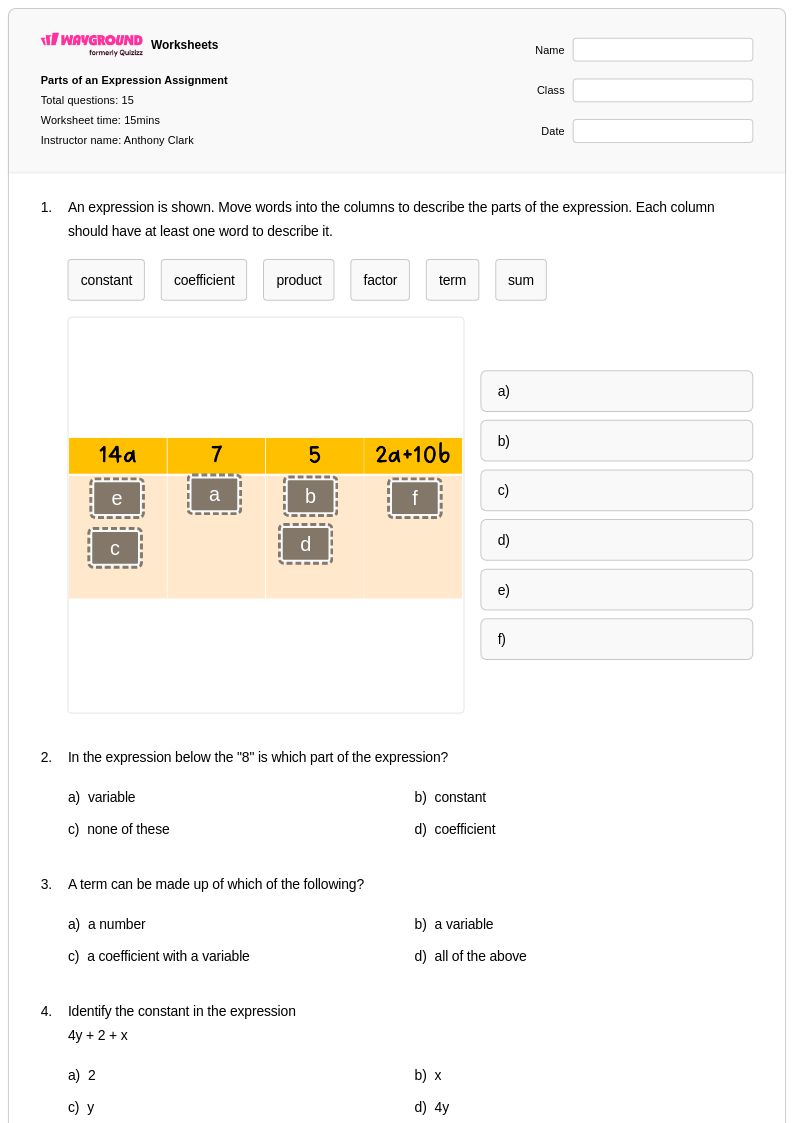
15 Q
6th - Uni
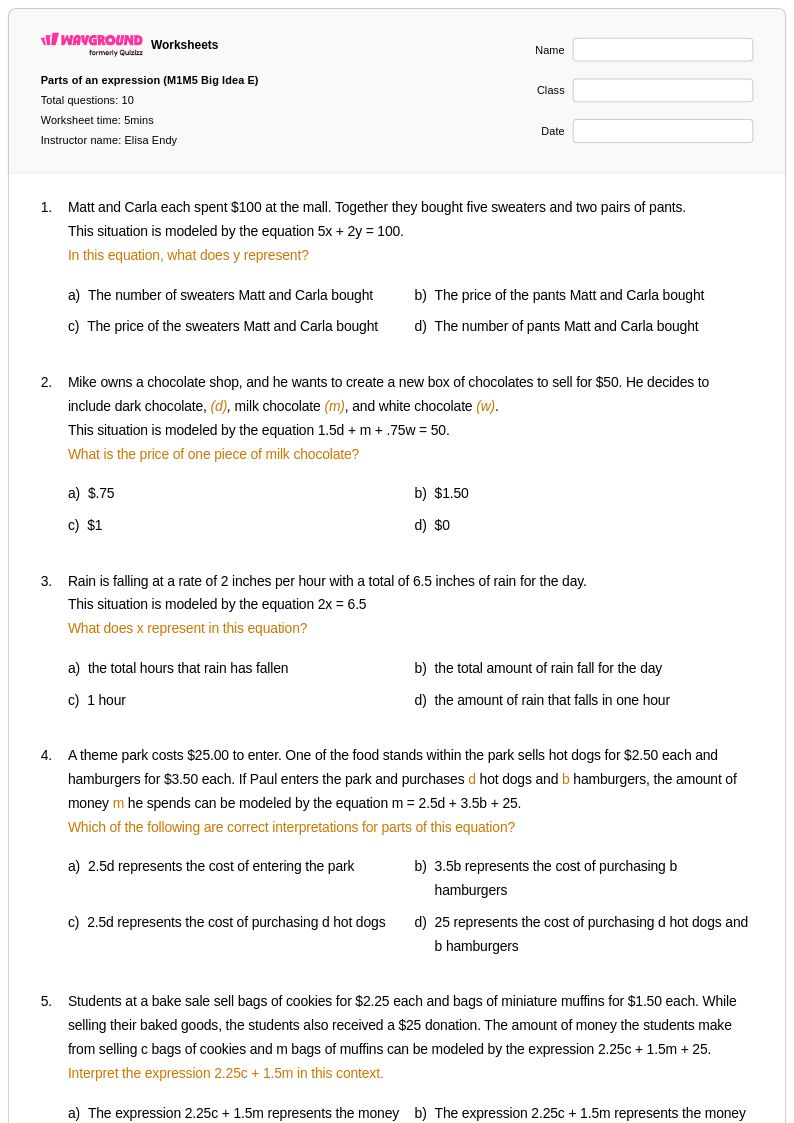
10 Q
9th - 12th
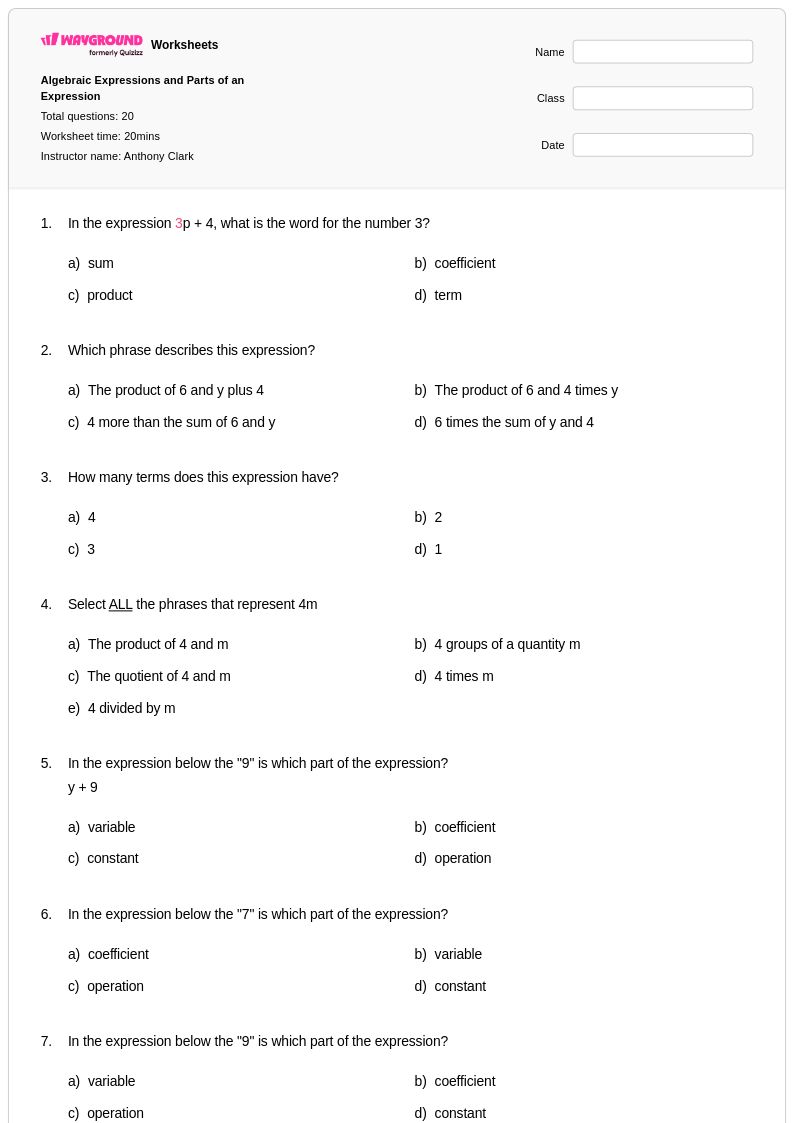
20 Q
6th - Uni
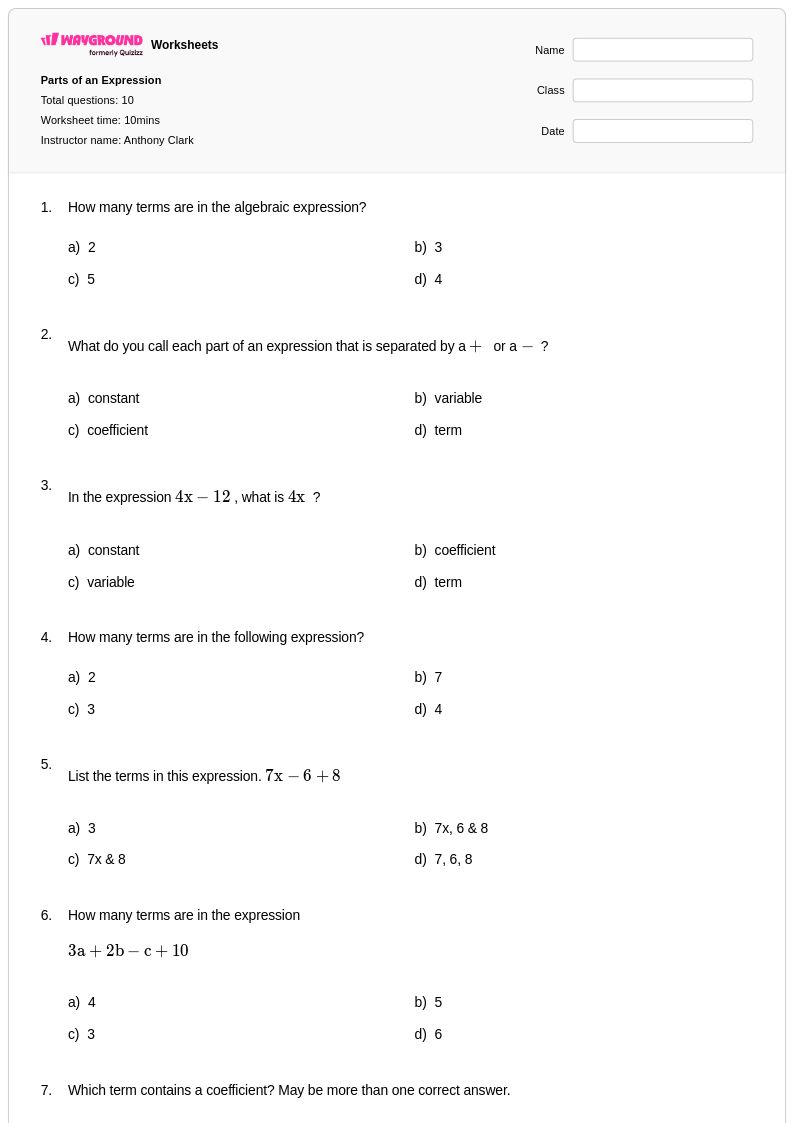
10 Q
6th - Uni
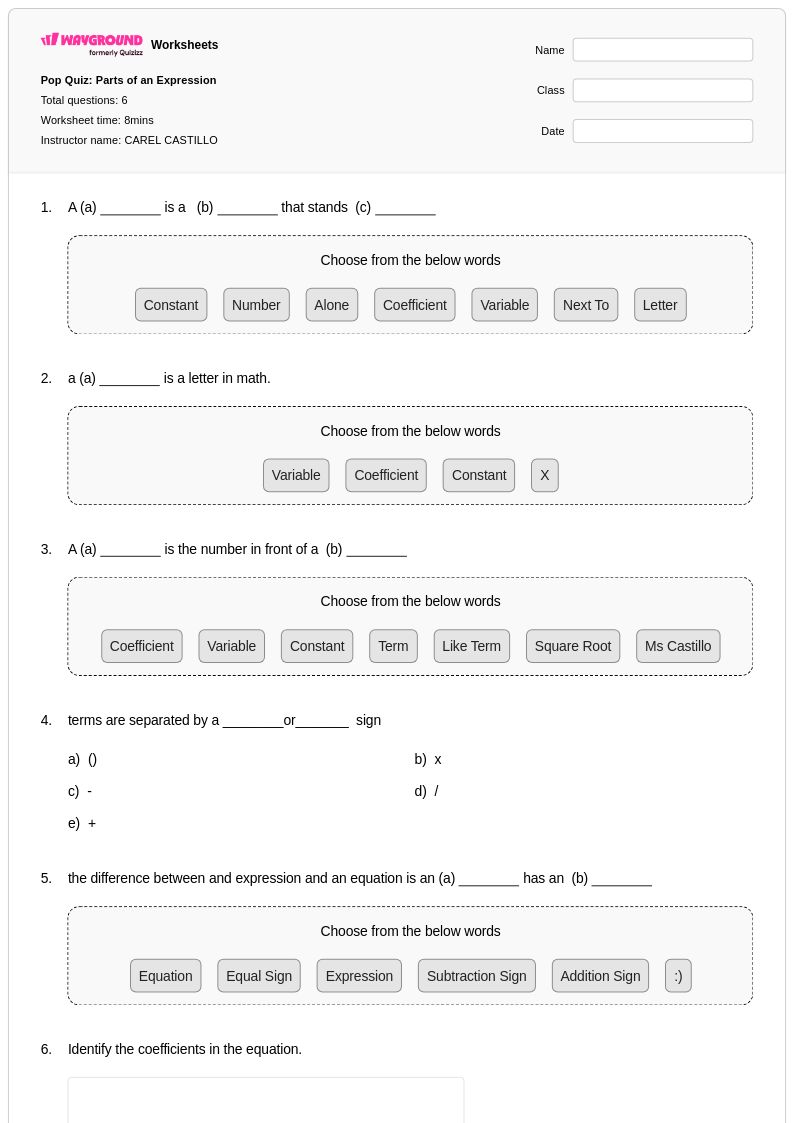
7 Q
9th - 12th
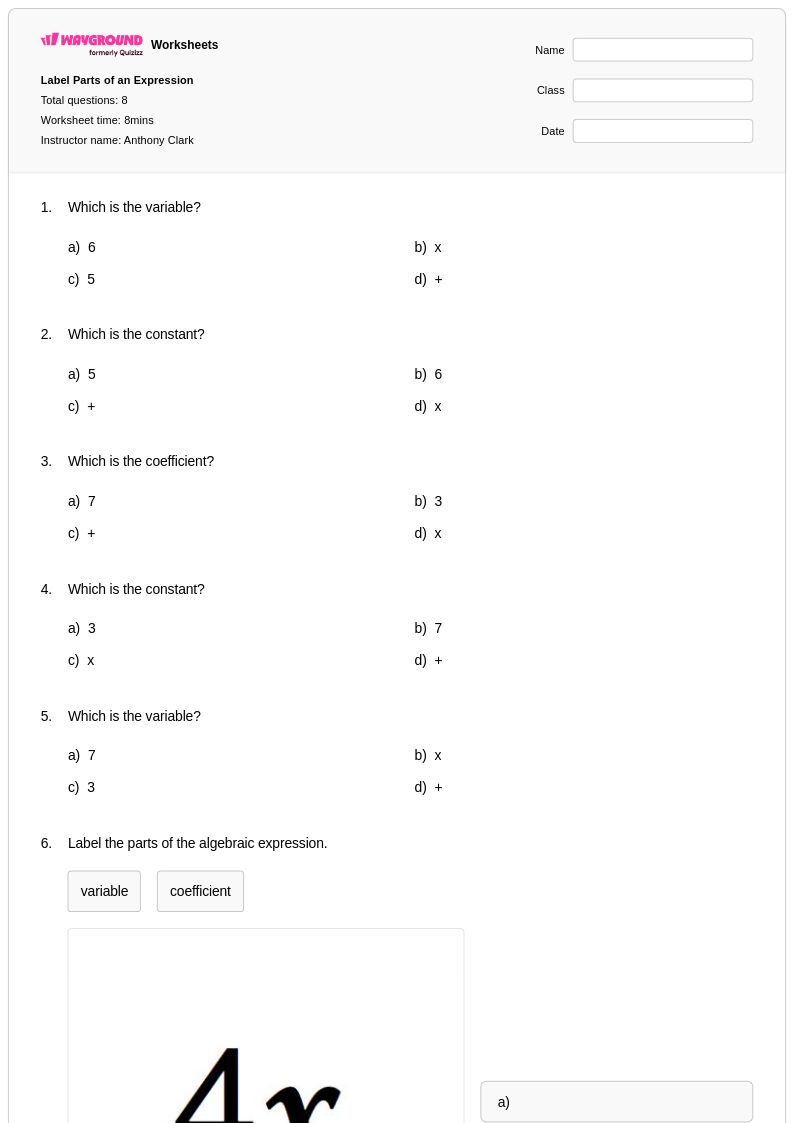
8 Q
6th - Uni
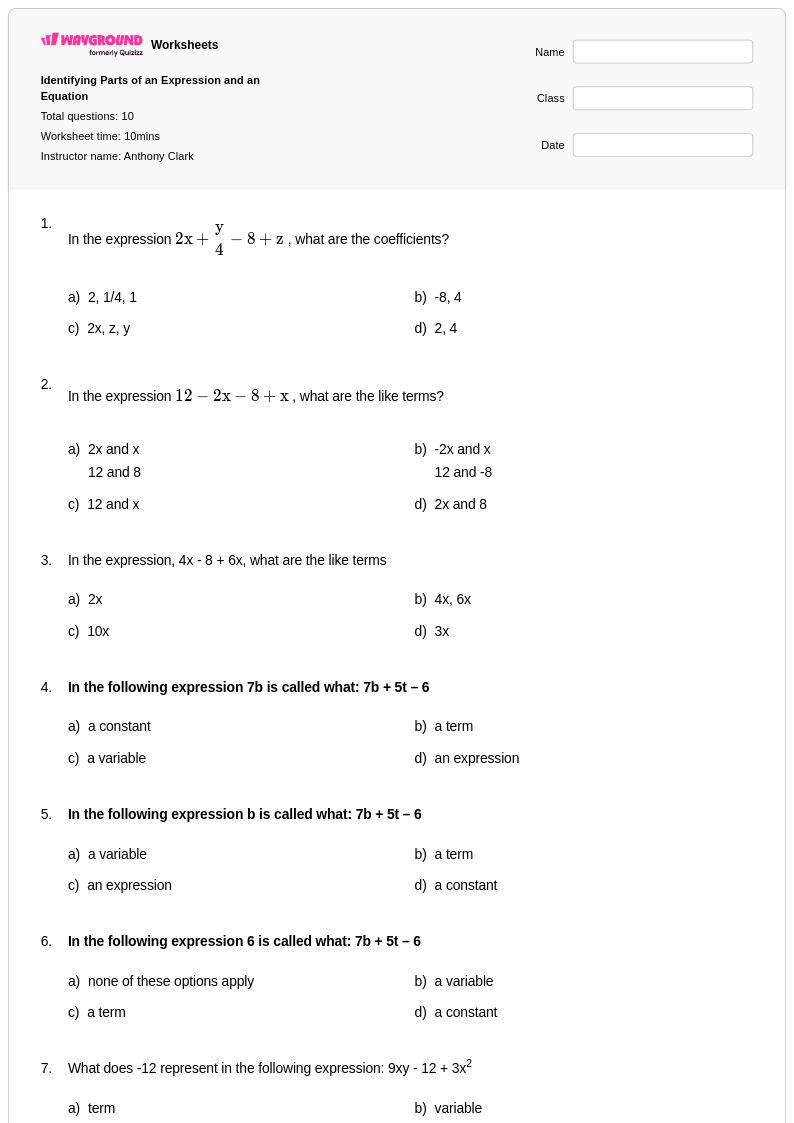
10 Q
6th - Uni
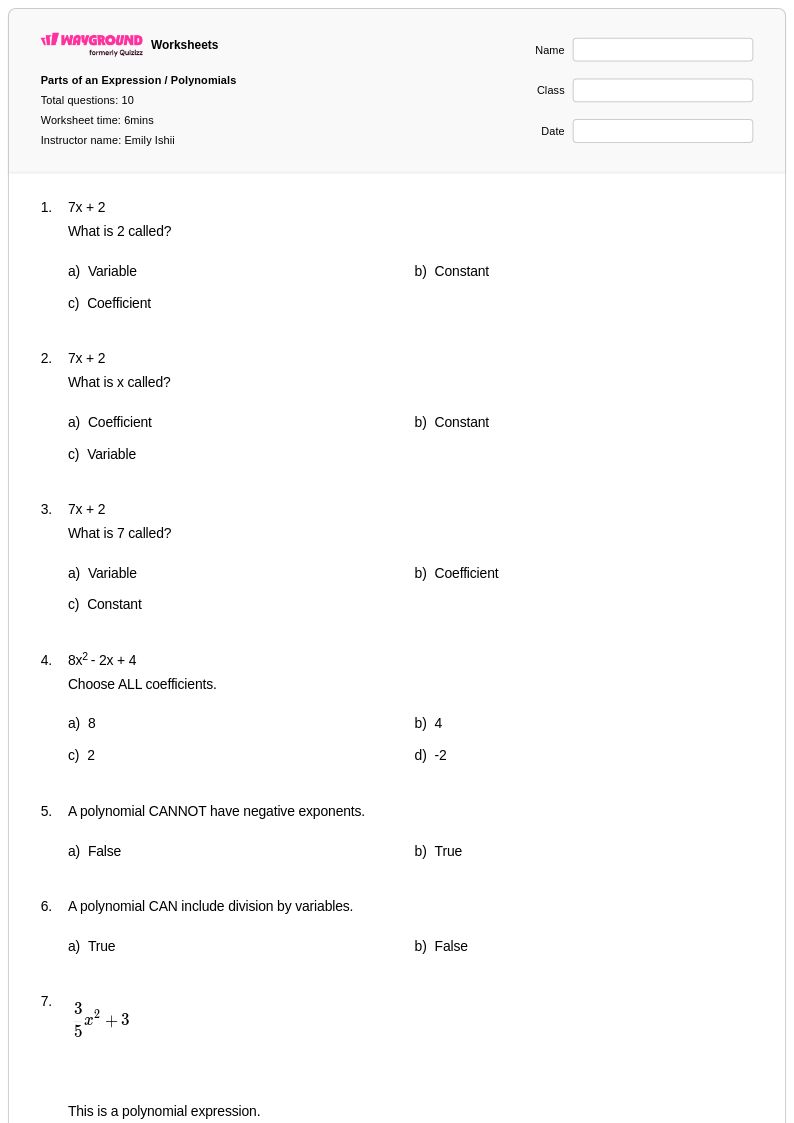
10 Q
9th - 12th
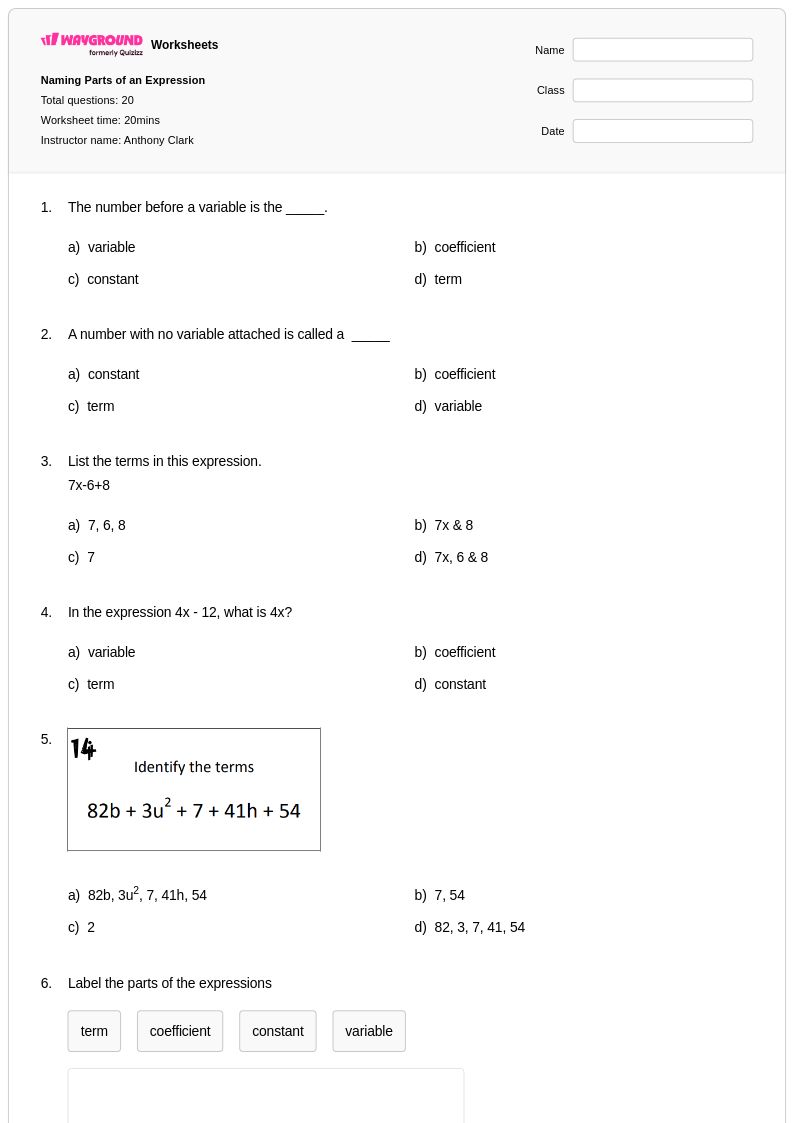
20 Q
6th - Uni
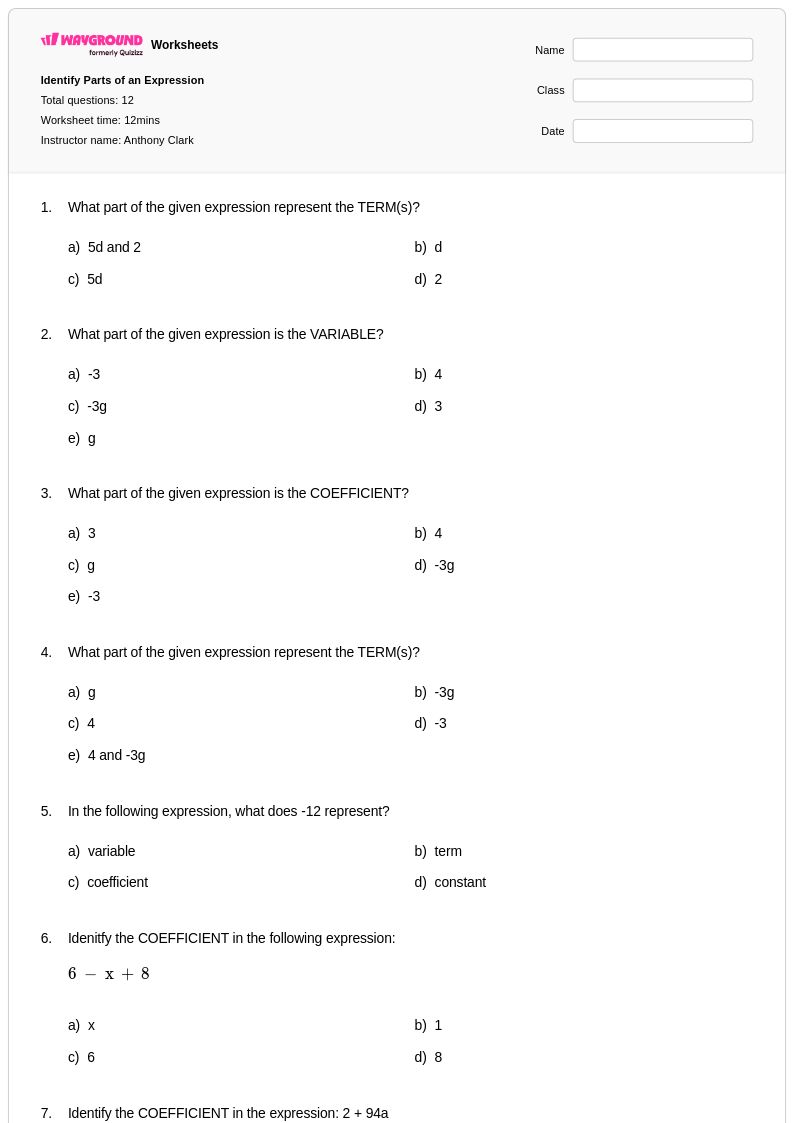
12 Q
6th - Uni
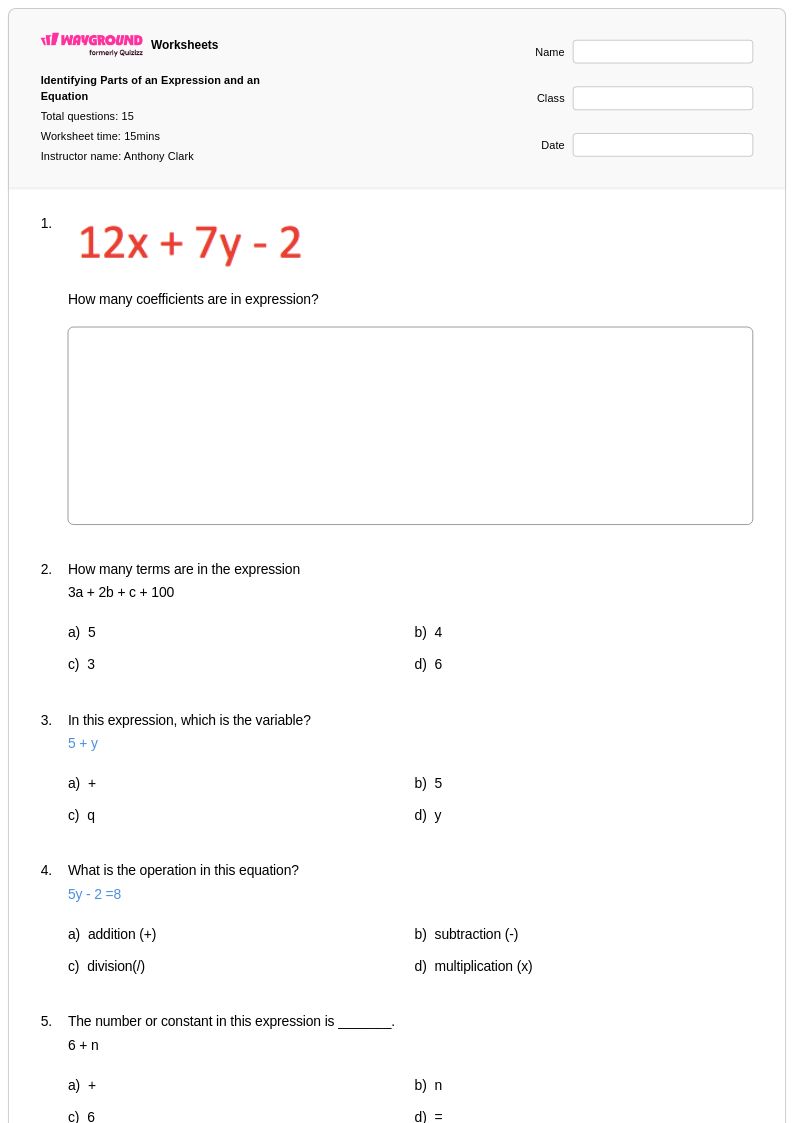
15 Q
6th - Uni
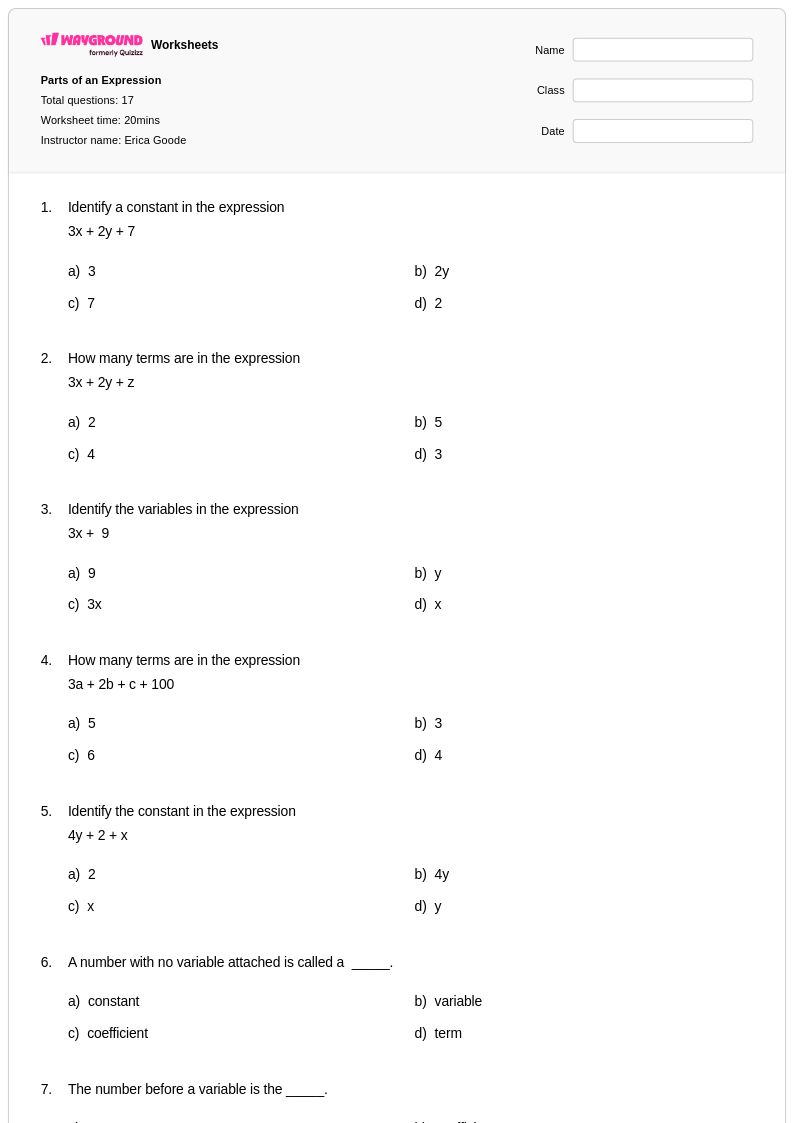
17 Q
9th - 12th
Explore Parts of an Expression Worksheets by Grades
Explore Other Subject Worksheets for grade 12
Explore printable Parts of an Expression worksheets for Grade 12
Parts of an Expression worksheets for Grade 12 students available through Wayground (formerly Quizizz) provide comprehensive practice in identifying and analyzing the fundamental components that make up algebraic expressions. These expertly designed resources help students master the recognition of terms, coefficients, variables, constants, and factors within complex algebraic structures, strengthening their foundation for advanced mathematical concepts. The worksheets feature carefully crafted practice problems that guide students through the systematic breakdown of polynomial expressions, rational expressions, and radical expressions, ensuring they can confidently distinguish between like terms and unlike terms while understanding the role of each component. Each worksheet collection includes a detailed answer key and is available as free printables in convenient pdf format, making them accessible resources for both classroom instruction and independent study.
Wayground (formerly Quizizz) empowers educators with an extensive library of millions of teacher-created worksheet resources specifically focused on algebraic expression analysis, offering robust search and filtering capabilities that allow instructors to quickly locate materials aligned with curriculum standards and student ability levels. The platform's sophisticated differentiation tools enable teachers to customize worksheets according to individual learning needs, providing options for remediation support for struggling students and enrichment challenges for advanced learners. Teachers can seamlessly integrate these resources into their lesson planning workflow, utilizing both printable pdf versions for traditional paper-based activities and digital formats for technology-enhanced learning environments. This flexibility supports diverse instructional approaches, whether educators need targeted skill practice for formative assessment, comprehensive review materials for summative evaluation, or supplementary resources to reinforce classroom instruction on the essential building blocks of algebraic expressions.