
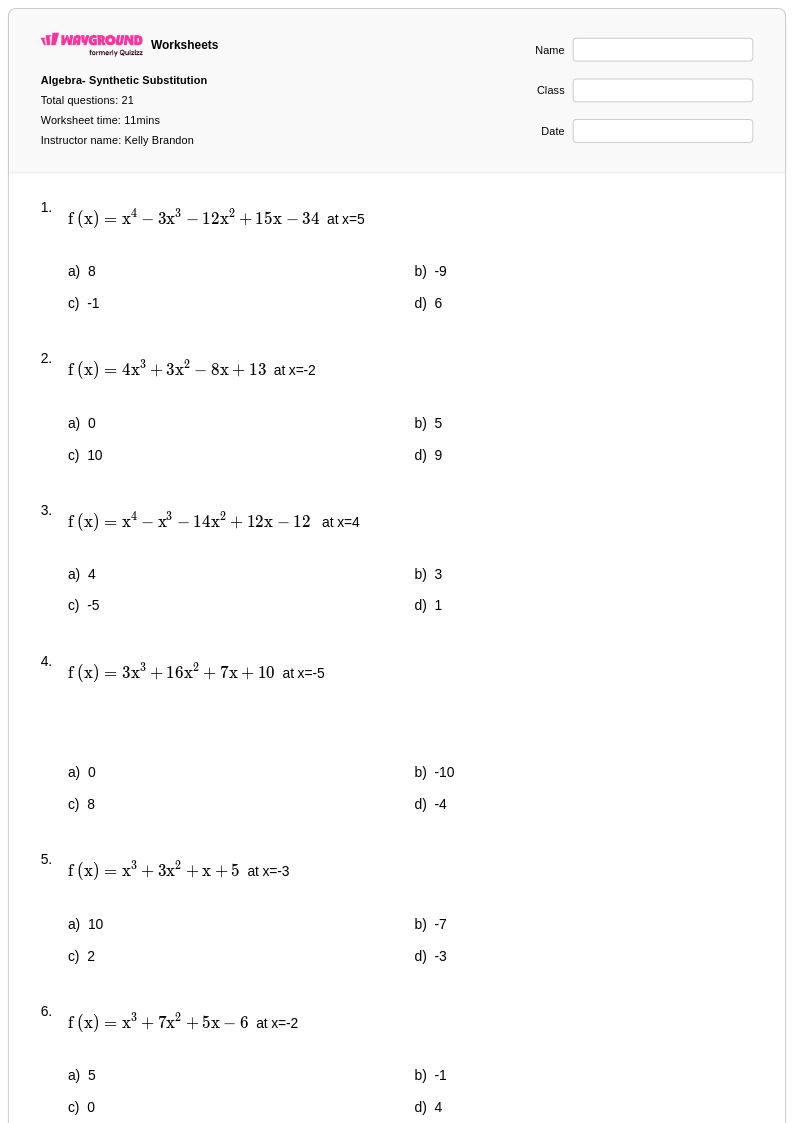
21 Q
9th - 12th
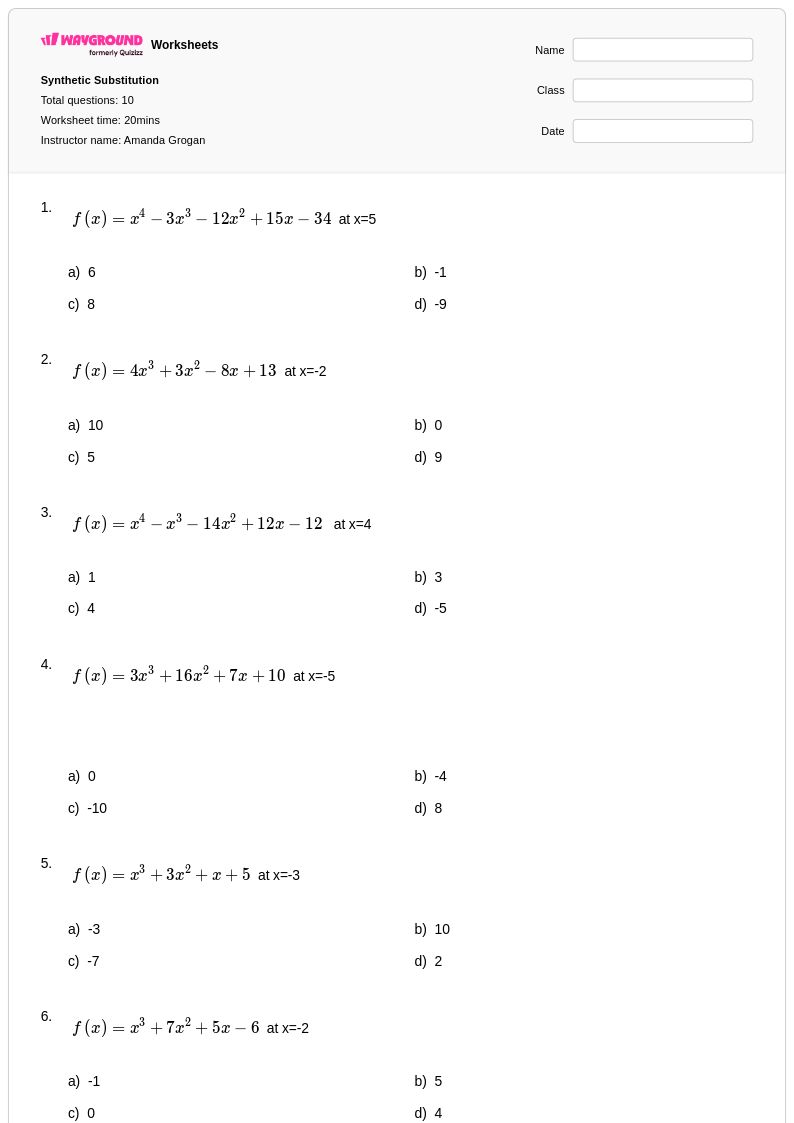
10 Q
10th - 12th
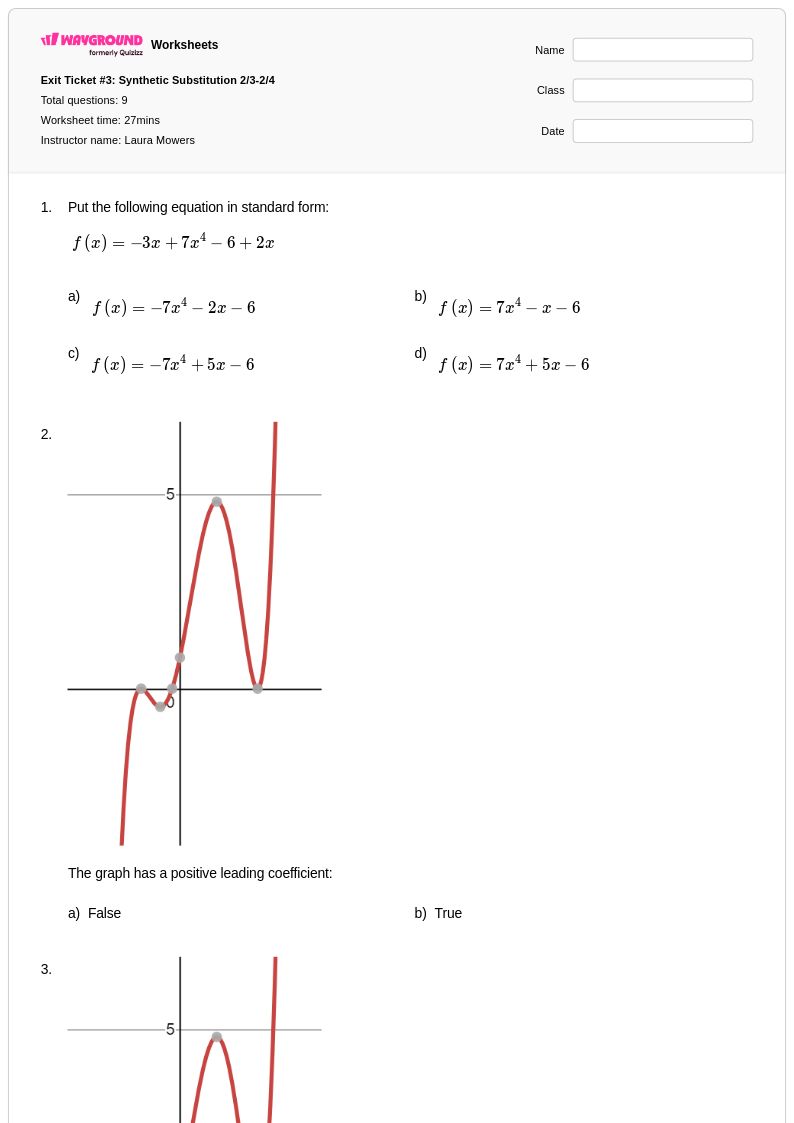
9 Q
12th
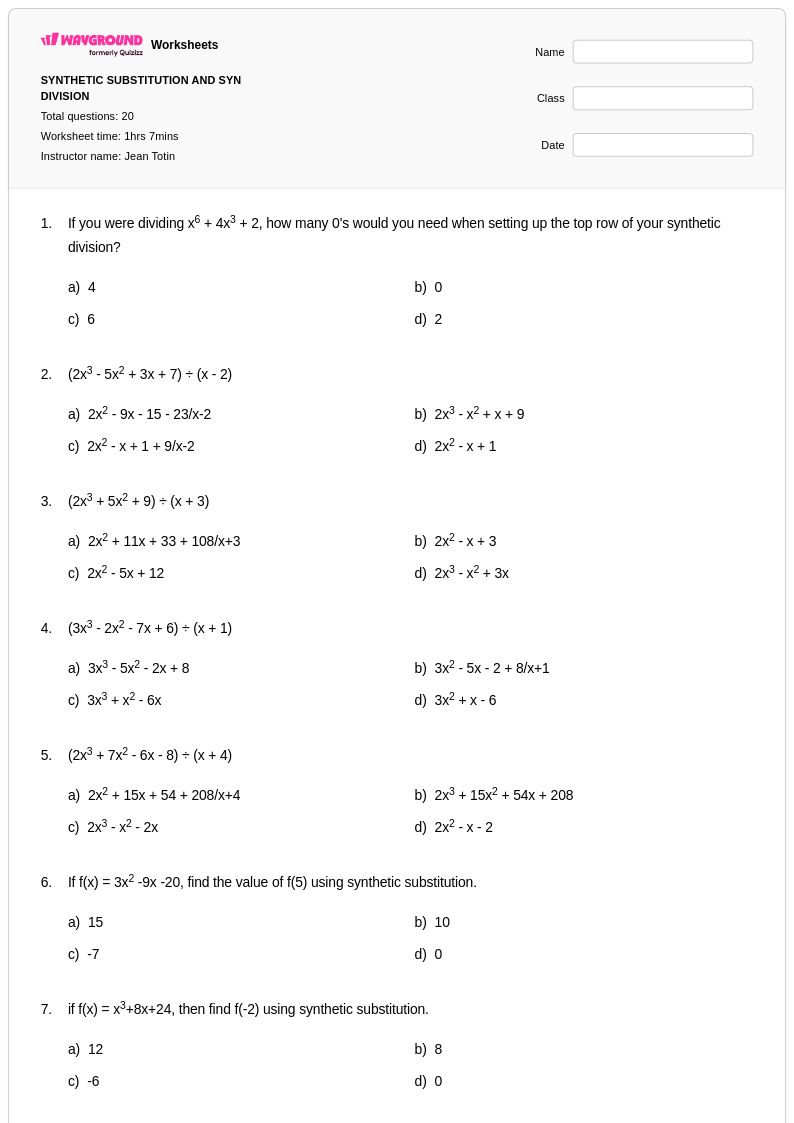
20 Q
10th - 12th
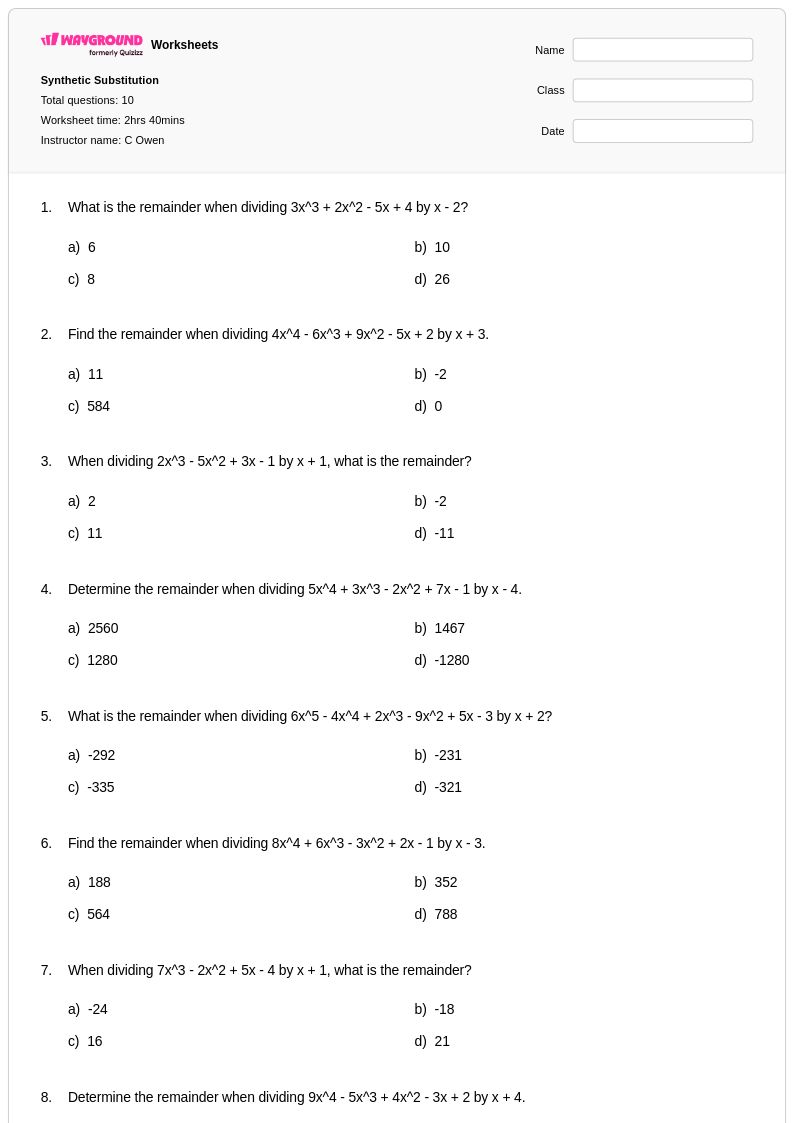
10 Q
12th
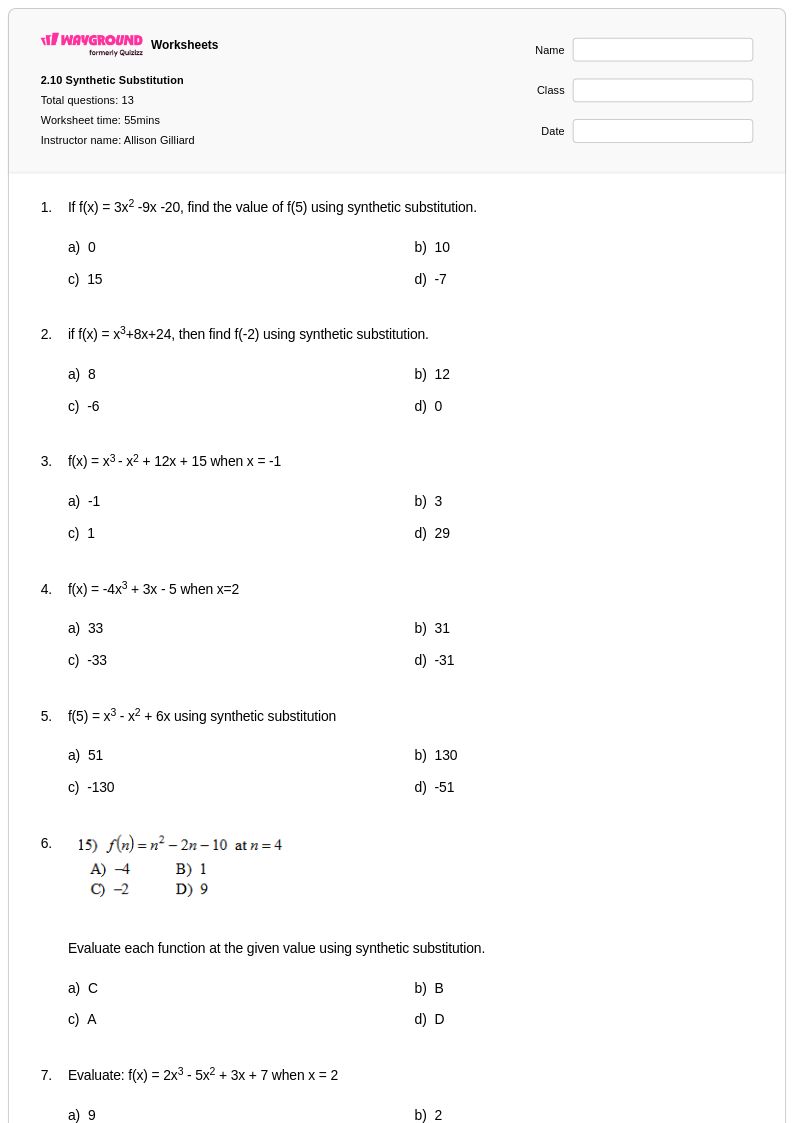
13 Q
9th - 12th
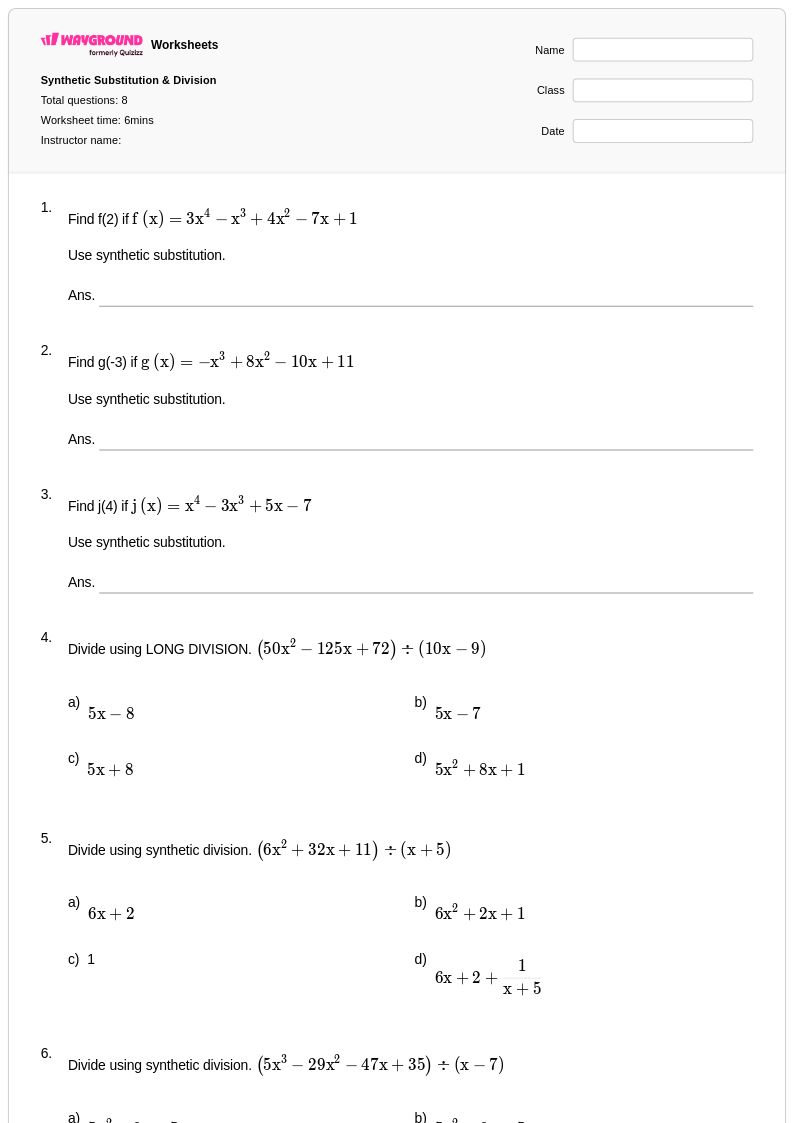
8 Q
9th - 12th
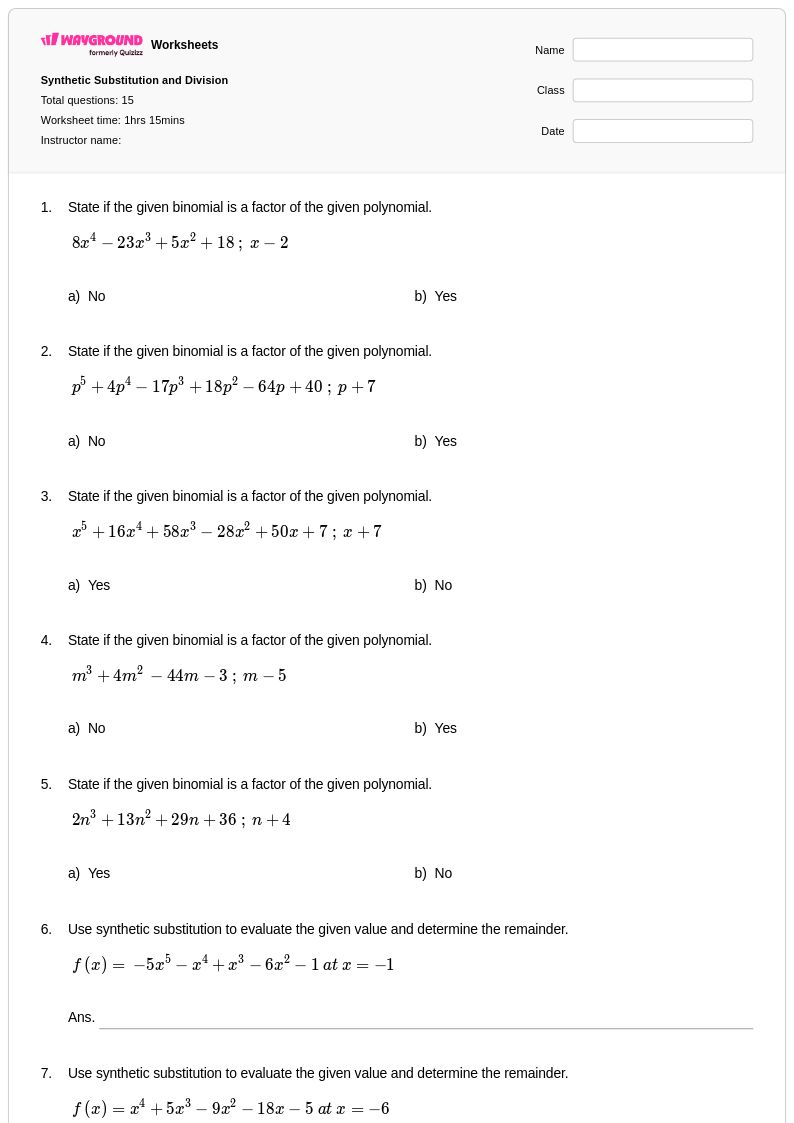
15 Q
9th - 12th
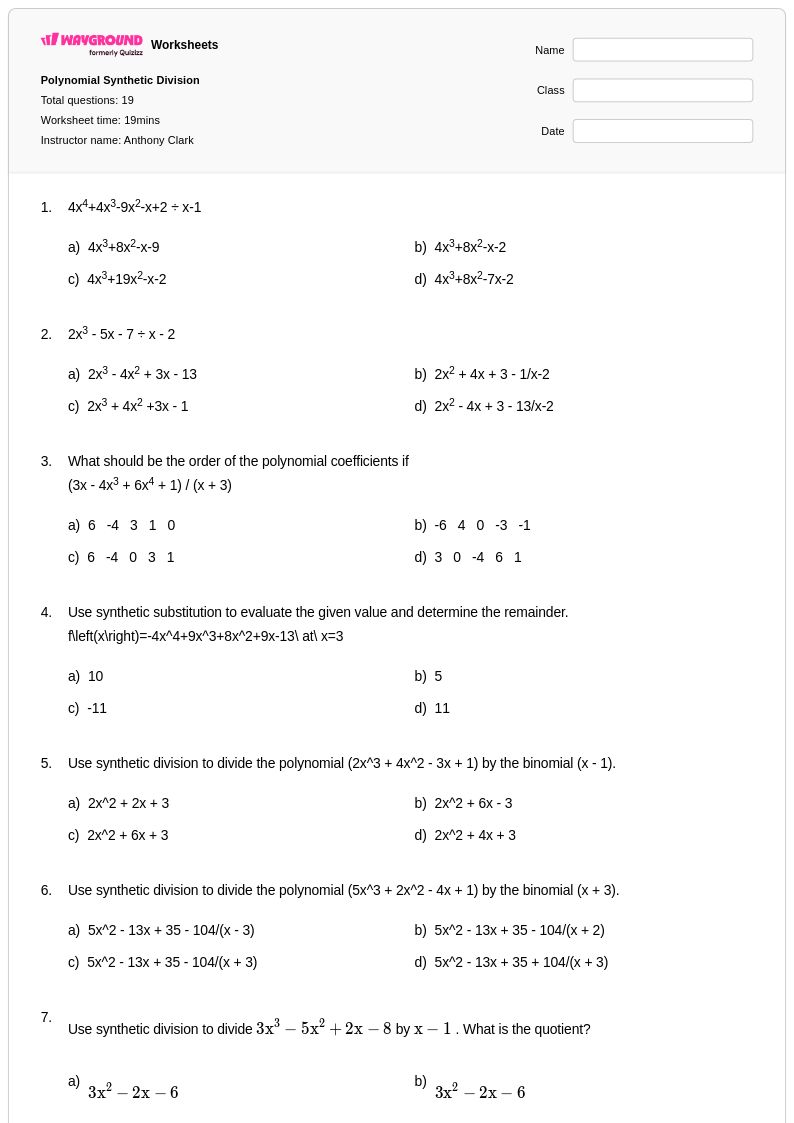
19 Q
9th - Uni
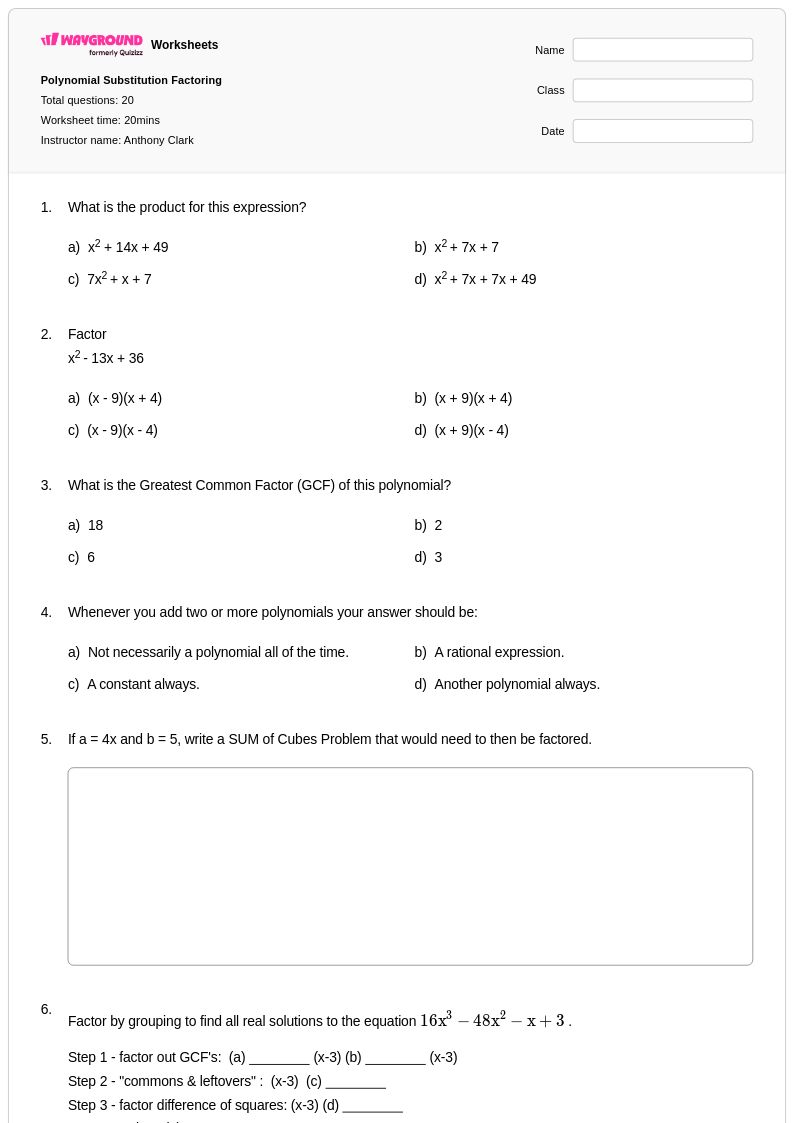
20 Q
9th - Uni
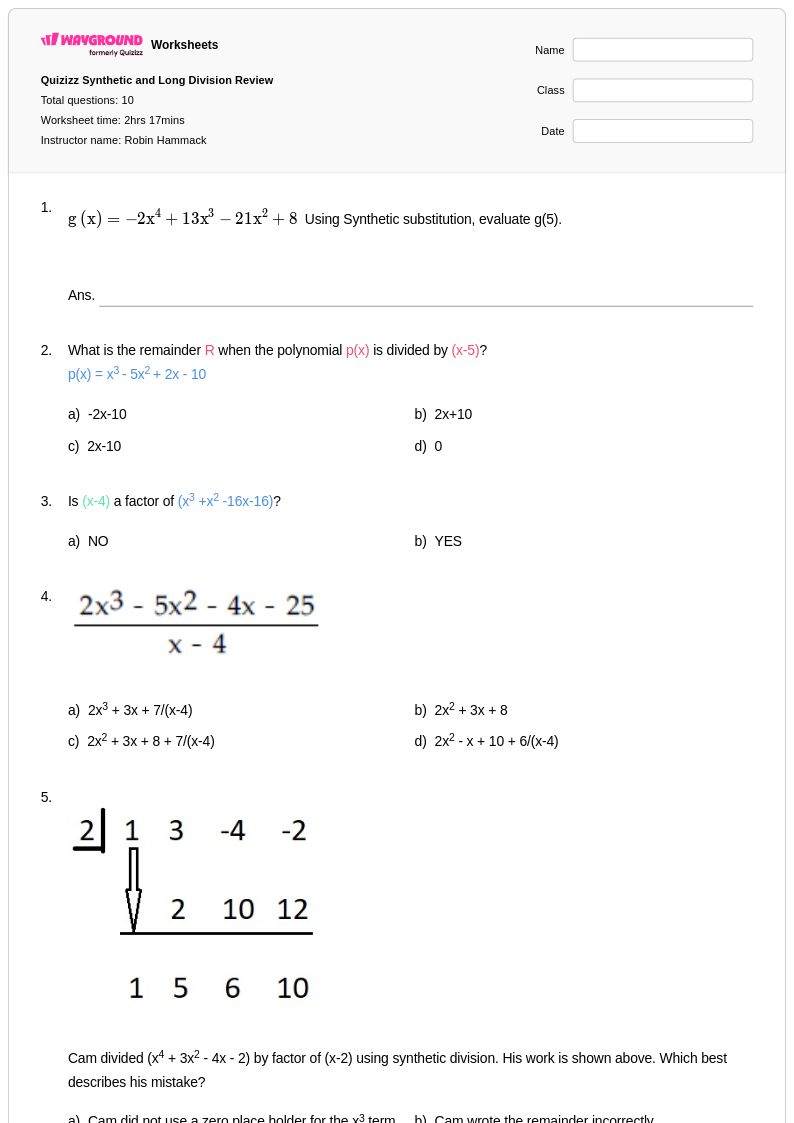
10 Q
9th - 12th
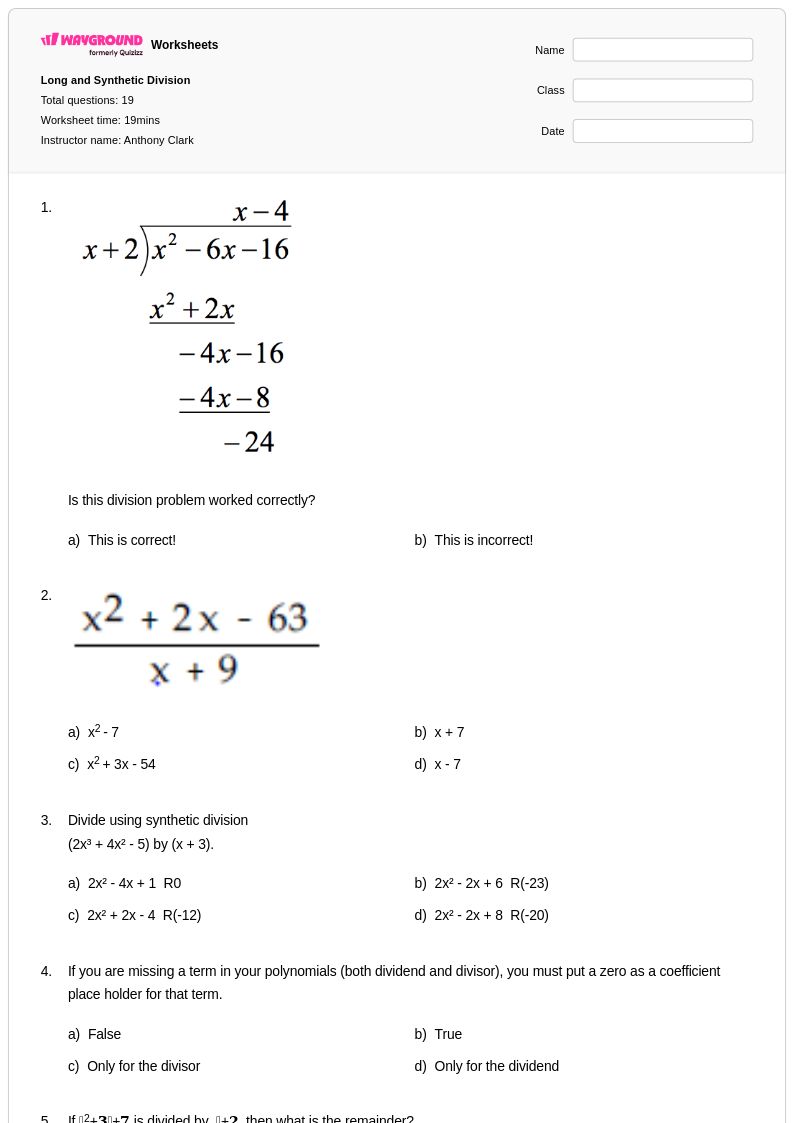
19 Q
10th - Uni
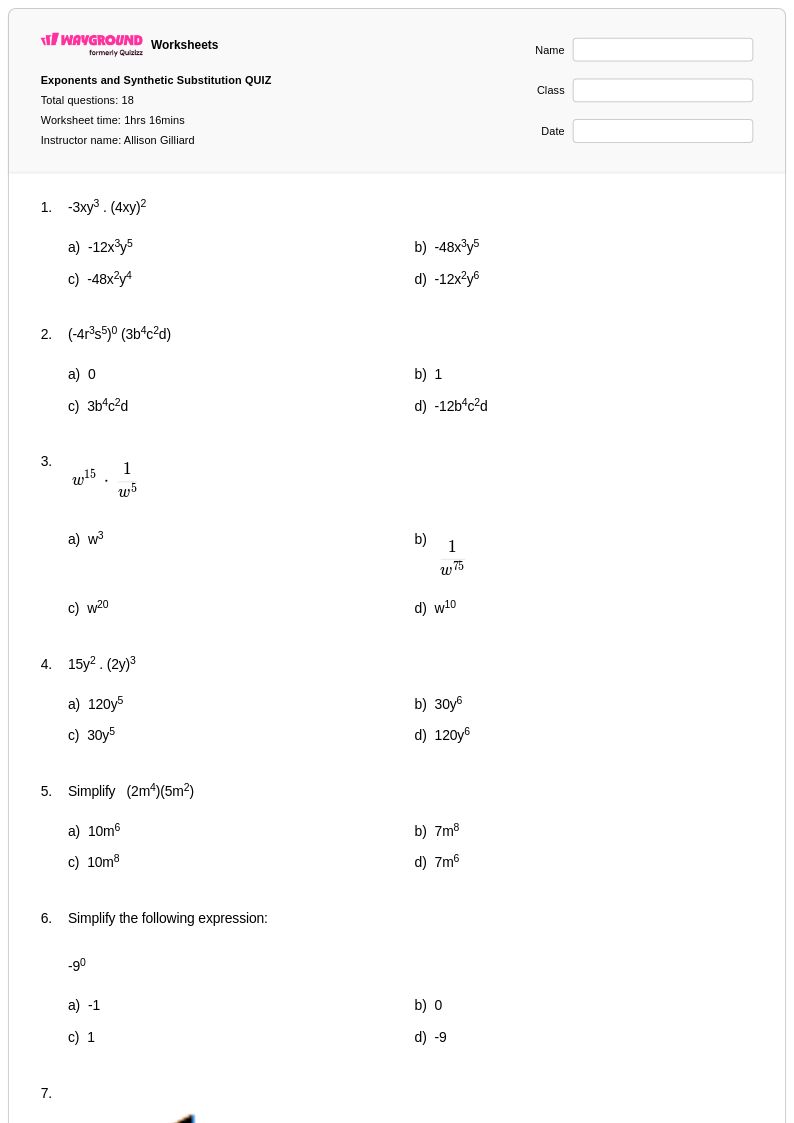
18 Q
9th - 12th
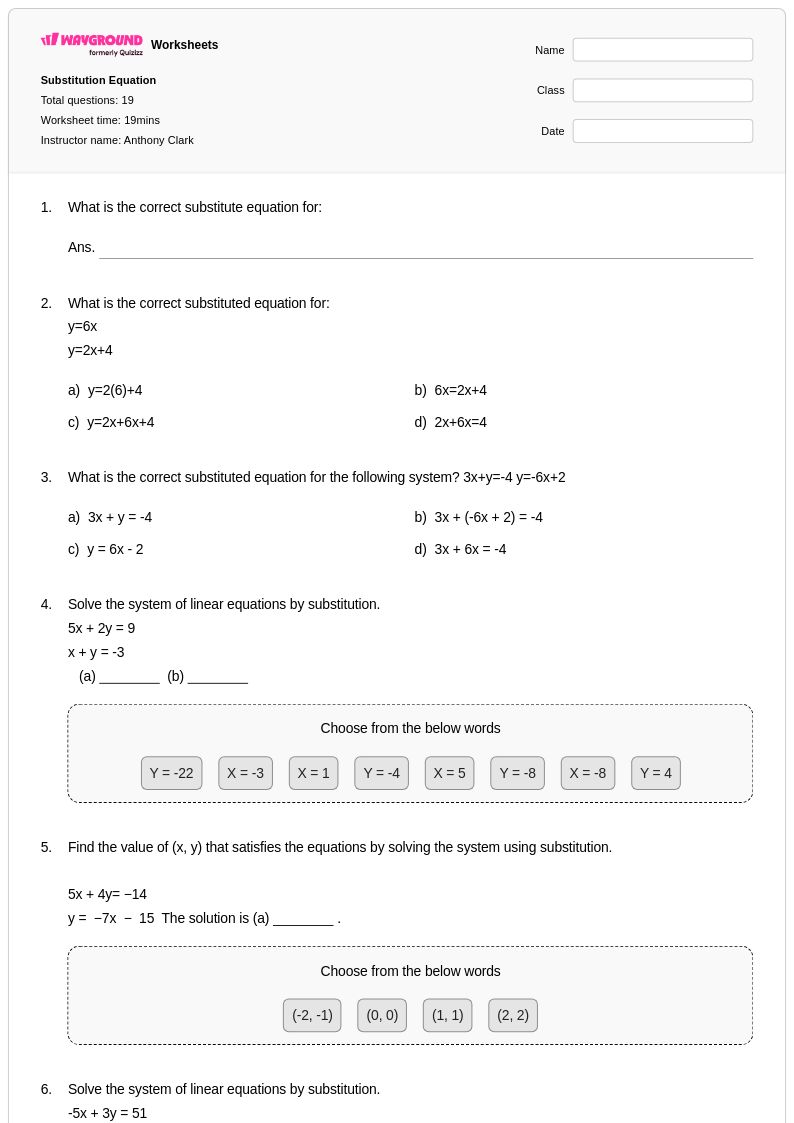
19 Q
9th - Uni
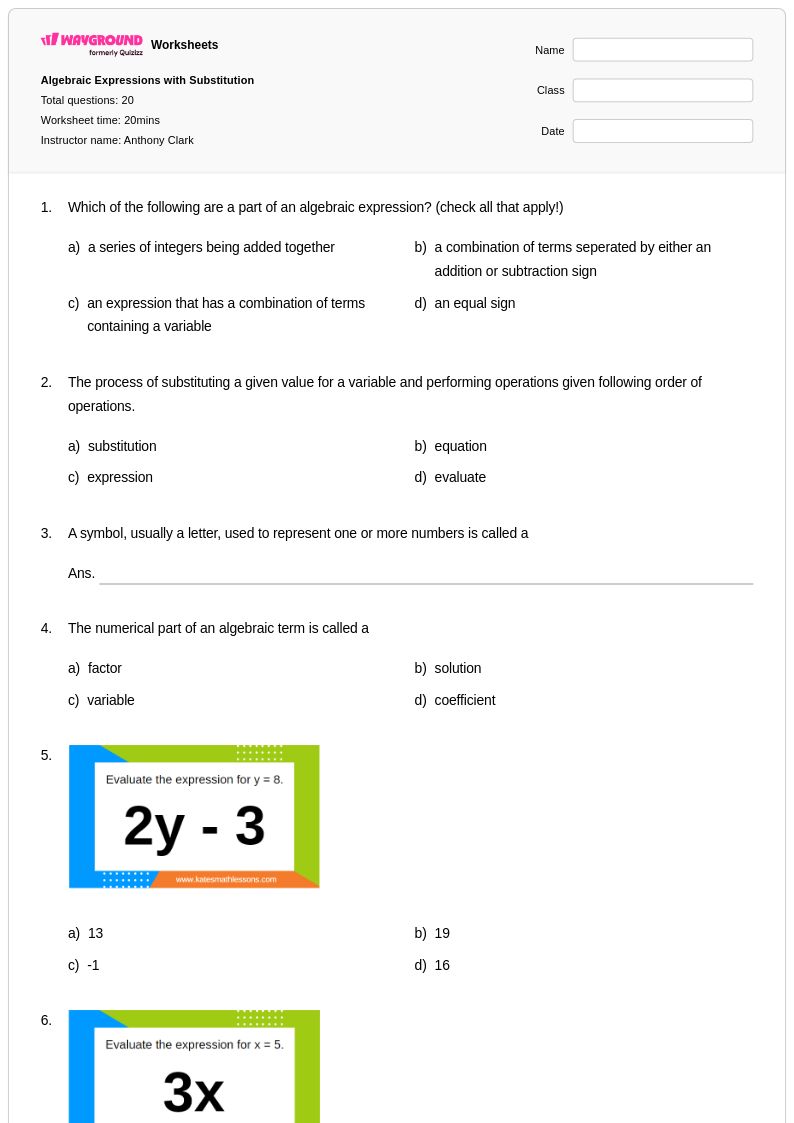
20 Q
6th - Uni
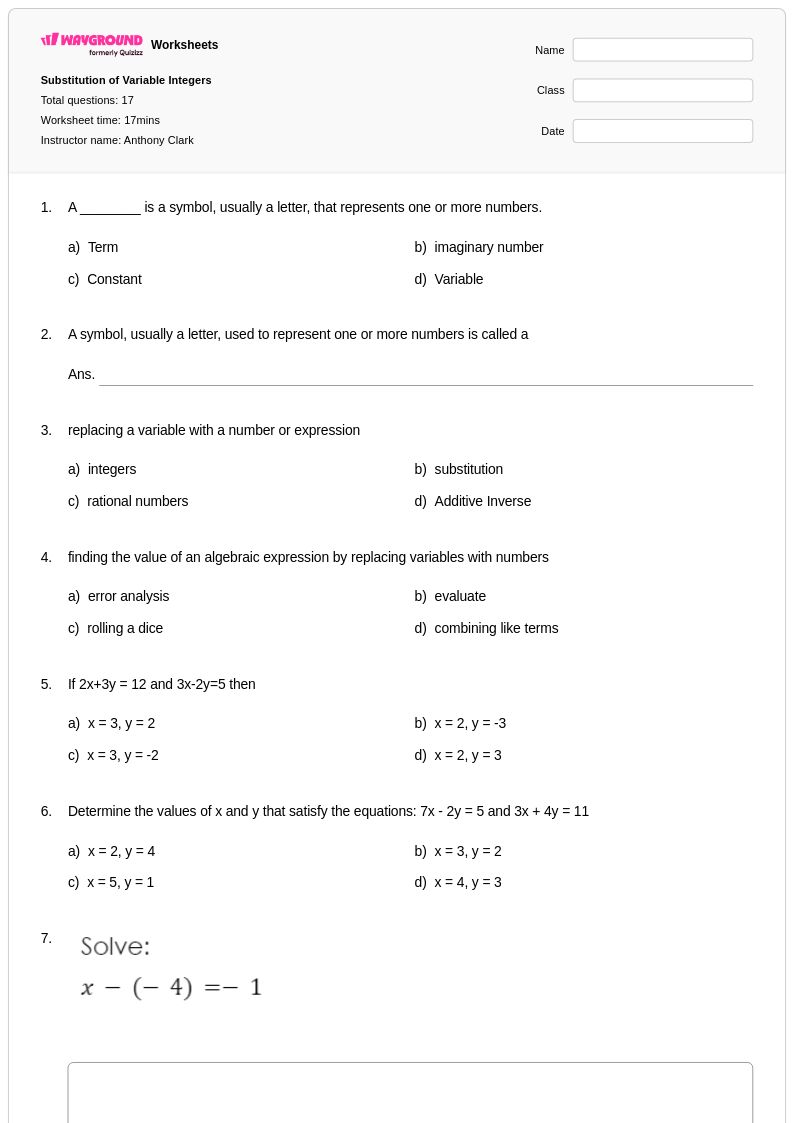
17 Q
8th - Uni
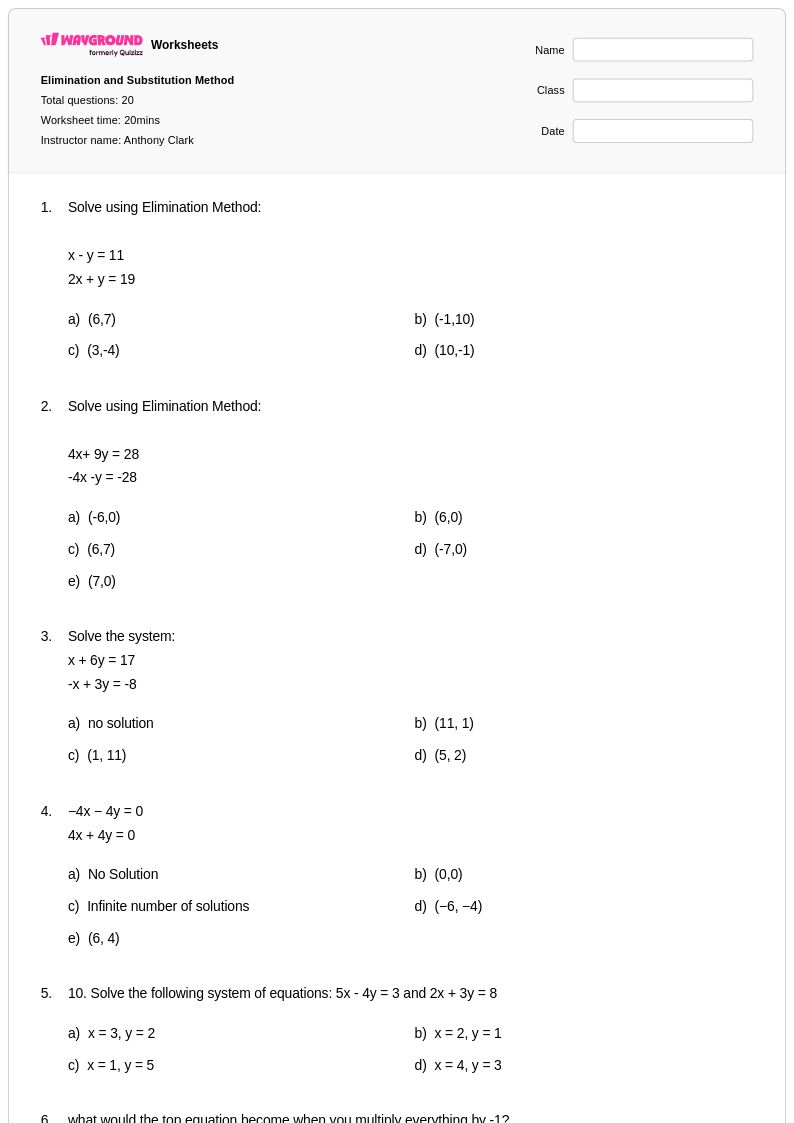
20 Q
9th - Uni
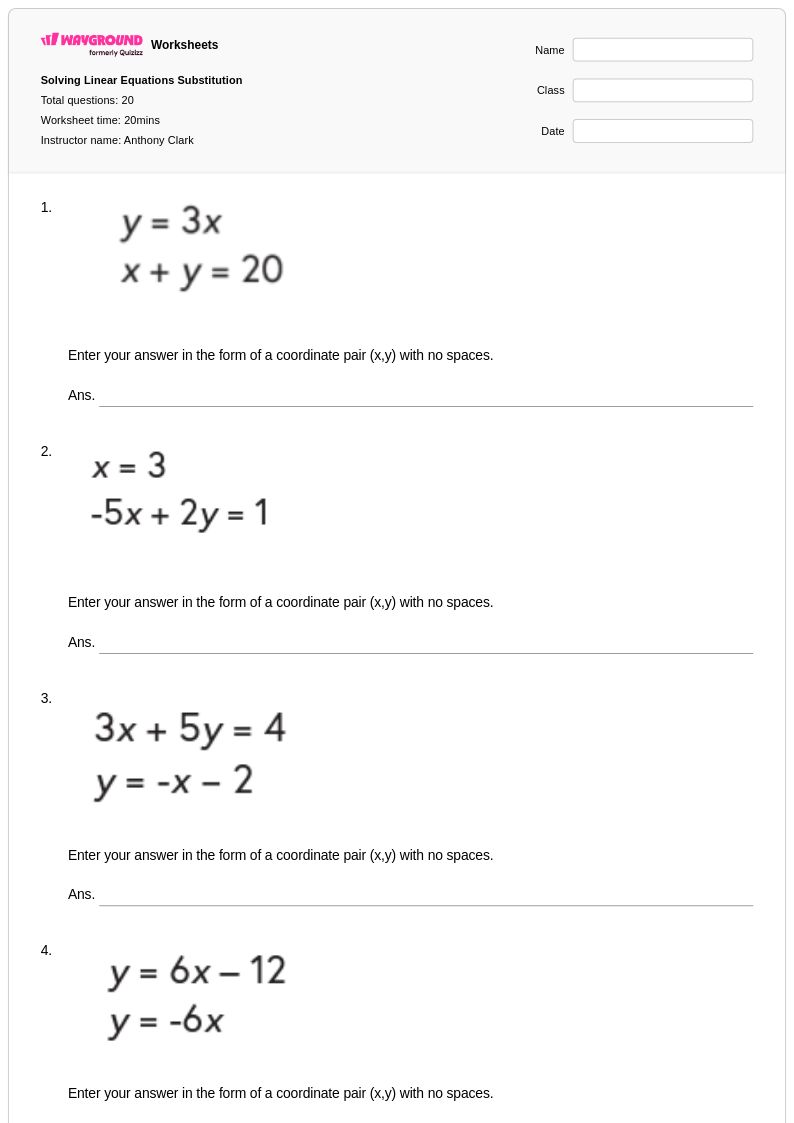
20 Q
9th - Uni
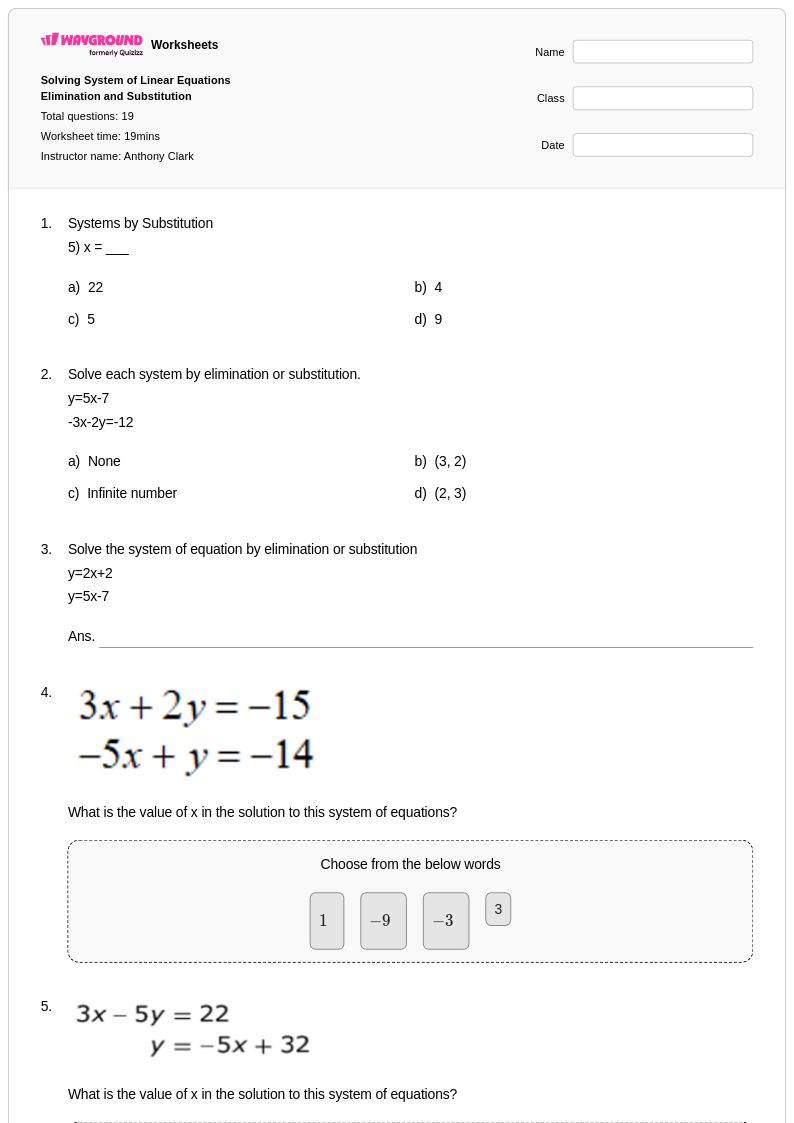
19 Q
9th - Uni
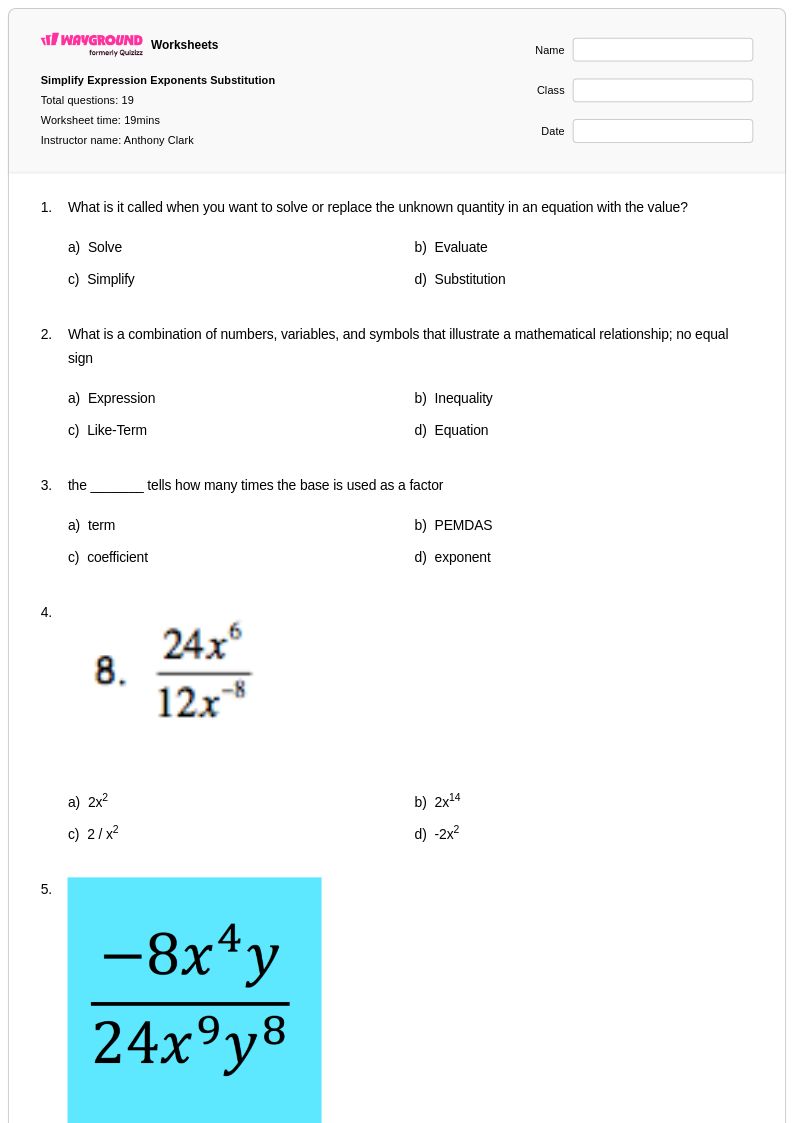
19 Q
8th - Uni
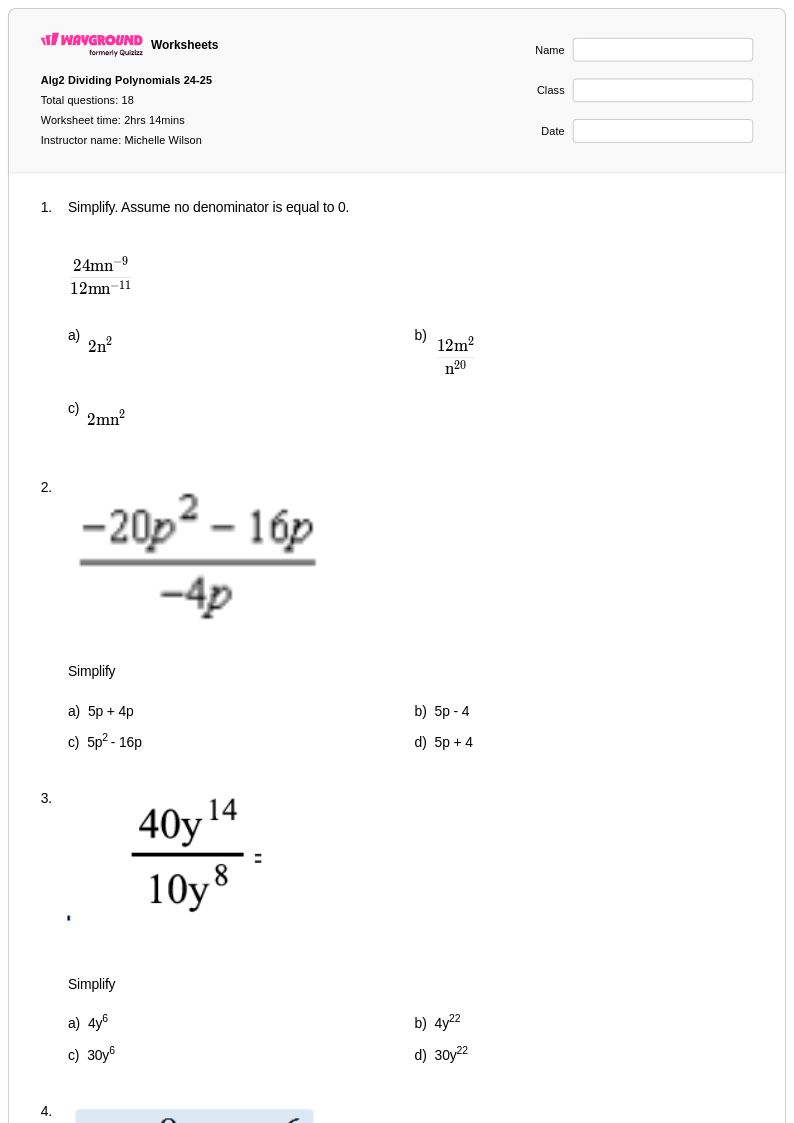
18 Q
9th - 12th
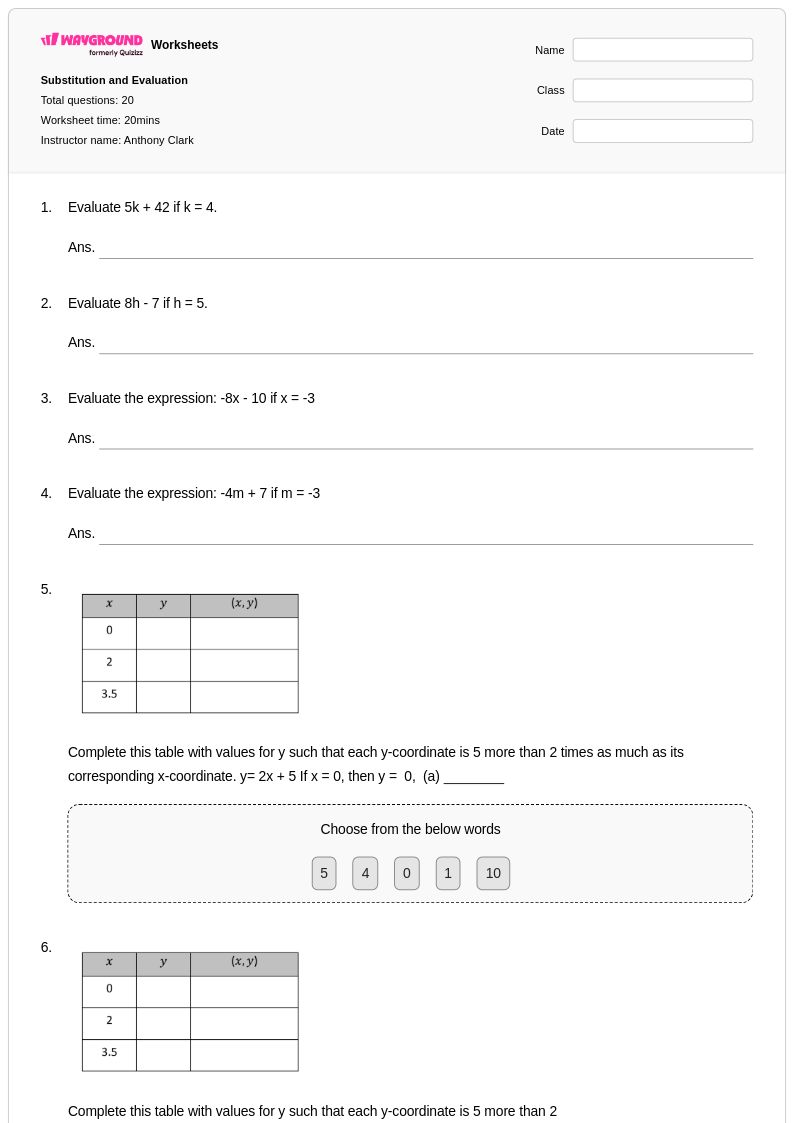
20 Q
8th - Uni
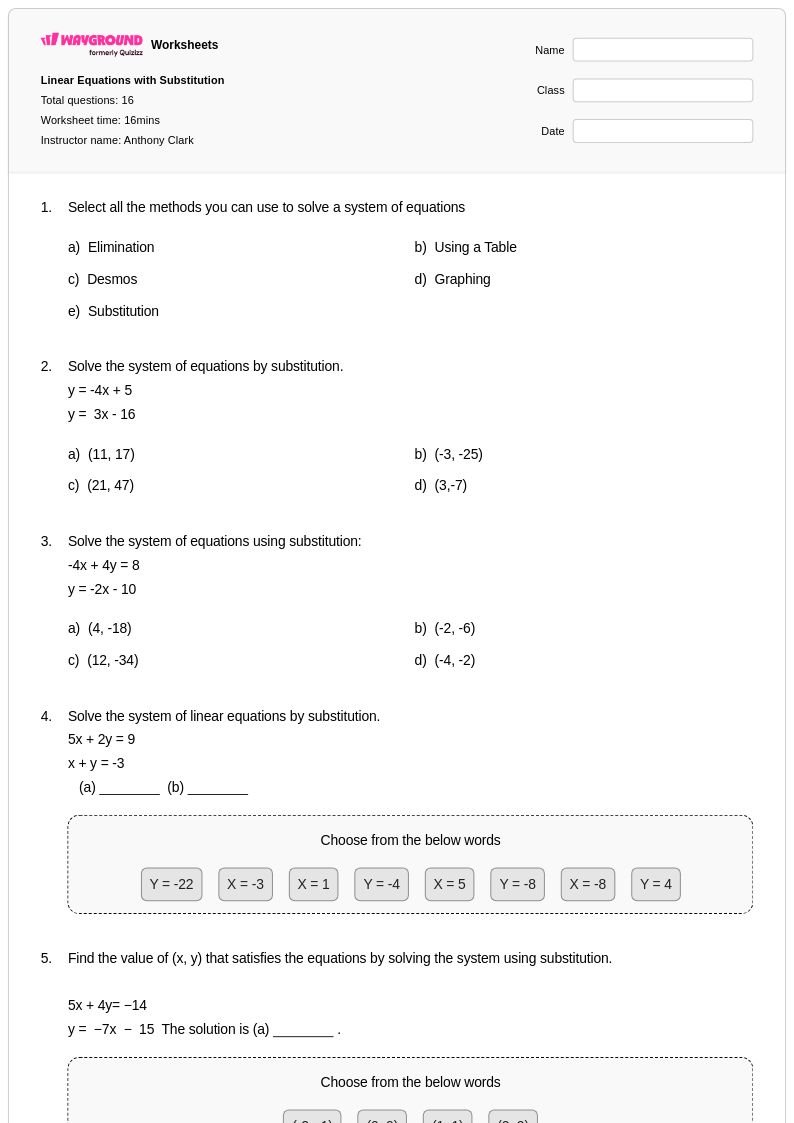
16 Q
8th - Uni
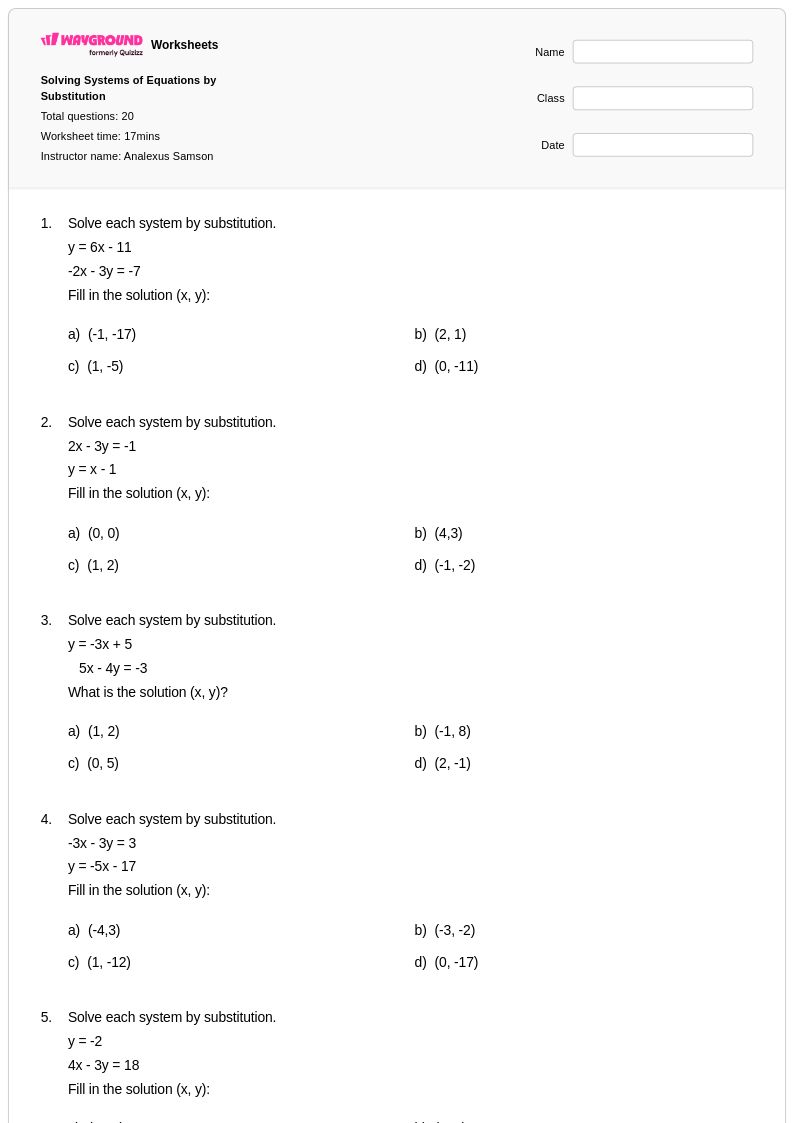
20 Q
9th - Uni
Explore Other Subject Worksheets for grade 12
Explore printable Synthetic Substitution worksheets for Grade 12
Synthetic substitution worksheets for Grade 12 students available through Wayground (formerly Quizizz) provide comprehensive practice with this essential polynomial division technique that streamlines the evaluation of polynomials at specific values. These carefully designed worksheets strengthen students' abilities to apply synthetic substitution as an efficient alternative to long division when dividing polynomials by linear factors of the form (x - c), while simultaneously building proficiency in evaluating polynomial functions and finding remainders. The collection includes structured practice problems that progress from basic synthetic substitution with simple polynomials to more complex applications involving higher-degree functions, with complete answer keys provided to support independent learning. Students work through free printables that cover the systematic process of setting up synthetic substitution tables, performing the multiplication and addition steps accurately, and interpreting results to determine quotients and remainders in polynomial division problems.
Wayground (formerly Quizizz) supports mathematics educators with an extensive library of millions of teacher-created synthetic substitution resources specifically aligned with Grade 12 algebra standards and curriculum expectations. The platform's advanced search and filtering capabilities allow teachers to quickly locate worksheets that match their specific instructional needs, whether focusing on basic synthetic substitution procedures, applications to polynomial graphing, or connections to the Remainder Theorem. Teachers can access differentiation tools that enable them to modify existing worksheets or create customized versions that accommodate varying skill levels within their classrooms, supporting both remediation for students who need additional practice with fundamental concepts and enrichment opportunities for advanced learners ready to explore complex polynomial applications. All resources are available in flexible digital formats and printable PDF versions, making it easy for educators to integrate synthetic substitution practice into their lesson planning while providing targeted skill development that prepares students for advanced calculus concepts.
FAQs
How should I review synthetic substitution with Grade 12 students?
What synthetic substitution problems are useful for Grade 12 practice?
What synthetic substitution mistakes do Grade 12 students still make?
How can I use these Grade 12 synthetic substitution worksheets?
How does synthetic substitution fit the Common Core high school algebra progression?
How can I differentiate synthetic substitution review in Grade 12?
Is synthetic substitution appropriate for Grade 12 math?