
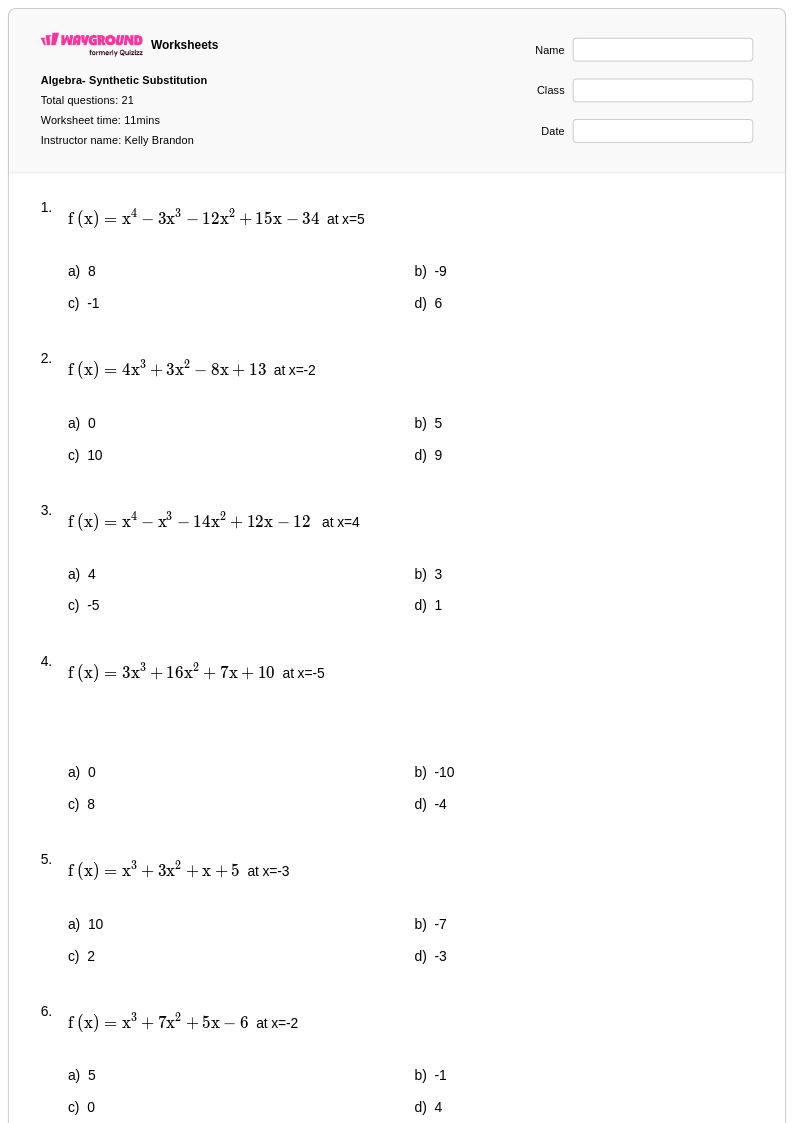
21 Q
9th - 12th
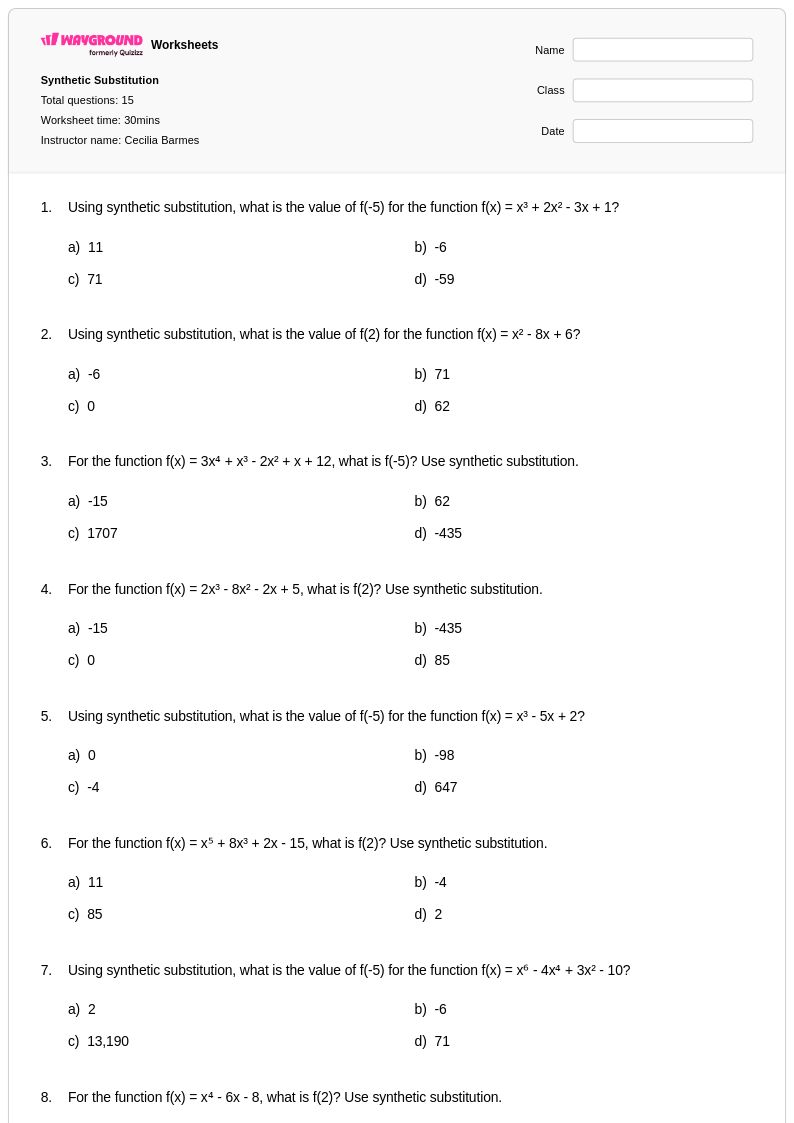
15 Q
10th
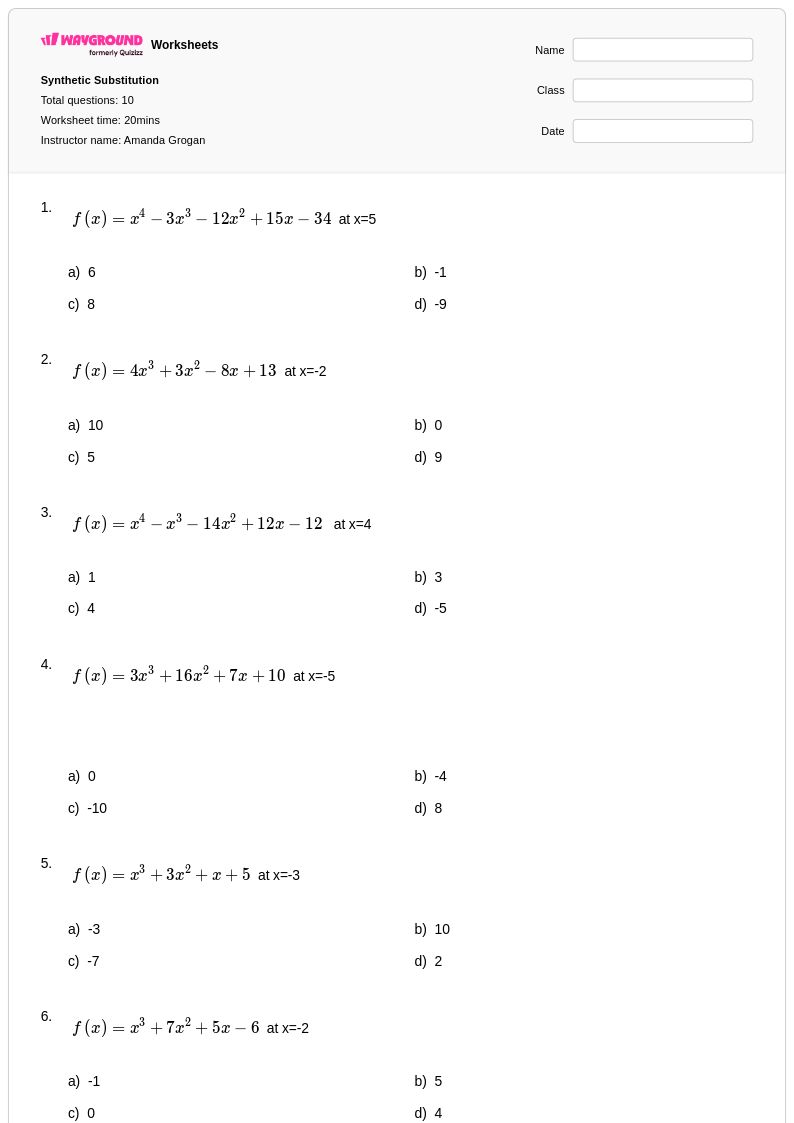
10 Q
10th - 12th
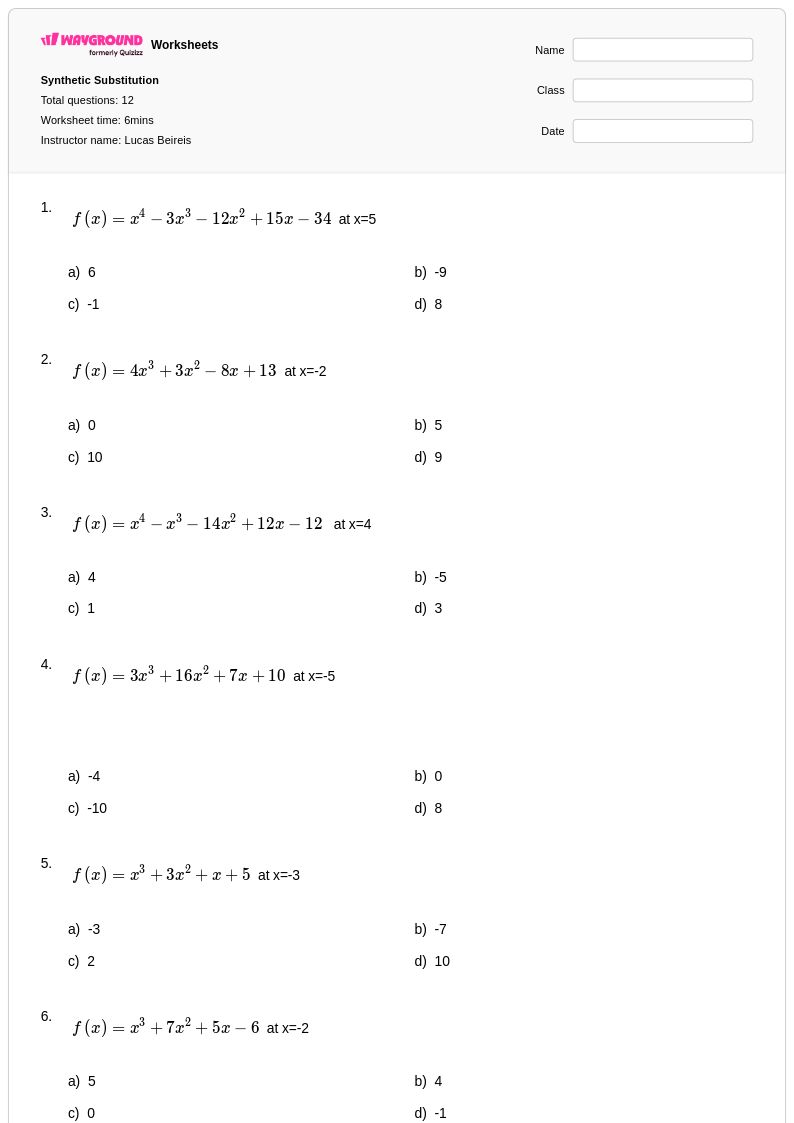
12 Q
7th - 11th
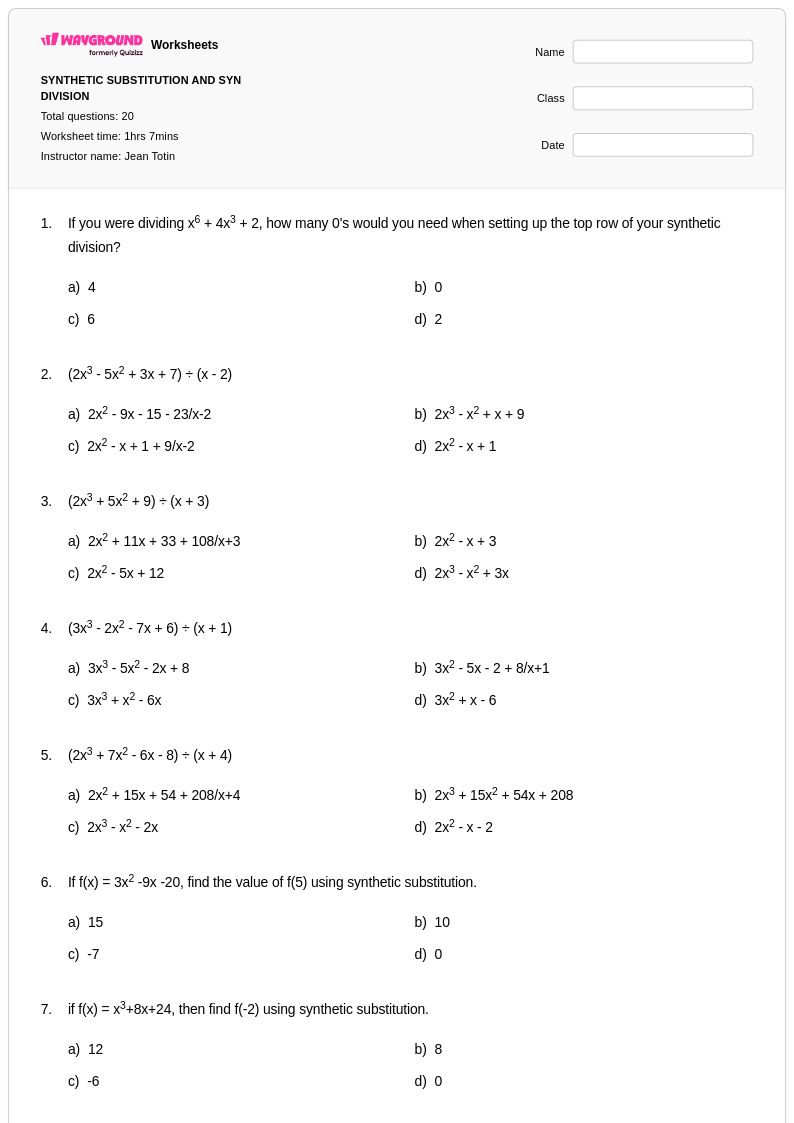
20 Q
10th - 12th
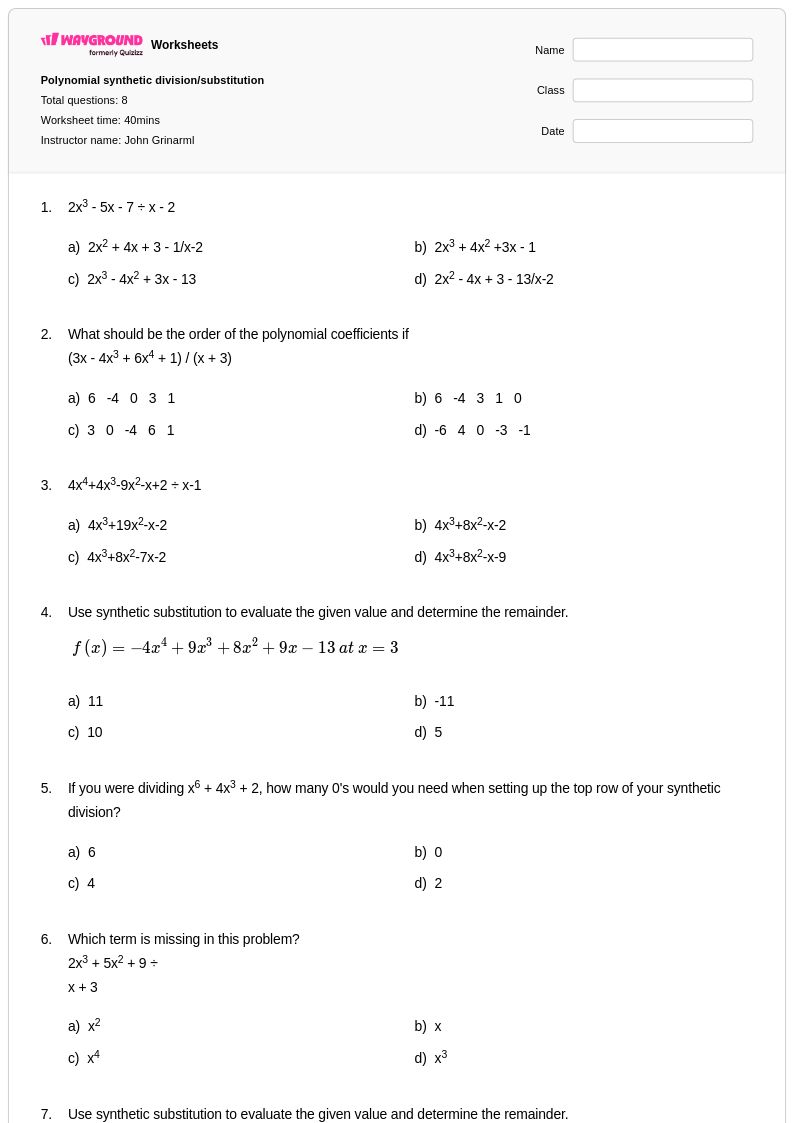
8 Q
8th - 11th
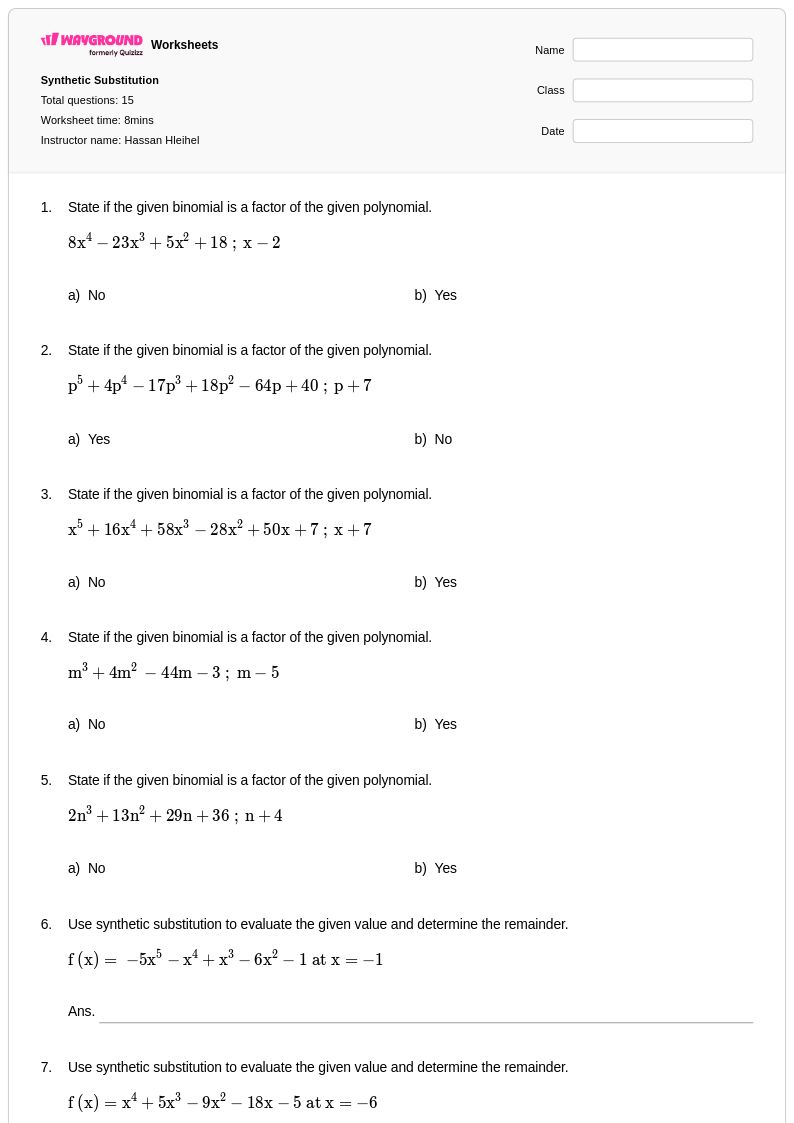
15 Q
10th
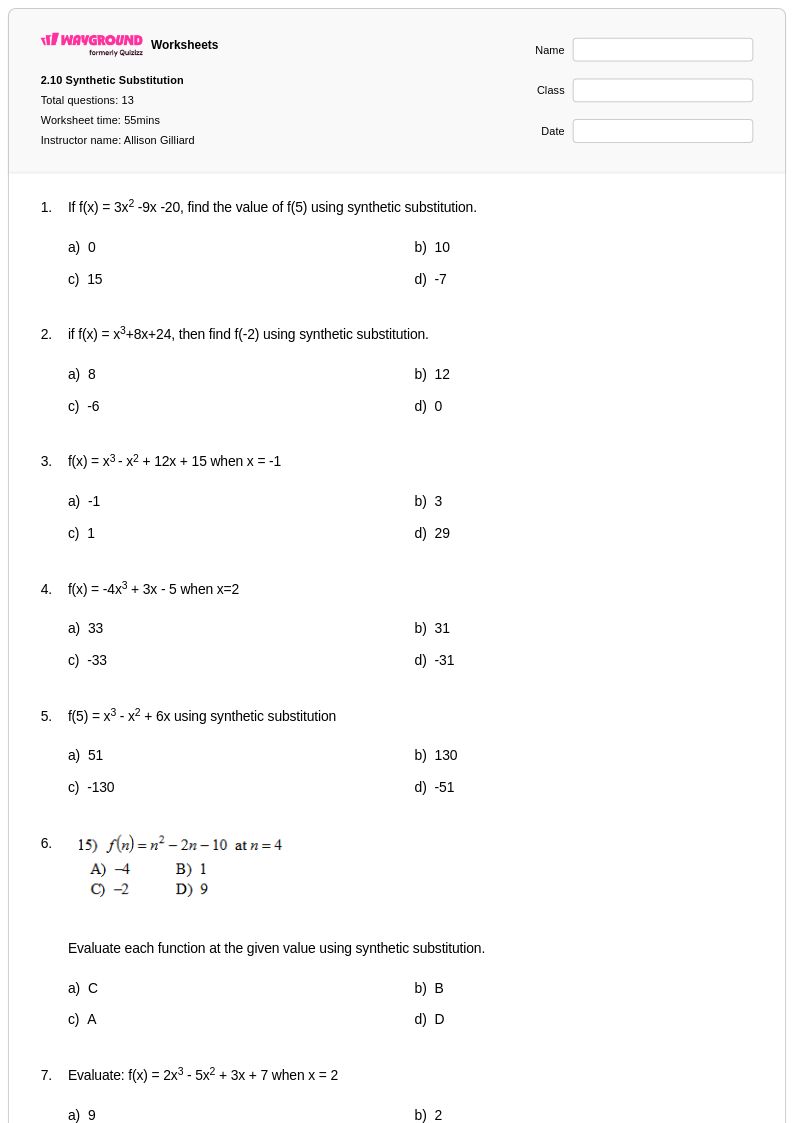
13 Q
9th - 12th
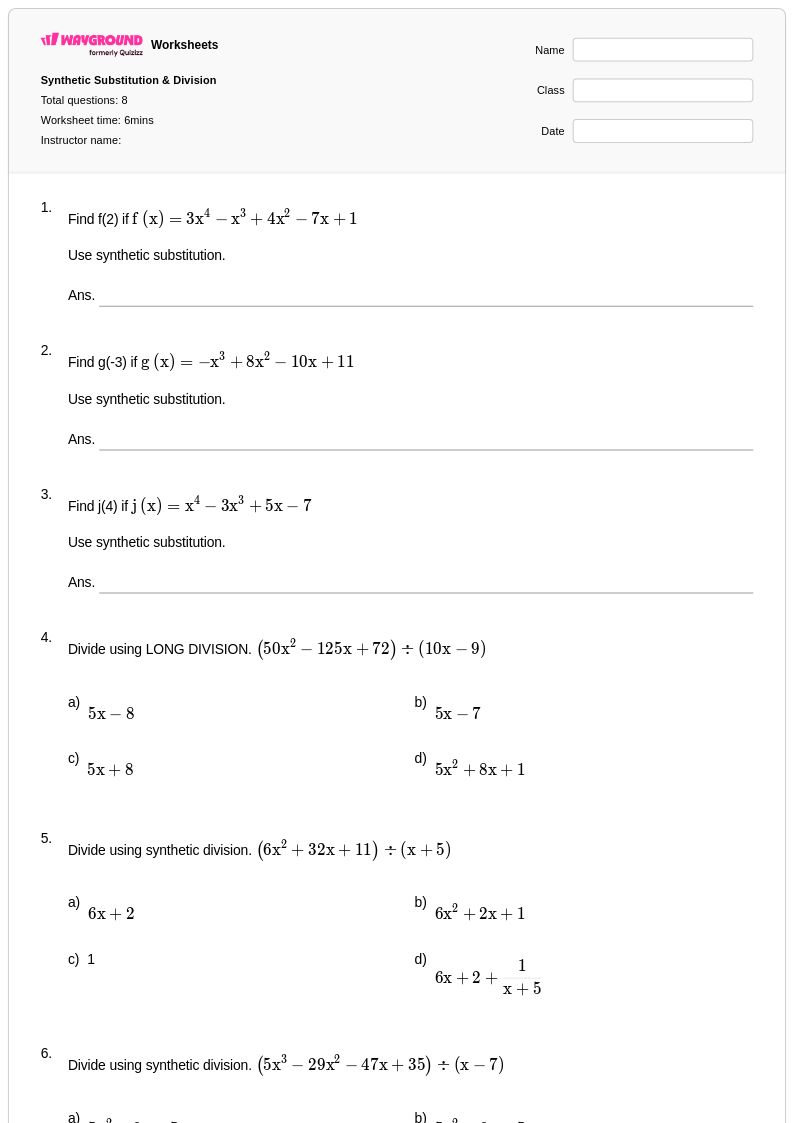
8 Q
9th - 12th
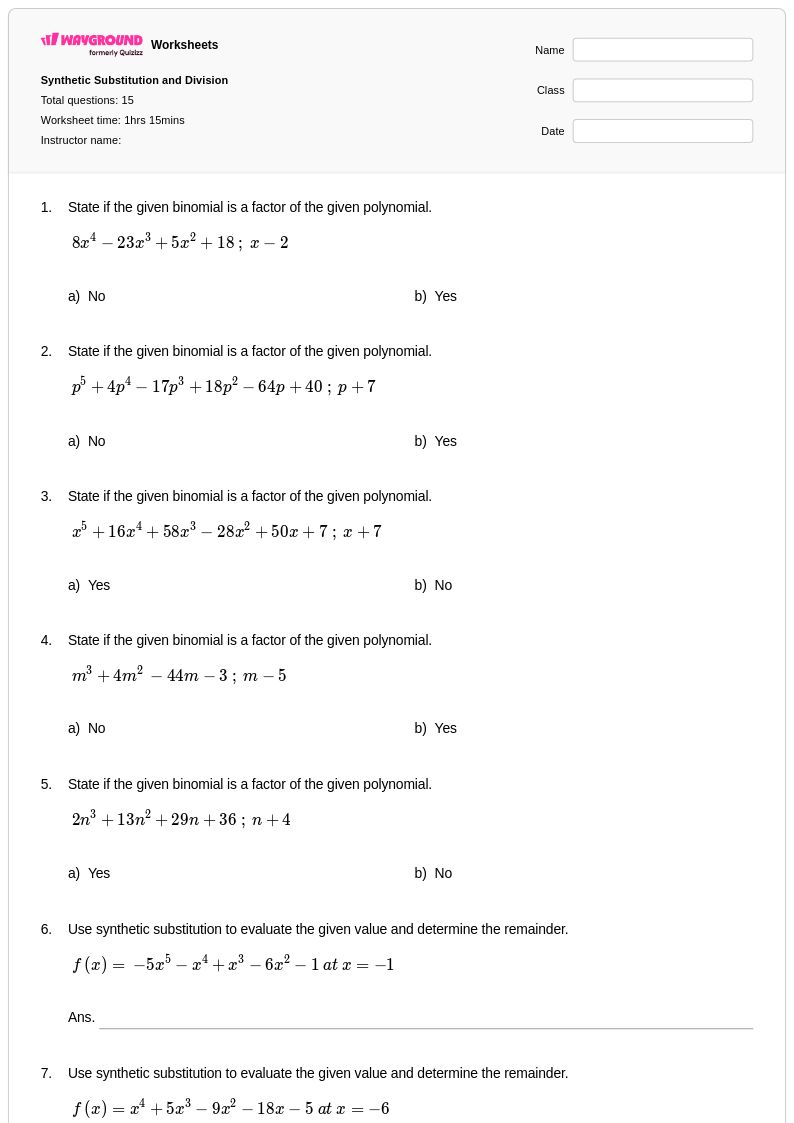
15 Q
9th - 12th
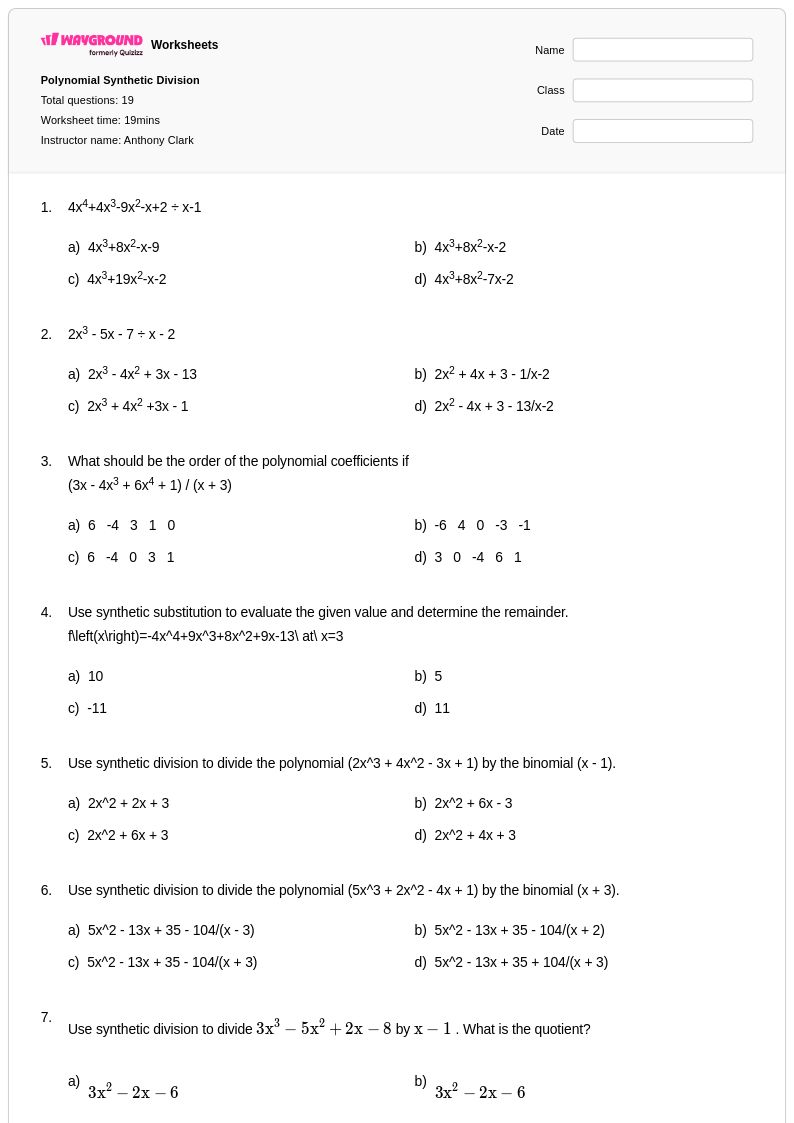
19 Q
9th - Uni
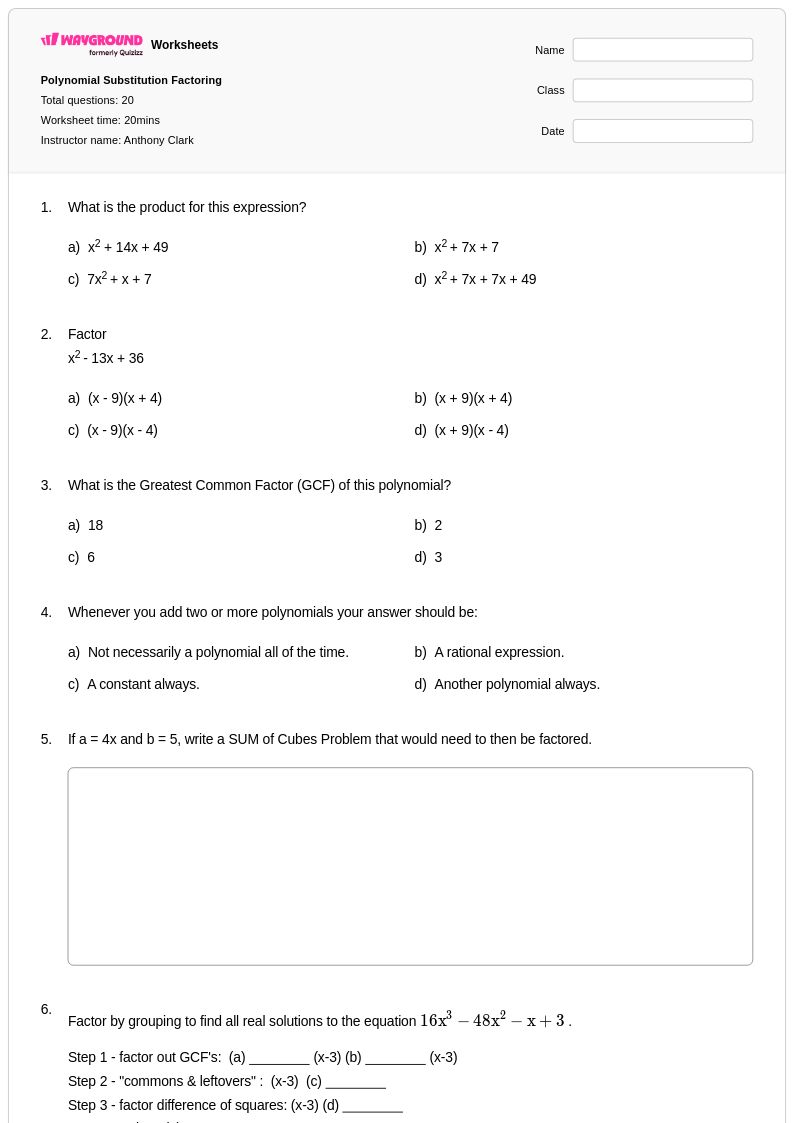
20 Q
9th - Uni
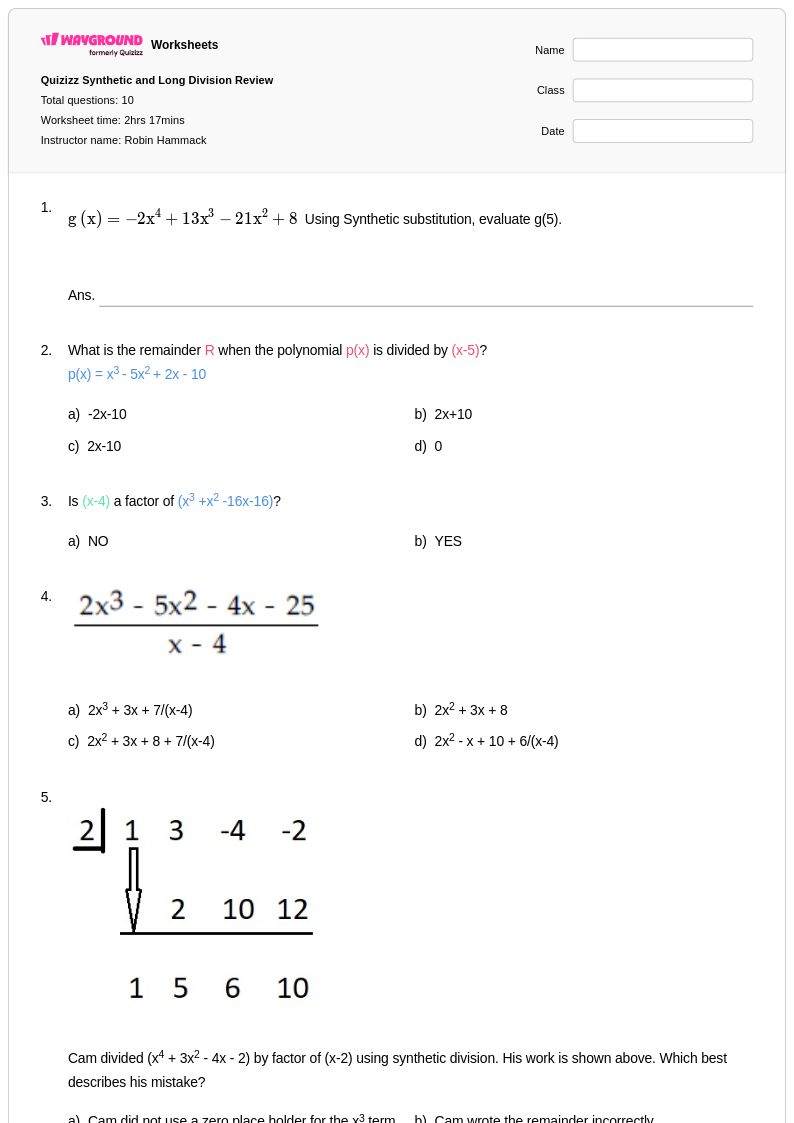
10 Q
9th - 12th
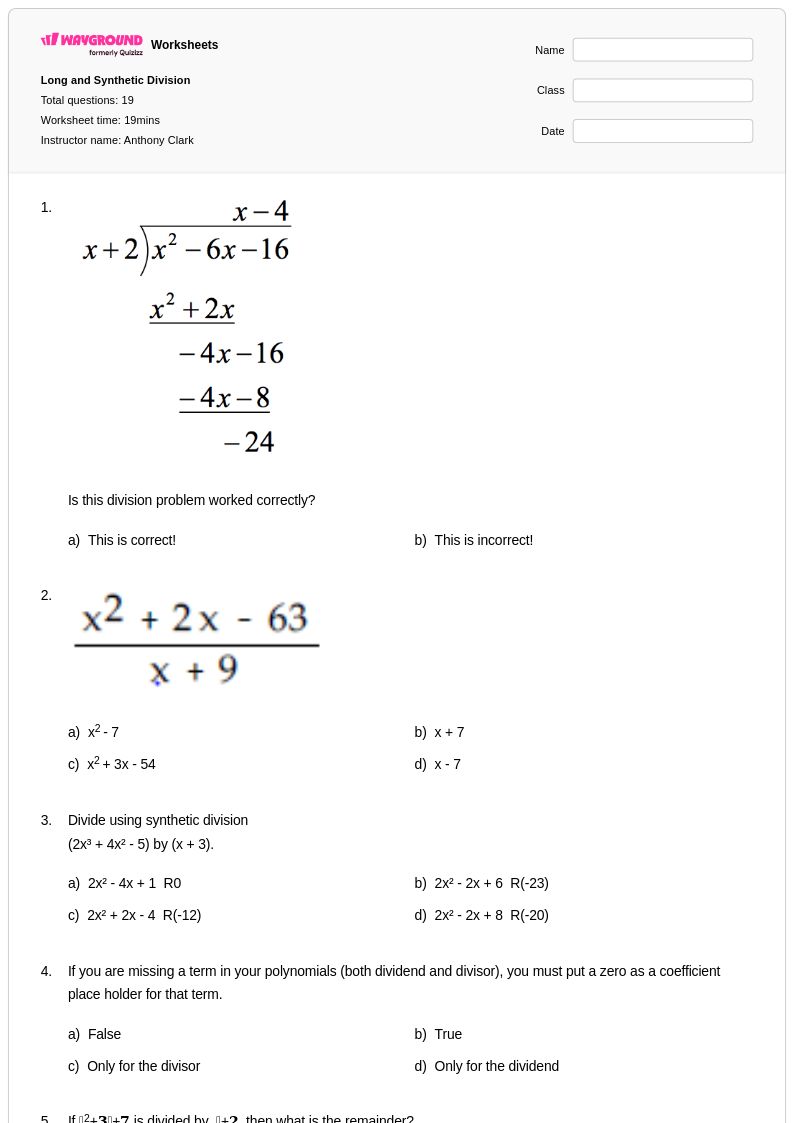
19 Q
10th - Uni
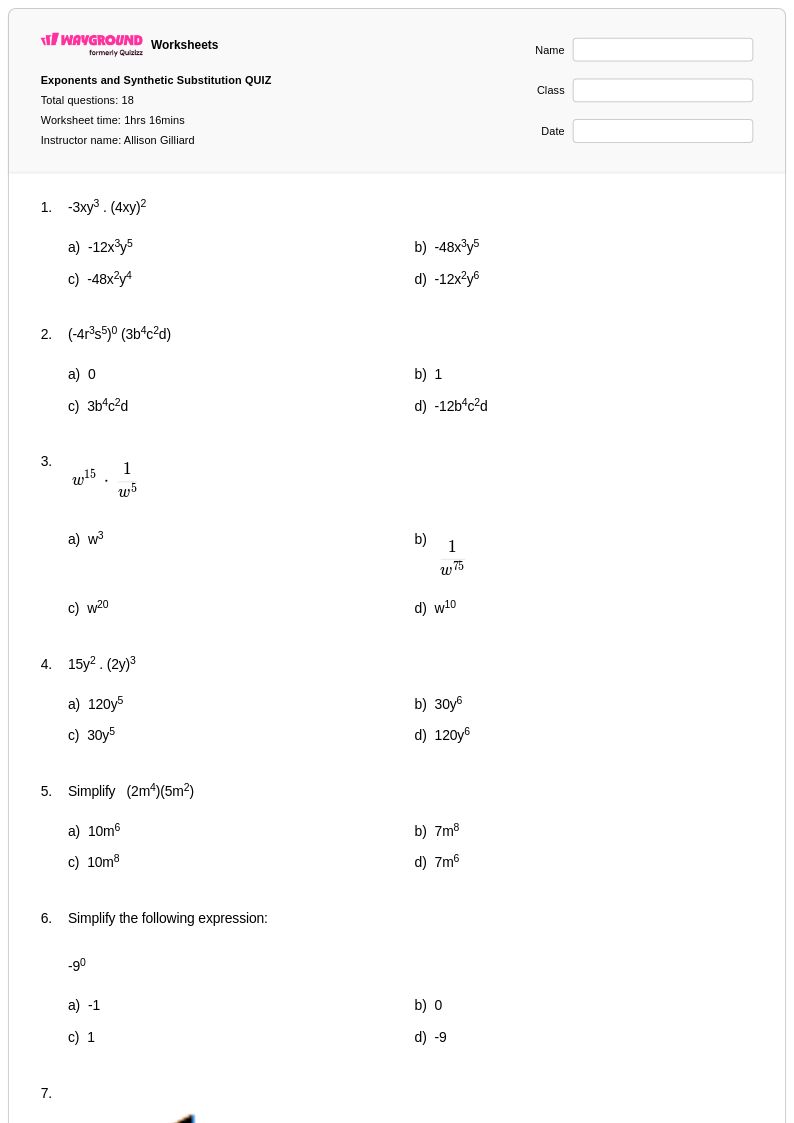
18 Q
9th - 12th
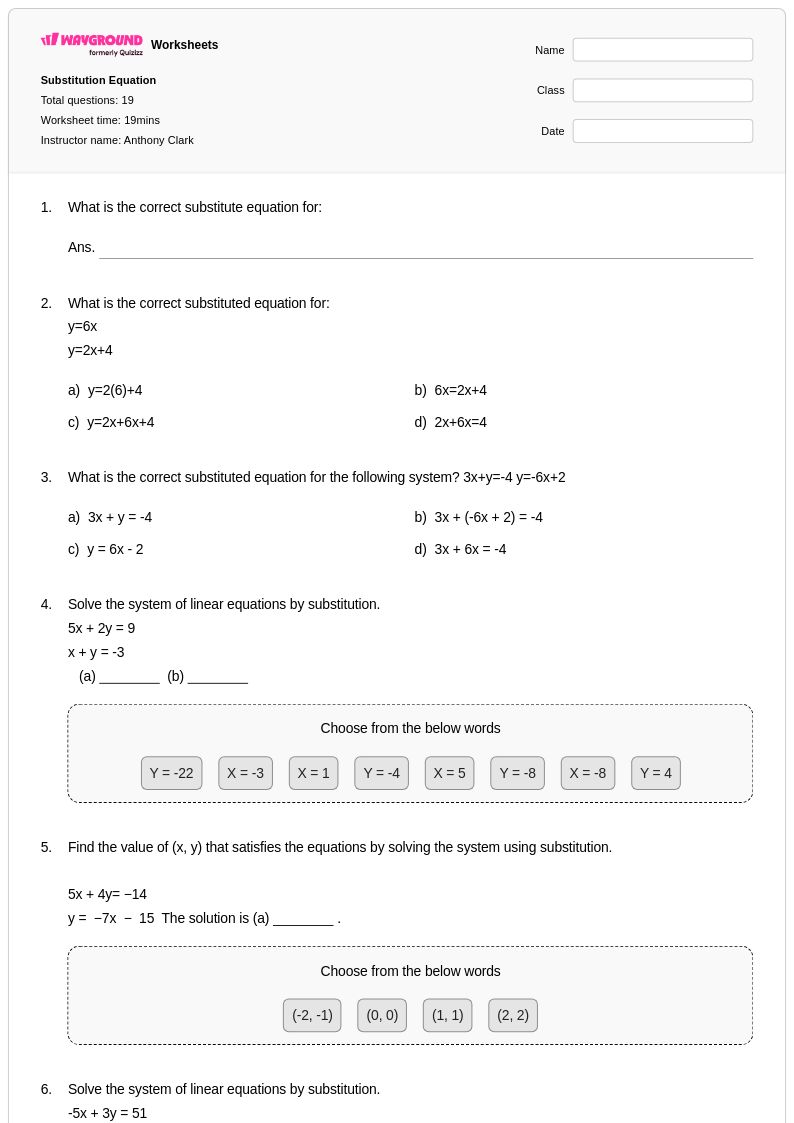
19 Q
9th - Uni
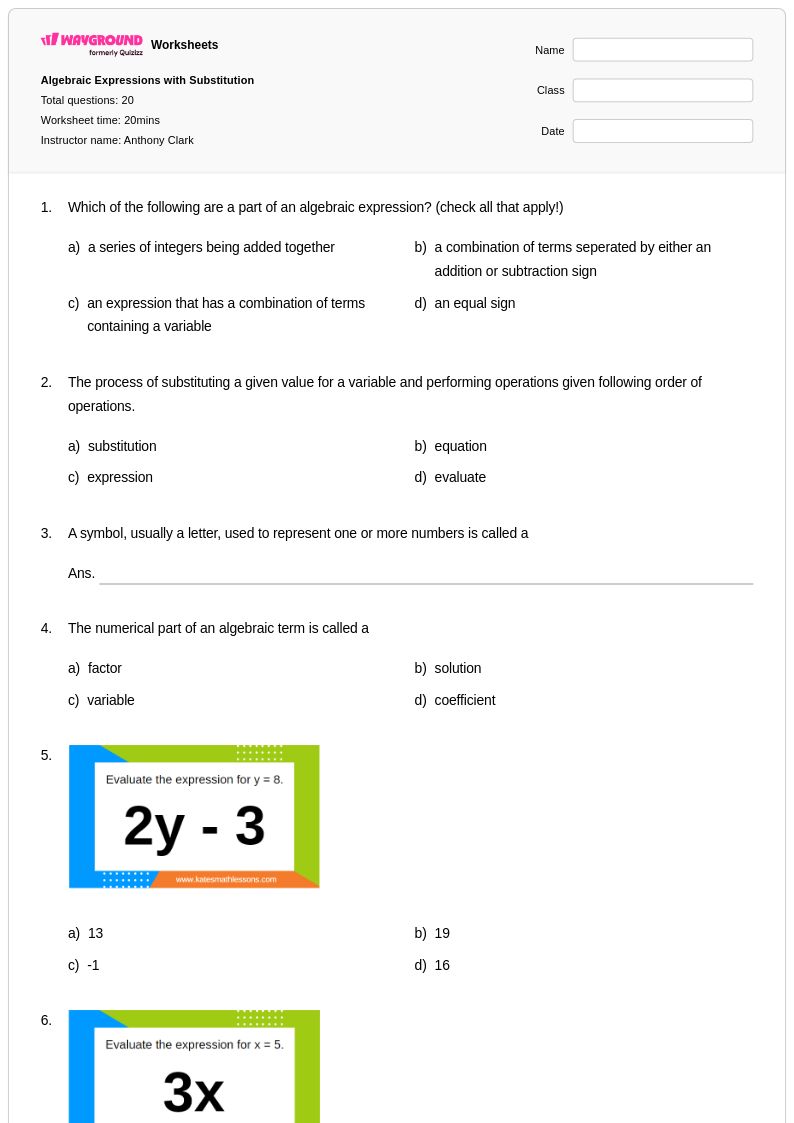
20 Q
6th - Uni
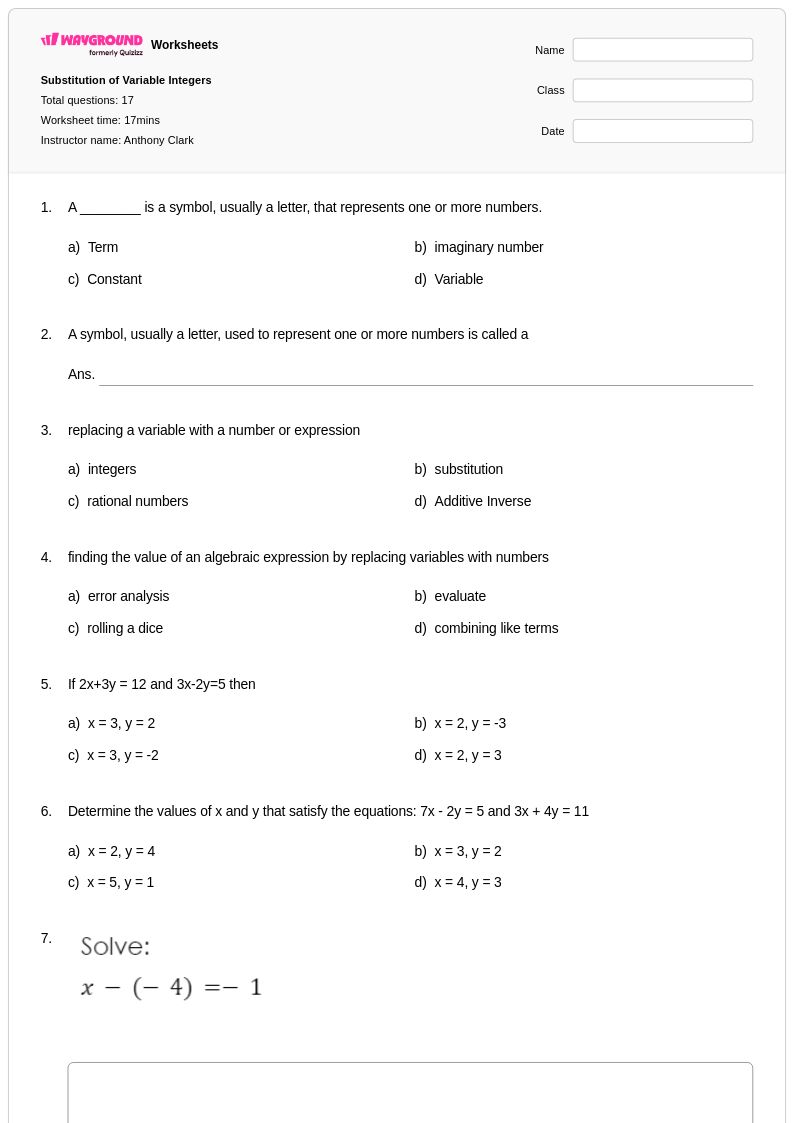
17 Q
8th - Uni
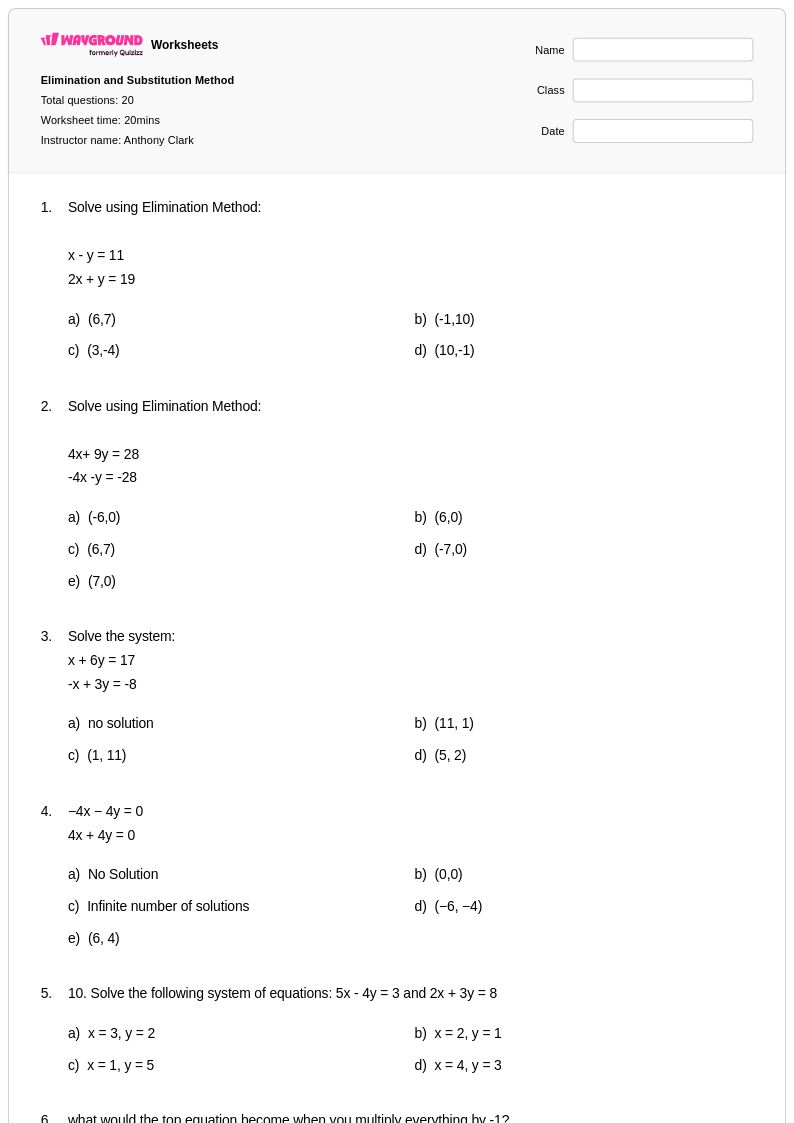
20 Q
9th - Uni
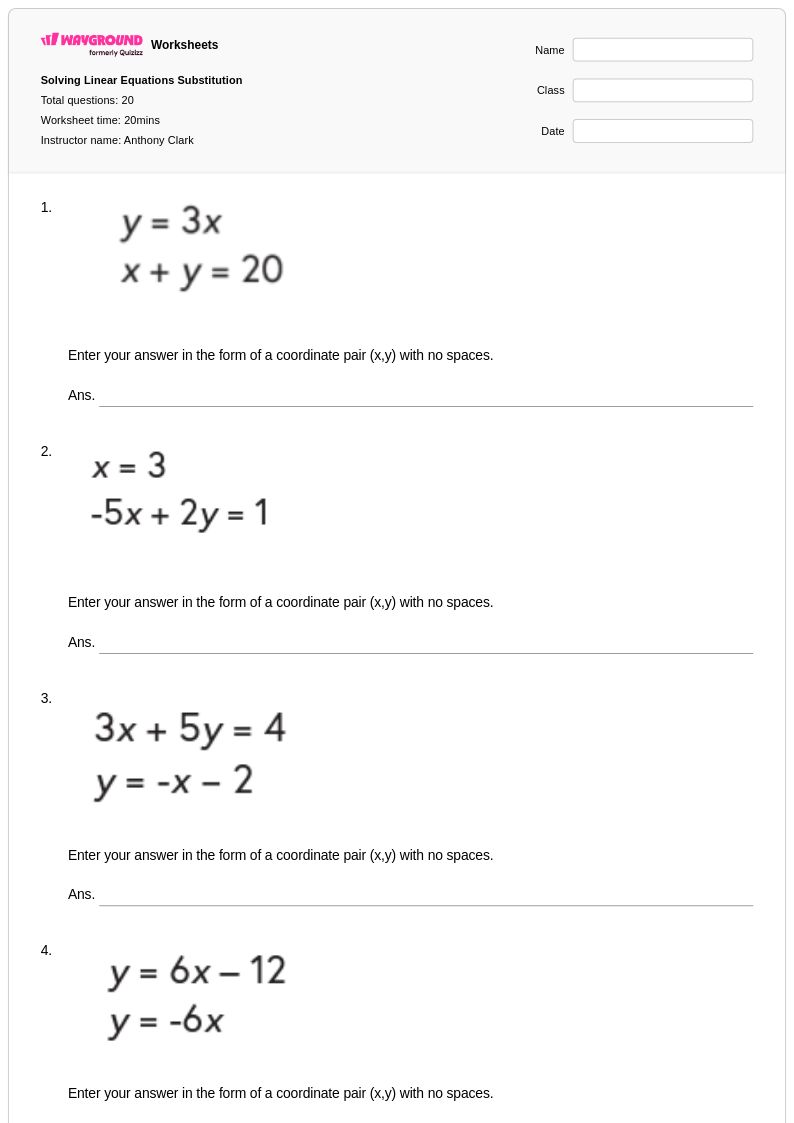
20 Q
9th - Uni
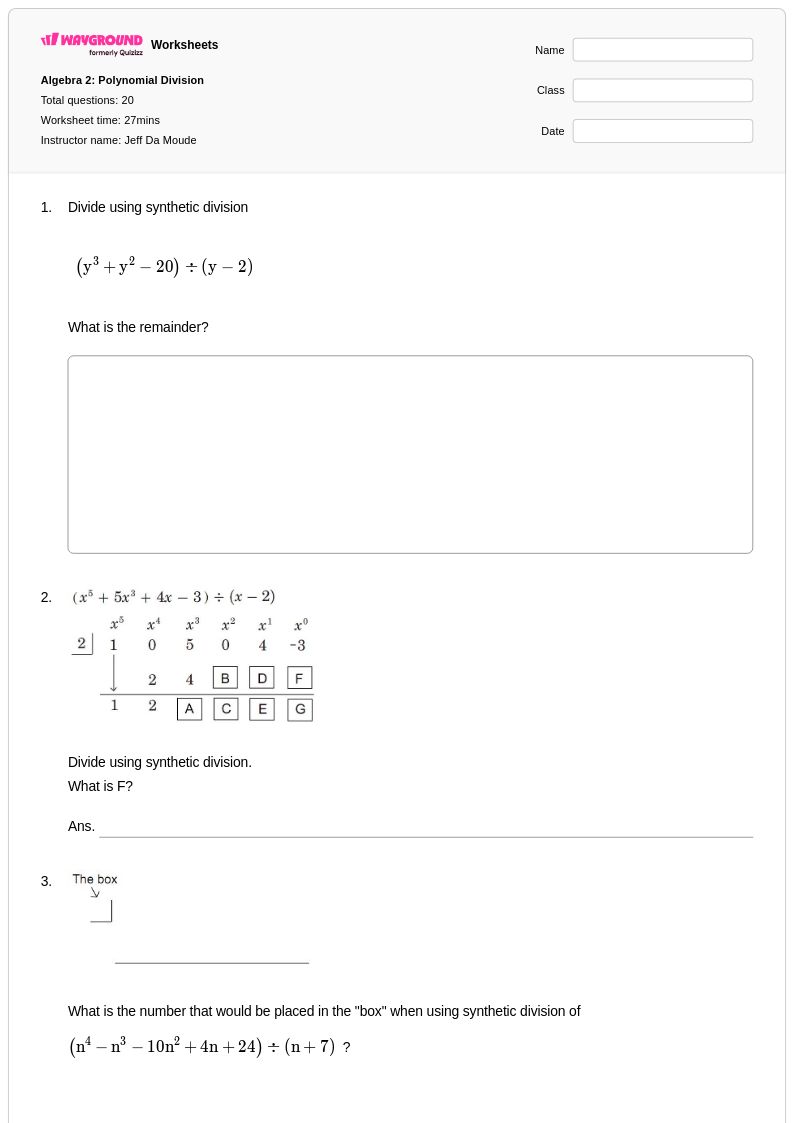
20 Q
9th - 12th
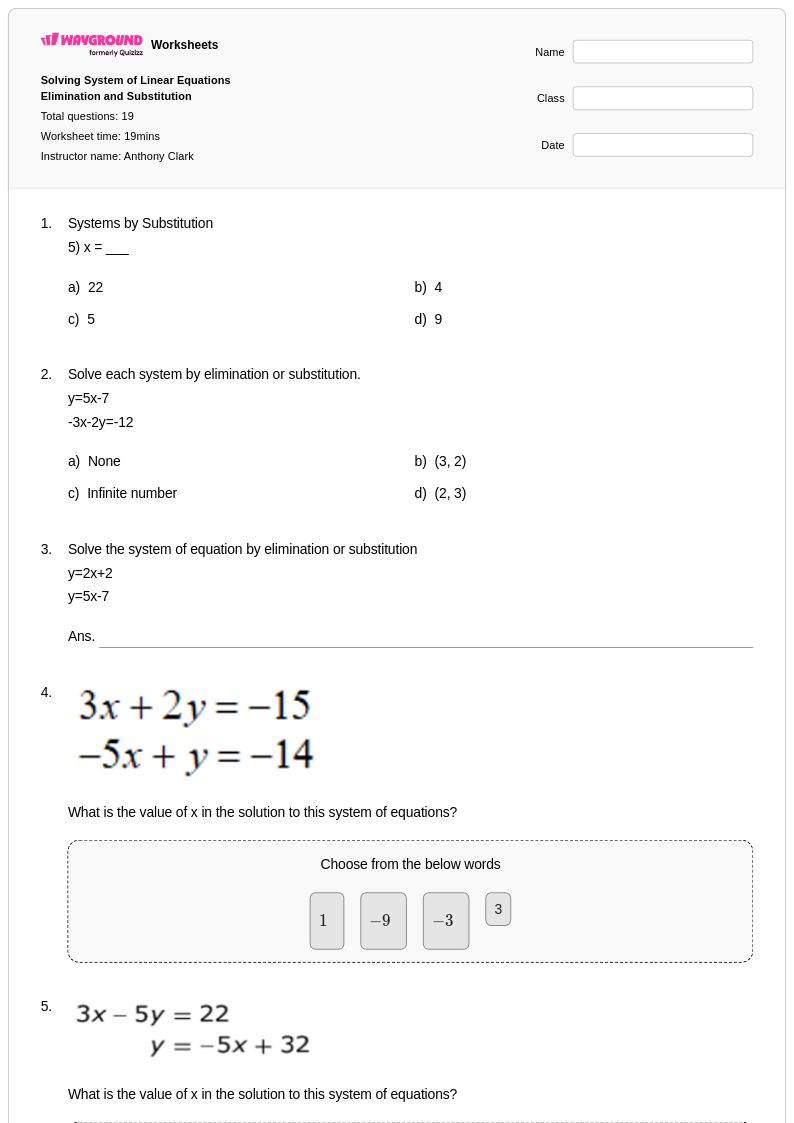
19 Q
9th - Uni
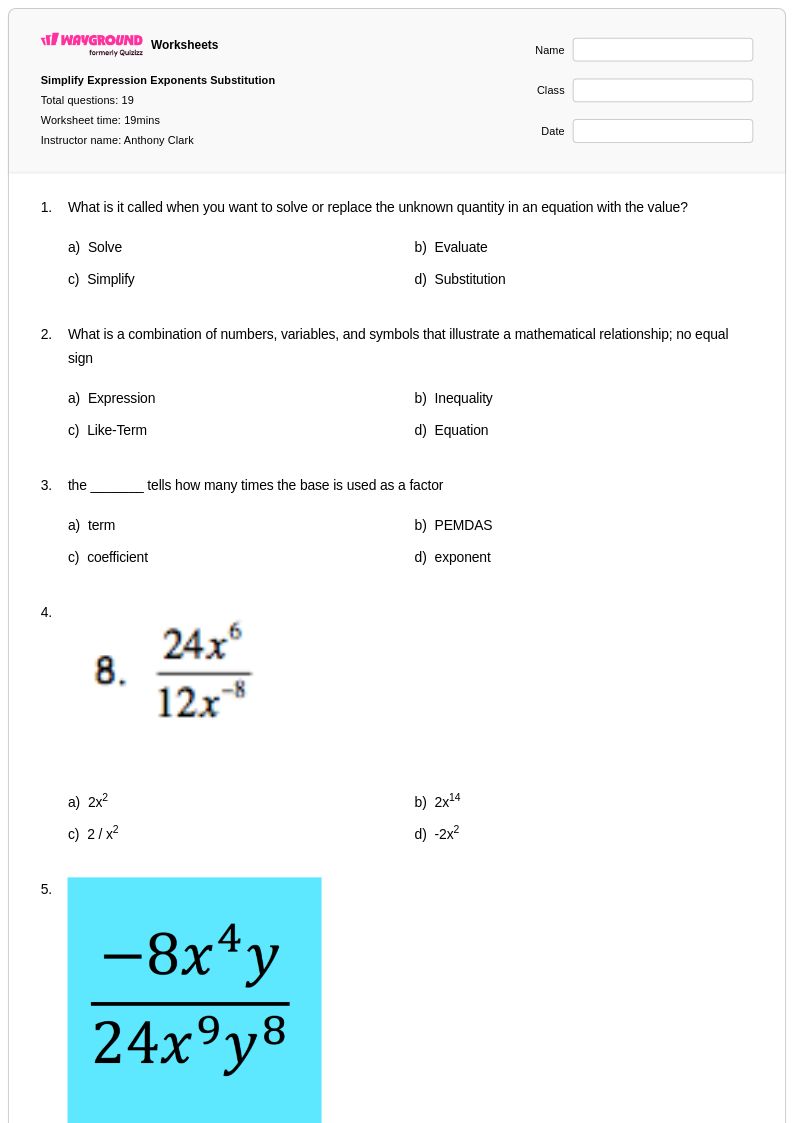
19 Q
8th - Uni
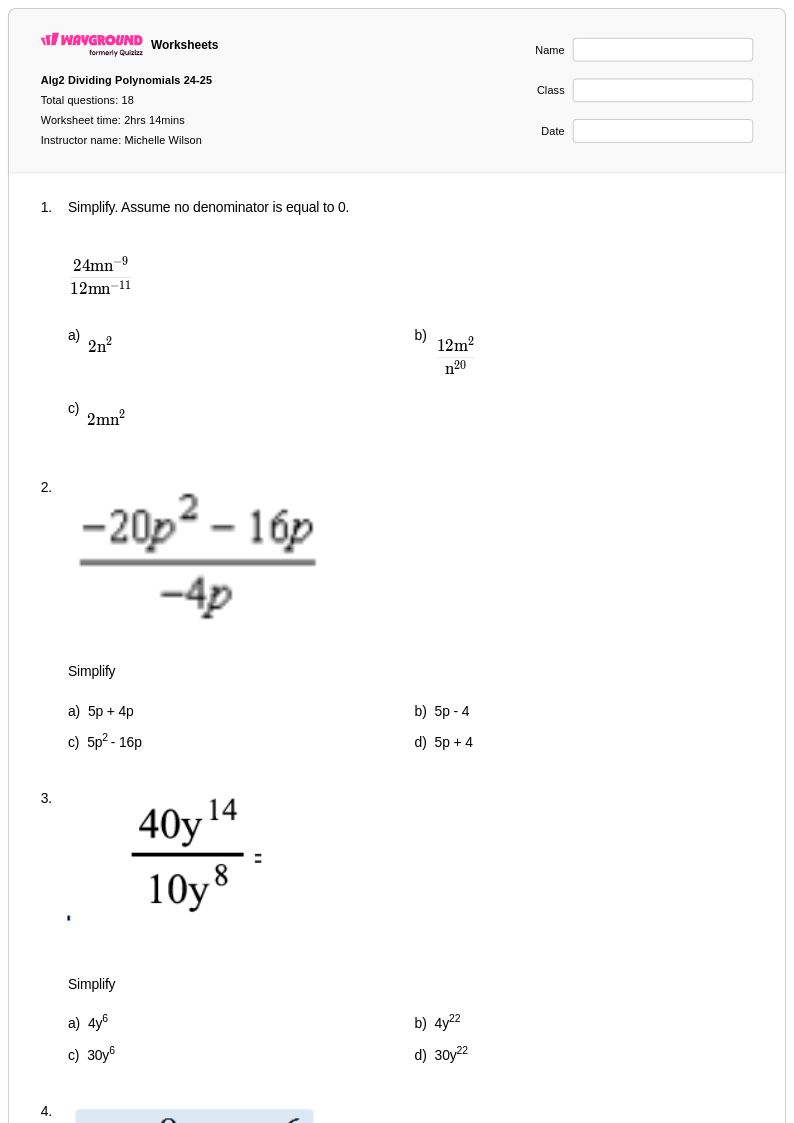
18 Q
9th - 12th
Explore Other Subject Worksheets for grade 10
Explore printable Synthetic Substitution worksheets for Grade 10
Synthetic substitution worksheets for Grade 10 students provide essential practice with this powerful algebraic technique used to evaluate polynomials and perform polynomial division efficiently. These comprehensive worksheet collections available through Wayground help students master the systematic process of synthetic substitution, strengthening their ability to work with higher-degree polynomials, find polynomial values at specific points, and identify factors and zeros. Students develop critical algebraic reasoning skills as they practice the step-by-step methodology, learning to organize calculations in the distinctive synthetic substitution format while building confidence with complex polynomial operations. Each worksheet includes detailed practice problems with varying difficulty levels, complete answer keys for self-checking, and free printable pdf formats that support both classroom instruction and independent study.
Wayground's extensive collection of teacher-created synthetic substitution resources supports educators with millions of high-quality worksheets designed specifically for Grade 10 mathematics instruction. The platform's advanced search and filtering capabilities enable teachers to quickly locate materials that align with curriculum standards and match their students' specific learning needs, while built-in differentiation tools allow for seamless customization of problem complexity and worksheet length. These flexible resources are available in both printable pdf formats and interactive digital versions, making them ideal for diverse instructional settings including traditional classrooms, remote learning environments, and hybrid models. Teachers can effectively use these materials for initial skill introduction, targeted remediation for struggling students, enrichment opportunities for advanced learners, and ongoing practice to reinforce synthetic substitution mastery throughout the academic year.
FAQs
How do I teach synthetic substitution in Grade 10?
What synthetic substitution exercises are appropriate for Grade 10?
What are common synthetic substitution mistakes in Grade 10?
How can teachers use these Grade 10 synthetic substitution worksheets?
How does synthetic substitution align with the Common Core high school math progression?
How can I differentiate synthetic substitution practice for Grade 10 students?
Is synthetic substitution a Grade 10 math topic?