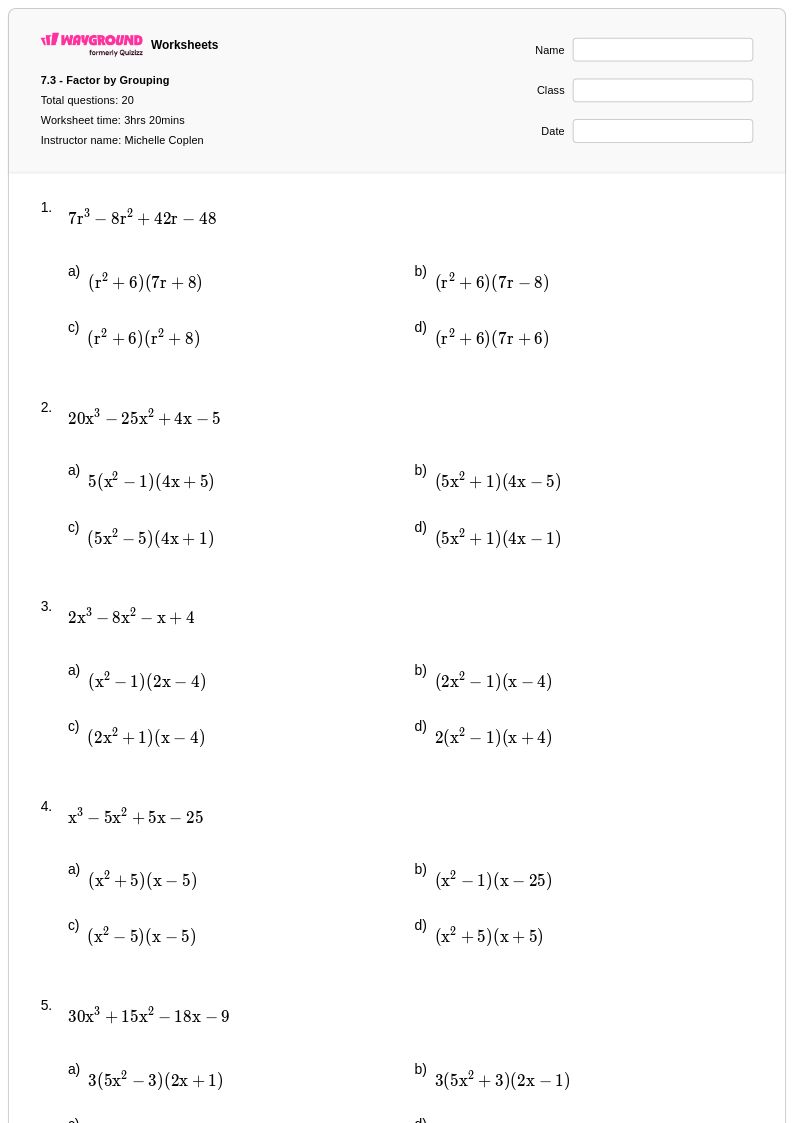
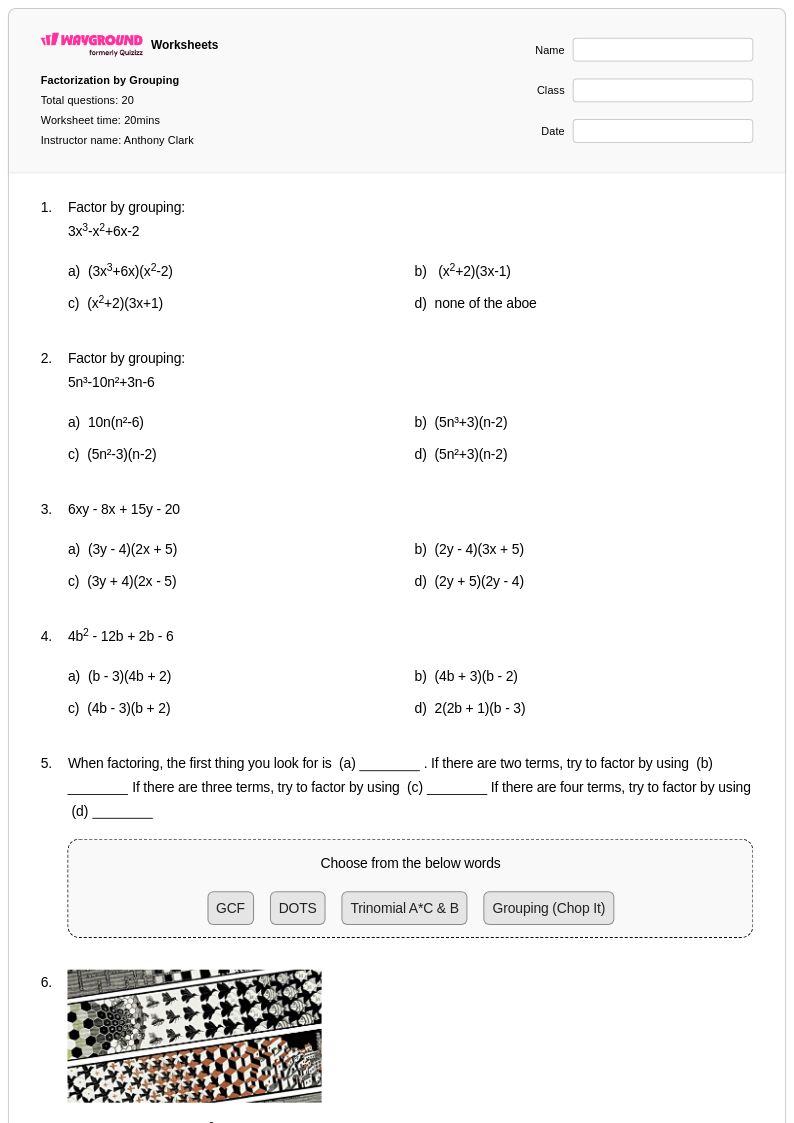
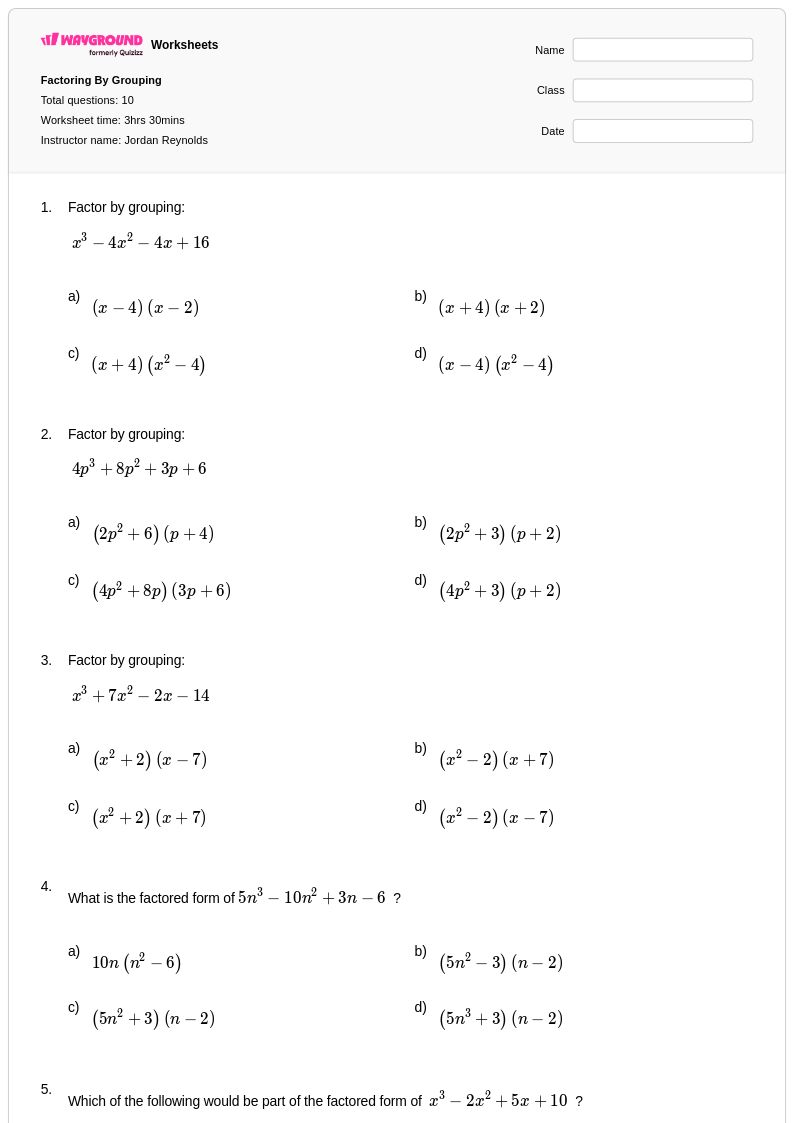
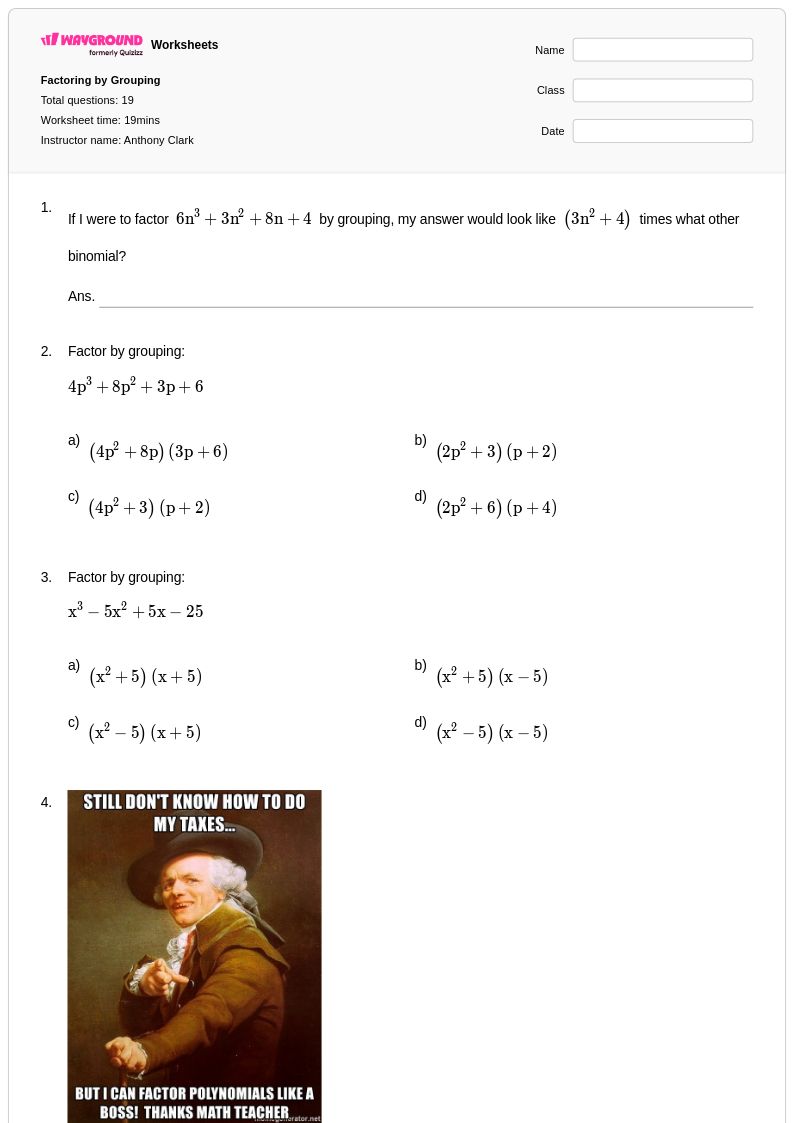
Free Printable Factorisation by Grouping Worksheets for Grade 10
Master Grade 10 factorisation by grouping with Wayground's comprehensive collection of free worksheets, featuring printable PDFs, step-by-step practice problems, and detailed answer keys to strengthen algebraic skills.
Explore printable Factorisation by Grouping worksheets for Grade 10
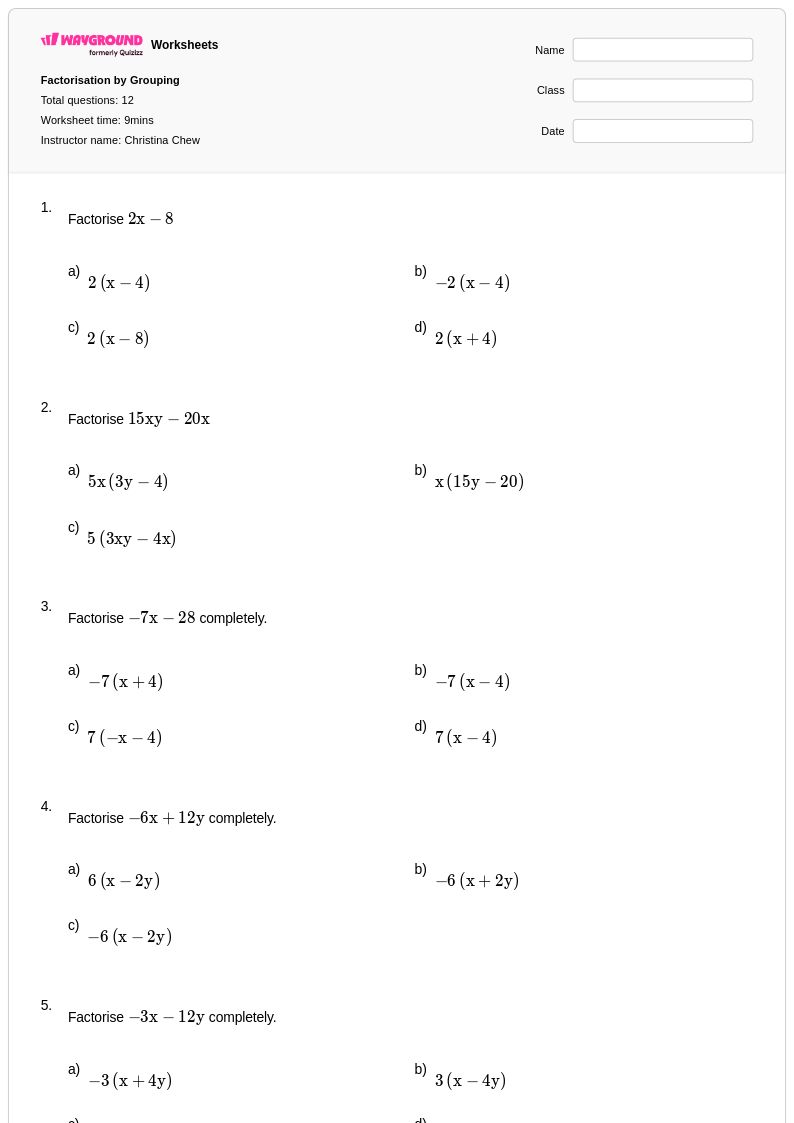
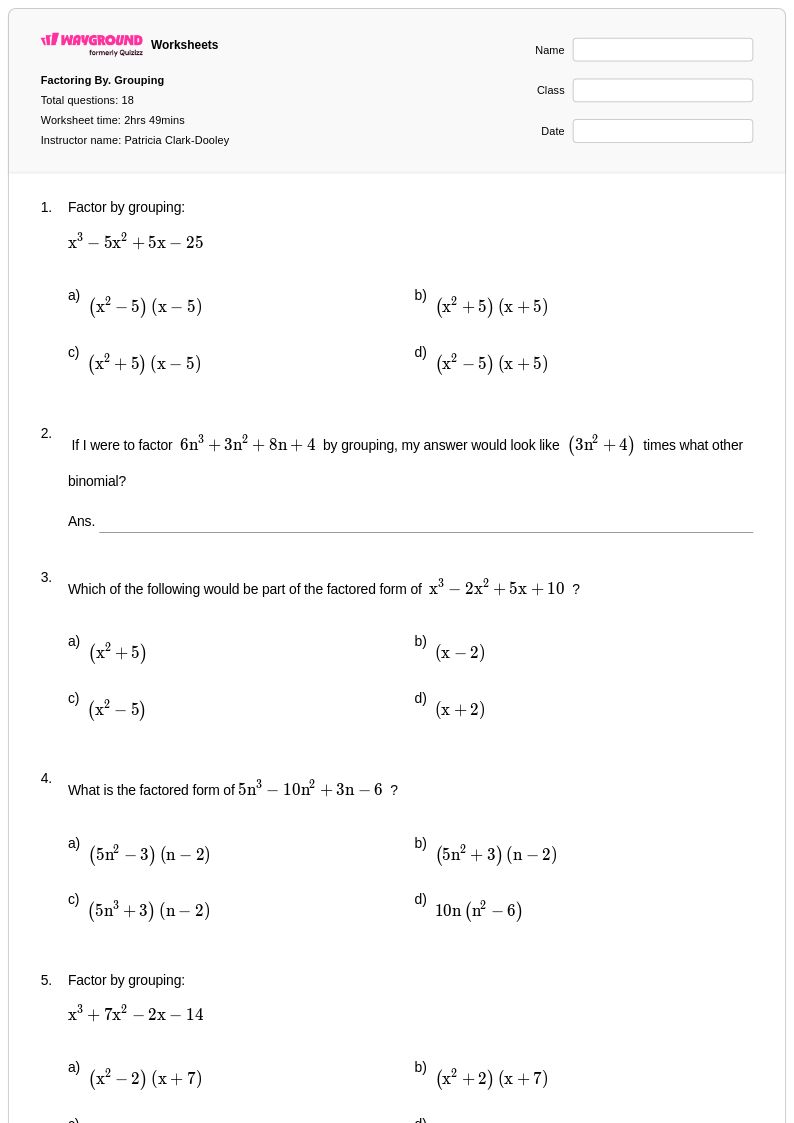
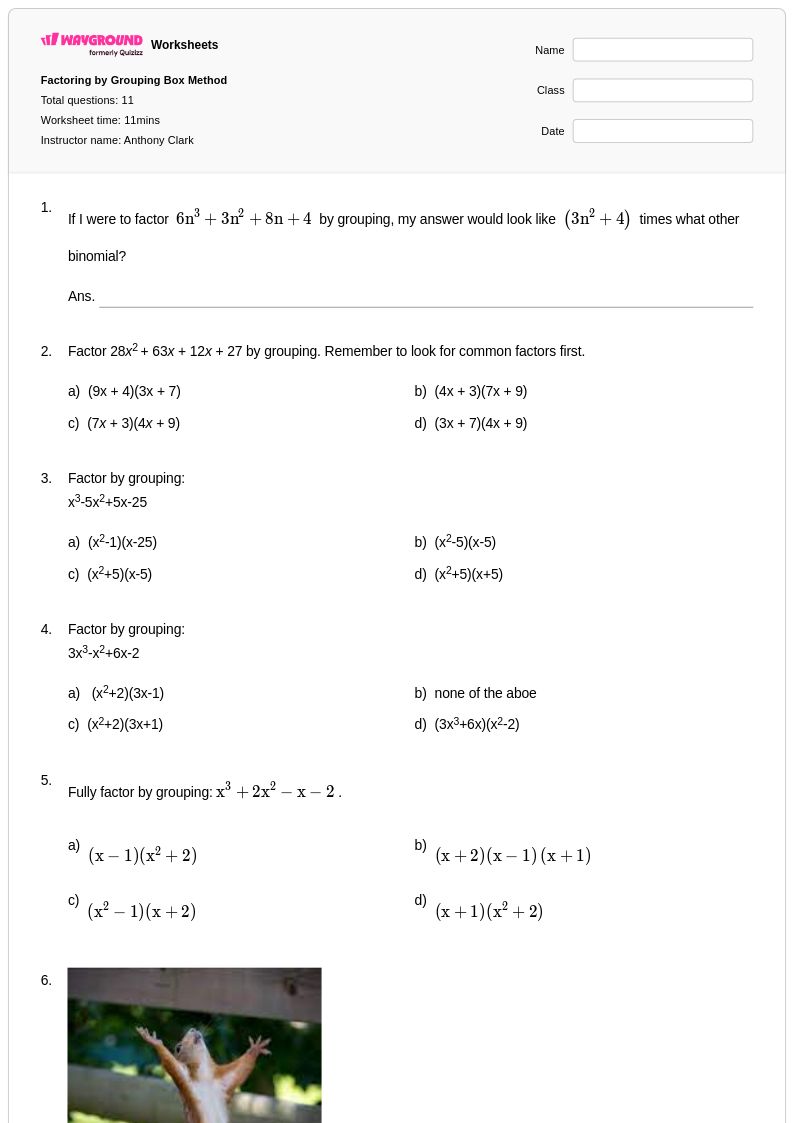
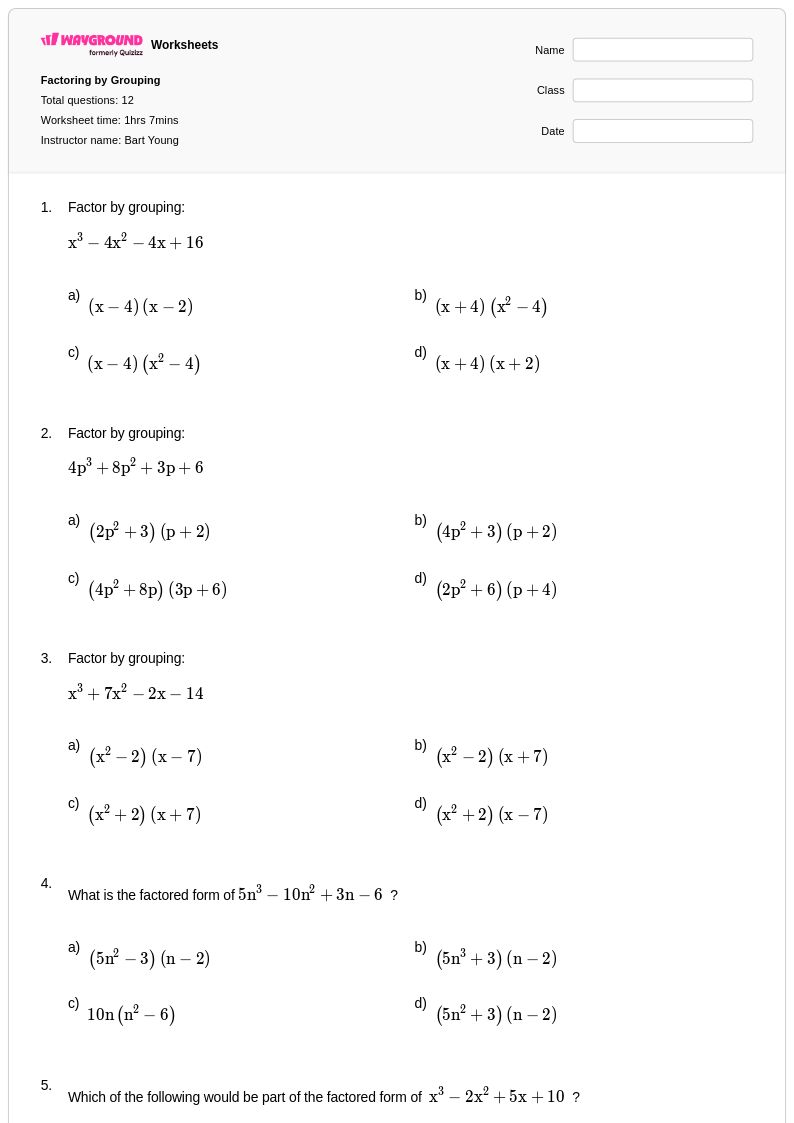
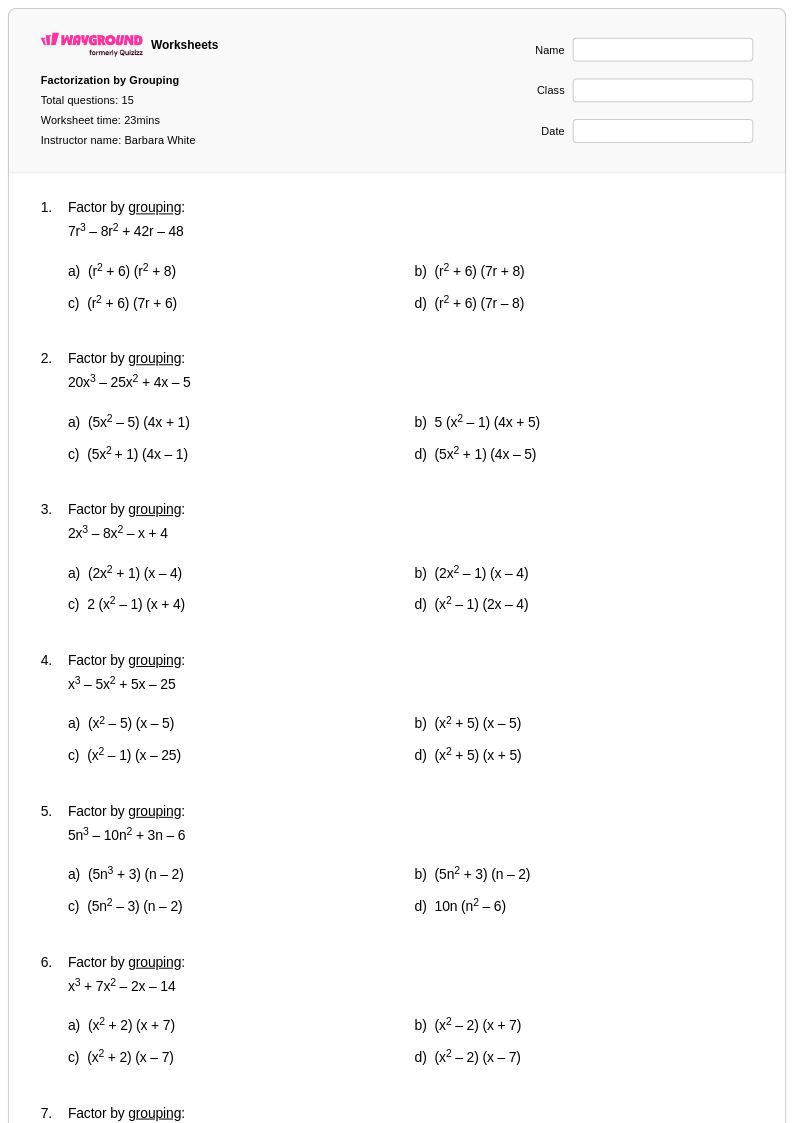
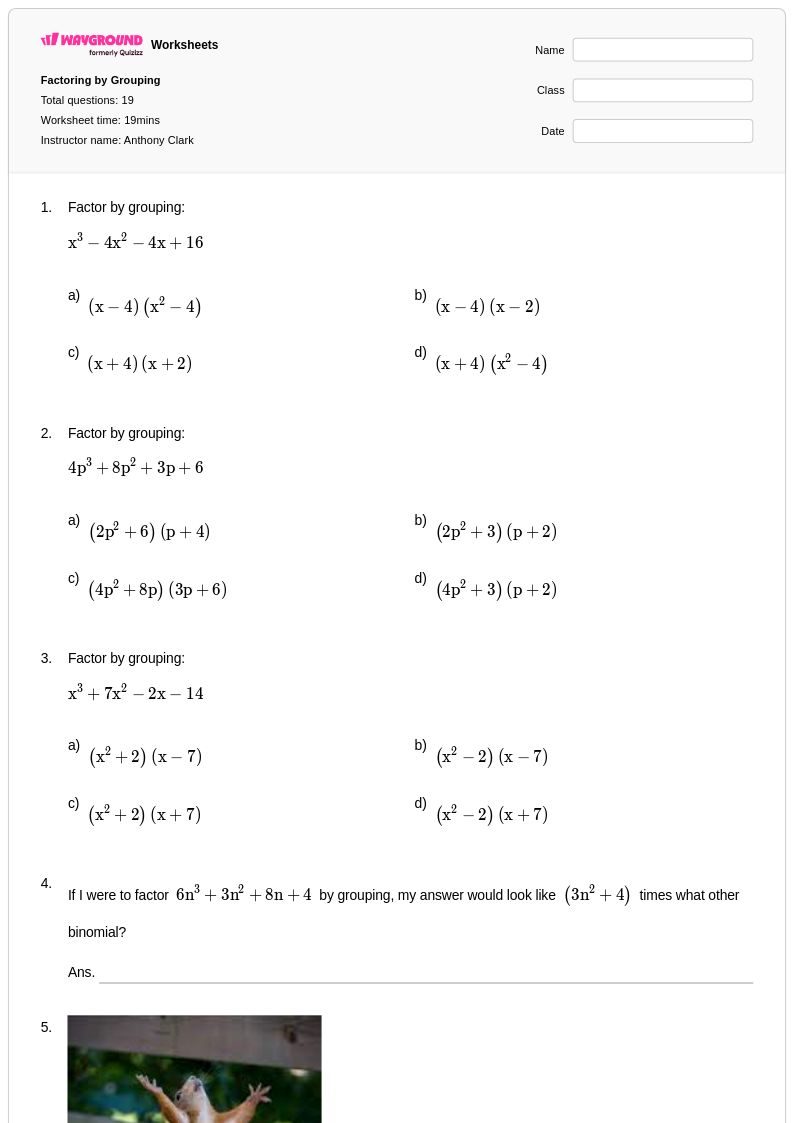
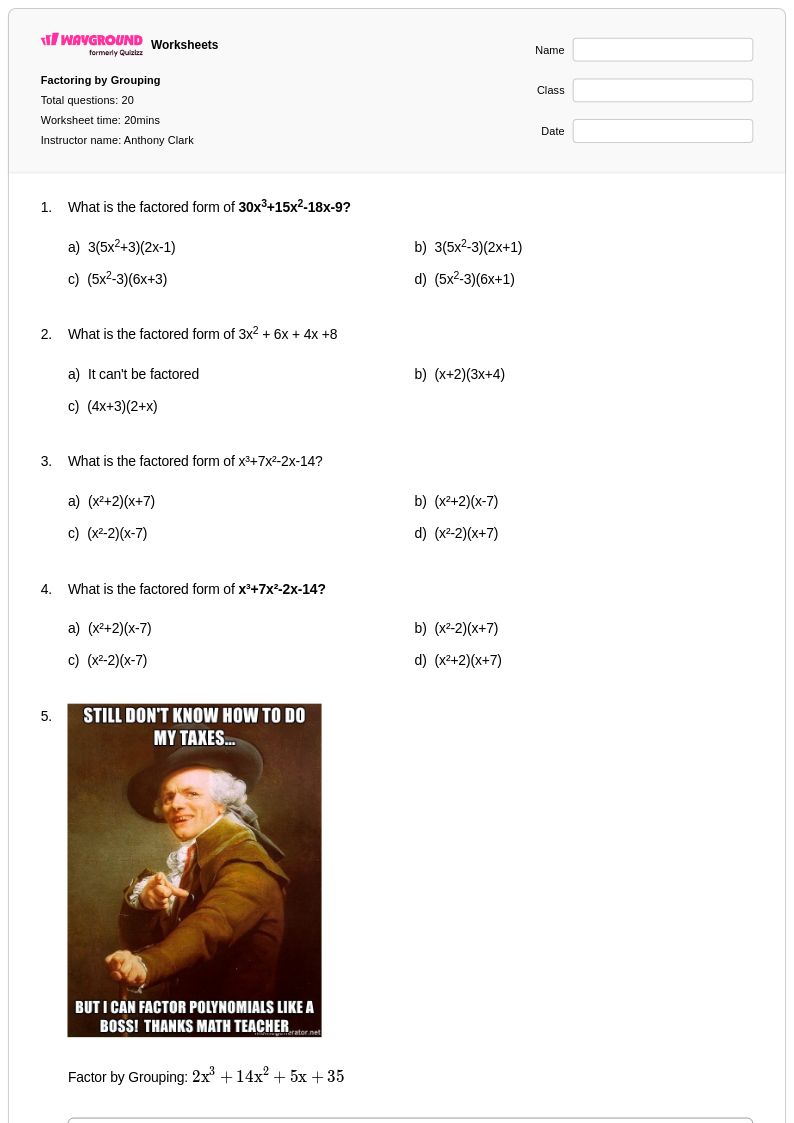
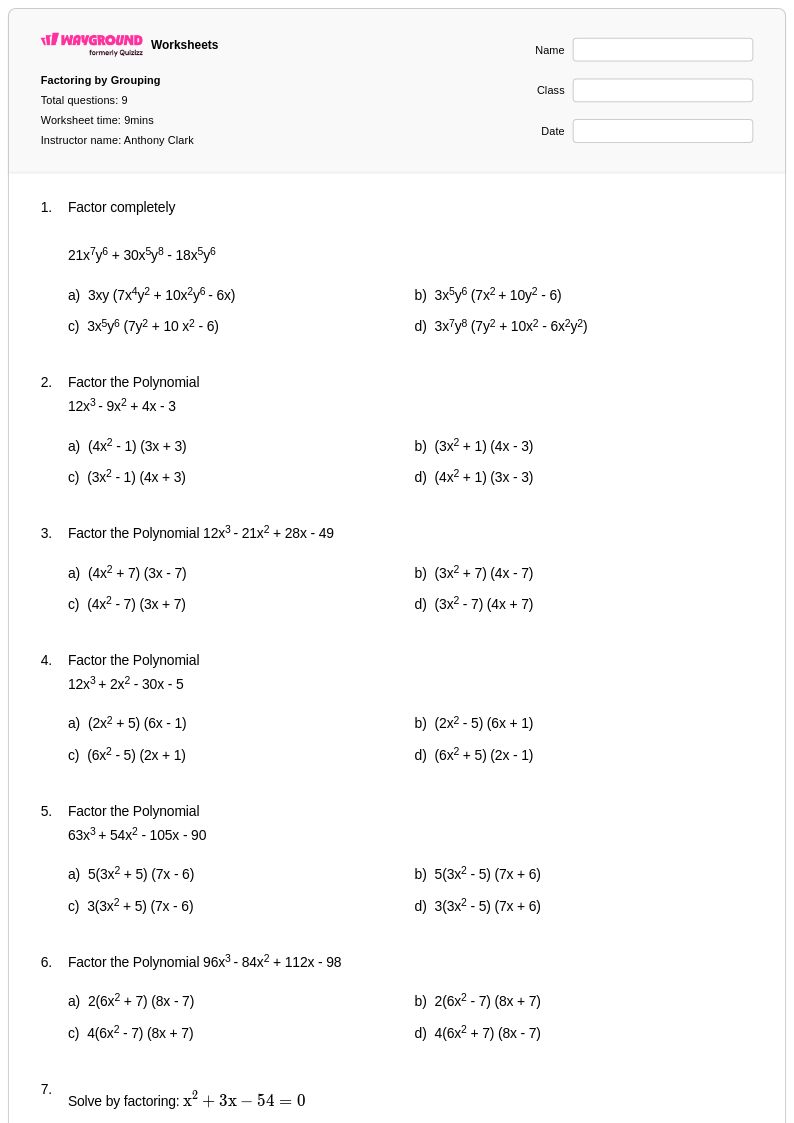
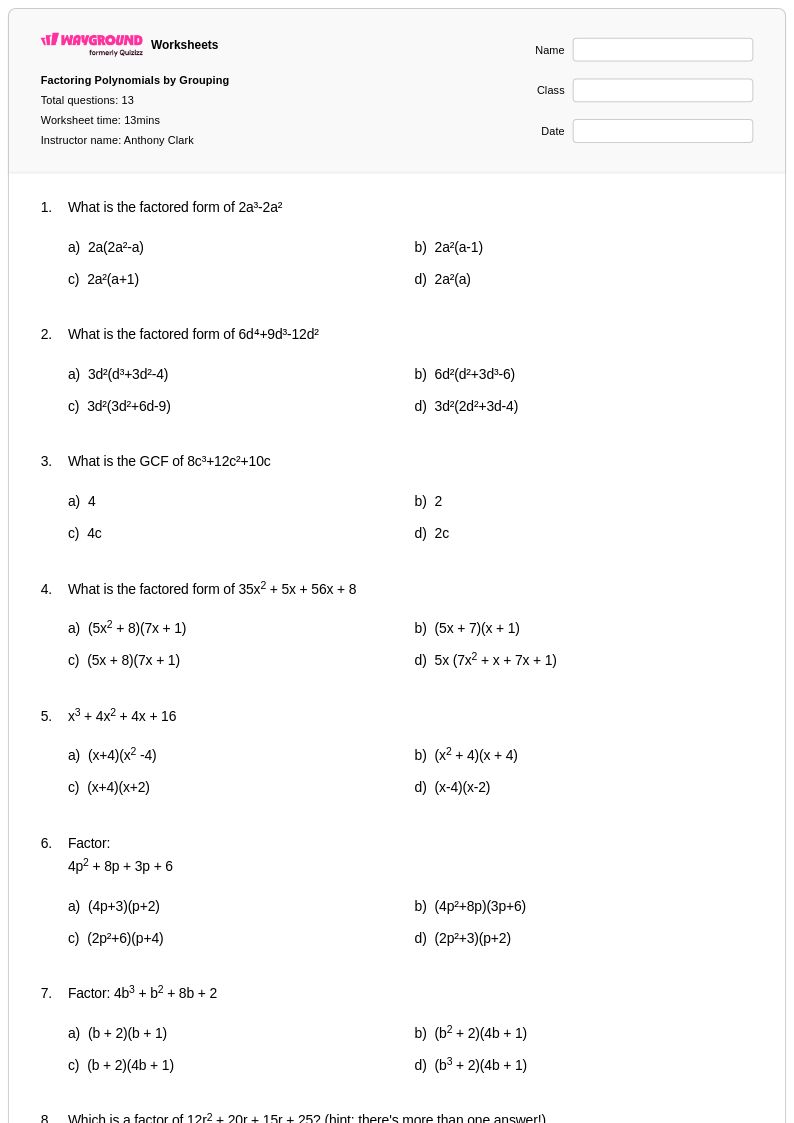
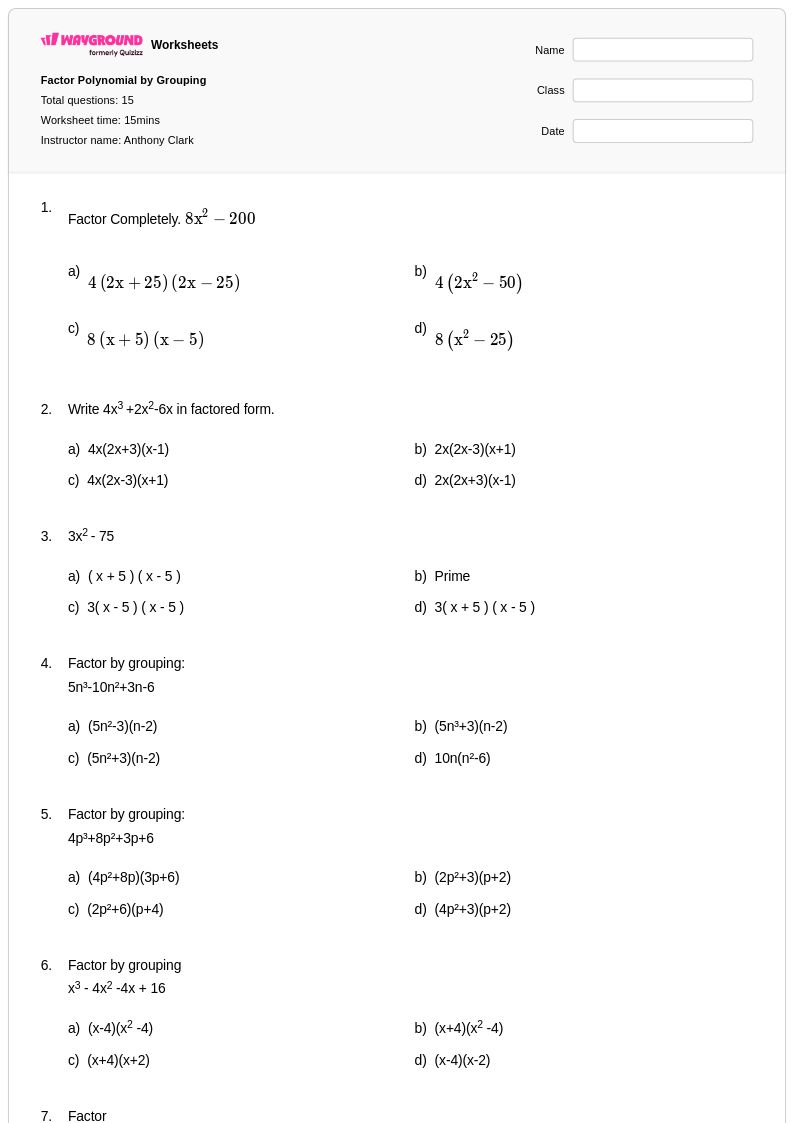
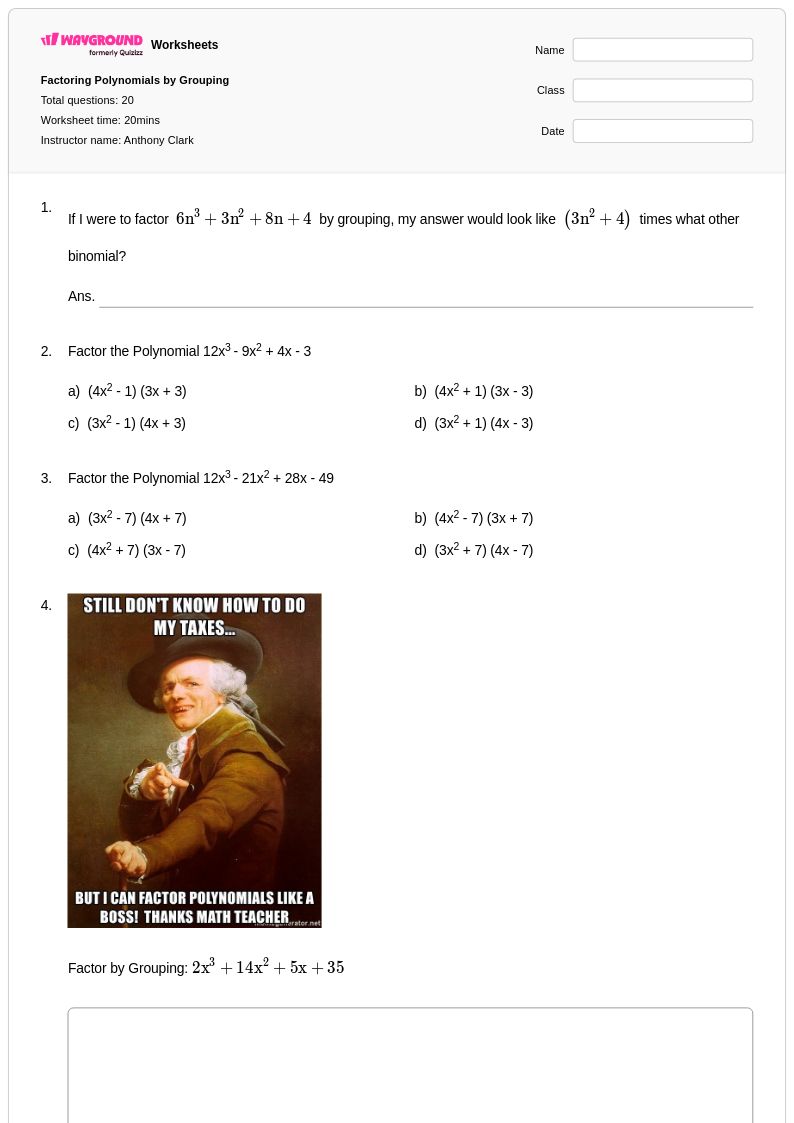
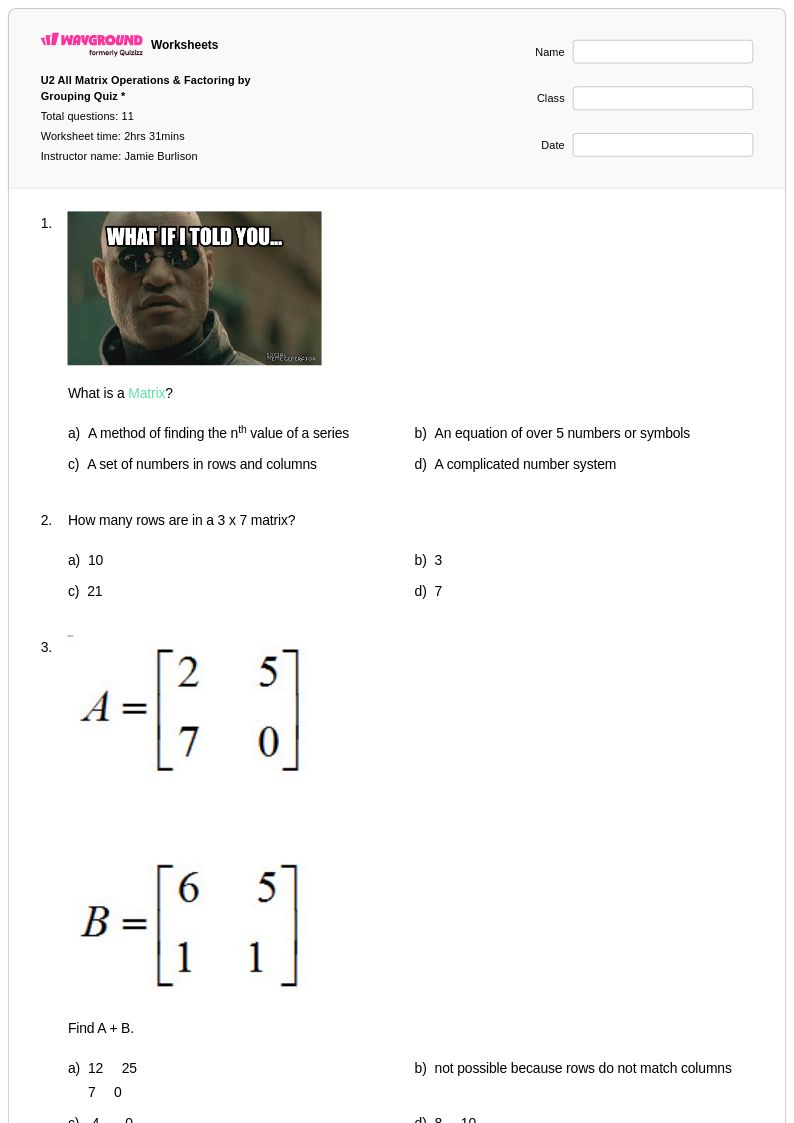
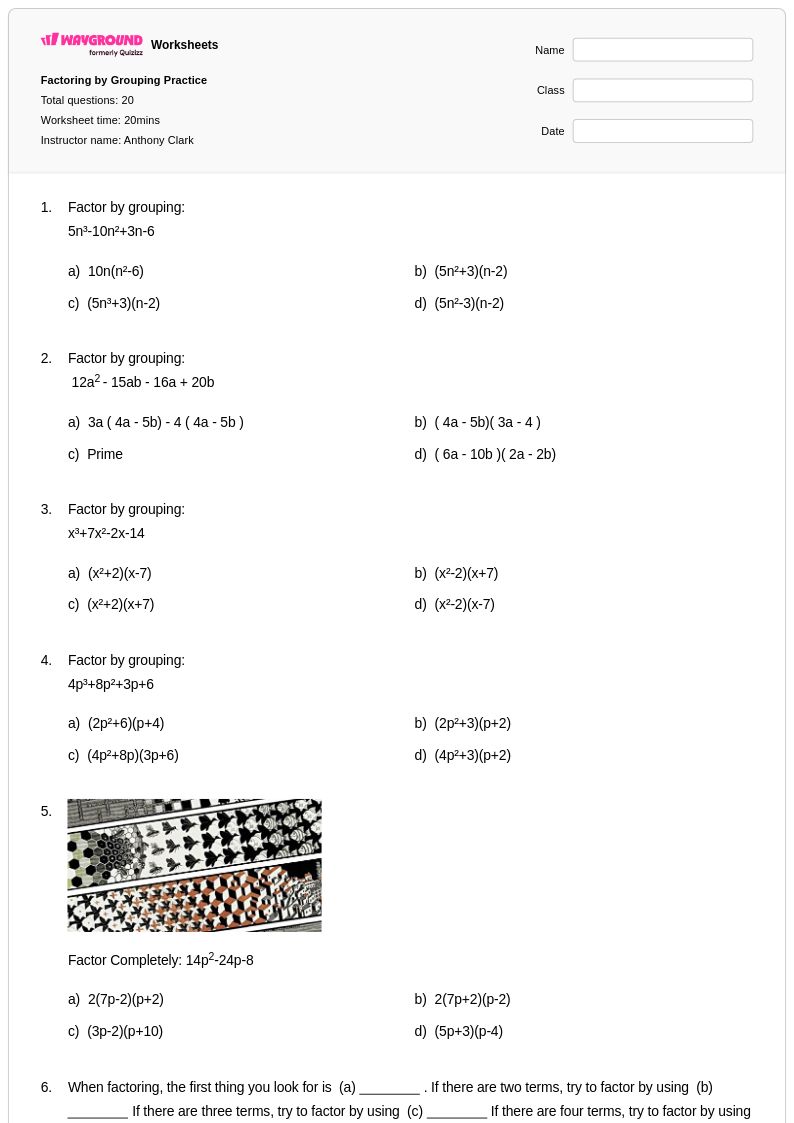
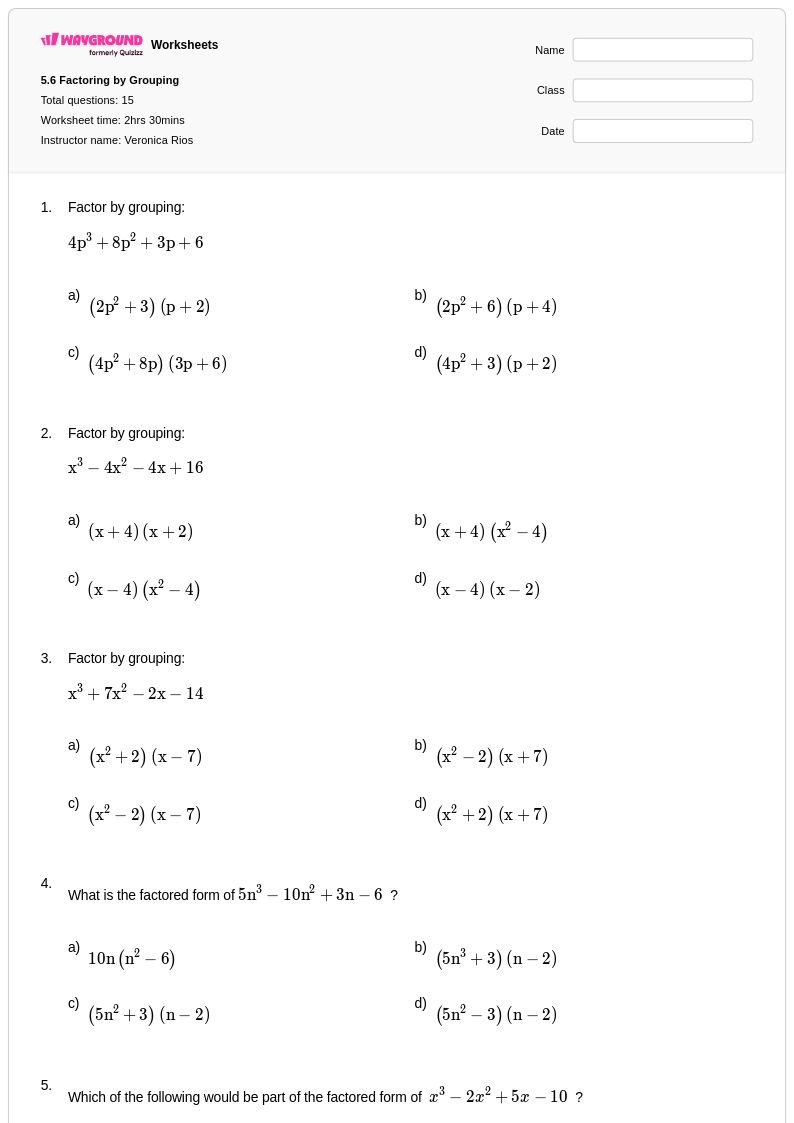
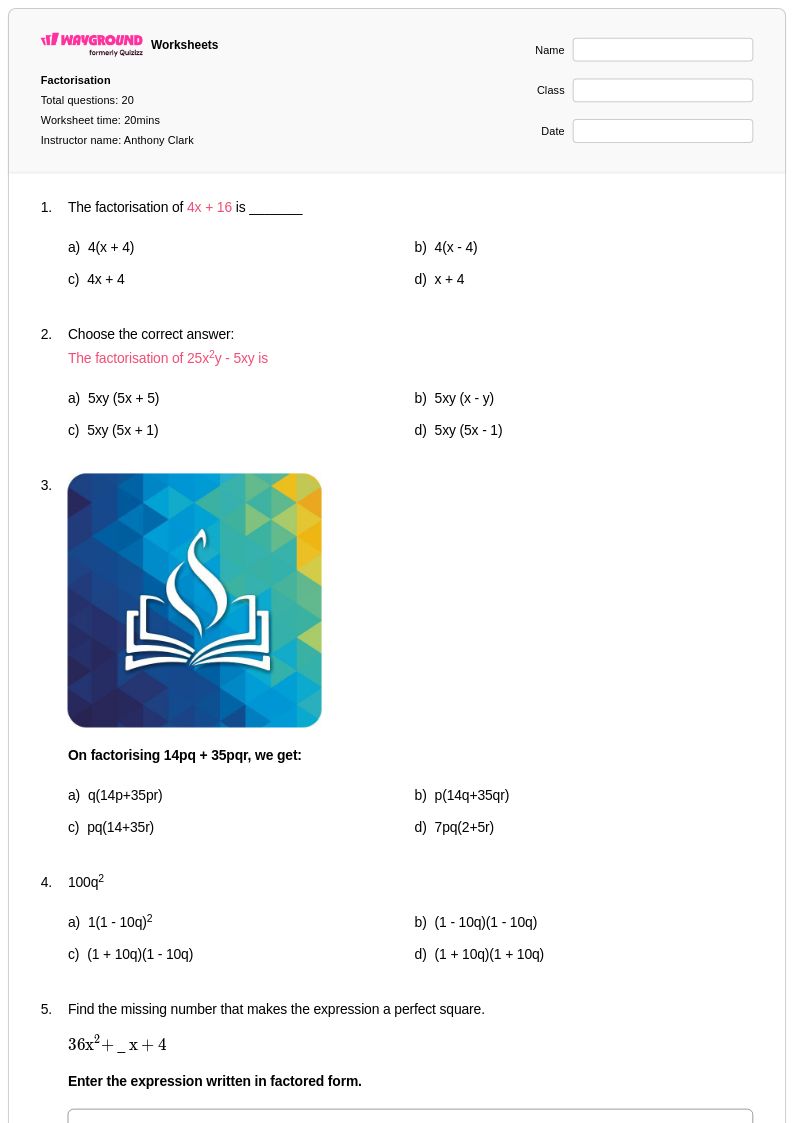
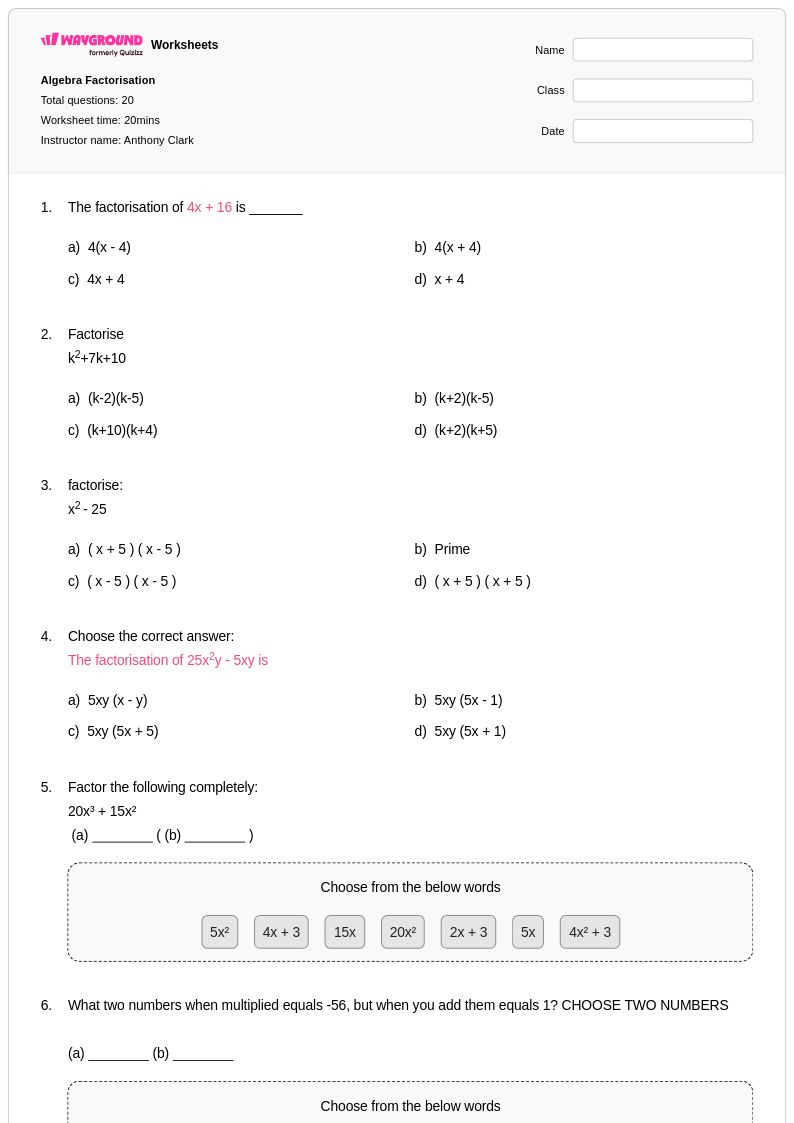
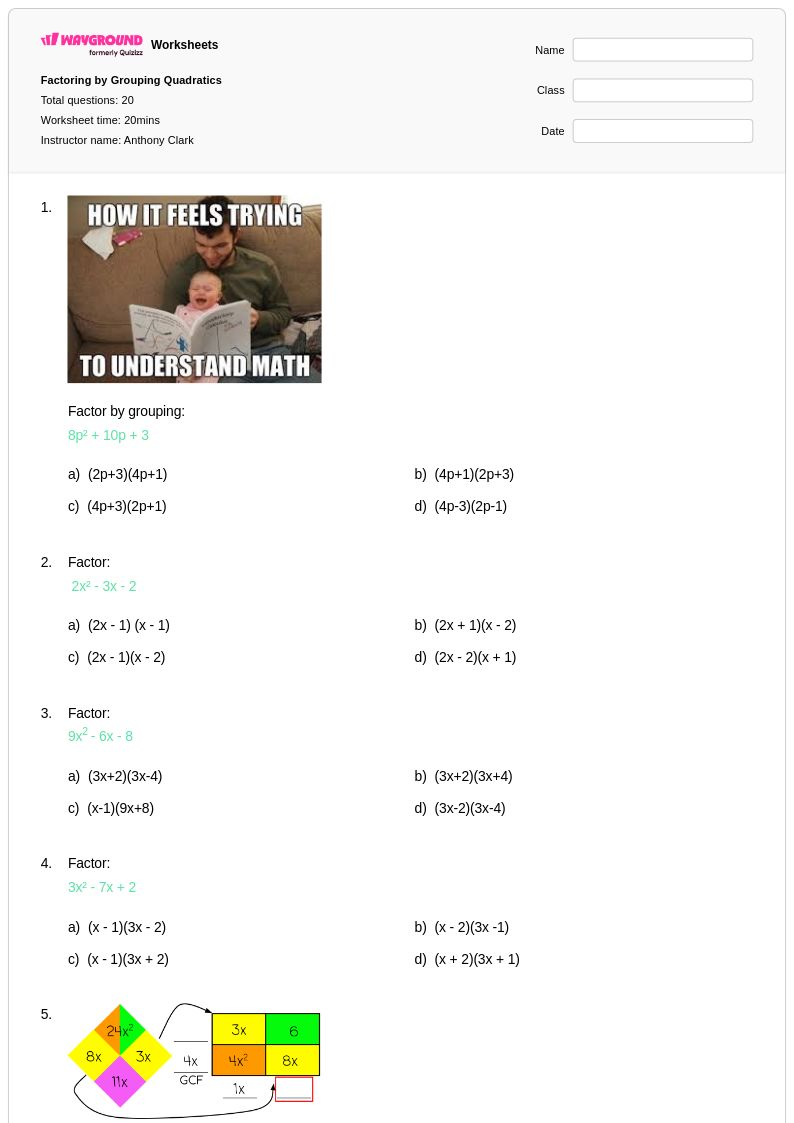
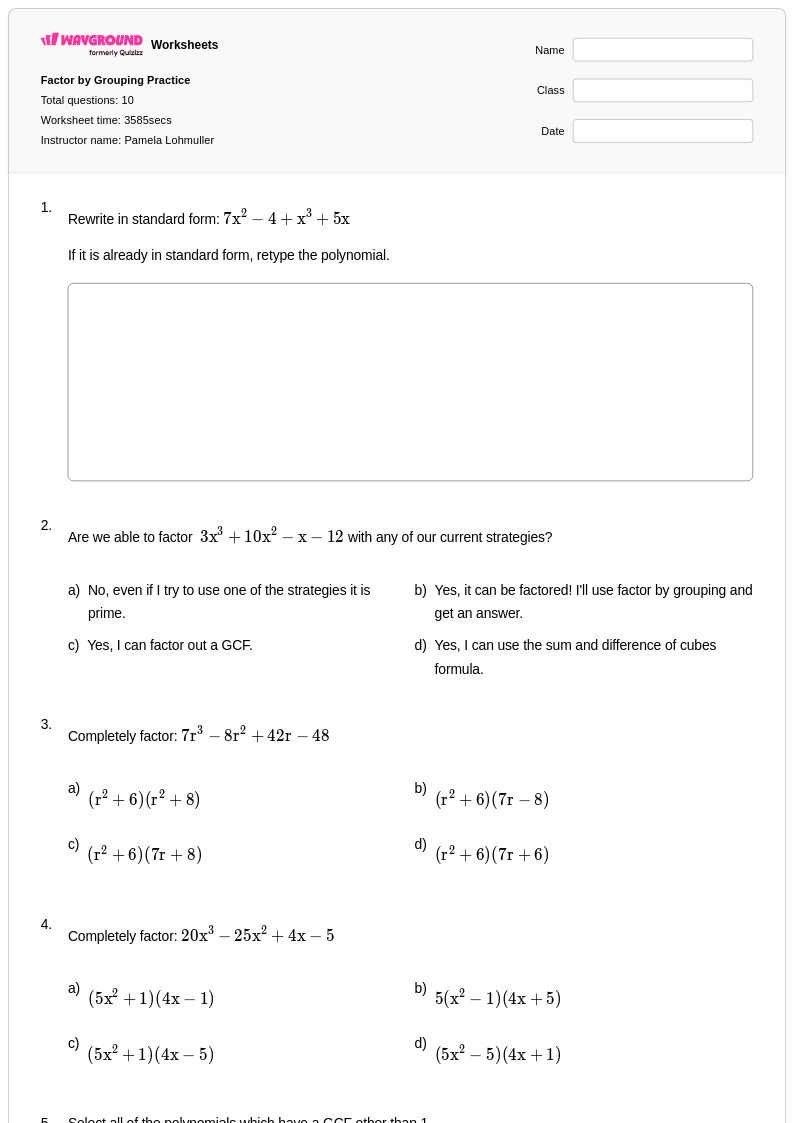
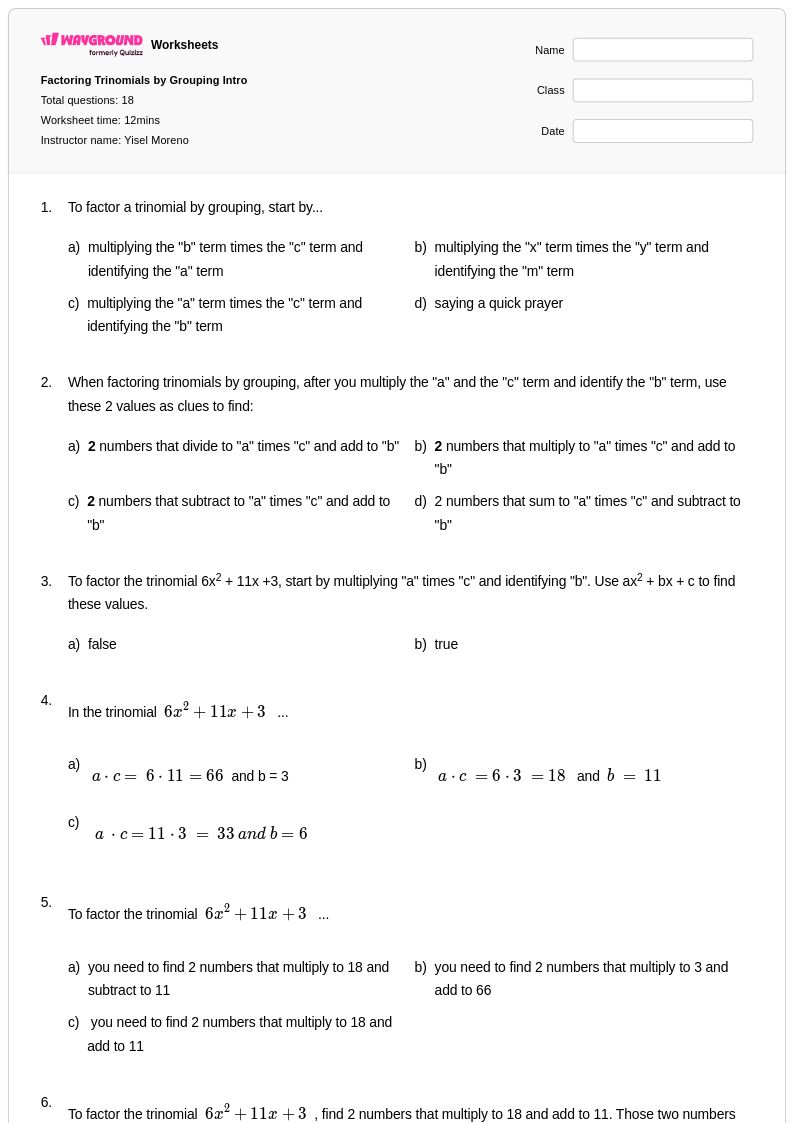
Factorization by grouping represents a fundamental algebraic technique that Grade 10 students must master to progress in advanced mathematics. Wayground's comprehensive collection of factorization by grouping worksheets provides systematic practice with polynomials that can be factored by strategically grouping terms and identifying common factors within each group. These carefully designed practice problems strengthen students' pattern recognition skills, algebraic manipulation abilities, and logical thinking processes essential for solving complex polynomial equations. Each worksheet includes a complete answer key and is available as a free printable pdf, allowing students to work through progressively challenging examples that build confidence in recognizing when and how to apply grouping techniques to factor expressions like ax + bx + ay + by into (x + y)(a + b).
Wayground's extensive library draws from millions of teacher-created resources specifically focused on algebraic factorization techniques, offering educators powerful search and filtering capabilities to locate worksheets that align with curriculum standards and individual classroom needs. The platform's differentiation tools enable teachers to customize practice sets based on student skill levels, providing both remedial support for struggling learners and enrichment opportunities for advanced students ready to tackle more complex polynomial expressions. Available in both printable and digital formats including downloadable pdfs, these factorization worksheets support flexible lesson planning whether teachers need quick homework assignments, guided practice sessions, or comprehensive review materials. The robust customization features allow educators to modify problems, adjust difficulty levels, and create targeted practice sets that address specific learning gaps while reinforcing the critical thinking skills necessary for algebraic problem-solving success.
FAQs
How do I teach factorisation by grouping to Grade 10 students?
By Grade 10, most students have seen GCF factoring, so frame grouping as an extension of that skill rather than something new. The core idea is that a four-term polynomial like ax + bx + ay + by can be split into two pairs — (ax + bx) and (ay + by) — each of which yields a GCF, and those GCFs reveal a shared binomial factor (x + y) that completes the factorisation as (a + b)(x + y). Where Grade 10 instruction should push further than Grade 9 is on problems that require reordering terms before a valid grouping exists — students need to understand that the arrangement on the page isn't always the right one, and that trying a different pairing is a legitimate algebraic move, not a sign they've made an error.
What exercises help Grade 10 students practice factorisation by grouping?
A good Grade 10 practice set should include three types of problems: expressions where the grouping is straightforward, expressions that require reordering terms first, and expressions where the GCF in one group must be negative to produce matching binomials. Mixing these three types — rather than drilling one type at a time — builds the judgment students need to recognise which situation they're in. Wayground's Grade 10 worksheets progress through increasingly complex polynomial expressions, and every worksheet includes a complete answer key so students can identify exactly where their reasoning broke down.
What mistakes do Grade 10 students commonly make with factorisation by grouping?
The most persistent error at this level is forcing a grouping that doesn't work rather than trying a different arrangement of terms. Students who learned the method in Grade 9 often have a rigid mental model — split the first two terms and the last two terms — and don't realise that pairing the first and third terms with the second and fourth is sometimes the correct approach. A second common mistake is incomplete factorisation: students factor each pair correctly but then write the answer as two separate binomial terms rather than completing the final step of factoring out the common binomial factor.
How do I use Wayground's Grade 10 factorisation by grouping worksheets in my class?
You can run these as a digital quiz on Wayground — assign it to students and they complete it on their devices — or download the printable PDF for paper-based practice. The printable route works well for in-class work where you want students focused on the algebra without a screen in front of them; you can then grade submissions using the Wayground for Teachers app by scanning or capturing student work. Every worksheet includes a complete answer key regardless of which format you use.
Is factorisation by grouping aligned with Common Core standards for Grade 10?
Common Core's high school algebra strand expects students to understand polynomial structure and use it strategically to factor. Factorisation by grouping fits within the progression that moves from factoring out a simple GCF to recognising more complex internal structure in polynomials. At the Grade 10 level, this technique is particularly important because it underpins the 'splitting the middle term' method for factoring trinomials with a leading coefficient greater than one — a skill that Common Core expects students to apply fluently before moving into polynomial division and rational expressions in later courses.
How can I differentiate factorisation by grouping practice for my Grade 10 class?
The method's difficulty scales naturally with the complexity of the GCFs involved — start students who need more support on problems with integer GCFs and pre-arranged terms, and push advanced students toward expressions with polynomial GCFs or those requiring non-obvious reordering. On Wayground, you can produce alternate versions of the same worksheet with larger font sizes or wider spacing for students who need it, and apply a dyslexia-friendly font without changing the problem set. For digital sessions, the Reduced answer choices accommodation is useful for students who get overwhelmed by multiple-choice options, letting them focus on the algebraic reasoning rather than the process of elimination.