Free Printable End Behavior of Polynomials Worksheets for Grade 10
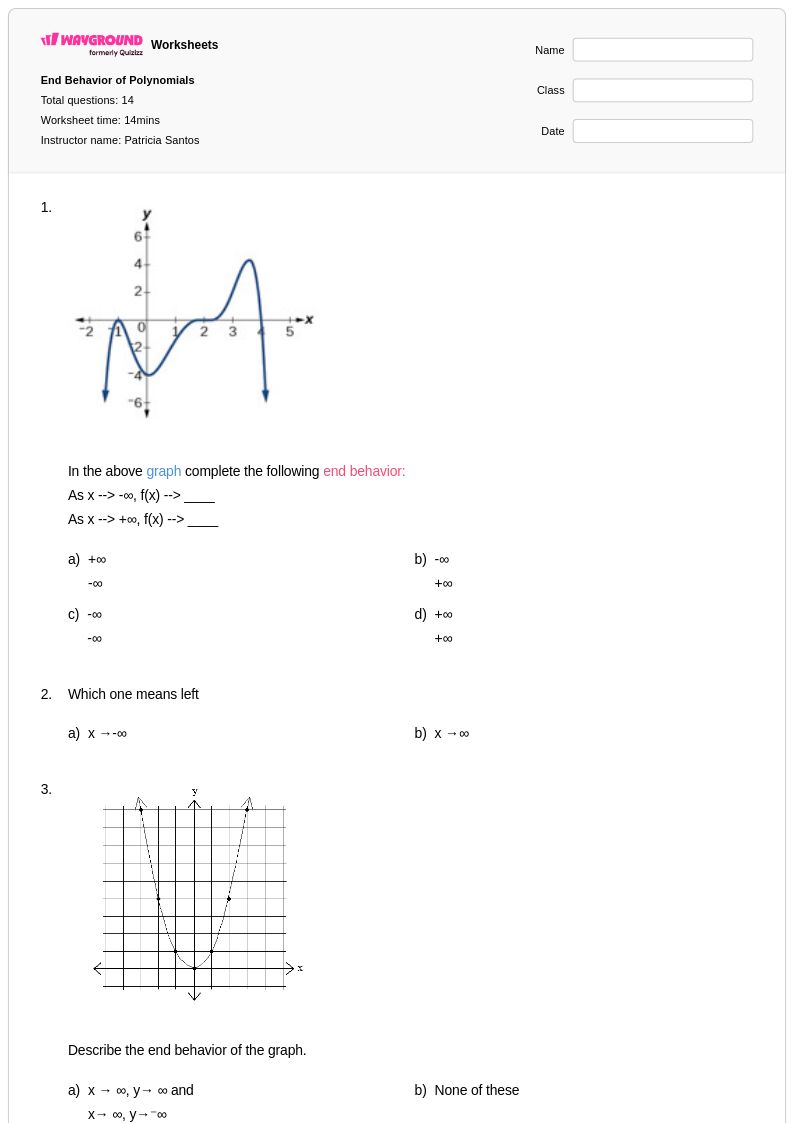
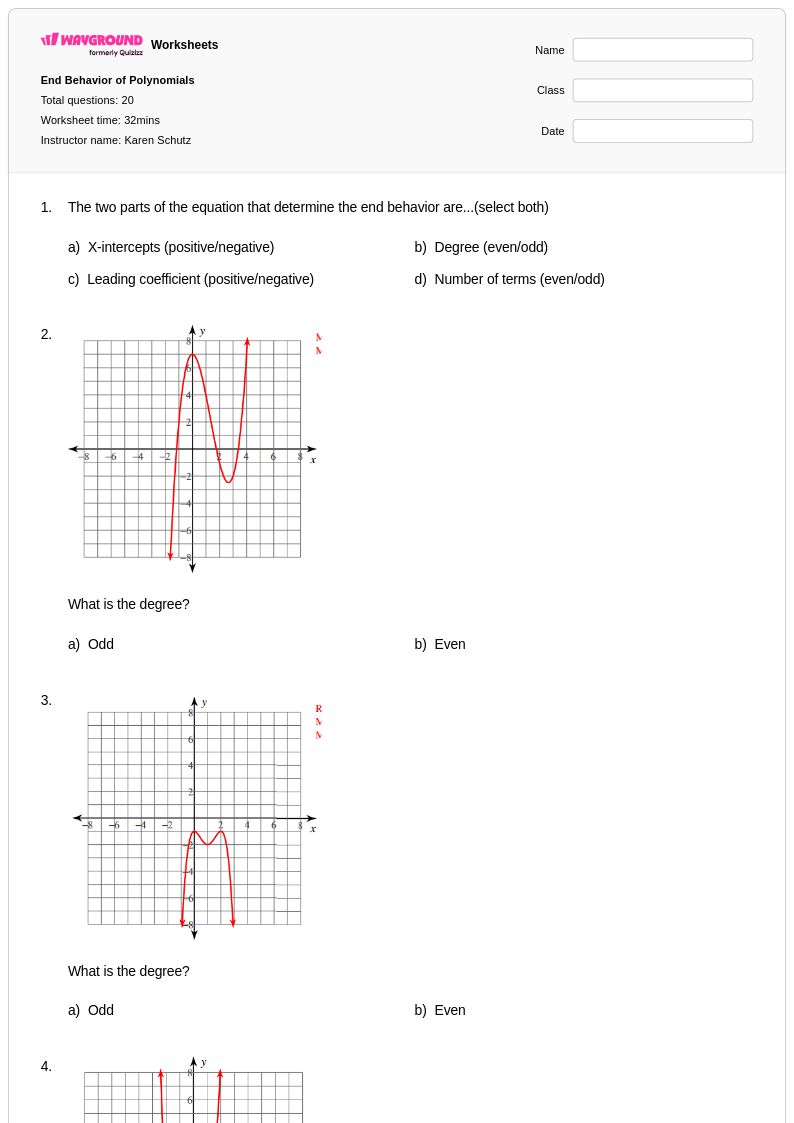
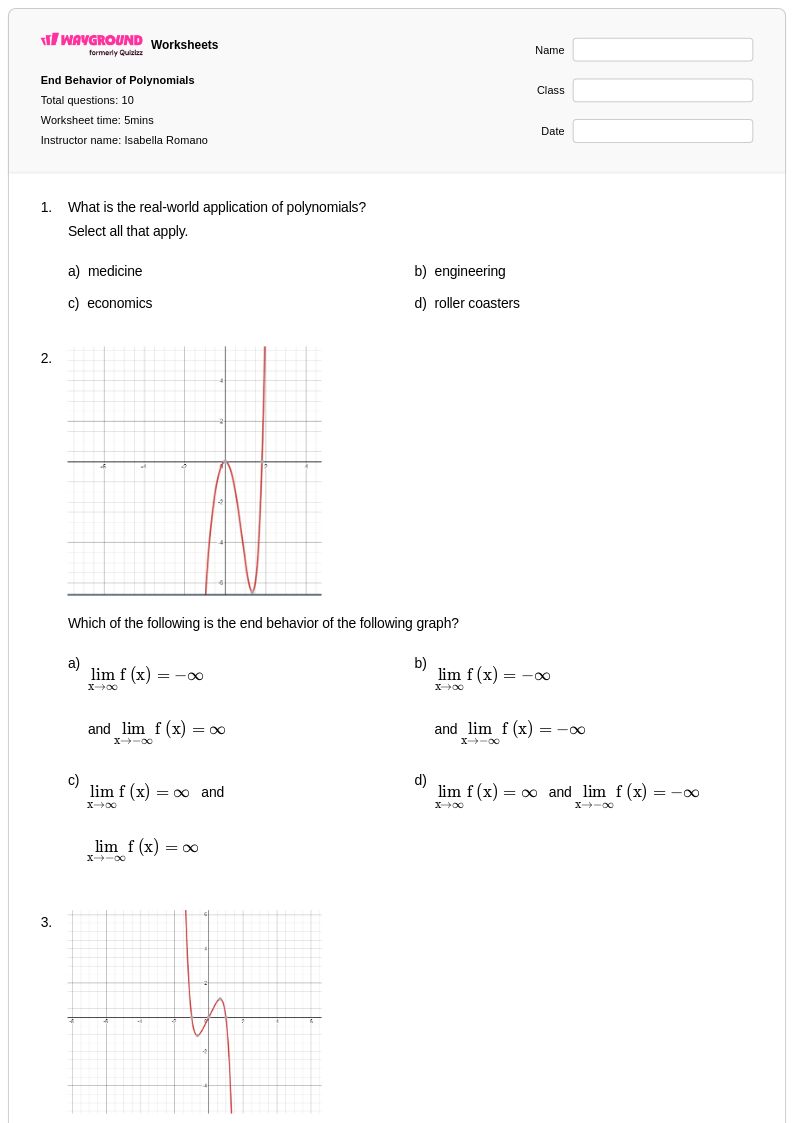
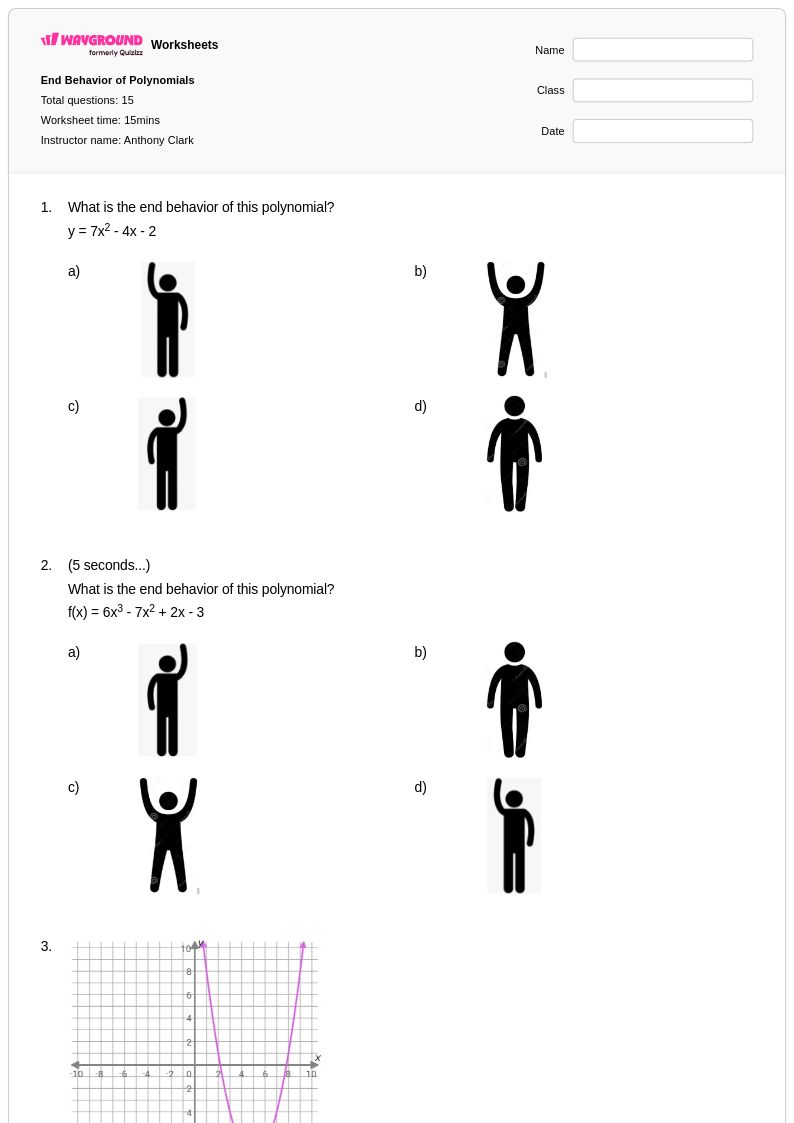
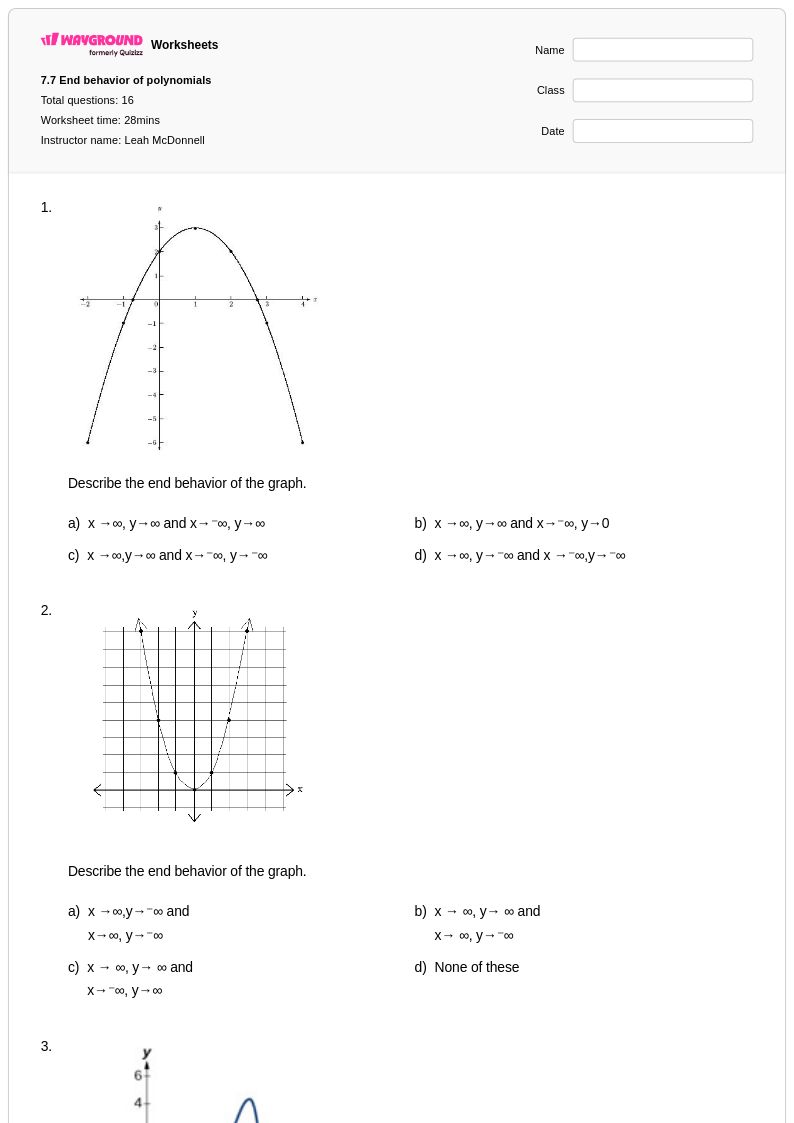
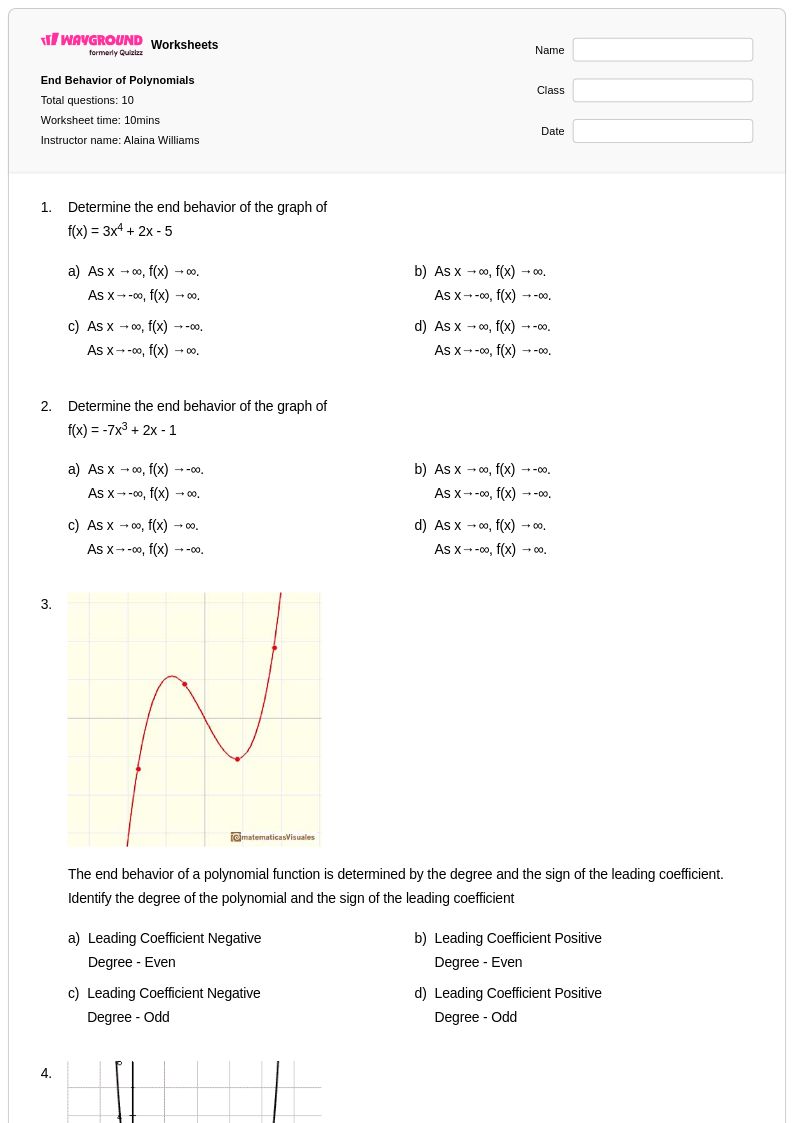
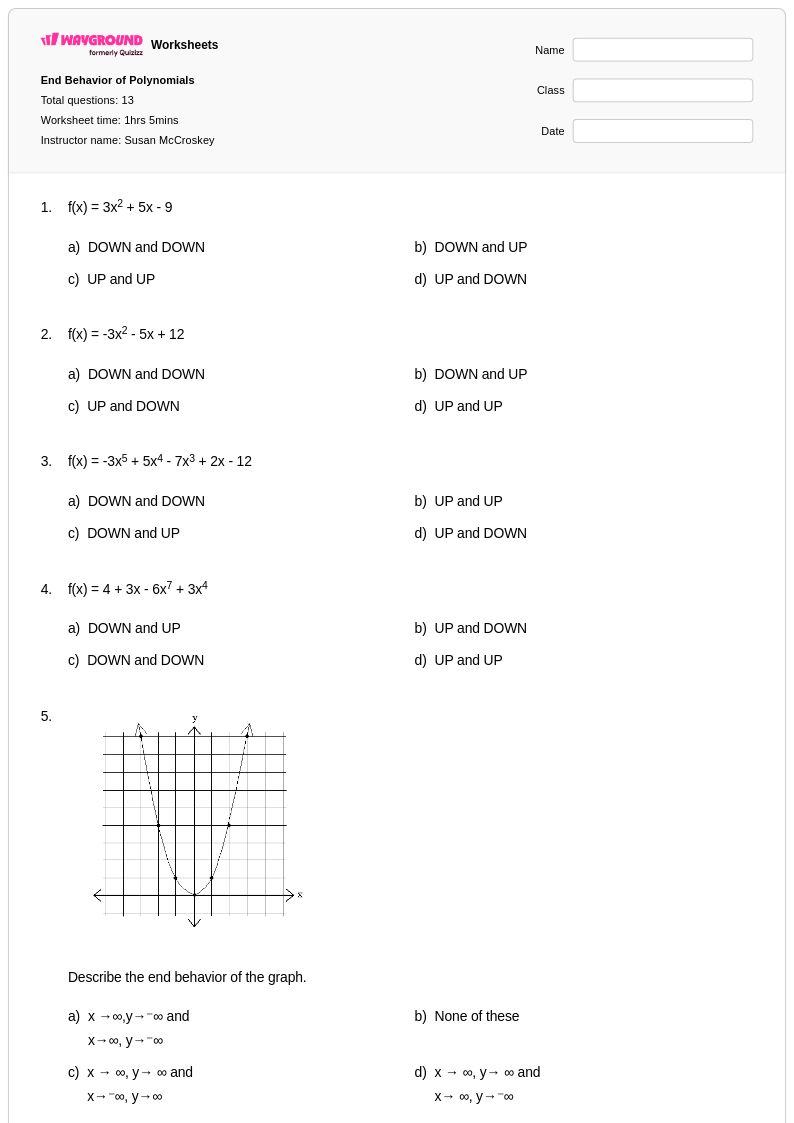
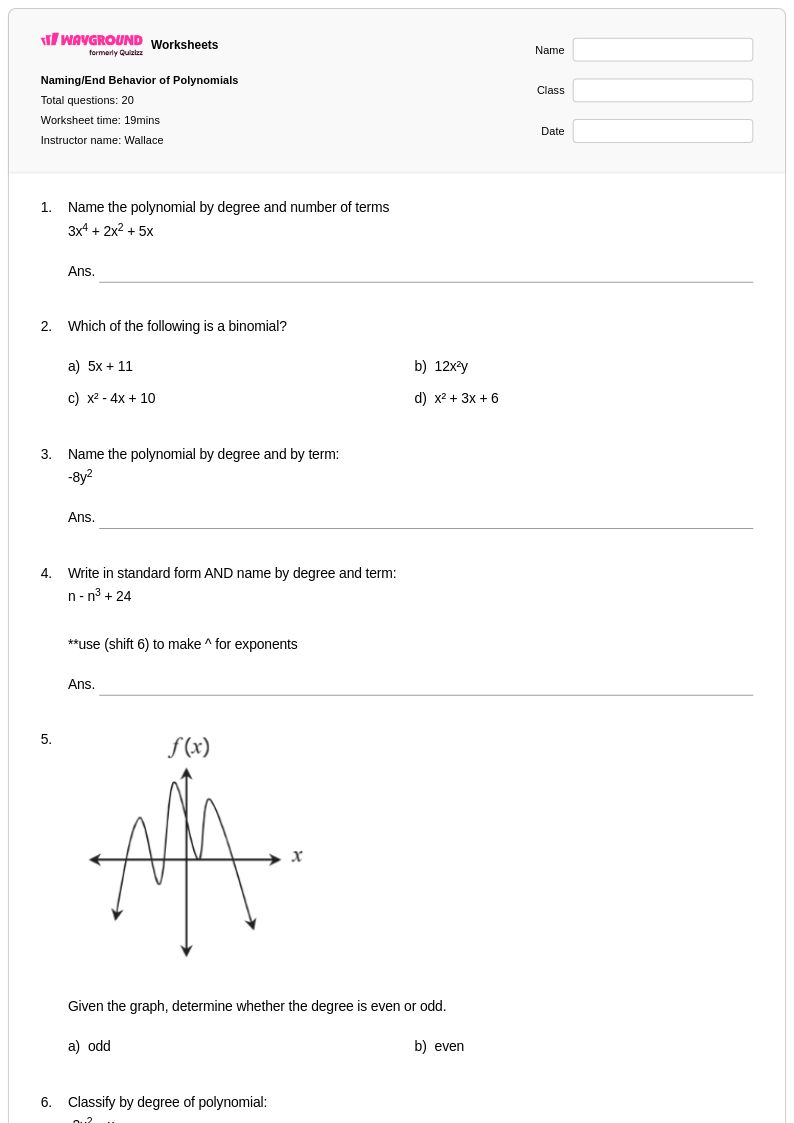
Grade 10 end behavior of polynomials worksheets from Wayground offer free printables and practice problems with answer keys to help students master polynomial function analysis and graphing skills.
Explore printable End Behavior of Polynomials worksheets for Grade 10
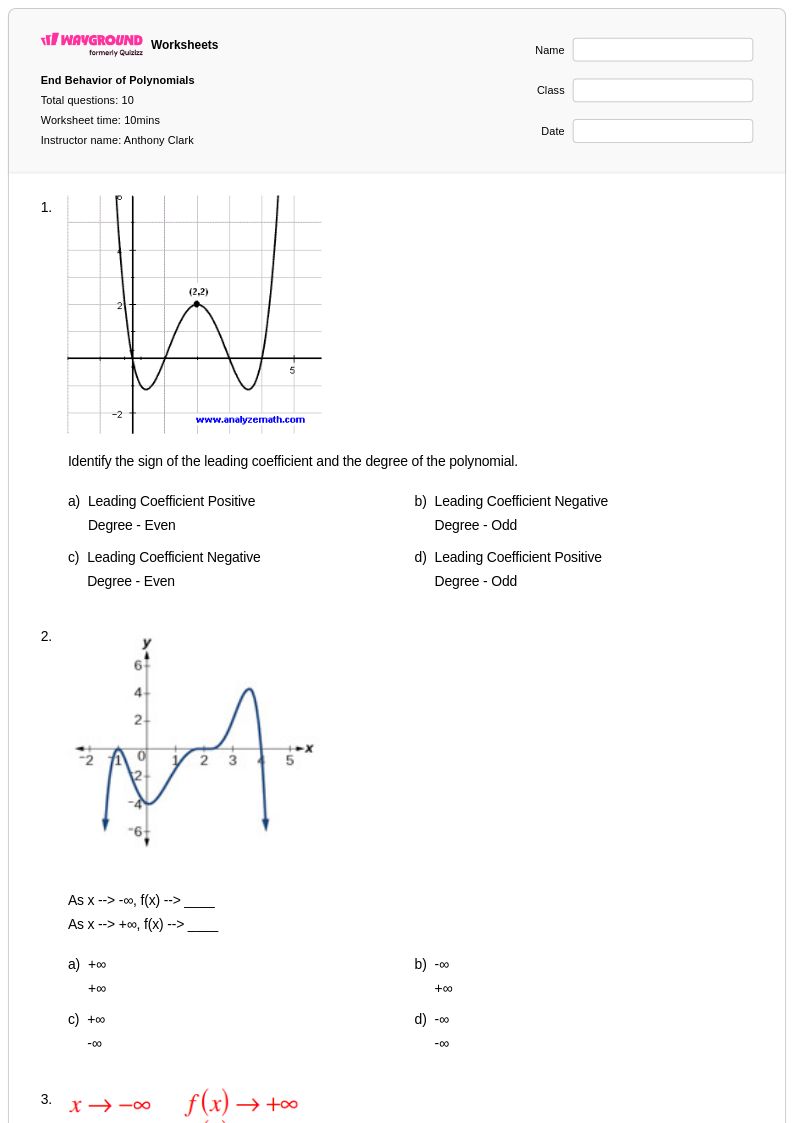
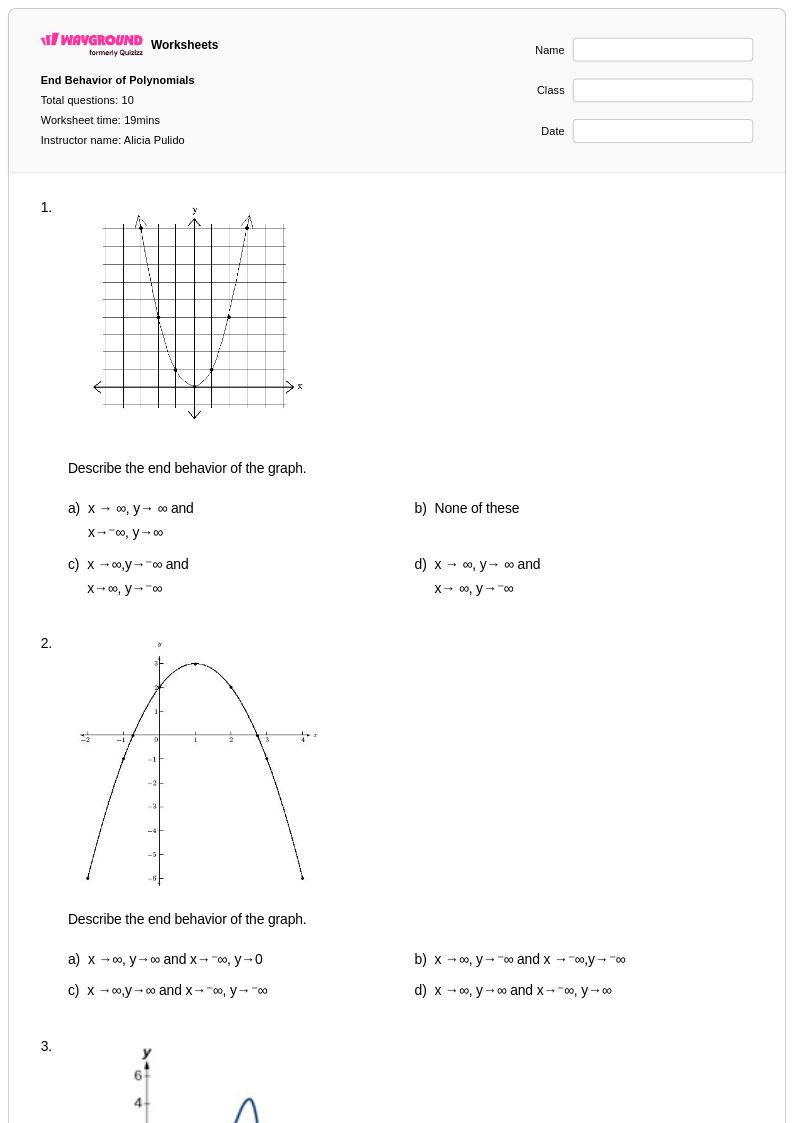
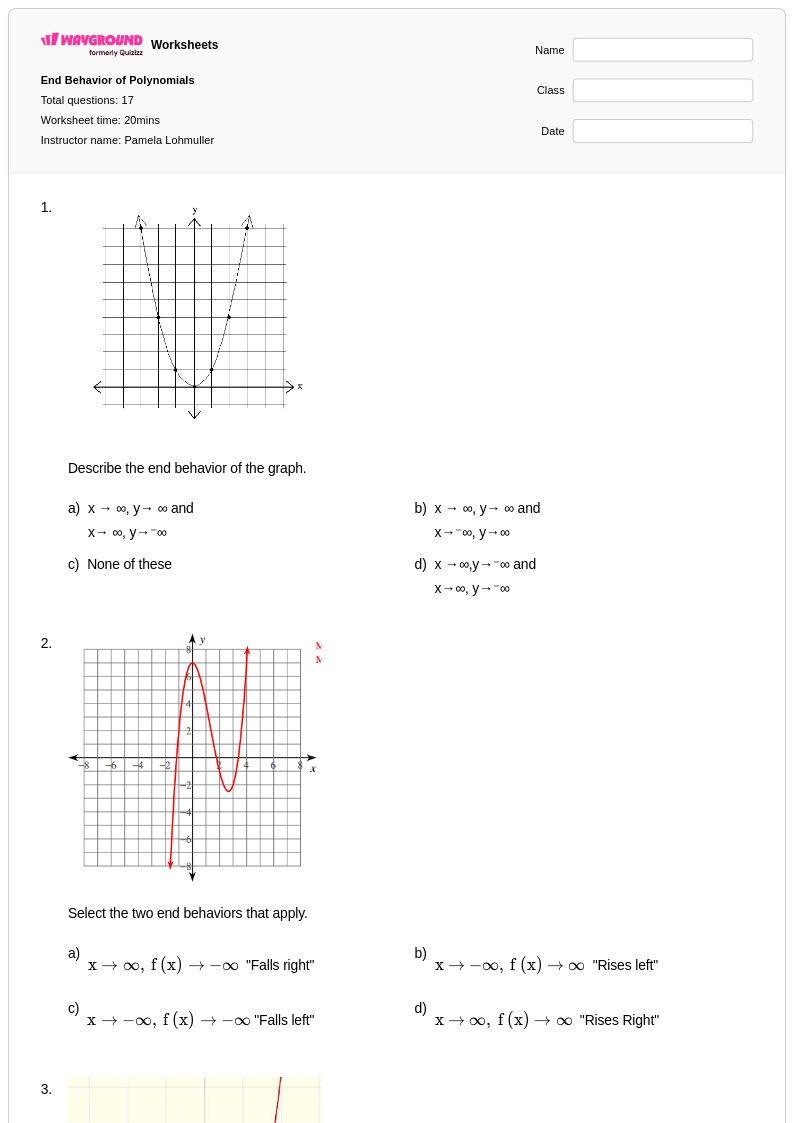
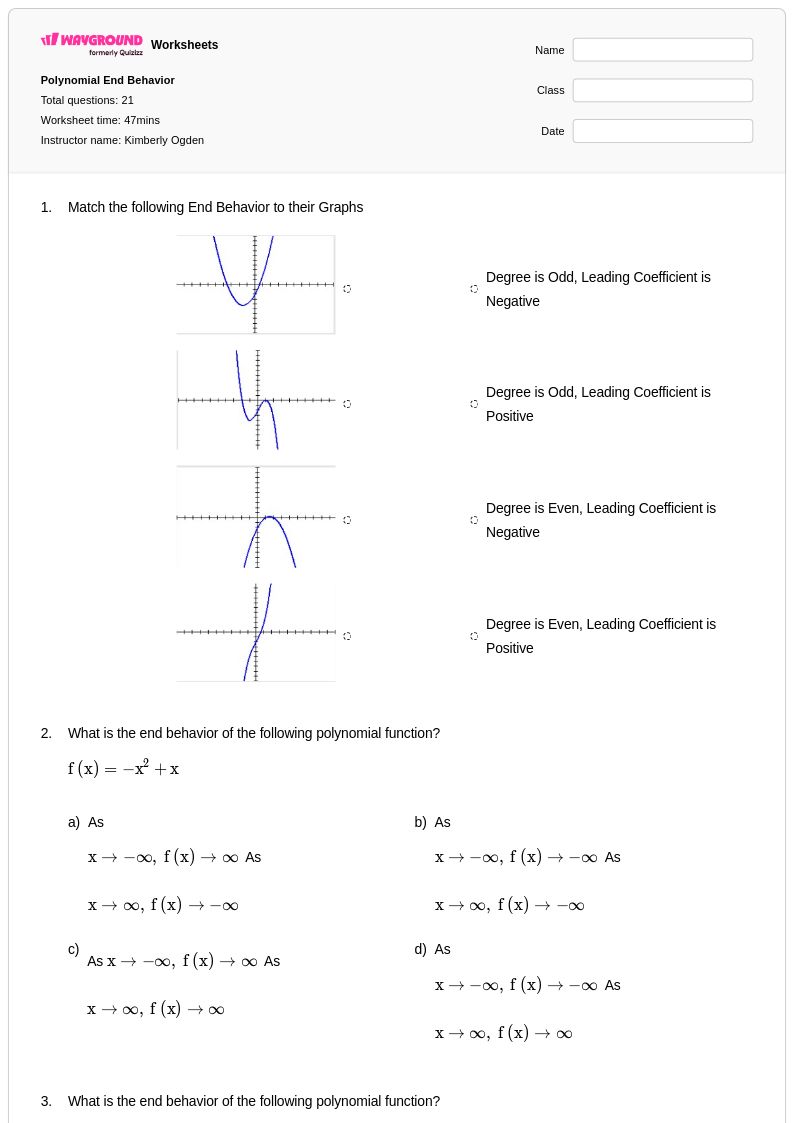
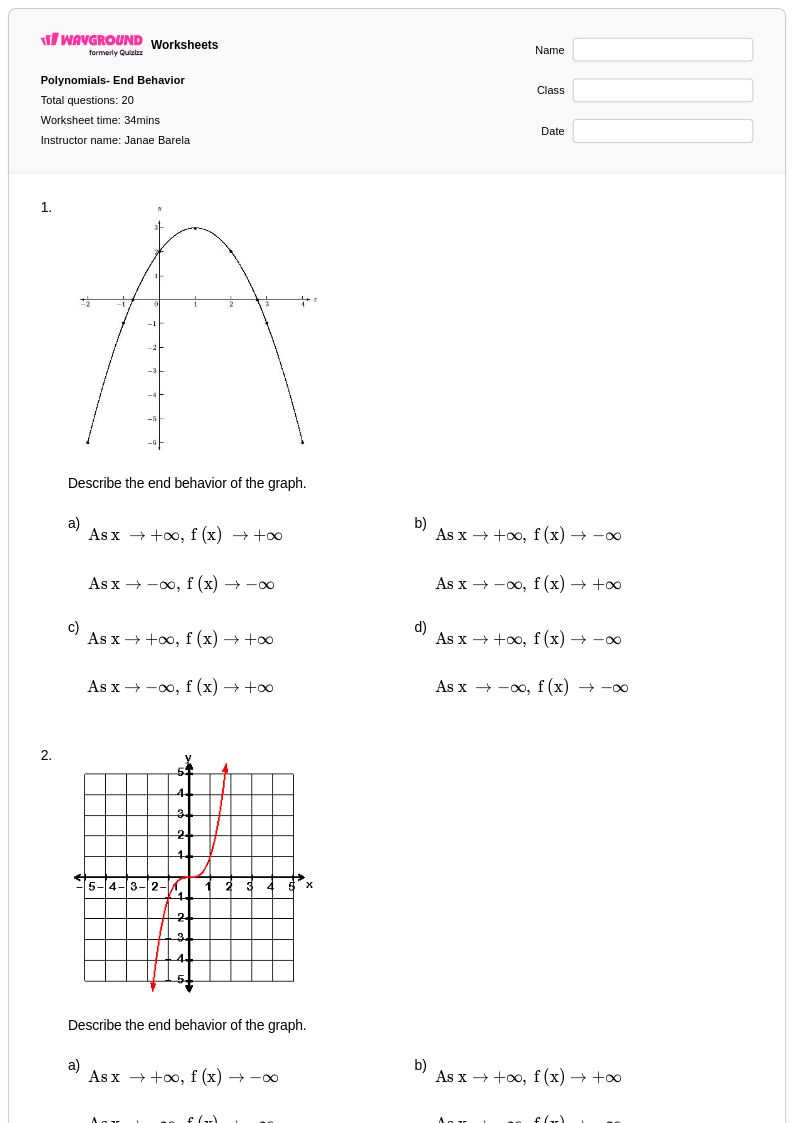
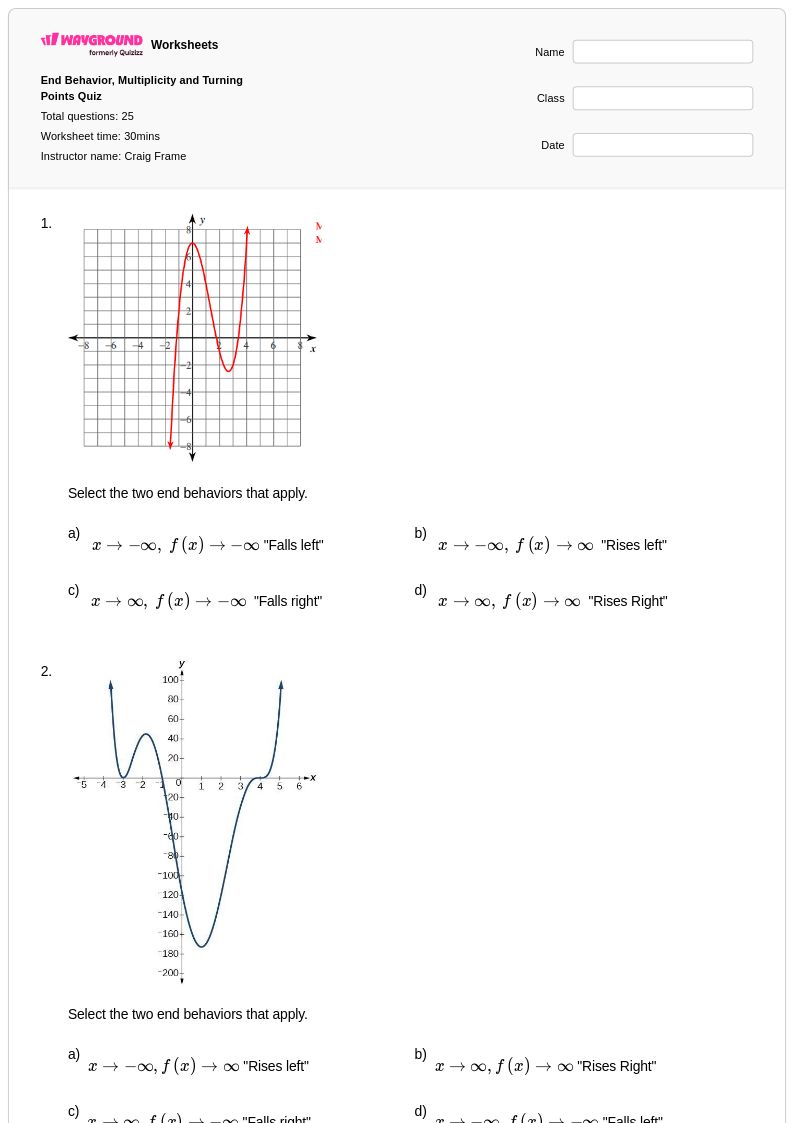
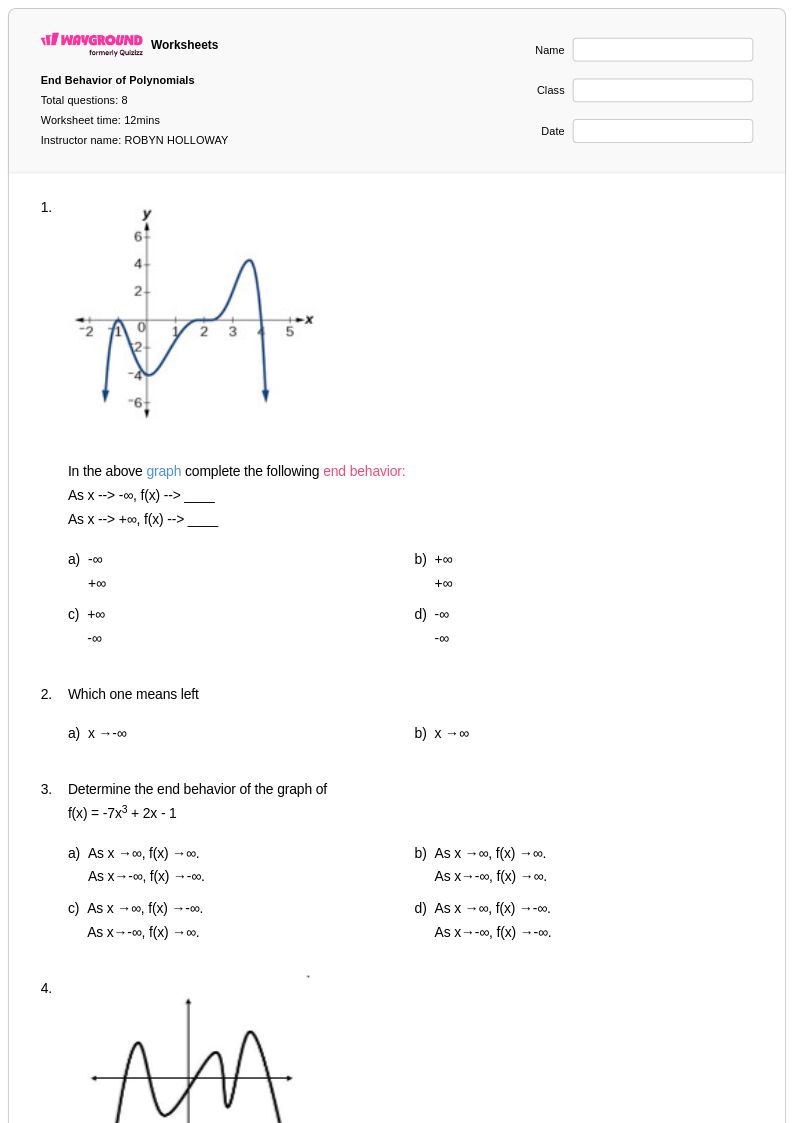
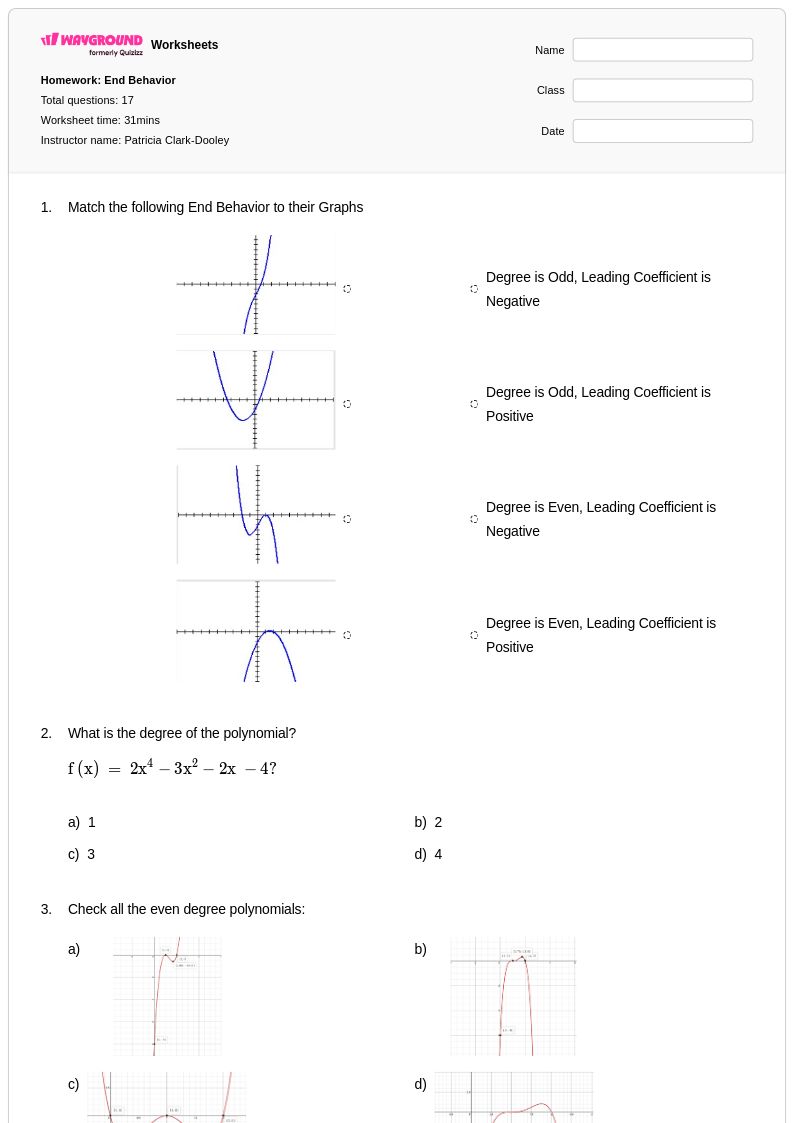
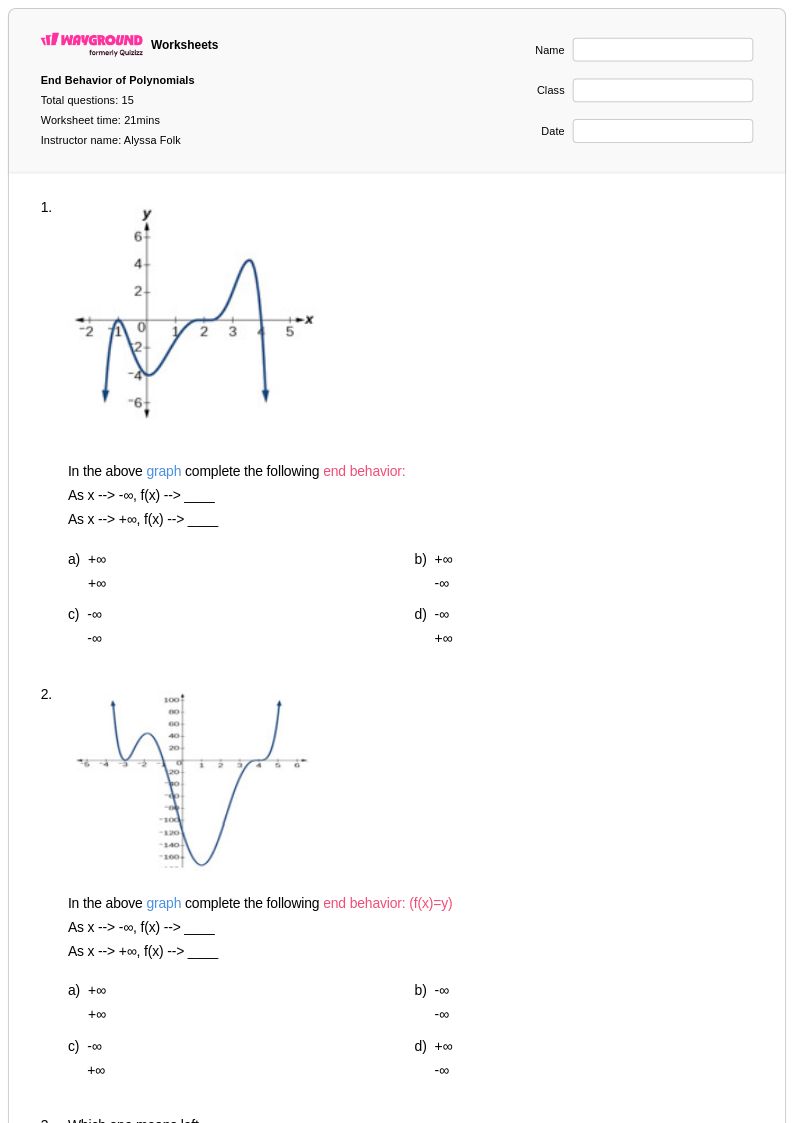
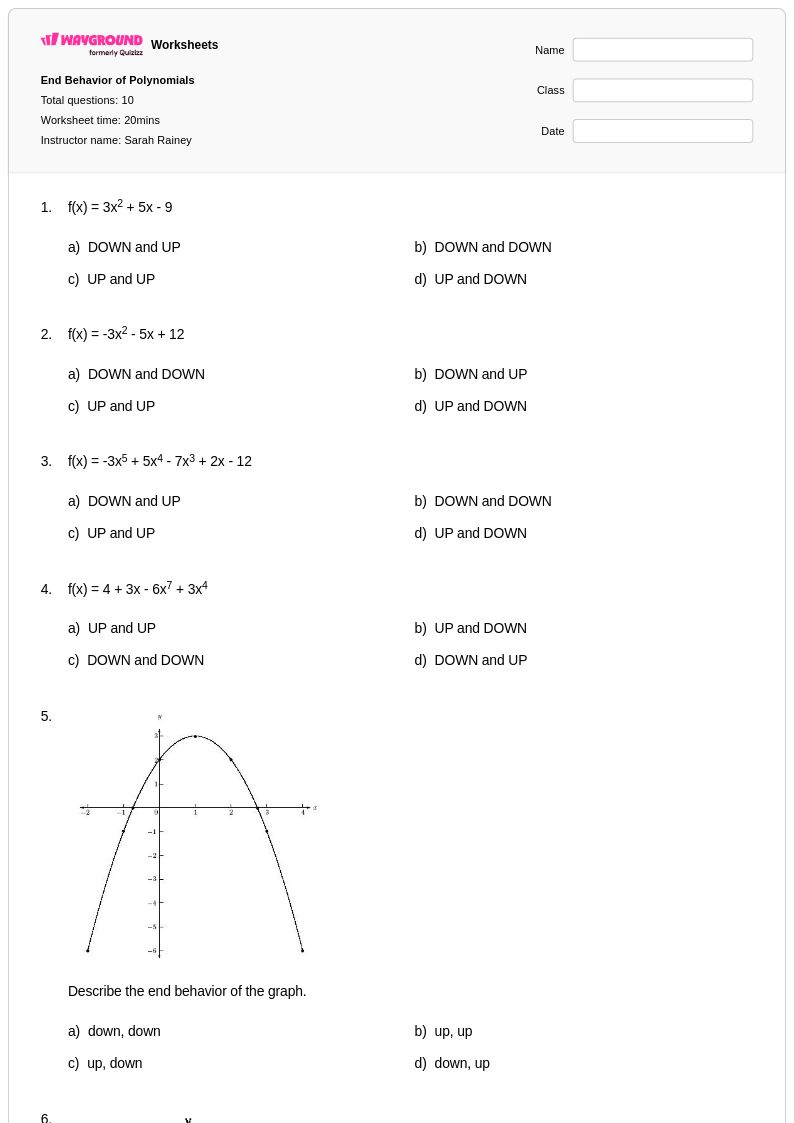
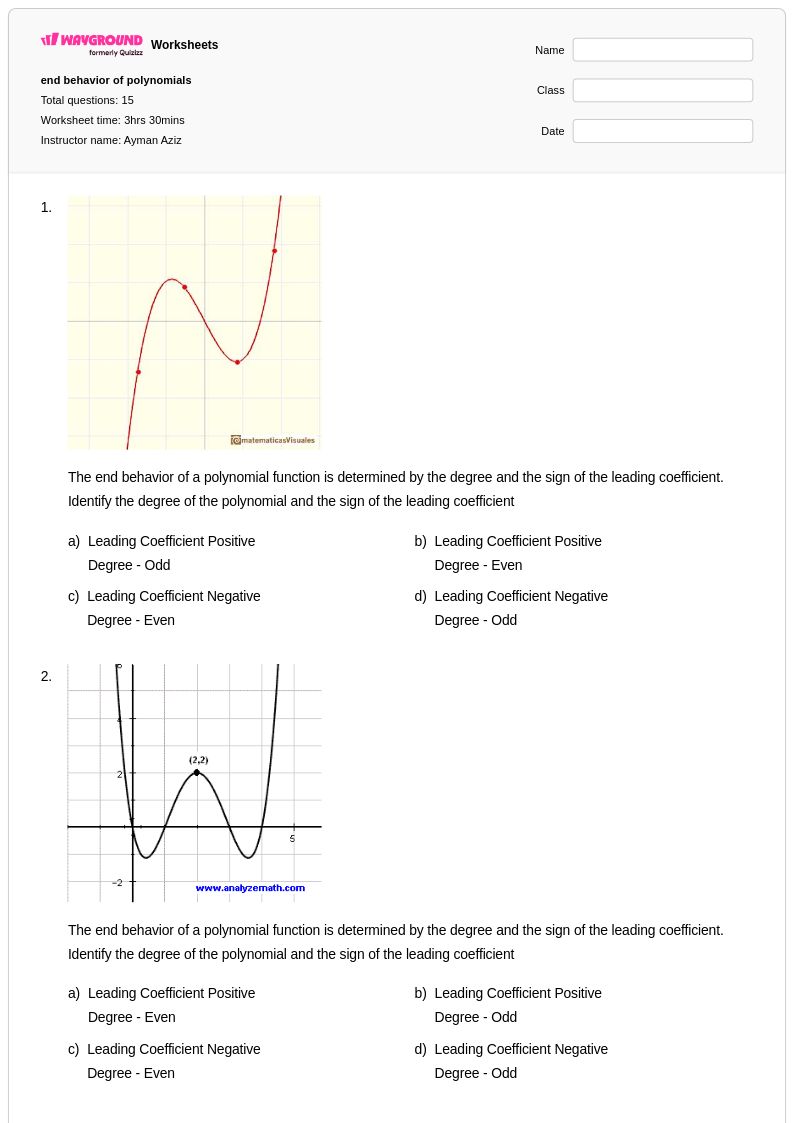
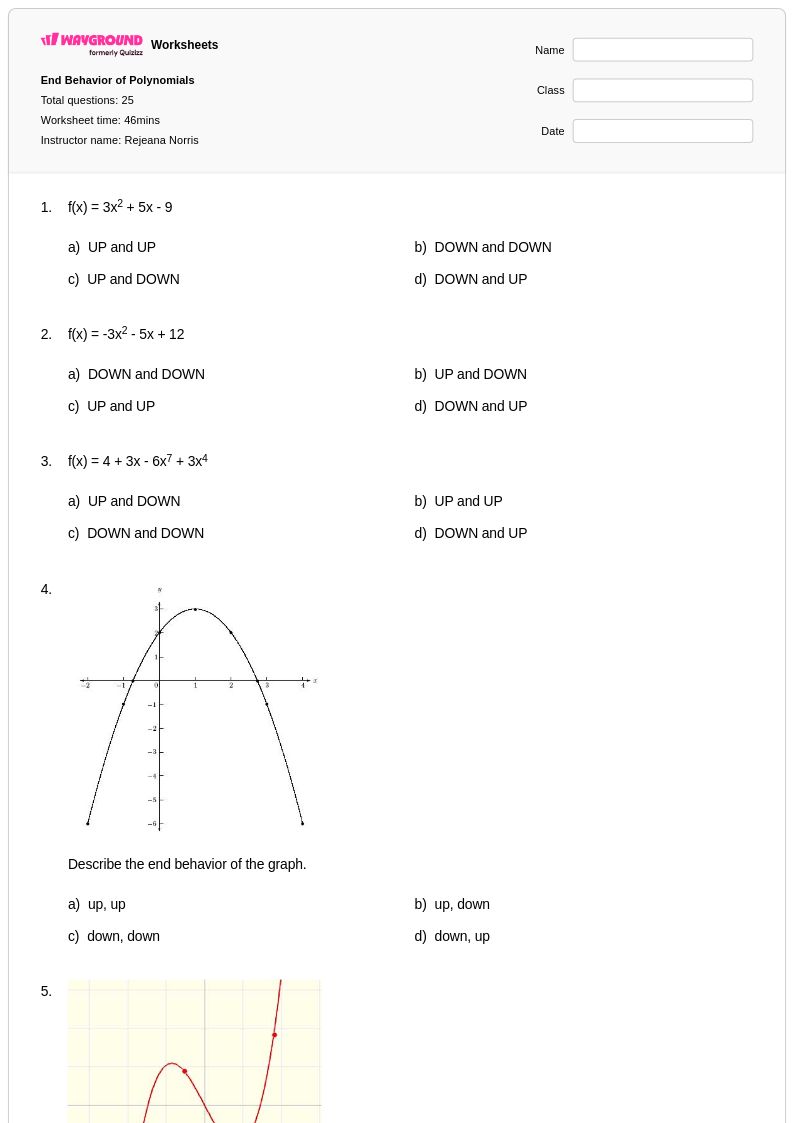
End behavior of polynomials represents a fundamental concept in Grade 10 algebra that helps students understand how polynomial functions behave as their input values approach positive or negative infinity. Wayground's comprehensive collection of end behavior worksheets provides students with structured practice problems that develop their ability to analyze polynomial degree and leading coefficients to predict graph behavior. These printable resources strengthen critical algebraic reasoning skills through systematic exercises that guide students from basic polynomial identification to complex function analysis. Each worksheet includes detailed answer keys that support independent learning, while the free pdf format ensures accessibility for both classroom instruction and homework assignments, making these practice materials invaluable for mastering this essential algebraic concept.
Wayground's extensive library draws from millions of teacher-created resources specifically designed to support algebra instruction at the Grade 10 level, with robust search and filtering capabilities that allow educators to quickly locate end behavior worksheets aligned with their curriculum standards. The platform's differentiation tools enable teachers to customize polynomial complexity and problem types to meet diverse learning needs, whether for remediation with struggling students or enrichment for advanced learners. These resources are available in both printable and digital formats, including downloadable pdf versions that facilitate flexible lesson planning and accommodate various instructional settings. Teachers can seamlessly integrate these materials into their algebra curriculum to provide targeted skill practice, assess student understanding of polynomial behavior, and reinforce the connection between algebraic expressions and their graphical representations.
FAQs
How do I teach end behavior of polynomials in a Grade 10 algebra class?
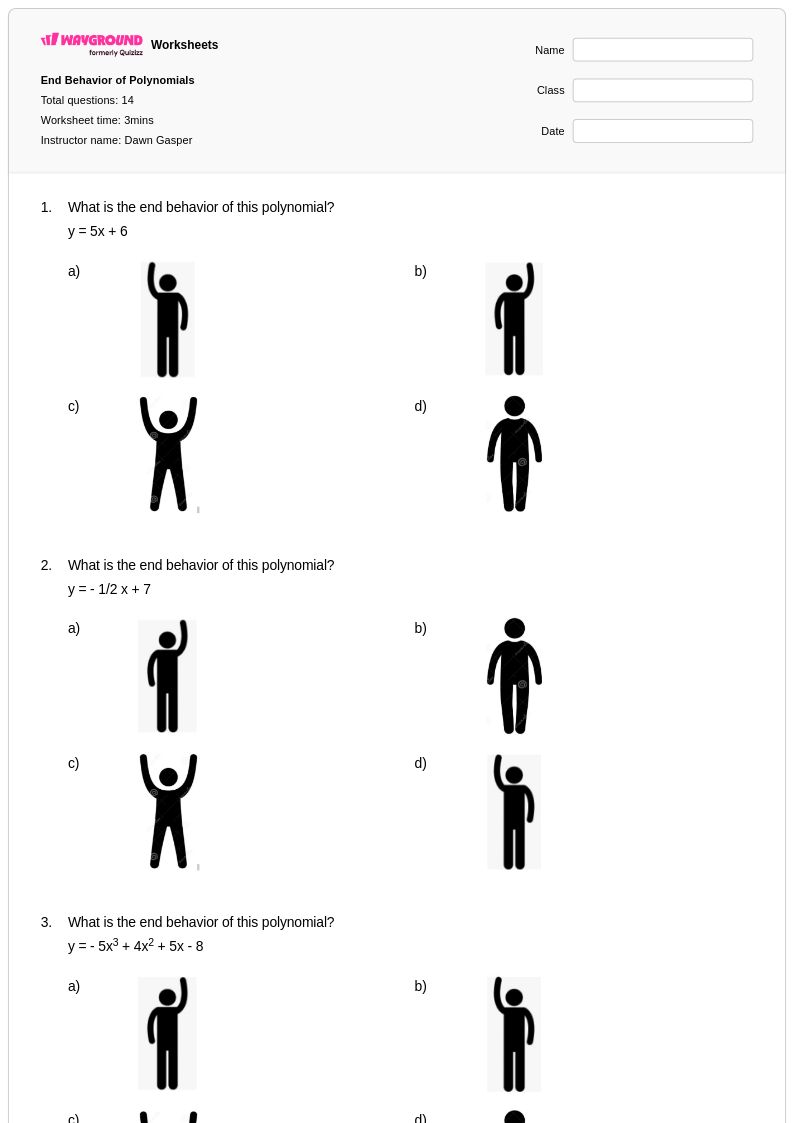
By Grade 10, most students have graphed quadratics and have some intuition about parabolas, so anchor the lesson there. Establish that a positive even-degree polynomial rises on both ends, then show what flipping the leading coefficient does. Introduce odd-degree functions as the case where the two tails go in opposite directions, and have students articulate why — the function keeps growing in one direction and keeps falling in the other. The goal is for students to look at any polynomial, identify the leading term, and immediately know the end behavior without graphing the whole function.
What exercises help 10th graders practice polynomial end behavior?
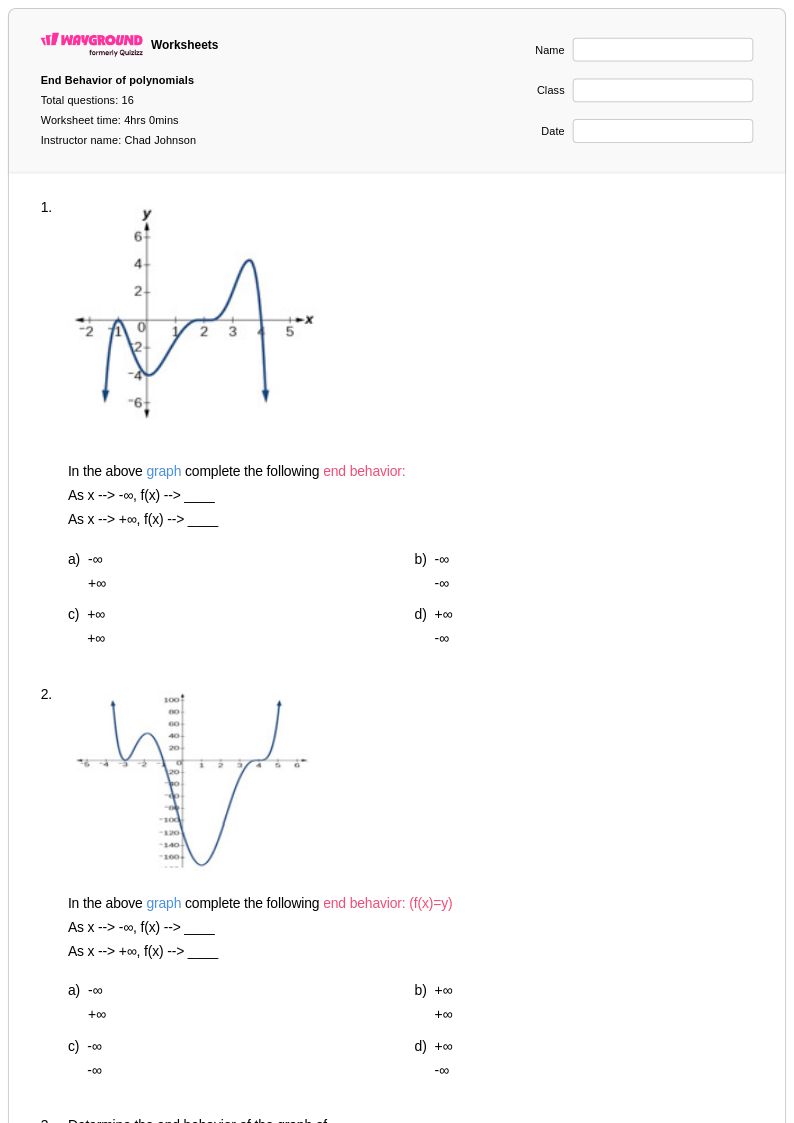
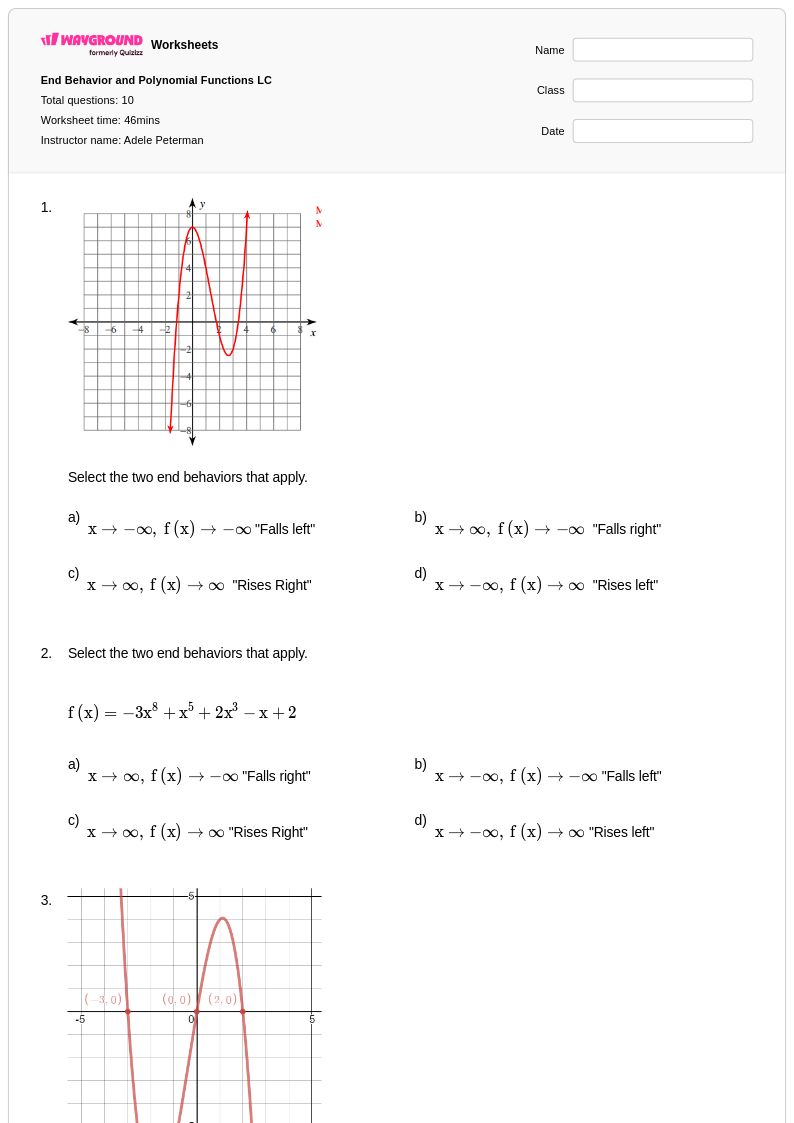
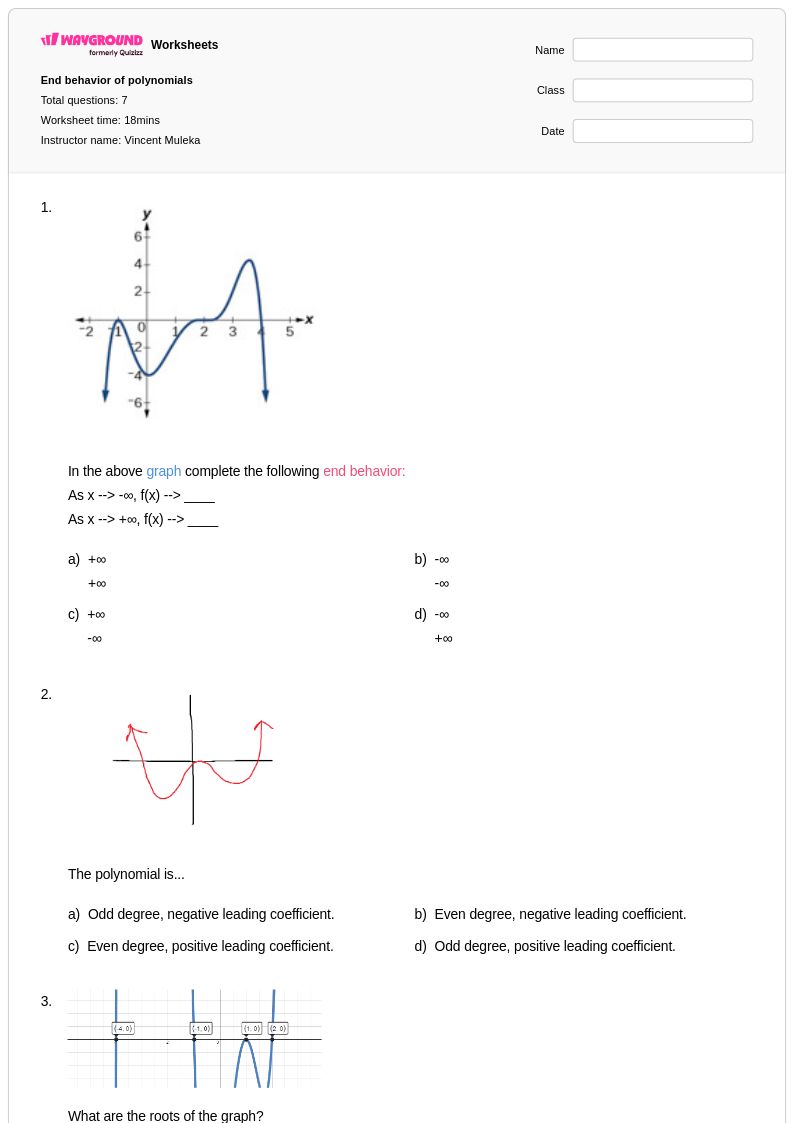
Three problem types cover the skill well: (1) given a polynomial equation, state the end behavior using arrow notation; (2) given a graph, determine the minimum possible degree and the sign of the leading coefficient; (3) given a description of end behavior, write a possible polynomial. That third type is underused but valuable — it forces students to work backwards and reveals whether they understand the relationship or just pattern-match. Wayground's Grade 10 worksheets include structured practice across these formats, from basic identification to multi-step analysis.
What errors do 10th graders commonly make with end behavior?
The most frequent error is misidentifying the leading term when the polynomial isn't in standard form — students grab the first term they see rather than the highest-degree term. A second common mistake is applying the even-degree rule to all polynomials, so they draw both tails pointing the same direction even for a cubic. These errors usually share a root cause: students have memorized surface-level rules without understanding why degree parity and leading coefficient sign each do what they do.
How do I use Wayground's Grade 10 end behavior worksheets?
Every worksheet includes a full answer key, so it's ready to use for independent practice, homework, or review without any prep on your end. You can assign it as a digital quiz on Wayground for automatic scoring, or print the PDF for paper-based work. If you go the paper route, the Wayground for Teachers app lets you scan student submissions for grading — useful when you want the efficiency of digital grading without putting students on devices.
How does end behavior of polynomials fit into the Common Core Grade 10 curriculum?
Common Core's high school functions standards — typically addressed in Algebra 2, which many students take in Grade 10 — expect students to interpret key features of polynomial graphs, including what happens at the extremes. End behavior is the specific skill that connects the algebraic form of a polynomial (its degree and leading coefficient) to the global shape of its graph. It builds directly from Grade 9 work with quadratic functions and sets students up for later analysis of rational functions and, eventually, limits in calculus.
How can I differentiate end behavior practice for my Grade 10 class?
For students who are still building confidence with polynomial structure, the reduced answer choices accommodation keeps the reasoning task manageable while they solidify the concept. For students who need a visual scaffold, pairing the worksheet with a reference card showing the four end behavior cases (even/odd degree, positive/negative leading coefficient) is a low-effort support that doesn't require a separate assignment. Wayground also lets you adjust font size and spacing or apply a dyslexia-friendly font when generating the worksheet, so the same problem set can be formatted differently for different learners.