
Recommended Topics for you
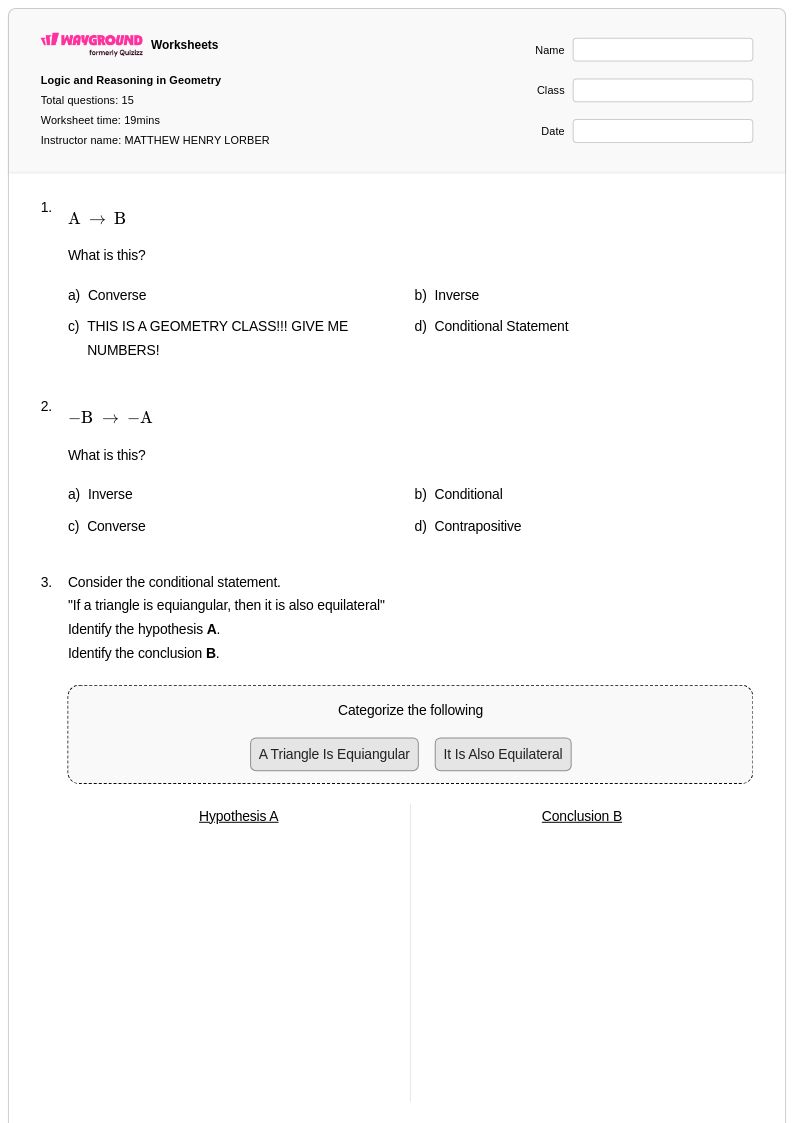
15 Q
10th
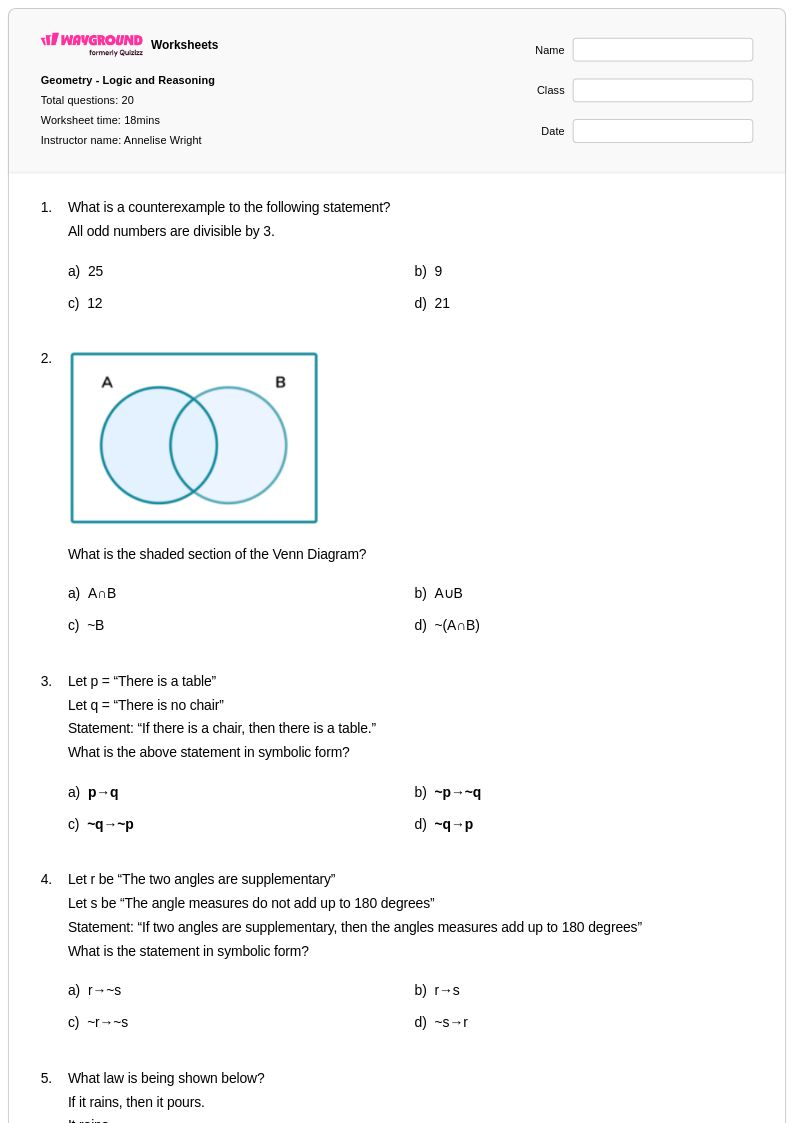
20 Q
9th - 12th
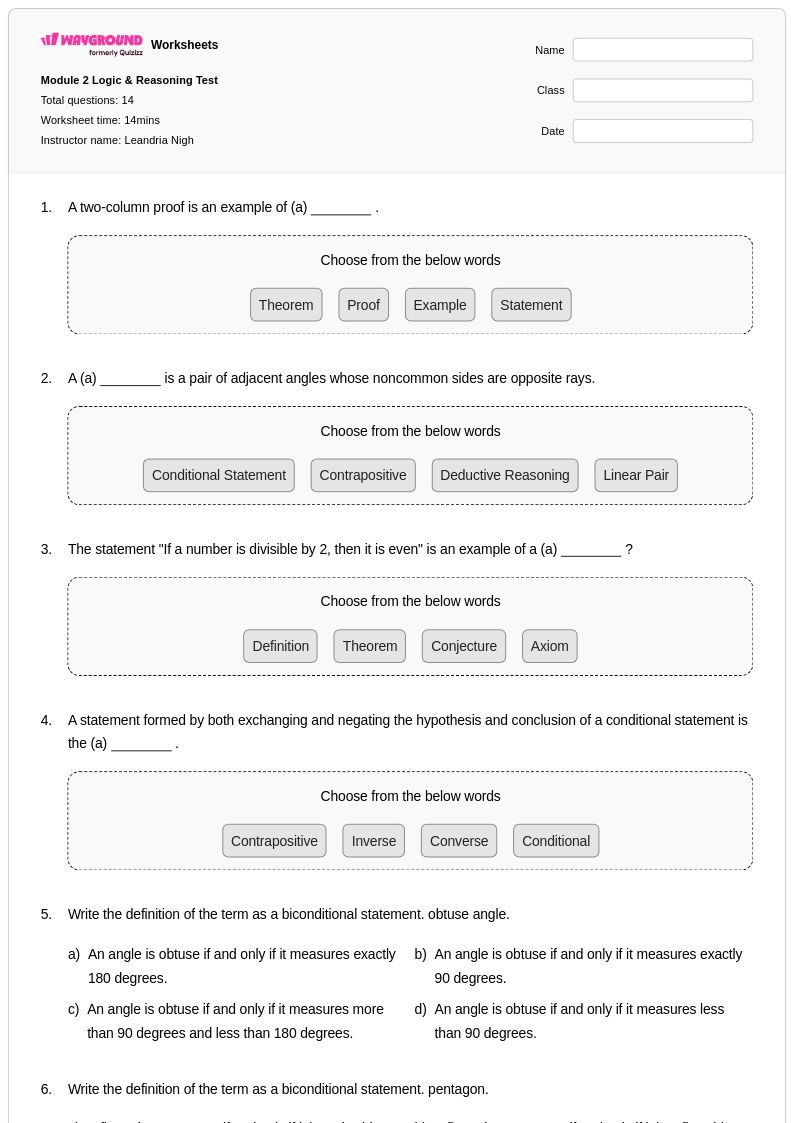
14 Q
10th
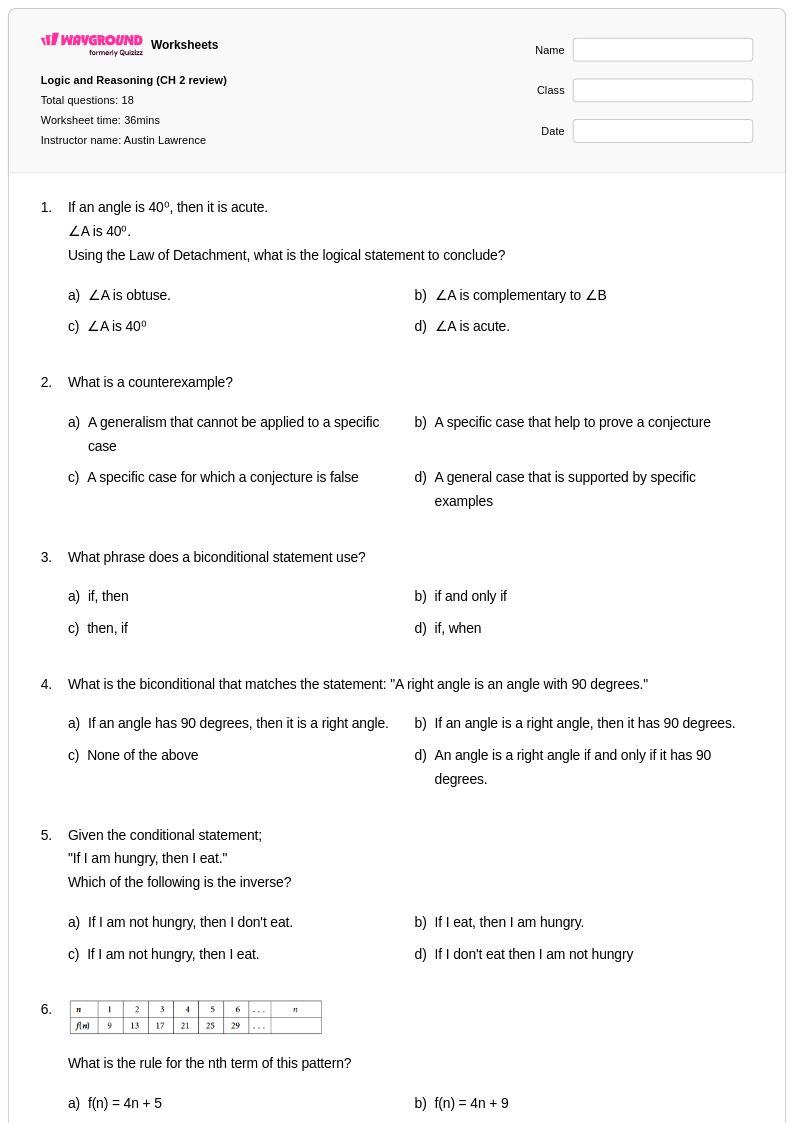
18 Q
9th - 12th
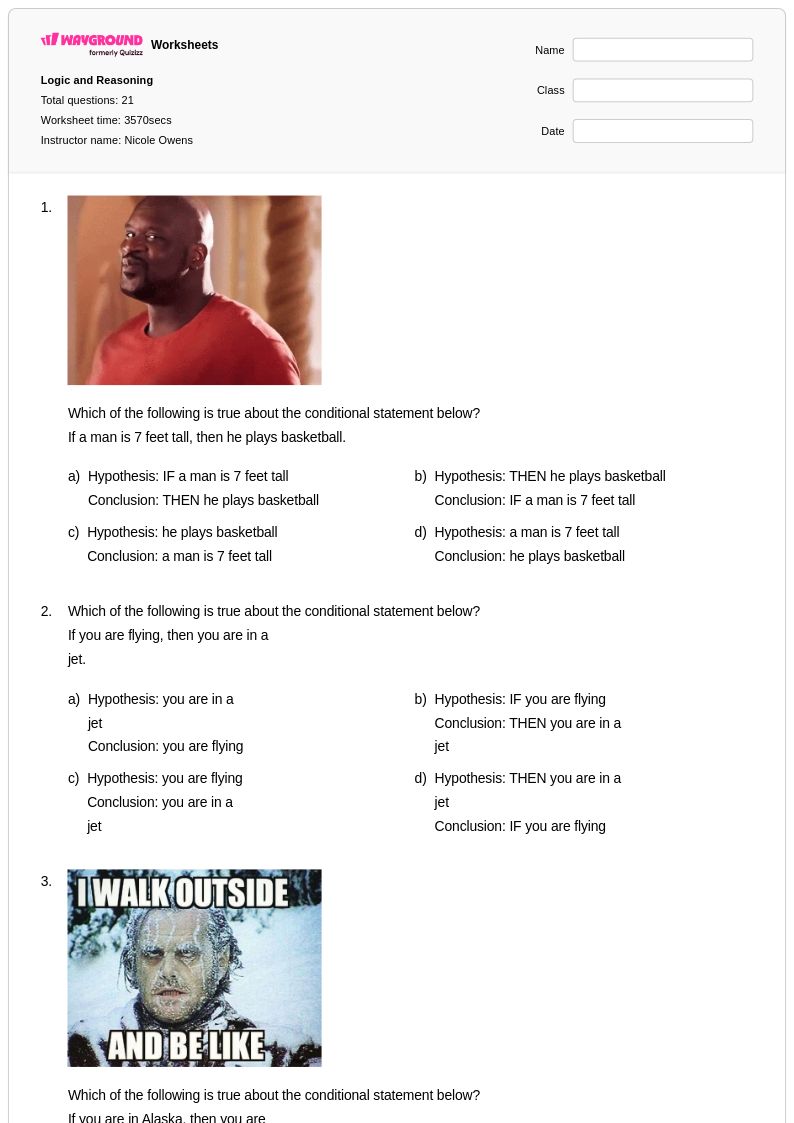
21 Q
10th
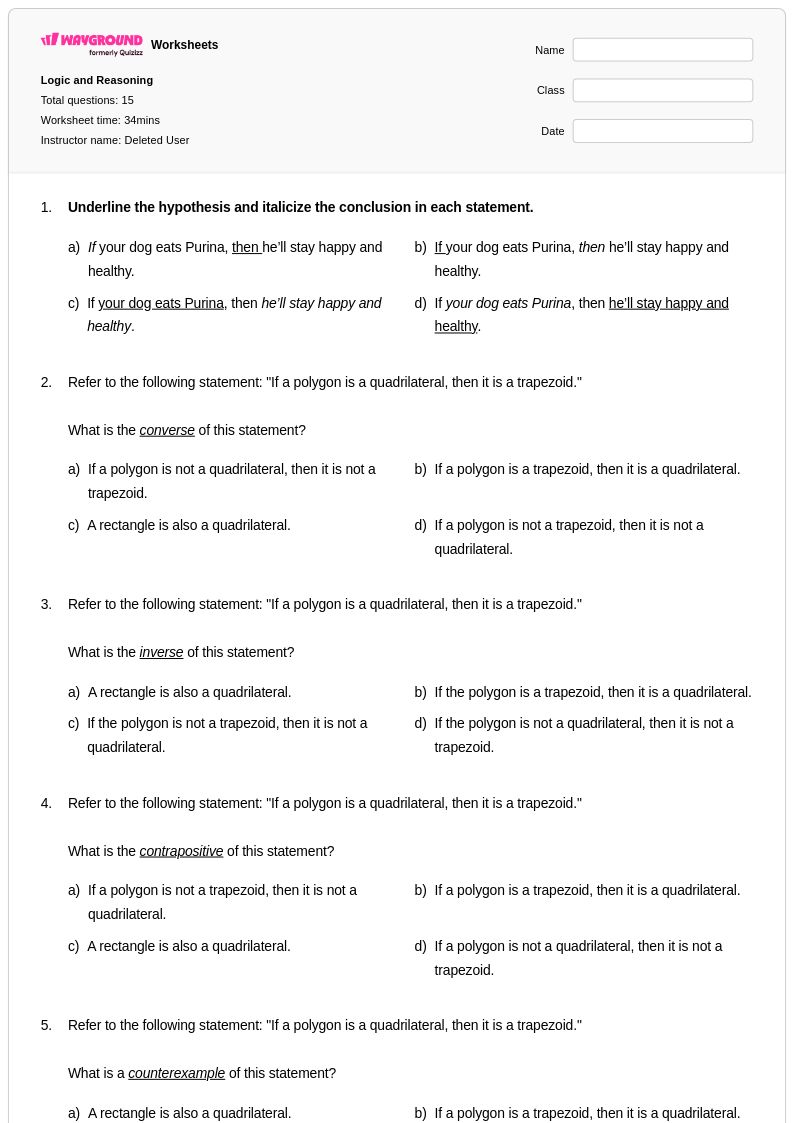
15 Q
9th - 11th
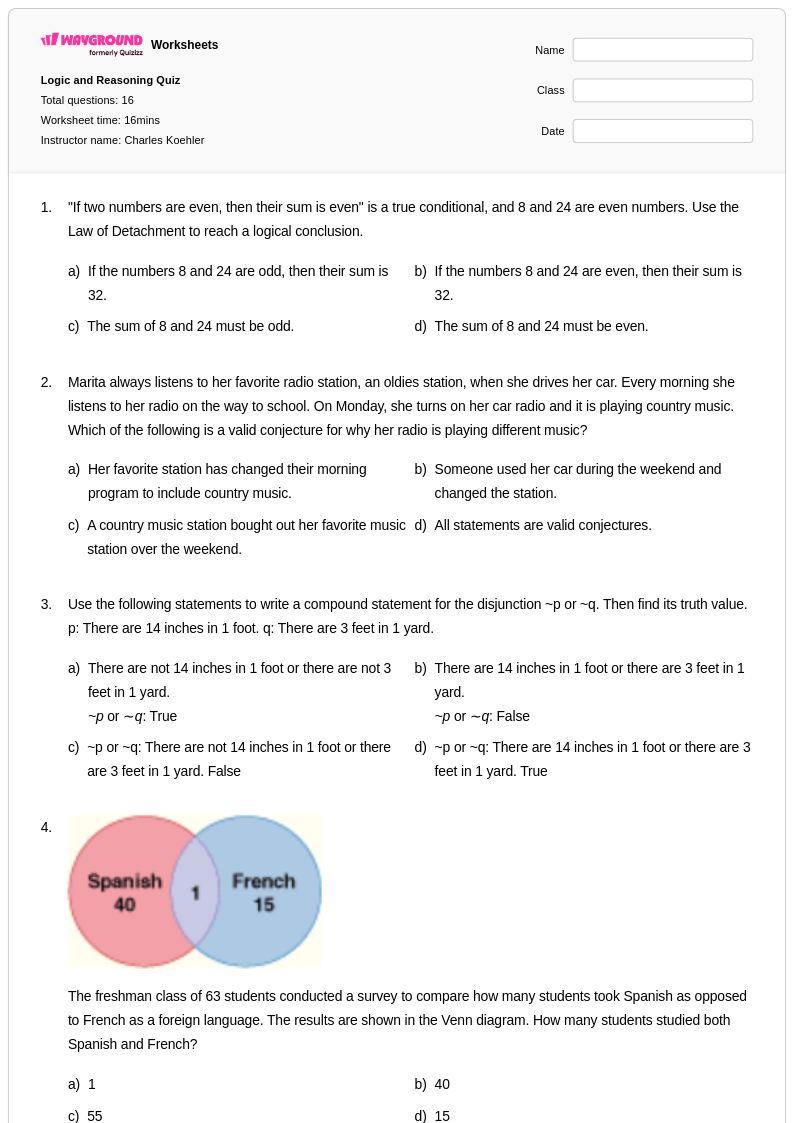
16 Q
10th
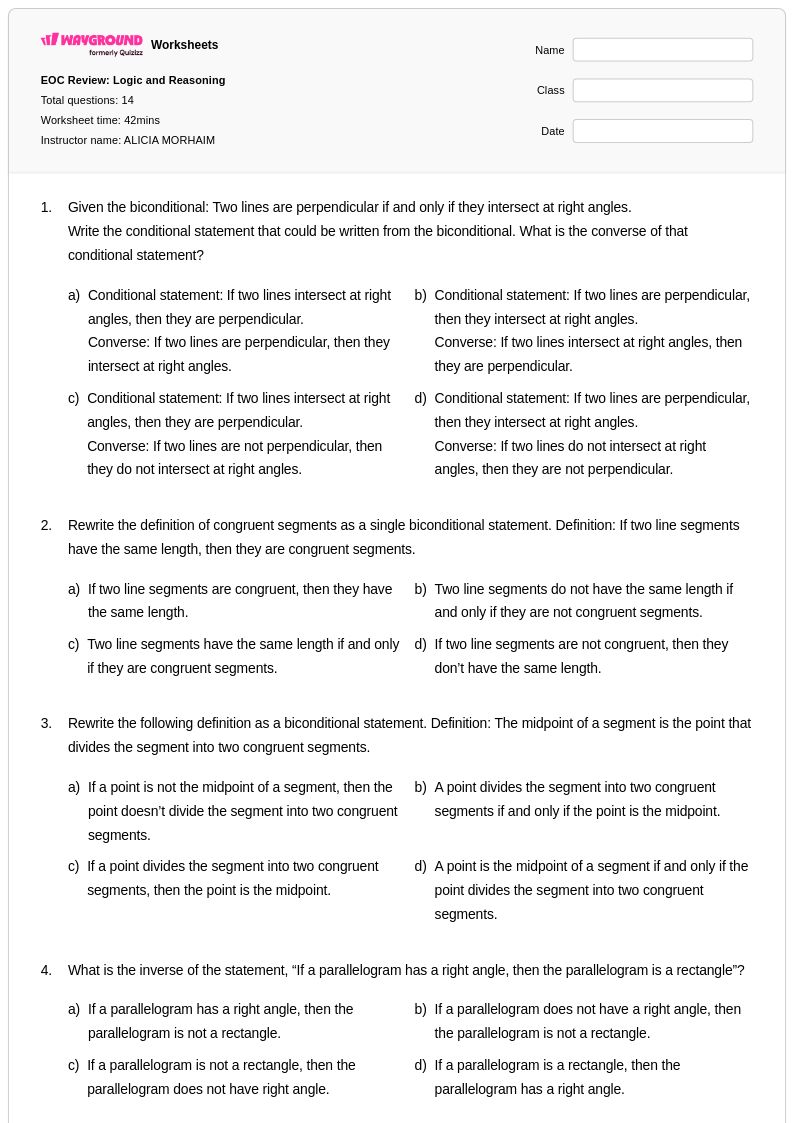
14 Q
10th
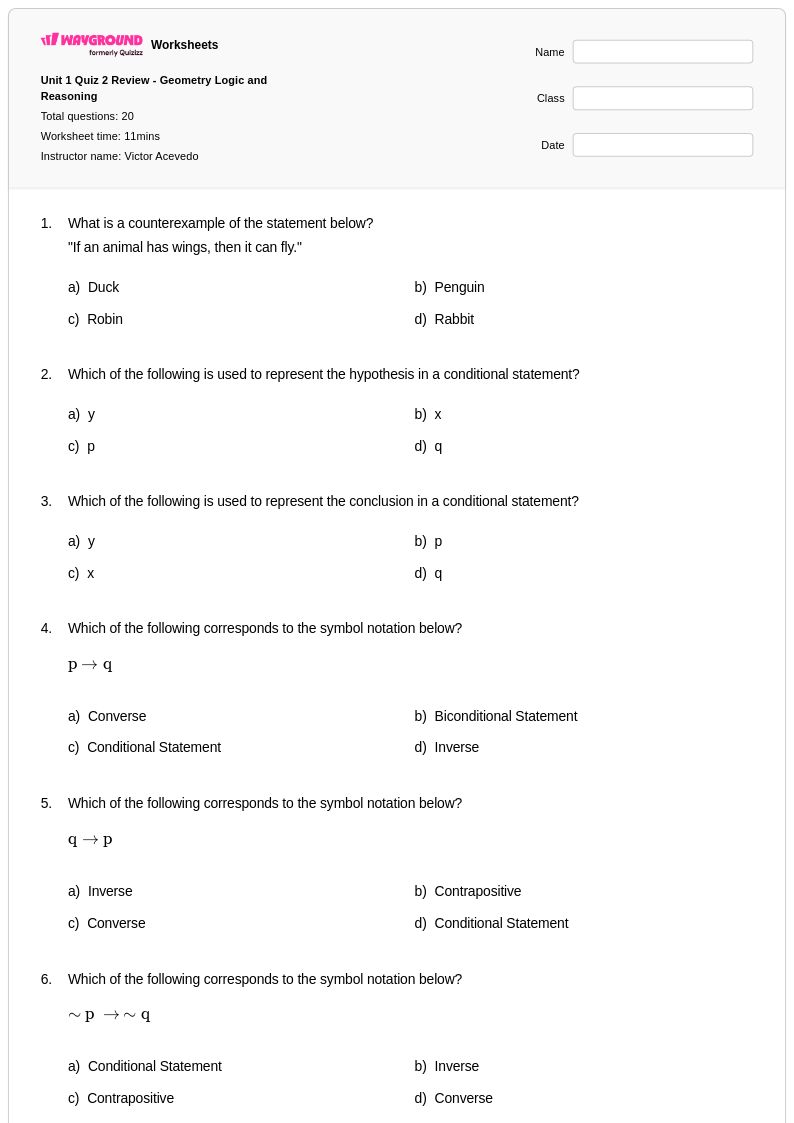
20 Q
9th - 12th
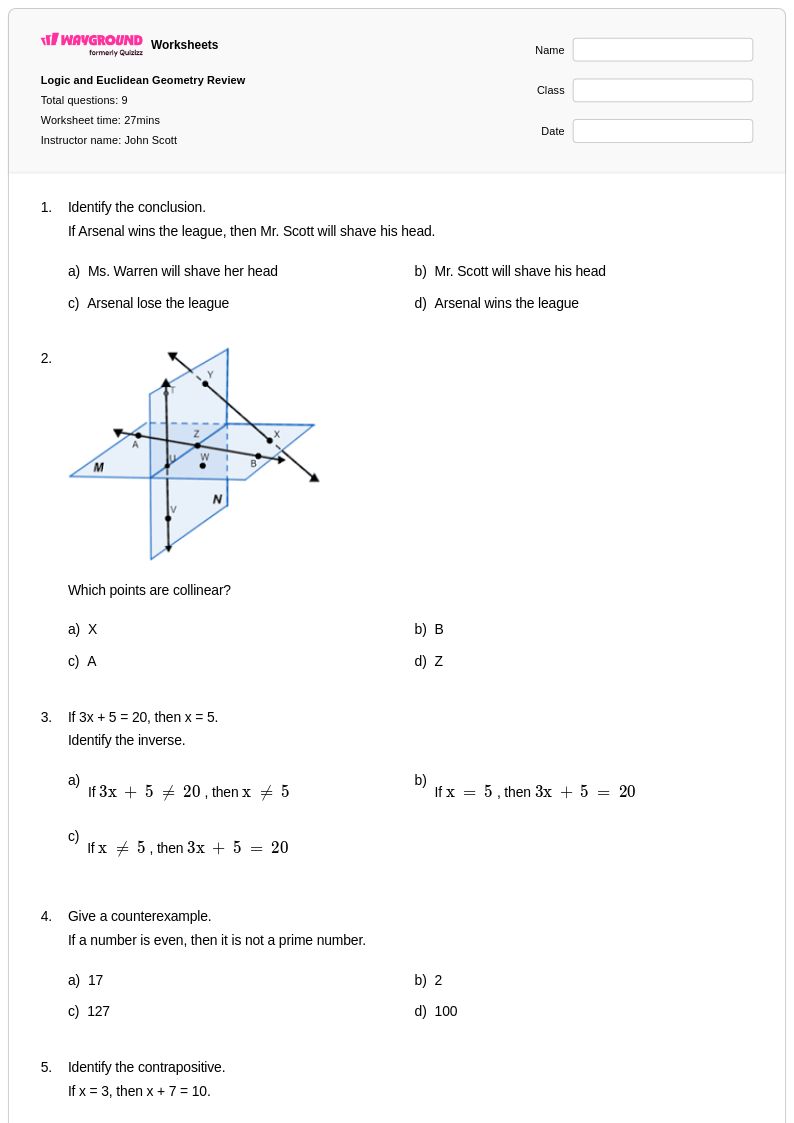
9 Q
10th
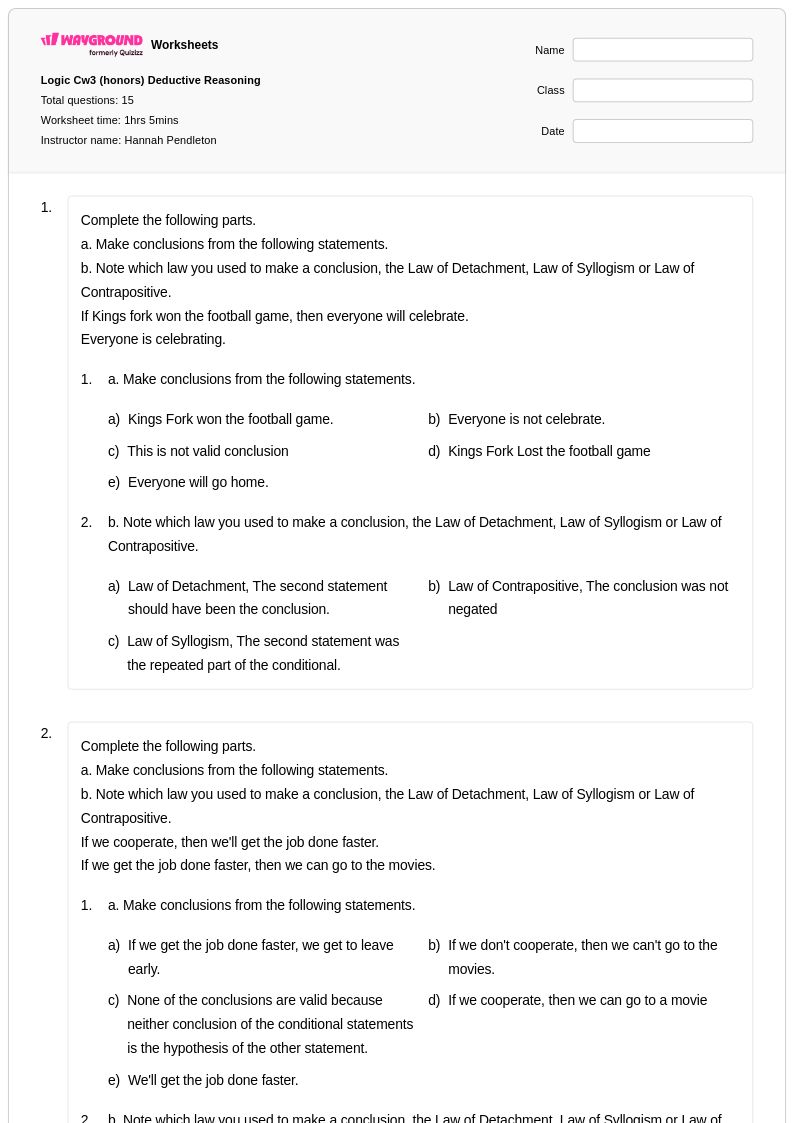
19 Q
9th - 12th
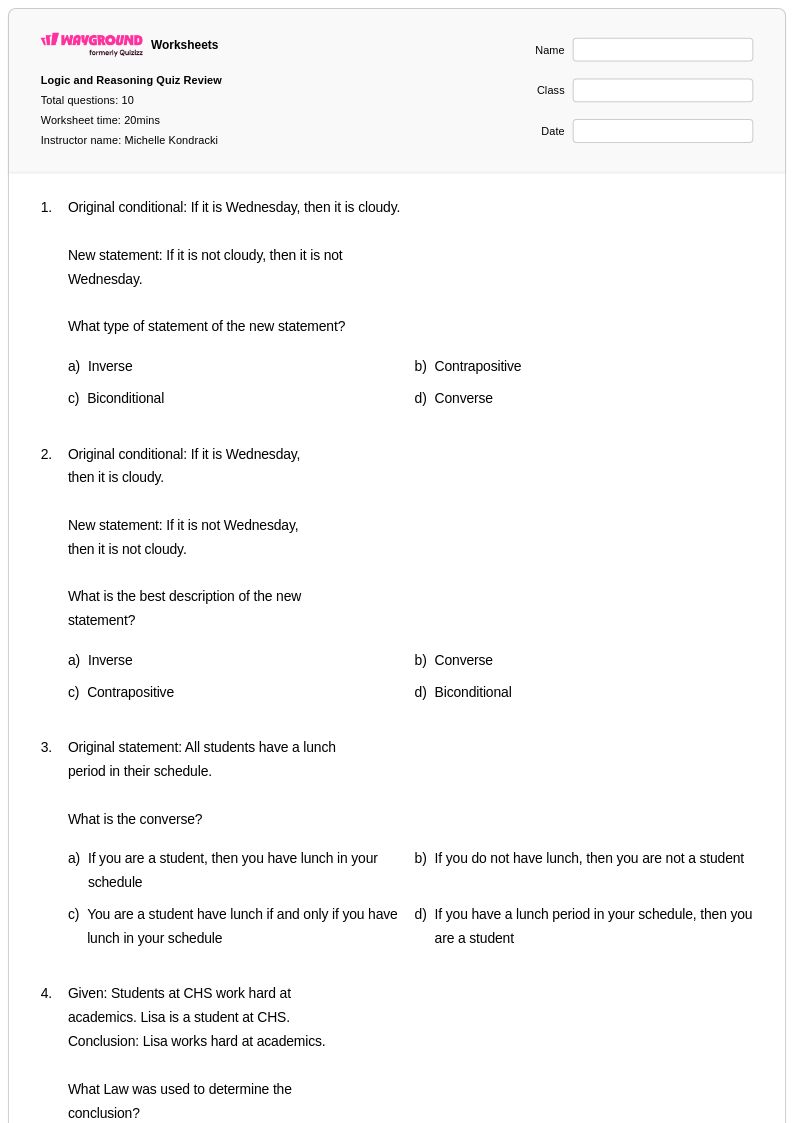
10 Q
9th - 12th
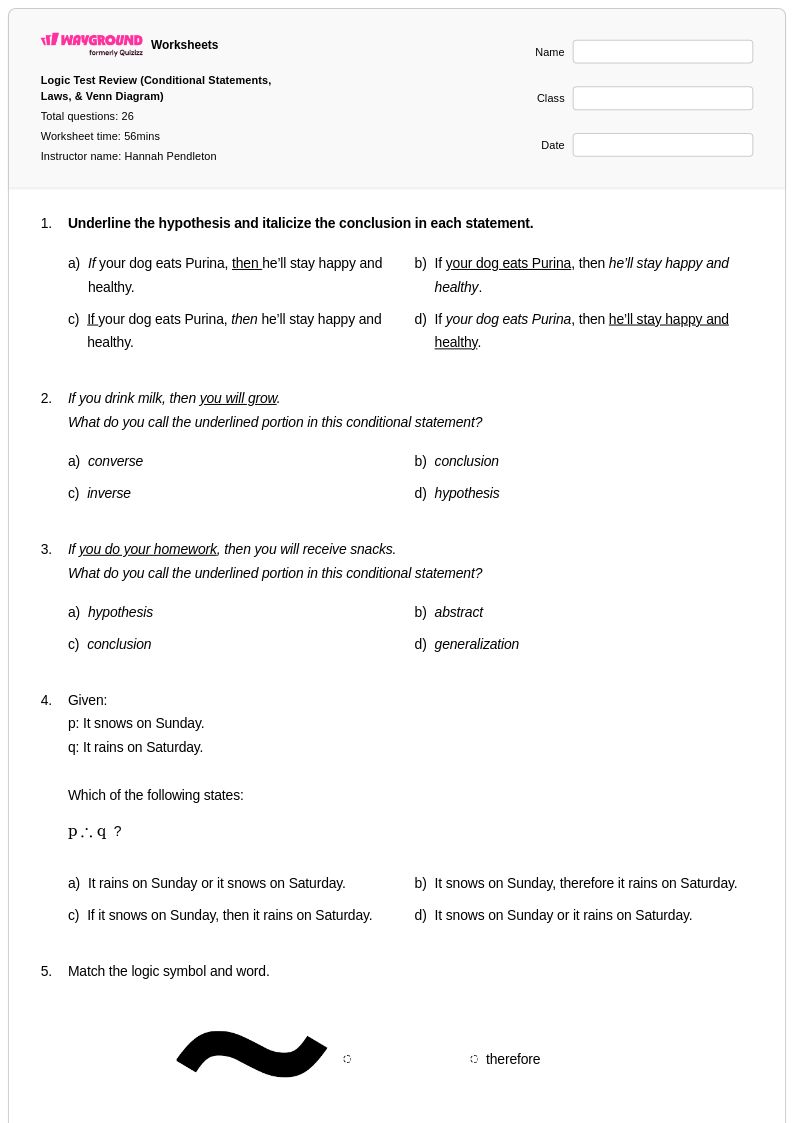
26 Q
9th - 12th
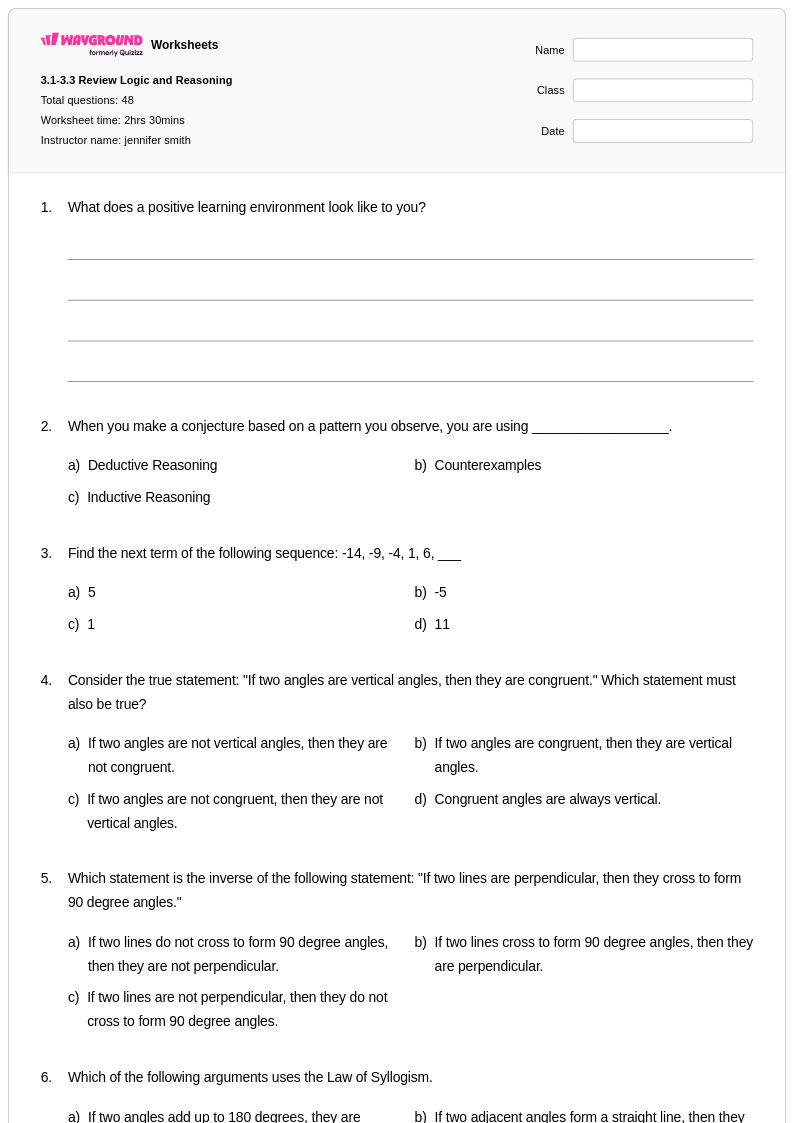
48 Q
9th - 12th
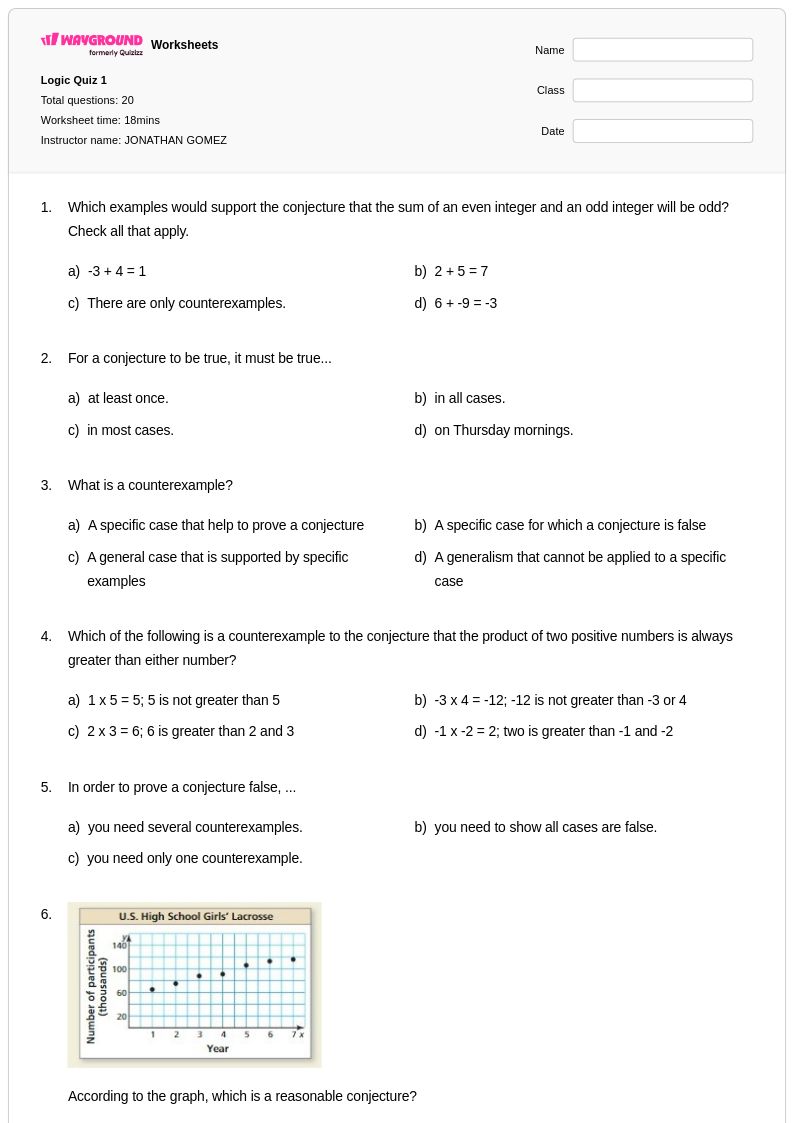
20 Q
9th - 11th
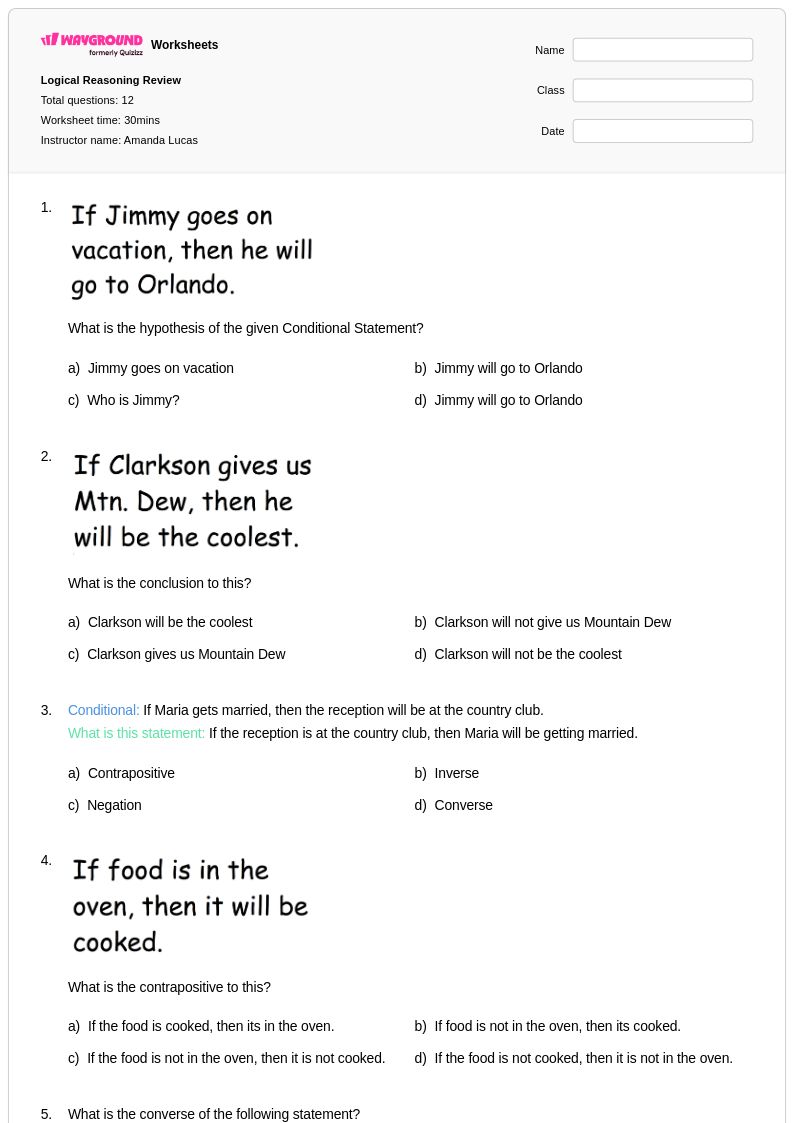
12 Q
9th - 12th
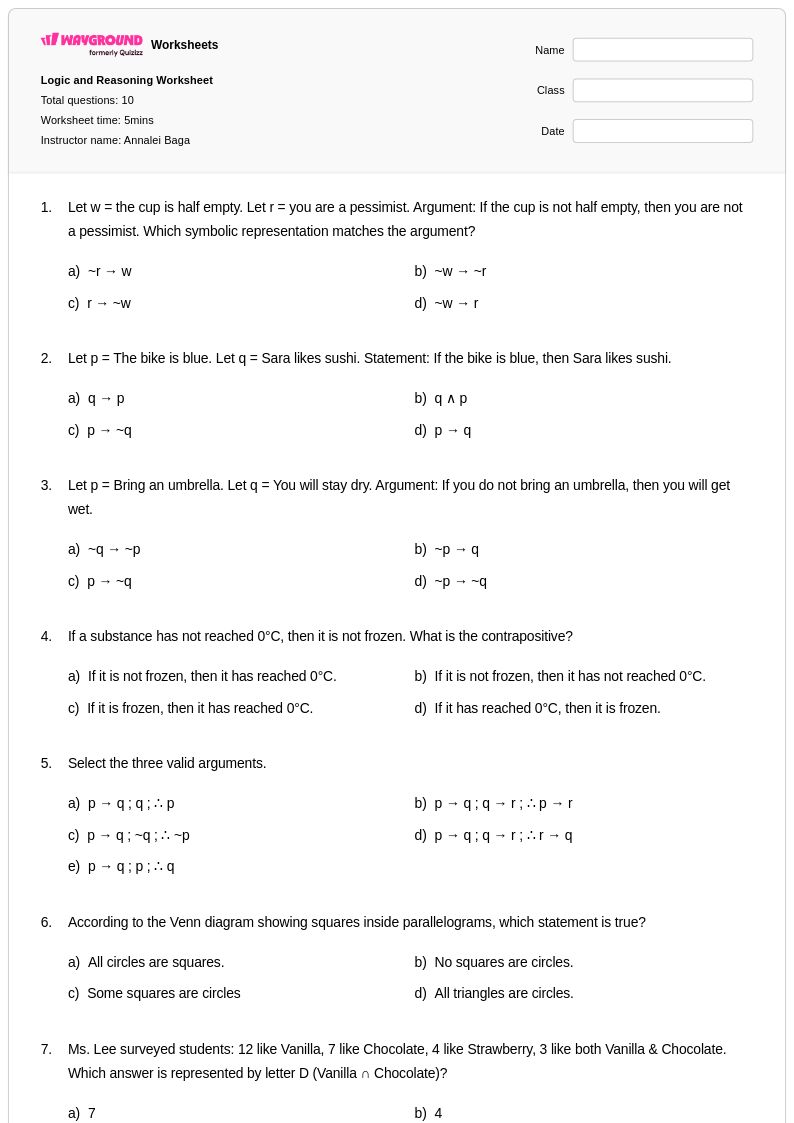
10 Q
10th
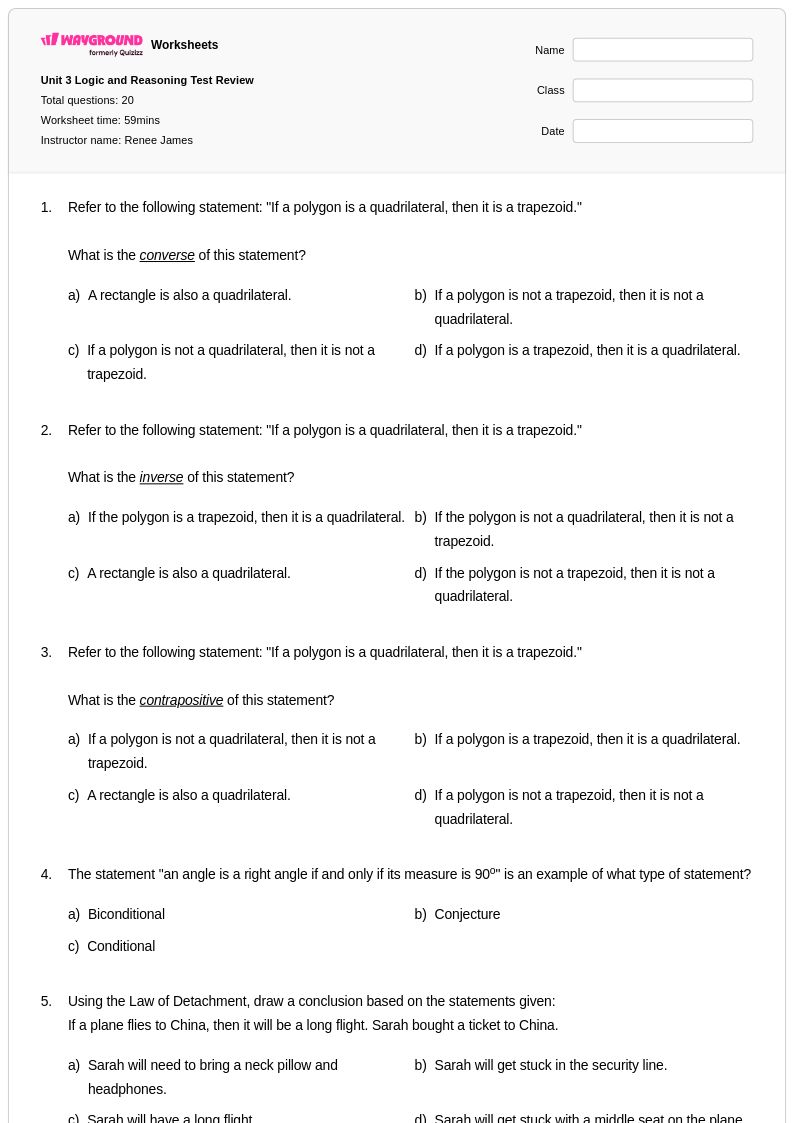
20 Q
9th - 12th
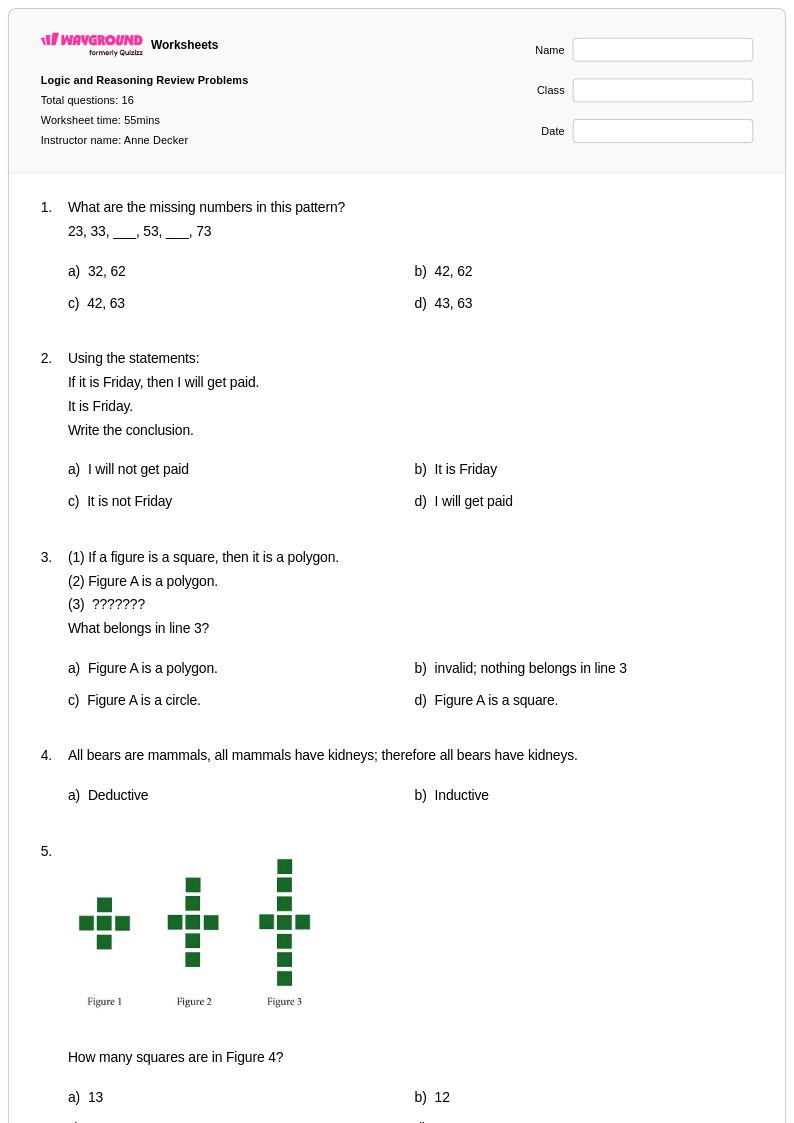
16 Q
9th - 12th
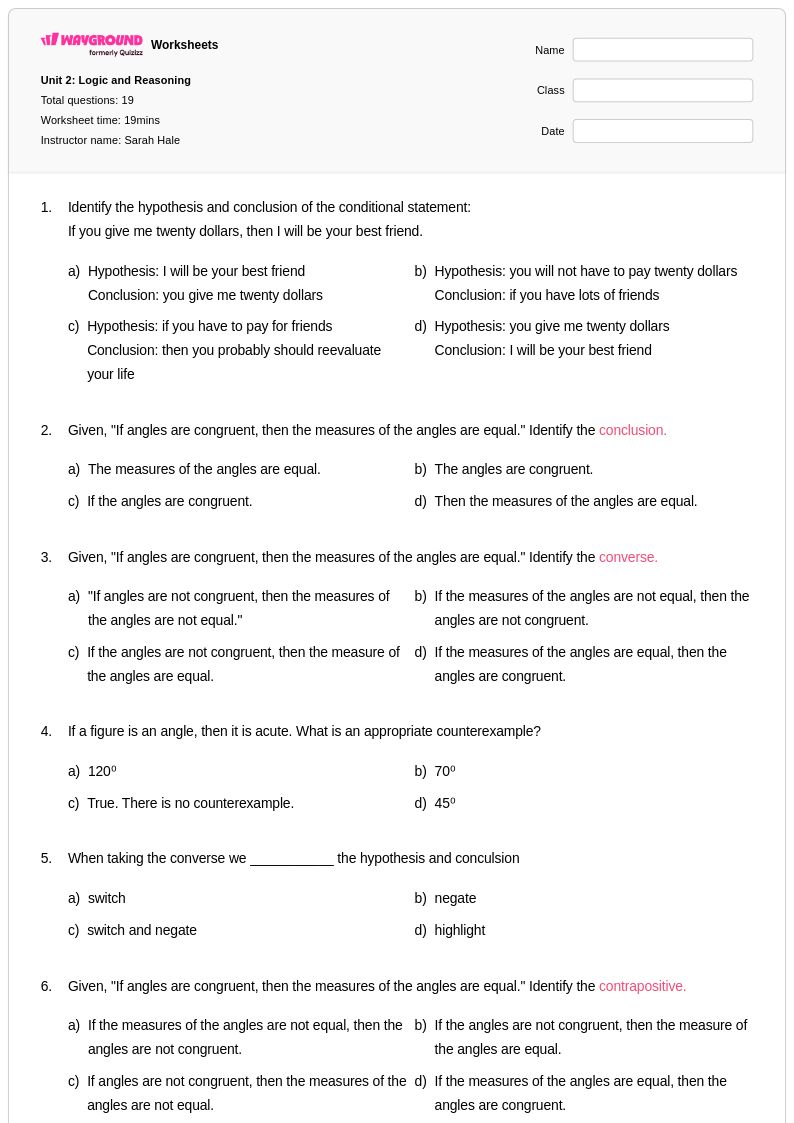
19 Q
9th - 12th
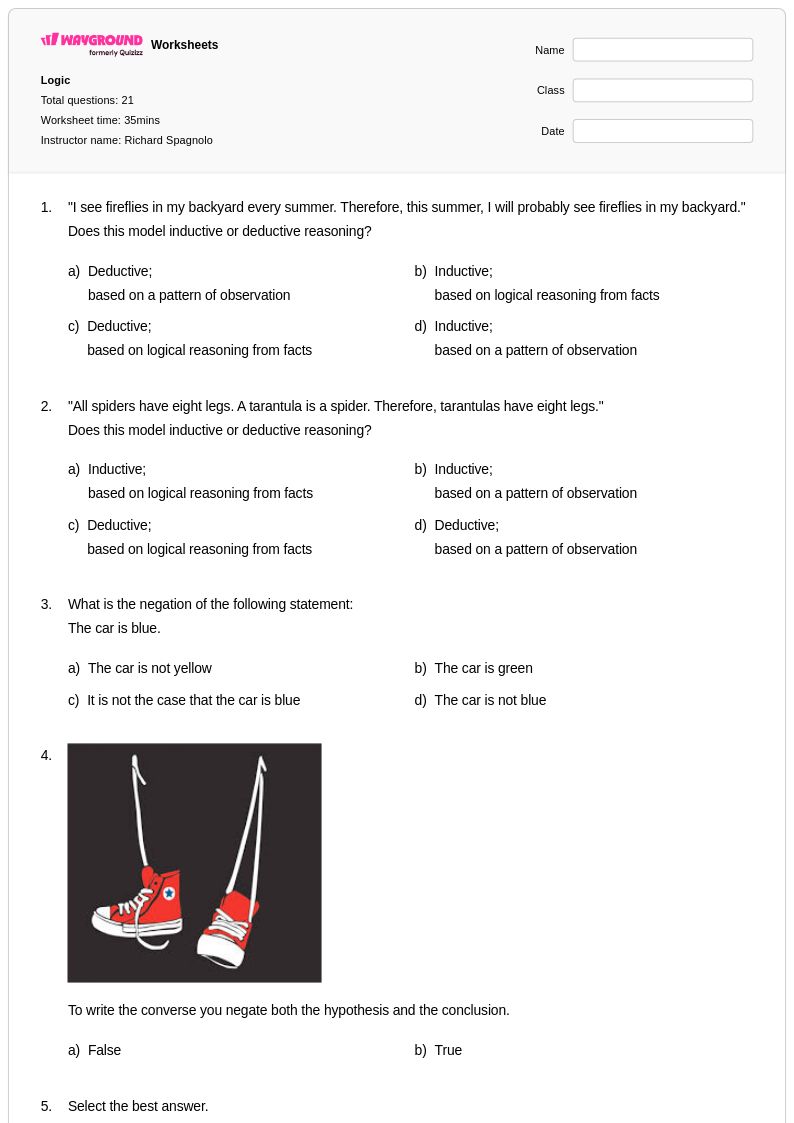
21 Q
10th
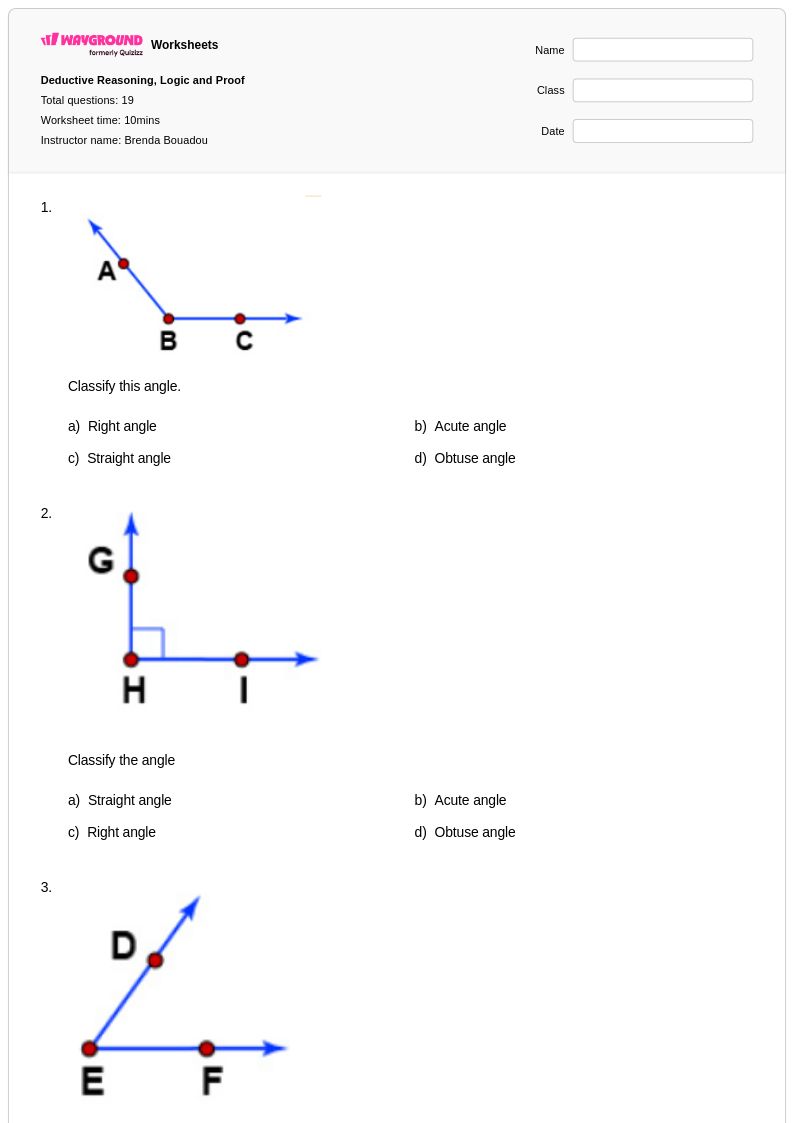
19 Q
9th - 10th
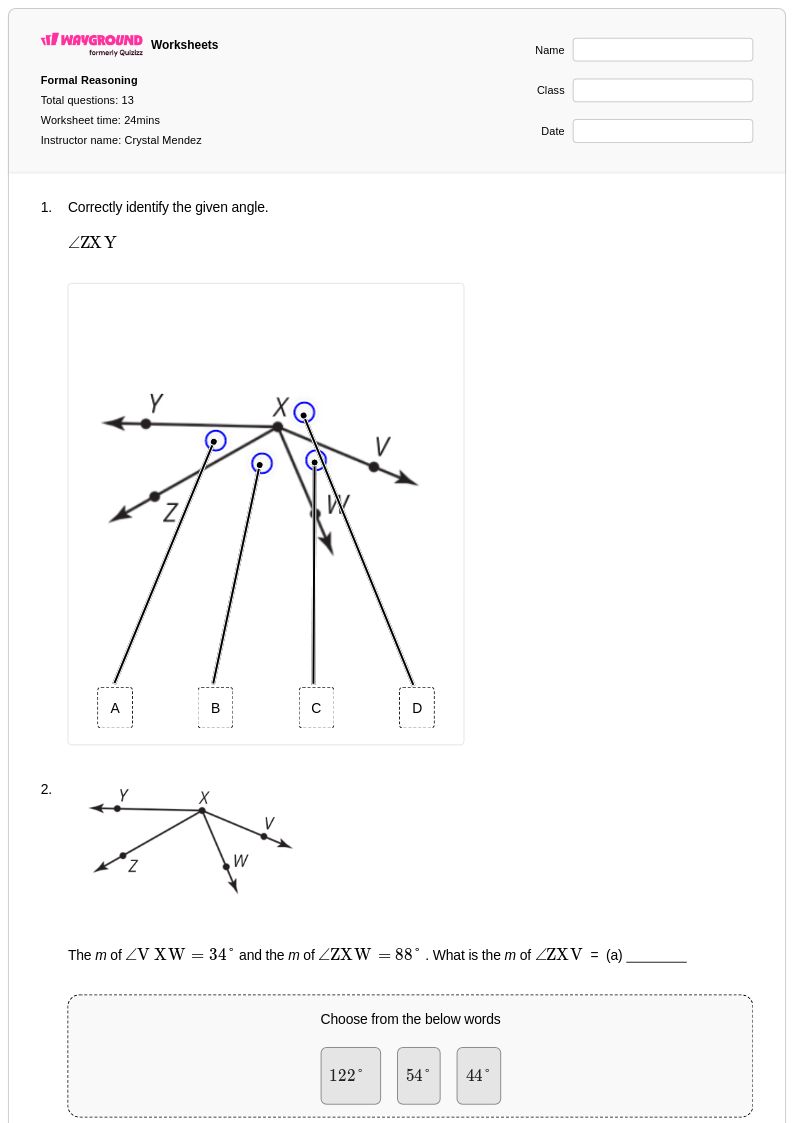
13 Q
10th
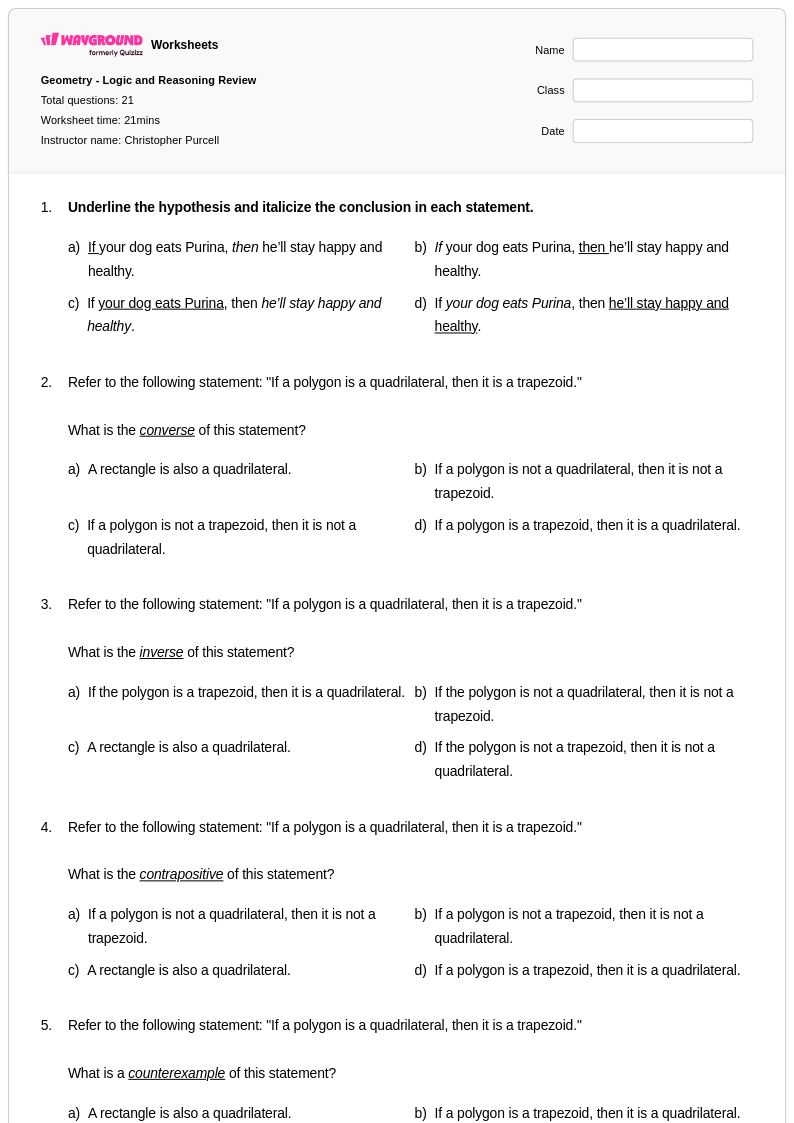
21 Q
10th
Explore Logic and Reasoning Worksheets by Grades
Explore Logic and Reasoning Worksheets for grade 10 by Topic
Explore Other Subject Worksheets for grade 10
Explore printable Logic and Reasoning worksheets for Grade 10
Logic and reasoning worksheets for Grade 10 mathematics through Wayground (formerly Quizizz) provide comprehensive practice in critical thinking skills essential for advanced mathematical understanding. These carefully designed worksheets focus on developing students' abilities to analyze patterns, construct valid arguments, evaluate mathematical statements, and apply deductive and inductive reasoning processes. Students engage with practice problems that strengthen their capacity to identify logical fallacies, work with conditional statements, understand contrapositive and converse relationships, and apply proof techniques including direct proof, proof by contradiction, and mathematical induction. Each worksheet comes with a detailed answer key to support independent learning and self-assessment, while the free printable format allows for flexible classroom implementation and homework assignments that reinforce these fundamental reasoning skills.
Wayground (formerly Quizizz) empowers mathematics educators with an extensive collection of millions of teacher-created logic and reasoning resources specifically tailored for Grade 10 instruction. The platform's robust search and filtering capabilities enable teachers to quickly locate worksheets aligned with curriculum standards and learning objectives, while differentiation tools allow for seamless customization to meet diverse student needs and ability levels. Teachers can access materials in both printable pdf format for traditional classroom use and digital formats for technology-integrated instruction, making lesson planning more efficient and responsive to different learning environments. These versatile worksheet collections support targeted remediation for students struggling with logical thinking concepts, provide enrichment opportunities for advanced learners ready to explore complex reasoning challenges, and offer consistent skill practice that builds the analytical foundation necessary for success in higher-level mathematics courses including geometry, algebra, and calculus.
FAQs
How do I teach logic and reasoning to Grade 10 students?
What exercises help Grade 10 students practice logic and reasoning?
What mistakes do students commonly make in mathematical logic?
How can I use these Grade 10 logic and reasoning worksheets?
How does Grade 10 logic and reasoning fit the Common Core math progression?
How can I differentiate logic and reasoning practice for a mixed-ability class?
What logic and reasoning skills should Grade 10 students know?