
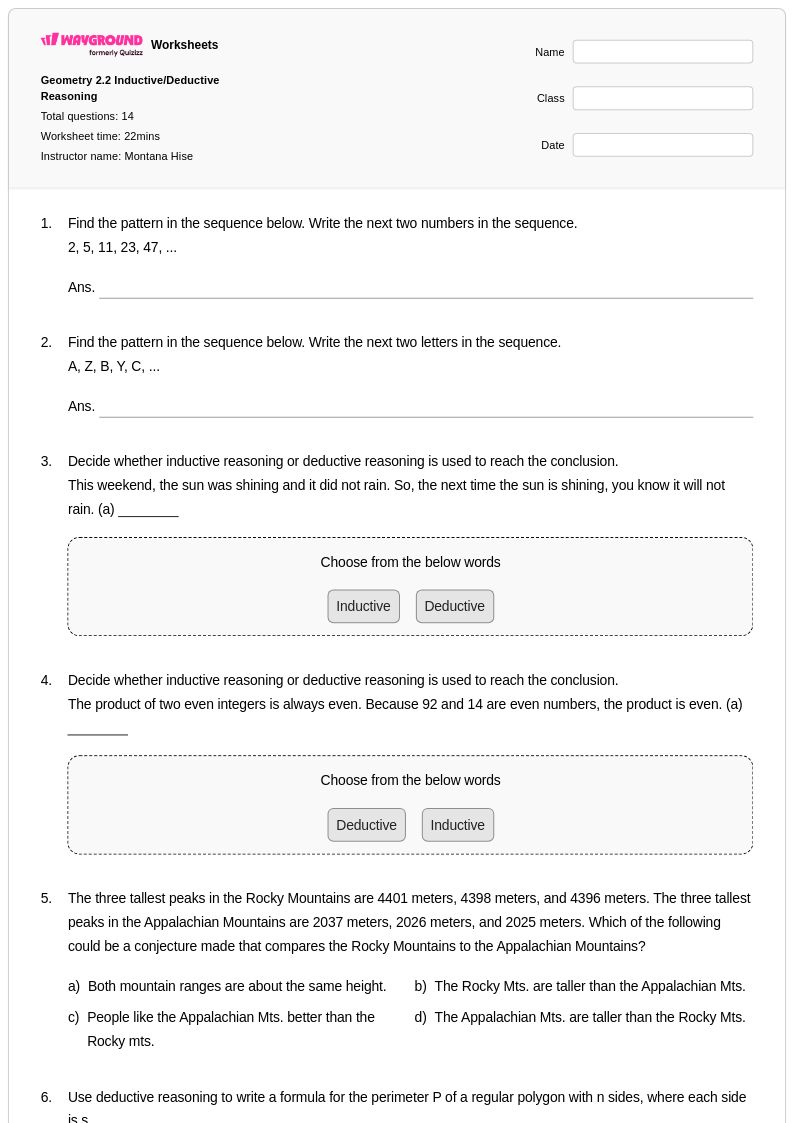
14 Q
9th - 12th
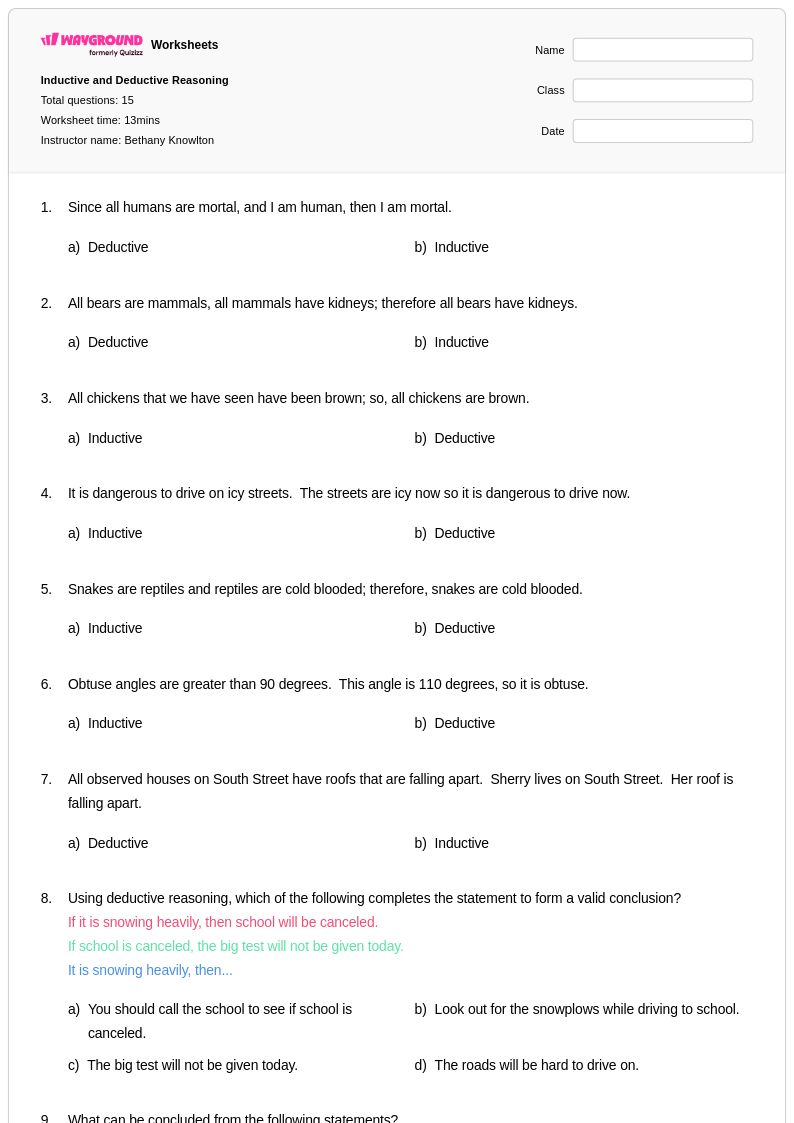
15 Q
9th - 11th
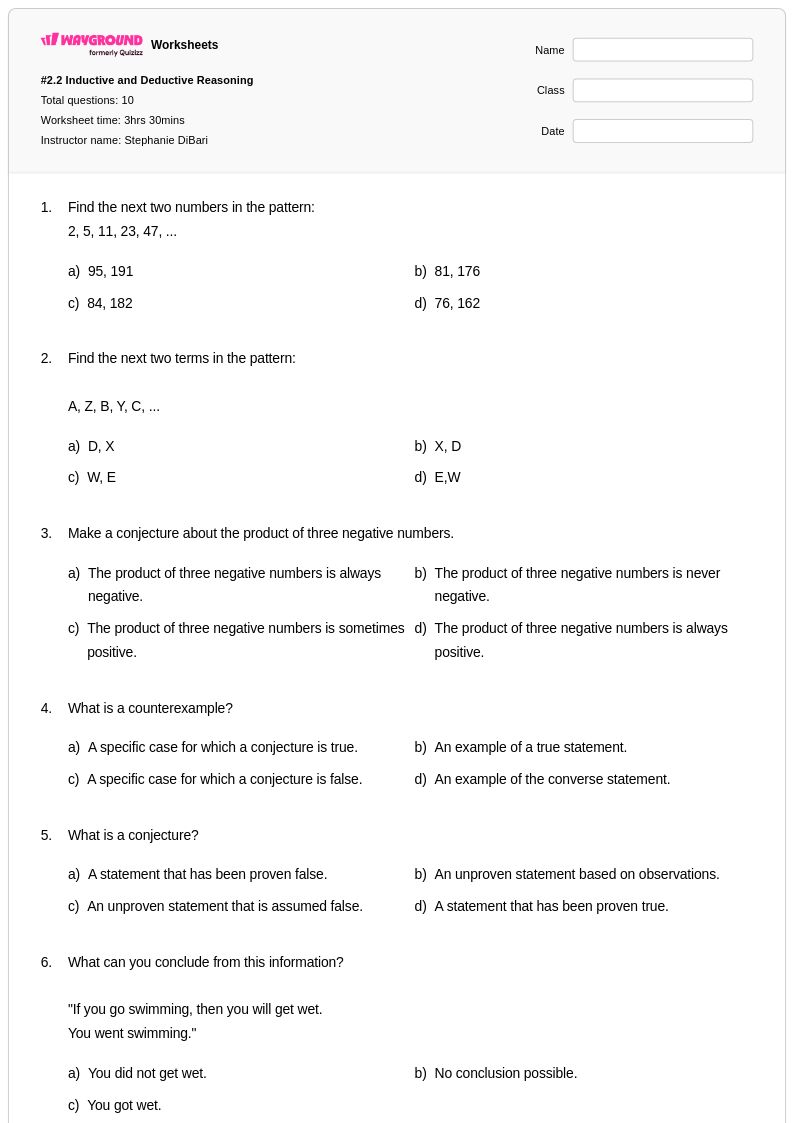
10 Q
10th
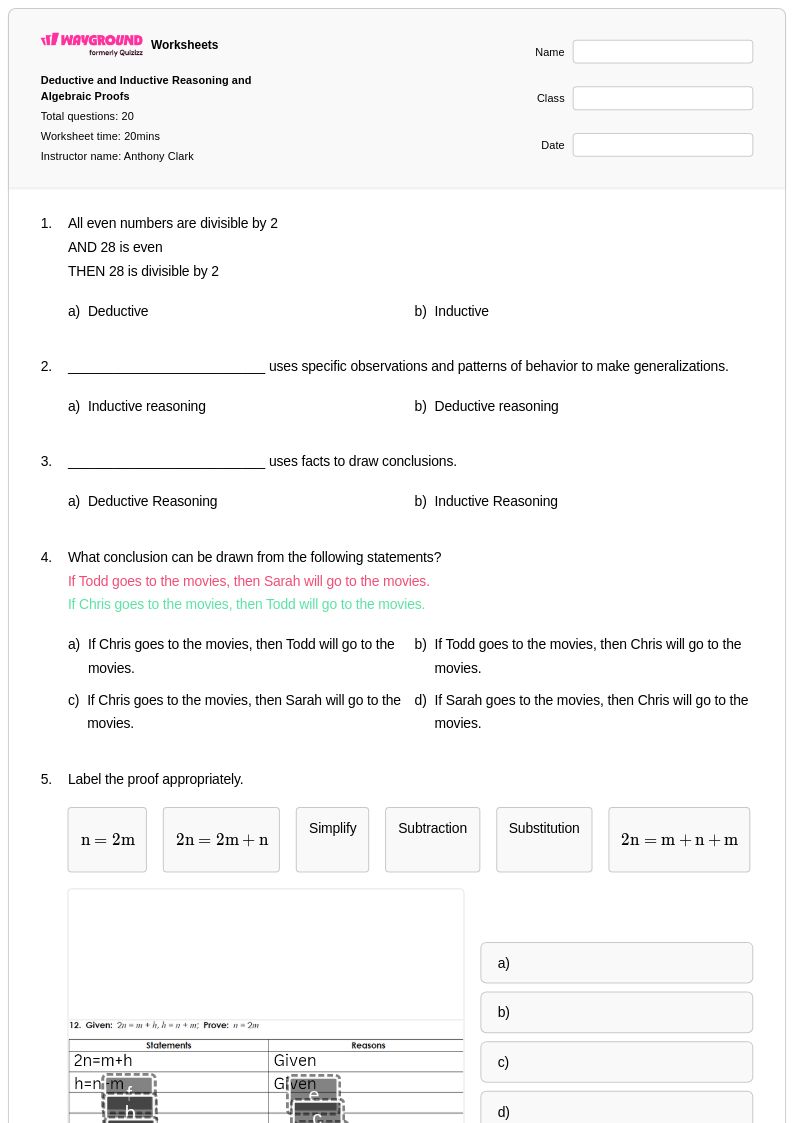
20 Q
10th - Uni
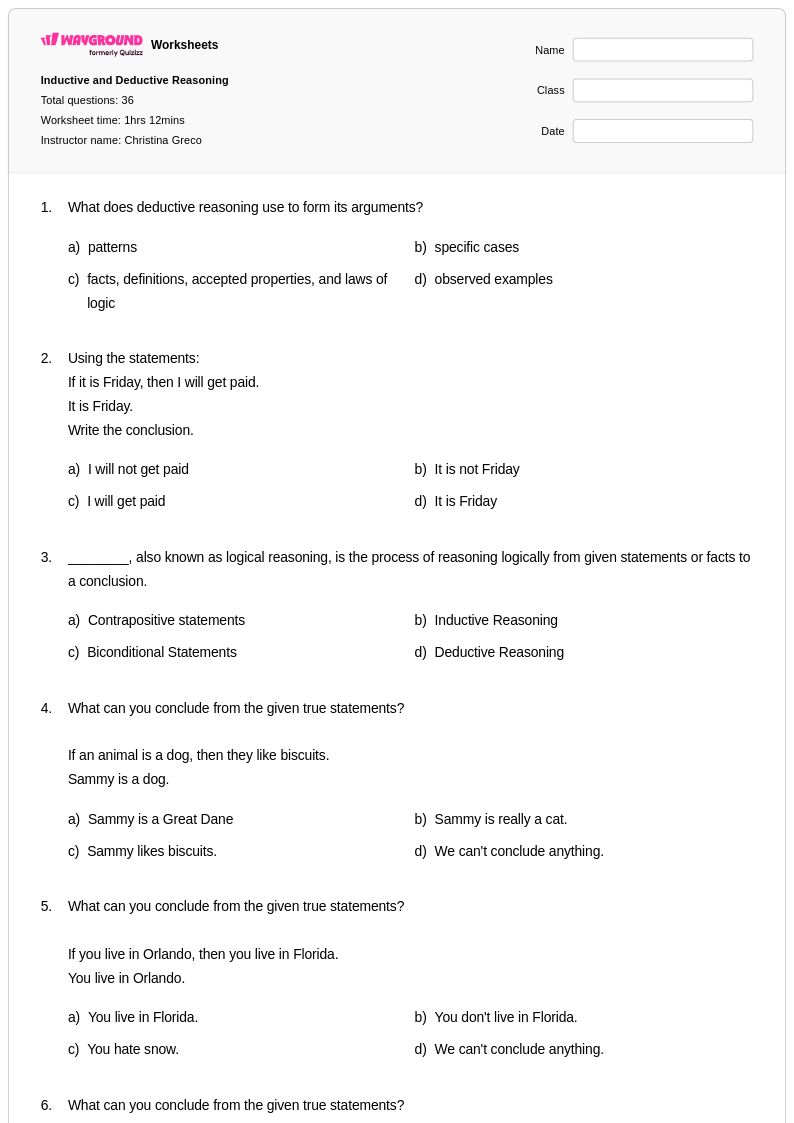
36 Q
9th - 10th
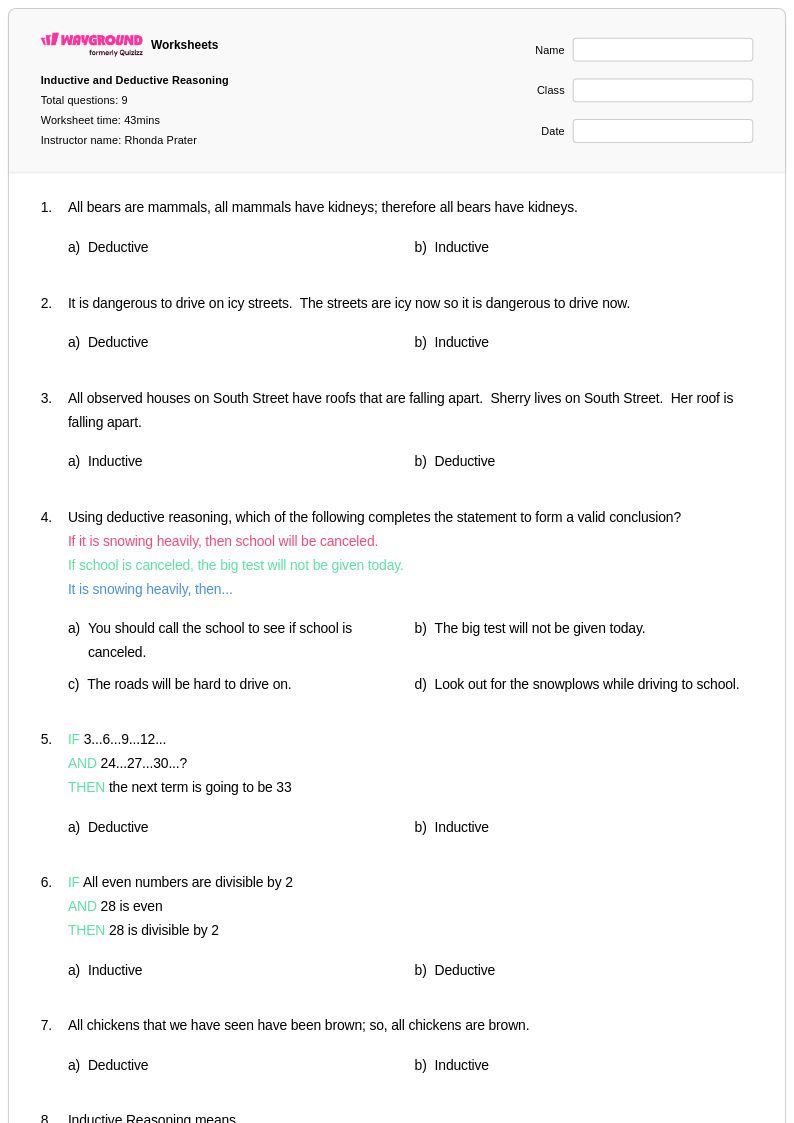
9 Q
9th - 12th
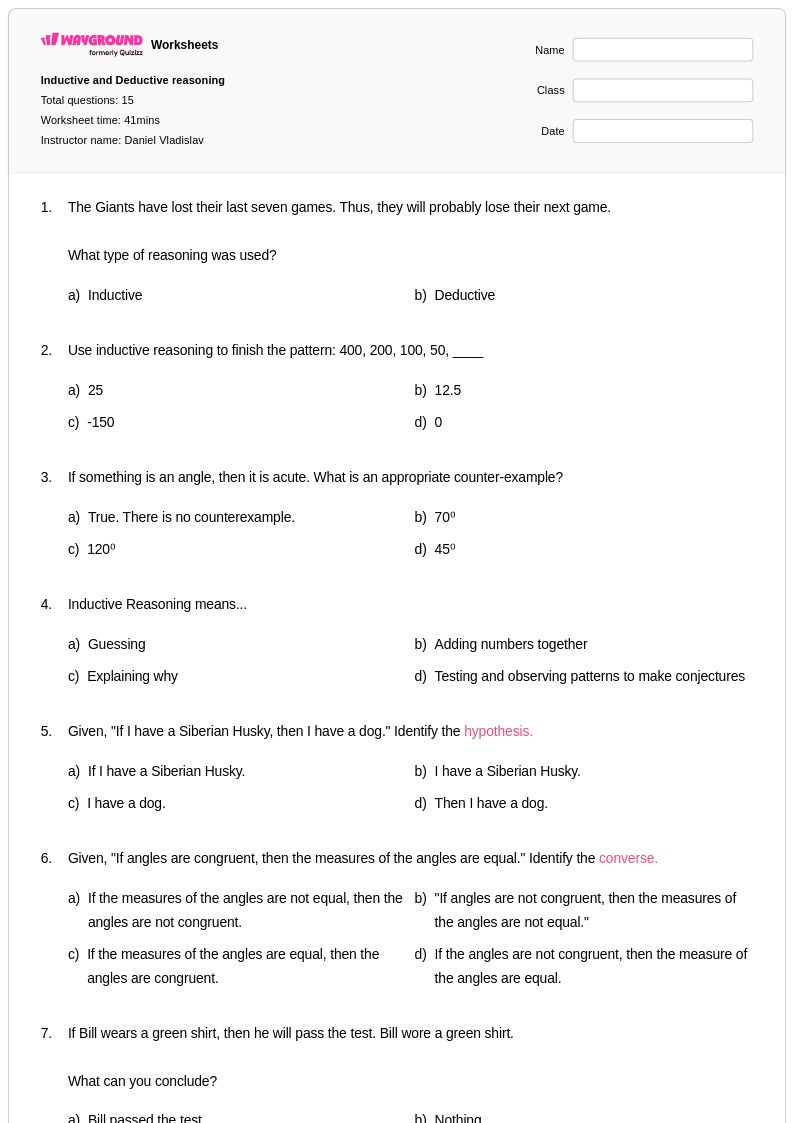
15 Q
9th - 12th
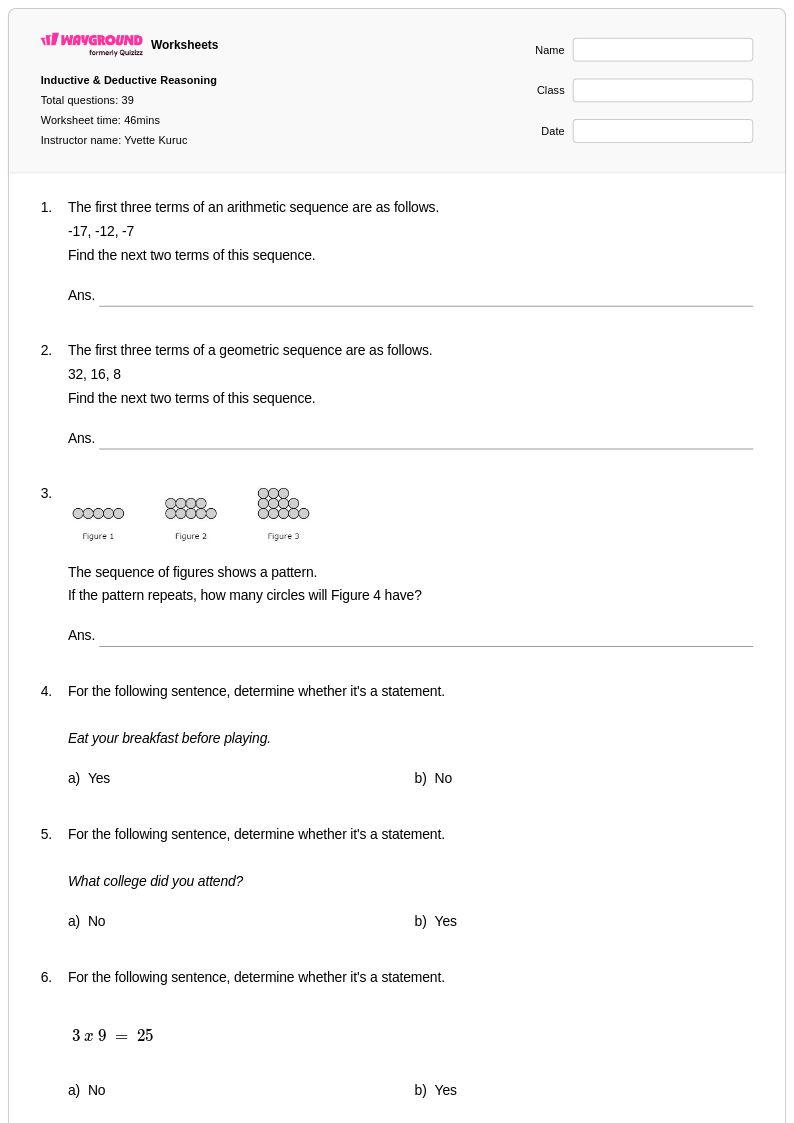
39 Q
6th - 11th
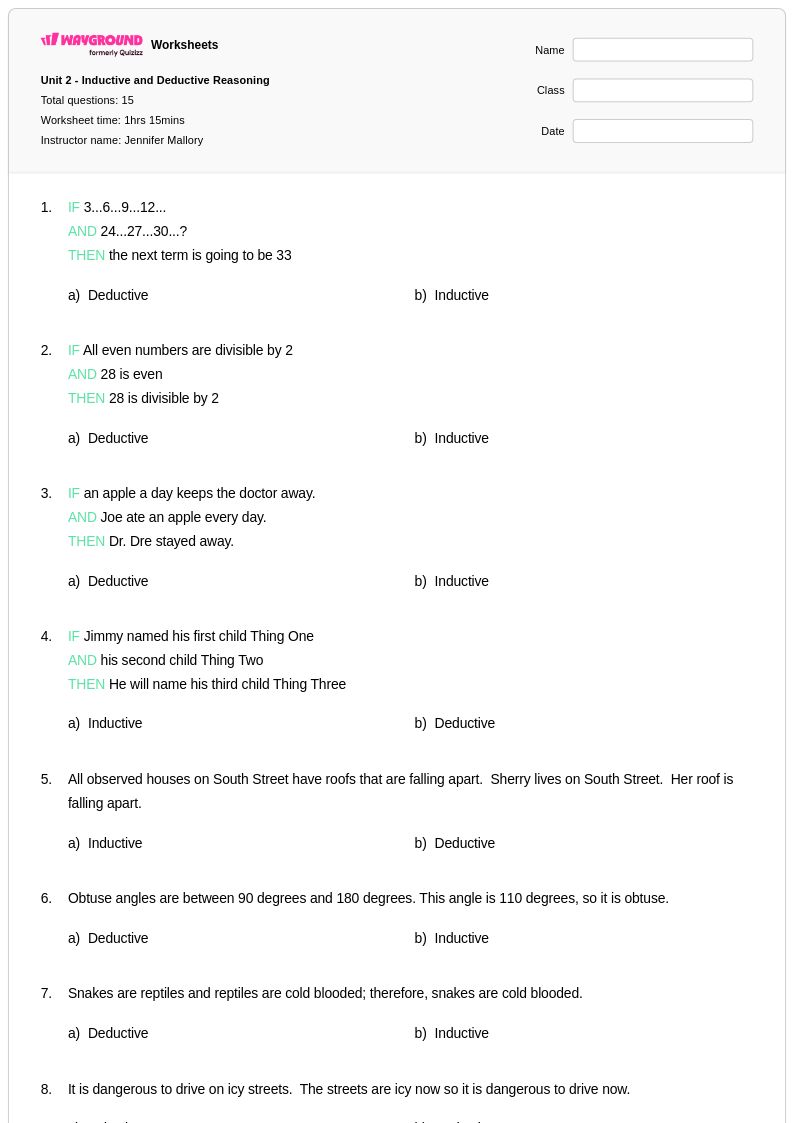
15 Q
8th - 10th
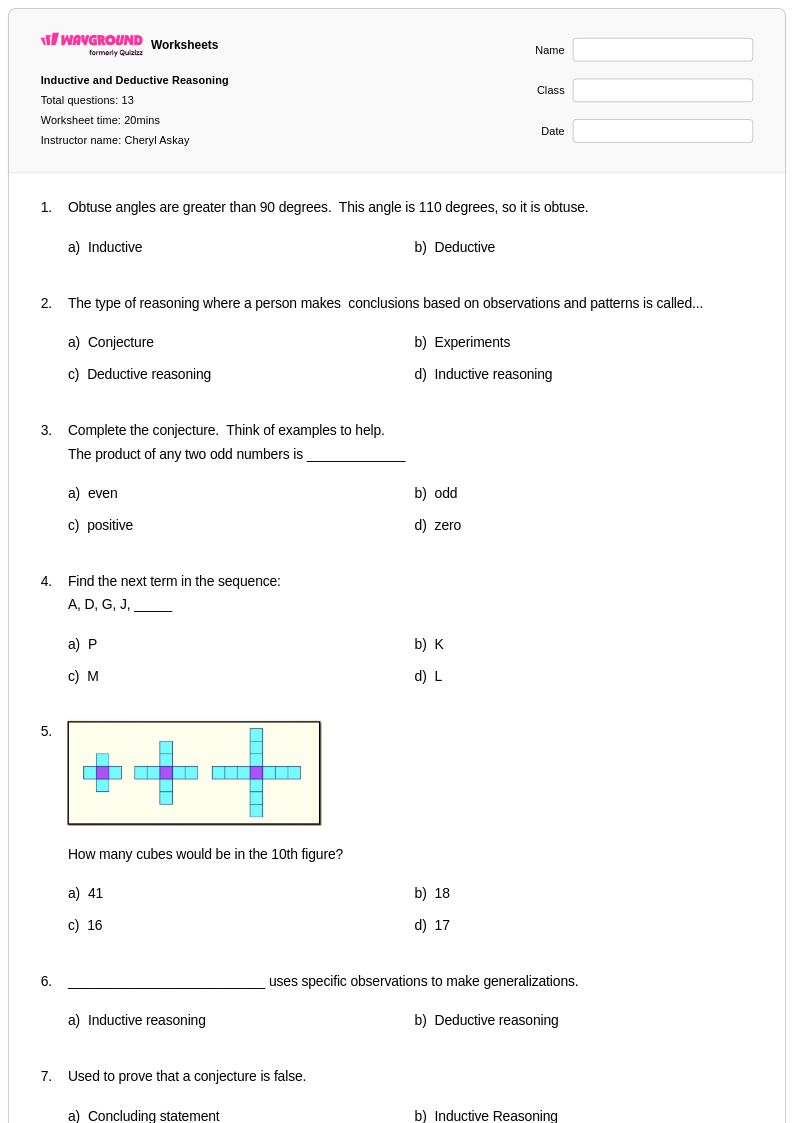
13 Q
8th - 10th
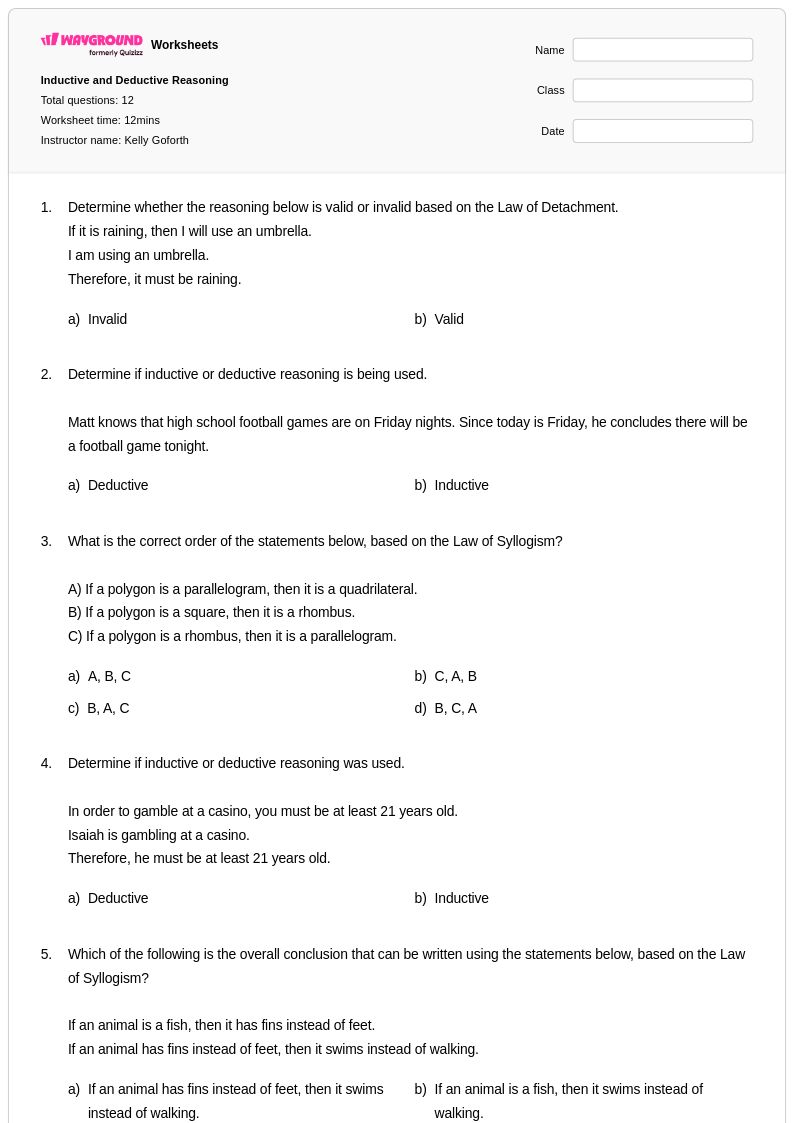
12 Q
9th - 10th
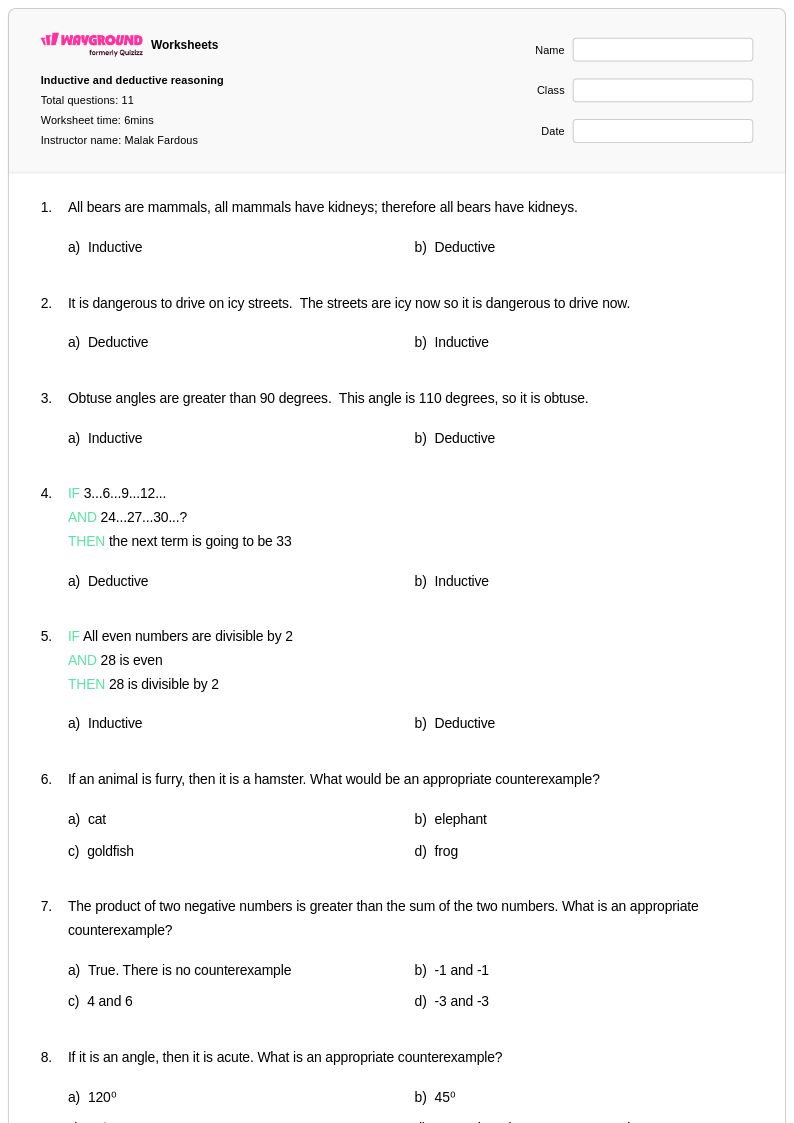
11 Q
10th - 12th
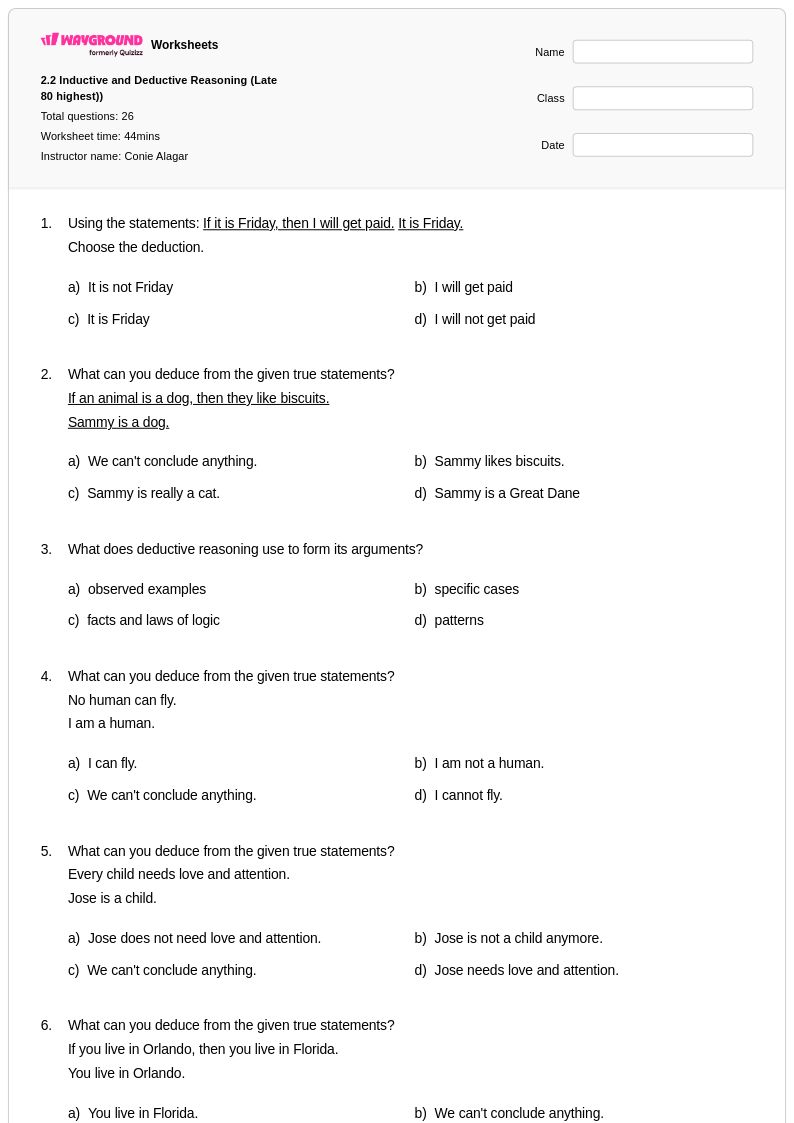
26 Q
10th
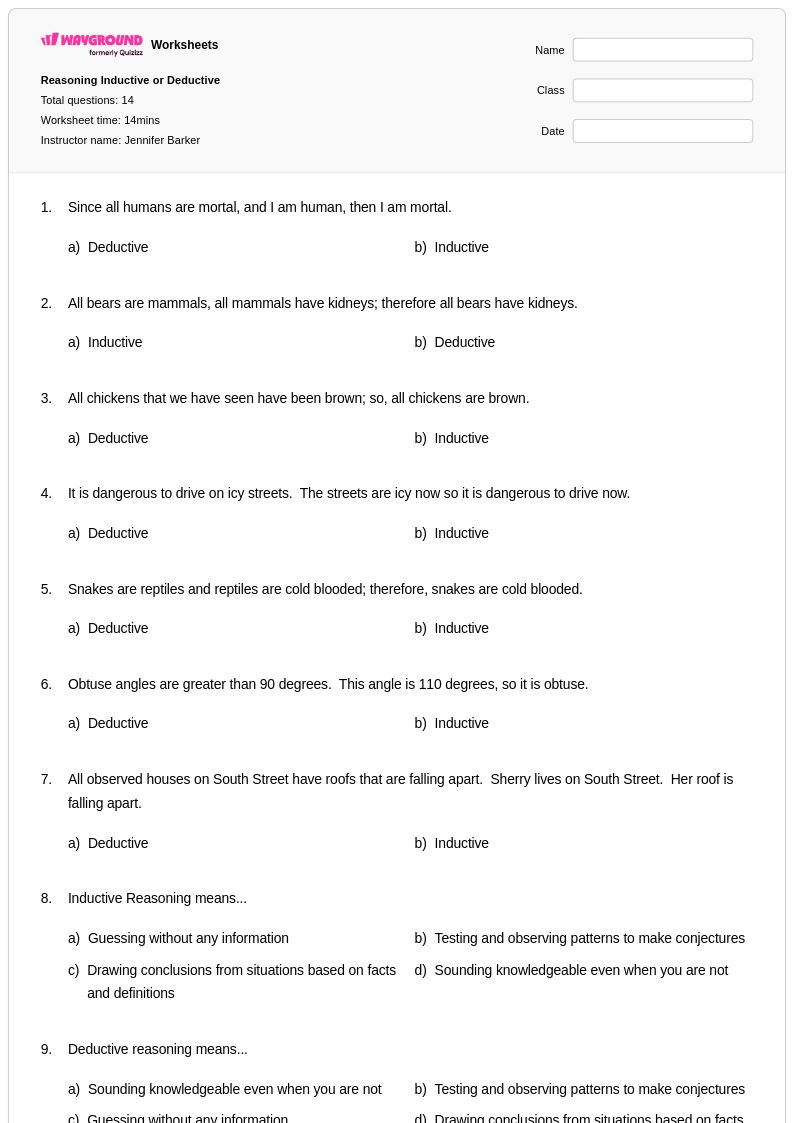
14 Q
10th
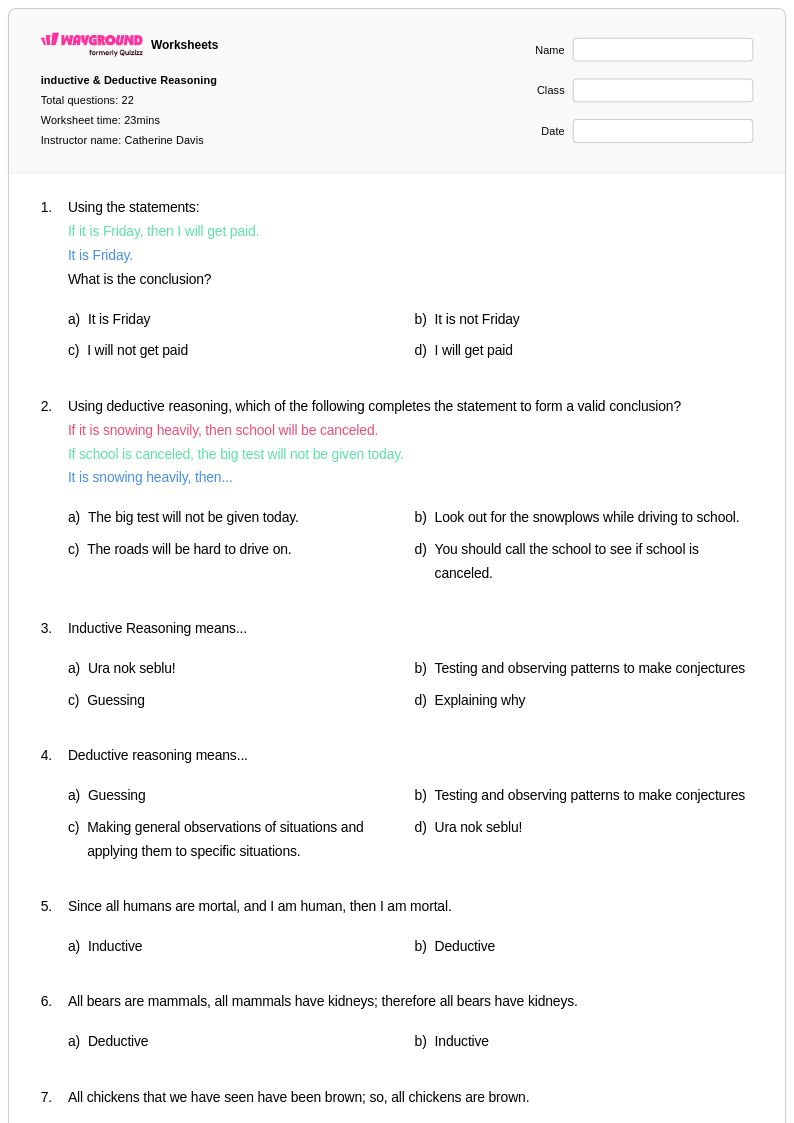
22 Q
10th
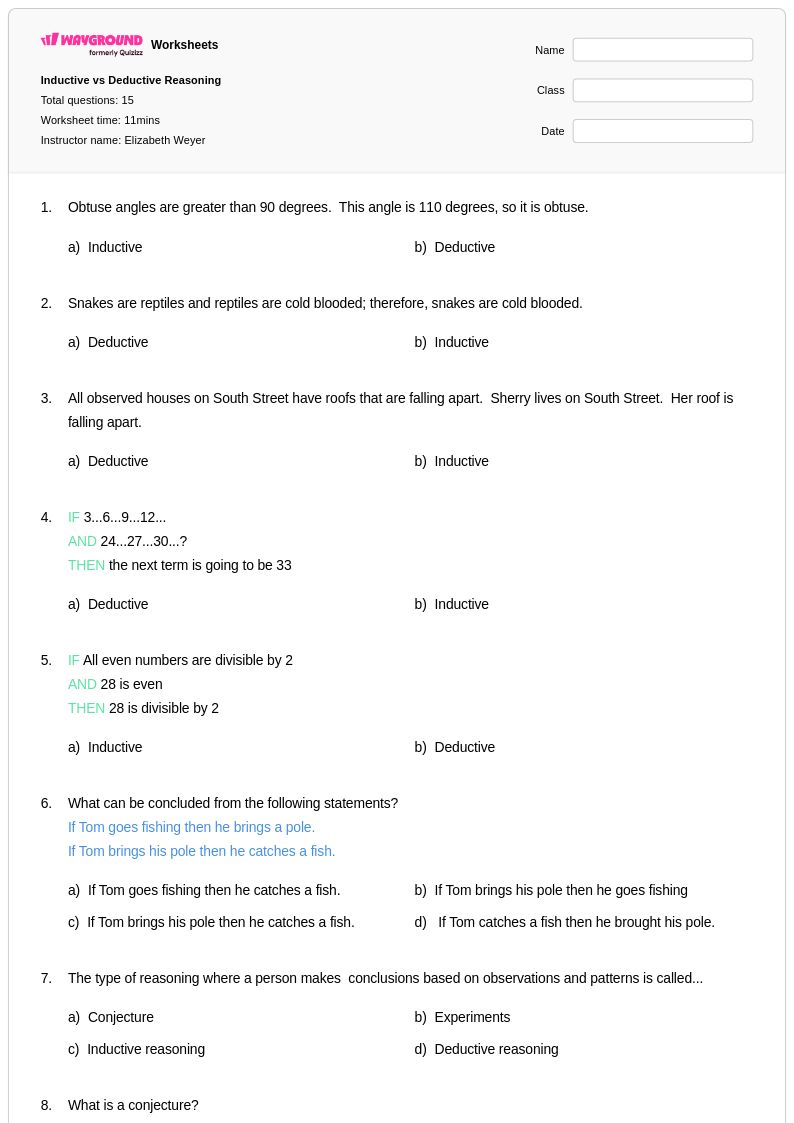
15 Q
8th - 10th
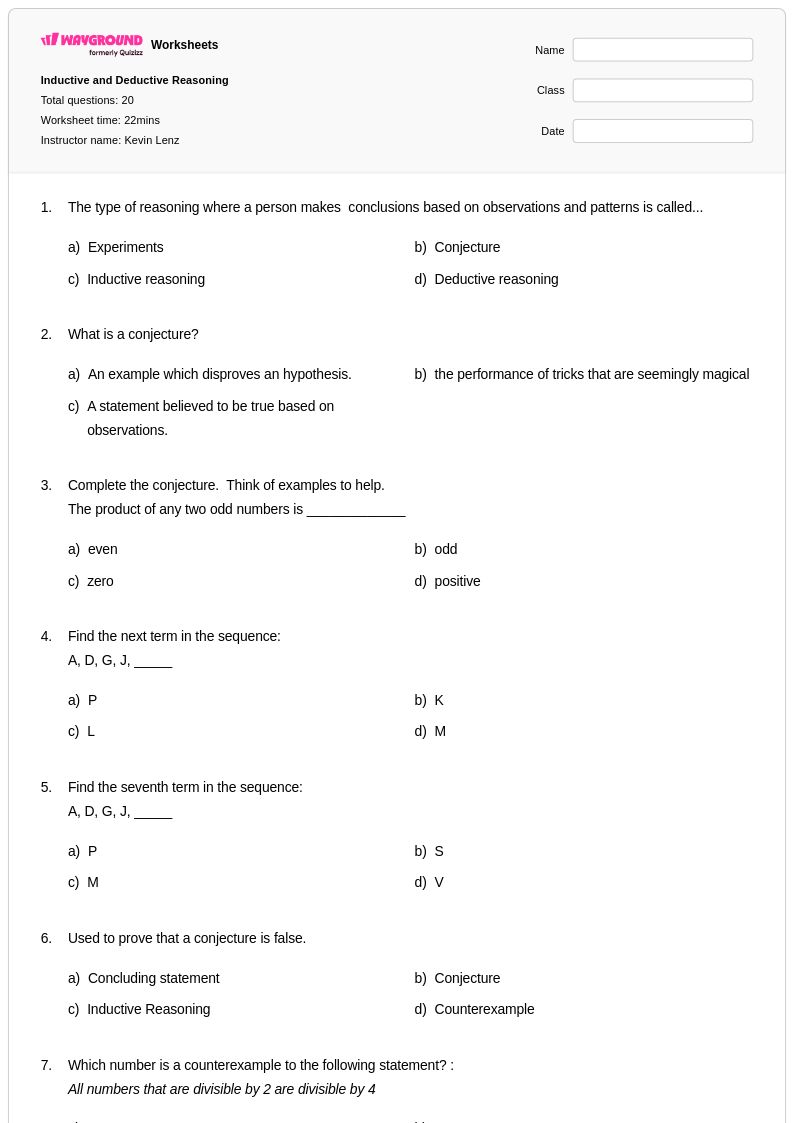
20 Q
9th - 12th
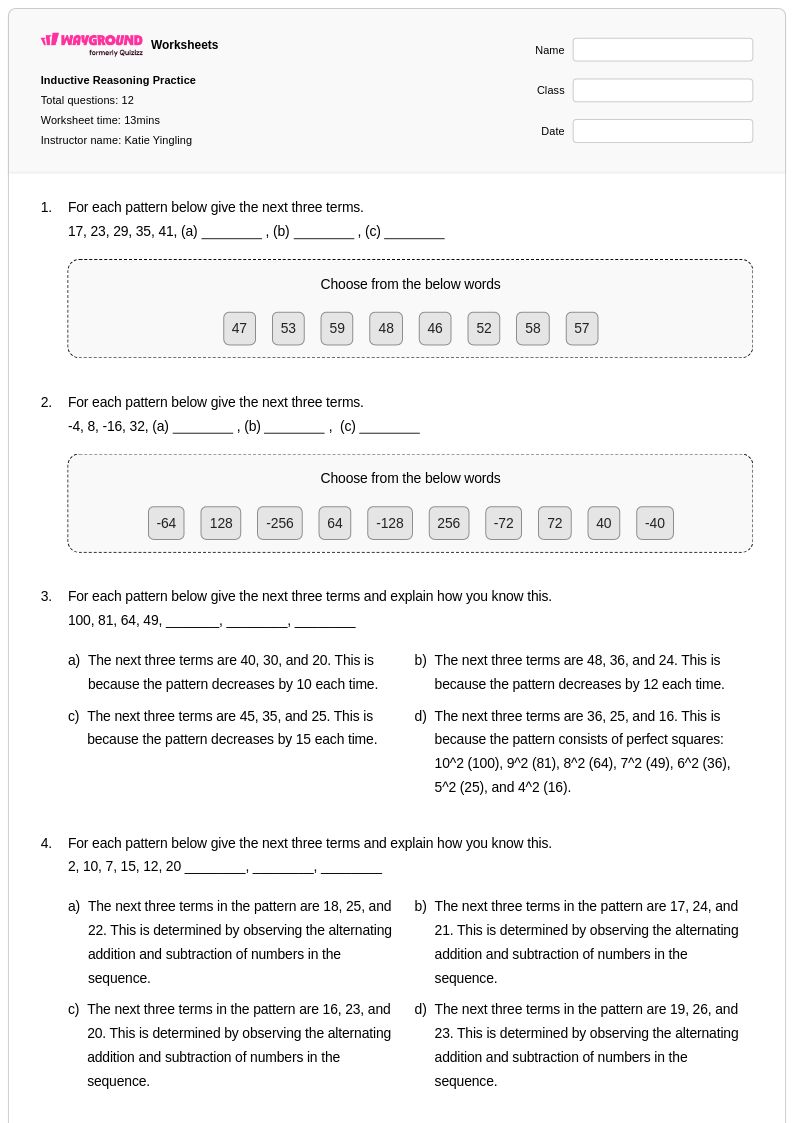
12 Q
9th - 12th
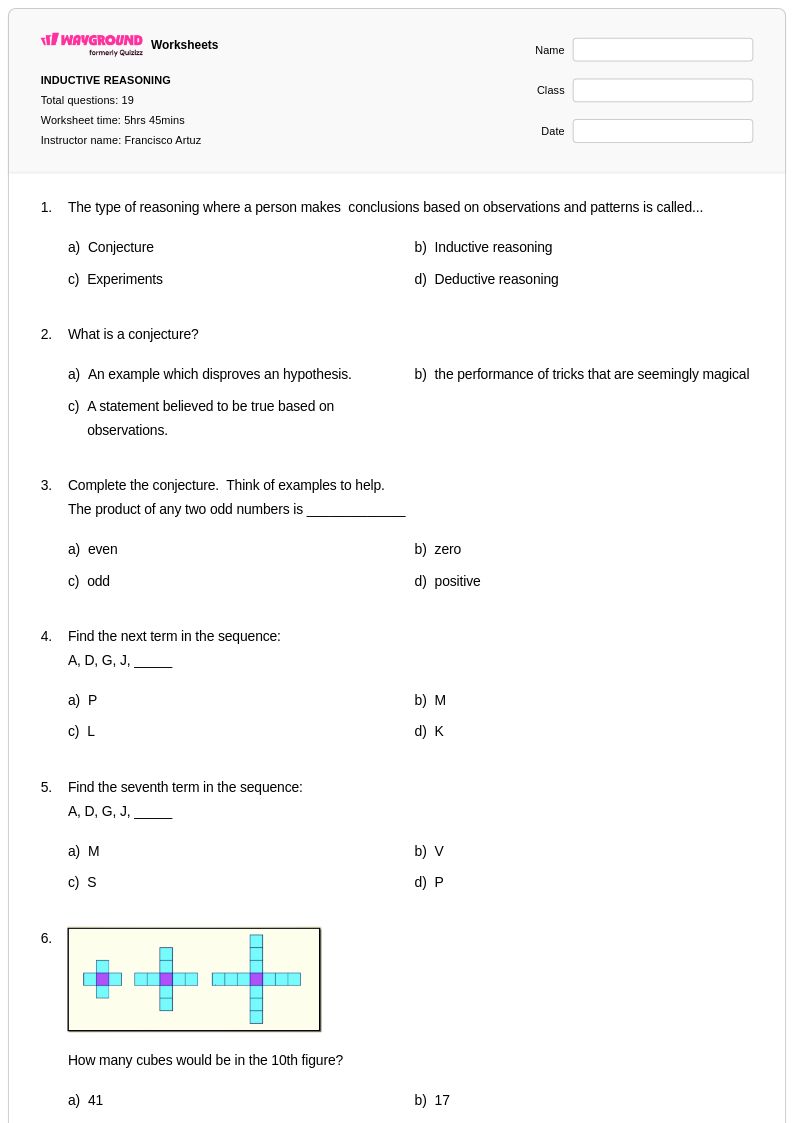
19 Q
9th - 10th
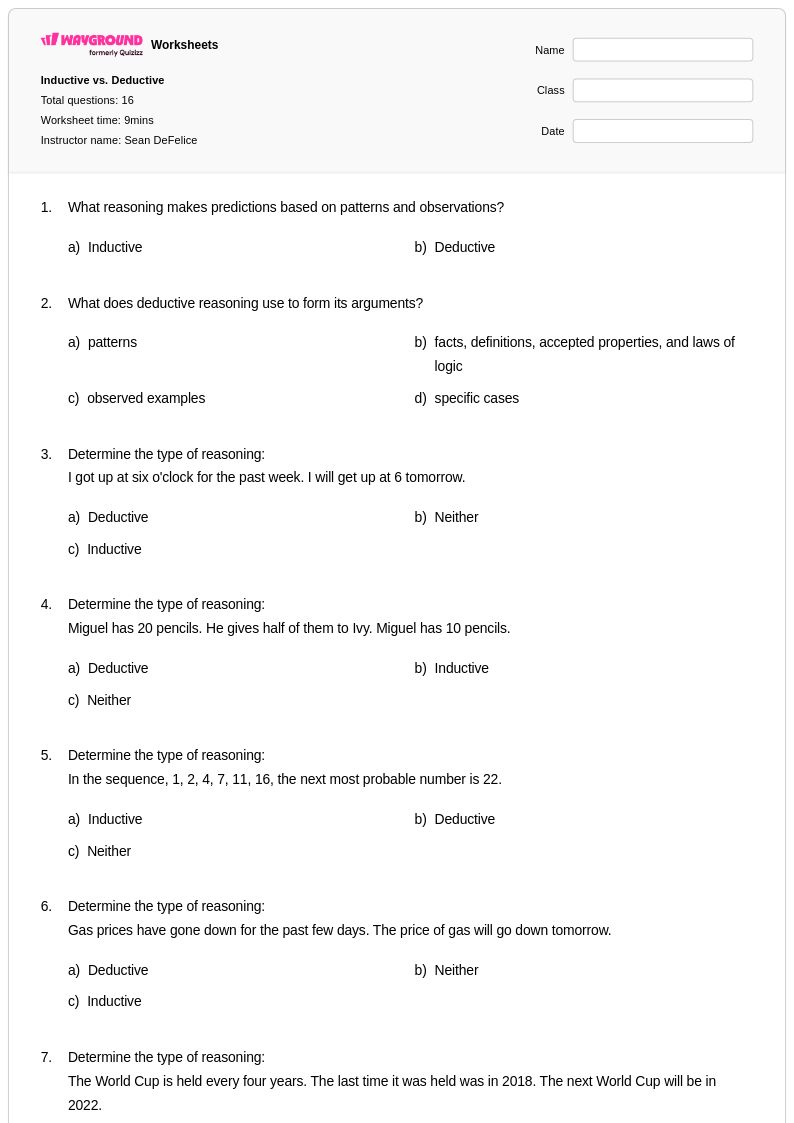
16 Q
9th - 10th
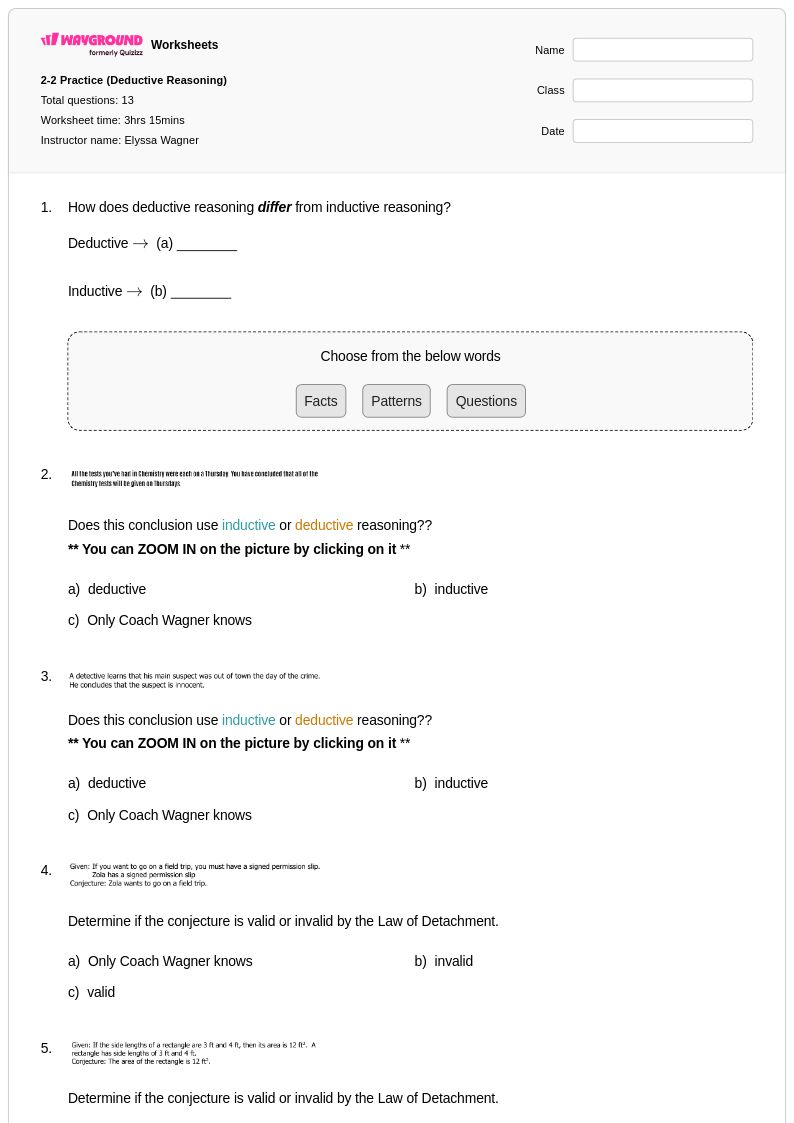
13 Q
9th - 12th
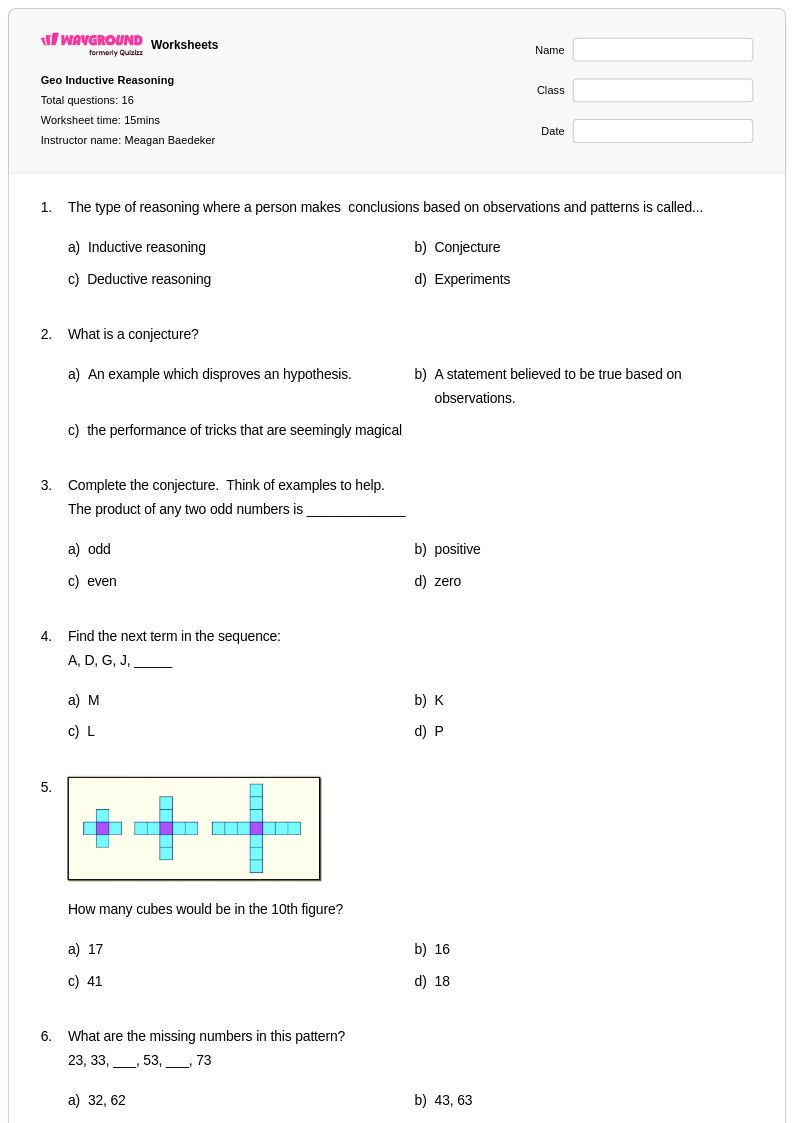
16 Q
8th - 10th
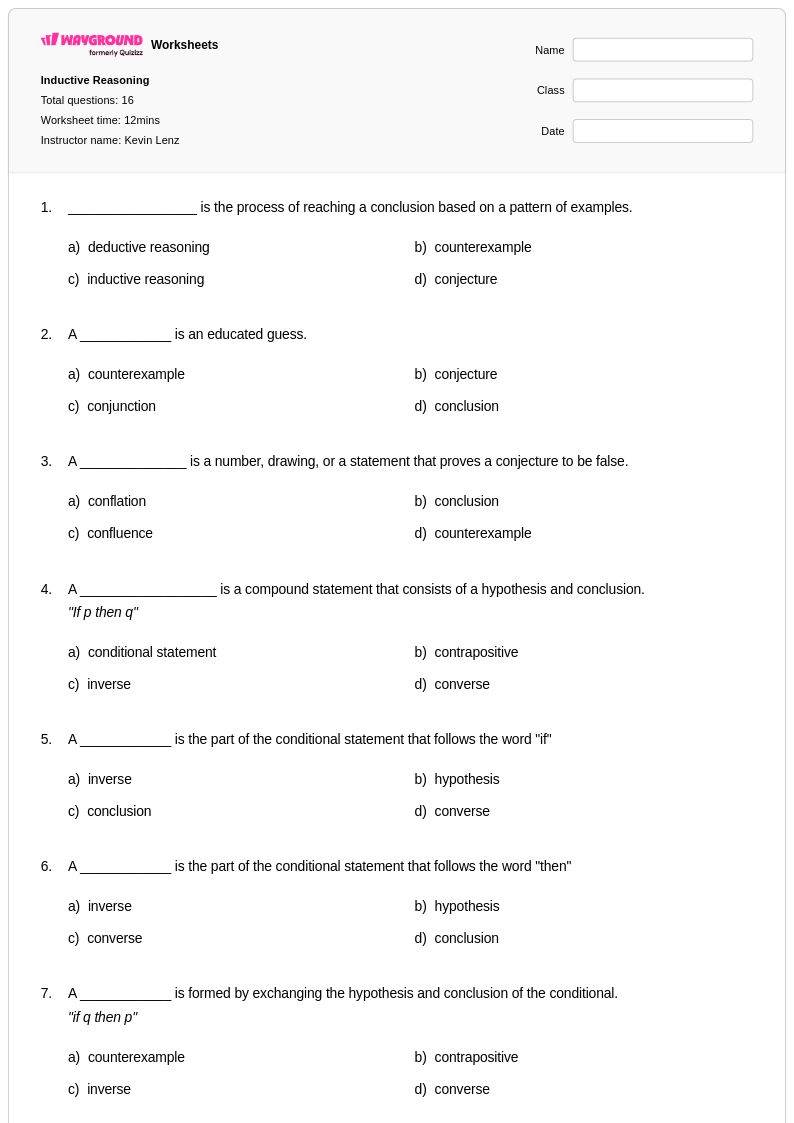
16 Q
9th - 12th
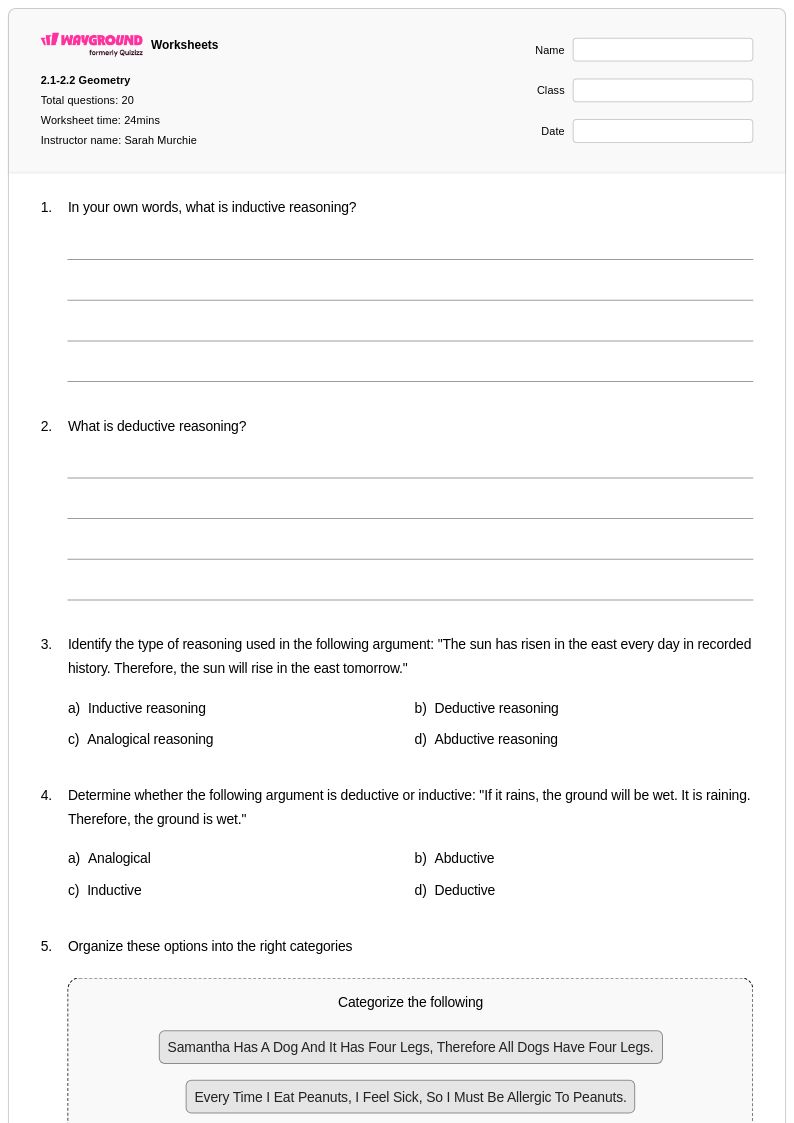
20 Q
10th
Explore Inductive and Deductive Reasoning Worksheets by Grades
Explore Other Subject Worksheets for grade 10
Explore printable Inductive and Deductive Reasoning worksheets for Grade 10
Grade 10 inductive and deductive reasoning worksheets available through Wayground help students master the fundamental logical thinking skills essential for advanced mathematics. These comprehensive practice problems guide learners through the process of making generalizations from specific observations in inductive reasoning, while simultaneously developing their ability to apply general principles to reach specific conclusions through deductive reasoning. Students work with pattern recognition, hypothesis formation, proof construction, and logical argument analysis through carefully structured exercises that build critical thinking capabilities. Each worksheet includes detailed answer keys and explanations that allow students to verify their reasoning processes and understand where logical errors may occur, making these free printables invaluable resources for developing mathematical maturity and analytical skills required for higher-level coursework.
Wayground's extensive collection of teacher-created resources provides educators with millions of differentiated materials specifically designed to support logic and reasoning instruction at the Grade 10 level. The platform's robust search and filtering capabilities enable teachers to quickly locate worksheets that align with specific curriculum standards and learning objectives, whether they need materials for initial skill introduction, targeted remediation, or advanced enrichment activities. Teachers can easily customize these resources to match their students' varying ability levels and learning needs, with materials available in both printable pdf formats for traditional classroom use and digital versions for technology-integrated instruction. This flexibility allows educators to seamlessly incorporate logical reasoning practice into daily lessons, homework assignments, and assessment preparation while ensuring students receive appropriate challenge levels and scaffolded support throughout their mathematical reasoning development.