Free Printable Logic and Reasoning Worksheets for Grade 6
Grade 6 logic and reasoning printables from Wayground help students develop critical thinking skills through free worksheets featuring practice problems and complete answer keys in PDF format.
Explore printable Logic and Reasoning worksheets for Grade 6
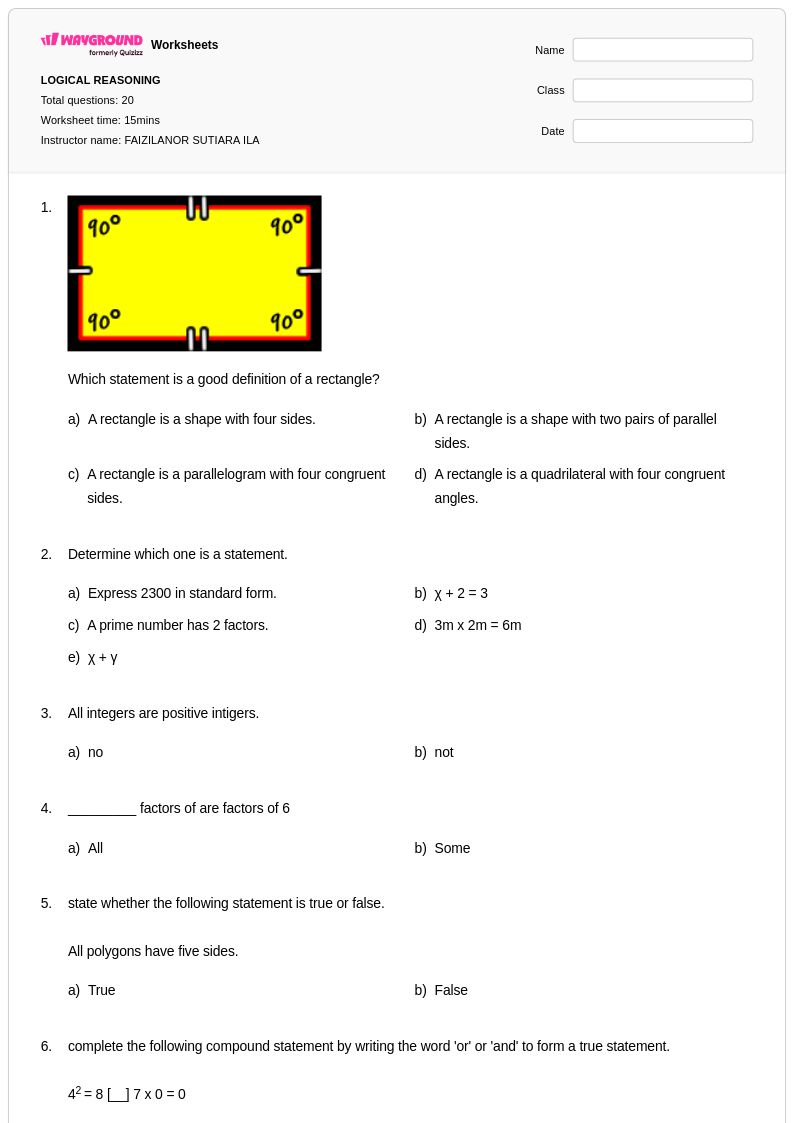
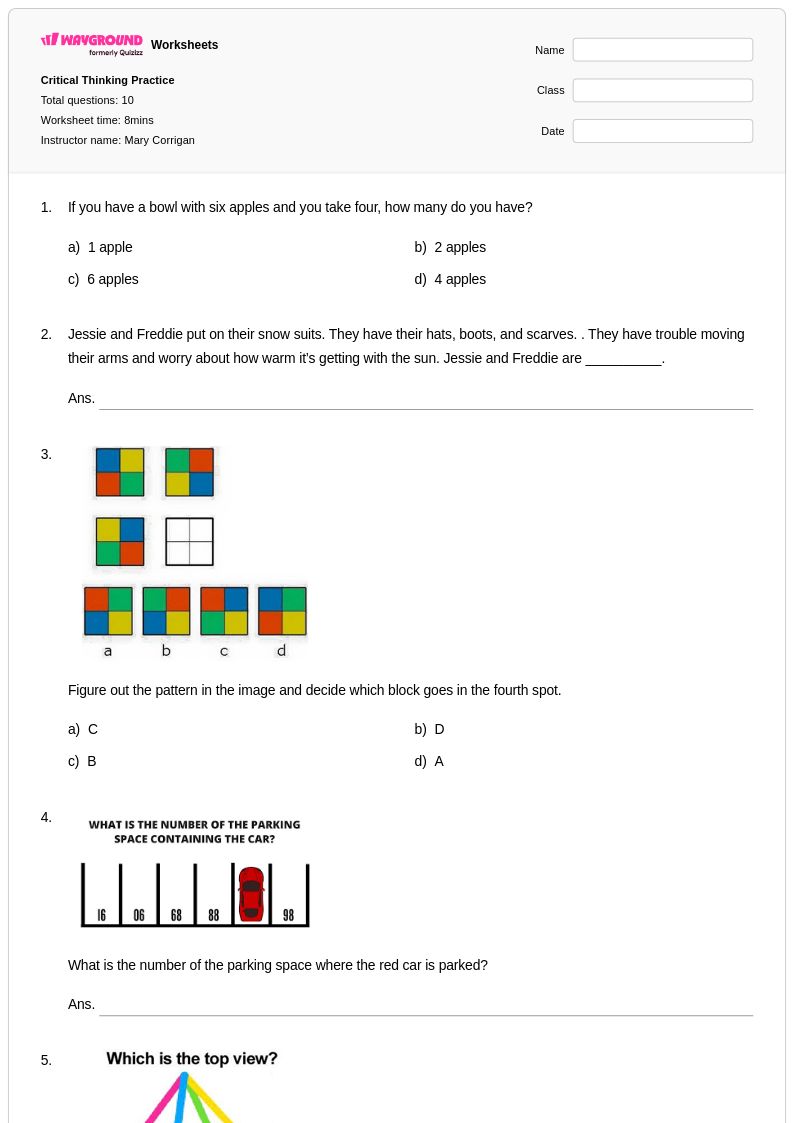
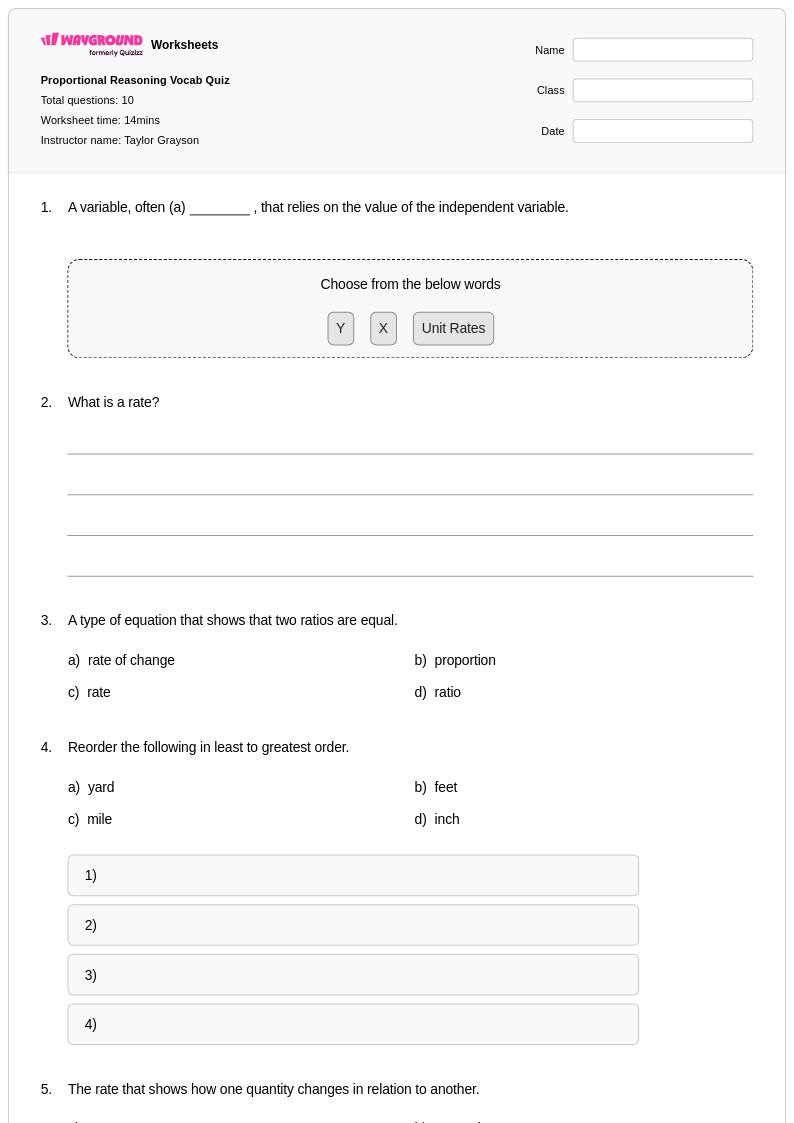
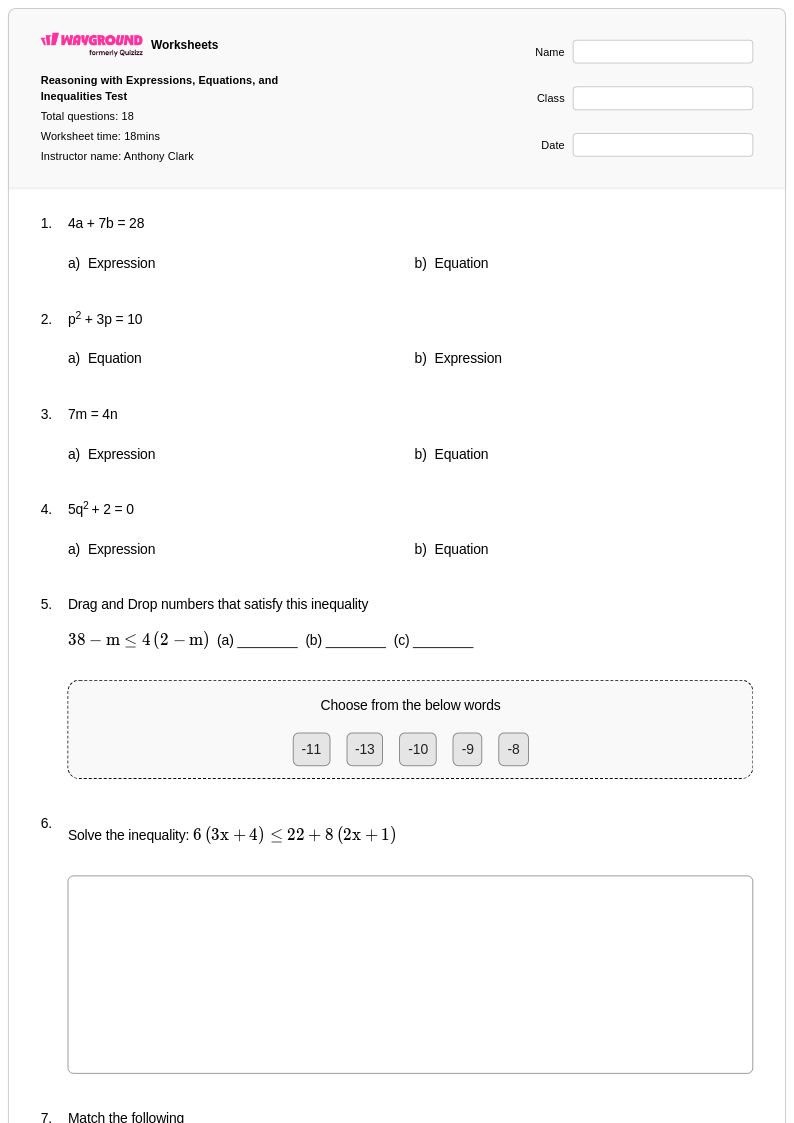
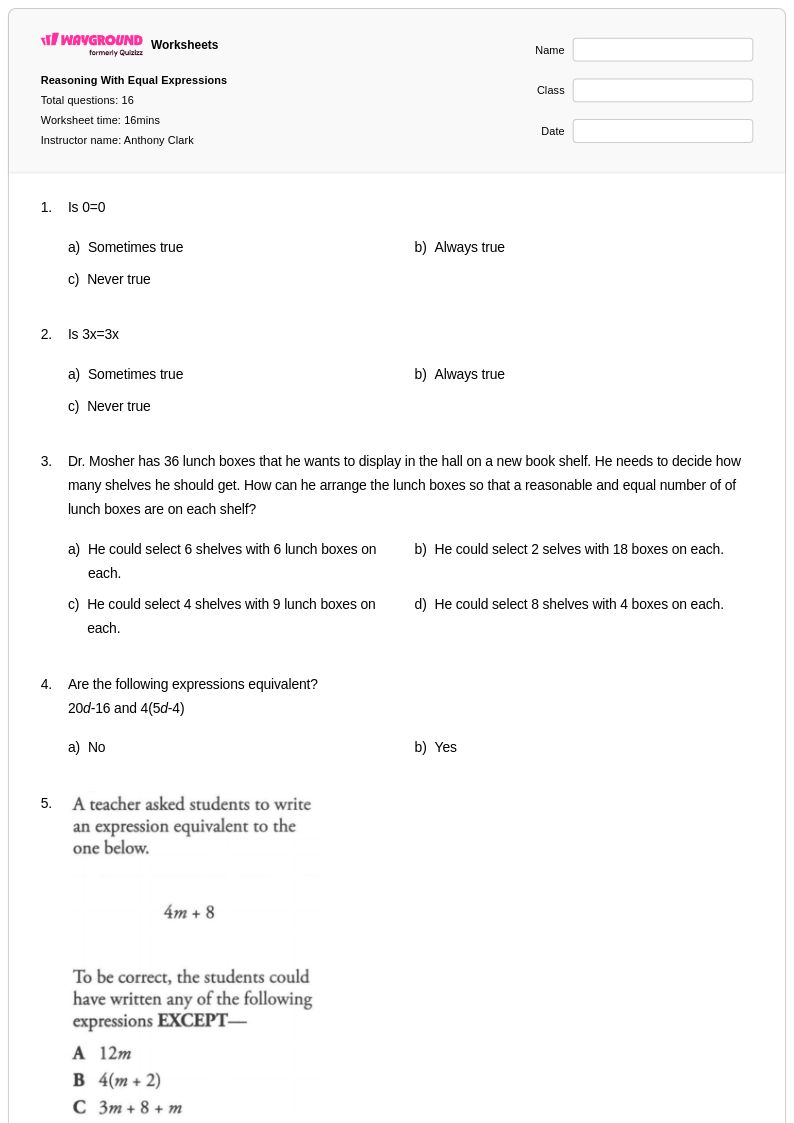
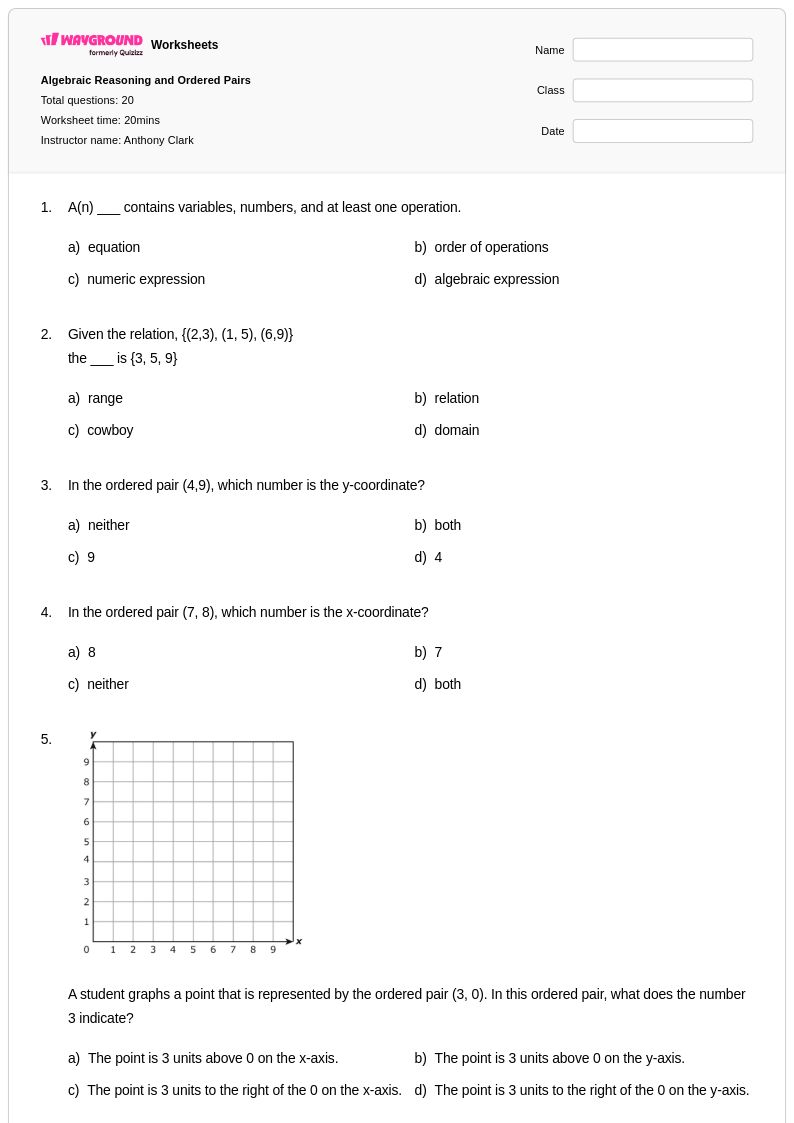
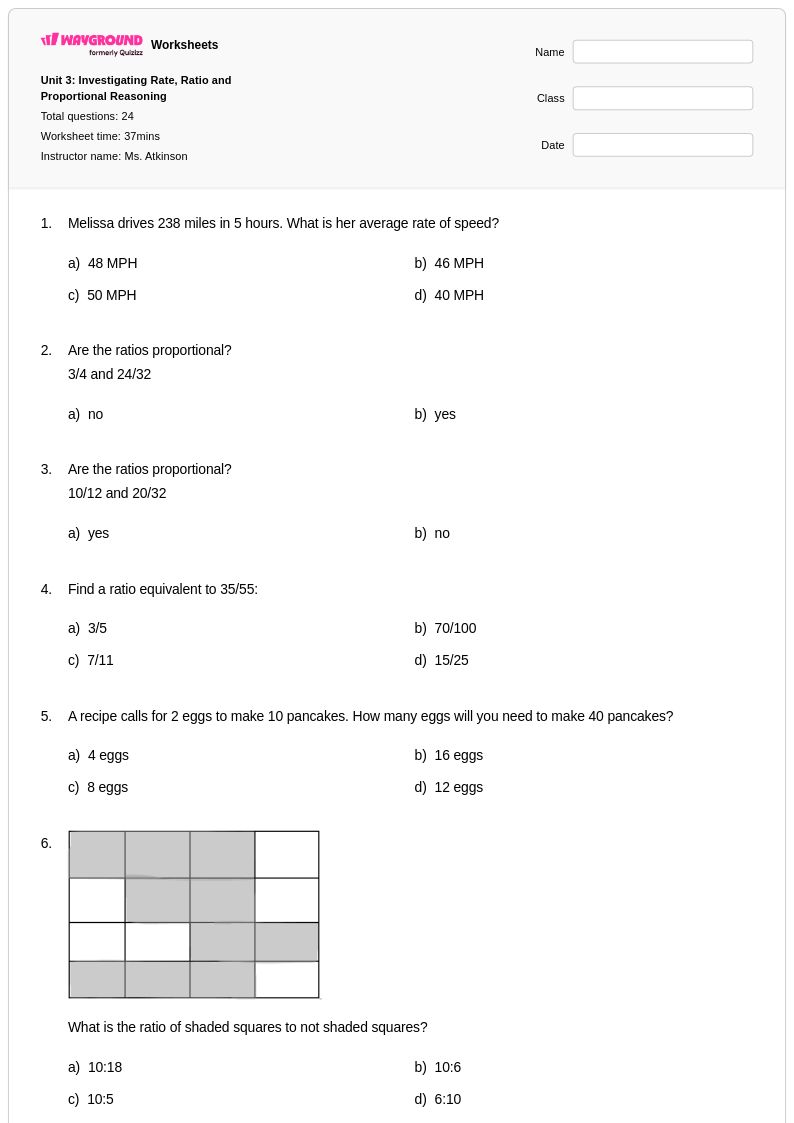
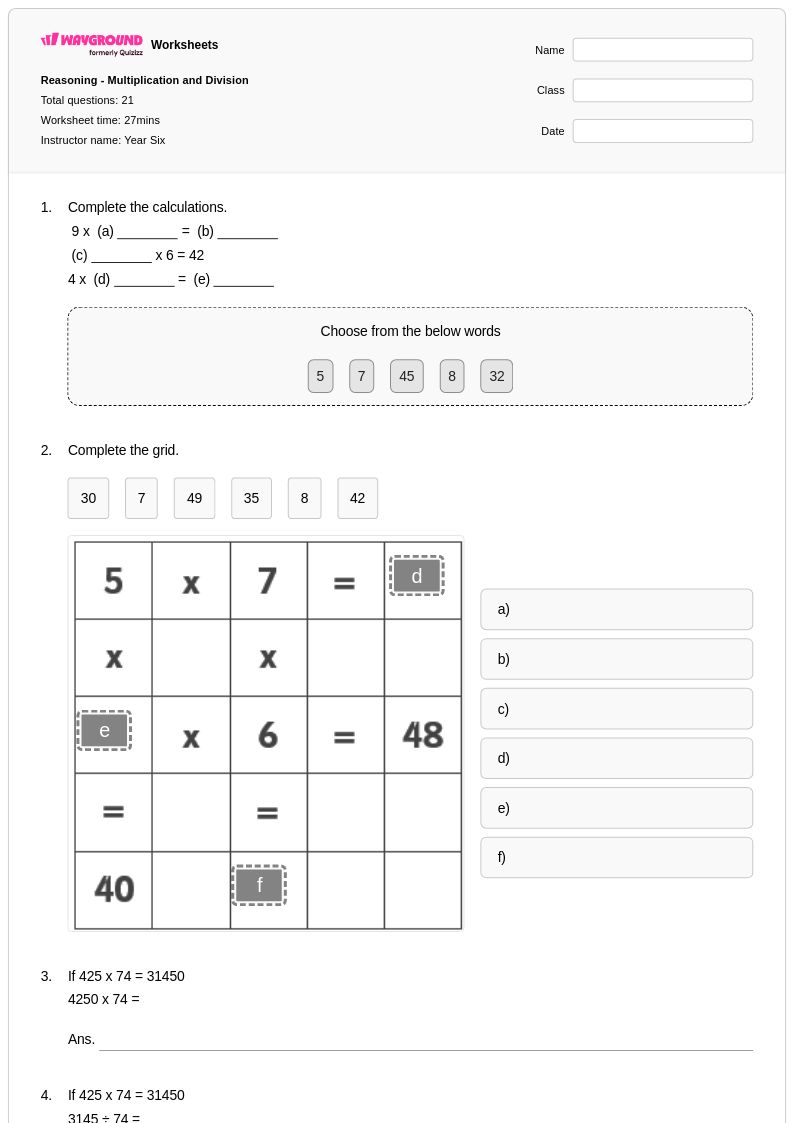
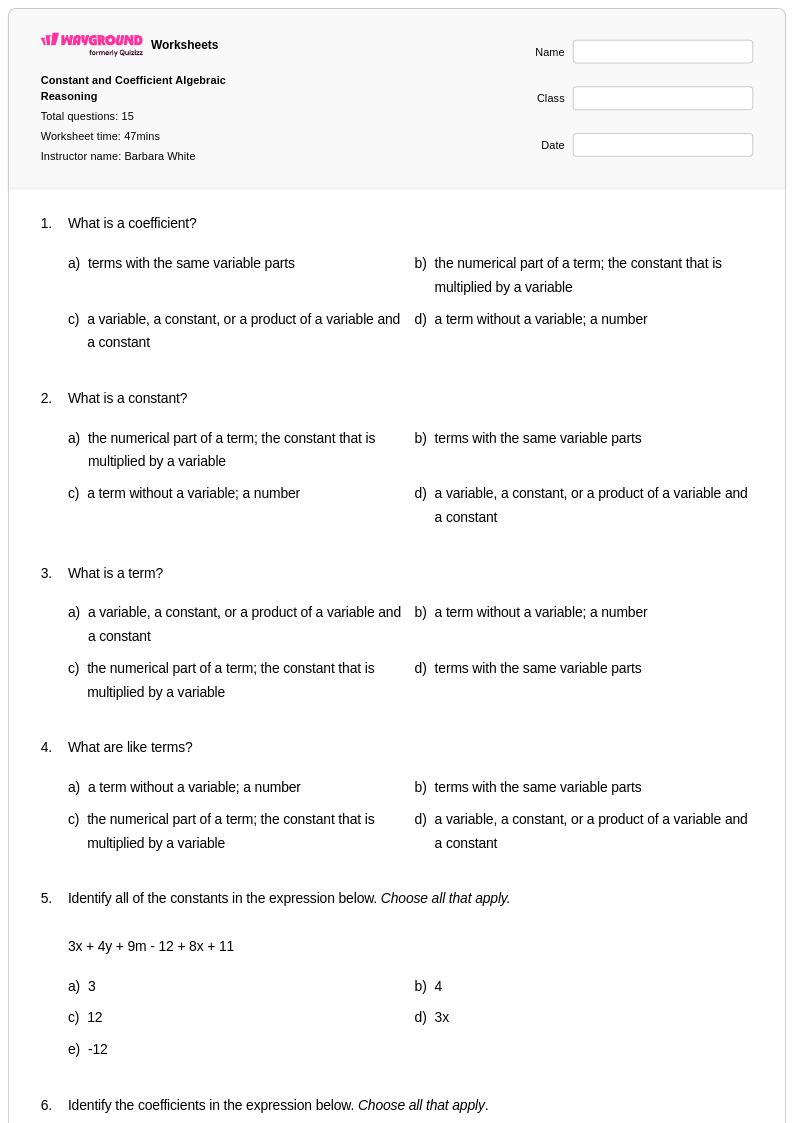
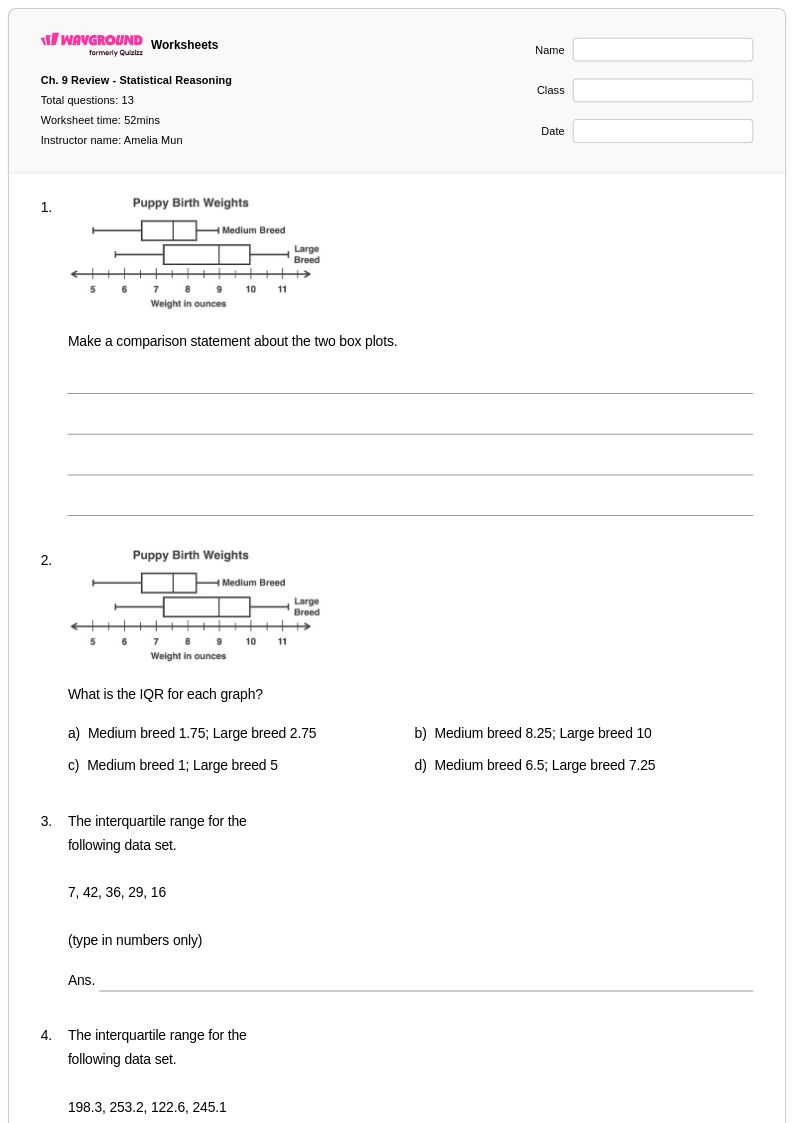
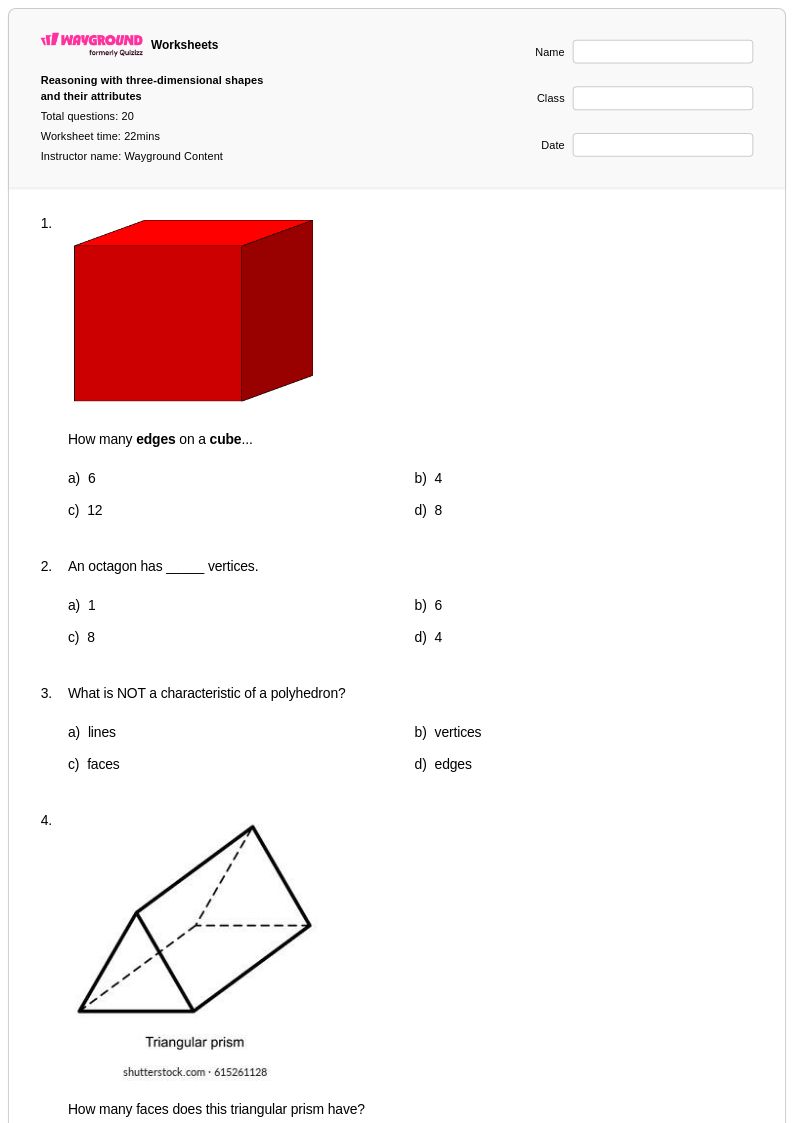
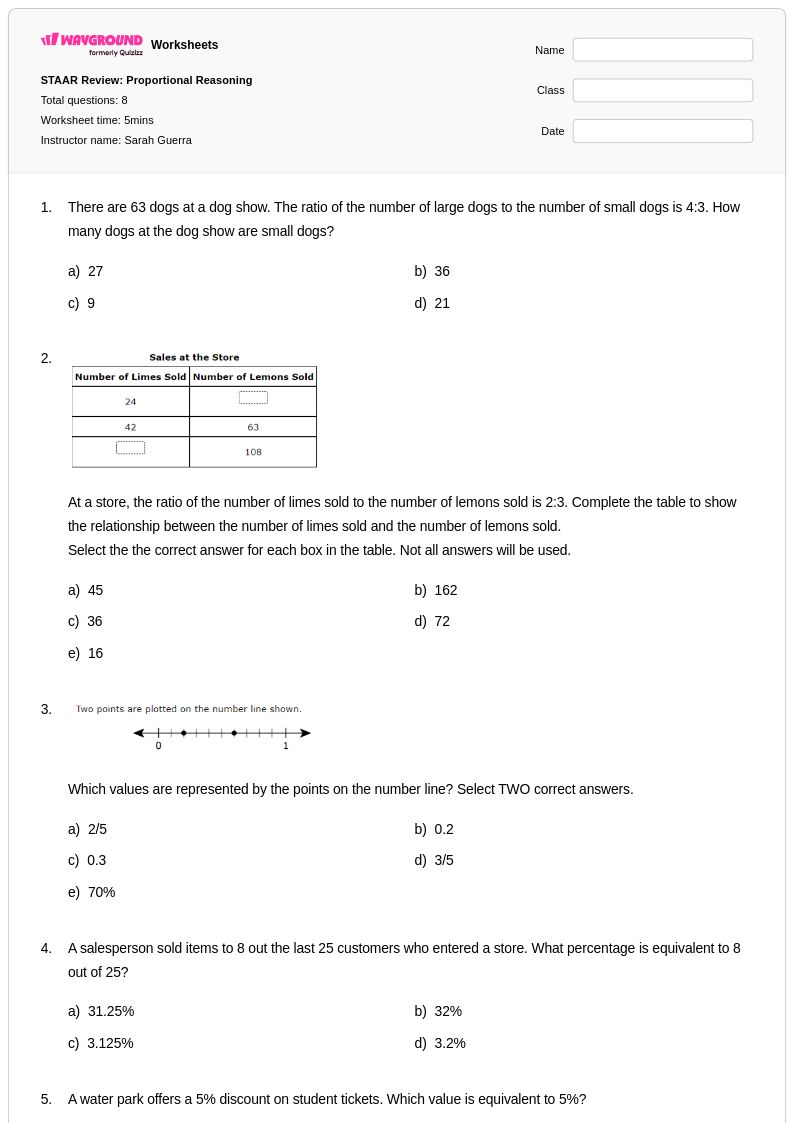
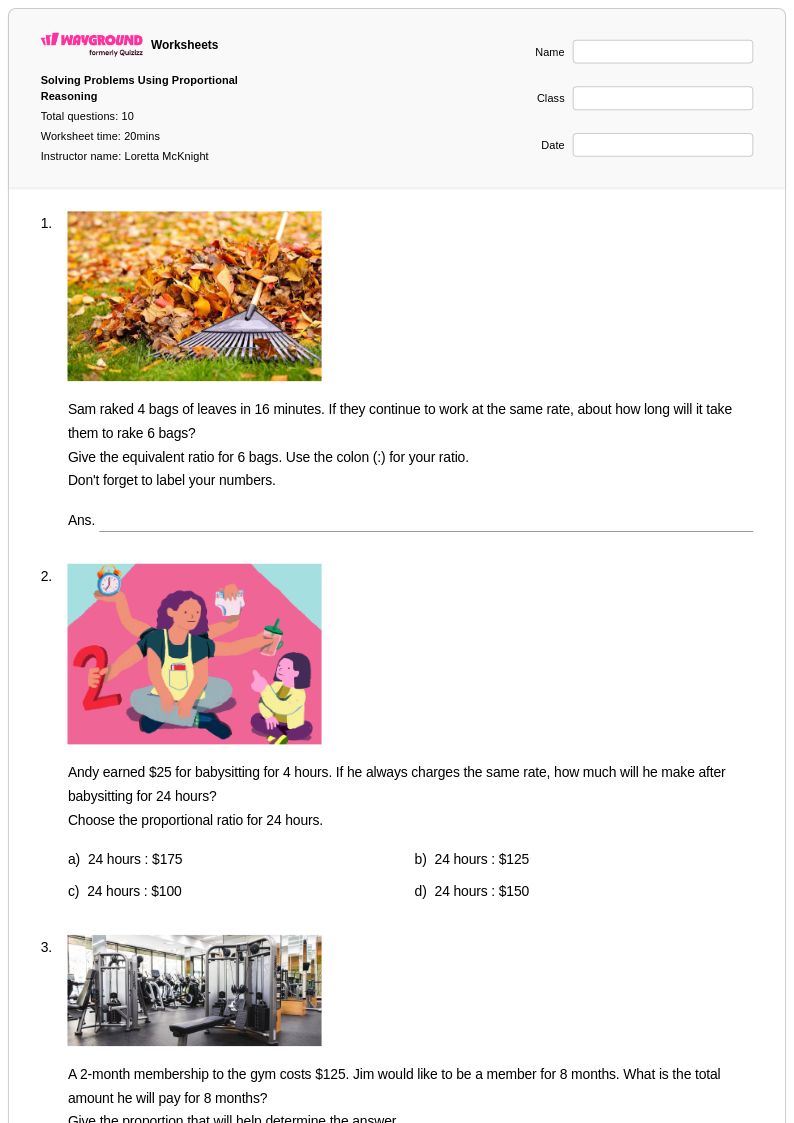
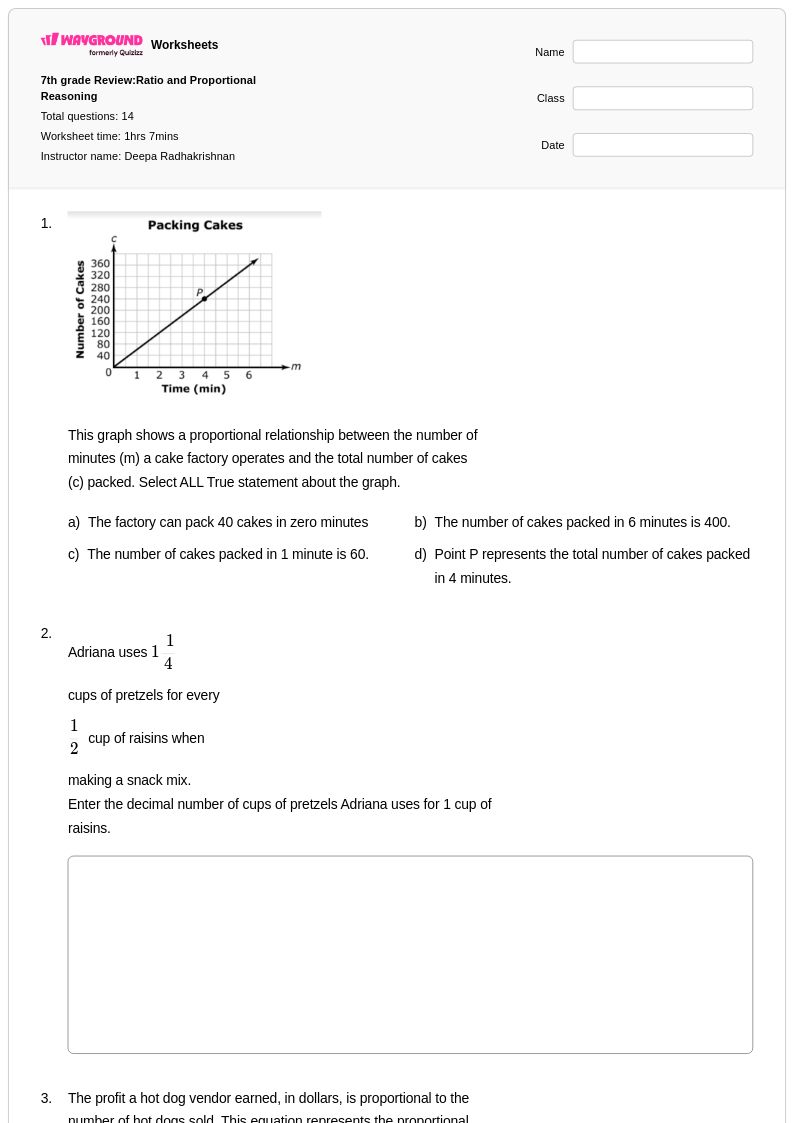
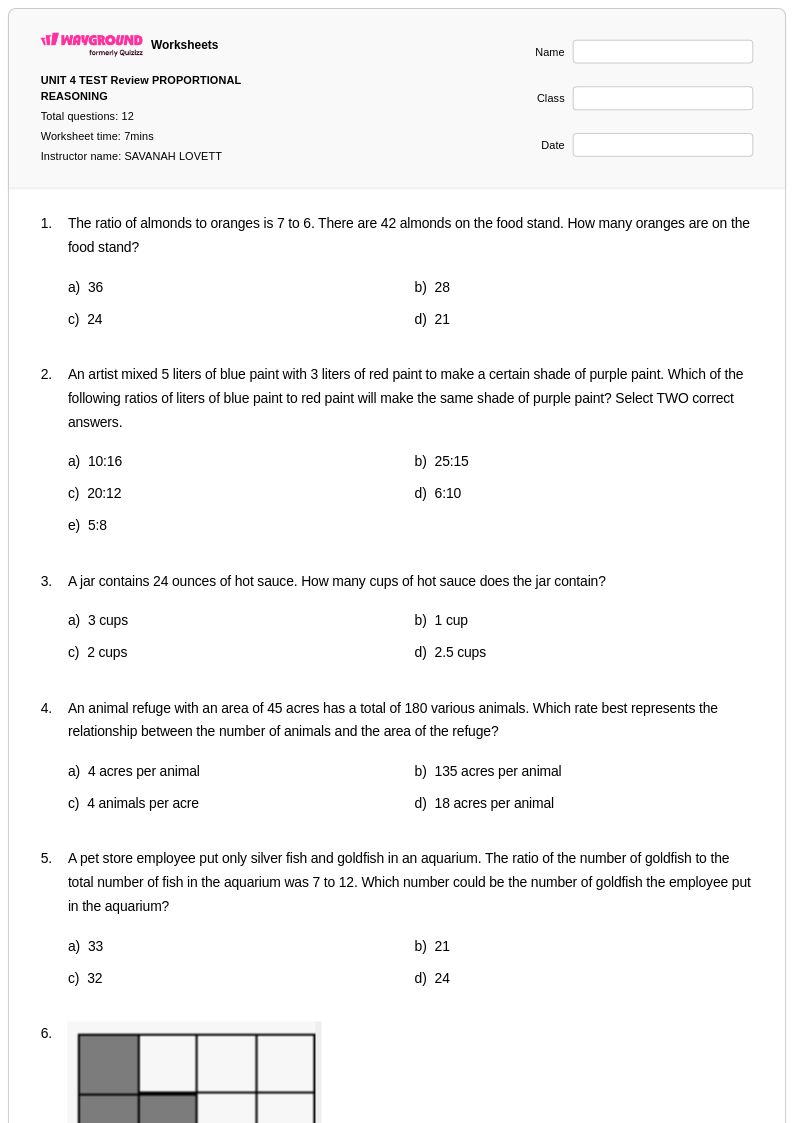
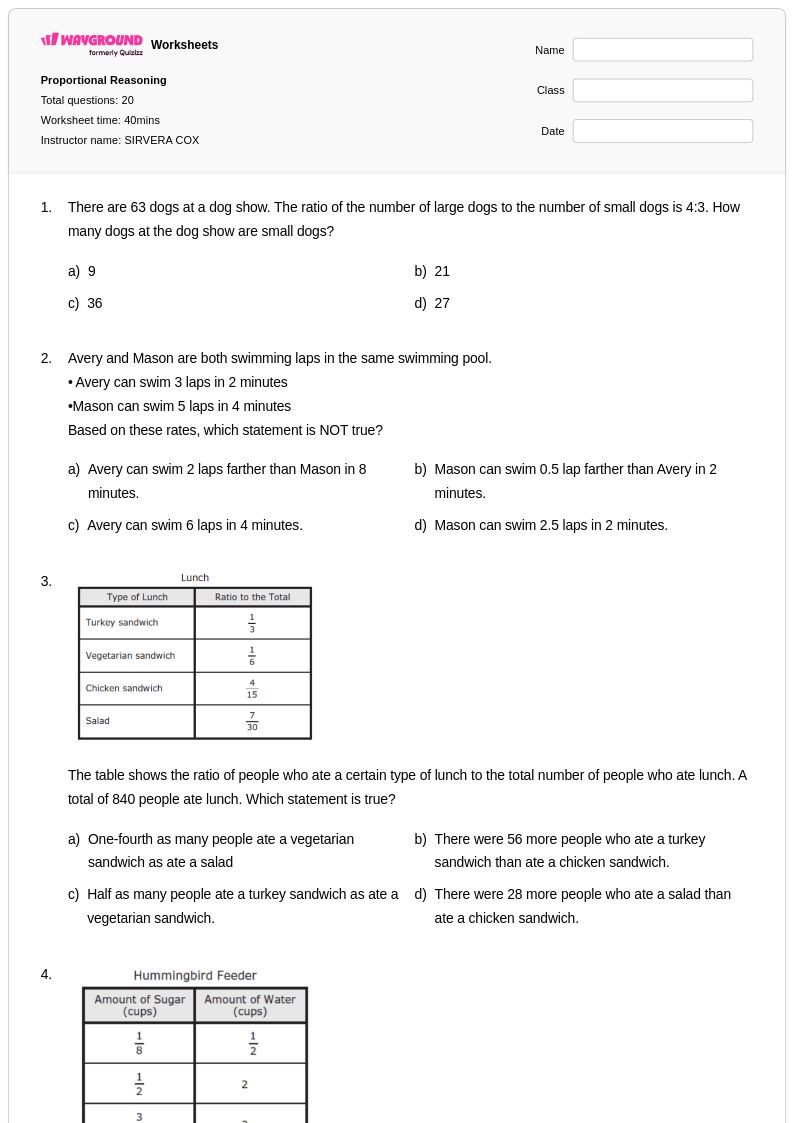
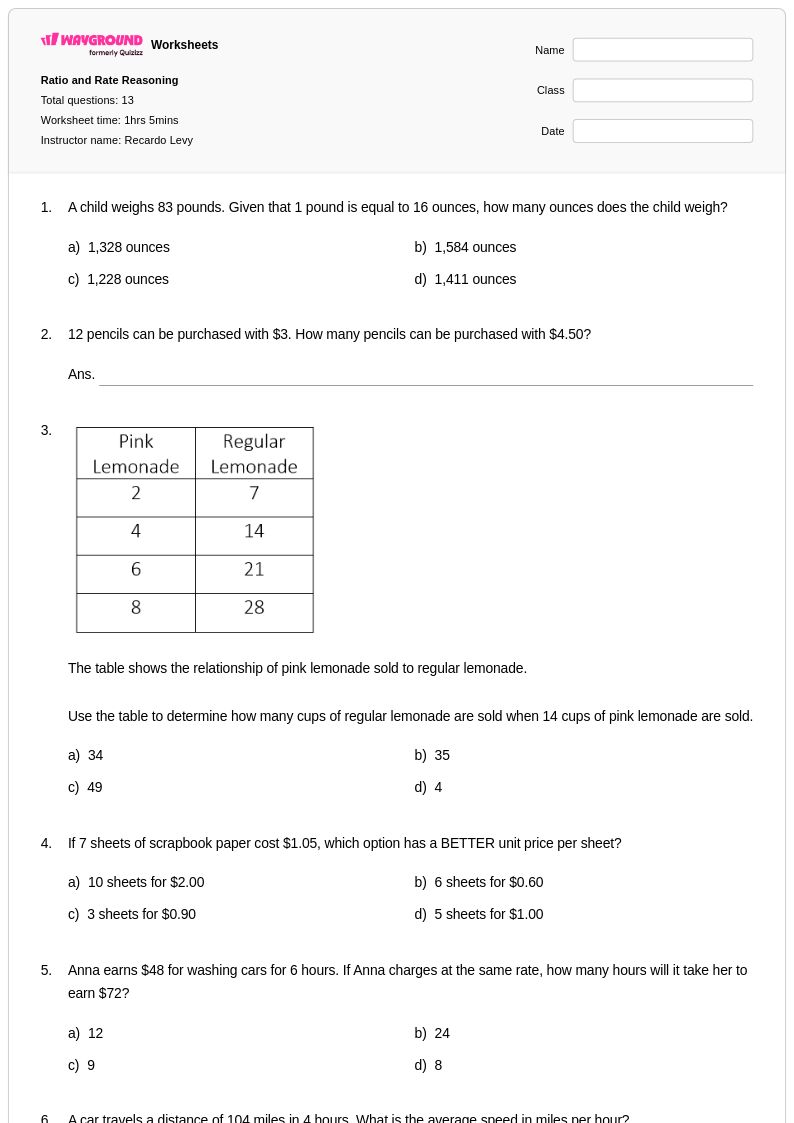
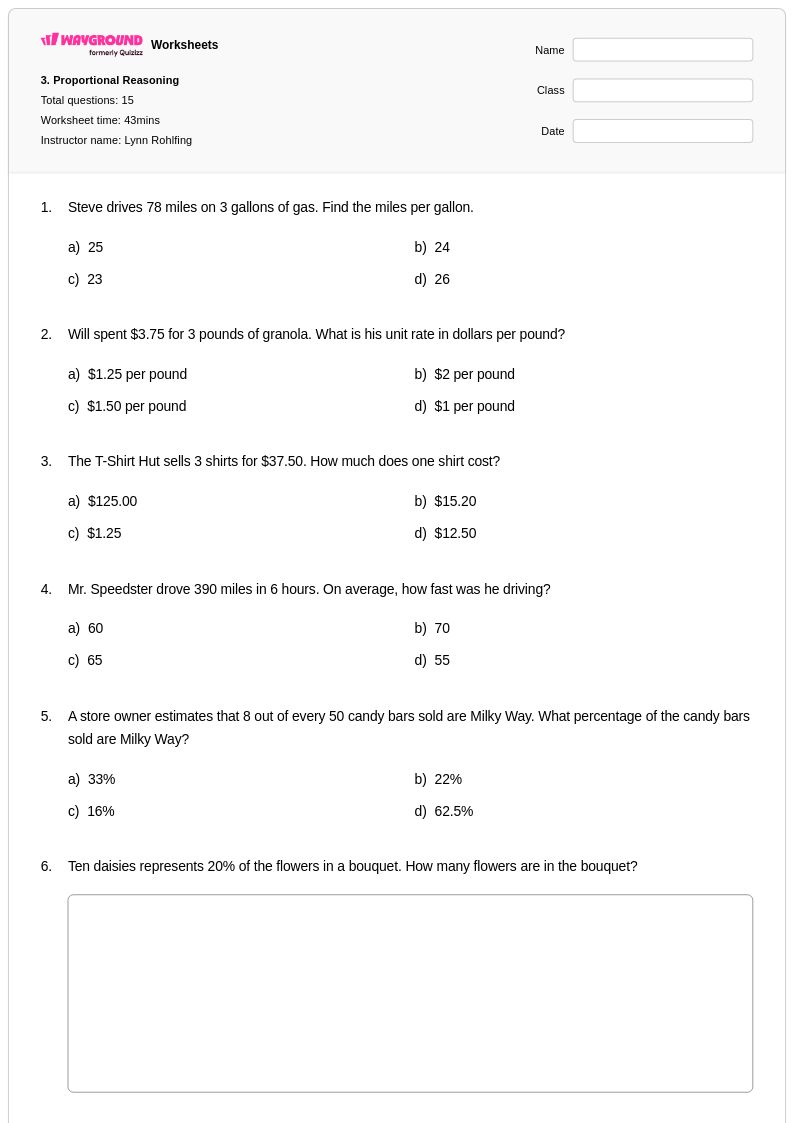
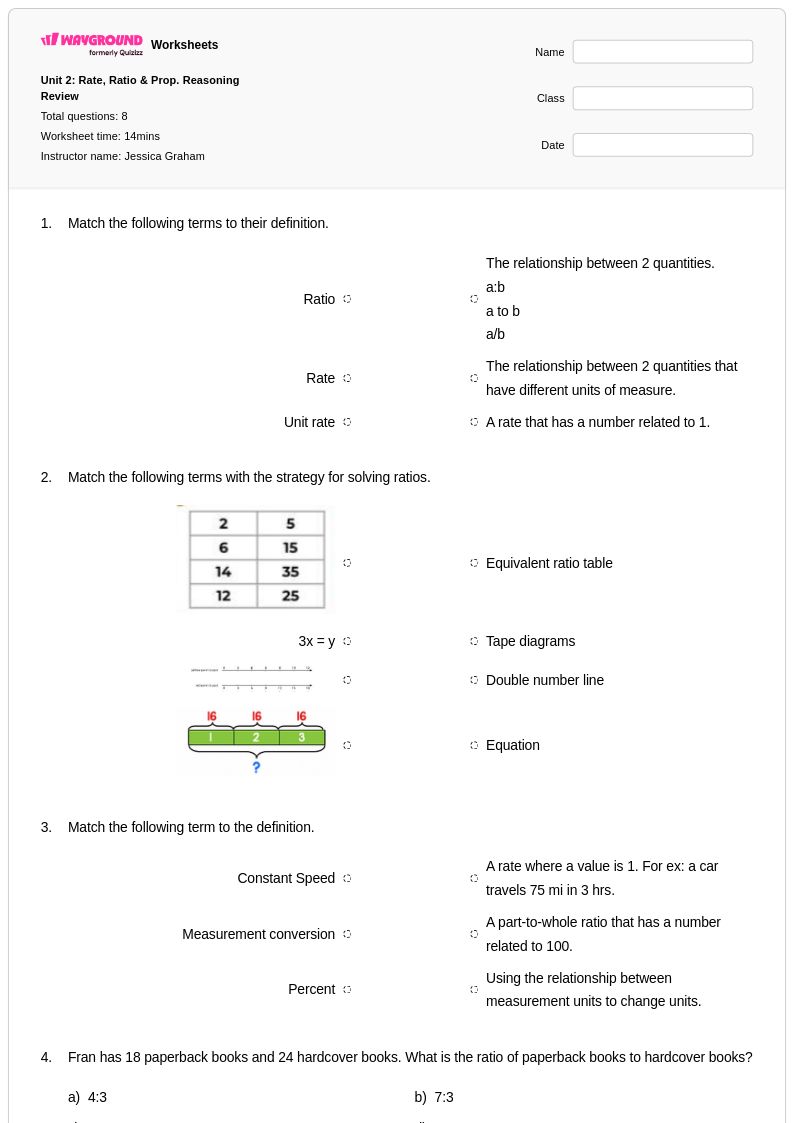
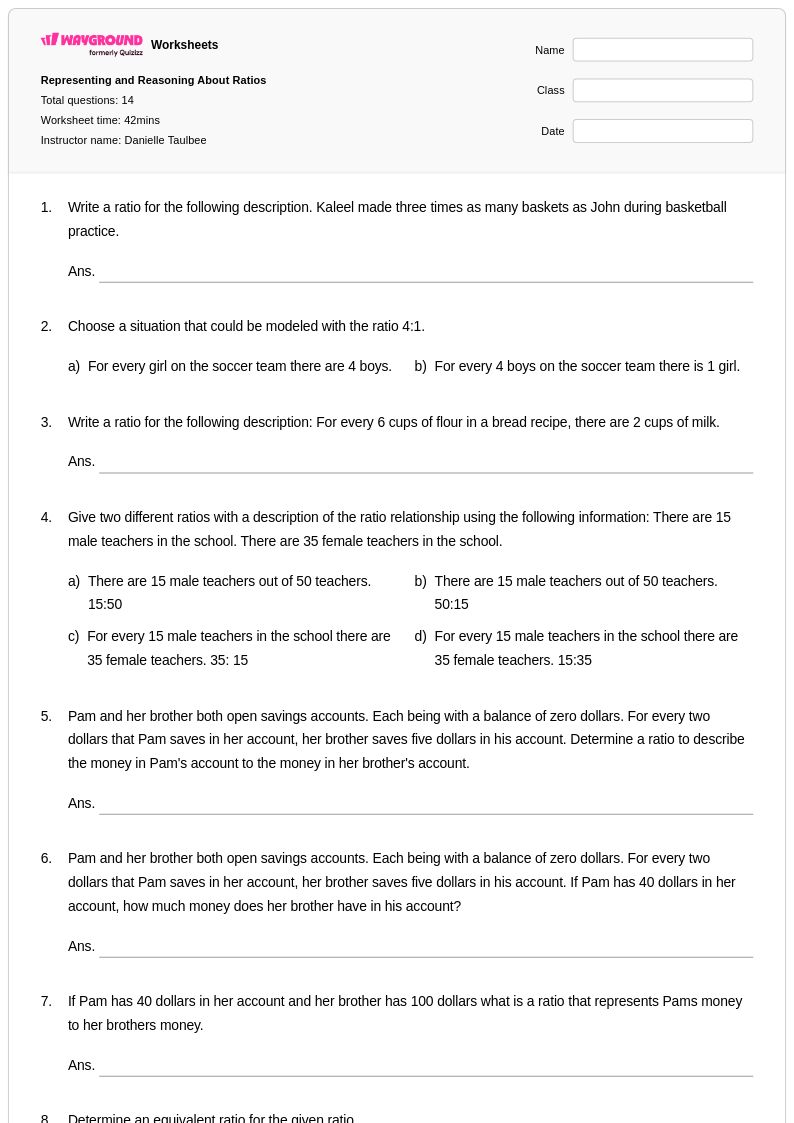
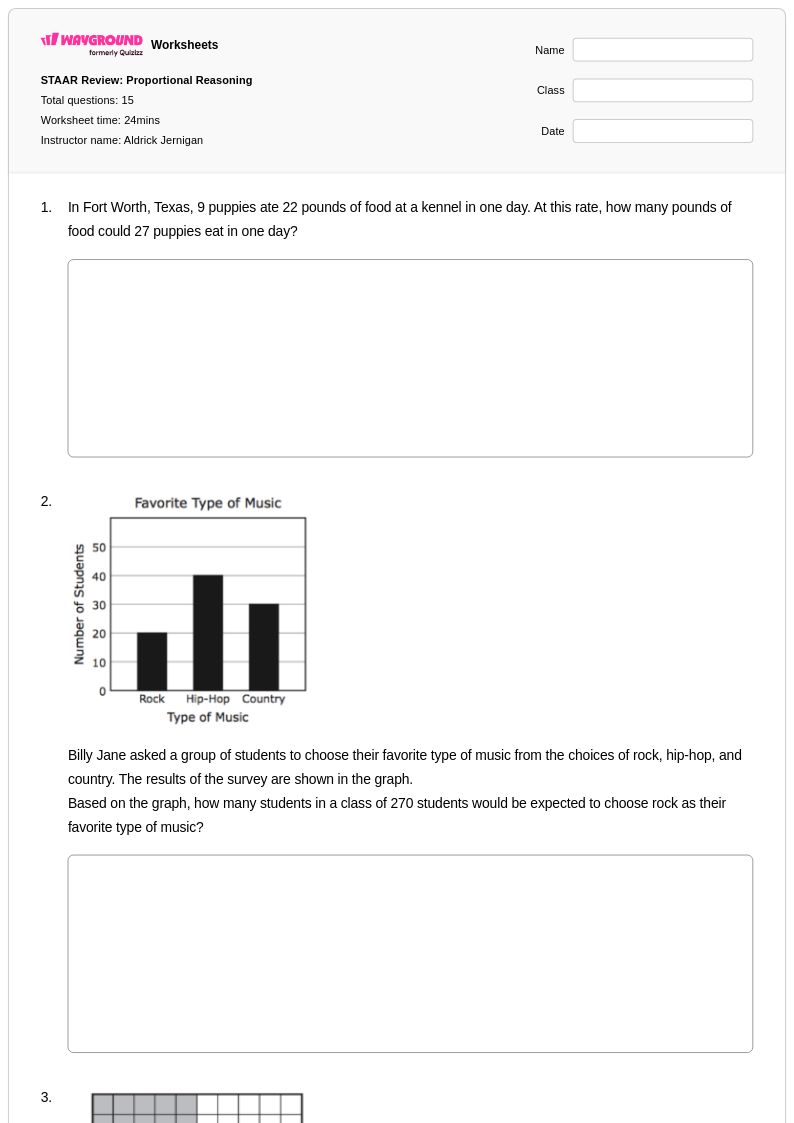
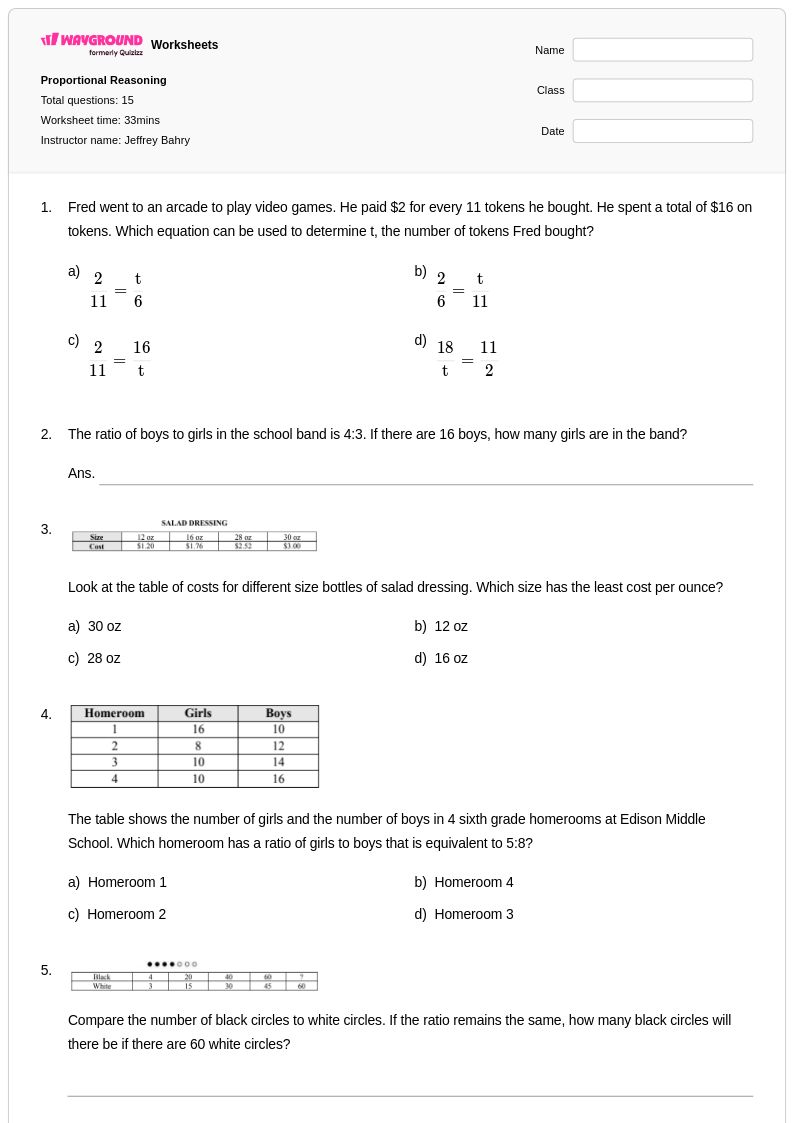
Logic and reasoning worksheets for Grade 6 mathematics through Wayground (formerly Quizizz) provide essential practice for developing critical thinking and problem-solving abilities that form the foundation of advanced mathematical concepts. These comprehensive worksheet collections focus on strengthening students' analytical skills through pattern recognition, deductive reasoning, logical sequences, and mathematical proof concepts appropriate for sixth-grade learners. The free printable resources include varied practice problems that challenge students to think systematically, make connections between mathematical ideas, and justify their reasoning processes. Each worksheet comes with a detailed answer key that not only provides solutions but also explains the logical steps involved, making these pdf materials valuable for both independent study and guided instruction.
Wayground's extensive collection of teacher-created logic and reasoning worksheets offers educators access to millions of resources specifically designed to support Grade 6 mathematics instruction. The platform's robust search and filtering capabilities enable teachers to quickly locate materials aligned with curriculum standards and appropriate for their students' skill levels. These differentiation tools allow instructors to customize worksheets for remediation, grade-level practice, or enrichment activities, ensuring that logical reasoning concepts are accessible to learners across the ability spectrum. Available in both printable pdf format and digital versions, these resources provide the flexibility teachers need for classroom instruction, homework assignments, assessment preparation, and skill-building practice that develops students' capacity for mathematical reasoning and logical thinking.
FAQs
How do I teach deductive and inductive reasoning to high school students?
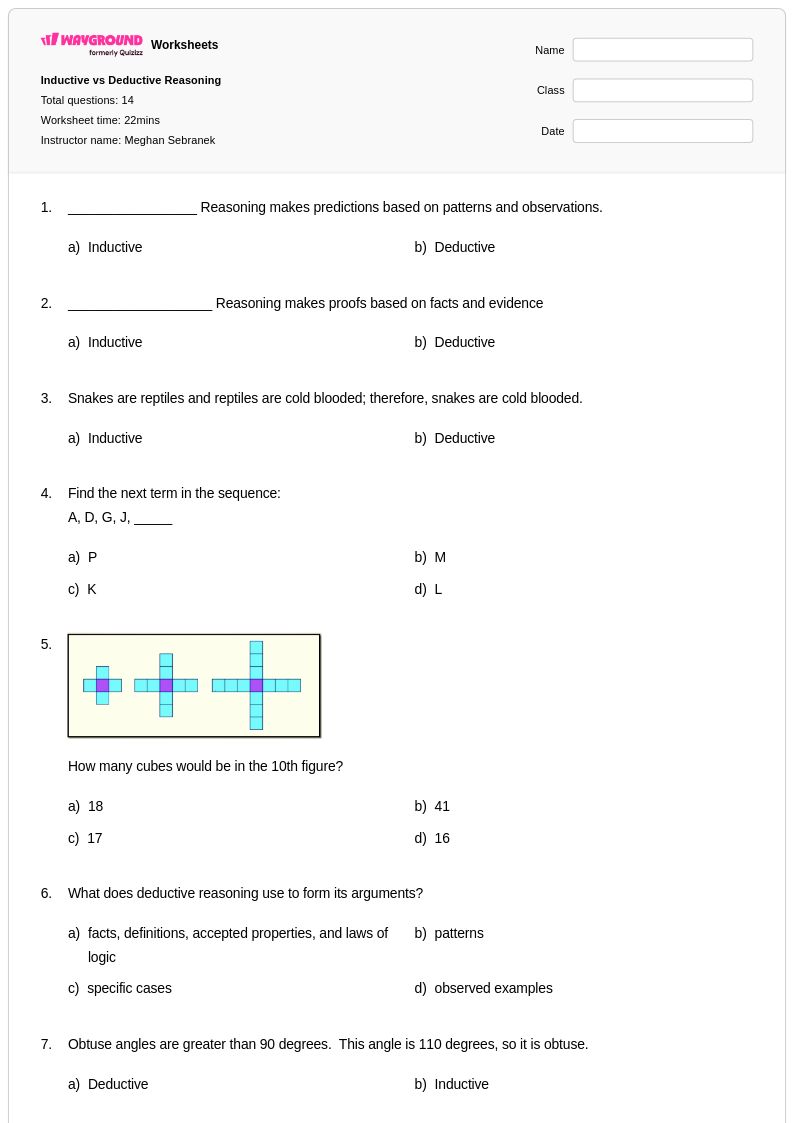
Start by distinguishing the two: deductive reasoning moves from general principles to specific conclusions, while inductive reasoning builds generalizations from specific observations. Use concrete examples first, such as syllogisms for deductive reasoning and pattern-spotting exercises for inductive reasoning, before moving to formal proof writing. Conditional statements and truth tables are natural next steps once students are comfortable with both reasoning types. Consistent practice with varied problem types helps students recognize which reasoning strategy applies in a given context.
What exercises help students practice the Law of Detachment and Law of Syllogism?
Structured practice problems that present conditional statements in symbolic form (if p then q) and ask students to draw valid conclusions are most effective for both laws. For the Law of Detachment, students practice confirming the hypothesis to reach a conclusion; for the Law of Syllogism, they chain two conditionals together to form a new one. Worked examples followed by independent problems with answer keys allow students to self-check their logical steps and catch errors in their reasoning chains.
What mistakes do students commonly make with truth tables?
The most frequent error is mishandling the conditional (if p then q), specifically assuming it is false whenever p is true and q is false, without accounting for the cases where p is false. Students also frequently confuse the converse, inverse, and contrapositive, treating them as logically equivalent when only the contrapositive is. Providing a structured template for truth tables and requiring students to label each column clearly reduces these systematic errors significantly.
How can I use logic and reasoning worksheets to assess student understanding of conditional statements?
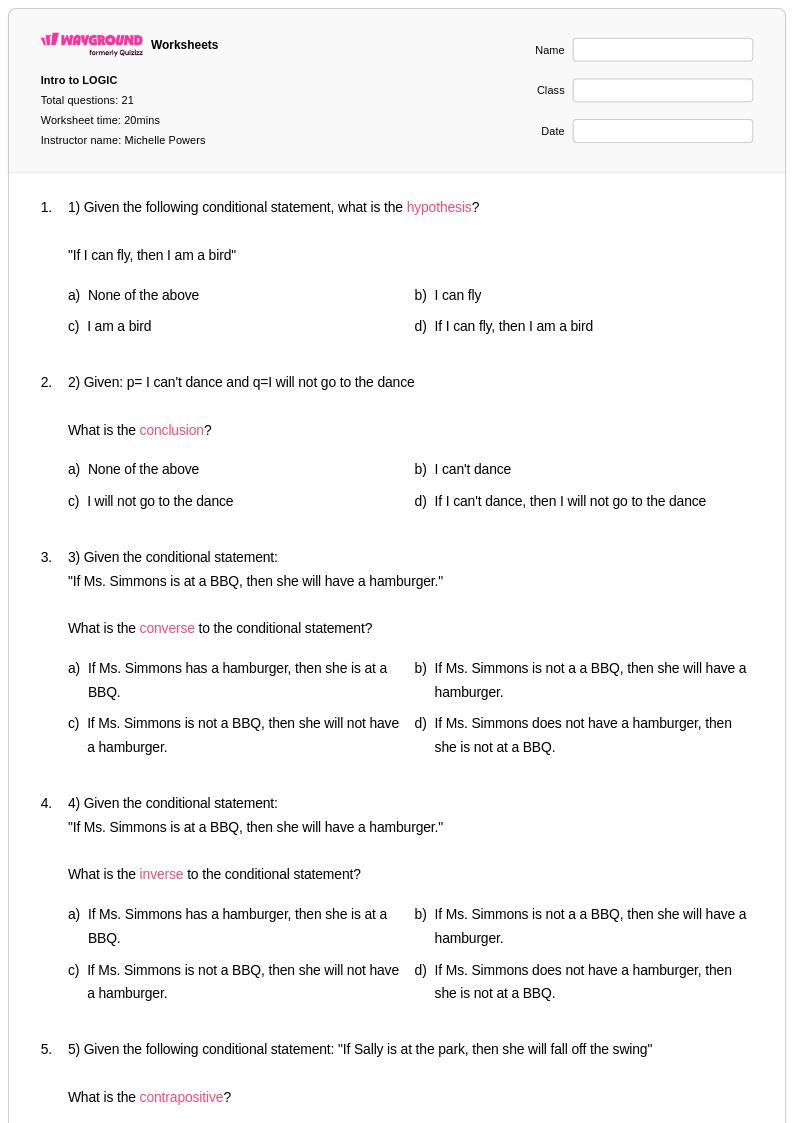
Worksheets that ask students to write the converse, inverse, and contrapositive of a given conditional statement are effective formative assessment tools because they expose whether students understand logical equivalence versus superficial rearrangement. Including proof-based problems alongside symbolic exercises reveals whether students can apply conditional reasoning in a mathematical argument, not just manipulate notation. Answer keys with worked solutions allow students to self-assess and identify exactly where their logic broke down.
How do I use Wayground's logic and reasoning worksheets in my classroom?
Wayground's logic and reasoning worksheets are available as printable PDFs for traditional classroom use and in digital formats for technology-integrated environments, giving teachers flexibility for homework, in-class practice, or assessment. You can also host a worksheet as a quiz directly on Wayground to assign it to students digitally and track responses. The platform allows you to search, filter, and customize worksheets to match specific learning standards or student ability levels, and each worksheet includes a detailed answer key to support independent learning and self-assessment.
How do I differentiate logic and reasoning instruction for students at different skill levels?
Differentiation works best when lower-level tasks focus on identifying valid argument forms with concrete examples, while higher-level tasks require students to construct original proofs or analyze flawed arguments. On Wayground, teachers can select worksheets matched to individual student abilities and apply accommodations such as reduced answer choices to lower cognitive load for struggling learners, or extended time for students who need it. Because these settings are saved per student and reusable across sessions, setup time is minimal once initial accommodations are configured.