
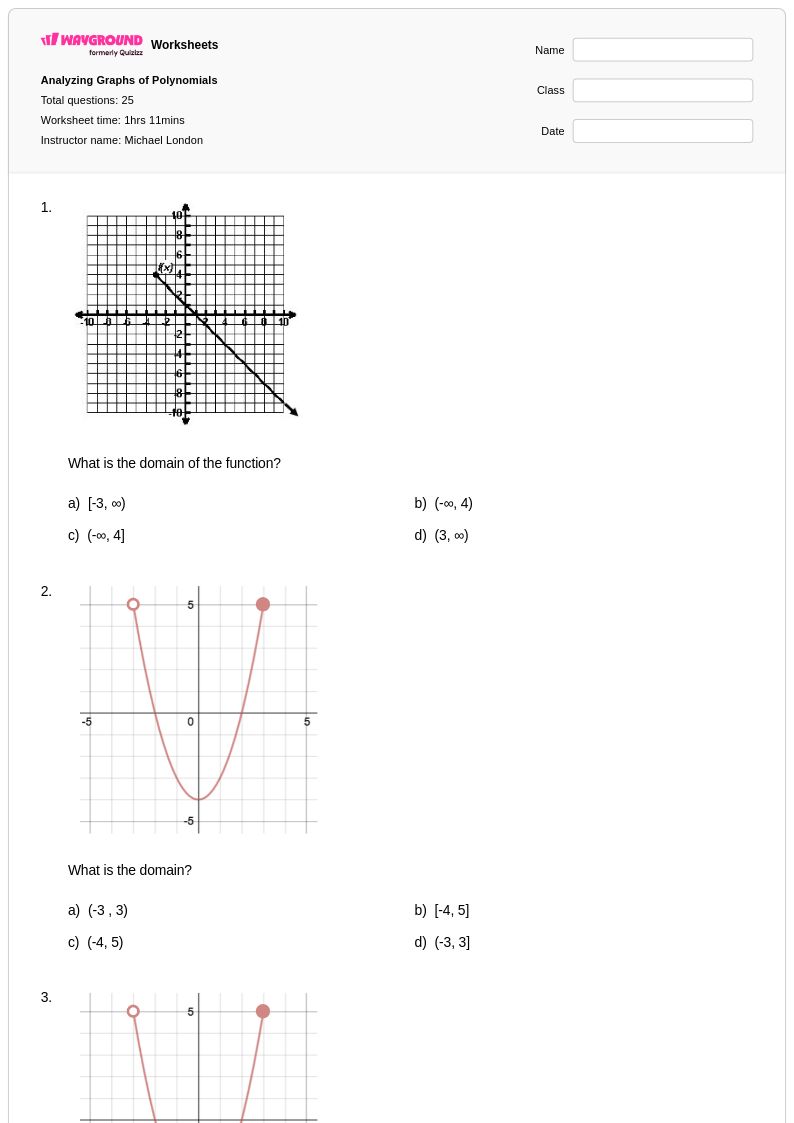
25 Q
10th - 12th
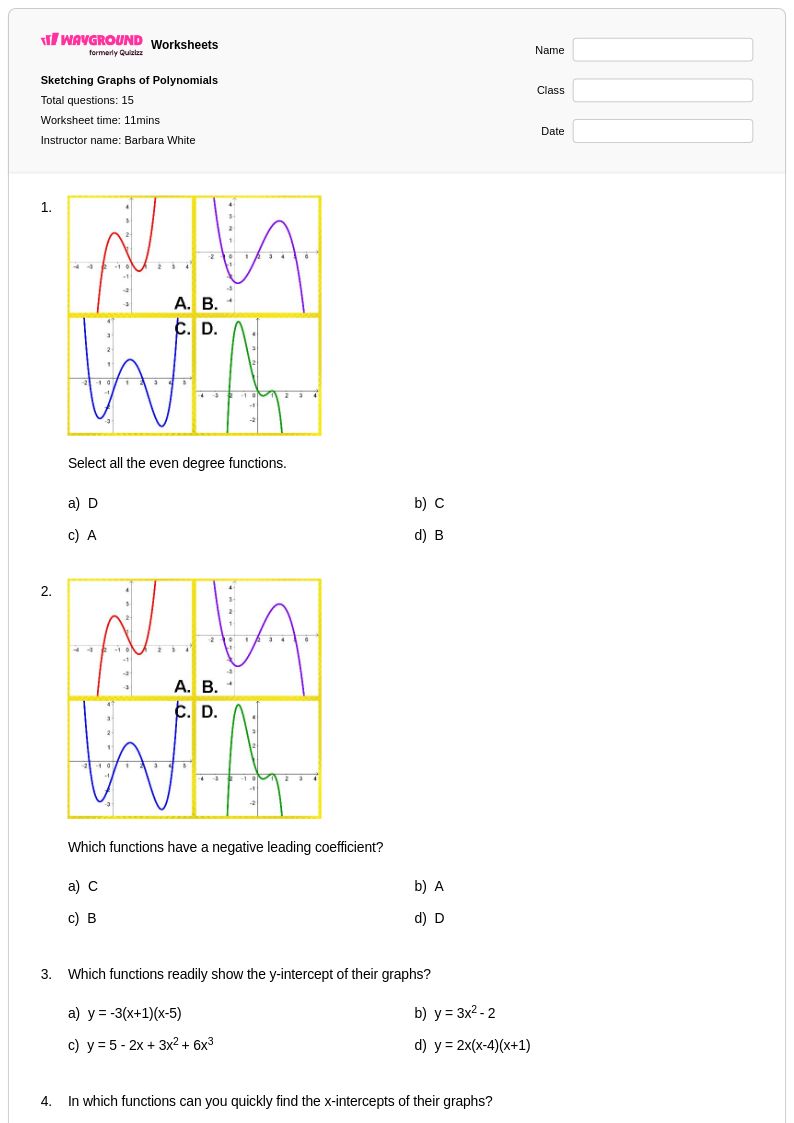
15 Q
10th
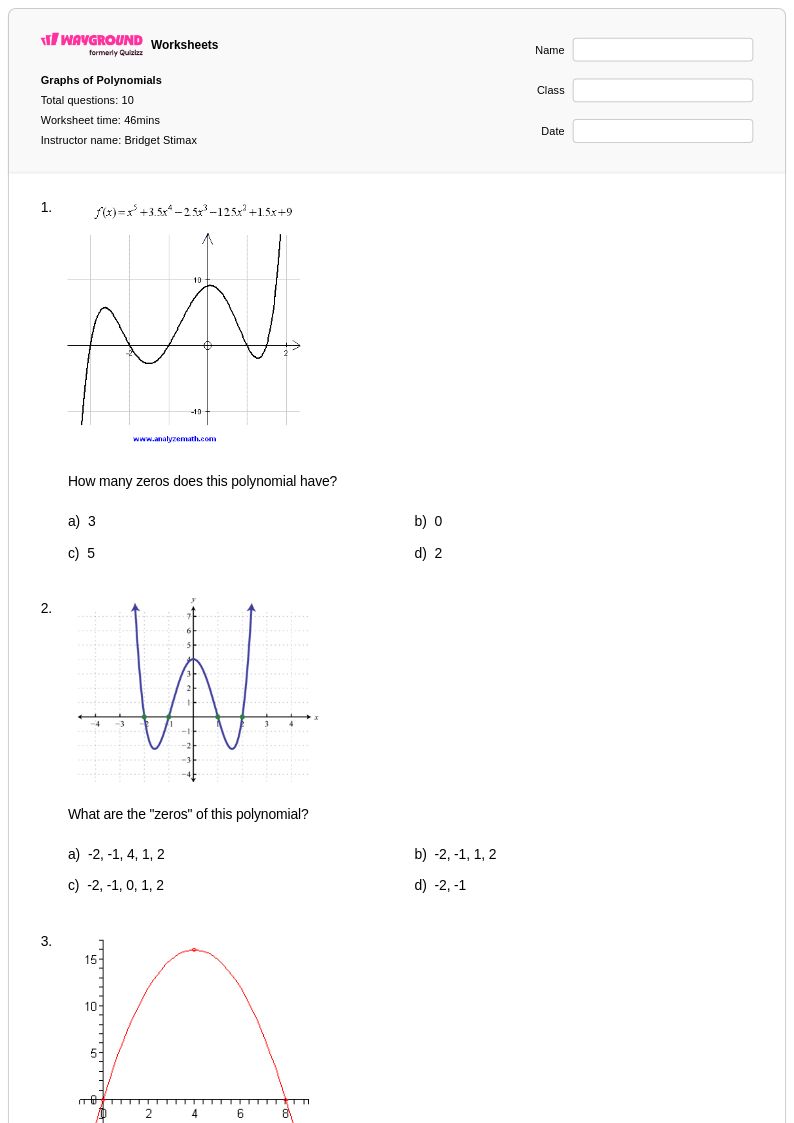
10 Q
9th - 12th
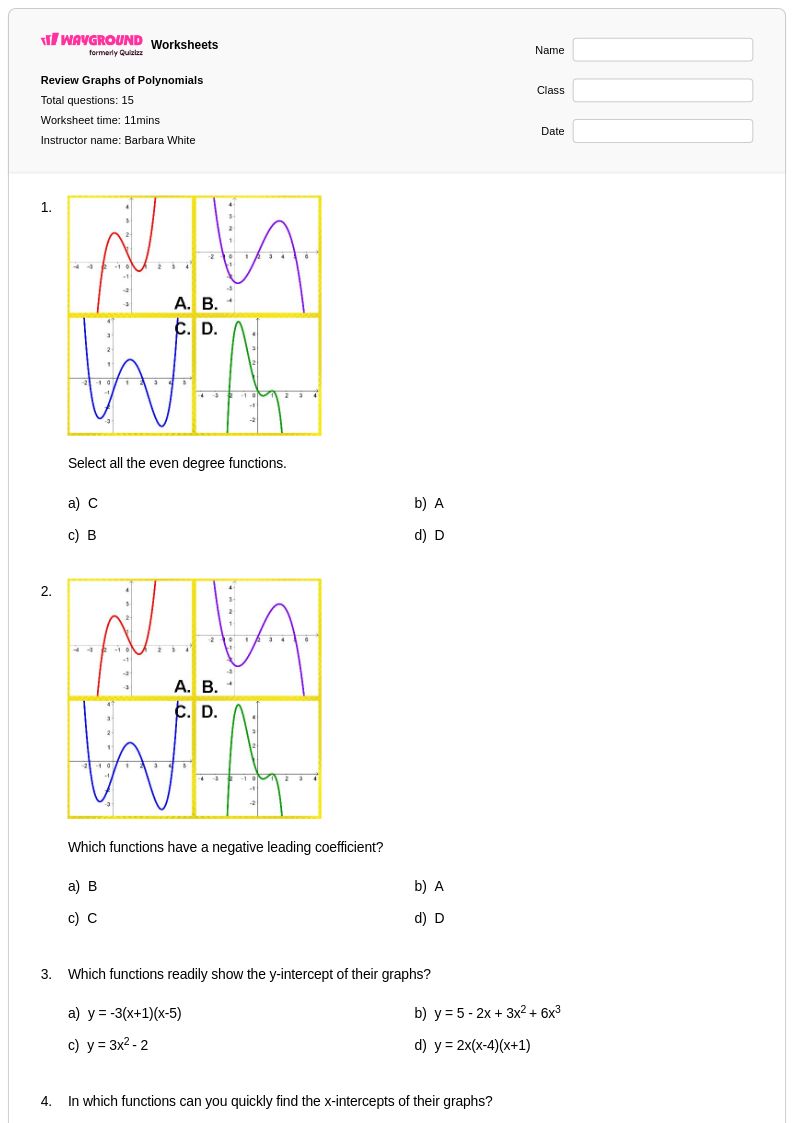
15 Q
10th
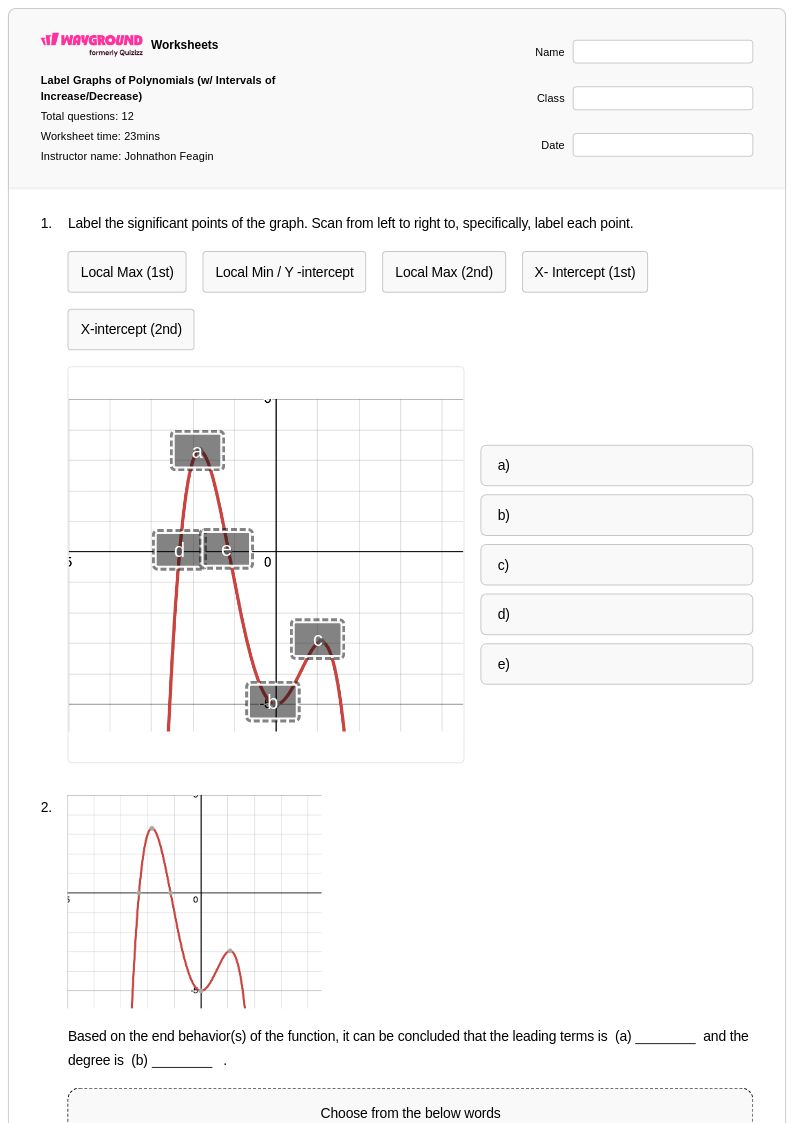
12 Q
9th - 12th
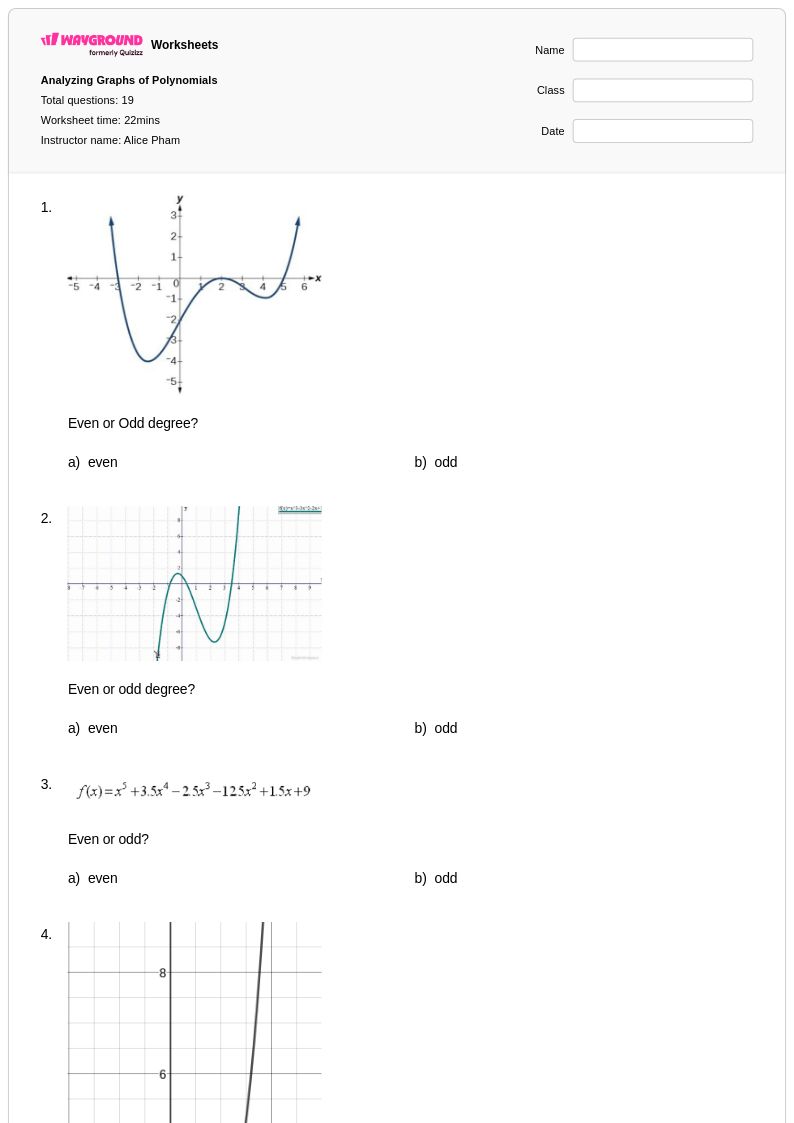
19 Q
9th - 11th
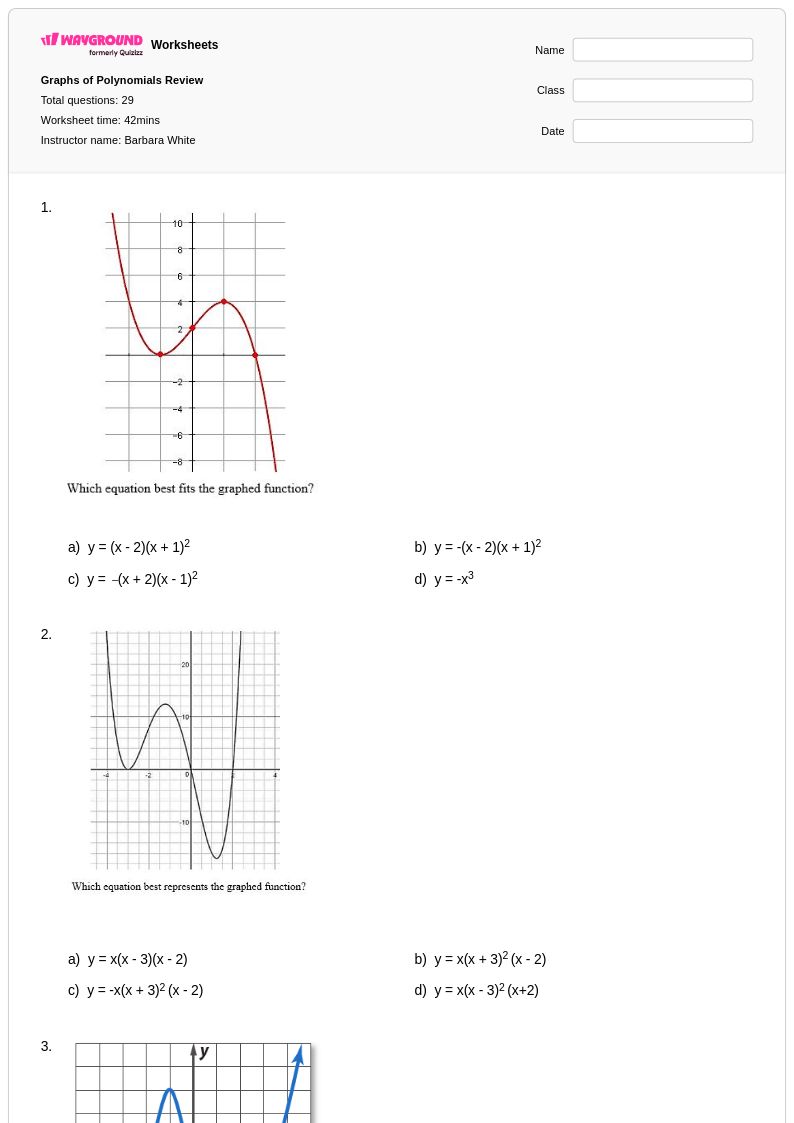
29 Q
9th - 12th
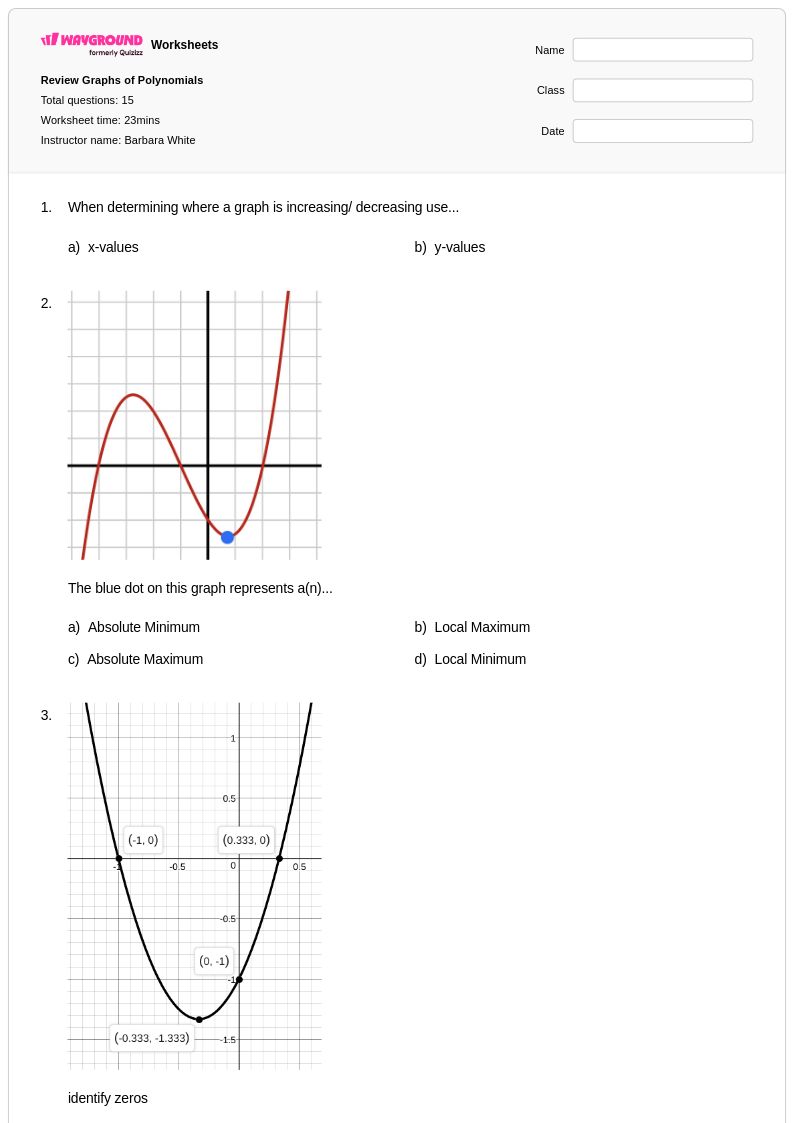
15 Q
9th - 12th
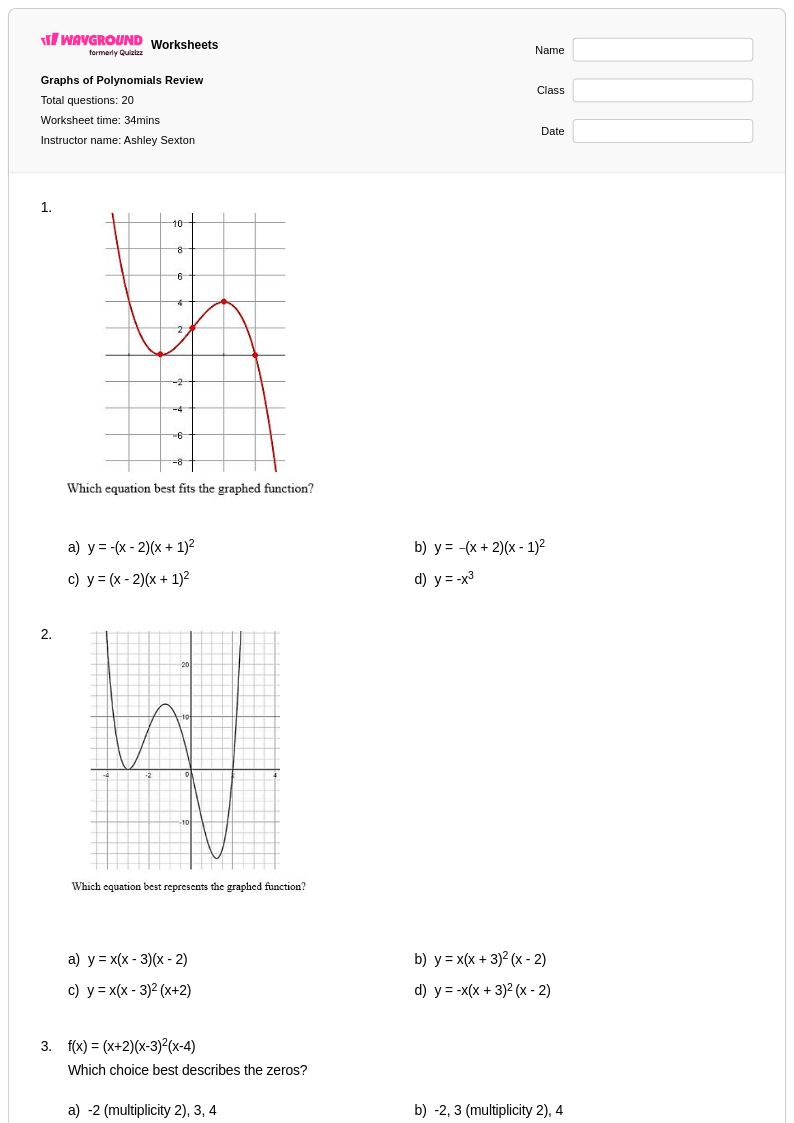
20 Q
9th - 12th
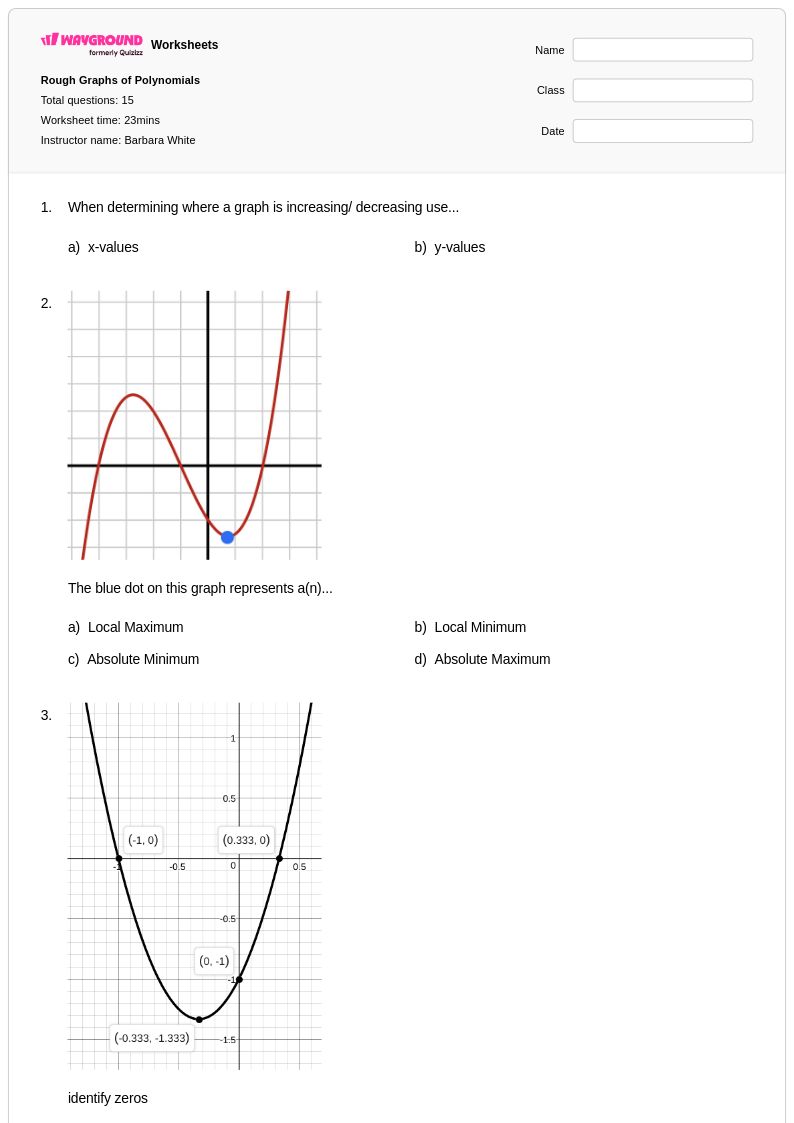
15 Q
9th - 12th
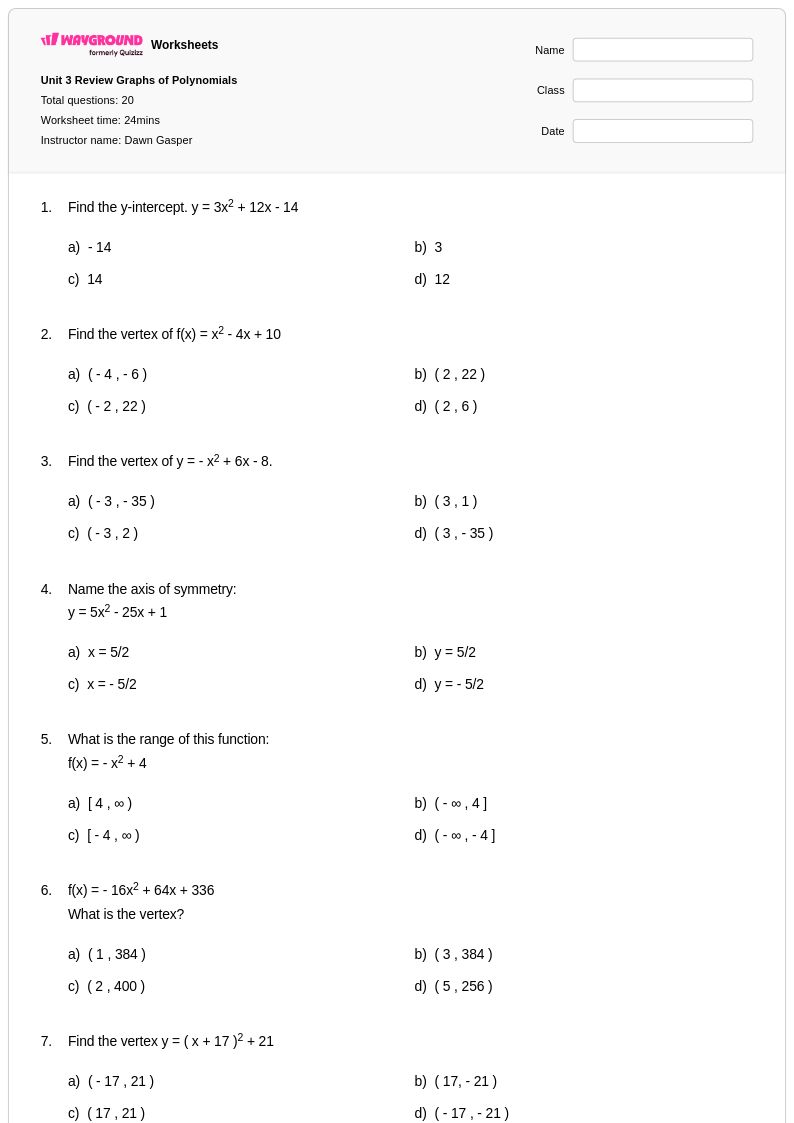
20 Q
10th - 11th
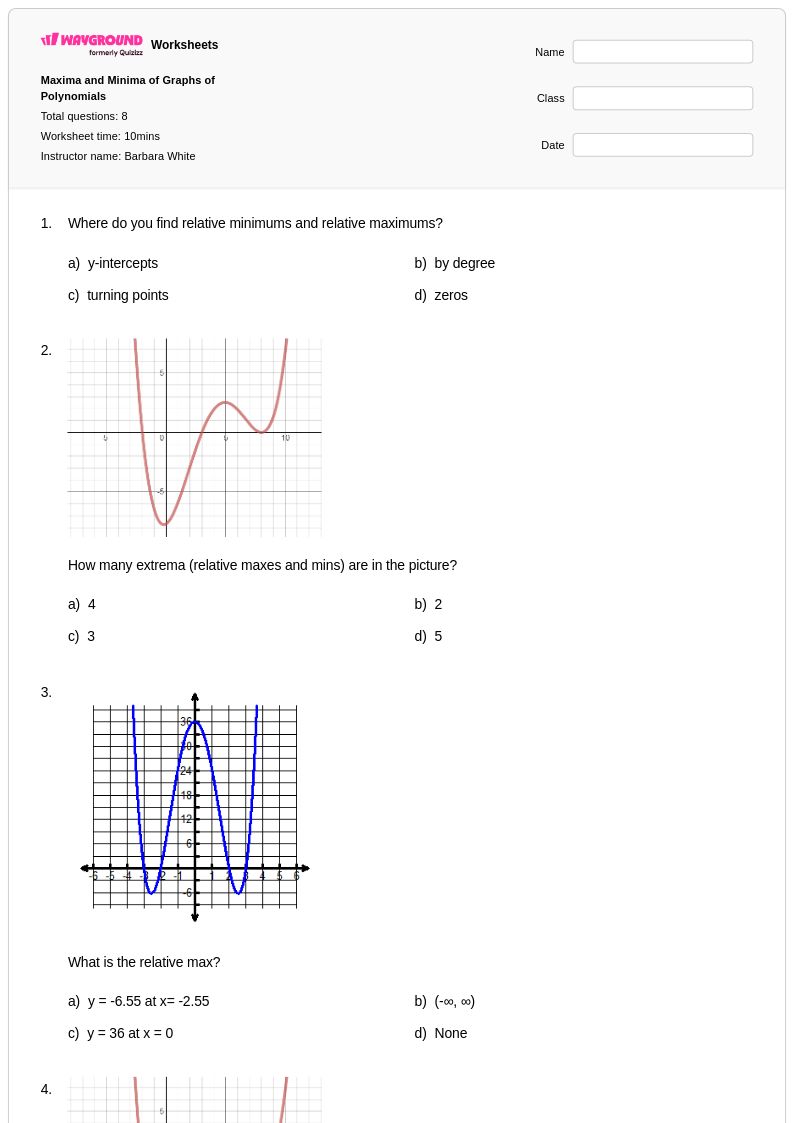
8 Q
9th - 11th
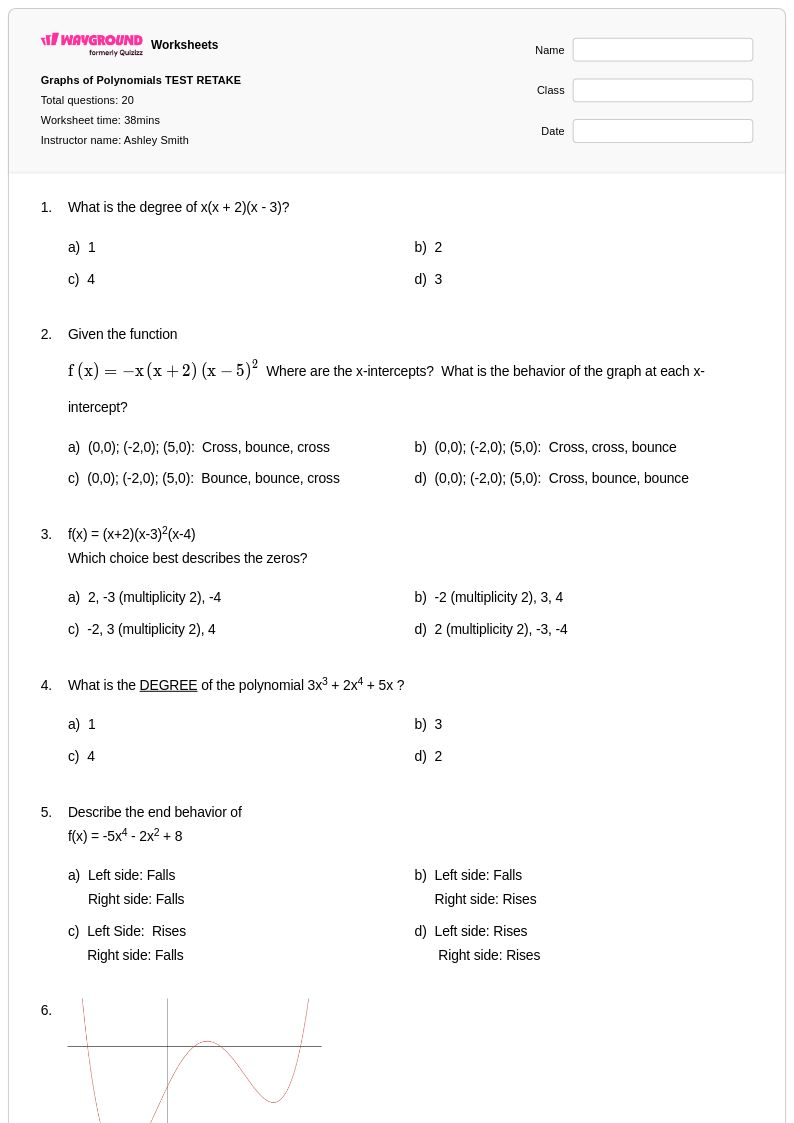
20 Q
9th - 12th
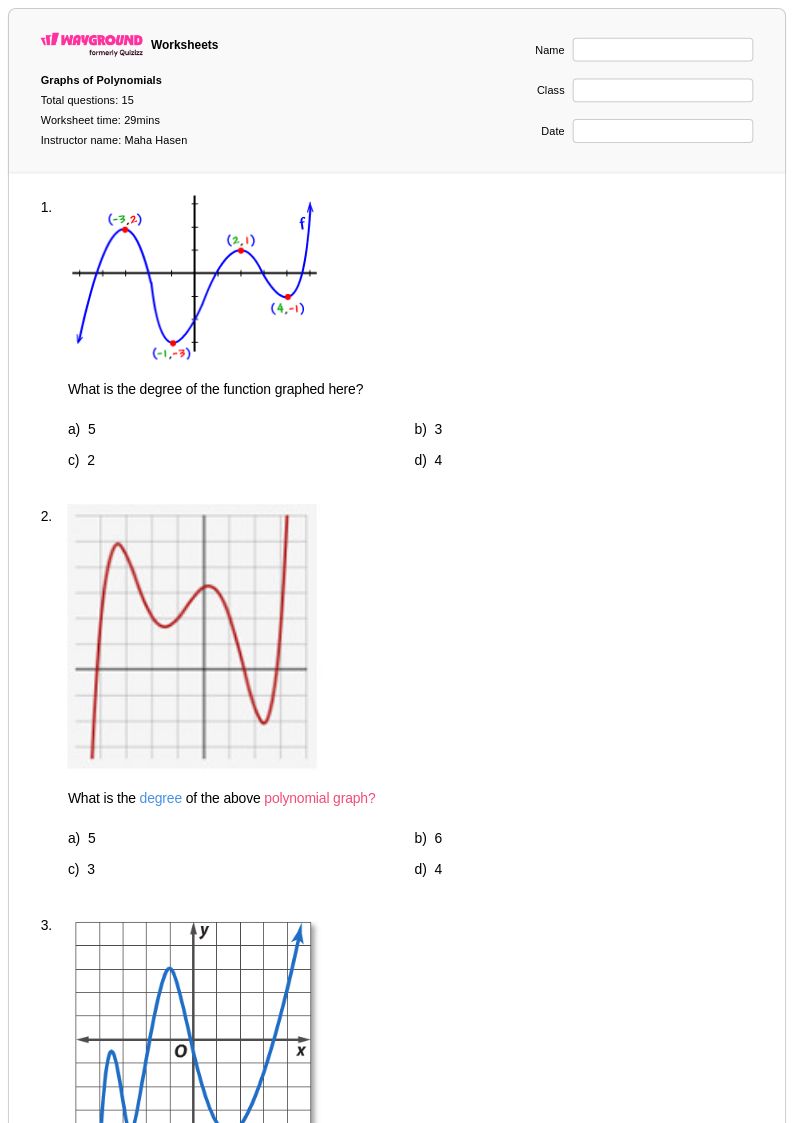
15 Q
10th - 11th
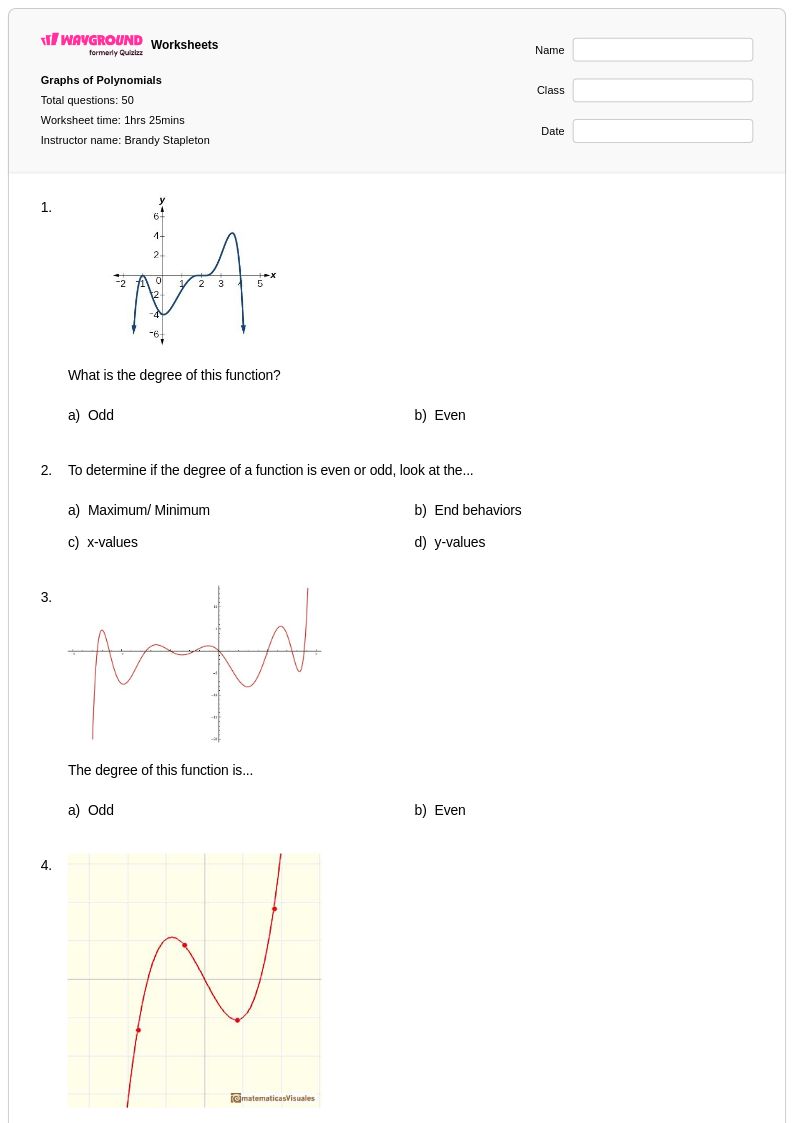
50 Q
9th - 11th
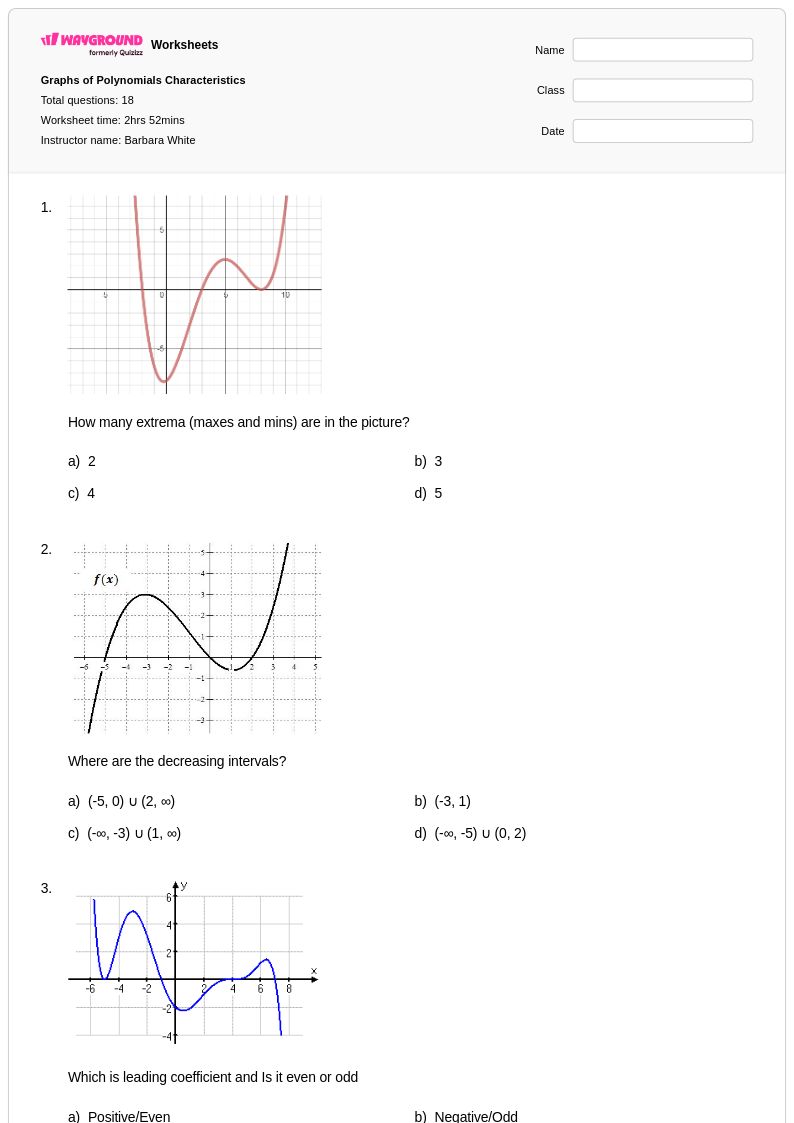
18 Q
9th - 12th
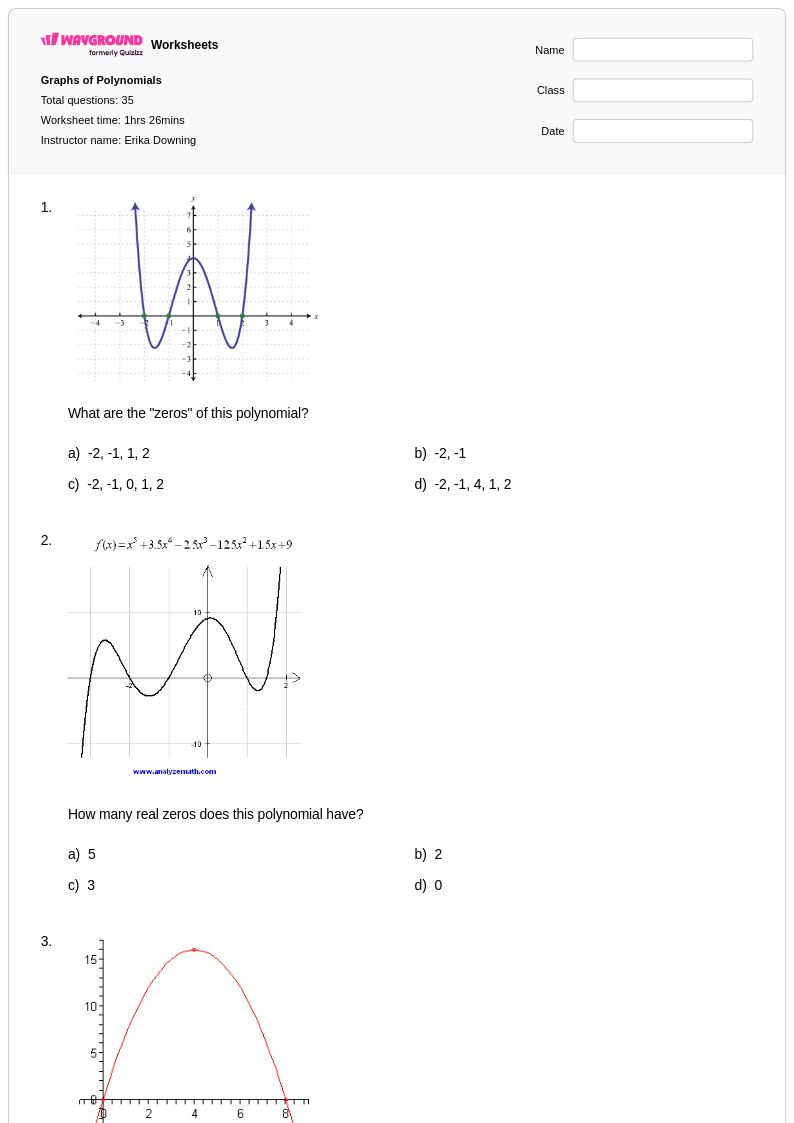
35 Q
10th
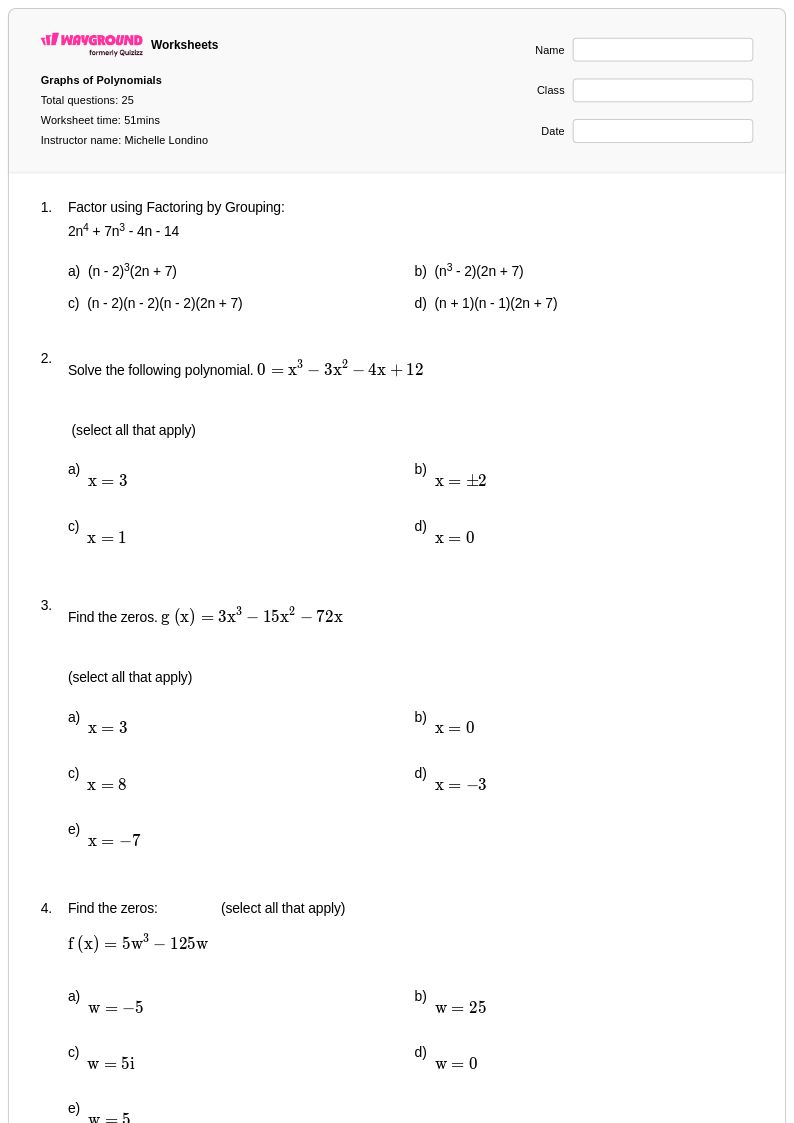
25 Q
9th - 12th
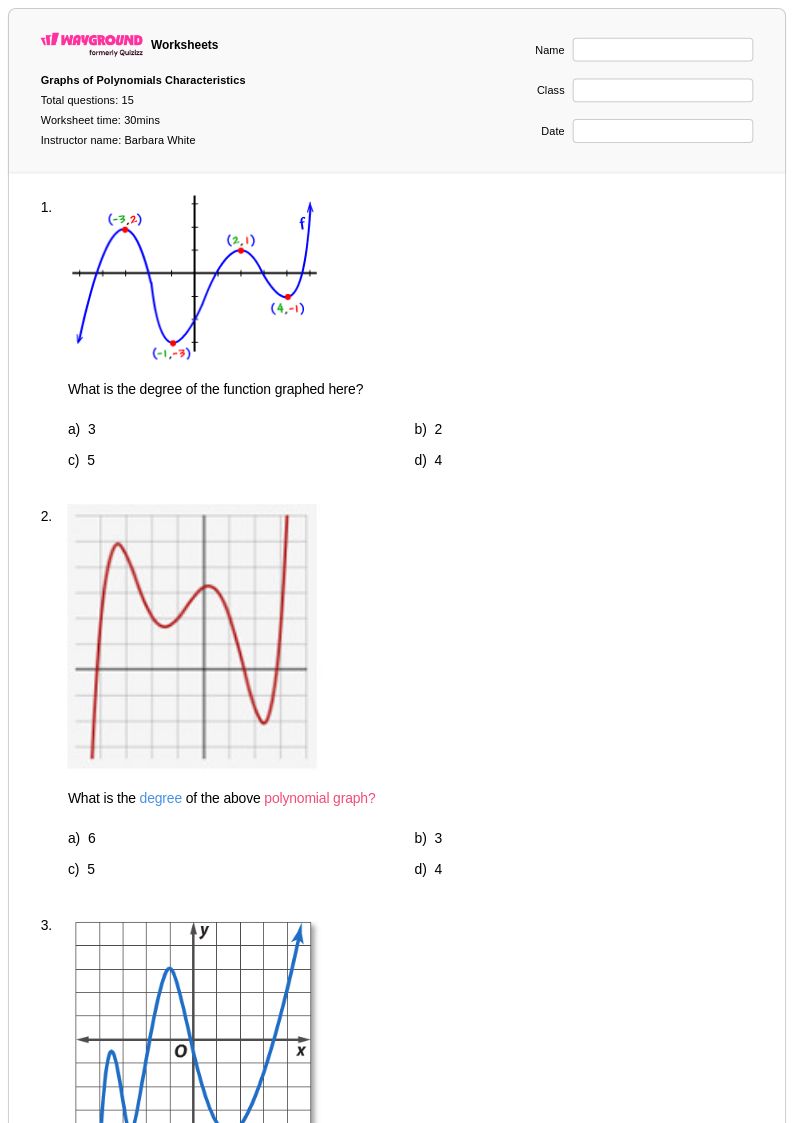
15 Q
10th - 11th
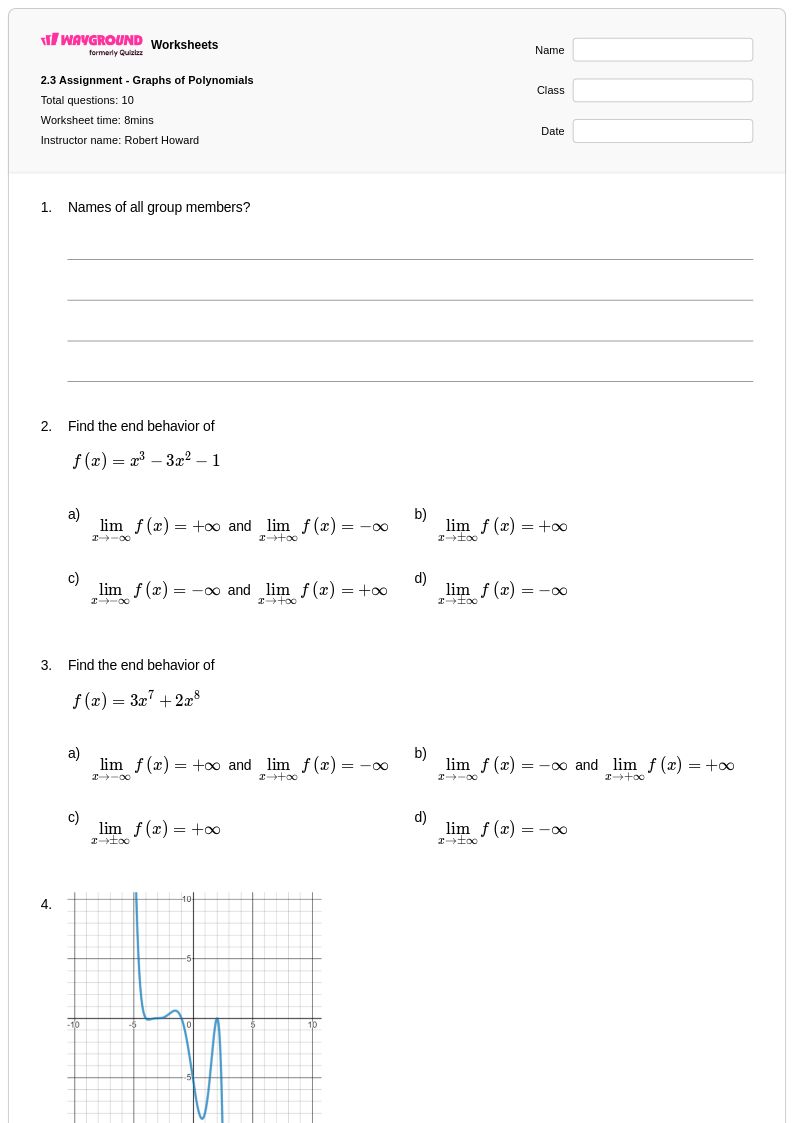
10 Q
10th - 12th
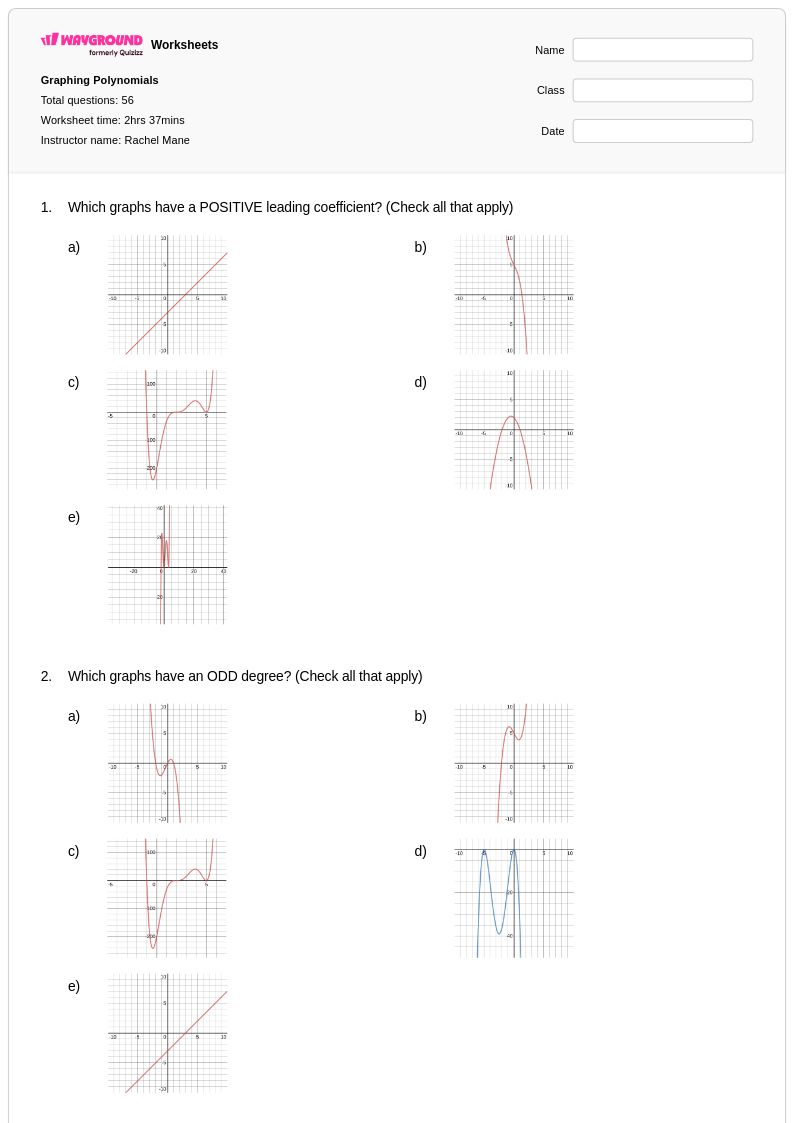
56 Q
10th
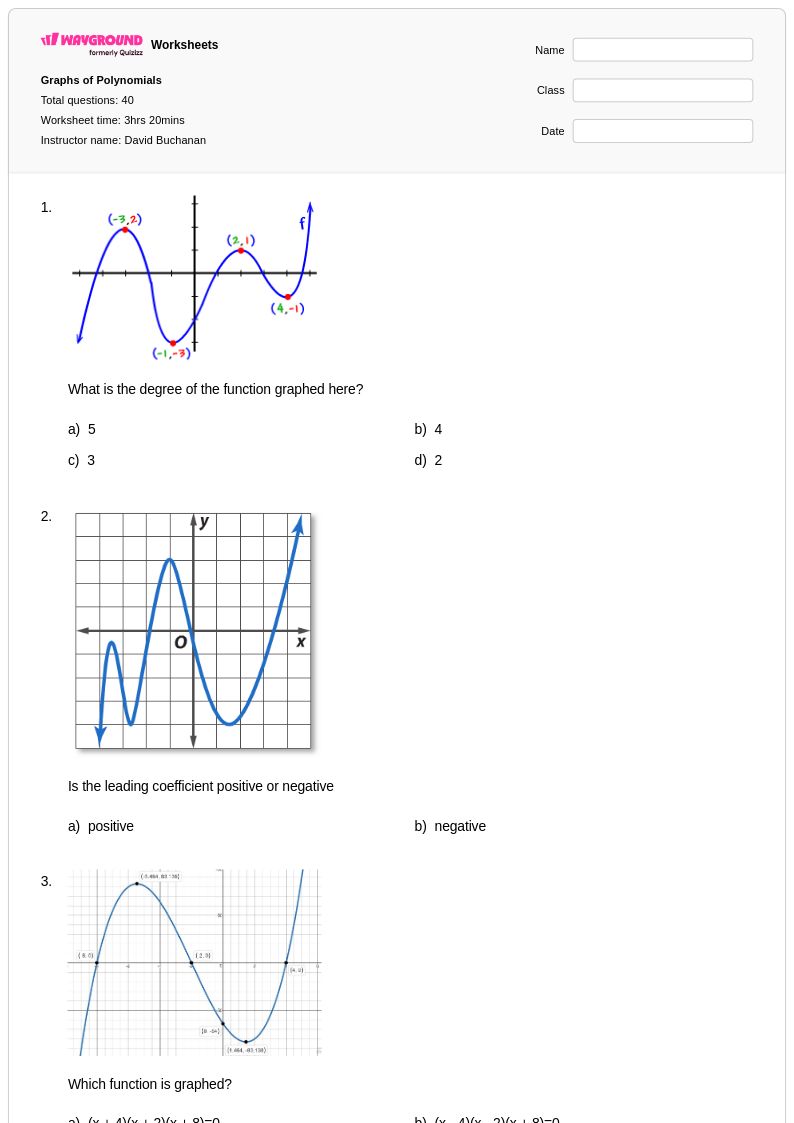
40 Q
10th - 12th
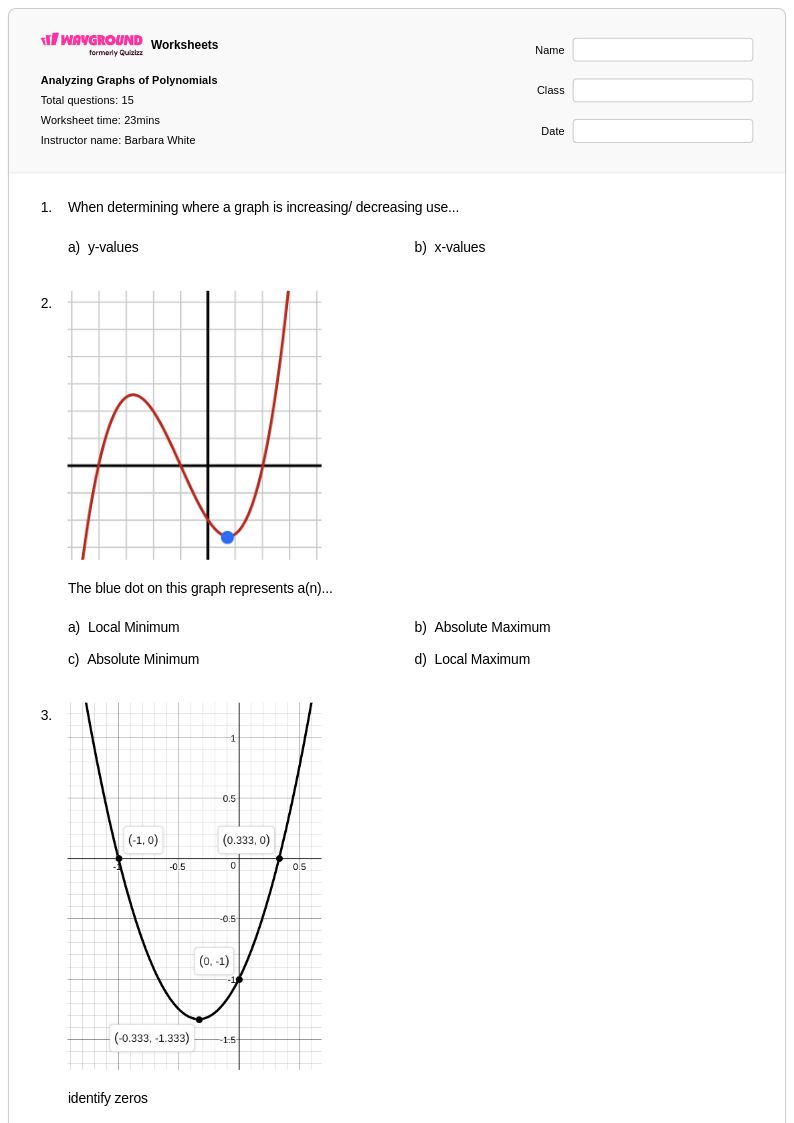
15 Q
9th - 12th
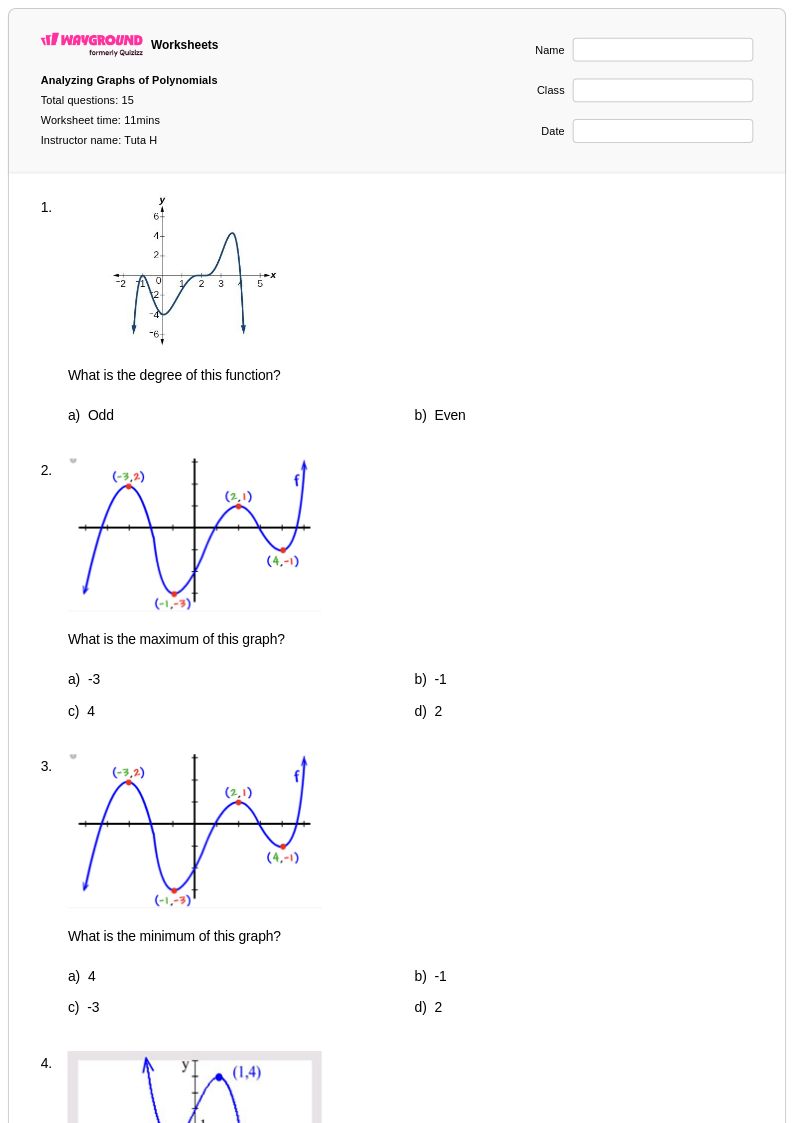
15 Q
9th - 12th
Explore Other Subject Worksheets for grade 10
Explore printable Graphs of Polynomials worksheets for Grade 10
Graphs of polynomials represent a fundamental component of Grade 10 algebra, requiring students to develop sophisticated visualization and analytical skills that bridge abstract mathematical concepts with concrete graphical representations. Wayground's comprehensive collection of graphs of polynomials worksheets provides structured practice opportunities that help students master essential skills including identifying key features of polynomial functions, analyzing end behavior, determining roots and intercepts, and understanding how degree and leading coefficients affect graph shape and direction. These carefully designed practice problems guide students through progressively complex scenarios, from basic quadratic functions to higher-degree polynomials, with each worksheet including detailed answer keys that support independent learning and self-assessment. The free printable resources are available in convenient pdf format, making them accessible for both classroom instruction and home study while reinforcing critical problem-solving strategies that students need to succeed in advanced algebra concepts.
Wayground's extensive platform, featuring millions of teacher-created resources, empowers educators with robust tools to deliver effective instruction in polynomial graphing concepts through advanced search and filtering capabilities that quickly locate grade-appropriate materials aligned with curriculum standards. Teachers can easily differentiate instruction by selecting from worksheets that target specific skill levels, from foundational polynomial identification to advanced transformation and symmetry analysis, while the flexible customization options allow educators to modify existing resources or combine multiple worksheets to meet diverse classroom needs. The dual availability of printable and digital formats, including downloadable pdf versions, streamlines lesson planning and supports various instructional approaches, whether teachers need materials for traditional paper-based practice, digital assignments, targeted remediation sessions, or enrichment activities for advanced learners ready to explore more complex polynomial relationships and graphical analysis techniques.
FAQs
What advanced polynomial graphing concepts are covered in Grade 10?
How can I teach the end behavior of polynomials effectively?
What's a tricky concept for 10th graders with polynomial graphs?
What skills do the Grade 10 worksheets reinforce?
How does this topic progress in high school math?
How can I use this worksheet for my Grade 10 class?