Free Printable Factorisation by Grouping worksheets
Discover free factorisation by grouping worksheets and printables from Wayground that help students master this essential algebra technique through guided practice problems and comprehensive answer keys.
Explore printable Factorisation by Grouping worksheets
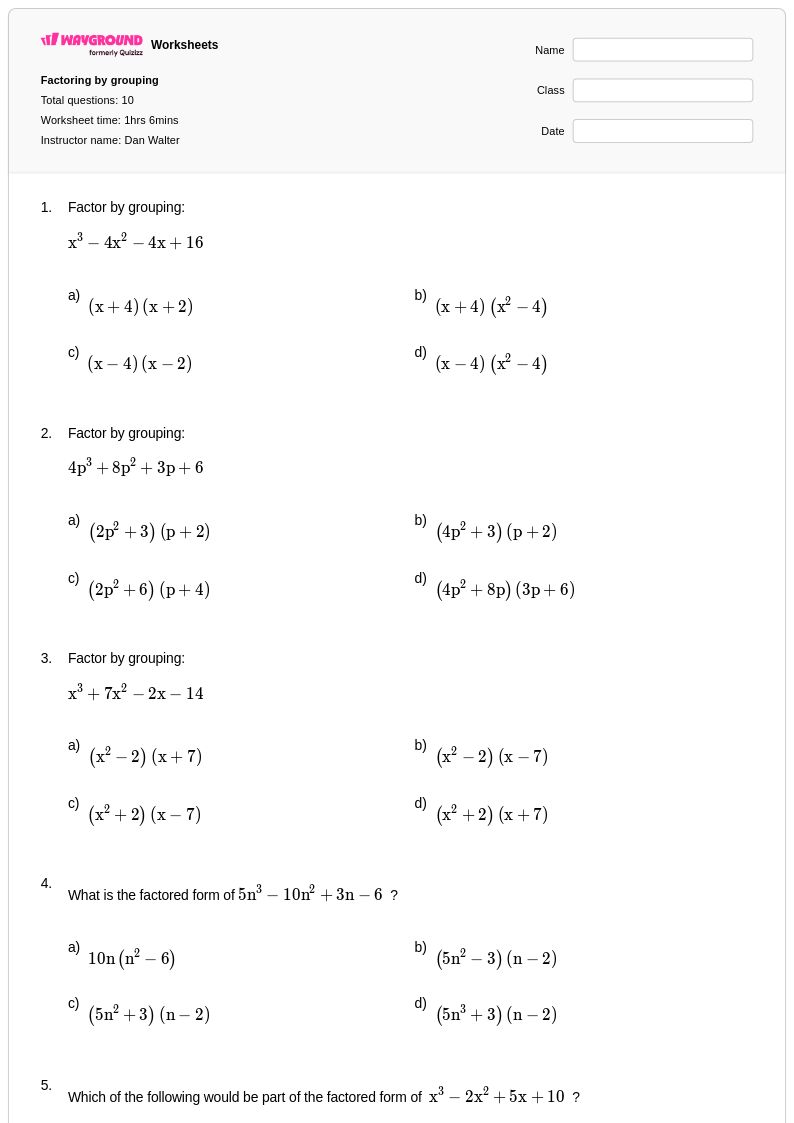
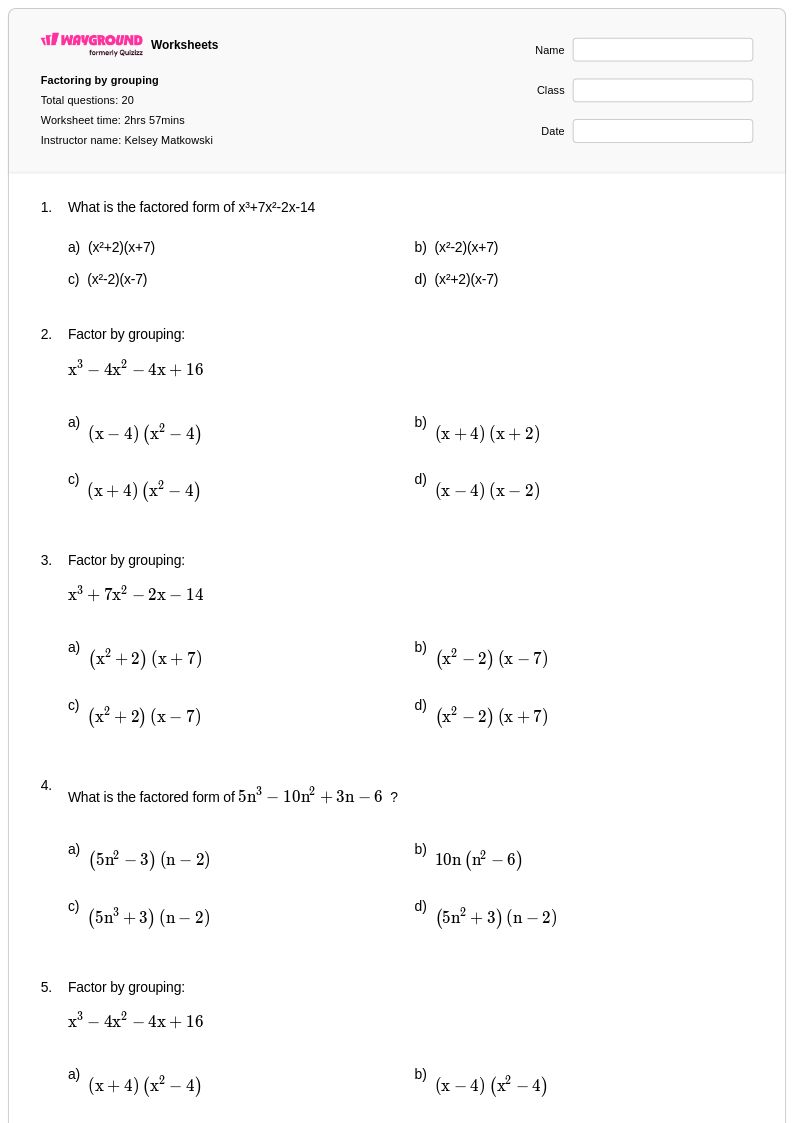
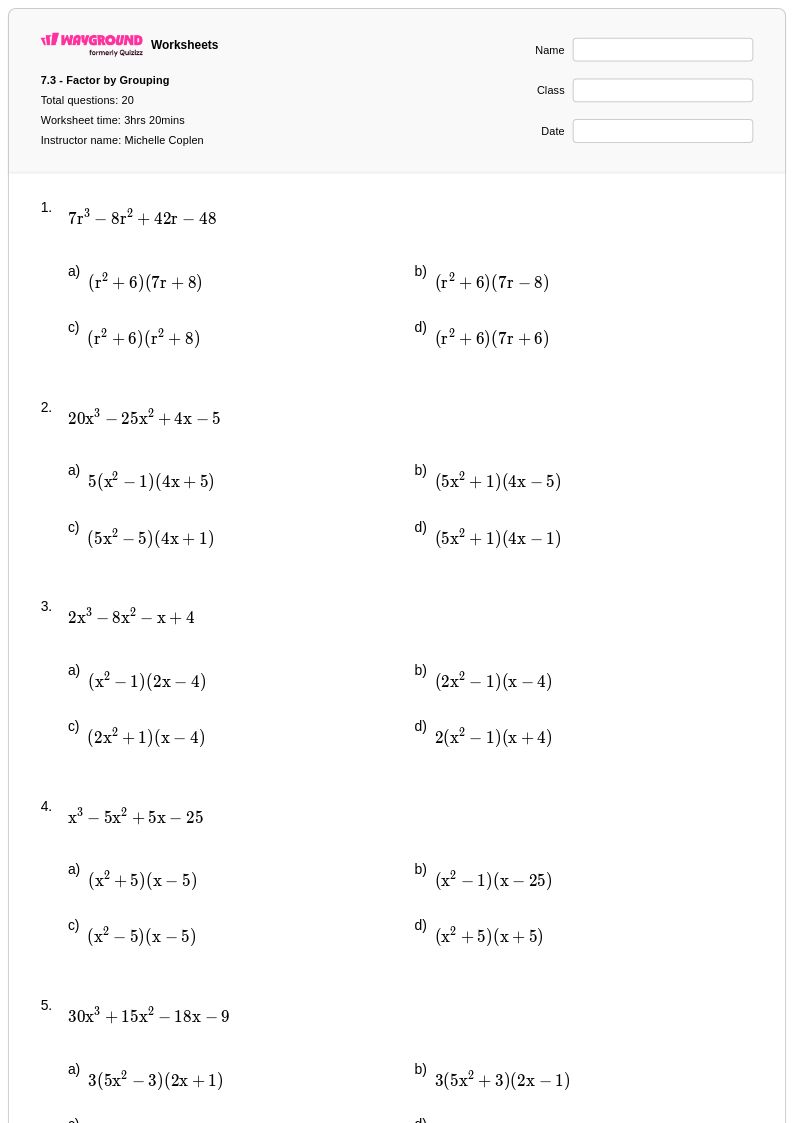
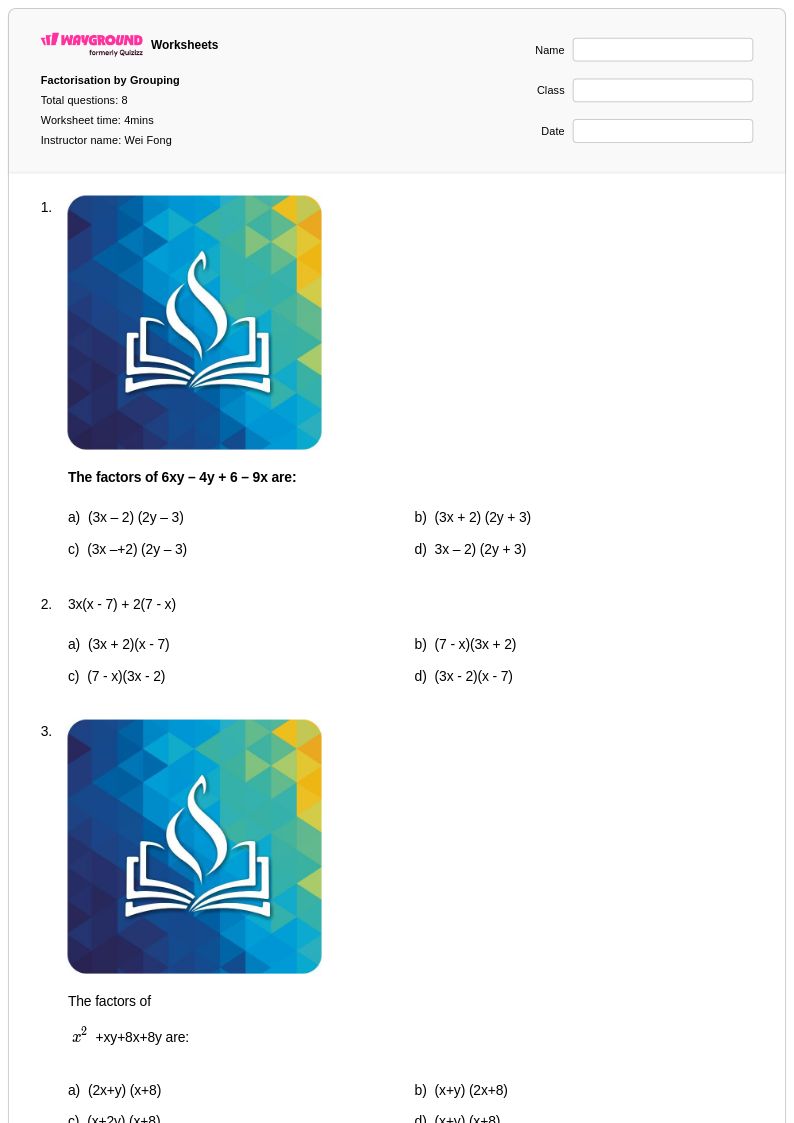
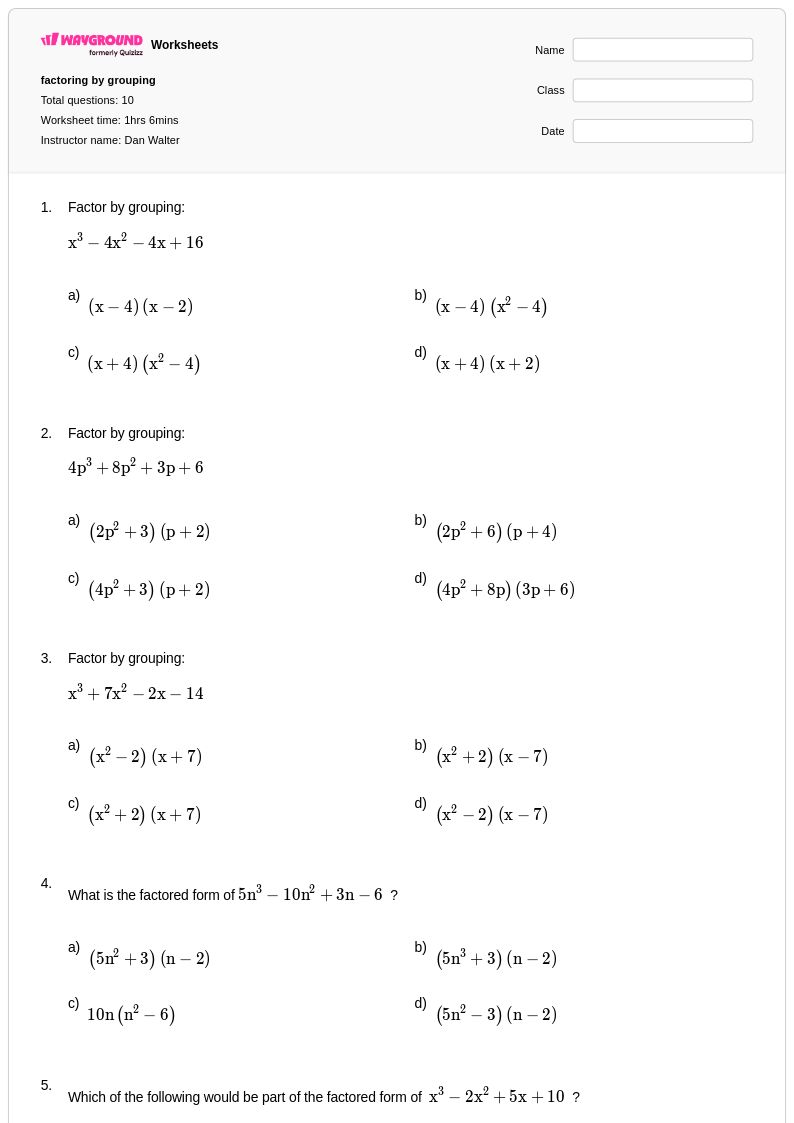
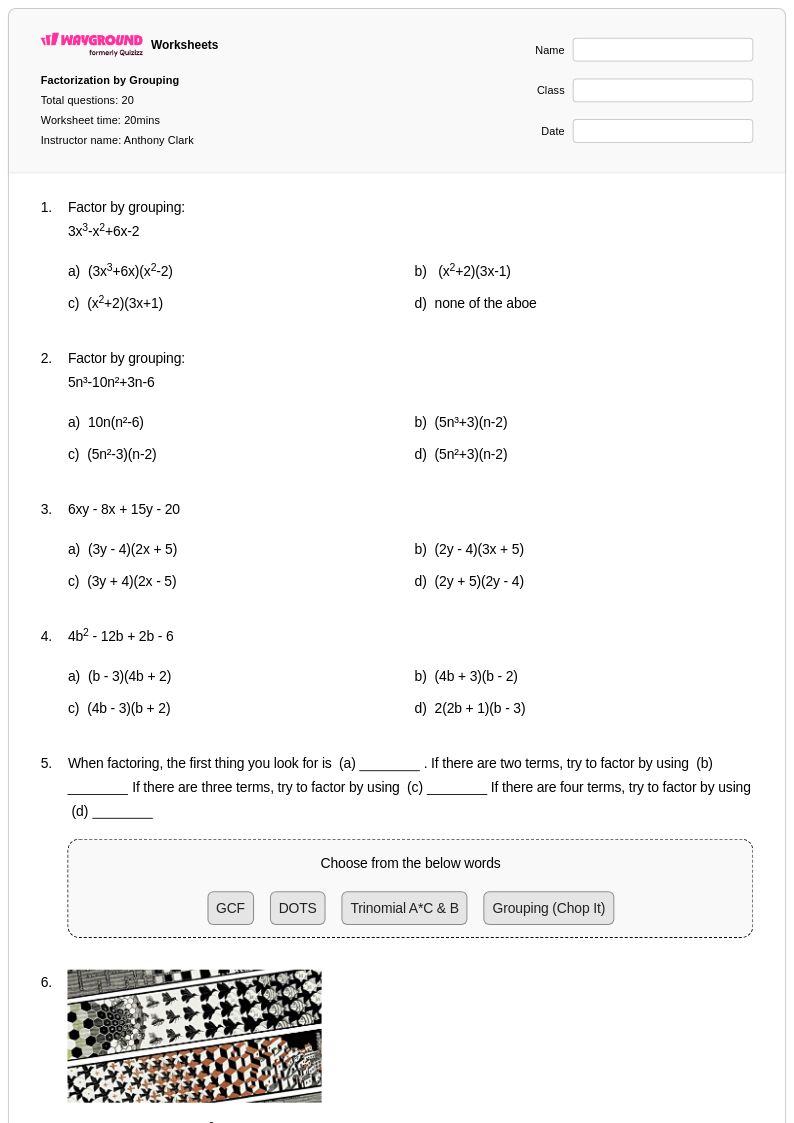
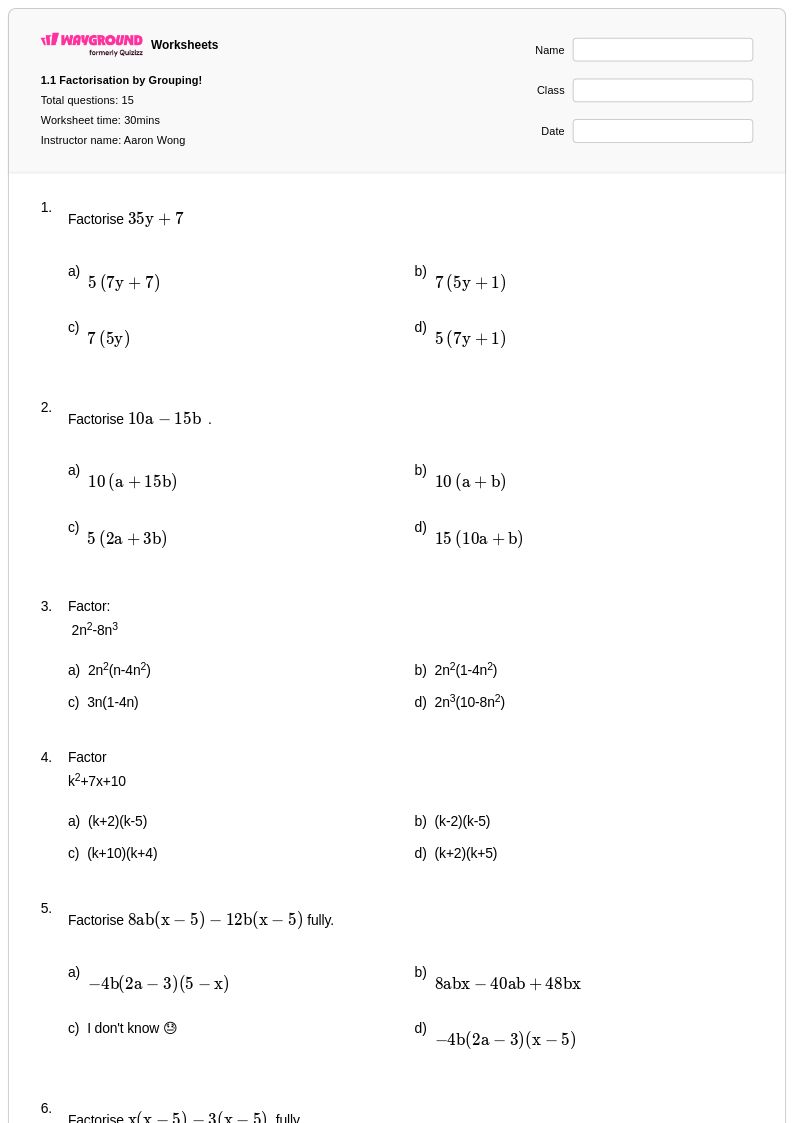
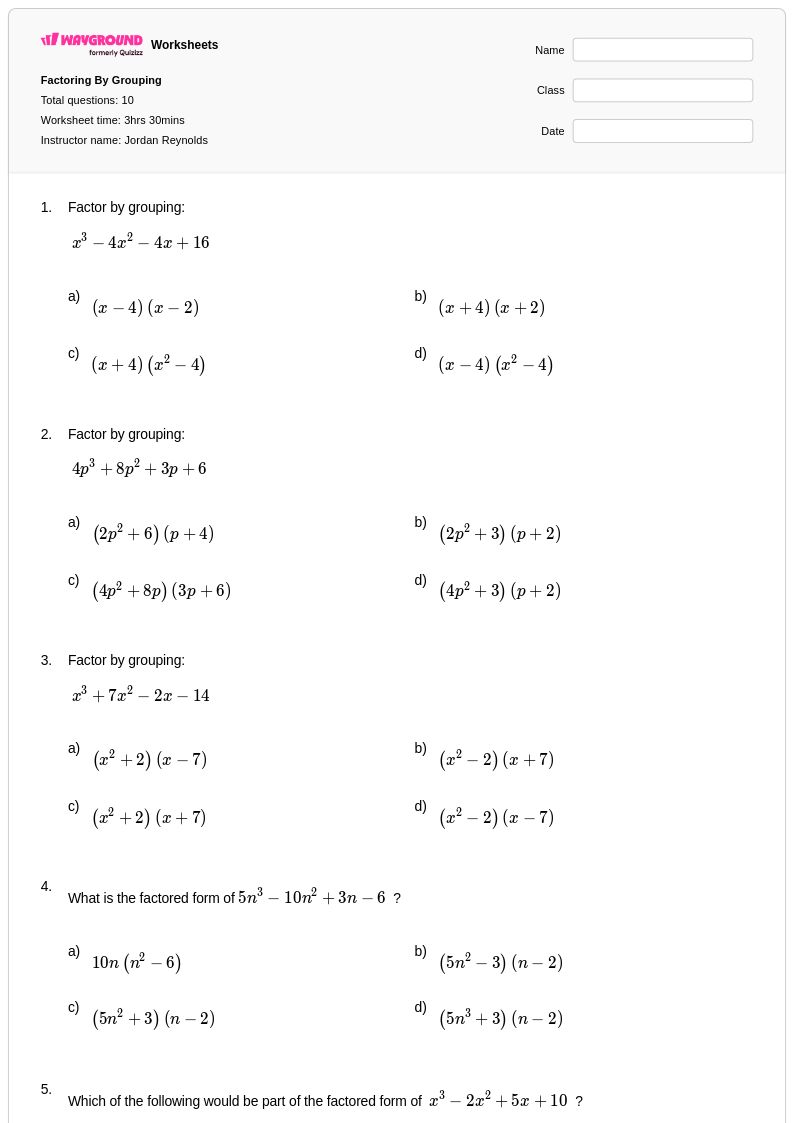
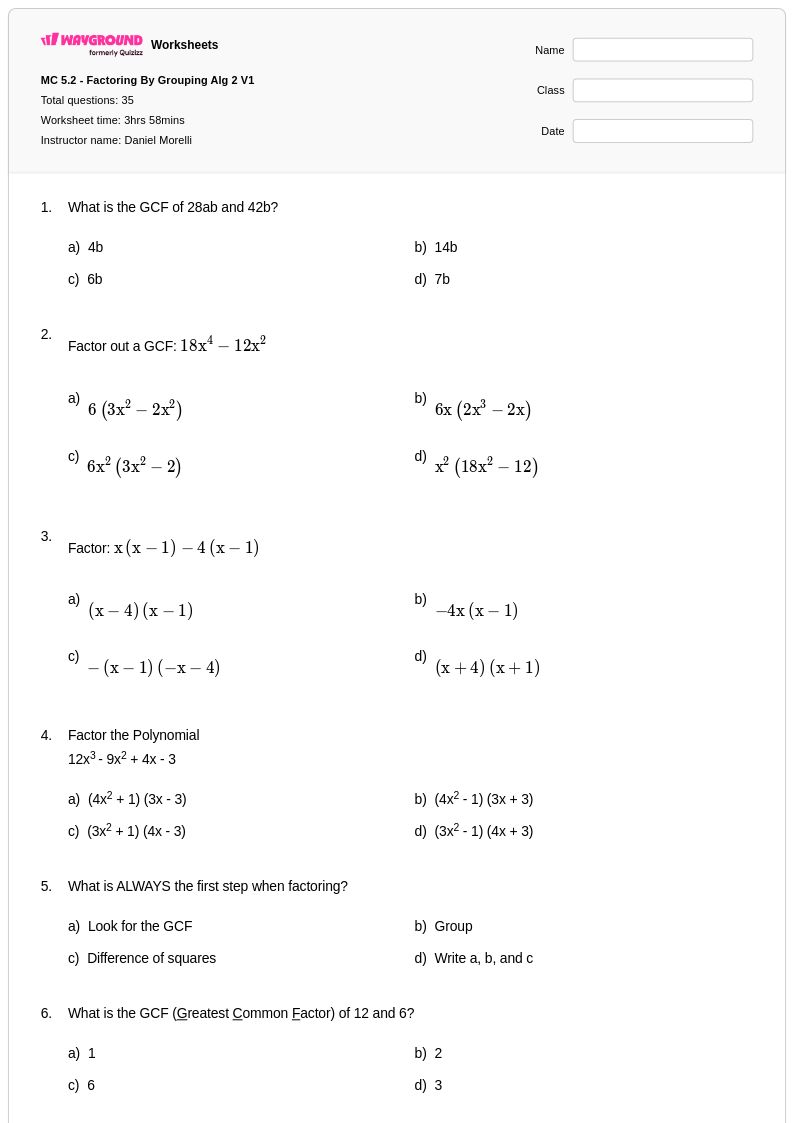
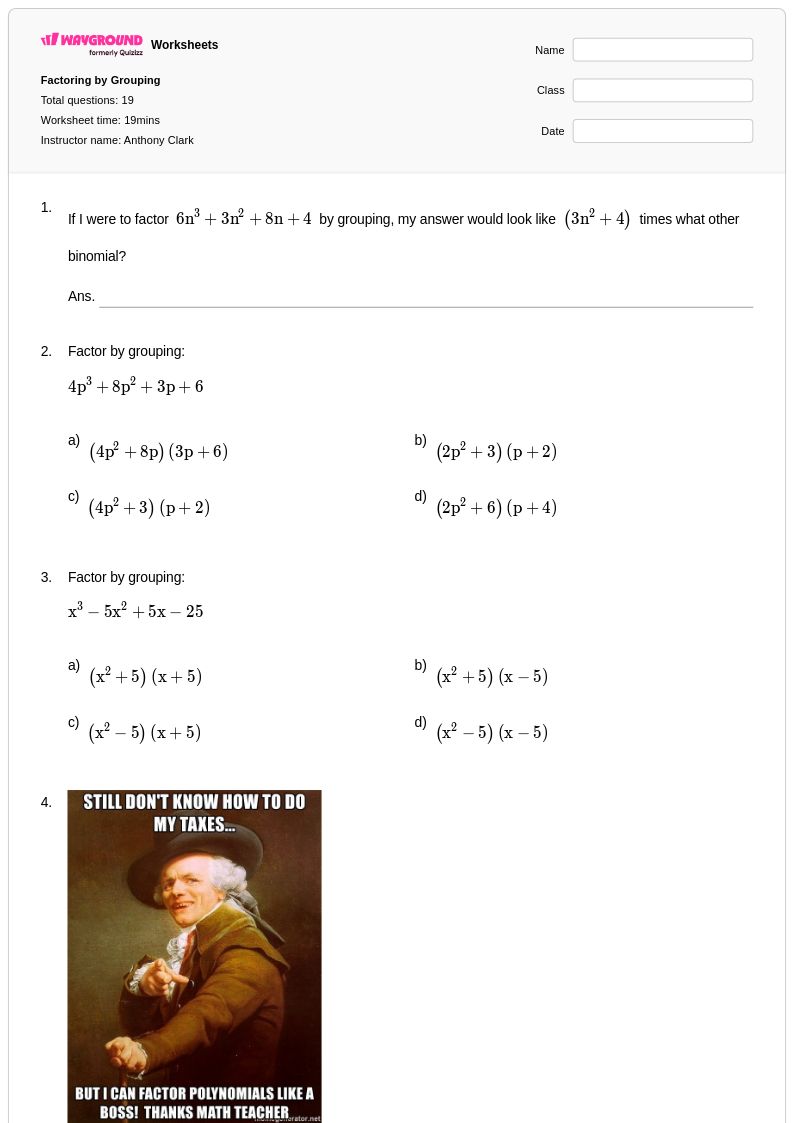
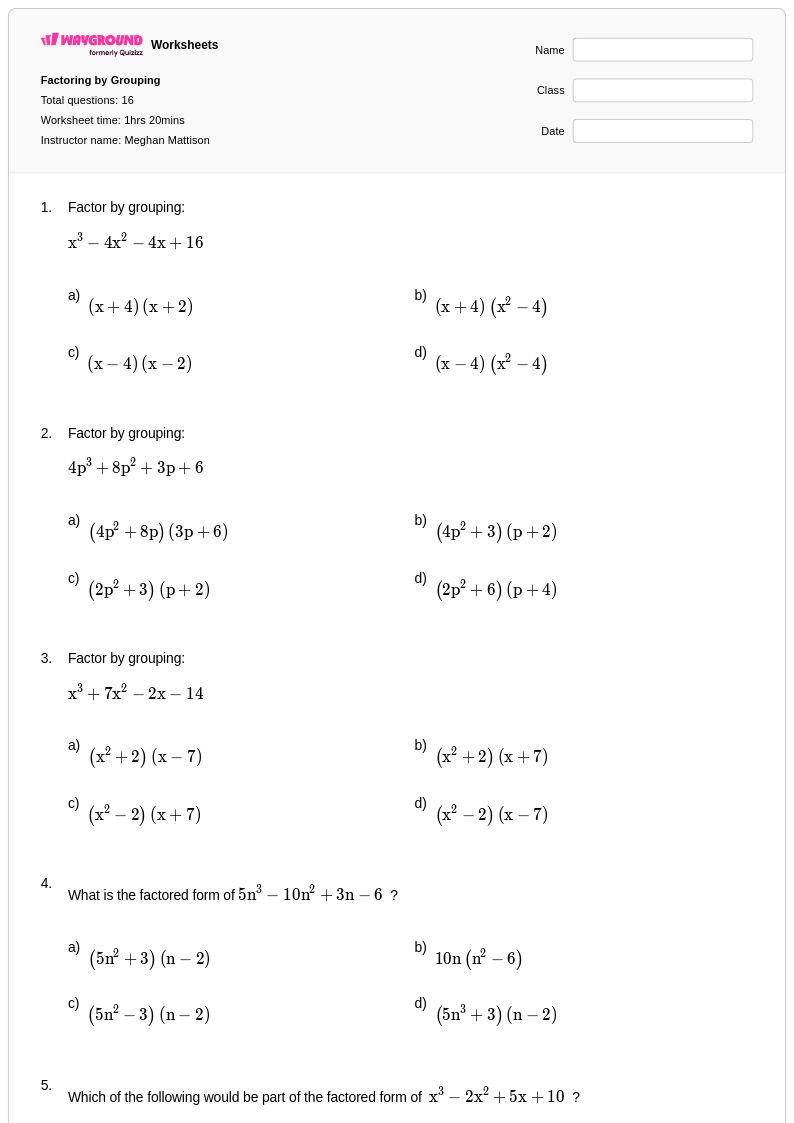
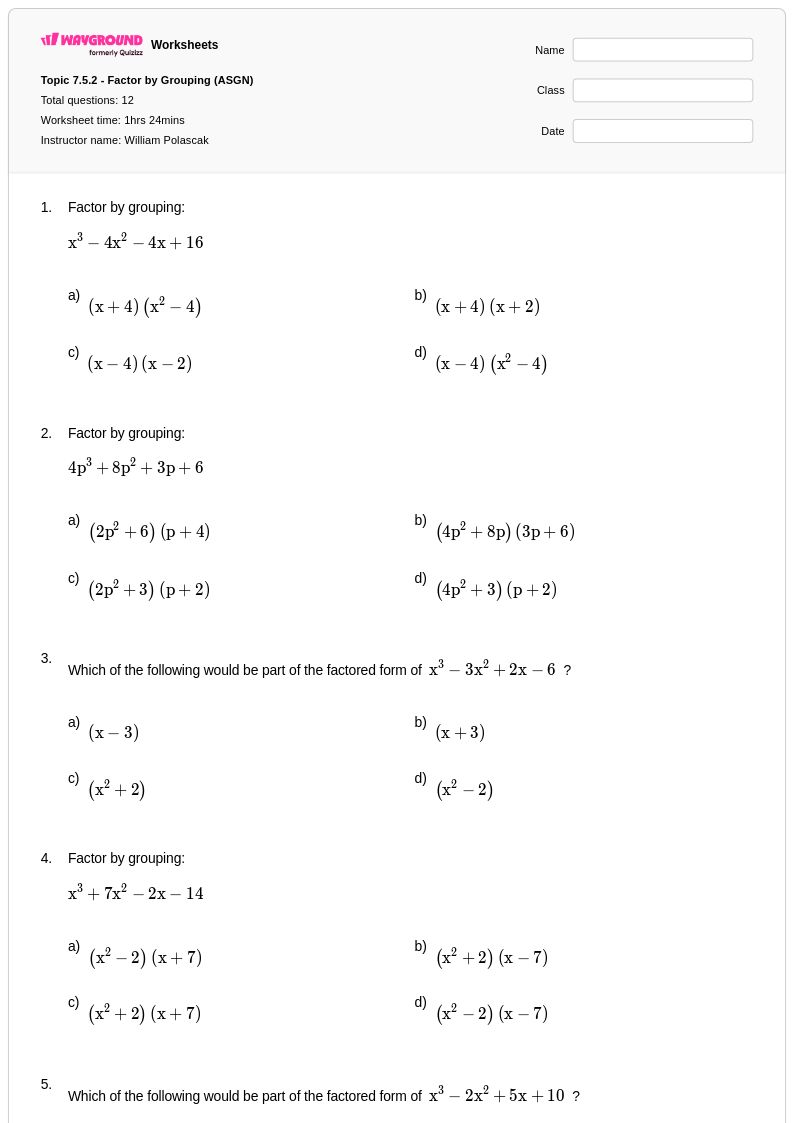
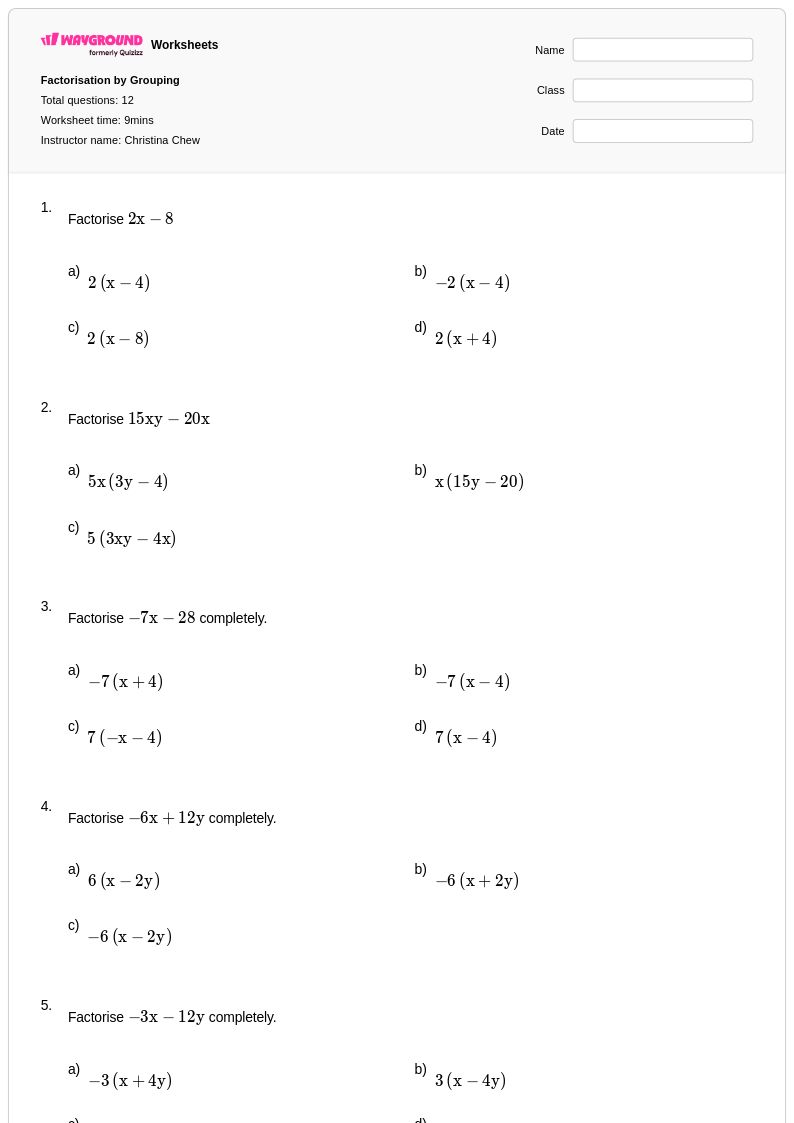
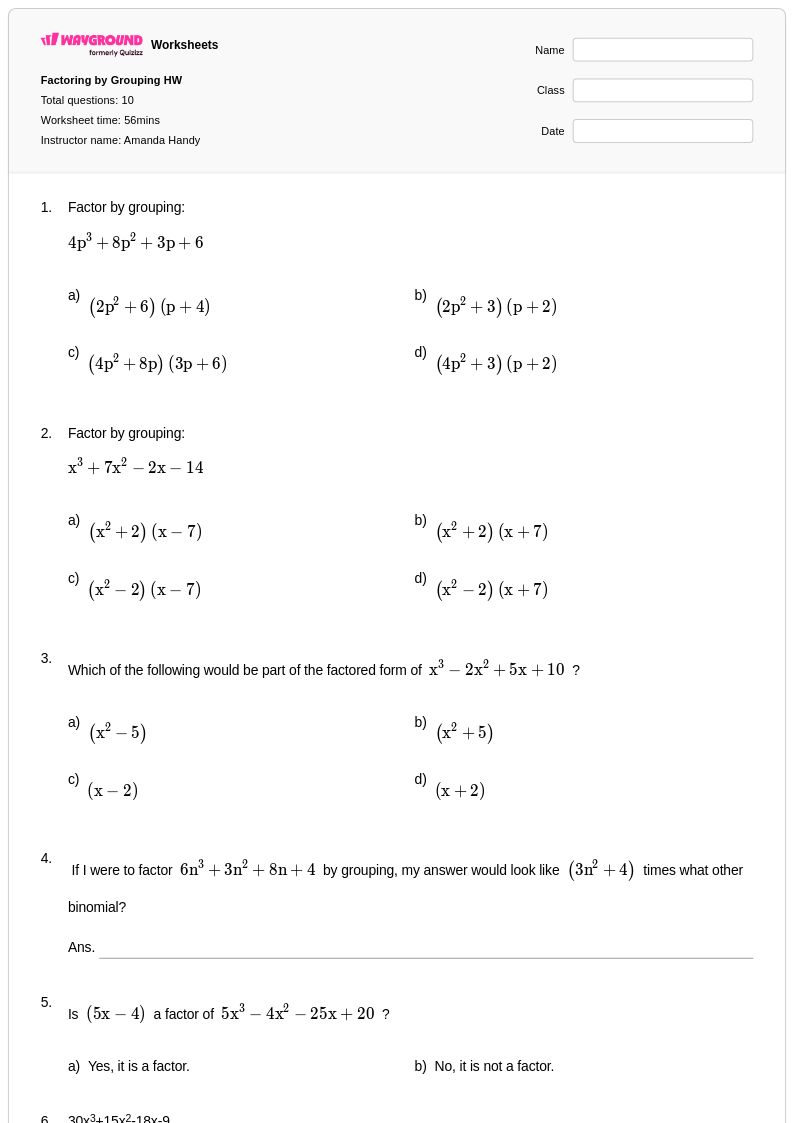
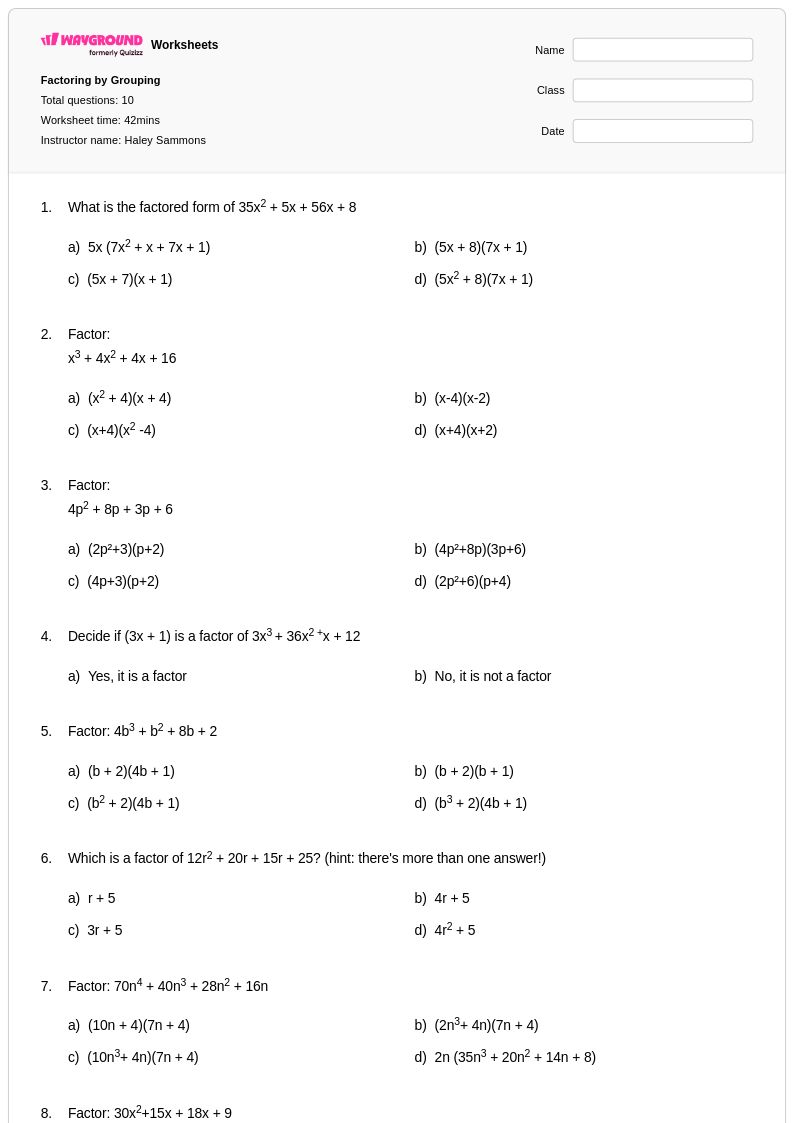
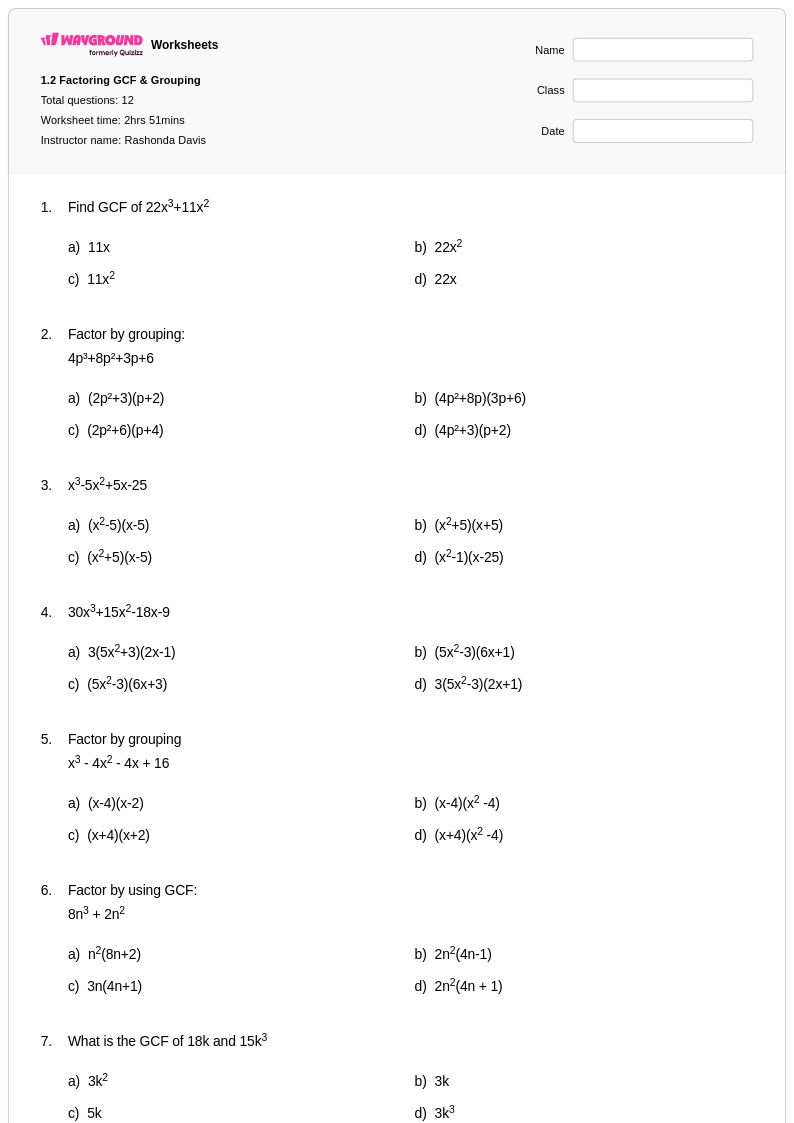
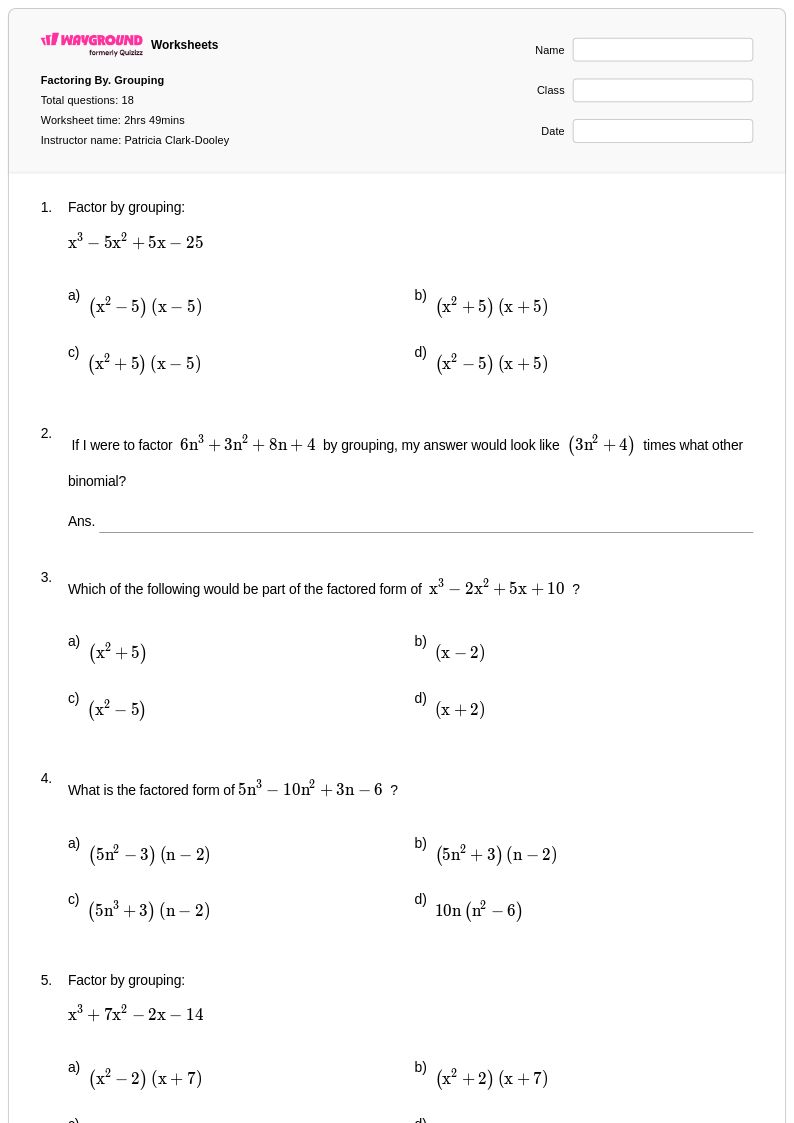
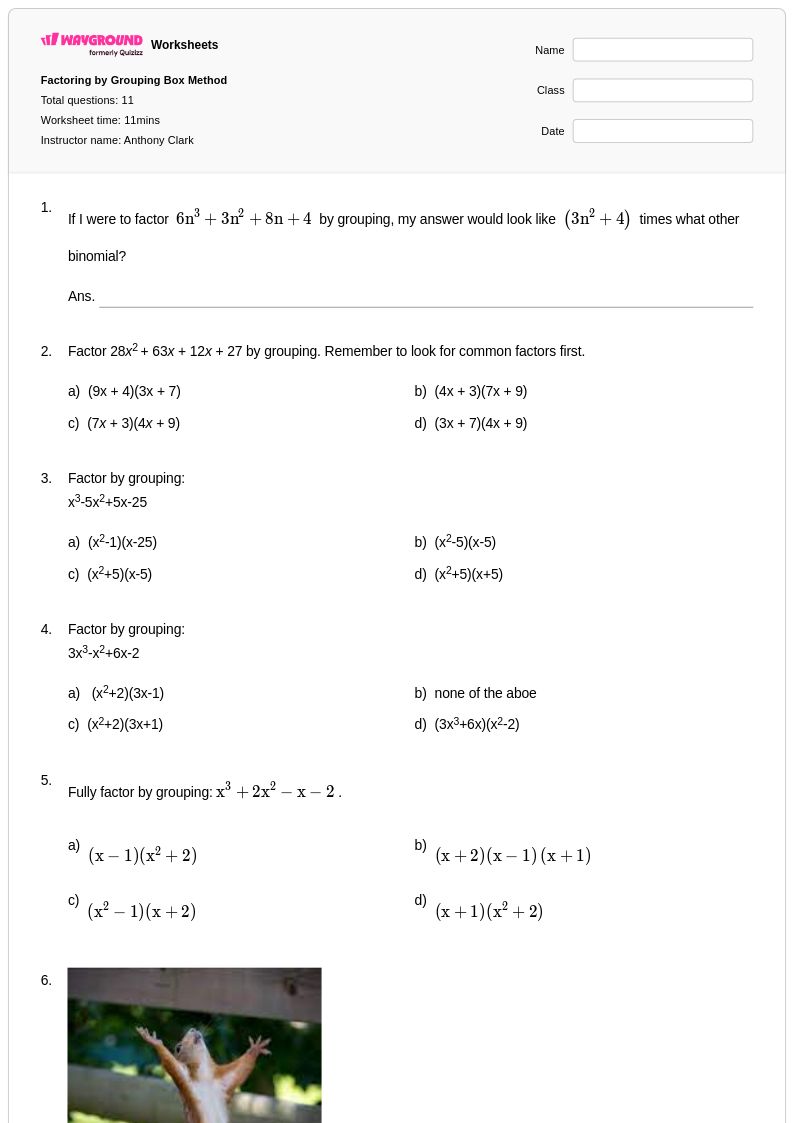
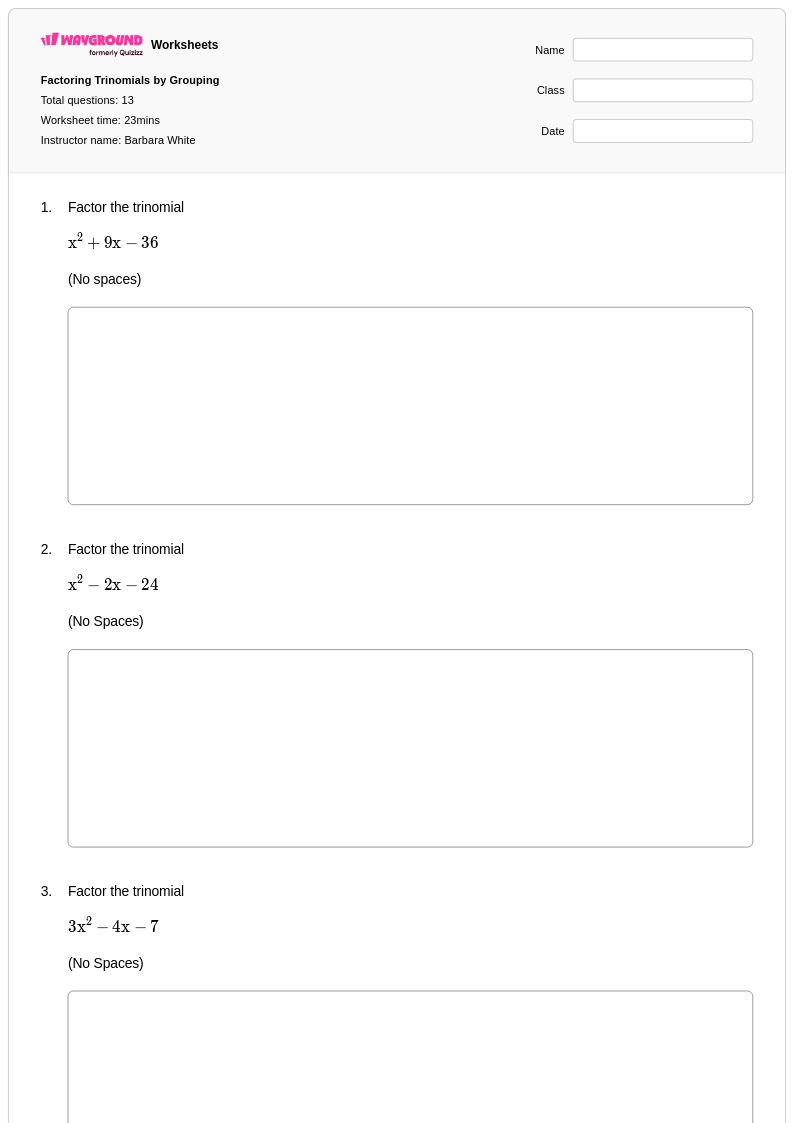
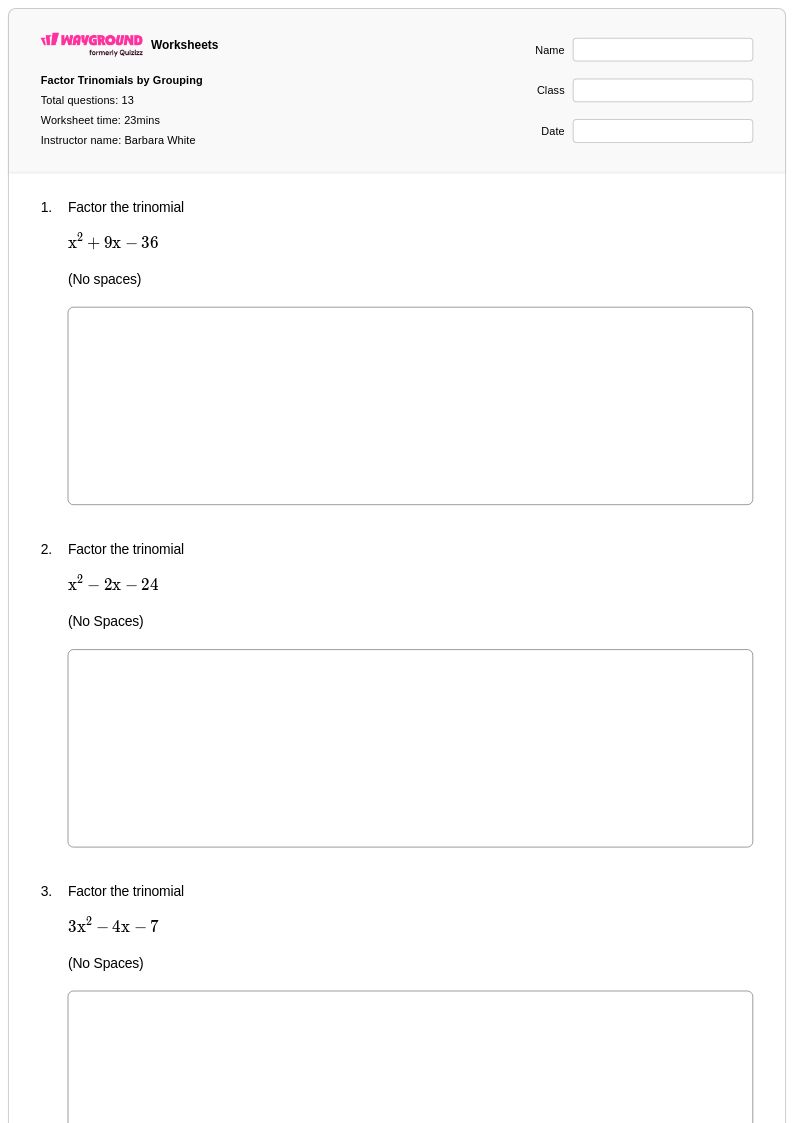
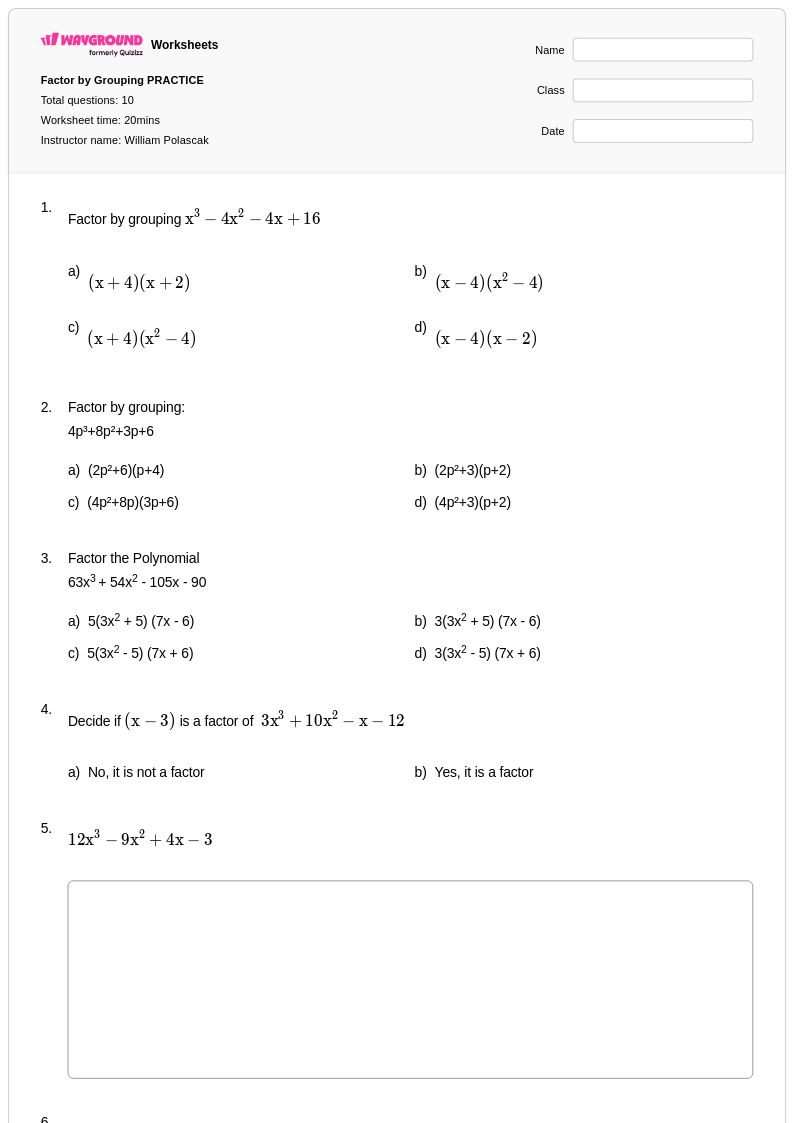
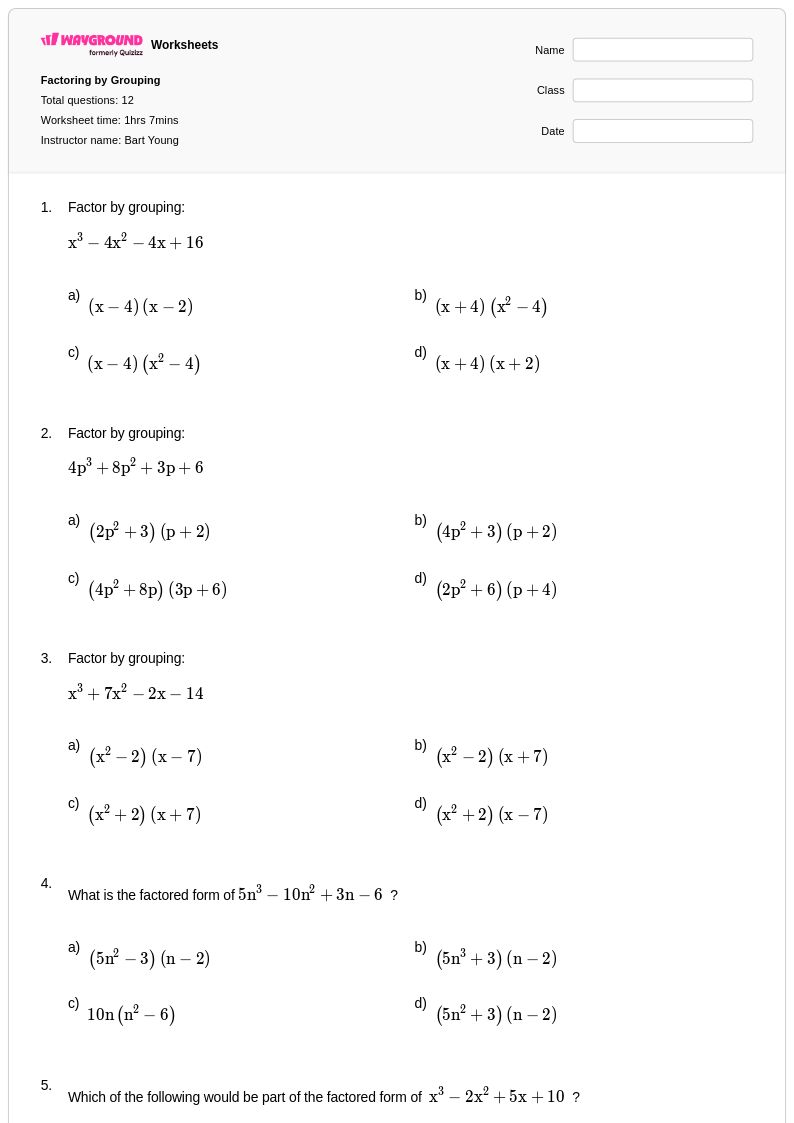
Factorization by grouping worksheets available through Wayground (formerly Quizizz) provide students with essential practice in one of algebra's most powerful polynomial factoring techniques. These comprehensive resources help learners master the systematic approach of organizing polynomial terms into strategic groups, identifying common factors within each group, and recognizing when a common binomial factor emerges across all groups. The worksheets strengthen critical algebraic thinking skills including pattern recognition, factor identification, and the reverse application of the distributive property. Students work through carefully structured practice problems that progress from basic four-term polynomials to more complex expressions, with complete answer keys provided to support independent learning and immediate feedback. These free printable resources serve as invaluable tools for building confidence in polynomial manipulation and preparing students for advanced factoring challenges.
Wayground (formerly Quizizz) empowers mathematics teachers with millions of educator-created factorization by grouping worksheet collections that streamline lesson planning and enhance student outcomes. The platform's robust search and filtering capabilities allow teachers to quickly locate resources aligned with specific curriculum standards and differentiate instruction based on individual student needs. Teachers can customize existing worksheets or create new ones using flexible tools that accommodate various skill levels, from introductory grouping concepts to challenging multi-step factoring scenarios. Available in both printable pdf format and interactive digital versions, these resources support diverse classroom environments and learning preferences. The extensive worksheet library facilitates targeted remediation for struggling students, enrichment opportunities for advanced learners, and consistent skill practice that reinforces mastery of this fundamental algebraic technique across different mathematical contexts.
FAQs
How do I teach factorisation by grouping?
Start by making sure students are solid on the distributive property — grouping is essentially running it in reverse. Introduce the method with a clean four-term polynomial like ax + ay + bx + by, and walk through the two-step logic explicitly: first pull the GCF from each pair of terms, then notice that the resulting binomials match and can be factored out again. The most important habit to build early is checking whether the binomial factor that appears in both groups is identical — students who skip that check tend to force groupings that don't work. Once the pattern clicks on tidy examples, move to polynomials that require reordering terms before grouping, which is where the real algebraic thinking begins.
What exercises help students practice factorisation by grouping?
The most effective practice sequence moves from recognition to execution to verification. Start with problems where the grouping is obvious (terms already arranged in compatible pairs), then introduce expressions that need reordering before the method applies. A useful mid-level exercise is giving students an already-factored product like (2x + 3)(x − 5) and asking them to expand it, then re-factor it by grouping — this closes the loop between multiplication and factoring. Wayground's worksheets progress through this kind of scaffolded sequence, and every worksheet includes a complete answer key so students can check their work and catch errors in their grouping logic before they become habits.
What mistakes do students commonly make with factorisation by grouping?
Three errors come up repeatedly. First, students pull out a GCF from one group but forget to check the sign — a negative leading term in the second group often requires factoring out a negative, and missing that produces a binomial that doesn't match the first group. Second, they assume the first arrangement of terms is the right one and give up if it doesn't work, not realising that reordering the terms is a legitimate and often necessary step. Third, they stop after the first round of factoring and don't complete the second step of pulling out the common binomial factor. Catching these early — ideally by having students narrate their steps aloud or in writing — prevents them from calcifying into persistent errors.
How do I use Wayground's factorisation by grouping worksheets in my class?
You have two straightforward options. If you're running a paper-based lesson or want students off screens, download the printable PDF and distribute it as classwork or homework — you can then grade submissions using the Wayground for Teachers app, which lets you scan or capture student work for quick marking. If you prefer a digital route, host the worksheet as an interactive quiz on Wayground and assign it directly to students. Either way, every worksheet comes with a complete answer key, so students working independently can self-check without waiting on you.
Is factorisation by grouping aligned with Common Core standards?
Yes. Common Core's algebra strand treats polynomial arithmetic and factoring as a connected progression: students first develop fluency with operations on polynomials, then learn to factor by identifying structure. Factorisation by grouping sits at the point where students move from factoring simple trinomials to recognising that any polynomial can be approached by looking for internal structure — specifically, that a four-term polynomial can sometimes be split into two binomial pairs each sharing a common factor. That skill then feeds directly into factoring more complex trinomials by splitting the middle term, which is the next step in the Common Core progression.
How can I differentiate factorisation by grouping practice for mixed-ability classes?
The concept has a natural difficulty gradient you can exploit: start struggling students on problems where terms are pre-arranged in compatible pairs and the GCFs are whole numbers, while advanced students work on expressions that require reordering or involve polynomial GCFs. On Wayground, you can create alternate versions of the same worksheet with adjusted font size, wider spacing, or a dyslexia-friendly font for students who need it — without changing the math. For students who need additional support during a digital session, the Read Aloud accommodation reads questions aloud, and Reduced answer choices lowers the cognitive load on multiple-choice items. These settings apply per student, so the rest of the class sees the standard version.