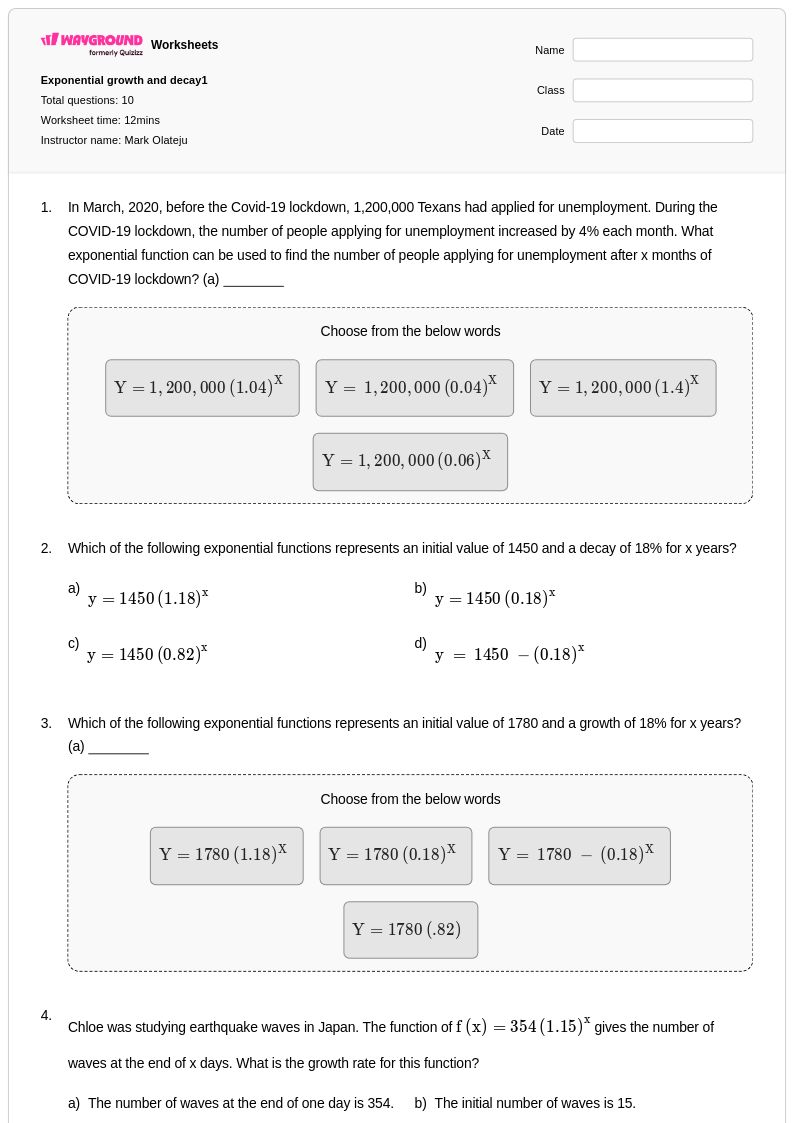
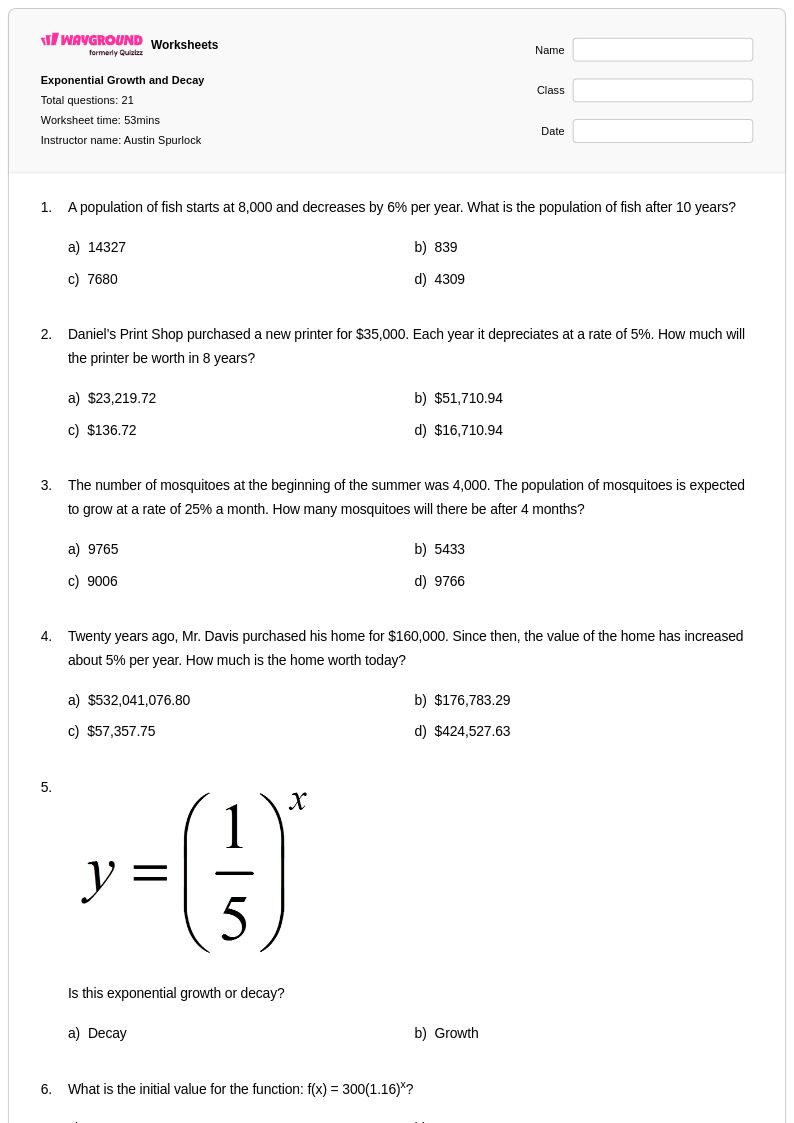
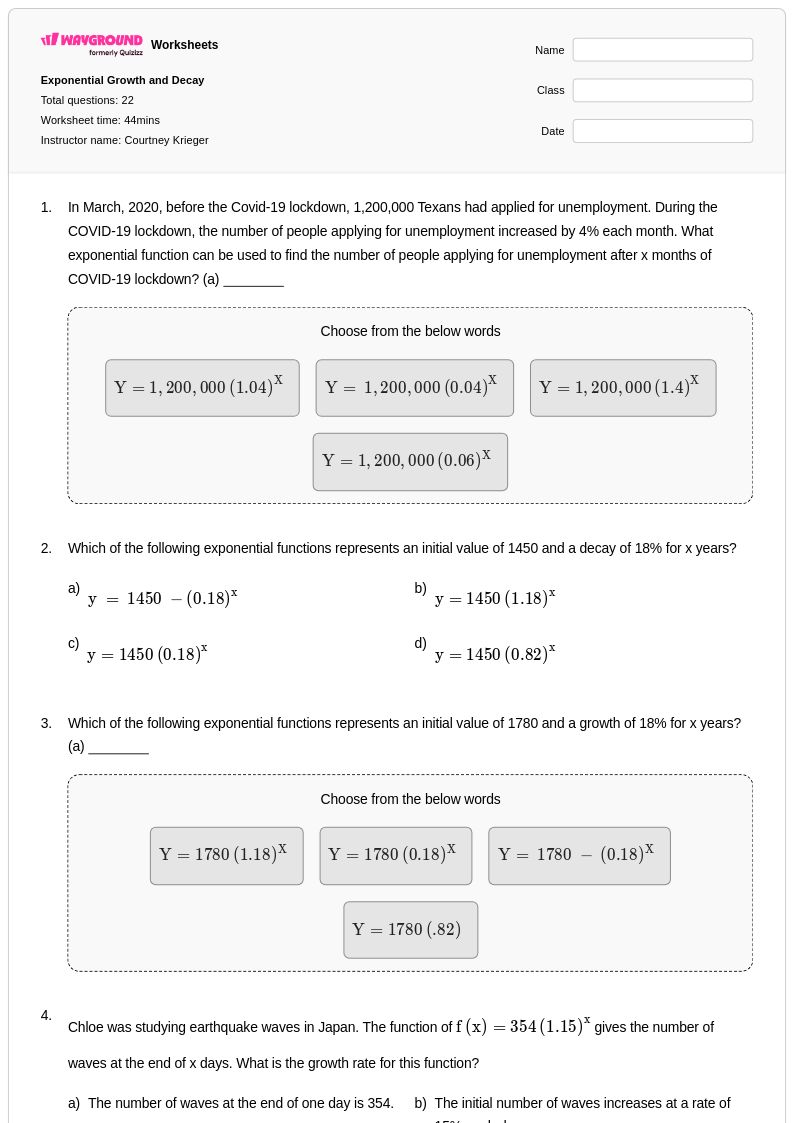
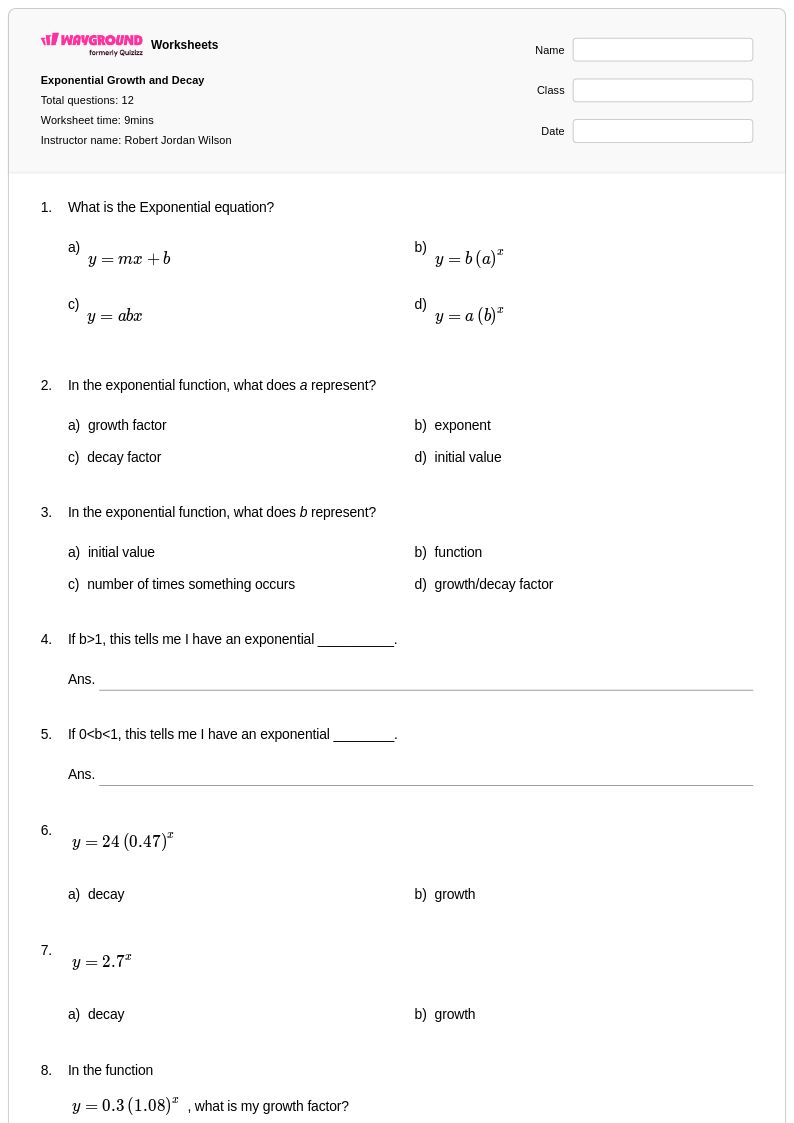
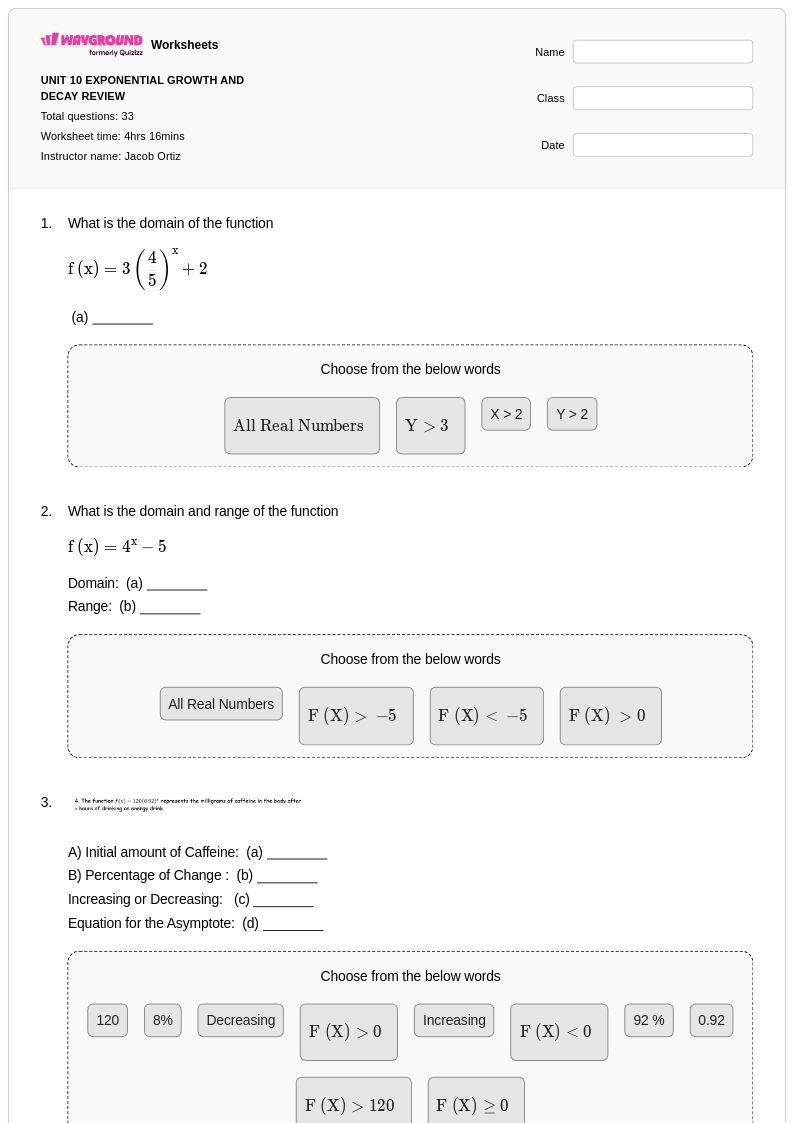
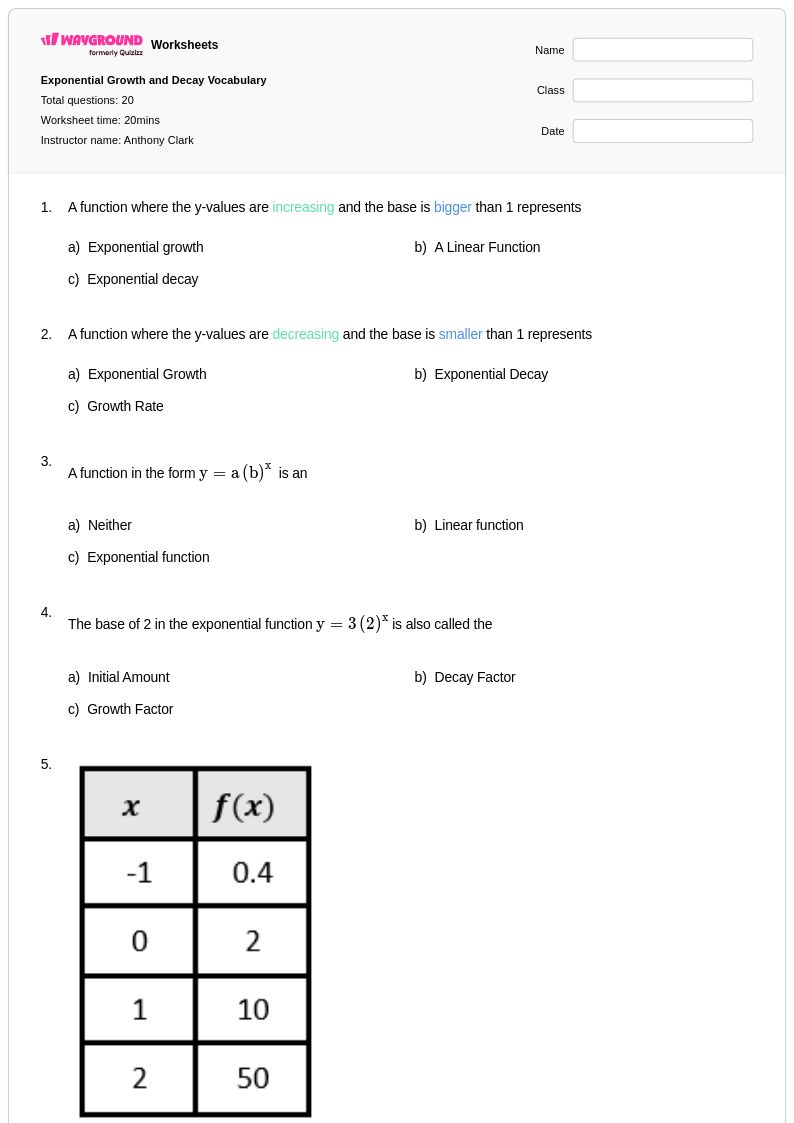
Free Printable Exponential Growth and Decay worksheets
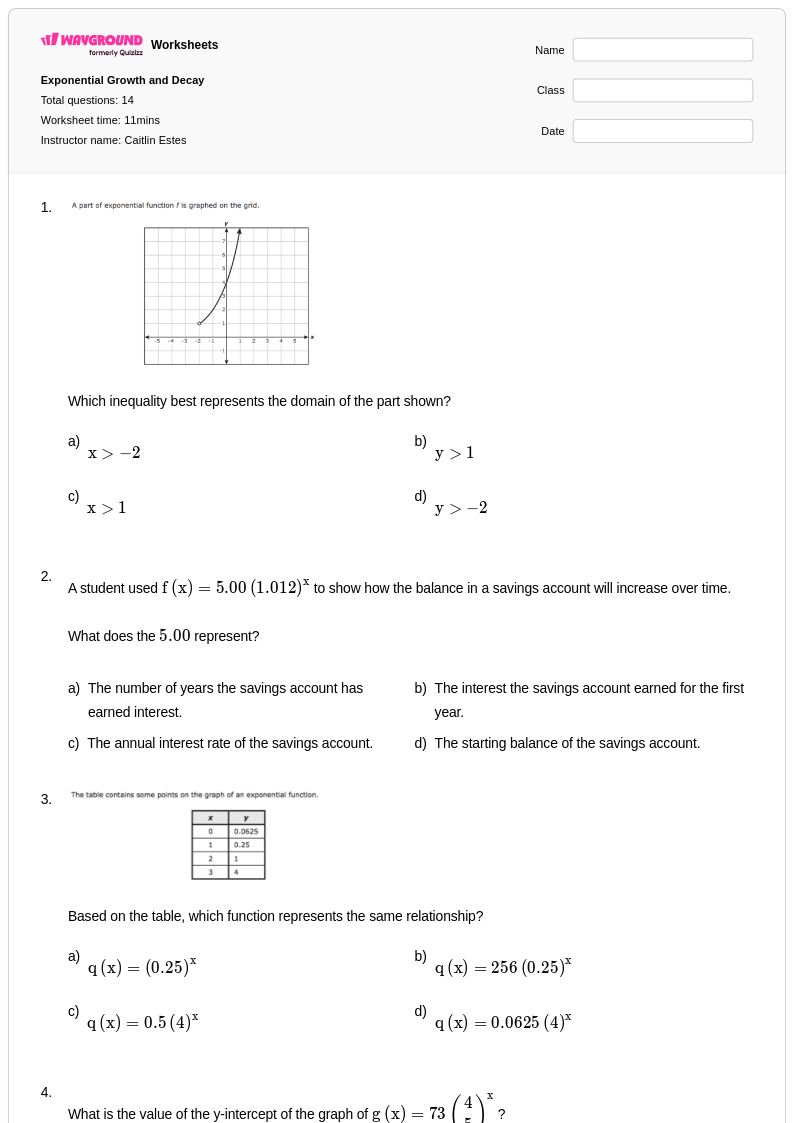
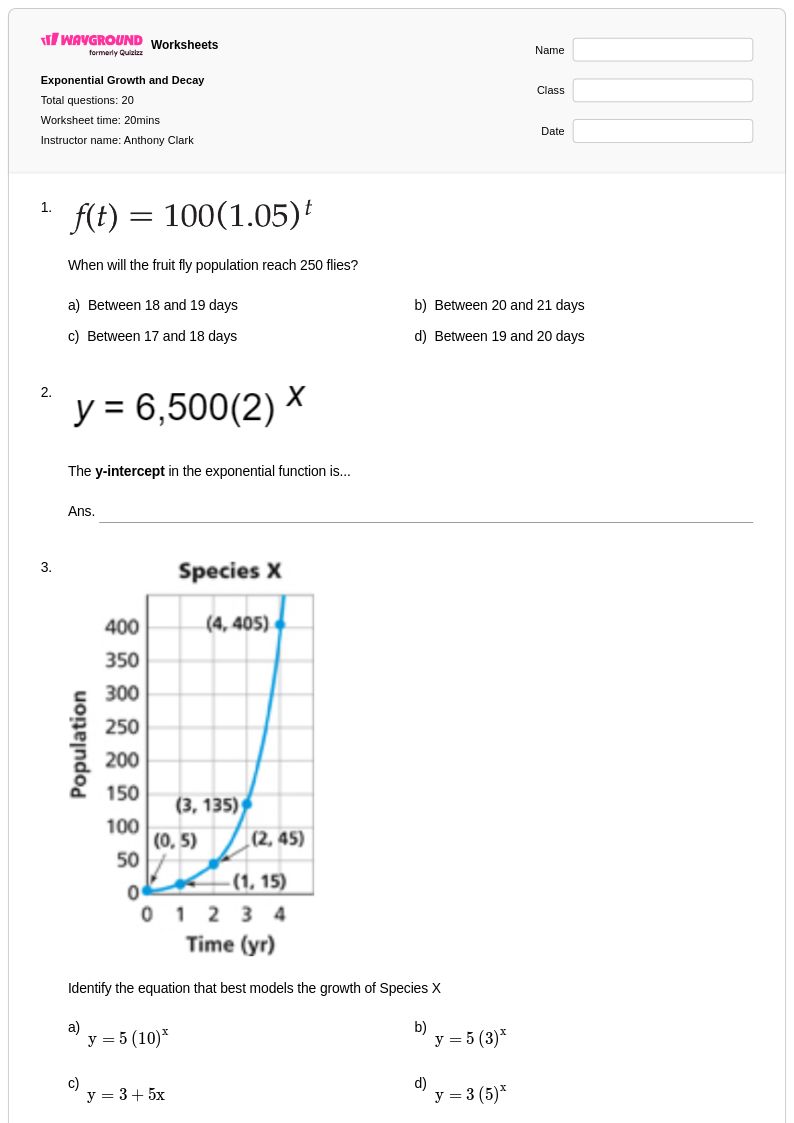
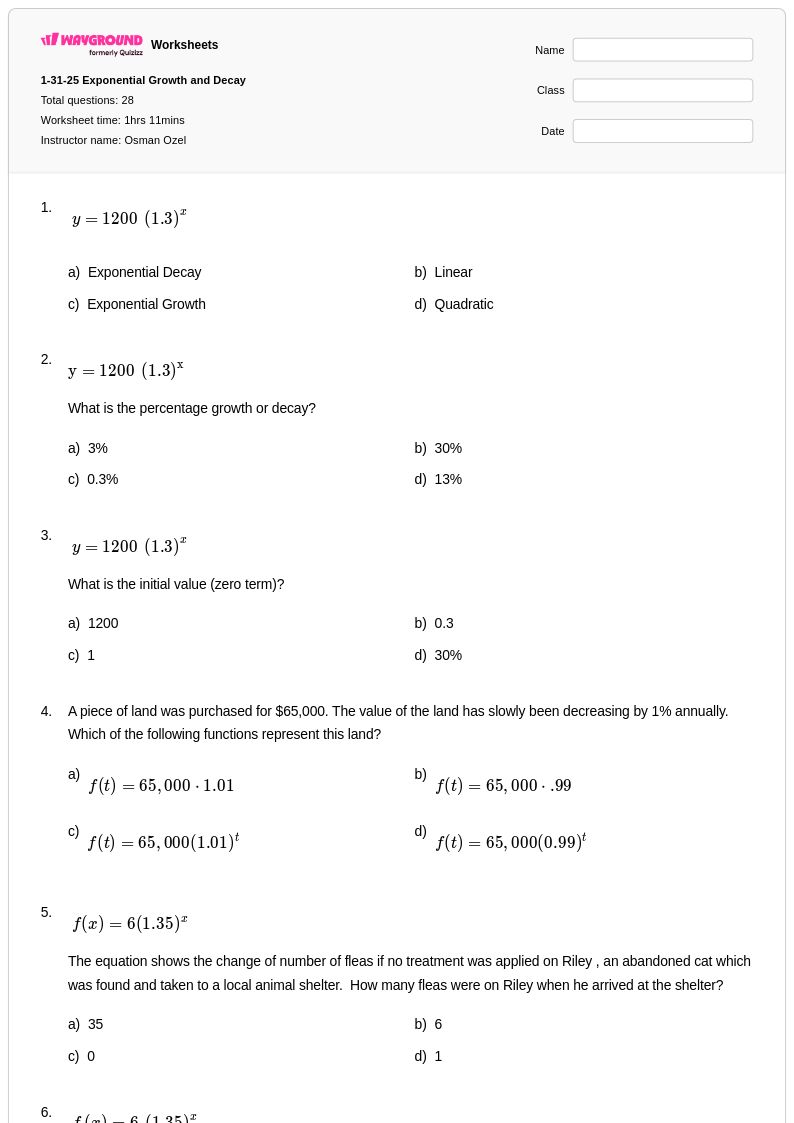
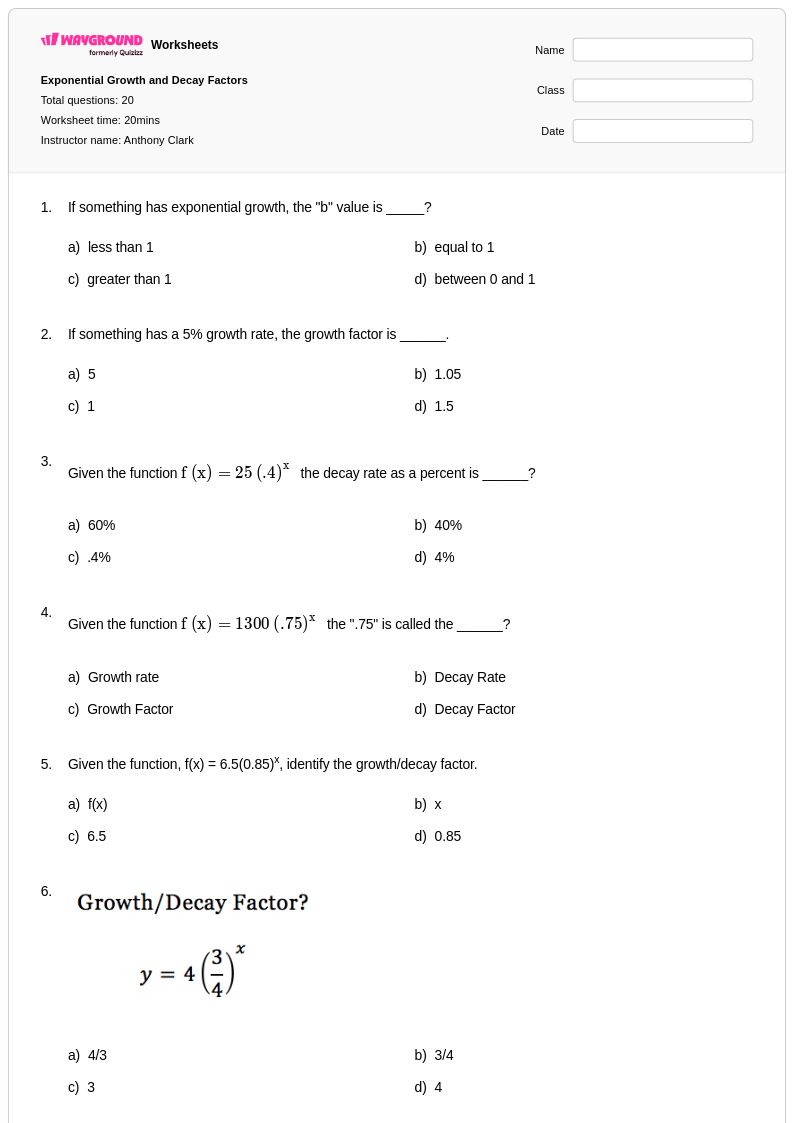
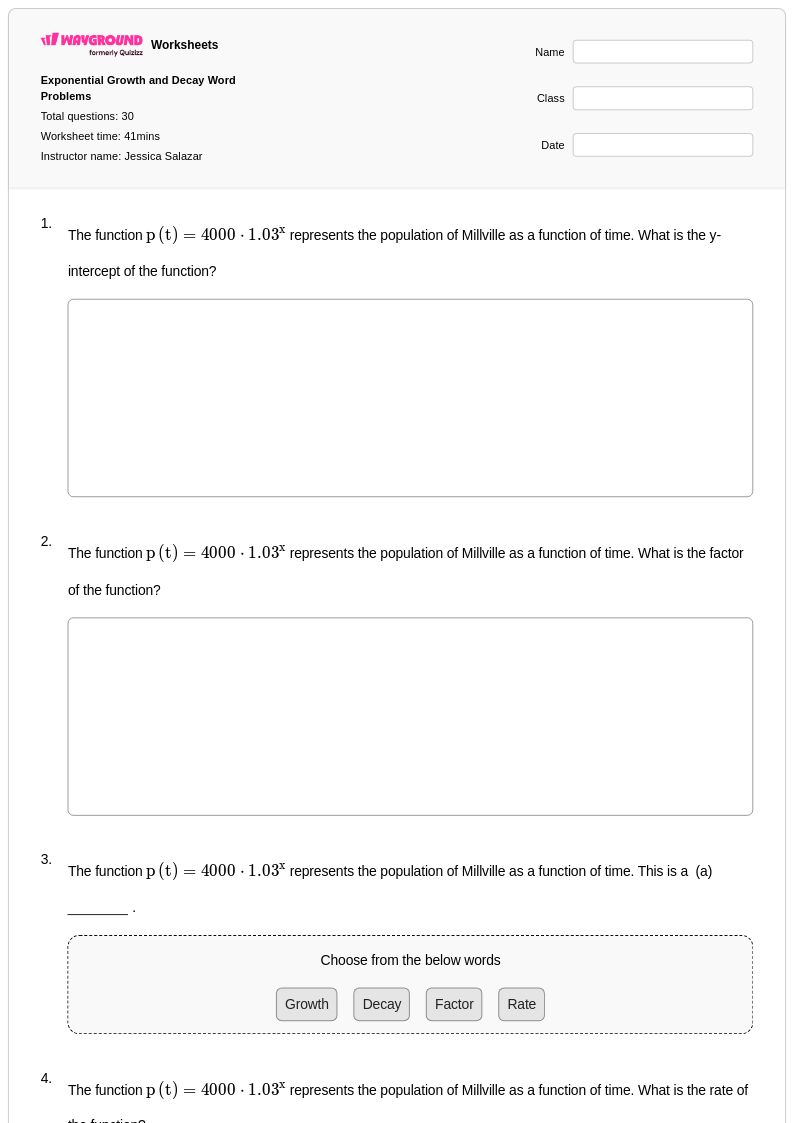
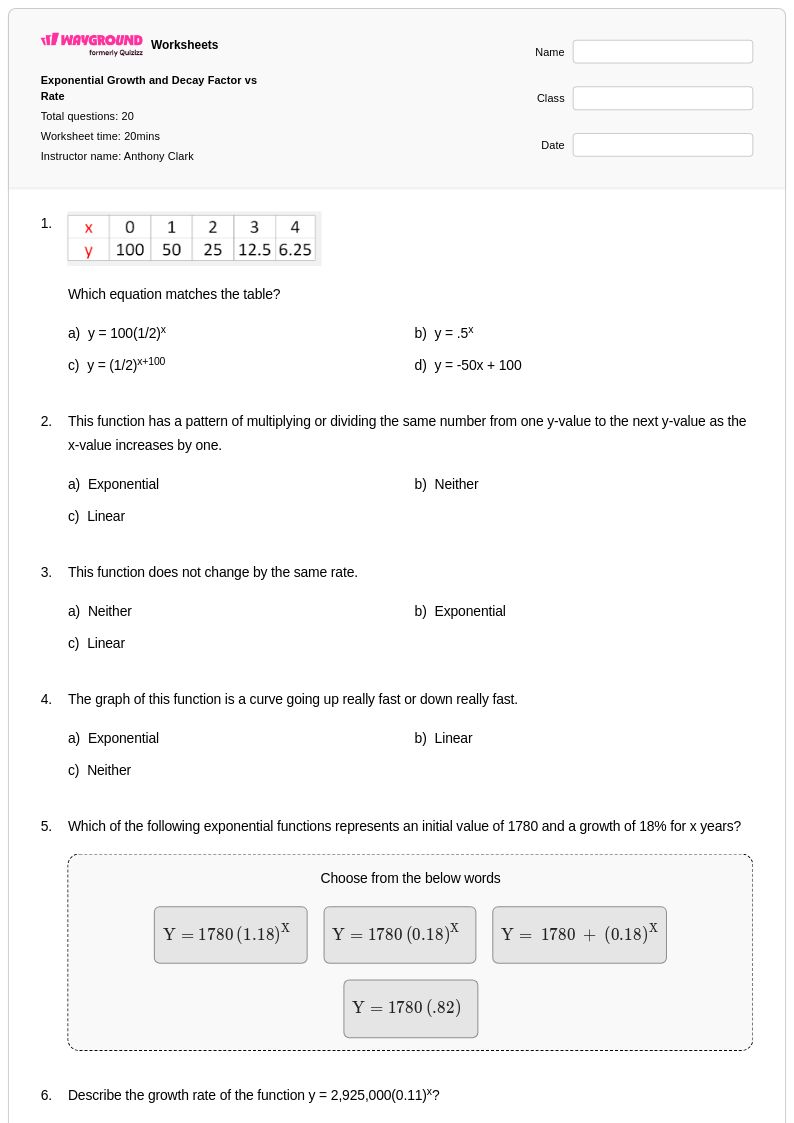
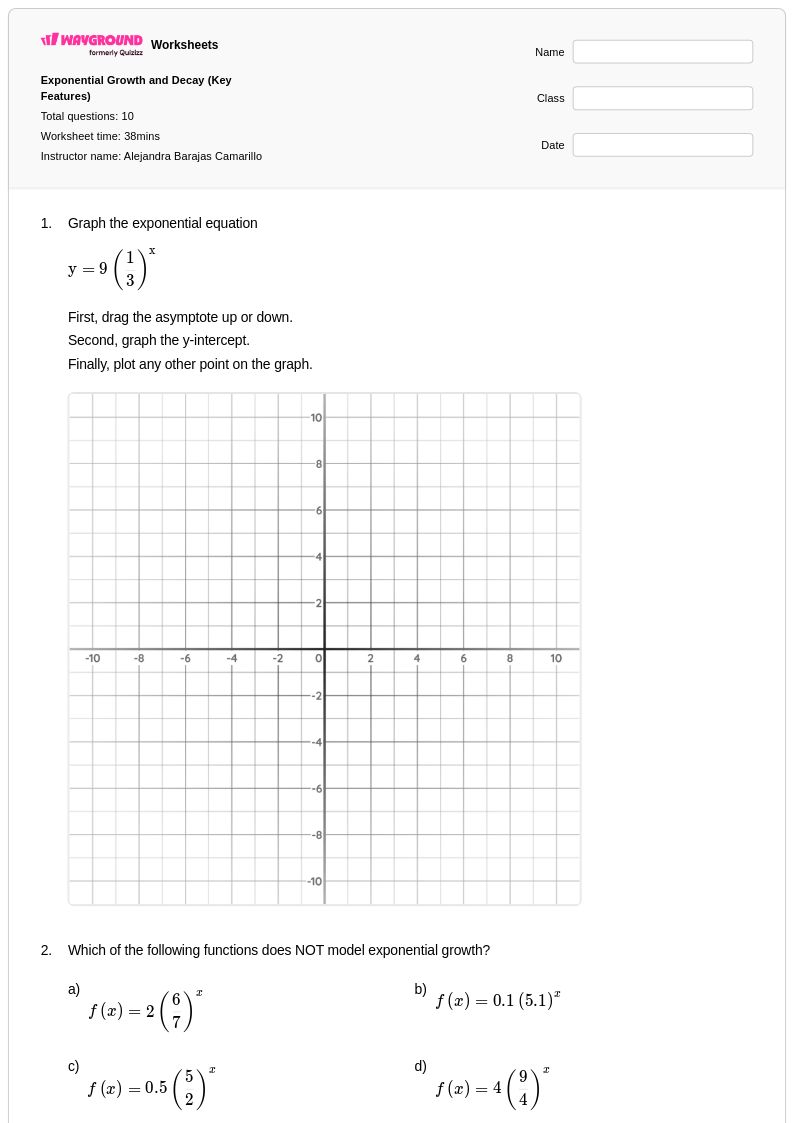
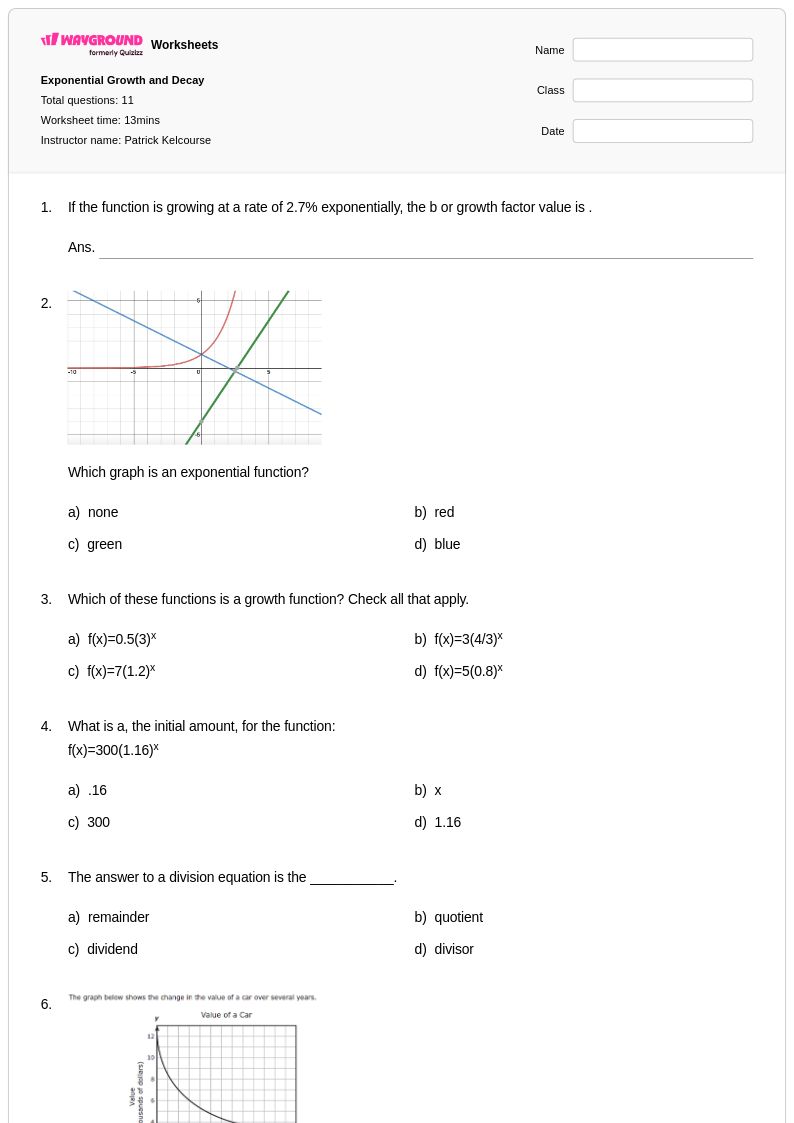
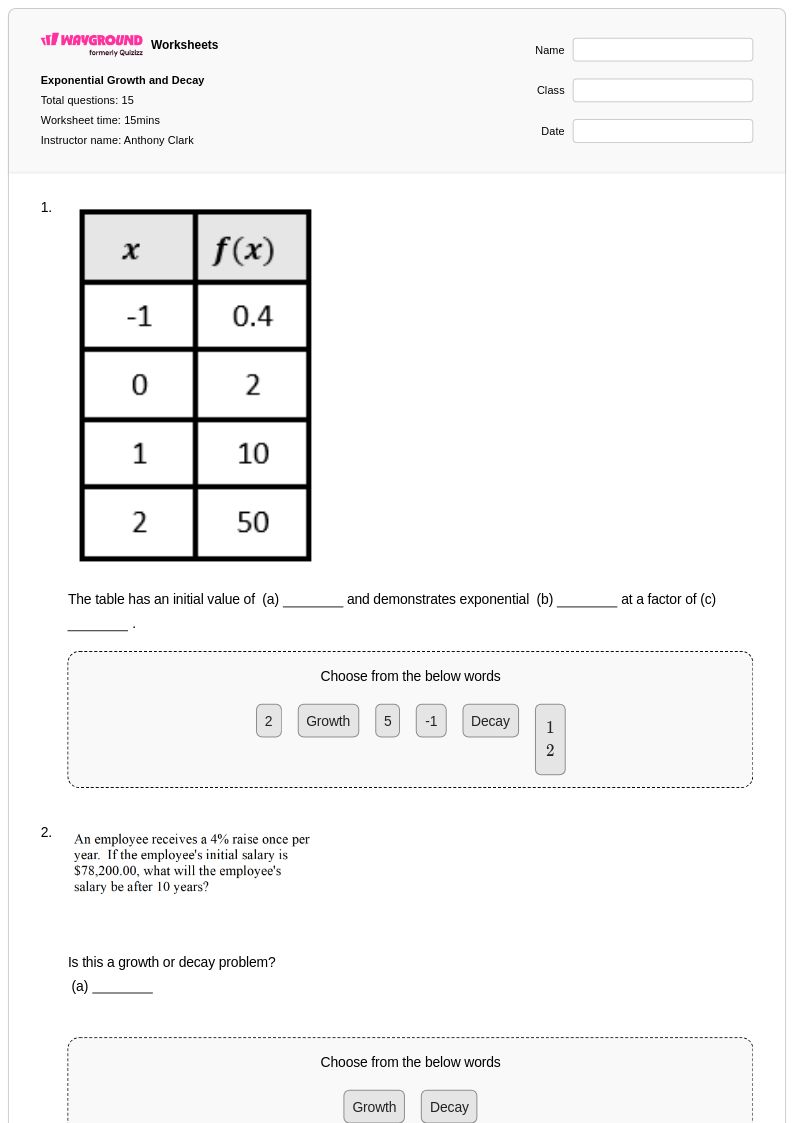
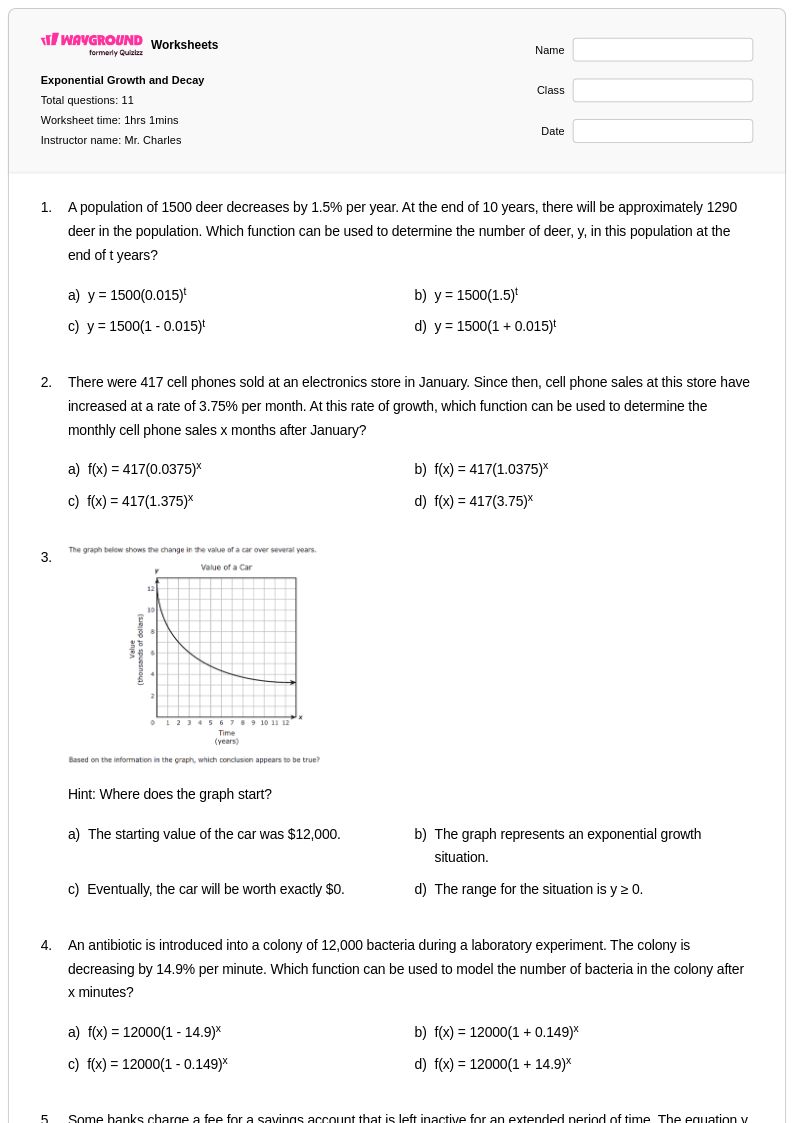
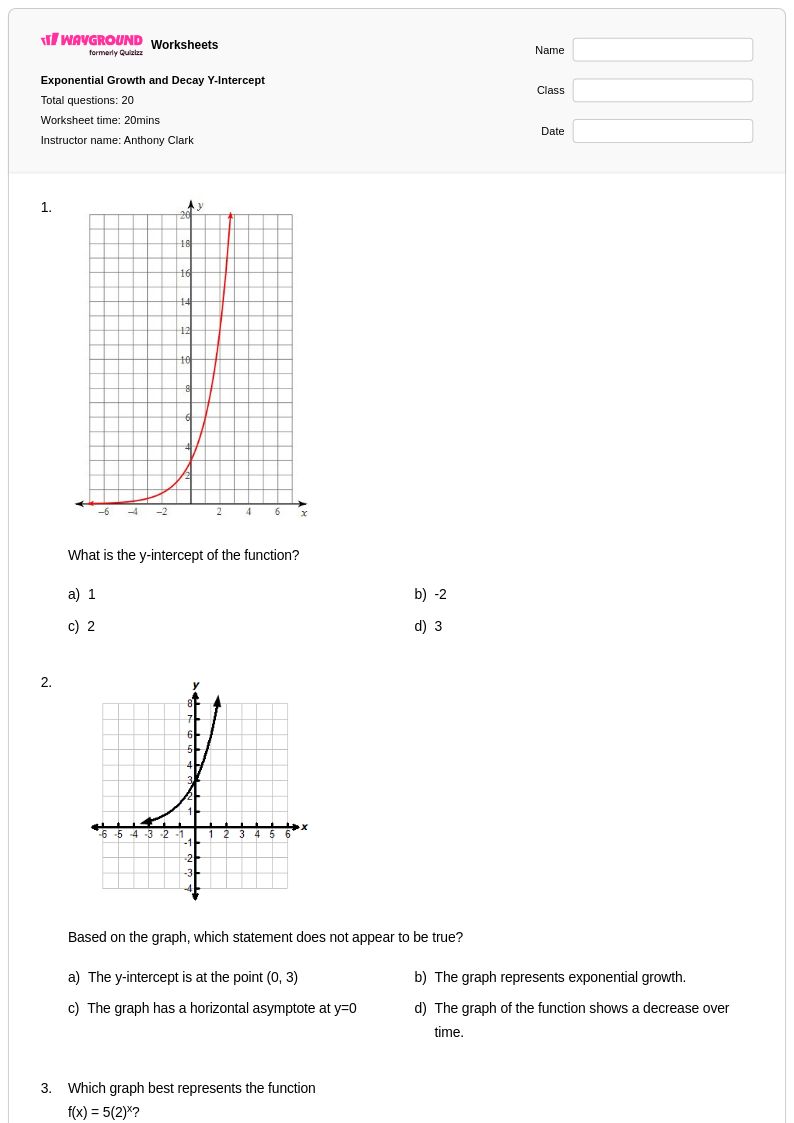
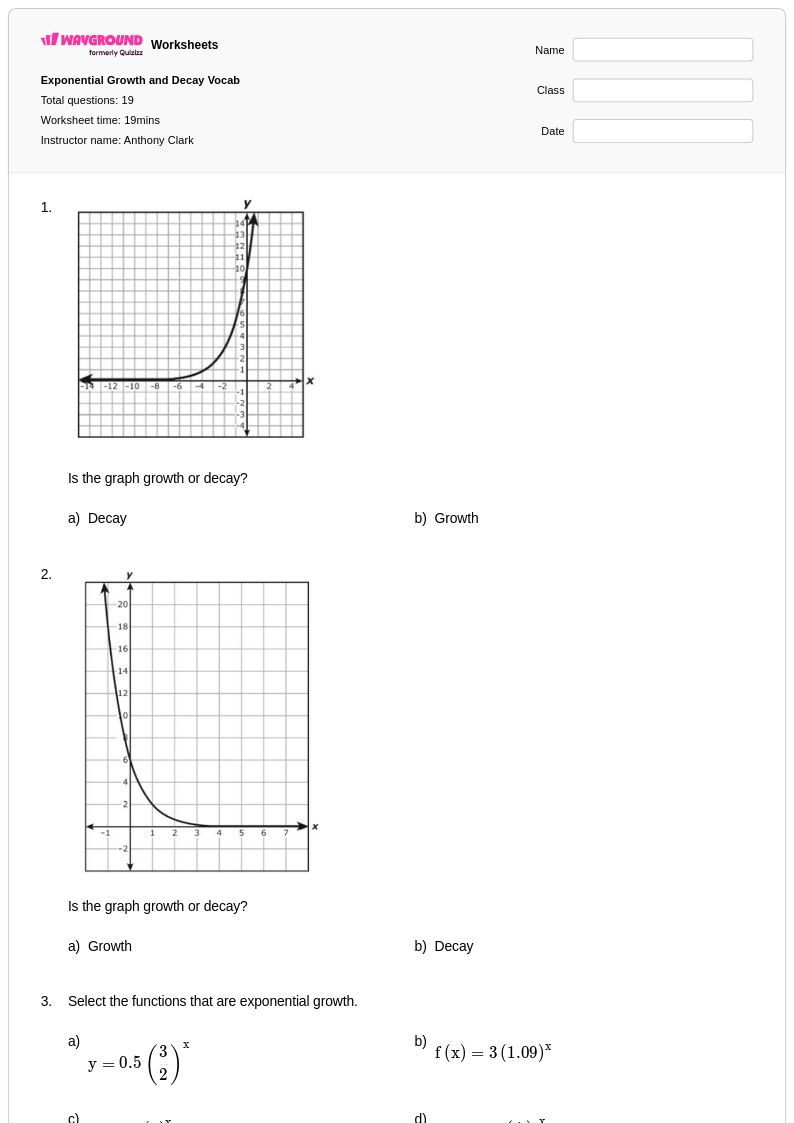
Free exponential growth and decay worksheets with printables and answer keys help students master algebra concepts through practice problems that explore how quantities increase and decrease exponentially over time.
Explore printable Exponential Growth and Decay worksheets
Exponential growth and decay worksheets available through Wayground (formerly Quizizz) provide comprehensive practice with one of algebra's most practically relevant concepts, helping students master the mathematical modeling of real-world phenomena like population dynamics, radioactive decay, and compound interest. These expertly crafted resources strengthen critical skills including identifying growth and decay factors, writing exponential functions from given information, solving exponential equations, and interpreting exponential models in context. Students work through carefully sequenced practice problems that progress from basic exponential function evaluation to complex applications involving half-life calculations and investment scenarios. Each worksheet collection includes detailed answer keys and is available as free printable pdfs, making it simple for educators to provide targeted practice that builds conceptual understanding alongside computational fluency.
Wayground (formerly Quizizz) empowers mathematics teachers with access to millions of teacher-created exponential growth and decay resources that can be easily searched, filtered, and customized to meet diverse classroom needs. The platform's robust standards alignment ensures worksheets connect directly to curriculum objectives, while built-in differentiation tools allow educators to modify content difficulty and provide appropriate challenge levels for all learners. Teachers benefit from flexible formatting options that support both digital delivery and traditional printable pdf distribution, enabling seamless integration into any instructional environment. These comprehensive worksheet collections serve as invaluable tools for lesson planning, targeted remediation of misconceptions, enrichment activities for advanced students, and systematic skill practice that helps students develop confidence with exponential relationships across multiple mathematical contexts.
FAQs
How do I teach exponential growth and decay?
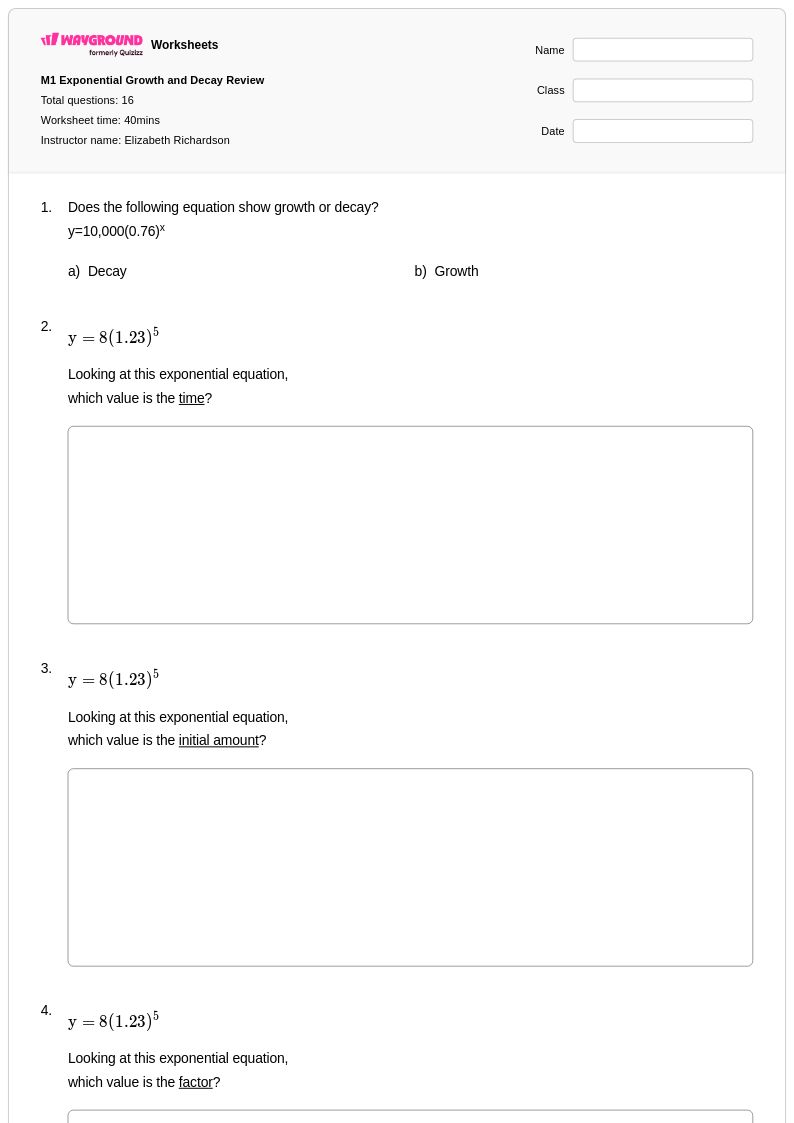
Start with a concrete scenario students already have intuition about — compound interest or a population doubling every year — before introducing the general form y = a·bˣ. Once students can identify the initial value and the growth or decay factor from a table or graph, move them toward writing equations from given information and then to interpreting those equations in context. The jump from 'evaluate this function' to 'build a model from a word problem' is where most students stall, so spending extra time on that transition pays off.
What exercises help students practice exponential growth and decay?
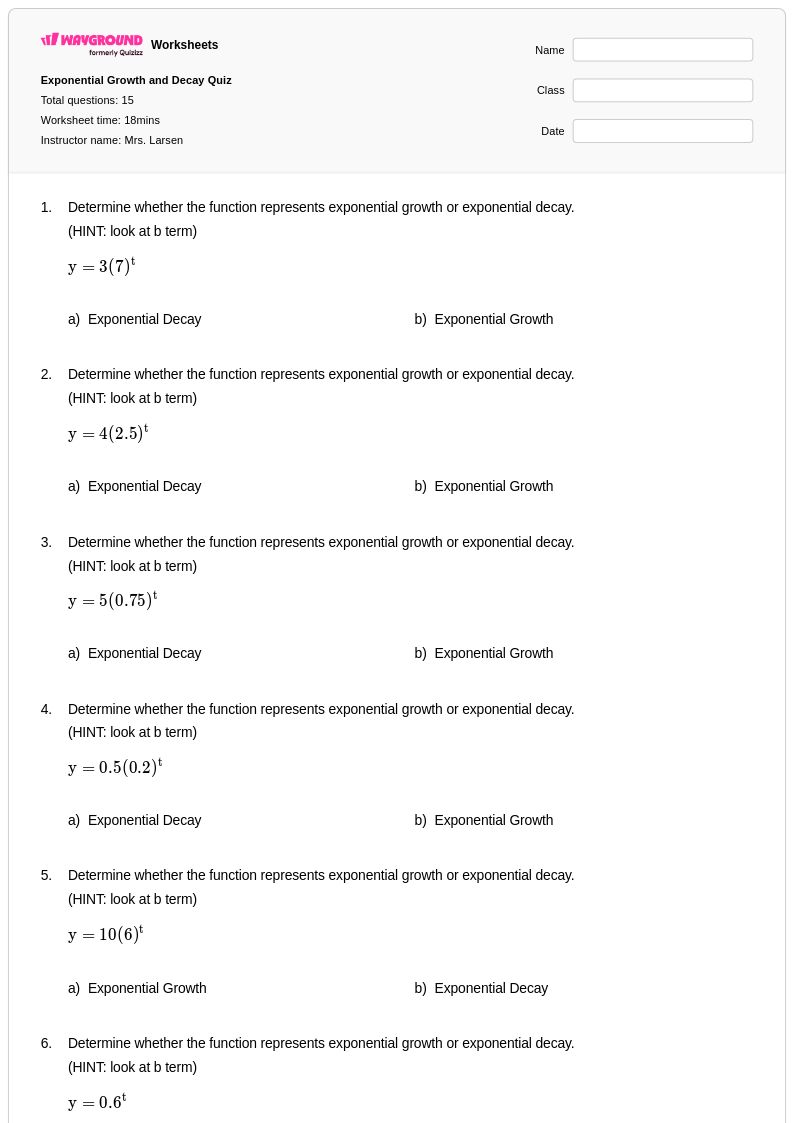
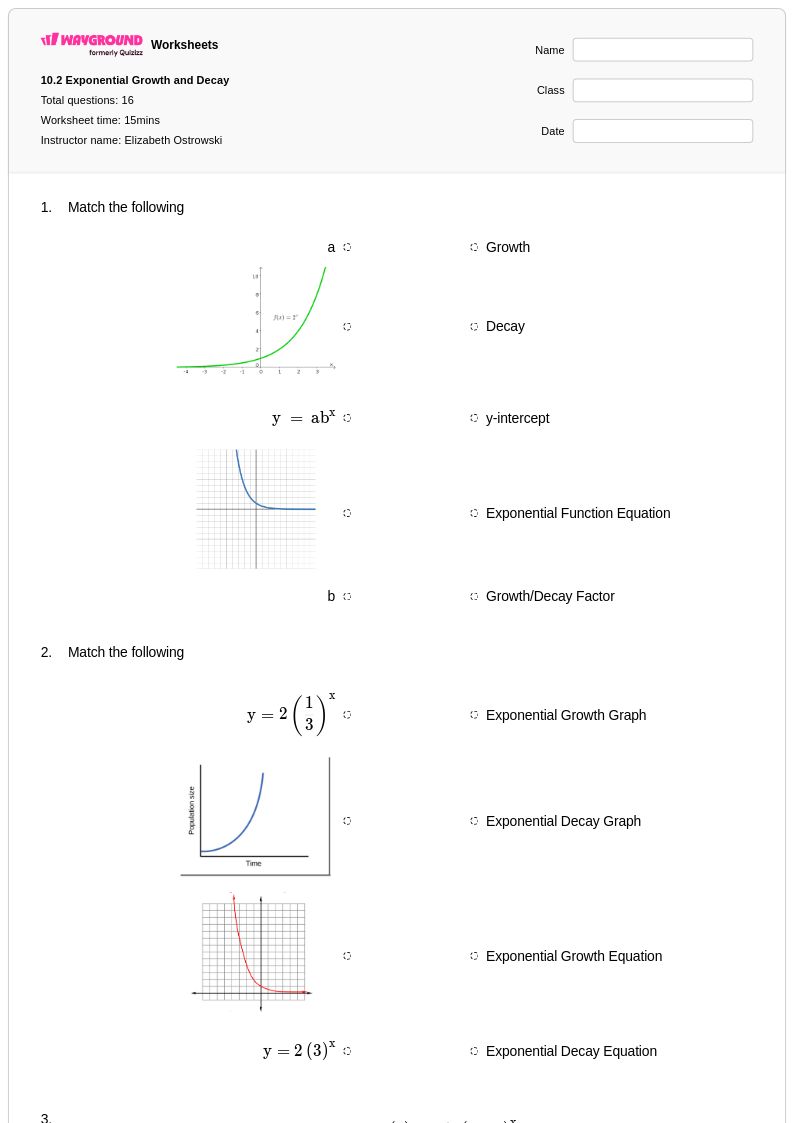
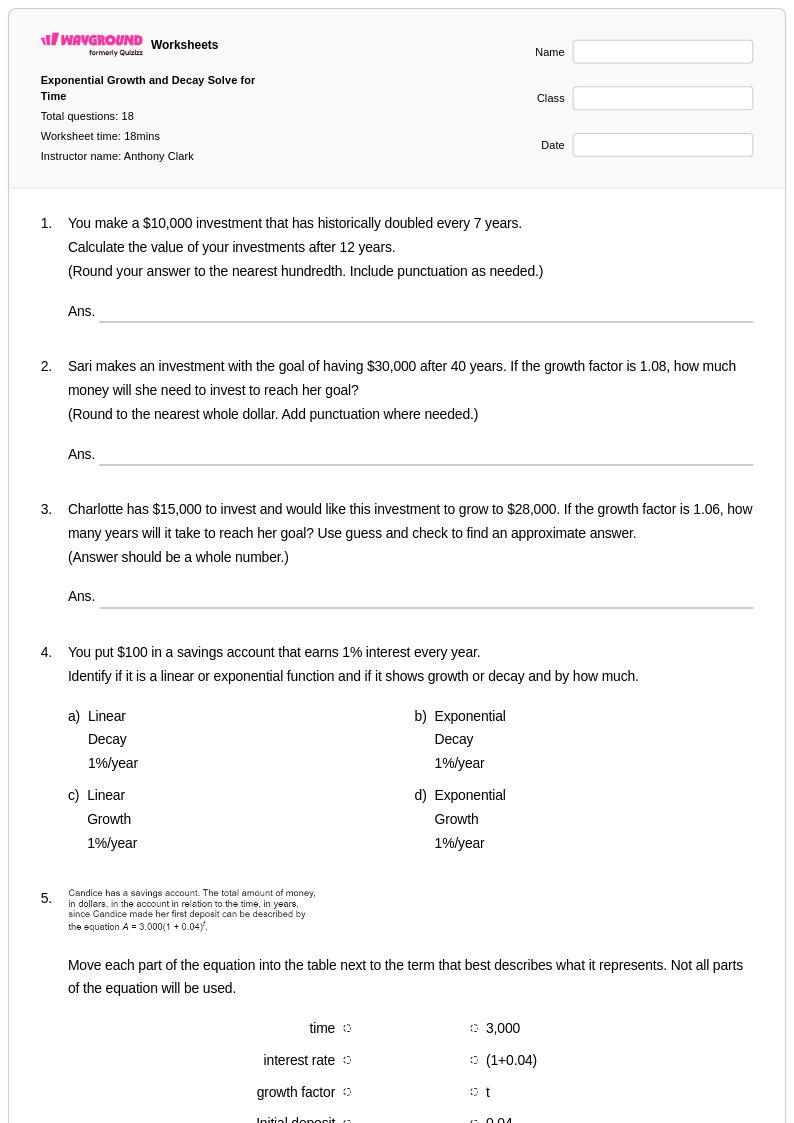
The most effective practice sequence moves from recognition to construction to application: first, identifying whether a function represents growth or decay from its equation or graph; then writing exponential functions from a table of values or a described scenario; and finally solving applied problems like half-life calculations or compound interest. Mixing problem types within a single practice session — rather than blocking all equation-writing together — helps students develop the flexibility they'll need on assessments.
What mistakes do students commonly make with exponential growth and decay?
Three errors come up repeatedly. First, students confuse the growth factor with the growth rate — writing b = 0.08 instead of b = 1.08 for an 8% annual increase. Second, they misread decay problems and use a factor greater than 1 instead of less than 1. Third, when solving for an exponent, students try to isolate it algebraically without recognizing they need logarithms. Catching the growth-factor vs. growth-rate confusion early prevents a cascade of errors in every application problem that follows.
How do I use Wayground's exponential growth and decay worksheets in my class?
You can run any worksheet as a digital quiz hosted on Wayground — students submit answers online and you get results immediately — or download it as a printable PDF for paper-based practice, which works well for schools managing screen time. Every worksheet includes a complete answer key, so students can self-check or you can use it for quick scoring. If you go the paper route, the Wayground for Teachers app lets you scan or capture student work to grade submissions without re-entering everything by hand.
Is exponential growth and decay aligned to Common Core standards?
Yes. Common Core treats exponential functions as a central thread in high school algebra, expecting students to first distinguish linear from exponential growth, then interpret the parameters a and b in y = a·bˣ in context, and ultimately construct exponential models from data. These worksheets align with that progression — building from function evaluation and graph interpretation toward writing and solving models for scenarios like compound interest and radioactive decay.
How can I differentiate exponential growth and decay practice for mixed-ability classes?
For students who struggle with the abstract notation, Wayground's Read Aloud accommodation reads problem text aloud, which helps when the barrier is reading the word problem rather than the math itself. Reduced answer choices lowers the cognitive load for students who need it on multiple-choice items. For students who need a different visual presentation, you can generate an alternate version of the same worksheet with a larger font, wider spacing, or a dyslexia-friendly font — so every student is working on the same content without the layout getting in the way.
What grade level covers exponential growth and decay?
Exponential growth and decay is typically introduced in Algebra 1 or Algebra 2, placing it in grades 8–10 for most students. It reappears with greater depth — logarithmic solving, continuous growth using e, and modeling from data — in Precalculus and upper-level math courses in grades 11–12. The concept spans several years because each course layer adds a new tool for working with the same underlying models.