
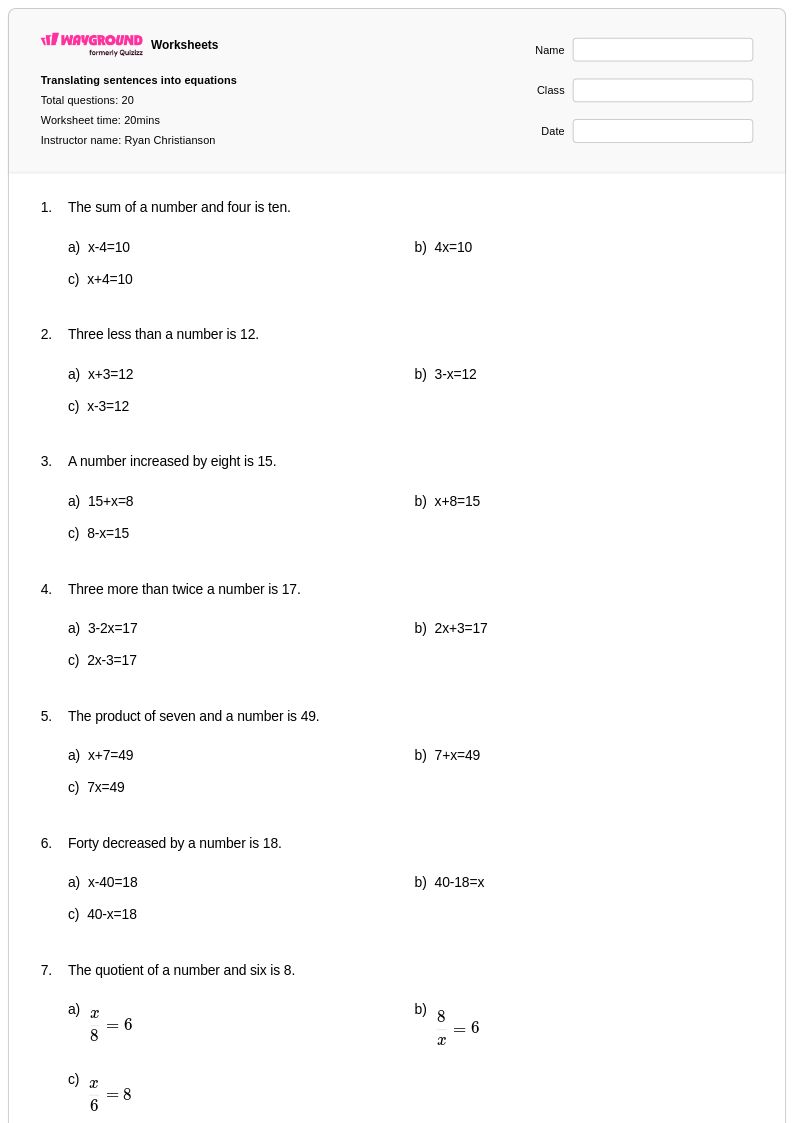
20 Q
8th
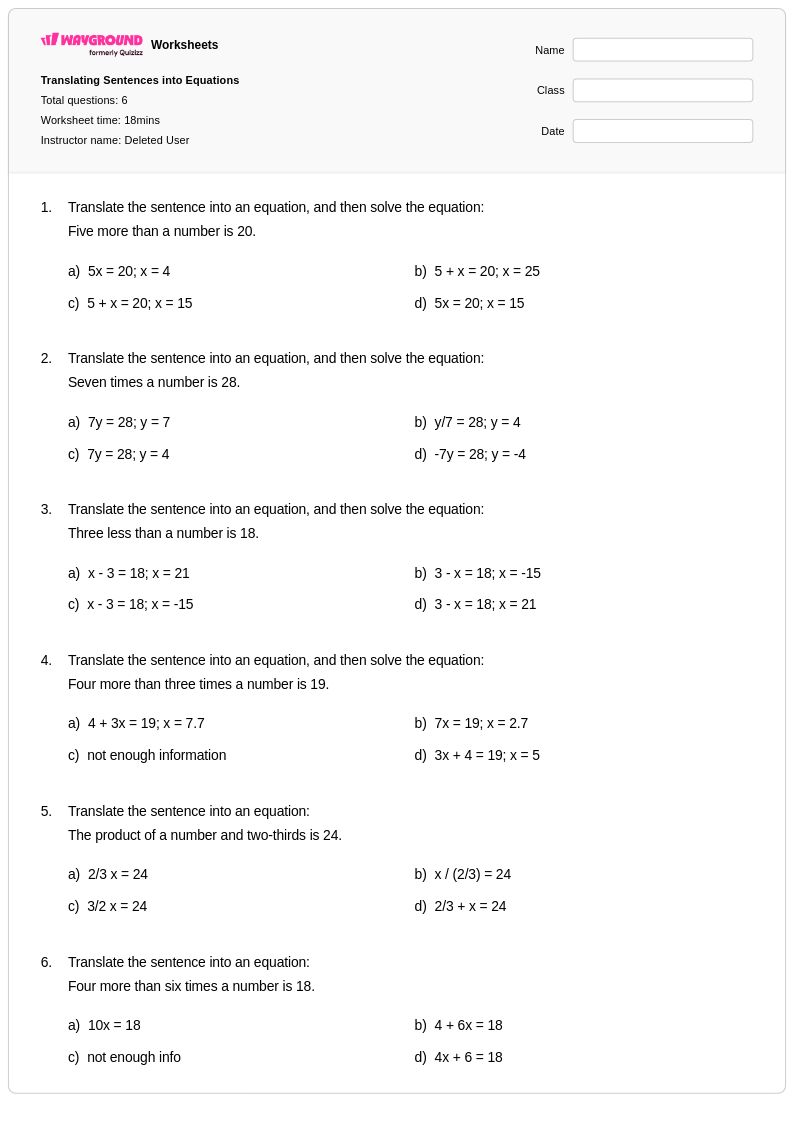
6 Q
KG - Uni
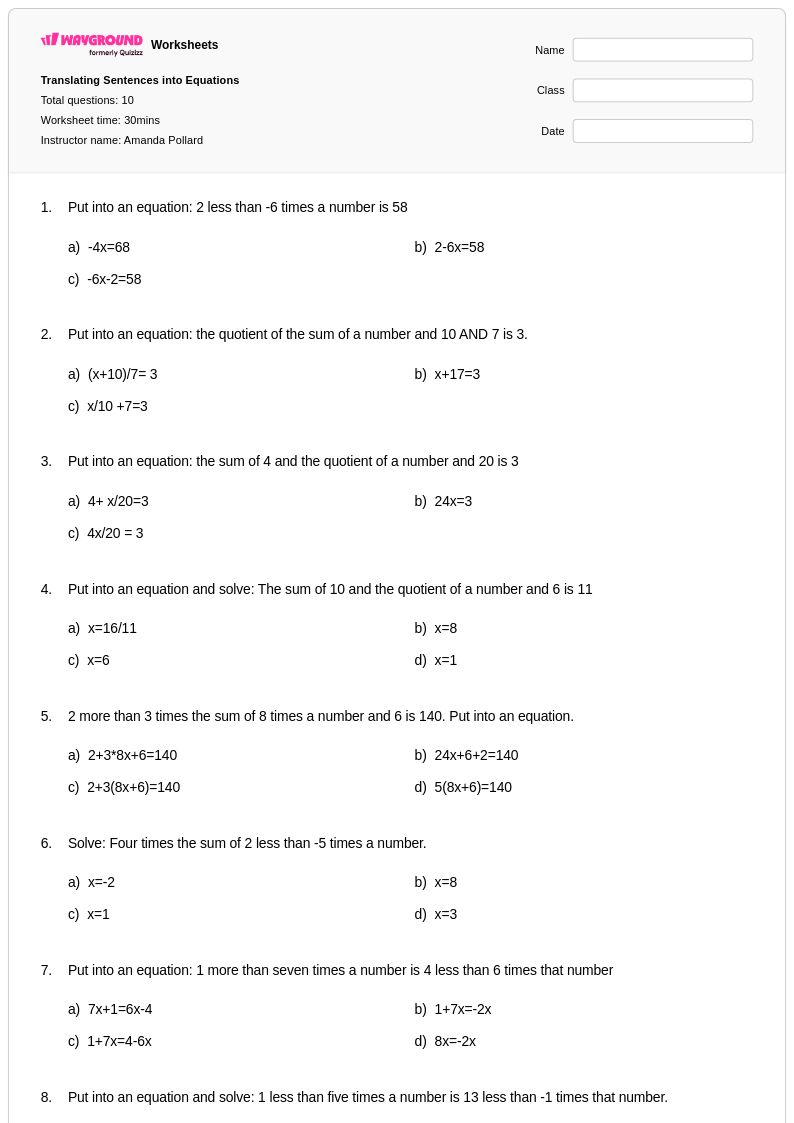
10 Q
8th - 9th
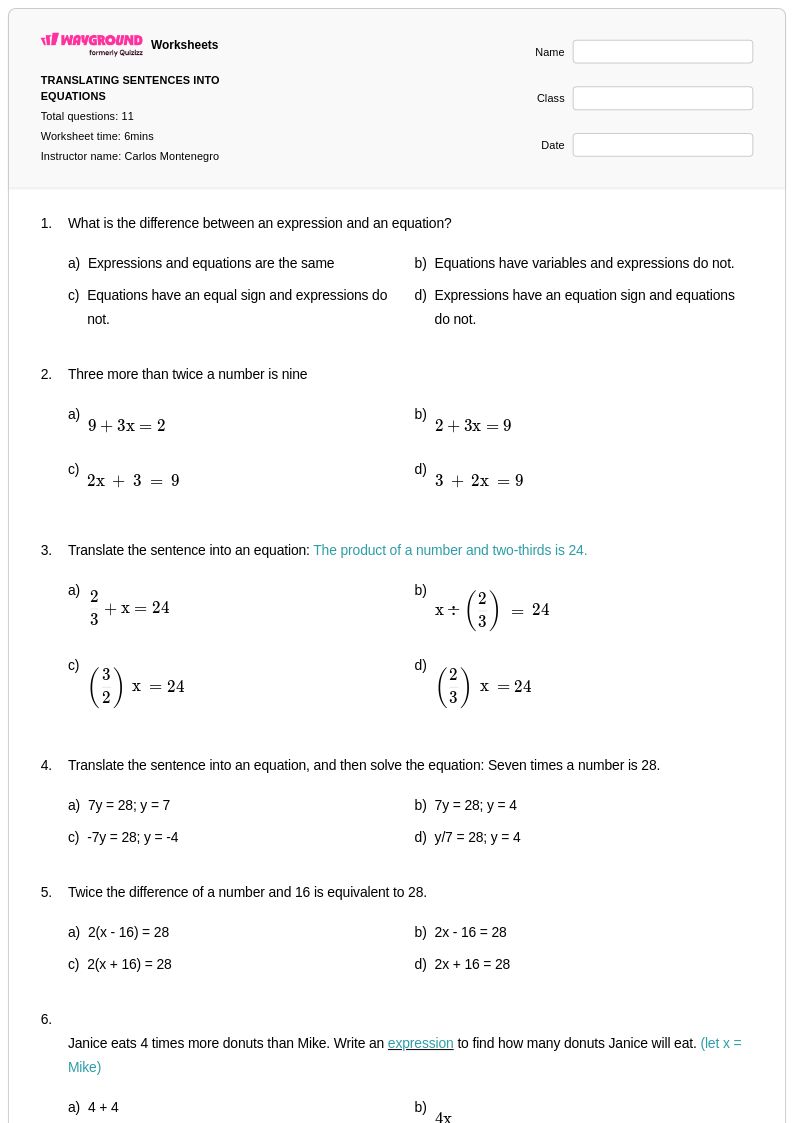
11 Q
6th - 8th
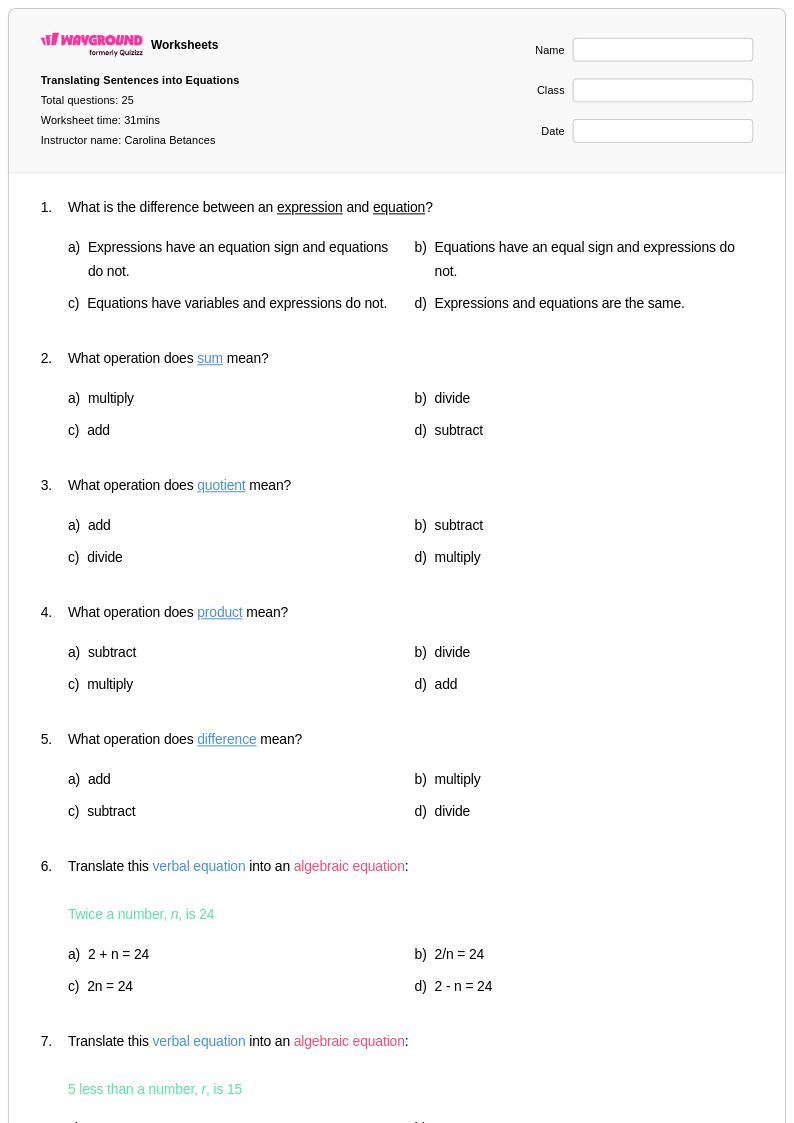
25 Q
9th
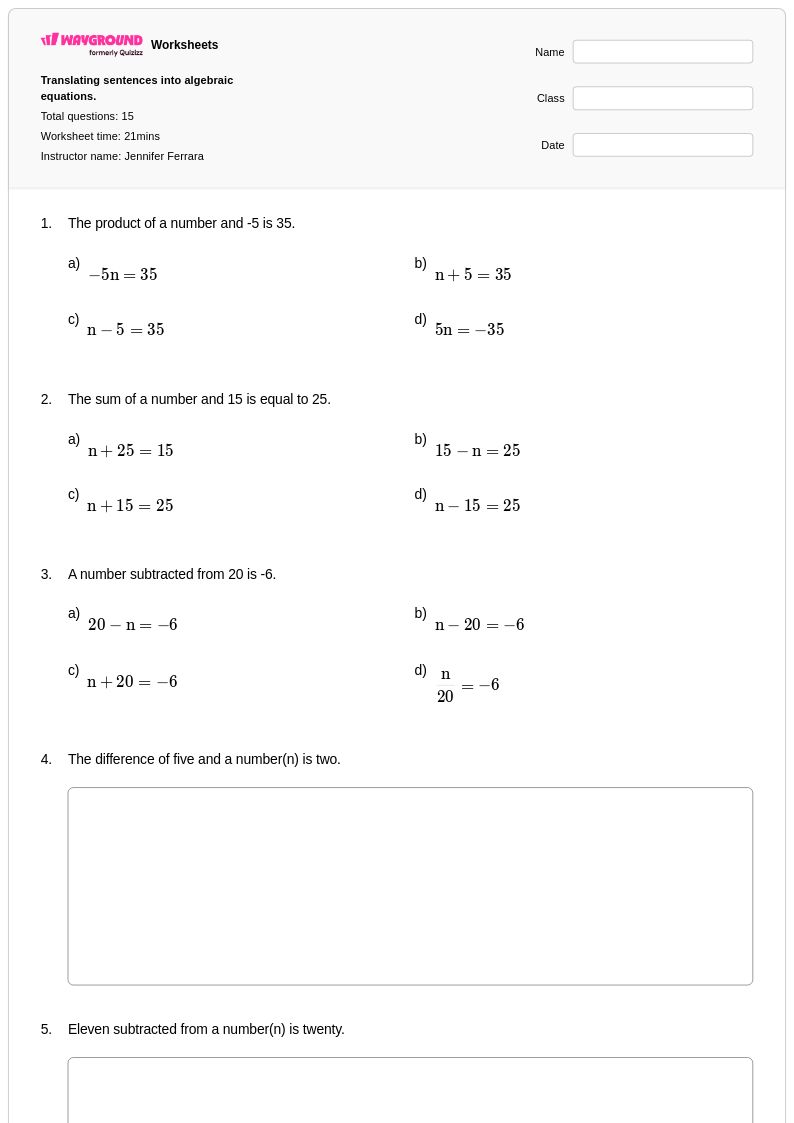
15 Q
9th
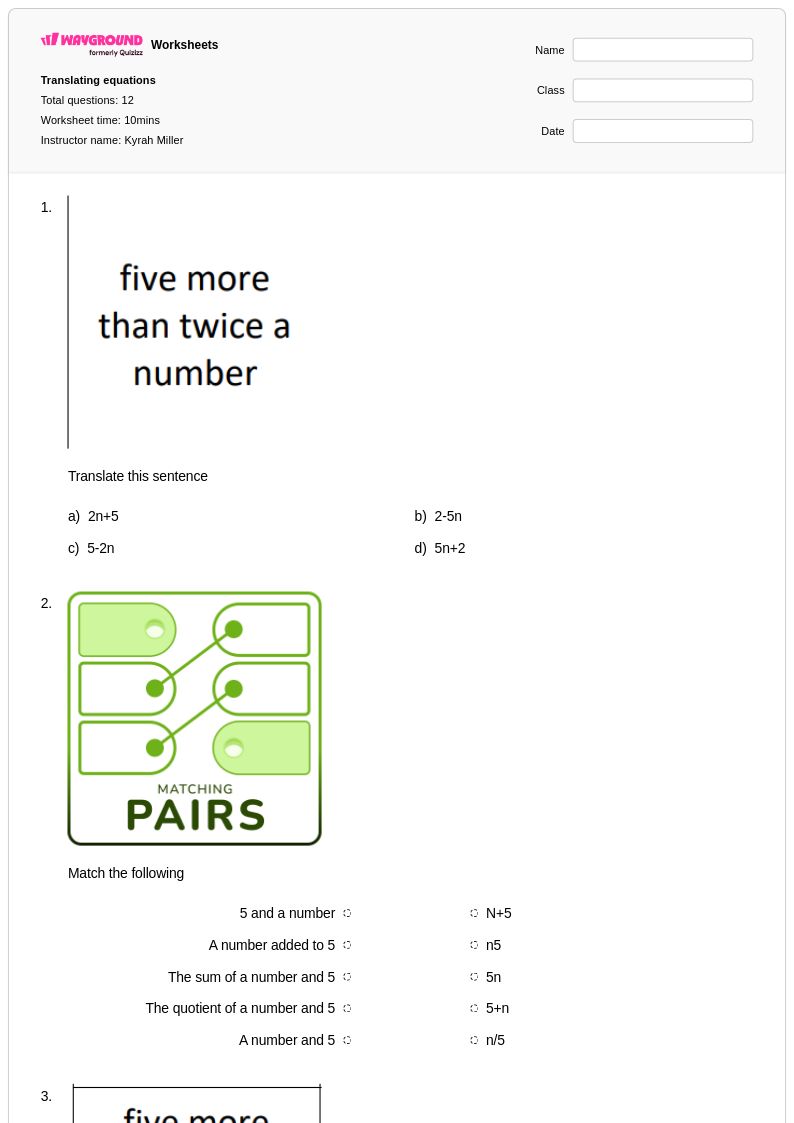
12 Q
7th
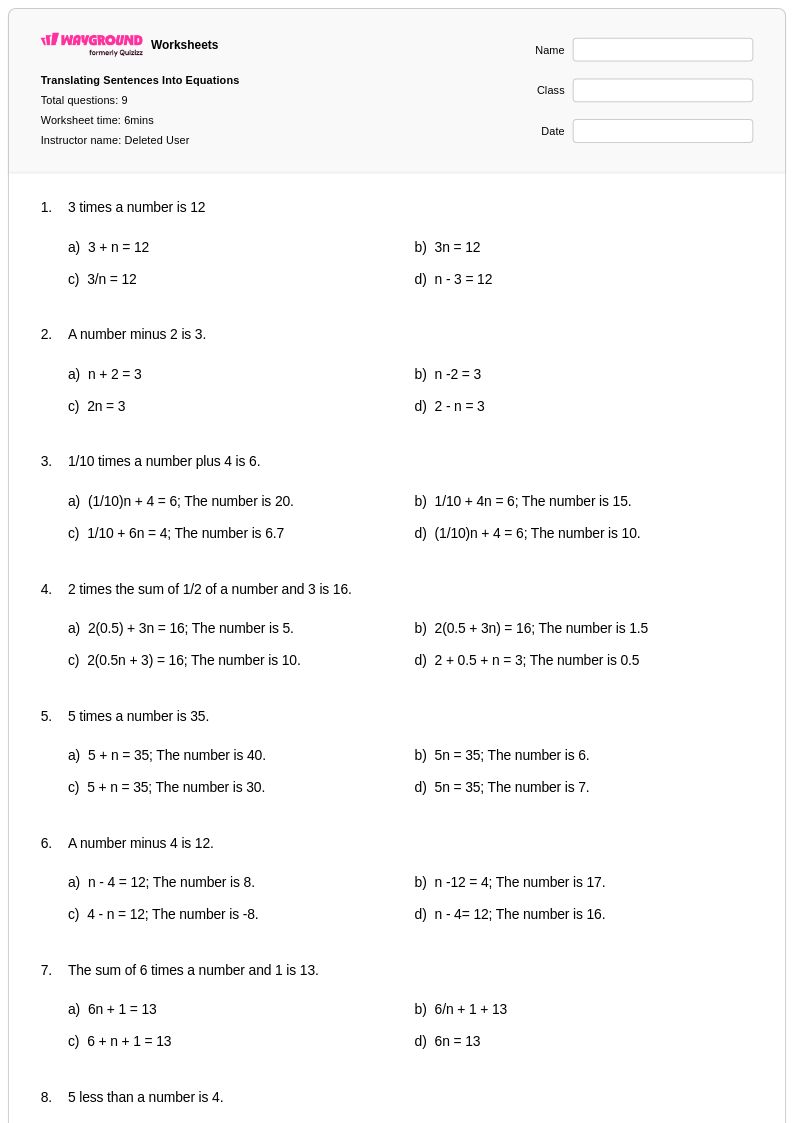
9 Q
7th - 9th
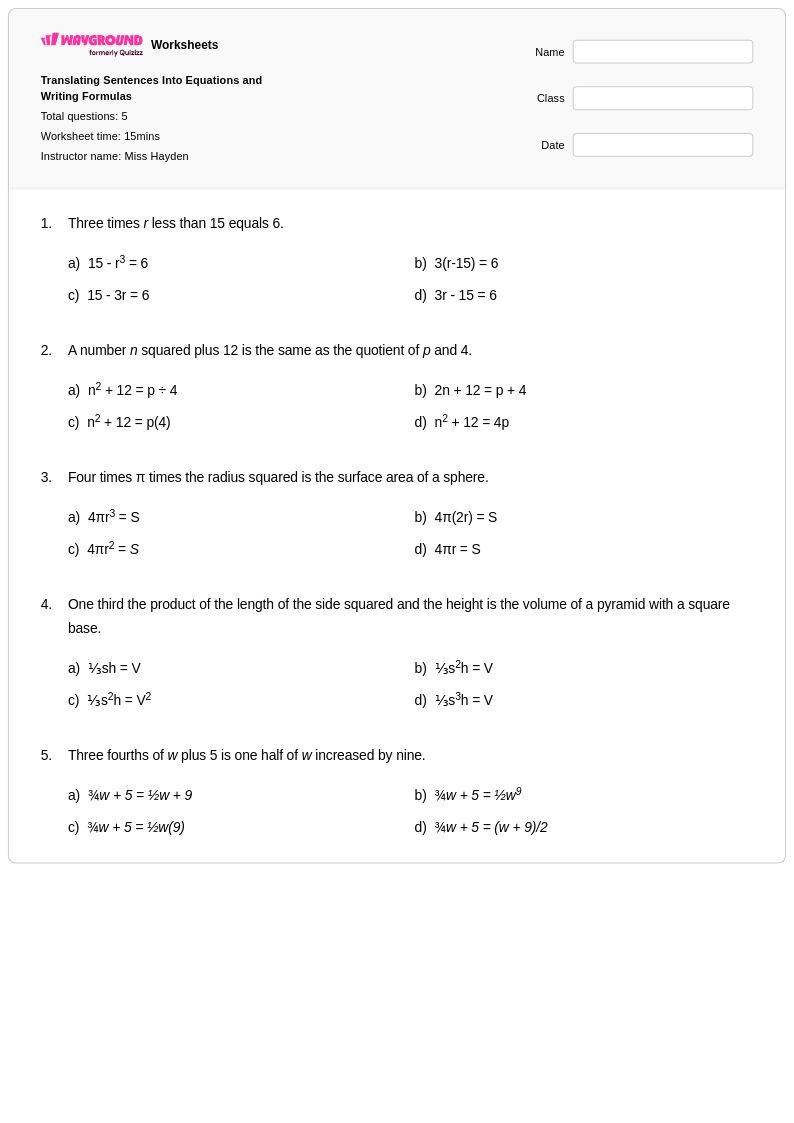
5 Q
7th - 9th
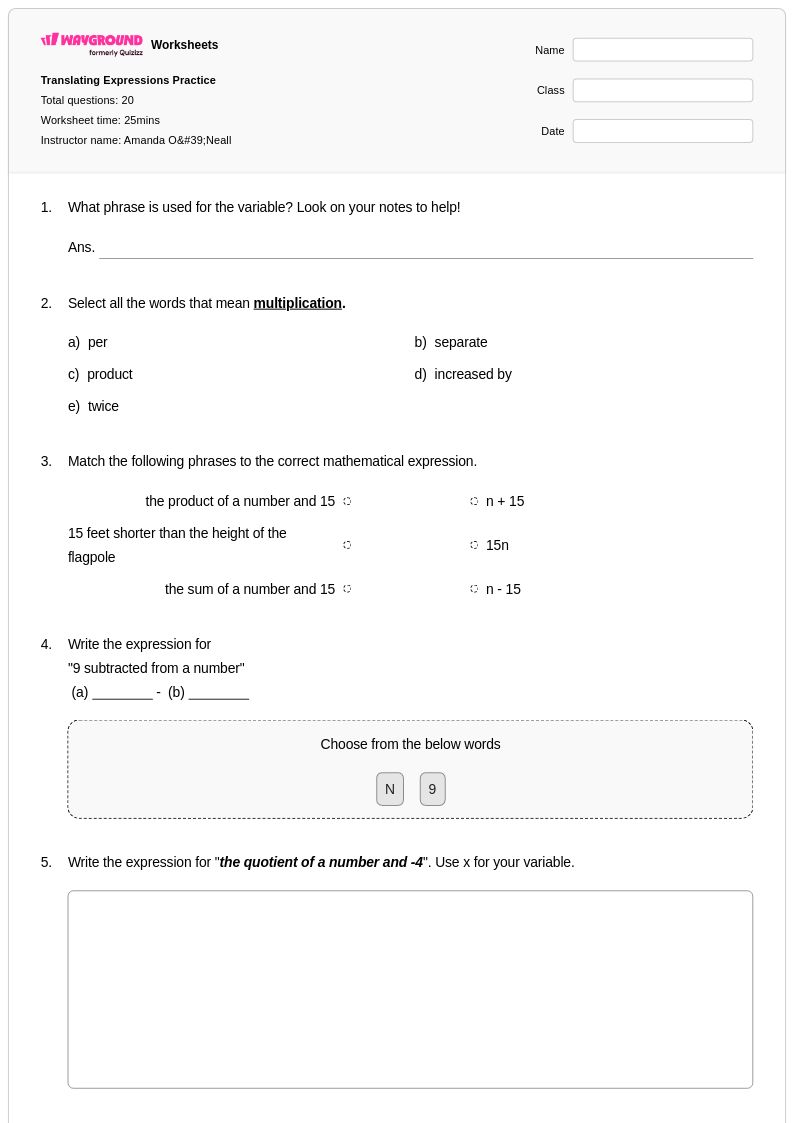
20 Q
7th - Uni
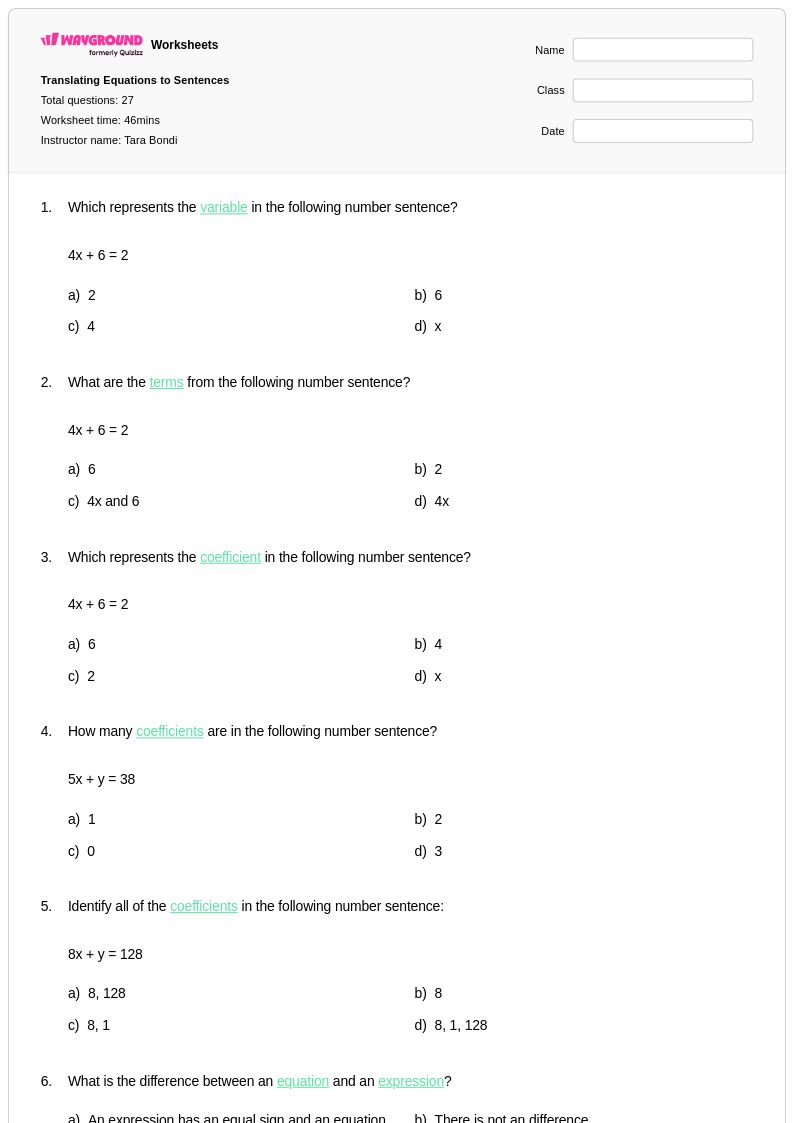
27 Q
6th
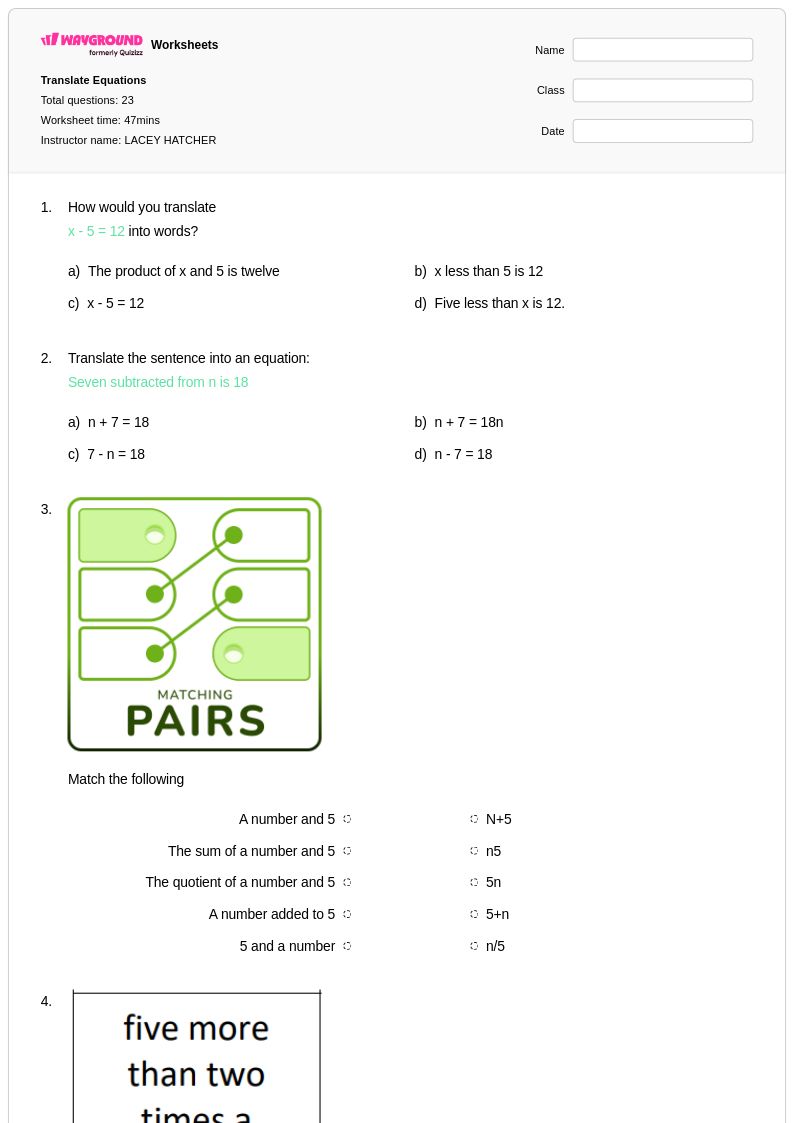
23 Q
9th - 12th
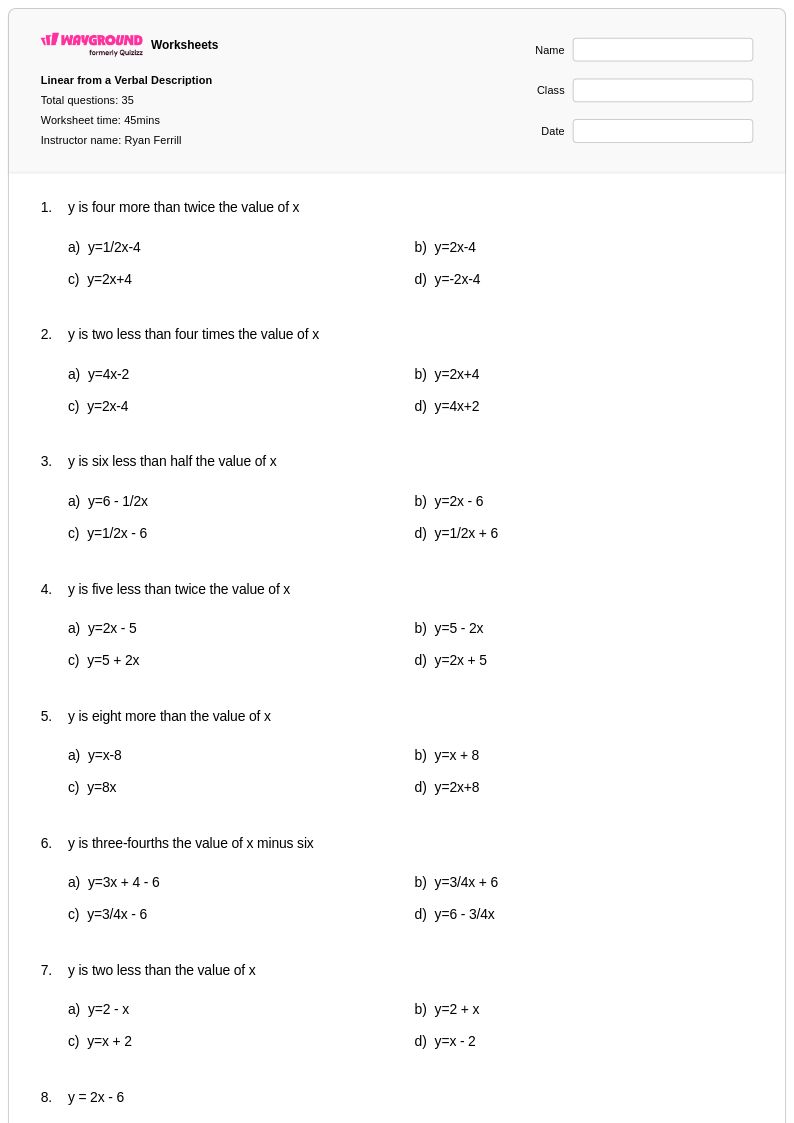
35 Q
8th
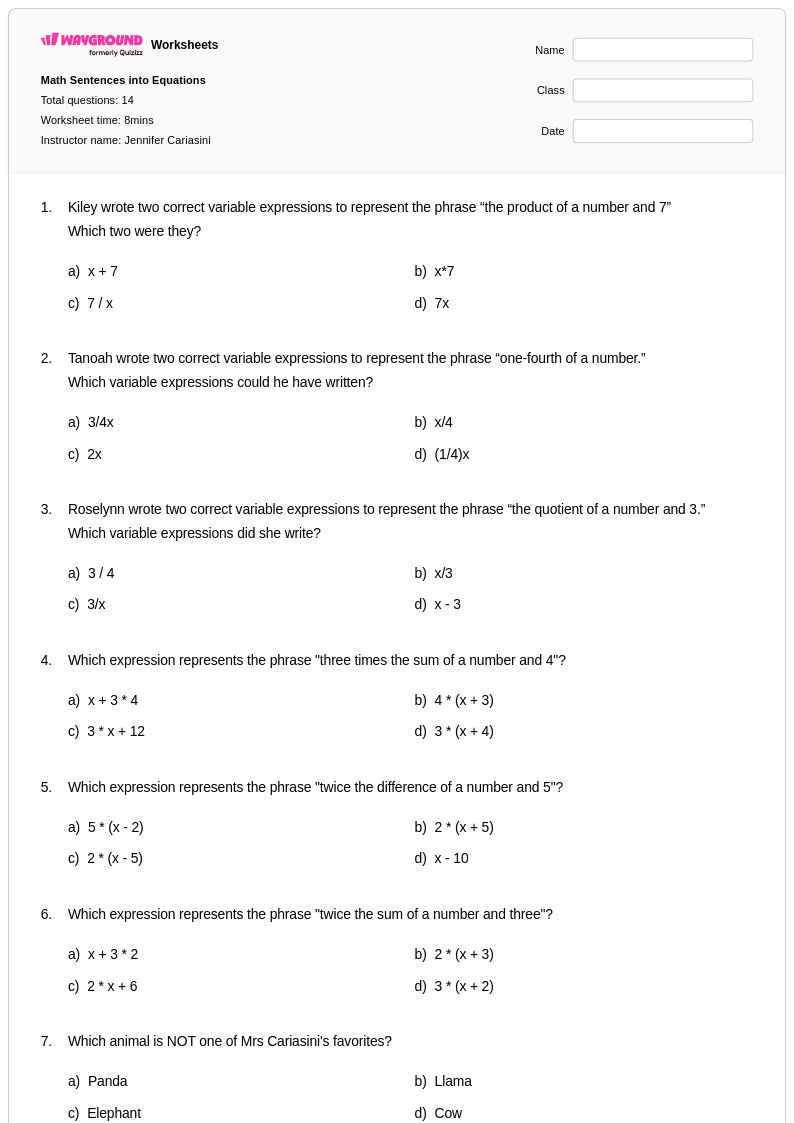
14 Q
9th - 12th
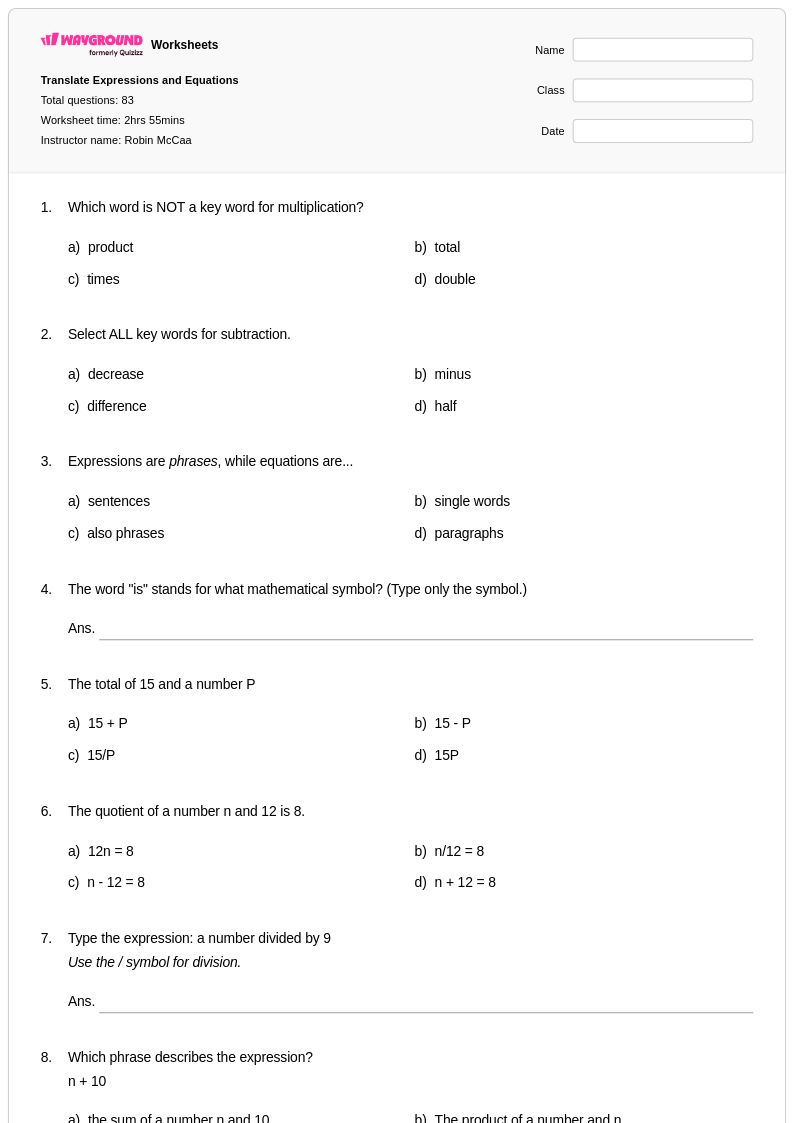
83 Q
9th
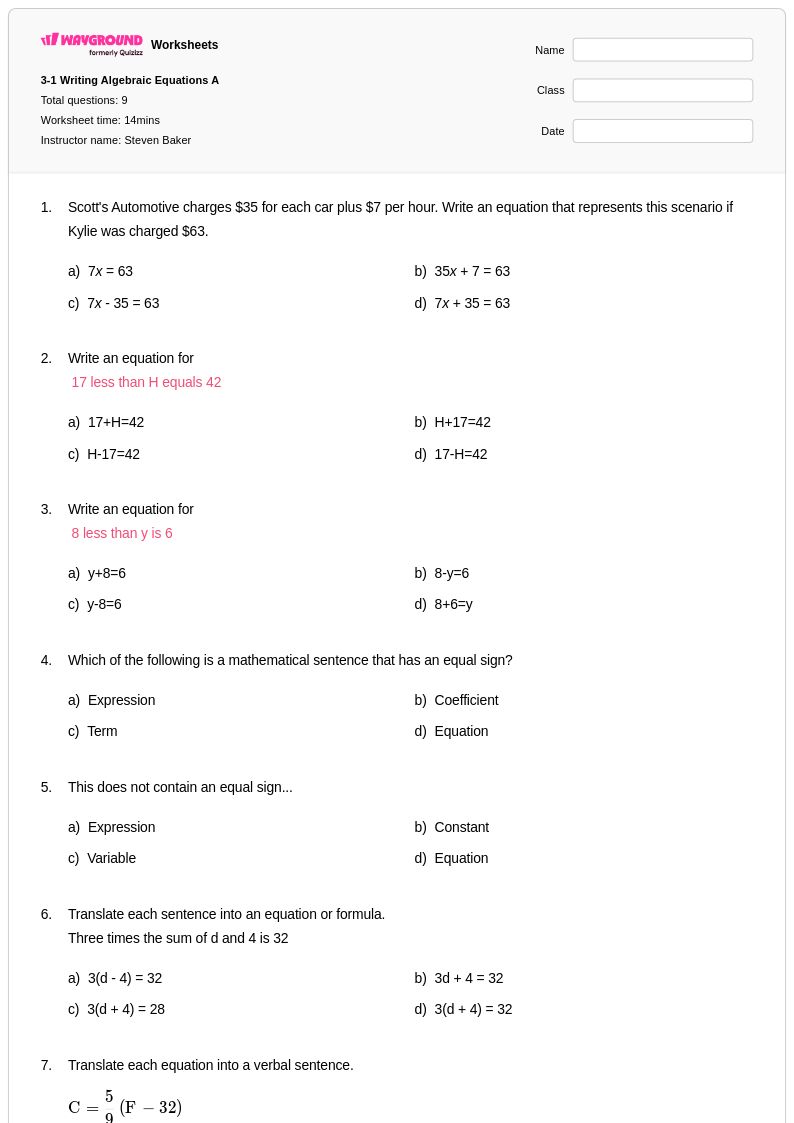
9 Q
9th - 12th
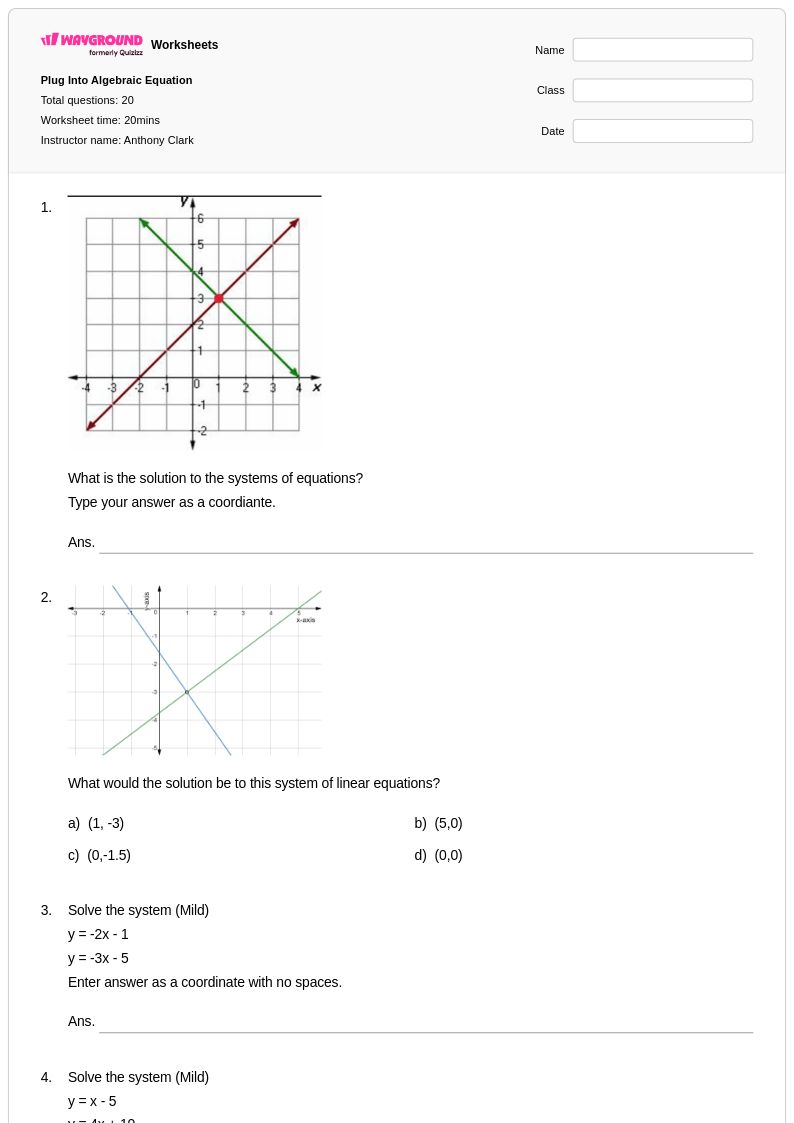
20 Q
8th - Uni
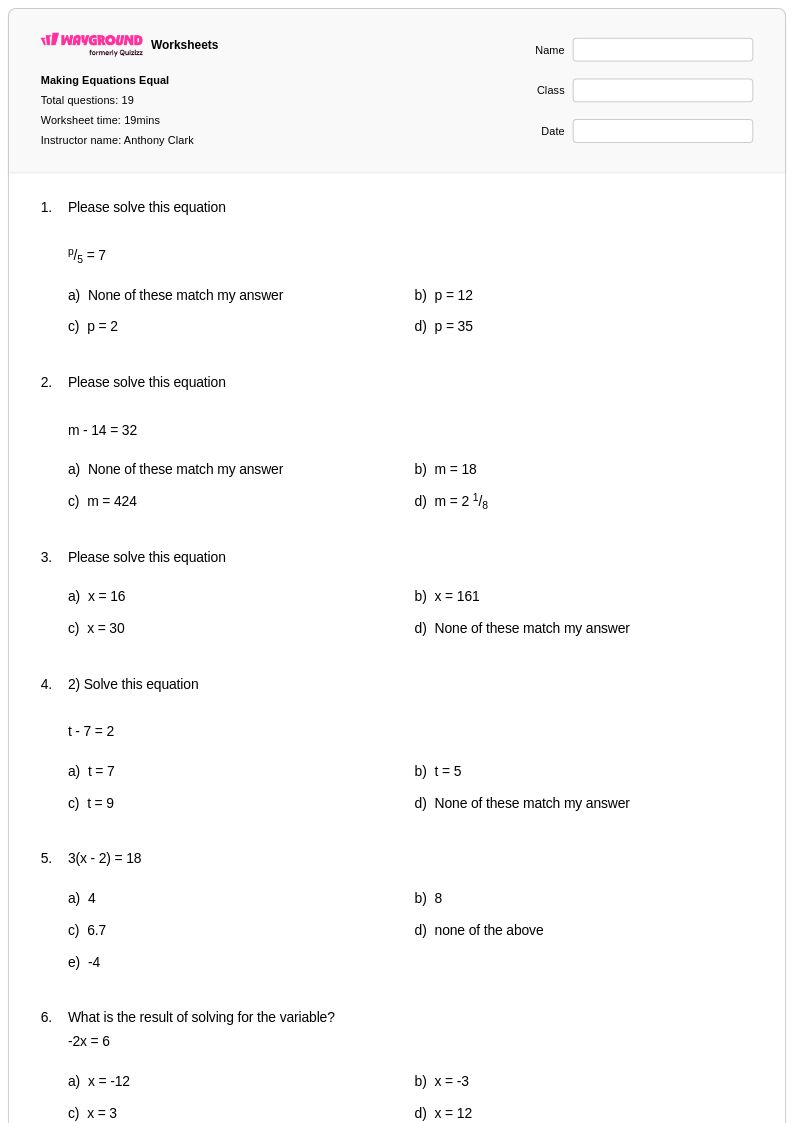
19 Q
8th - Uni
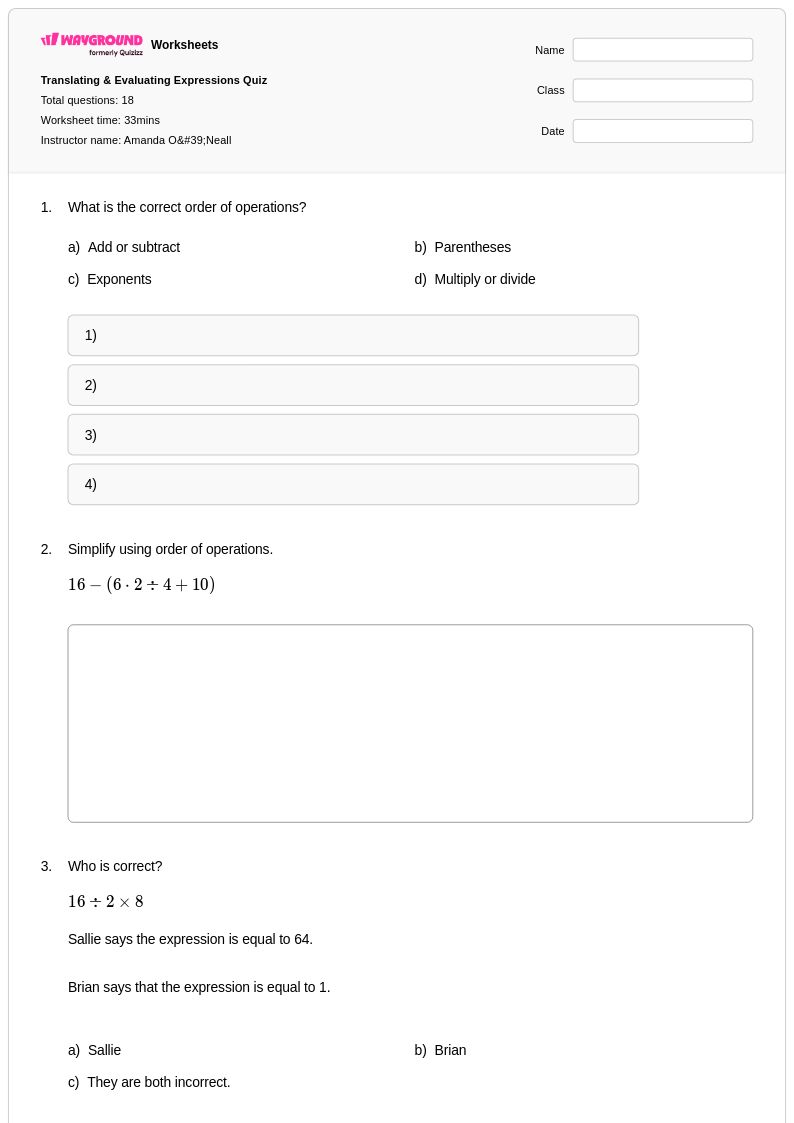
18 Q
6th - Uni
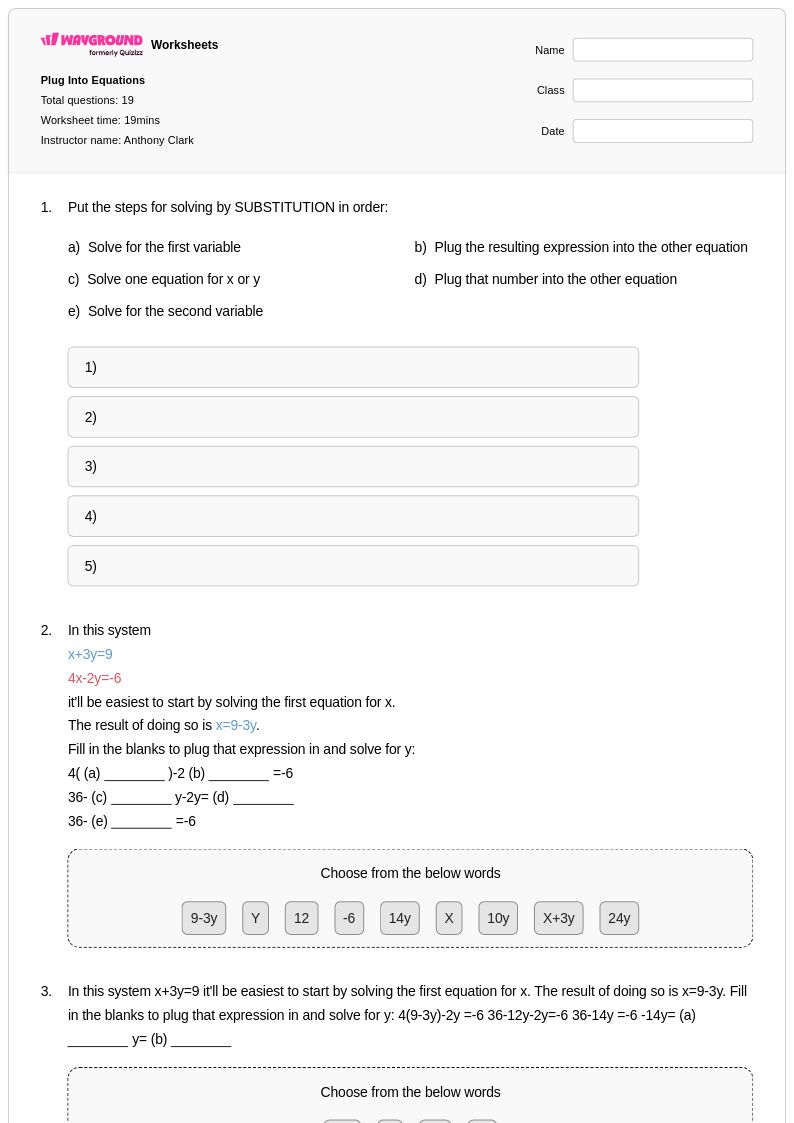
19 Q
9th - Uni
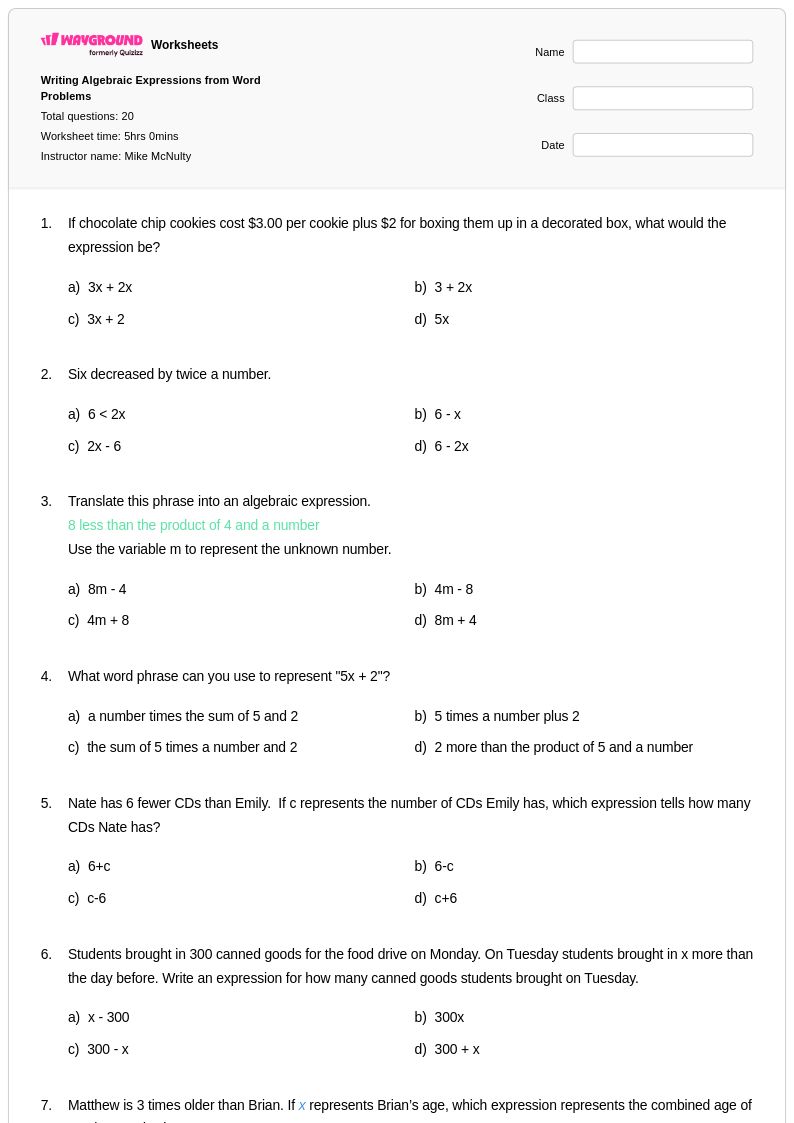
20 Q
6th - 7th
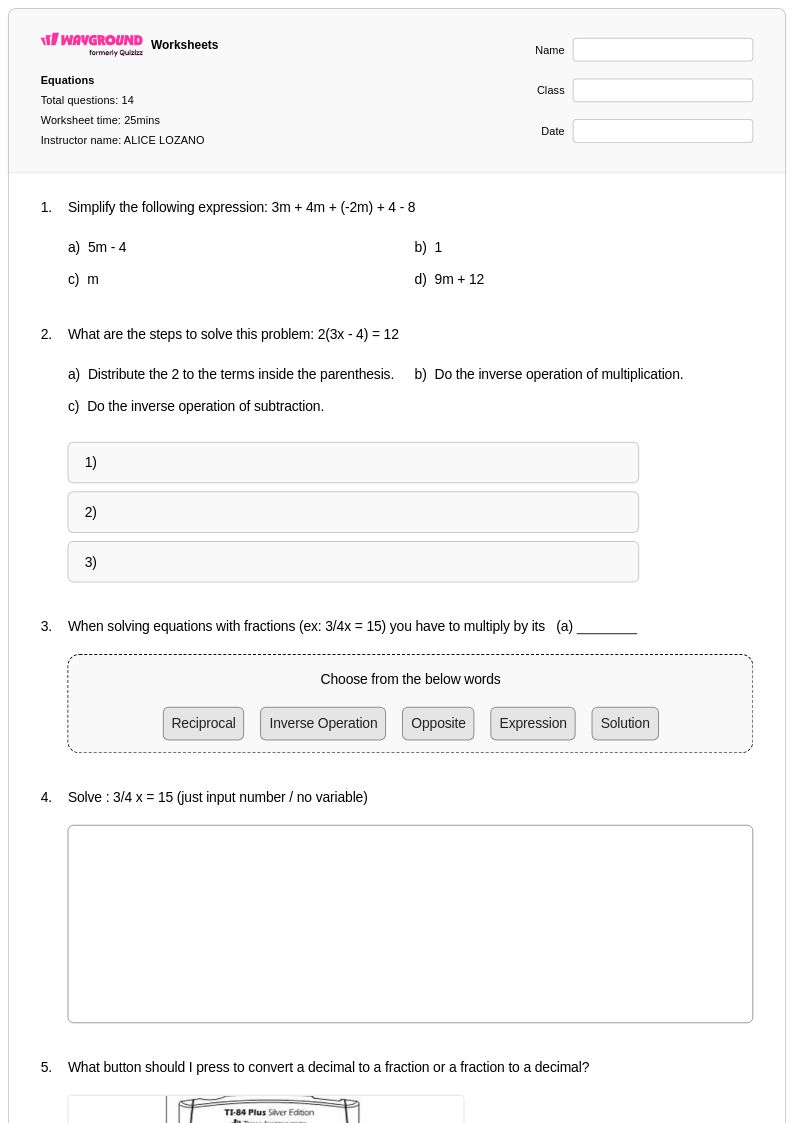
14 Q
8th
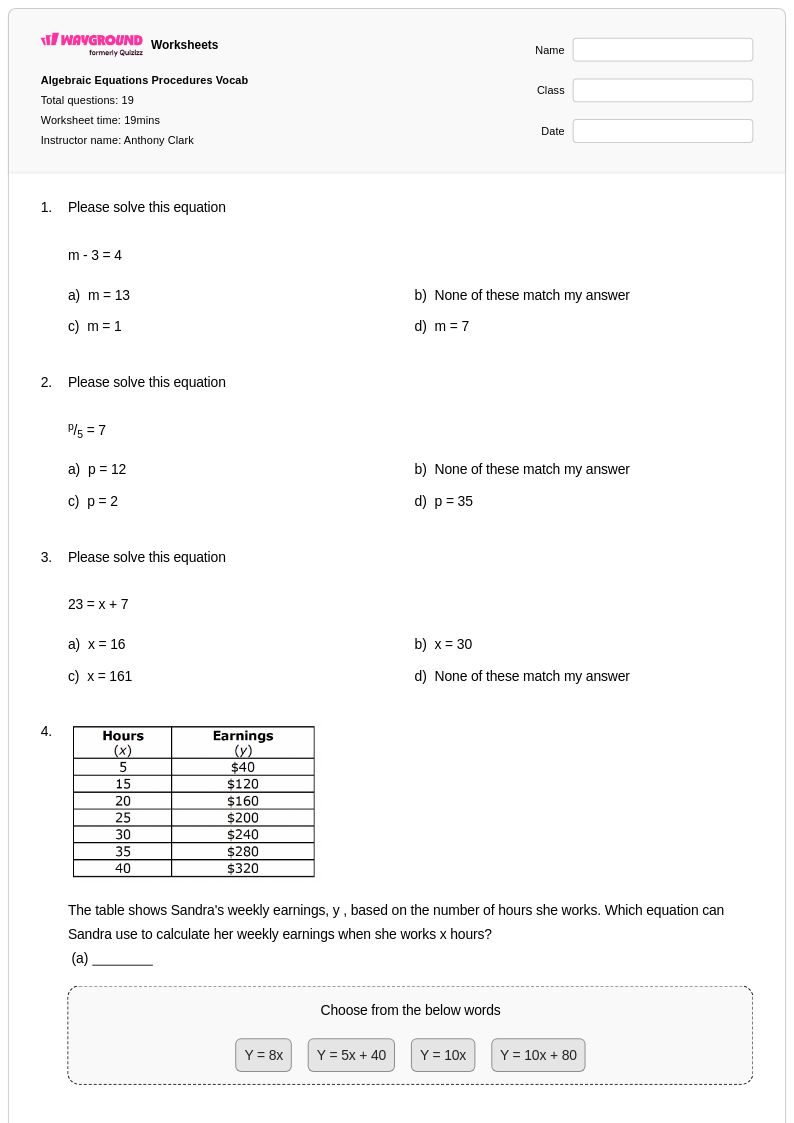
19 Q
6th - Uni
Explore Worksheets by Subjects
Explore printable Translating Sentences Into Equations worksheets
Translating sentences into equations represents a fundamental bridge between everyday language and mathematical expression, requiring students to decode written statements and convert them into algebraic notation. Wayground's comprehensive collection of translating sentences into equations worksheets provides systematic practice in this critical skill, helping students develop fluency in identifying key mathematical relationships, operations, and variables within word problems. These carefully designed practice problems guide learners through the process of recognizing verbal cues that indicate specific mathematical operations, such as "sum," "difference," "product," and "quotient," while building confidence in setting up equations that accurately represent real-world scenarios. Each worksheet includes detailed answer keys and step-by-step solutions, making these free printables invaluable resources for both independent study and classroom instruction in developing algebraic thinking skills.
Wayground's extensive library, featuring millions of teacher-created resources, empowers educators with robust tools for delivering effective instruction in translating sentences into equations across diverse learning environments. The platform's advanced search and filtering capabilities enable teachers to quickly locate worksheets that align with specific curriculum standards and student ability levels, while built-in differentiation tools support customized learning experiences for varied instructional needs. These versatile resources are available in both printable pdf format and interactive digital versions, allowing seamless integration into traditional classroom settings, remote learning environments, or hybrid instructional models. Teachers can efficiently plan targeted skill practice sessions, implement remediation strategies for struggling learners, and provide enrichment opportunities for advanced students, all while accessing professionally developed materials that maintain consistent quality and pedagogical rigor throughout their algebra curriculum.