Free Printable Common Noun Worksheets for Kindergarten
Discover free kindergarten common noun worksheets and printables from Wayground that help young learners identify and practice everyday objects, people, and places through engaging activities with answer keys included.
Explore printable Common Noun worksheets for Kindergarten
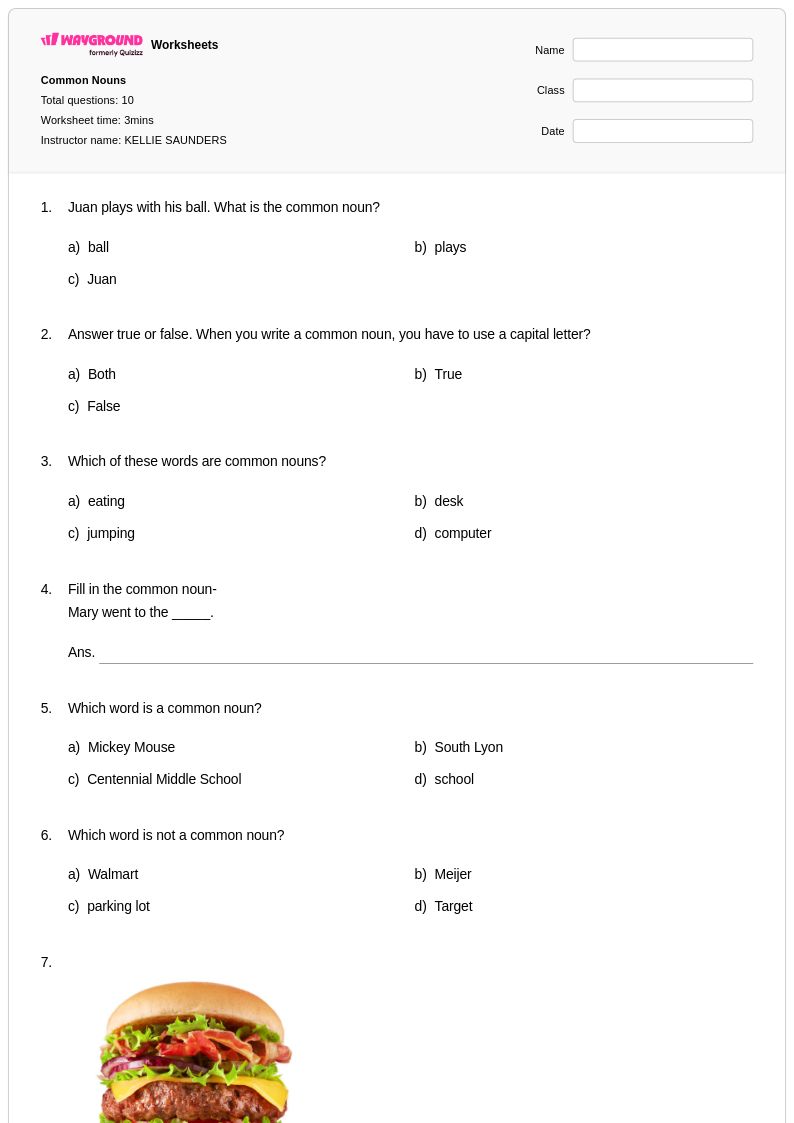
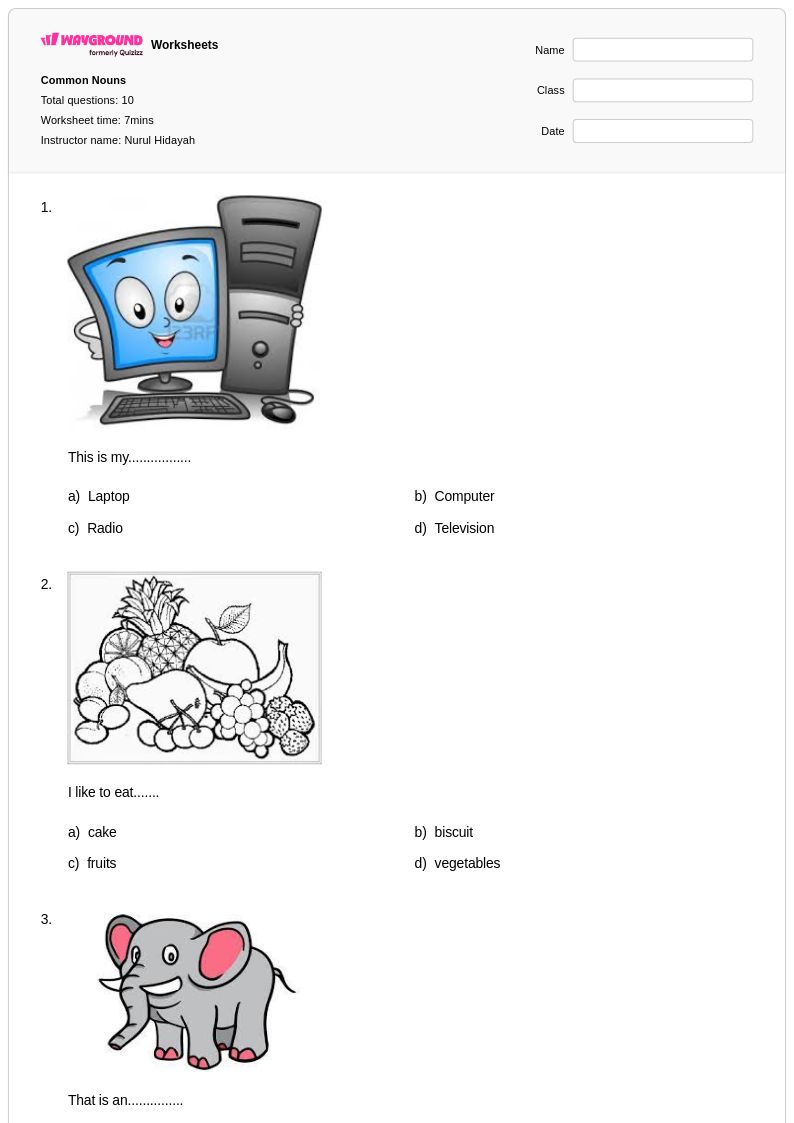
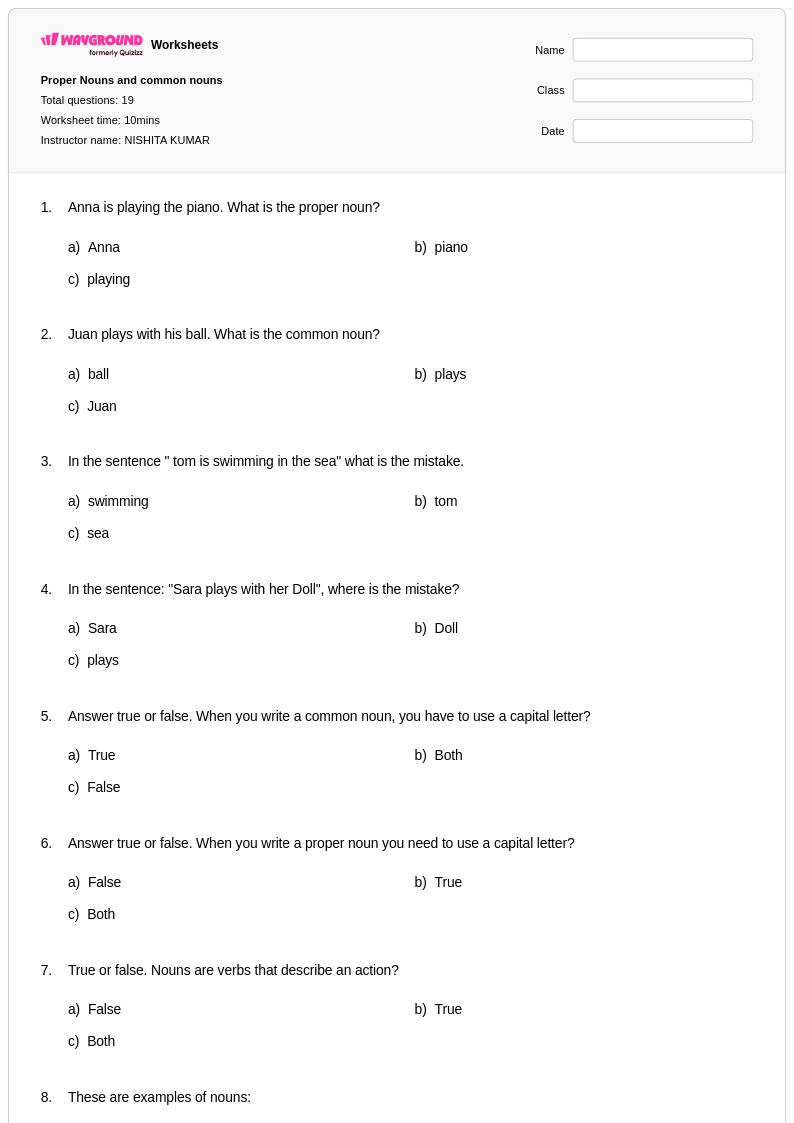
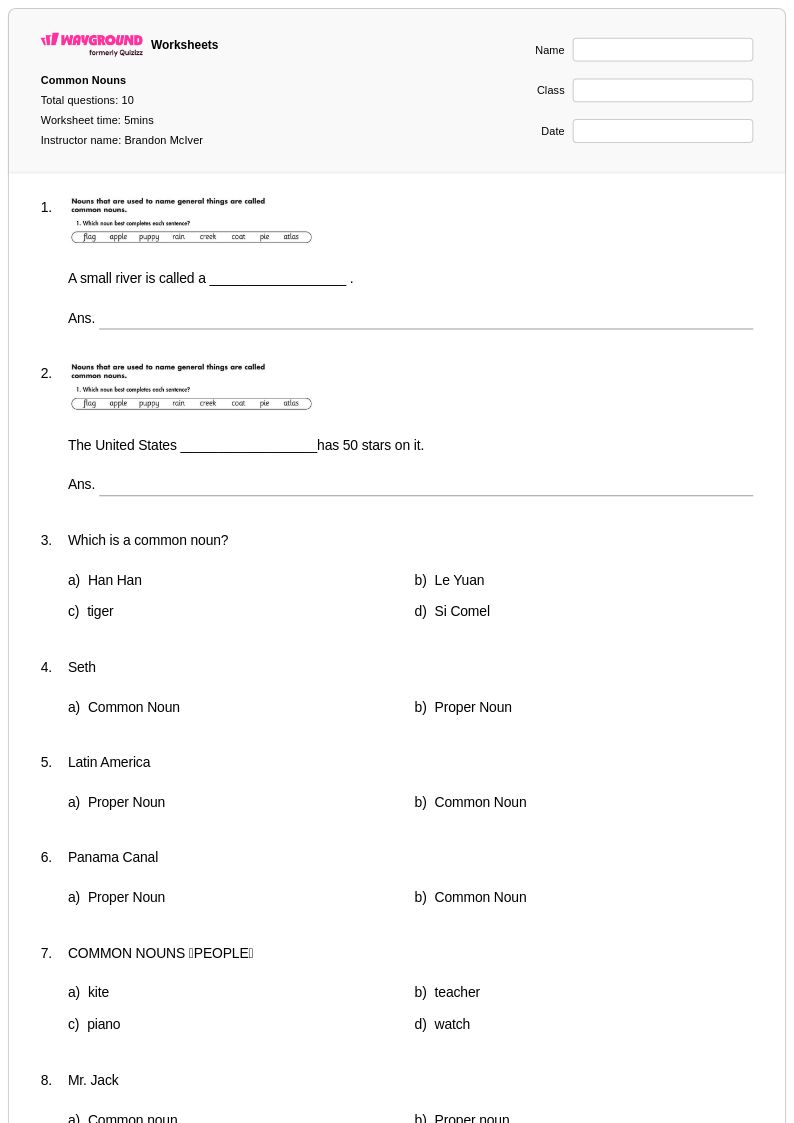
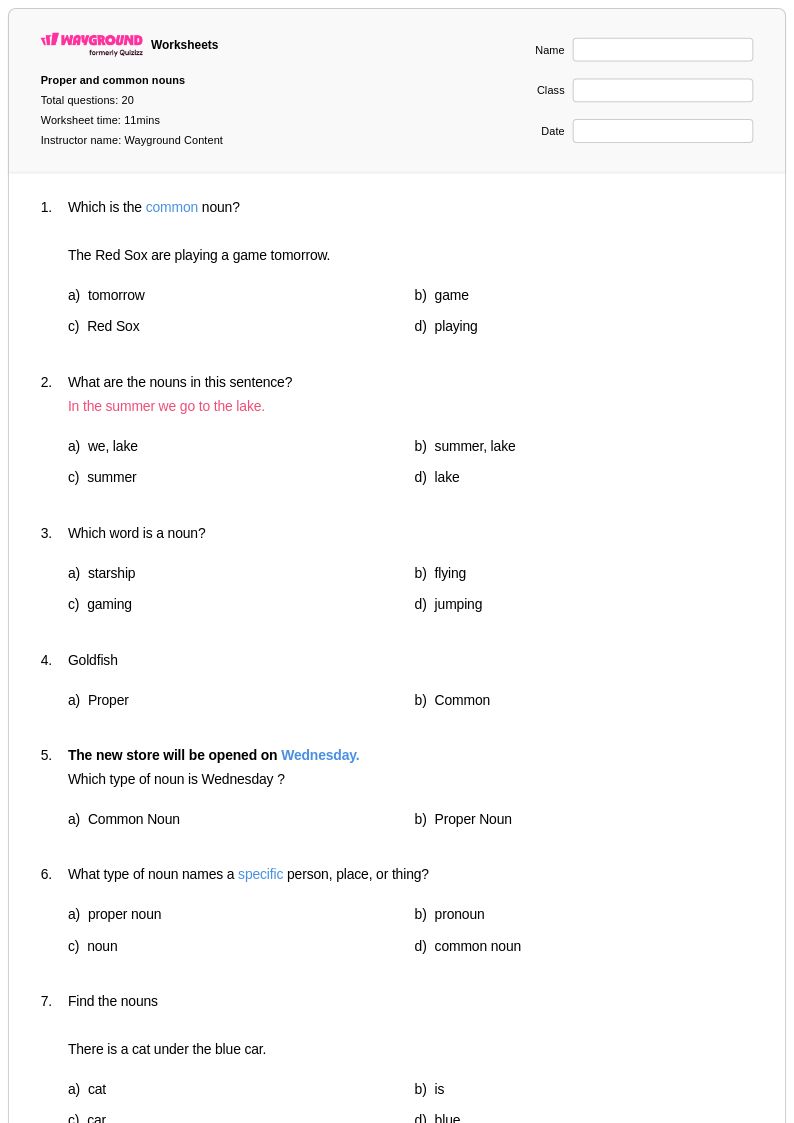
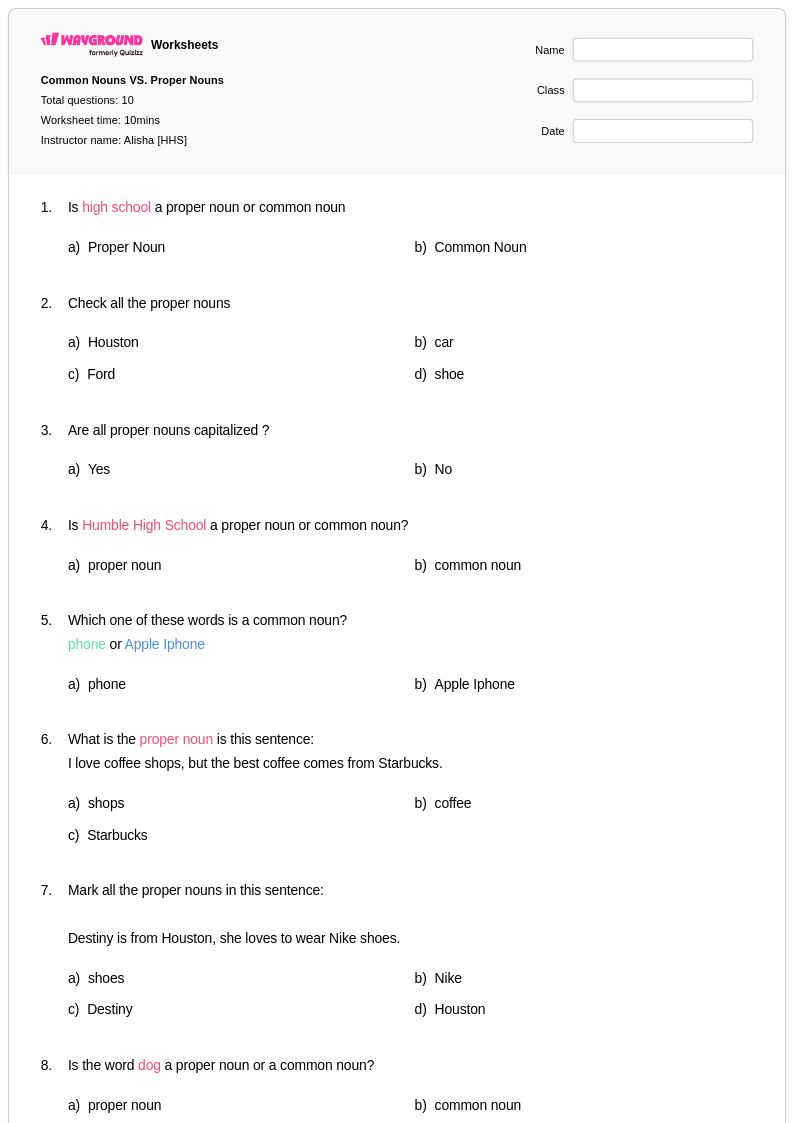
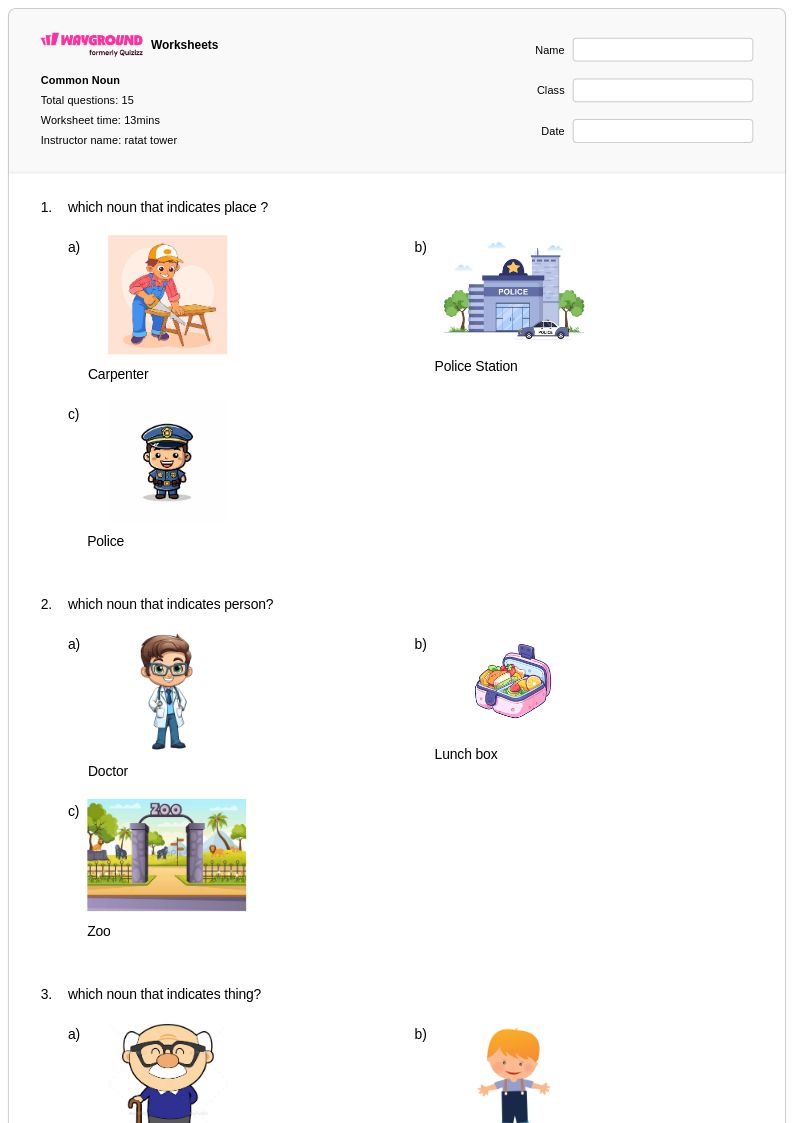
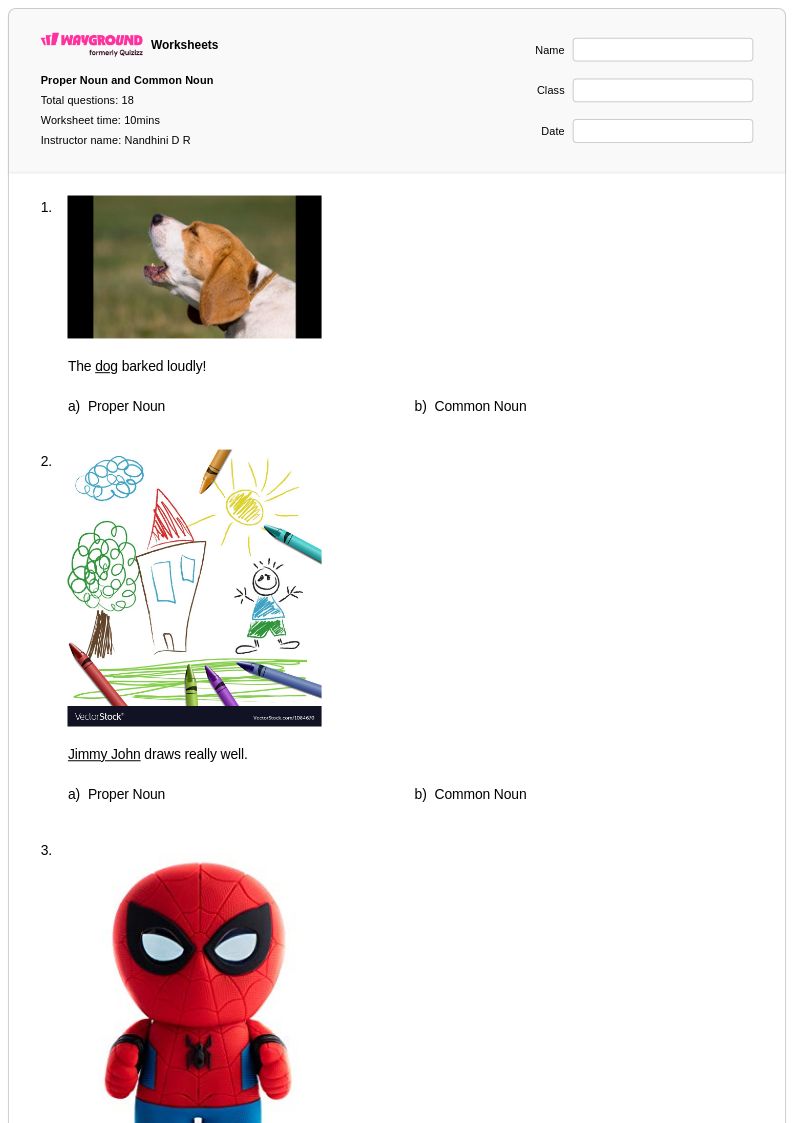
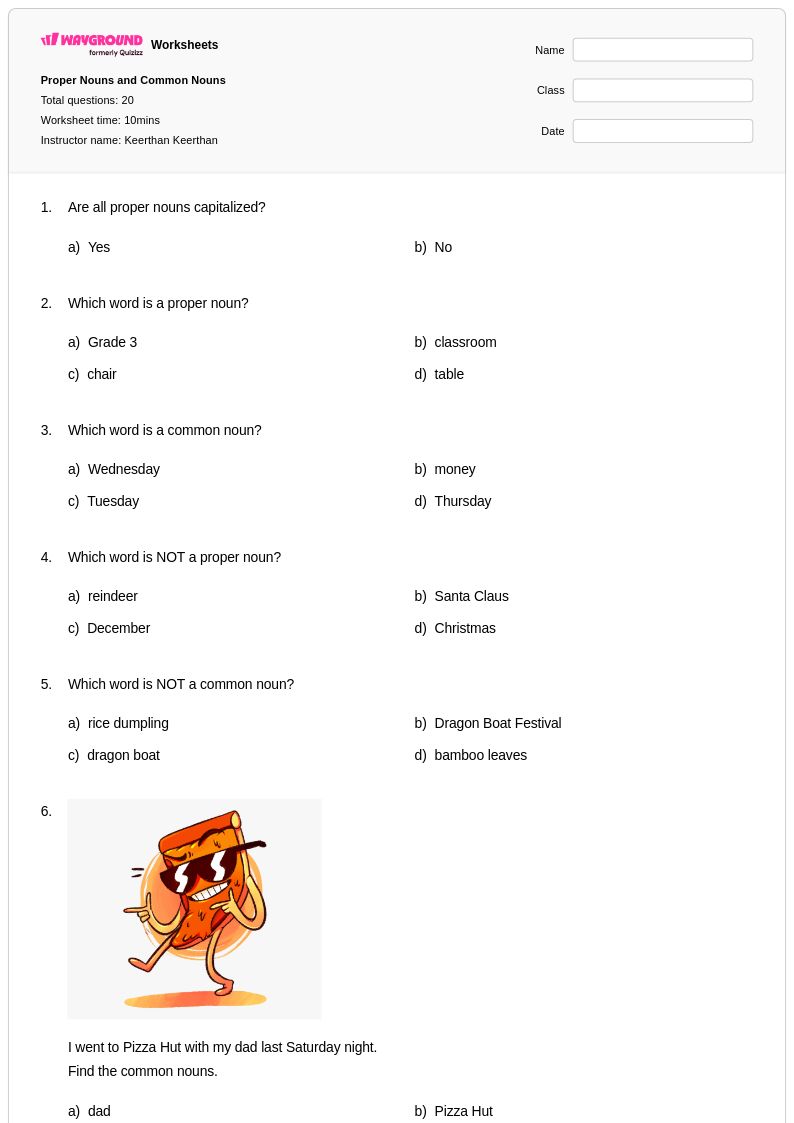
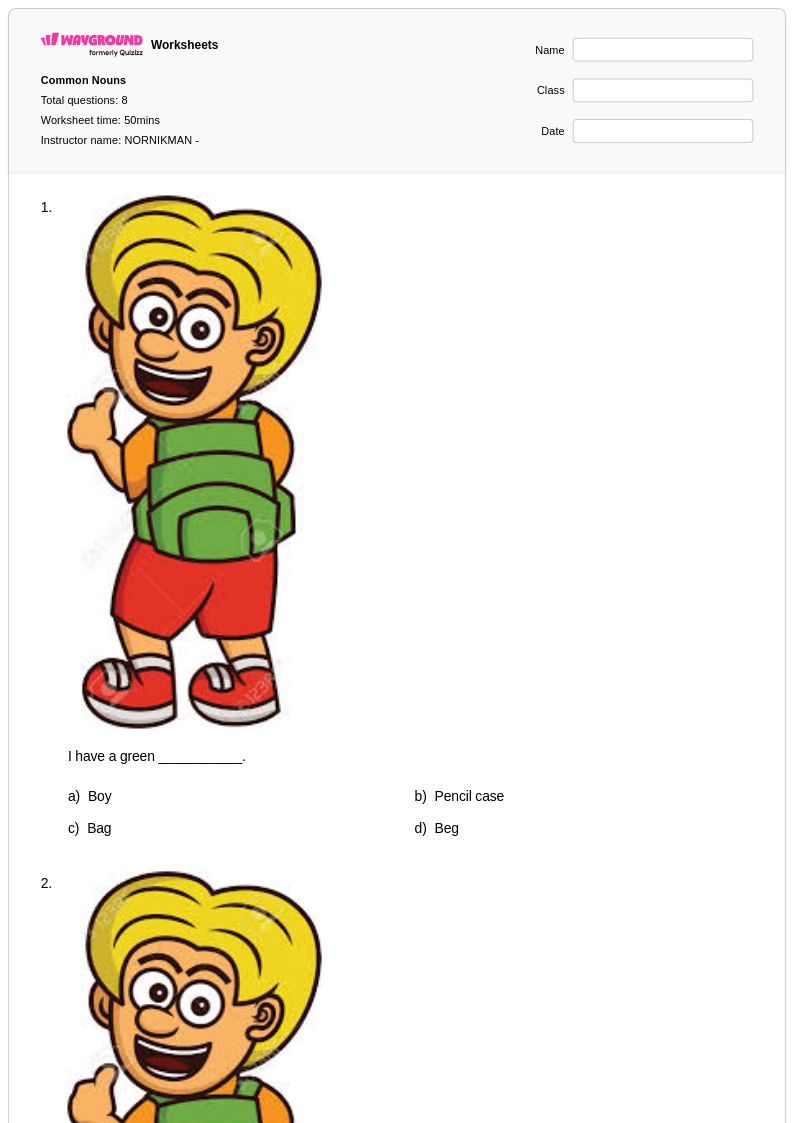
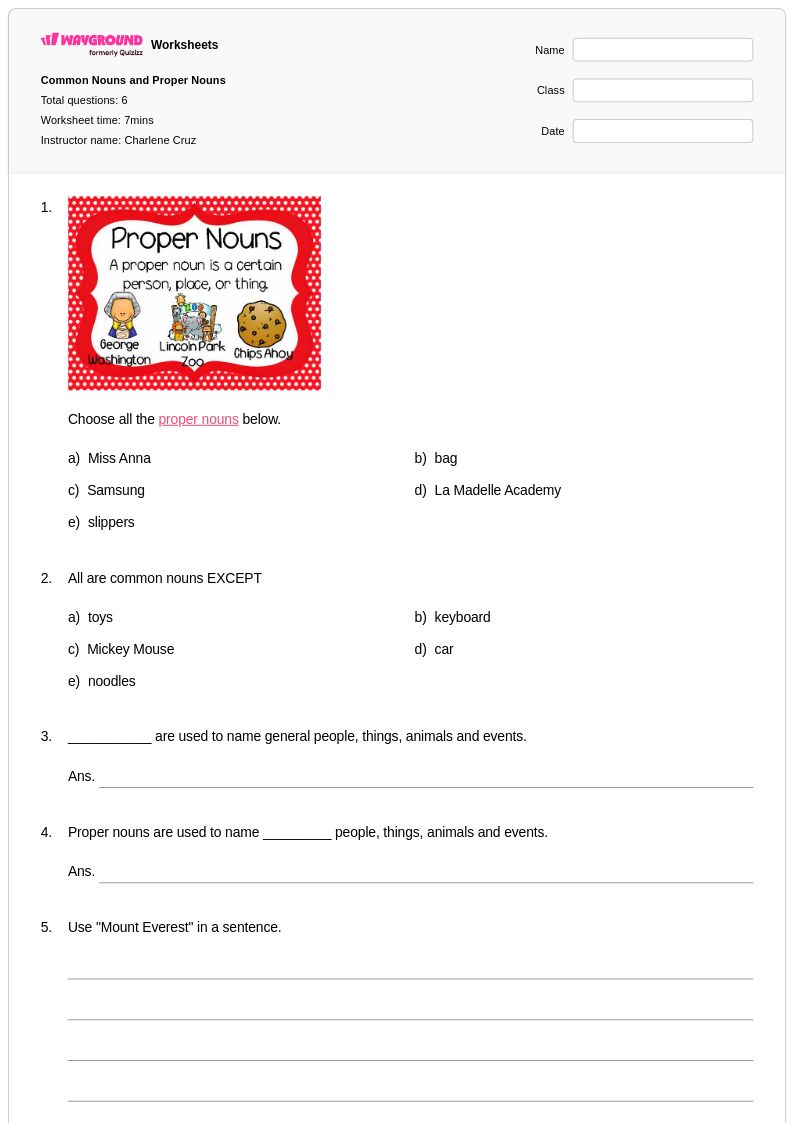
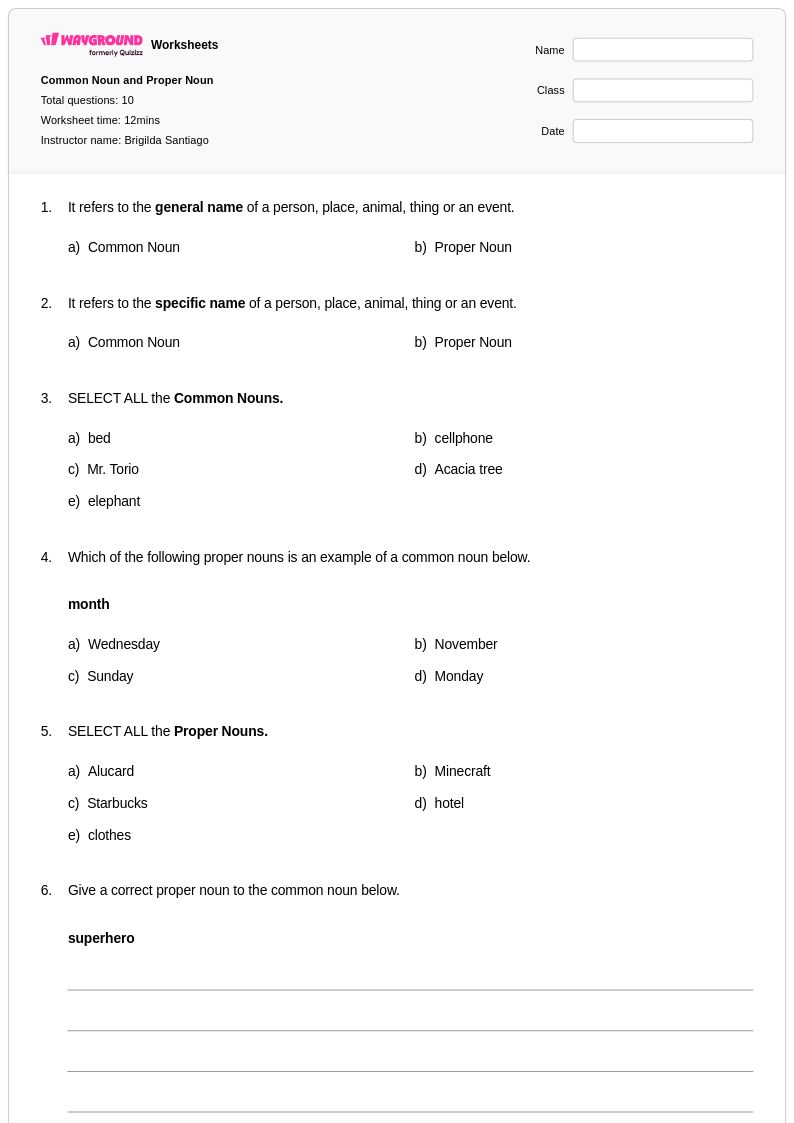
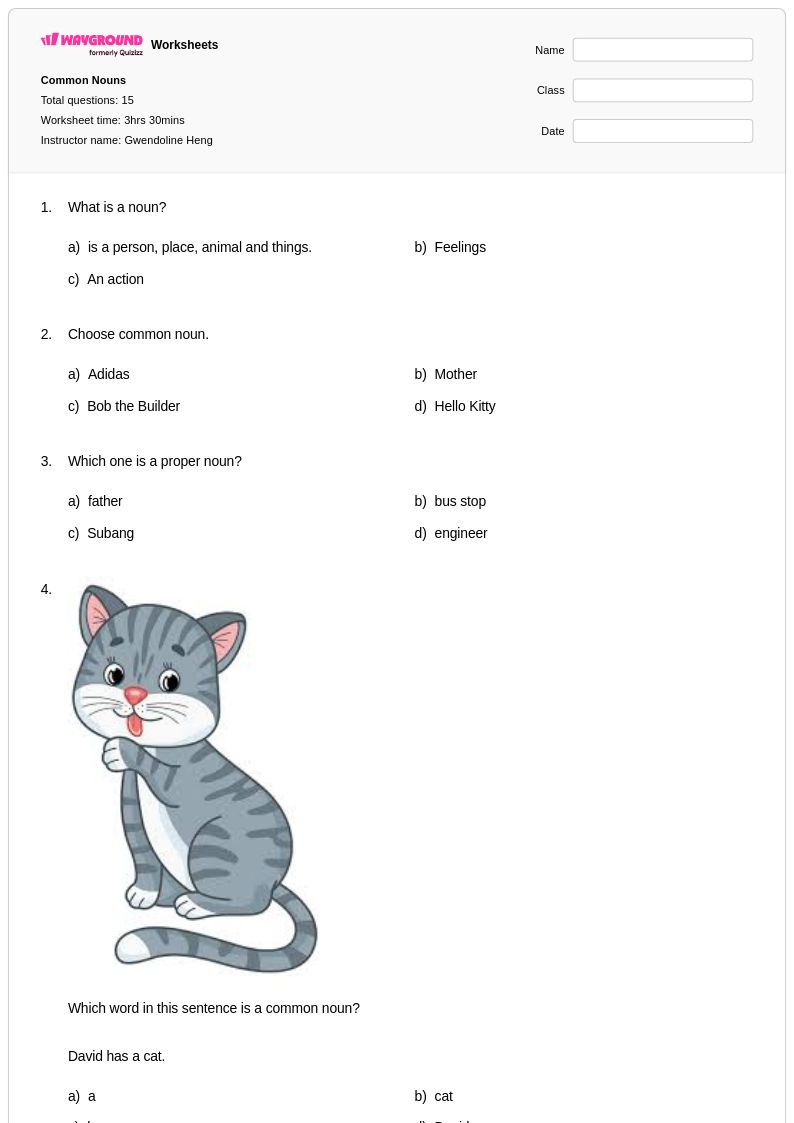
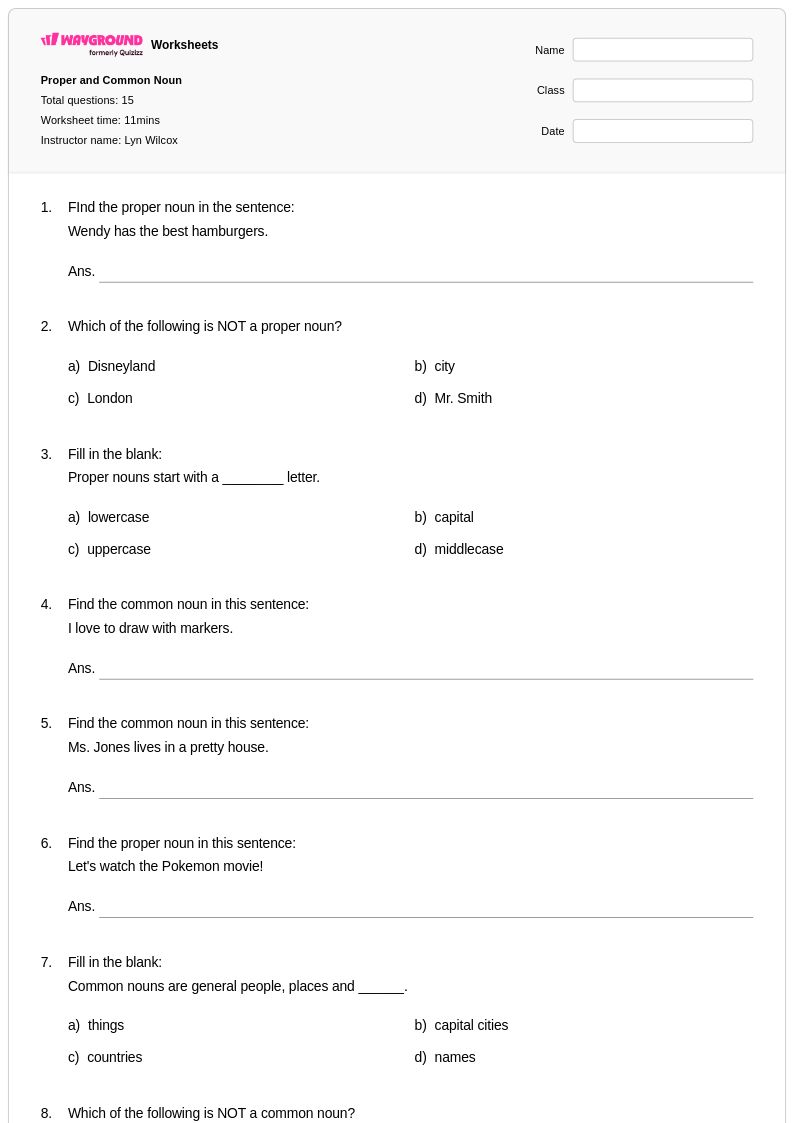
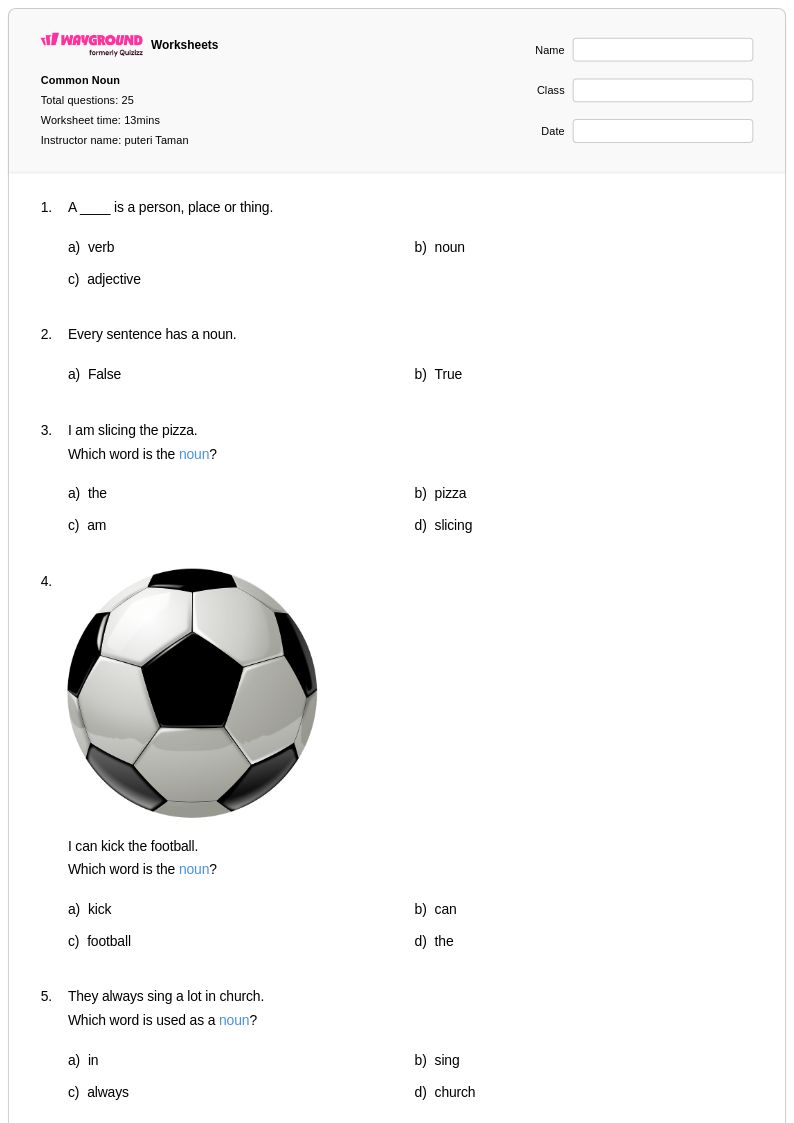
Common noun worksheets for kindergarten students available through Wayground (formerly Quizizz) provide essential foundational practice for young learners beginning their journey with English language arts. These carefully designed printables focus on helping kindergarten students identify and categorize everyday objects, people, places, and things that form the building blocks of vocabulary development. The worksheets strengthen critical pre-reading skills by introducing students to the concept that words represent concrete items in their world, from familiar classroom objects like pencils and books to common animals, family members, and household items. Each practice problem is developmentally appropriate for kindergarten learners, featuring clear illustrations and simple text that support early literacy development. Teachers can access comprehensive answer keys and free pdf downloads that make implementation seamless in both classroom and home learning environments.
Wayground (formerly Quizizz) supports educators with an extensive collection of teacher-created common noun resources specifically tailored for kindergarten instruction, drawing from millions of worksheets developed by experienced practitioners. The platform's robust search and filtering capabilities allow teachers to quickly locate materials that align with specific learning standards and accommodate diverse student needs through built-in differentiation tools. These customizable worksheets are available in both printable and digital formats, including convenient pdf options that facilitate flexible lesson planning and accommodate various teaching modalities. Teachers can effectively use these resources for targeted skill practice, remediation support for struggling learners, and enrichment activities for advanced students, ensuring that every kindergarten student receives appropriate scaffolding as they master the fundamental concept of identifying common nouns in their expanding vocabulary.
FAQs
How do I teach common nouns to elementary students?
Start by anchoring the concept in the concrete: common nouns are general names for everyday people, places, things, and ideas, as opposed to specific proper nouns. Use familiar examples from the classroom itself, such as desk, teacher, and window, before moving to written sentences. Sorting activities where students categorize nouns by type (person, place, thing, idea) are especially effective for building recognition before application.
What exercises help students practice identifying common nouns?
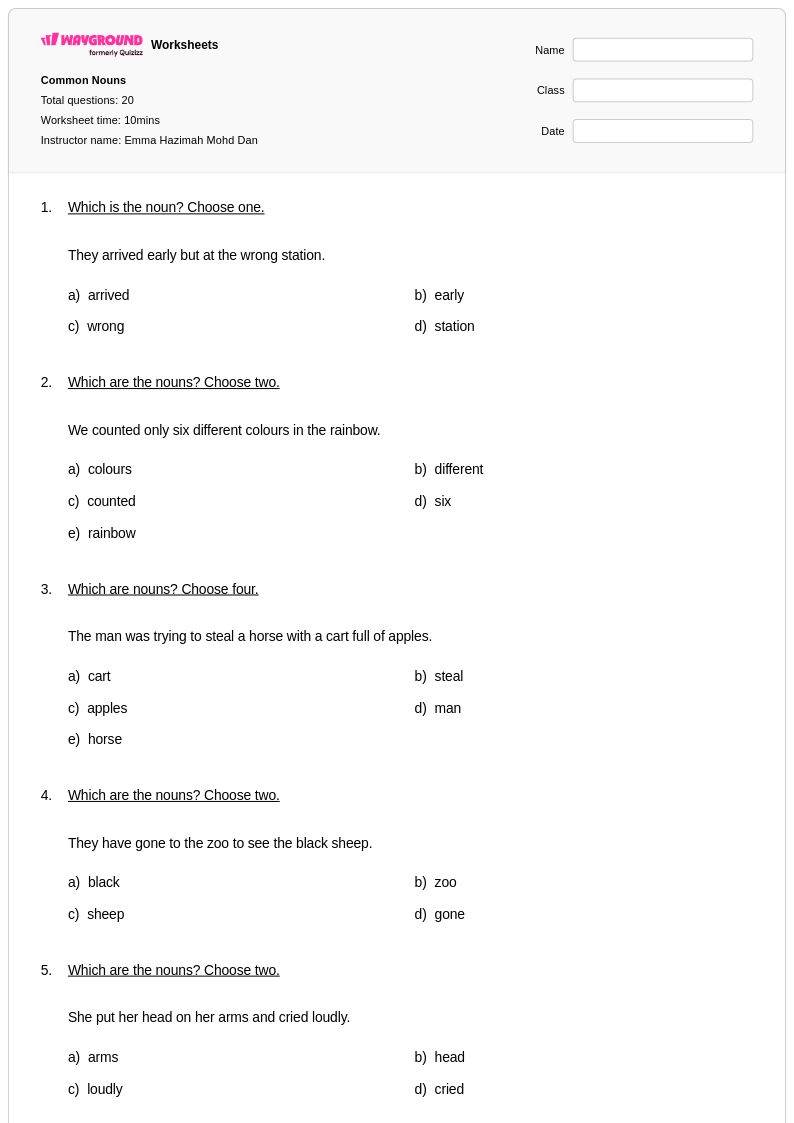
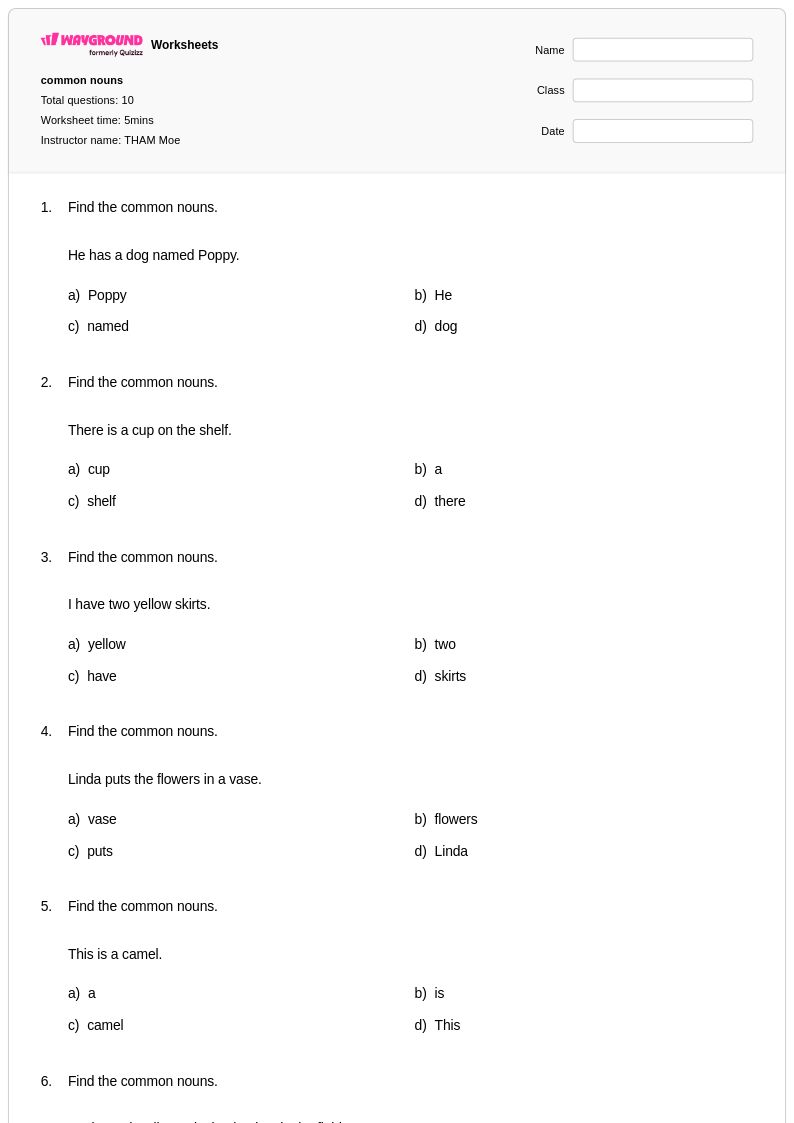
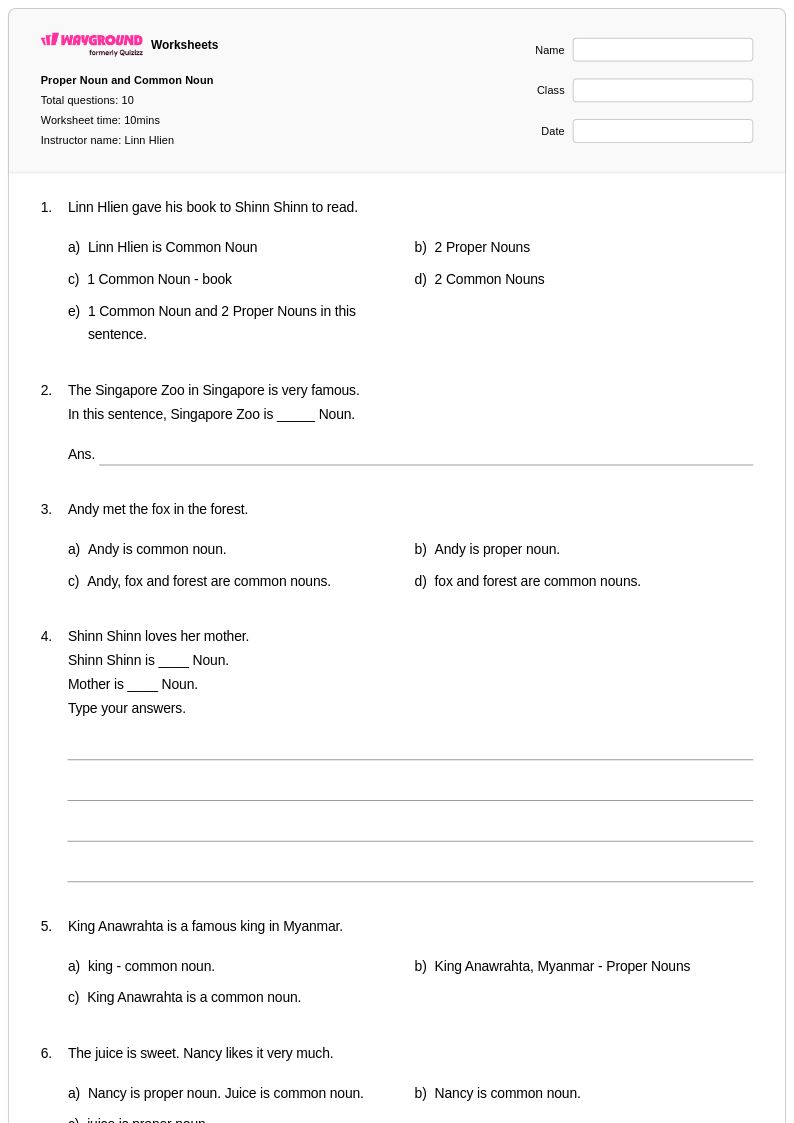
Effective practice exercises include underlining common nouns in sentences, sorting word lists into noun categories, and filling in blanks with appropriate common nouns. Passage-based exercises, where students identify all common nouns within a short paragraph, build the skill in context rather than in isolation. These formats mirror the way nouns appear in real reading and writing, which strengthens transfer to authentic tasks.
What is the difference between a common noun and a proper noun, and how do I explain it to students?
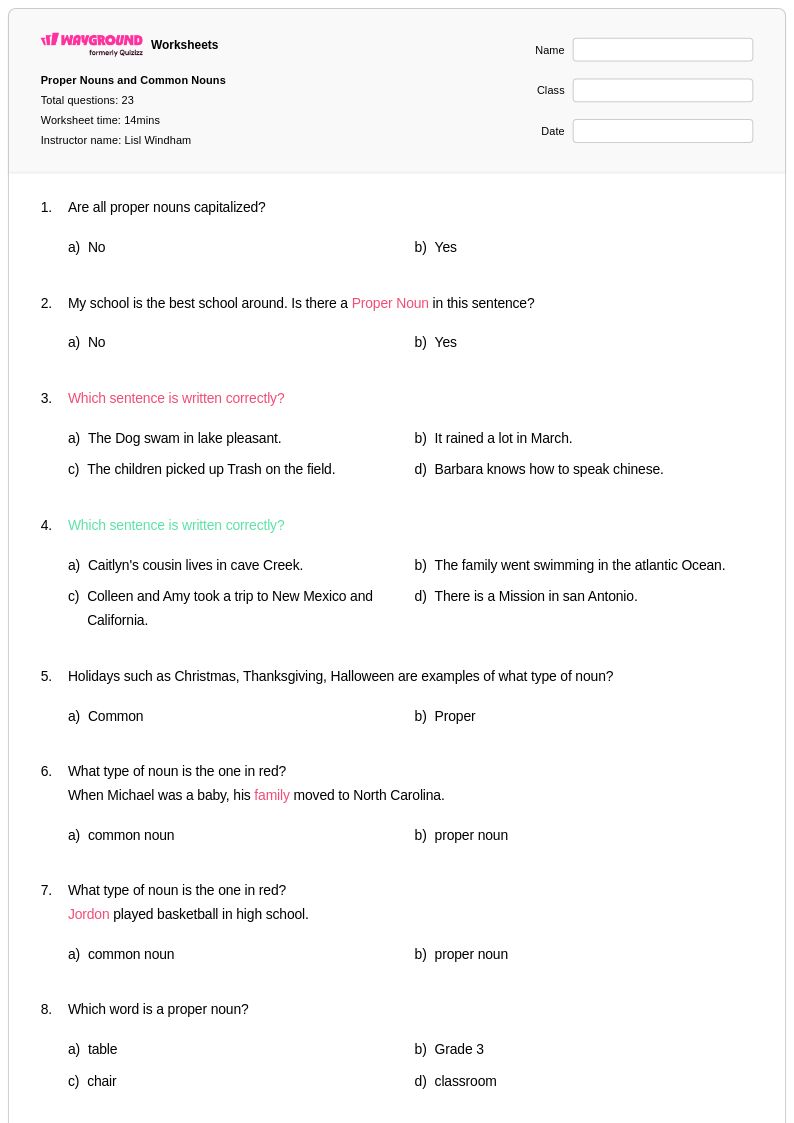
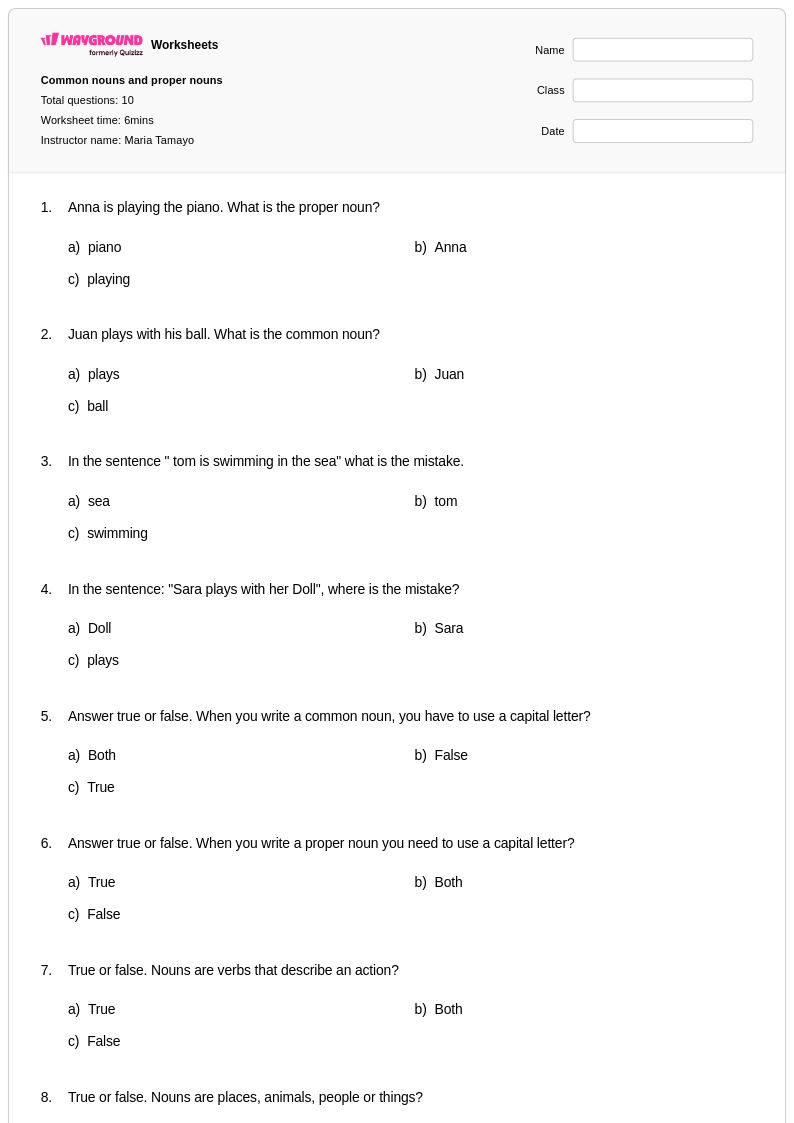
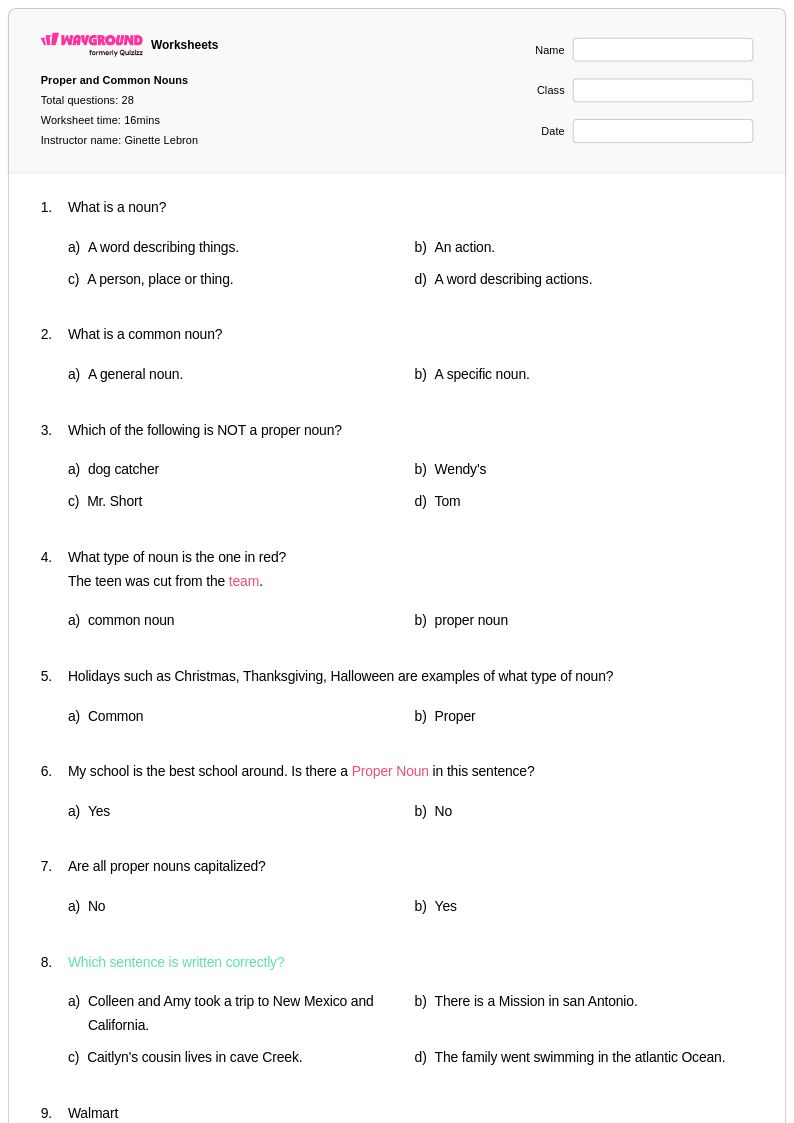
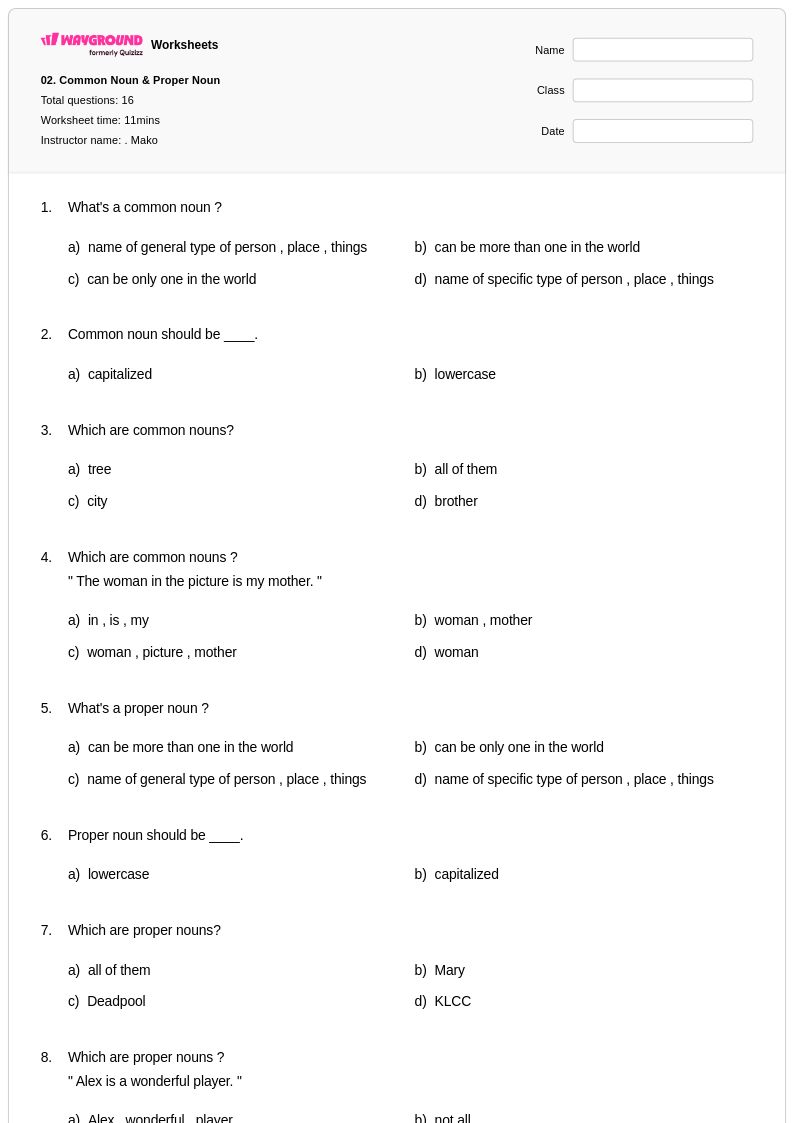
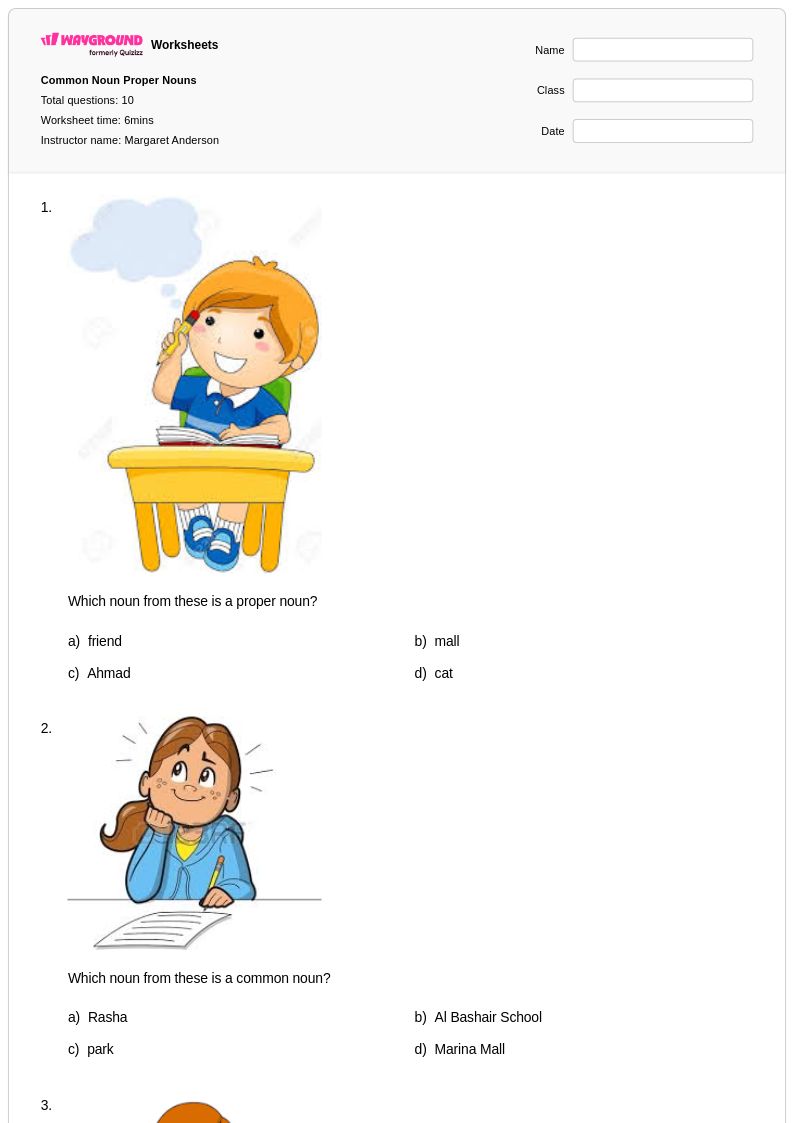
A common noun is a general name for a person, place, thing, or idea and is not capitalized unless it starts a sentence, while a proper noun names a specific one and is always capitalized. For example, city is a common noun, but Chicago is a proper noun. A reliable classroom anchor is to ask students: 'Is this a name shared by many things, or does it belong to just one specific thing?'
What mistakes do students commonly make when identifying common nouns?
The most frequent error is confusing common nouns with proper nouns, particularly when students encounter capitalized words mid-sentence and assume capitalization alone defines a noun. Students also struggle to recognize abstract common nouns like freedom, love, or idea because these cannot be seen or touched. Another common error is misidentifying adjectives that closely resemble nouns, such as treating the word wooden in 'the wooden box' as a noun rather than a modifier.
How can I use common noun worksheets to support students who need differentiation or accommodations?
On Wayground, teachers can apply individual accommodations directly to students, including read aloud support so questions are read to students who need it, reduced answer choices to lower cognitive load, and extended time for those who need more processing time. These settings can be applied to one student or the whole class and are saved for reuse in future sessions, making it straightforward to support diverse learners without disrupting the rest of the class.
How do I use Wayground's common noun worksheets in my classroom?
Wayground's common noun worksheets are available as printable PDFs for traditional classroom use and in digital formats for technology-integrated learning environments, including the option to host them as a quiz on Wayground. Teachers can use them for direct instruction support, independent practice, homework, or targeted remediation. The included answer keys make grading efficient and allow students to self-check their work during independent study.