
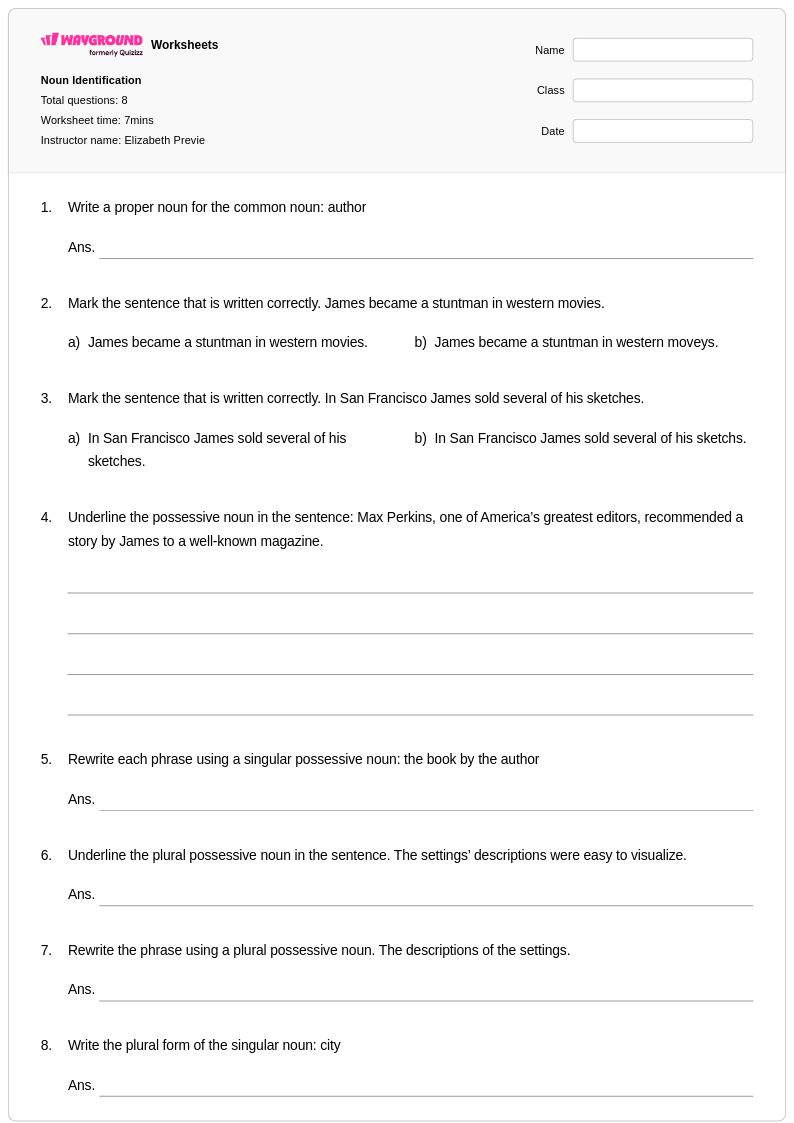
8 Q
5th
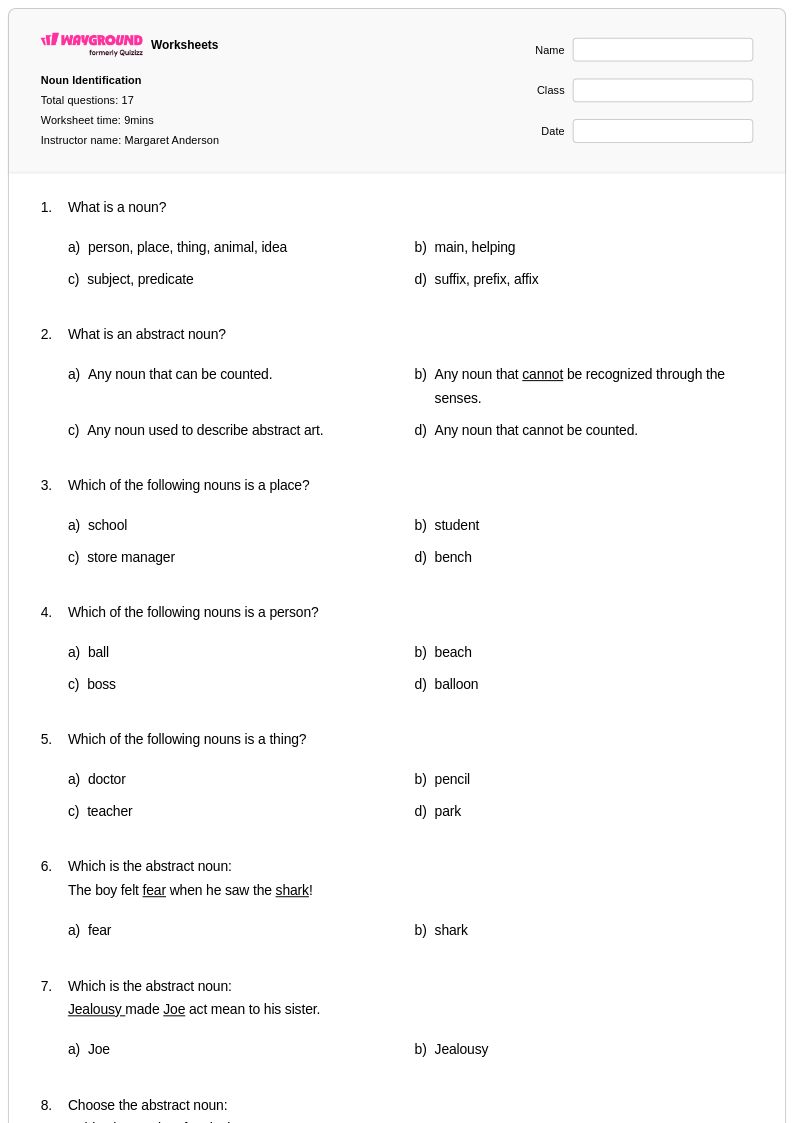
17 Q
6th
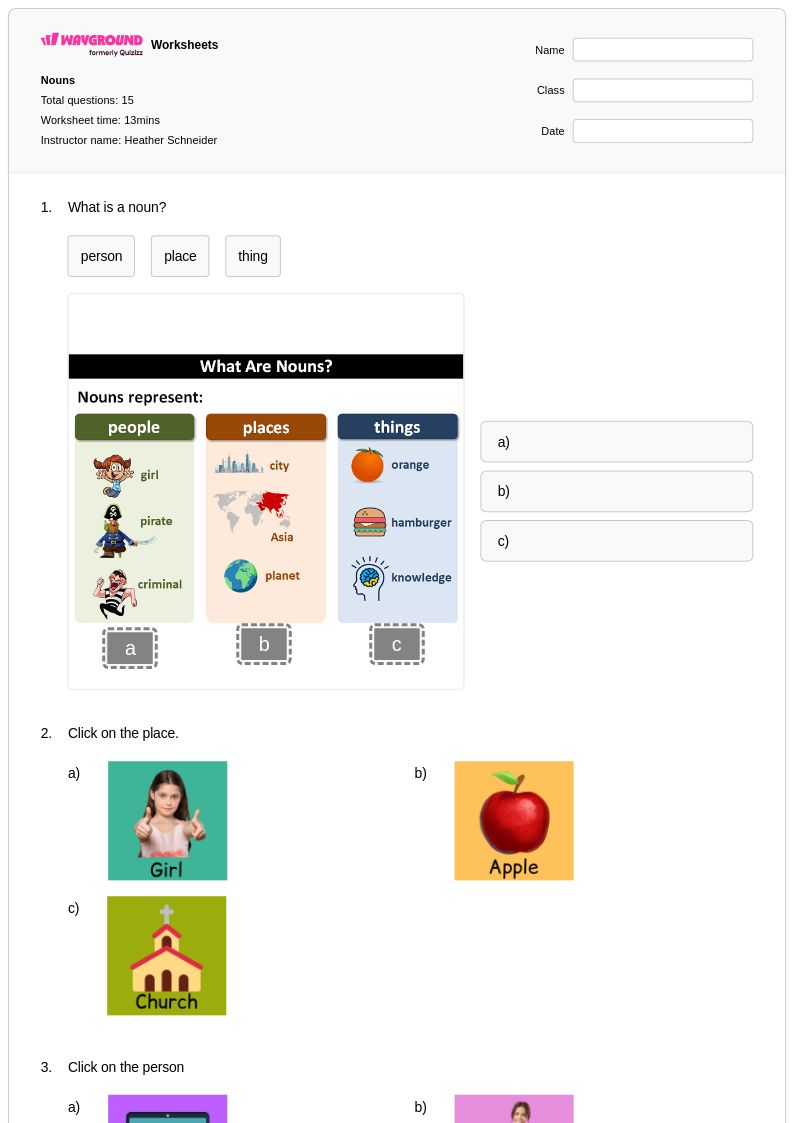
15 Q
KG
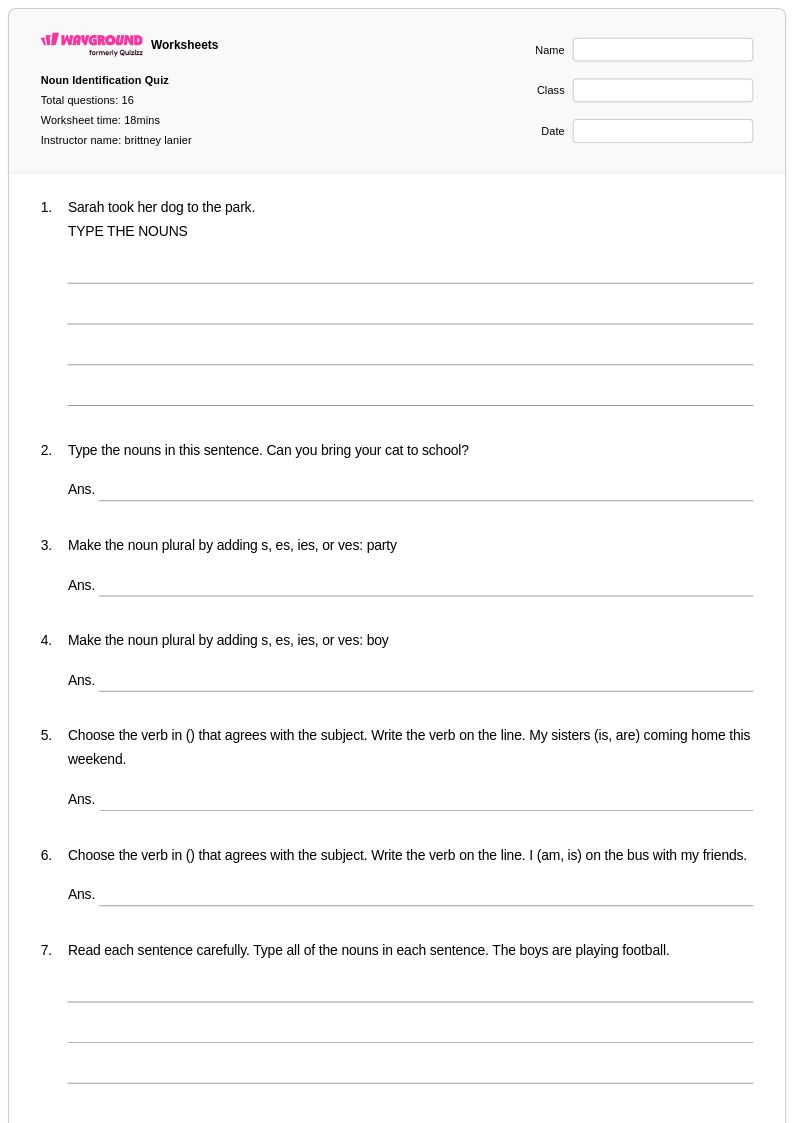
16 Q
3rd
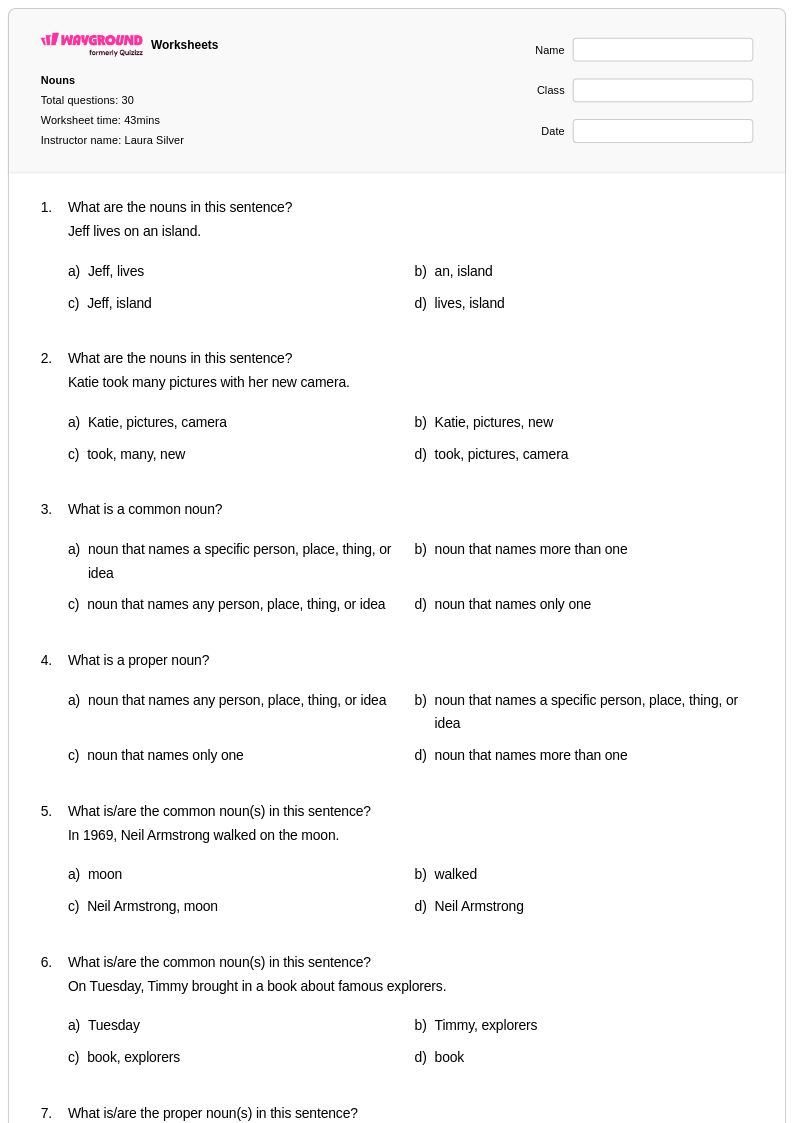
30 Q
6th
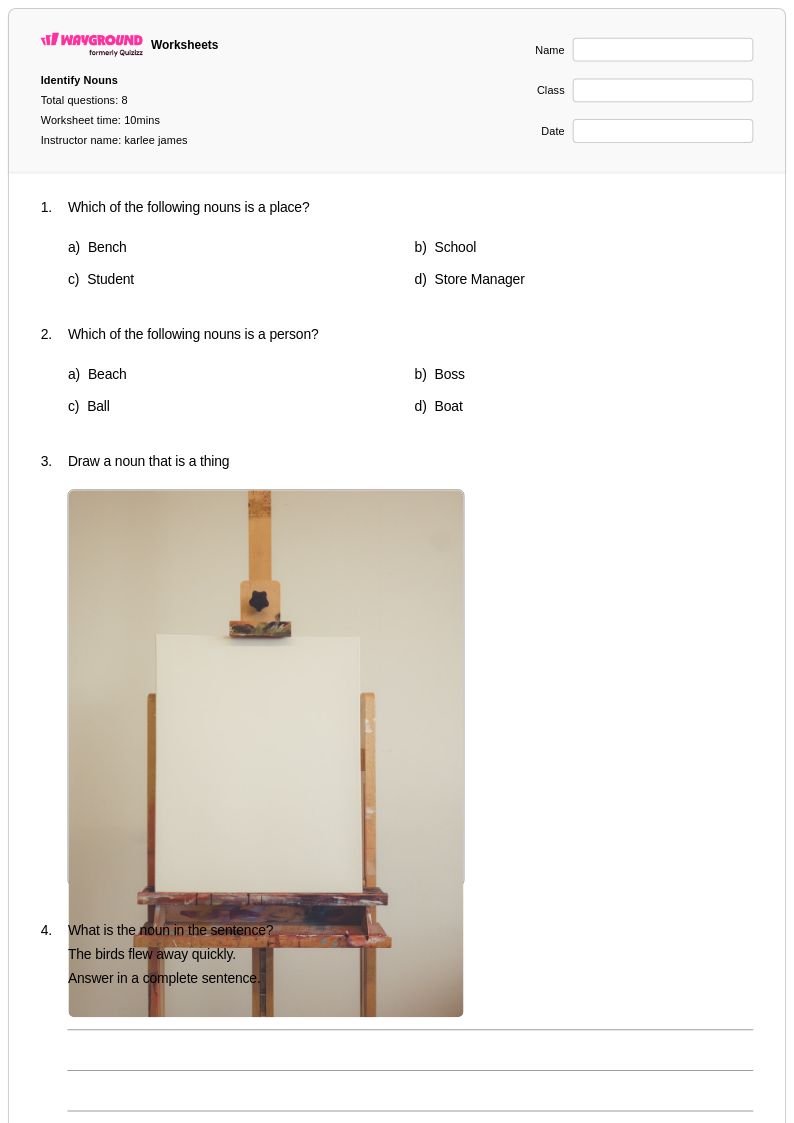
8 Q
3rd - 5th
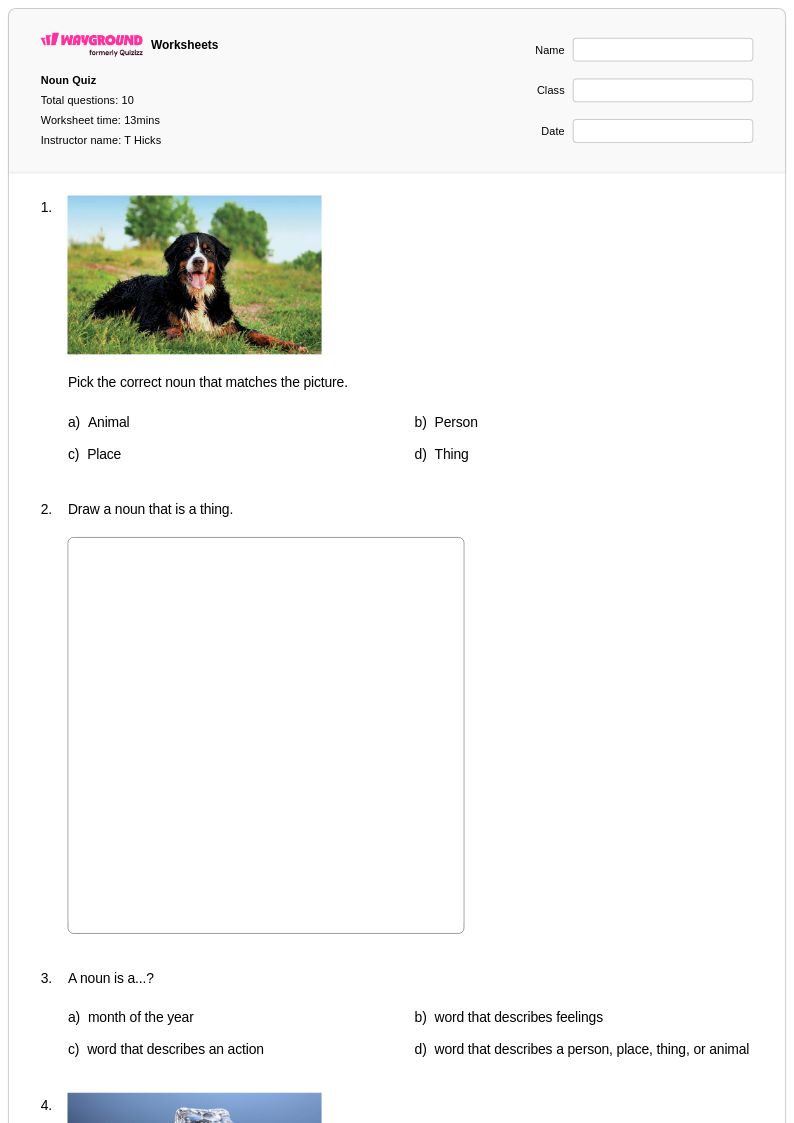
10 Q
2nd
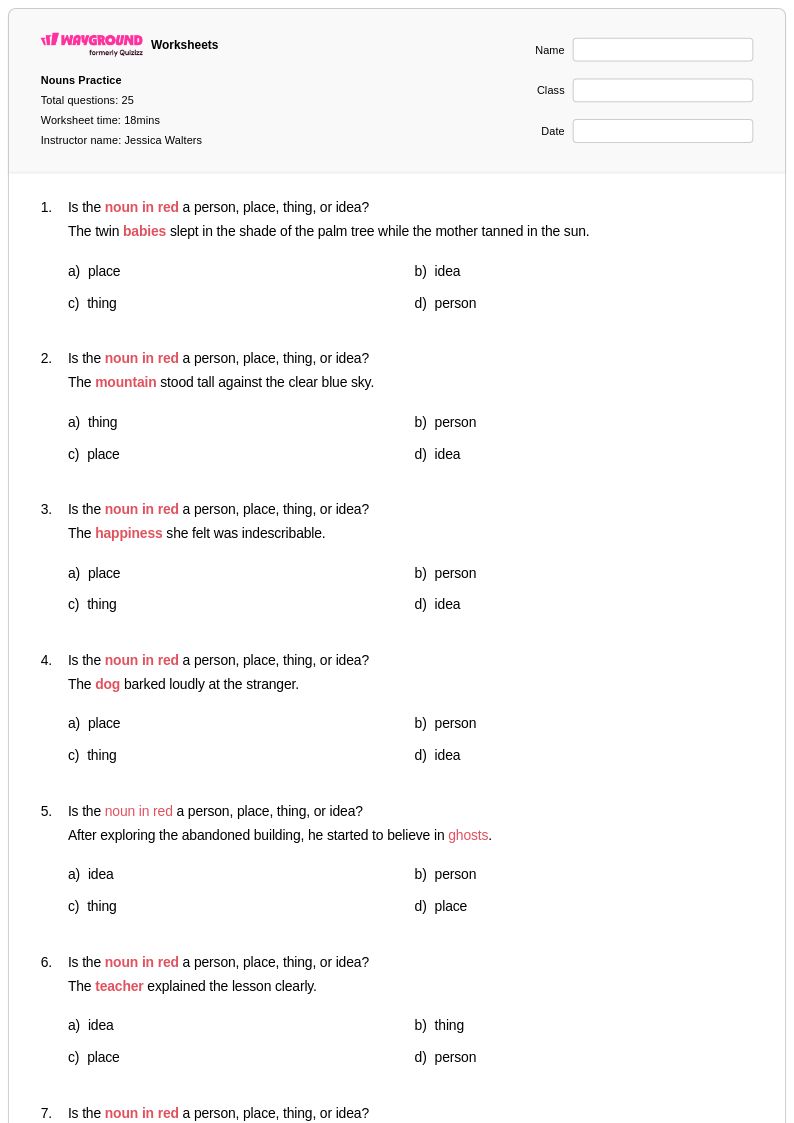
25 Q
8th
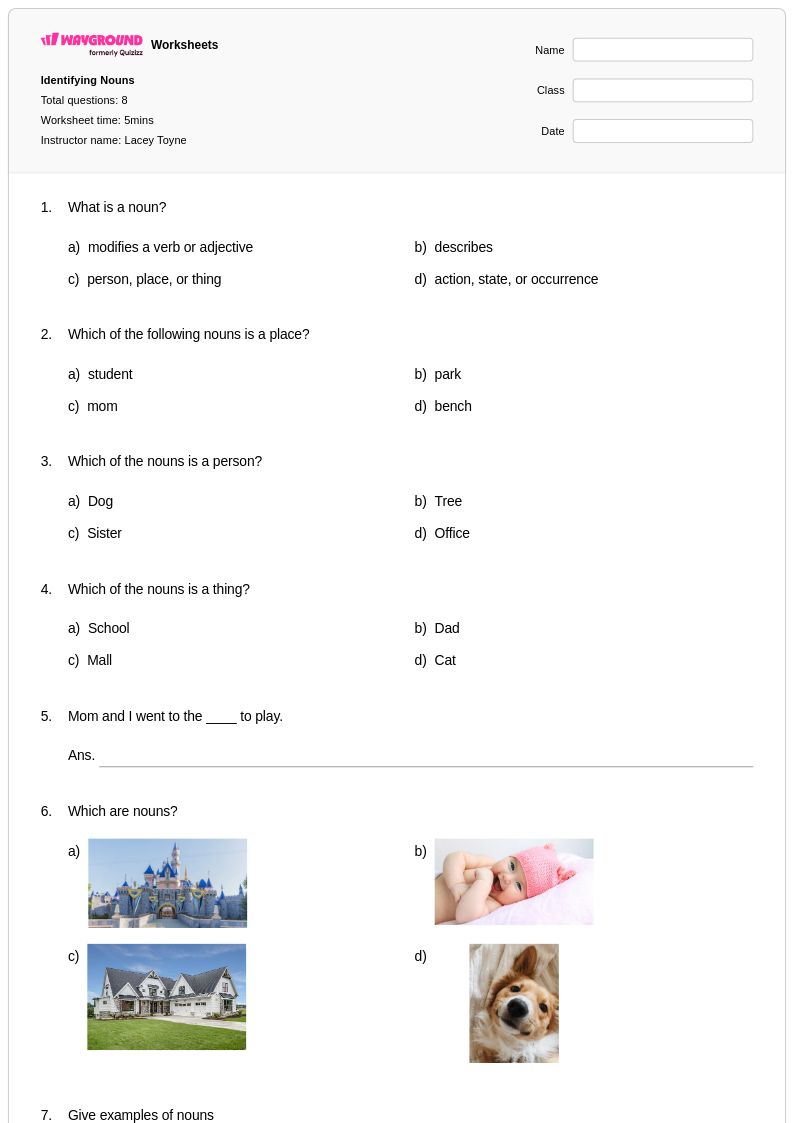
8 Q
1st - 3rd
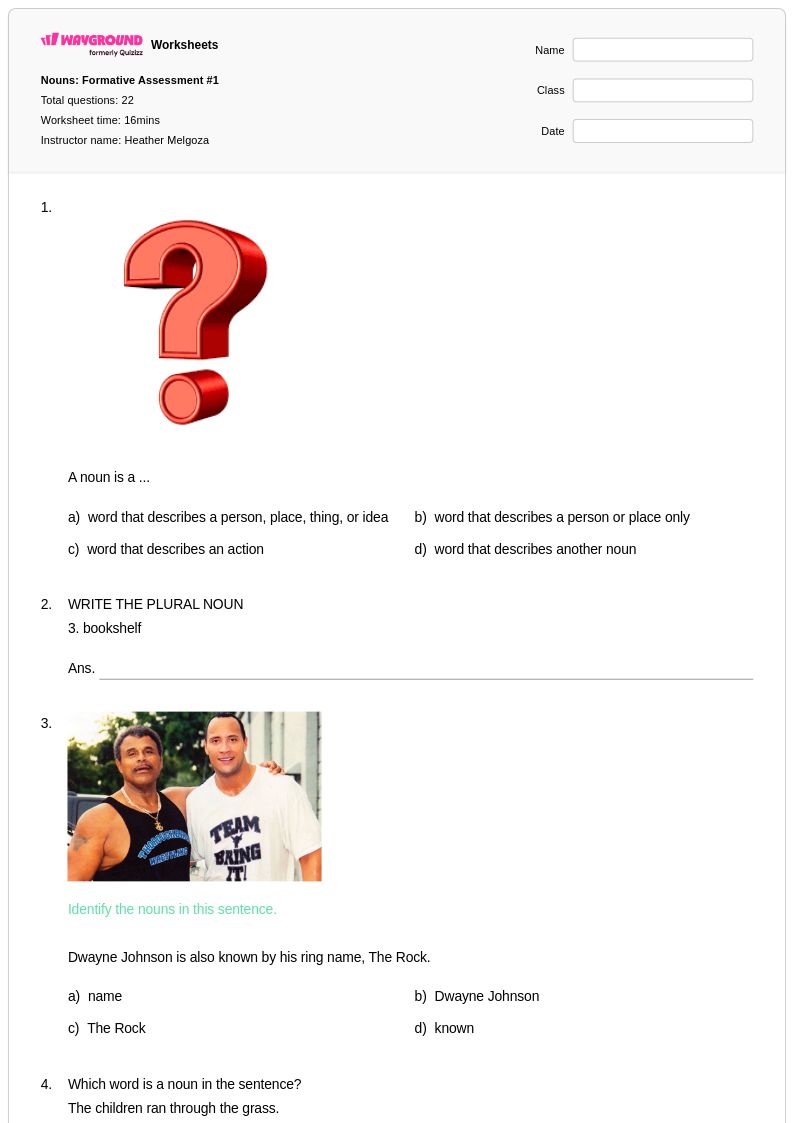
22 Q
7th - 8th
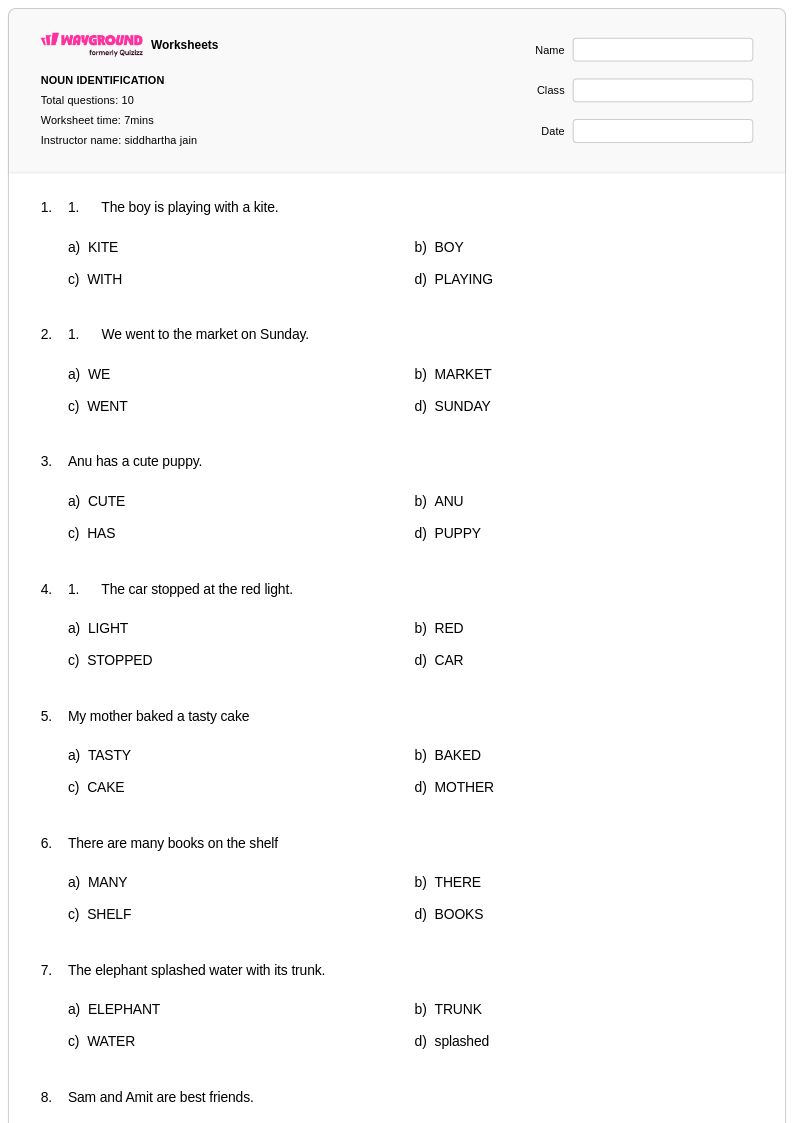
10 Q
2nd
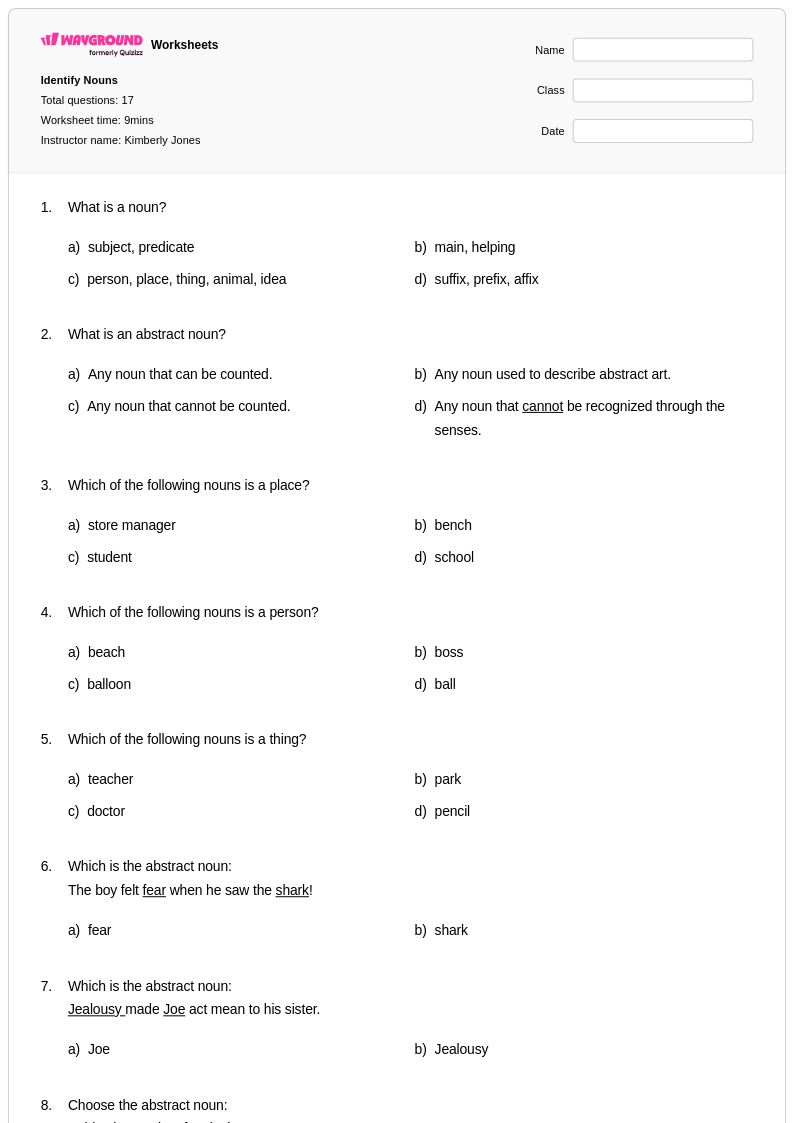
17 Q
6th
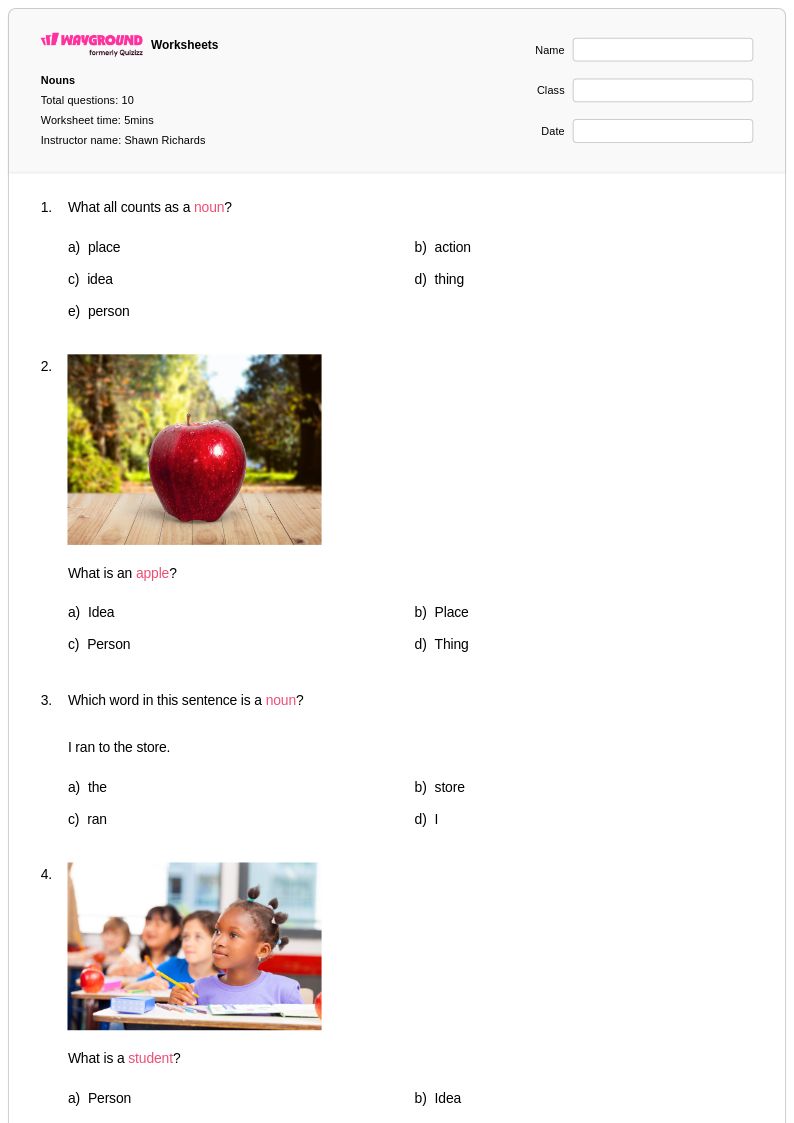
10 Q
5th
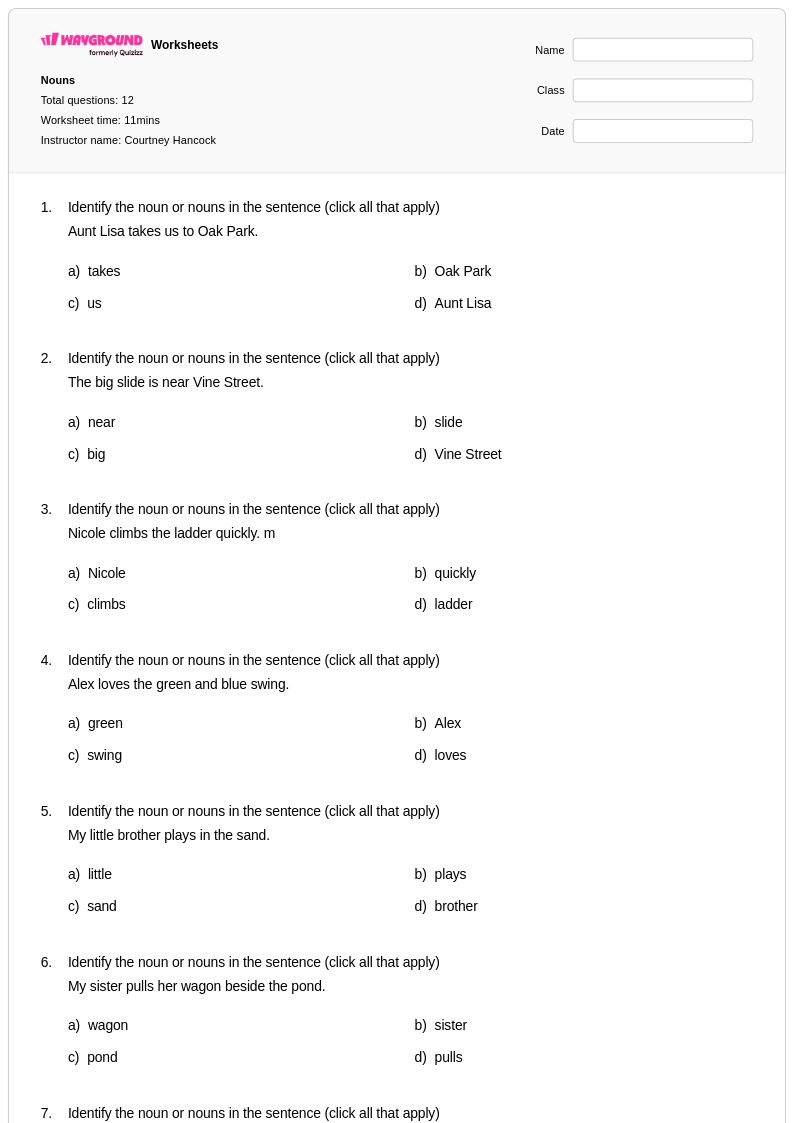
12 Q
3rd
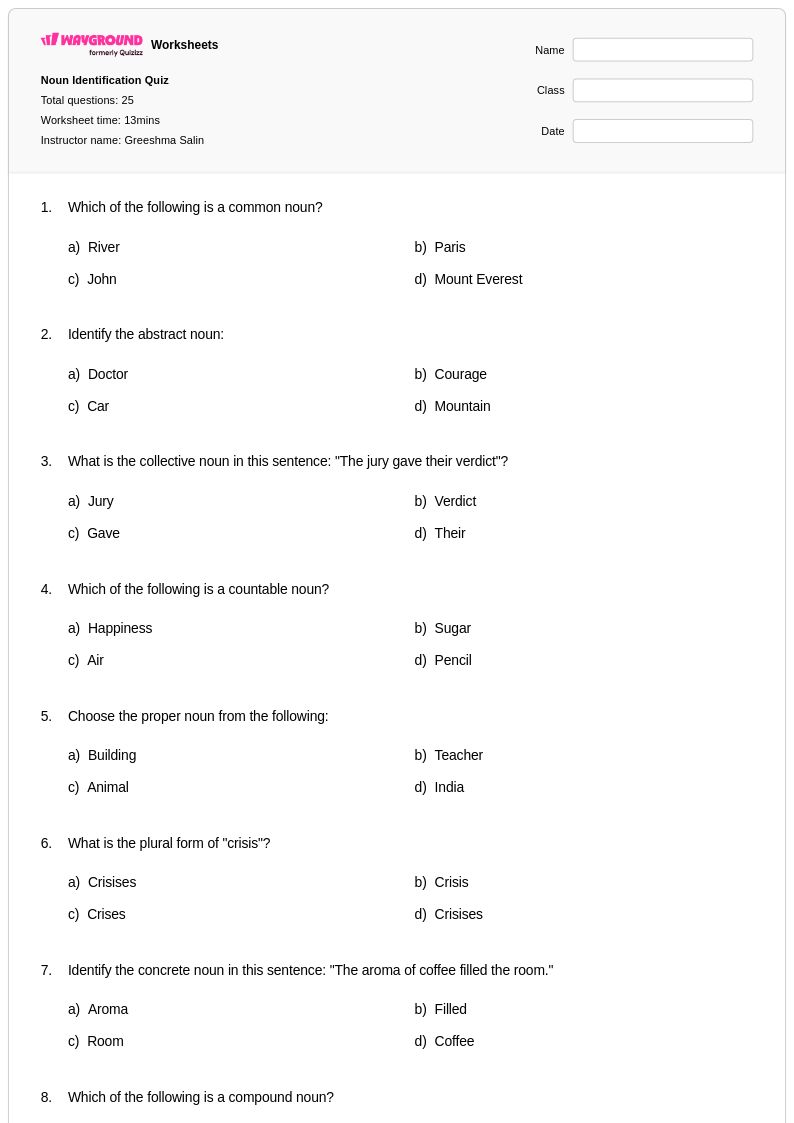
25 Q
9th - 12th
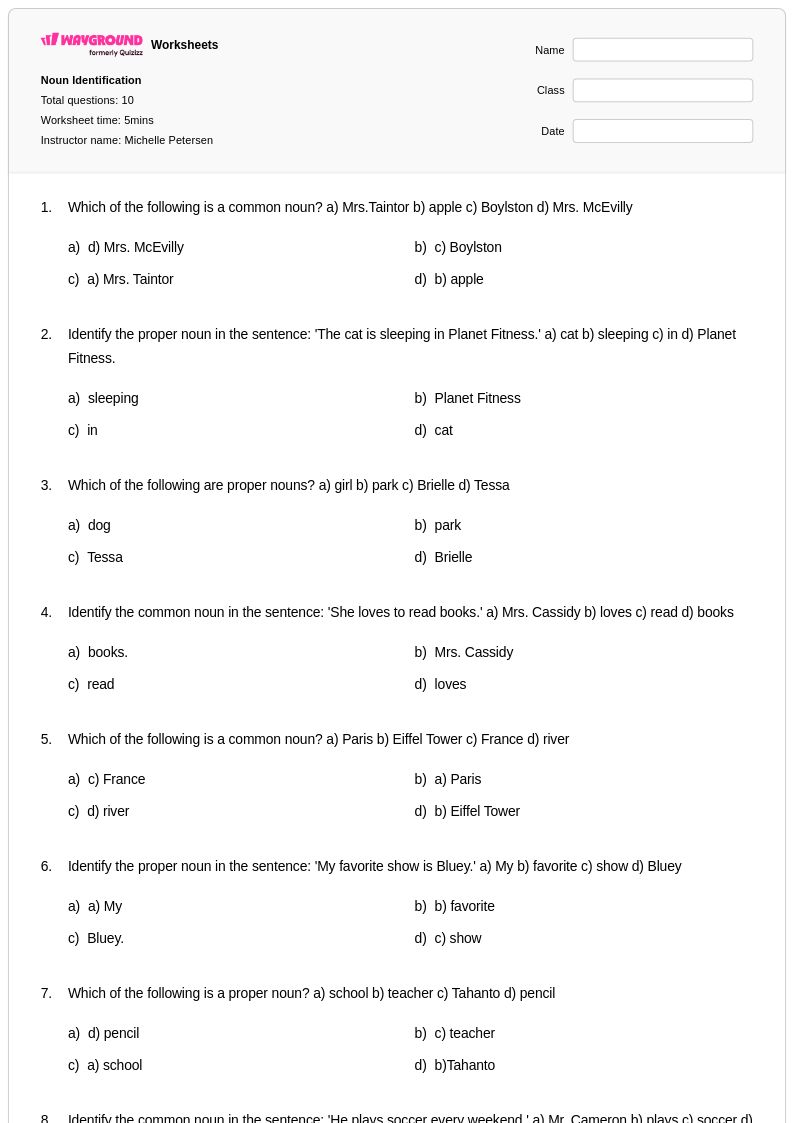
10 Q
3rd
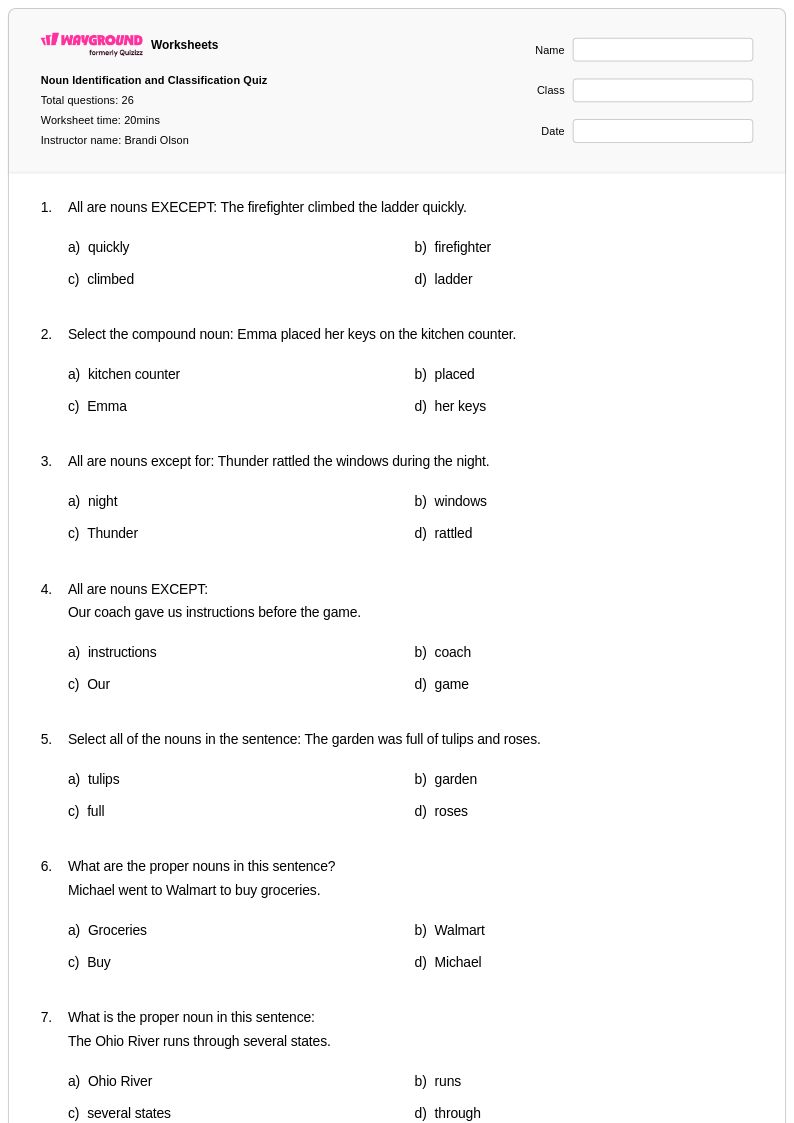
26 Q
9th
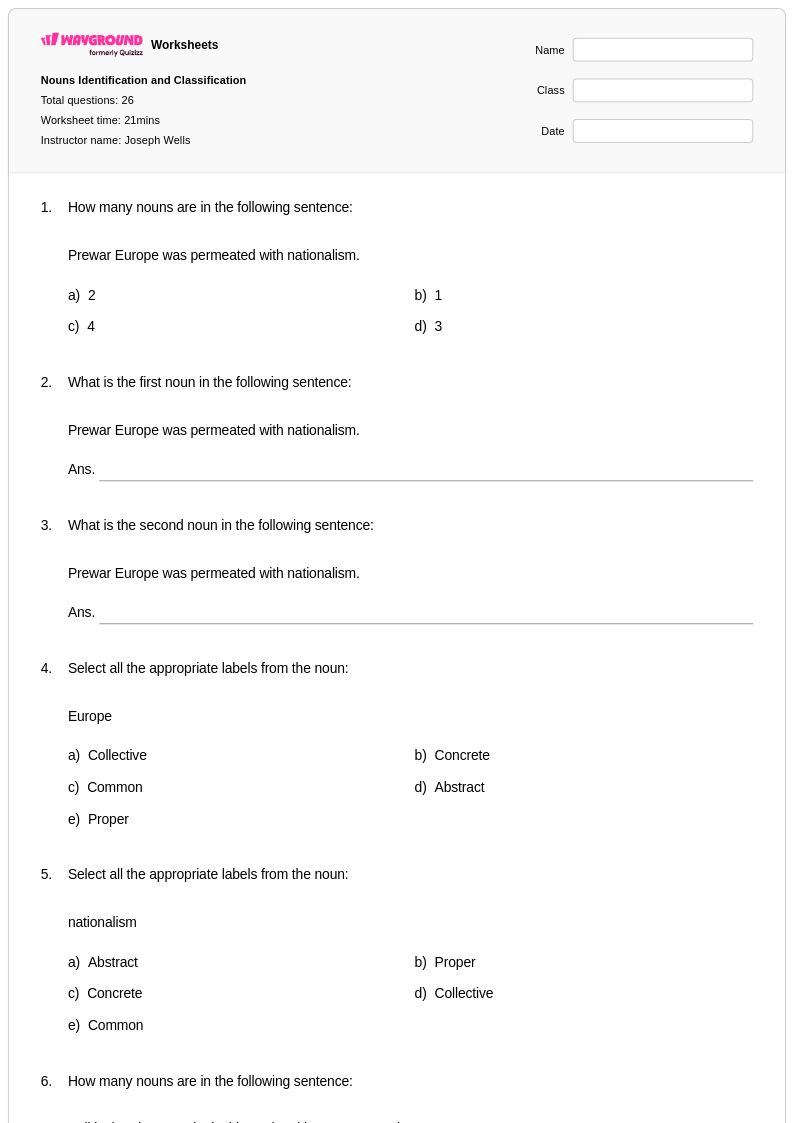
26 Q
7th
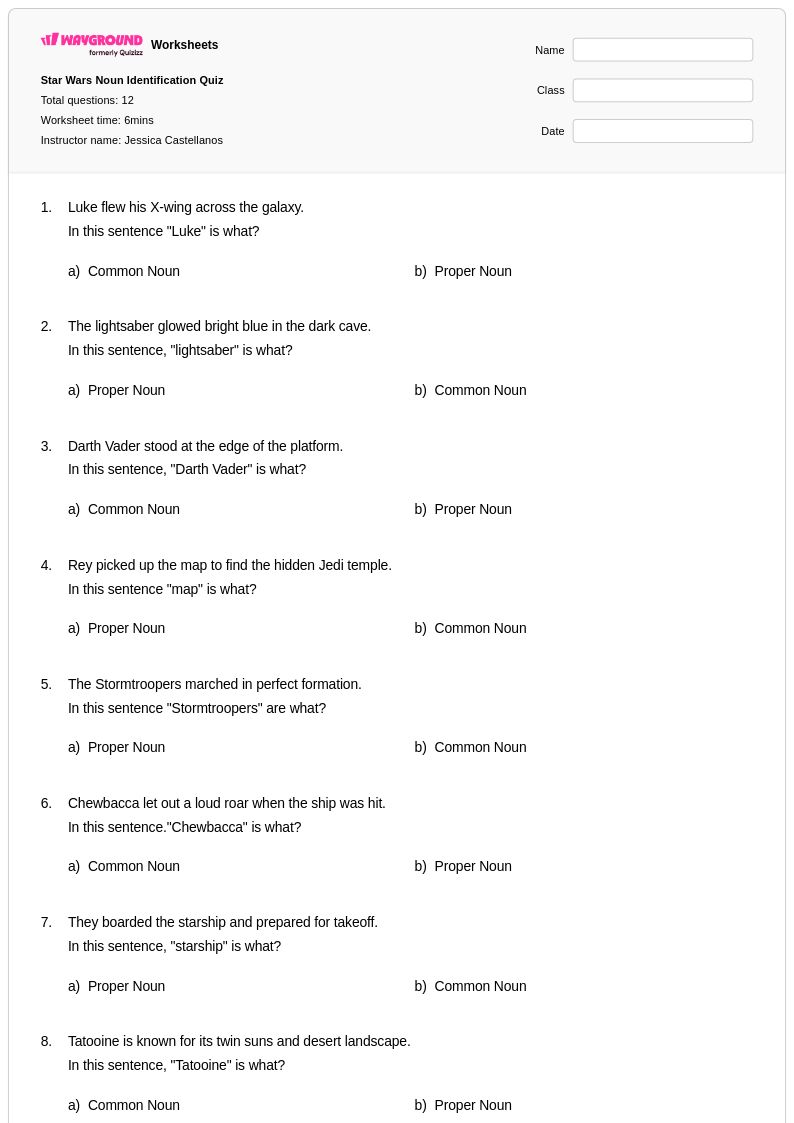
12 Q
4th

12 Q
6th
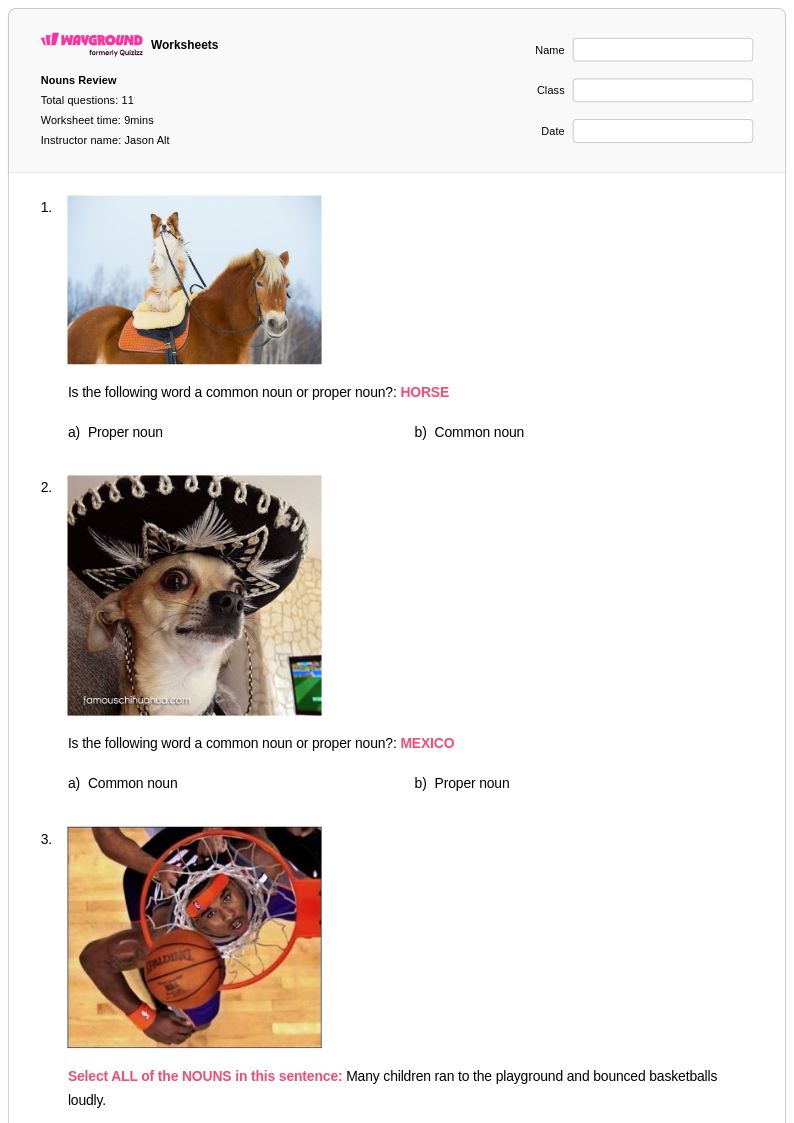
11 Q
6th
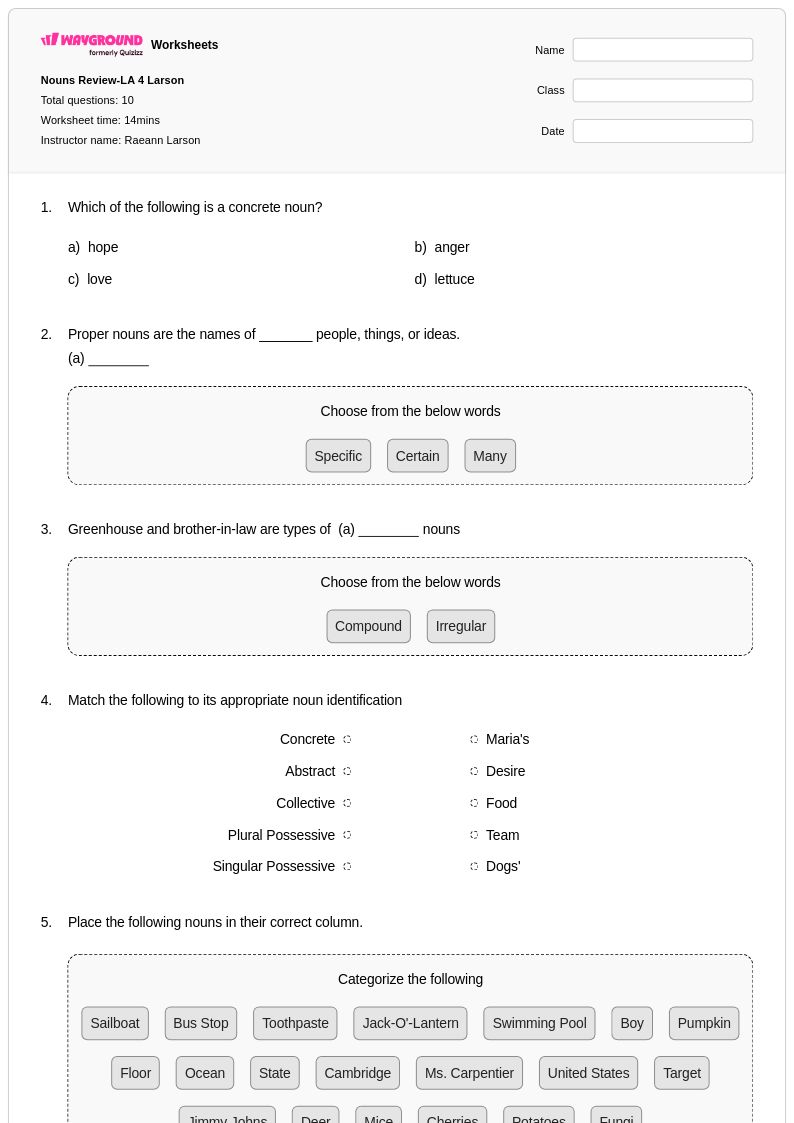
10 Q
9th
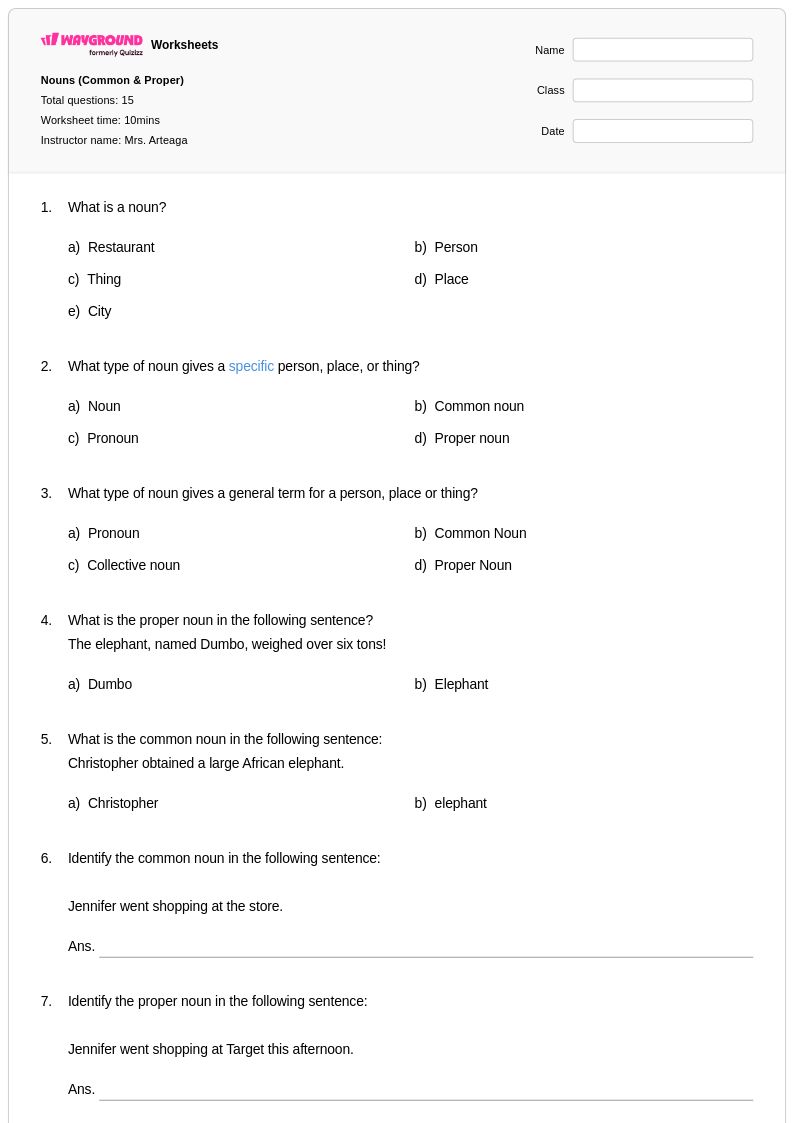
15 Q
2nd
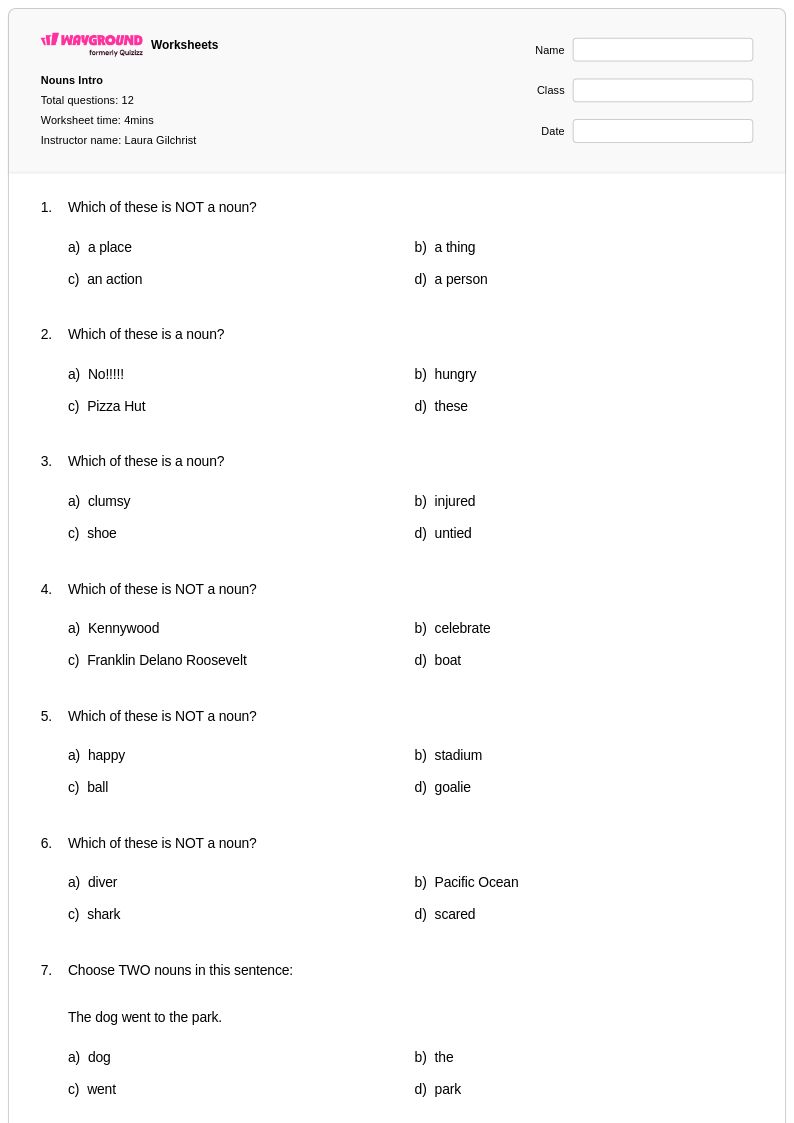
12 Q
4th
Explore Other Subject Worksheets for kindergarten
Explore printable Noun Identification worksheets for Kindergarten
Noun identification worksheets for kindergarten students available through Wayground (formerly Quizizz) provide foundational language arts practice that helps young learners recognize and distinguish nouns from other parts of speech. These carefully designed printables focus on building essential vocabulary skills by presenting age-appropriate exercises where students identify people, places, things, and animals within familiar contexts. Each worksheet strengthens critical thinking abilities as kindergarteners learn to categorize words and understand that nouns represent concrete objects they encounter in their daily lives. The collection includes varied practice problems that progress from simple picture-based identification to more advanced word recognition tasks, with comprehensive answer keys provided to support both independent learning and guided instruction. These free resources serve as invaluable tools for developing early literacy skills that form the foundation for future grammar and writing success.
Wayground (formerly Quizizz) empowers educators with an extensive library of millions of teacher-created noun identification worksheets specifically tailored for kindergarten classrooms. The platform's robust search and filtering capabilities allow teachers to quickly locate materials aligned with curriculum standards and differentiate instruction based on individual student needs. These versatile resources are available in both printable pdf format and interactive digital versions, providing flexibility for various learning environments and teaching preferences. Teachers can easily customize existing worksheets or modify content to address specific skill gaps, making these materials ideal for targeted remediation, enrichment activities, and regular skill practice. The comprehensive collection supports effective lesson planning by offering multiple approaches to noun identification instruction, ensuring that educators have access to high-quality materials that accommodate diverse learning styles and academic readiness levels within their kindergarten classrooms.
FAQs
How do I teach students to identify nouns in a sentence?
What exercises help students practice identifying nouns?
What mistakes do students commonly make when identifying nouns?
How can I differentiate noun identification instruction for struggling learners?
How do I use Wayground's noun identification worksheets in my classroom?
How do I help students distinguish between abstract and concrete nouns?