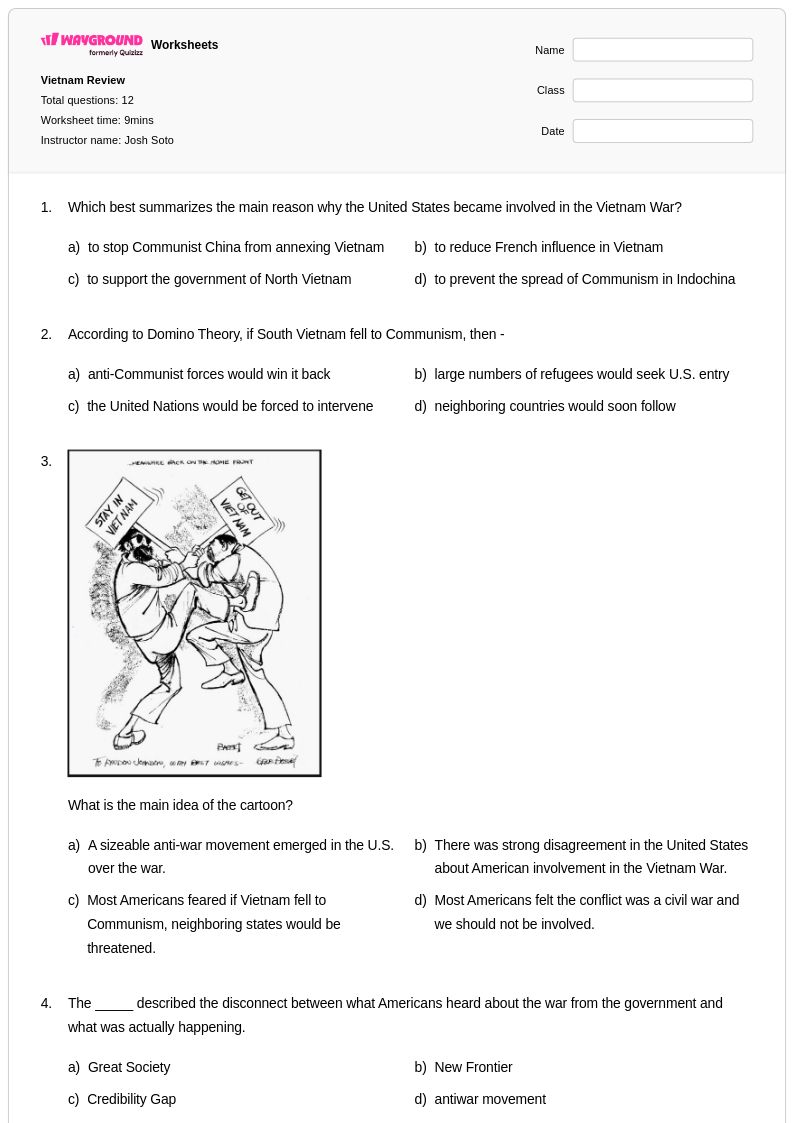
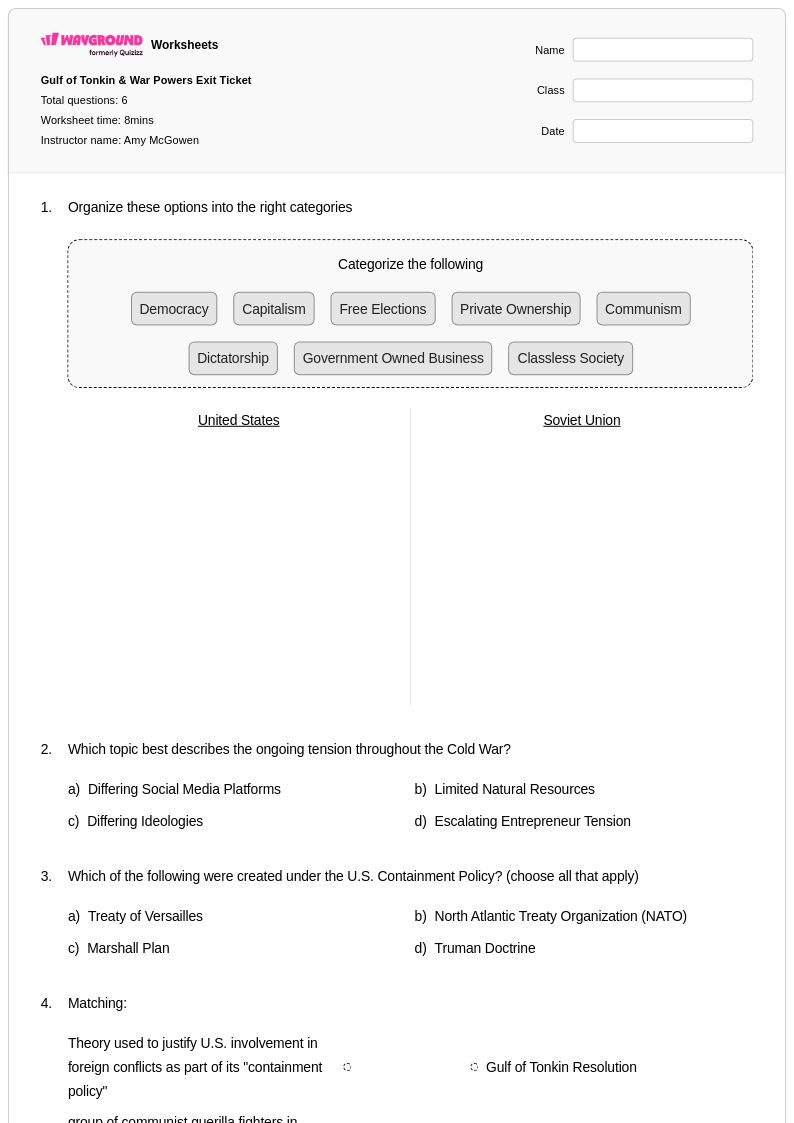
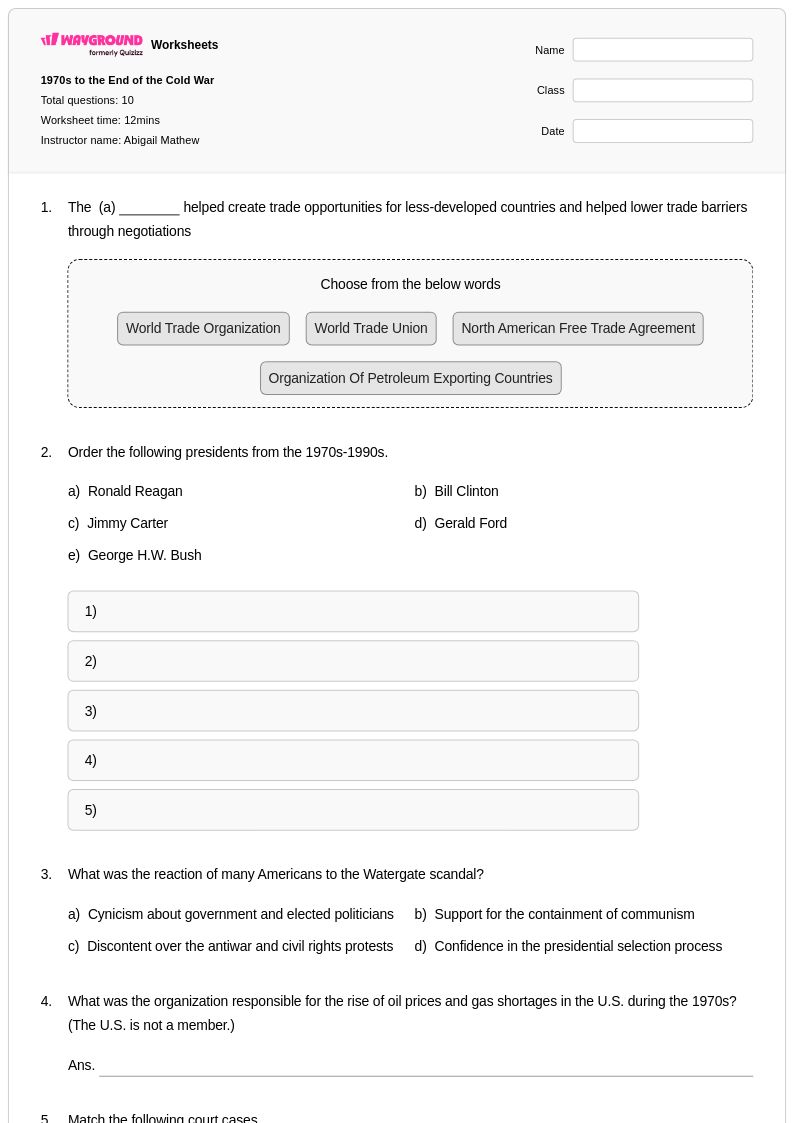
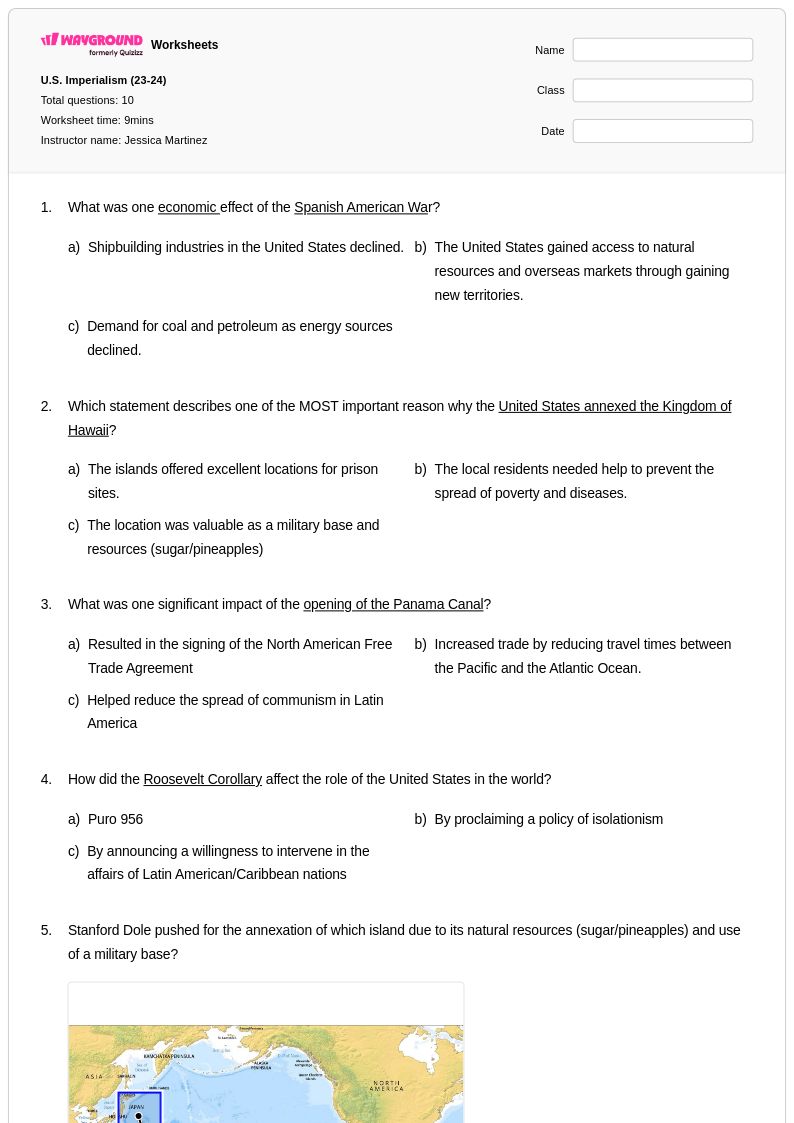
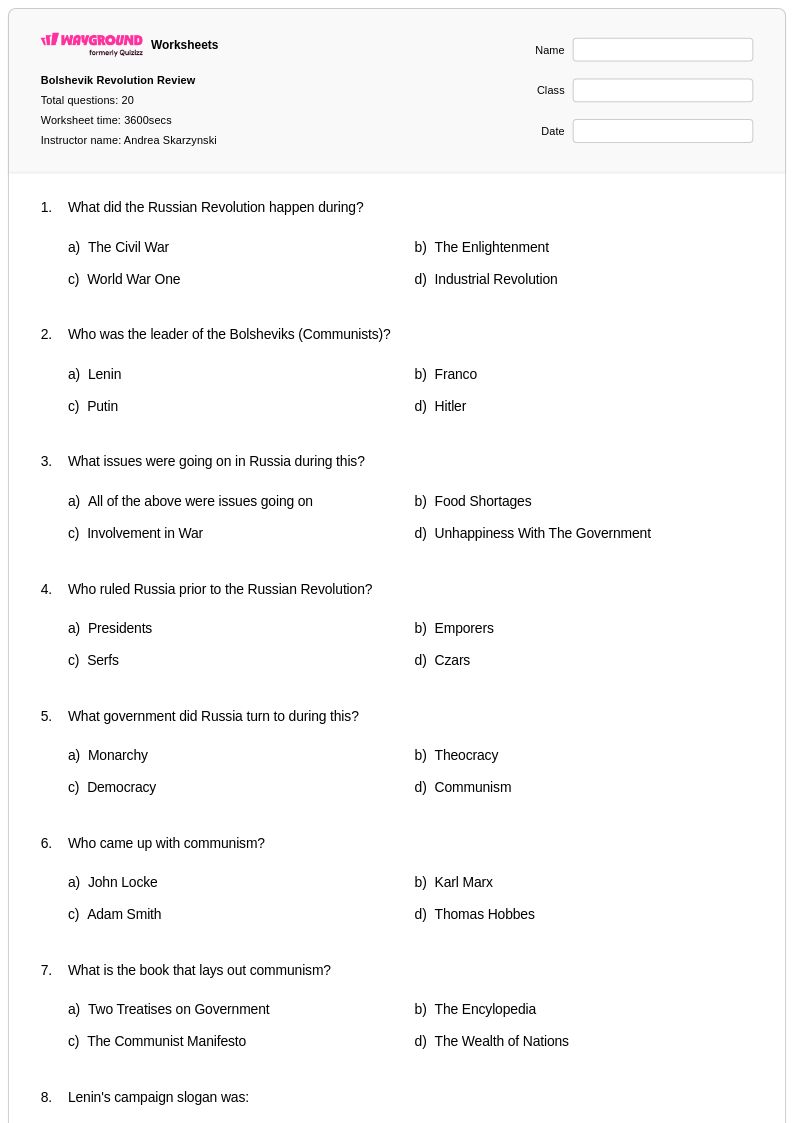
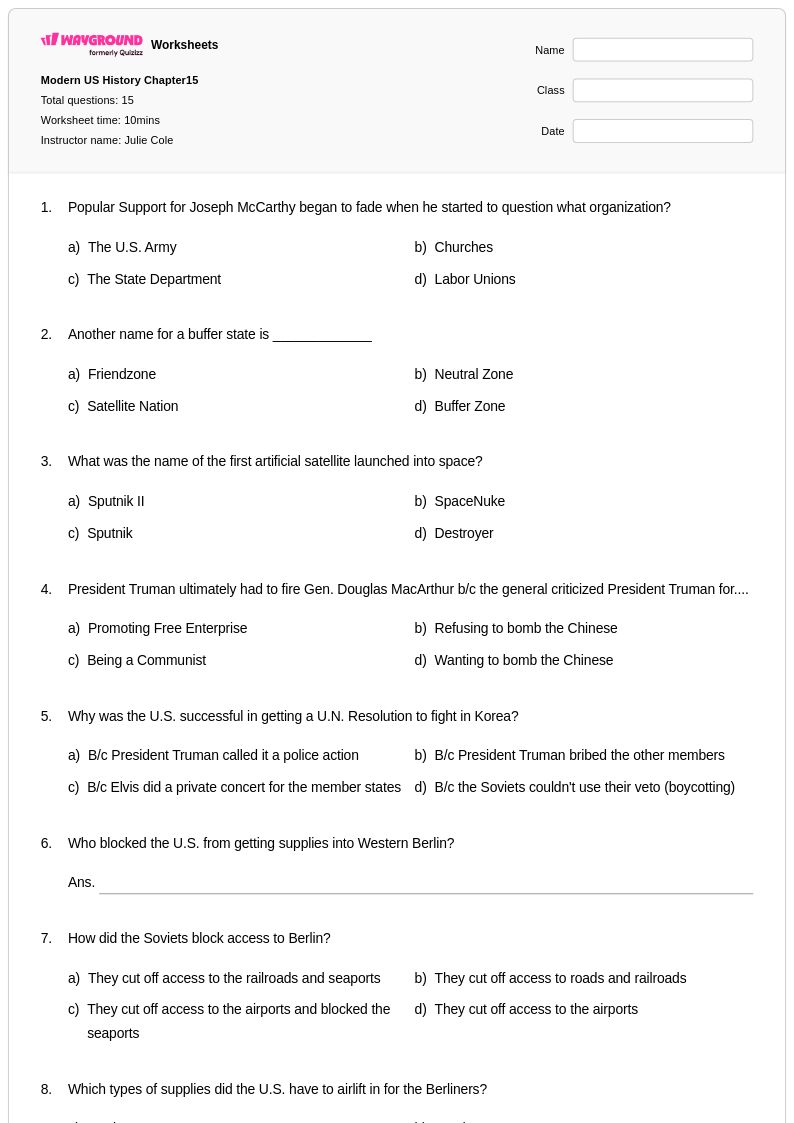
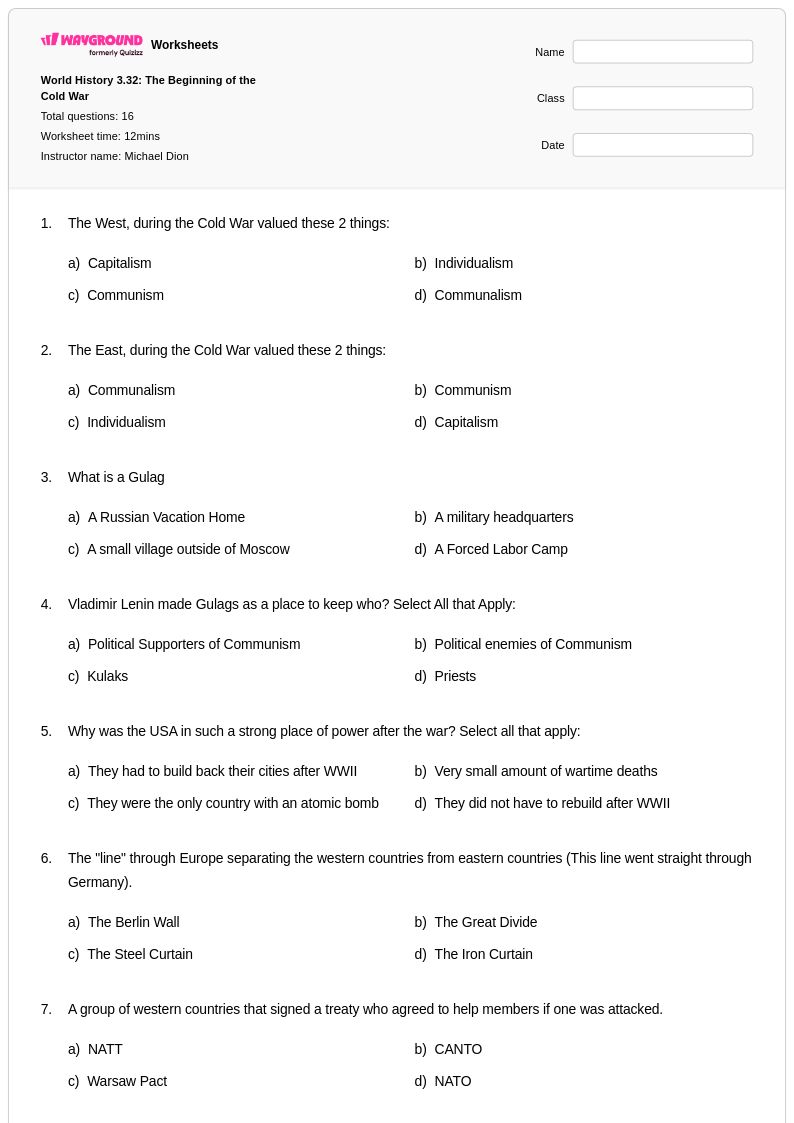
Explore Grade 11 Communism worksheets and printables from Wayground that help students analyze communist ideology, historical implementations, and political systems through engaging practice problems with comprehensive answer keys.
Explore printable Communism worksheets for Grade 11
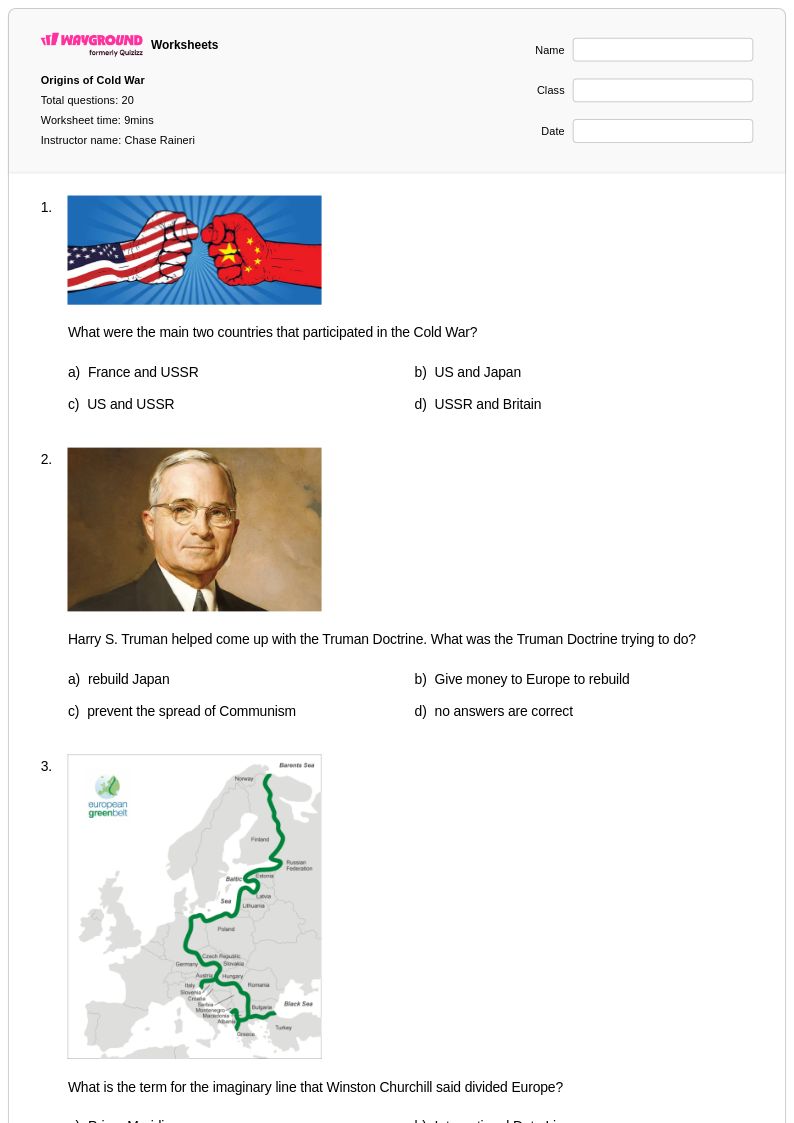
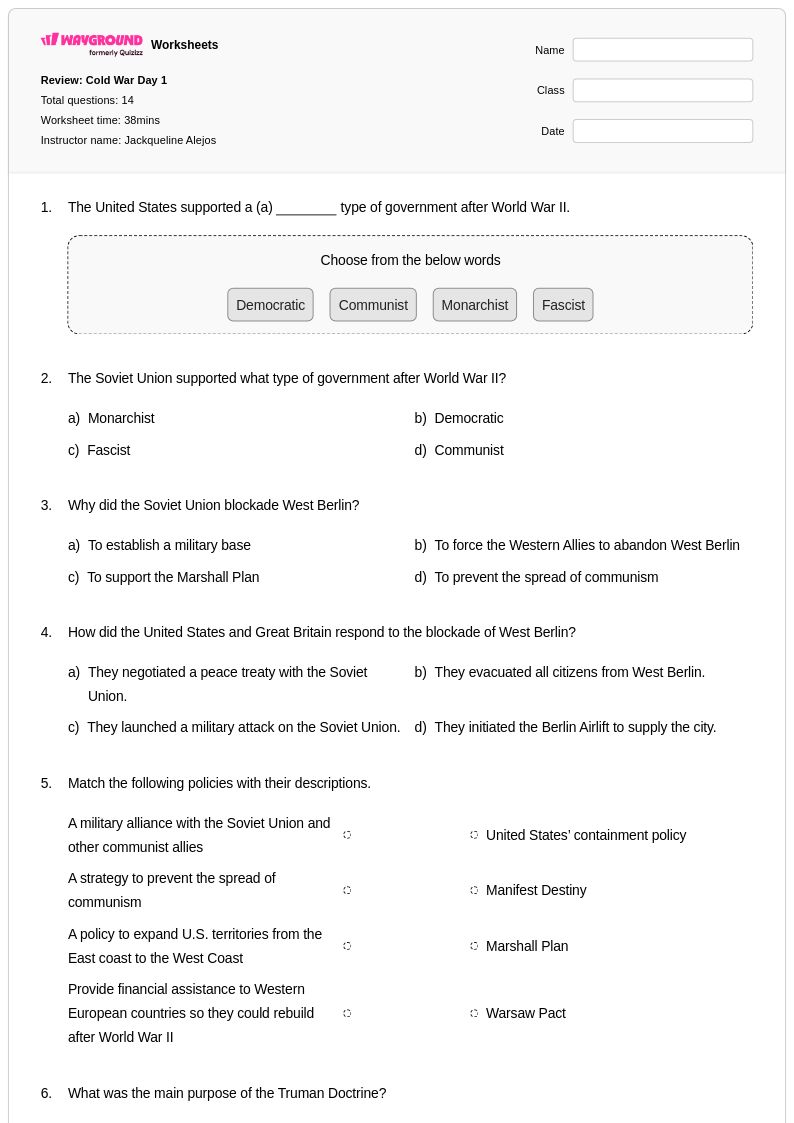
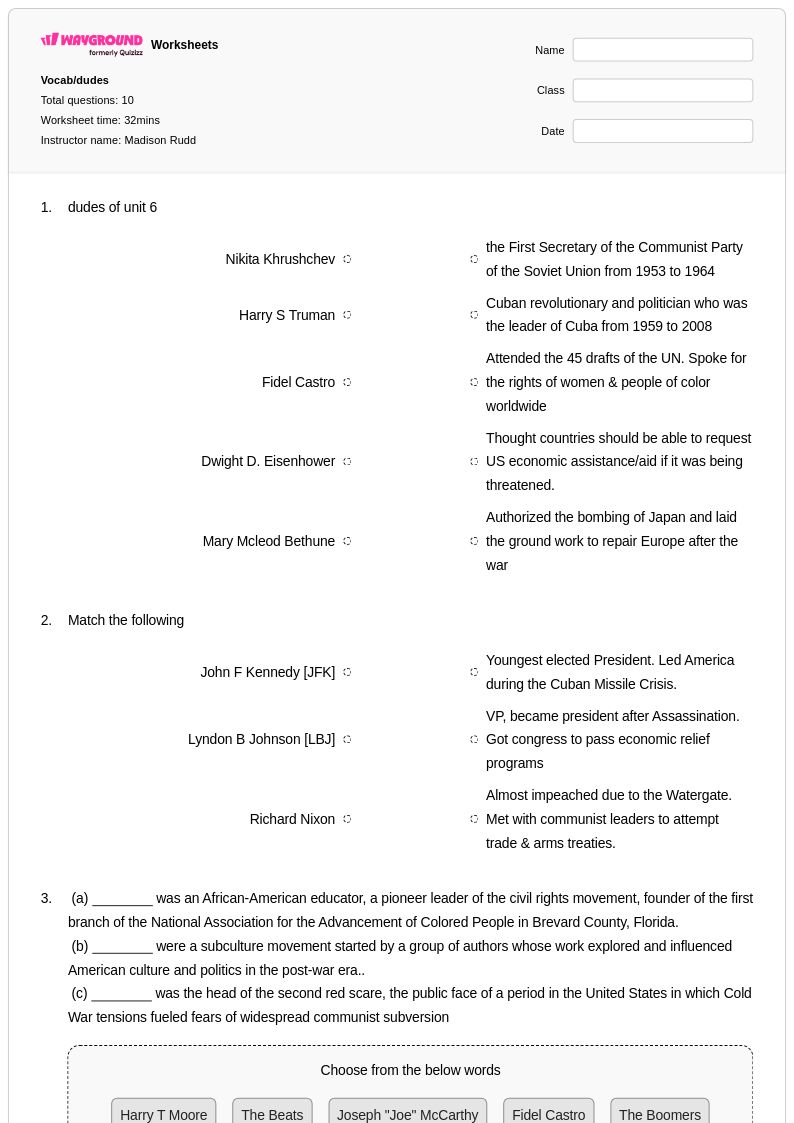
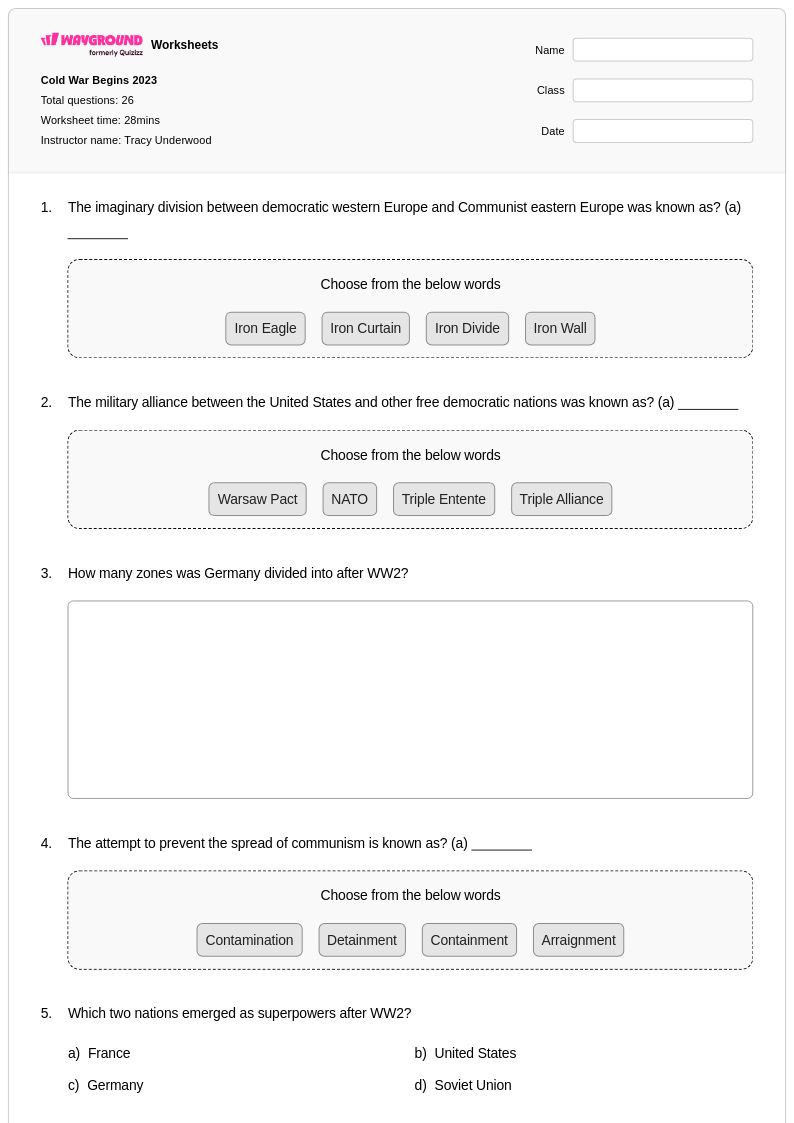
Communism worksheets for Grade 11 students available through Wayground (formerly Quizizz) provide comprehensive coverage of this pivotal political and economic ideology that shaped much of the 20th century. These expertly crafted educational materials help students analyze the theoretical foundations of communist thought, examine historical implementations across different nations, and evaluate the social, economic, and political impacts of communist systems. Students strengthen critical thinking skills by comparing capitalist and communist economic models, investigating key figures like Karl Marx and Vladimir Lenin, and assessing the rise and fall of communist states including the Soviet Union, China, and Cuba. Each worksheet collection includes detailed answer keys and is available as free printables in convenient pdf format, featuring practice problems that challenge students to interpret primary sources, analyze propaganda techniques, and evaluate the lasting legacy of communist movements worldwide.
Wayground (formerly Quizizz) supports educators teaching Grade 11 Communism concepts through an extensive library of millions of teacher-created resources that offer robust search and filtering capabilities to locate materials perfectly suited to specific classroom needs. The platform's standards alignment ensures worksheets meet curriculum requirements, while differentiation tools allow teachers to modify content complexity for diverse learning levels within the same classroom. These flexible customization options enable educators to adapt materials for both remediation support and enrichment challenges, whether students need foundational practice with communist terminology or advanced analysis of Cold War geopolitics. Available in both printable and digital formats including downloadable pdf versions, these worksheet collections streamline lesson planning by providing ready-to-use skill practice activities that can be seamlessly integrated into unit studies, review sessions, or independent learning assignments focused on understanding communism's role in world history.
FAQs
How do I teach communism to middle or high school students?
Teaching communism effectively starts with grounding students in the historical context of the 19th and 20th centuries before introducing ideological theory. Begin with the core arguments of Marx and Engels, then trace how communist principles were applied in the Soviet Union, China, and Cuba. Comparing communist systems with capitalism and socialism helps students develop analytical frameworks rather than surface-level definitions. Using primary sources like excerpts from The Communist Manifesto gives students direct engagement with the original ideology.
What are good exercises for practicing communist ideology concepts in class?
Effective practice exercises for communism include document analysis tasks using excerpts from The Communist Manifesto, compare-and-contrast activities that set communist systems against capitalist and socialist alternatives, and cause-and-effect charts tracing how Marxist theory led to specific historical revolutions and governments. Structured practice problems that ask students to identify key figures, explain core principles, and evaluate real-world implementations help reinforce both factual knowledge and critical thinking.
What mistakes do students commonly make when learning about communism?
A frequent misconception is conflating theoretical communism as described by Marx and Engels with the practical governments that claimed to implement it, such as the Soviet Union or Maoist China. Students often blur the distinctions between communism, socialism, and authoritarianism, treating them as interchangeable. Another common error is attributing communist ideology solely to one figure rather than understanding it as a response to broader 19th-century industrialization and class conflict. Worksheets that directly compare theory with historical practice help students recognize these distinctions.
How do I use Wayground's communism worksheets in my classroom?
Wayground's communism worksheets are available as printable PDFs for traditional classroom use and in digital formats for technology-integrated environments, giving teachers flexibility across different instructional settings. You can host worksheets as a quiz directly on Wayground, which allows for real-time student engagement and automatic answer checking. Each worksheet includes a detailed answer key, making them practical for independent study, homework, or in-class practice without additional teacher preparation.
How can I differentiate communism instruction for students at different skill levels?
Wayground's differentiation tools allow teachers to customize materials for varying skill levels and learning needs, making it possible to scaffold communism content for struggling learners while providing enrichment tasks for advanced students. The platform supports individual student accommodations including read aloud for students who need audio support, reduced answer choices to lower cognitive load, and extended time settings that can be configured per student. These accommodations are saved and reusable across sessions, so setup is a one-time investment for ongoing differentiated instruction.
How do I assess whether students understand the difference between communist theory and its historical implementation?
The most reliable way to assess this understanding is through tasks that require students to explicitly connect or contrast Marxist theoretical claims with documented outcomes in countries like the Soviet Union, China, or Cuba. Primary source analysis, where students evaluate excerpts from The Communist Manifesto alongside historical evidence of communist governance, reveals whether students can distinguish ideology from practice. Look for errors where students describe historical communist governments as direct fulfillments of Marxist theory rather than adaptations or departures from it.