
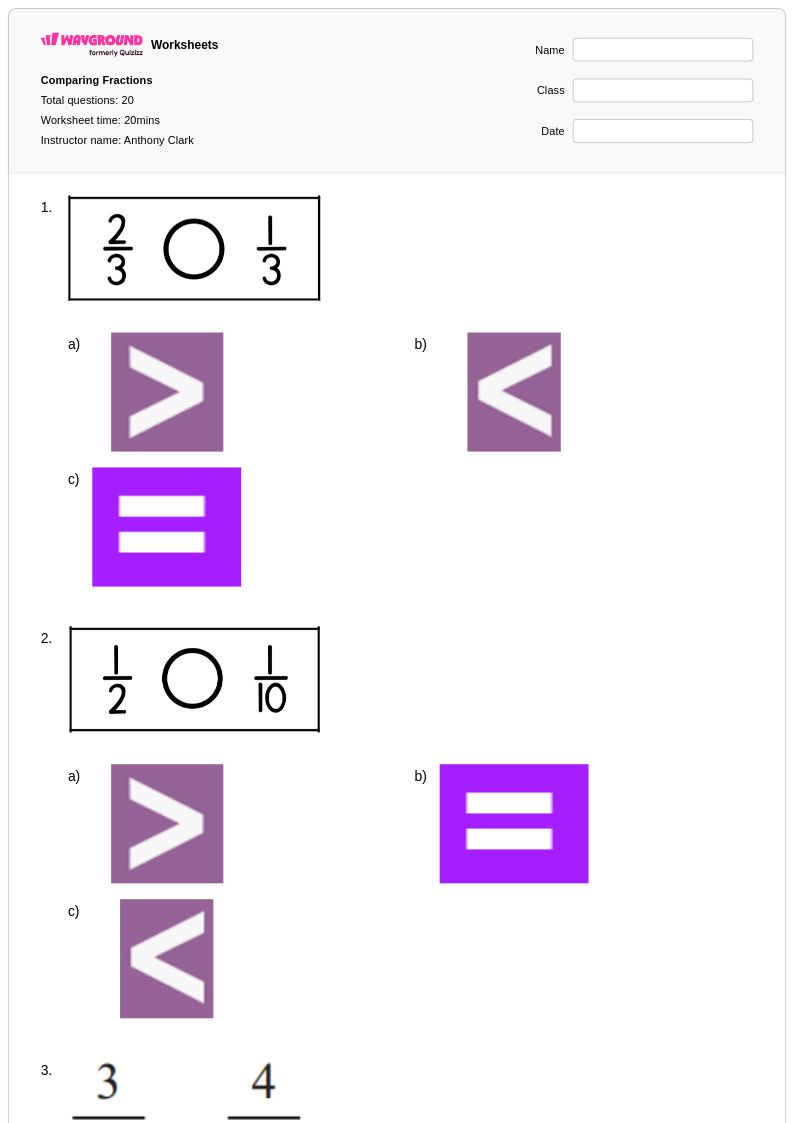
20 Q
4th - Uni
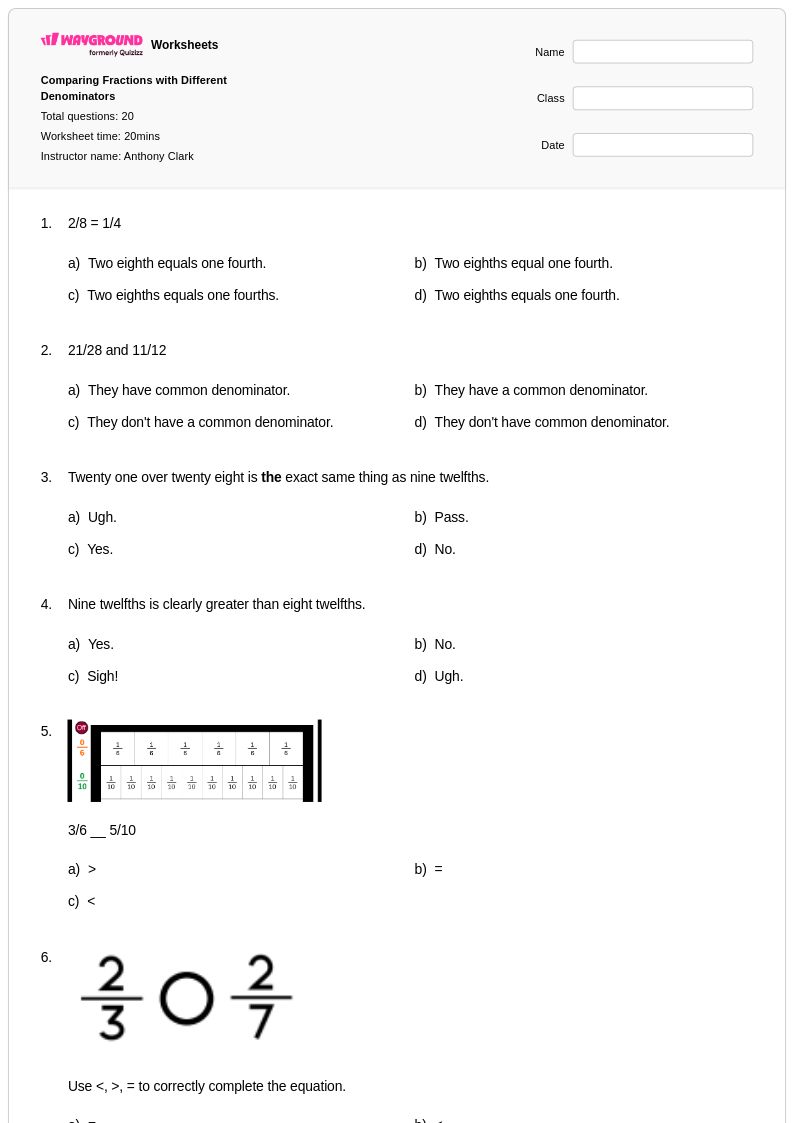
20 Q
3rd - Uni
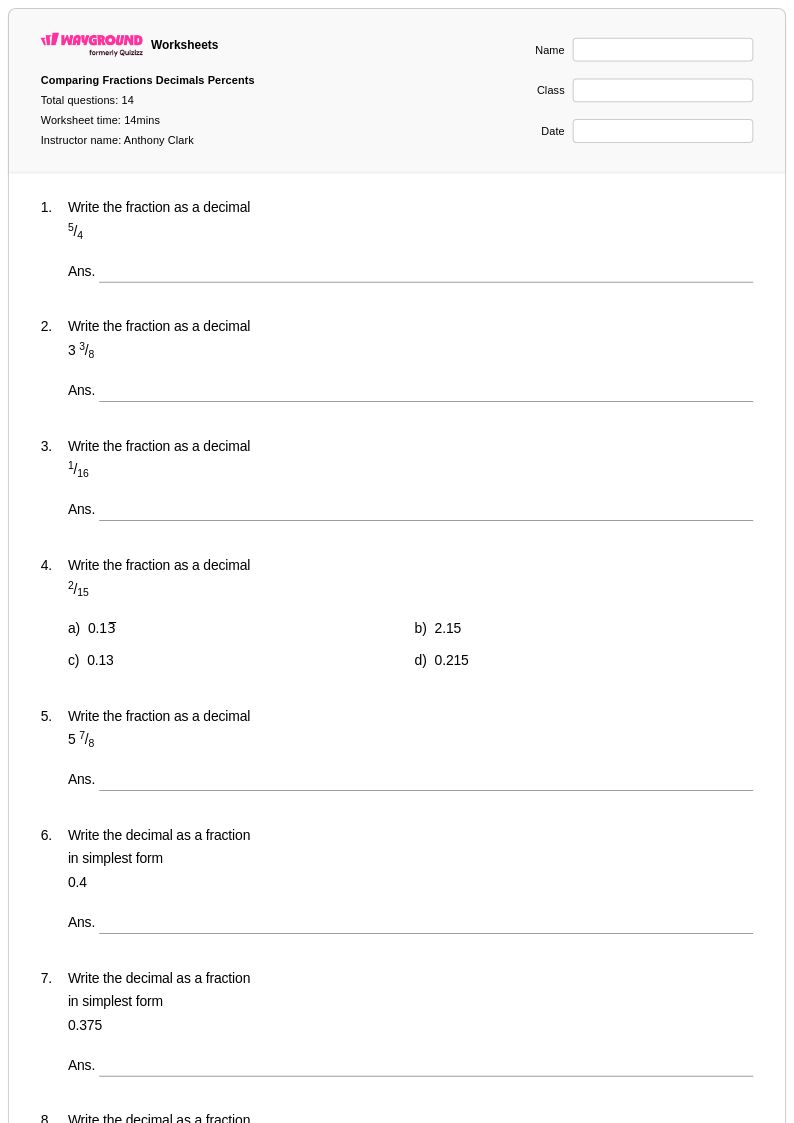
14 Q
6th - Uni
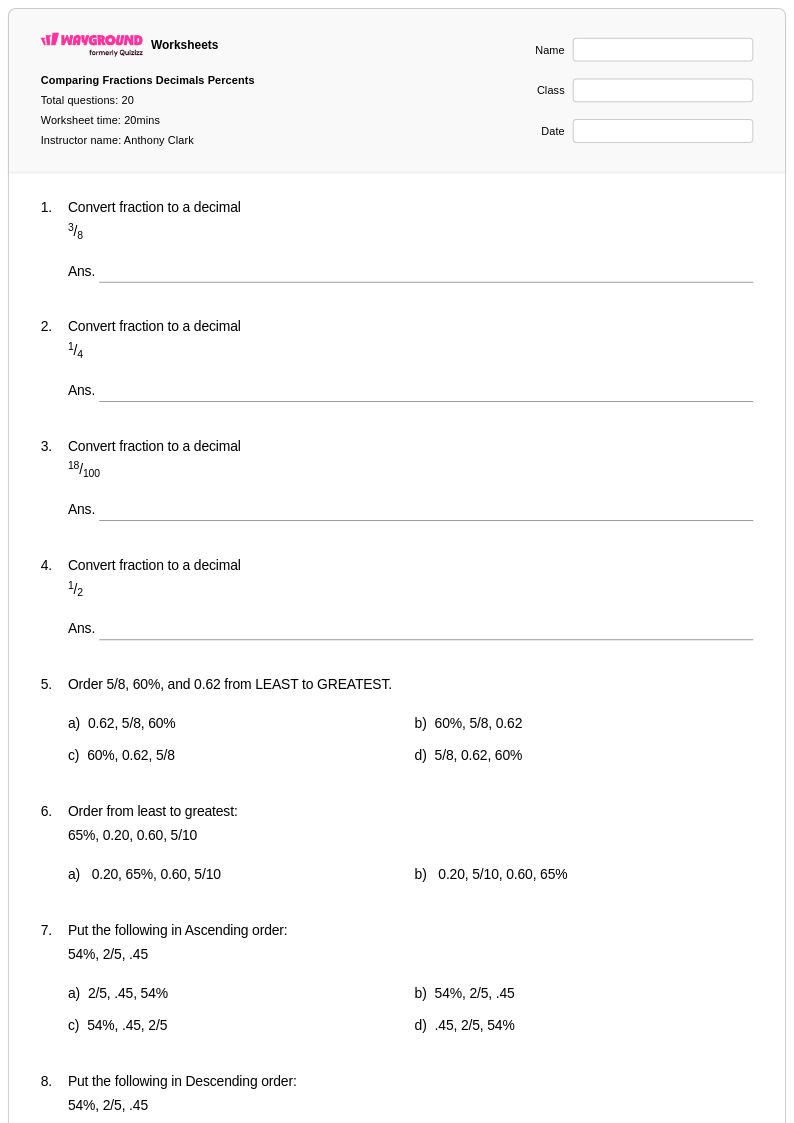
20 Q
6th - Uni
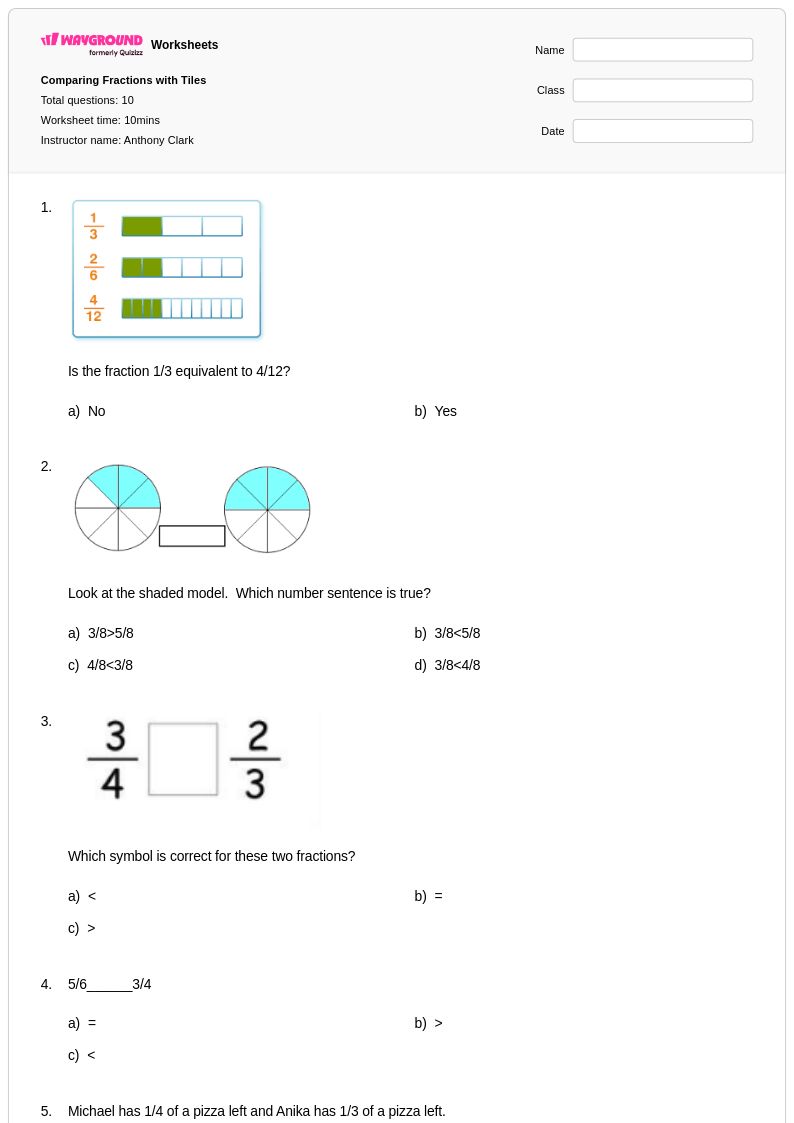
10 Q
5th - Uni
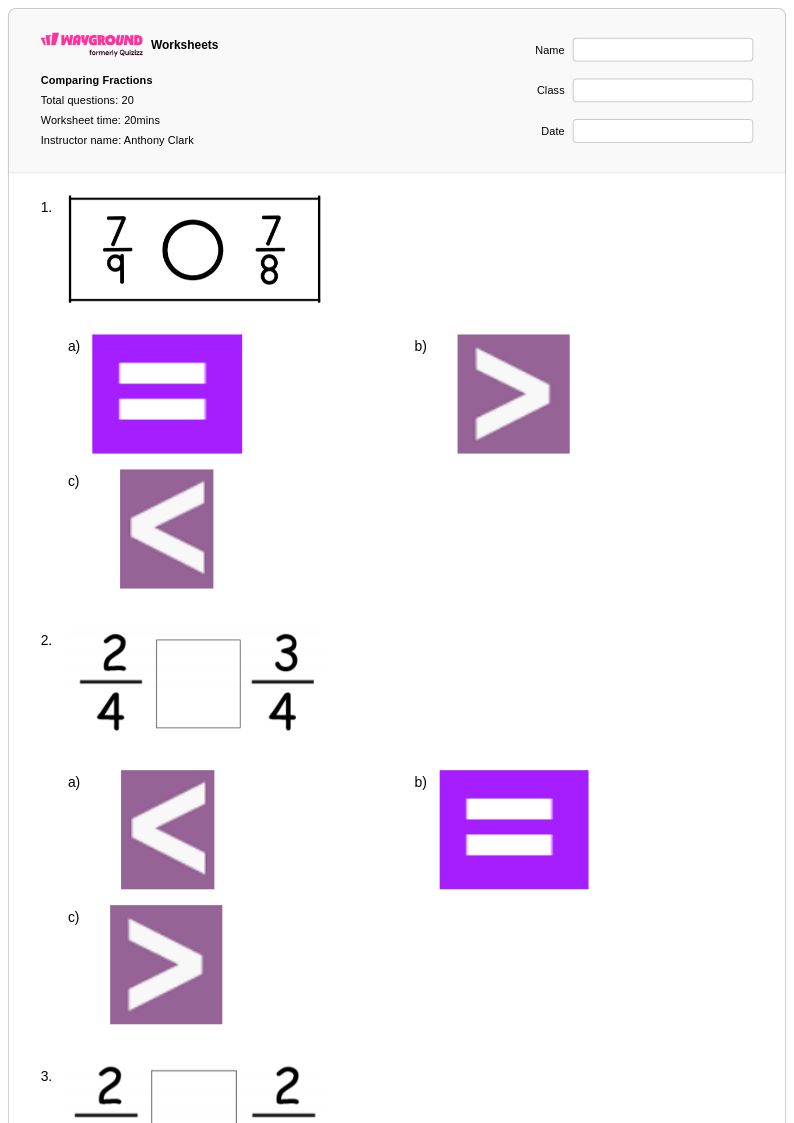
20 Q
4th - Uni
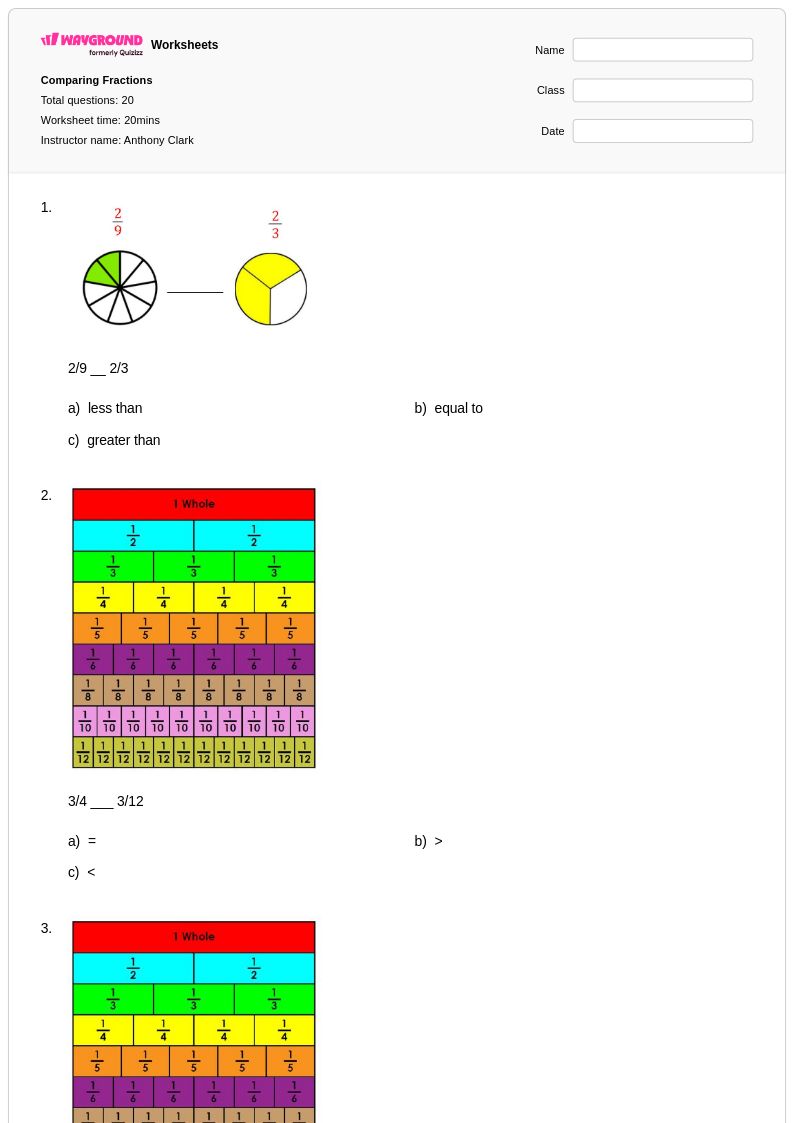
20 Q
4th - Uni
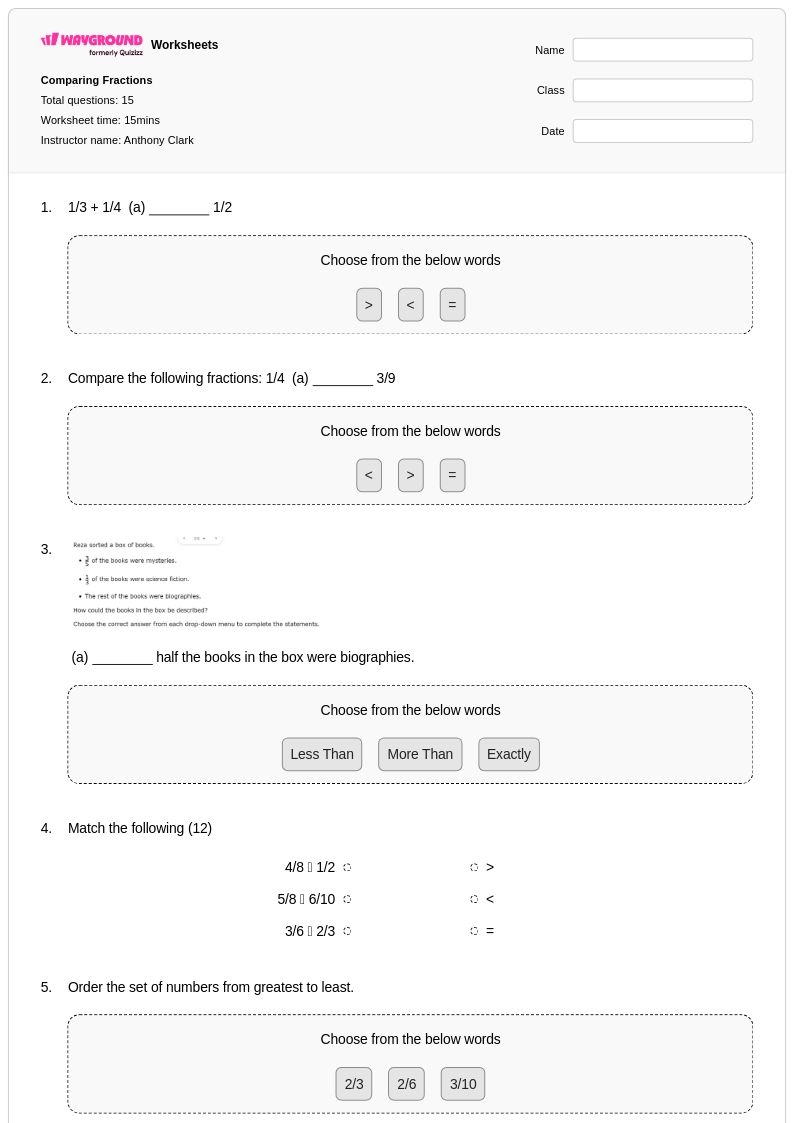
15 Q
4th - Uni
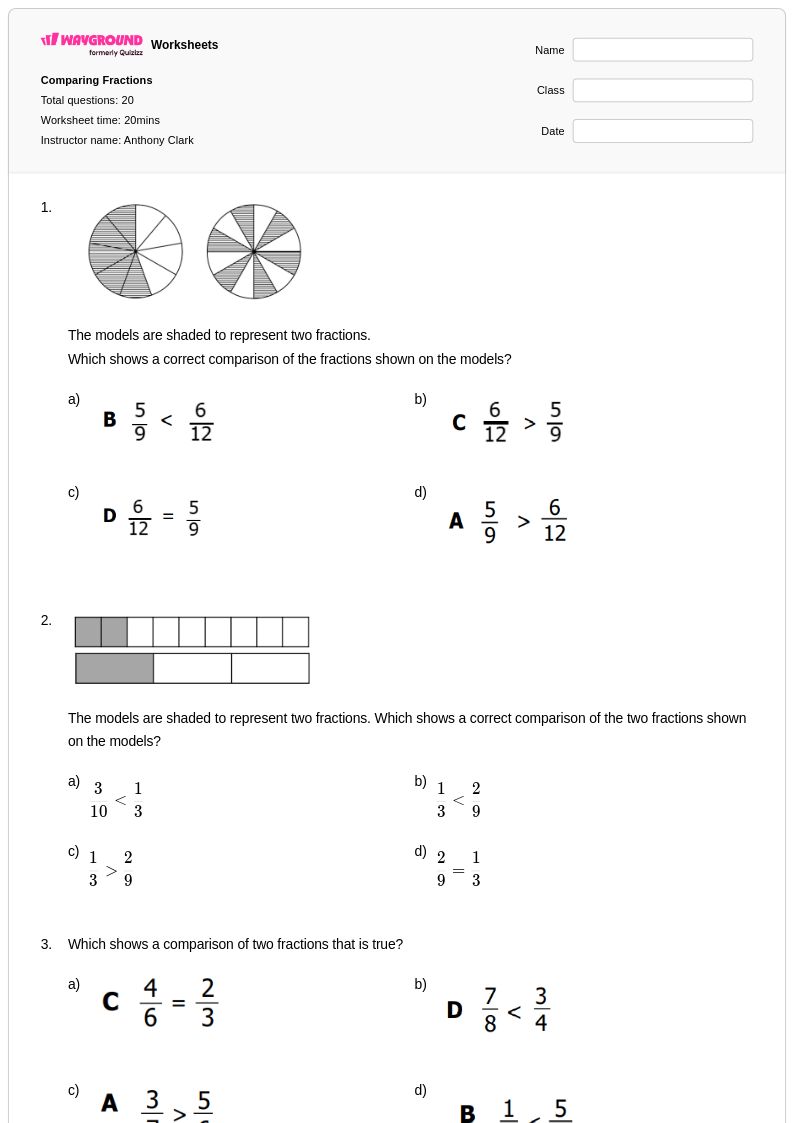
20 Q
4th - Uni
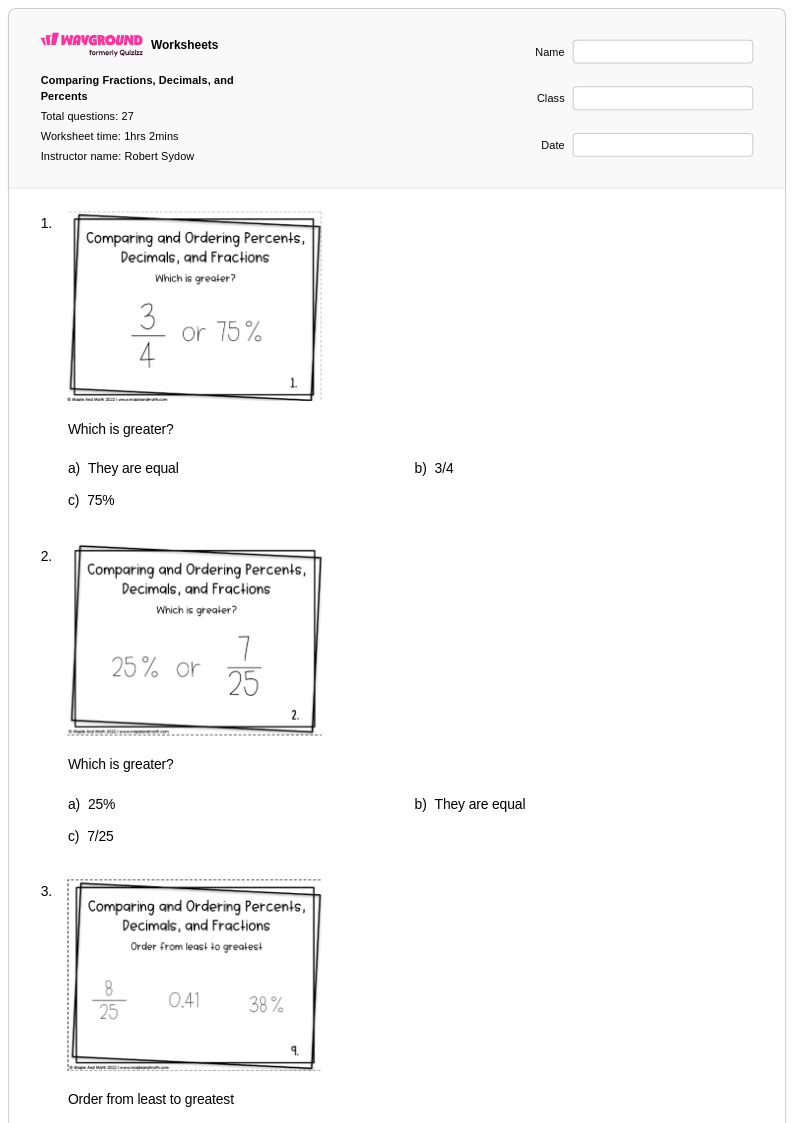
27 Q
6th - 8th
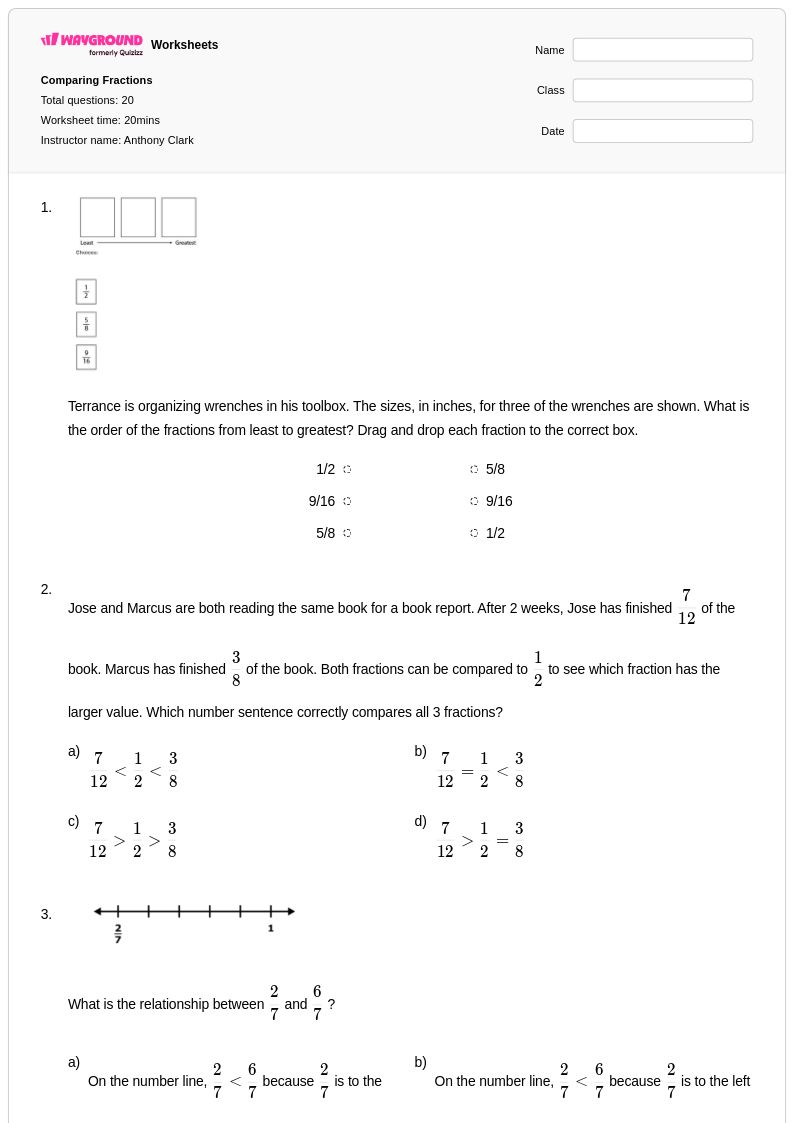
20 Q
5th - Uni
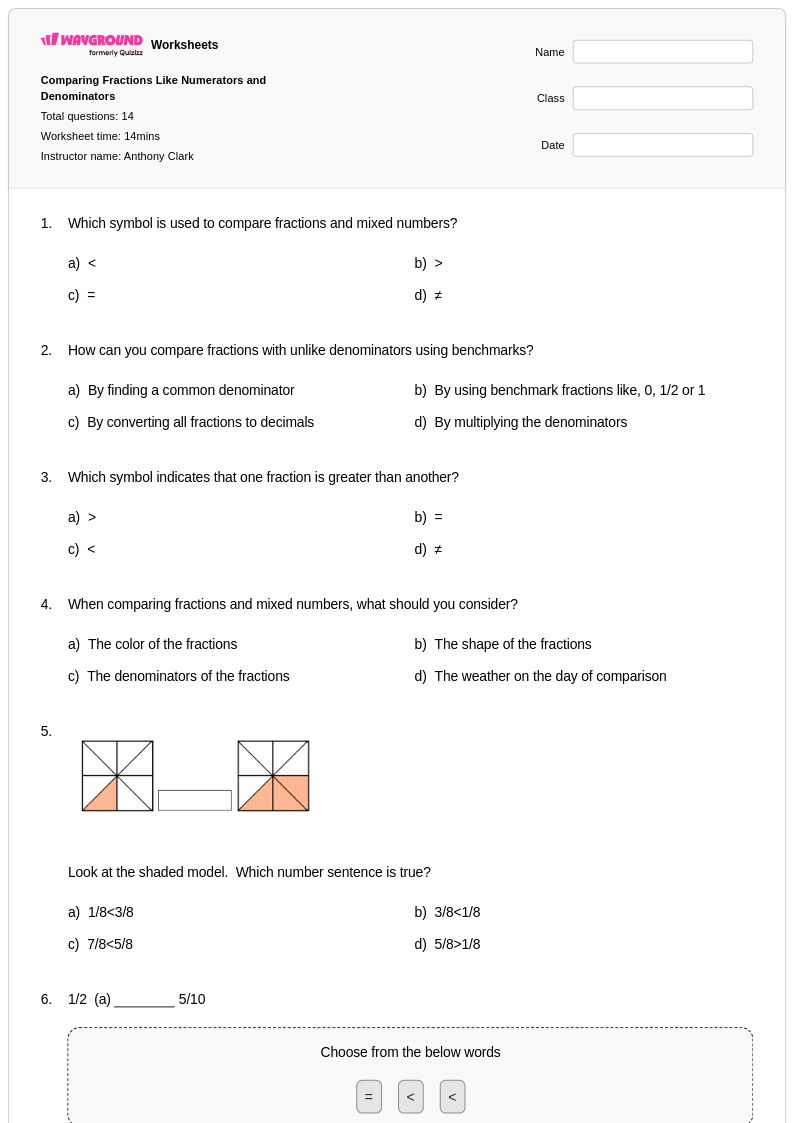
14 Q
4th - Uni
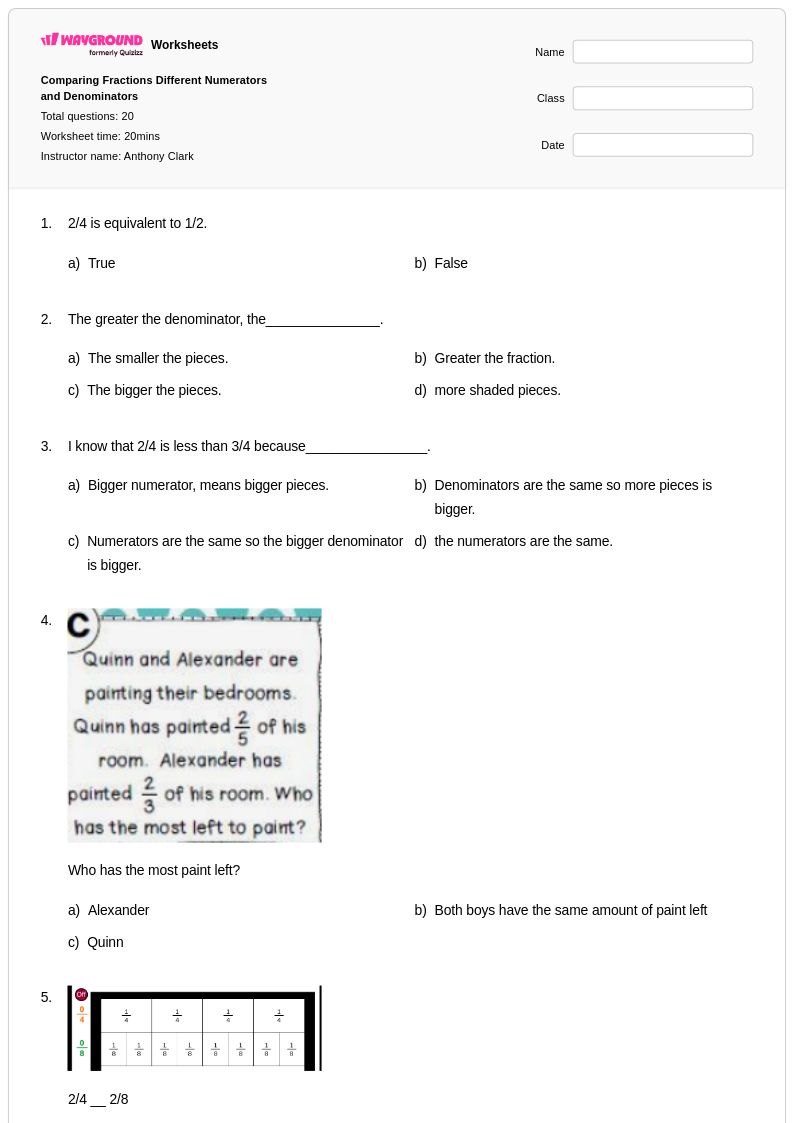
20 Q
4th - Uni
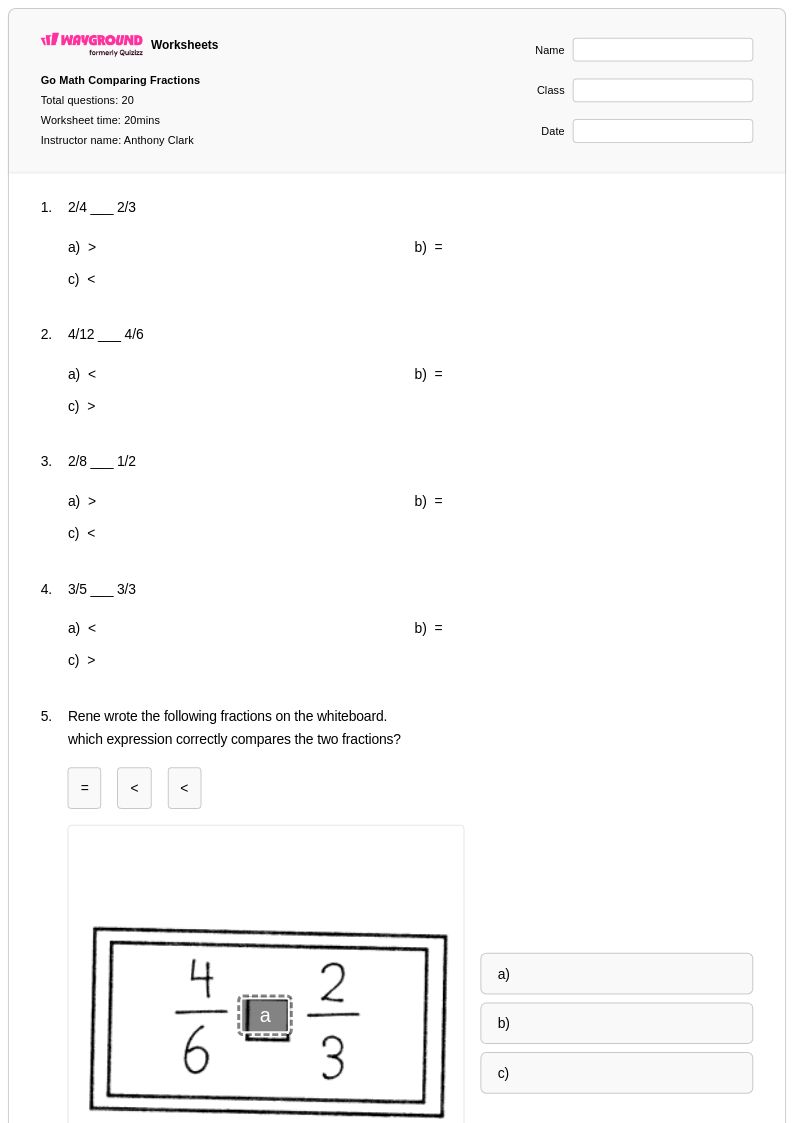
20 Q
4th - Uni
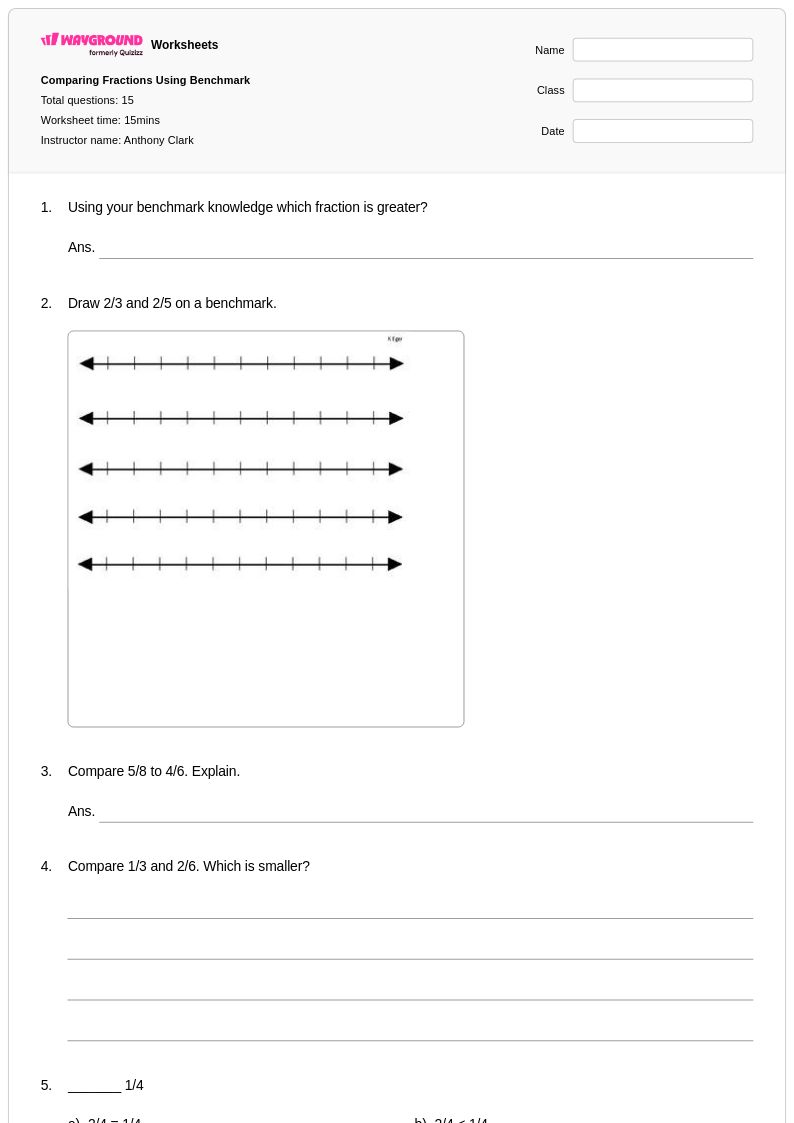
15 Q
4th - Uni
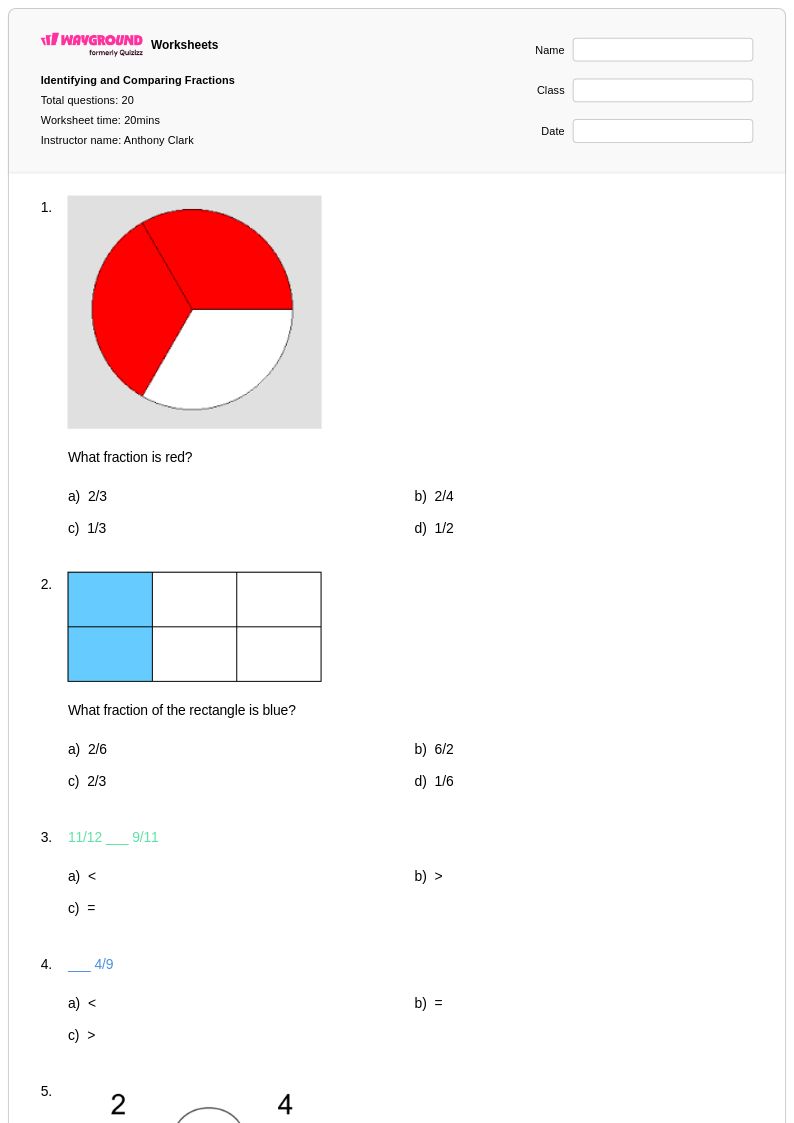
20 Q
4th - Uni
20 Q
4th - Uni
20 Q
4th - Uni
20 Q
4th - Uni
20 Q
3rd - Uni
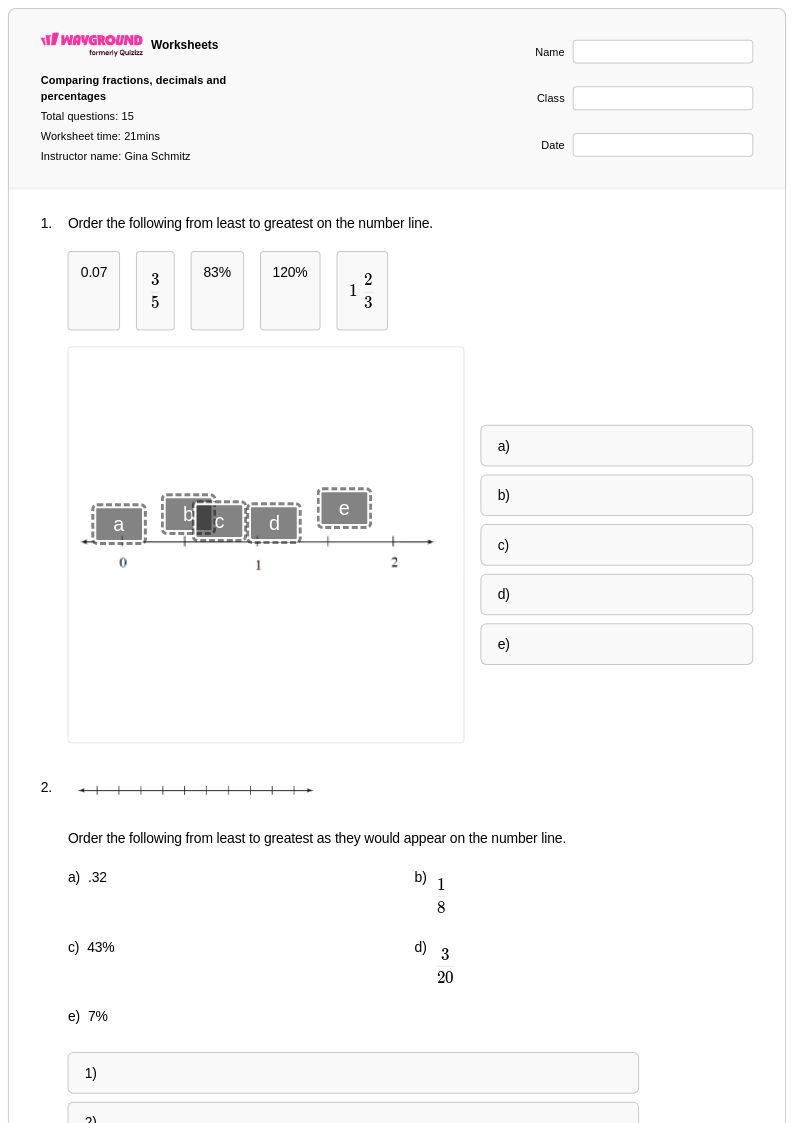
15 Q
6th
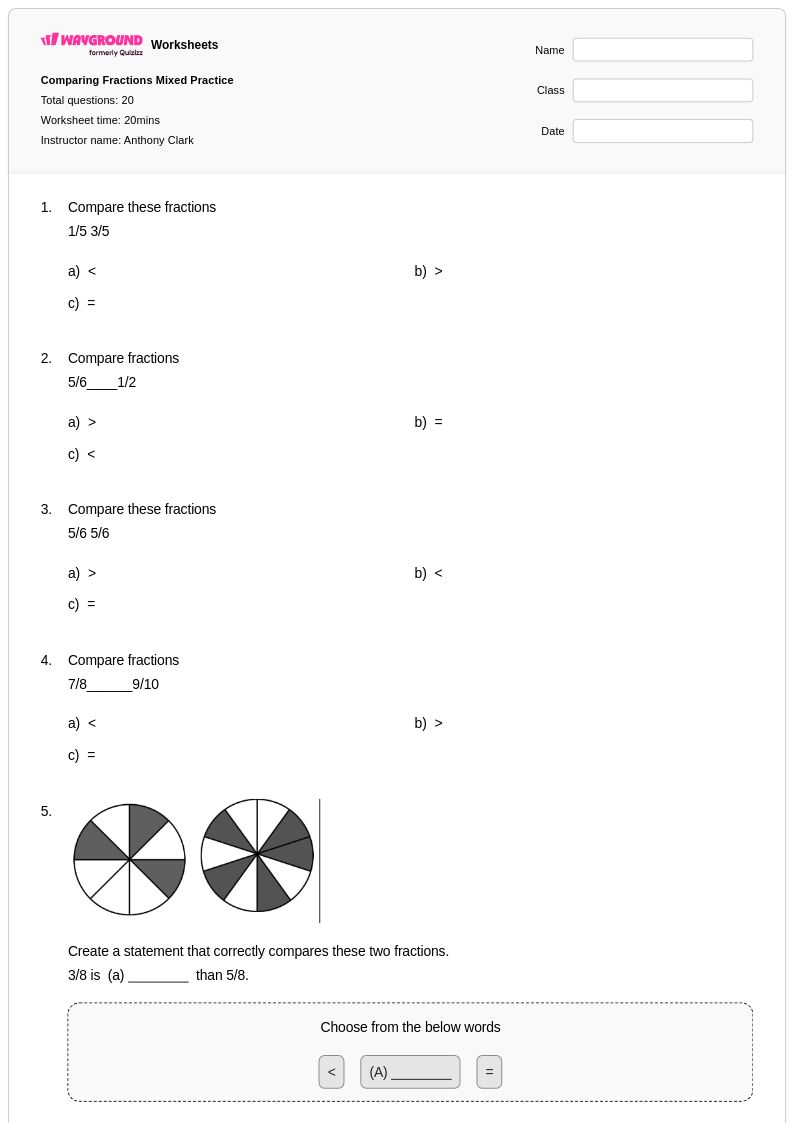
20 Q
4th - Uni
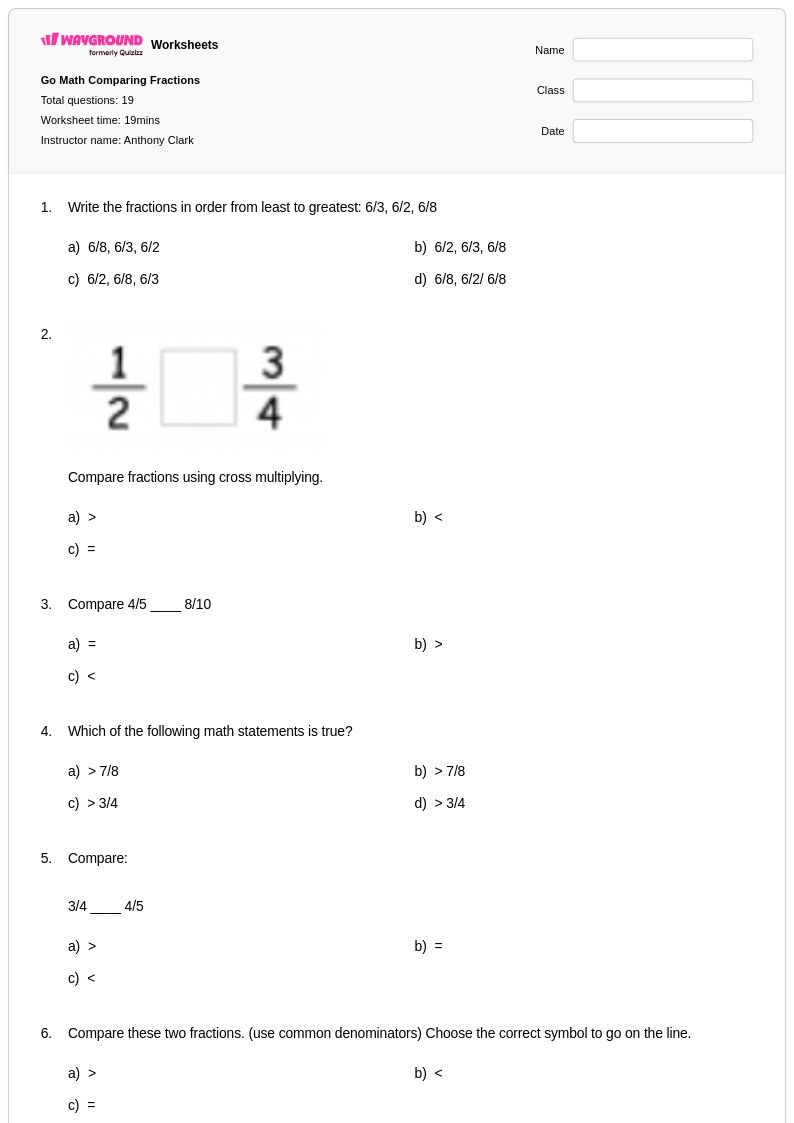
19 Q
4th - Uni
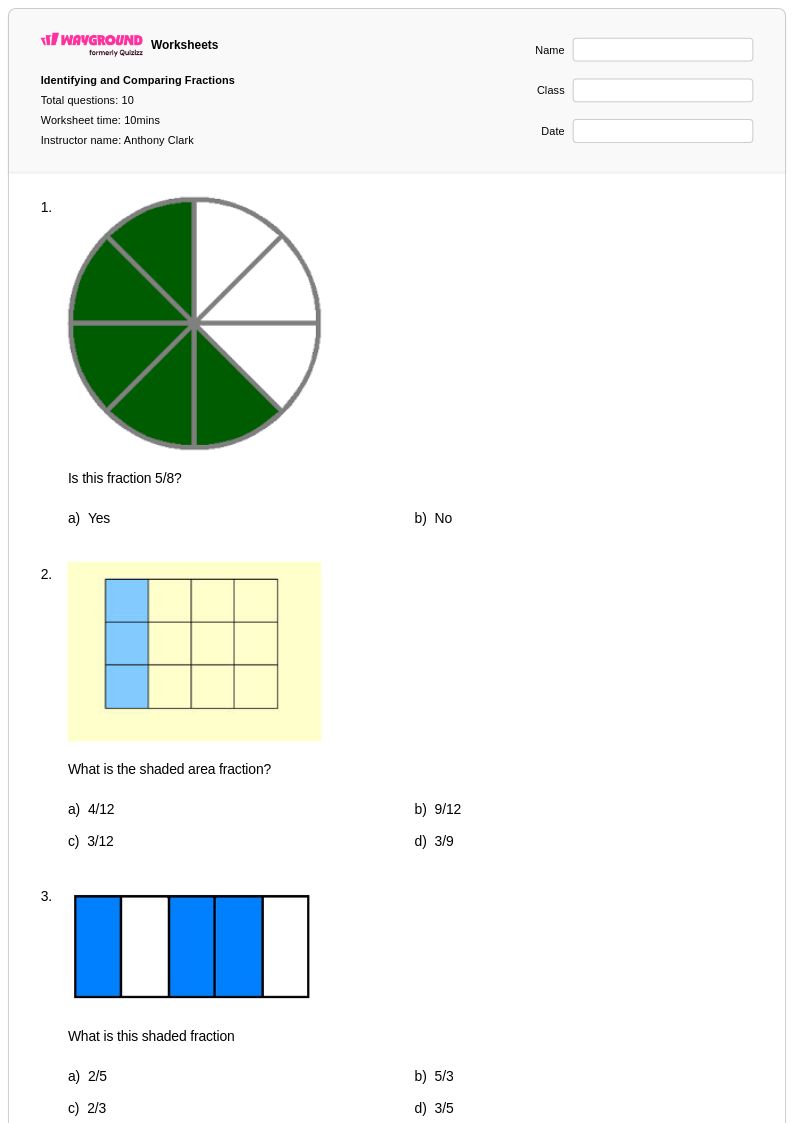
10 Q
4th - Uni
Explore Other Subject Worksheets for grade 6
Explore printable Comparing Fractions worksheets for Grade 6
Comparing fractions worksheets for Grade 6 students through Wayground (formerly Quizizz) provide comprehensive practice in developing critical mathematical reasoning skills essential for middle school mathematics. These carefully designed worksheets focus on teaching students how to compare fractions with different denominators, mixed numbers, and improper fractions using various strategies including cross multiplication, finding common denominators, and converting to decimal equivalents. Students strengthen their understanding of fraction magnitude, equivalency, and ordering while working through systematic practice problems that progress from basic comparisons to more complex multi-step challenges. Each worksheet collection includes detailed answer keys and is available as free printables in convenient PDF format, allowing educators to seamlessly integrate fraction comparison activities into their mathematics instruction.
Wayground's extensive collection of comparing fractions resources draws from millions of teacher-created materials, offering Grade 6 educators powerful search and filtering capabilities to locate worksheets that align with specific learning standards and curriculum requirements. Teachers can easily differentiate instruction by selecting from various difficulty levels and problem types, customizing worksheets to meet individual student needs for both remediation and enrichment purposes. The platform's flexible format options include both printable PDF versions for traditional classroom use and digital formats for interactive learning environments, enabling seamless lesson planning and skill practice implementation. These comprehensive tools support educators in building students' foundational understanding of fraction relationships while providing targeted practice opportunities that reinforce conceptual learning and procedural fluency in comparing fractional values.
FAQs
How do I teach comparing fractions in Grade 6?
What exercises help sixth graders practice comparing fractions?
What mistakes do sixth graders make when comparing fractions?
How can I use a Grade 6 comparing fractions worksheet on Wayground?
How does fraction comparison fit into the Grade 6 Common Core progression?
How can I differentiate Grade 6 comparing fractions worksheets?
What comparing fractions skills should students have in Grade 6?