
20 Q
1st - Uni
20 Q
1st - Uni
15 Q
1st - Uni
20 Q
1st - Uni
15 Q
1st - Uni
15 Q
1st - Uni
20 Q
2nd - Uni
20 Q
1st - Uni
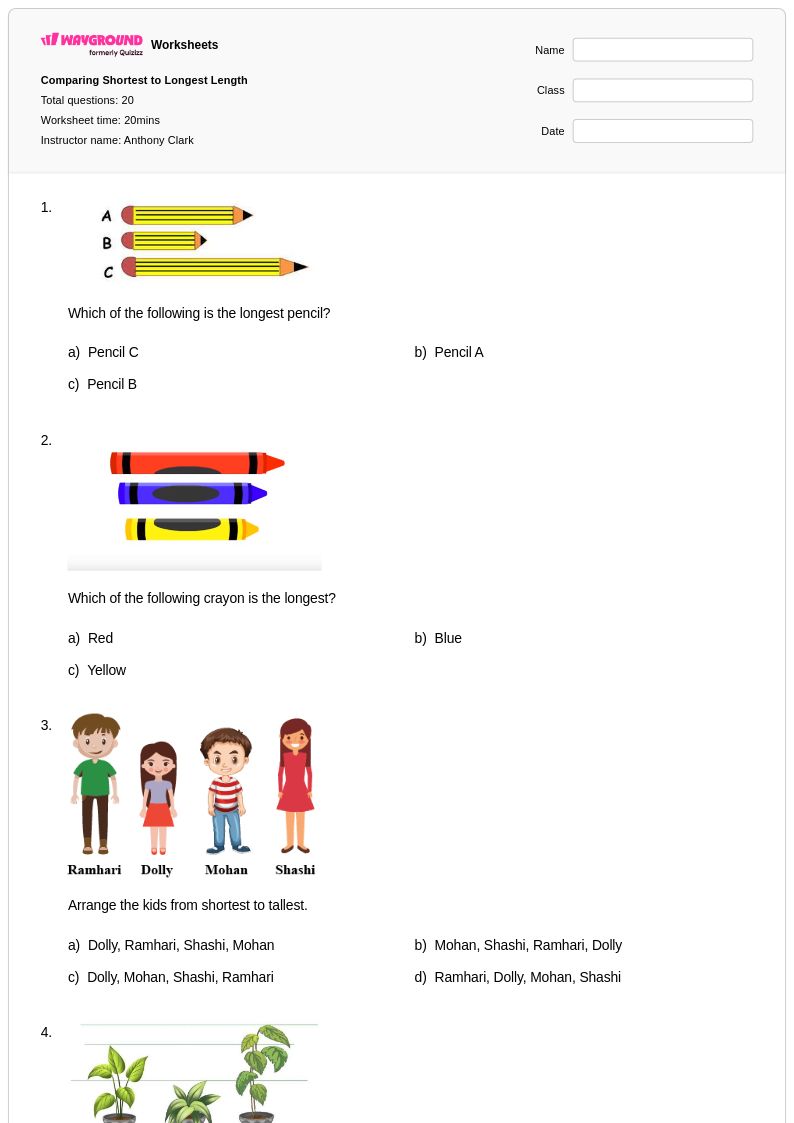
20 Q
1st - Uni
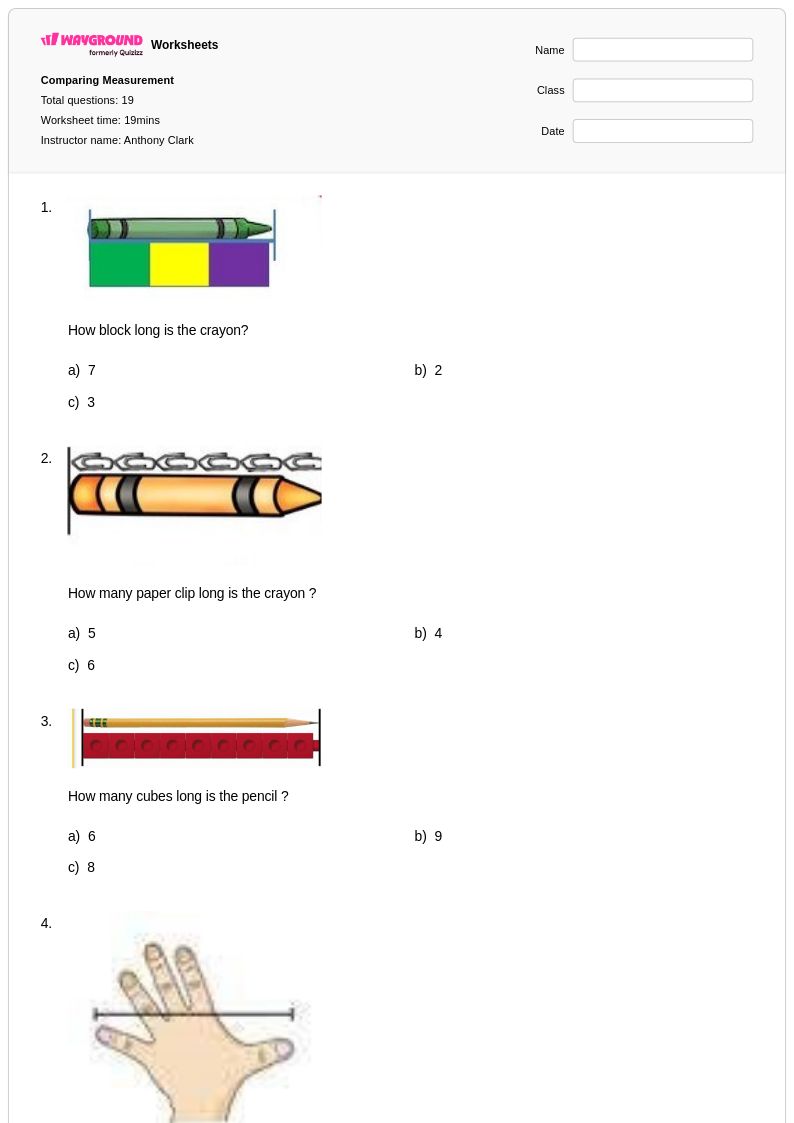
19 Q
3rd - Uni
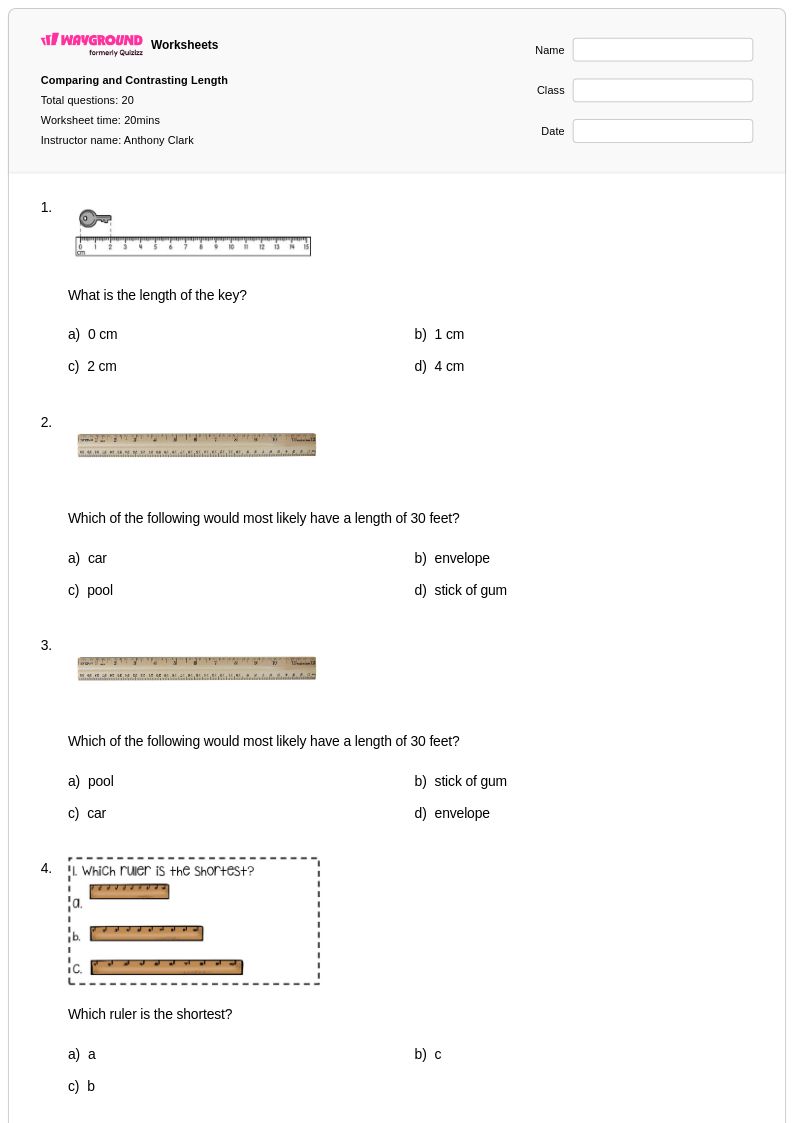
20 Q
2nd - Uni
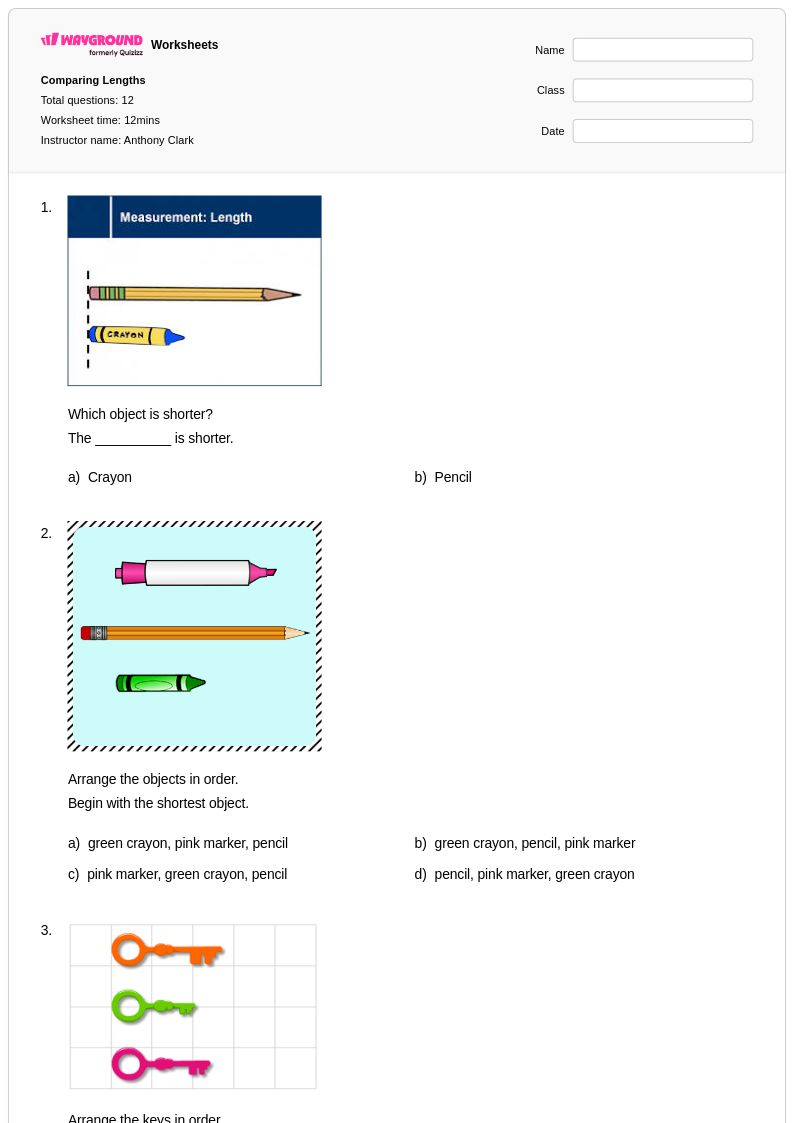
12 Q
1st - Uni
13 Q
2nd - Uni
15 Q
2nd - Uni
15 Q
1st - Uni
15 Q
2nd - Uni
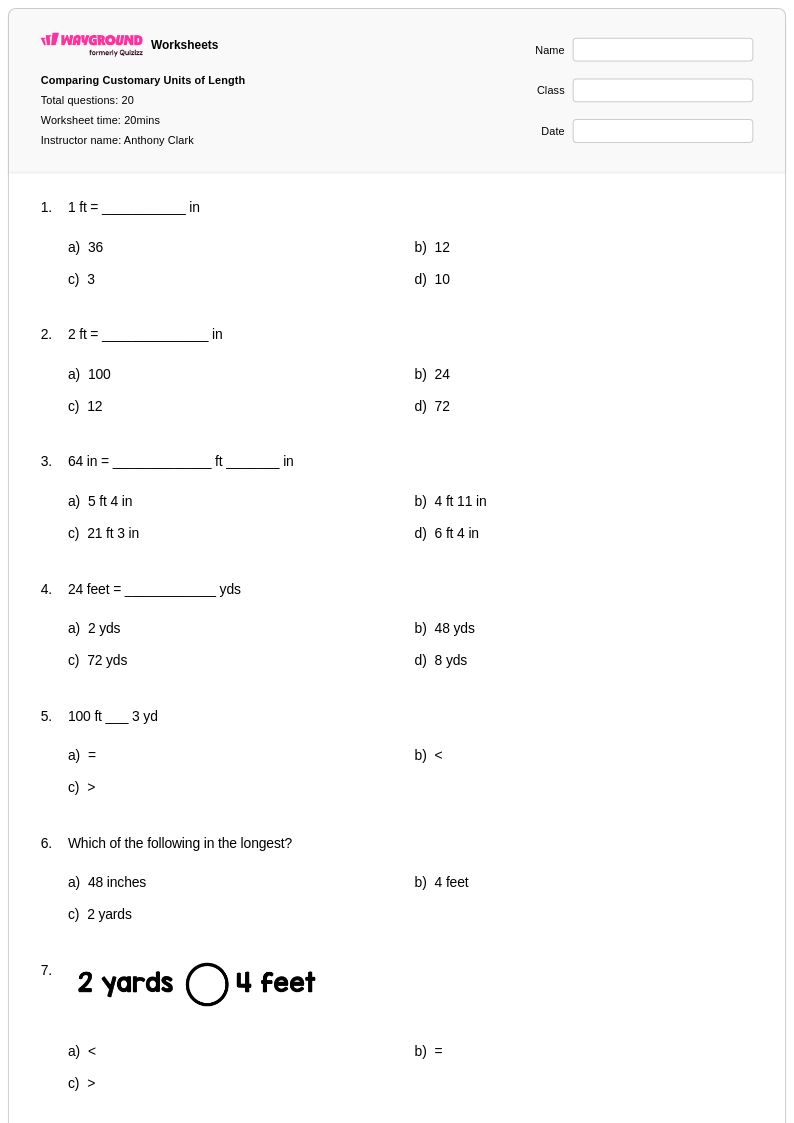
20 Q
4th - Uni
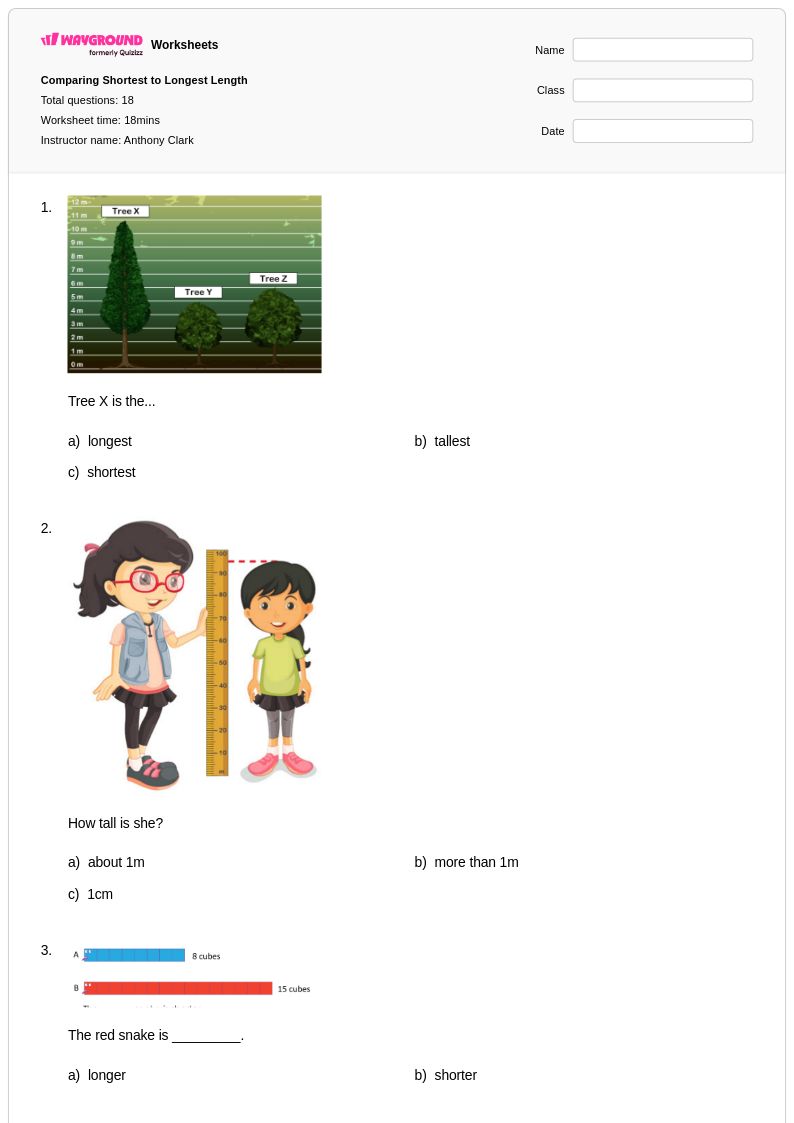
18 Q
1st - Uni
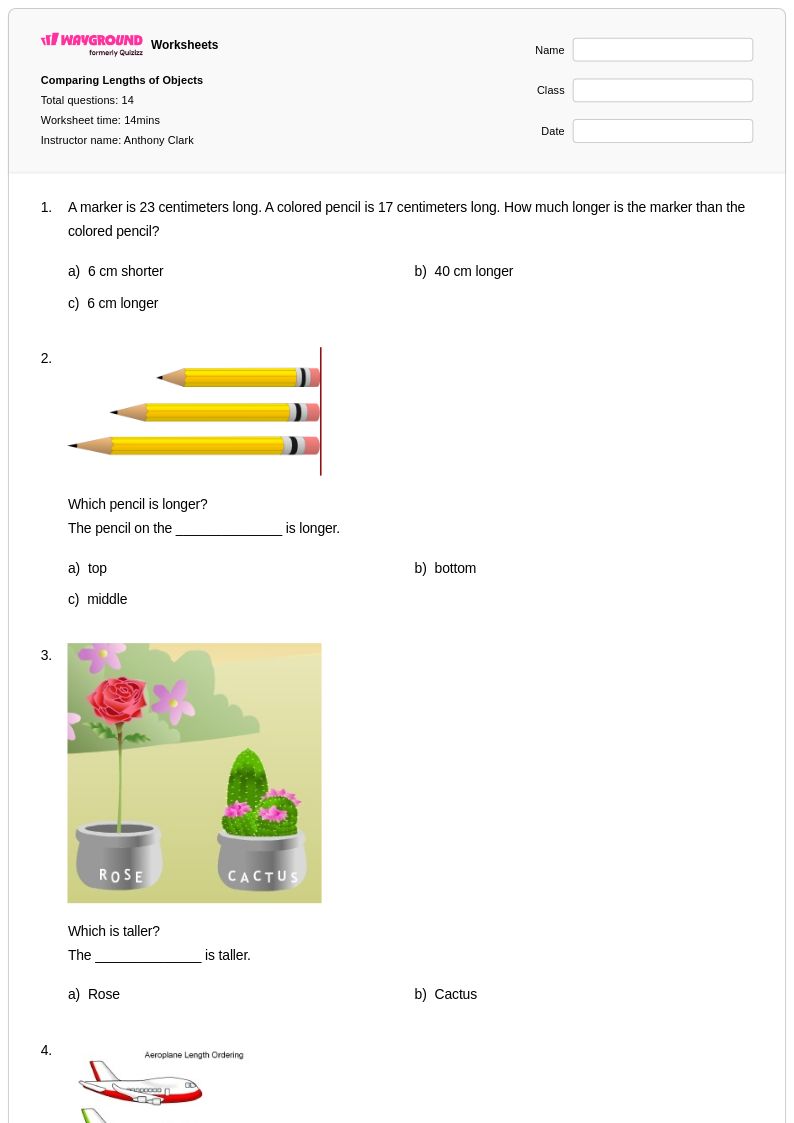
14 Q
1st - Uni
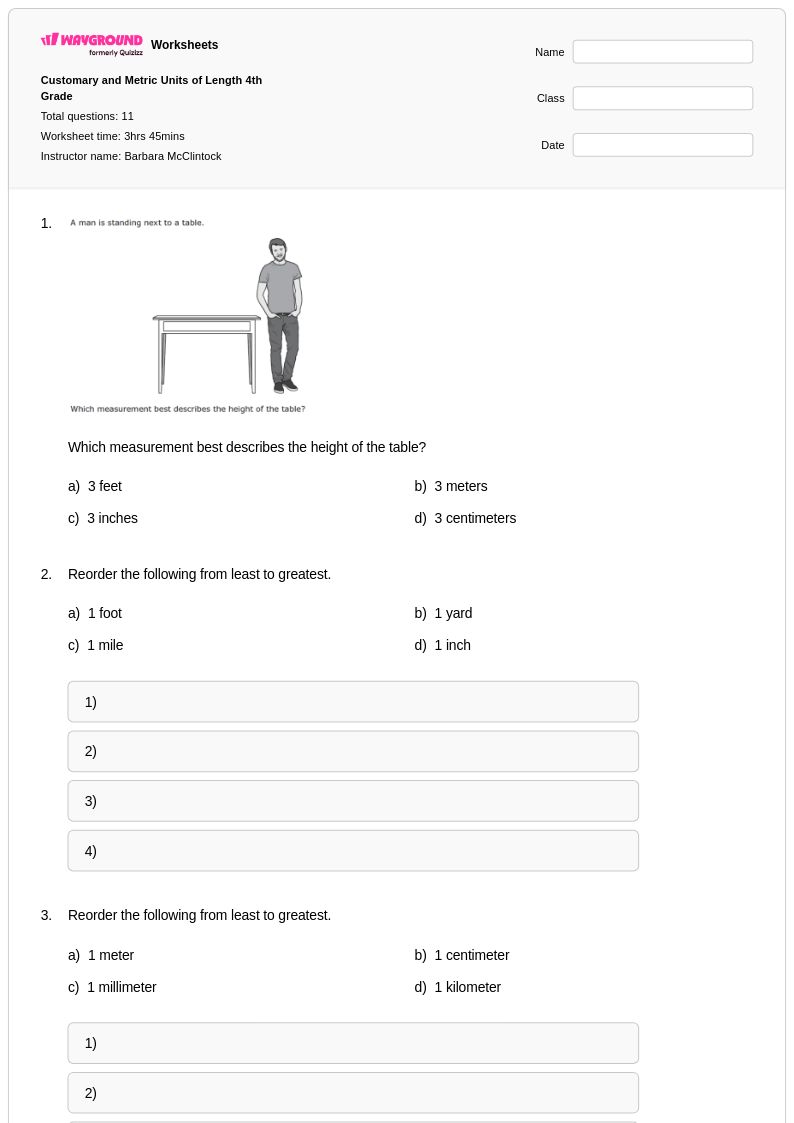
11 Q
4th
15 Q
4th - Uni
20 Q
2nd - Uni
15 Q
4th - Uni
20 Q
1st - Uni
Explore Other Subject Worksheets for grade 4
Explore printable Comparing Length worksheets for Grade 4
Comparing Length worksheets for Grade 4 students available through Wayground (formerly Quizizz) provide essential practice in developing spatial reasoning and measurement skills that form the foundation of mathematical understanding. These comprehensive resources help fourth-grade learners master the critical ability to analyze, compare, and order objects by their linear dimensions using both standard and non-standard units of measurement. Students work through carefully designed practice problems that challenge them to identify longer, shorter, and equal lengths while building fluency with measurement tools and estimation techniques. Each worksheet collection includes detailed answer keys and is available as free printables in convenient pdf format, allowing educators to seamlessly integrate length comparison activities into their mathematics instruction while supporting diverse learning needs.
Wayground (formerly Quizizz) empowers teachers with access to millions of educator-created worksheet resources specifically designed for Grade 4 comparing length instruction, featuring robust search and filtering capabilities that enable quick identification of materials aligned to specific learning standards and skill levels. The platform's comprehensive differentiation tools allow instructors to customize worksheets for varied student abilities, supporting both remediation for struggling learners and enrichment opportunities for advanced students. Teachers benefit from flexible delivery options including printable pdf worksheets for traditional classroom use and digital formats that facilitate interactive learning experiences. These extensive resources streamline lesson planning while providing targeted skill practice opportunities that help students build confidence in measurement concepts, making it easier for educators to address individual learning gaps and reinforce essential mathematical foundations through systematic practice and assessment.
FAQs
How do I teach fourth graders to compare lengths?
What exercises help Grade 4 students practice comparing length?
What mistakes do students make when comparing lengths?
How can I use a Grade 4 comparing length worksheet in class?
How does comparing length fit into the Grade 4 math curriculum?
How can I differentiate comparing length practice for a mixed-ability class?
Is this comparing length worksheet appropriate for Grade 4?