Free Printable Conflict Studies Worksheets for Grade 7
Grade 7 conflict studies worksheets help students analyze historical wars, revolutions, and disputes through engaging printables and practice problems with comprehensive answer keys available as free PDF downloads.
Explore printable Conflict Studies worksheets for Grade 7
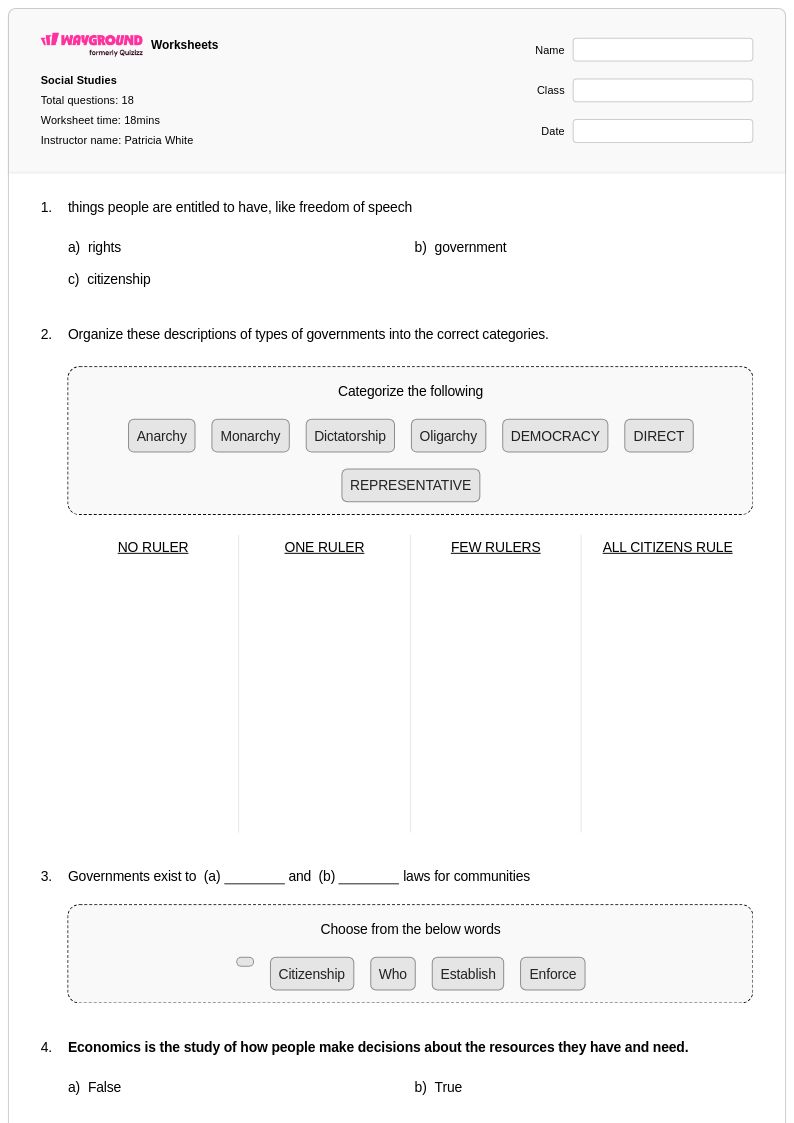
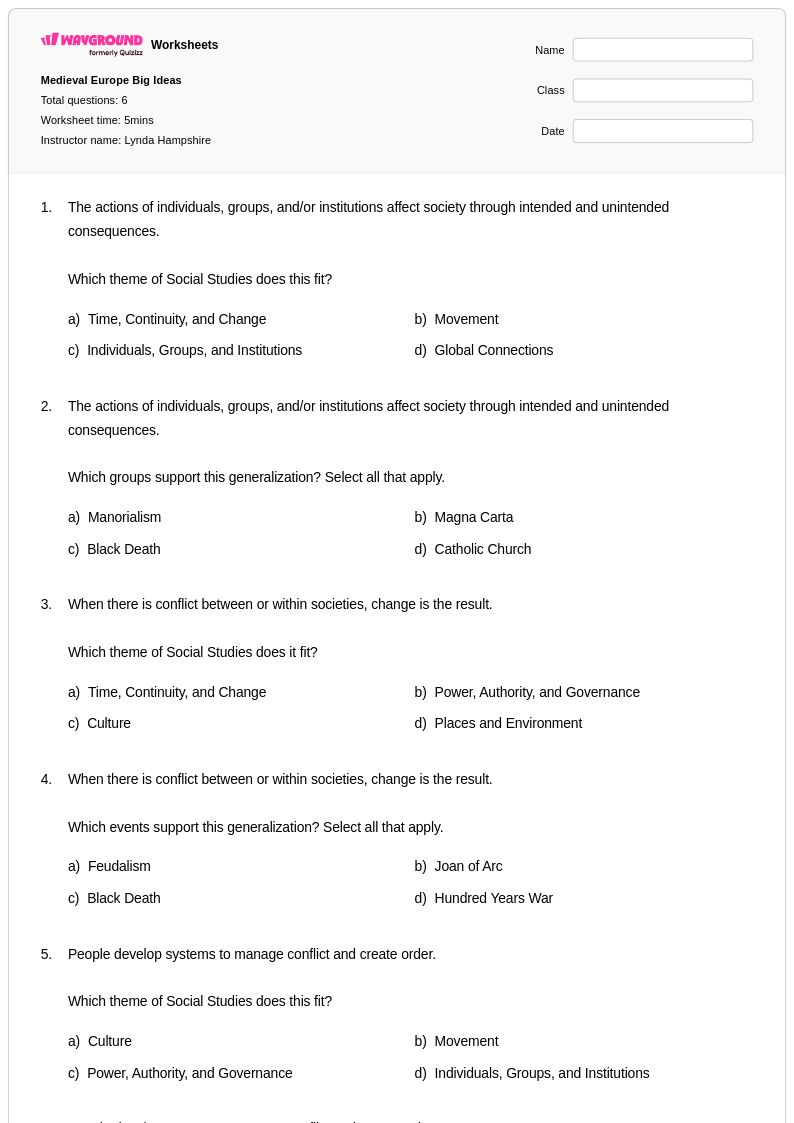
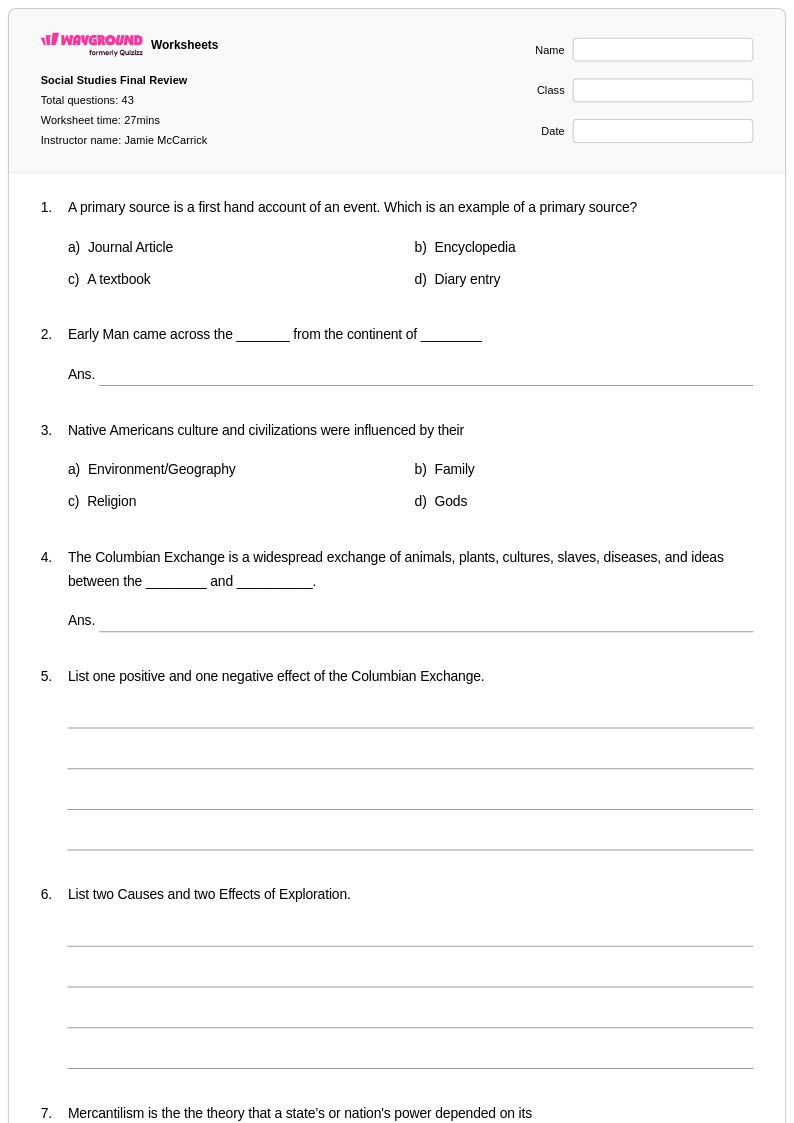
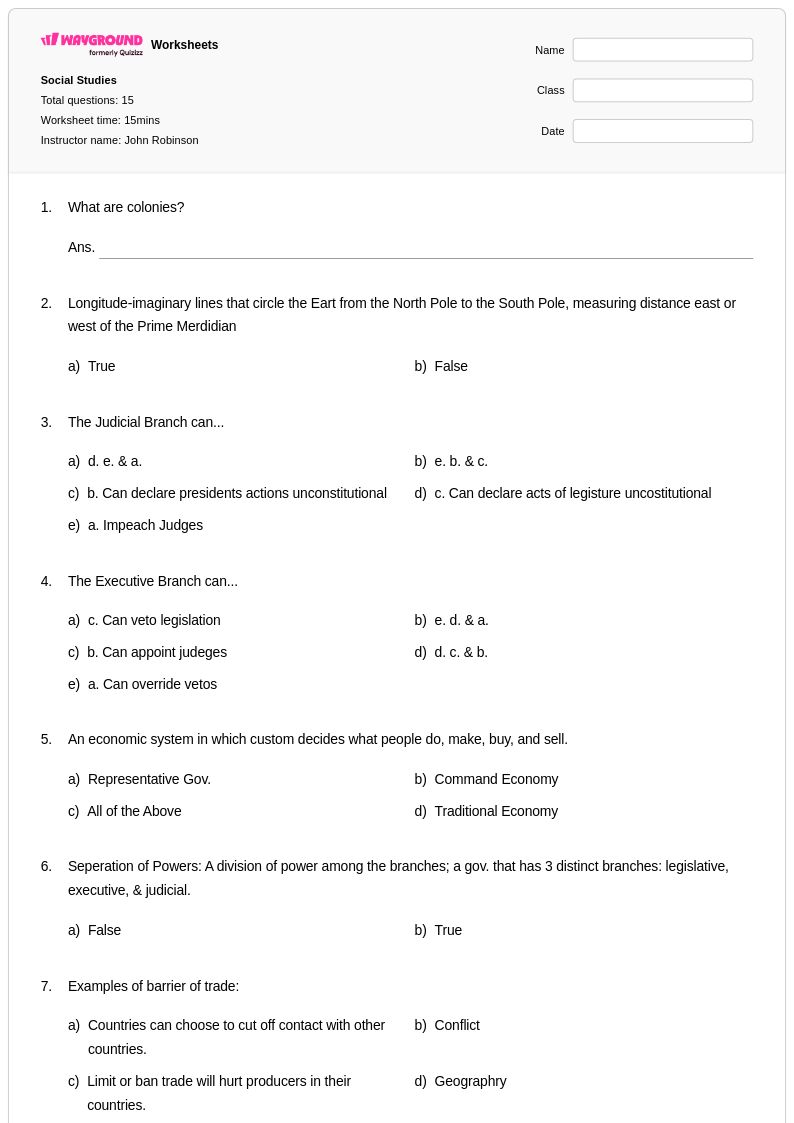
Conflict Studies worksheets for Grade 7 students available through Wayground (formerly Quizizz) provide comprehensive educational resources that examine the causes, progression, and consequences of historical conflicts throughout world history. These expertly designed worksheets strengthen critical thinking skills by guiding students through complex analyses of warfare, diplomatic tensions, and peace processes across different civilizations and time periods. Students engage with practice problems that require them to evaluate primary sources, compare military strategies, and assess the social and economic impacts of conflicts on various societies. Each worksheet collection includes detailed answer keys that support both independent study and classroom instruction, with free printables available in convenient pdf format for seamless integration into lesson plans.
Wayground (formerly Quizizz) supports educators with millions of teacher-created Conflict Studies resources that can be easily located through robust search and filtering capabilities designed specifically for Grade 7 World History instruction. The platform's standards alignment features ensure that worksheet collections meet curriculum requirements while offering differentiation tools that accommodate diverse learning needs within the classroom. Teachers can customize these printable and digital materials, including pdf downloads, to target specific conflicts or themes relevant to their instructional goals, whether focusing on ancient battles, medieval crusades, or more recent historical tensions. These flexible resources prove invaluable for lesson planning, providing targeted remediation for struggling students, offering enrichment opportunities for advanced learners, and delivering consistent skill practice that builds students' analytical capabilities in understanding the complex nature of human conflict throughout history.
FAQs
How do I teach conflict studies in a way that keeps students engaged?
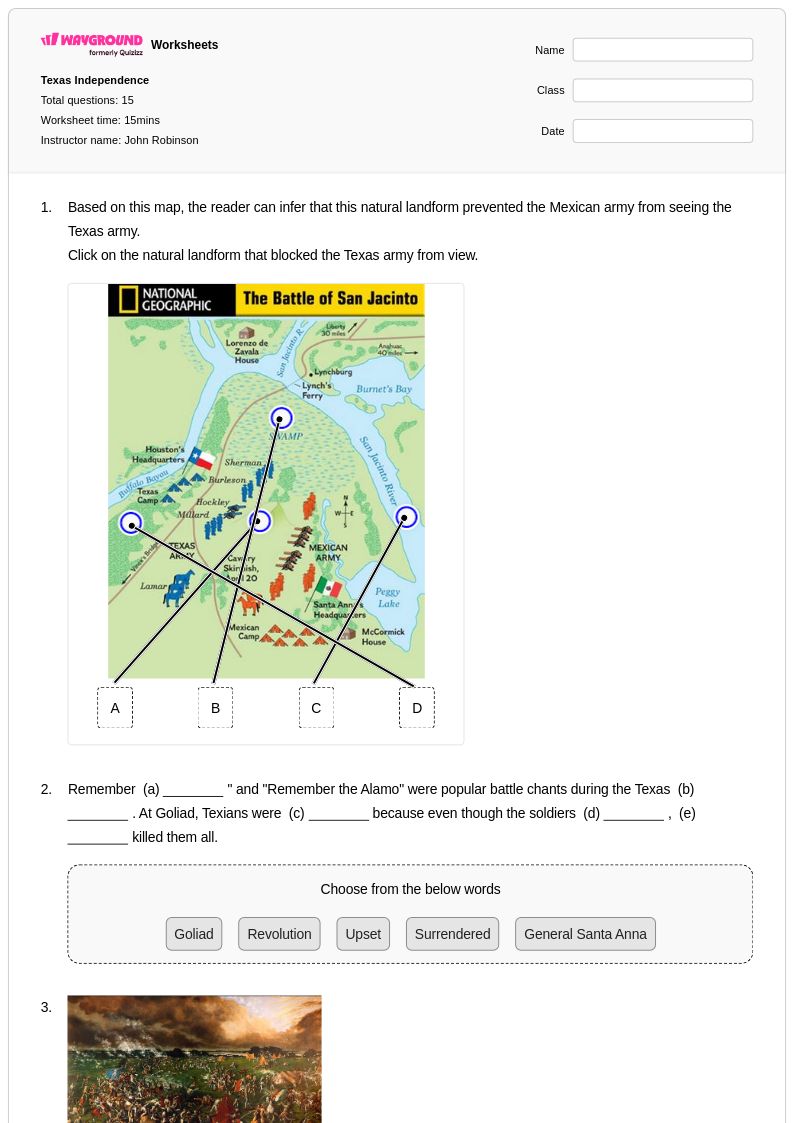
Effective conflict studies instruction moves students beyond memorizing dates and battles toward analyzing cause-and-effect relationships, competing motivations, and long-term consequences. Anchoring lessons in primary sources, historical maps, and timelines gives students concrete material to interrogate rather than passive content to absorb. Structured activities that ask students to evaluate multiple perspectives on the same event, such as comparing combatant viewpoints or diplomatic positions, build the critical thinking skills at the heart of the discipline.
What types of exercises help students practice conflict analysis skills?
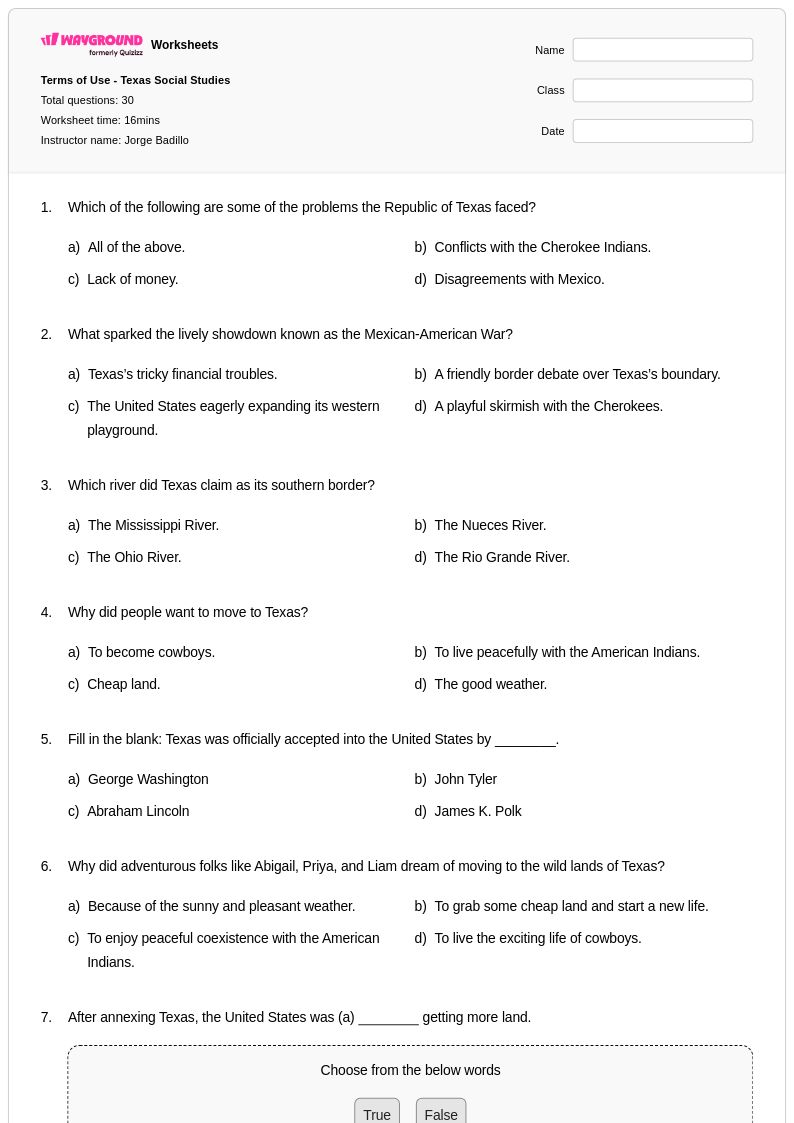
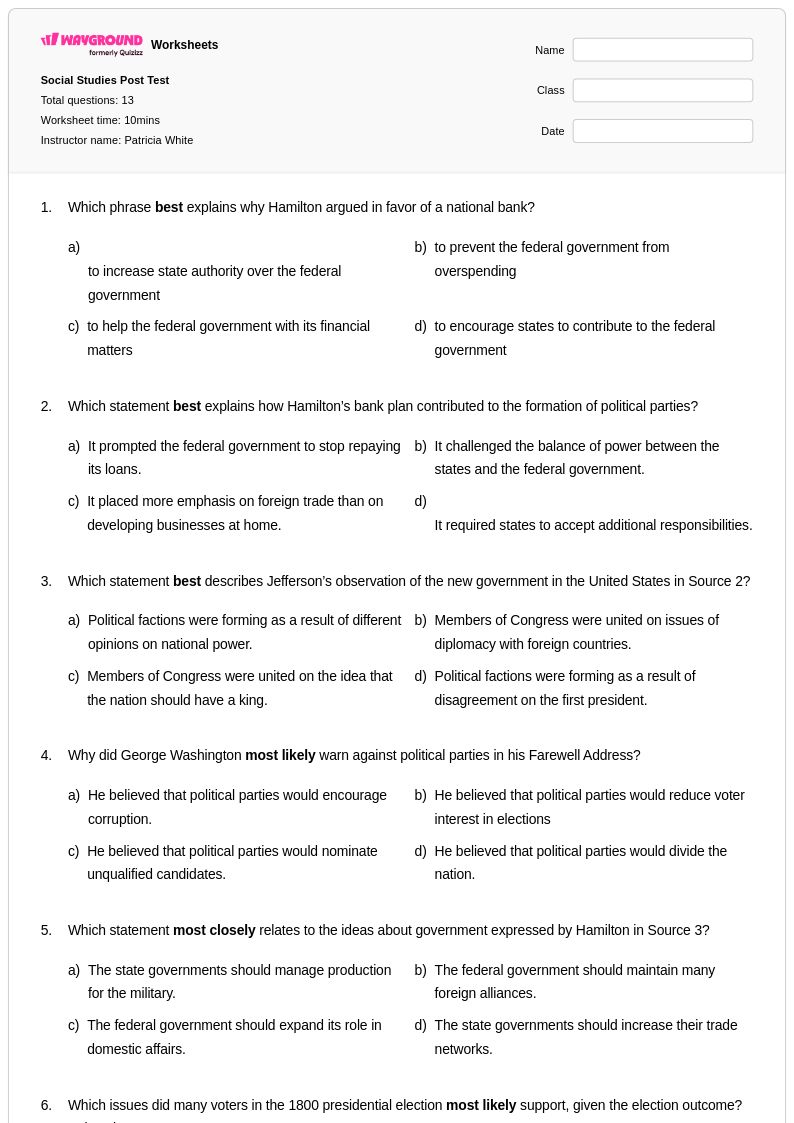
Practice exercises that require students to synthesize information across sources are especially effective for conflict studies. Useful formats include cause-and-effect mapping for specific wars or peace processes, timeline reconstruction activities, and document-based questions that draw on speeches, treaties, or political cartoons. Connecting historical conflicts to contemporary global issues through structured written responses also reinforces analytical habits and helps students transfer skills across different conflict scenarios.
What common mistakes do students make when analyzing historical conflicts?
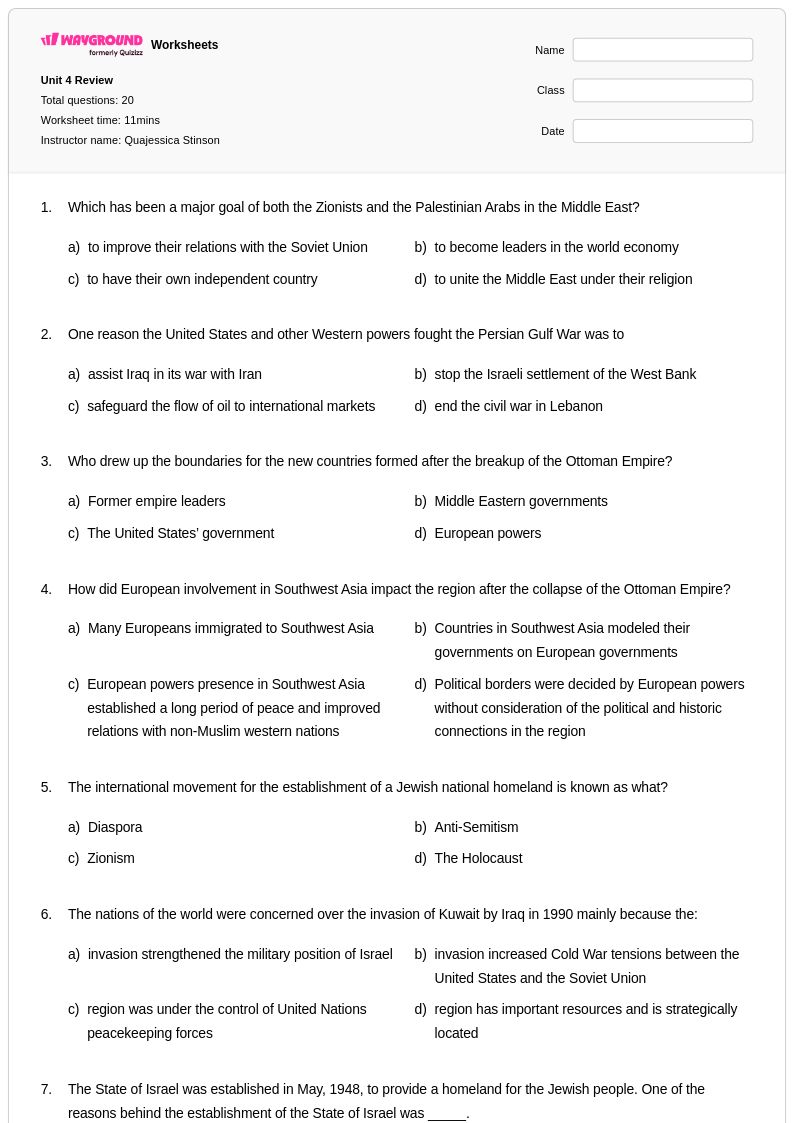
One of the most persistent misconceptions is treating conflicts as inevitable or as the result of a single cause, rather than recognizing the layered political, economic, and social forces involved. Students also frequently adopt a single-nation perspective without considering how other parties experienced the same events. Another common error is failing to distinguish between short-term triggers and long-term underlying causes, which leads to shallow analysis when evaluating military or diplomatic decisions.
How can I use conflict studies worksheets to support students with different learning needs?
Conflict studies worksheets on Wayground can be assigned digitally, which allows teachers to apply individual accommodations such as extended time, read-aloud support for students who need questions read to them, and reduced answer choices to lower cognitive load for struggling learners. These settings can be configured per student and reused across future sessions, so differentiation does not require rebuilding setups each time. Advanced students can engage with higher-complexity synthesis tasks while others receive targeted support, all within the same assignment.
How do I use Wayground's conflict studies worksheets in my classroom?
Wayground's conflict studies worksheets are available as printable PDFs for traditional classroom use and in digital formats for technology-integrated environments, including the option to host them as a quiz directly on Wayground. Teachers can use the platform's search and filtering tools to locate materials aligned to specific conflict eras, skills, or curriculum standards. Both formats include complete answer keys, making them practical for independent practice, guided instruction, remediation, or enrichment.
How do I connect historical conflict studies to modern international relations for students?
Drawing explicit connections between past conflicts and present-day geopolitical situations helps students see the discipline as living and relevant rather than purely historical. Teachers can structure this through comparative analysis activities that ask students to identify parallels in causes, diplomatic failures, or peace-building strategies across different time periods. Worksheets that include primary sources alongside guiding questions are particularly effective because they prompt students to evaluate evidence rather than simply receive teacher-provided conclusions.