Free Printable Coordinating Conjunctions Worksheets for Grade 3
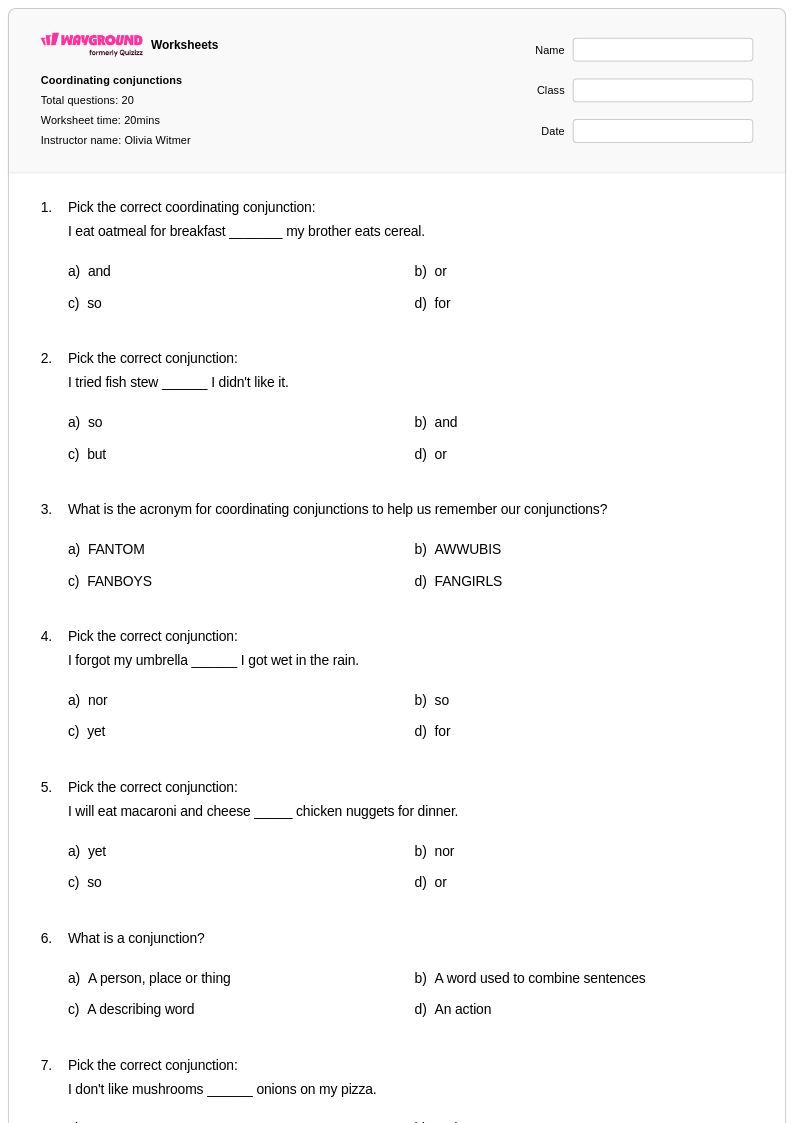
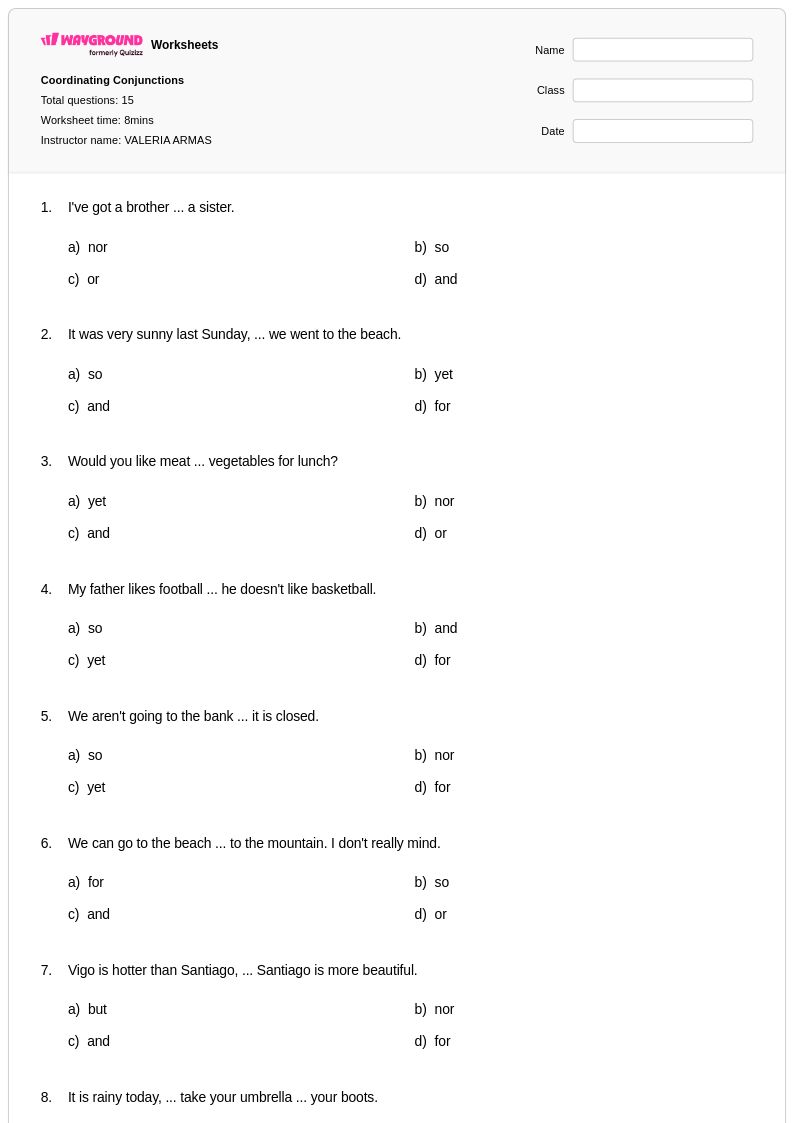
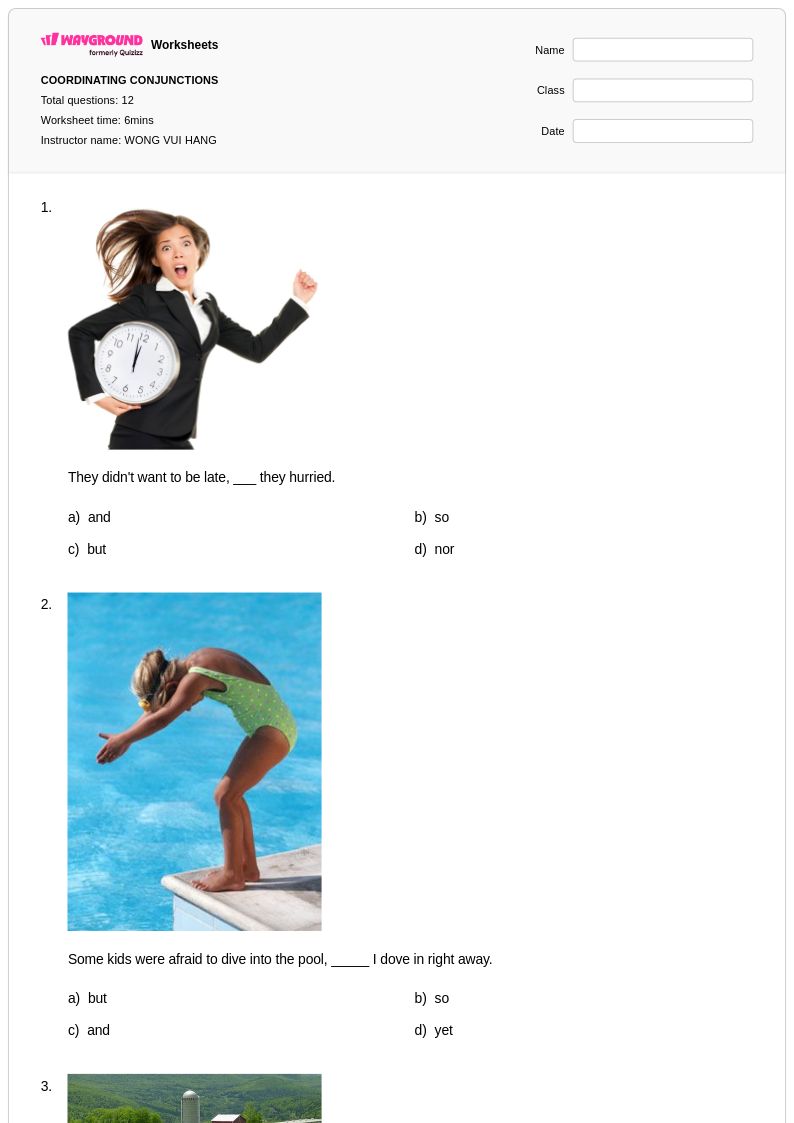
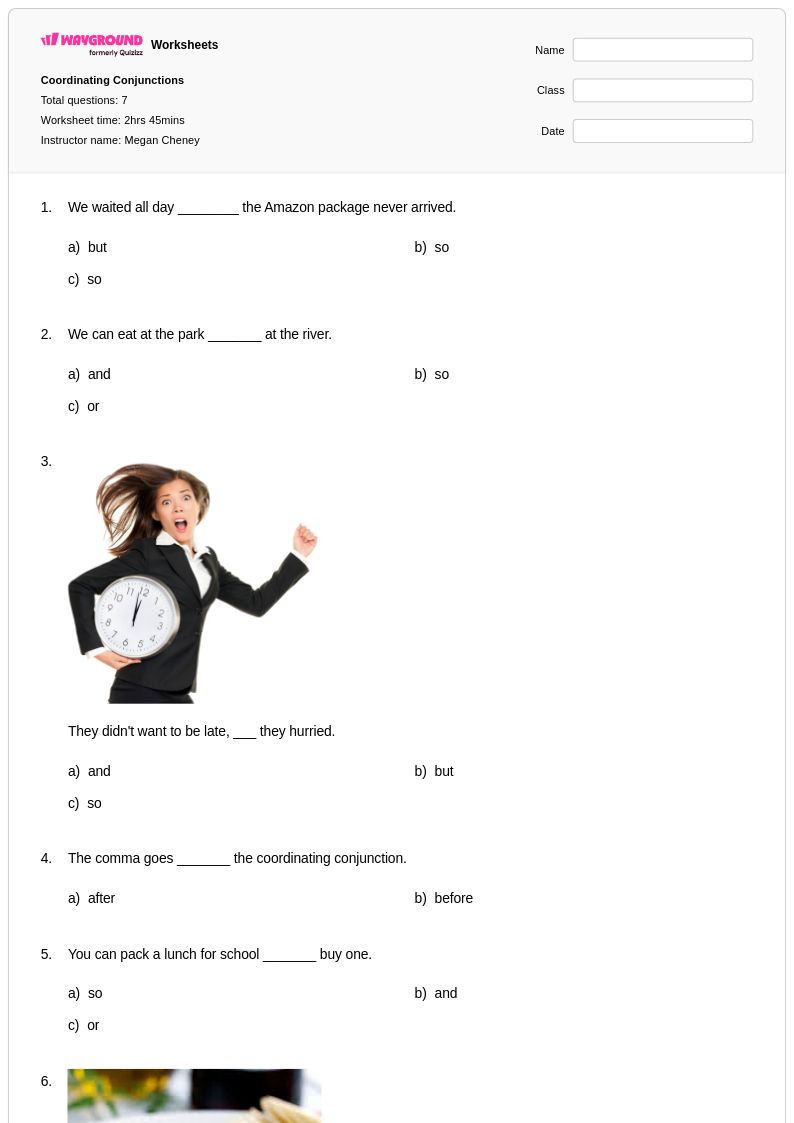
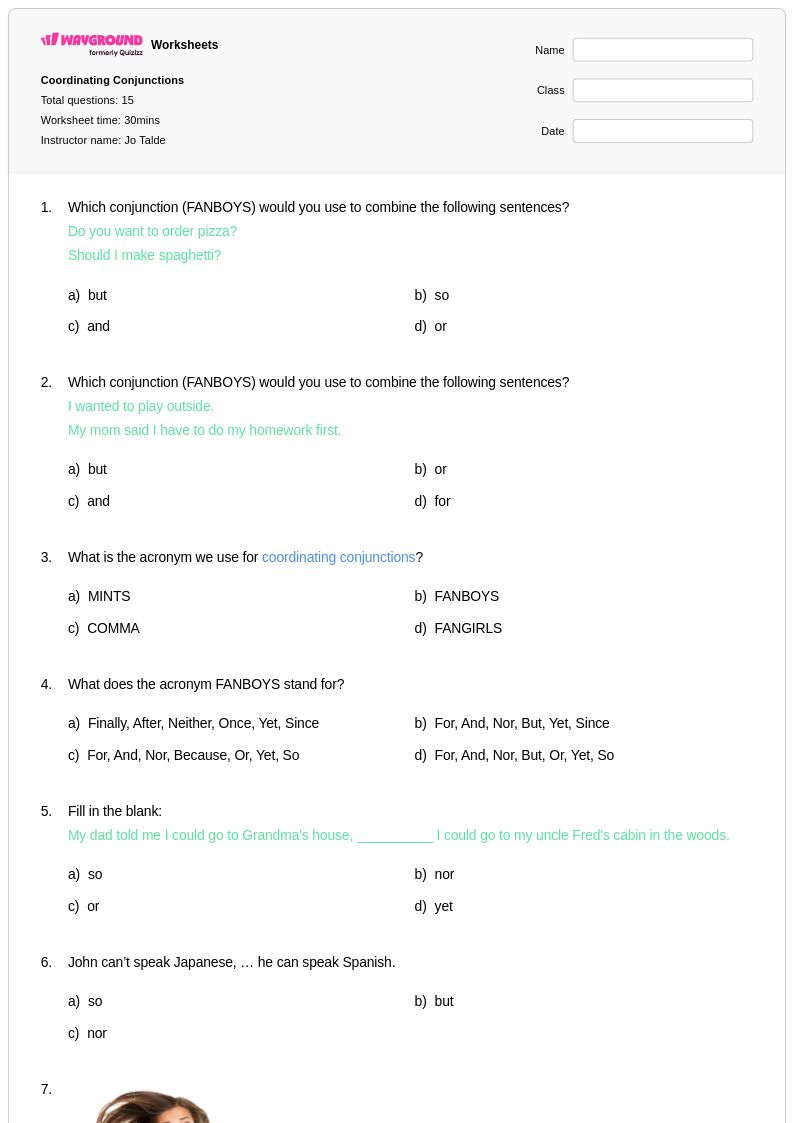
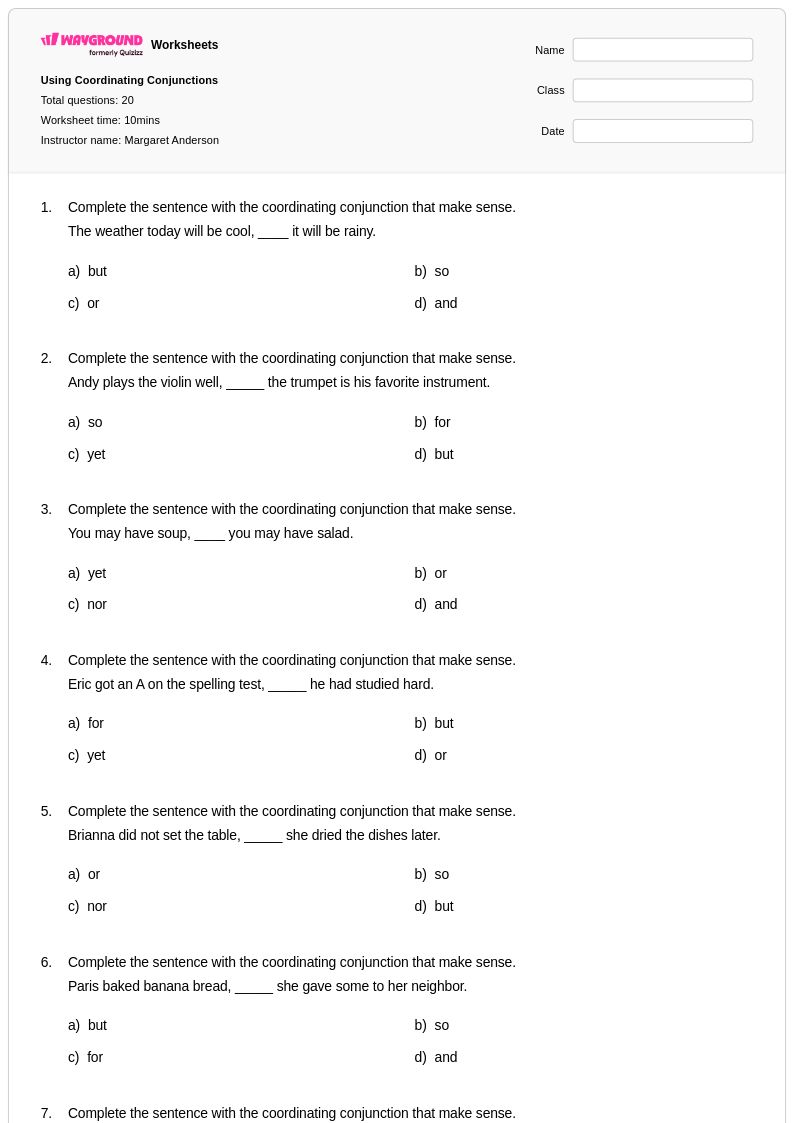
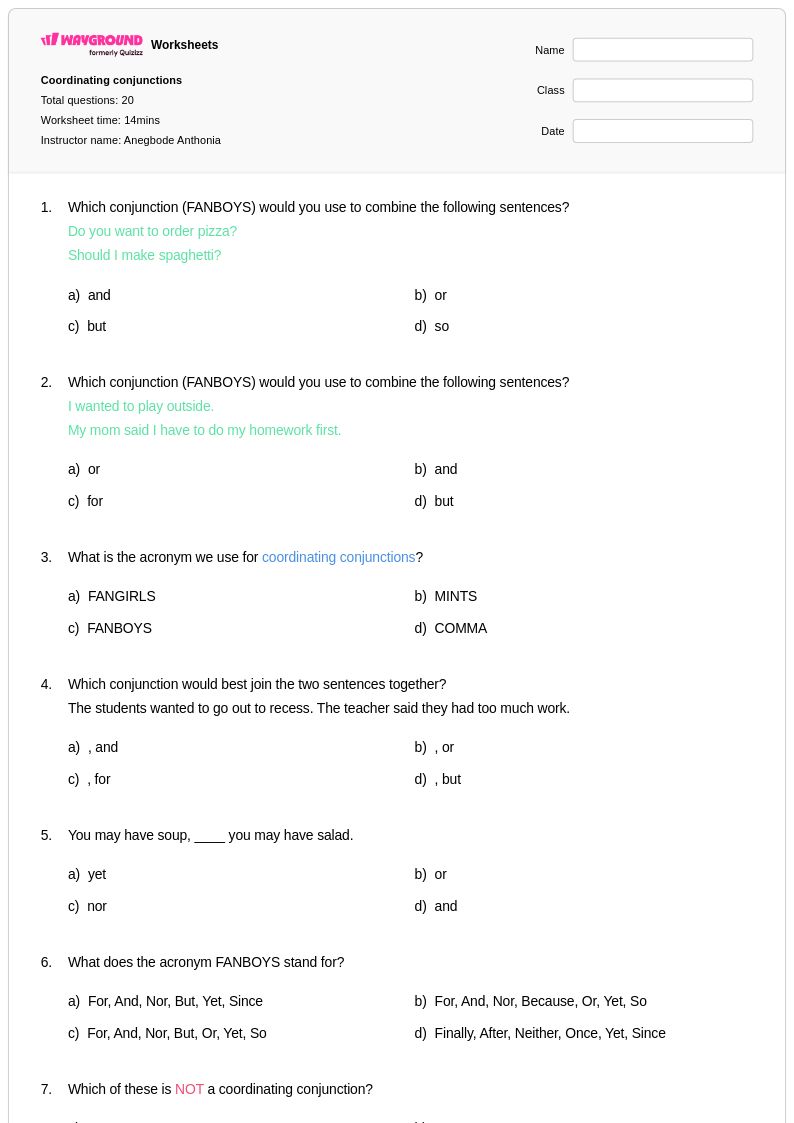
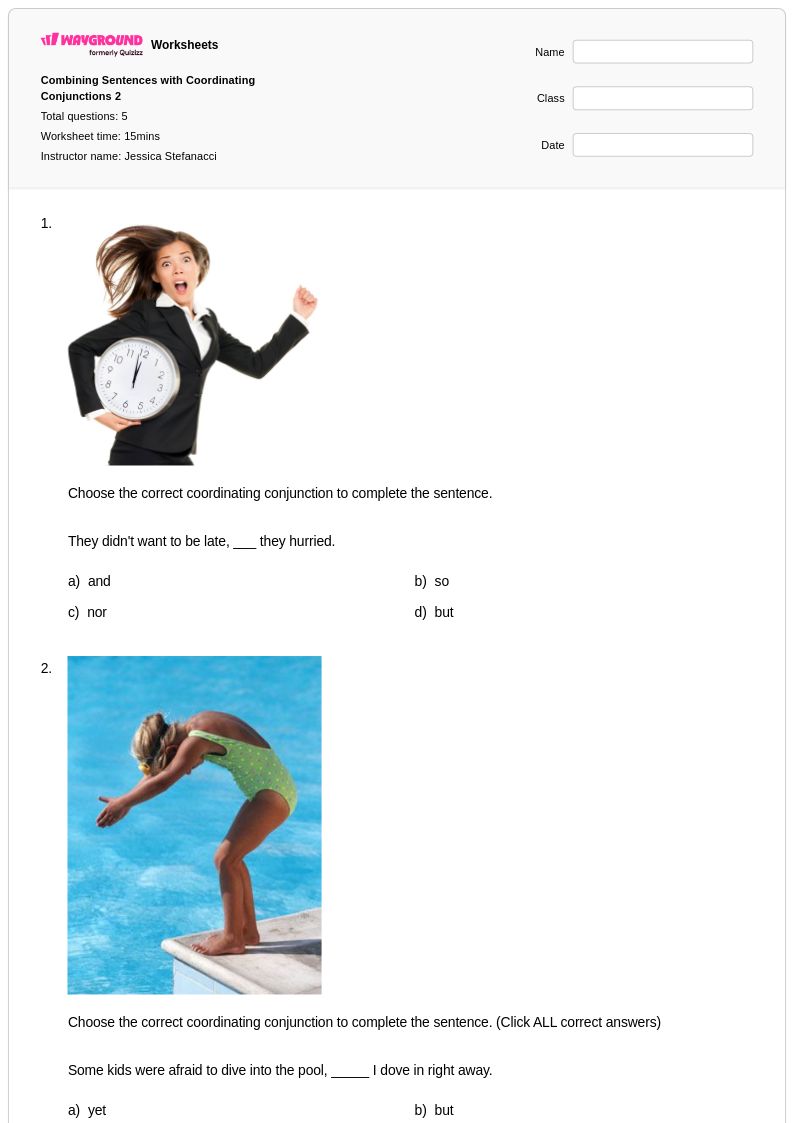
Grade 3 coordinating conjunctions worksheets help students master connecting words like "and," "but," and "or" through engaging printables, practice problems, and free PDF resources with answer keys from Wayground.
Explore printable Coordinating Conjunctions worksheets for Grade 3
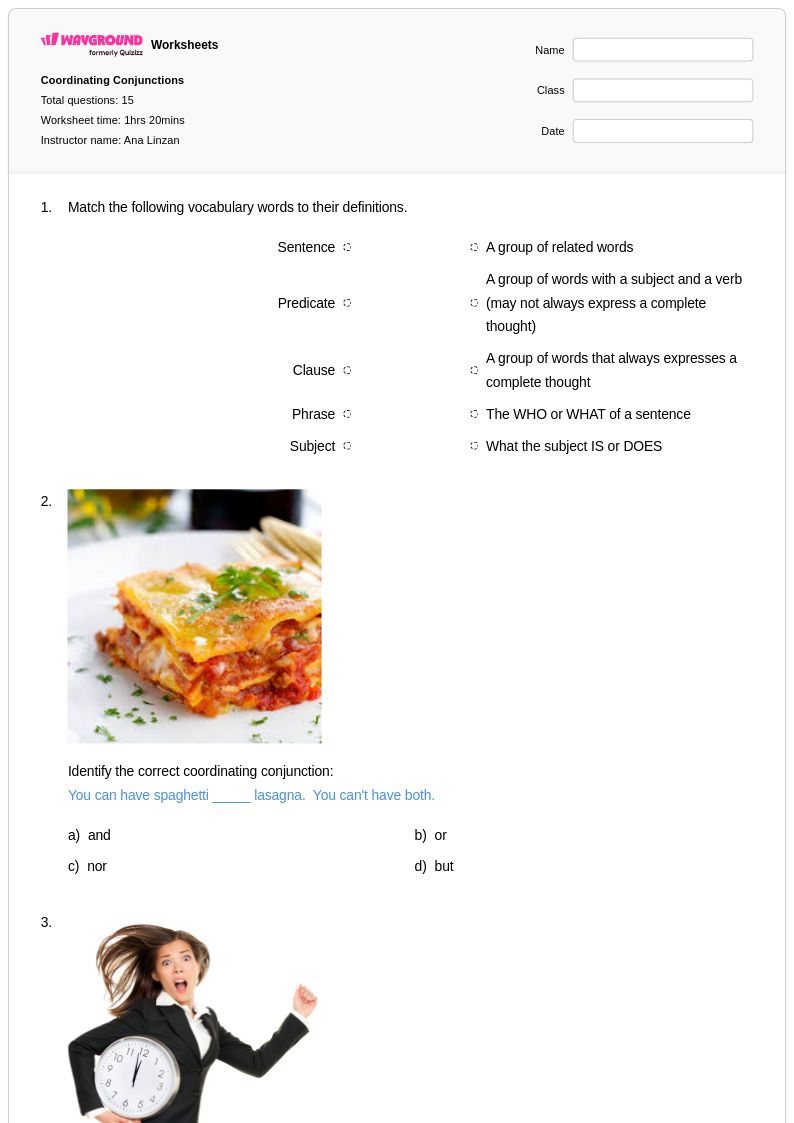
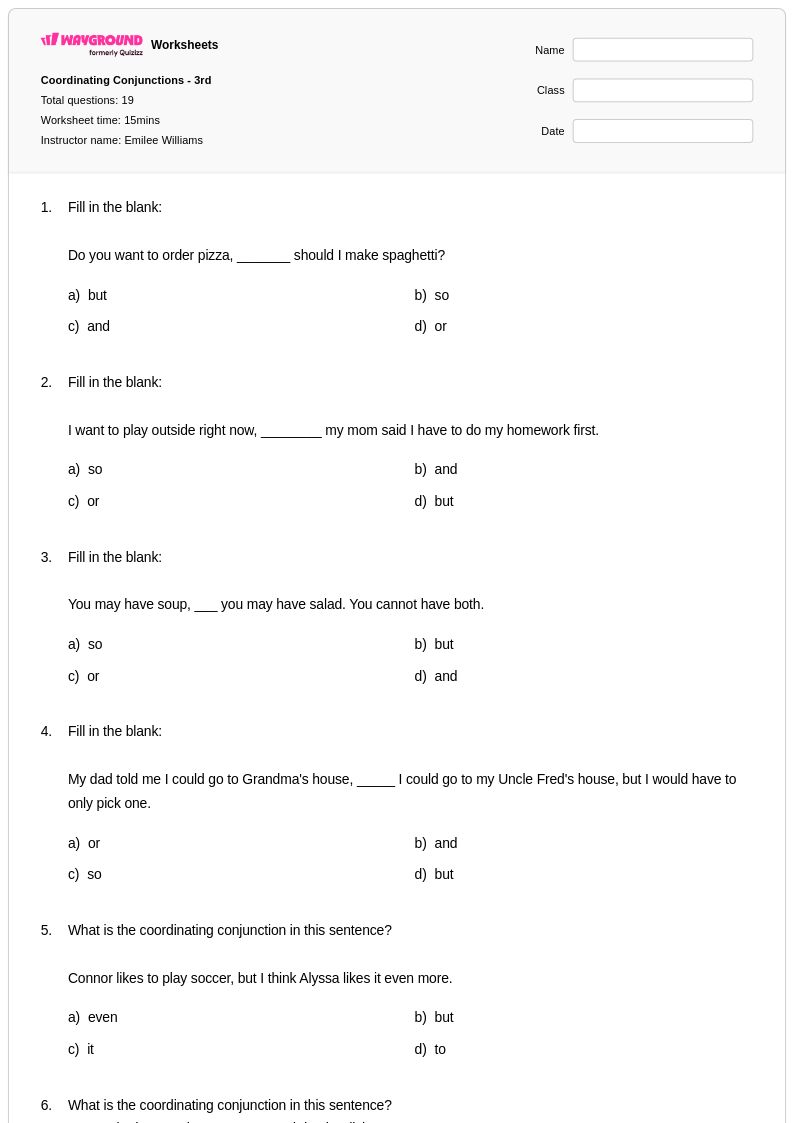
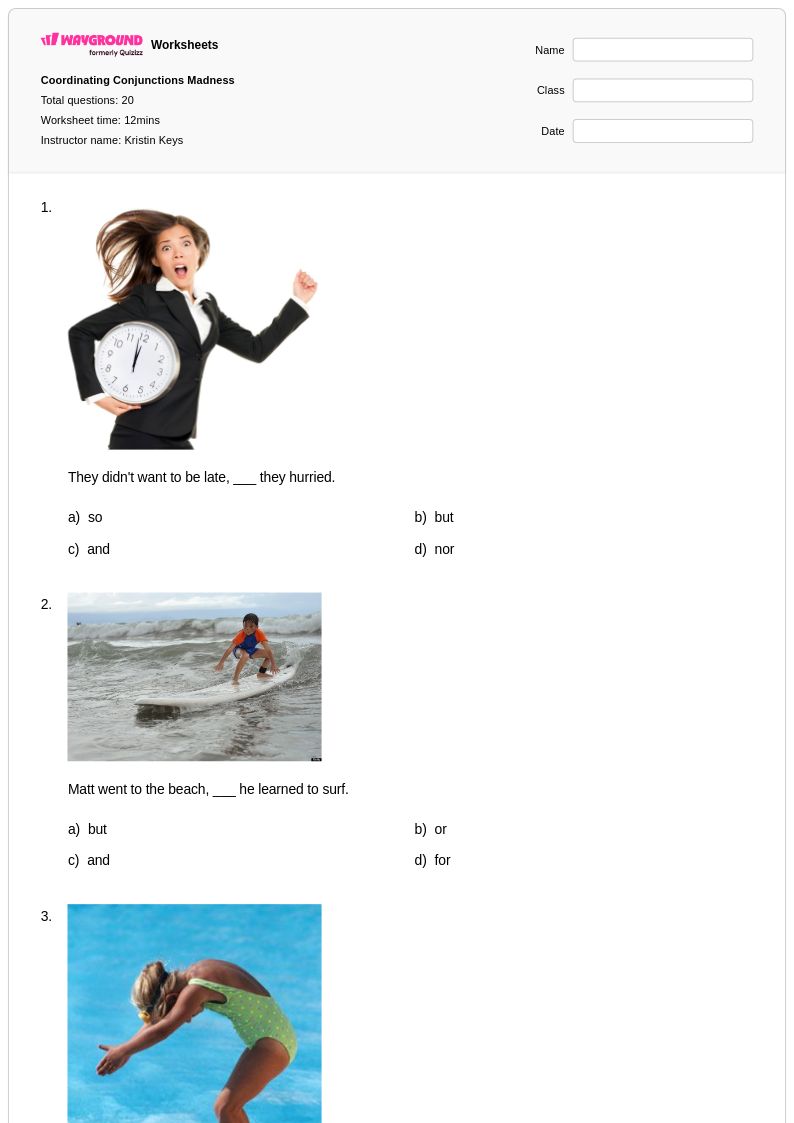
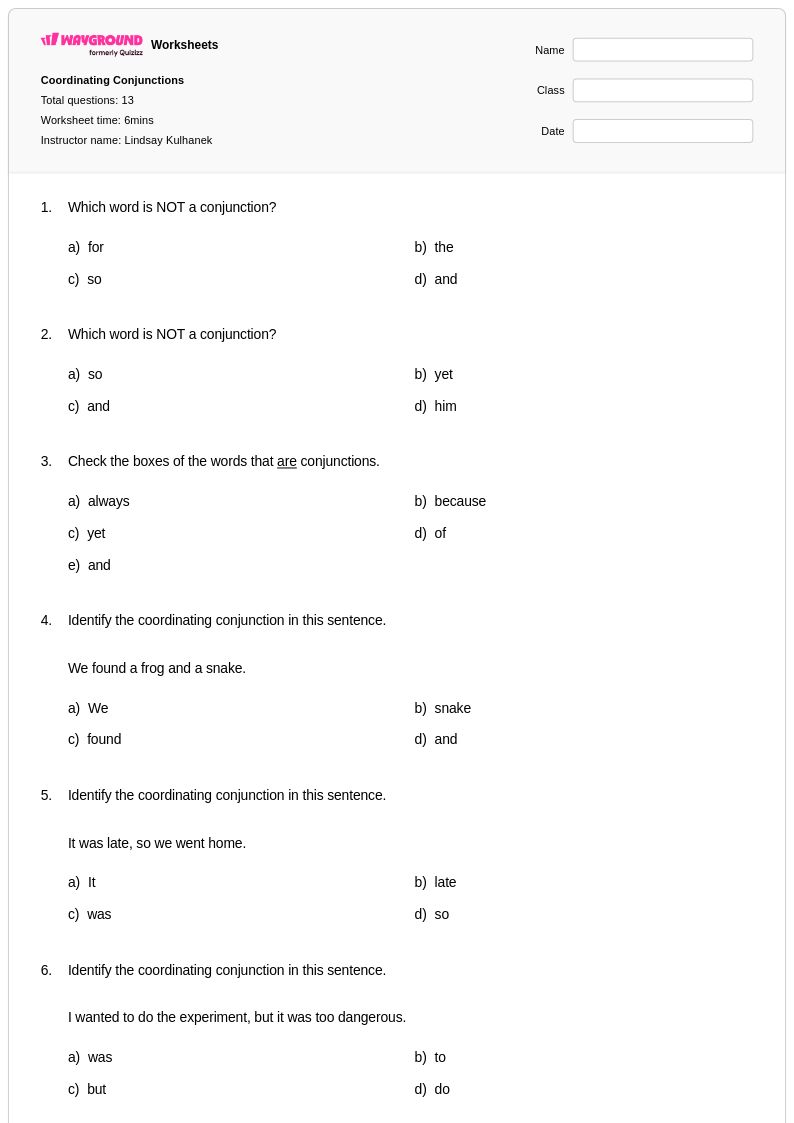
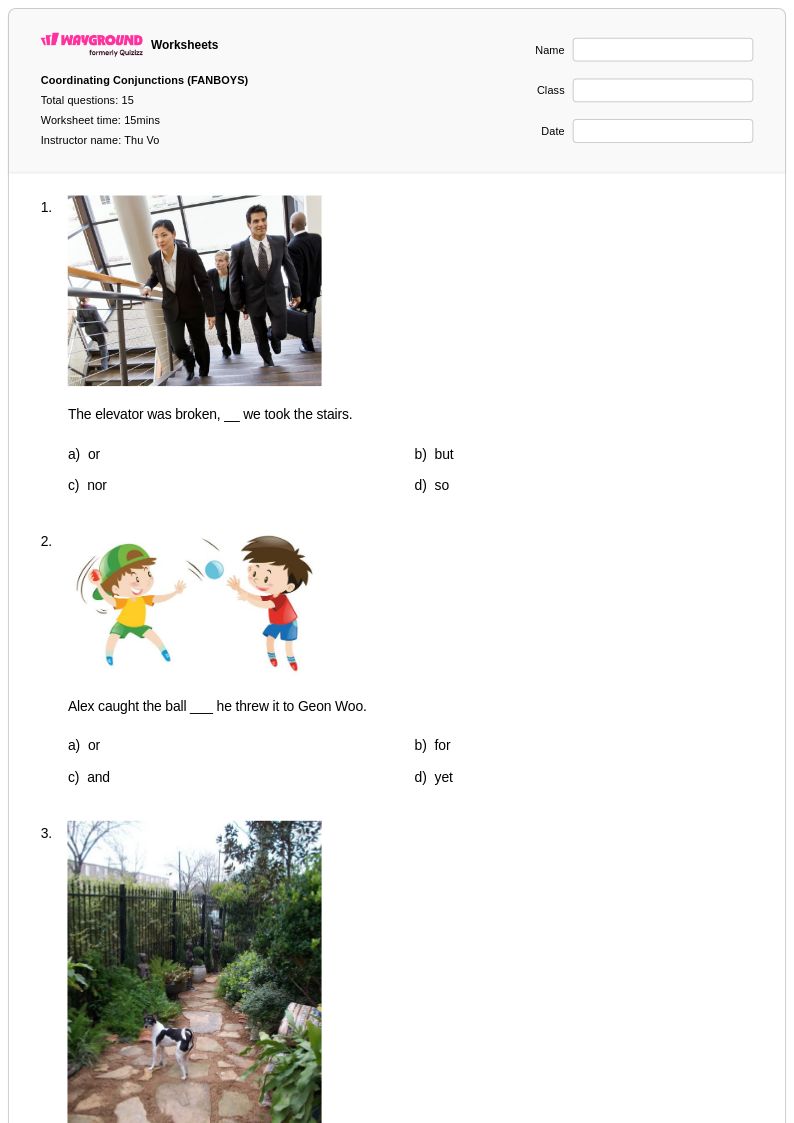
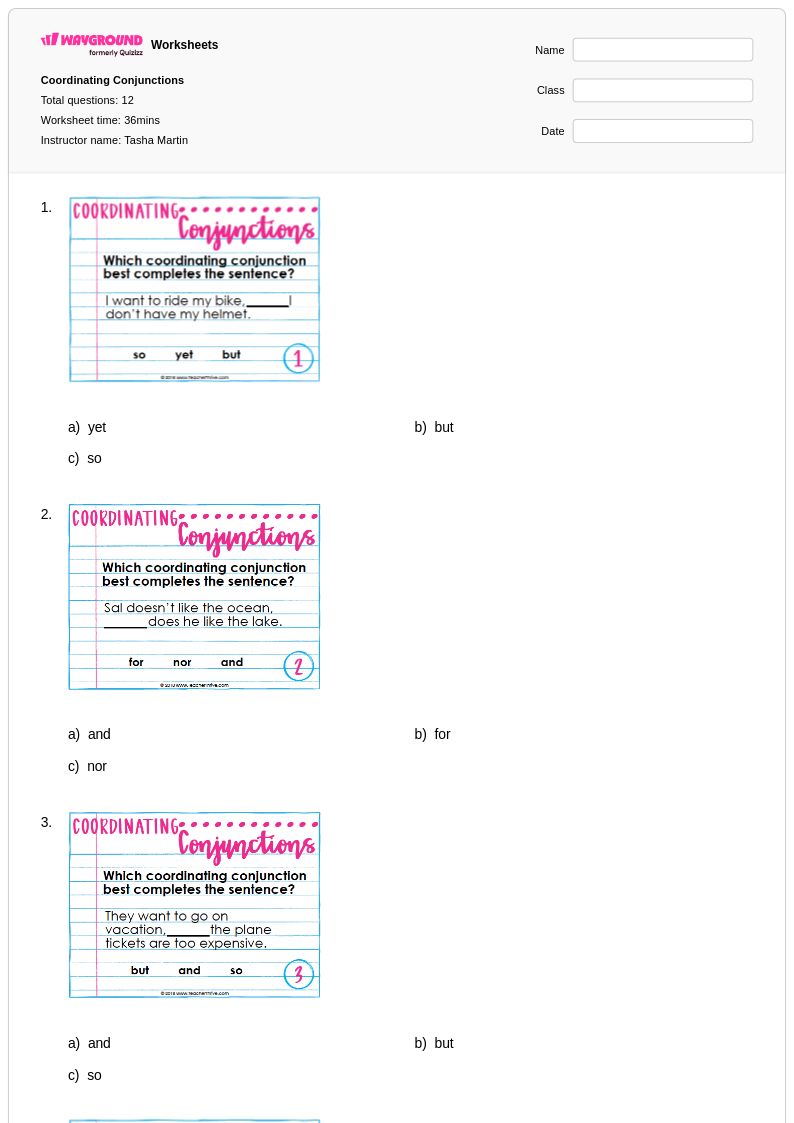
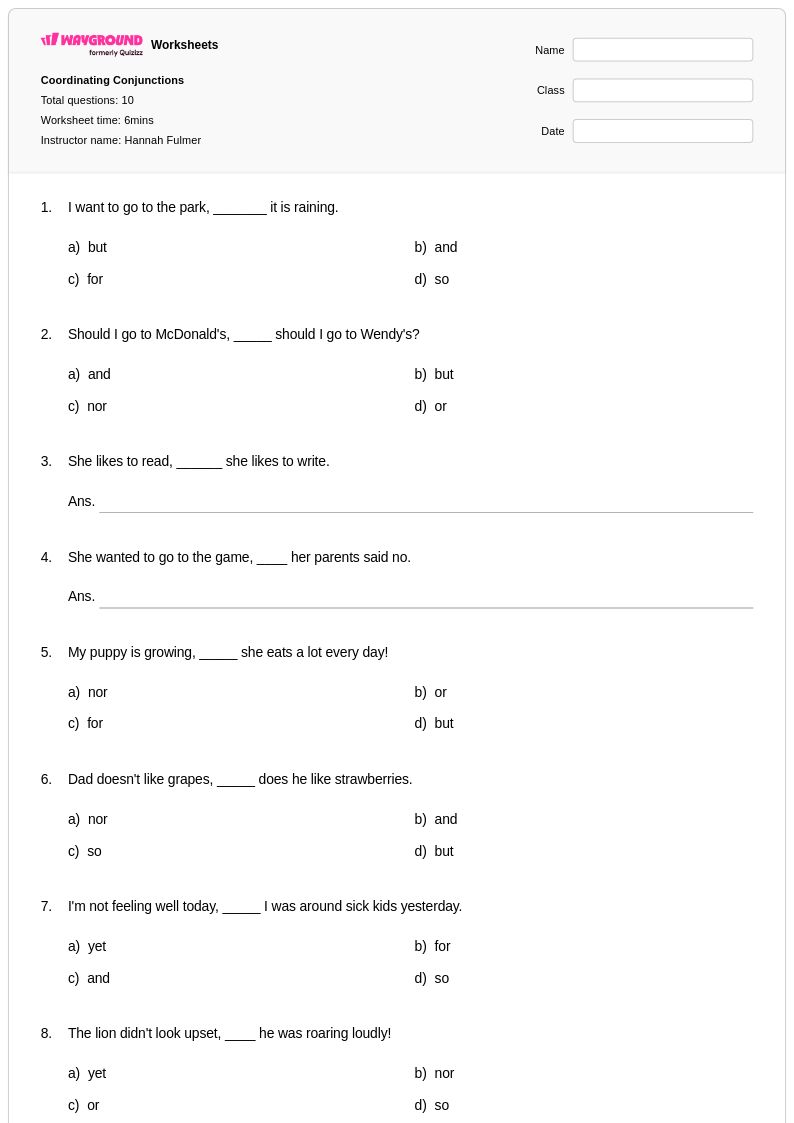
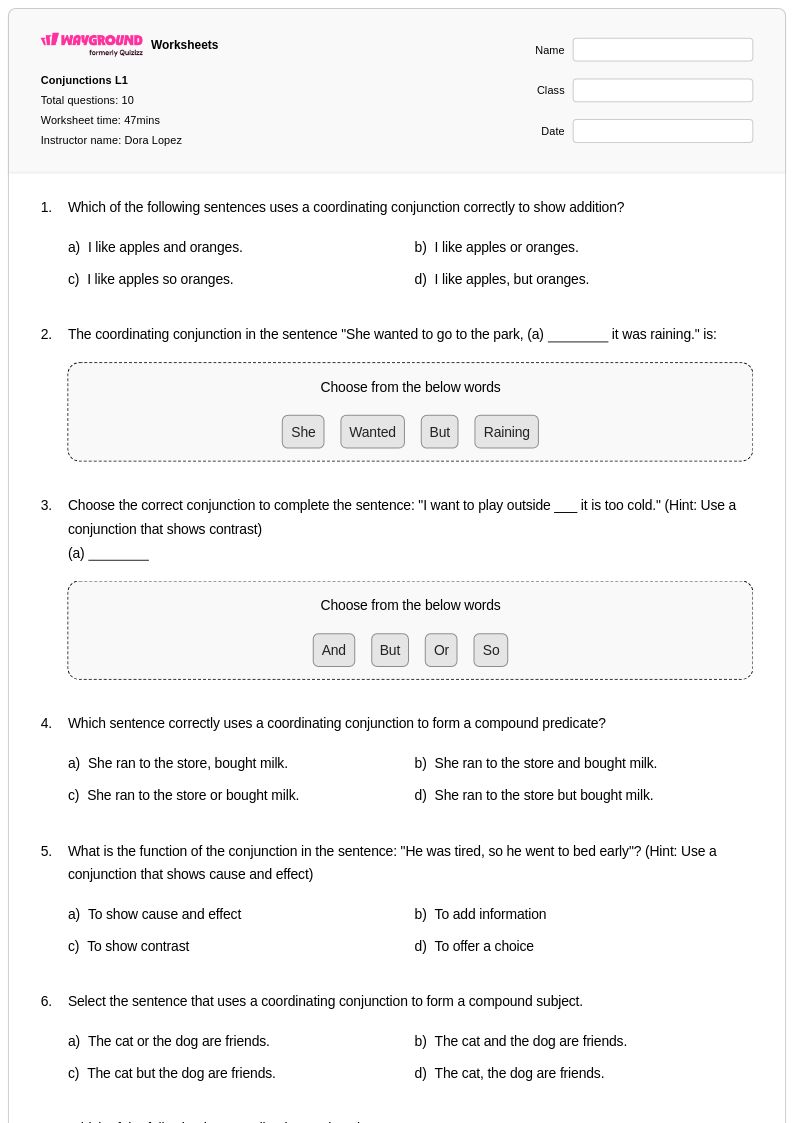
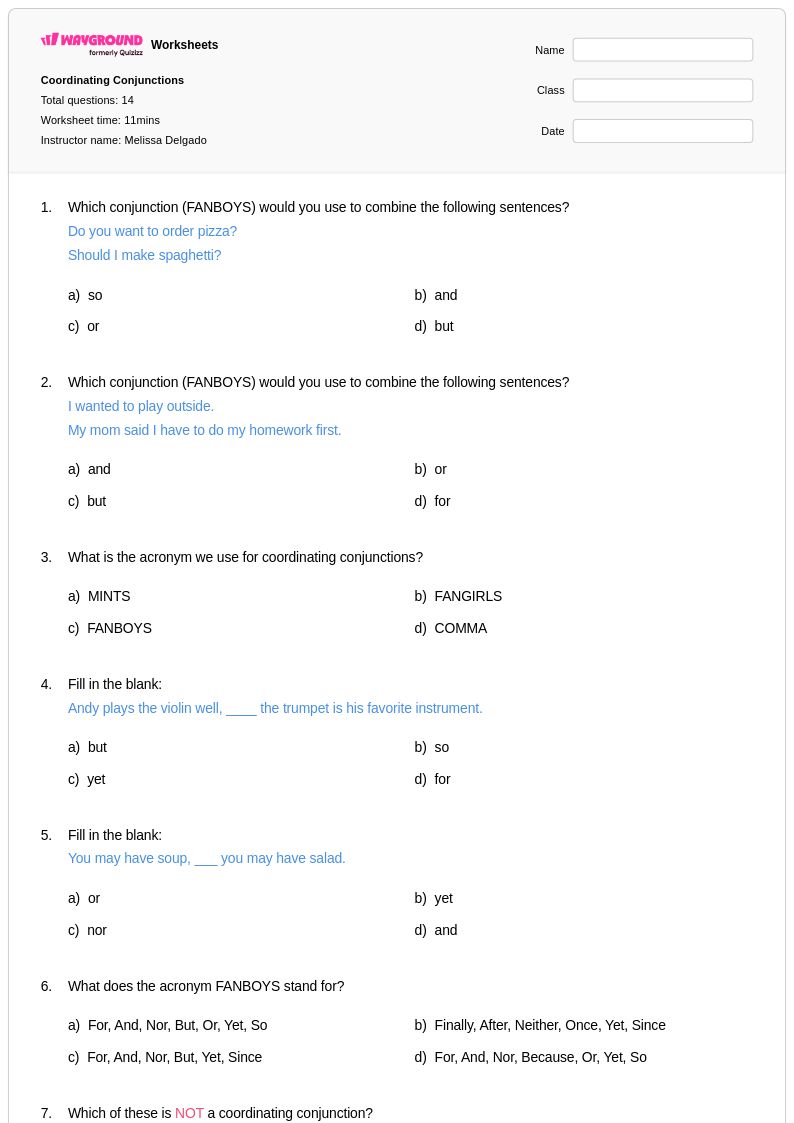
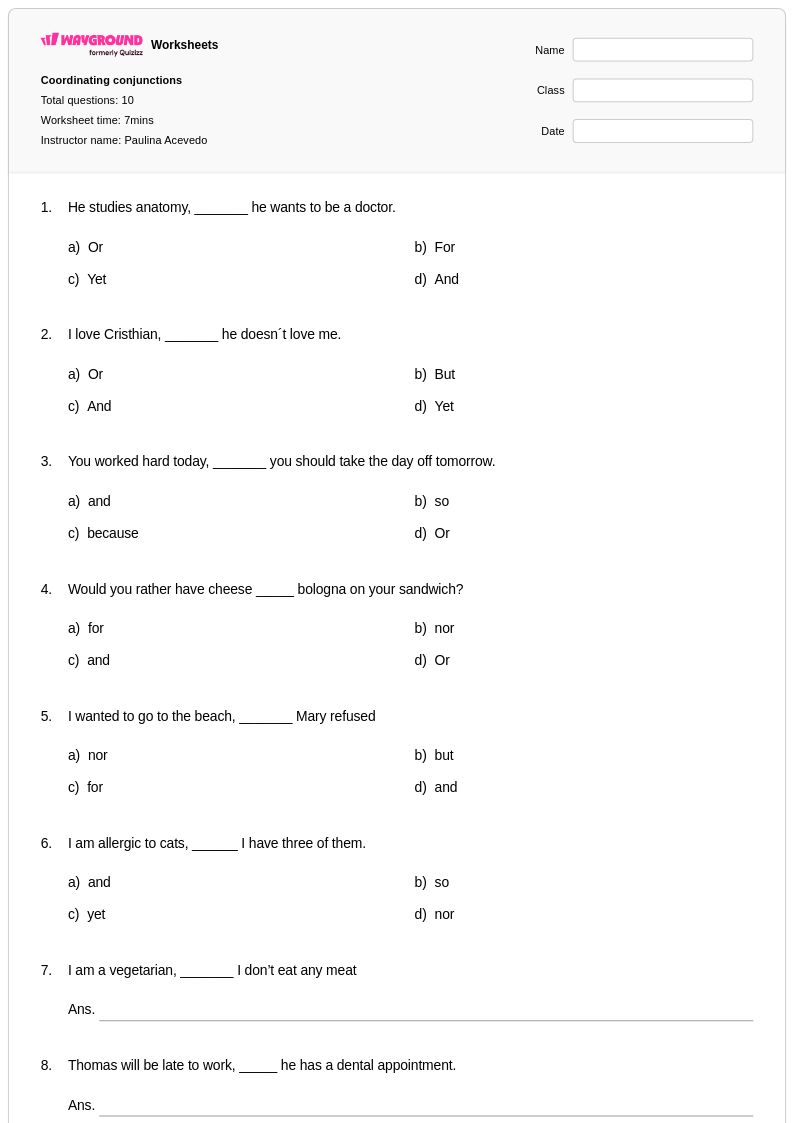
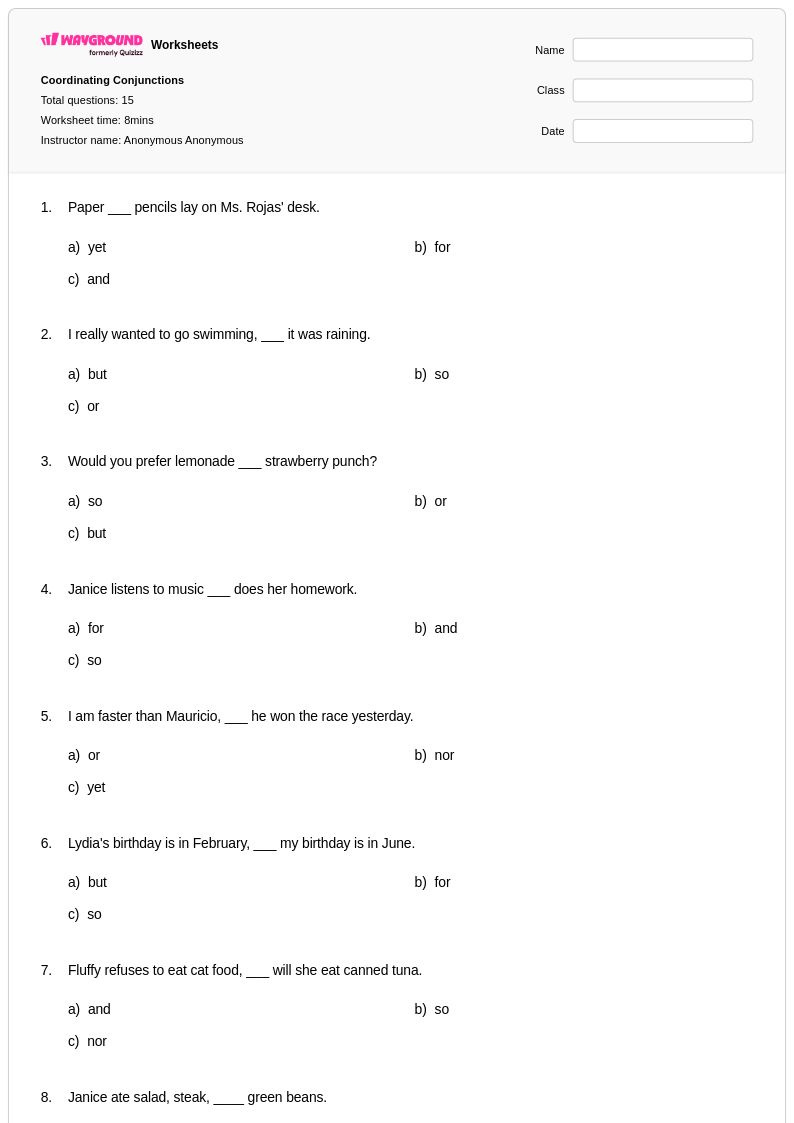
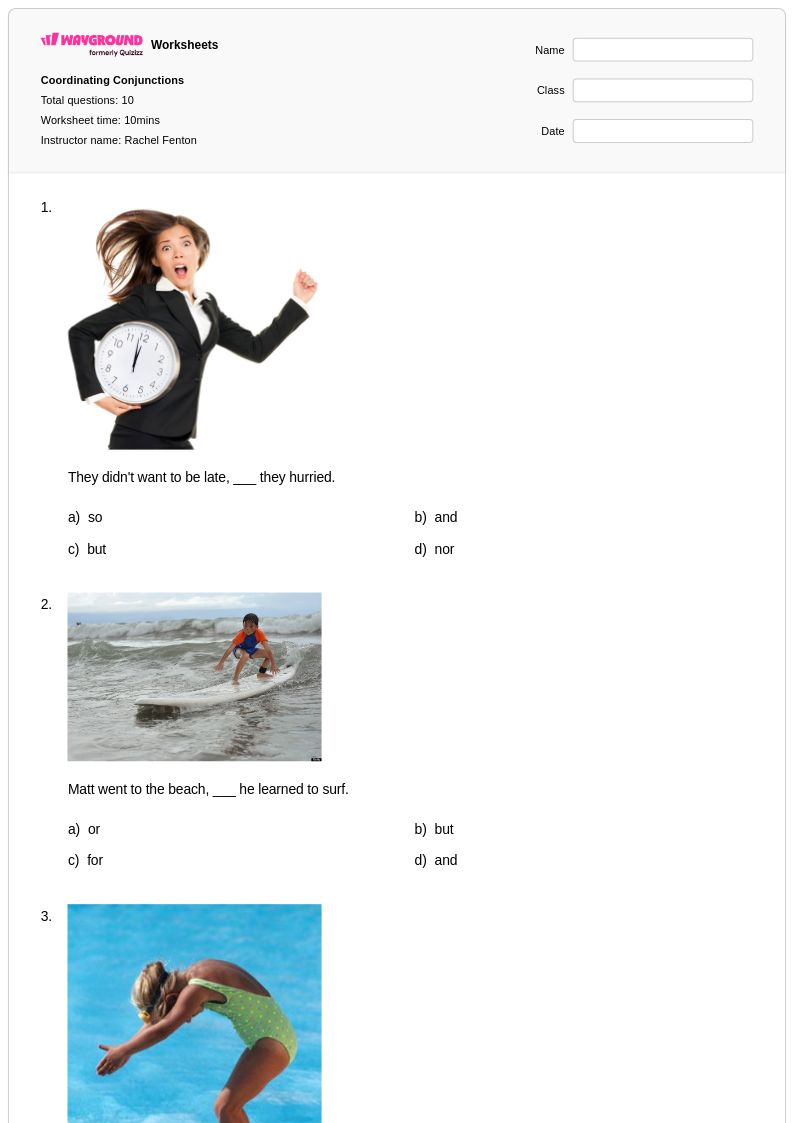
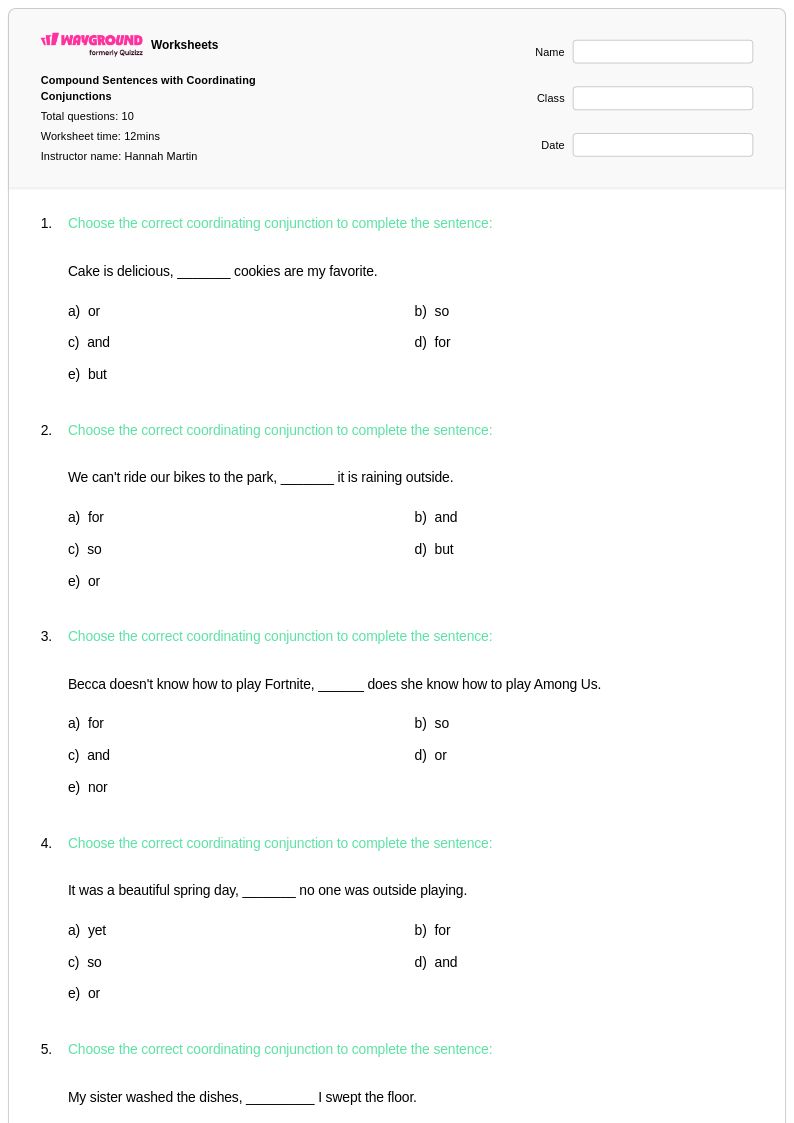
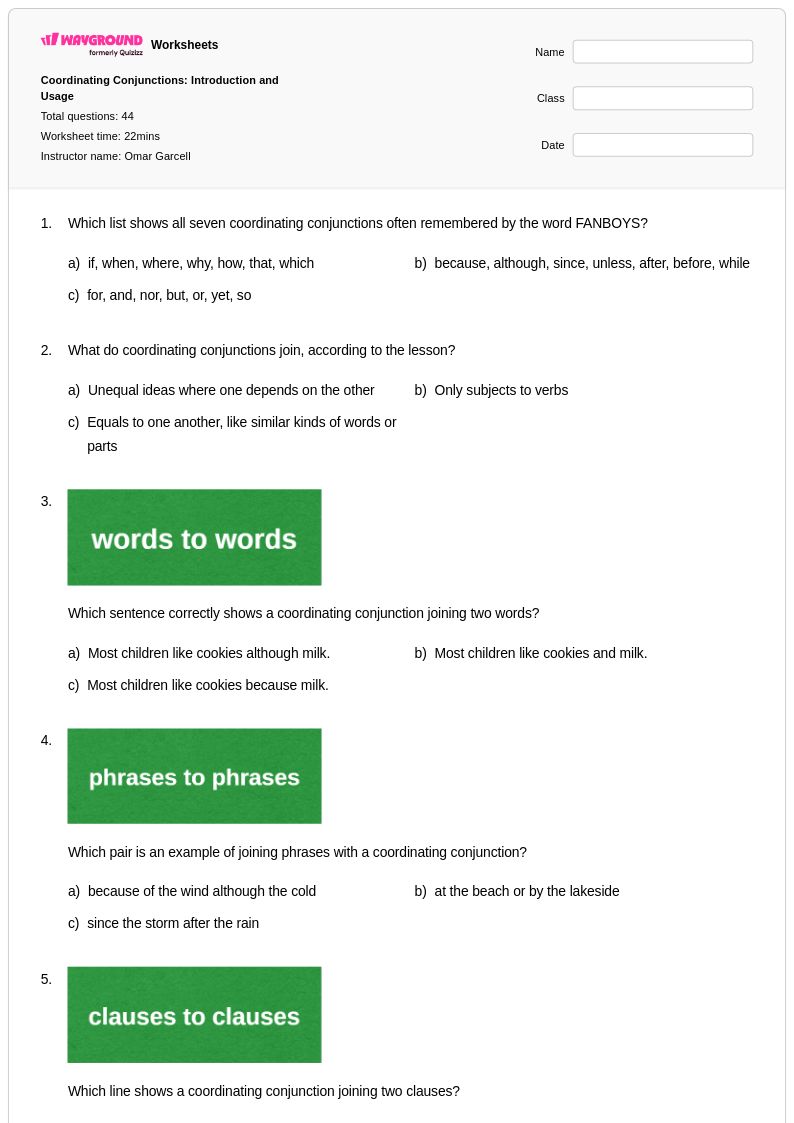
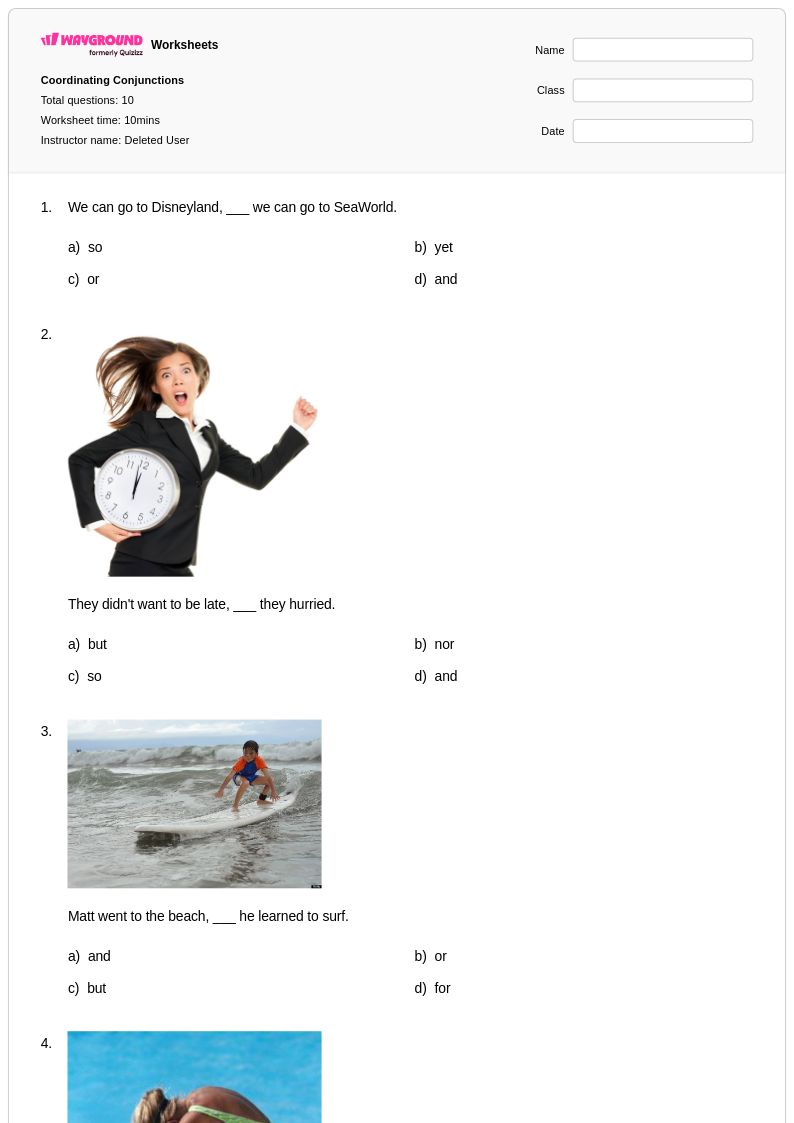
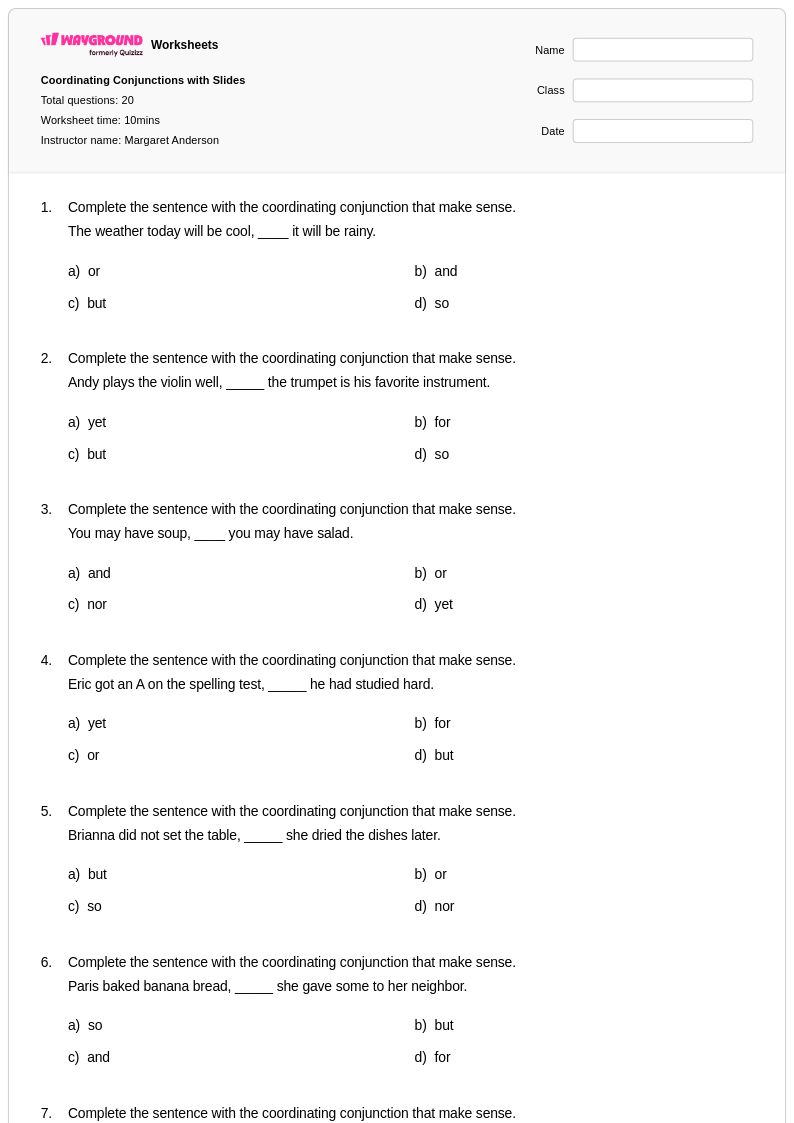
Coordinating conjunctions worksheets for Grade 3 students through Wayground (formerly Quizizz) provide essential practice in understanding and using the seven fundamental connecting words: and, but, or, nor, for, so, and yet. These carefully designed educational resources help young learners master the art of joining words, phrases, and simple sentences to create more complex and meaningful expressions in their writing and speech. Students develop critical language skills by working through engaging practice problems that demonstrate how coordinating conjunctions establish relationships between ideas, whether showing addition, contrast, choice, or cause and effect. Each worksheet collection includes comprehensive answer keys and is available as free printables in convenient pdf format, making it easy for educators to incorporate systematic conjunction practice into their daily instruction.
Wayground's extensive library supports teachers with millions of educator-created coordinating conjunction resources specifically aligned to Grade 3 learning standards and developmental needs. The platform's robust search and filtering capabilities enable instructors to quickly locate worksheets that match their students' current skill levels, while built-in differentiation tools allow for seamless customization of content difficulty and complexity. Teachers can access these materials in both printable pdf formats for traditional classroom use and digital formats for interactive learning experiences, providing flexibility for various instructional approaches. This comprehensive resource collection empowers educators to effectively plan targeted lessons, provide focused remediation for struggling learners, offer enrichment opportunities for advanced students, and deliver consistent skill practice that builds students' confidence in using coordinating conjunctions across all areas of language arts instruction.
FAQs
How do I teach coordinating conjunctions to students?
Start by introducing the seven coordinating conjunctions using the mnemonic FANBOYS: for, and, nor, but, or, yet, and so. Teach each conjunction's specific function — for example, 'but' signals contrast while 'so' signals result — before asking students to construct their own compound sentences. Connecting the lesson to students' own writing gives the concept immediate, practical relevance.
What exercises help students practice coordinating conjunctions?
Effective practice tasks include identifying coordinating conjunctions in context, selecting the correct conjunction to complete a sentence, and combining two simple sentences into a compound sentence. Sentence-combining exercises are especially valuable because they require students to think about meaning and relationship between clauses, not just recall the FANBOYS list.
What mistakes do students commonly make with coordinating conjunctions?
One of the most frequent errors is omitting the comma before a coordinating conjunction when joining two independent clauses, producing a run-on sentence. Students also confuse coordinating conjunctions with subordinating conjunctions, incorrectly using words like 'because' or 'although' in place of 'but' or 'yet.' Another common mistake is beginning every compound sentence with 'and,' without exploring the nuanced distinctions between the other six conjunctions.
How can I differentiate coordinating conjunction practice for students at different skill levels?
For students who are still building foundational skills, reduce task complexity by providing sentence frames where only the conjunction needs to be selected. More advanced students can be challenged to write original compound sentences or revise run-ons and comma splices. On Wayground, teachers can apply accommodations such as reduced answer choices or read-aloud support to individual students without disrupting the rest of the class.
How do I use coordinating conjunction worksheets from Wayground in my classroom?
Wayground's coordinating conjunction worksheets are available as printable PDFs for traditional classroom use and in digital formats for technology-integrated environments, and teachers can also host them as a quiz directly on the Wayground platform. The included answer keys make grading efficient and allow students to self-check their work independently. These materials work equally well for whole-class instruction, small-group intervention, and independent practice.
How do coordinating conjunctions differ from subordinating conjunctions?
Coordinating conjunctions join grammatically equal elements — two independent clauses, two nouns, or two phrases — without making either element dependent on the other. Subordinating conjunctions, by contrast, introduce a dependent clause that cannot stand alone as a sentence. Teaching this distinction explicitly helps students avoid sentence structure errors and write with greater syntactic variety.