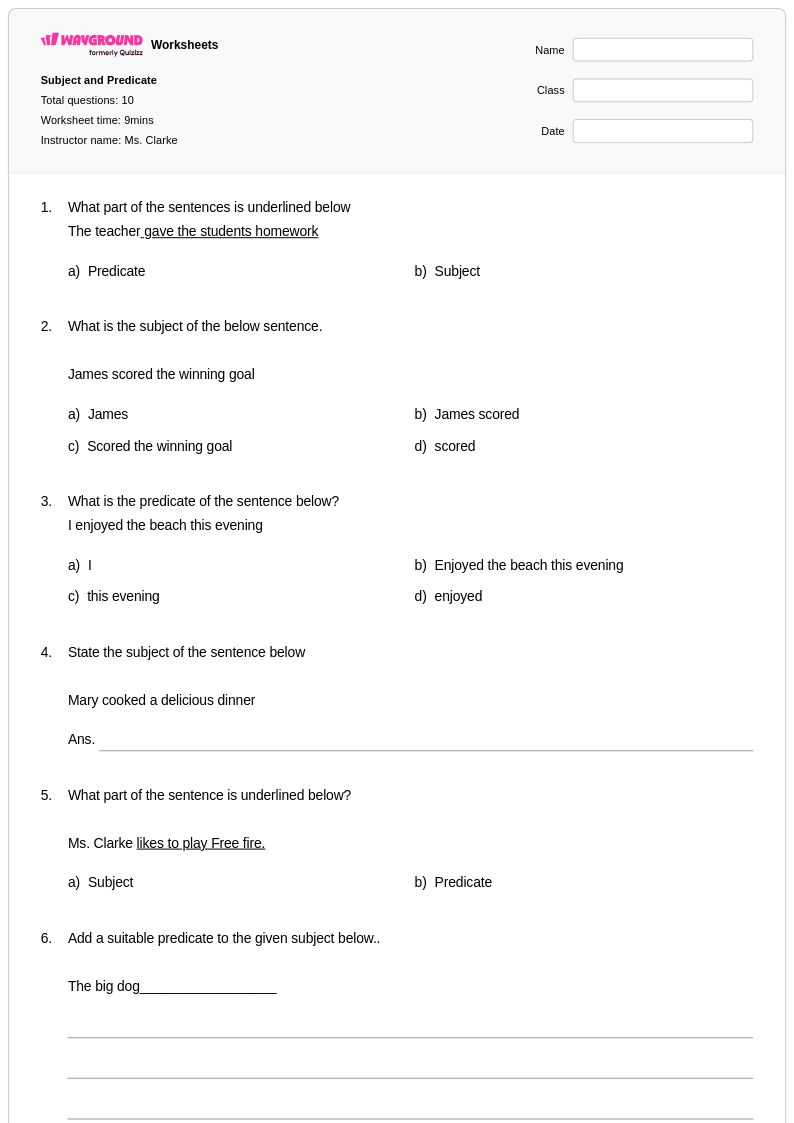
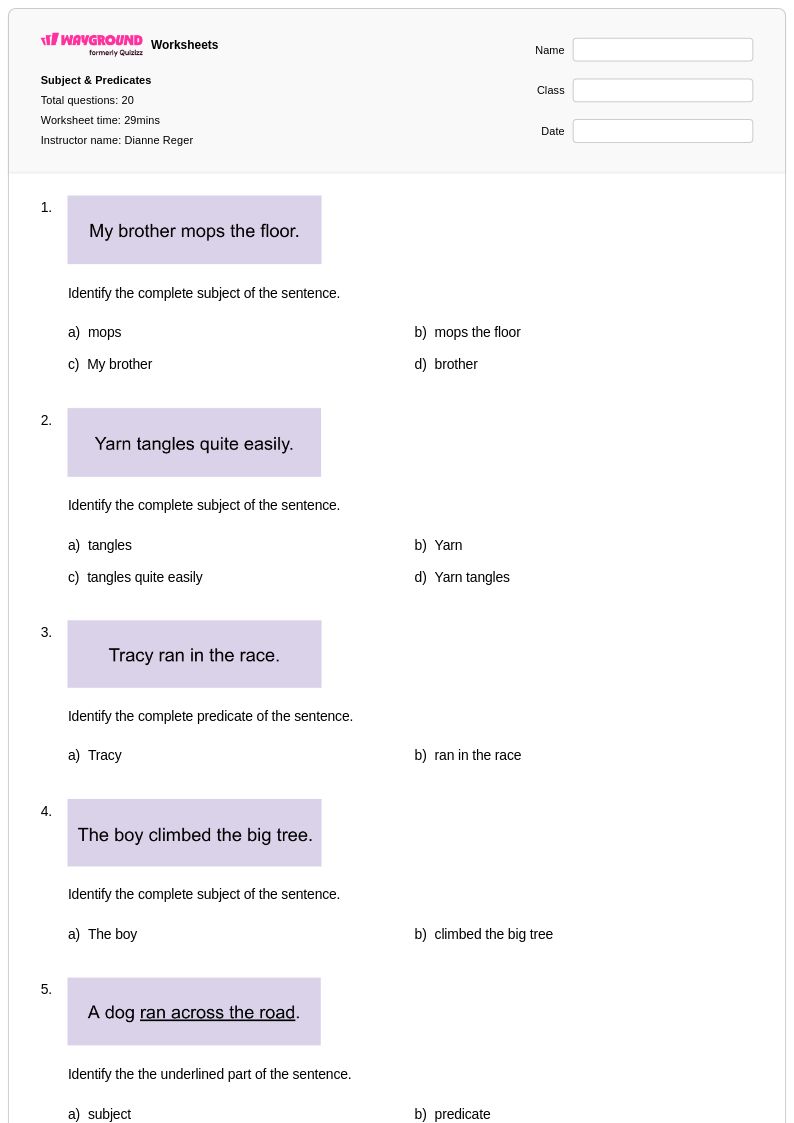
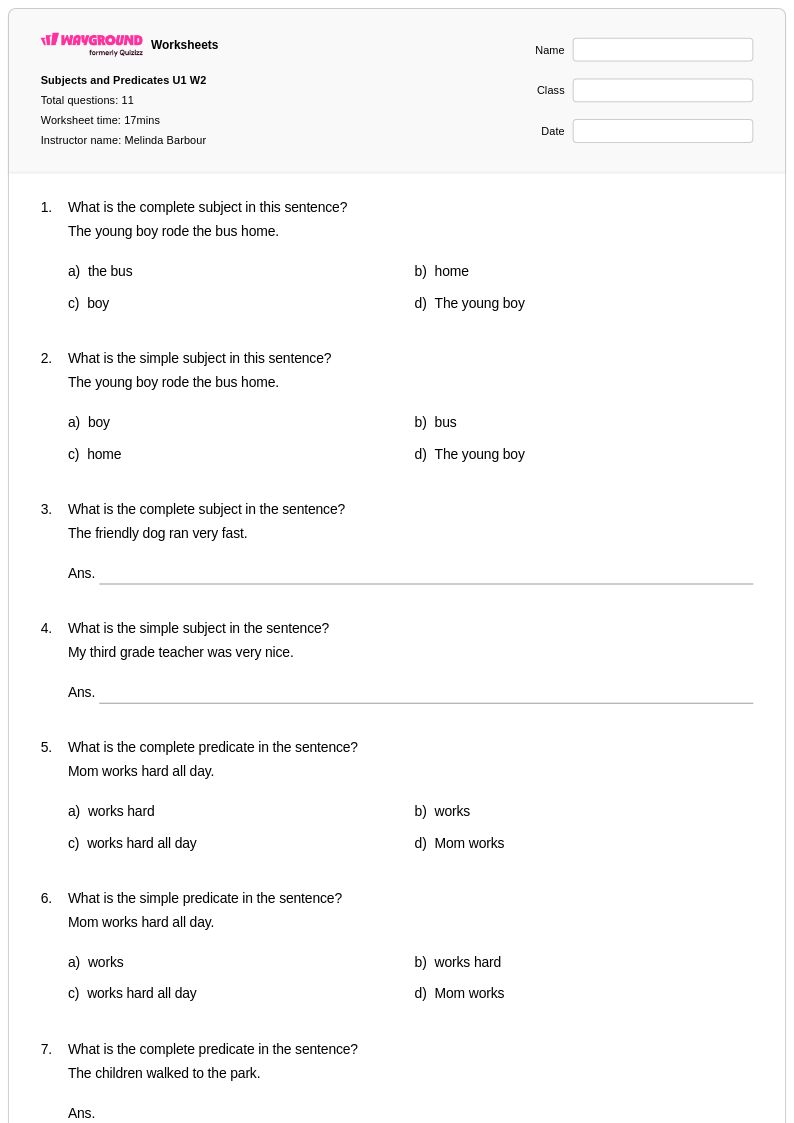
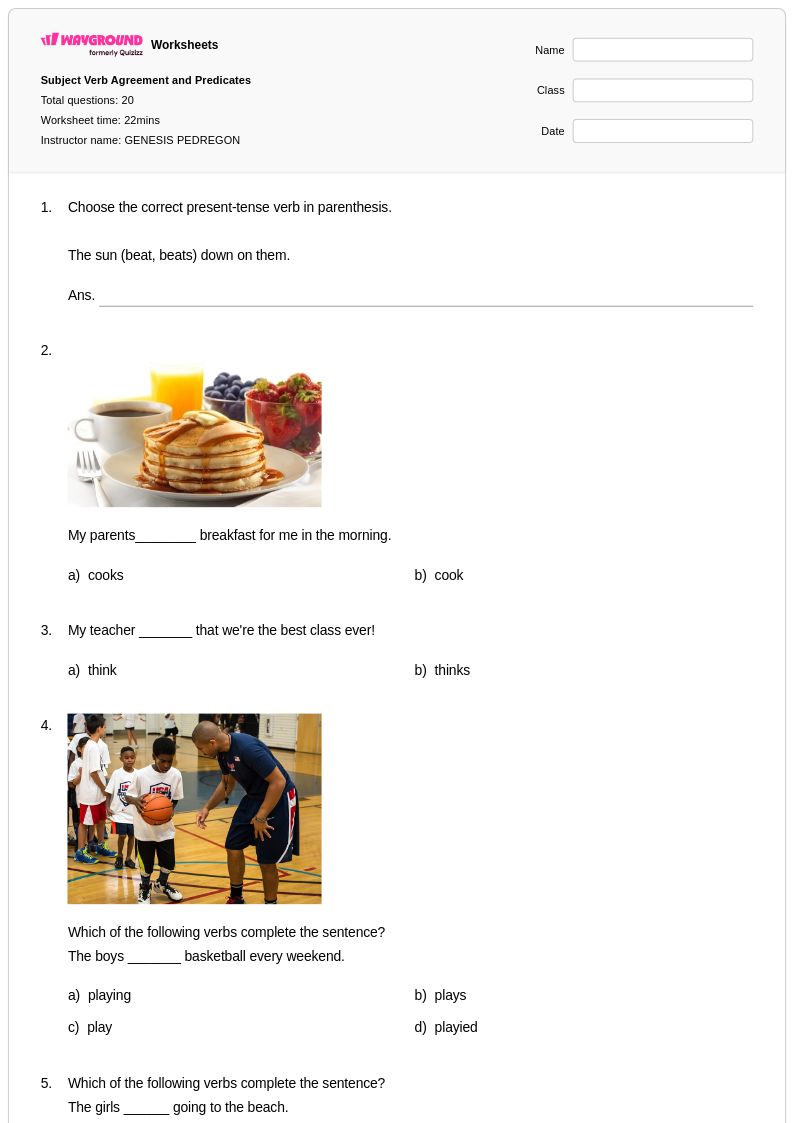
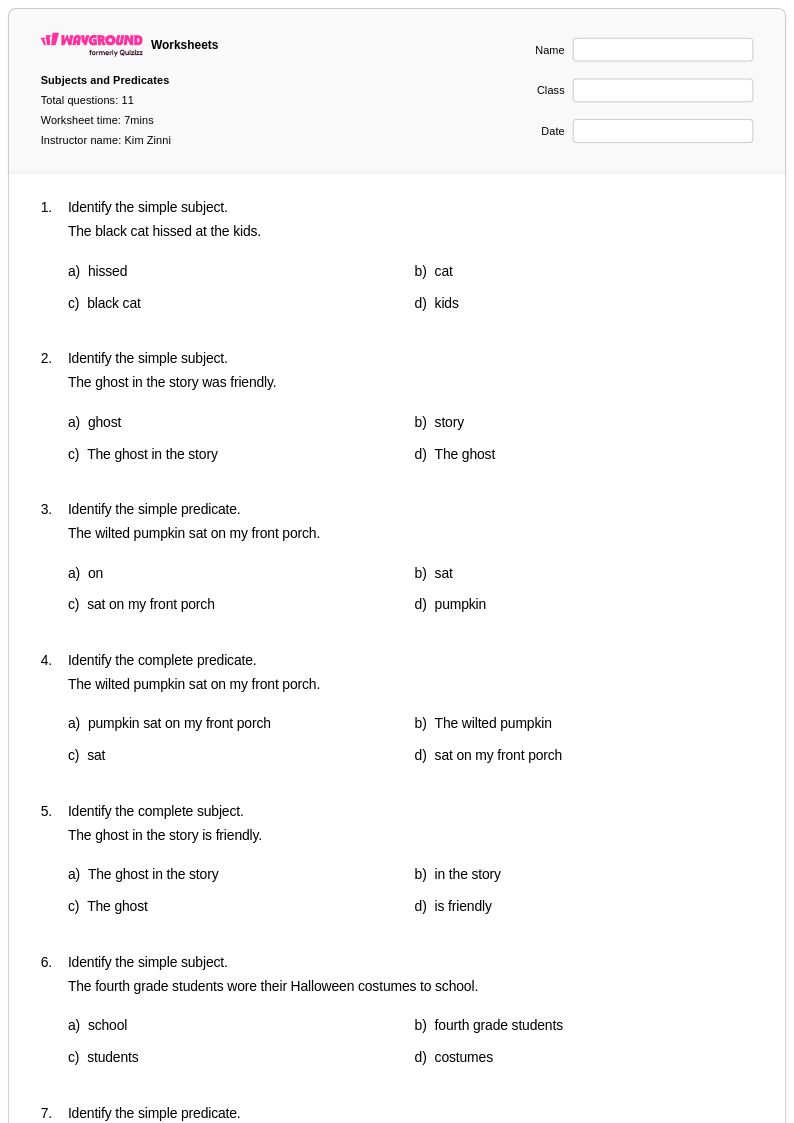
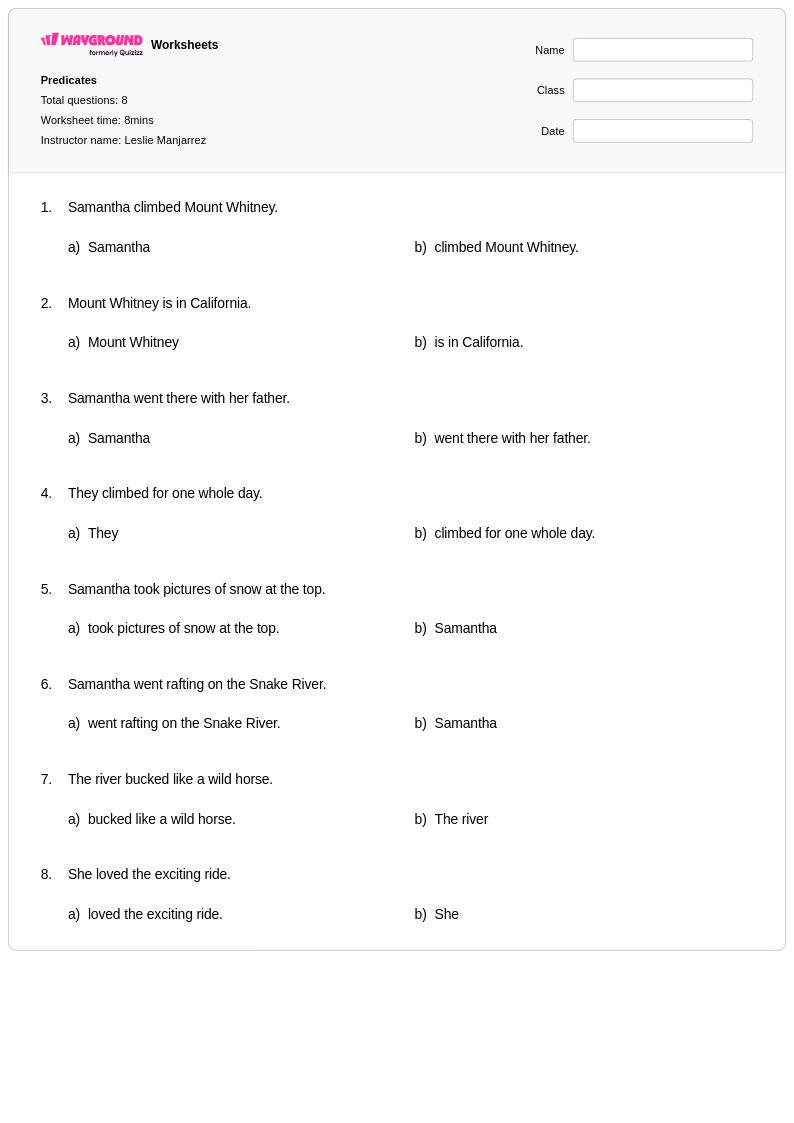
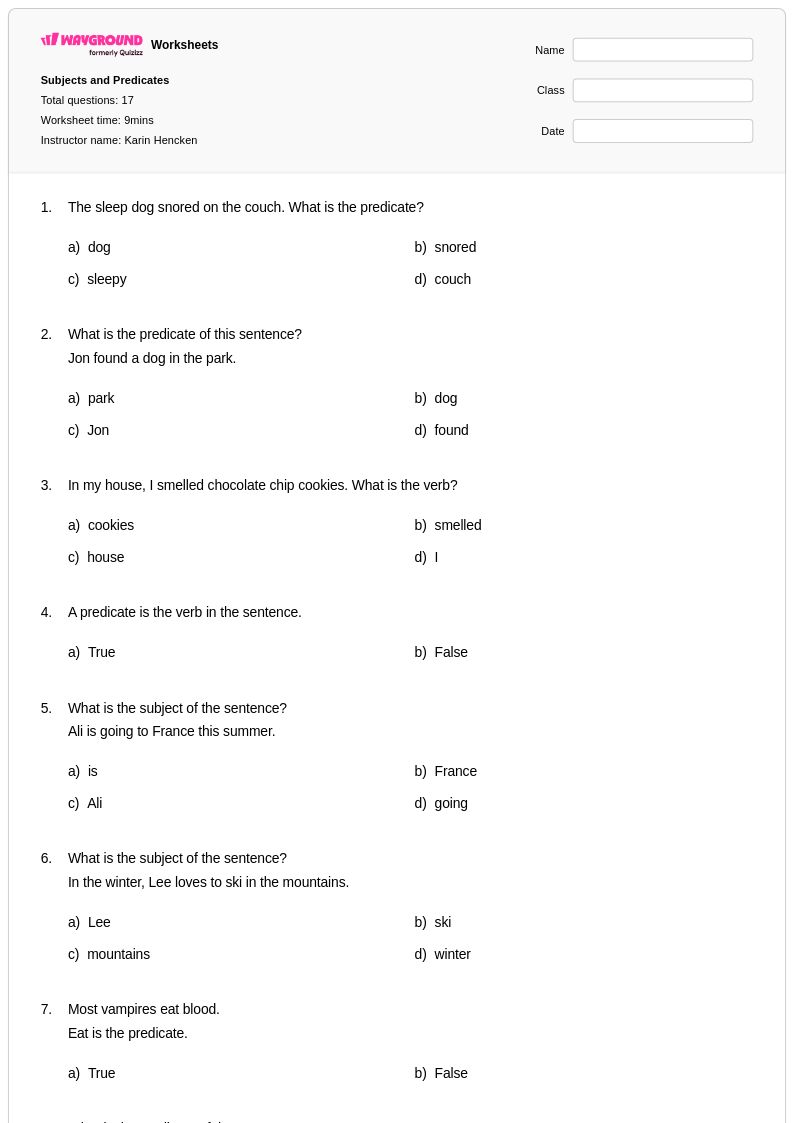
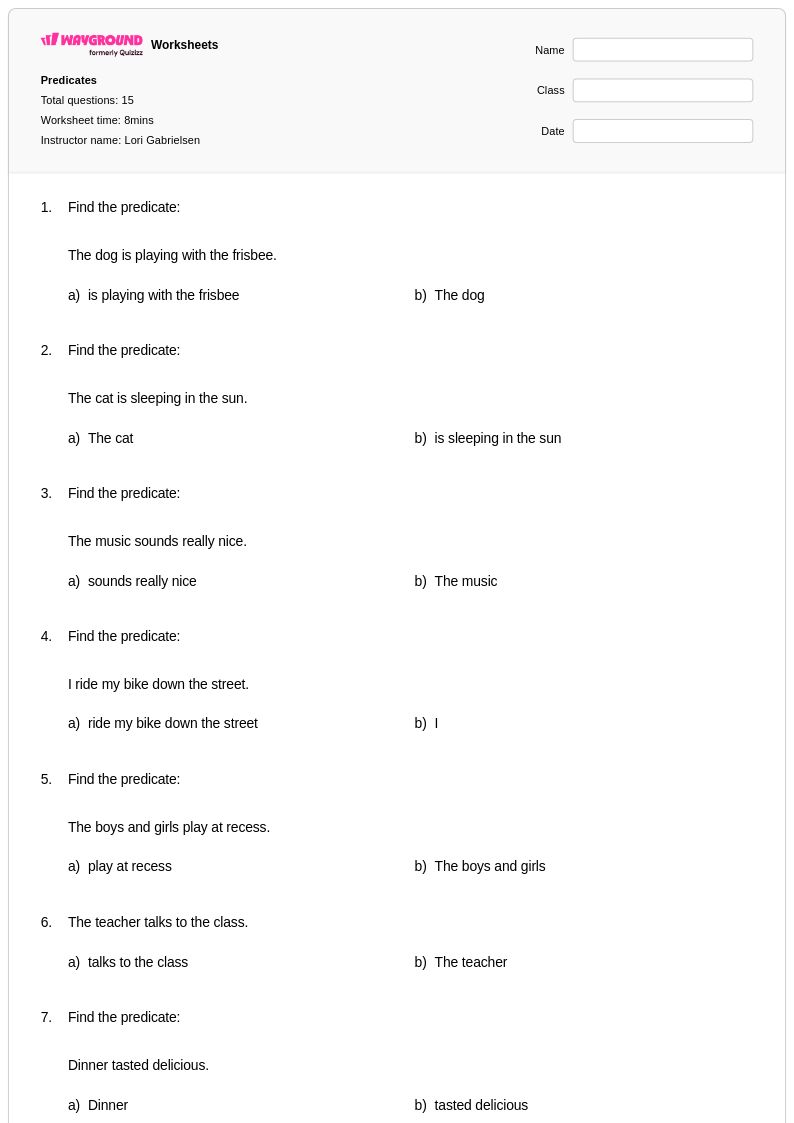
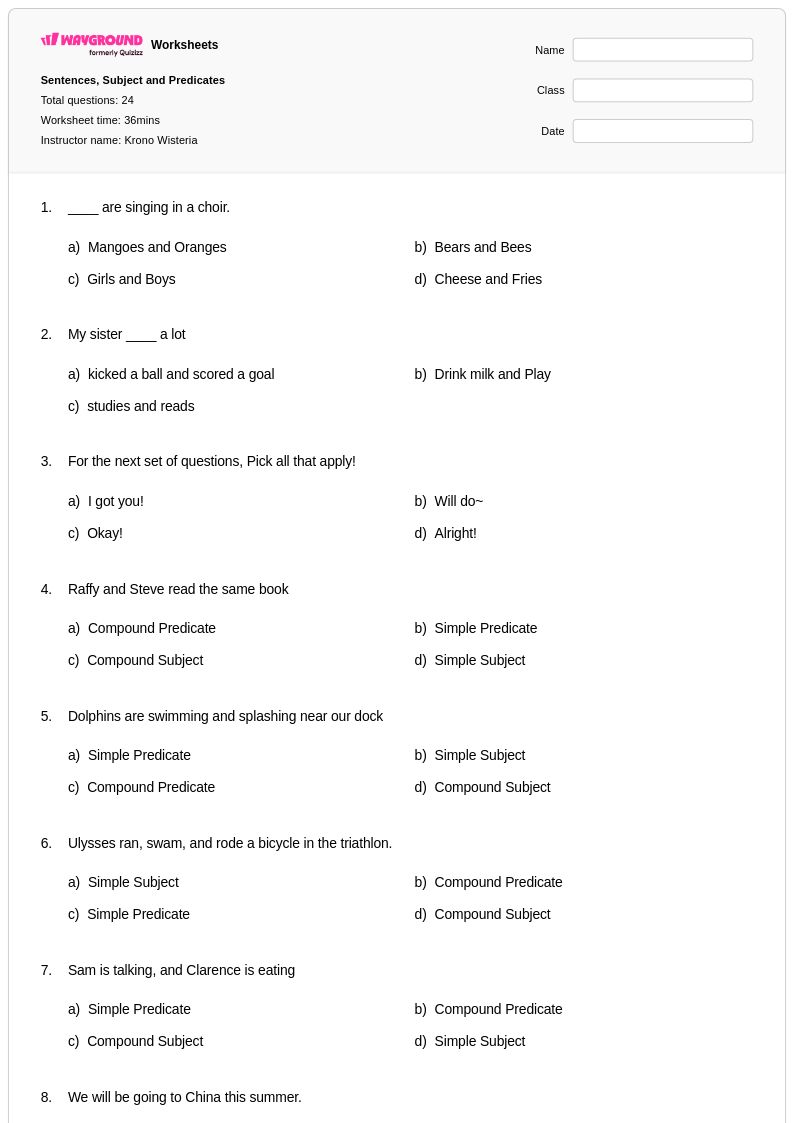
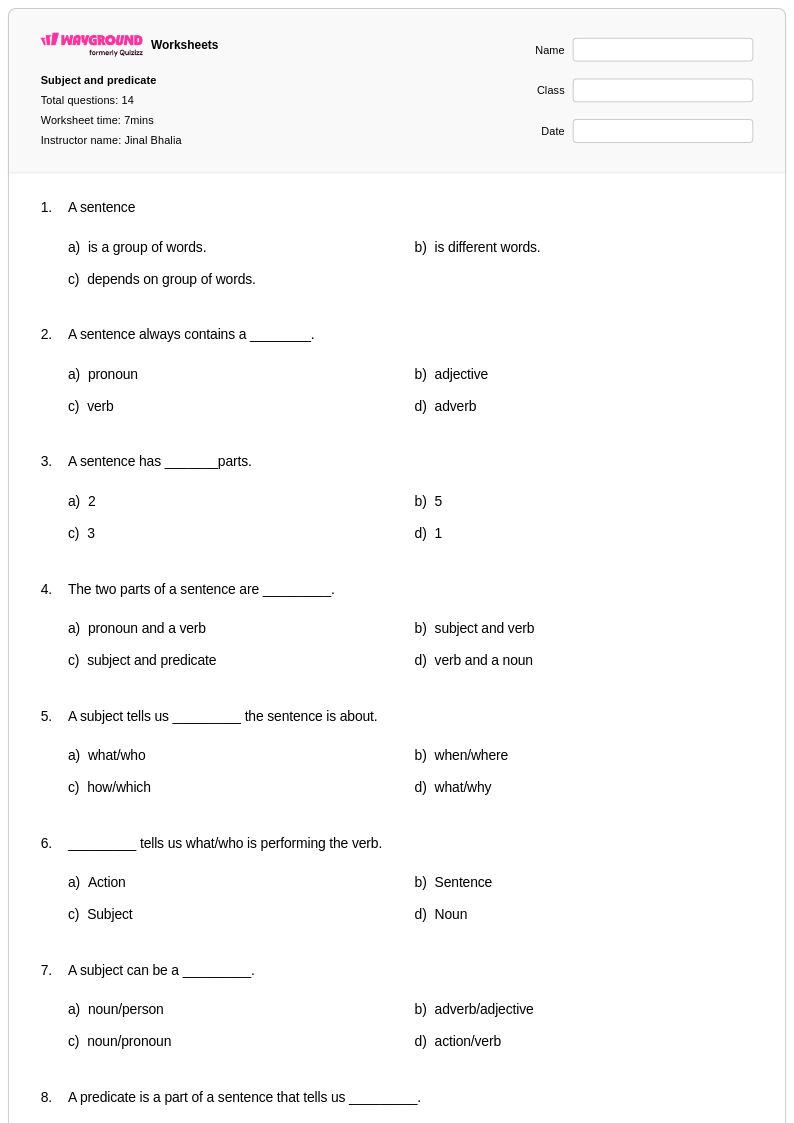
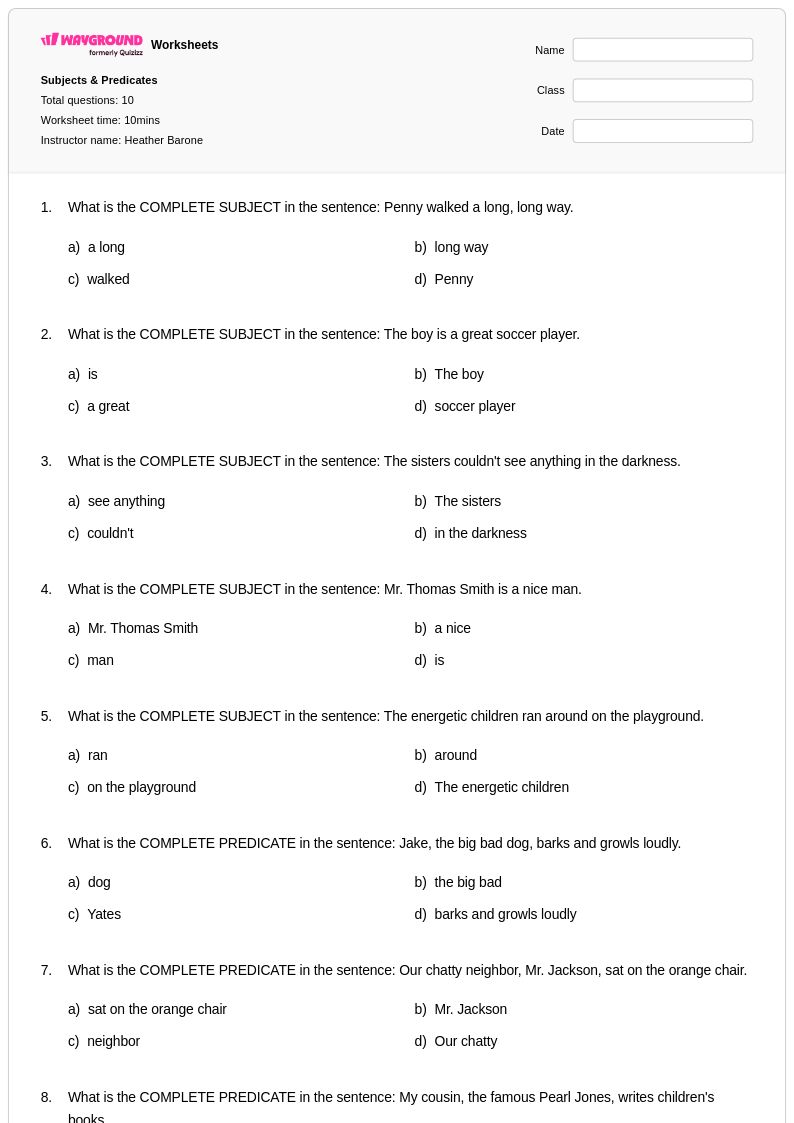
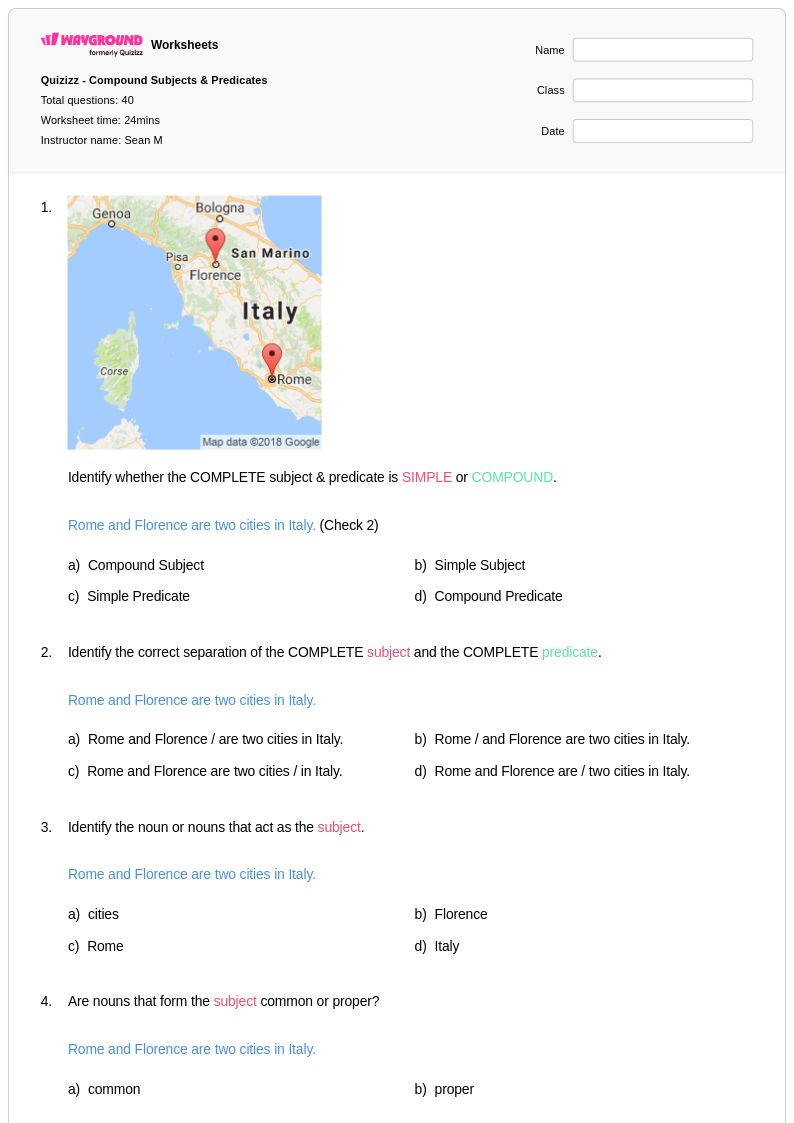
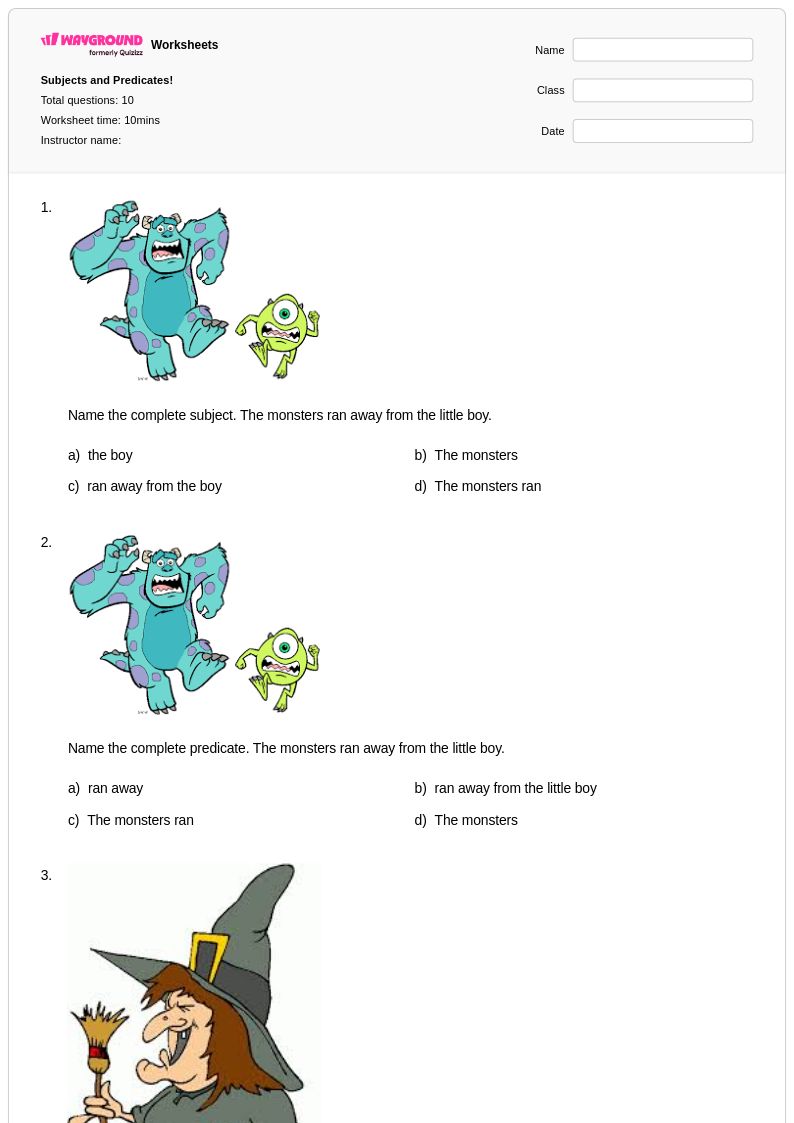
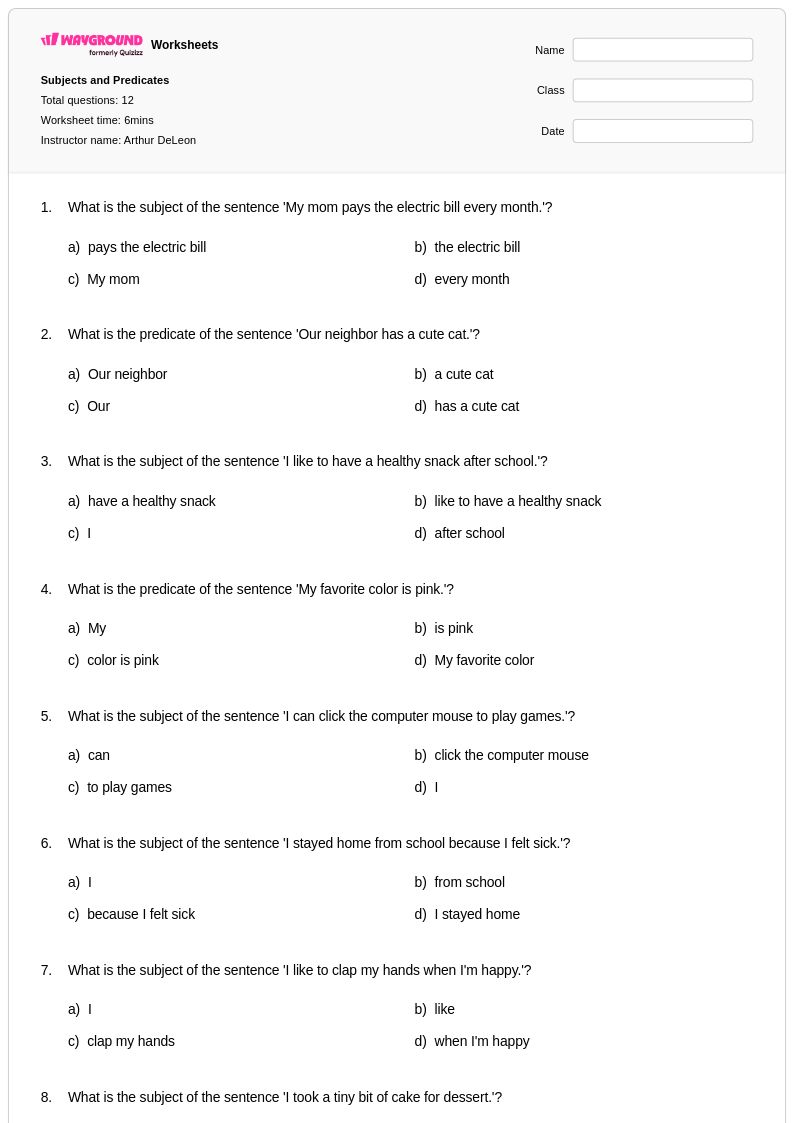
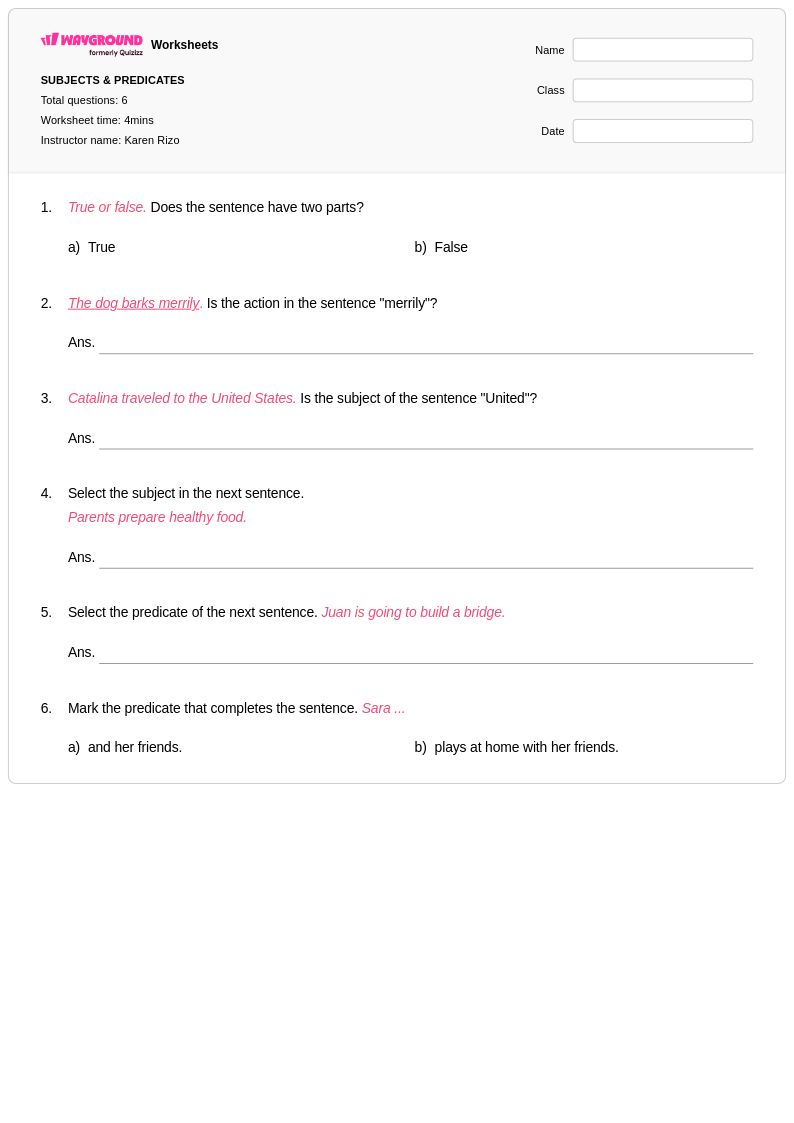
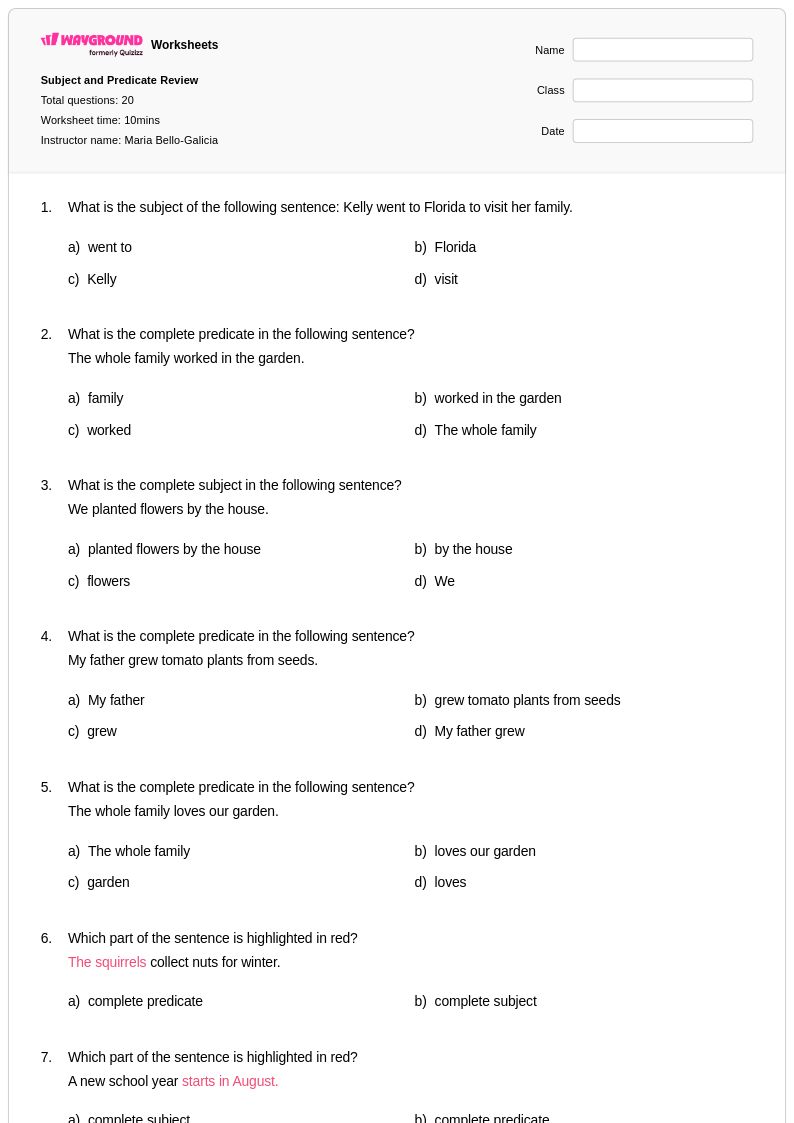
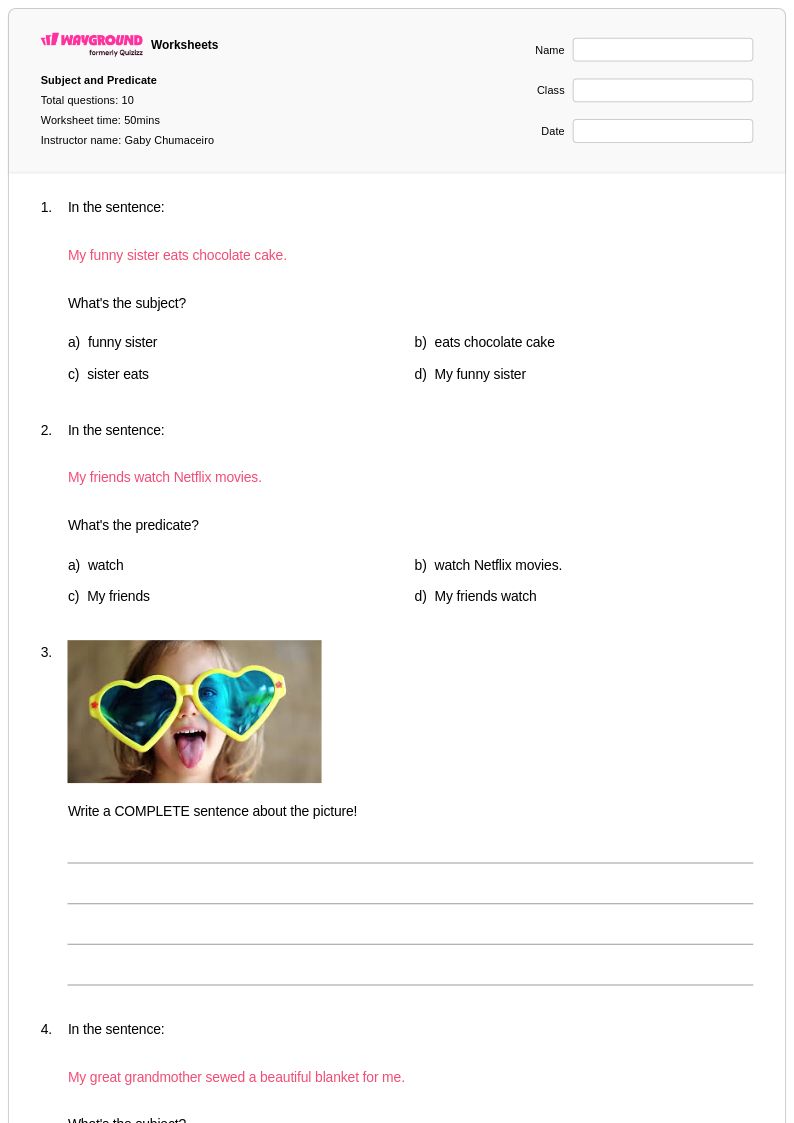
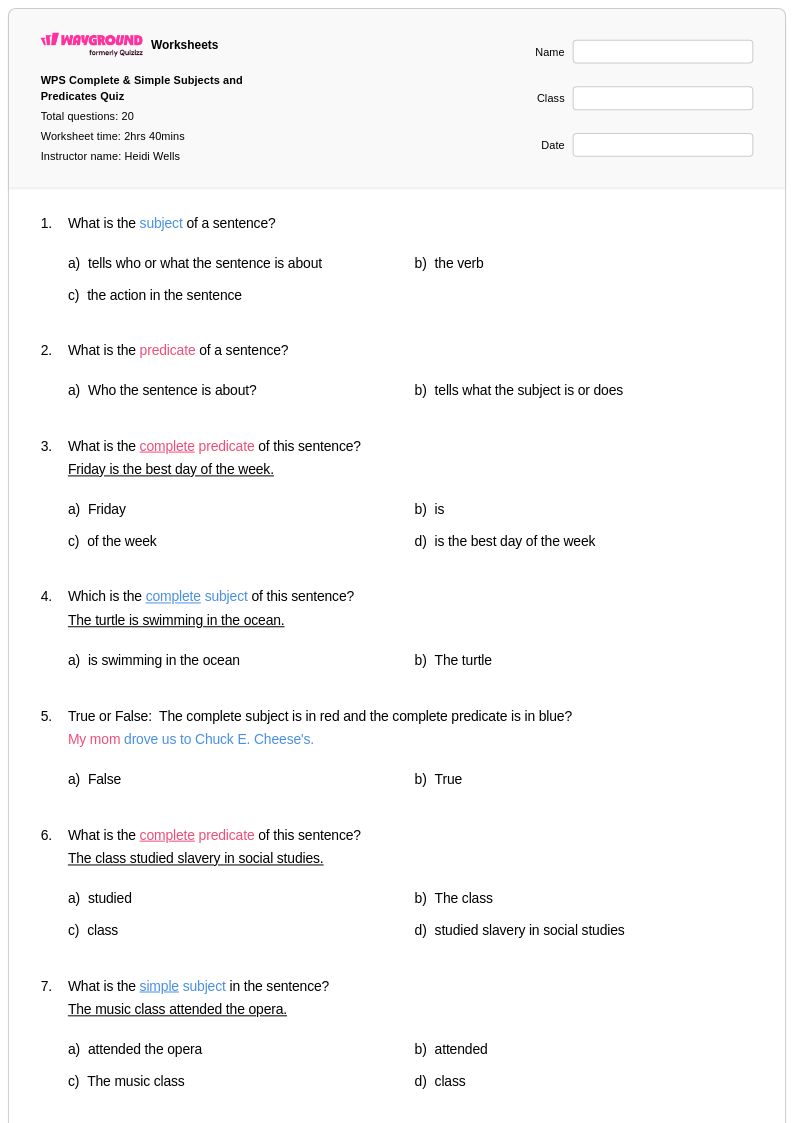
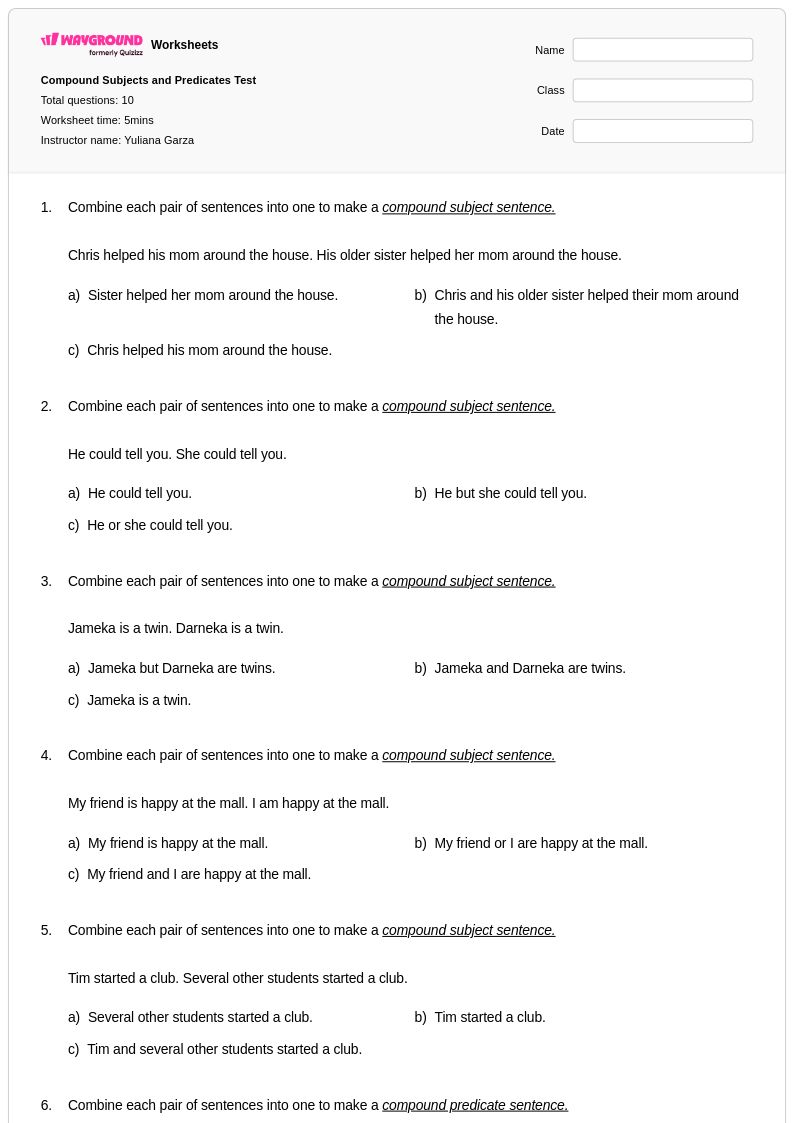
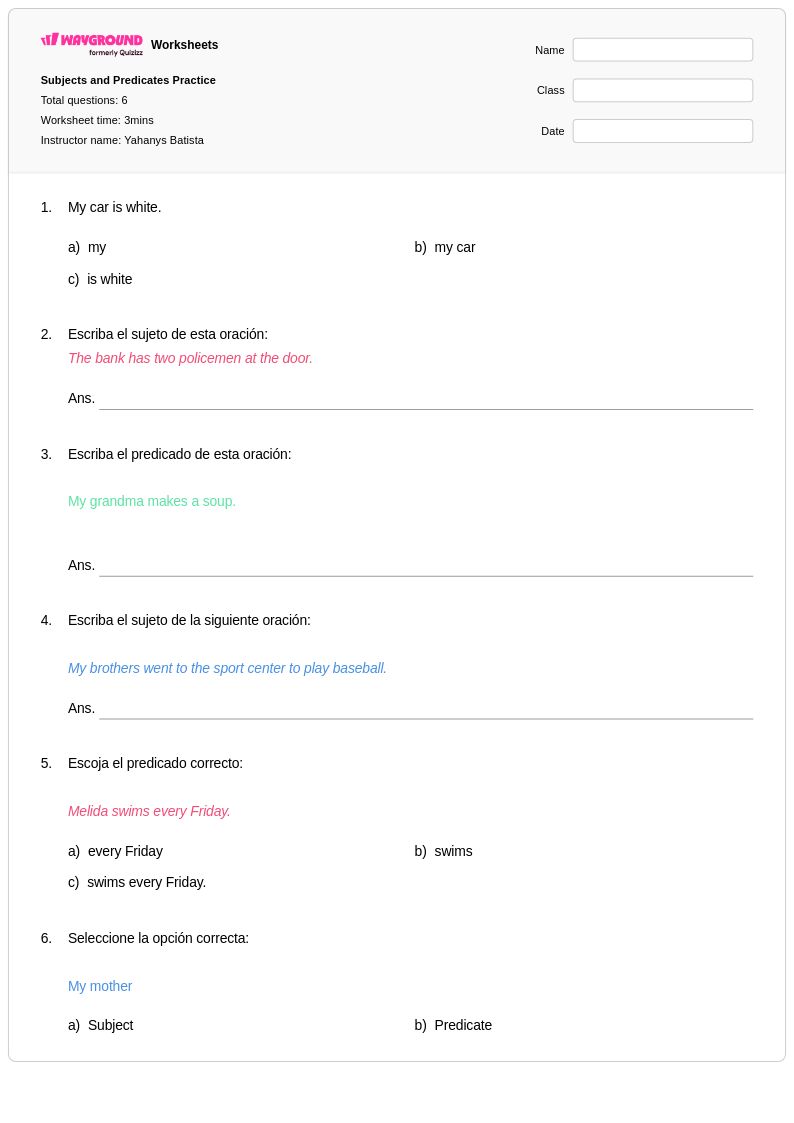
Wayground's free Grade 3 predicates worksheets help students master identifying and using predicates in sentences through engaging printables, practice problems, and comprehensive answer keys.
Explore printable Predicates worksheets for Grade 3
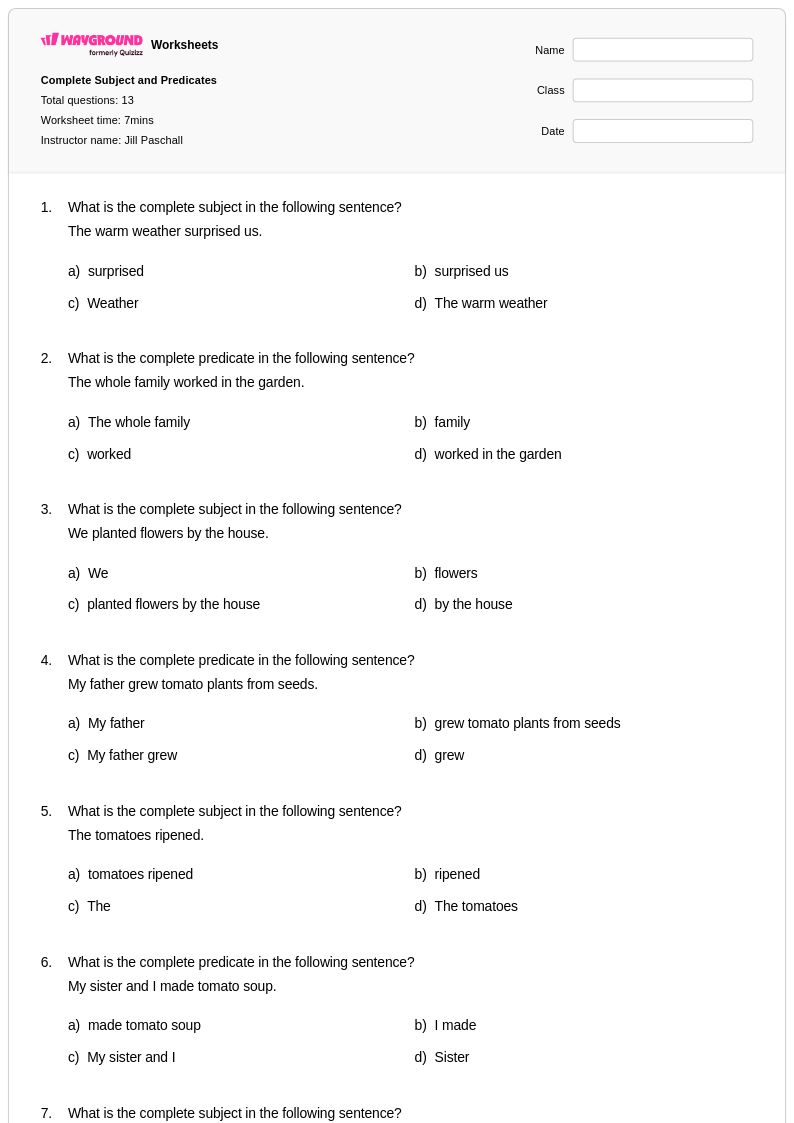
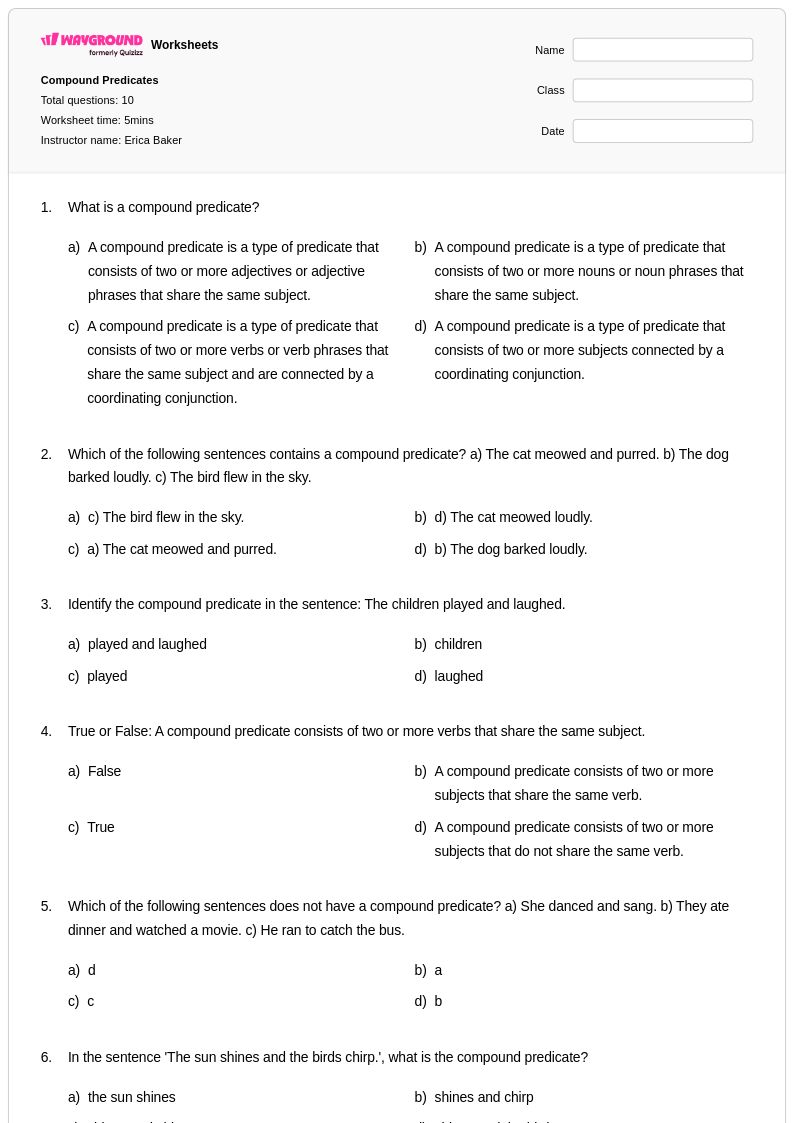
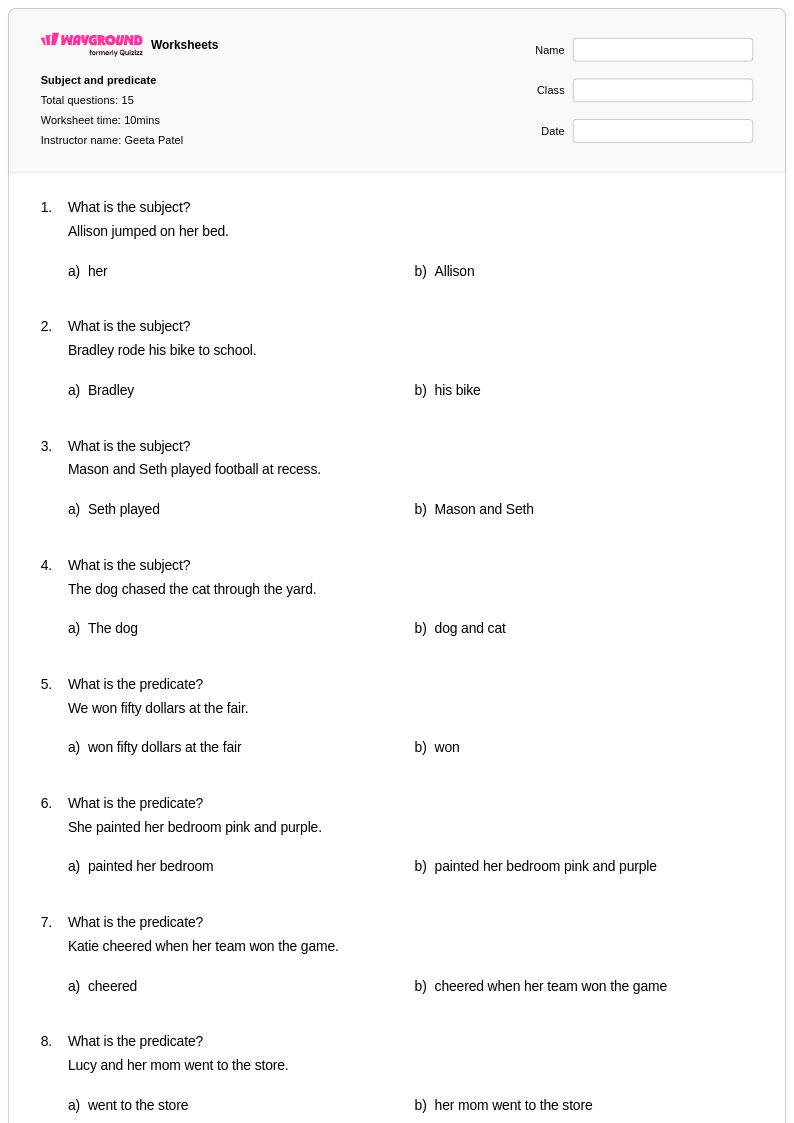
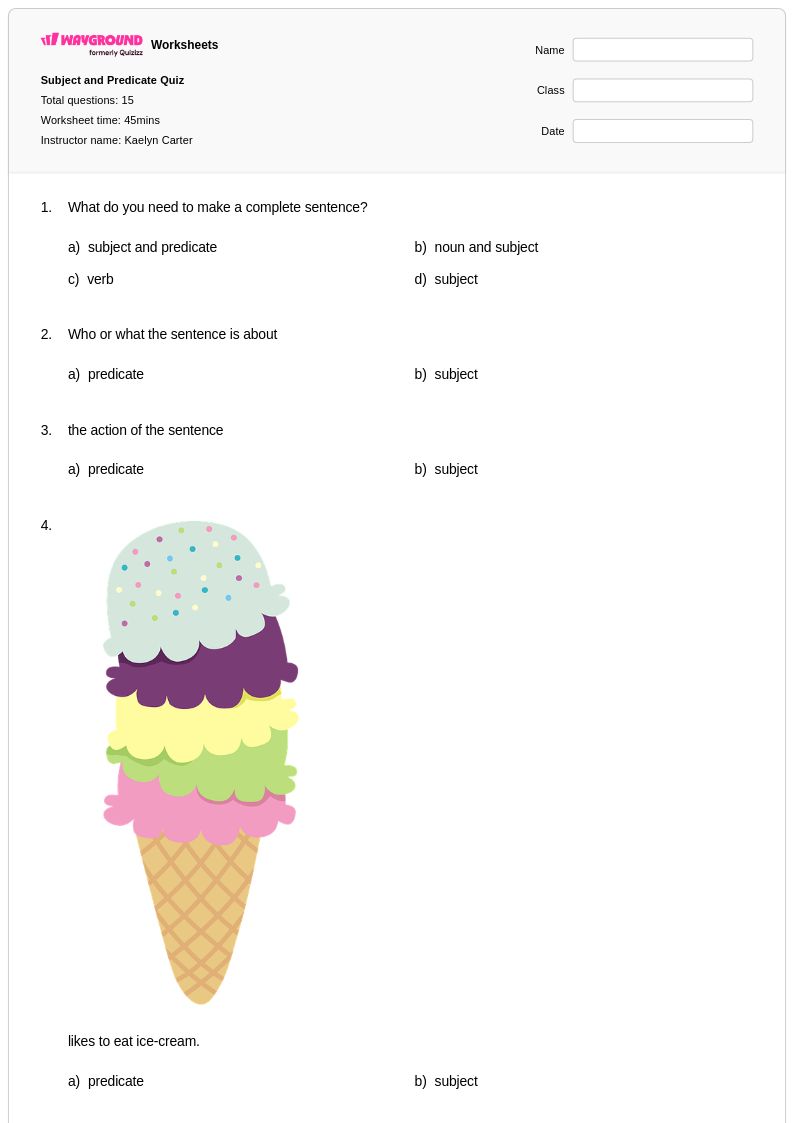
Grade 3 predicates worksheets available through Wayground (formerly Quizizz) provide essential practice for young learners developing their understanding of sentence structure and grammar fundamentals. These comprehensive worksheets focus on helping students identify and work with predicates—the part of a sentence that tells what the subject does or is—through engaging exercises that build foundational language skills. Students practice distinguishing between complete and incomplete predicates, identifying action words and linking verbs within predicates, and understanding how predicates work with subjects to create meaningful sentences. The collection includes varied practice problems with answer keys, free printables in pdf format, and activities designed to reinforce predicate recognition through sentence analysis, completion exercises, and creative writing tasks that strengthen both grammar knowledge and reading comprehension abilities.
Wayground (formerly Quizizz) empowers educators with millions of teacher-created predicate worksheets and grammar resources that support differentiated instruction and flexible lesson planning. The platform's robust search and filtering capabilities allow teachers to quickly locate materials aligned with specific learning standards and customize worksheets to match their students' individual needs and skill levels. These predicate-focused collections are available in both printable pdf formats for traditional classroom use and digital formats for interactive learning experiences, making them ideal for in-class instruction, homework assignments, remediation support, and enrichment activities. Teachers can easily adapt these resources for various learning styles and academic levels, ensuring that every Grade 3 student receives appropriate practice opportunities to master predicate identification and usage while building confidence in their grammar and sentence construction skills.
FAQs
How do I teach predicates to students who are new to sentence structure?
Start by anchoring the concept to a simple question: what is the subject doing, or what is being said about the subject? Introduce the simple predicate first by identifying the main verb in short, clear sentences before moving to complete predicates, which include the verb and all its modifiers and complements. Once students are comfortable distinguishing the subject from the predicate, layer in compound predicates and predicate complements like predicate adjectives and predicate nominatives using sentences from familiar texts.
What exercises help students practice identifying predicates?
Sentence-splitting exercises, where students draw a line between the subject and predicate, are an effective starting point because they require students to locate the verb before analyzing the rest of the sentence. Labeling tasks that ask students to identify the simple predicate, helping verbs, and predicate complements within complete sentences build analytical precision. Exercises that have students distinguish between predicate adjectives and predicate nominatives are especially useful for reinforcing how linking verbs function differently from action verbs.
What mistakes do students commonly make when identifying predicates?
The most common error is confusing the simple predicate with the complete predicate, especially when verb phrases include helping verbs like 'is running' or 'has been completed.' Students also frequently misidentify predicate adjectives and predicate nominatives, either omitting them from the predicate entirely or confusing them with direct objects. Another persistent misconception is treating compound predicates as two separate sentences, which reflects an incomplete understanding of how a single subject can connect to multiple verbs.
How can I use predicate worksheets to support different skill levels in my classroom?
For students who are still building foundational grammar skills, start with worksheets focused solely on locating the simple predicate in short, declarative sentences before introducing complete predicates and predicate complements. More advanced learners benefit from exercises that require them to identify and label predicate adjectives, predicate nominatives, and compound predicates within complex sentences. On Wayground, teachers can apply individual accommodations such as reduced answer choices or read-aloud support for students who need additional scaffolding, while the rest of the class works through standard settings.
How do I use Wayground's predicate worksheets in my classroom?
Wayground's predicate worksheets are available as printable PDFs, making them easy to distribute for in-class practice, grammar centers, or homework assignments. They are also available in digital formats for technology-integrated classrooms, and teachers can host them as a quiz directly on Wayground for instant student engagement and assessment. Every worksheet includes an answer key, which supports independent practice, peer review, and efficient grading.
How are predicate adjectives and predicate nominatives different, and why do students mix them up?
A predicate adjective follows a linking verb and describes the subject, as in 'The sky is clear,' while a predicate nominative follows a linking verb and renames or identifies the subject, as in 'She is the captain.' Students mix them up because both appear after a linking verb in the same structural position, and they do not yet have a firm habit of asking whether the word after the verb describes or renames the subject. Targeted practice with labeling tasks that require students to explicitly categorize each predicate complement helps build this distinction reliably.