Free Printable Creative Writing Worksheets for Grade 2
Enhance your Grade 2 students' creative writing skills with Wayground's free printable worksheets and practice problems, featuring engaging fiction writing activities, PDF resources, and comprehensive answer keys.
Explore printable Creative Writing worksheets for Grade 2
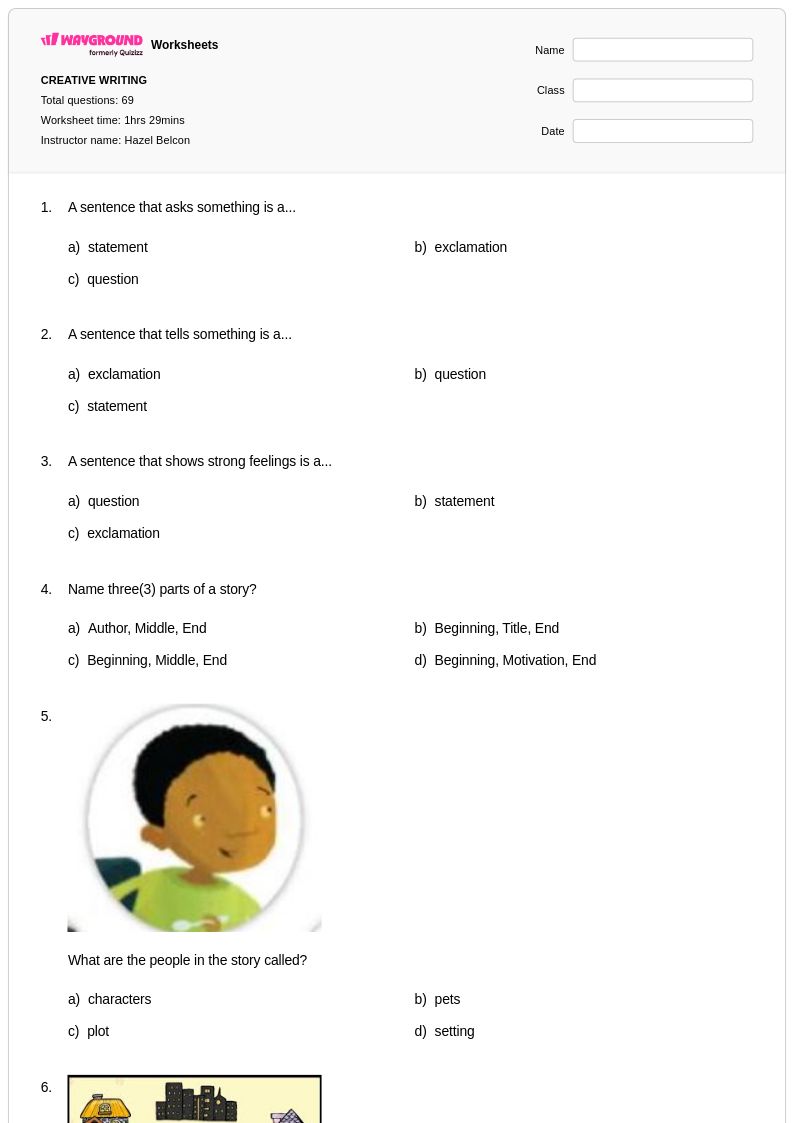
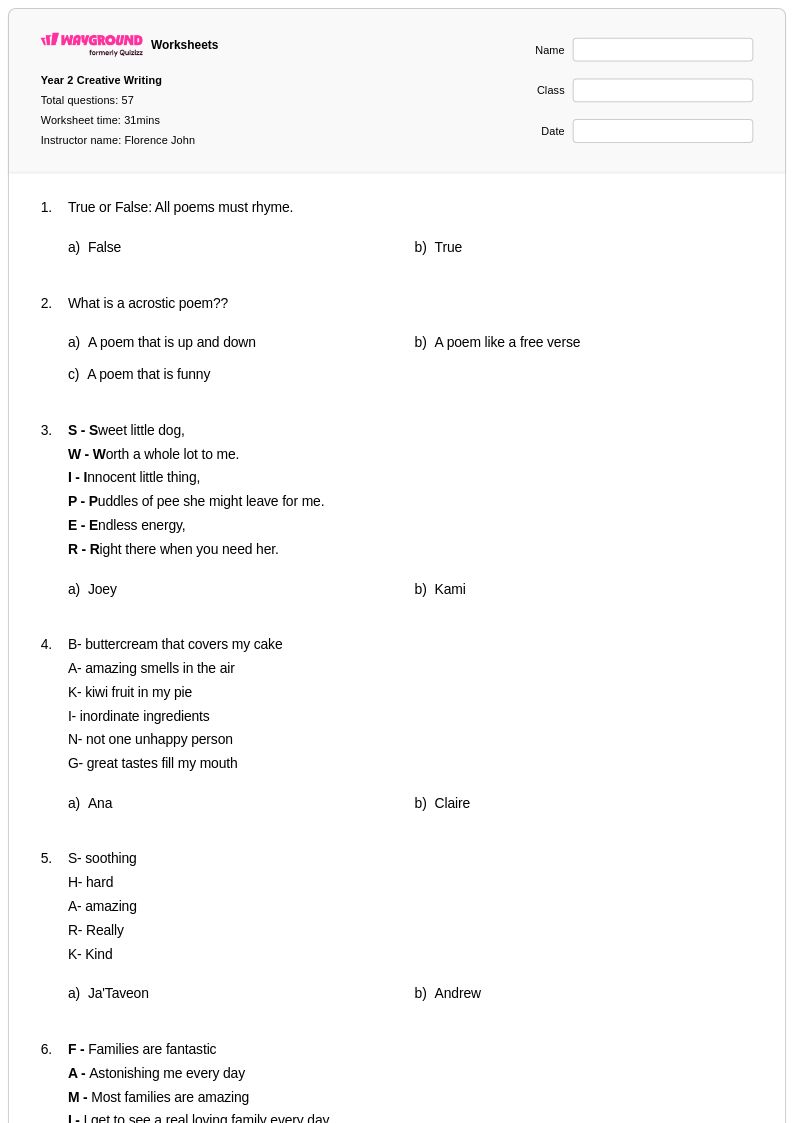
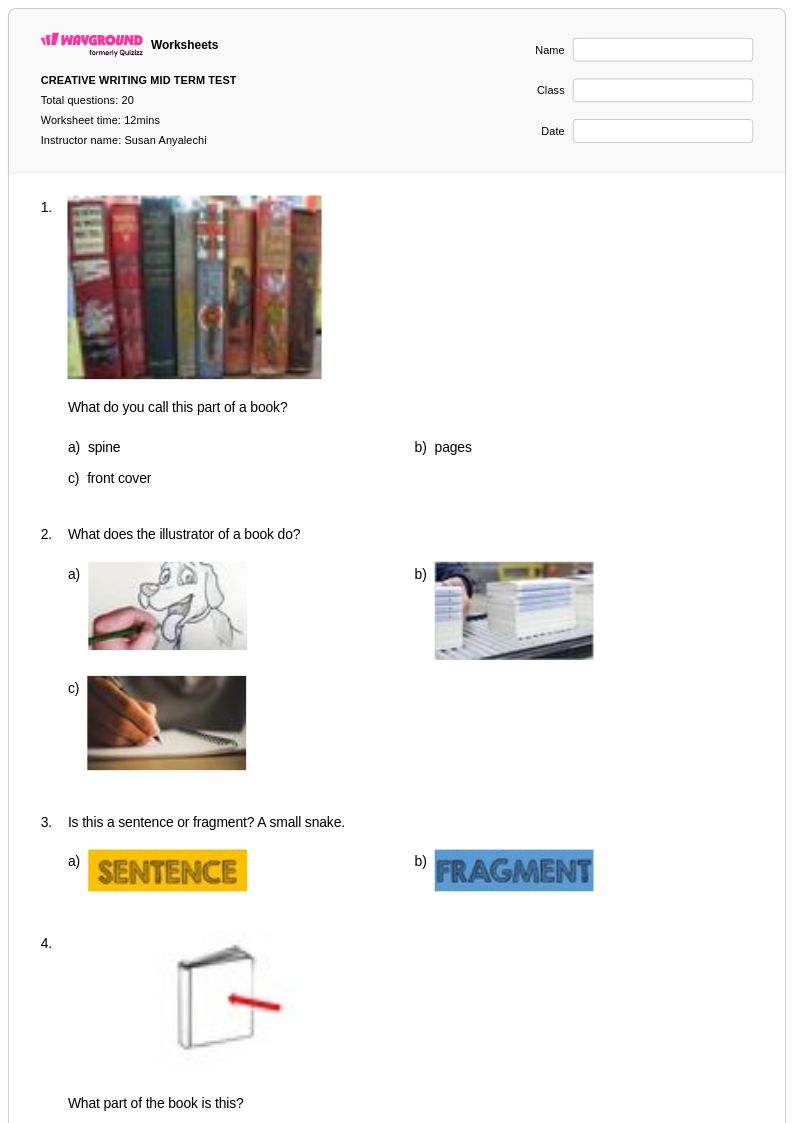
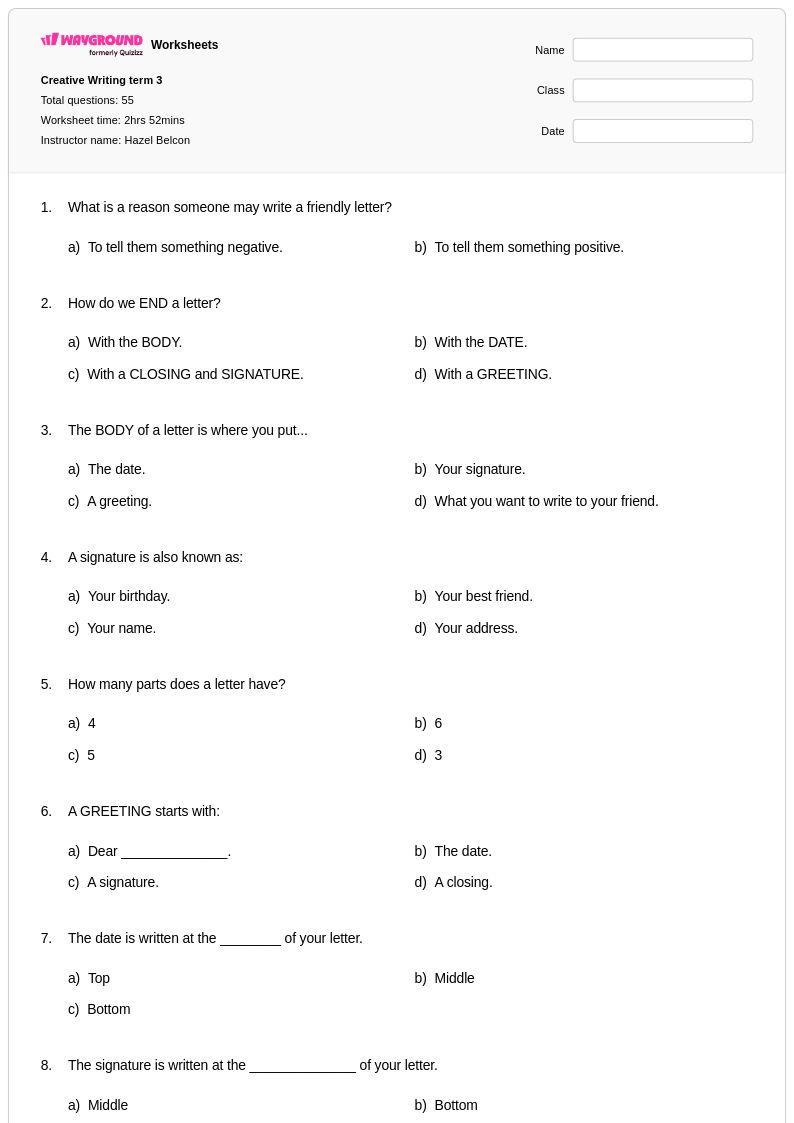
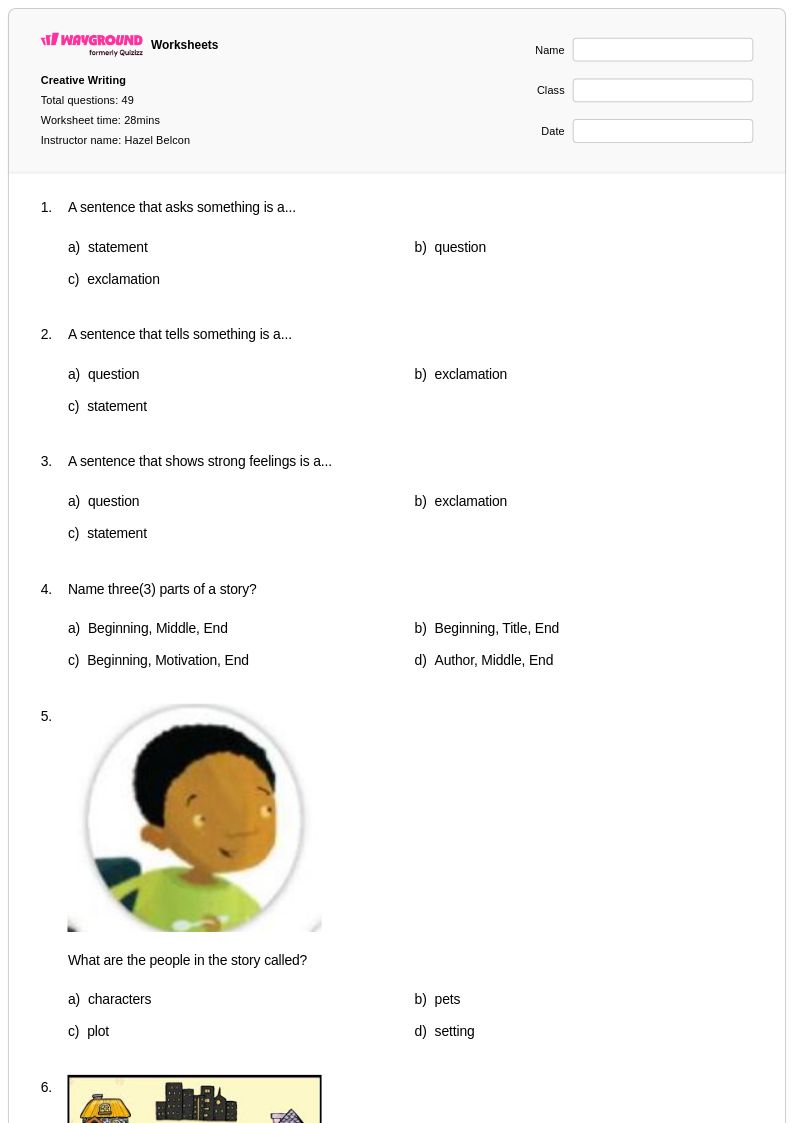
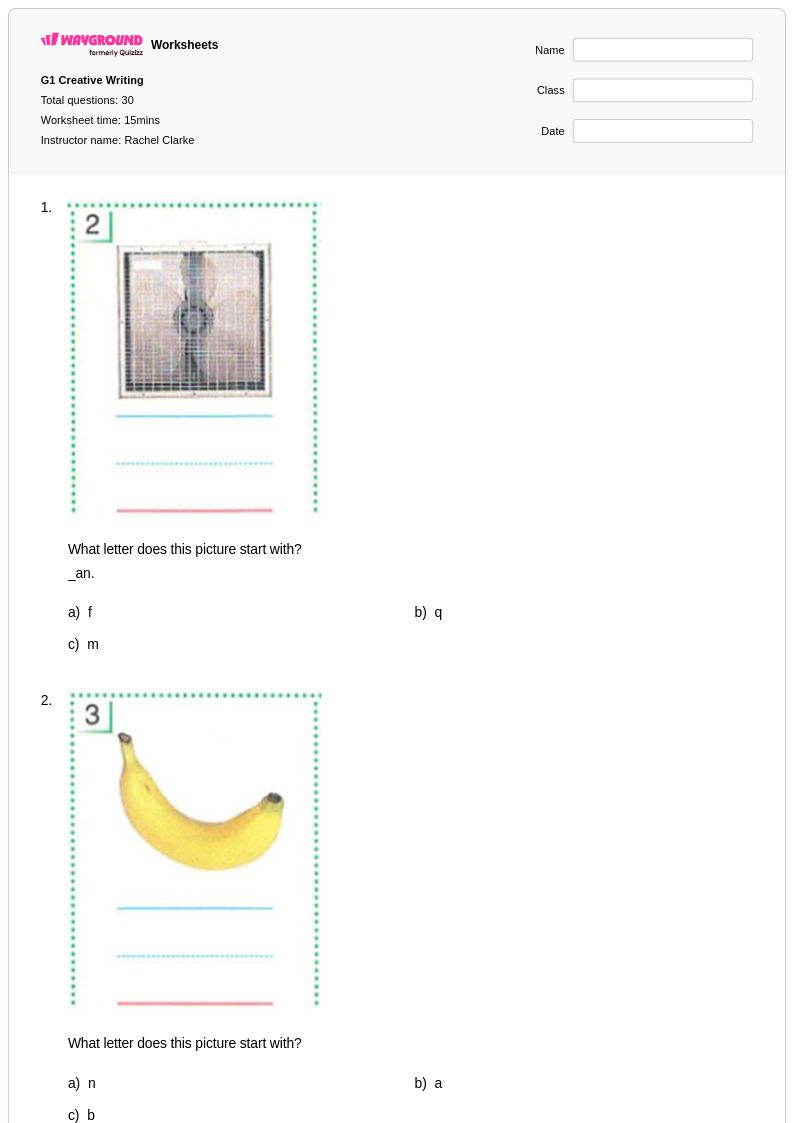
Grade 2 creative writing worksheets available through Wayground (formerly Quizizz) provide young students with structured opportunities to develop their storytelling abilities and express their imagination through written language. These carefully designed resources focus on building foundational narrative skills such as character development, simple plot structure, descriptive language, and sequential storytelling that are essential for emerging writers. The worksheets include engaging prompts, story starters, picture-based writing exercises, and graphic organizers that guide second-grade students through the creative writing process while strengthening their vocabulary, sentence construction, and organizational skills. Teachers can access comprehensive answer keys and utilize these free printables as practice problems during writing workshops, independent work time, or homework assignments, with pdf formats ensuring easy distribution and consistent formatting across different devices and printing systems.
Wayground (formerly Quizizz) supports educators with an extensive collection of teacher-created creative writing resources specifically aligned with Grade 2 developmental standards and learning objectives. The platform's robust search and filtering capabilities allow teachers to quickly locate worksheets that match their students' specific skill levels and interests, while built-in differentiation tools enable customization for diverse learning needs within the classroom. These flexible resources are available in both printable and digital formats, including downloadable pdfs, making them suitable for traditional paper-based activities or technology-integrated lessons. The comprehensive worksheet library, developed by millions of educators worldwide, provides teachers with ready-to-use materials for lesson planning, targeted skill remediation, enrichment activities for advanced learners, and consistent practice opportunities that help students build confidence and competence in creative expression through writing.
FAQs
How do I teach creative writing to students who struggle to get started?
Students who struggle to begin often benefit from structured entry points like story starters, visual prompts, or guided brainstorming frameworks. Teaching the elements of storytelling — character, setting, conflict, and resolution — as discrete, scaffolded steps gives reluctant writers a clear process to follow rather than a blank page to fill. Starting with low-stakes exercises like character sketches or single-scene vignettes builds confidence before students attempt longer narratives.
What exercises help students practice character development in creative writing?
Character development exercises that work well include character profile worksheets, where students define a character's traits, motivations, and backstory before writing begins. Dialogue-only scenes, where students must reveal character through speech alone, build a deeper understanding of voice and personality. Having students write the same event from two different characters' perspectives is another high-impact activity that sharpens both empathy and narrative craft.
What common mistakes do students make with plot structure in creative writing?
The most frequent error is writing a story with no clear conflict — students describe events rather than building tension toward a resolution. Many students also end stories abruptly, without giving the conflict a meaningful resolution, which signals they haven't internalized the arc of a narrative. Plot mapping activities that require students to identify the inciting incident, rising action, climax, and falling action before drafting help catch these structural gaps early.
How do I assess creative writing without discouraging student voice?
Using detailed rubrics that separate craft elements — such as structure, dialogue, character consistency, and descriptive language — from personal expression helps students understand that feedback targets technique, not their ideas. Anchor papers and exemplar models make rubric criteria concrete and visible. Providing written feedback alongside a numeric score, with at least one specific strength noted before areas for improvement, preserves student motivation while maintaining academic rigor.
How do I use Wayground's creative writing worksheets in my classroom?
Wayground's creative writing worksheets are available as printable PDFs, making them easy to distribute during in-class writing workshops or use as take-home drafting guides. They are also available in digital formats, allowing teachers to assign them as interactive activities in technology-integrated classrooms, including the option to host them as a quiz on Wayground. Answer keys and rubrics are included, so teachers can provide structured feedback without building evaluation tools from scratch.
How can I differentiate creative writing instruction for students at different skill levels?
Differentiation in creative writing works best when the core task remains the same but the level of scaffolding varies — advanced students may draft freely while struggling writers work from a story starter or plot outline template. On Wayground, teachers can apply individual accommodations such as Read Aloud for students who process better through audio, reduced answer choices to lower cognitive load, and extended time for students who need more processing time during digital assignments. These settings are saved per student and can be applied without drawing attention to the accommodations in front of peers.