Free Printable Crime Scene Investigation Worksheets for Grade 11
Enhance Grade 11 students' crime scene investigation skills with Wayground's comprehensive collection of free forensic science worksheets, featuring printable PDFs, practice problems, and detailed answer keys for thorough understanding.
Explore printable Crime Scene Investigation worksheets for Grade 11
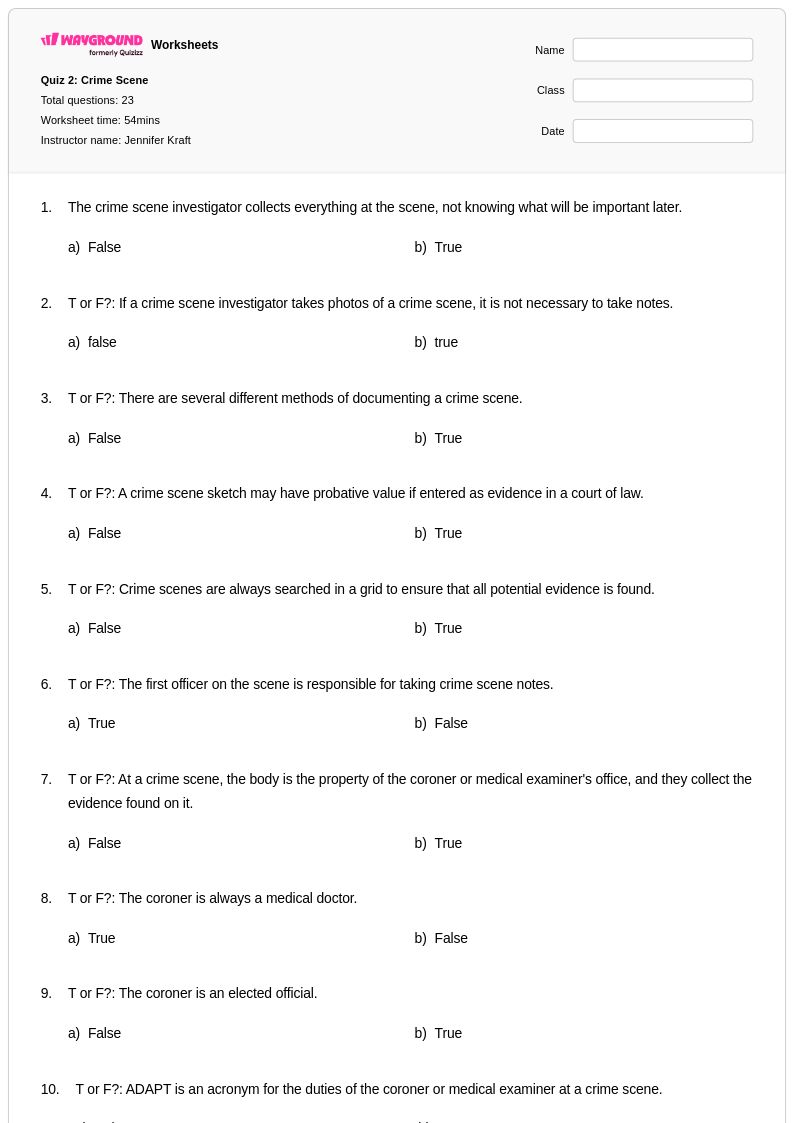
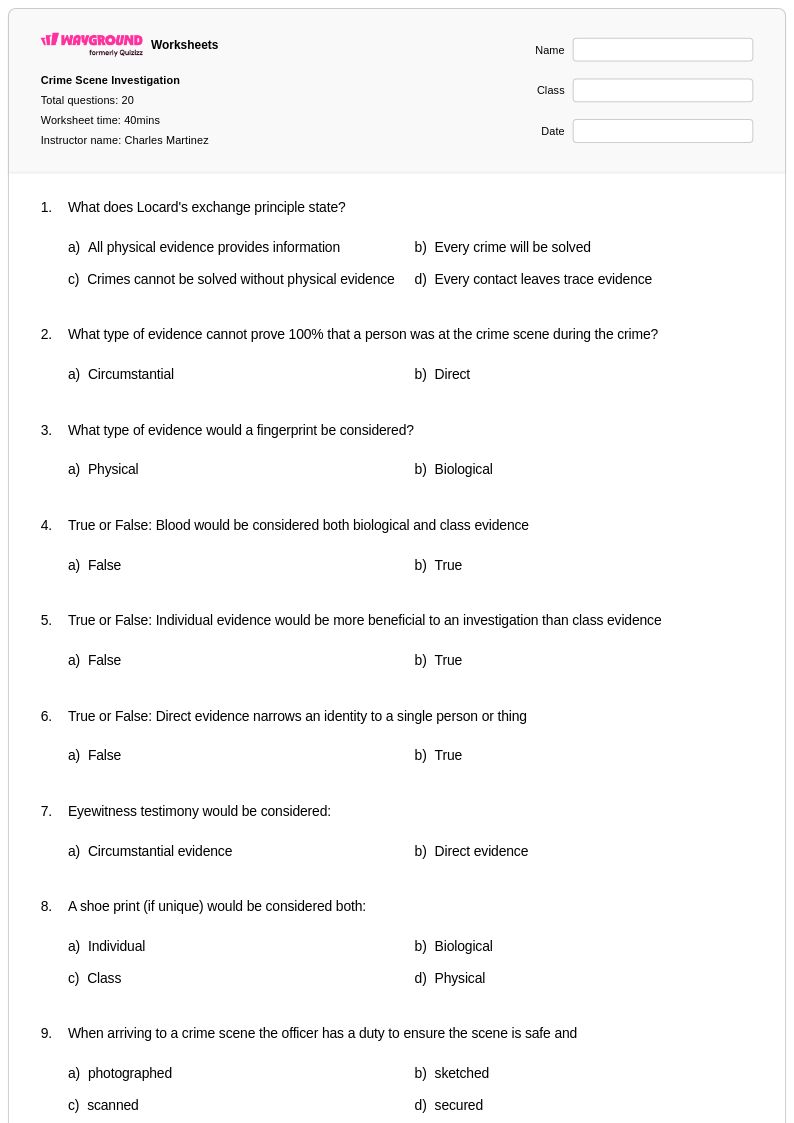
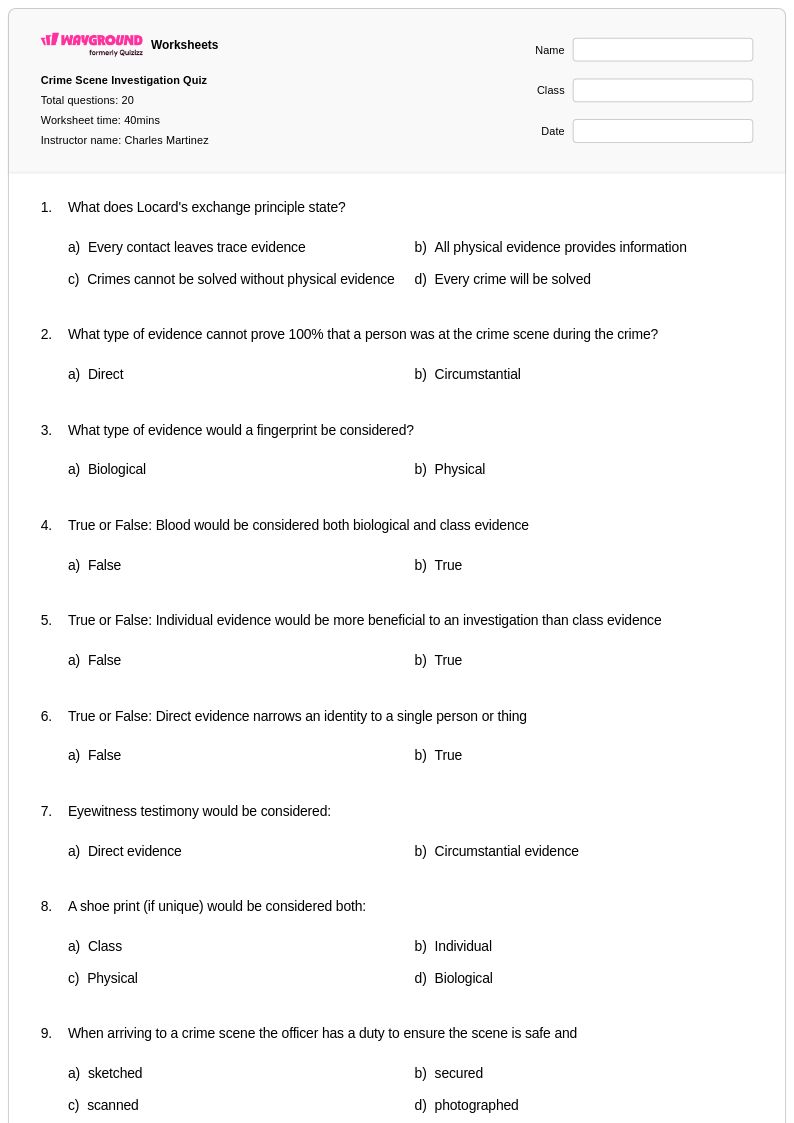
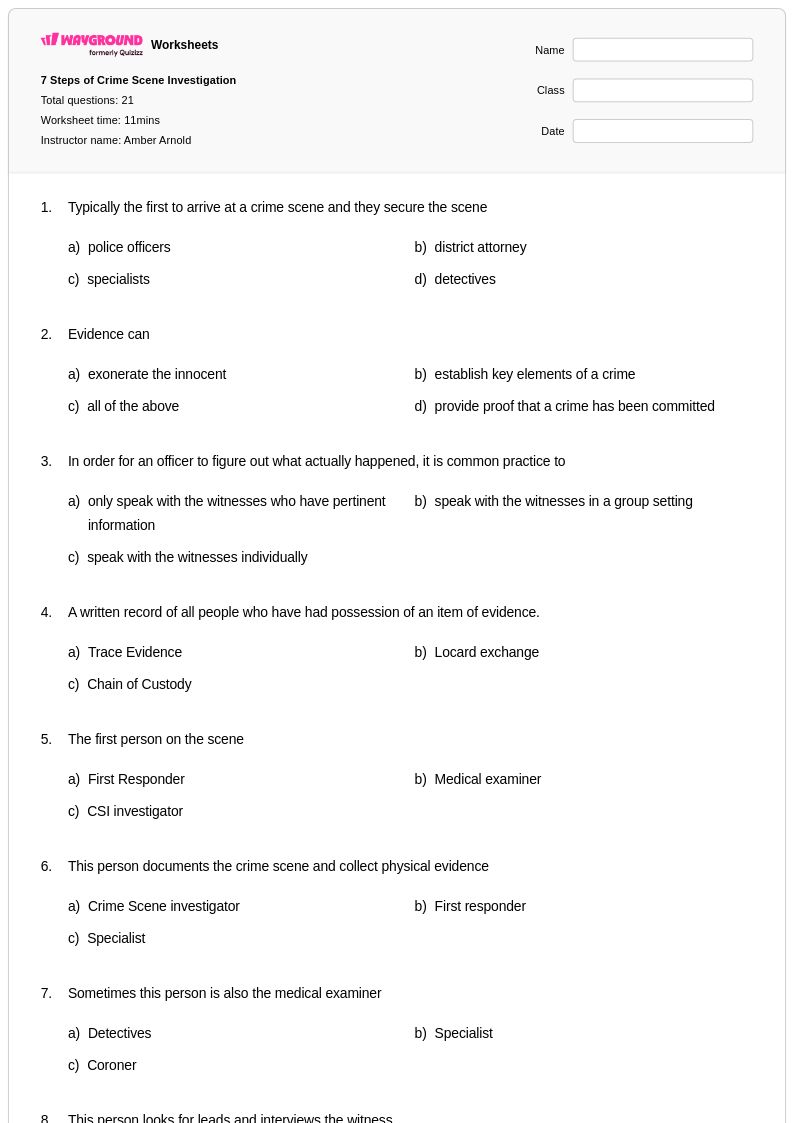
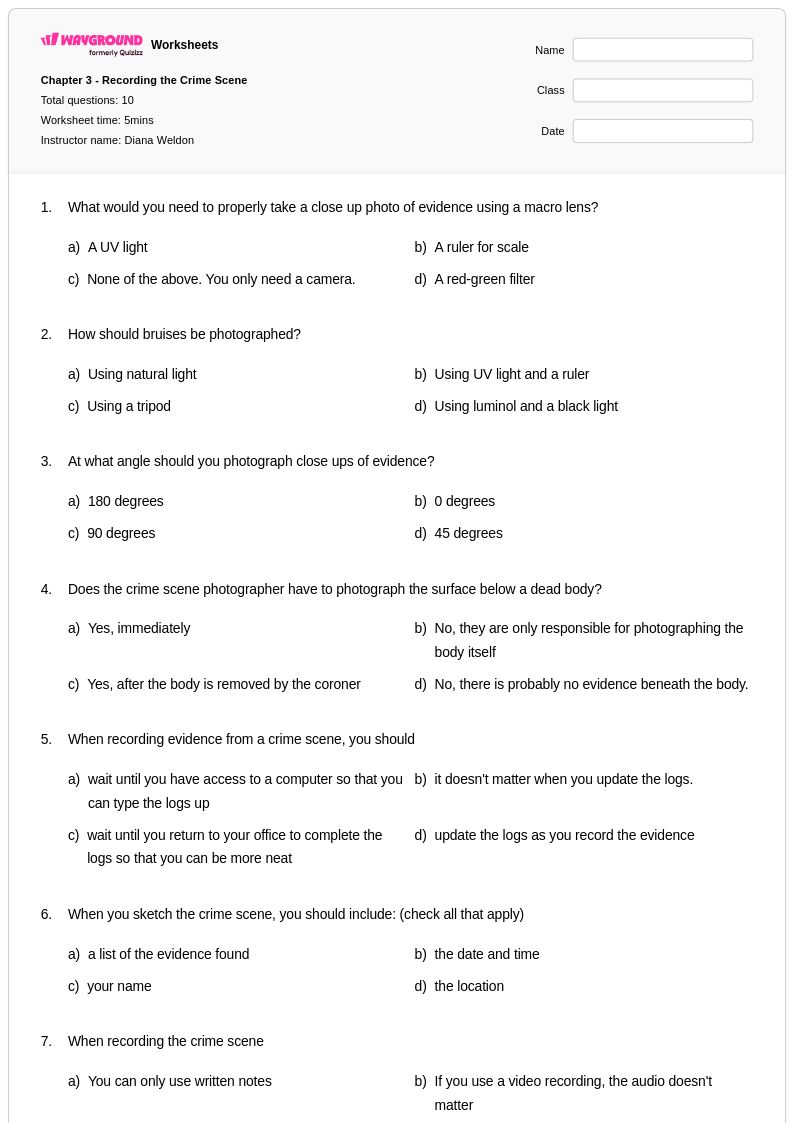
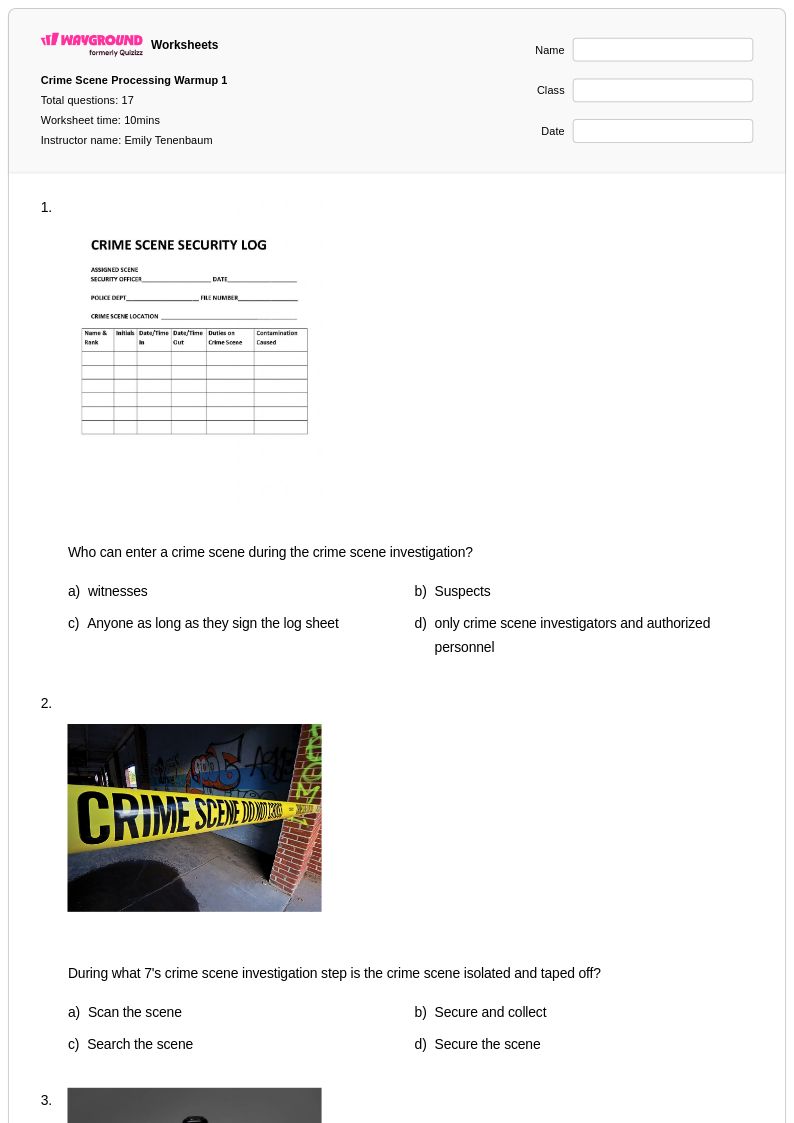
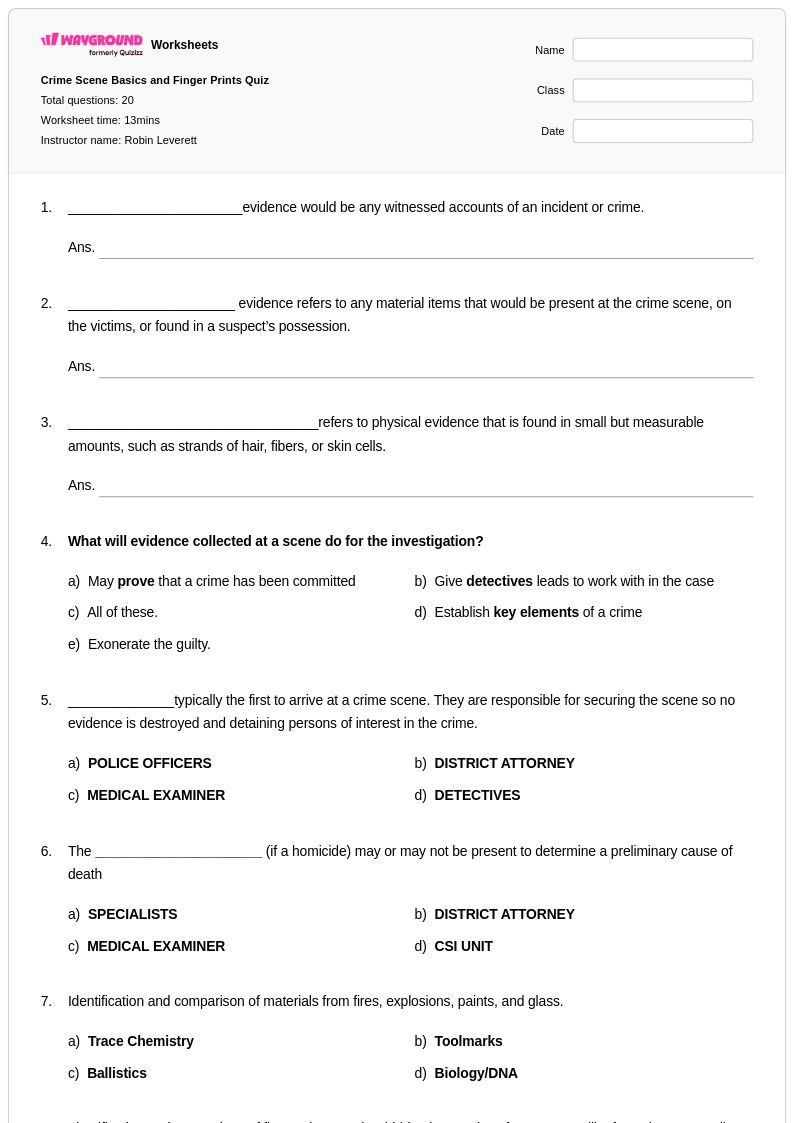
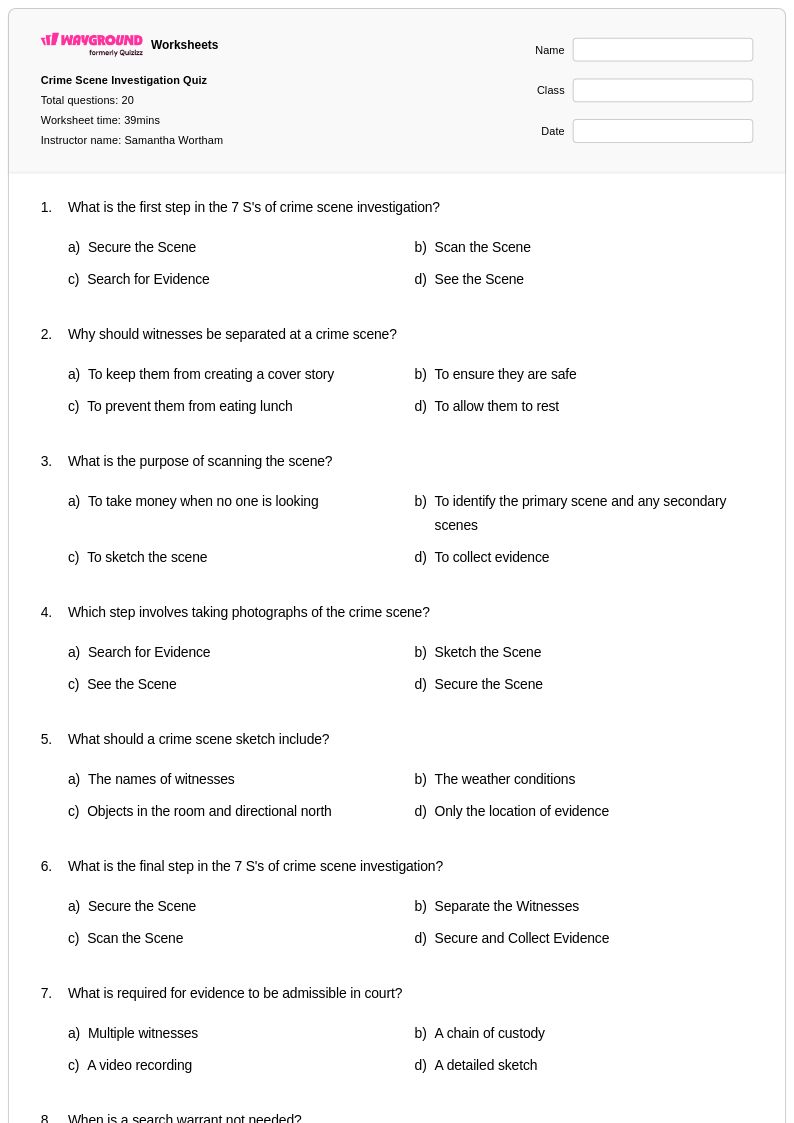
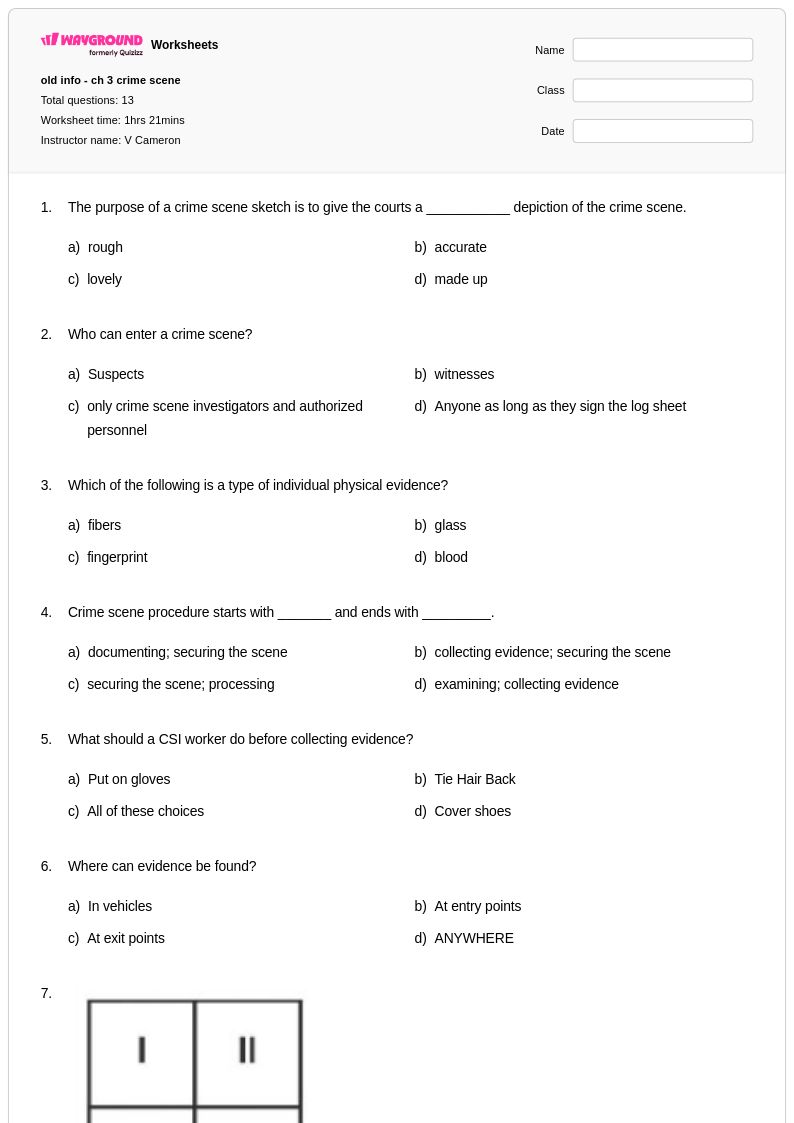
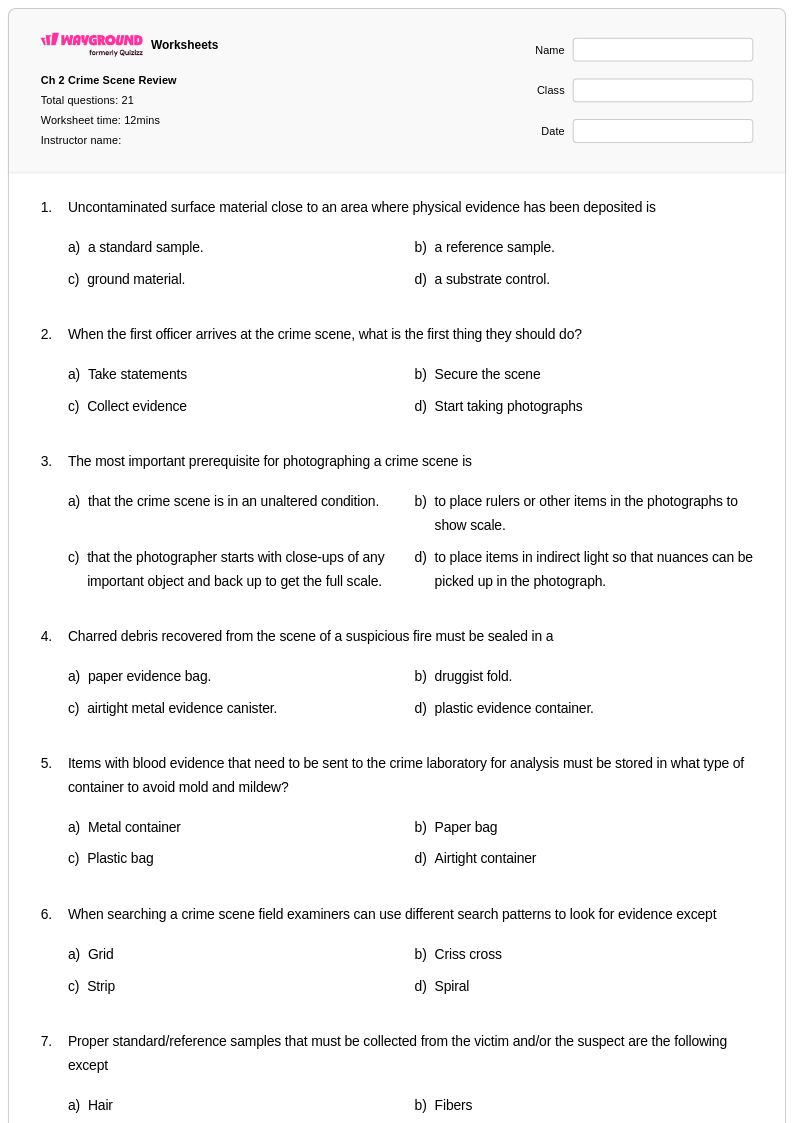
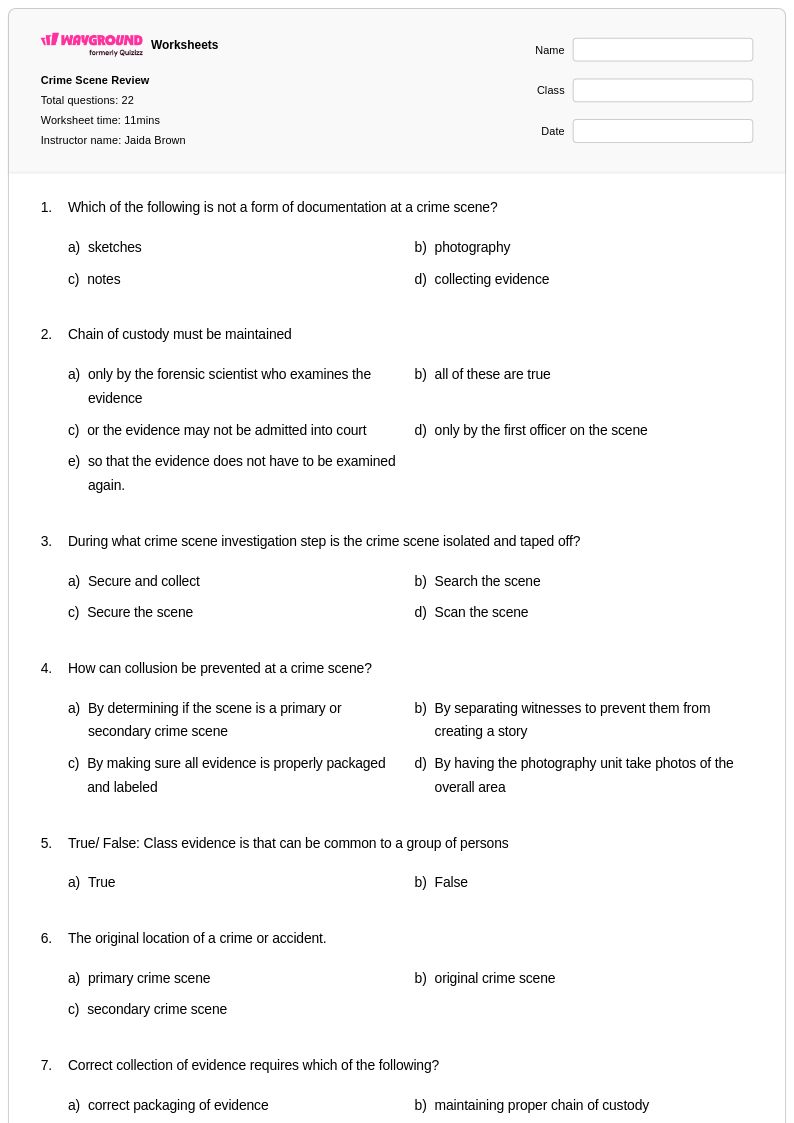
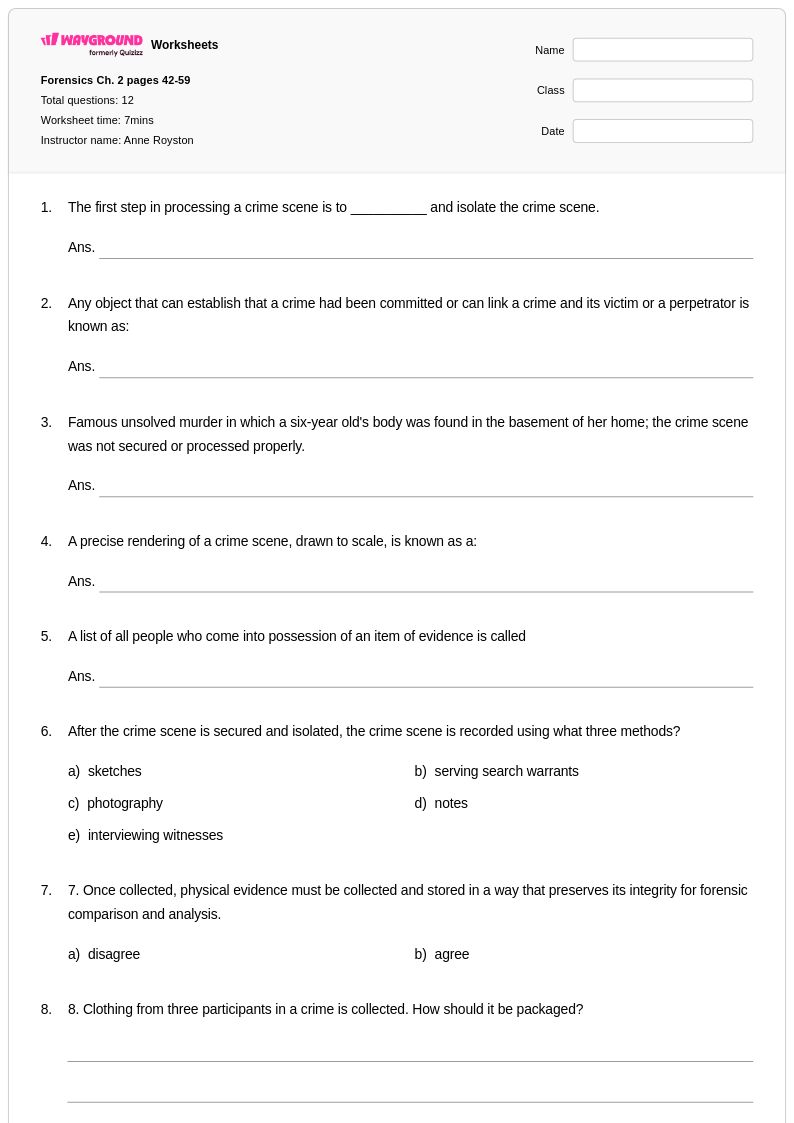
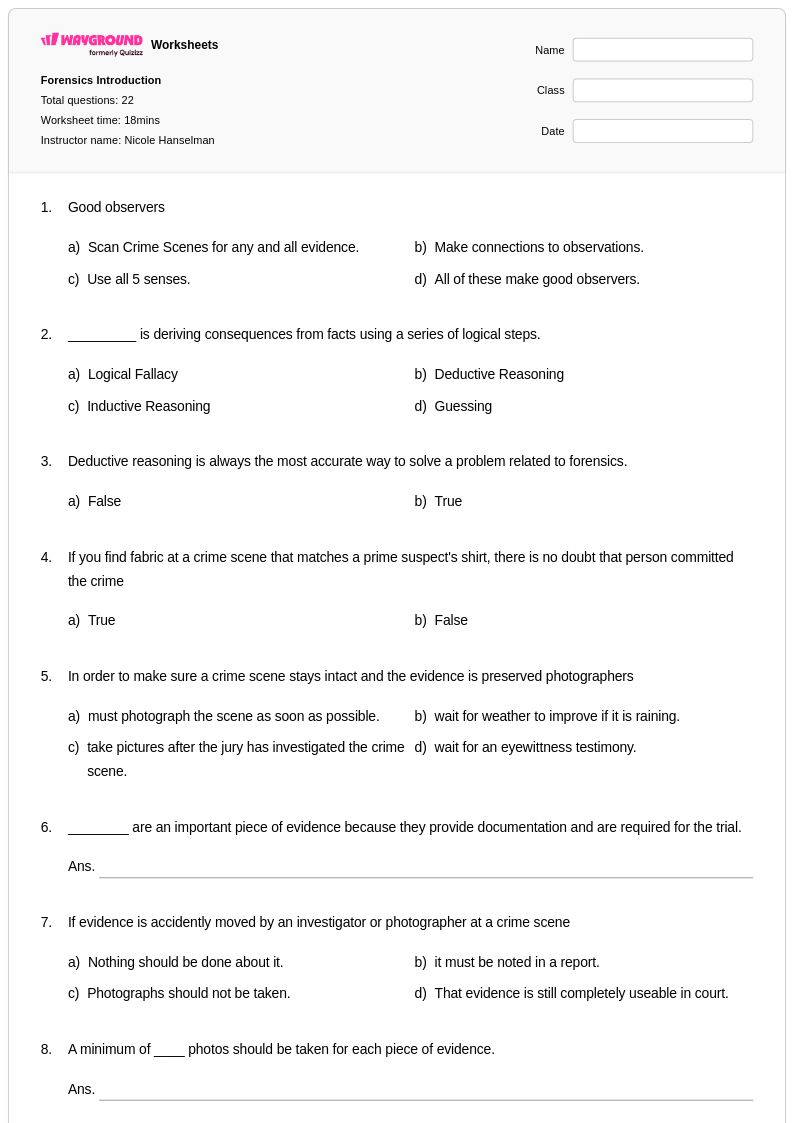
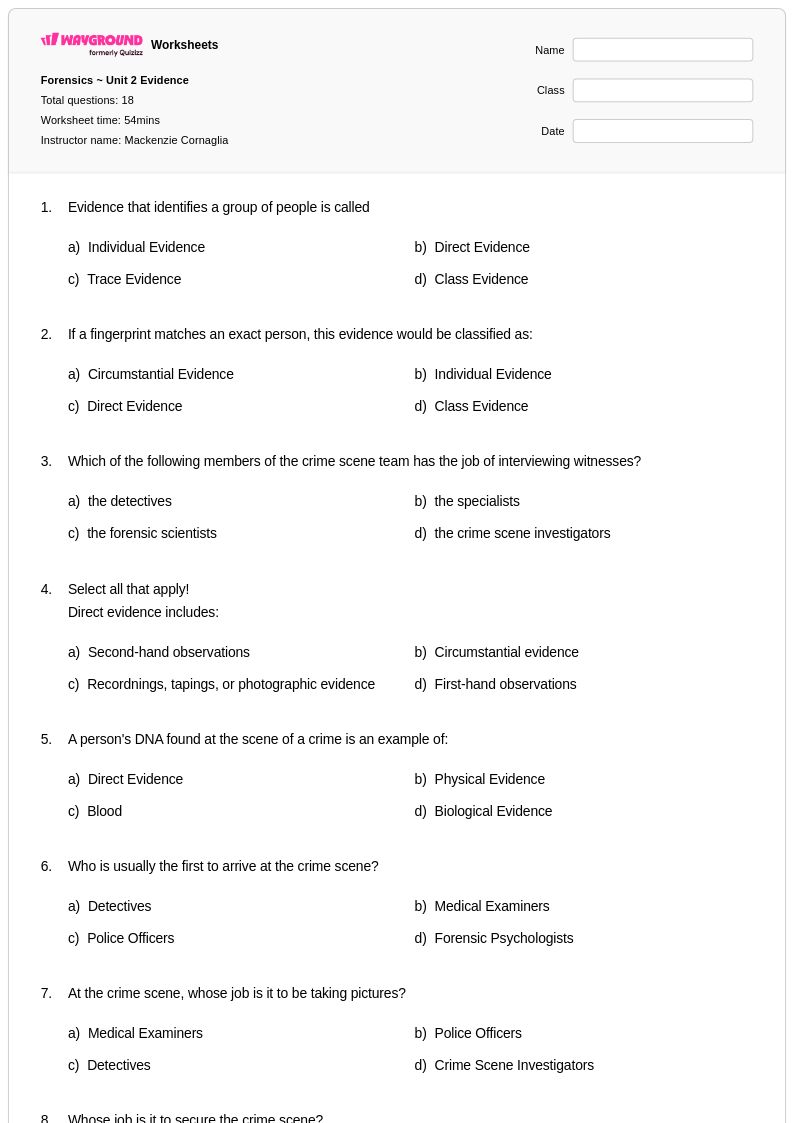
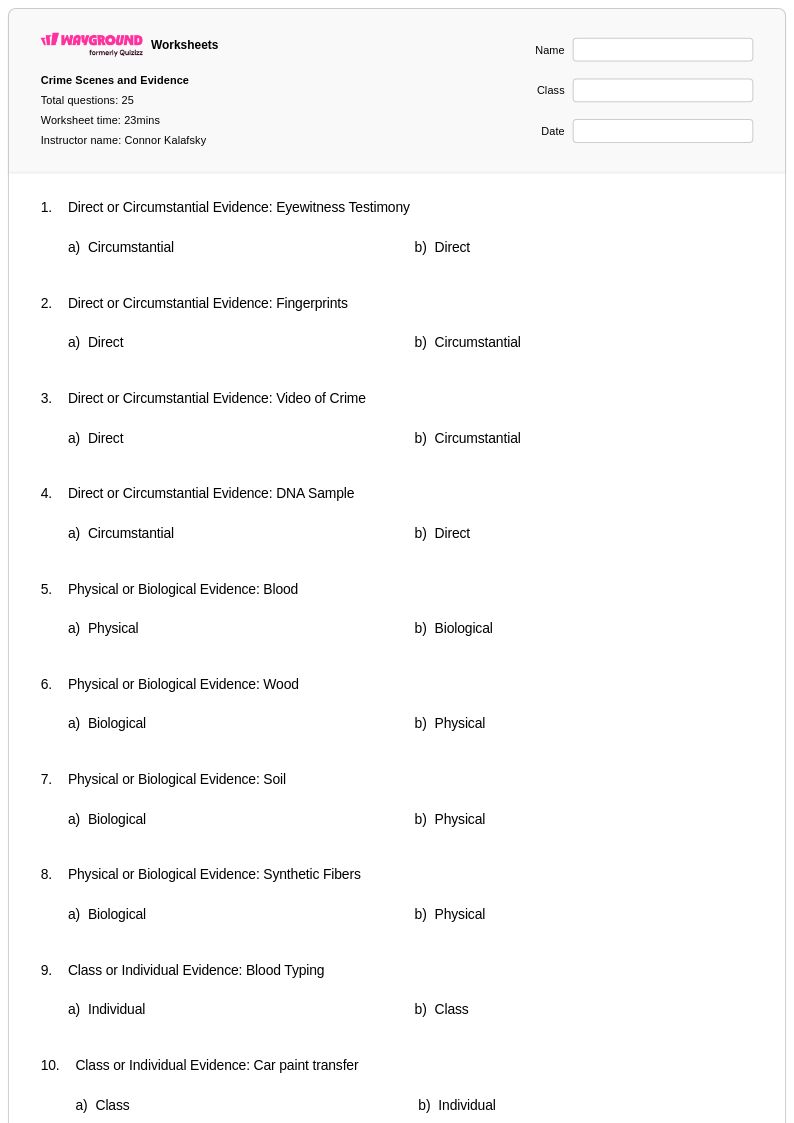
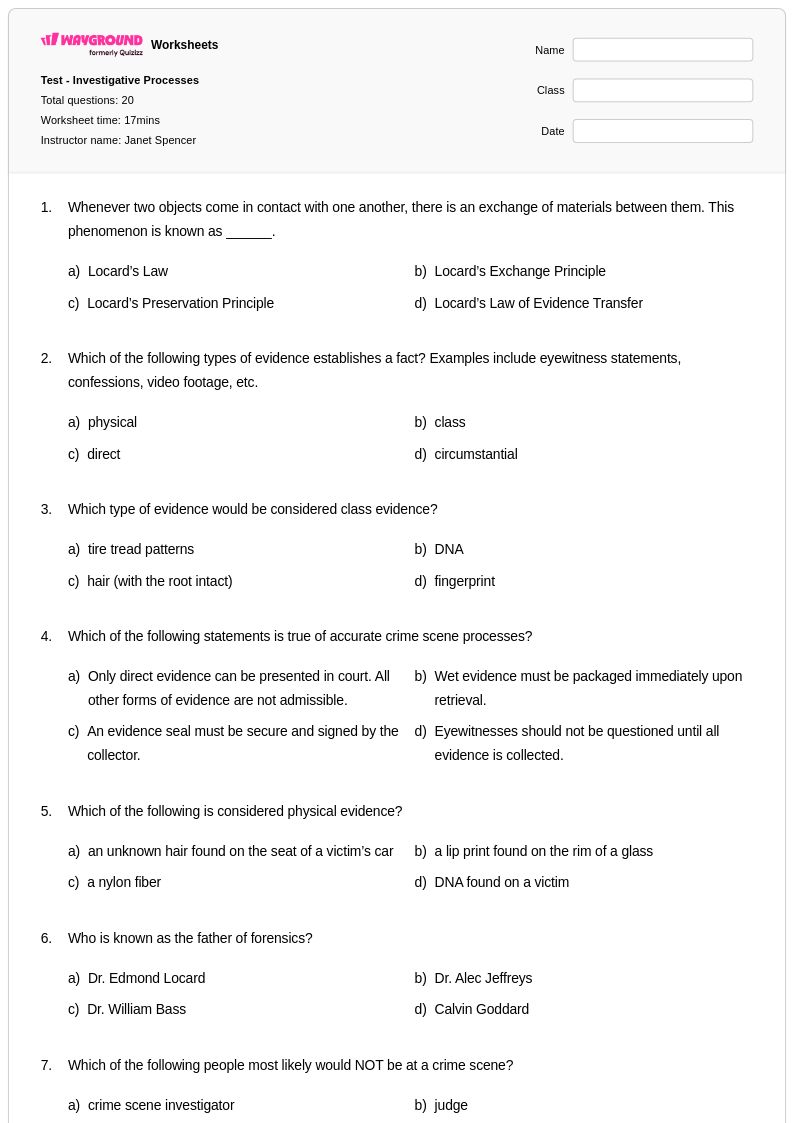
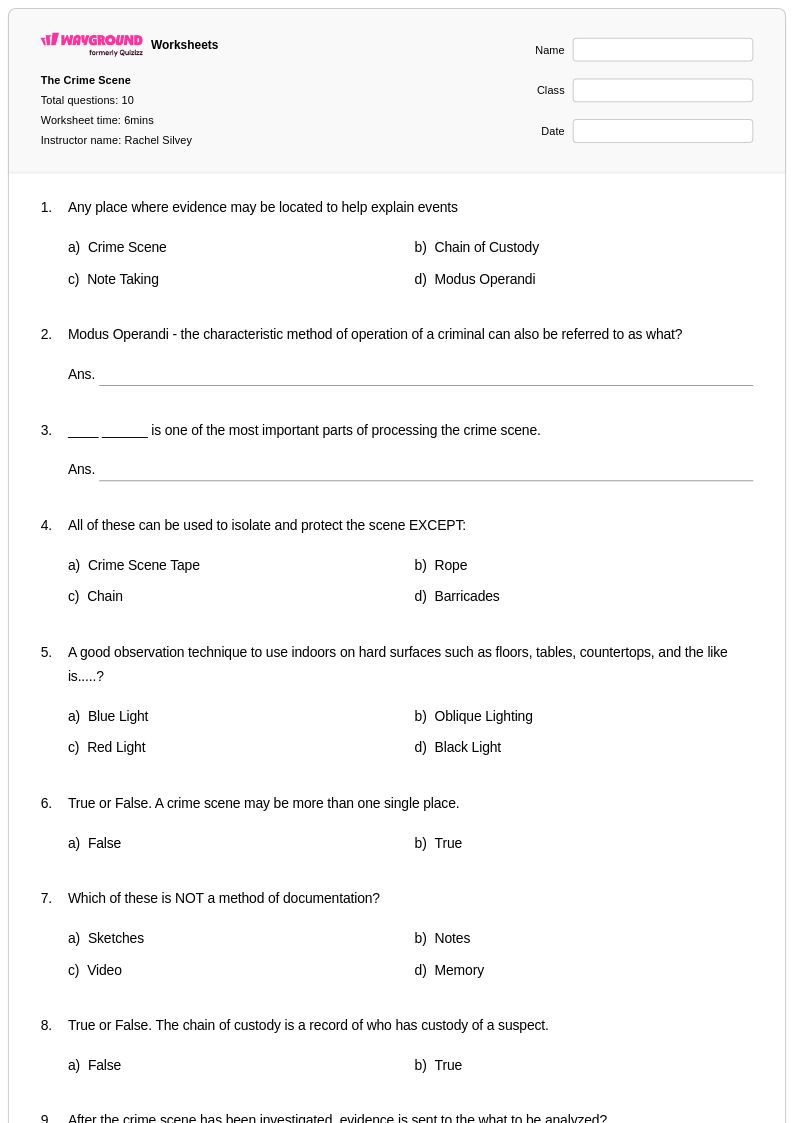
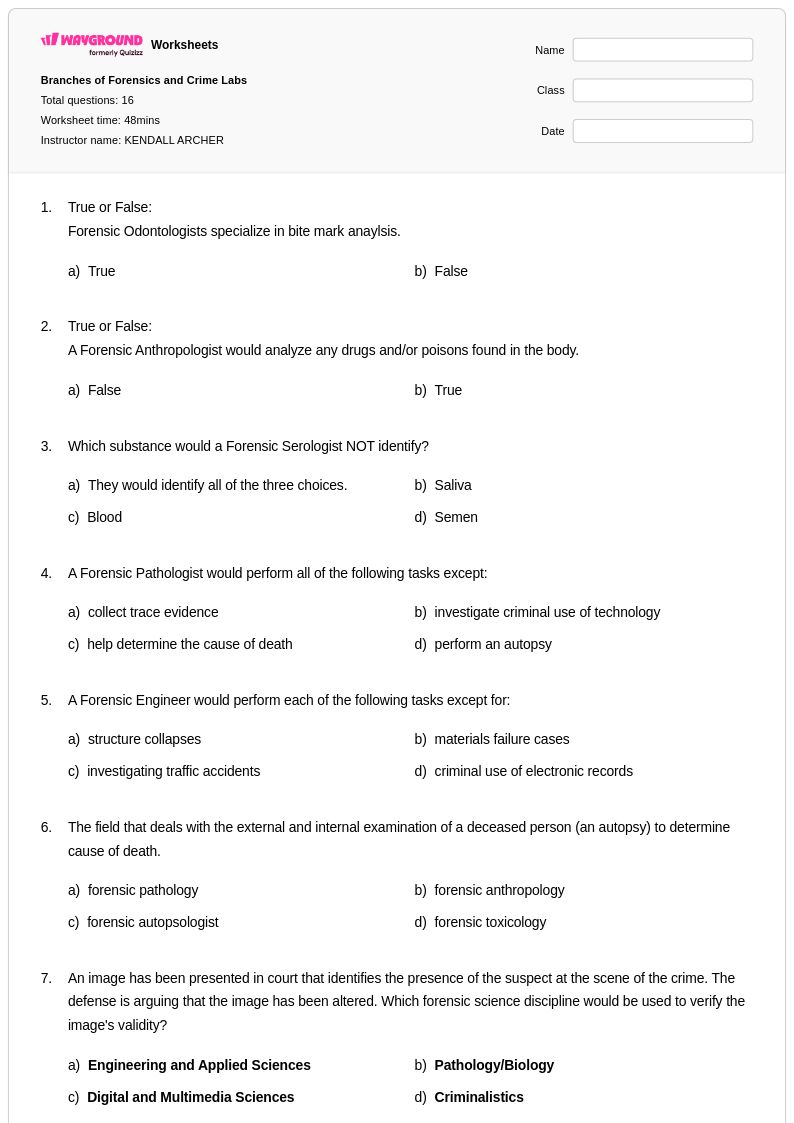
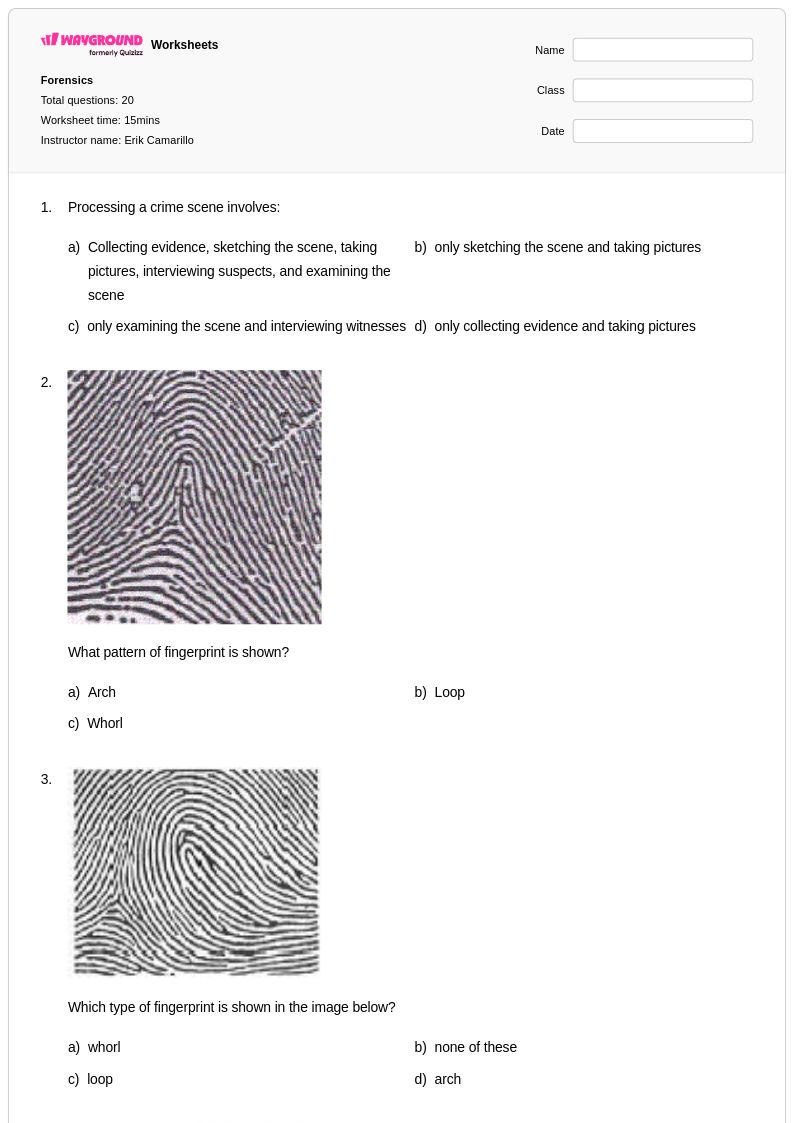
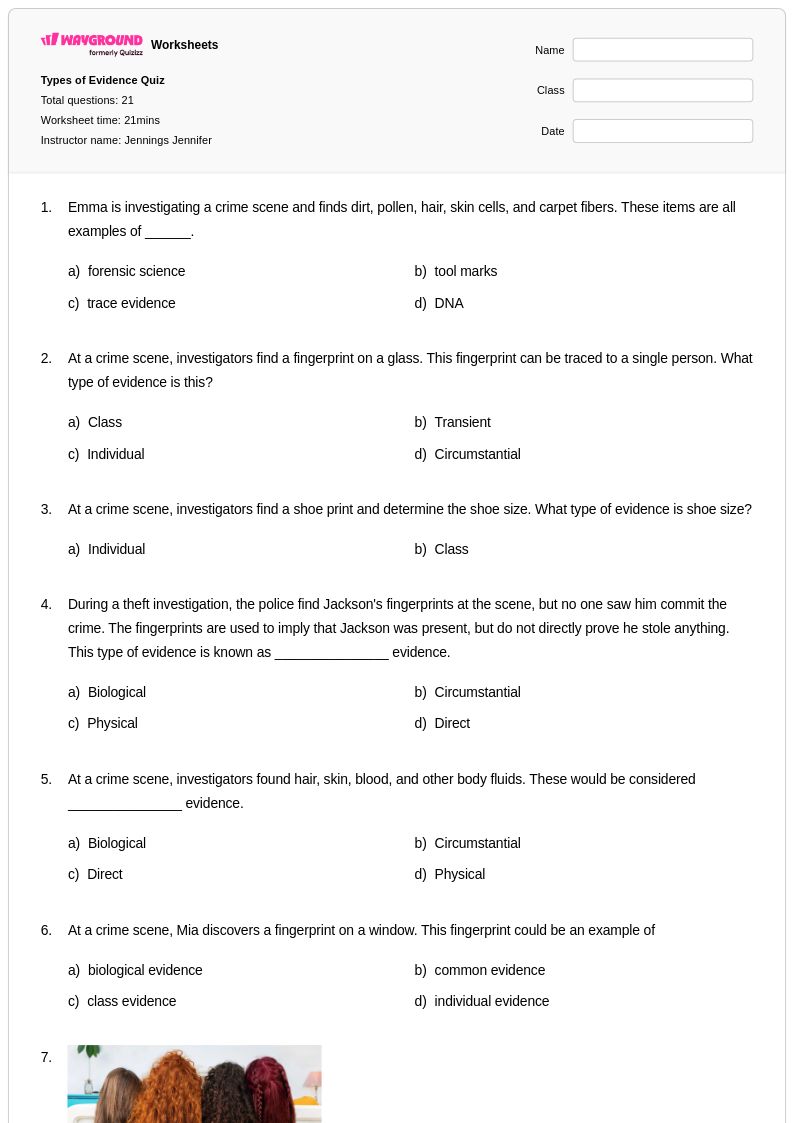
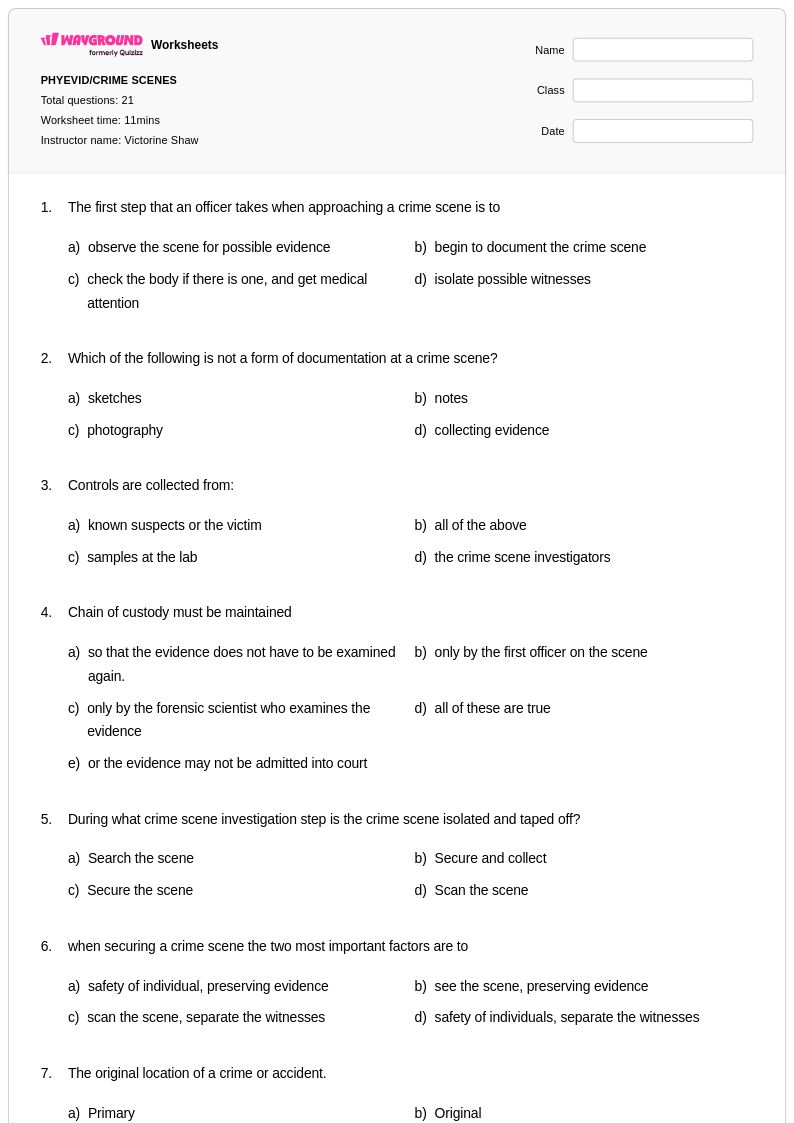
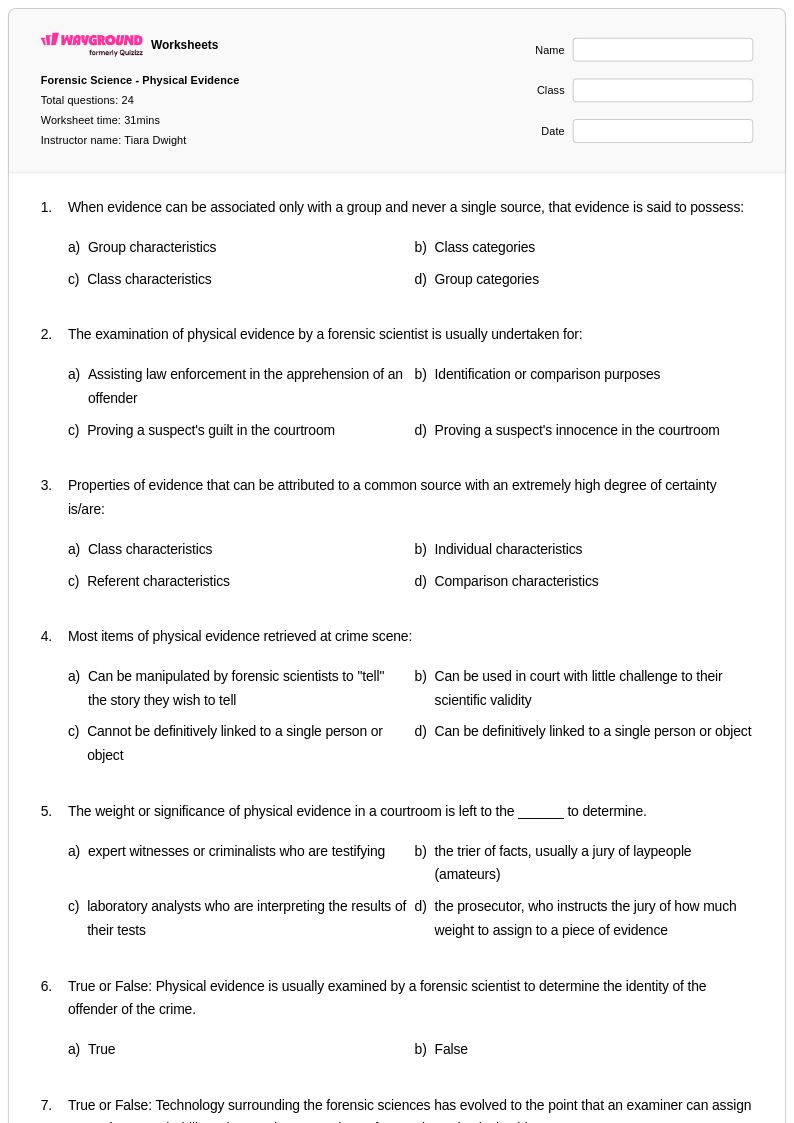
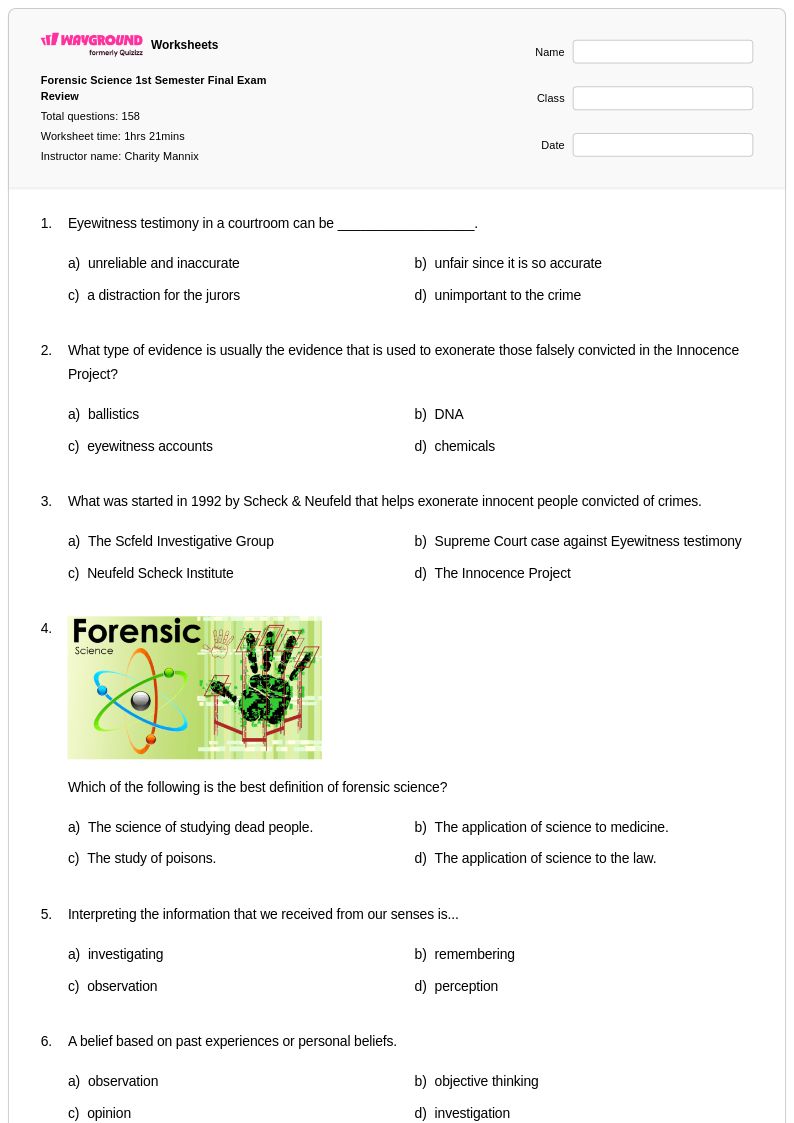
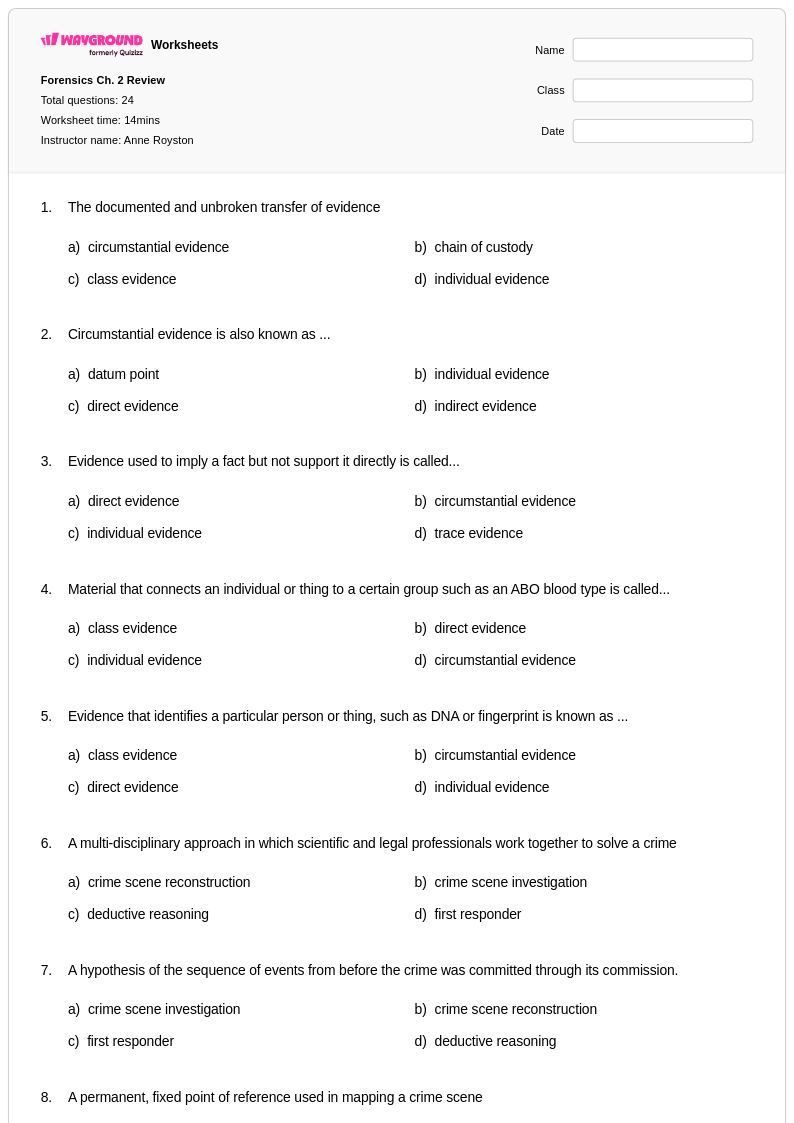
Crime scene investigation worksheets for Grade 11 students available through Wayground (formerly Quizizz) provide comprehensive practice in the systematic methods used by forensic professionals to collect, analyze, and interpret physical evidence. These expertly designed worksheets strengthen critical thinking skills essential for understanding evidence documentation, chain of custody procedures, blood spatter analysis, fingerprint classification, and crime scene photography techniques. Students engage with practice problems that mirror real-world forensic scenarios, developing their ability to observe details, make logical deductions, and apply scientific methodology to criminal investigations. Each worksheet includes detailed answer keys that guide students through complex analytical processes, while the free printable format allows for flexible classroom implementation and individual study sessions focused on mastering forensic investigation protocols.
Wayground (formerly Quizizz) supports educators with millions of teacher-created Crime Scene Investigation resources specifically tailored for Grade 11 forensic science instruction. The platform's advanced search and filtering capabilities enable teachers to quickly locate worksheets aligned with specific forensic standards and learning objectives, while differentiation tools allow for customized content that meets diverse student needs and skill levels. Teachers can access these materials in both printable pdf format for traditional classroom activities and digital formats for interactive learning experiences, facilitating seamless integration into lesson planning for skill practice, remediation support, and enrichment opportunities. The extensive collection covers specialized topics from evidence collection procedures to courtroom testimony preparation, providing comprehensive support for educators developing students' understanding of modern forensic investigation techniques and their applications in criminal justice.
FAQs
How do I teach crime scene investigation in the classroom?
Teaching crime scene investigation works best when students are placed in the role of the investigator rather than passive learners. Start by introducing foundational concepts like chain of custody, evidence documentation, and classification of physical traces, then build toward scenario-based activities where students must apply these procedures systematically. Connecting each technique to real forensic science fieldwork gives students a meaningful context for why accuracy and procedure matter.
What types of exercises help students practice forensic evidence analysis?
Effective practice exercises for forensic evidence analysis include fingerprint classification tasks, fiber and trace material comparison problems, blood spatter interpretation scenarios, and photographic documentation exercises. Worksheets that place these skills within a realistic crime scene scenario are especially effective because they require students to integrate multiple techniques rather than practice each in isolation. Problem sets that ask students to draw logical conclusions from observable data also build the analytical thinking central to forensic science.
What common mistakes do students make when learning crime scene investigation procedures?
One of the most frequent errors is failing to maintain chain of custody, either by skipping documentation steps or mishandling evidence in a scenario. Students also tend to jump to conclusions before systematically cataloguing all available evidence, which mirrors a real-world investigative mistake. Another common misconception is treating physical traces like fingerprints or fibers as definitive proof rather than as one piece of a broader evidentiary picture that must be corroborated.
How can I use crime scene investigation worksheets to support different skill levels in my class?
Crime scene investigation worksheets can be differentiated by adjusting the complexity of the scenario, the number of evidence types students must analyze, or the level of scaffolding provided. For struggling students, foundational exercises that isolate a single technique, such as fingerprint ridge pattern identification, build confidence before moving to multi-step scenarios. On Wayground, teachers can also apply accommodations such as read aloud, reduced answer choices, or extended time to individual students, ensuring that all learners can access the same investigative content without disrupting the rest of the class.
How do I use Wayground's crime scene investigation worksheets in my classroom?
Wayground's crime scene investigation worksheets are available as printable PDFs, making them easy to incorporate into traditional classroom instruction, and in digital formats that support technology-integrated or remote learning environments. Teachers can also host worksheets as a live quiz on Wayground, which adds an interactive layer to forensic science practice and allows for real-time monitoring of student responses. Each worksheet includes a complete answer key, so teachers can use them for guided instruction, independent practice, or formative assessment without additional preparation.
What forensic science skills do crime scene investigation worksheets typically cover?
Crime scene investigation worksheets typically cover skills such as evidence documentation, chain of custody procedures, fingerprint analysis, blood spatter interpretation, fiber comparison, and photographic documentation techniques. These topics reflect the core competencies of professional forensic fieldwork and give students exposure to the systematic, detail-oriented thinking required in the discipline. Worksheets that combine multiple skills within a single scenario are particularly effective at building the procedural fluency students need for advanced forensic science coursework.