Free Printable Cursive Letters Worksheets for Grade 7
Master Grade 7 cursive letter formation with Wayground's comprehensive collection of free worksheets, printables, and practice problems featuring detailed answer keys to help students develop elegant handwriting skills.
Explore printable Cursive Letters worksheets for Grade 7
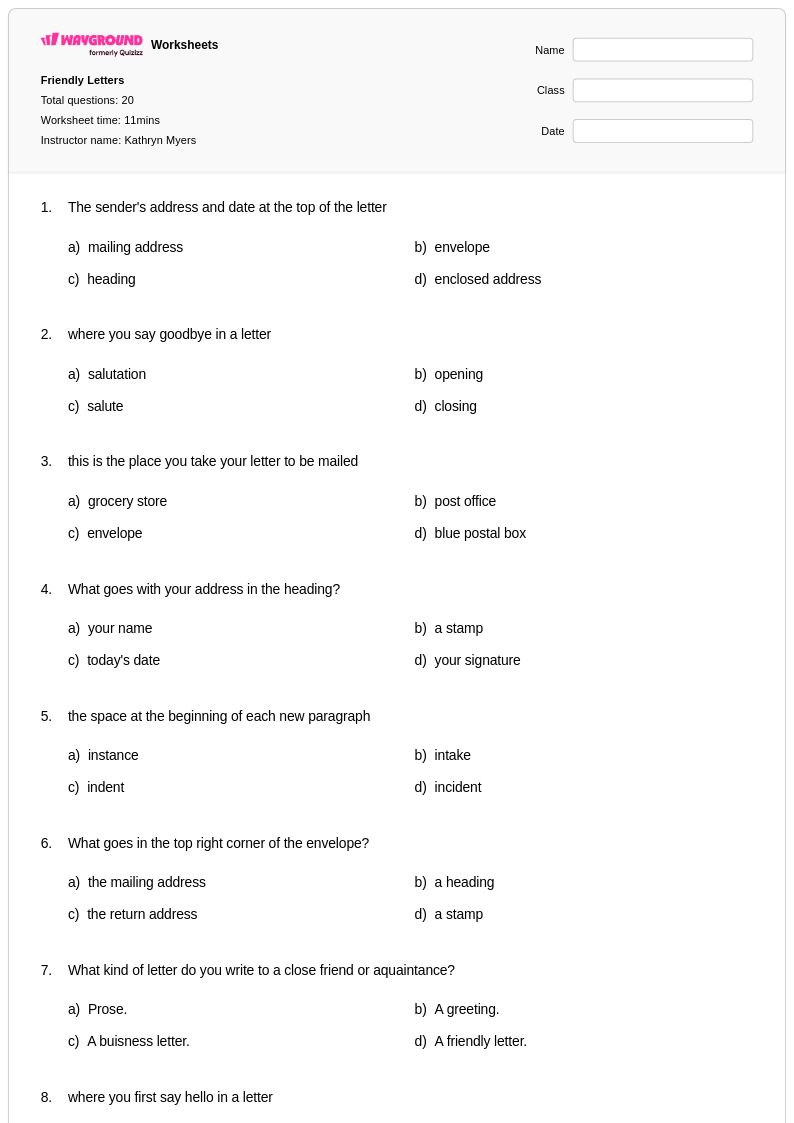
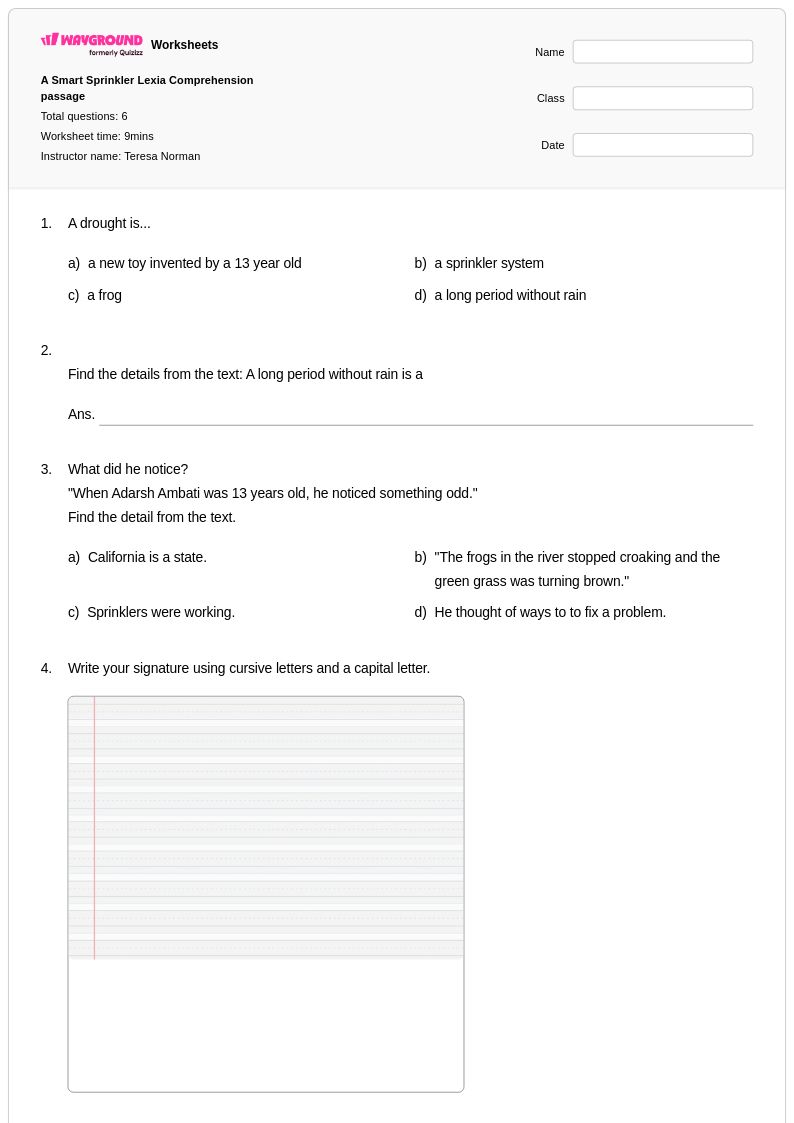
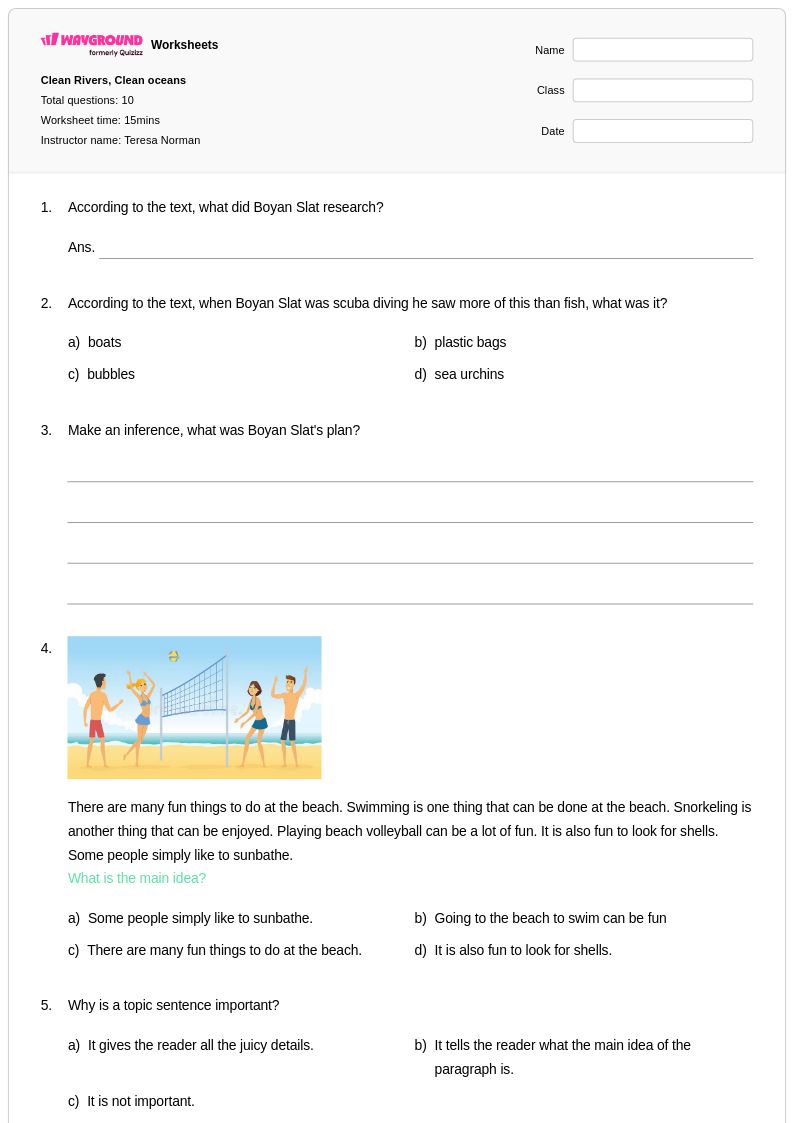
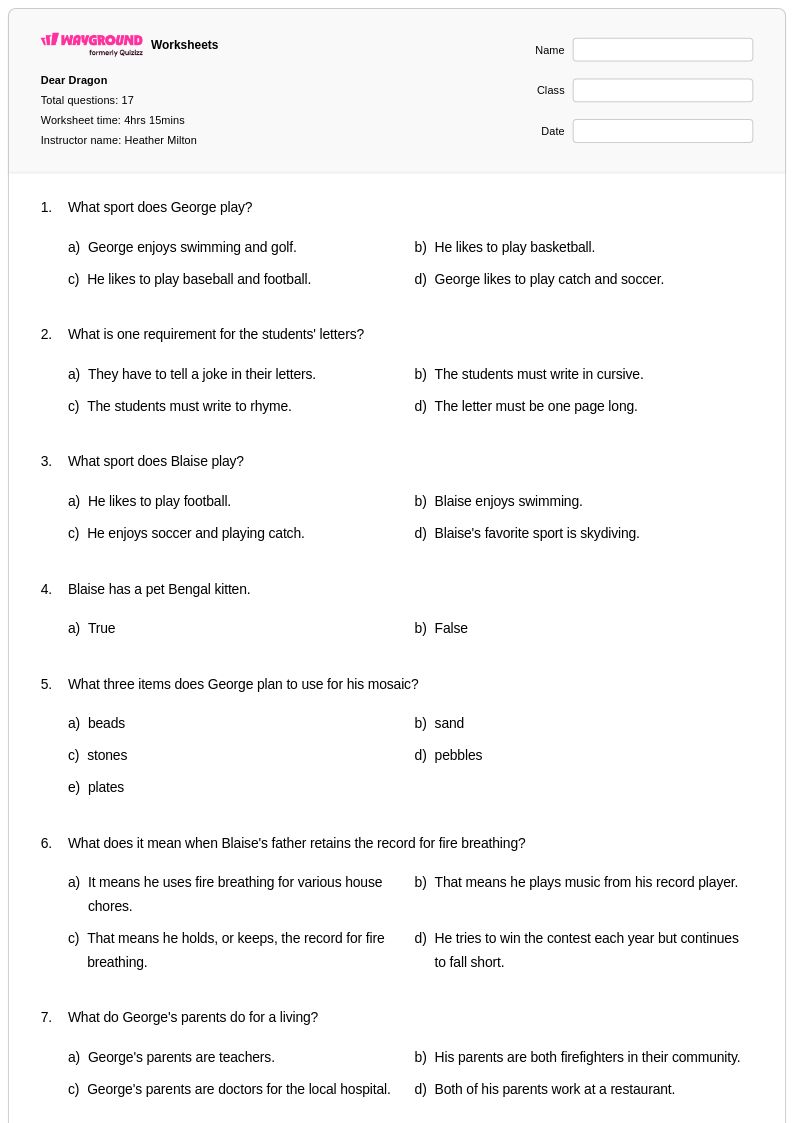
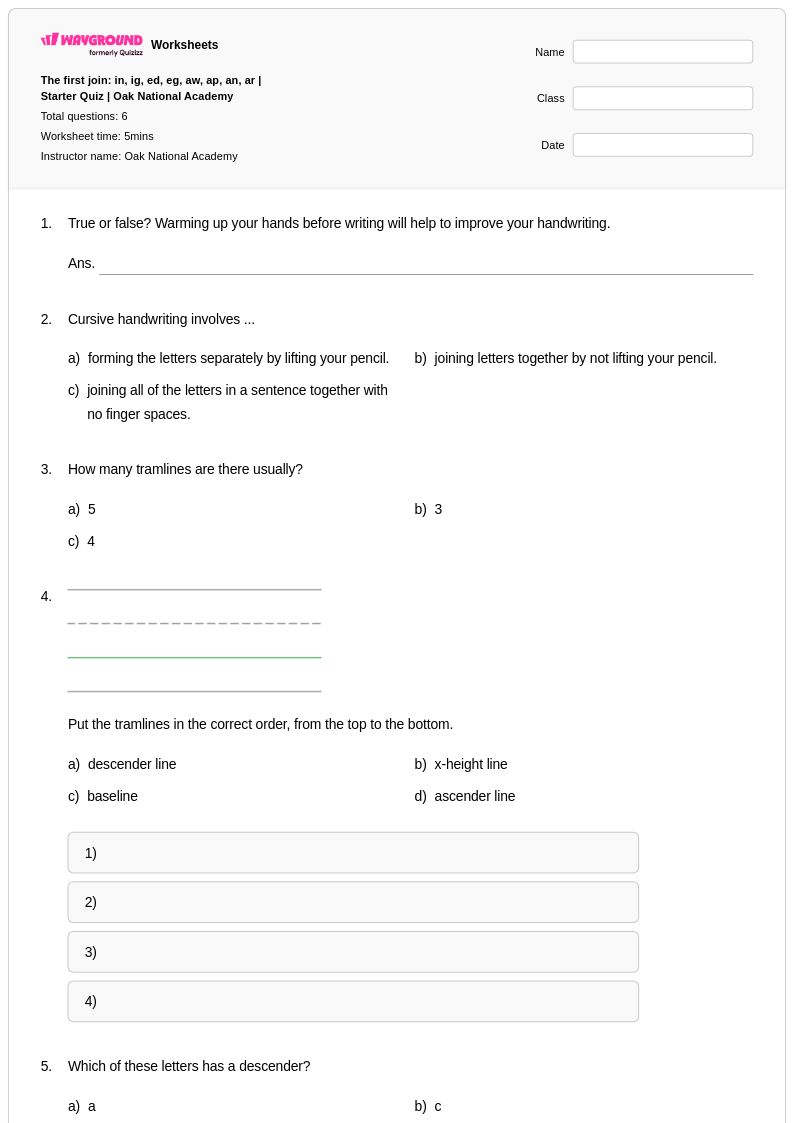
Cursive letters for Grade 7 students require dedicated practice to master the flowing, connected handwriting style that enhances both legibility and writing fluency. Wayground's comprehensive collection of cursive letter worksheets provides seventh-grade learners with structured opportunities to refine their penmanship through systematic letter formation exercises, word practice, and sentence writing activities. These printable resources focus on developing proper letter spacing, consistent slant, and smooth connections between letters while building muscle memory for efficient cursive writing. Each worksheet includes clear examples and guided practice sections, with accompanying answer keys that allow students to self-assess their progress and identify areas needing improvement. The free pdf format ensures accessibility for both classroom instruction and independent study, offering practice problems that range from basic letter tracing to complex paragraph composition in cursive script.
Wayground, formerly Quizizz, empowers educators with millions of teacher-created cursive letter resources specifically designed for Grade 7 handwriting instruction. The platform's advanced search and filtering capabilities enable teachers to quickly locate worksheets aligned with specific handwriting standards and learning objectives, while differentiation tools support diverse student needs through varying difficulty levels and instructional approaches. Teachers can customize existing worksheets or create original content, adapting materials for remediation support or enrichment challenges based on individual student progress. The flexible format options include both printable pdf versions for traditional paper-and-pencil practice and digital alternatives for technology-integrated classrooms, facilitating seamless lesson planning and skill-building activities. This extensive resource library streamlines curriculum preparation while providing consistent, high-quality practice opportunities that strengthen students' cursive letter formation and overall handwriting proficiency.
FAQs
How do I teach cursive letters to beginners?
Start by introducing letter families grouped by similar stroke patterns, such as the undercurve letters (a, c, d, e) before moving to overcurve or downcurve groups. Teaching by stroke family rather than alphabetical order helps students build muscle memory incrementally. Model each letter formation explicitly, narrate the strokes aloud, and have students trace before writing independently. Consistent daily practice in short sessions is more effective than infrequent longer ones.
What order should I teach cursive letters in?
Most handwriting programs recommend teaching cursive letters by stroke family rather than alphabetical order. For example, undercurve letters like i, t, u, and w share a common starting motion and are typically introduced first. Lowercase letters are usually taught before uppercase because they appear more frequently in writing and connect more naturally. This sequencing reduces confusion and accelerates fluency.
What exercises help students practice cursive letter formation?
Structured tracing exercises that progress from dotted letter guides to independent writing are among the most effective practice tools for cursive letter formation. Repeated writing of individual letters, then letter pairs, then short words builds the muscle memory needed for consistent, fluid strokes. Worksheets that cover both uppercase and lowercase cursive letters give students the full range of practice they need to develop overall handwriting fluency.
What mistakes do students commonly make when learning cursive letters?
The most common errors in cursive letter formation include inconsistent letter sizing, lifting the pencil between strokes that should be connected, and reversing similar-looking letters such as cursive b and l or f and j. Students also frequently struggle with maintaining a consistent slant across a line of writing. Targeted practice on specific problem letters, combined with regular self-review against a correct model, helps students identify and correct these patterns before they become habitual.
How can I differentiate cursive handwriting instruction for students at different skill levels?
For struggling writers, focus on one stroke family at a time and provide high-contrast tracing guides with more repetition before independent practice. Advanced students can move more quickly to connected words, sentences, and speed-building exercises. On Wayground, teachers can apply accommodations such as Read Aloud and reduced answer choices to individual students, allowing the same worksheet session to serve multiple skill levels simultaneously without singling anyone out.
How do I use Wayground's cursive letters worksheets in my classroom?
Wayground's cursive letters worksheets are available as printable PDFs for traditional pencil-and-paper practice and in digital formats for technology-integrated classrooms, and you can also host them as a live quiz on Wayground. Print the PDF version for seated handwriting sessions where students physically form each letter, or assign the digital version for review and letter recognition activities. Both formats include answer keys, supporting independent practice, homework assignments, and guided instruction equally well.