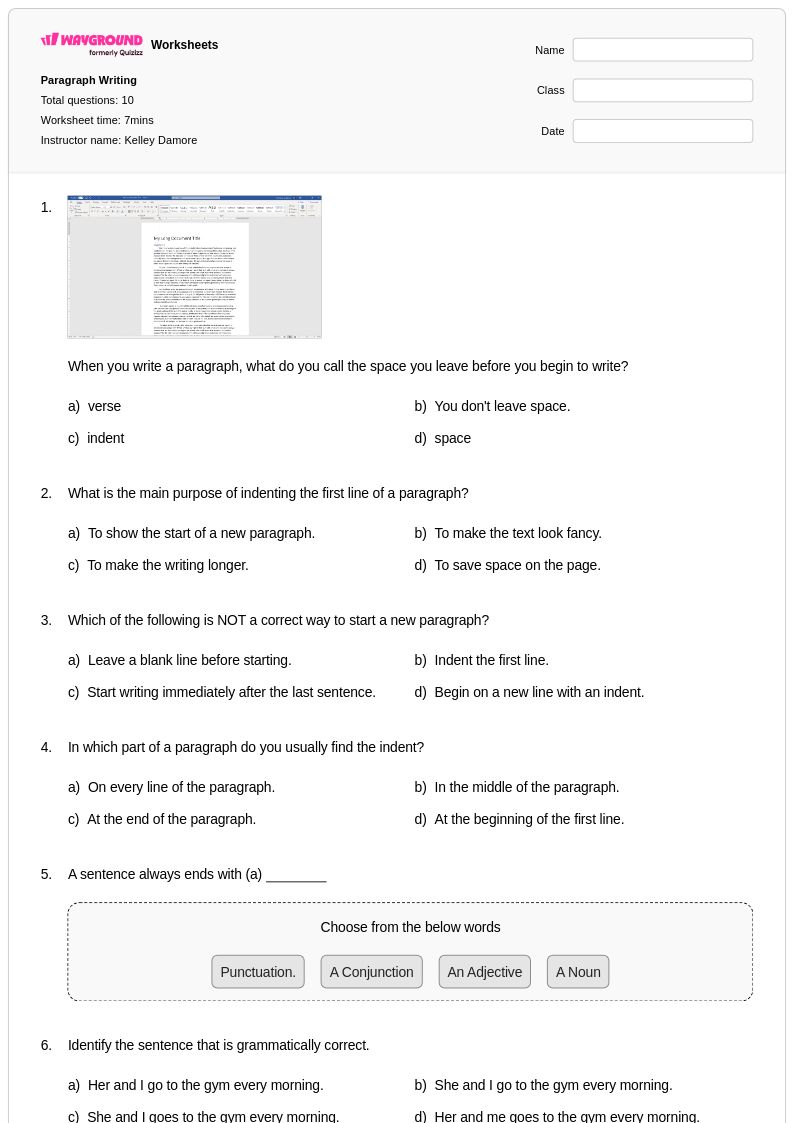
Free Printable Cursive Writing Worksheets for Grade 4
Grade 4 cursive writing worksheets from Wayground help students master elegant handwriting through comprehensive printables featuring guided practice problems, letter formation exercises, and complete answer keys for effective learning.
Explore printable Cursive Writing worksheets for Grade 4
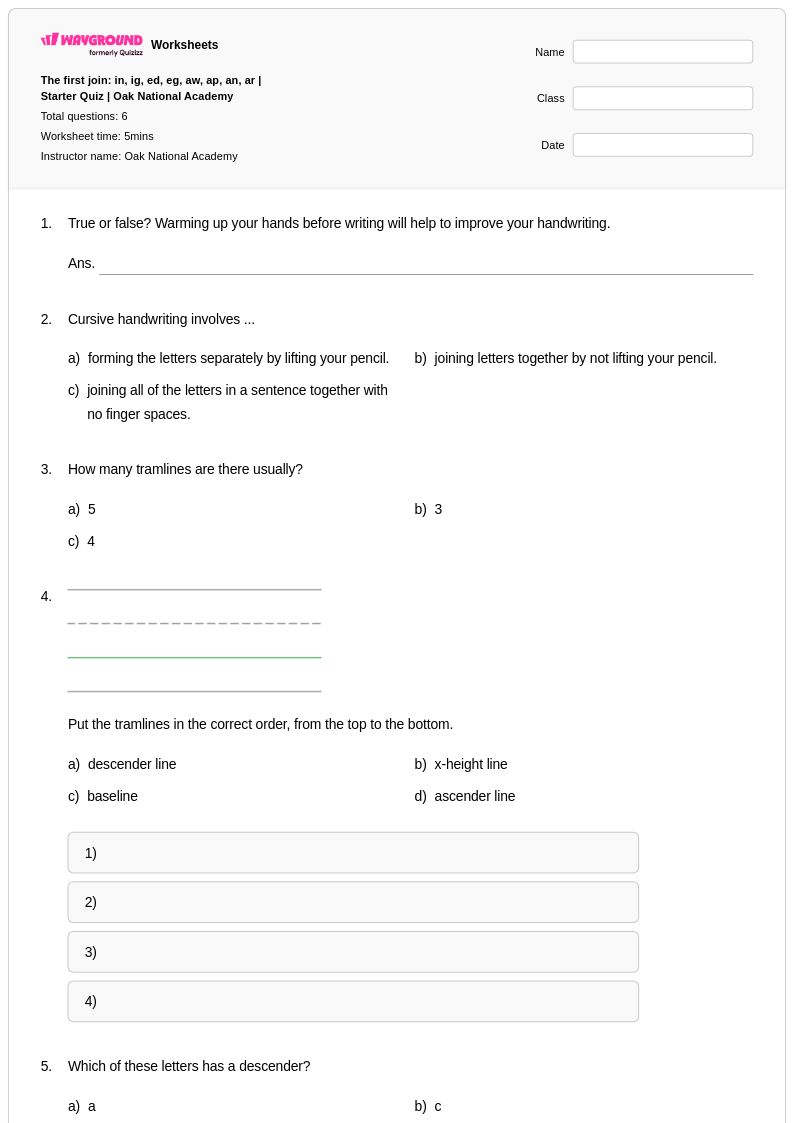
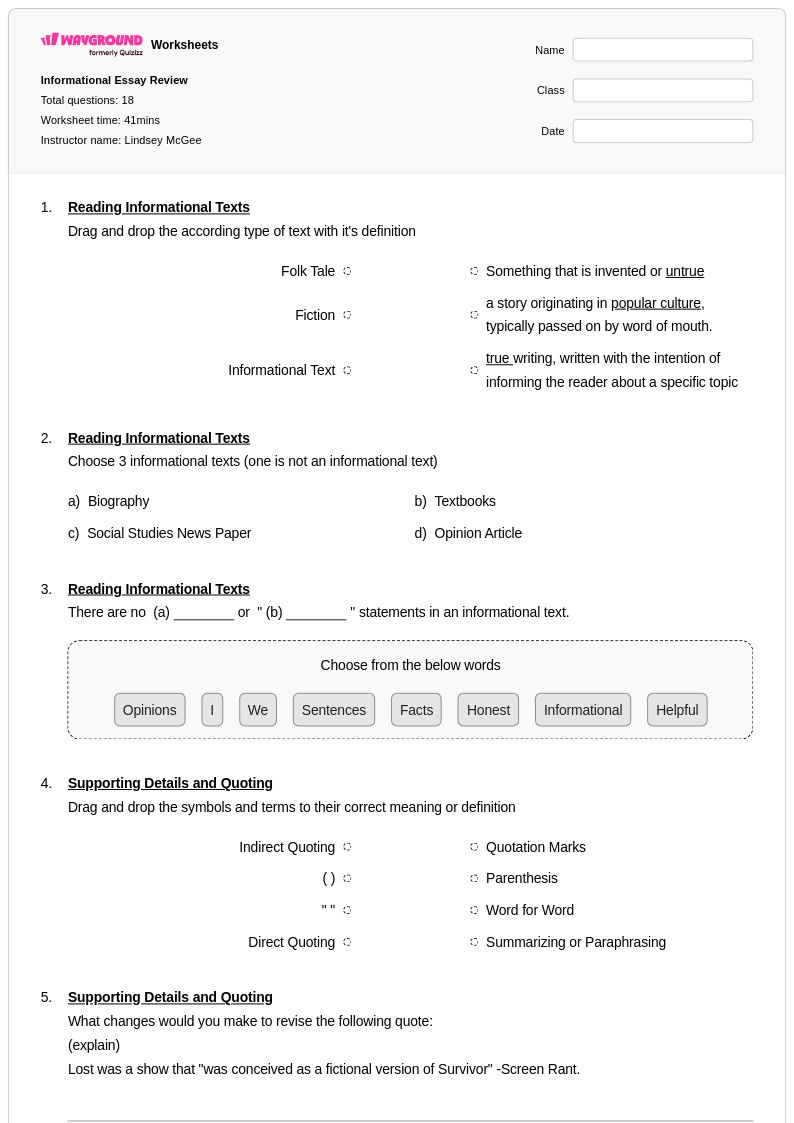
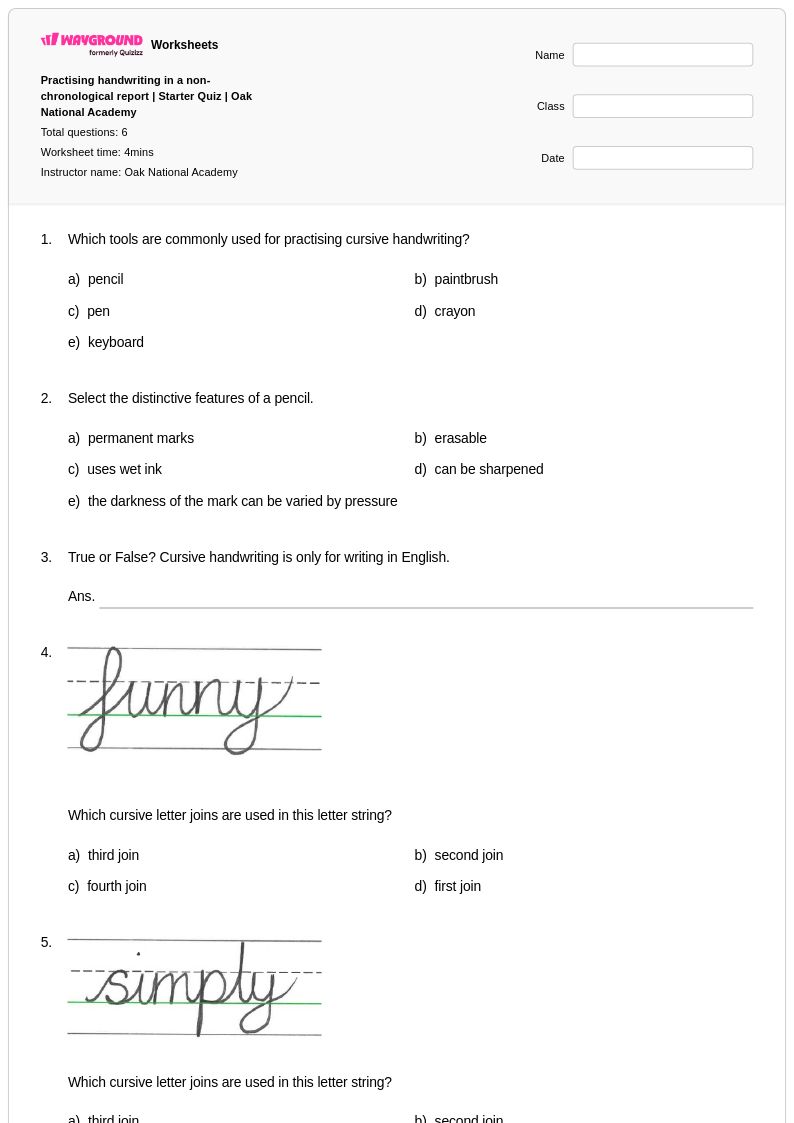
Grade 4 cursive writing worksheets available through Wayground (formerly Quizizz) provide comprehensive practice materials designed to help students master the flowing, connected letterforms that define cursive handwriting. These educational resources focus on developing proper letter formation, consistent slant, appropriate spacing, and smooth letter connections that are essential for fluent cursive writing at the fourth-grade level. The worksheets systematically guide students through individual letter practice, letter combinations, word formation, and sentence writing exercises that build muscle memory and confidence in cursive penmanship. Each printable worksheet includes clear demonstration models, guided practice sections, and independent writing opportunities, with accompanying answer keys that allow teachers and parents to provide accurate feedback on student progress. These free practice problems range from basic stroke patterns and letter drills to more complex writing tasks that integrate cursive skills with vocabulary and sentence construction appropriate for Grade 4 students.
Wayground (formerly Quizizz) empowers educators with an extensive collection of teacher-created cursive writing resources that streamline lesson planning and differentiated instruction for Grade 4 handwriting curriculum. The platform's millions of worksheets offer robust search and filtering capabilities that help teachers quickly locate materials aligned with specific handwriting standards and individual student needs. These customizable resources are available in both printable PDF format and digital versions, allowing for flexible implementation whether students are learning in traditional classrooms or remote environments. Teachers can easily modify existing worksheets or combine multiple resources to create comprehensive practice sets that address varying skill levels within their Grade 4 classrooms. The collection supports systematic skill-building through remediation exercises for students who need additional letter formation practice, enrichment activities for advanced writers, and ongoing assessment tools that help educators monitor cursive writing development throughout the school year.
FAQs
How do I teach cursive writing to beginners?
Start by teaching individual lowercase letters grouped by stroke family, such as letters that begin with an undercurve (i, u, w) before moving to overcurve letters (n, m, y). Consistent daily practice of 10 to 15 minutes is more effective than longer, infrequent sessions. Emphasize proper pencil grip, paper positioning, and consistent letter slant before introducing letter connections and full words.
What exercises help students practice cursive writing?
Structured tracing exercises that progress from individual letters to letter pairs, words, and full sentences are the most effective practice format for building cursive fluency. Repetition drills that isolate difficult connecting strokes, such as the b-o or o-v connections, help students develop muscle memory for joins that don't follow standard rules. Timed copying passages also build writing rhythm and pen control over time.
What mistakes do students commonly make when learning cursive?
The most common errors in cursive writing are inconsistent letter slant, lifting the pencil between letters that should be joined, and forming letters at inconsistent heights relative to the baseline. Students frequently struggle with letters like f, r, s, and z, which have irregular connections or exit strokes. Another persistent issue is letter spacing, where students either crowd letters together or leave uneven gaps within a single word.
How do I differentiate cursive writing practice for students at different skill levels?
For students still mastering letter formation, provide worksheets that isolate one letter family at a time with clear start-point arrows and directional guides. More advanced students can move to sentence-level copying and free writing prompts without tracing support. On Wayground, teachers can apply accommodations such as Read Aloud for students who benefit from hearing letter names or instructions, and reduced answer choices for students who need less cognitive load during self-assessment activities.
How can I use Wayground's cursive writing worksheets in my classroom?
Wayground's cursive writing worksheets are available as printable PDFs for traditional classroom use and in digital formats for technology-integrated or remote learning environments, and can also be hosted as a quiz directly on Wayground. Teachers can use the platform's filtering tools to find worksheets aligned to specific letter groups or skill levels, and existing materials can be customized to meet individual student needs. These resources work well for daily warm-up practice, targeted remediation of specific letter formation issues, or take-home assignments.
At what age or grade should students start learning cursive writing?
Most curricula introduce cursive writing in second or third grade, typically around ages 7 to 9, once students have developed sufficient fine motor control and are comfortable with print letter formation. However, the appropriate starting point varies by student readiness, with some students benefiting from early exposure to letter tracing activities before formal cursive instruction begins. Schools that emphasize cursive often begin foundational stroke practice in late first grade.