
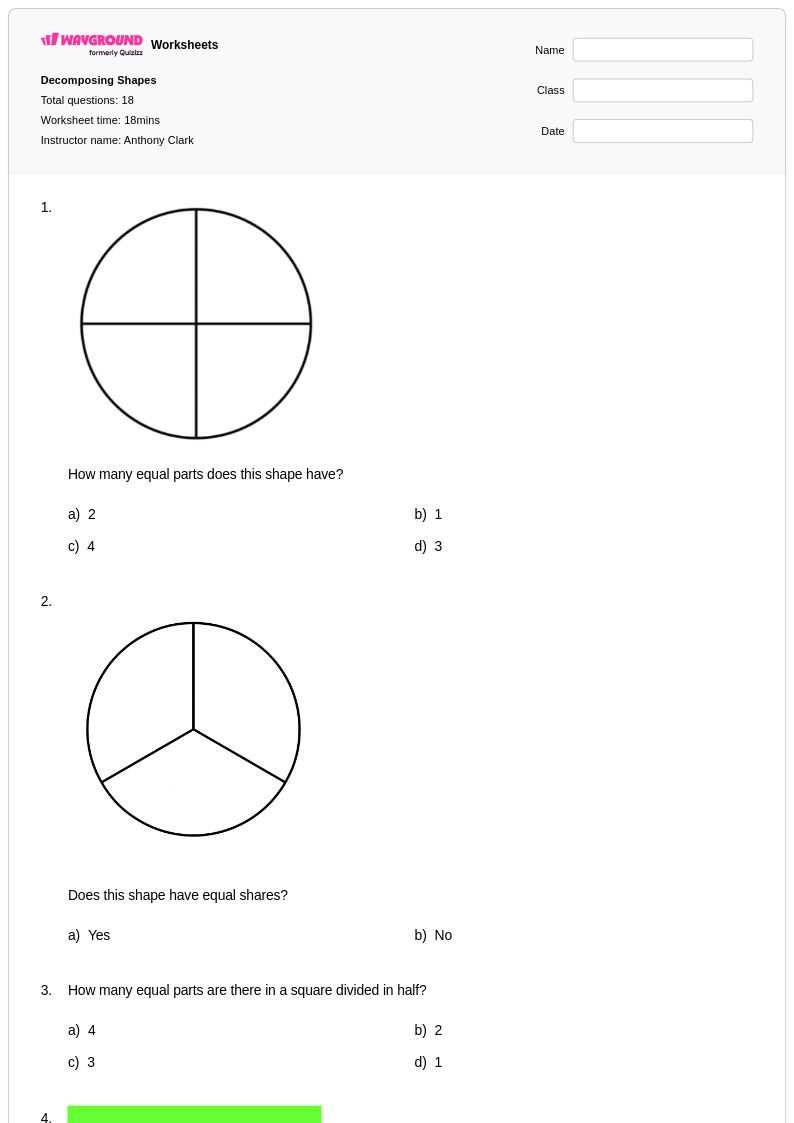
18 Hỏi
2nd - Uni
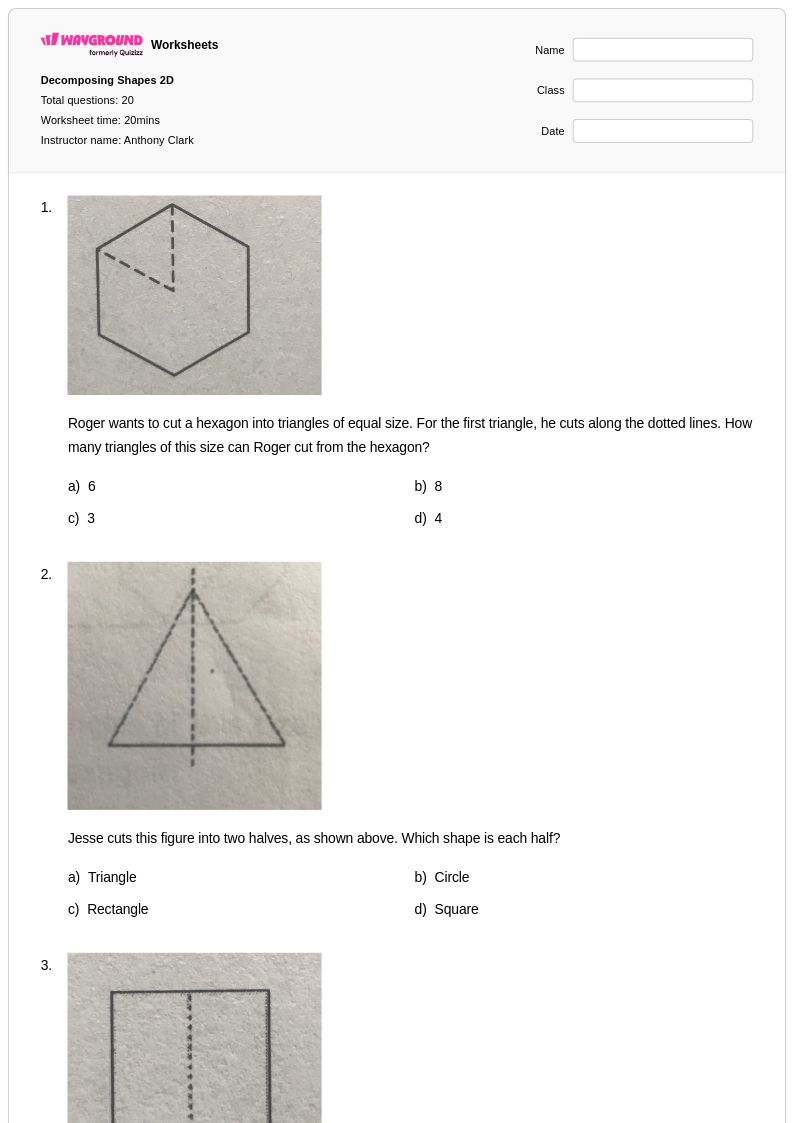
20 Hỏi
2nd - Uni
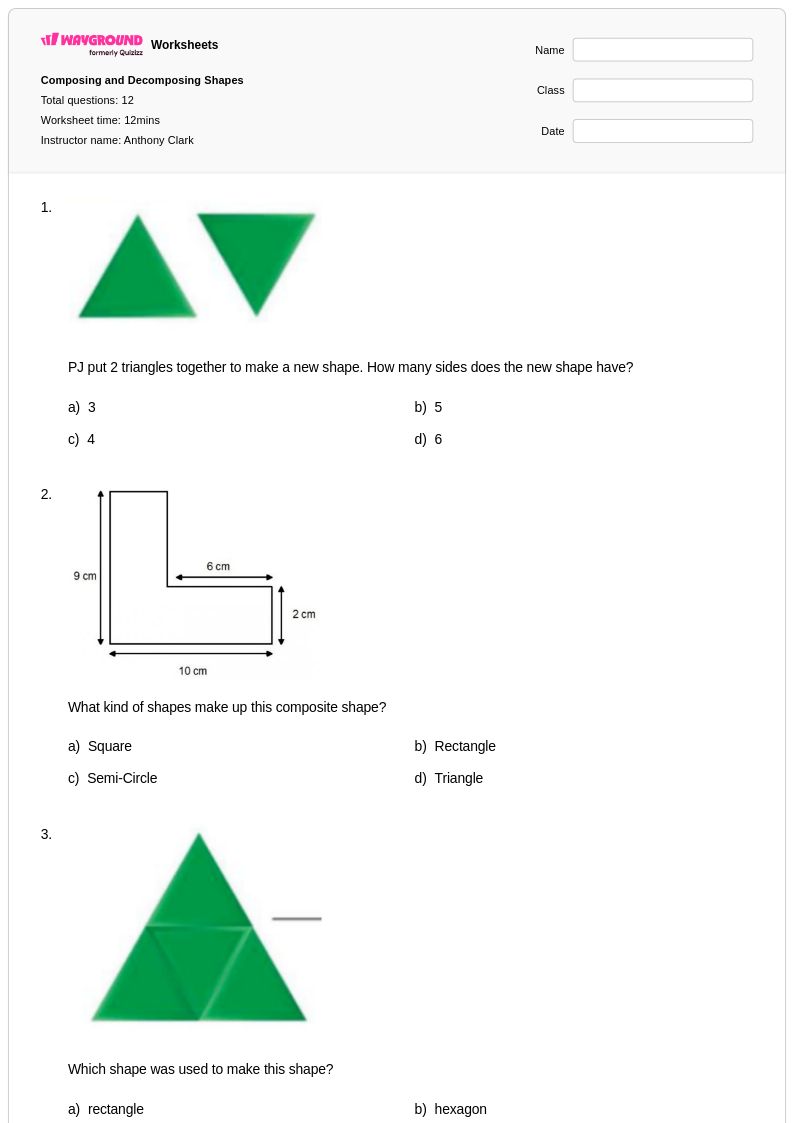
12 Hỏi
1st - Uni
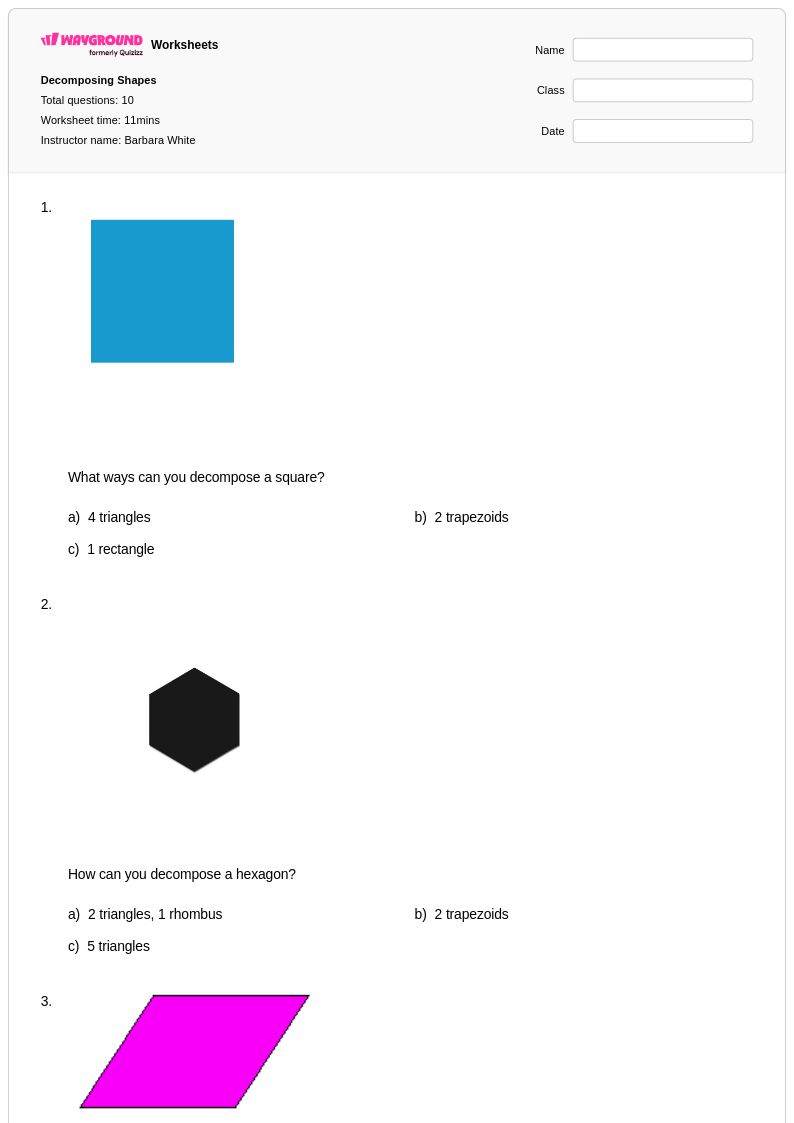
10 Hỏi
3rd
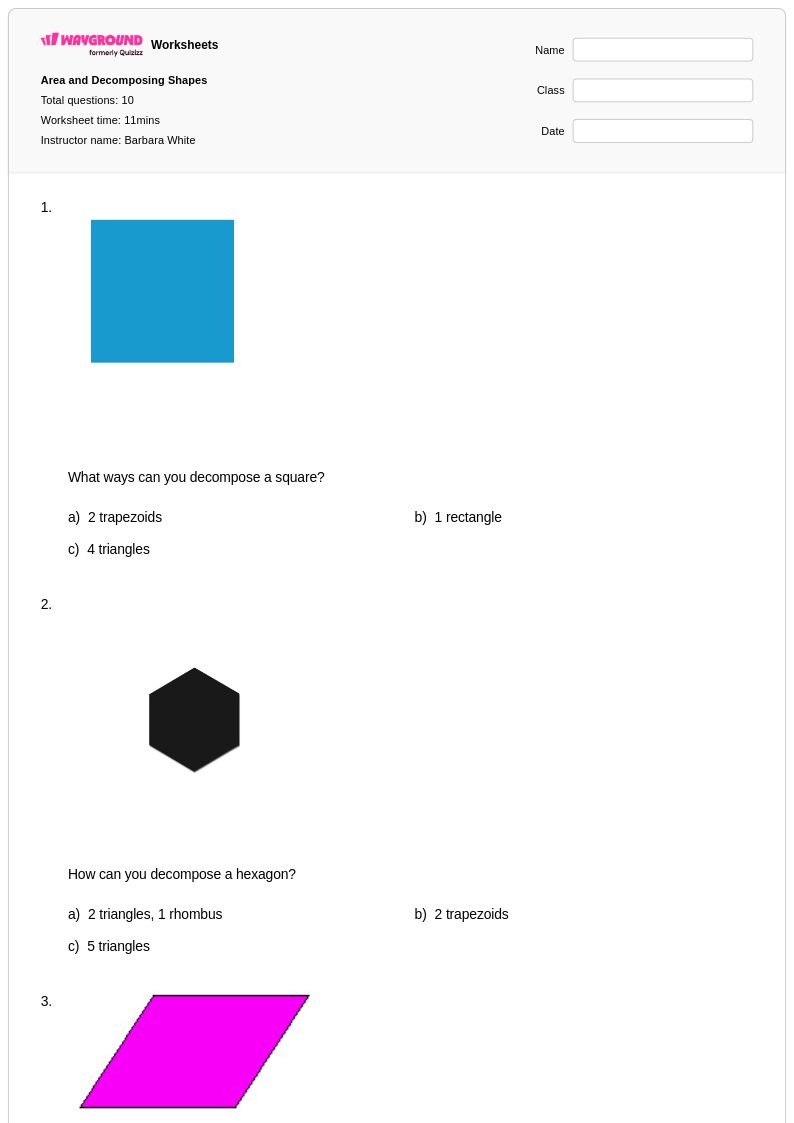
10 Hỏi
3rd
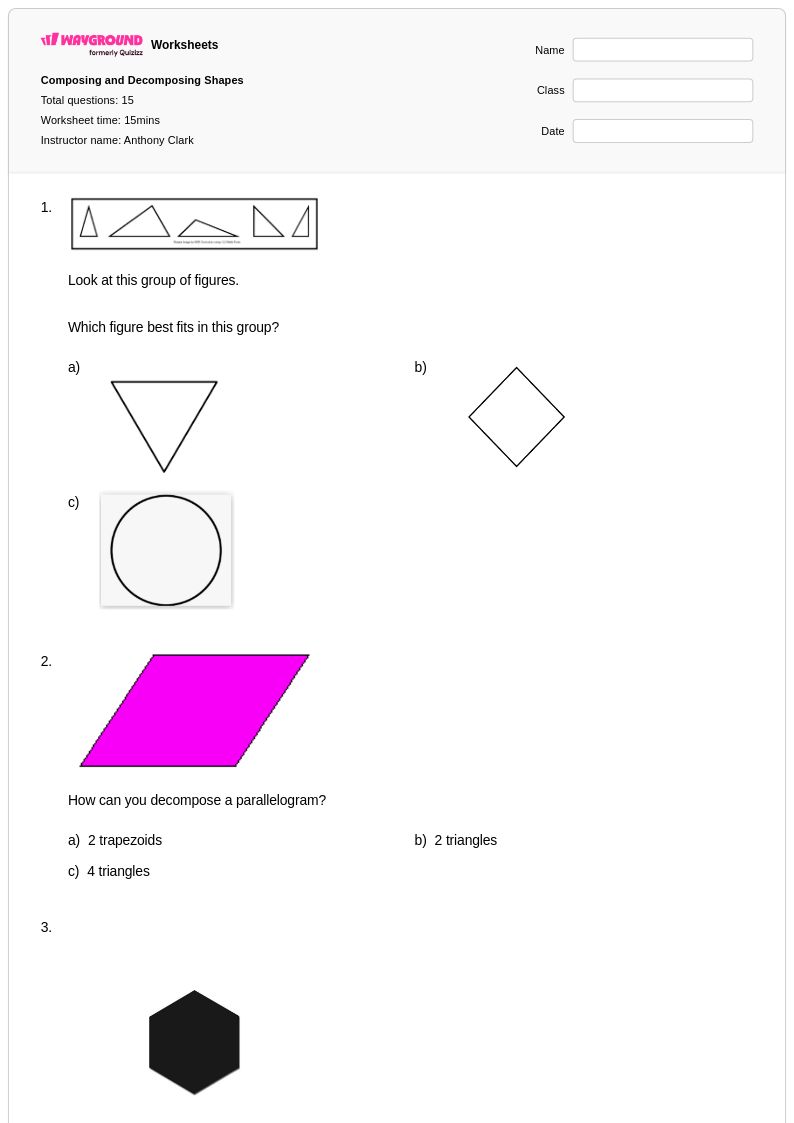
15 Hỏi
1st - Uni
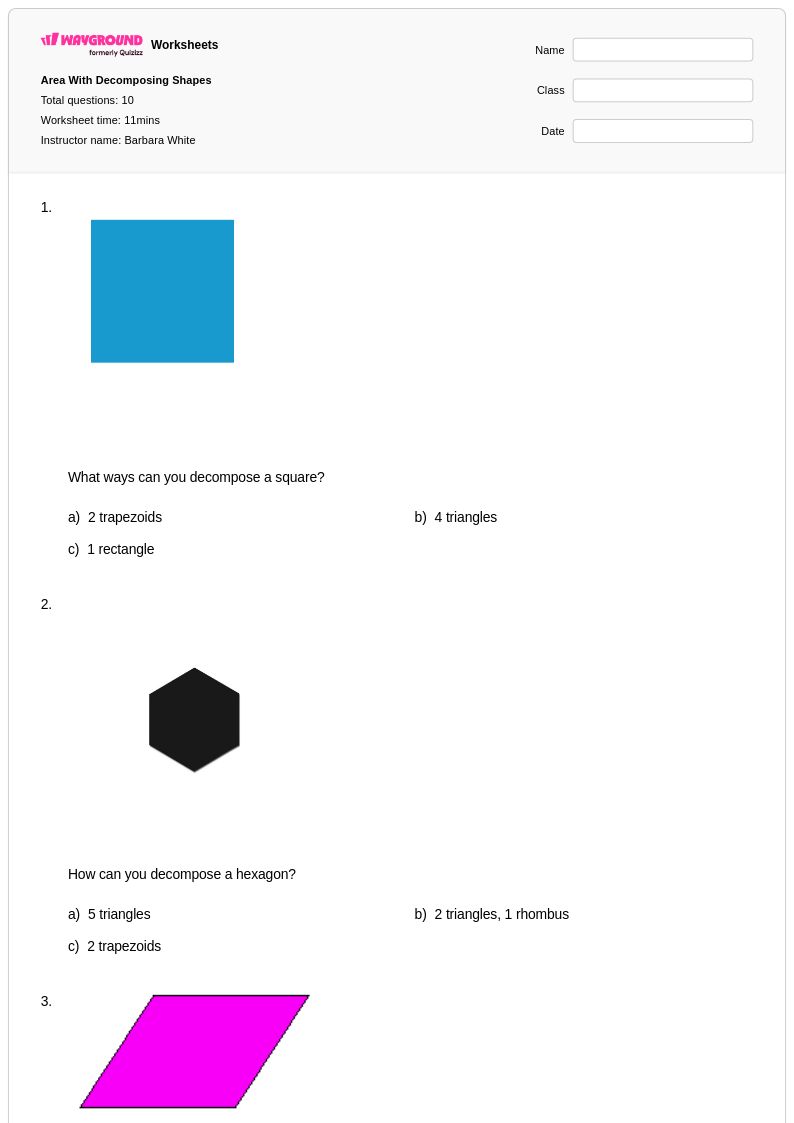
10 Hỏi
3rd
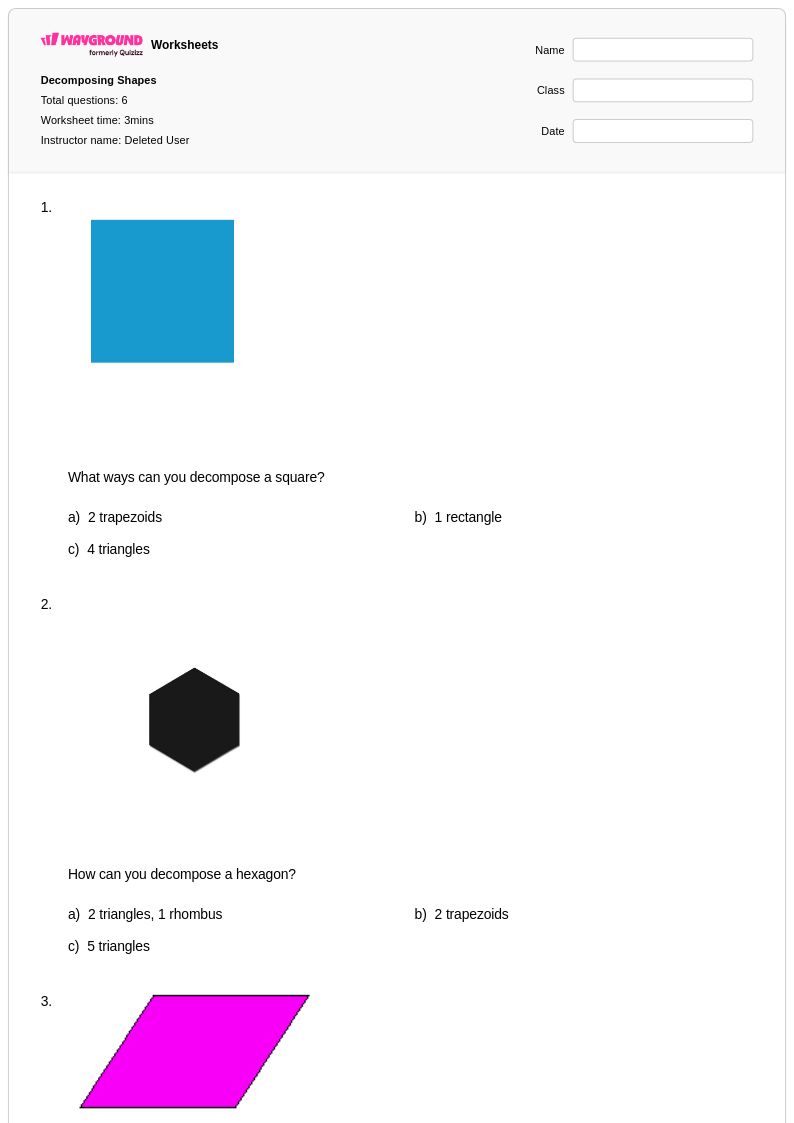
6 Hỏi
2nd - 3rd
8 Hỏi
2nd - 3rd
15 Hỏi
2nd - Uni
8 Hỏi
2nd - 3rd
8 Hỏi
2nd - 3rd
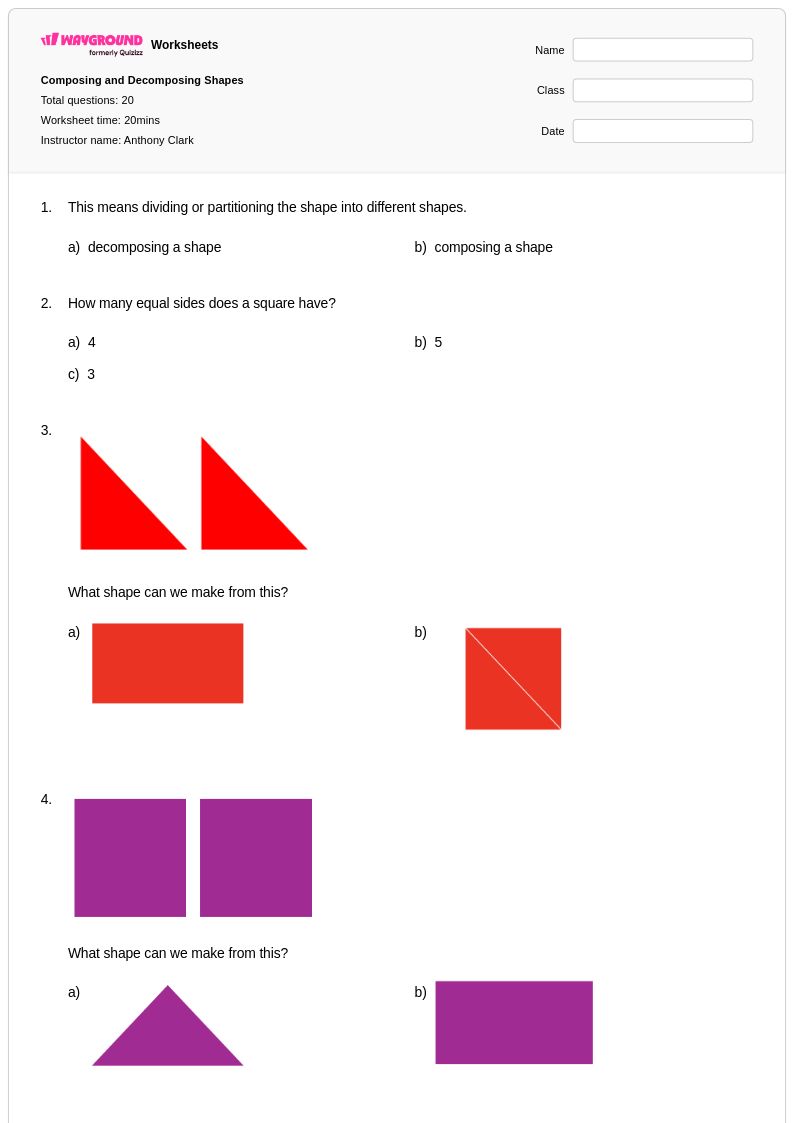
20 Hỏi
1st - Uni
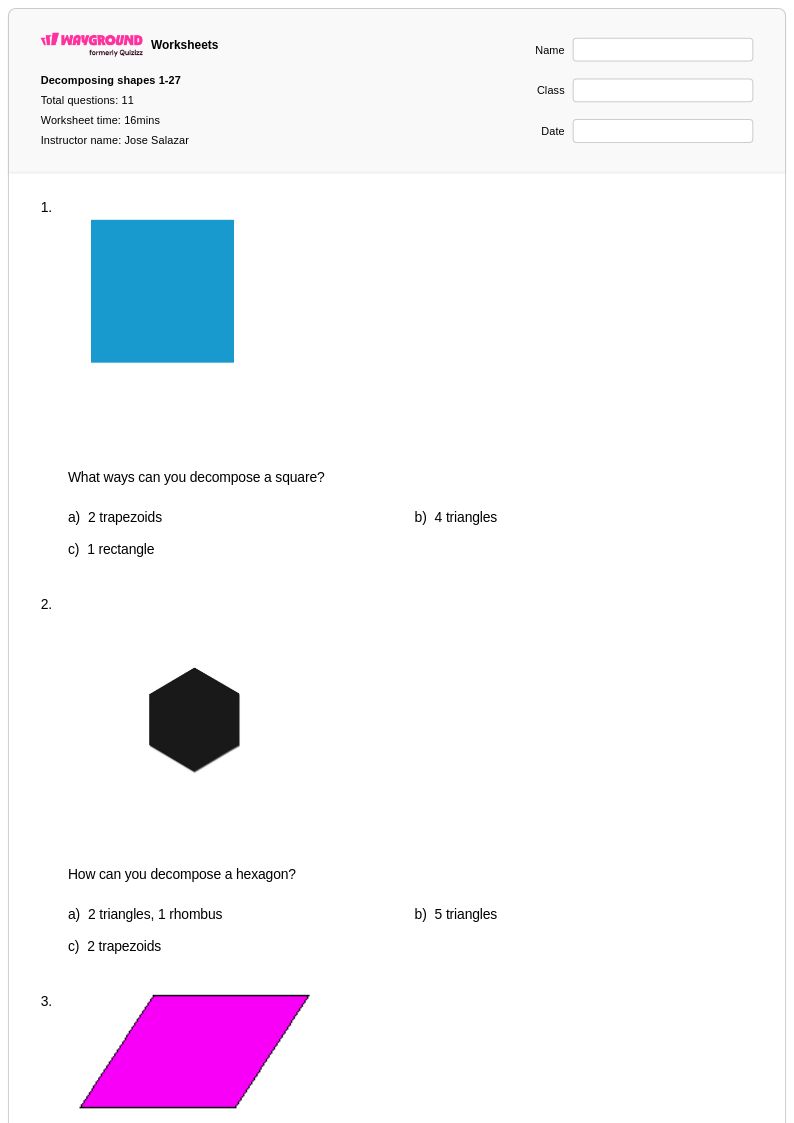
11 Hỏi
3rd
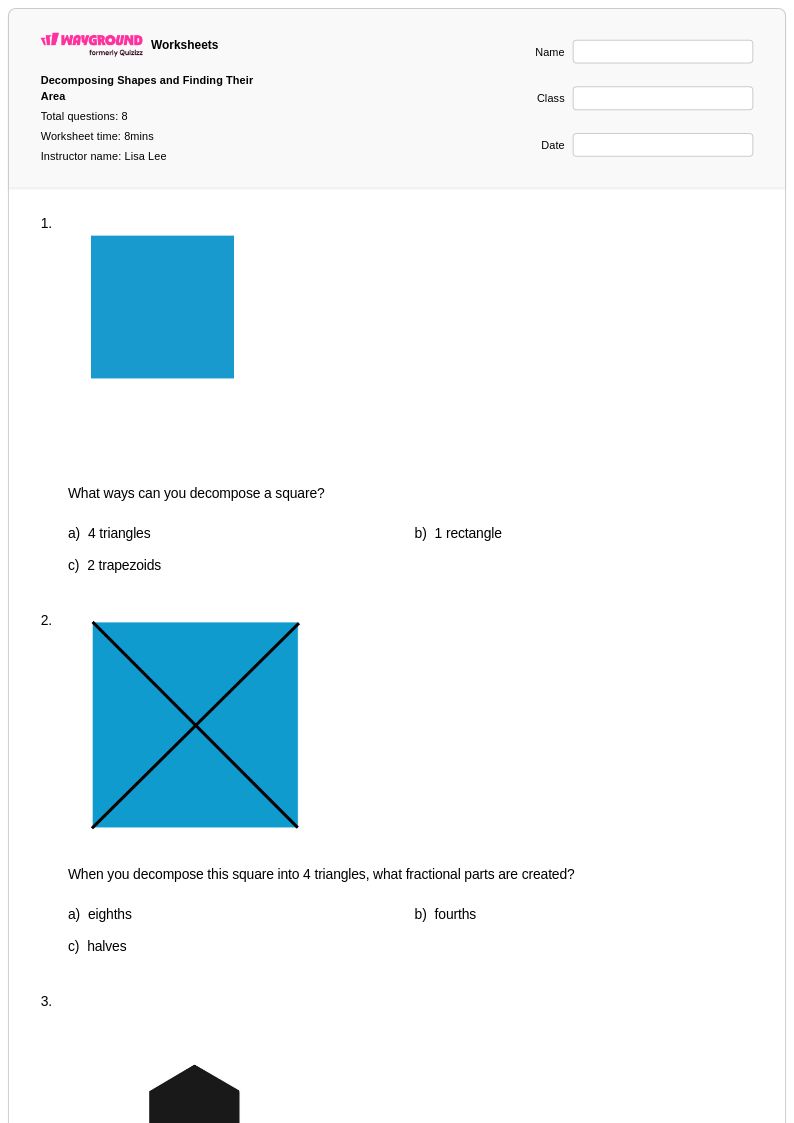
8 Hỏi
2nd - 3rd
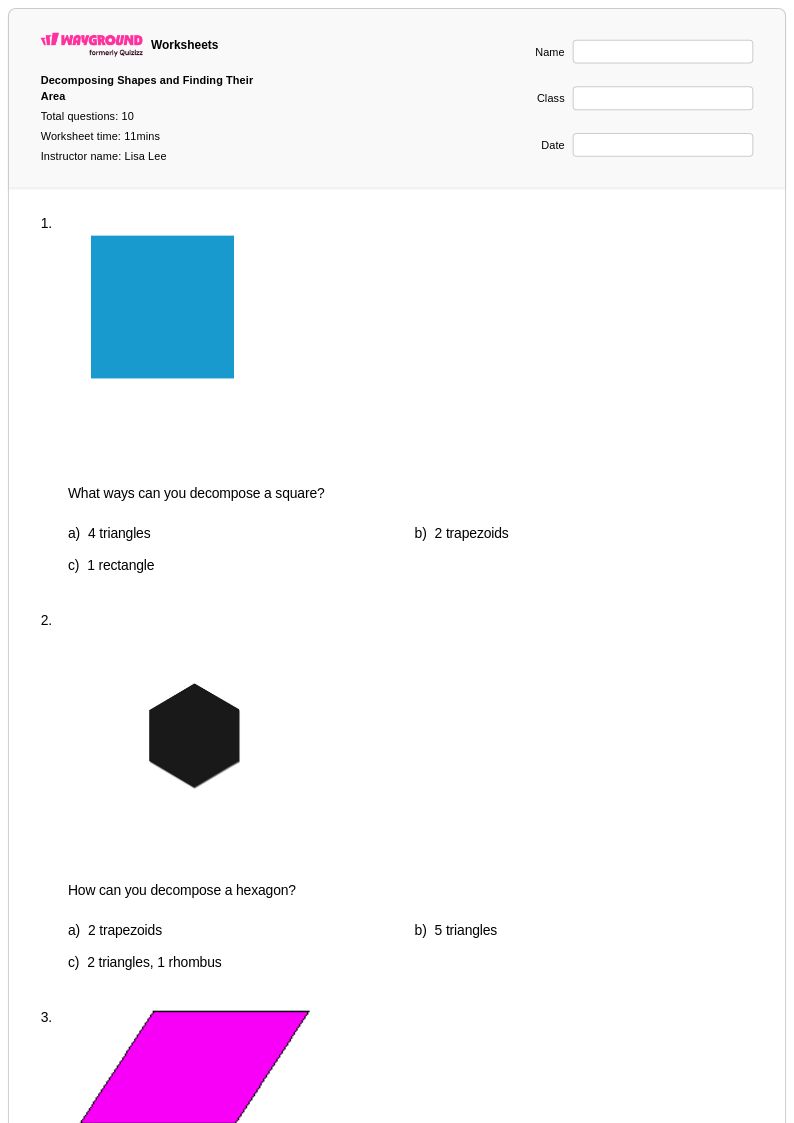
10 Hỏi
3rd
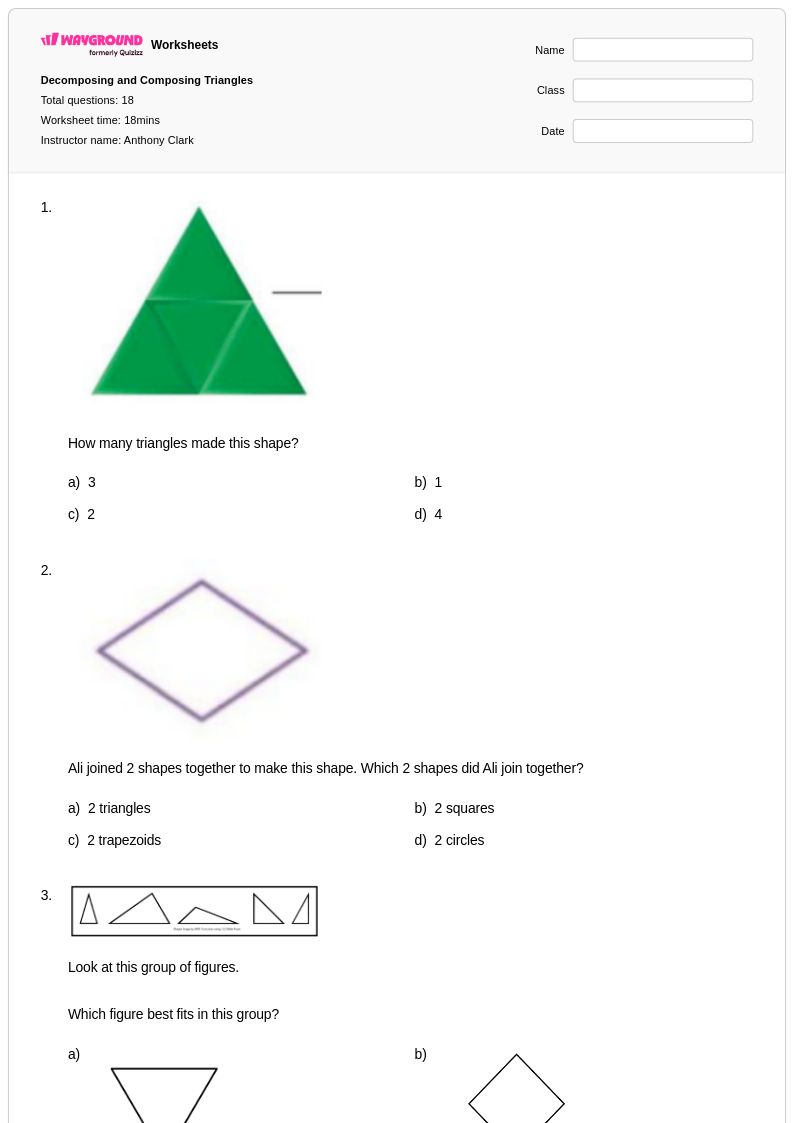
18 Hỏi
1st - Uni
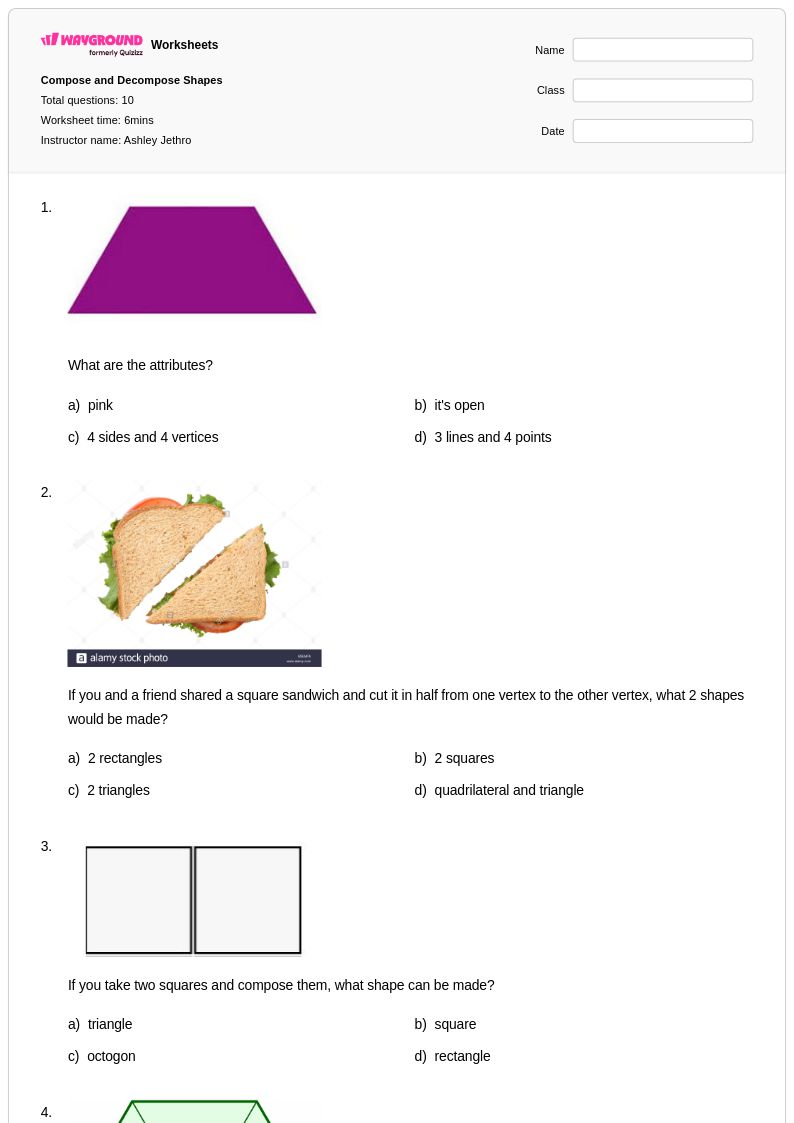
10 Hỏi
3rd
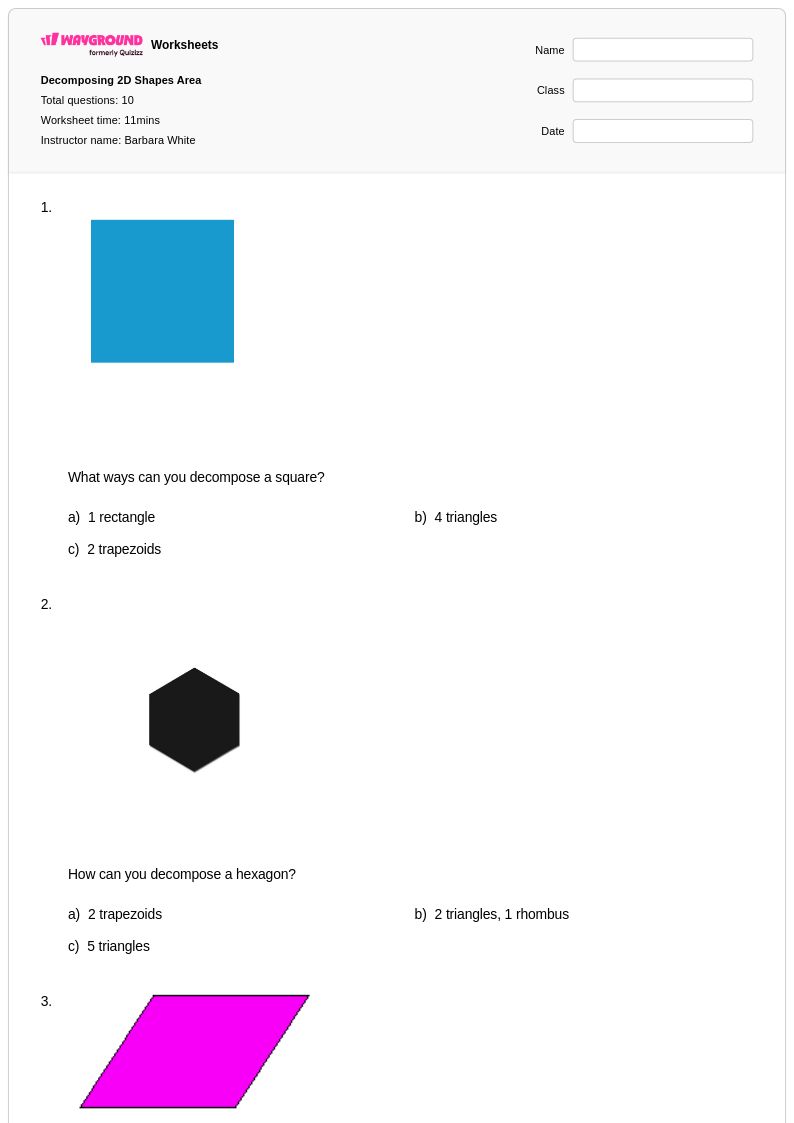
10 Hỏi
3rd
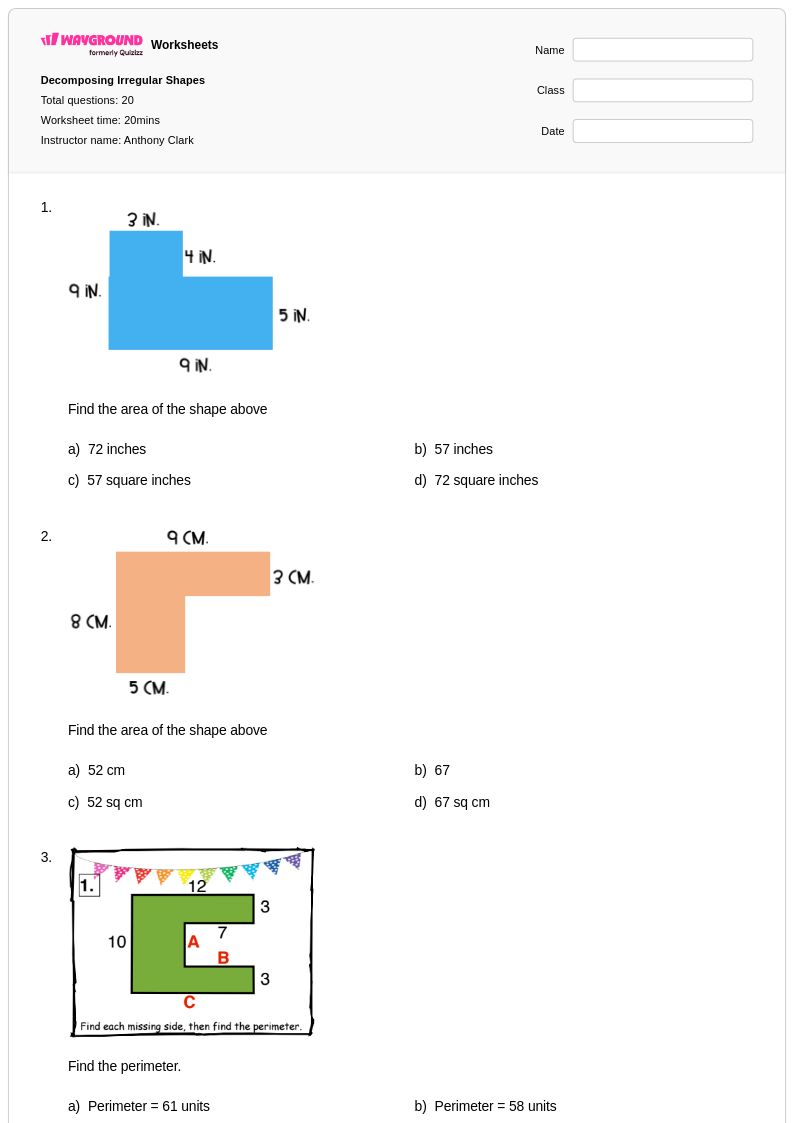
20 Hỏi
3rd - Uni
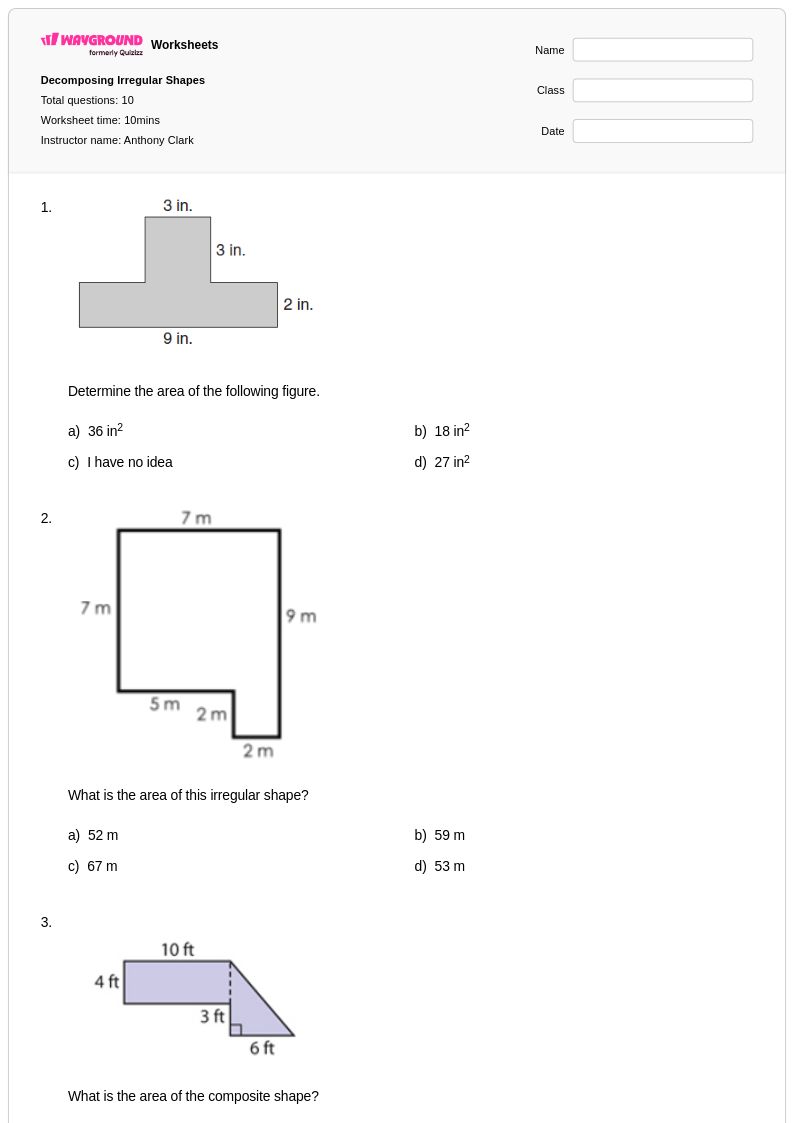
10 Hỏi
3rd - Uni
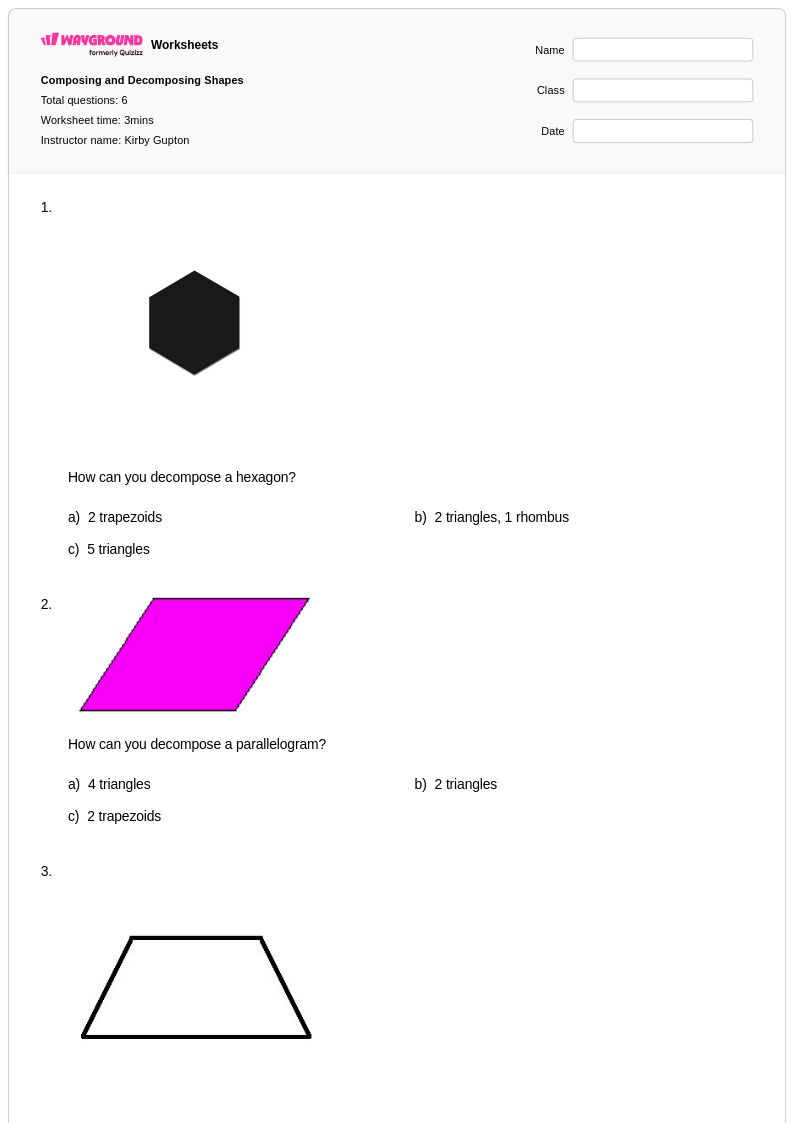
6 Hỏi
3rd
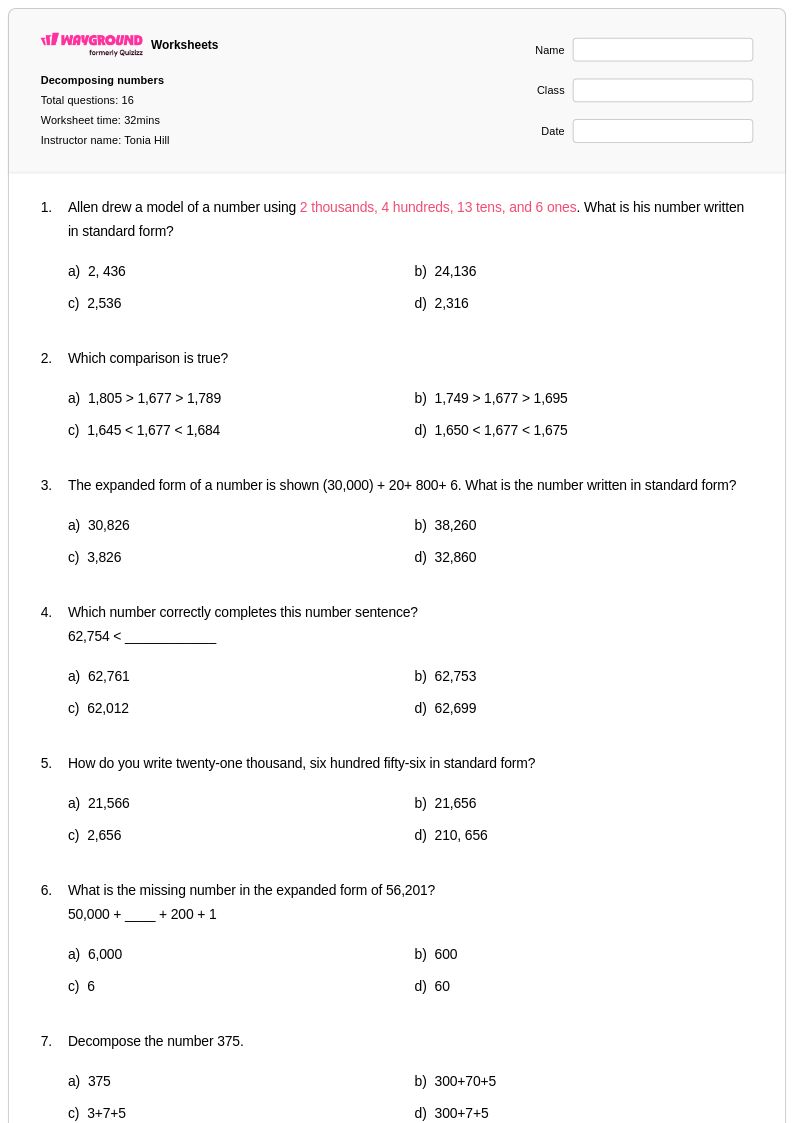
16 Hỏi
3rd
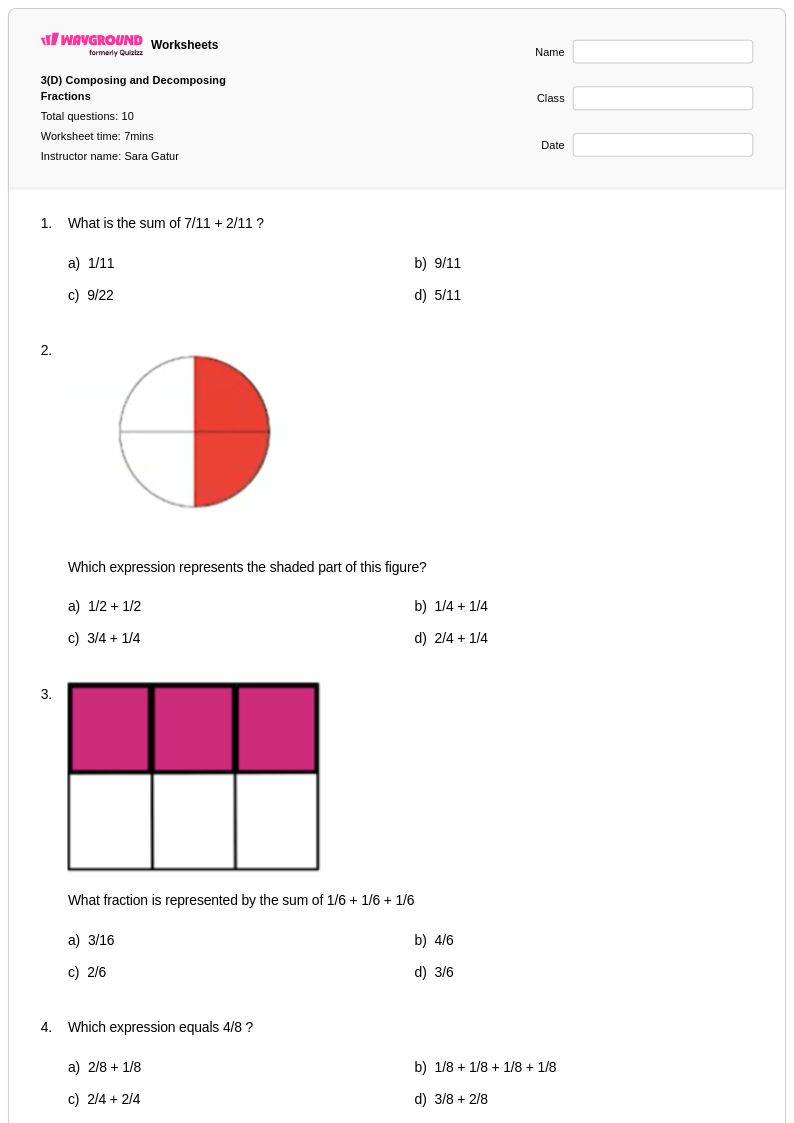
10 Hỏi
3rd
Khám phá các bảng tính chủ đề khác cho grade 3
Explore printable Decomposing Shapes worksheets for Grade 3
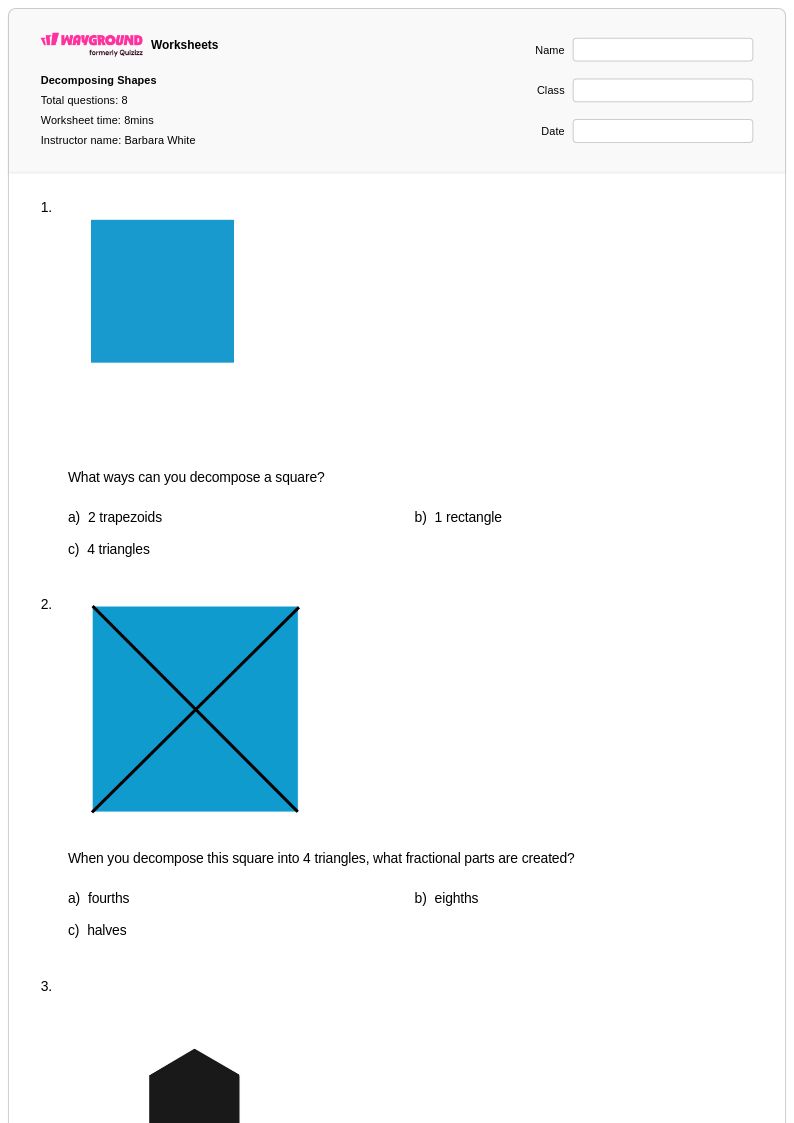
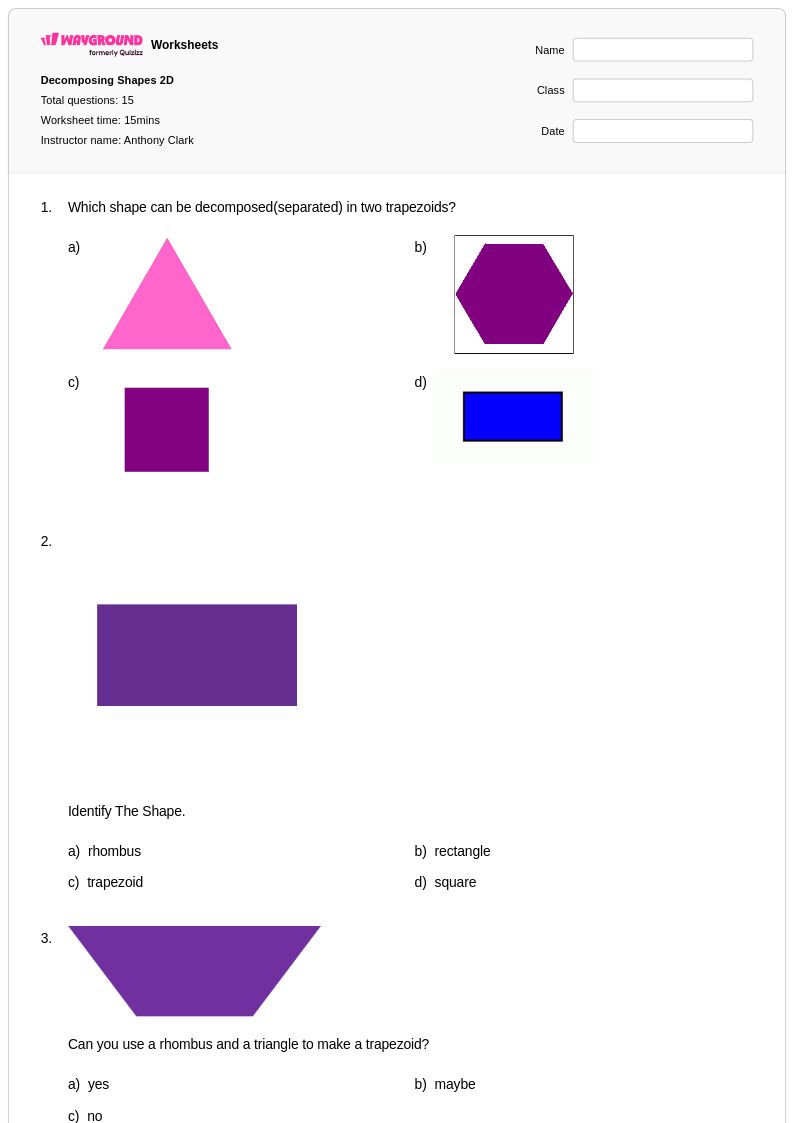
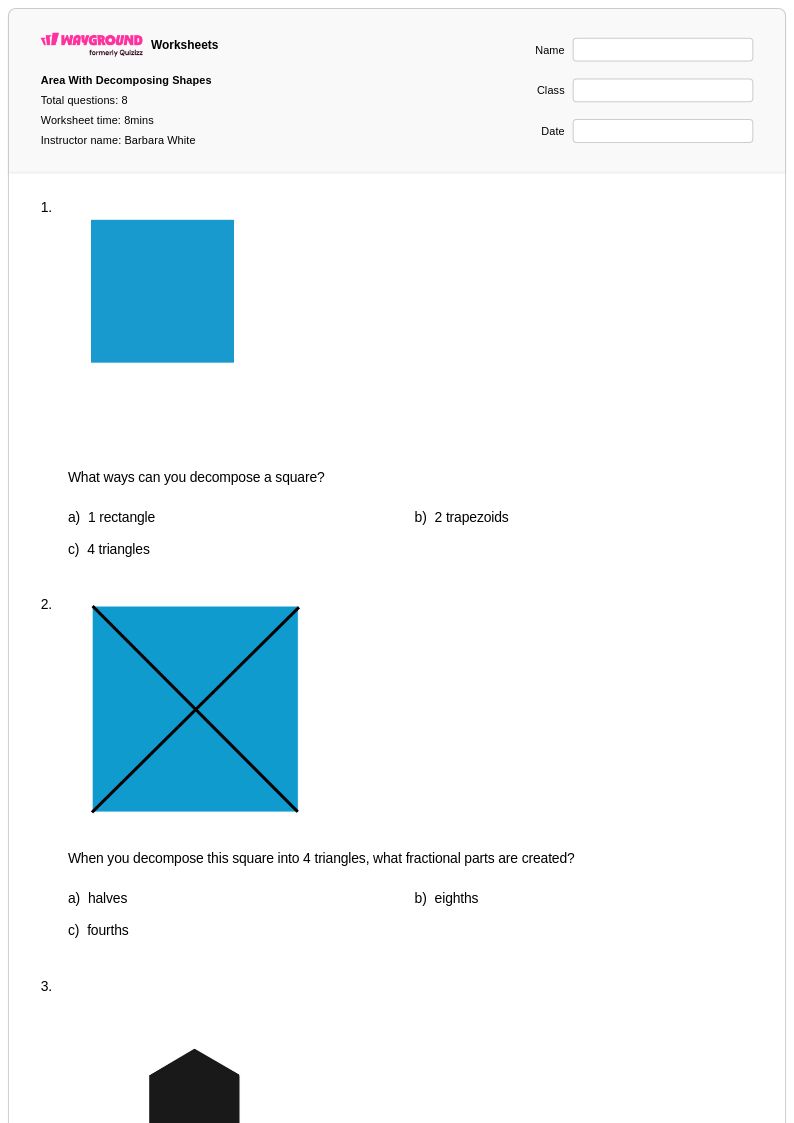
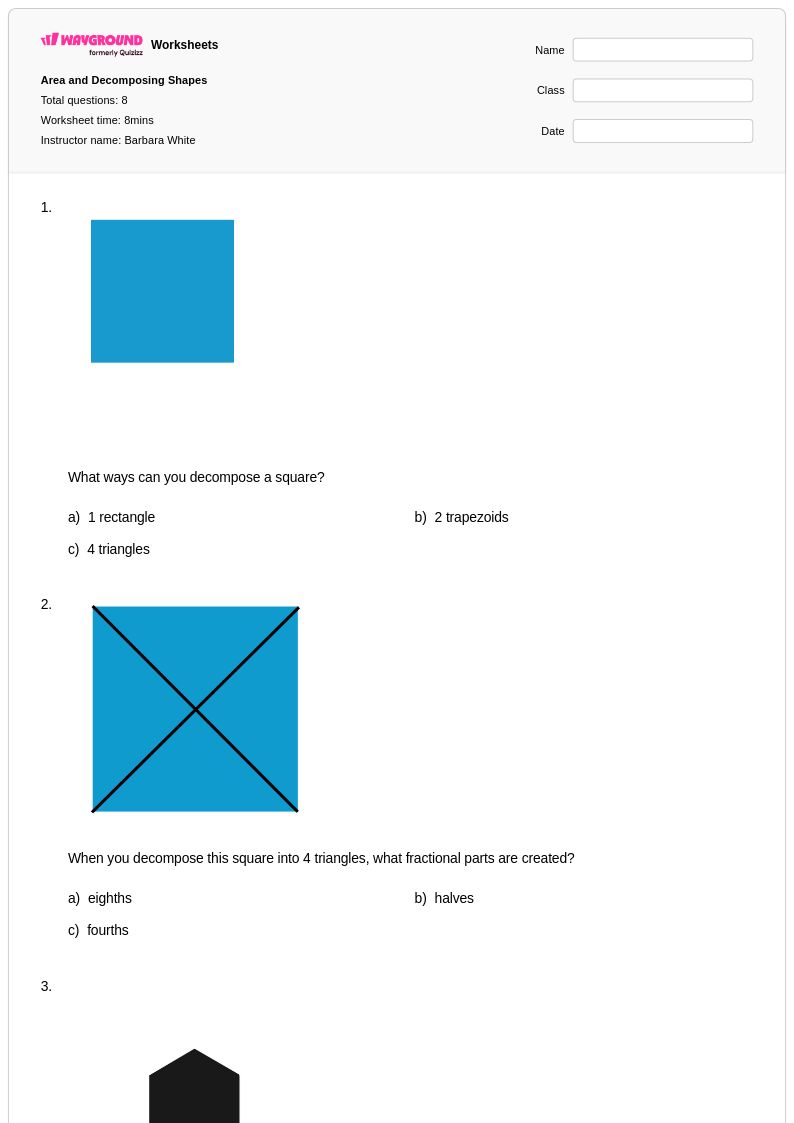
Decomposing shapes worksheets for Grade 3 students provide essential practice in breaking down complex geometric figures into their simpler component parts, a foundational skill that bridges basic shape recognition with more advanced spatial reasoning concepts. These comprehensive worksheet collections from Wayground (formerly Quizizz) help young learners develop critical thinking abilities as they analyze how rectangles, triangles, squares, and other polygons can be separated into smaller, familiar shapes. Students strengthen their visual processing skills and geometric vocabulary through engaging practice problems that challenge them to identify, count, and describe the individual shapes within composite figures. Each worksheet includes a detailed answer key to support accurate assessment, and the free printable pdf format ensures easy classroom distribution and homework assignments.
Wayground (formerly Quizizz) empowers educators with millions of teacher-created decomposing shapes resources specifically designed to meet Grade 3 mathematics standards and diverse learning needs. The platform's robust search and filtering capabilities allow teachers to quickly locate worksheets that align with specific curriculum requirements, while differentiation tools enable seamless customization for students requiring additional support or advanced challenges. These versatile materials are available in both printable and digital formats, including downloadable pdf versions that facilitate flexible lesson planning and support various instructional approaches. Teachers can efficiently address individual student needs through targeted skill practice, provide meaningful remediation for struggling learners, and offer enrichment opportunities for advanced students, all while maintaining alignment with essential geometry learning objectives.
FAQs
How do I teach decomposing shapes to third graders?
What exercises help third graders practice decomposing shapes?
What mistakes do Grade 3 students make when decomposing composite shapes?
How can I use a Grade 3 decomposing shapes worksheet from Wayground?
What grade do students use shape decomposition for area reasoning?
How does decomposing shapes align with Common Core Grade 3 math?
How can I differentiate decomposing shapes worksheets for Grade 3?