
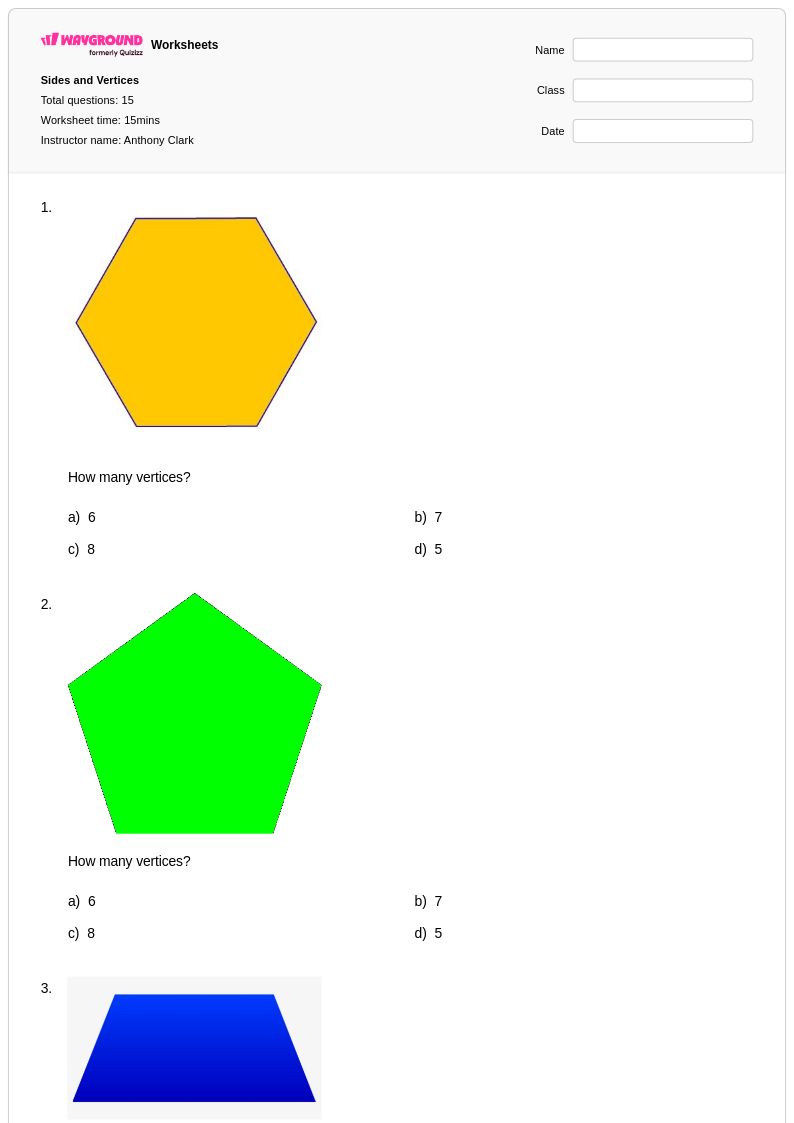
15 Q
2nd - Uni
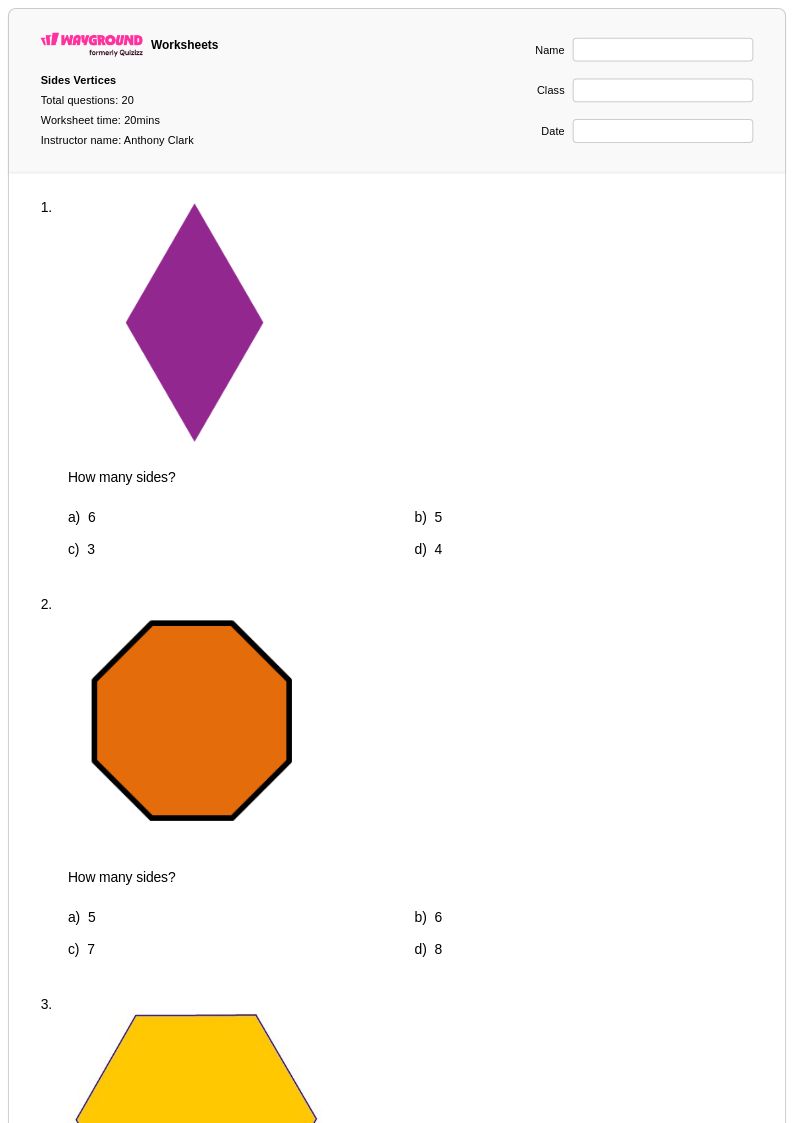
20 Q
2nd - Uni
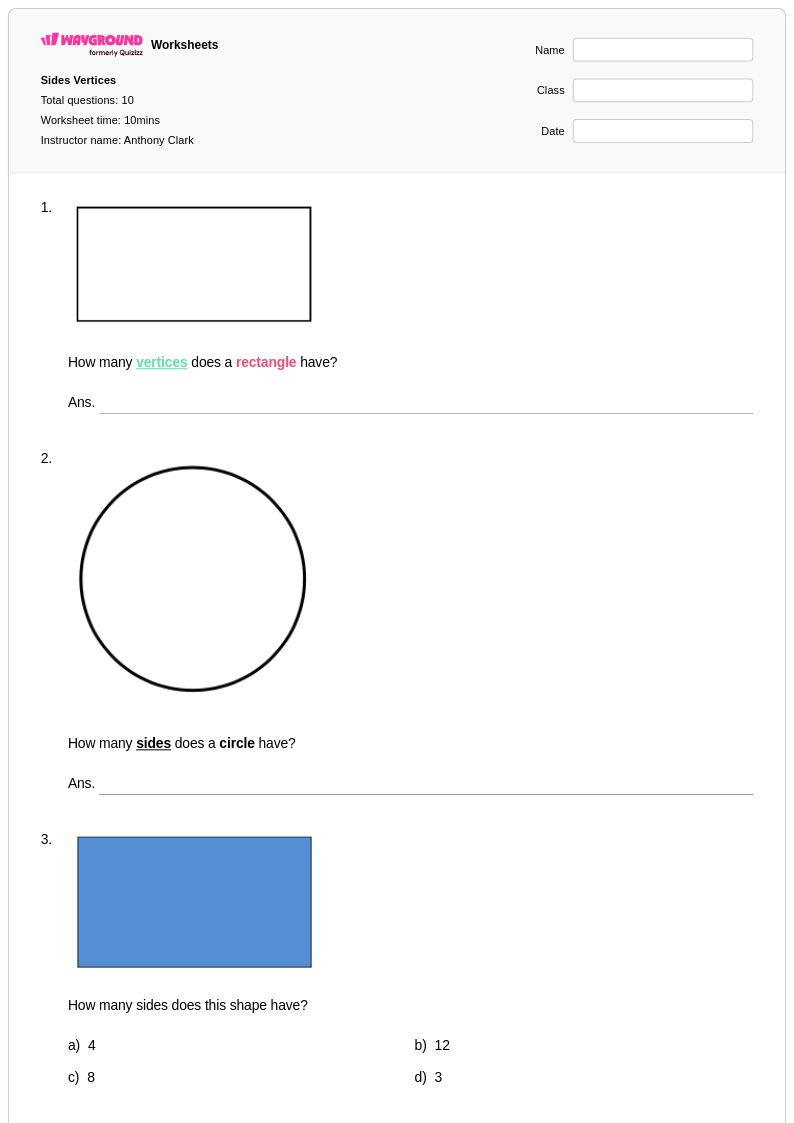
10 Q
2nd - Uni
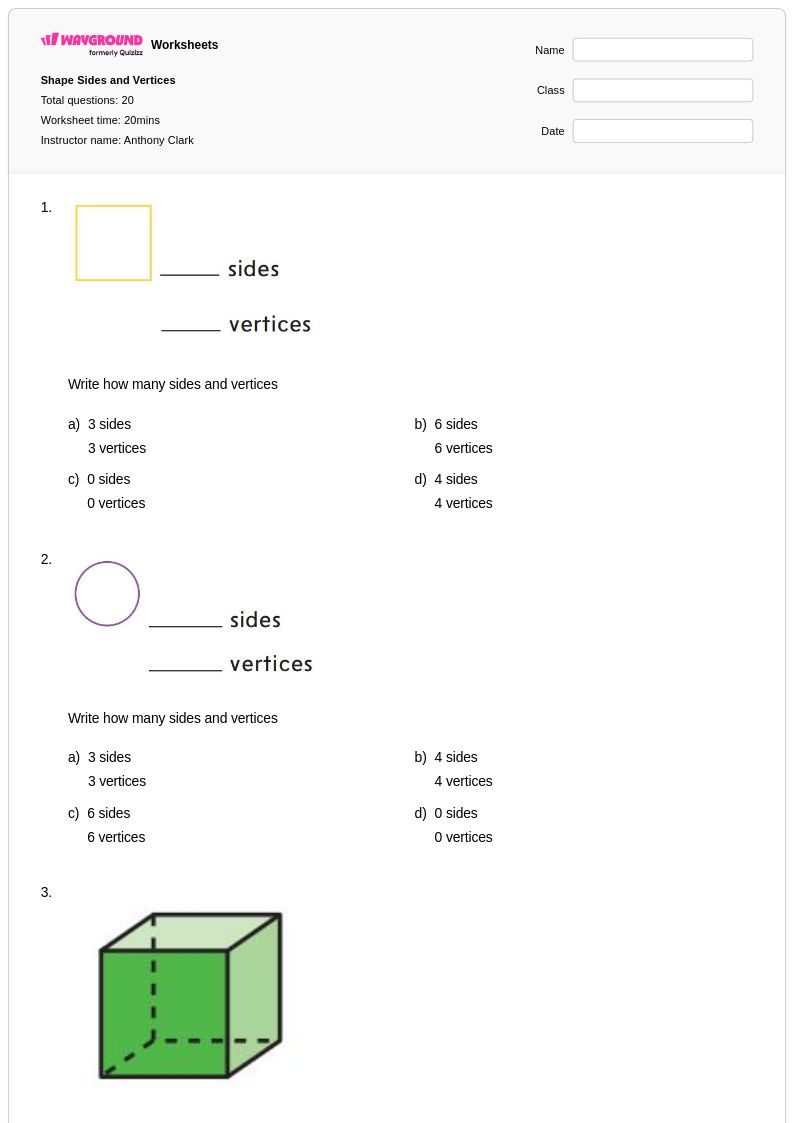
20 Q
2nd - Uni
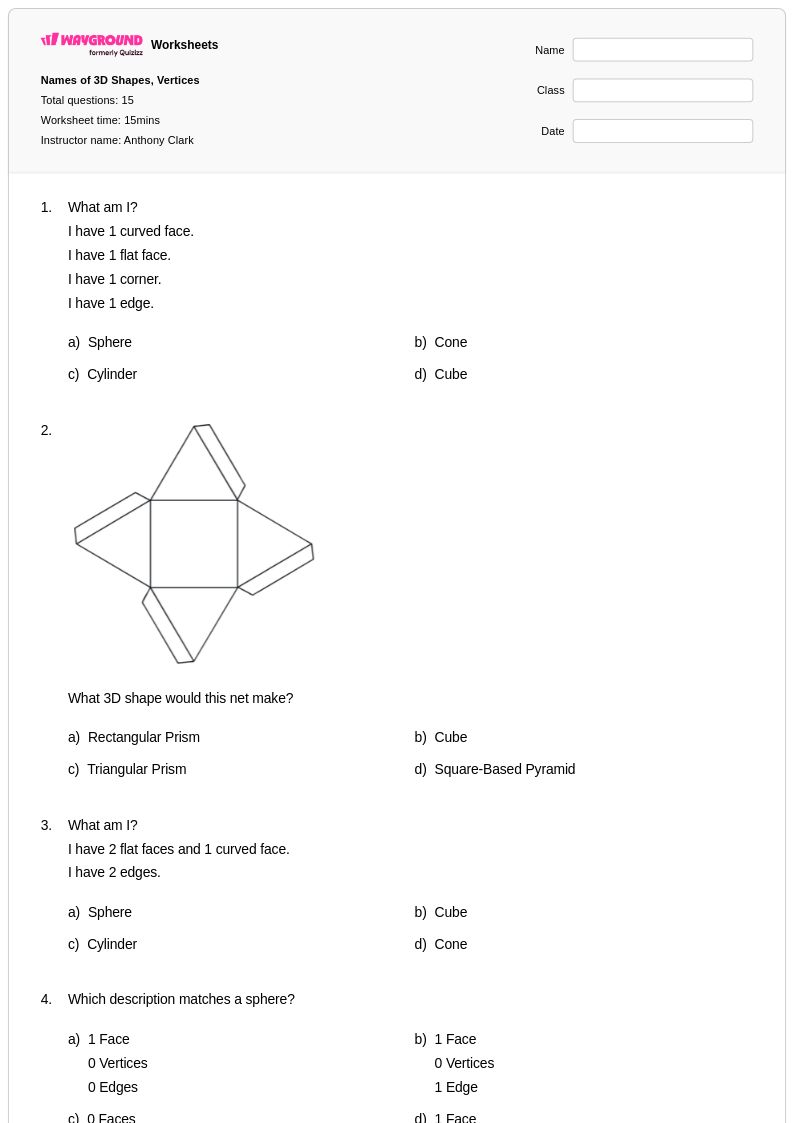
15 Q
3rd - Uni
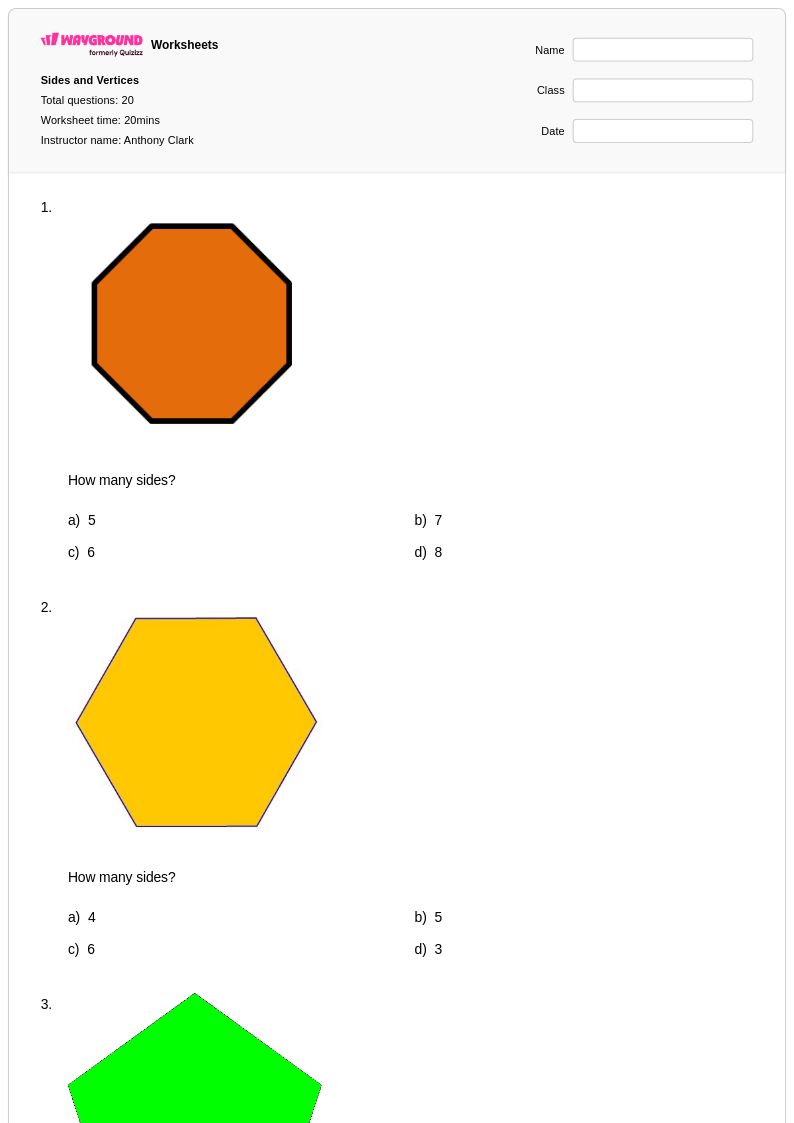
20 Q
2nd - Uni
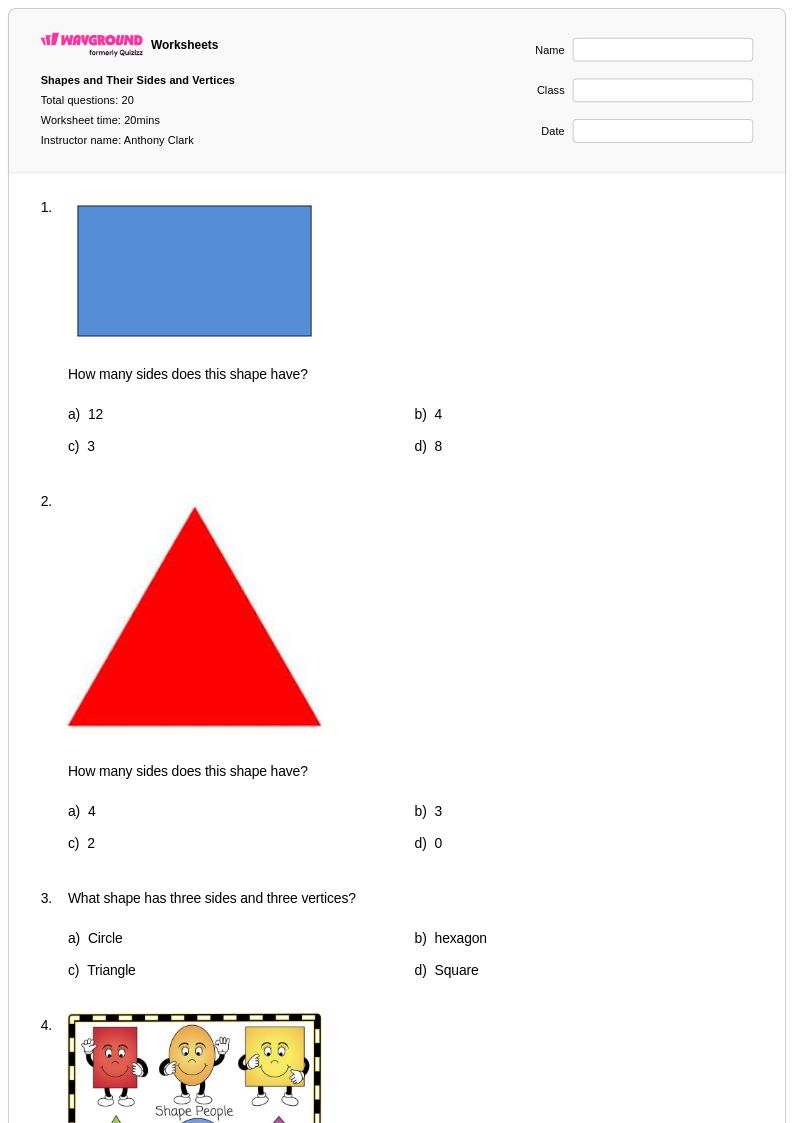
20 Q
2nd - Uni
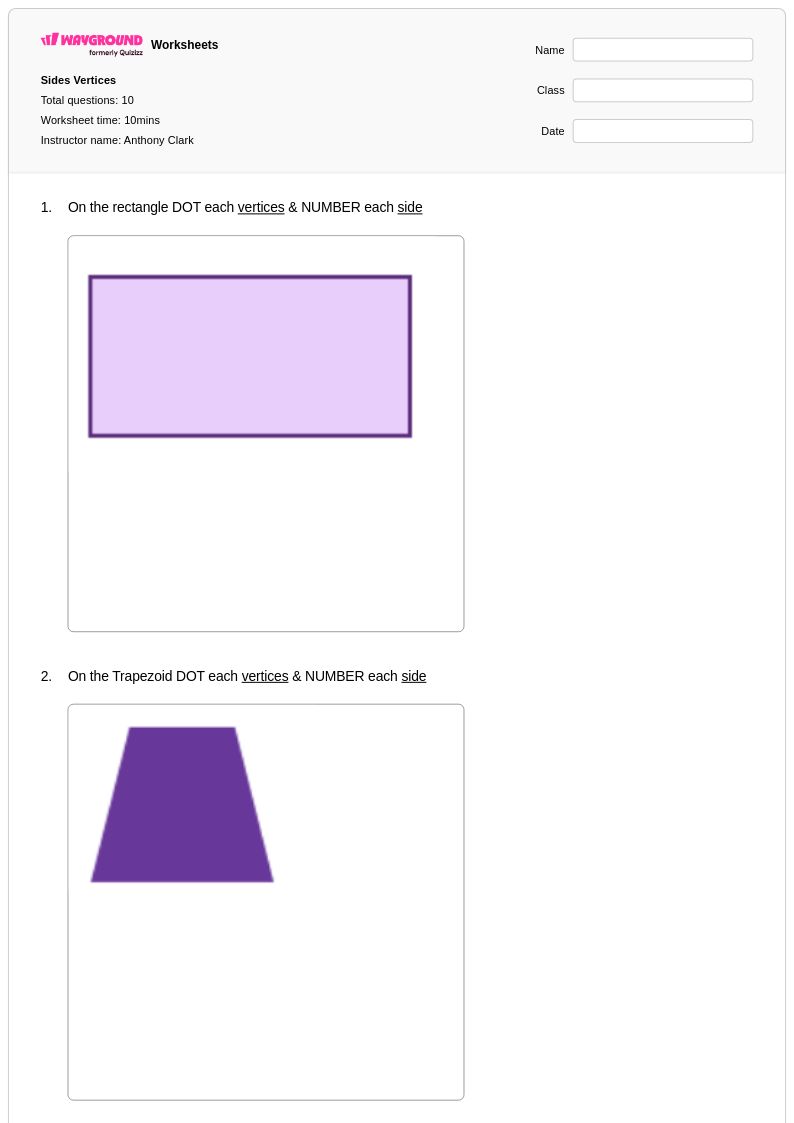
10 Q
2nd - Uni
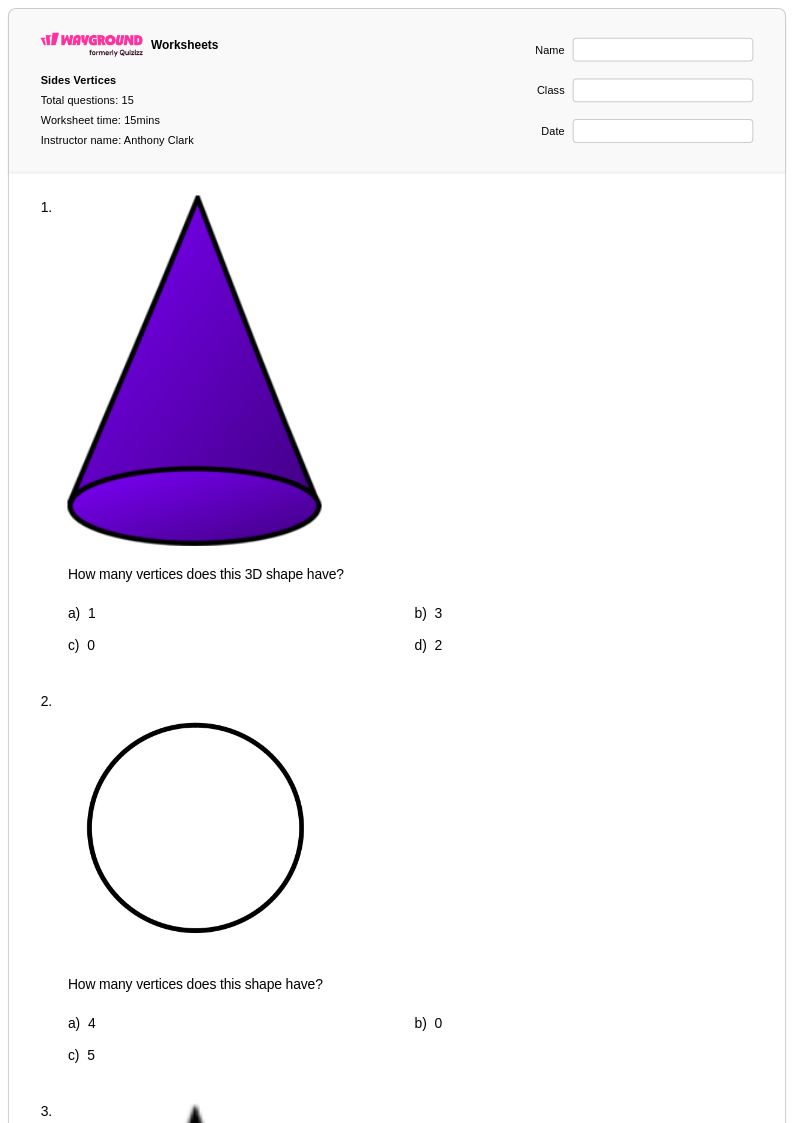
15 Q
2nd - Uni
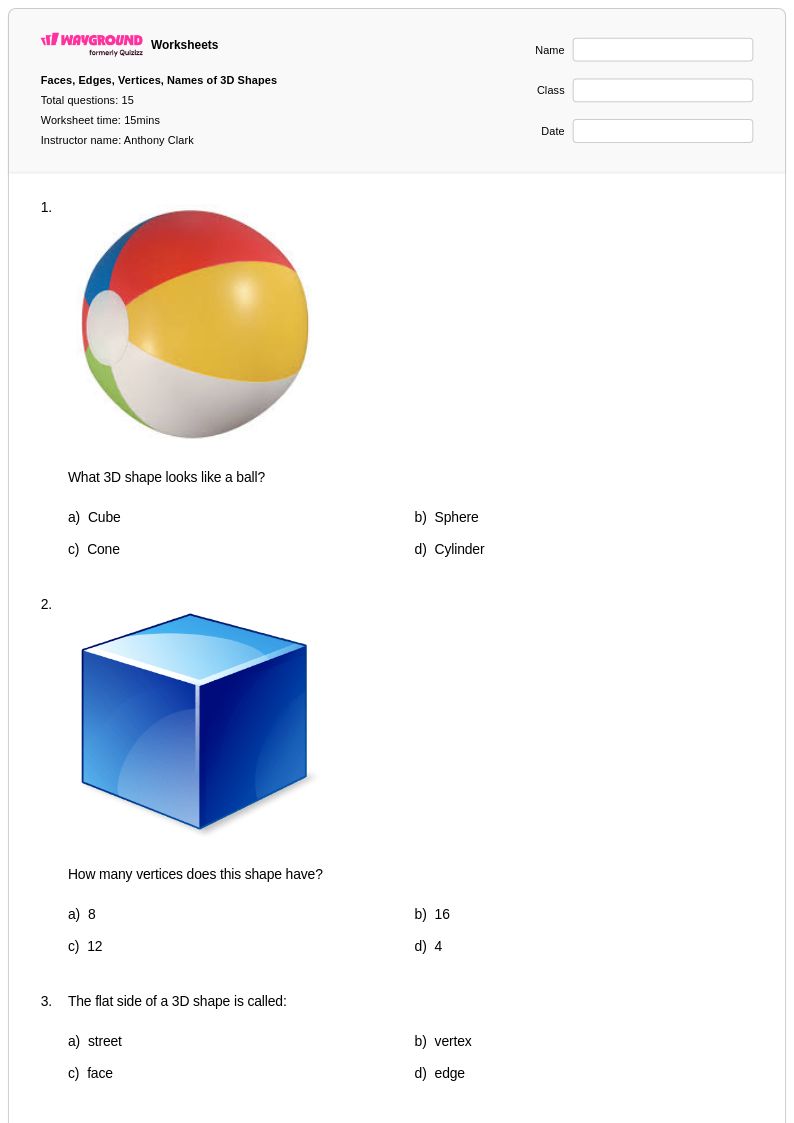
15 Q
2nd - Uni
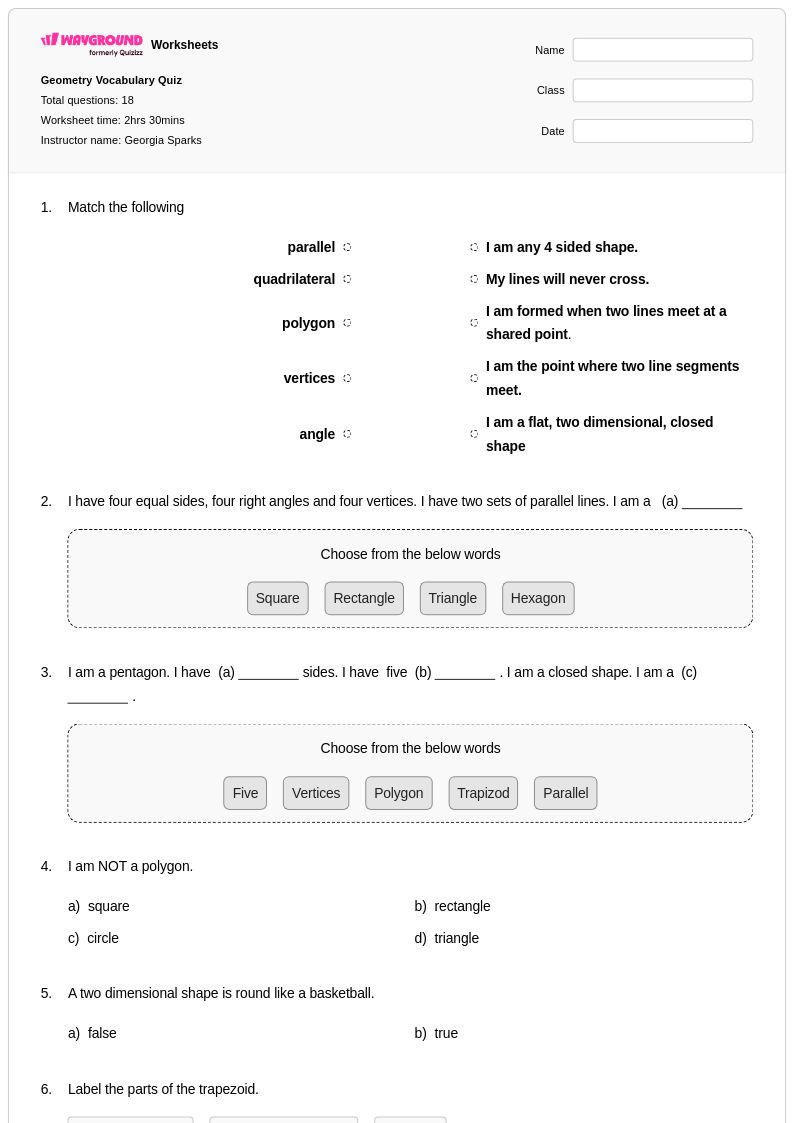
18 Q
3rd
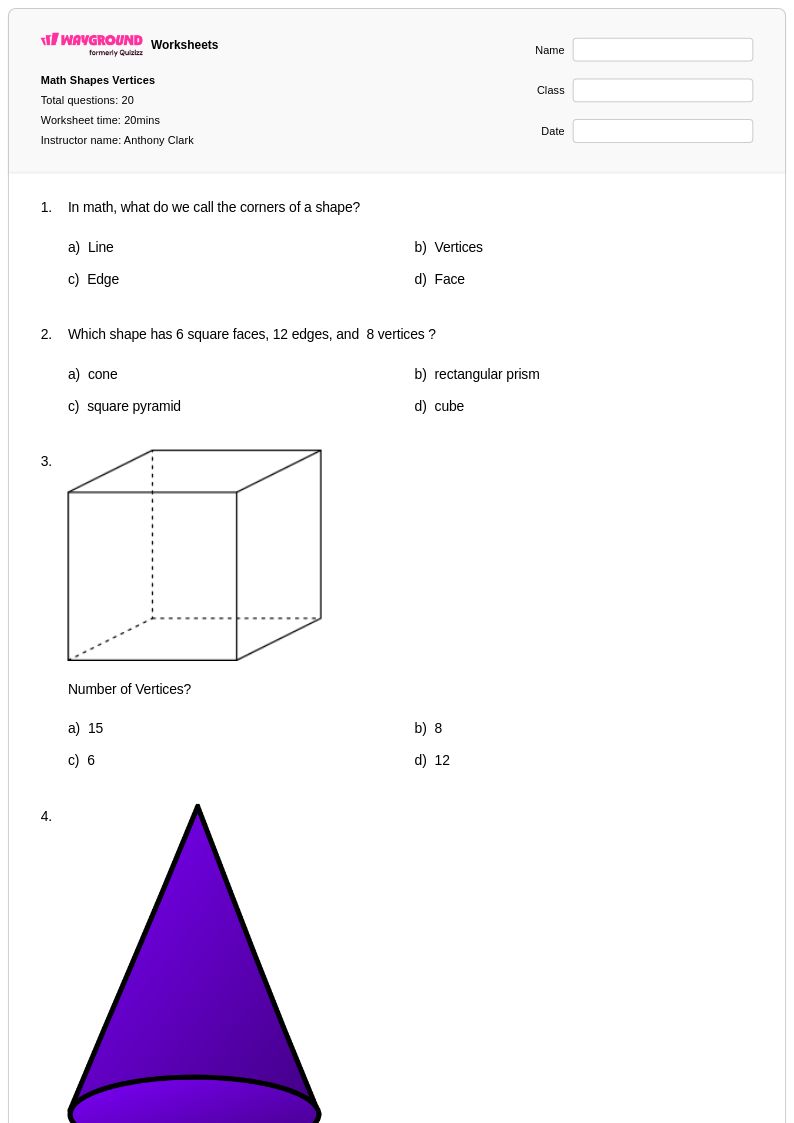
20 Q
3rd - Uni
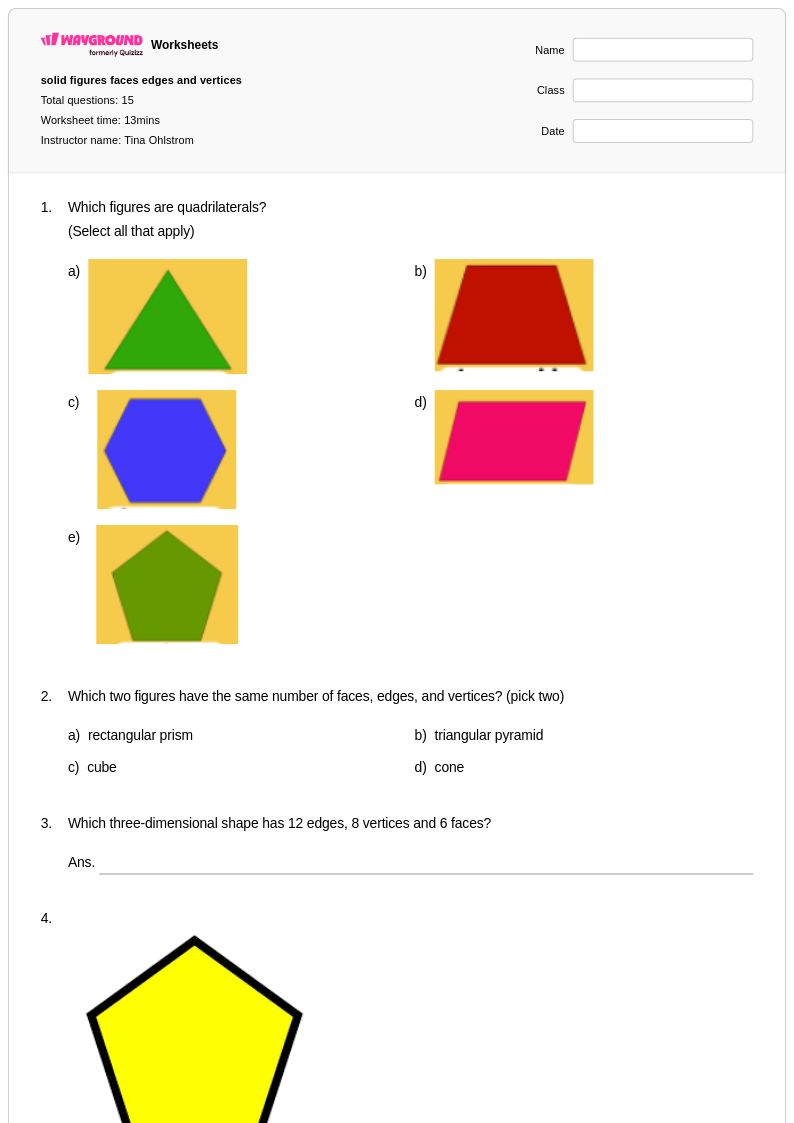
15 Q
3rd
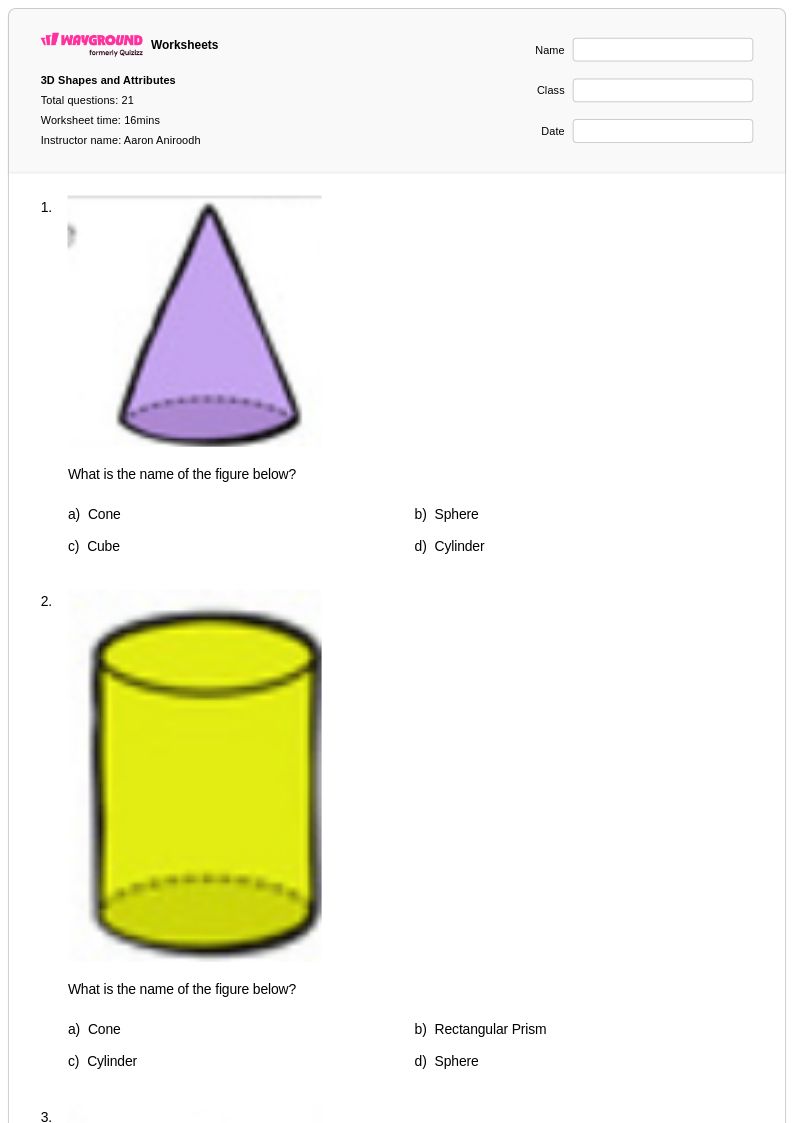
21 Q
3rd
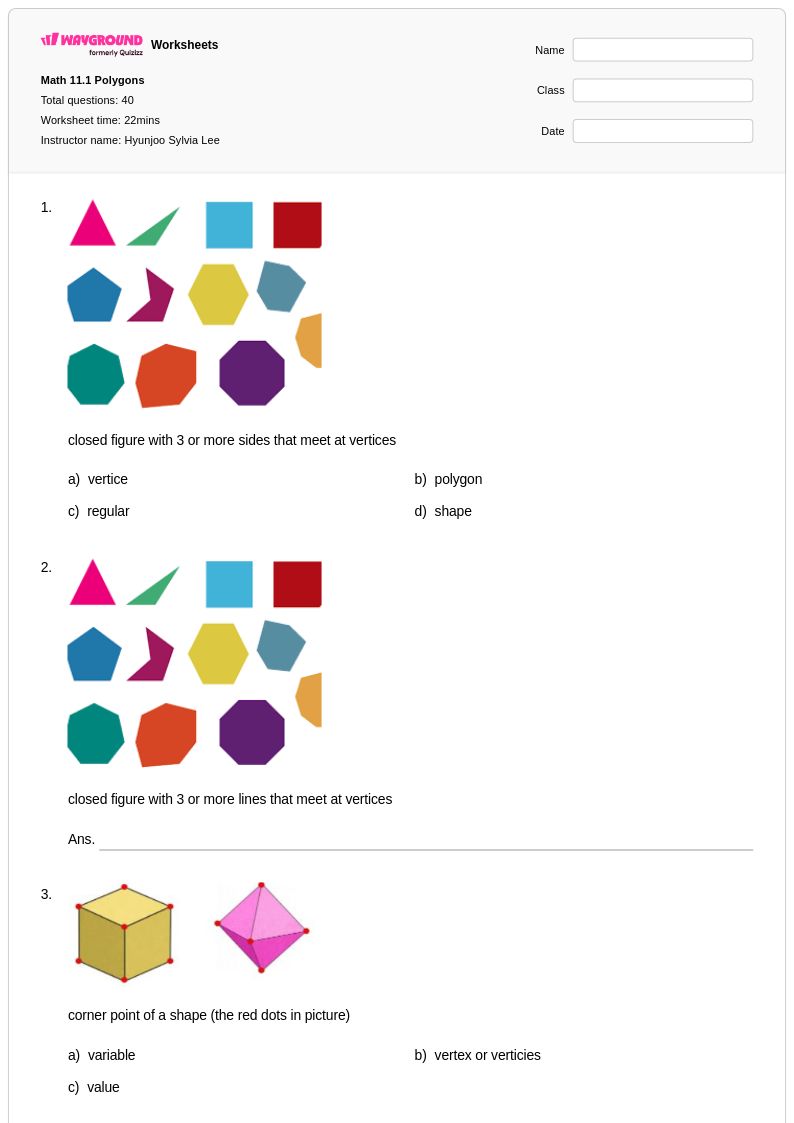
54 Q
3rd - 5th
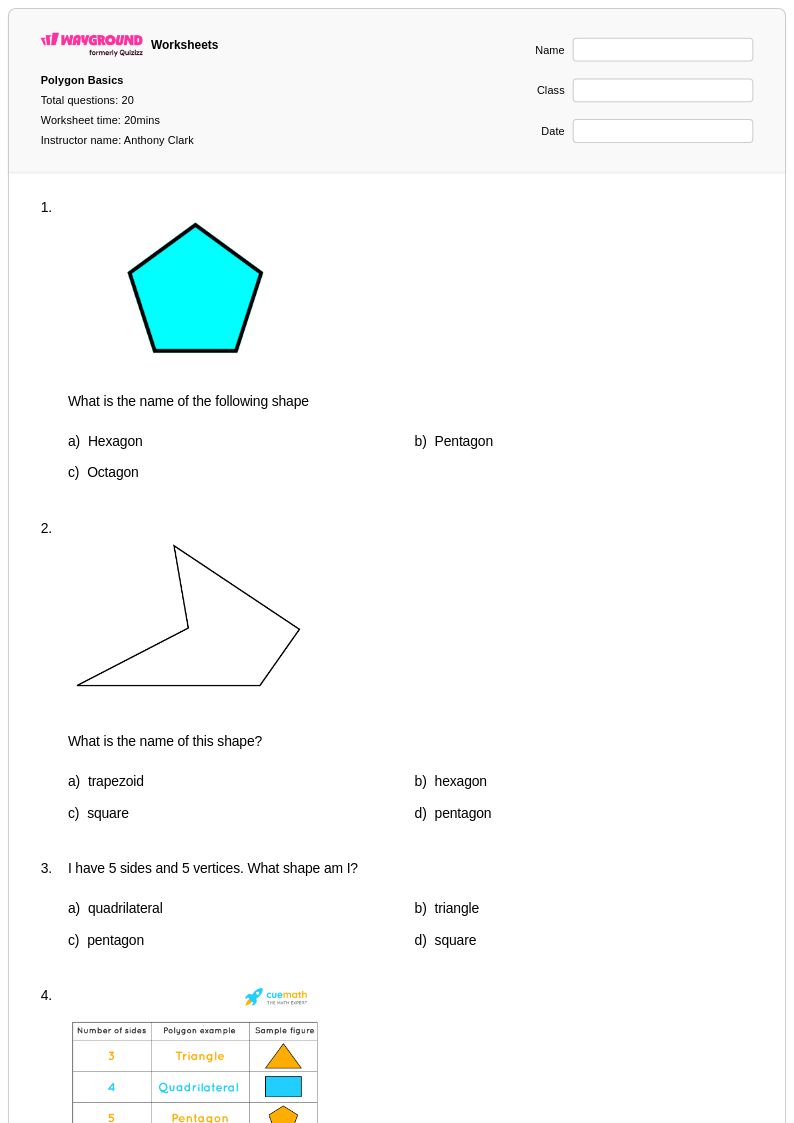
20 Q
3rd - Uni
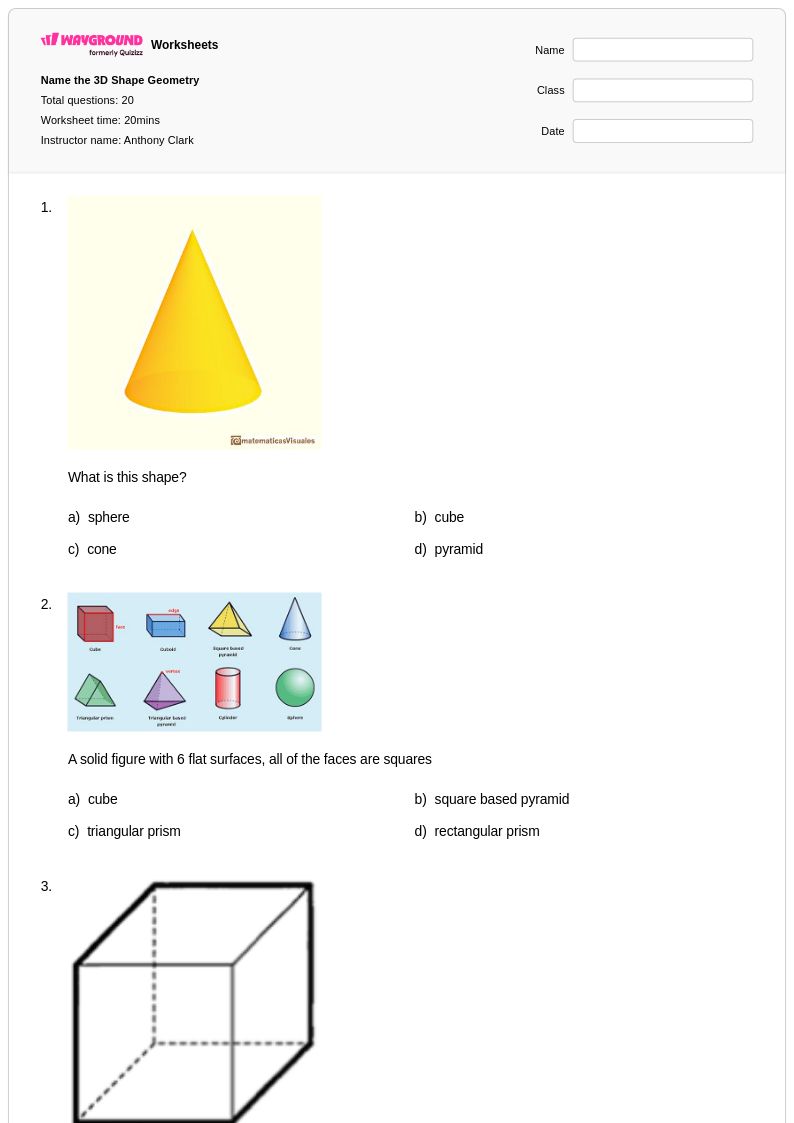
20 Q
2nd - Uni
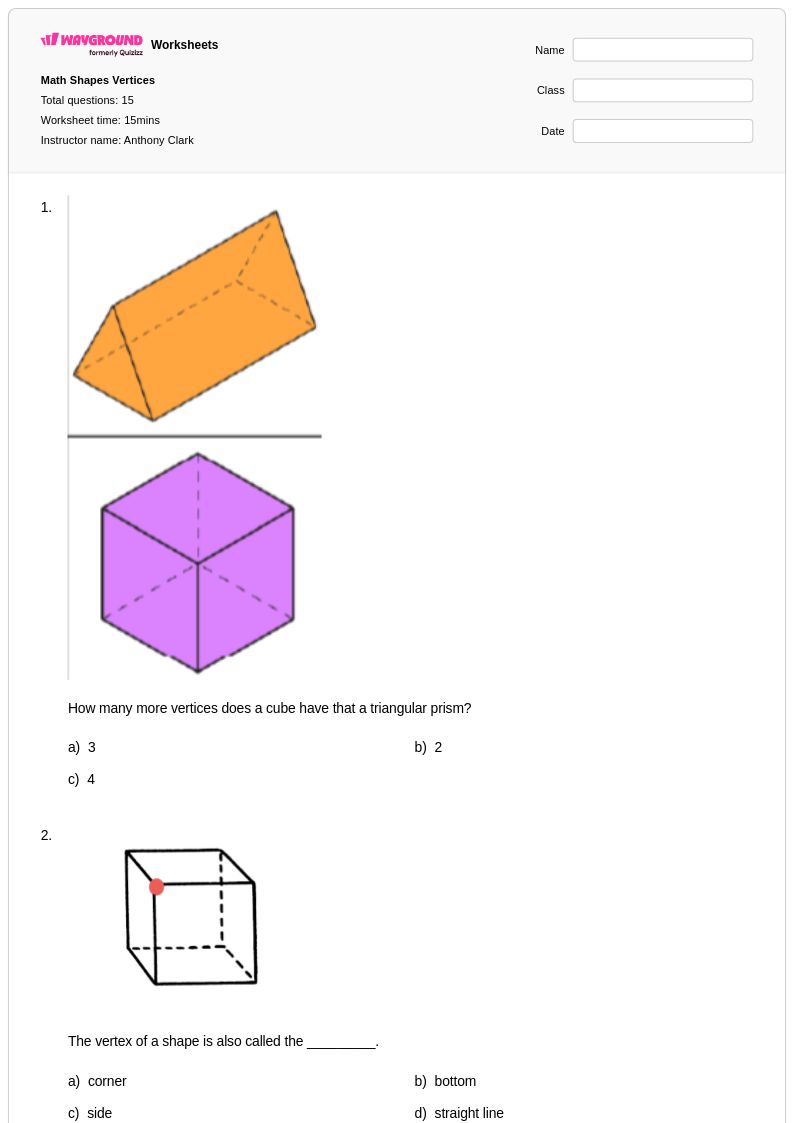
15 Q
3rd - Uni
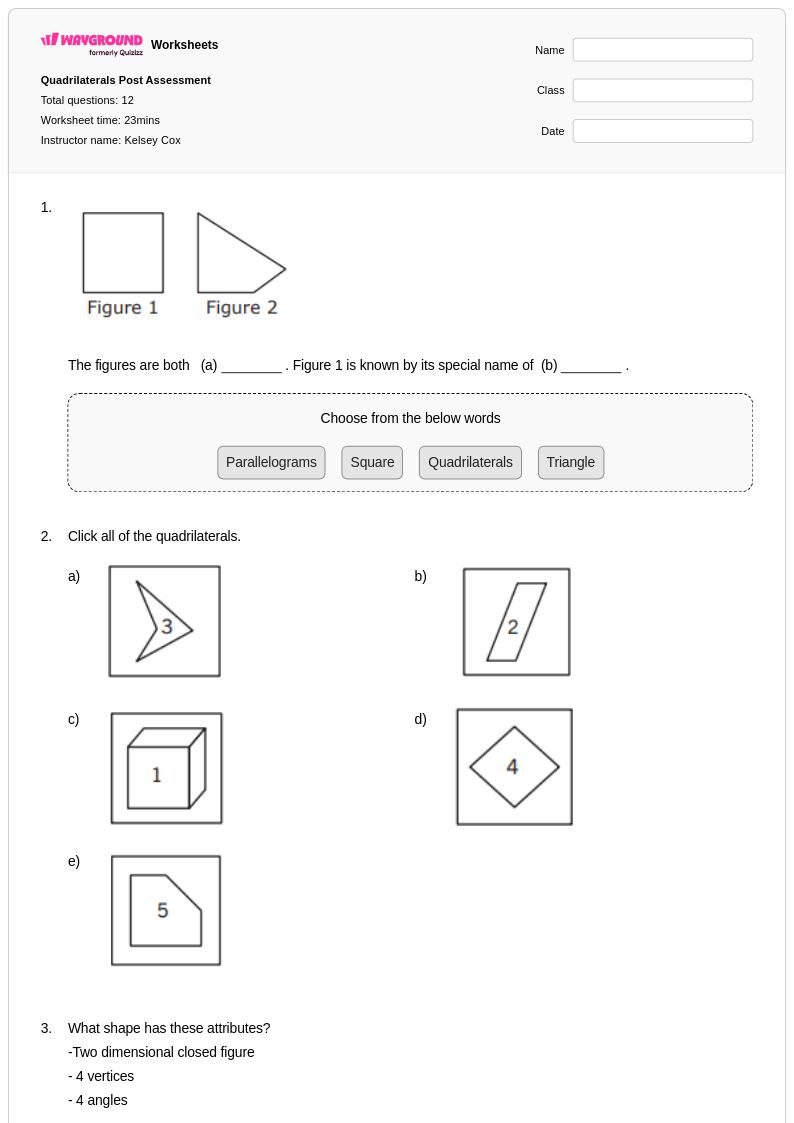
12 Q
3rd
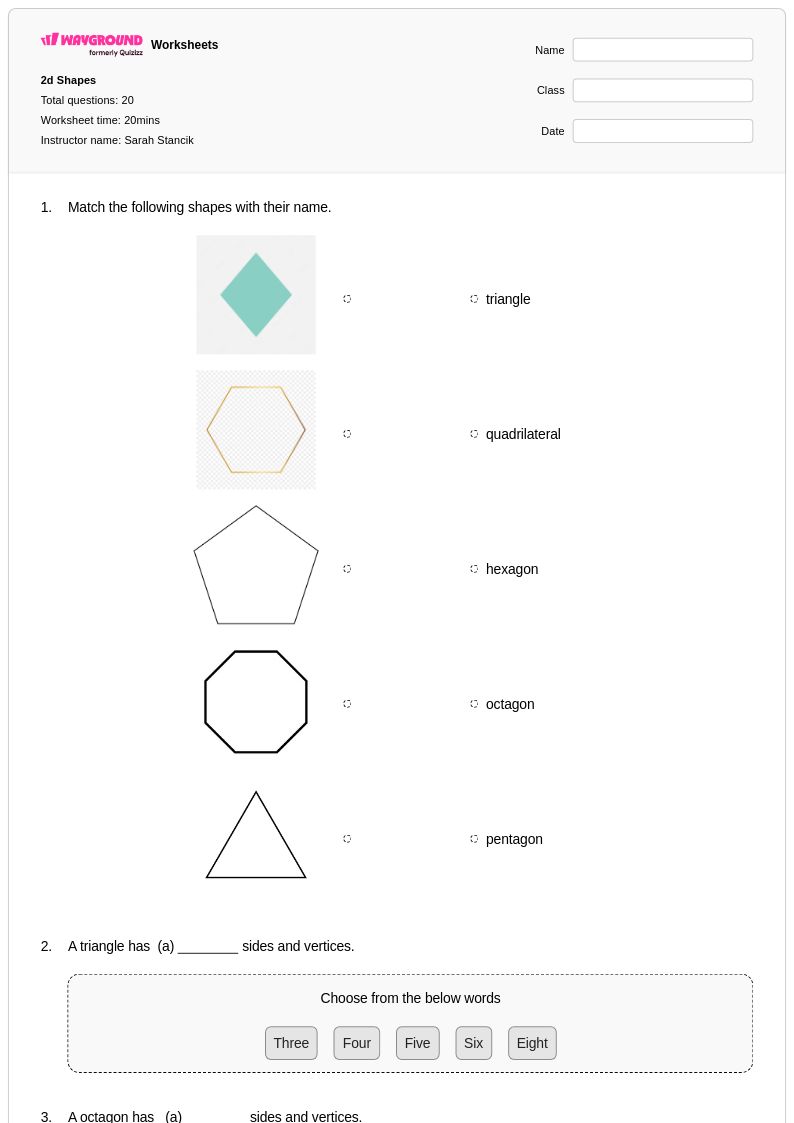
20 Q
3rd
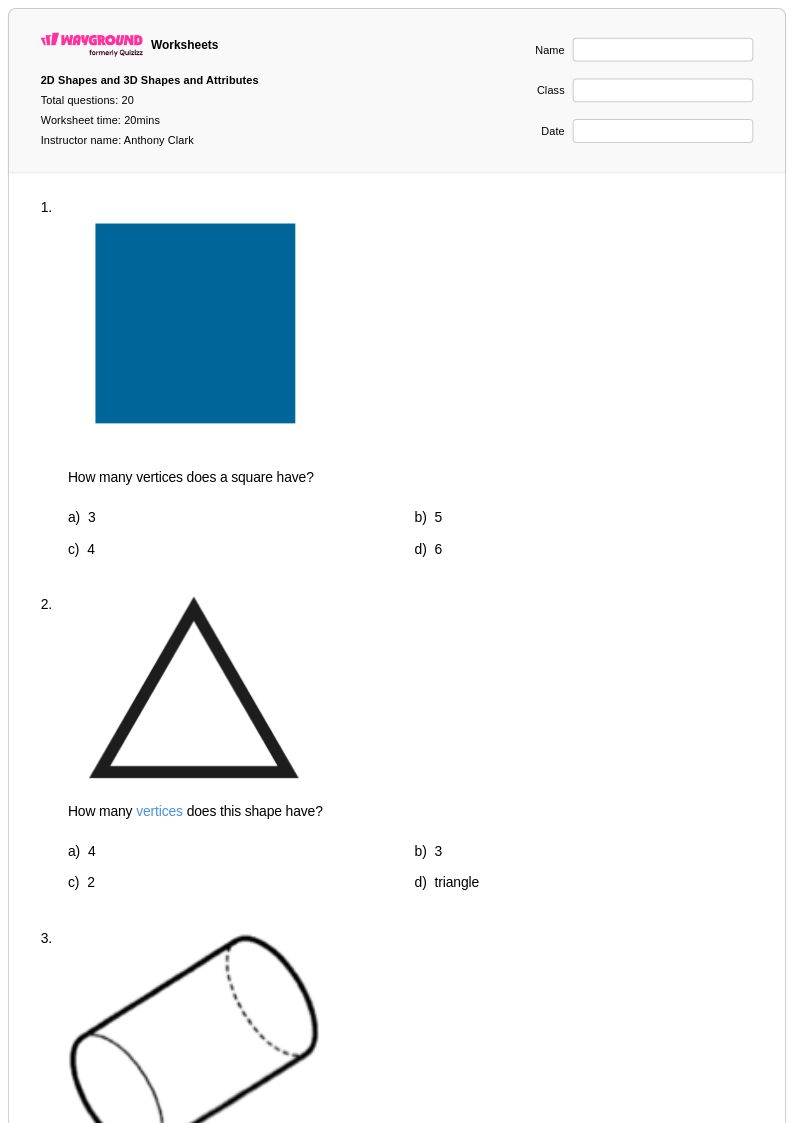
20 Q
2nd - Uni
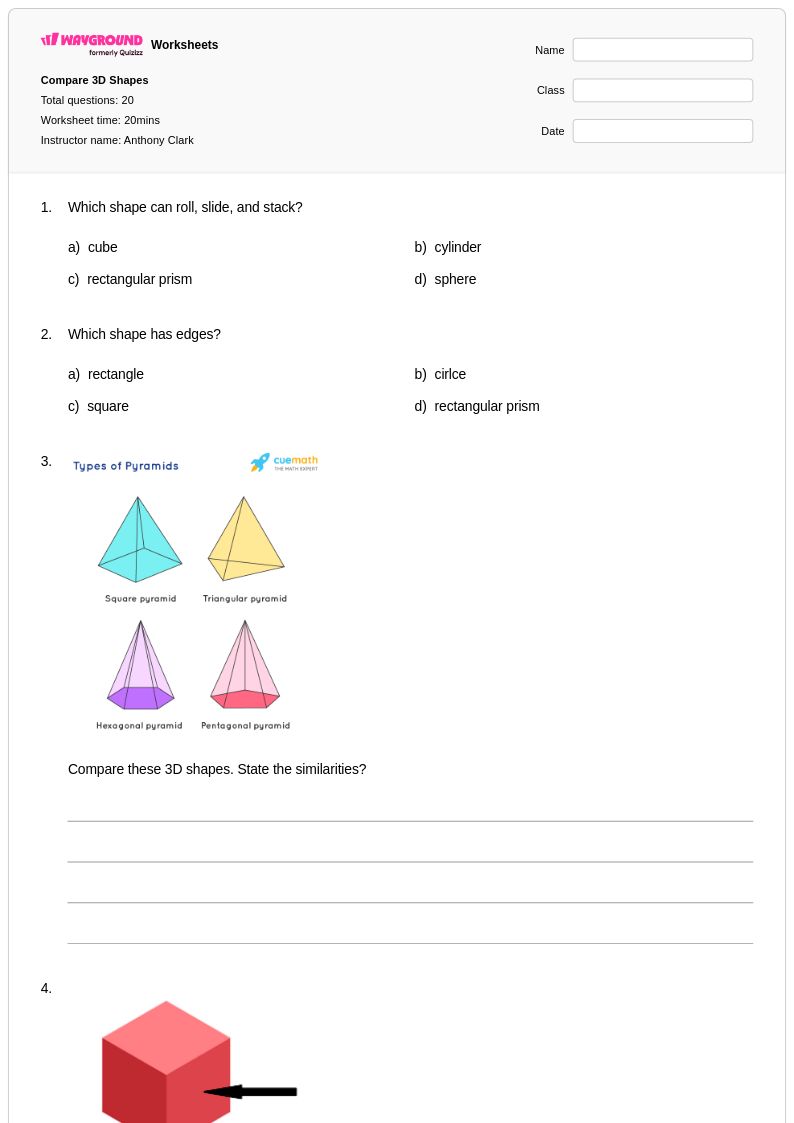
20 Q
3rd - Uni
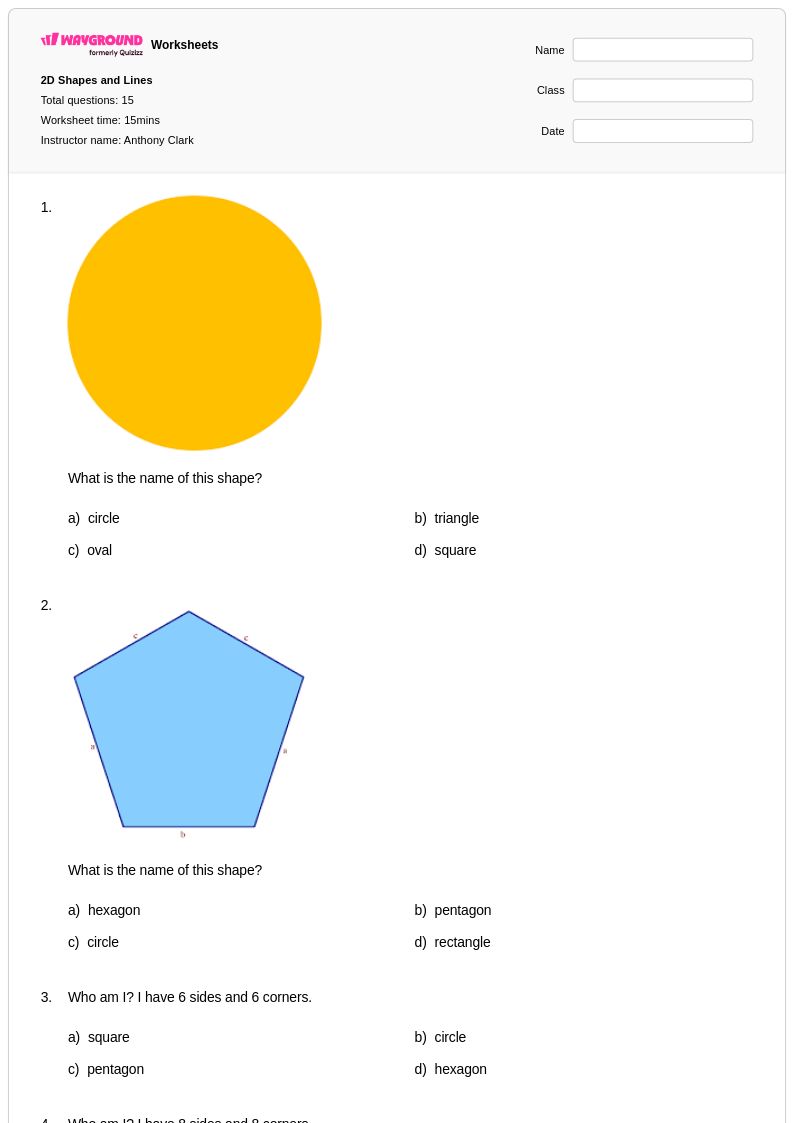
15 Q
3rd - Uni
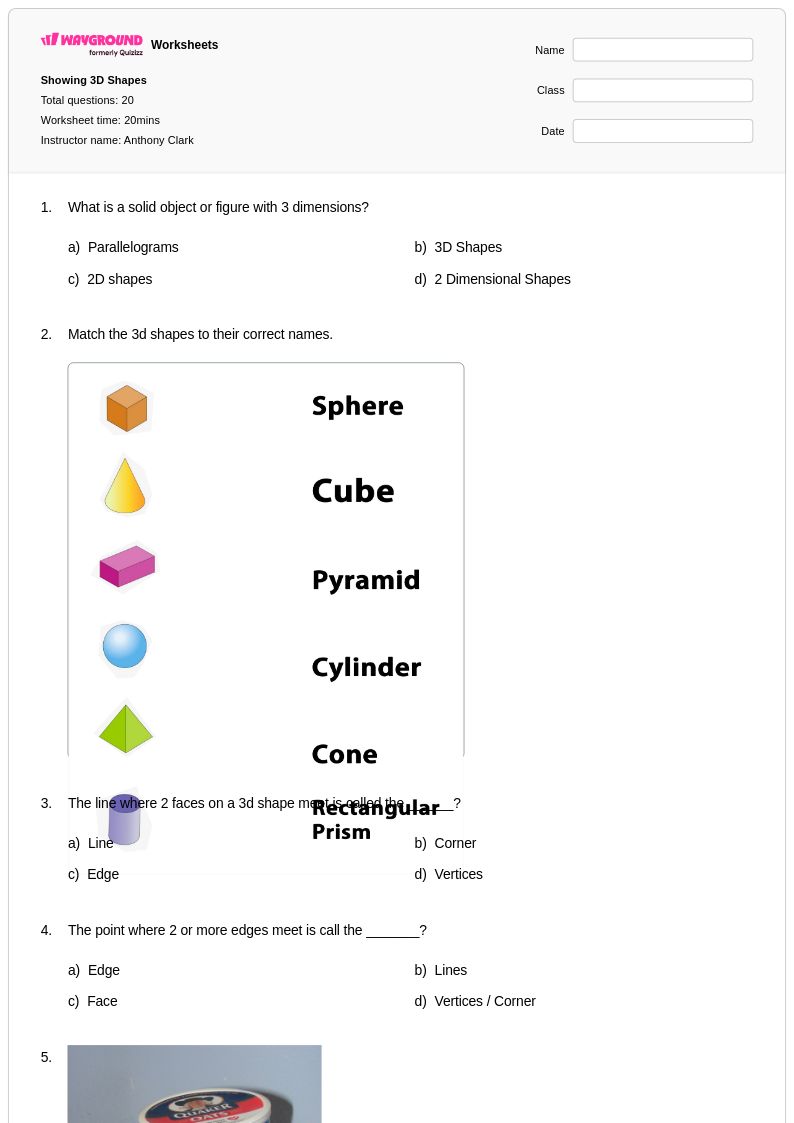
20 Q
3rd - Uni
Explore Other Subject Worksheets for grade 3
Explore printable Vertices worksheets for Grade 3
Vertices worksheets for Grade 3 students through Wayground (formerly Quizizz) provide essential practice for developing foundational geometry skills that support spatial reasoning and mathematical understanding. These comprehensive printables focus on helping young learners identify, count, and analyze vertices in various two-dimensional and three-dimensional shapes, building crucial geometric vocabulary and visual recognition abilities. The carefully designed practice problems progress systematically from simple shapes like triangles and rectangles to more complex polygons, allowing students to strengthen their understanding of how vertices define geometric figures. Each worksheet includes an answer key to support independent learning and self-assessment, while the free pdf format ensures easy accessibility for classroom use and home practice.
Wayground (formerly Quizizz) empowers teachers with millions of educator-created resources specifically designed for Grade 3 vertices instruction, featuring robust search and filtering capabilities that help locate worksheets aligned with specific curriculum standards and learning objectives. The platform's differentiation tools enable teachers to customize vertex-focused activities for diverse learning needs, whether providing remediation for struggling students or enrichment challenges for advanced learners. Teachers can seamlessly access both printable and digital formats, including downloadable pdfs, making lesson planning efficient and flexible across various instructional settings. These comprehensive worksheet collections support systematic skill practice and assessment, helping educators track student progress in geometric concept mastery while providing targeted interventions to ensure all learners develop strong foundational understanding of vertices and their role in shape identification.