
20 Q
2nd - Uni
10 Q
2nd - Uni
15 Q
2nd - Uni
23 Q
5th - 7th
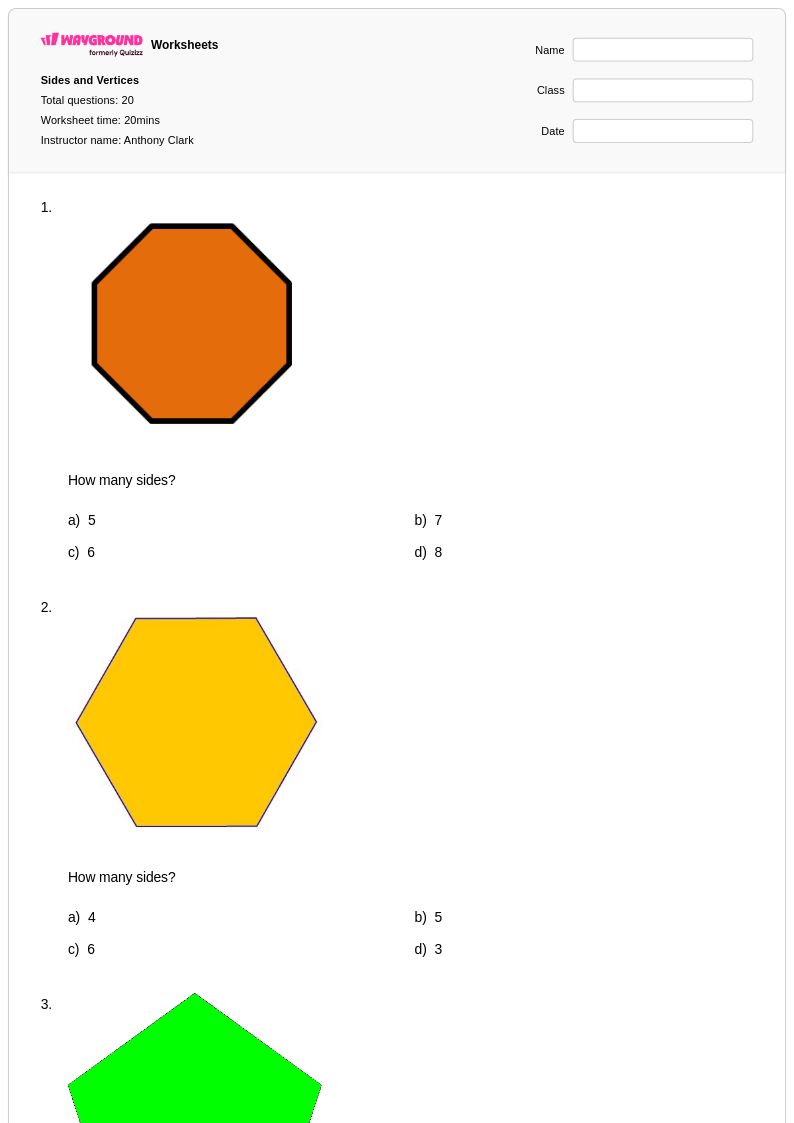
20 Q
2nd - Uni
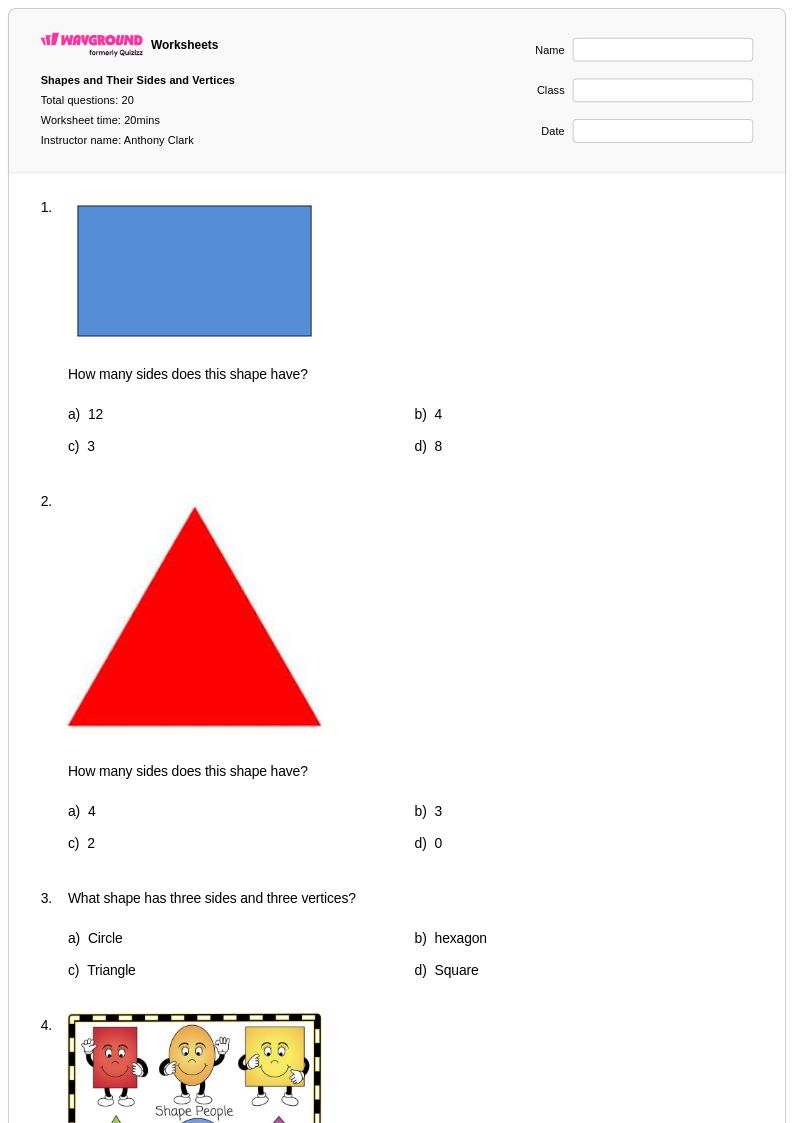
20 Q
2nd - Uni
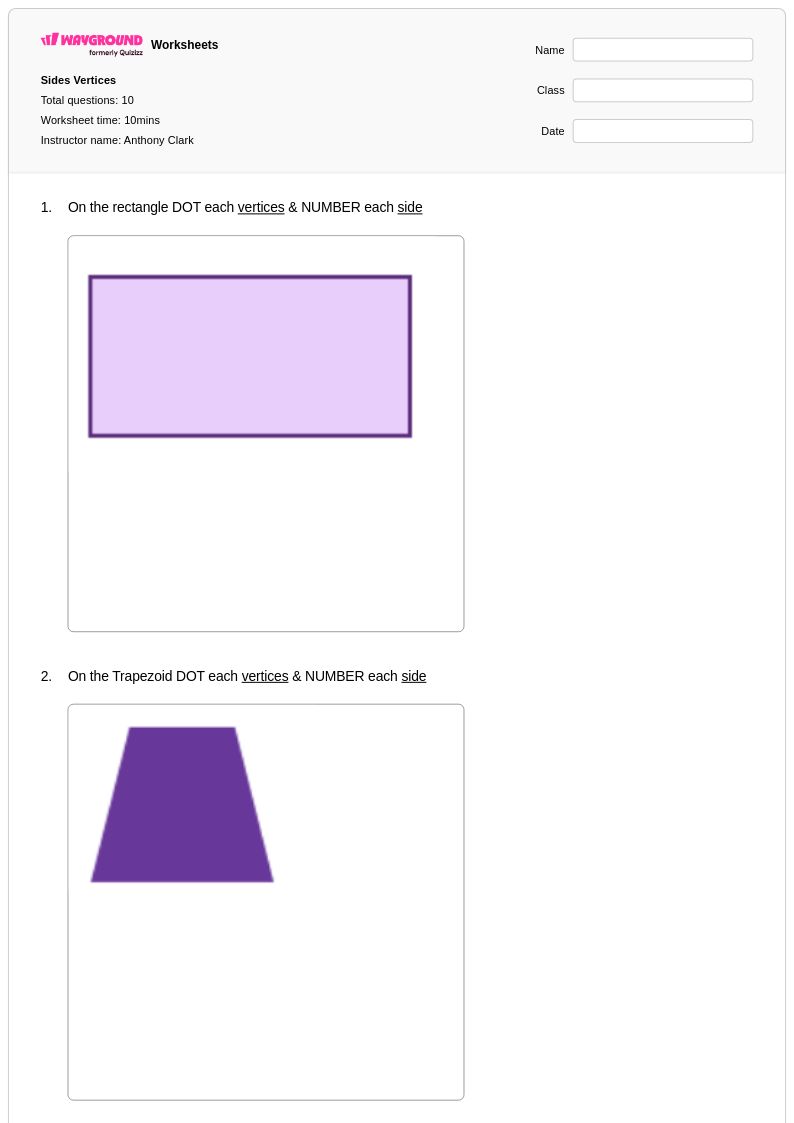
10 Q
2nd - Uni
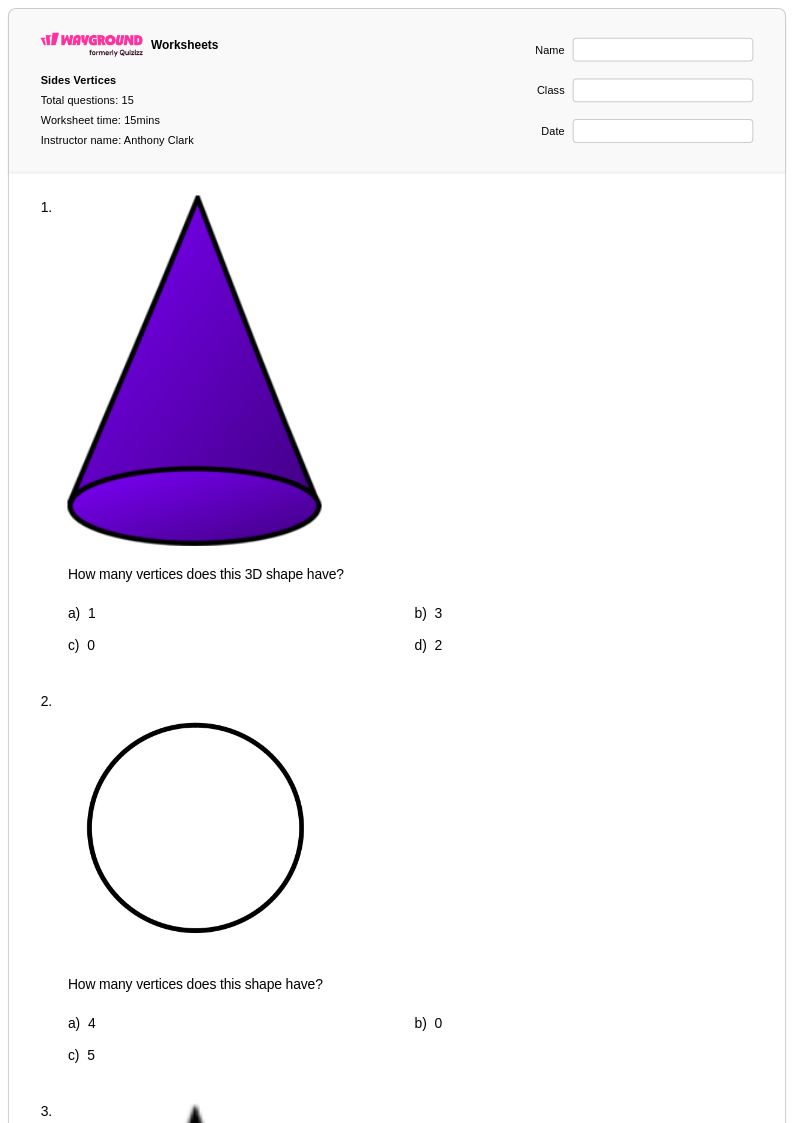
15 Q
2nd - Uni
12 Q
5th
15 Q
2nd - Uni
20 Q
3rd - Uni
16 Q
5th
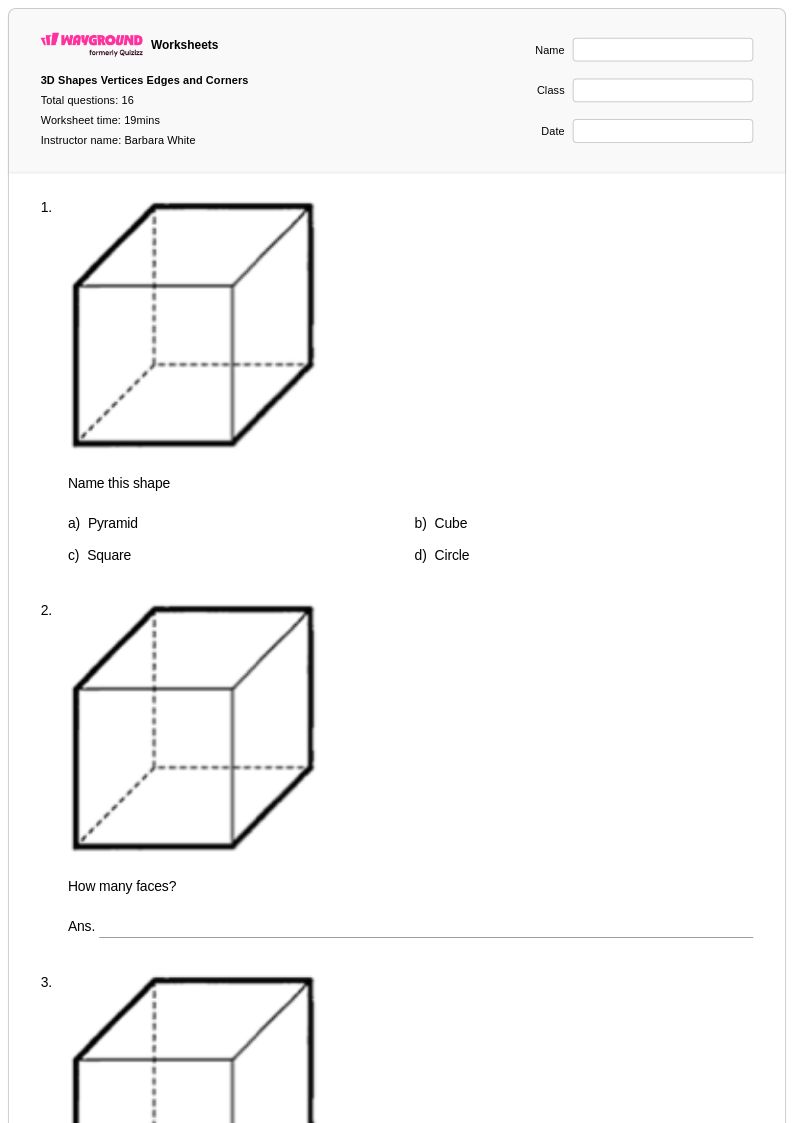
16 Q
5th
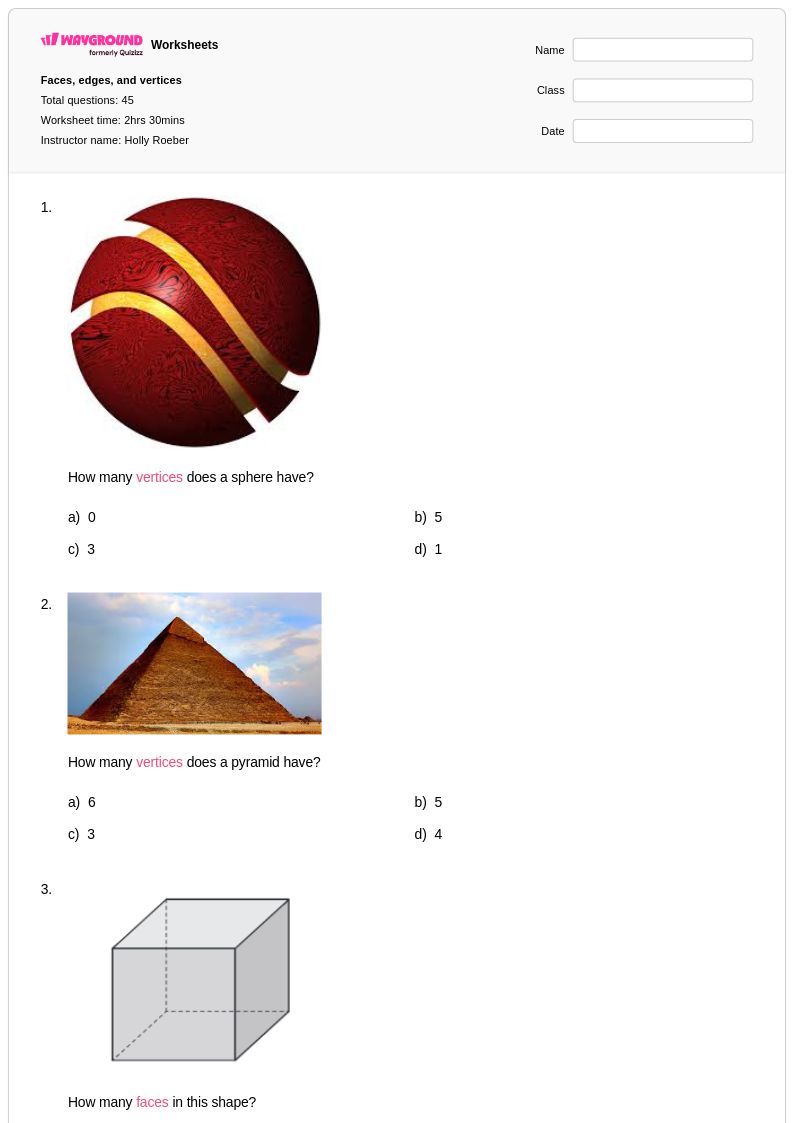
45 Q
5th
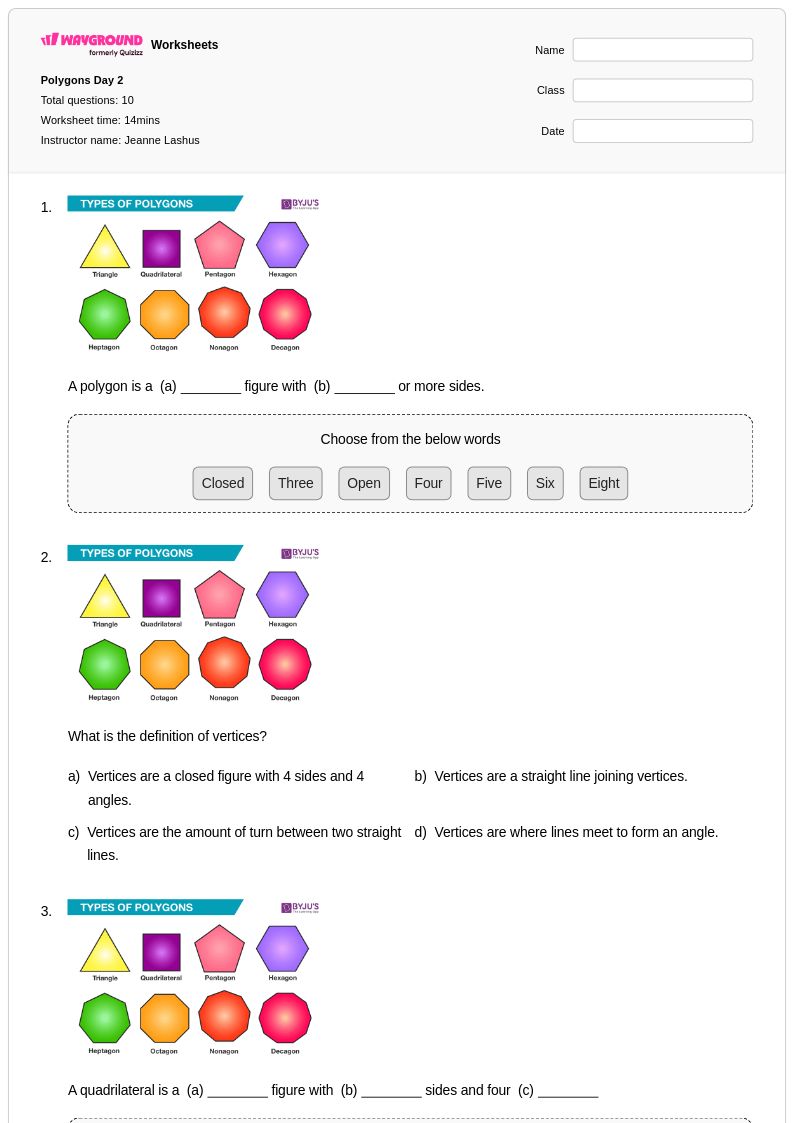
10 Q
5th
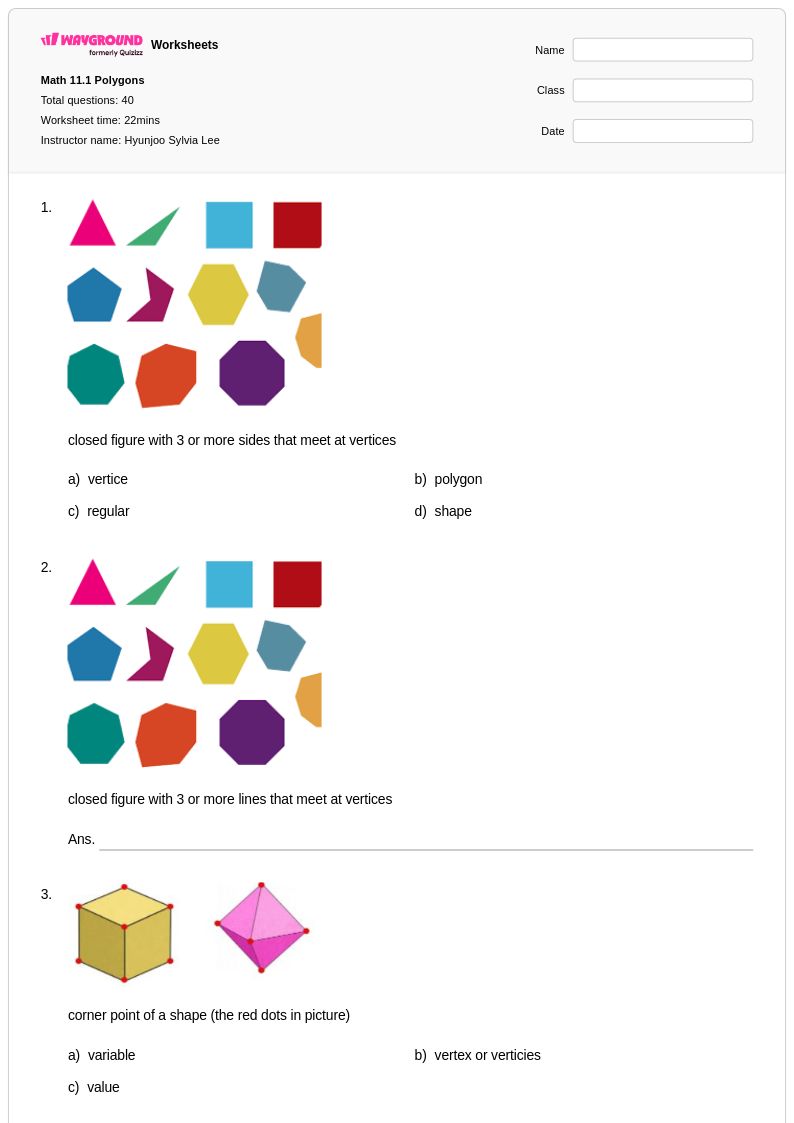
54 Q
3rd - 5th
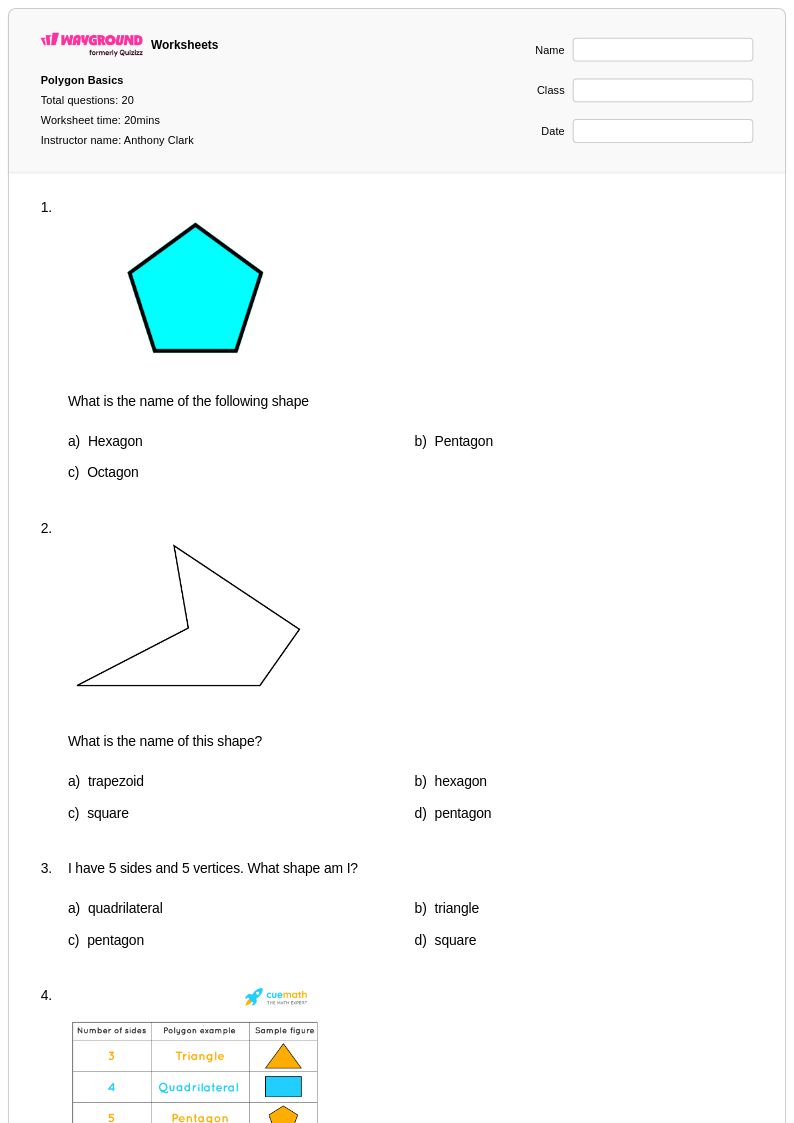
20 Q
3rd - Uni
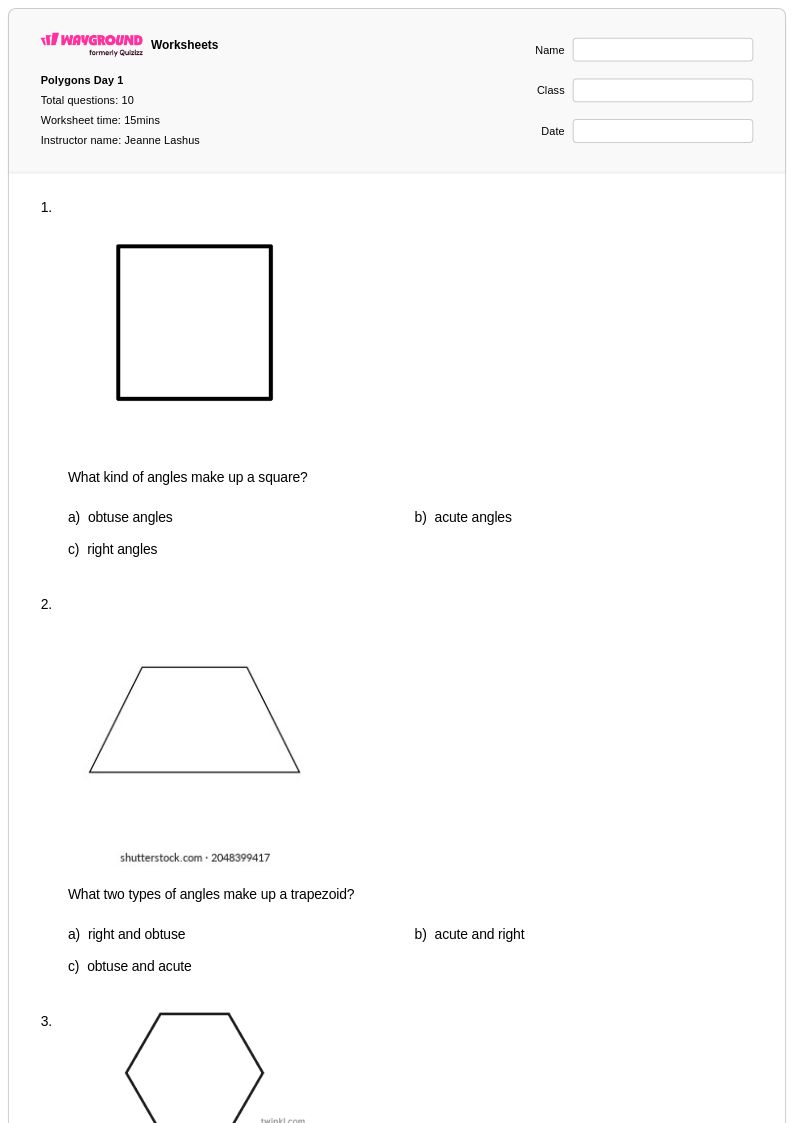
10 Q
5th
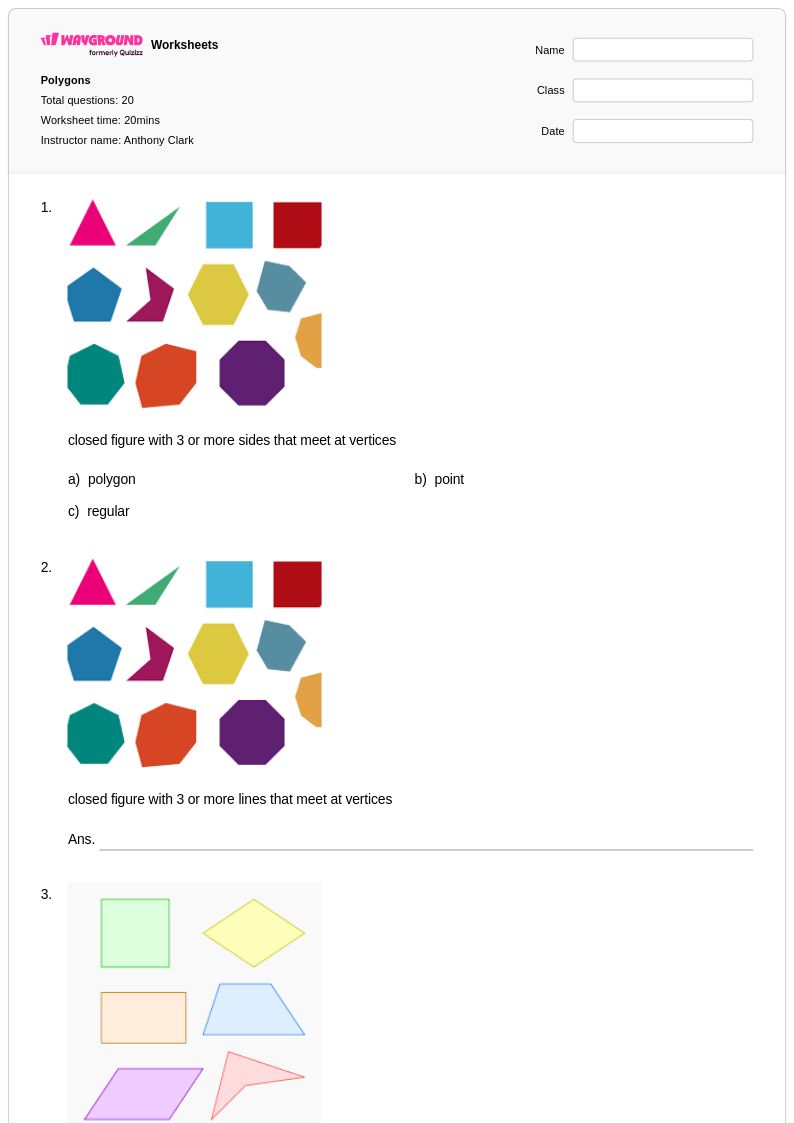
20 Q
5th - Uni
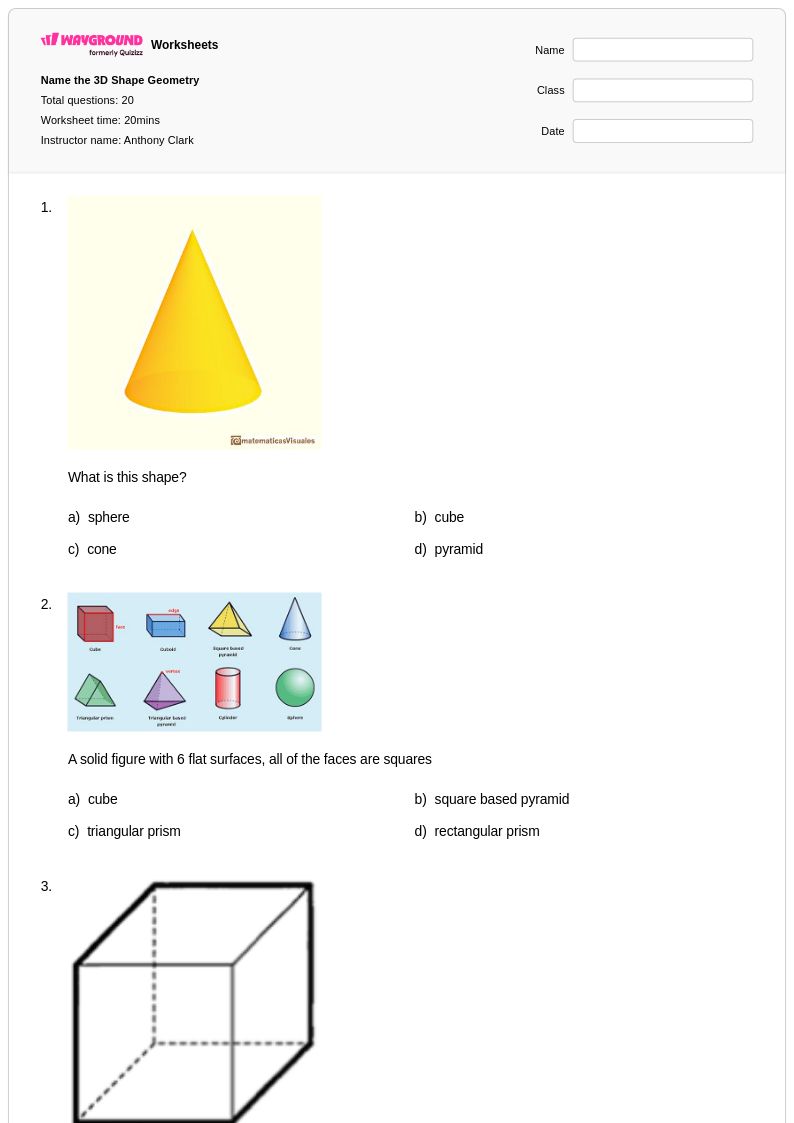
20 Q
2nd - Uni
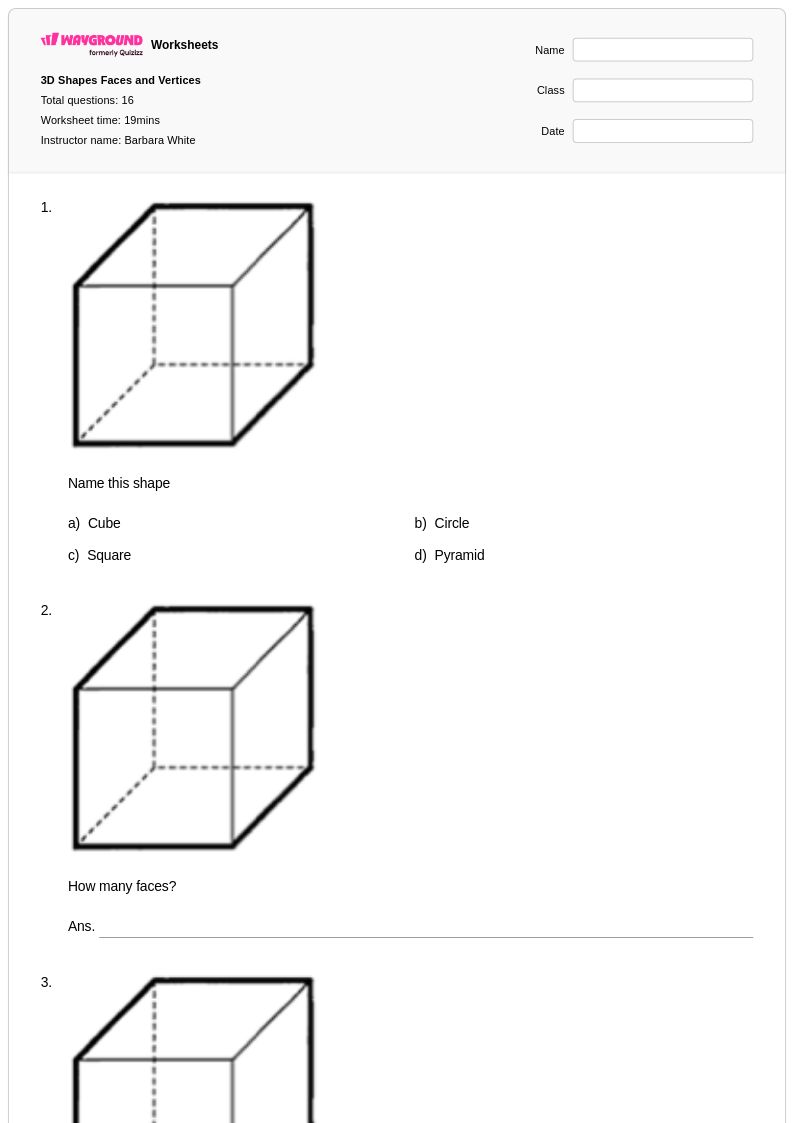
16 Q
5th
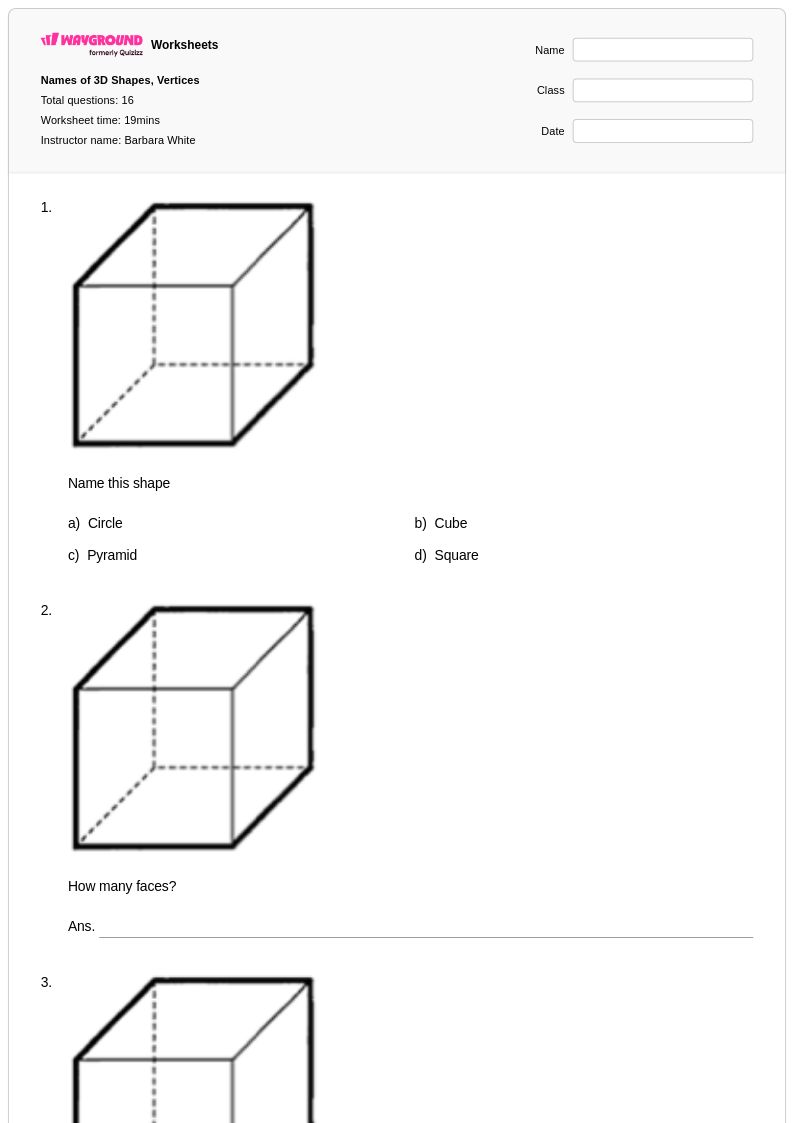
16 Q
5th
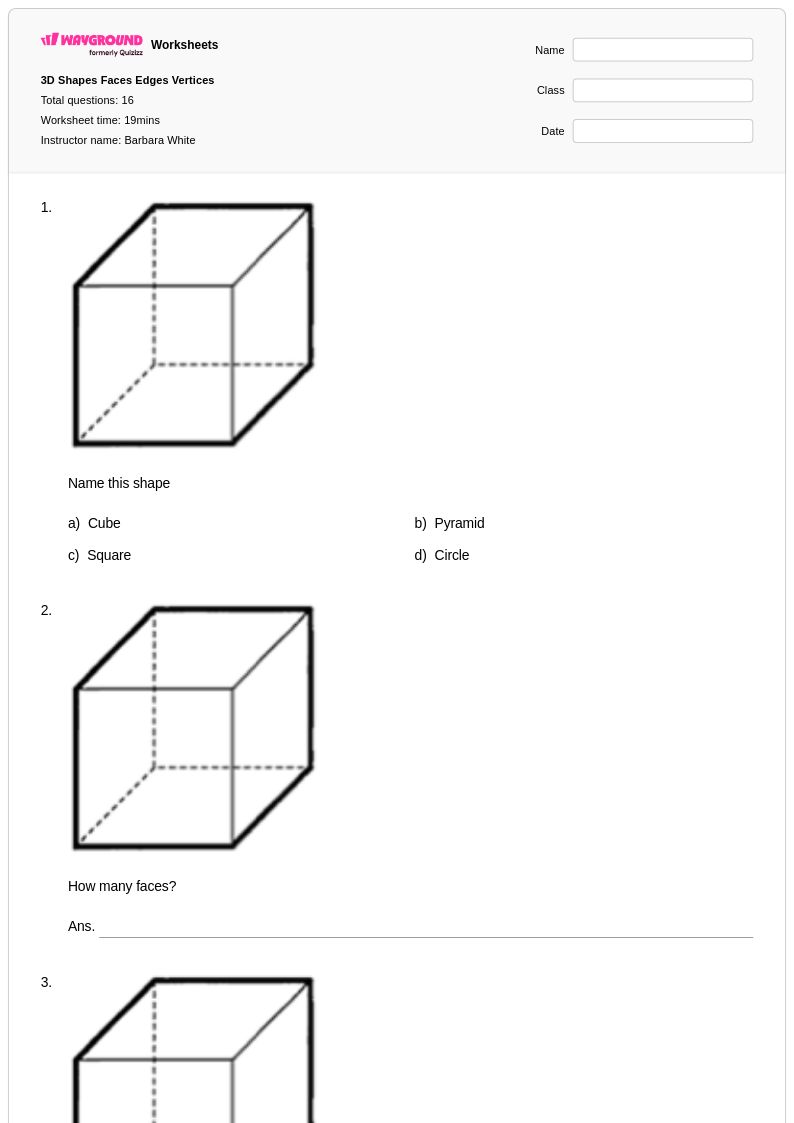
16 Q
5th
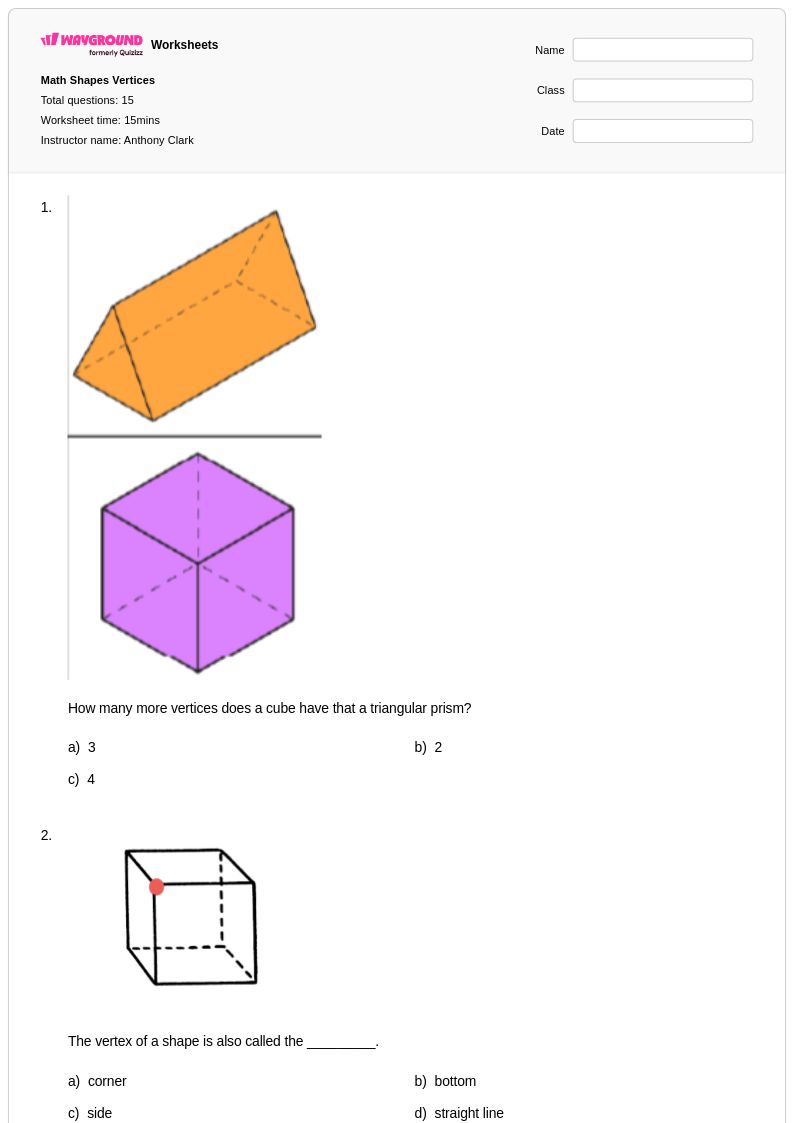
15 Q
3rd - Uni
Explore Other Subject Worksheets for grade 5
Explore printable Vertices worksheets for Grade 5
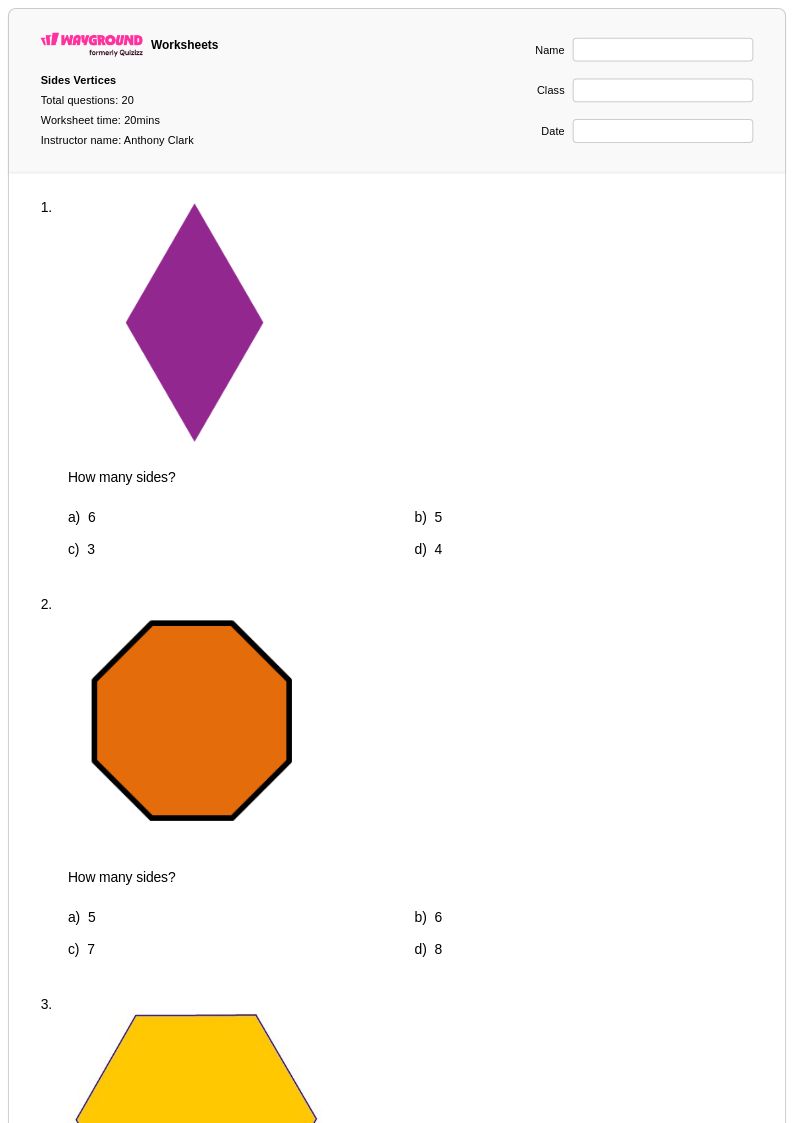
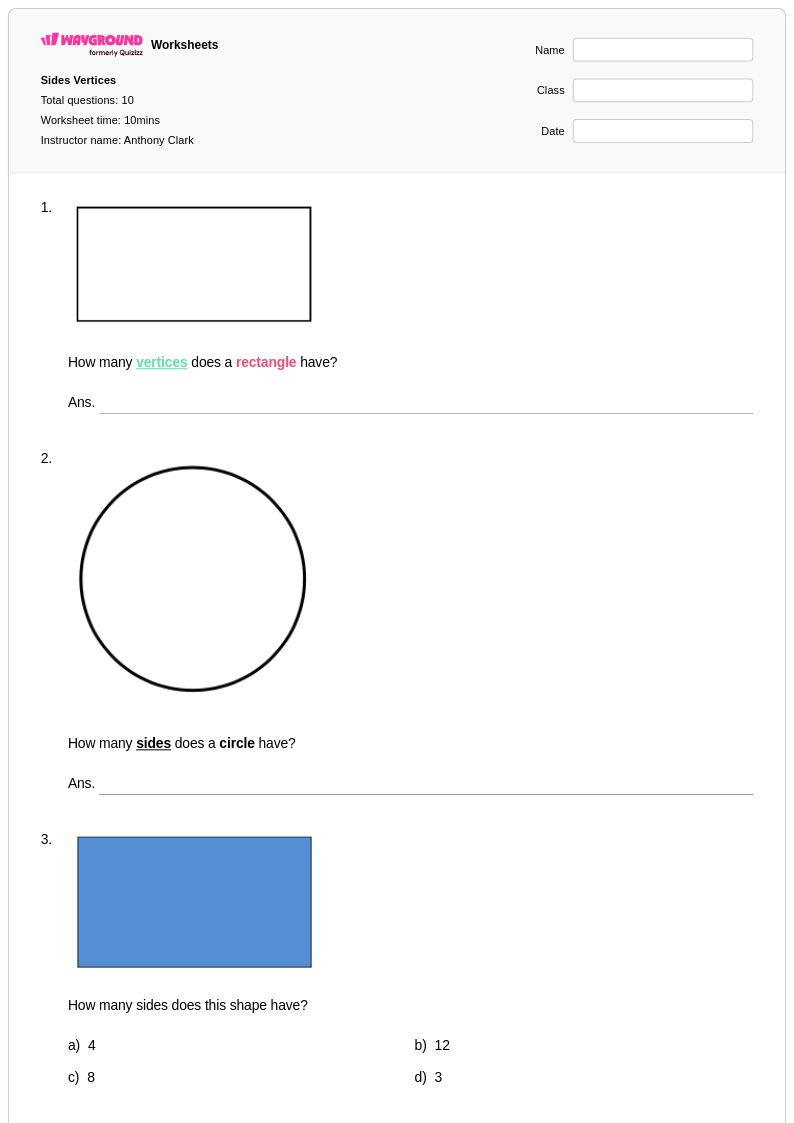
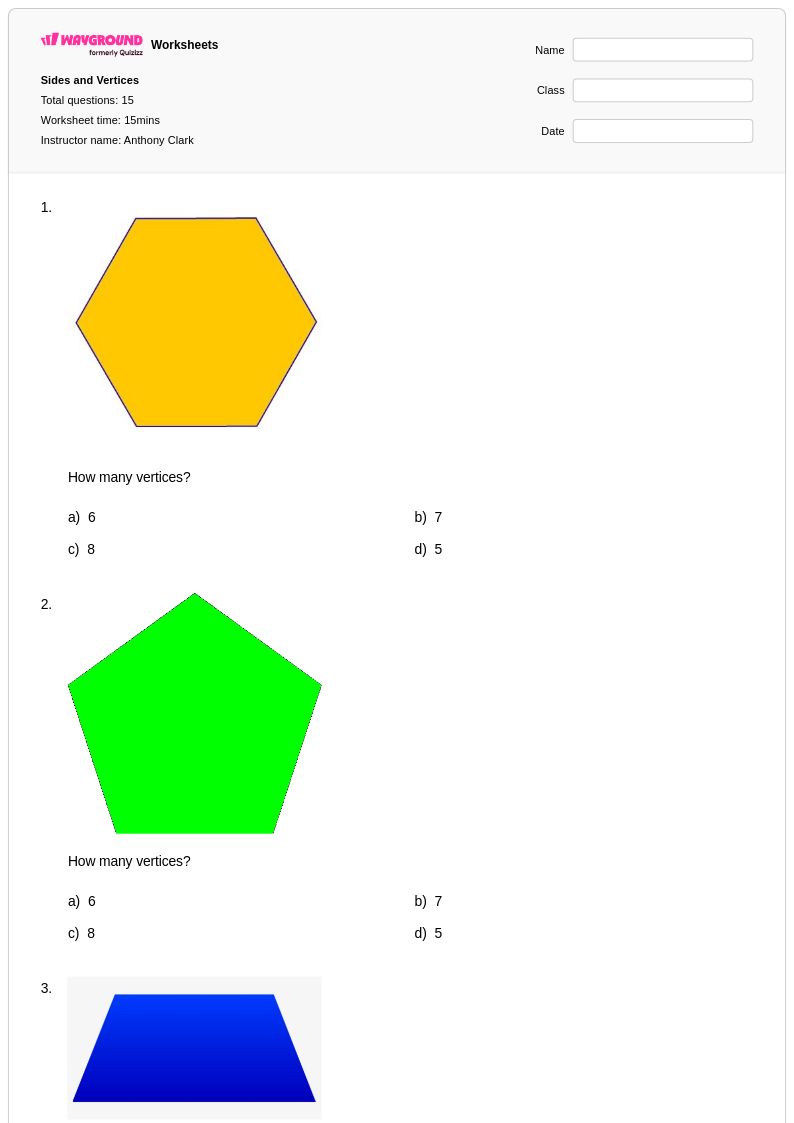
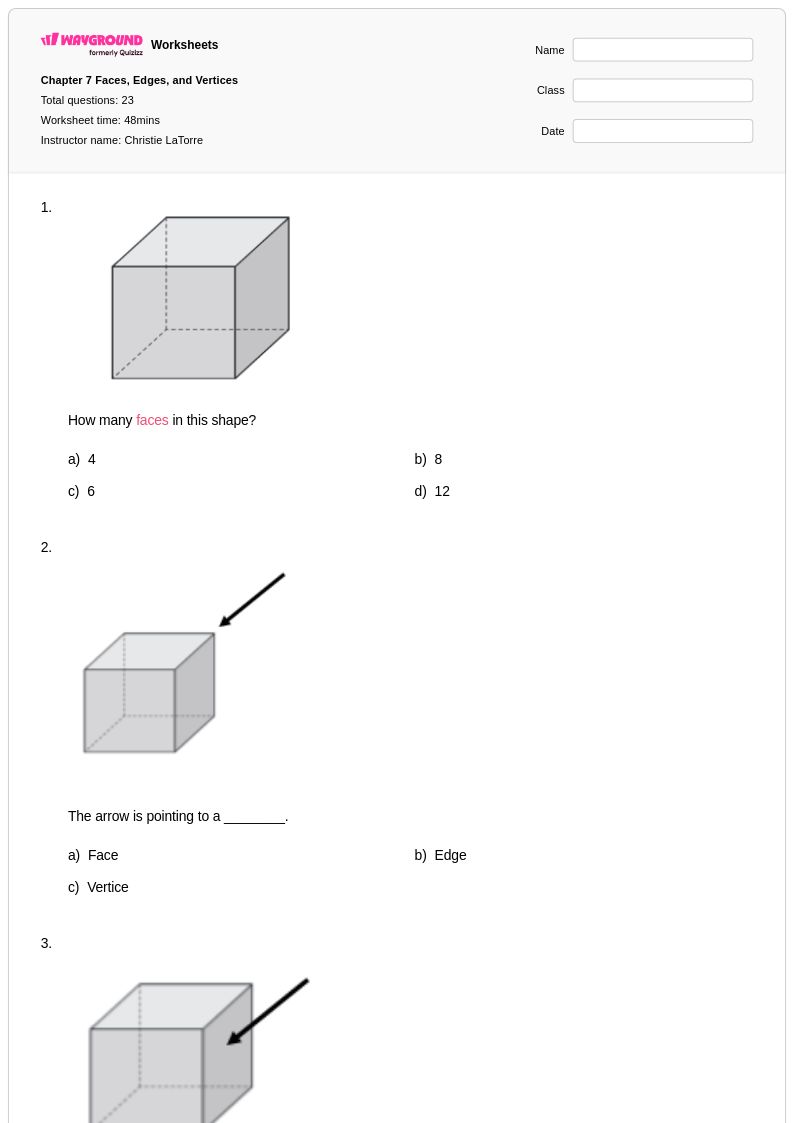
Vertices worksheets for Grade 5 students available through Wayground (formerly Quizizz) provide comprehensive practice opportunities for students to master this fundamental geometry concept. These educational resources focus on helping fifth-grade learners identify, count, and analyze vertices in various two-dimensional and three-dimensional shapes, strengthening their spatial reasoning and geometric vocabulary. The worksheets include diverse practice problems that challenge students to distinguish vertices from edges and faces, locate vertices on coordinate planes, and apply vertex knowledge to real-world geometric scenarios. Each worksheet collection comes with detailed answer keys, making assessment and self-checking straightforward for both students and educators, while the free printable format ensures accessibility for classroom and home learning environments.
Wayground (formerly Quizizz) empowers teachers with an extensive library of millions of teacher-created vertices worksheets specifically designed for Grade 5 mathematics instruction. The platform's robust search and filtering capabilities allow educators to quickly locate materials that align with state and national geometry standards, ensuring curriculum coherence and academic rigor. Teachers can easily differentiate instruction by selecting from various difficulty levels and problem types, while the flexible customization tools enable modification of existing worksheets to meet specific classroom needs. Available in both printable pdf format and interactive digital versions, these vertex-focused resources support diverse learning environments and teaching styles, facilitating effective lesson planning, targeted skill remediation, advanced student enrichment, and consistent practice opportunities that build geometric understanding progressively throughout the school year.