
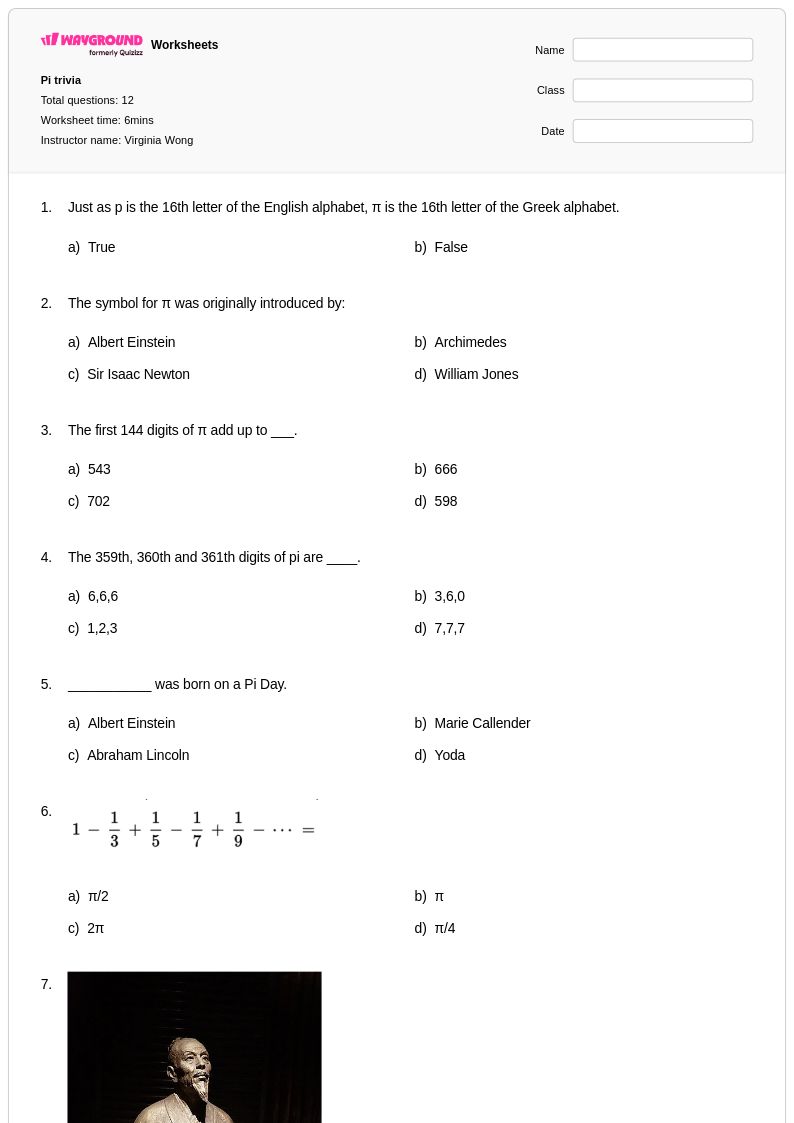
12 Q
5th - 8th
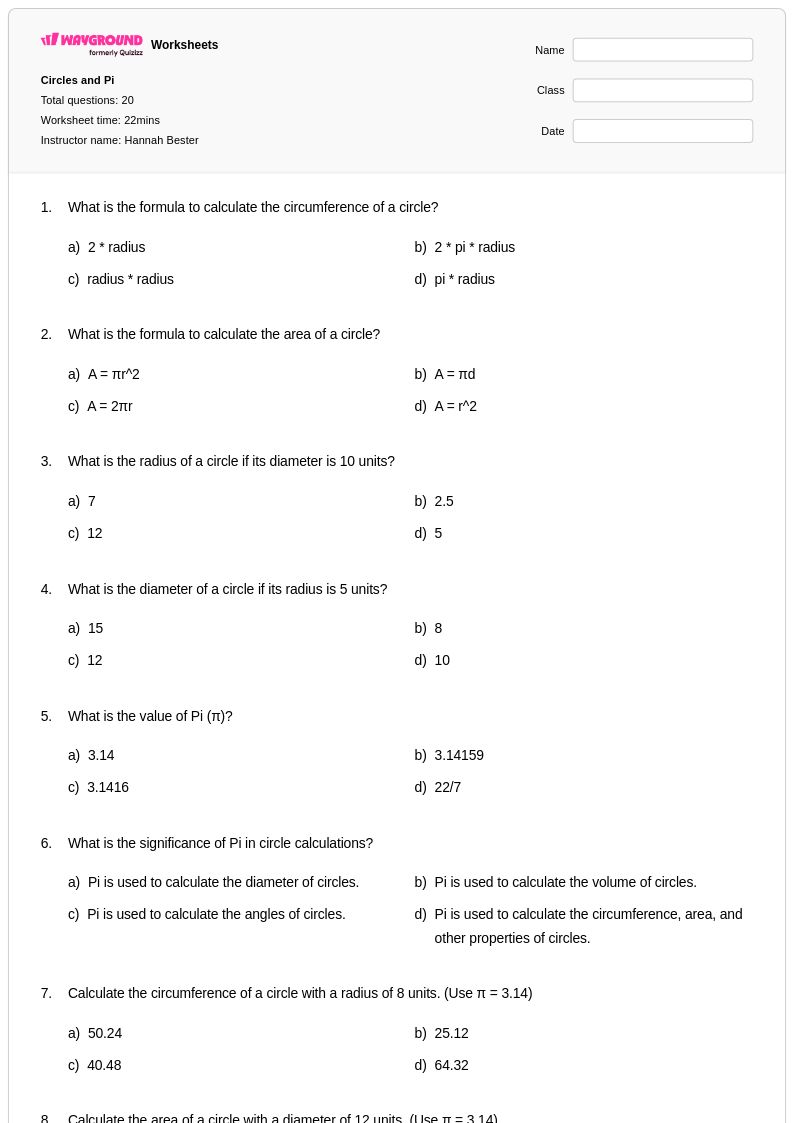
20 Q
5th
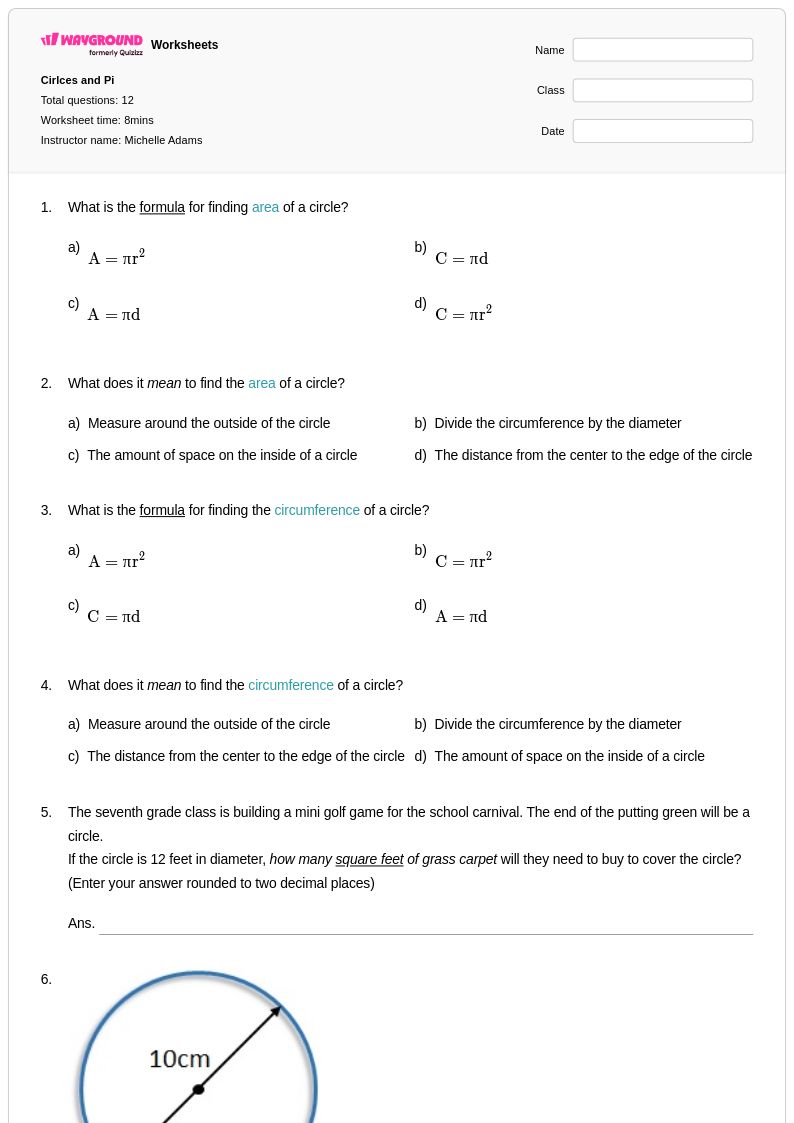
12 Q
5th - 7th
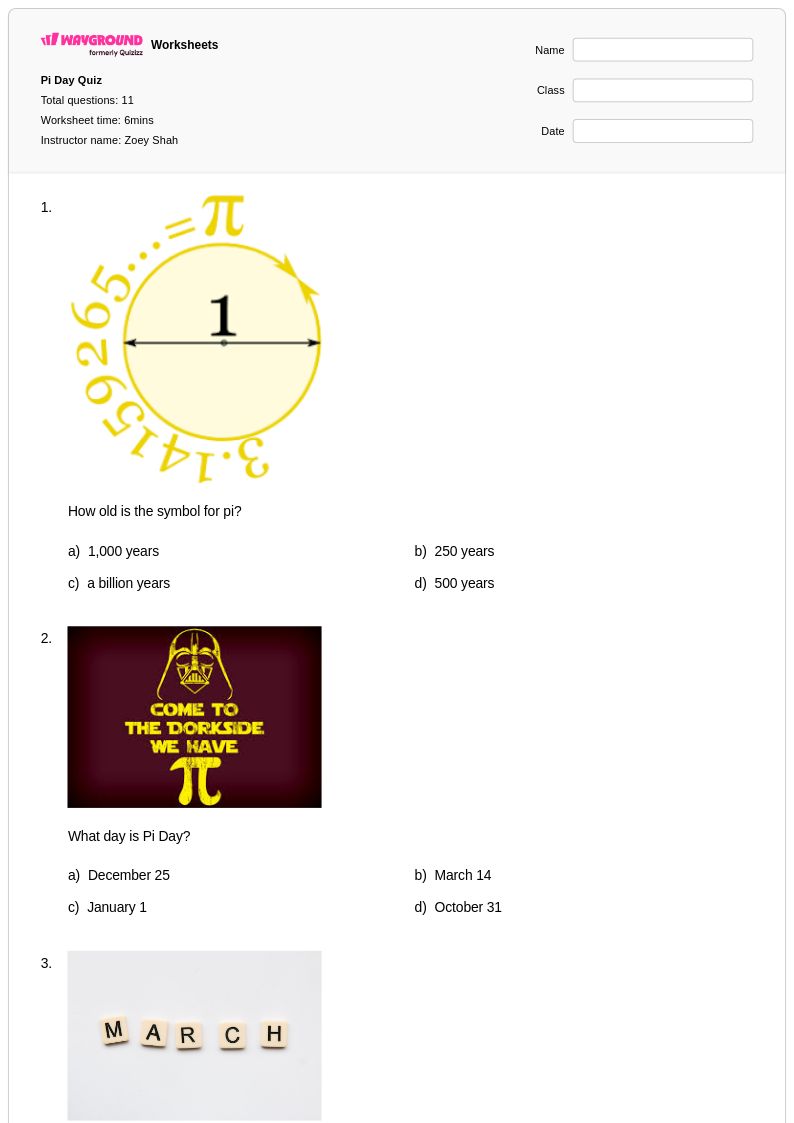
11 Q
5th
15 Q
5th - 7th
9 Q
5th - 8th
18 Q
5th - 6th
11 Q
5th
10 Q
3rd - 5th
14 Q
4th - Uni
10 Q
3rd - 8th
10 Q
2nd - 12th
16 Q
5th - 8th
13 Q
5th - 8th
21 Q
5th
9 Q
5th
10 Q
1st - 5th
10 Q
1st - 5th
6 Q
5th - 6th
10 Q
5th - 12th
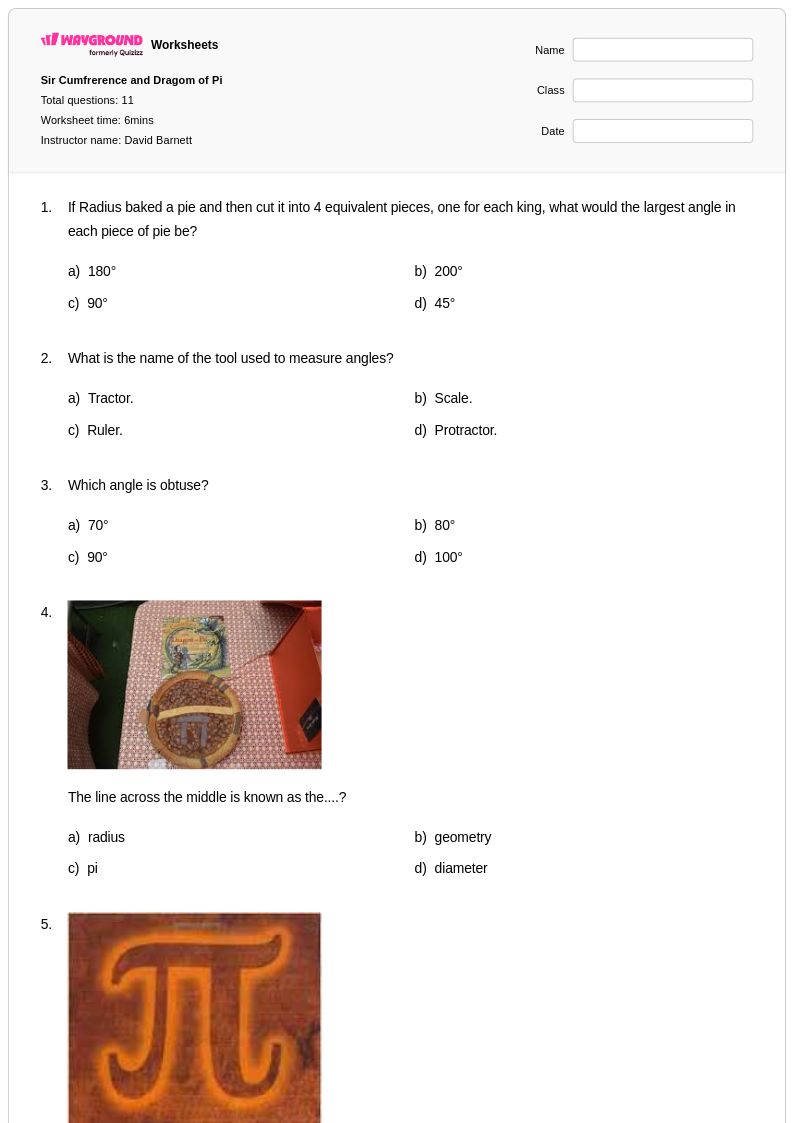
11 Q
4th - 9th

20 Q
5th
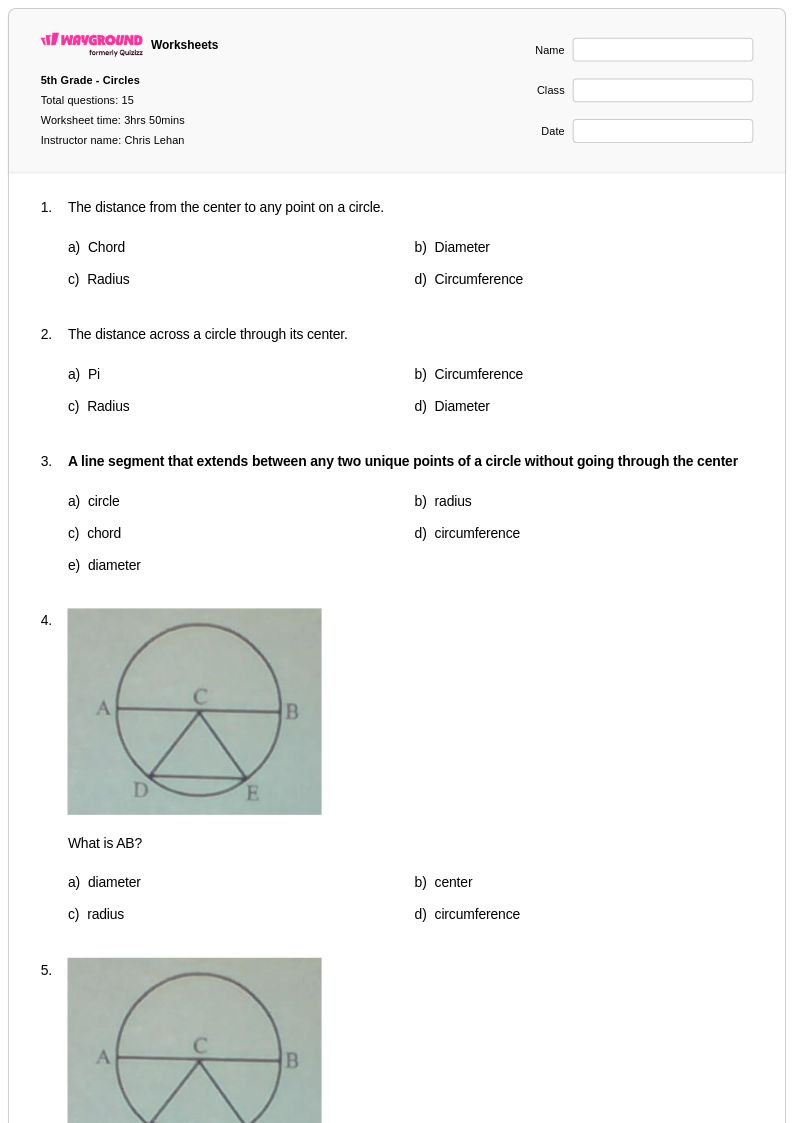
15 Q
5th
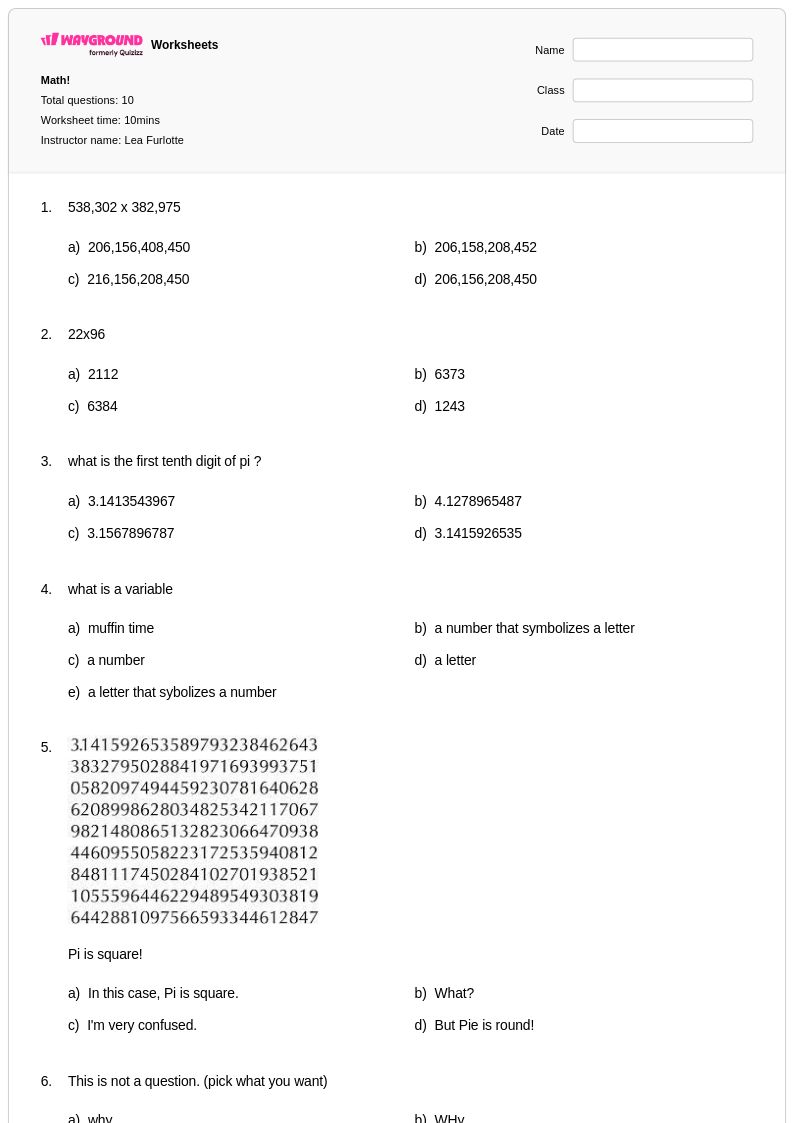
10 Q
4th - 5th
Explore Pi Worksheets by Grades
Explore Other Subject Worksheets for grade 5
Explore printable Pi worksheets for Grade 5
Pi worksheets for Grade 5 students available through Wayground (formerly Quizizz) introduce young mathematicians to one of geometry's most fascinating and fundamental constants. These comprehensive printables guide fifth graders through the discovery of pi as the ratio of a circle's circumference to its diameter, using hands-on measurement activities and visual representations that make this abstract concept accessible. The practice problems progress systematically from basic circle identification and measurement exercises to calculating circumference using pi, strengthening students' understanding of geometric relationships while building computational fluency. Each worksheet collection includes detailed answer keys and free pdf downloads, ensuring teachers have complete resources for instruction and assessment of this crucial geometric principle.
Wayground's extensive library contains millions of teacher-created pi and geometry resources specifically designed for Grade 5 mathematics instruction, offering educators unprecedented flexibility in lesson planning and skill development. The platform's robust search and filtering capabilities allow teachers to quickly locate worksheets aligned with state and national mathematics standards, while built-in differentiation tools enable customization for diverse learning needs and ability levels. These digital and printable resources support comprehensive instructional approaches, from initial concept introduction through remediation and enrichment activities, helping educators address varying student readiness levels within their classrooms. The seamless integration of interactive digital formats with traditional pdf printables ensures teachers can deliver pi instruction through multiple modalities, accommodating different learning preferences while maintaining consistent academic rigor across all practice opportunities.