
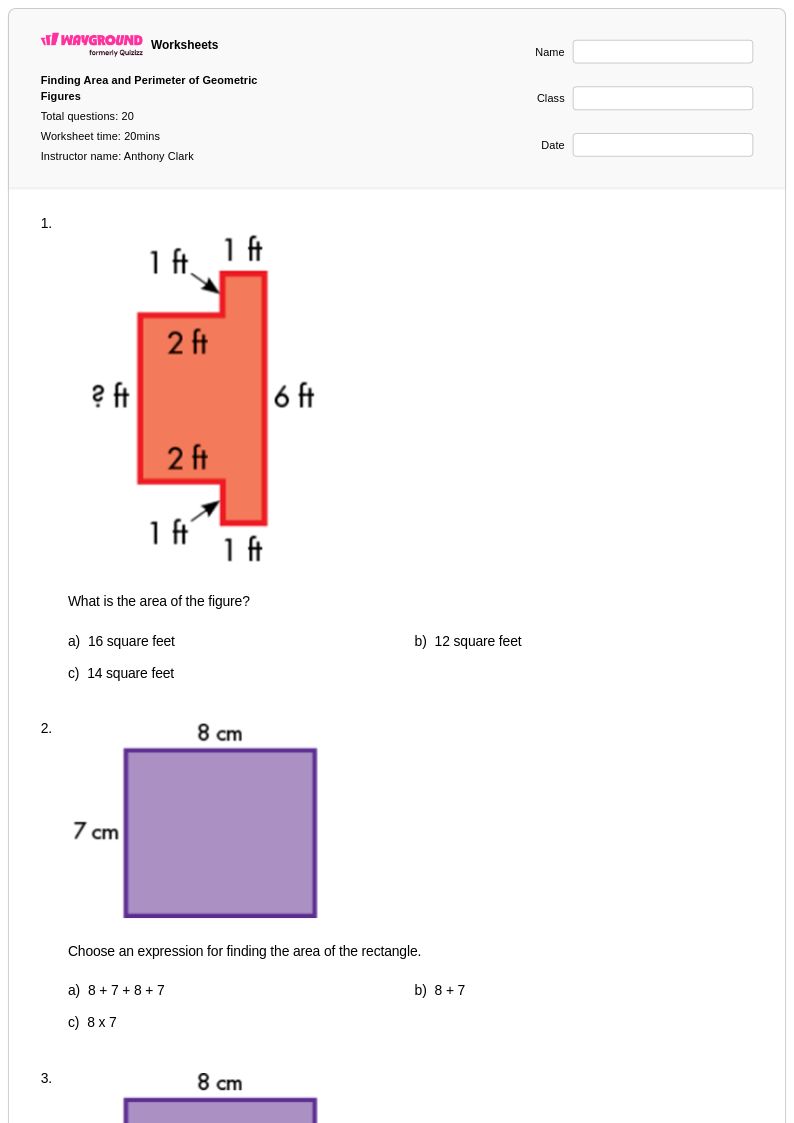
20 Q
4th - Uni
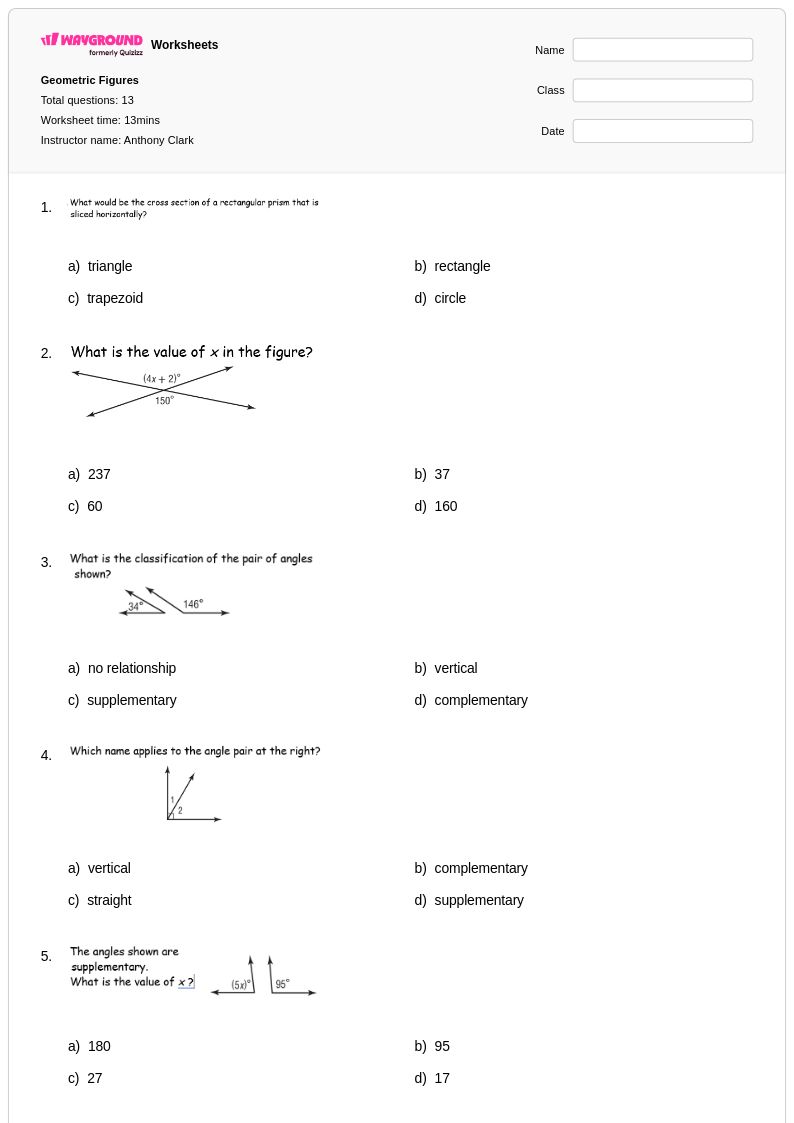
13 Q
5th - Uni
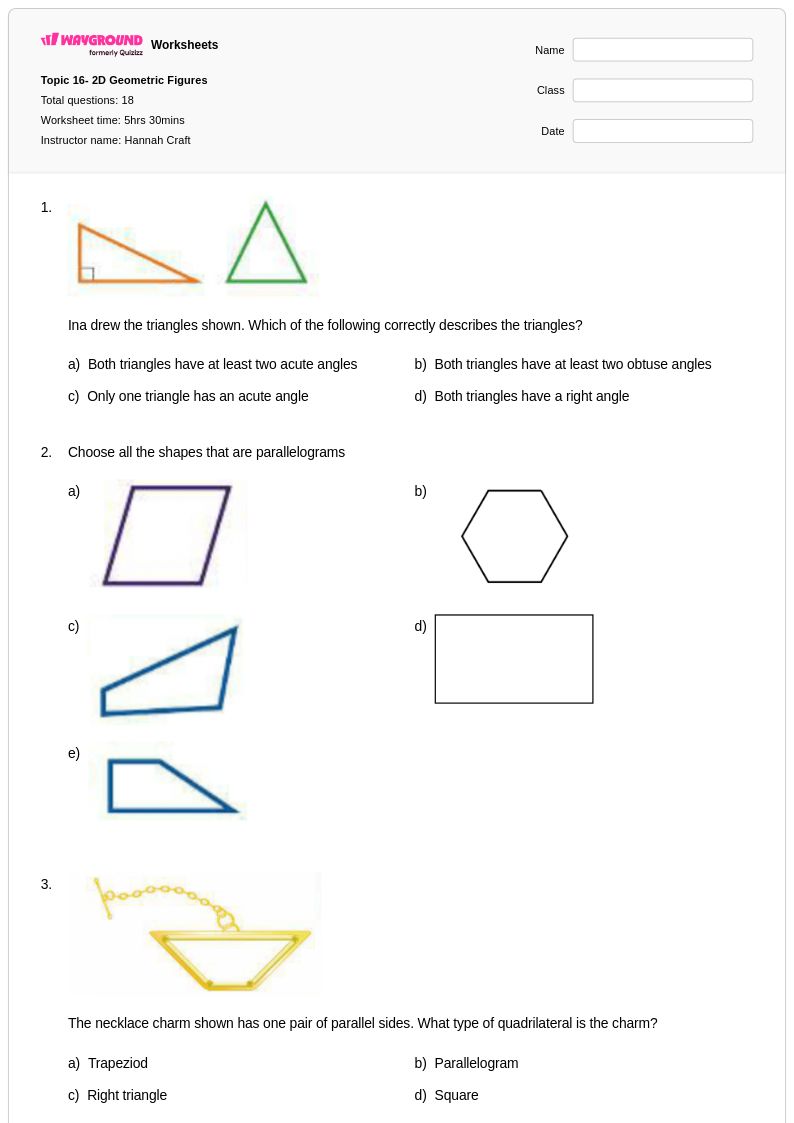
18 Q
5th
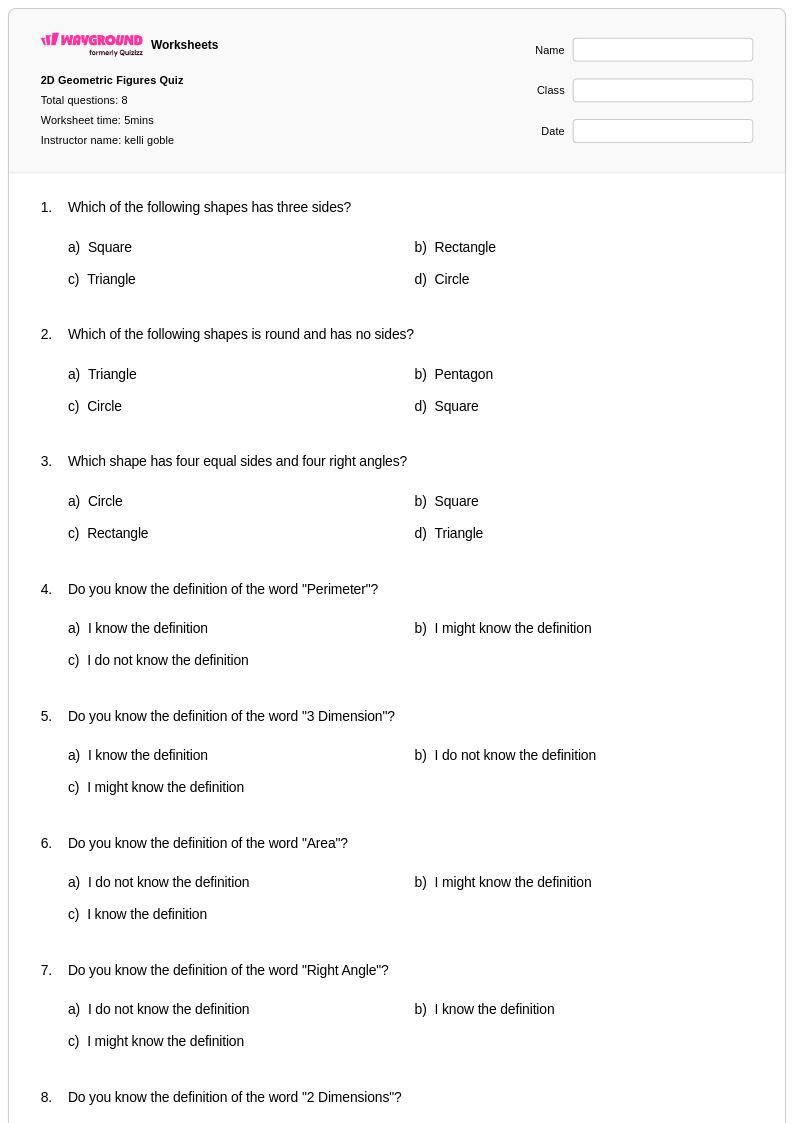
8 Q
5th
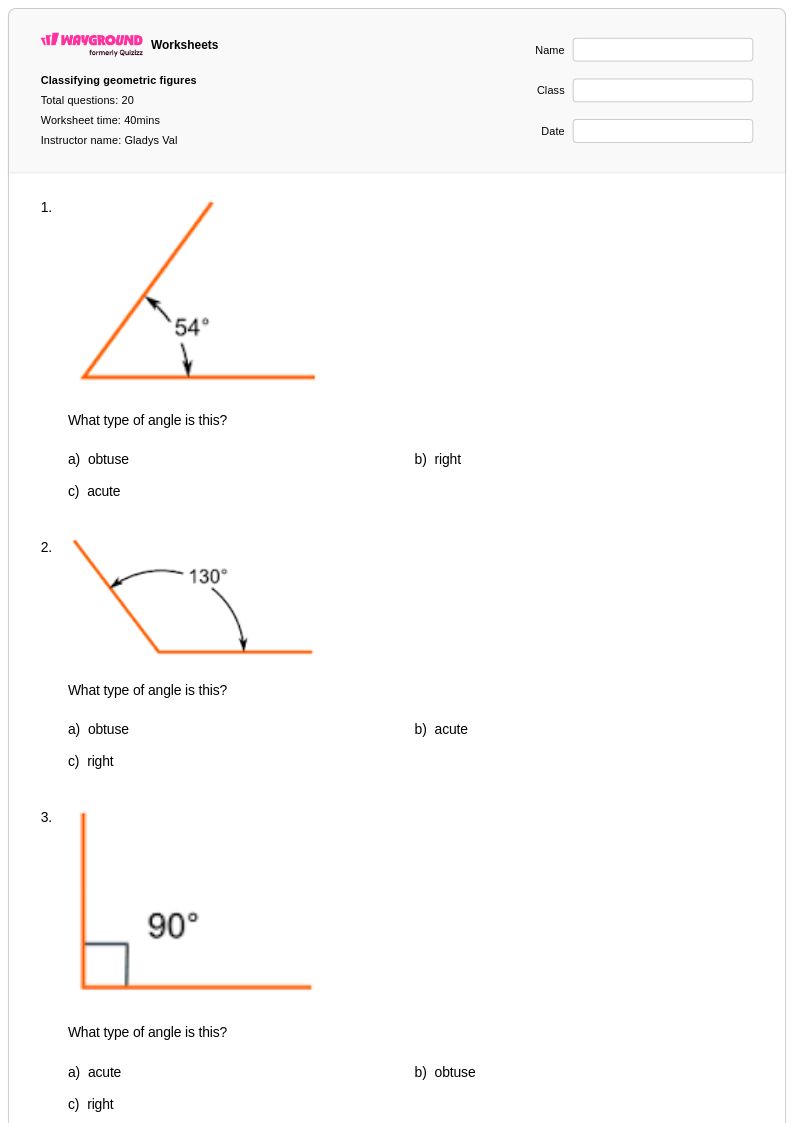
20 Q
5th
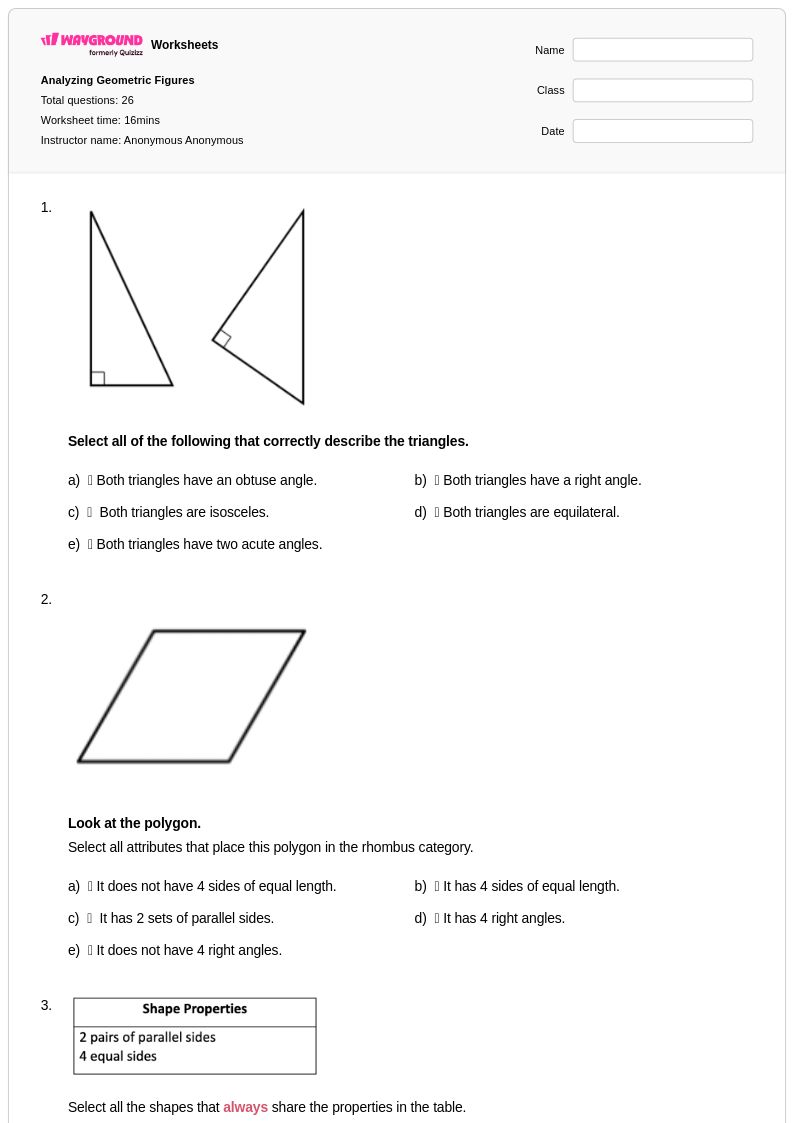
26 Q
5th
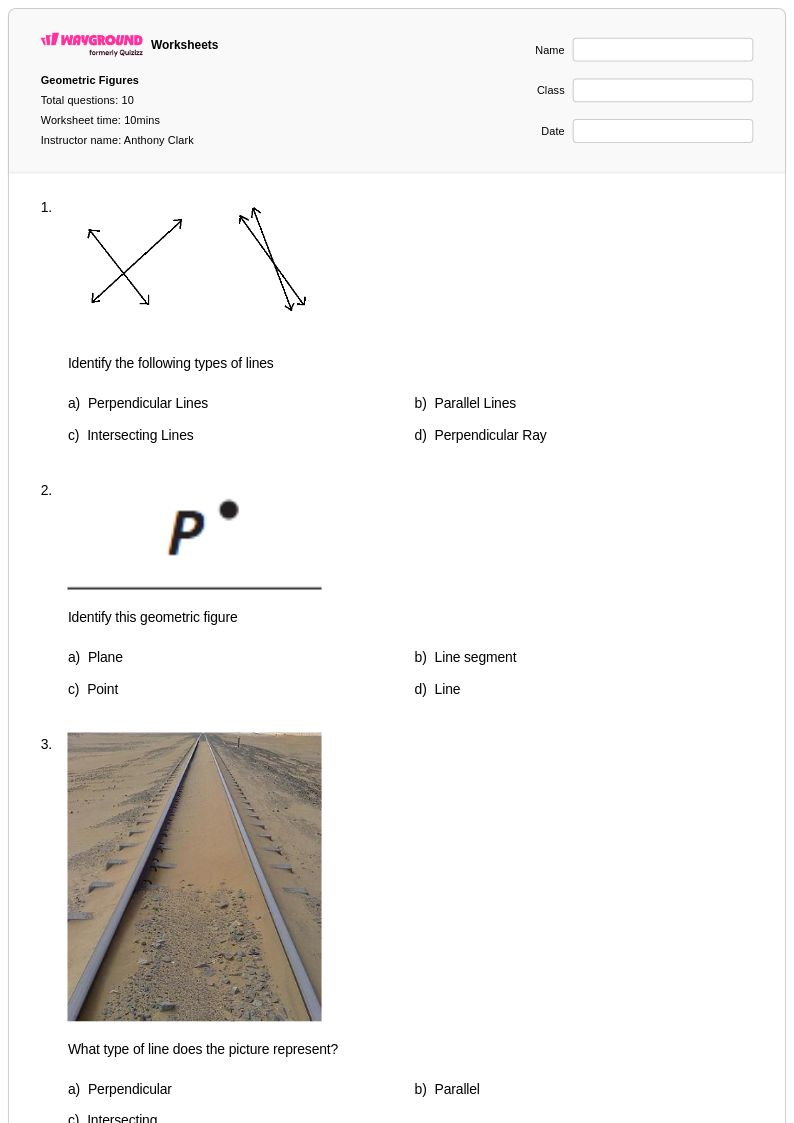
10 Q
5th - Uni
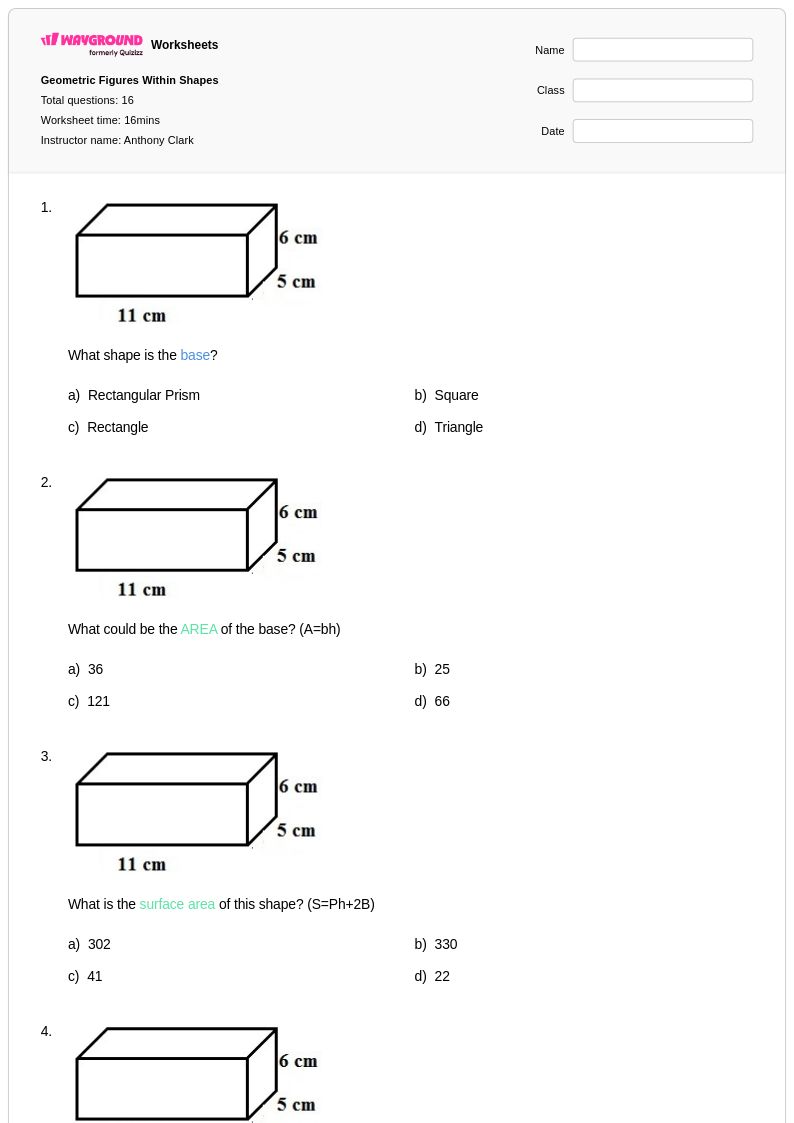
16 Q
5th - Uni
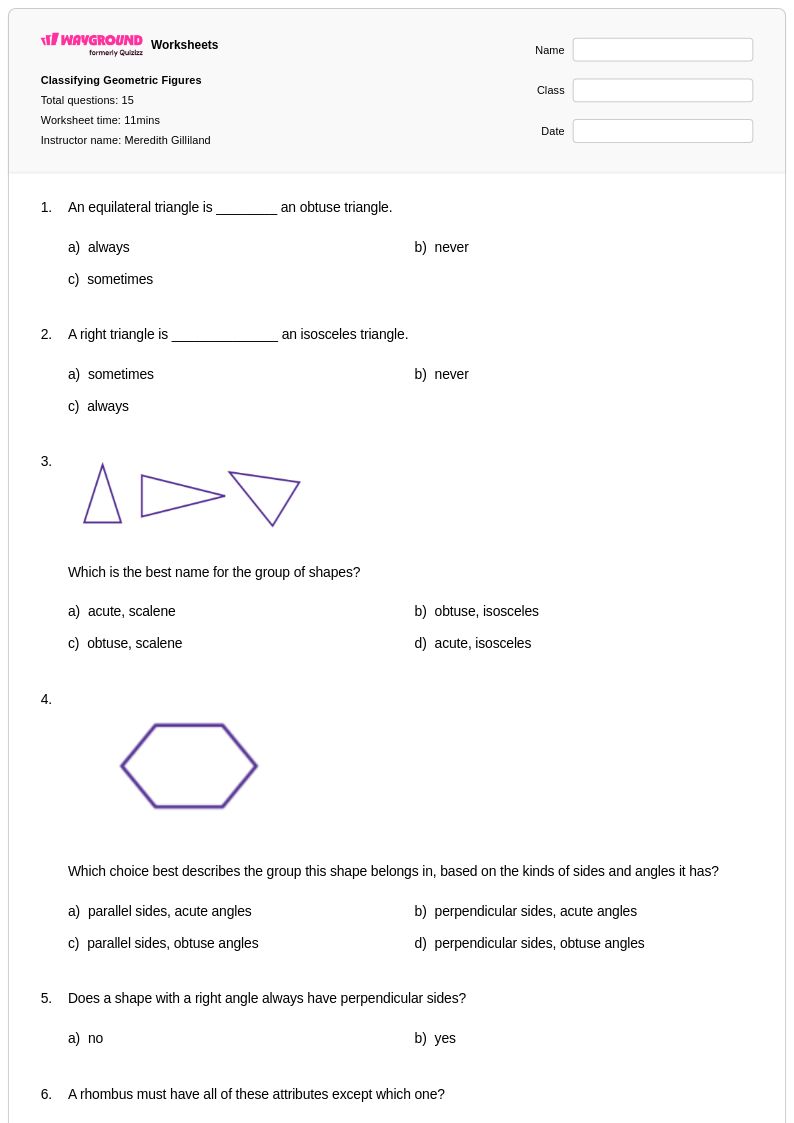
15 Q
4th - 5th
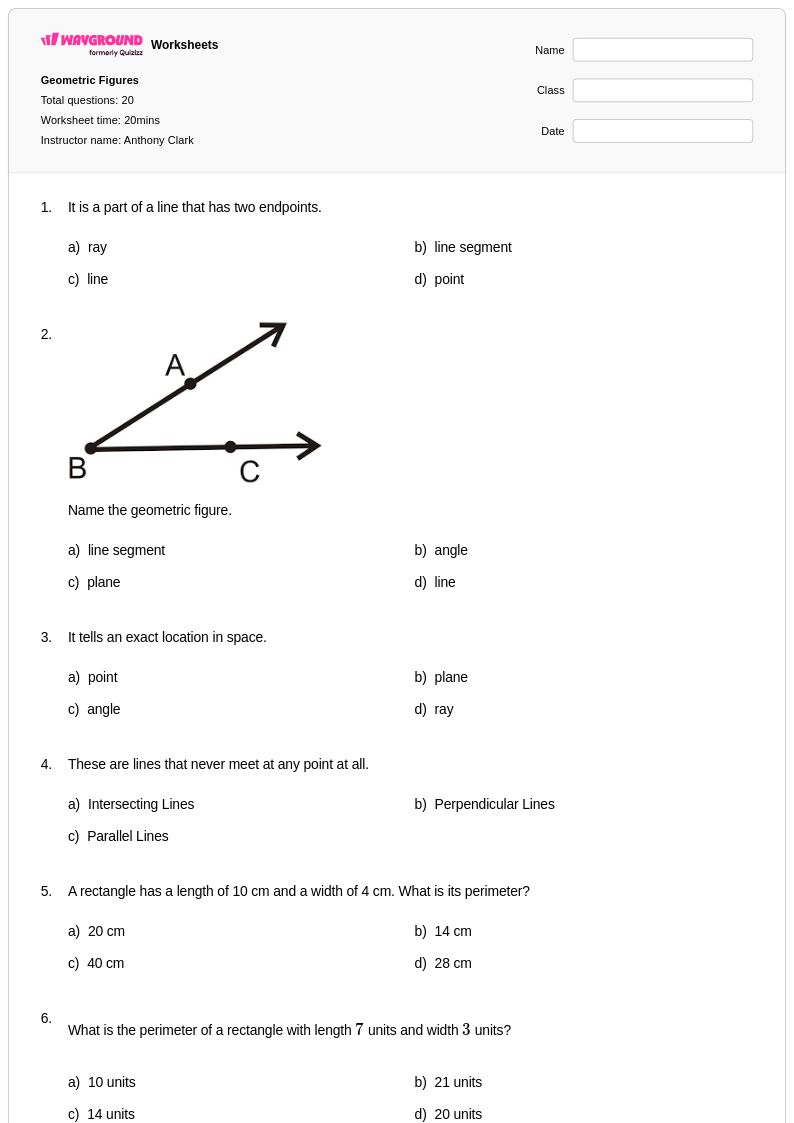
20 Q
4th - Uni
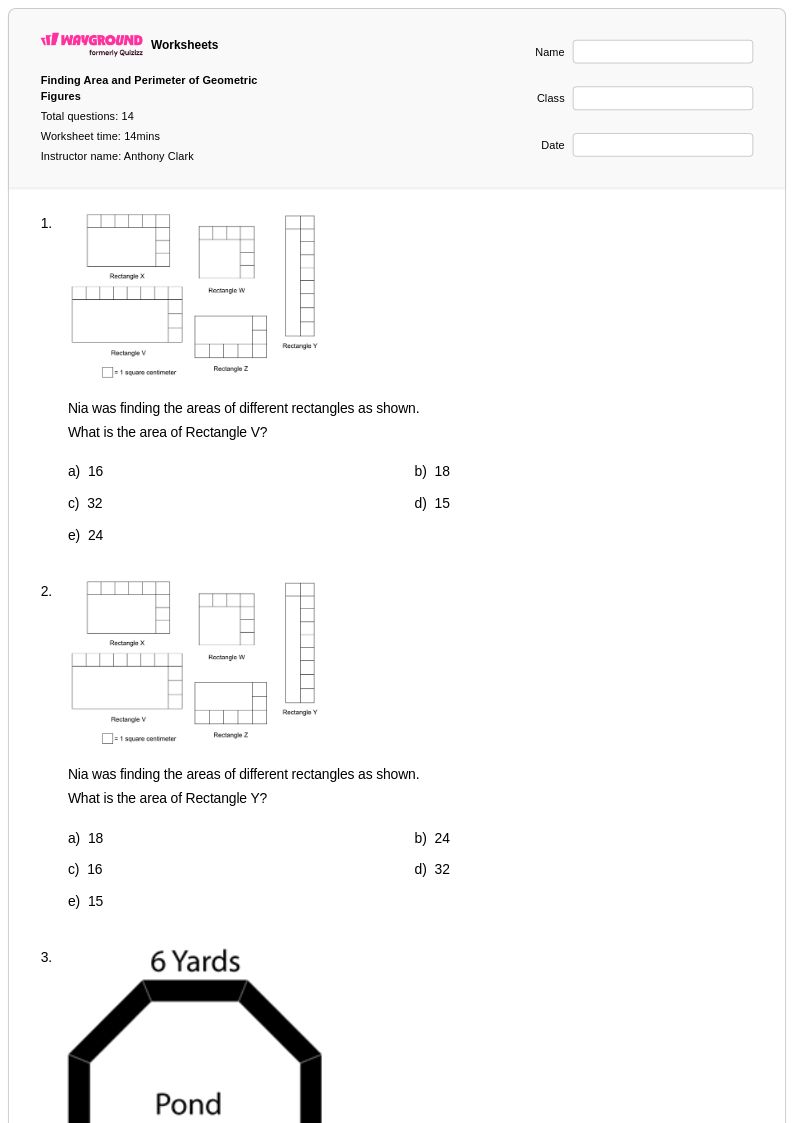
14 Q
4th - Uni
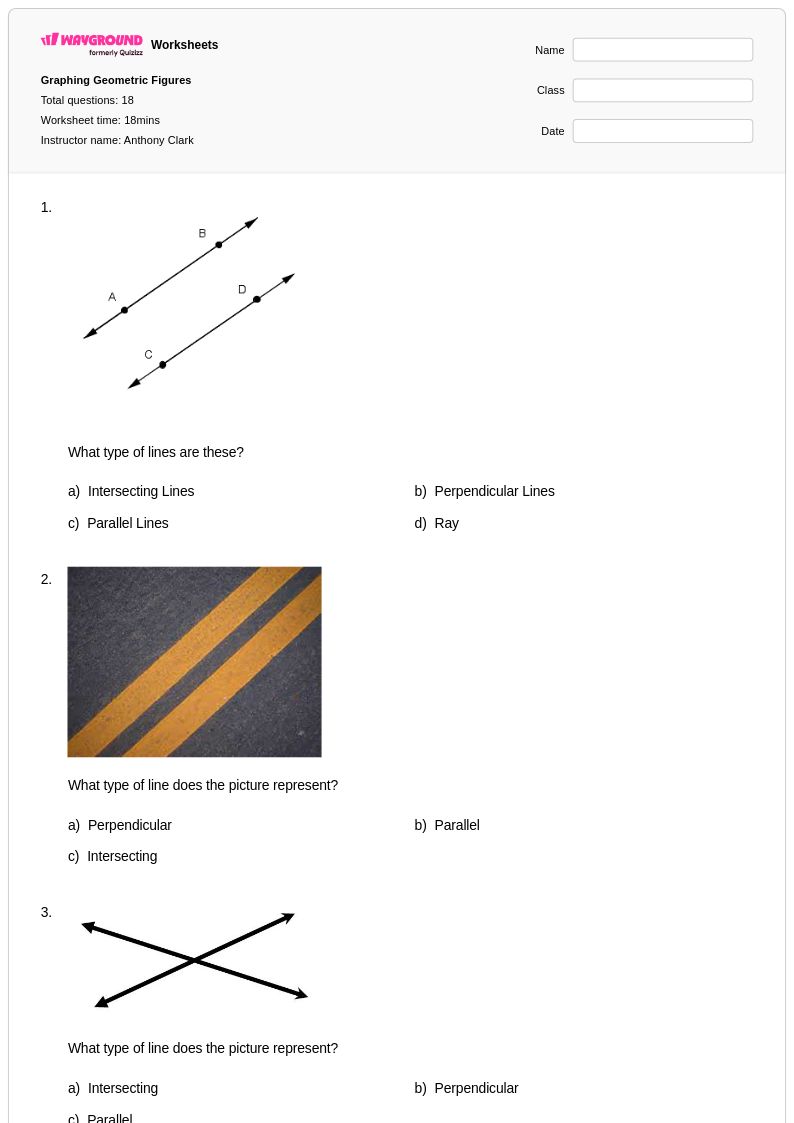
18 Q
5th - Uni
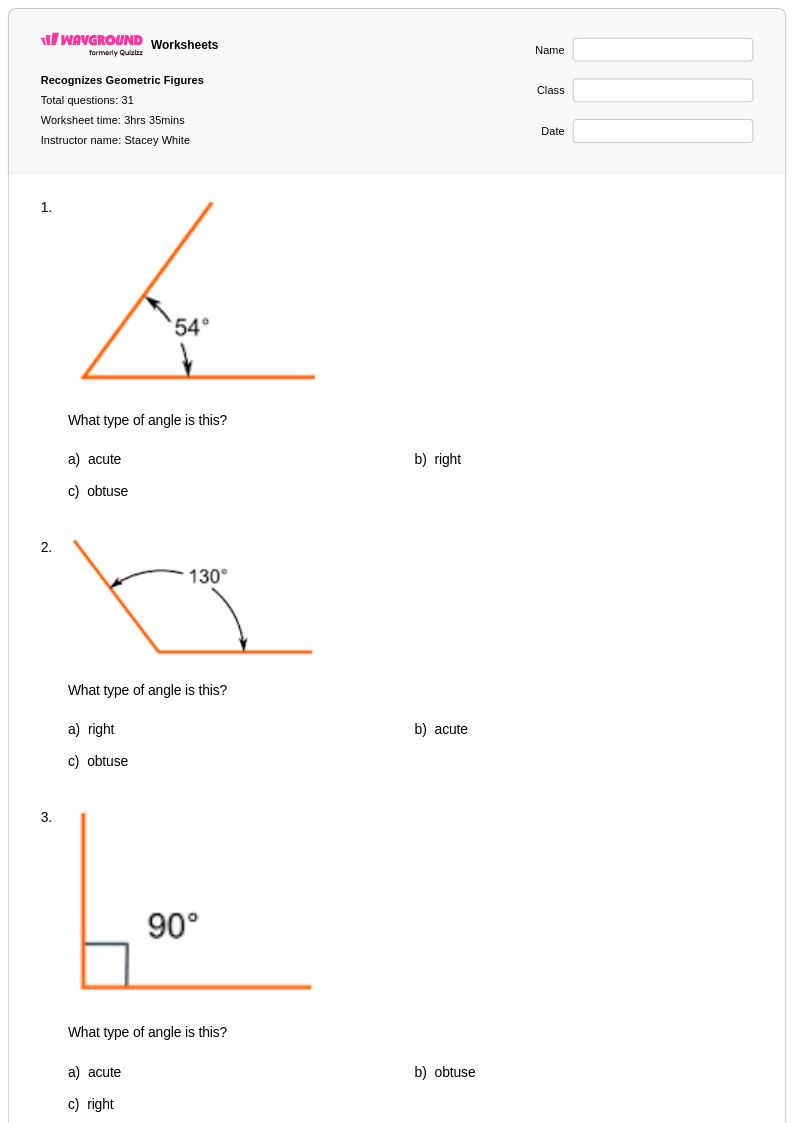
31 Q
4th - 5th
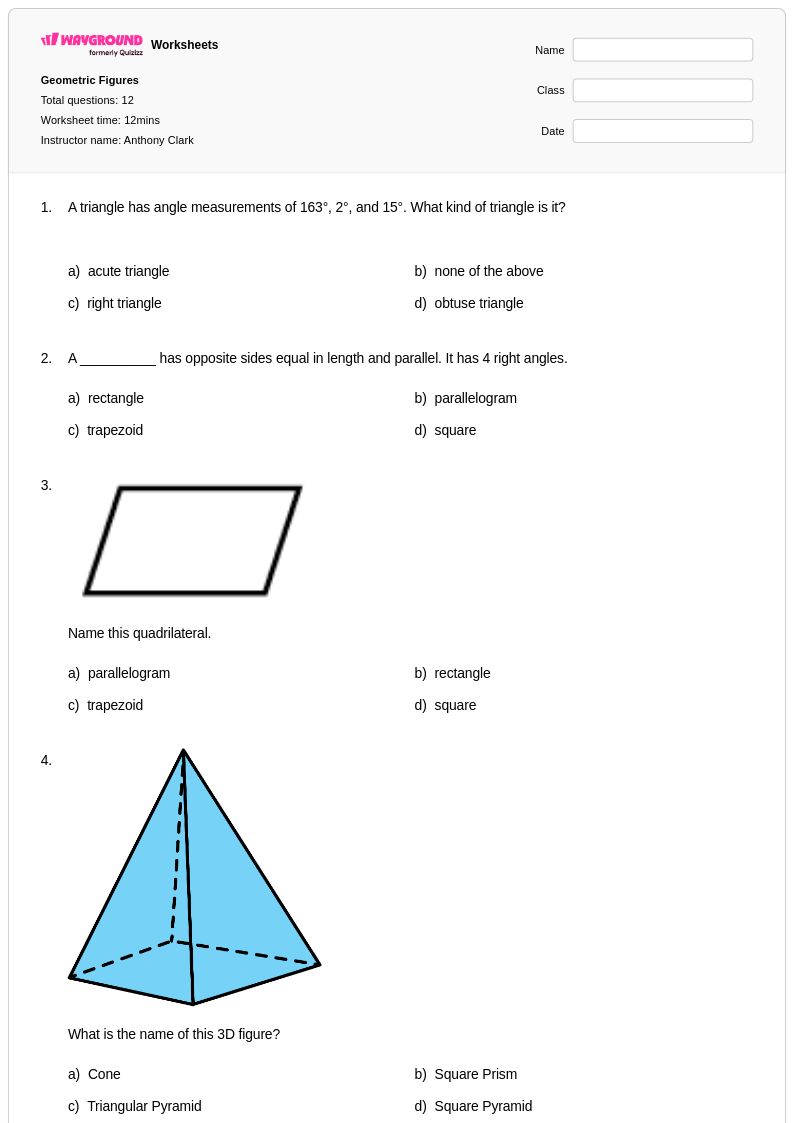
12 Q
5th - Uni
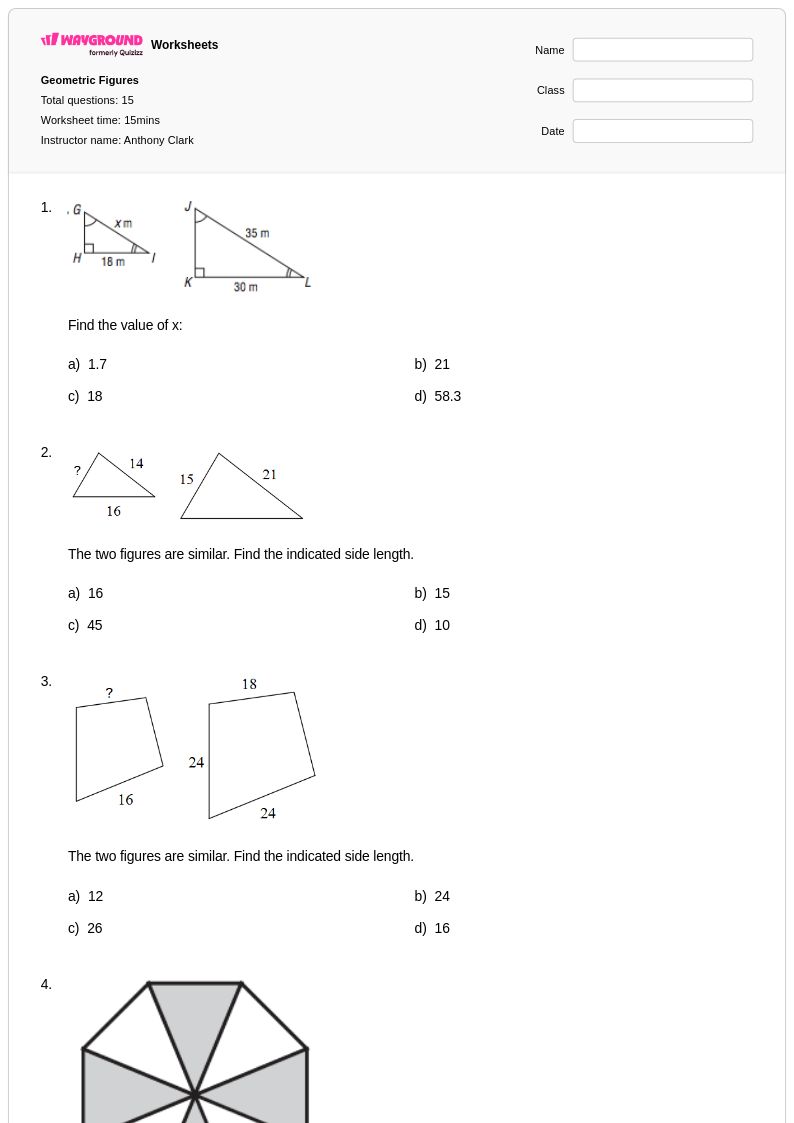
15 Q
5th - Uni
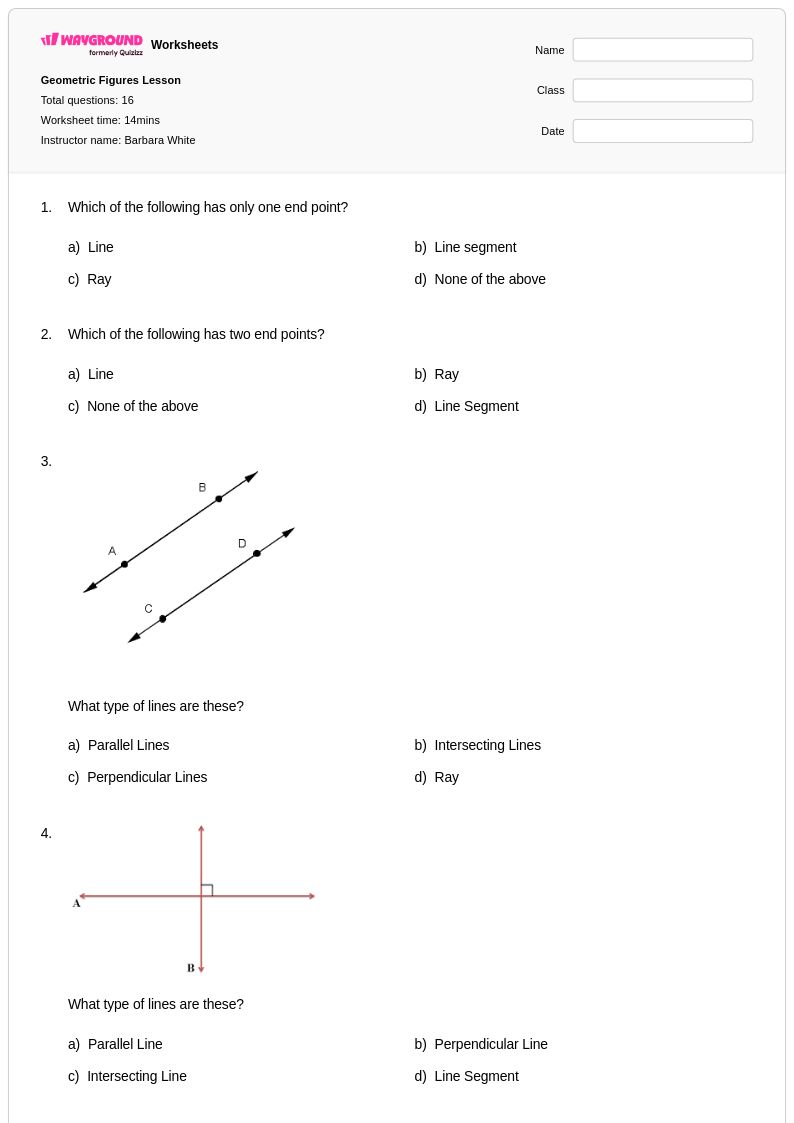
16 Q
5th - 6th
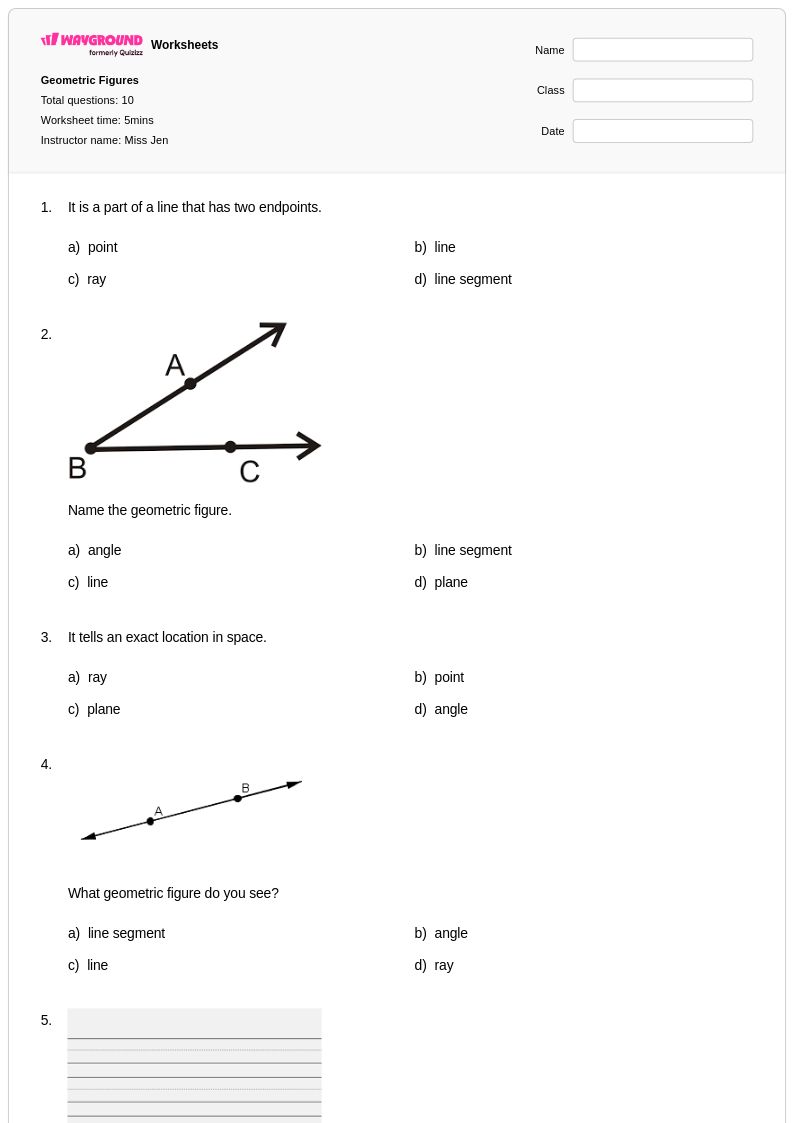
10 Q
3rd - 6th
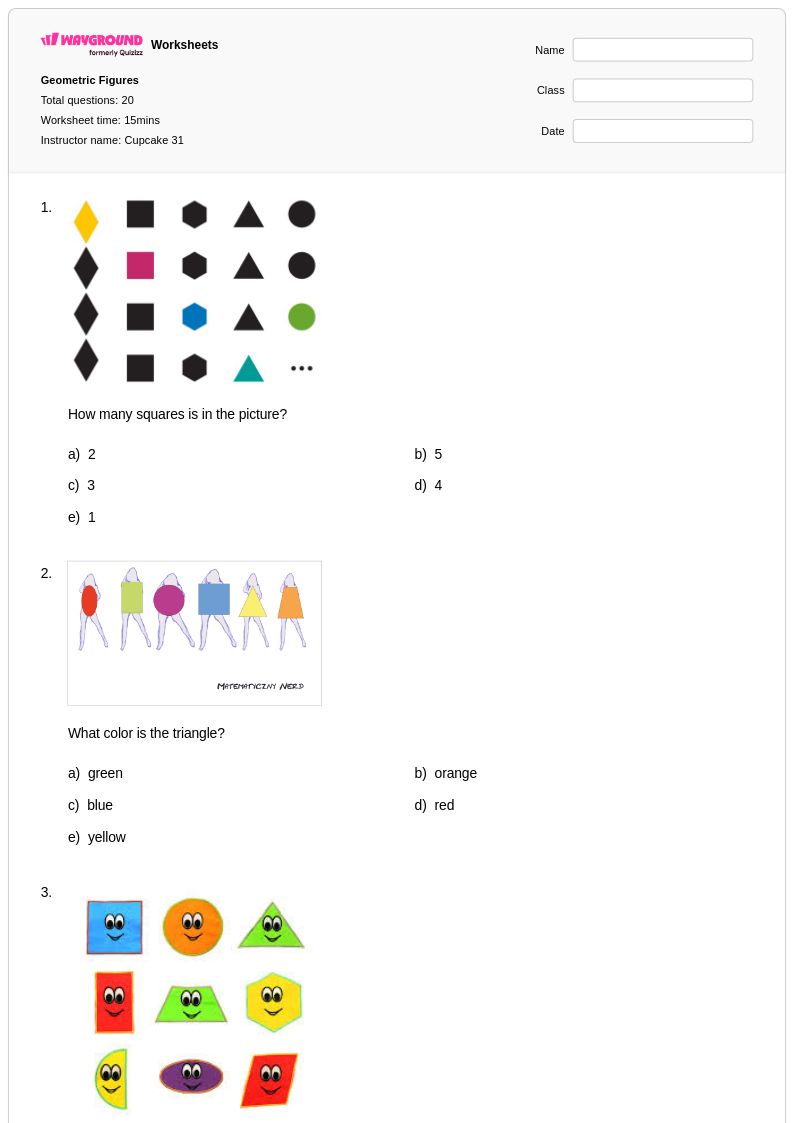
20 Q
4th - 5th
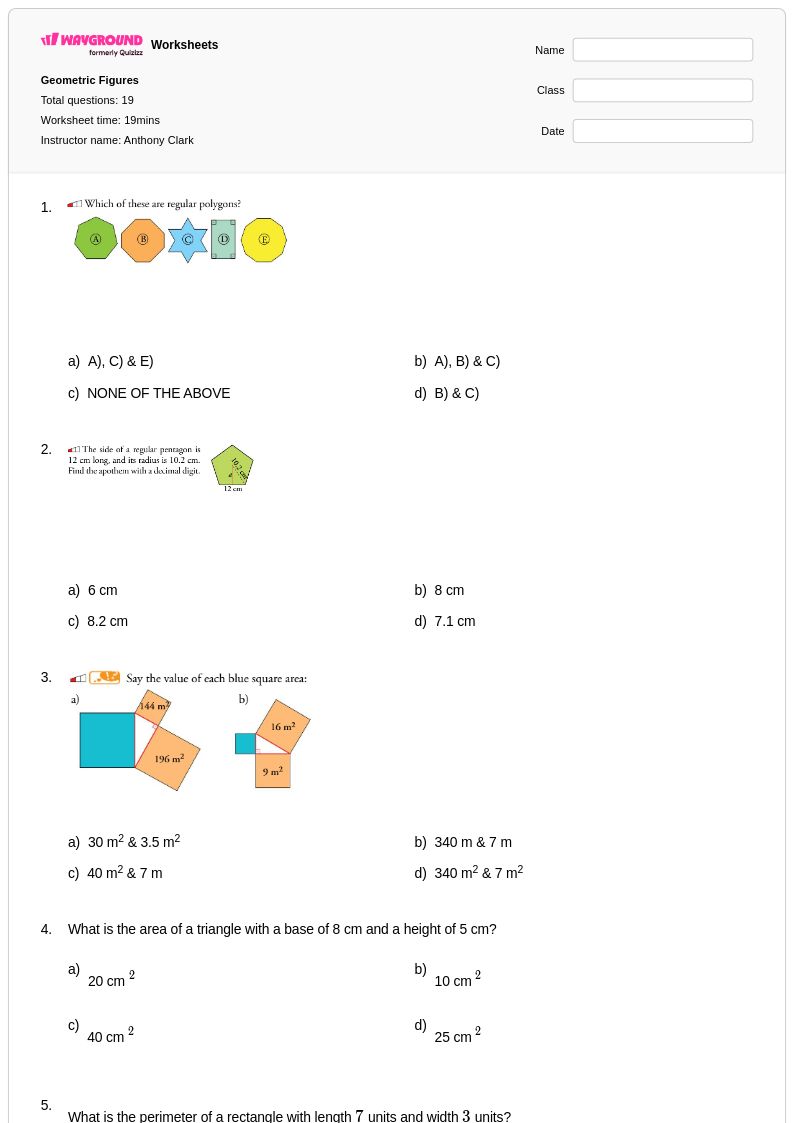
19 Q
5th - Uni
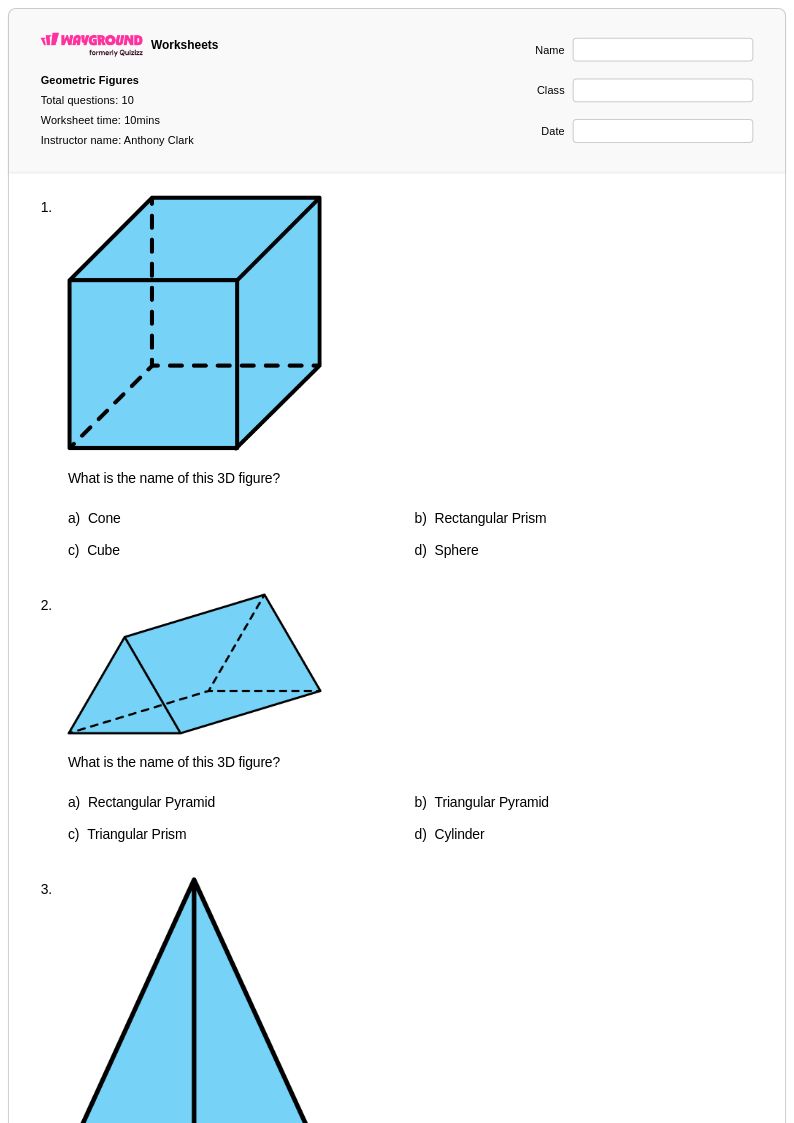
10 Q
5th - Uni
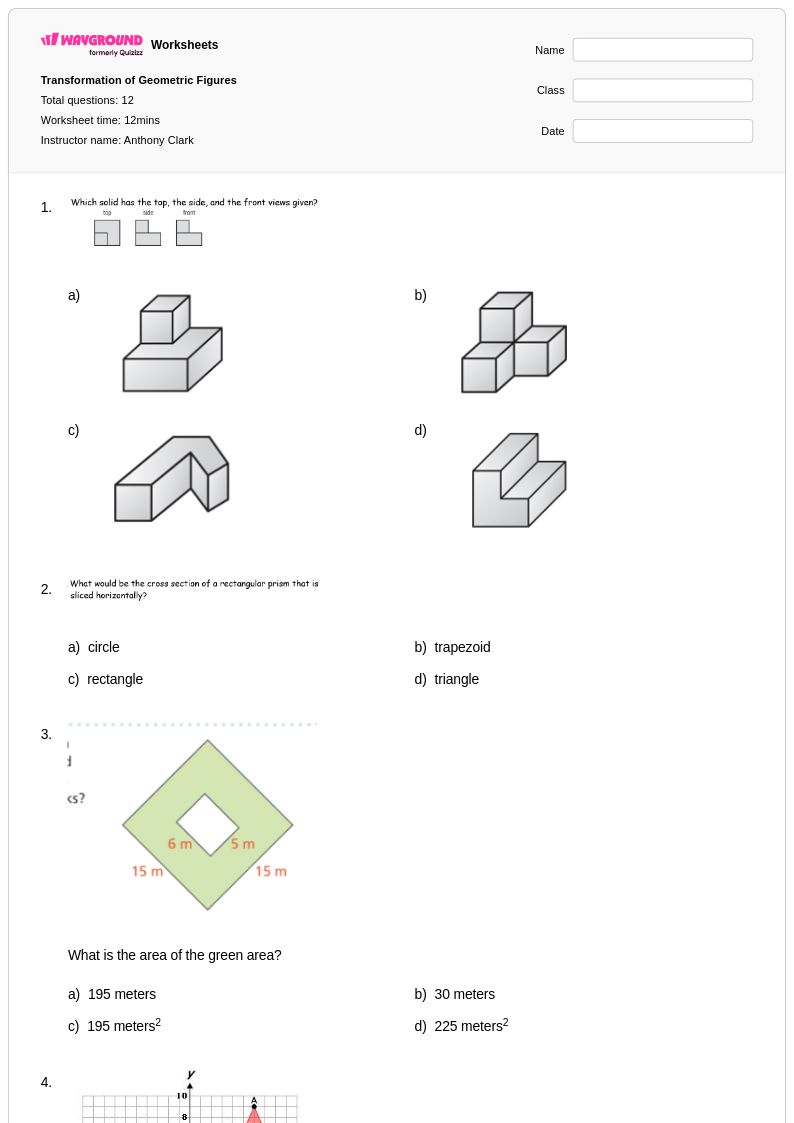
12 Q
5th - Uni
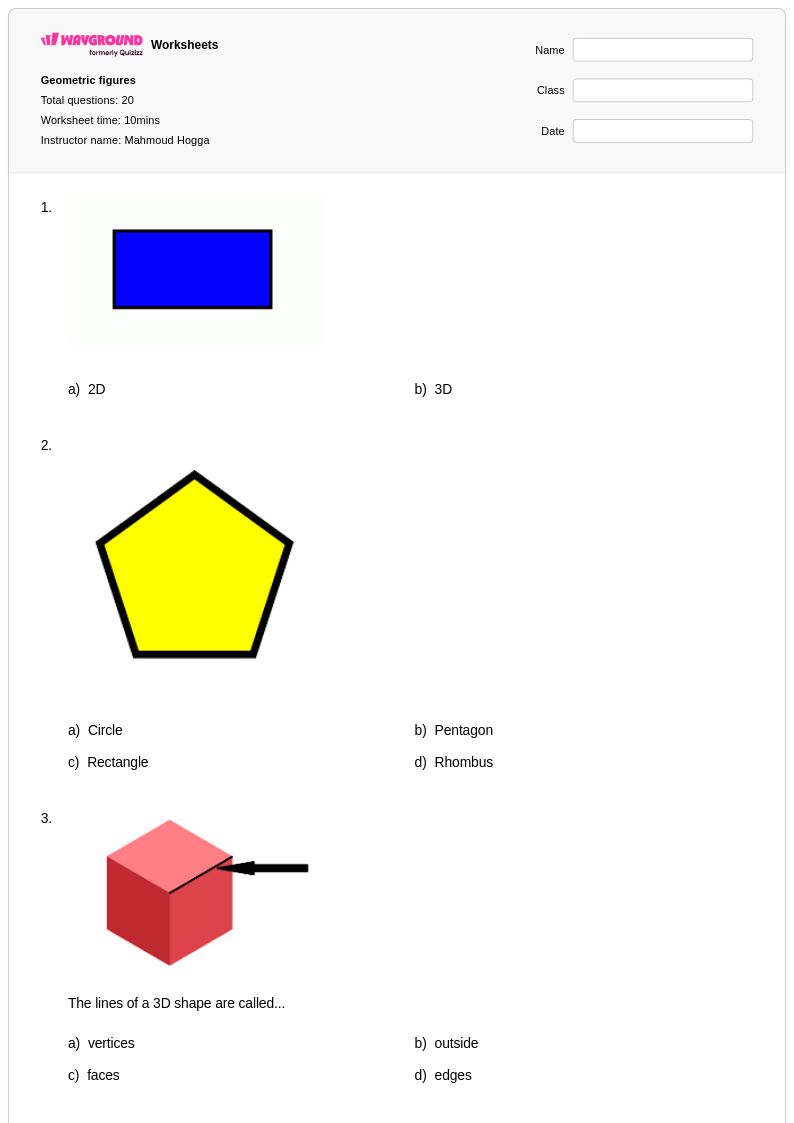
20 Q
5th
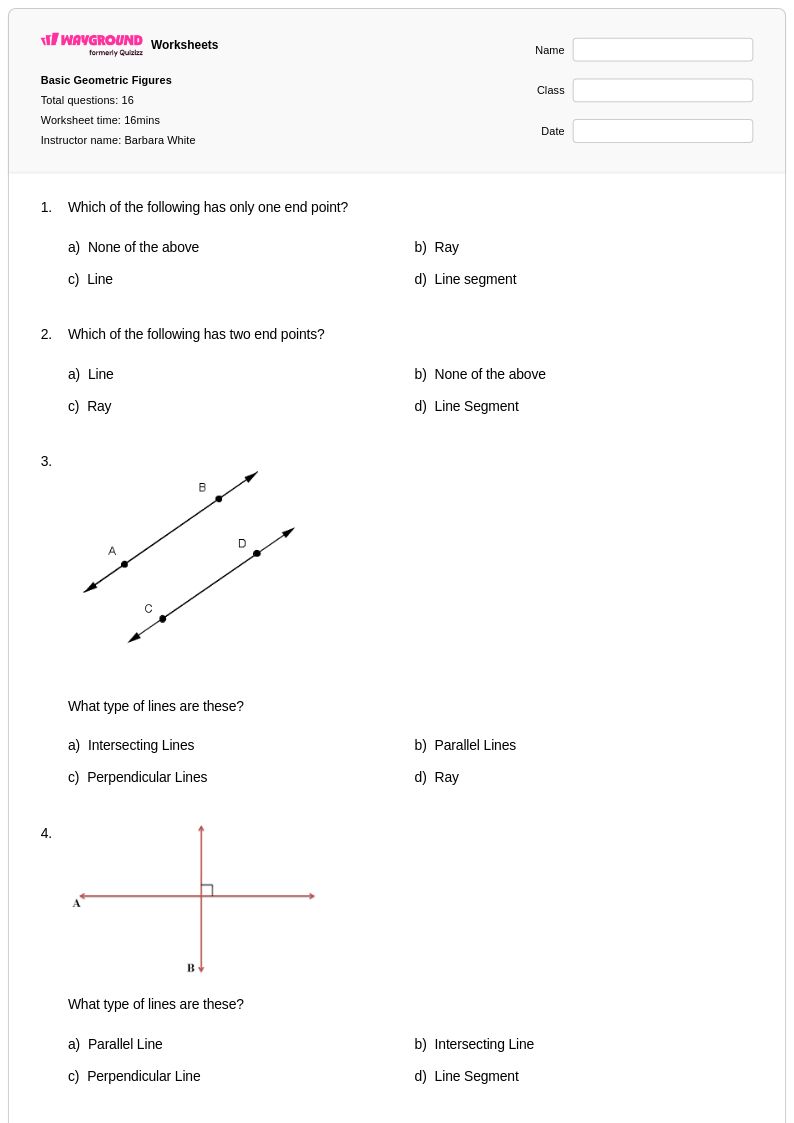
16 Q
5th - 6th
Explore Other Subject Worksheets for grade 5
Explore printable Geometric Figures worksheets for Grade 5
Geometric figures worksheets for Grade 5 students provide essential practice in identifying, classifying, and analyzing two-dimensional and three-dimensional shapes that form the foundation of mathematical reasoning. Through Wayground's extensive collection of these educational resources, fifth-grade learners develop critical spatial awareness skills by working with polygons, circles, triangles, quadrilaterals, and solid figures like cubes, pyramids, and cylinders. These comprehensive practice problems strengthen students' ability to recognize geometric properties, measure angles, calculate perimeter and area, and understand the relationships between different shapes. Each worksheet comes with a detailed answer key, making it simple for educators to assess student progress, while the free printable pdf format ensures accessibility for both classroom instruction and independent study at home.
Wayground's teacher-created geometric figures worksheet collection draws from millions of educational resources specifically designed to meet Grade 5 mathematics standards and accommodate diverse learning needs. The platform's advanced search and filtering capabilities enable educators to quickly locate worksheets that align with specific curriculum requirements, whether focusing on basic shape identification or more complex geometric reasoning tasks. Teachers can easily customize these materials to provide targeted remediation for struggling students or enrichment opportunities for advanced learners, with flexible options available in both printable and digital formats. This comprehensive approach to geometric figures instruction supports effective lesson planning by offering differentiated practice opportunities that reinforce essential spatial concepts while building the foundational skills students need for success in higher-level mathematics courses.
FAQs
How do I teach geometric figures to fifth graders?
What exercises help Grade 5 students practice geometric figures?
What mistakes do fifth graders commonly make with geometric figures?
How can I assign a Grade 5 geometric figures worksheet on Wayground?
How do Grade 5 geometric figures align with Common Core math?
How can I differentiate a Grade 5 geometric figures worksheet?
What geometric figures skills are typically taught in Grade 5?