
11 Q
3rd - Uni
15 Q
3rd - Uni
20 Q
3rd - Uni
20 Q
1st - 5th
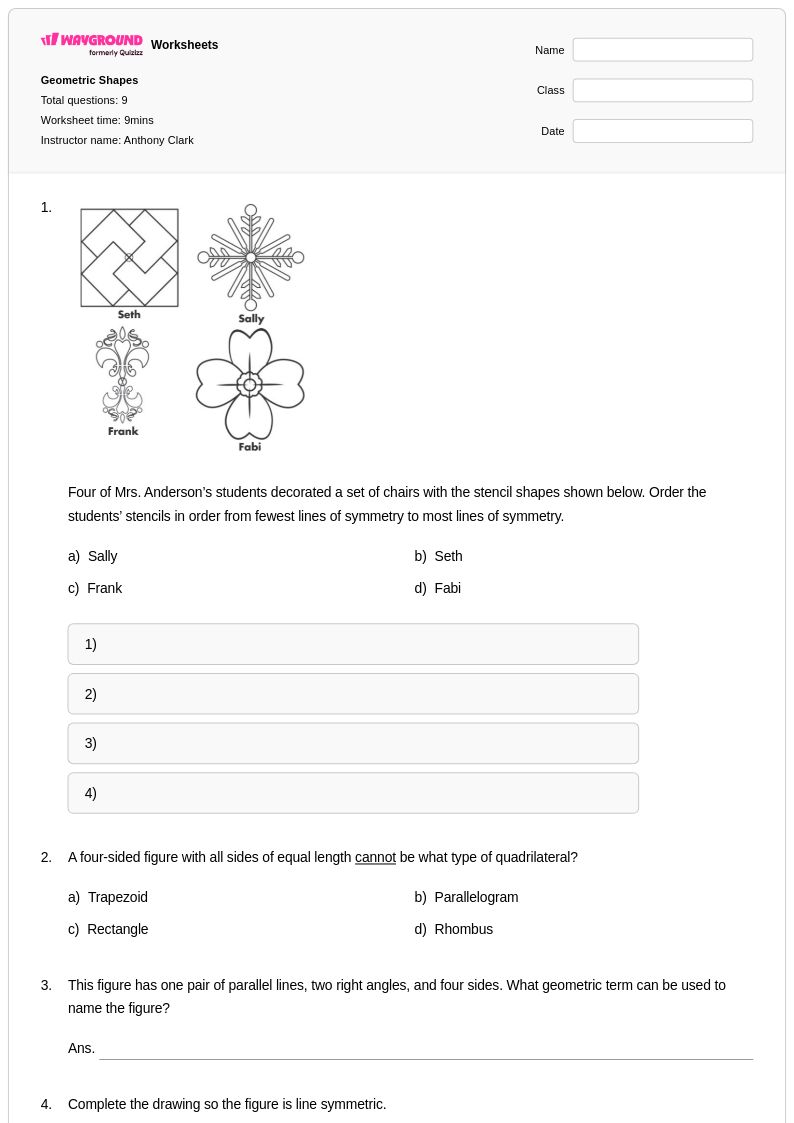
9 Q
4th - Uni
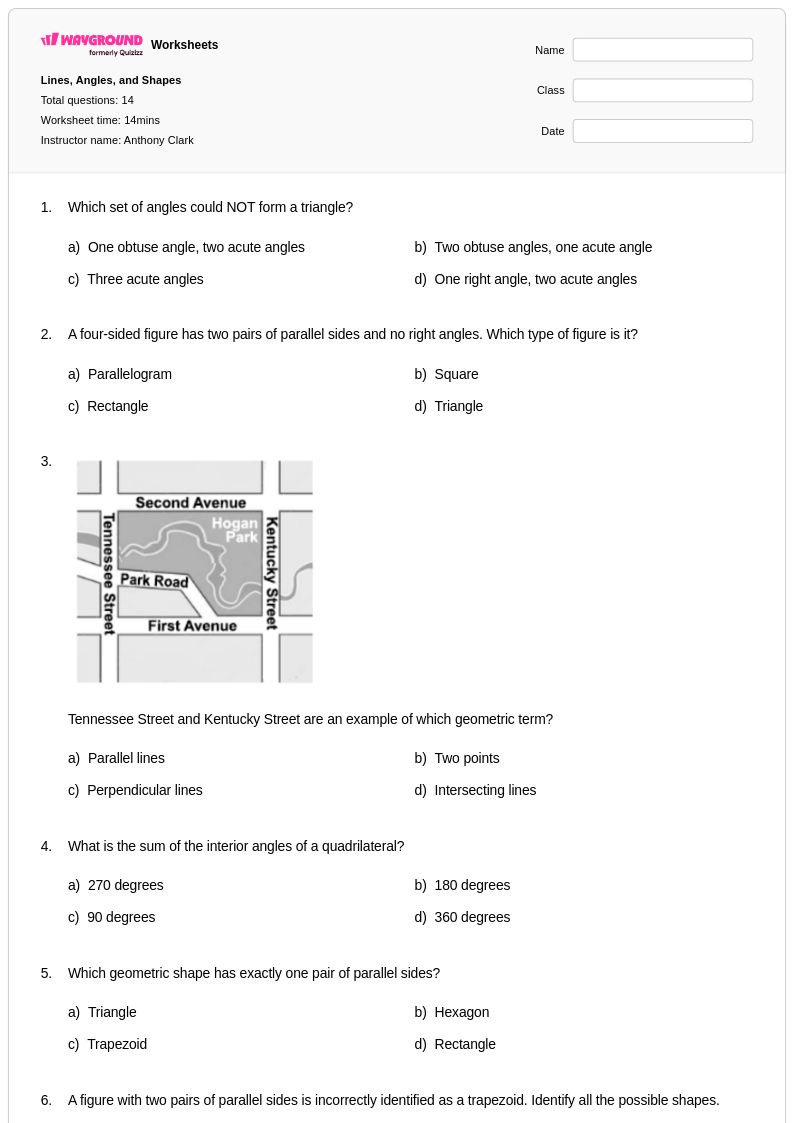
14 Q
4th - Uni
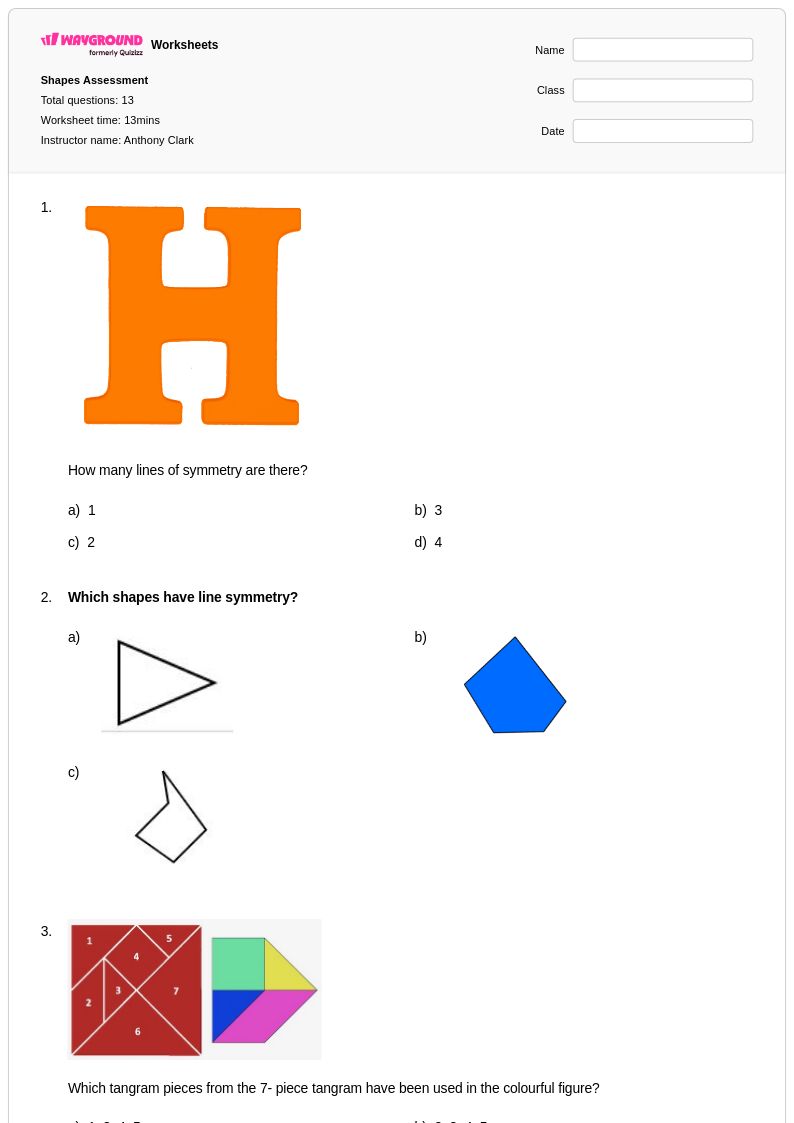
13 Q
3rd - Uni
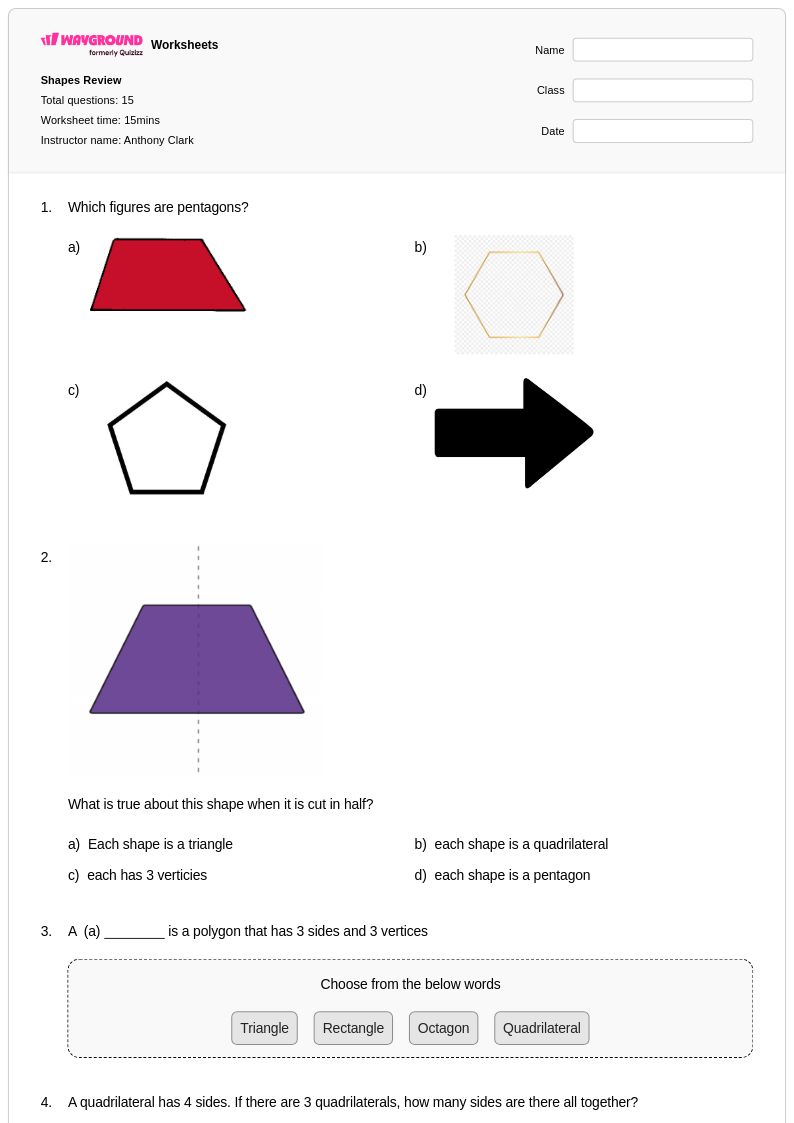
15 Q
2nd - Uni
15 Q
1st - Uni
20 Q
3rd - Uni
20 Q
3rd - Uni
9 Q
5th
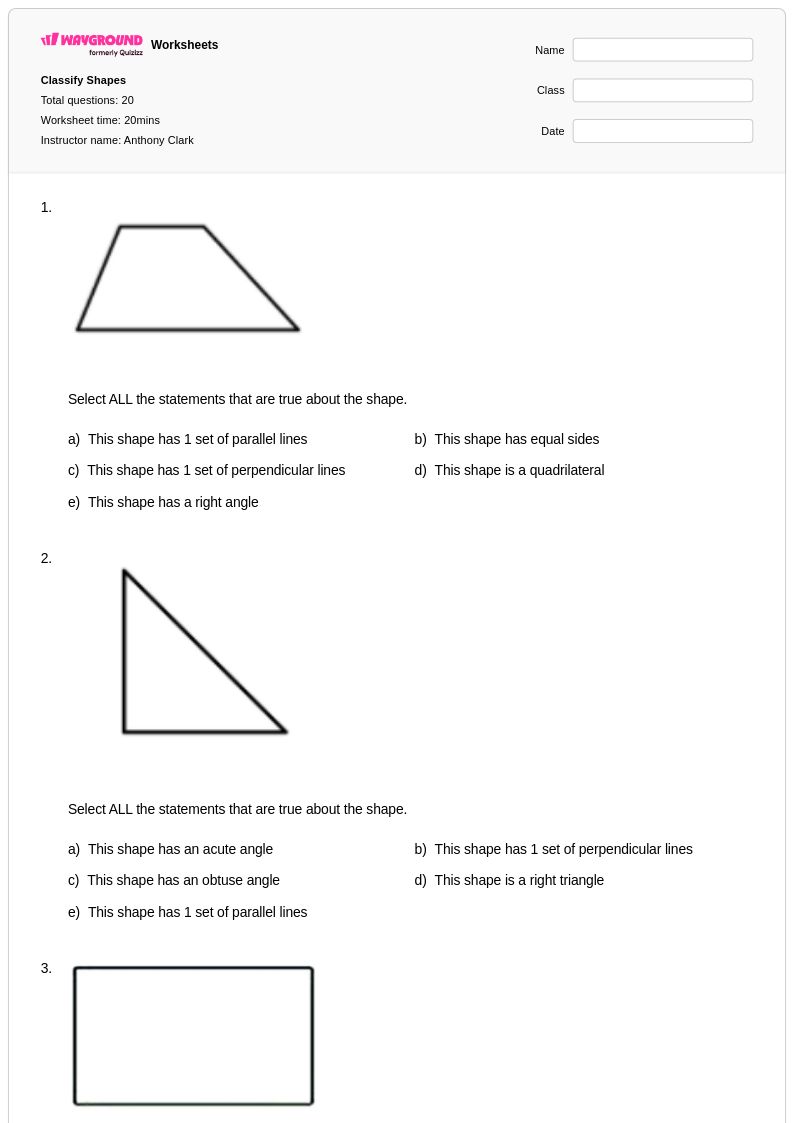
20 Q
5th - Uni
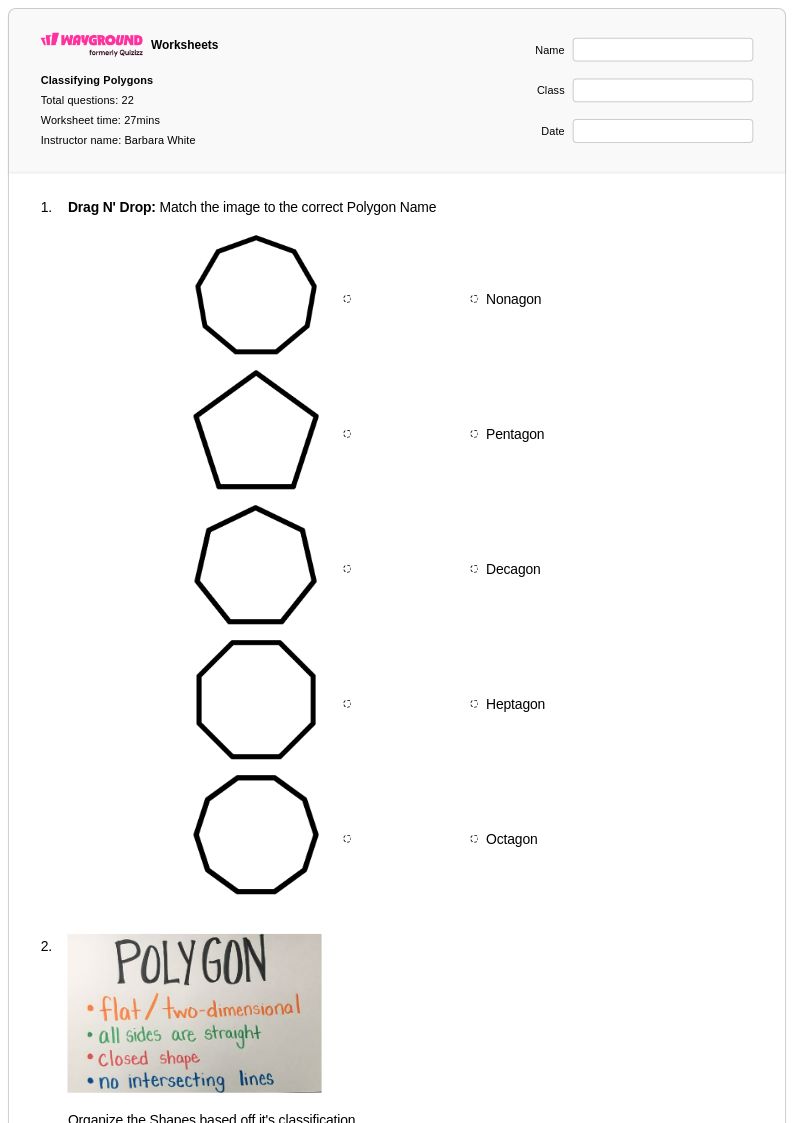
22 Q
5th
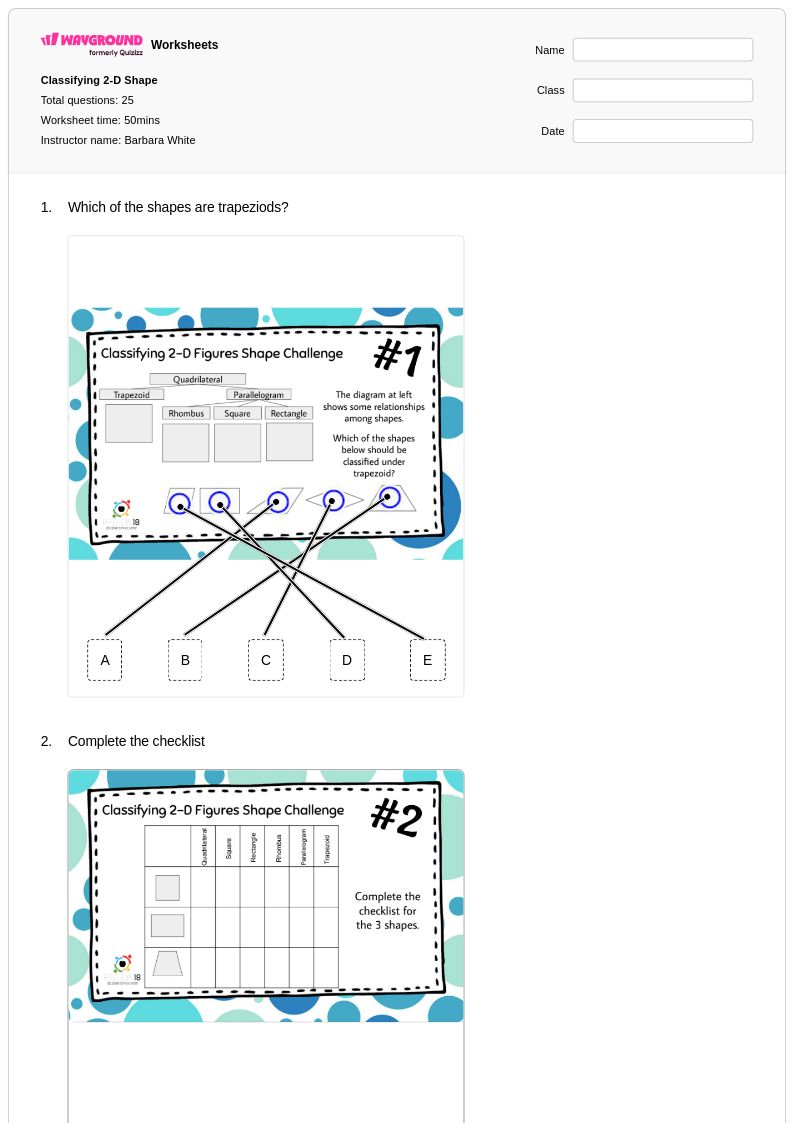
25 Q
5th
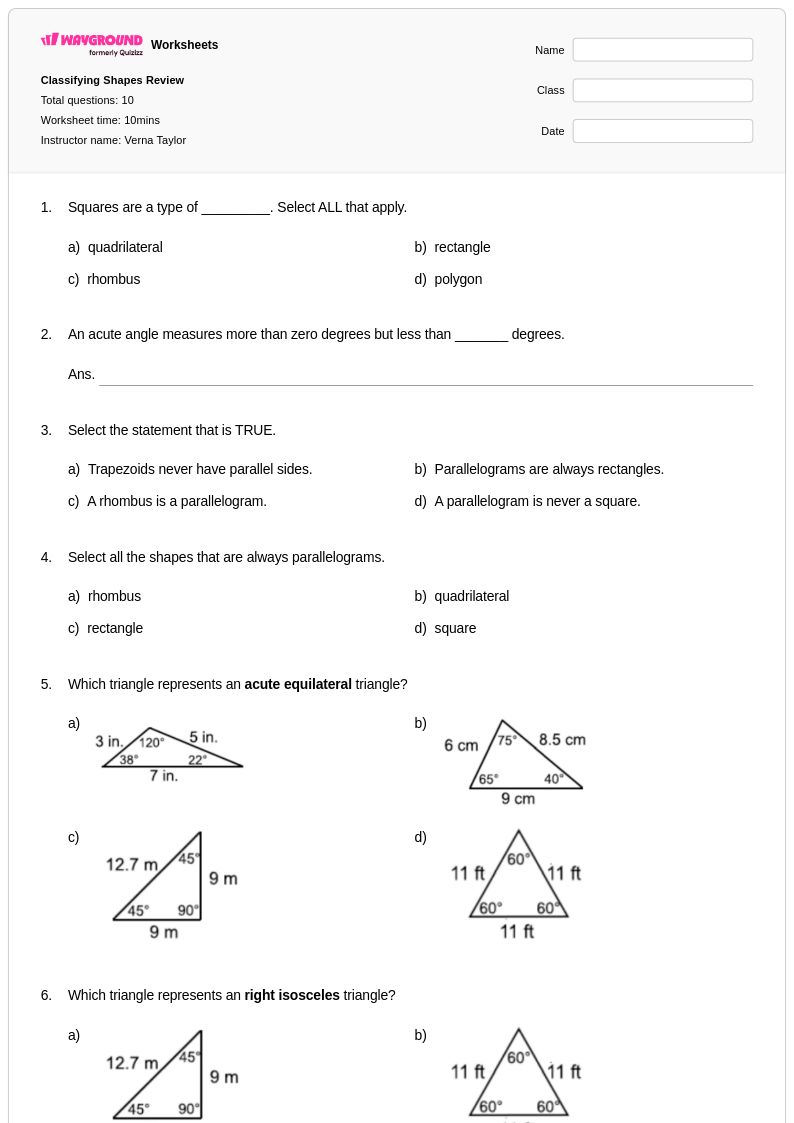
10 Q
5th
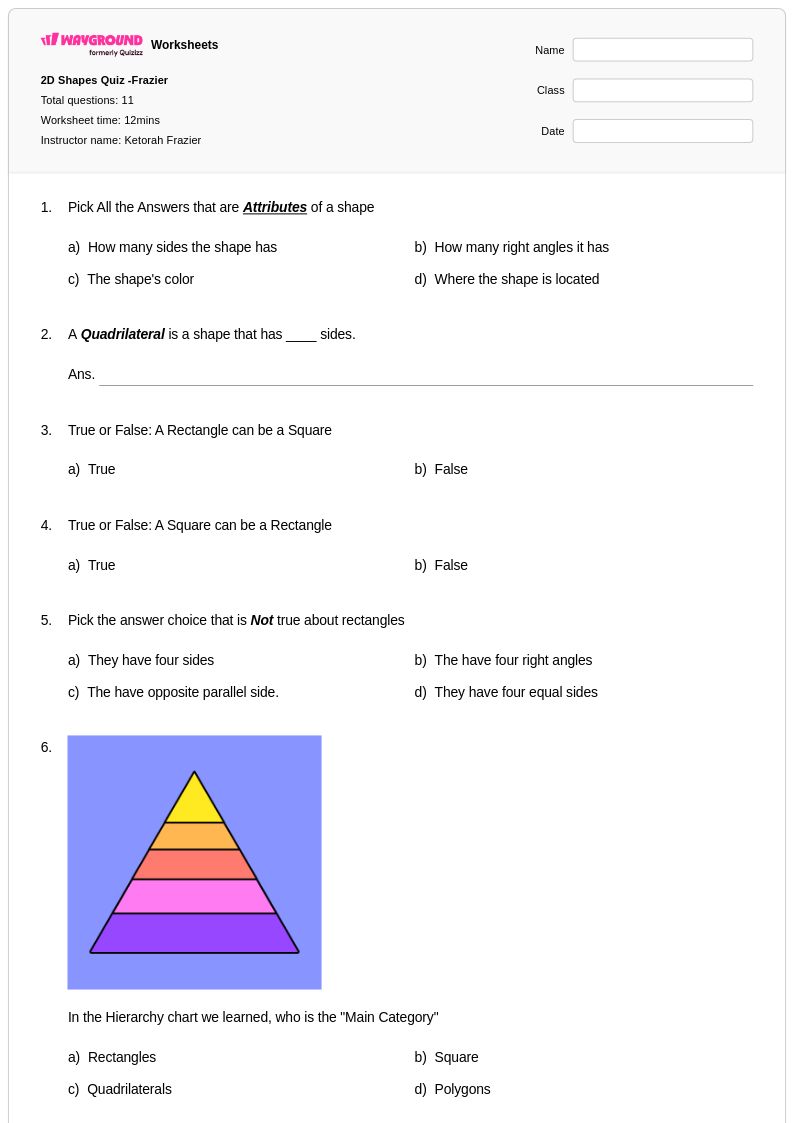
12 Q
5th
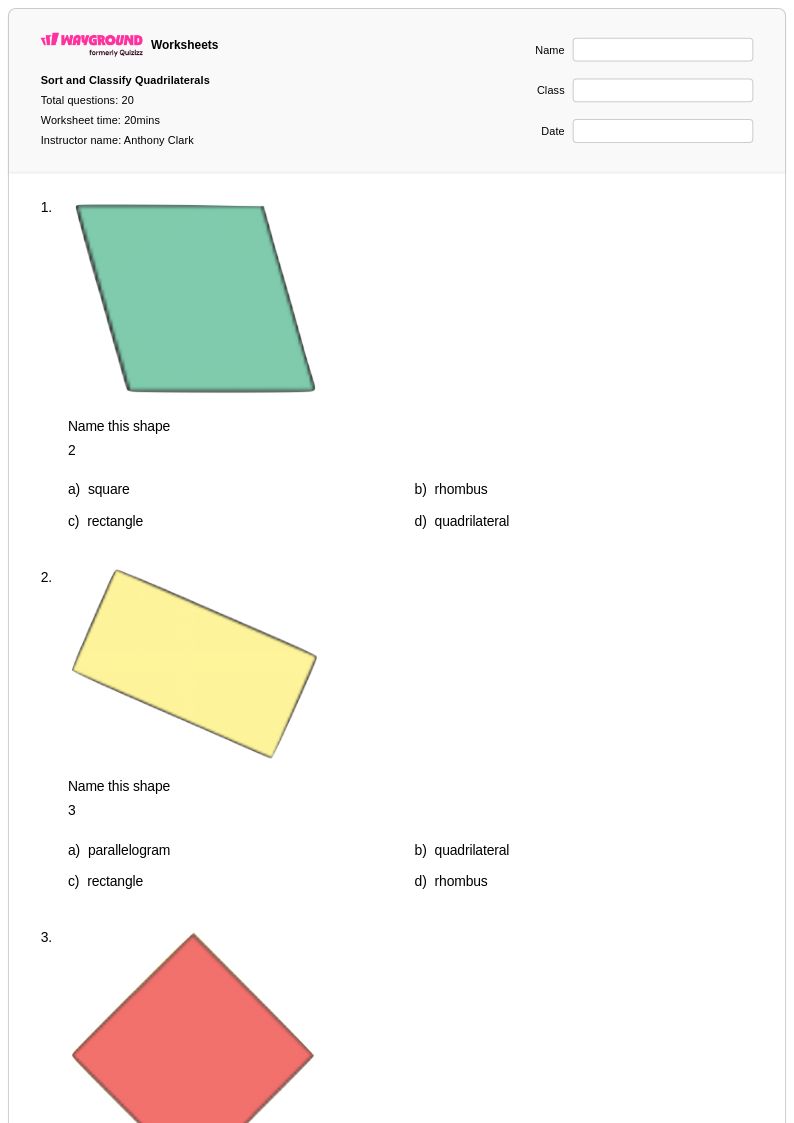
20 Q
5th - Uni
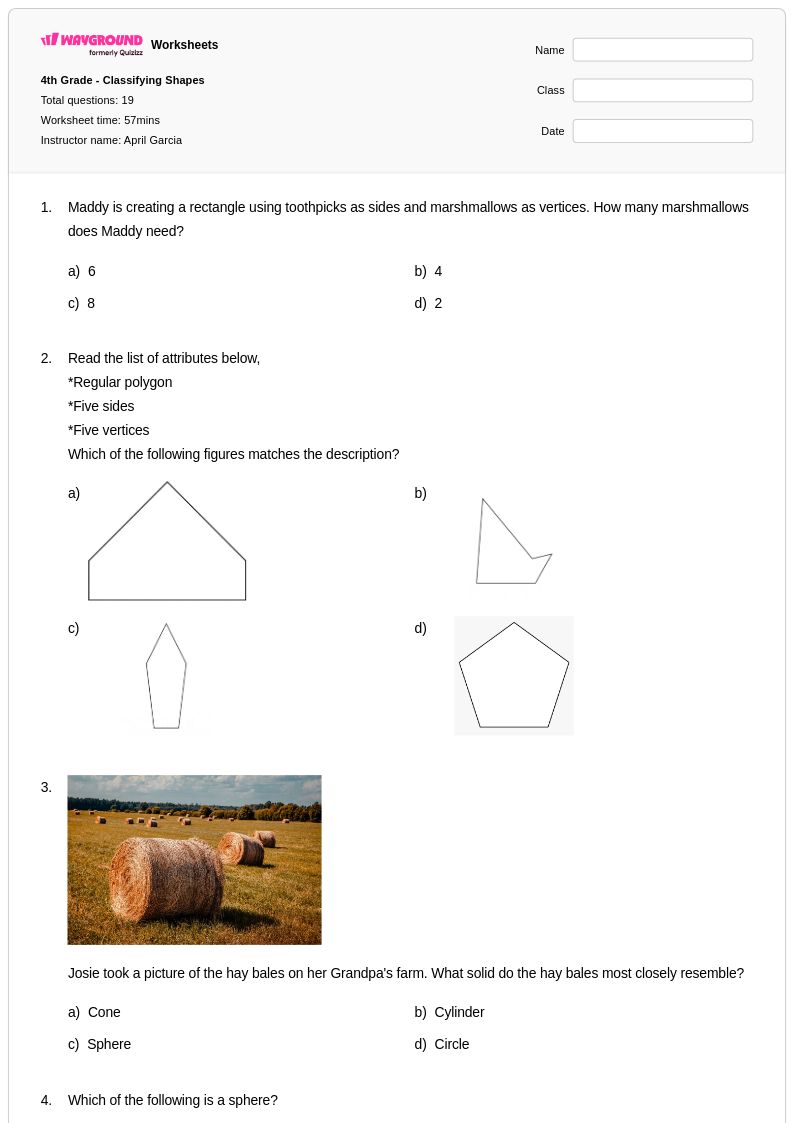
19 Q
3rd - 5th
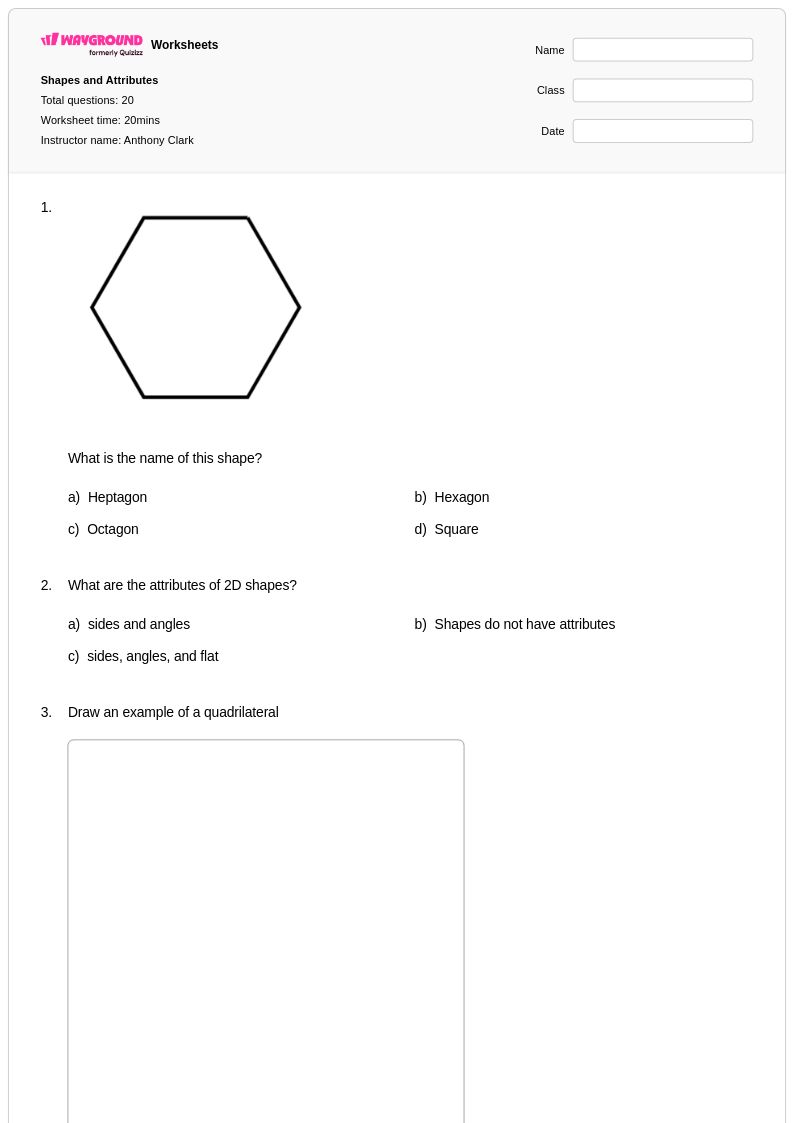
20 Q
3rd - Uni
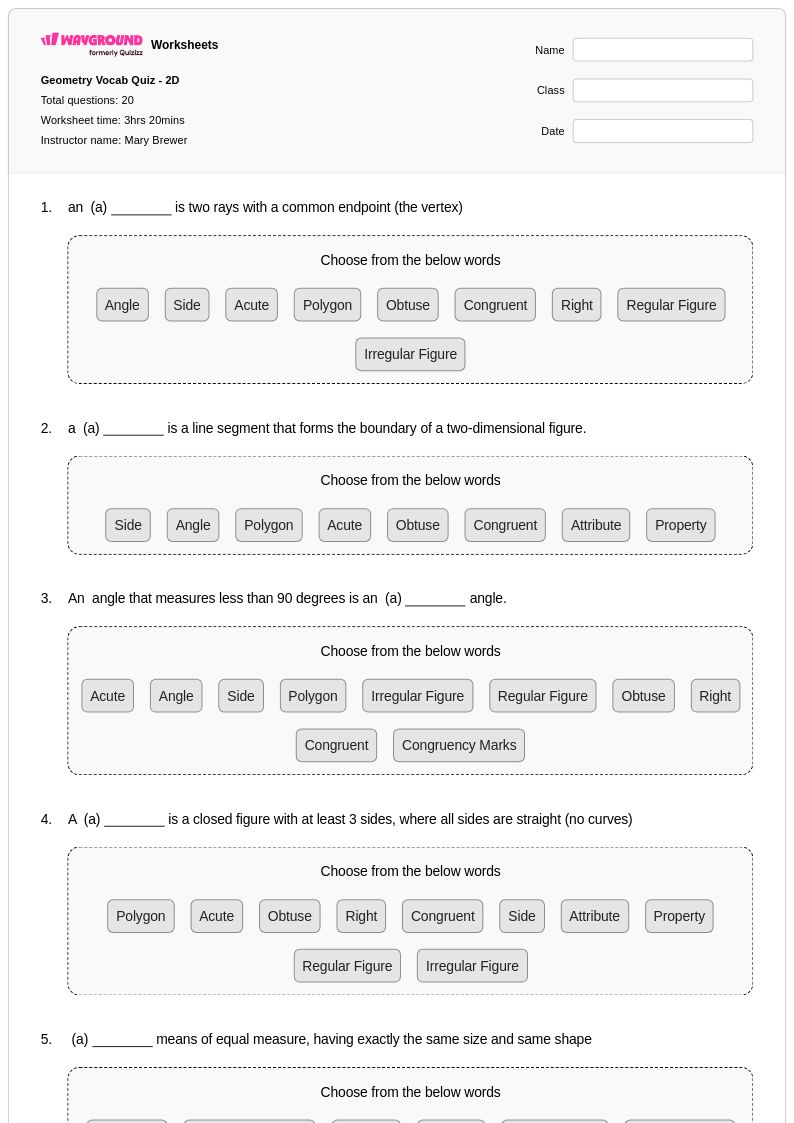
20 Q
5th
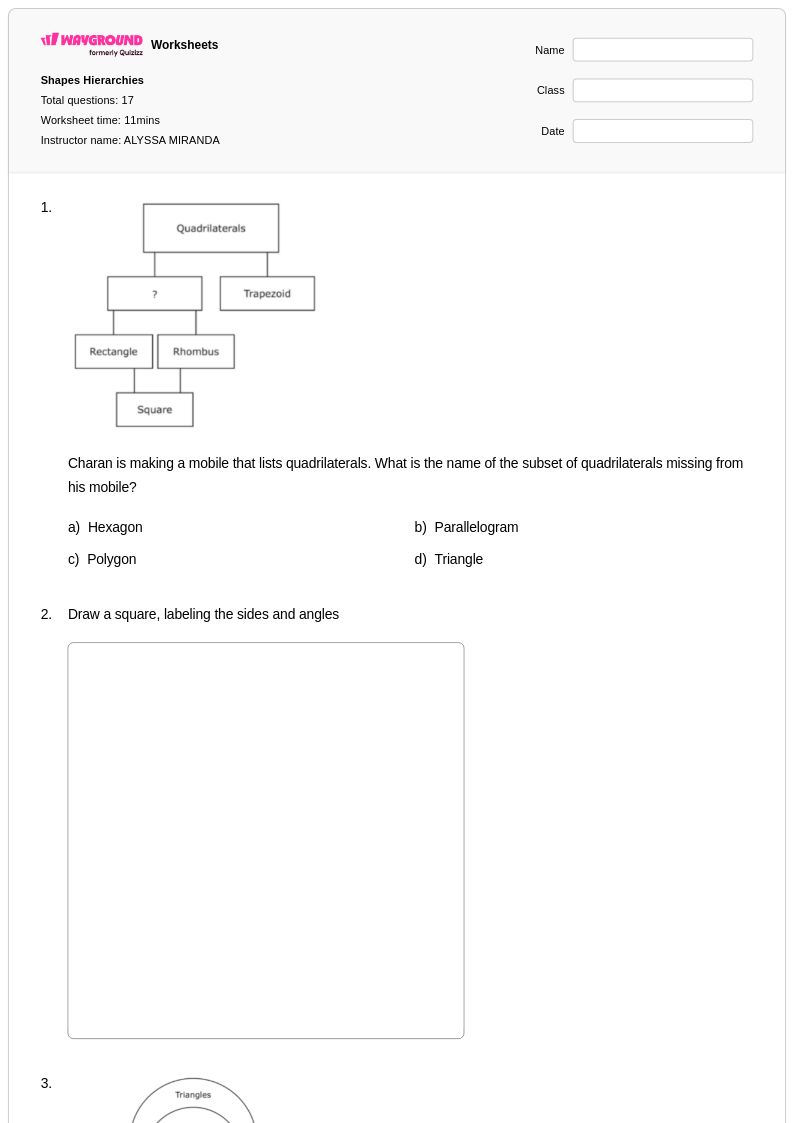
17 Q
5th
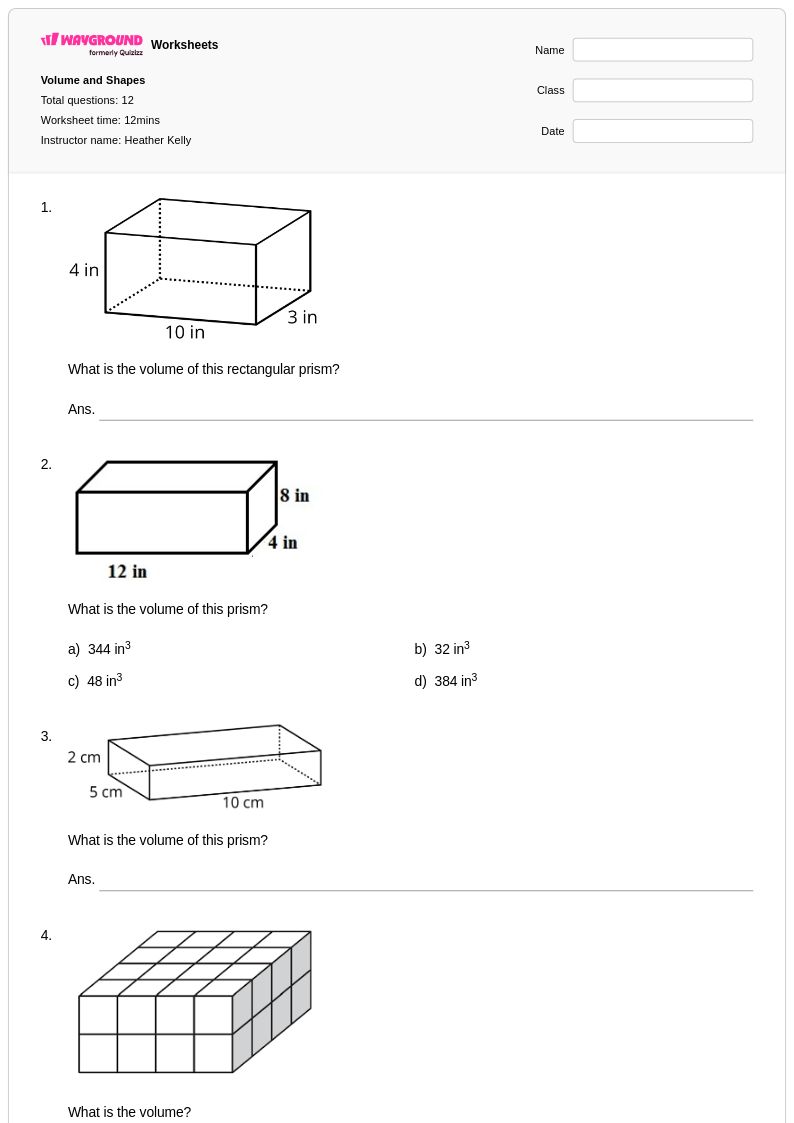
12 Q
5th
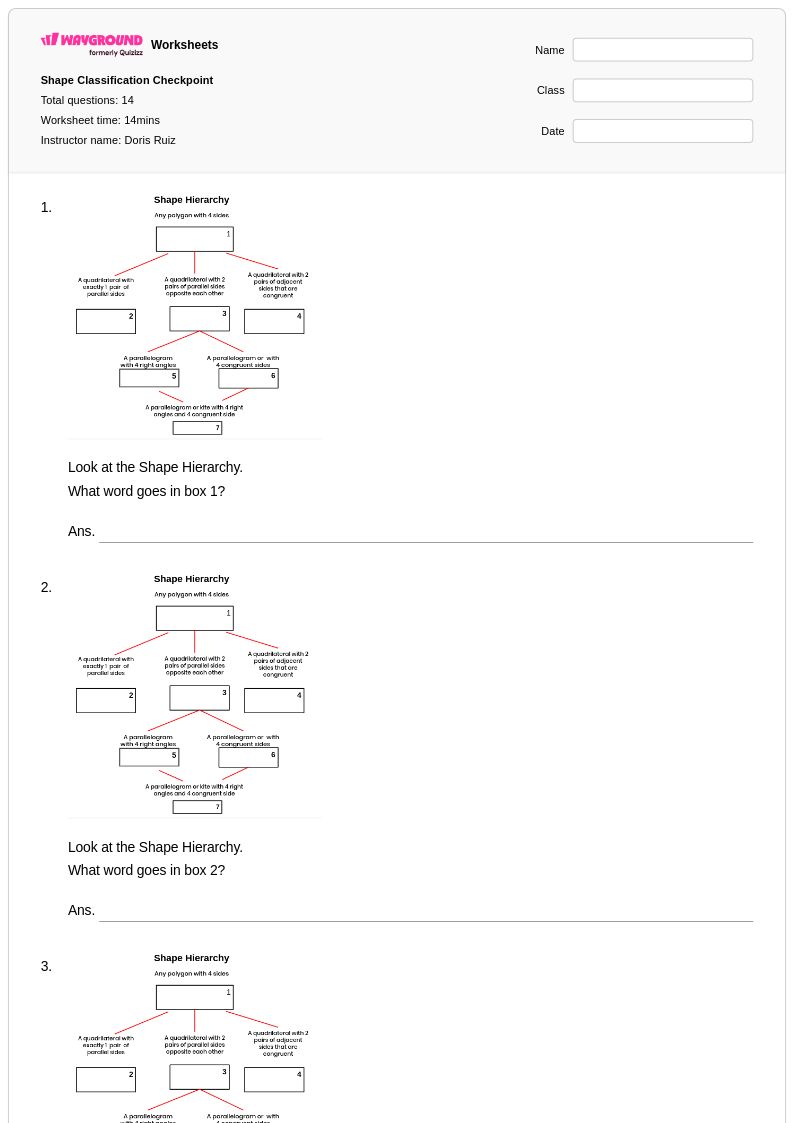
14 Q
5th
Explore Other Subject Worksheets for grade 5
Explore printable Recognizing Shapes worksheets for Grade 5
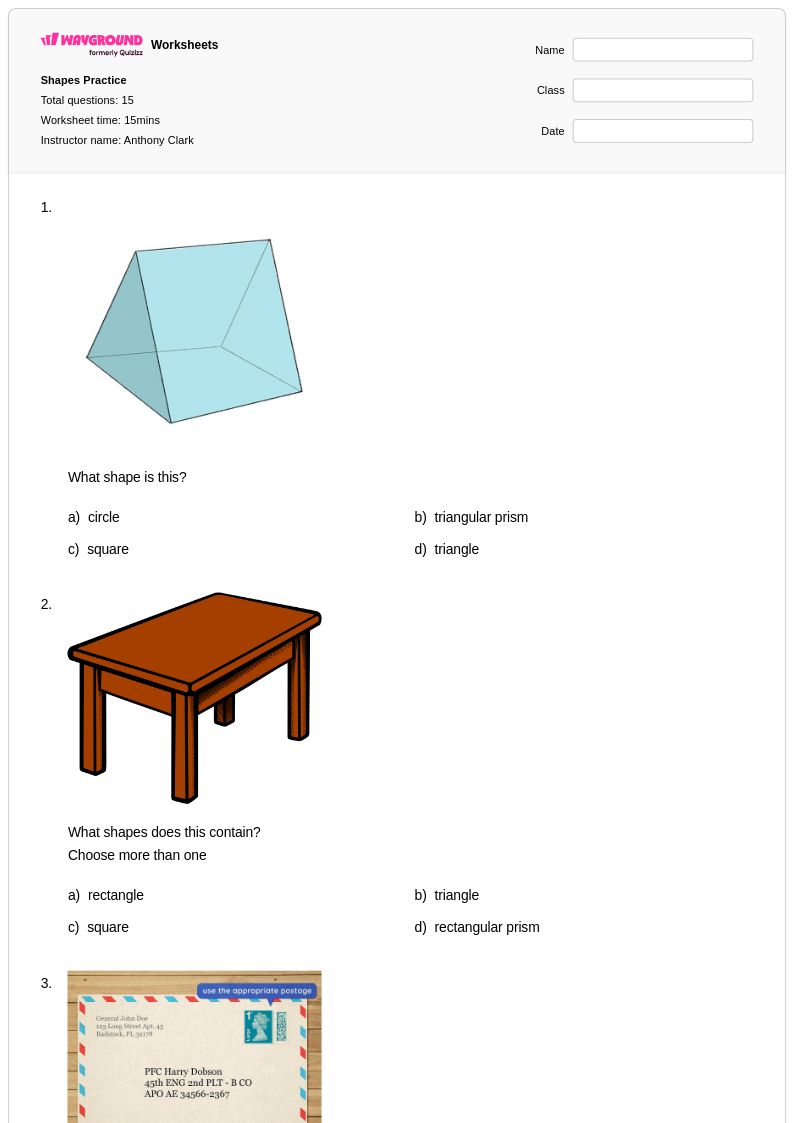
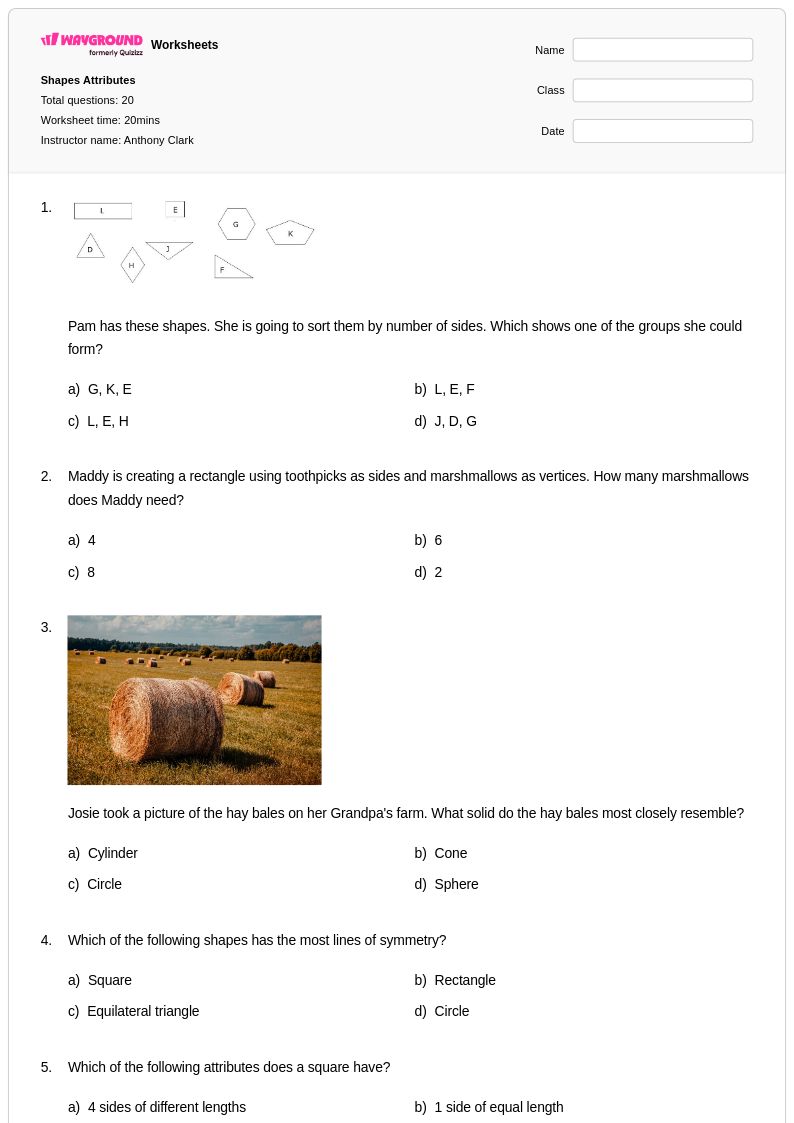
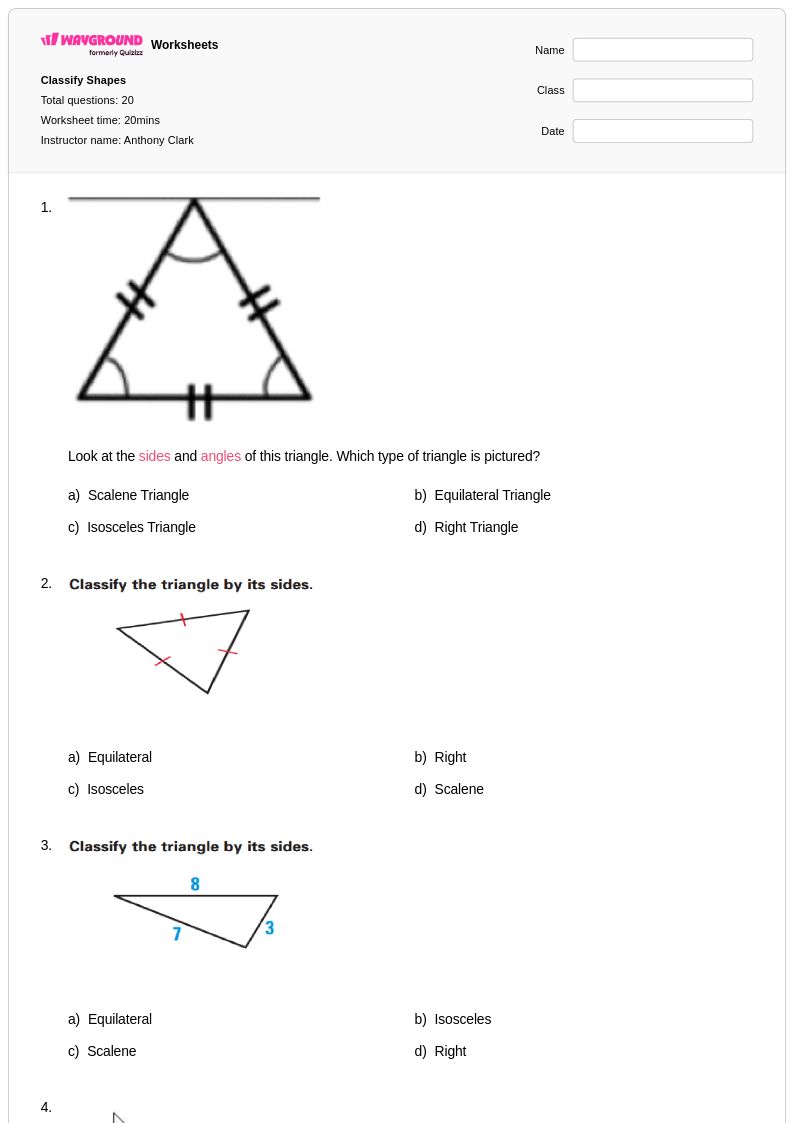
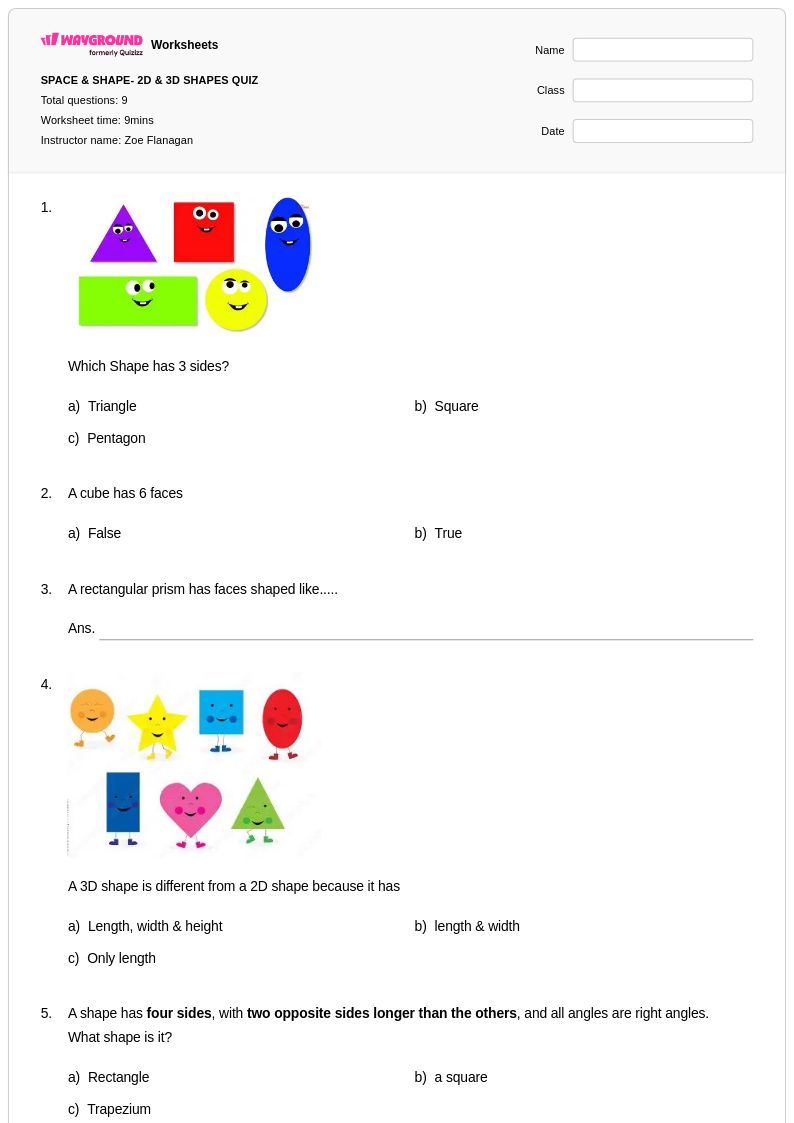
Recognizing shapes worksheets for Grade 5 students through Wayground (formerly Quizizz) provide comprehensive practice in identifying, classifying, and analyzing two-dimensional and three-dimensional geometric figures. These expertly designed worksheets strengthen students' visual discrimination skills and geometric vocabulary as they work through practice problems involving triangles, quadrilaterals, polygons, circles, and solid shapes like cubes, pyramids, and cylinders. Students develop critical thinking abilities by examining shape properties such as number of sides, angles, and symmetry while building foundational knowledge essential for advanced geometric concepts. Each worksheet includes a detailed answer key and is available as a free printable pdf, making it easy for educators to assess student understanding and provide immediate feedback on shape recognition mastery.
Wayground's extensive collection of shape recognition resources draws from millions of teacher-created worksheets that have been carefully curated and organized through powerful search and filtering capabilities. Teachers can easily locate materials aligned with specific mathematics standards and customize worksheets to meet diverse learning needs through built-in differentiation tools that adjust complexity levels and problem types. The platform's flexible format options include both printable pdf versions for traditional classroom use and digital formats for interactive learning experiences, supporting seamless integration into any instructional approach. These comprehensive tools enable educators to efficiently plan geometry lessons, provide targeted remediation for struggling learners, offer enrichment opportunities for advanced students, and deliver consistent skill practice that builds geometric reasoning abilities throughout the academic year.