
11 Q
3rd - Uni
15 Q
3rd - Uni
20 Q
3rd - Uni
16 Q
1st - 4th
12 Q
1st - 4th
8 Q
1st - 5th
20 Q
1st - 5th
10 Q
4th
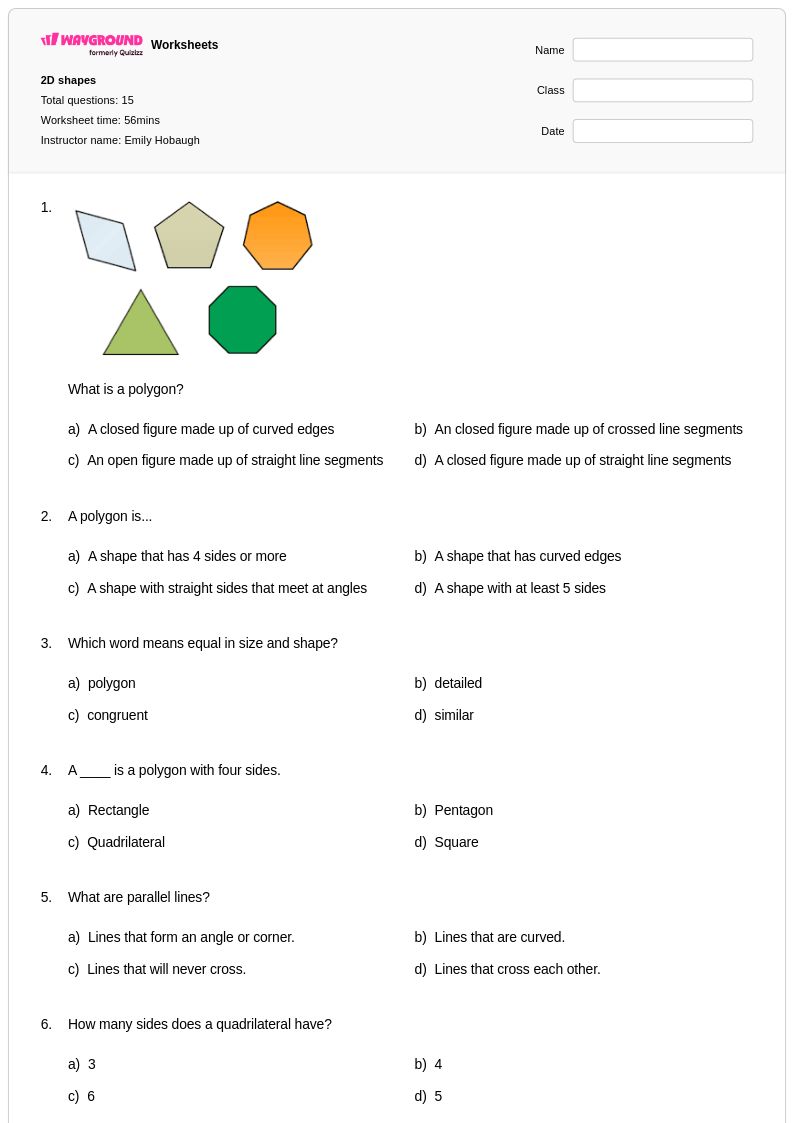
15 Q
4th
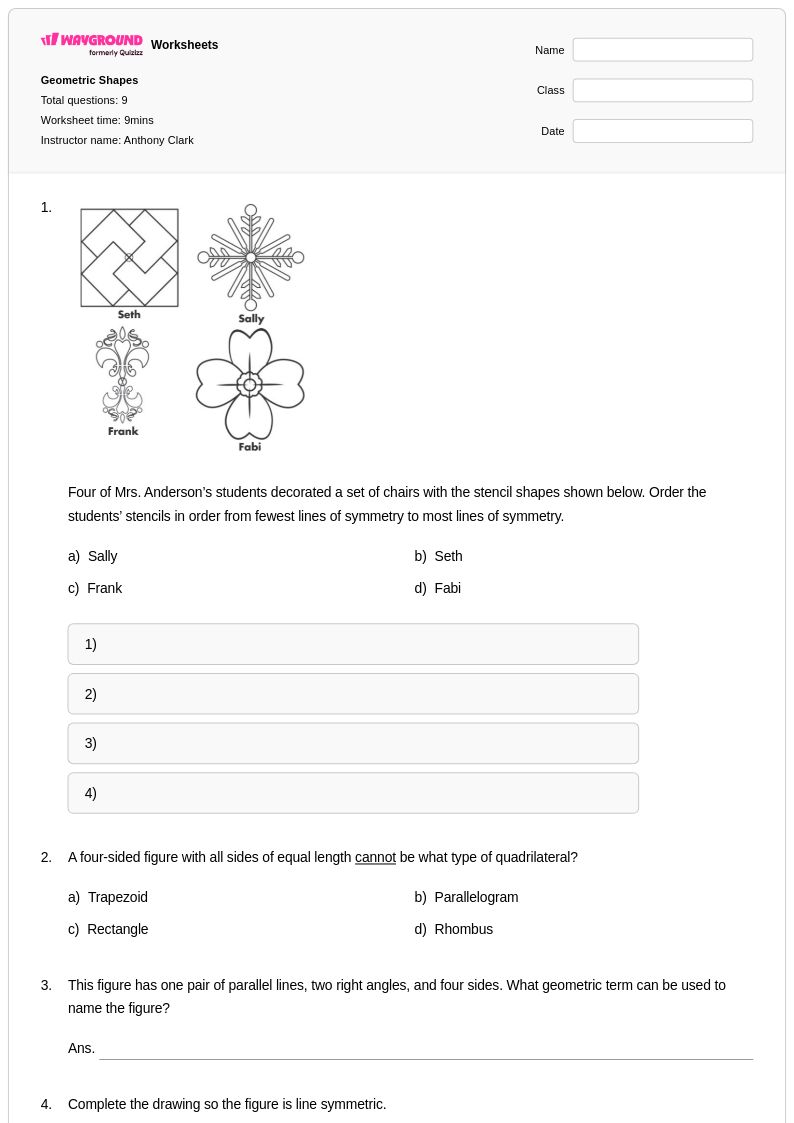
9 Q
4th - Uni
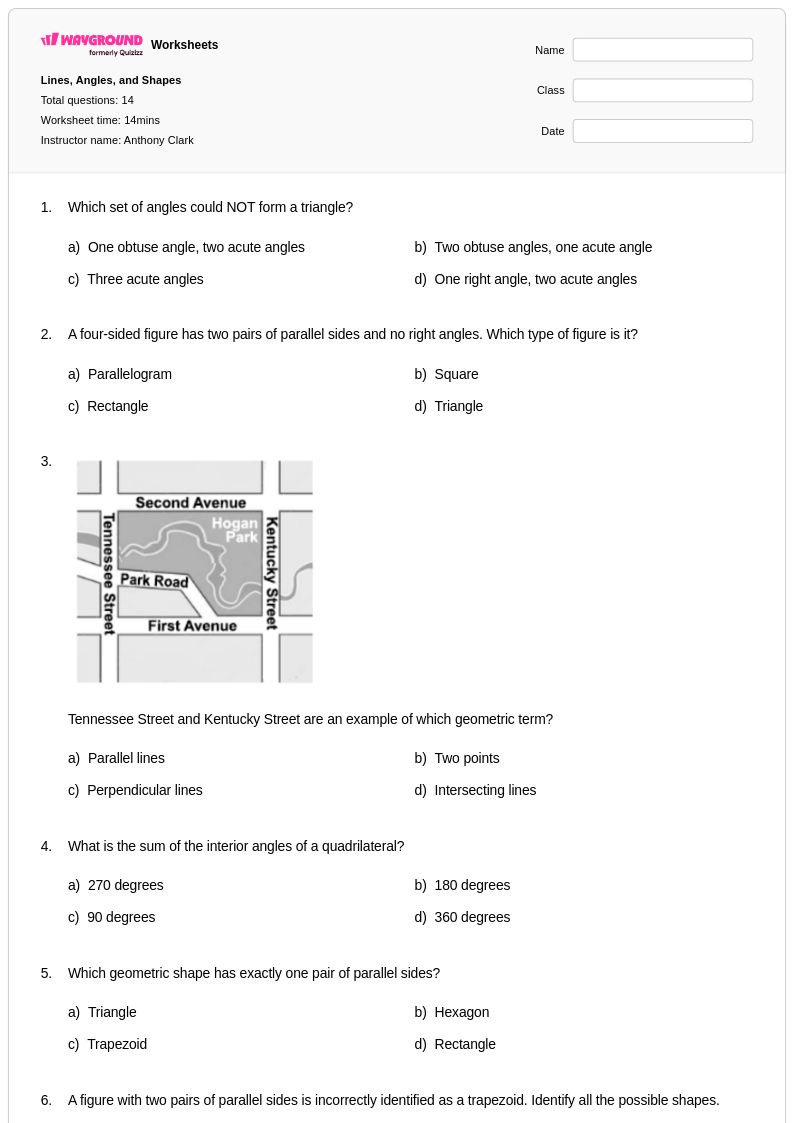
14 Q
4th - Uni
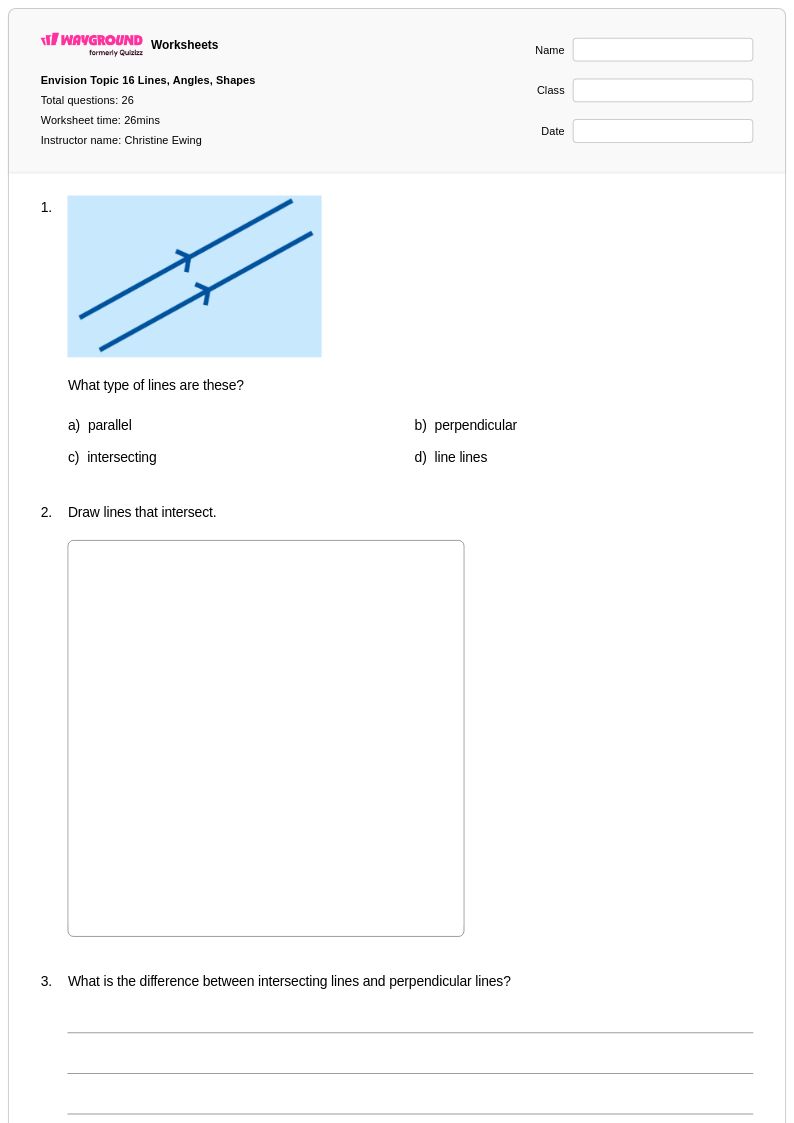
26 Q
4th
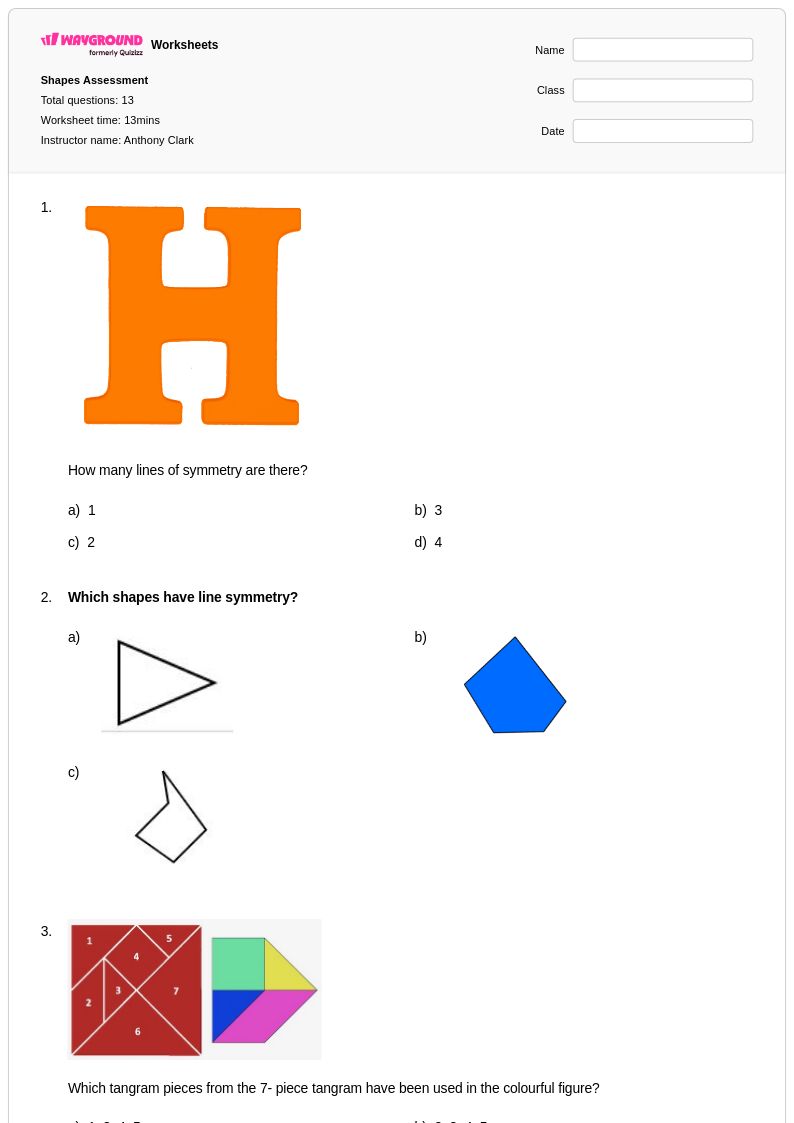
13 Q
3rd - Uni
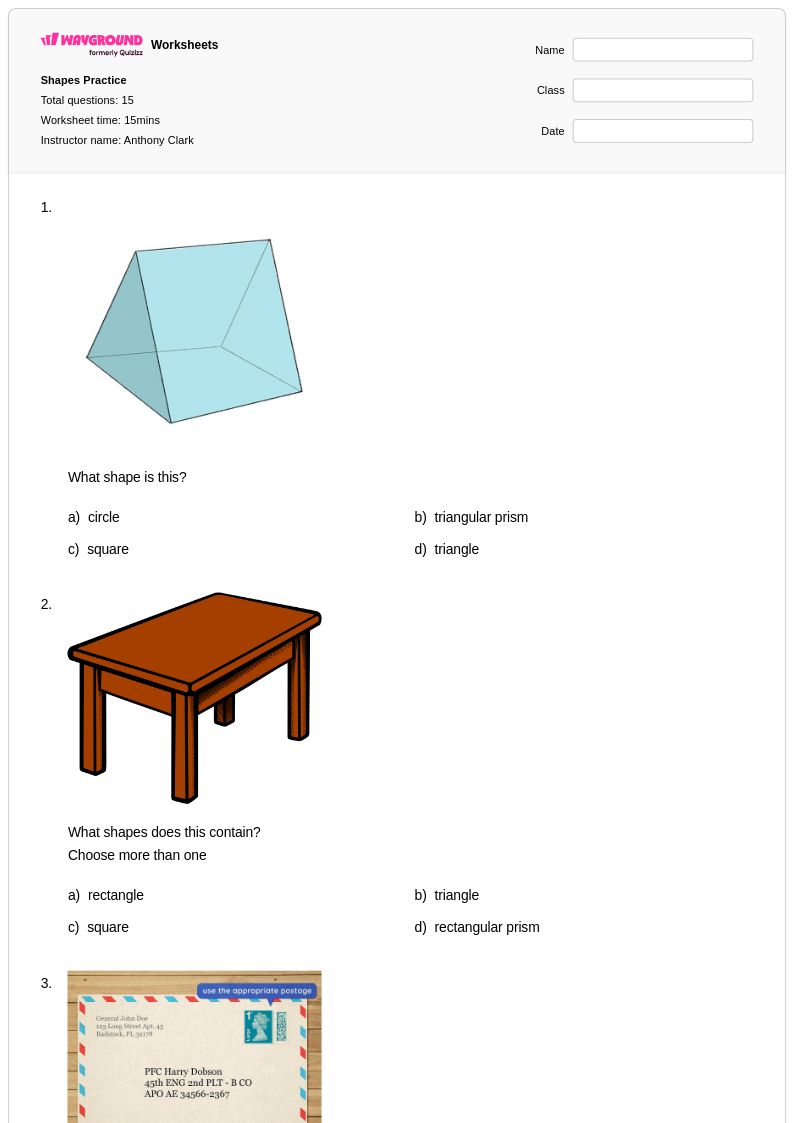
15 Q
1st - Uni
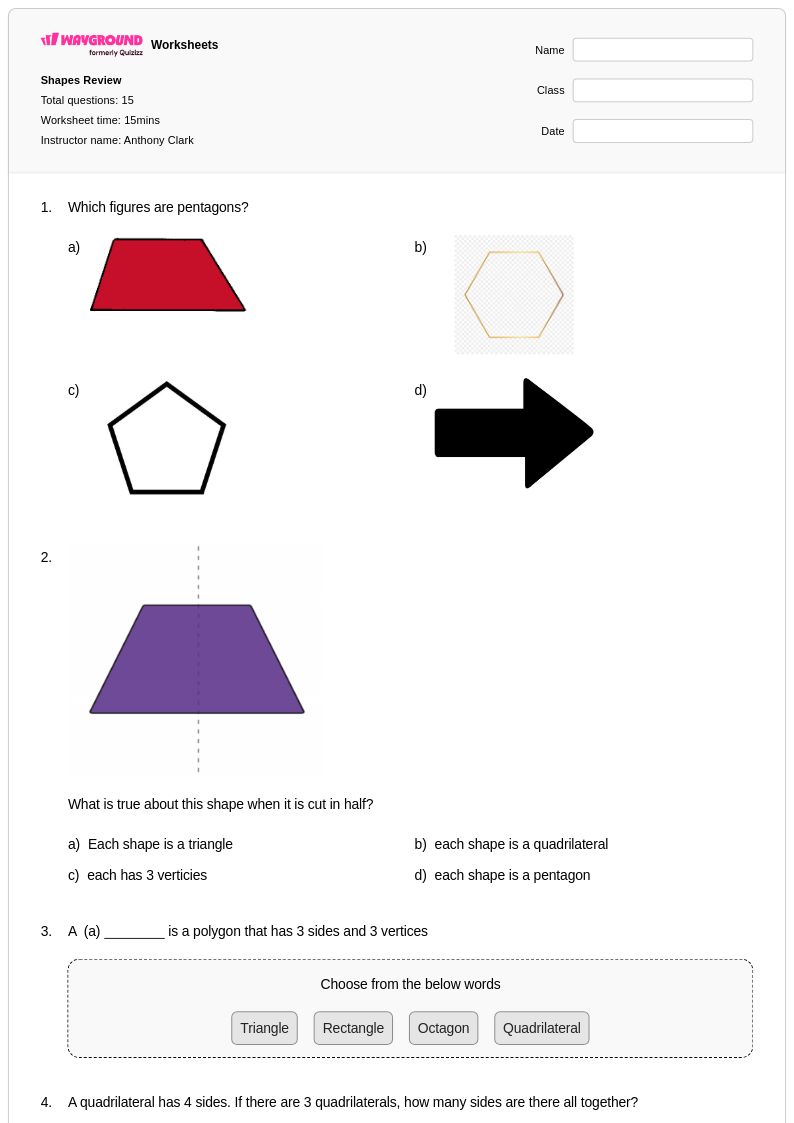
15 Q
2nd - Uni
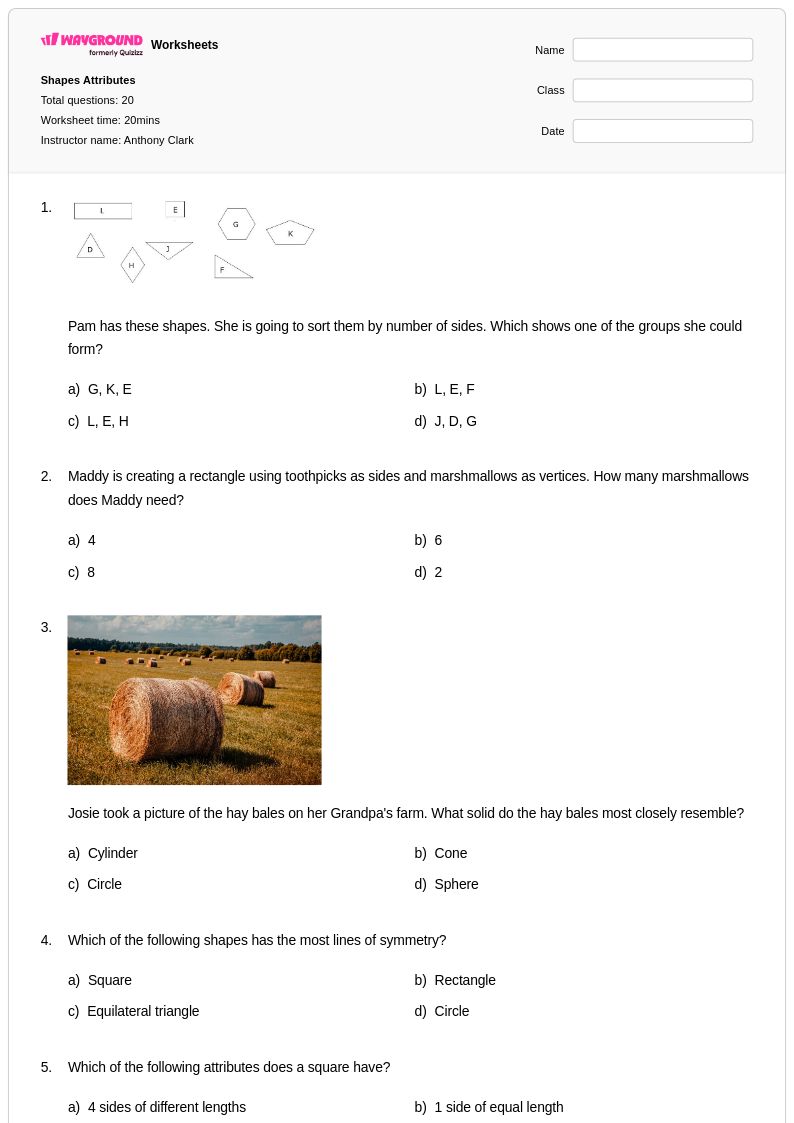
20 Q
3rd - Uni
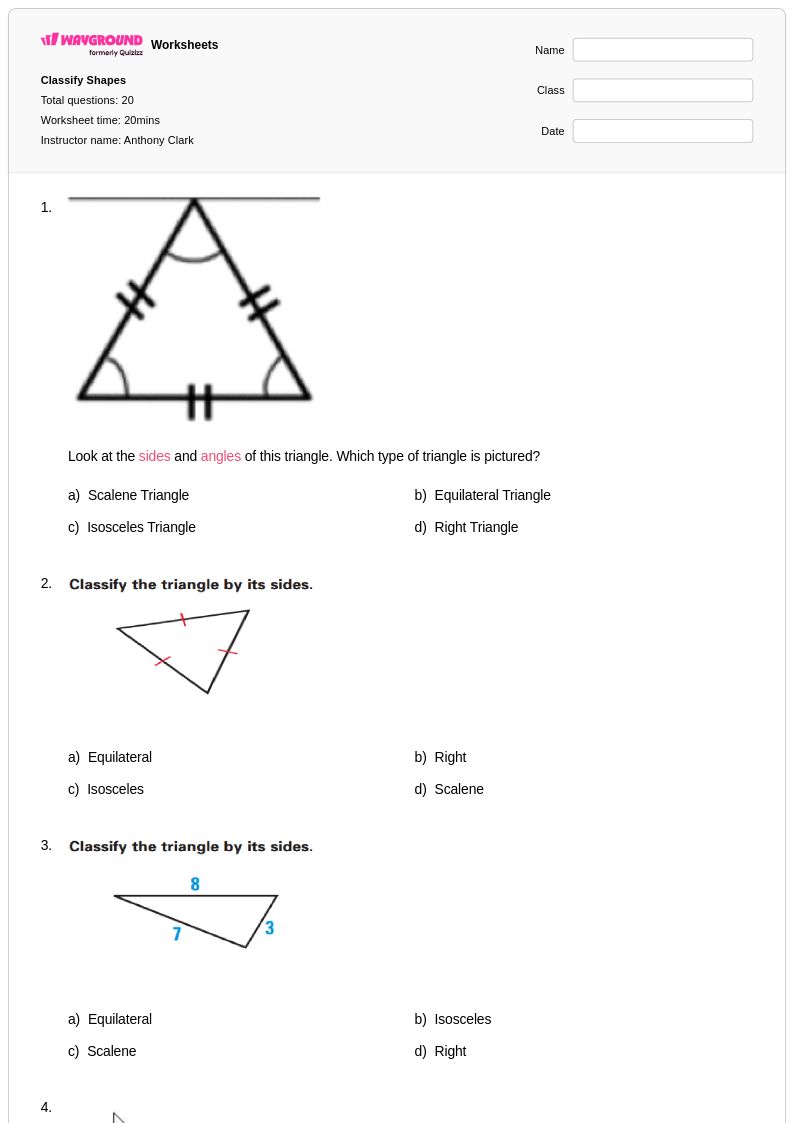
20 Q
3rd - Uni
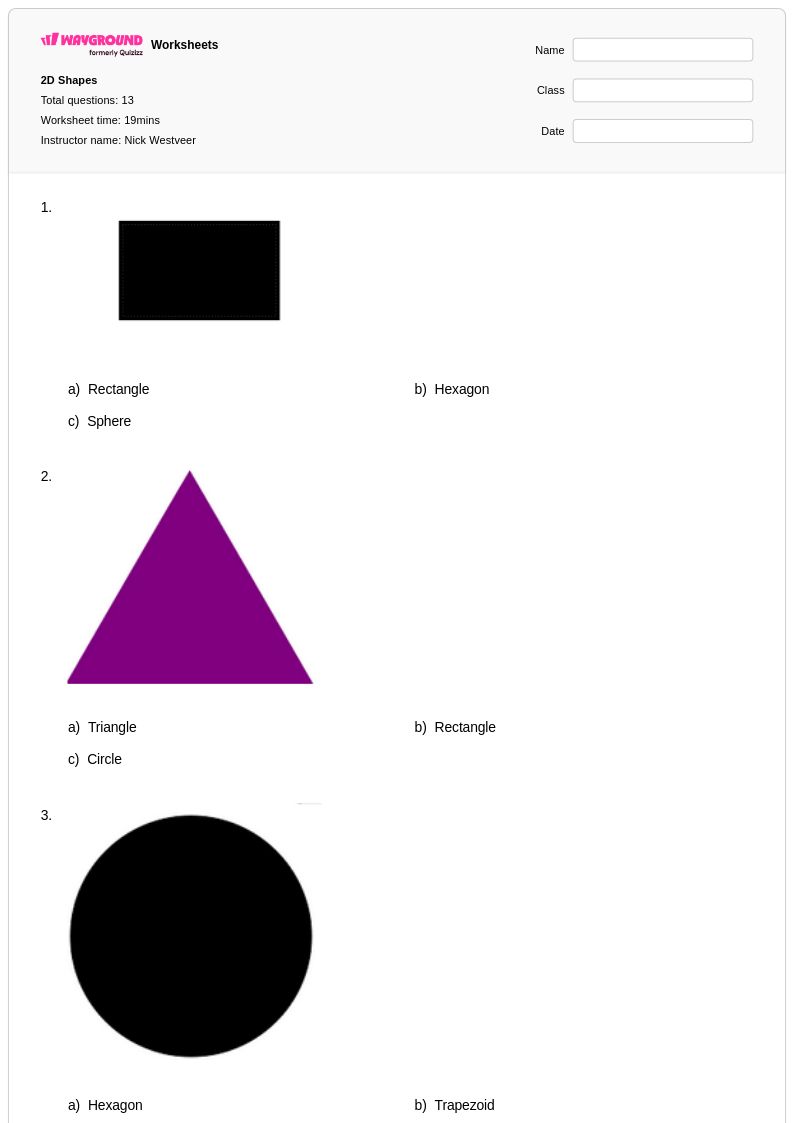
13 Q
2nd - 4th
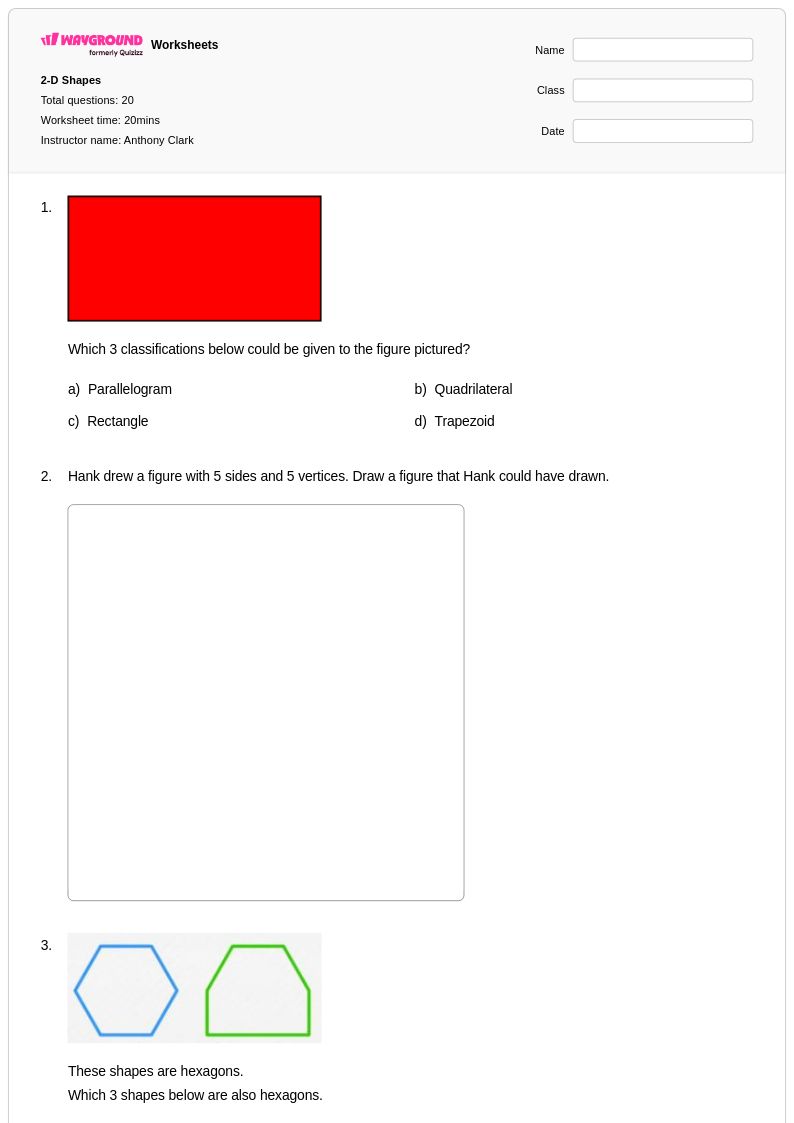
20 Q
4th - Uni
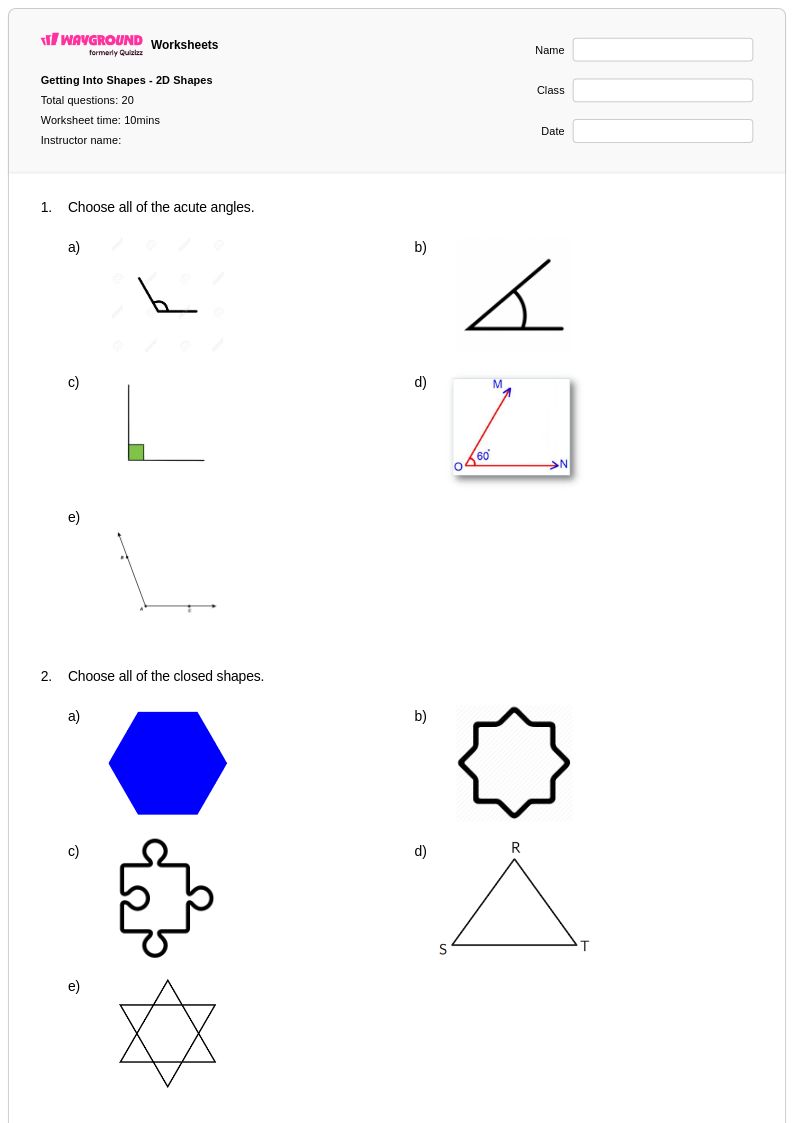
20 Q
4th
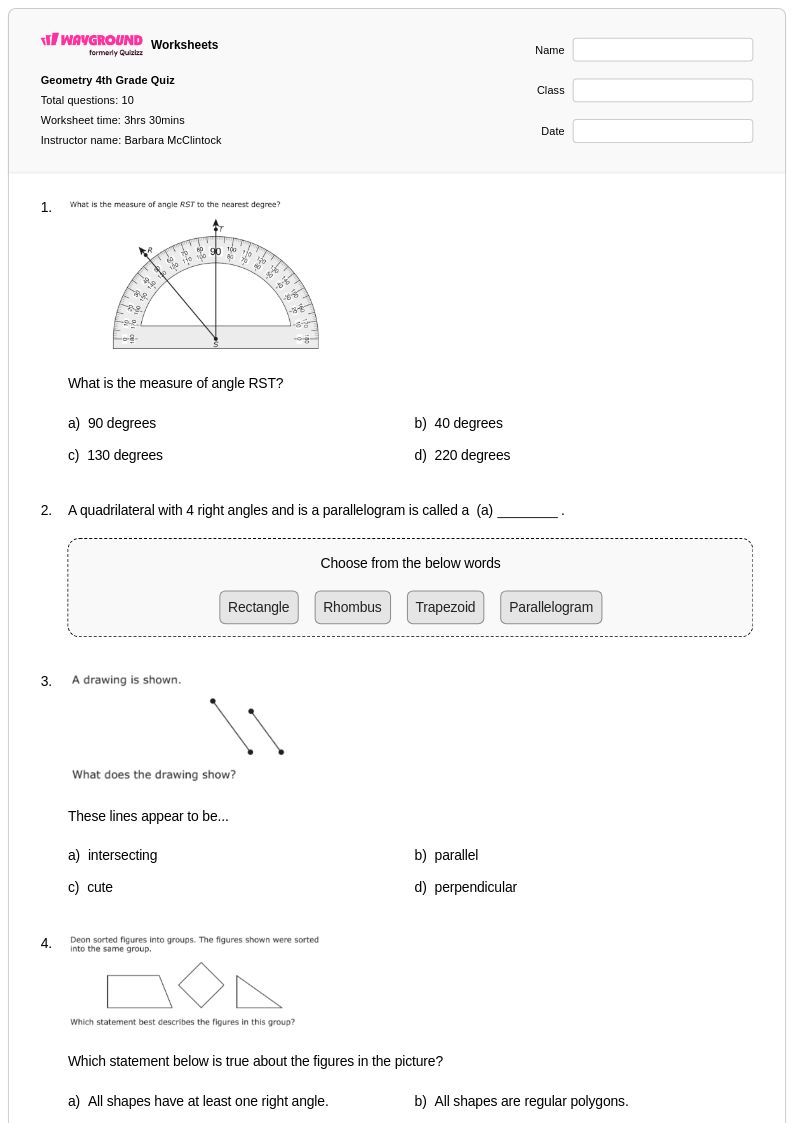
10 Q
4th
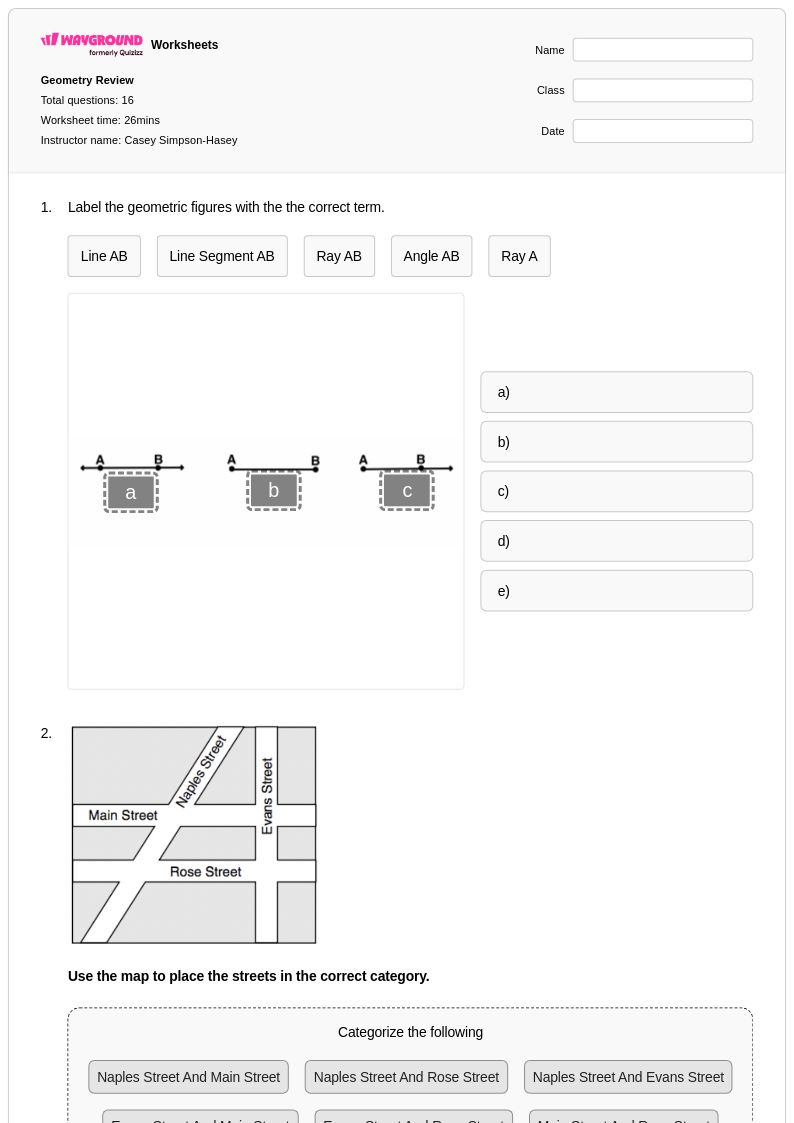
16 Q
4th
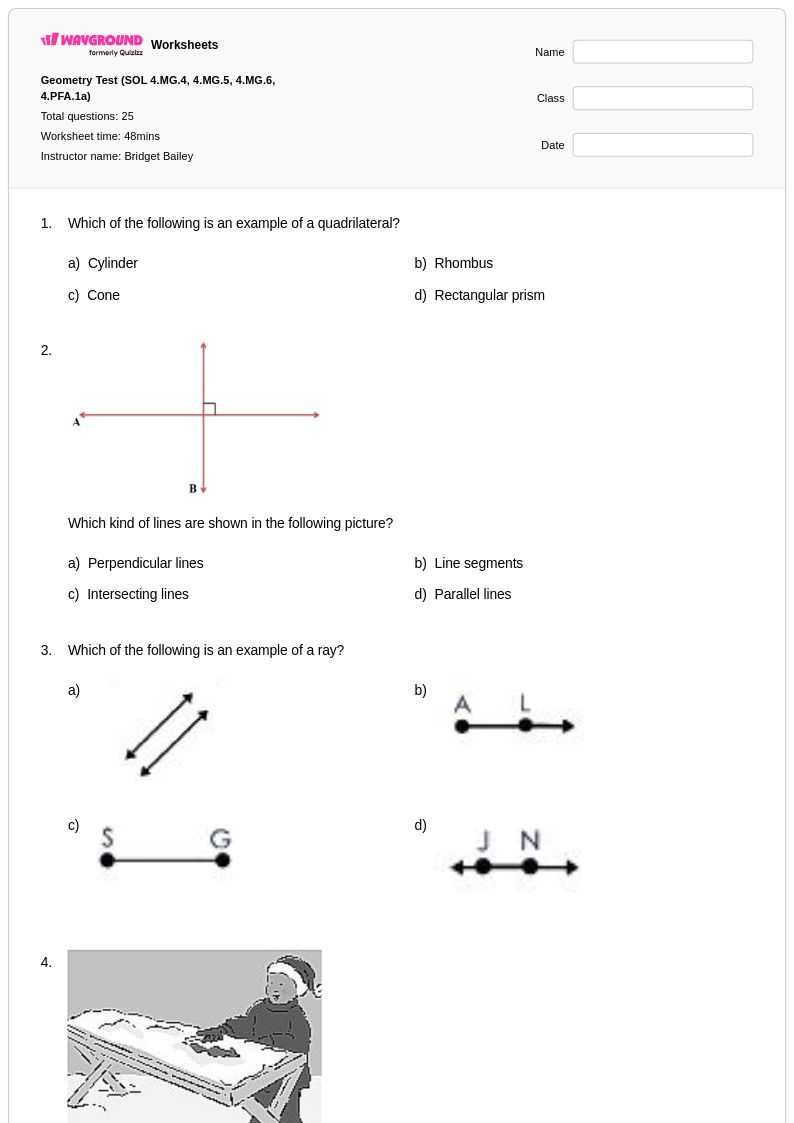
28 Q
4th
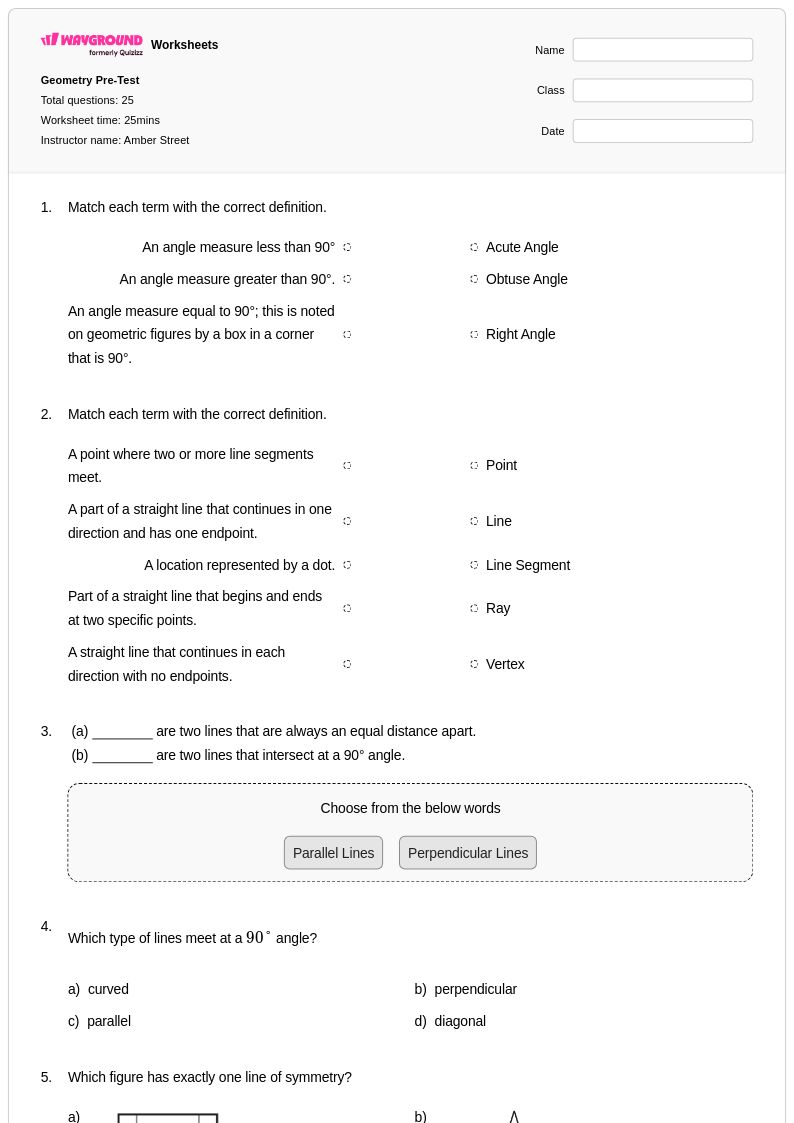
25 Q
4th
Explore Other Subject Worksheets for grade 4
Explore printable Recognizing Shapes worksheets for Grade 4
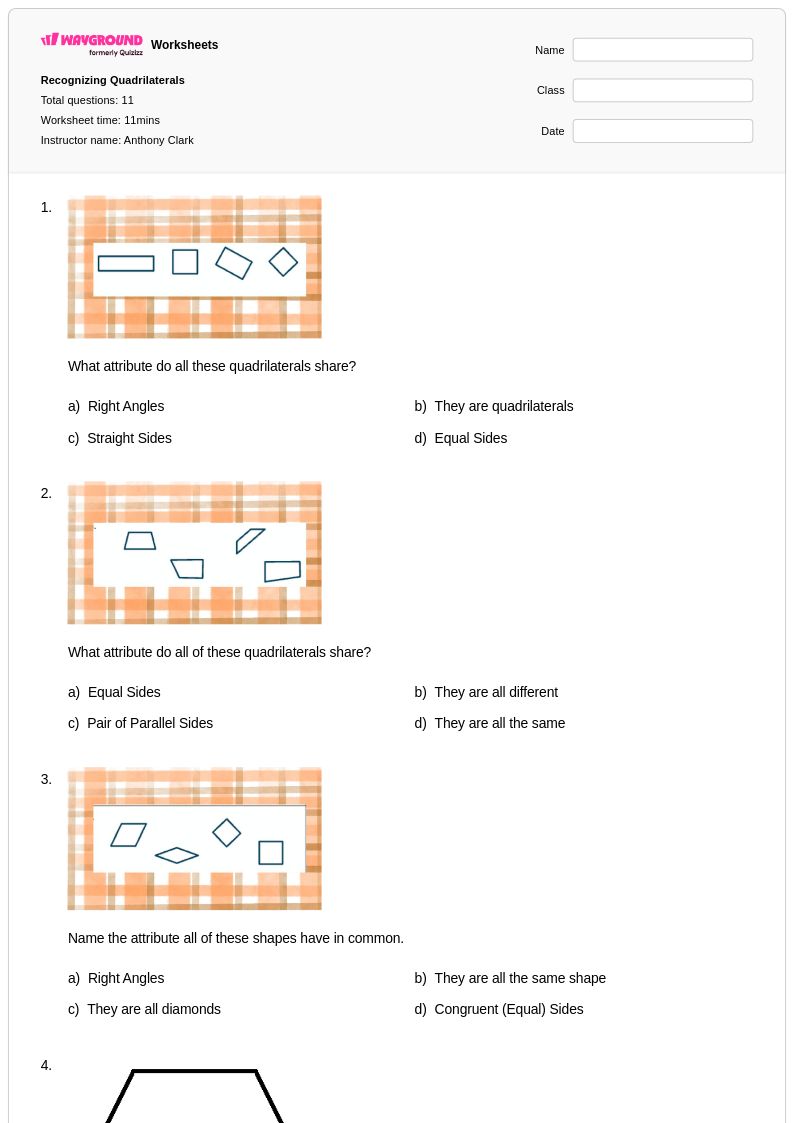
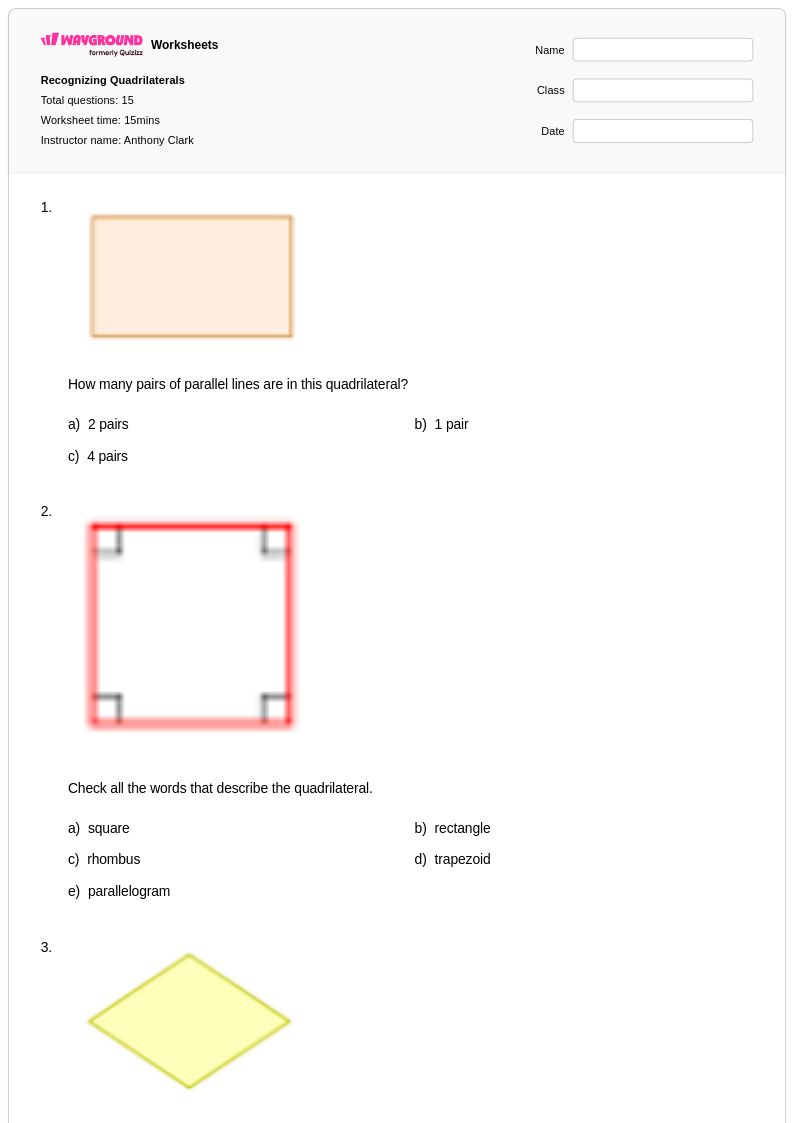
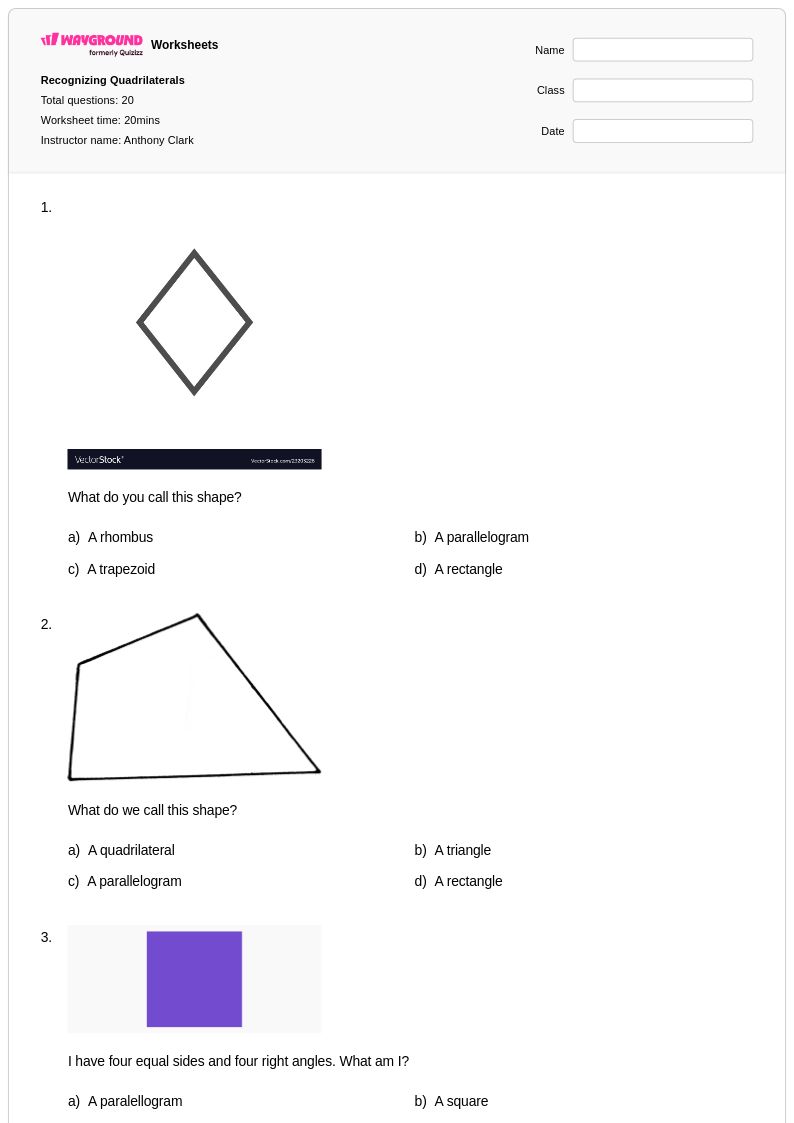
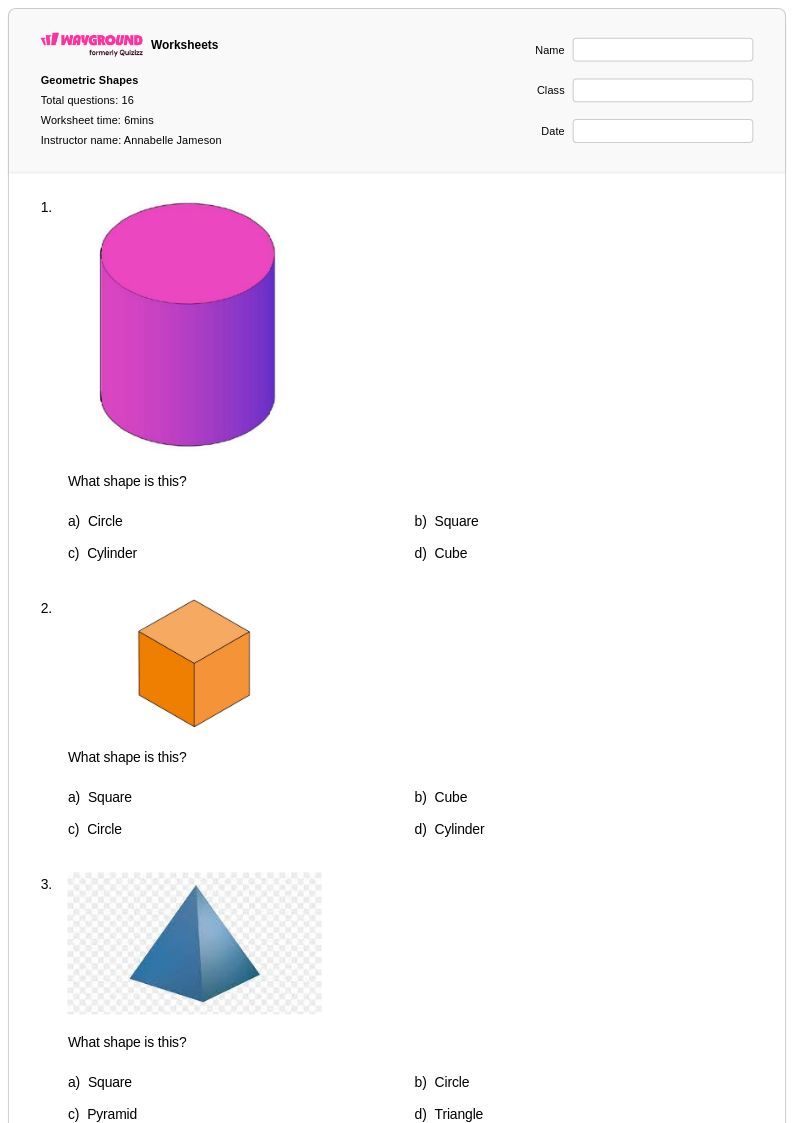
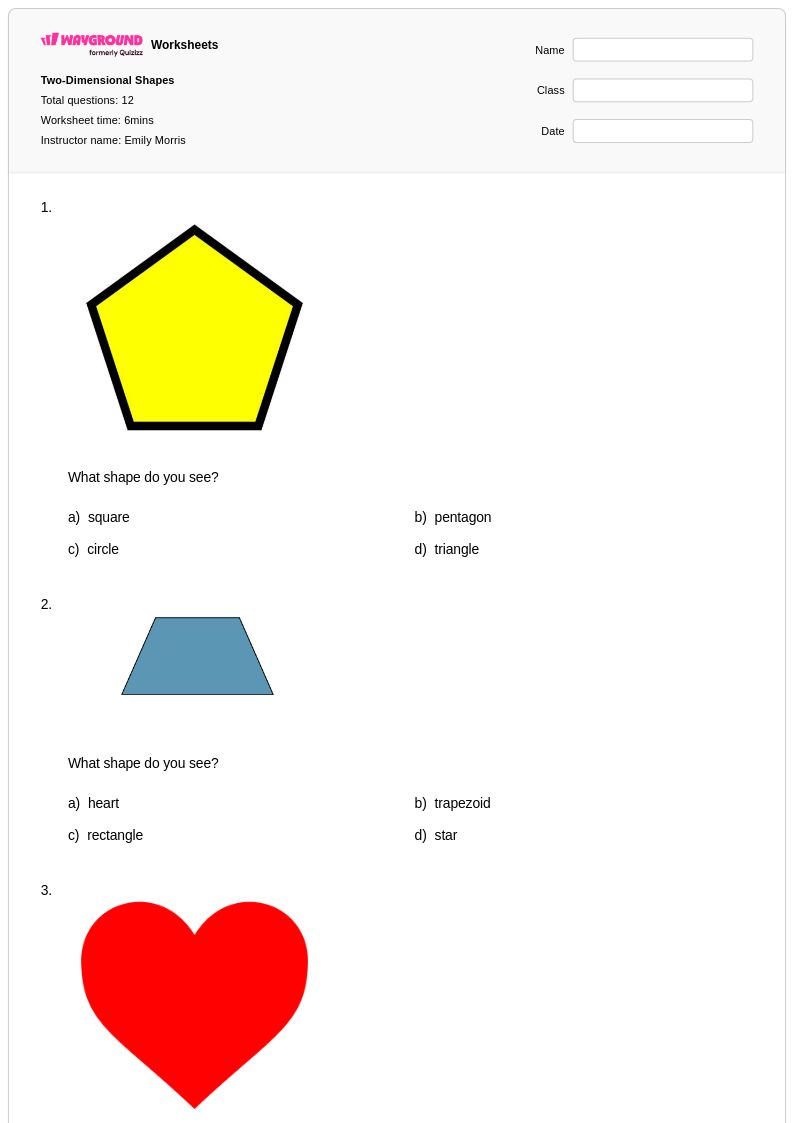
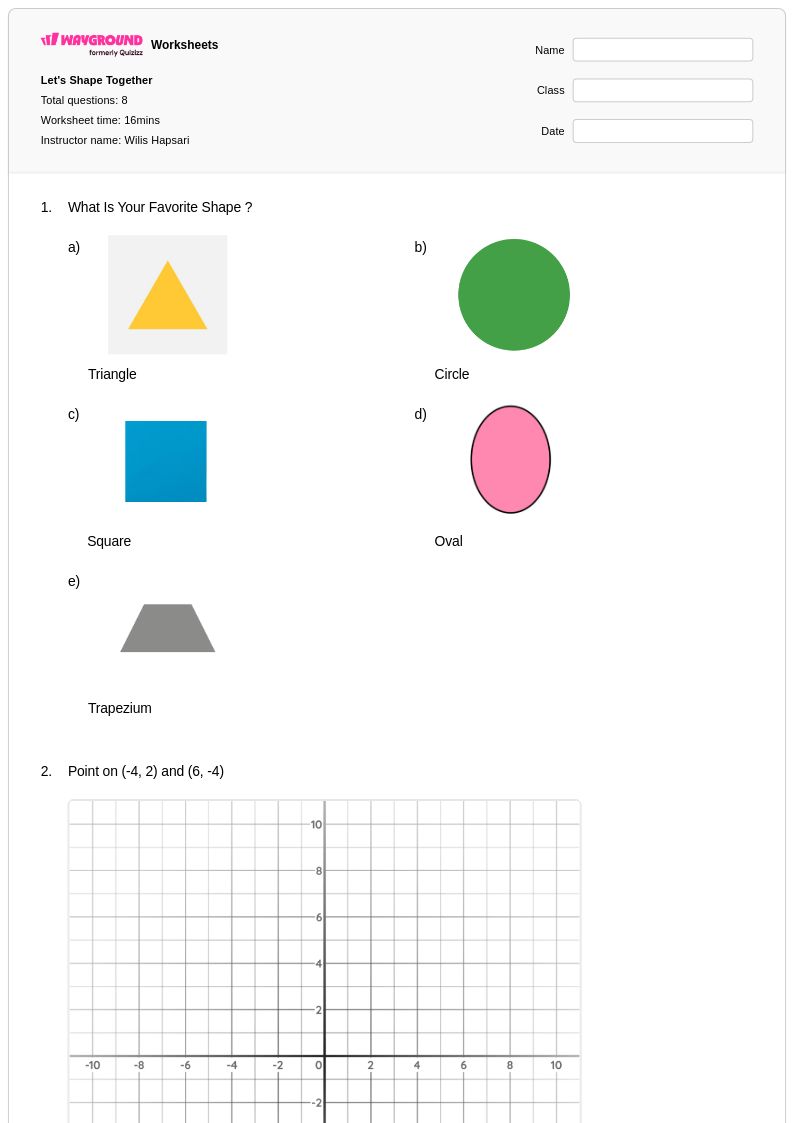
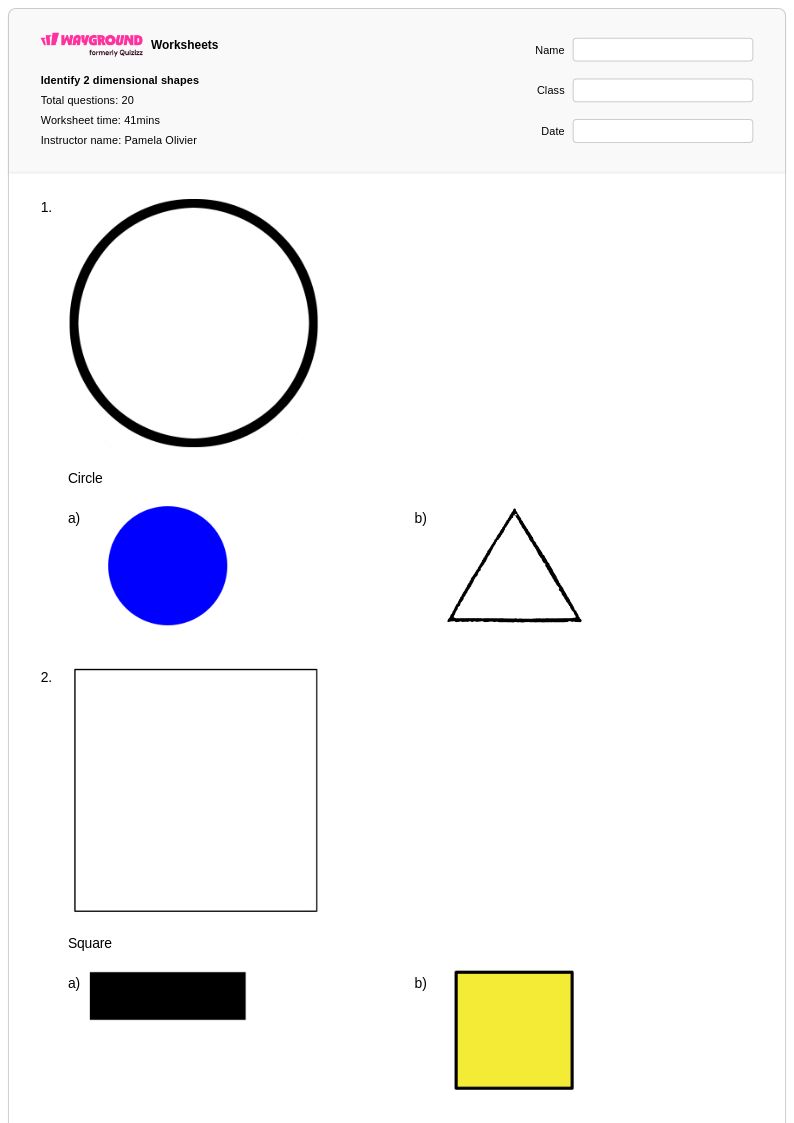
Recognizing shapes in Grade 4 mathematics builds the foundation for geometric reasoning and spatial awareness that students will use throughout their academic careers. Wayground's comprehensive collection of recognizing shapes worksheets helps fourth-grade students master the identification and classification of two-dimensional and three-dimensional figures including squares, rectangles, triangles, circles, cubes, spheres, and pyramids. These carefully designed practice problems strengthen students' ability to distinguish between different geometric forms based on their properties such as number of sides, angles, and faces. Each worksheet comes with a complete answer key and is available as a free printable pdf, making it easy for educators to provide immediate feedback and assess student understanding of fundamental shape recognition concepts.
Wayground, formerly Quizizz, empowers teachers with millions of educator-created resources specifically designed to support geometry instruction at the elementary level. The platform's advanced search and filtering capabilities allow teachers to quickly locate worksheets that align with state mathematics standards and match their students' specific learning needs. Differentiation tools enable educators to customize recognizing shapes activities for varied ability levels, while the flexible format options including both printable and digital pdf versions accommodate different classroom environments and teaching preferences. These resources prove invaluable for lesson planning, targeted remediation for struggling learners, enrichment opportunities for advanced students, and regular skill practice that reinforces shape recognition mastery essential for future geometric learning.