
15 Q
4th - 7th
10 Q
3rd - 5th
19 Q
4th
12 Q
4th - 5th
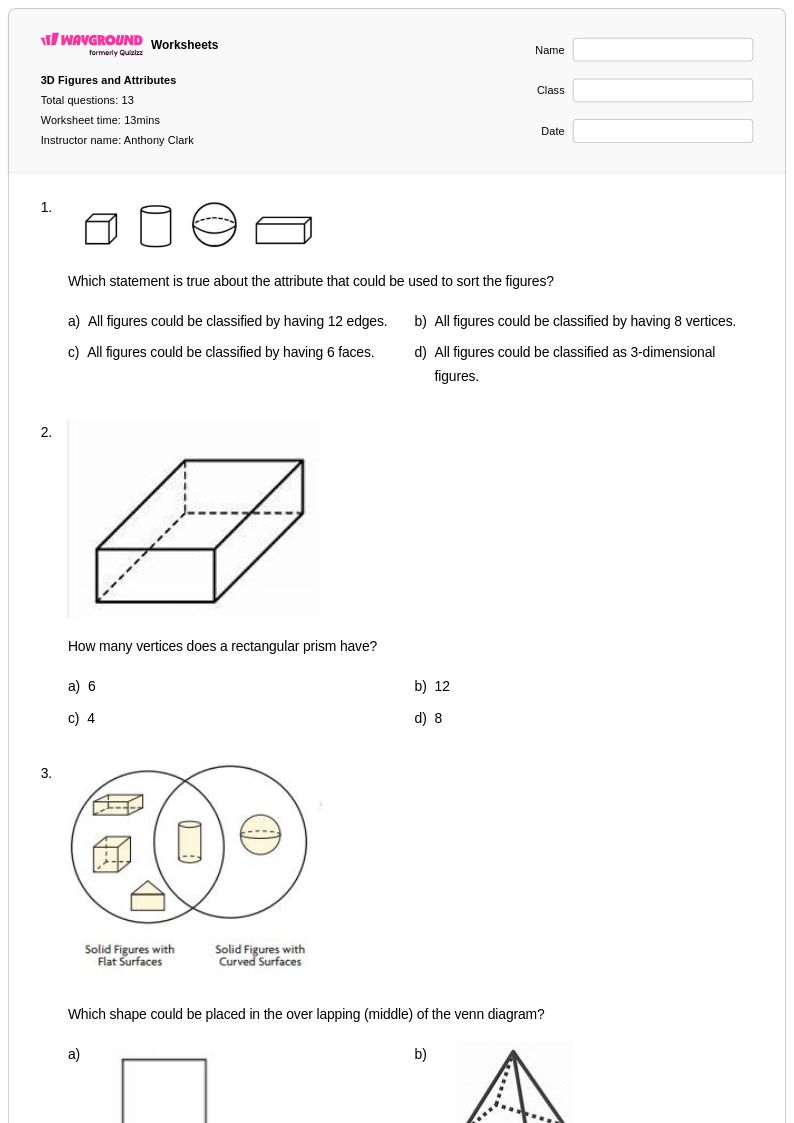
13 Q
3rd - Uni
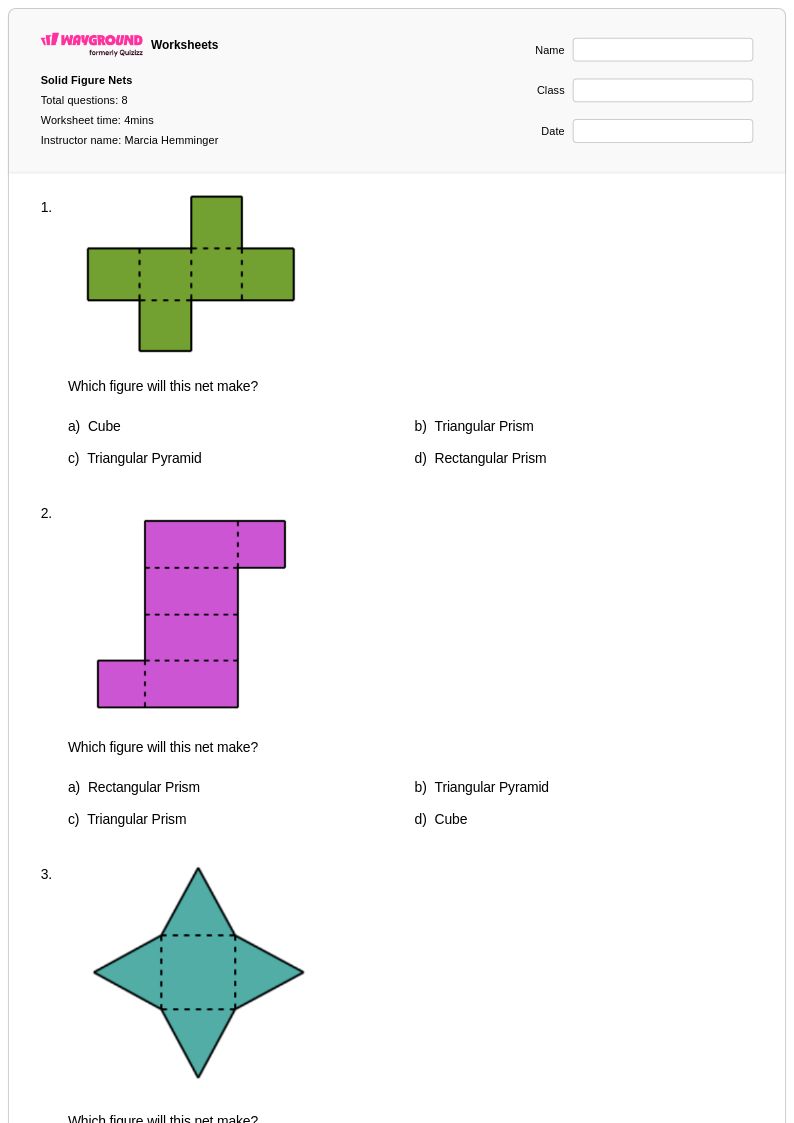
8 Q
4th
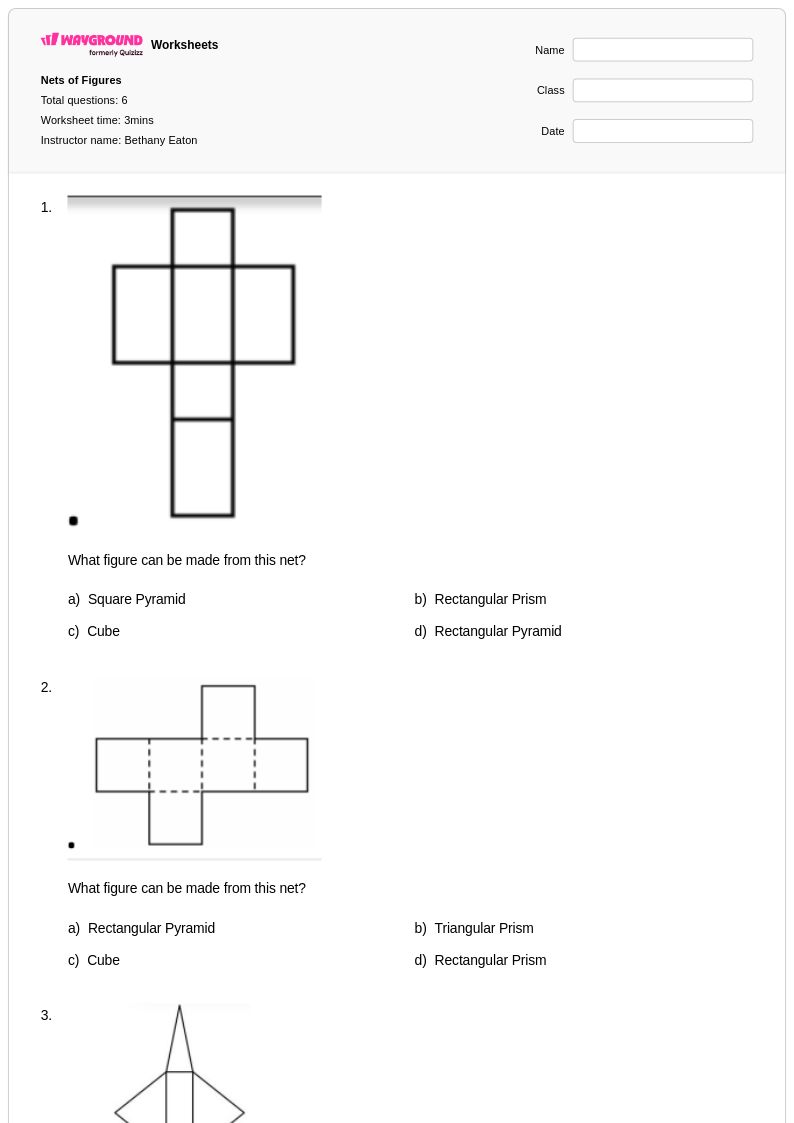
6 Q
4th - 6th
22 Q
4th
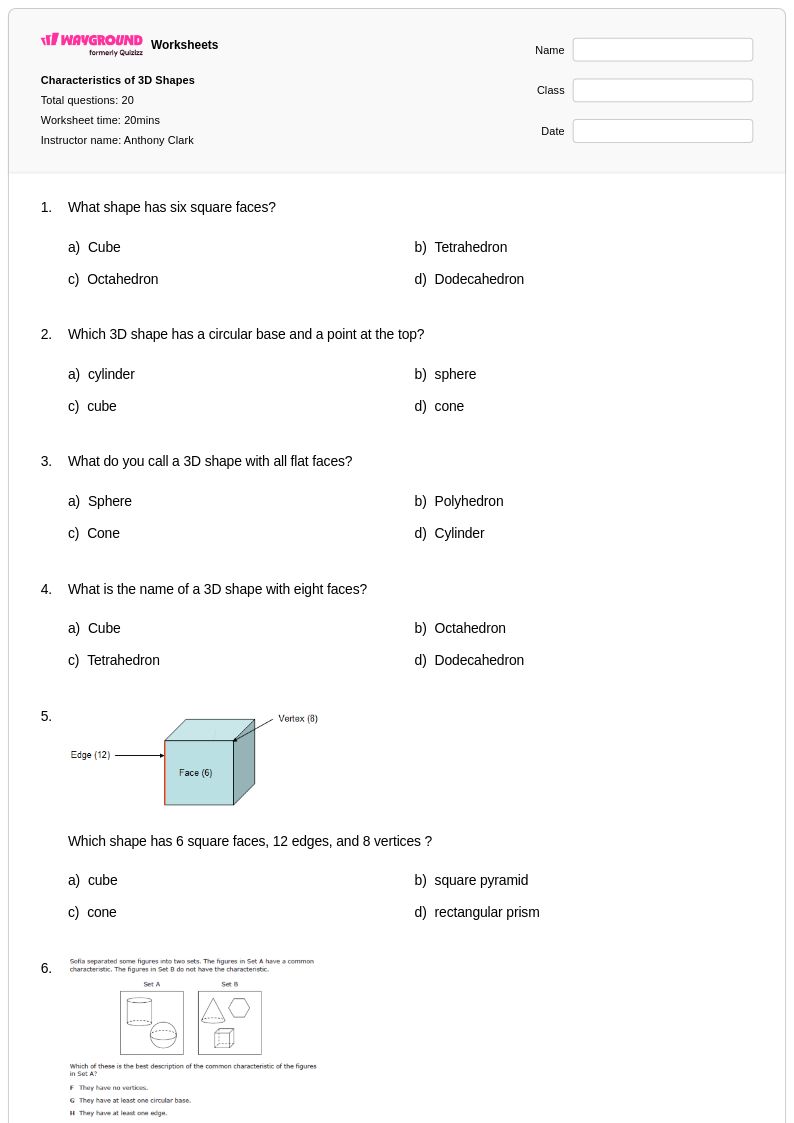
20 Q
2nd - Uni
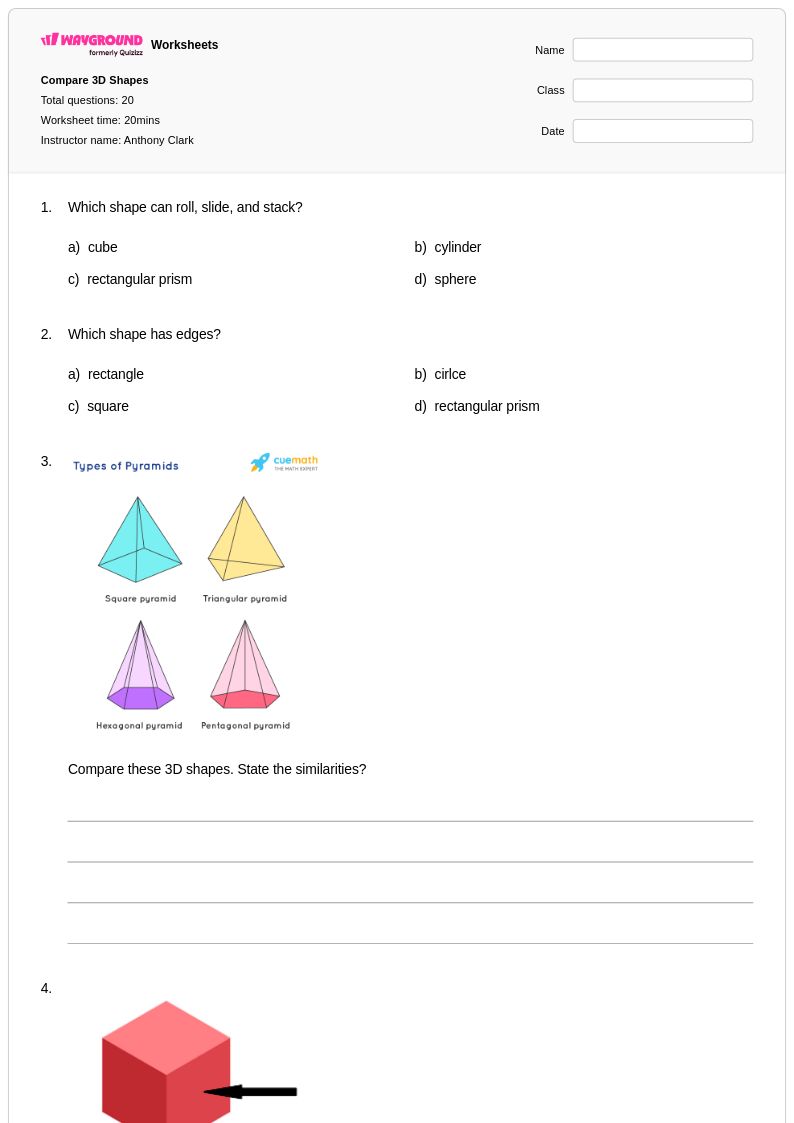
20 Q
3rd - Uni
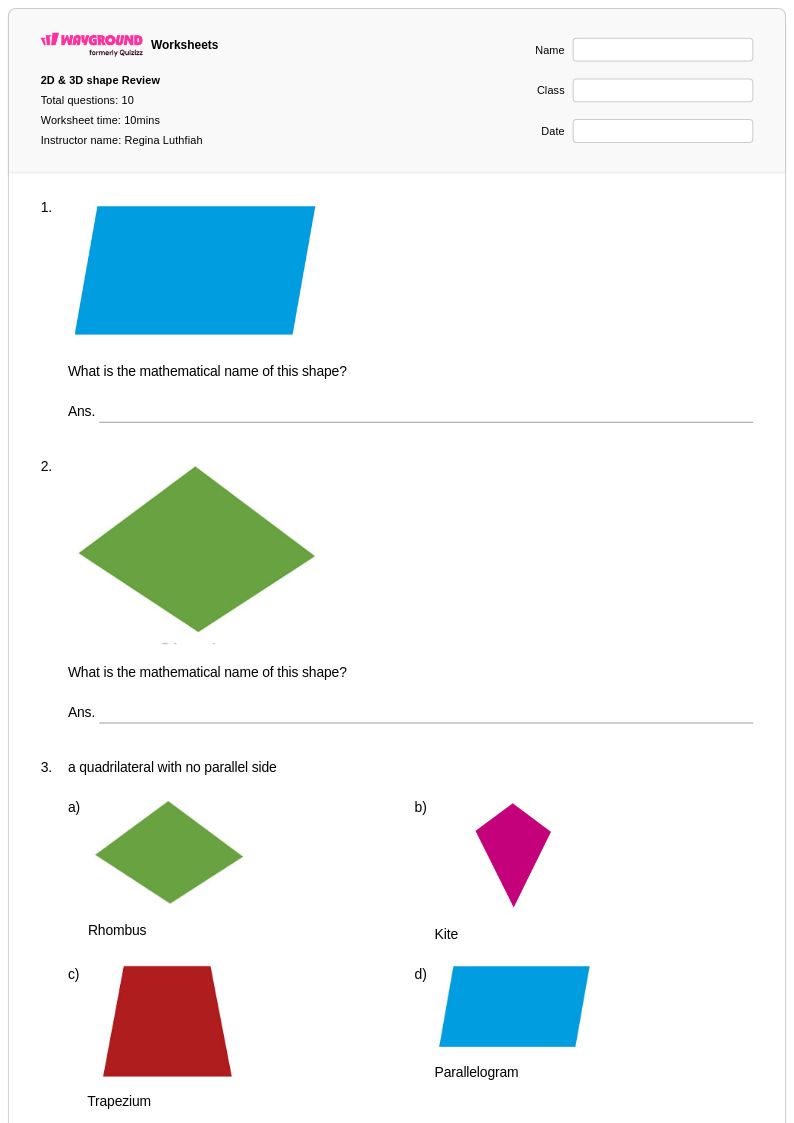
10 Q
4th
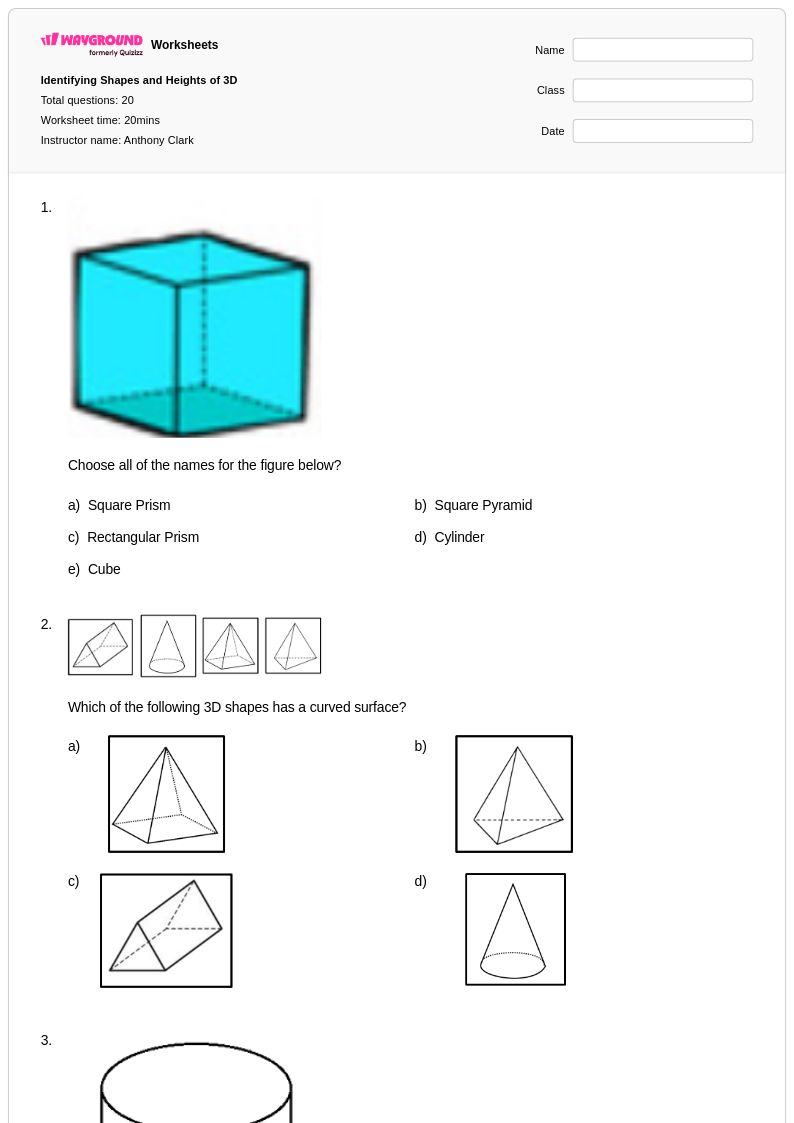
20 Q
3rd - Uni
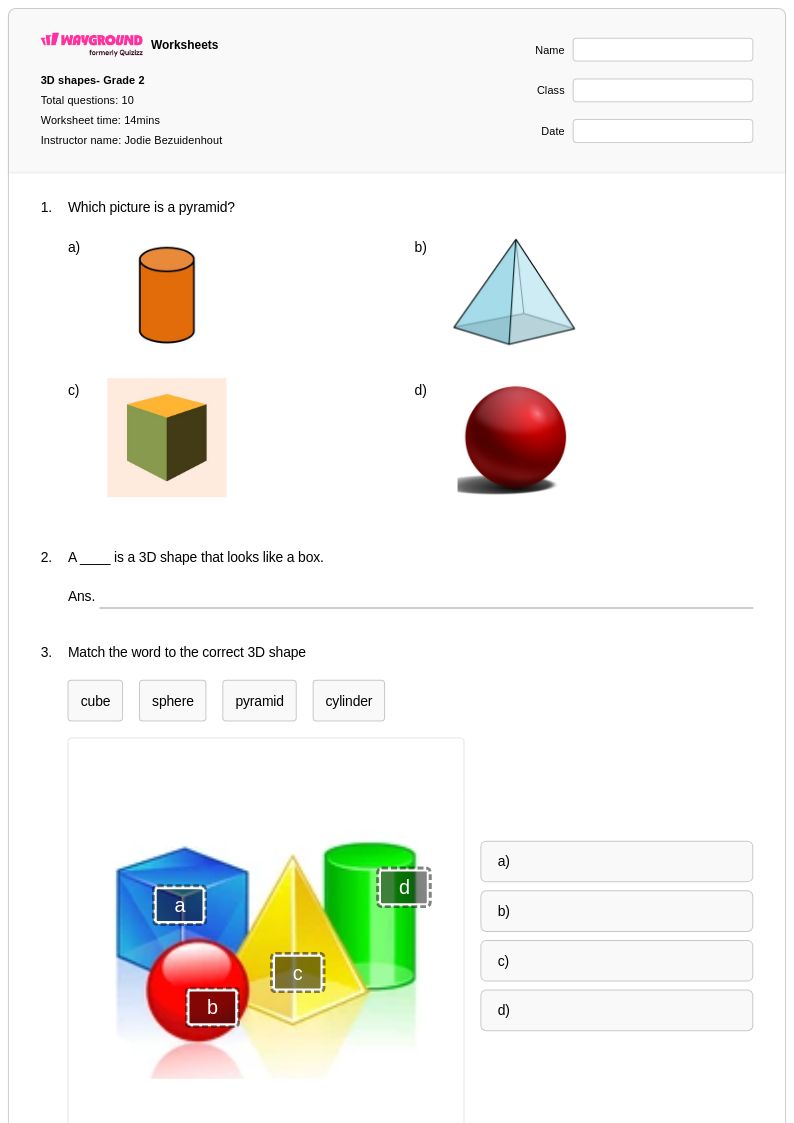
10 Q
2nd - Uni
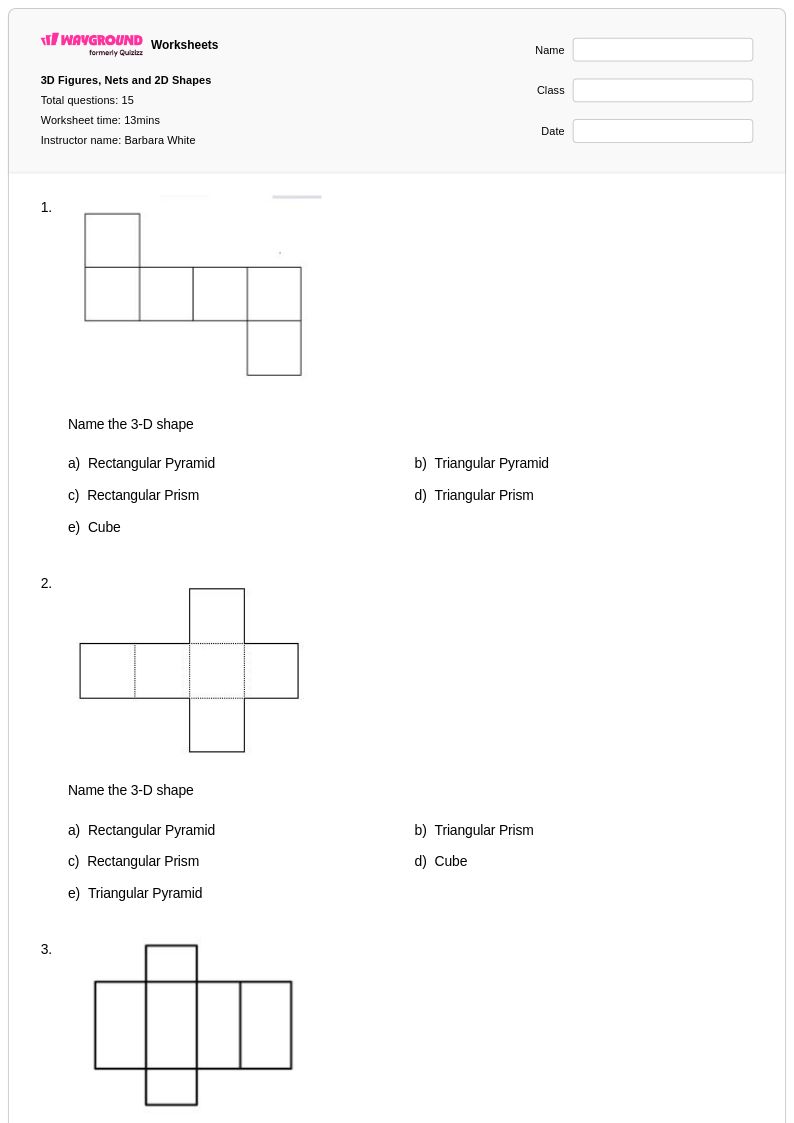
15 Q
3rd - 4th
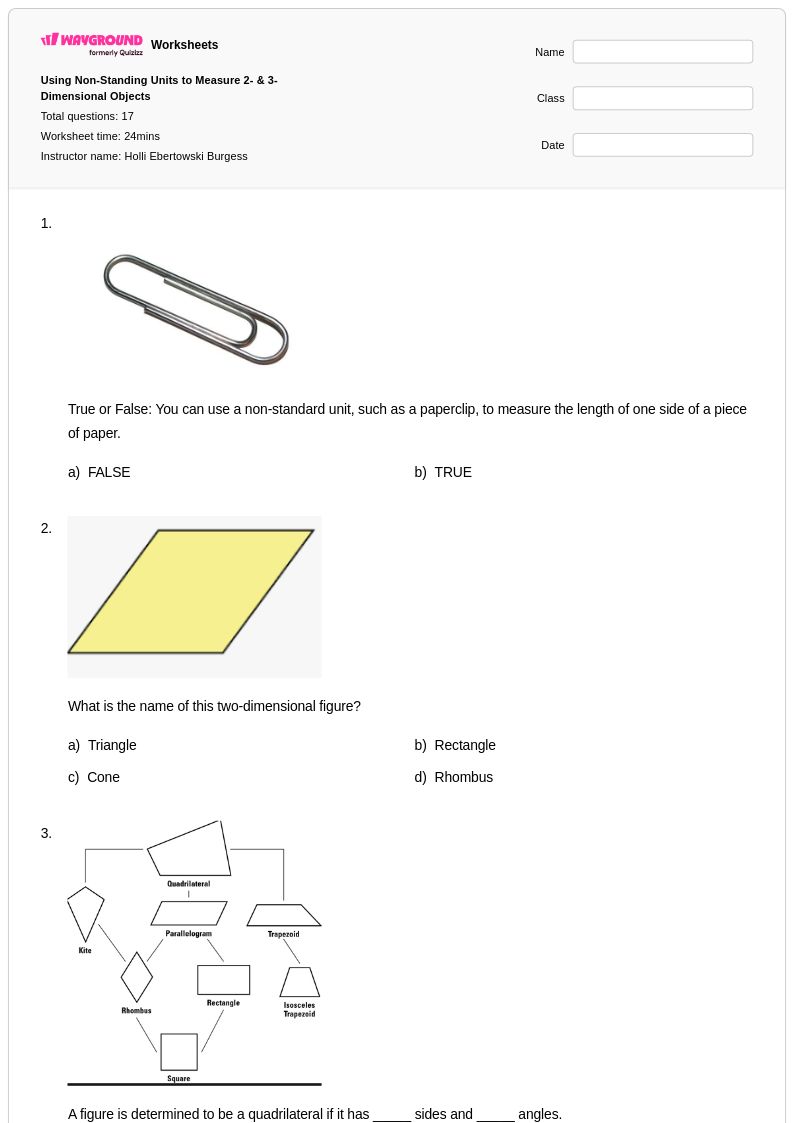
17 Q
2nd - 5th
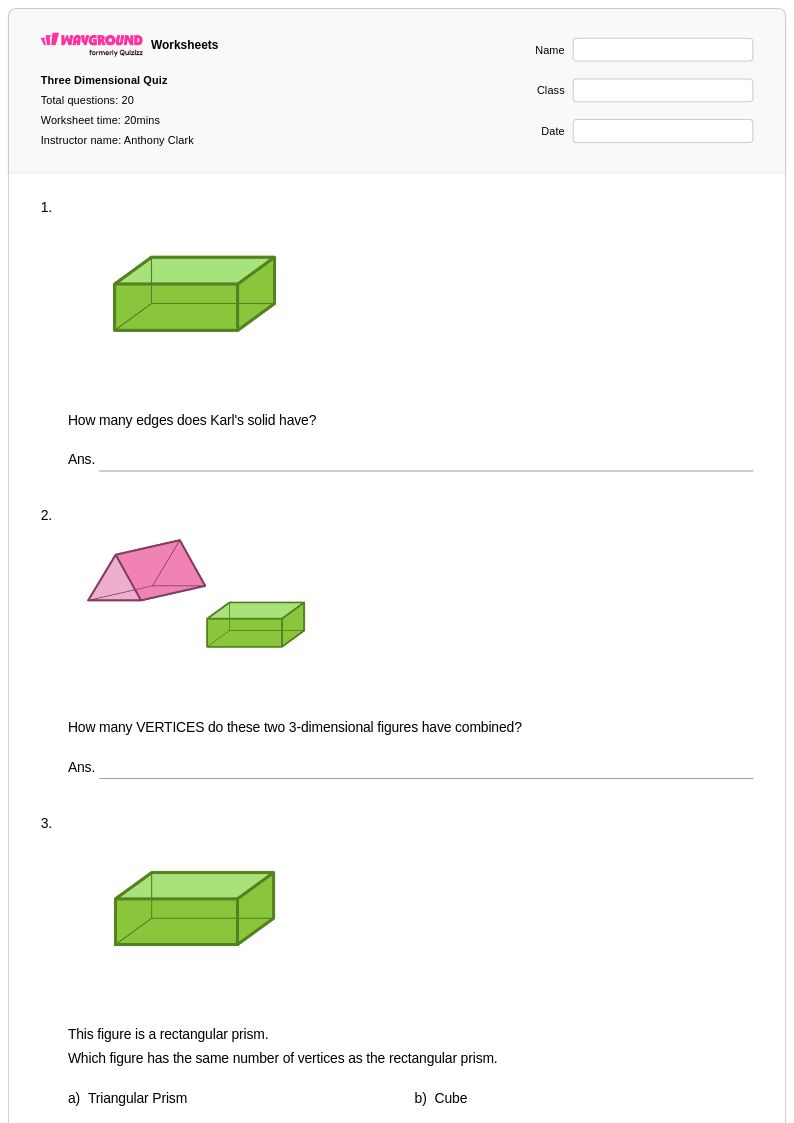
20 Q
1st - Uni
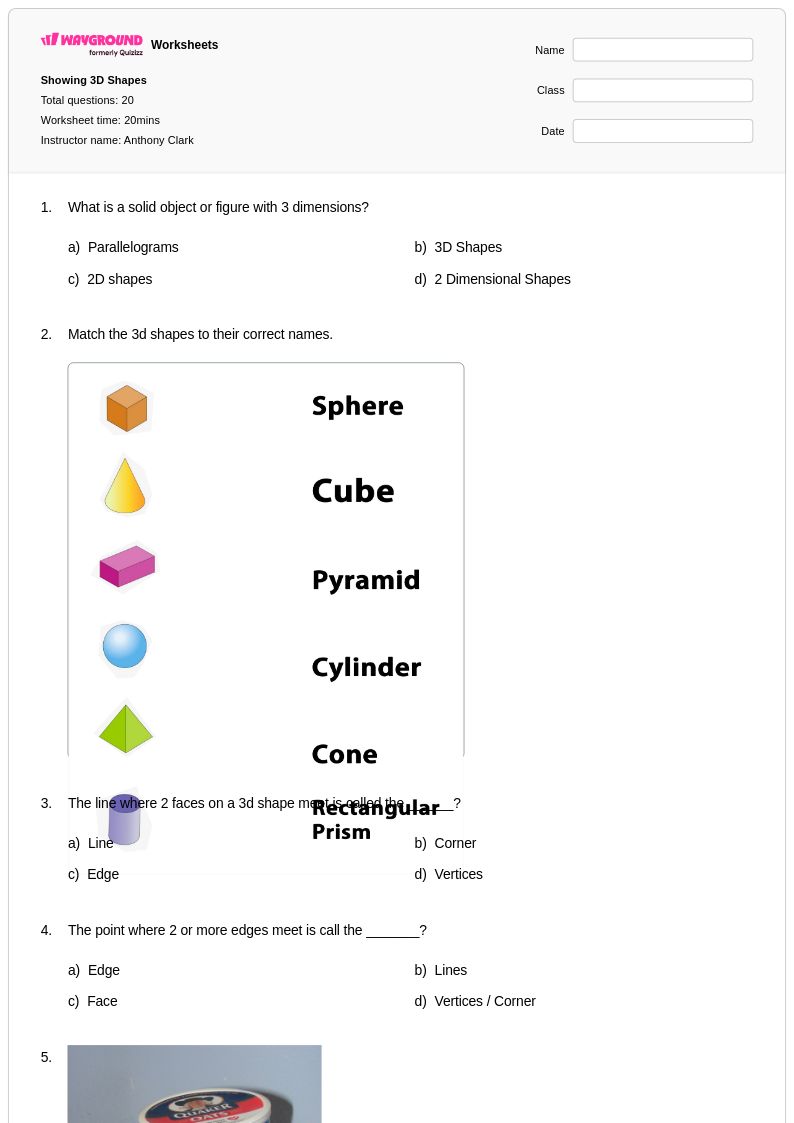
20 Q
3rd - Uni
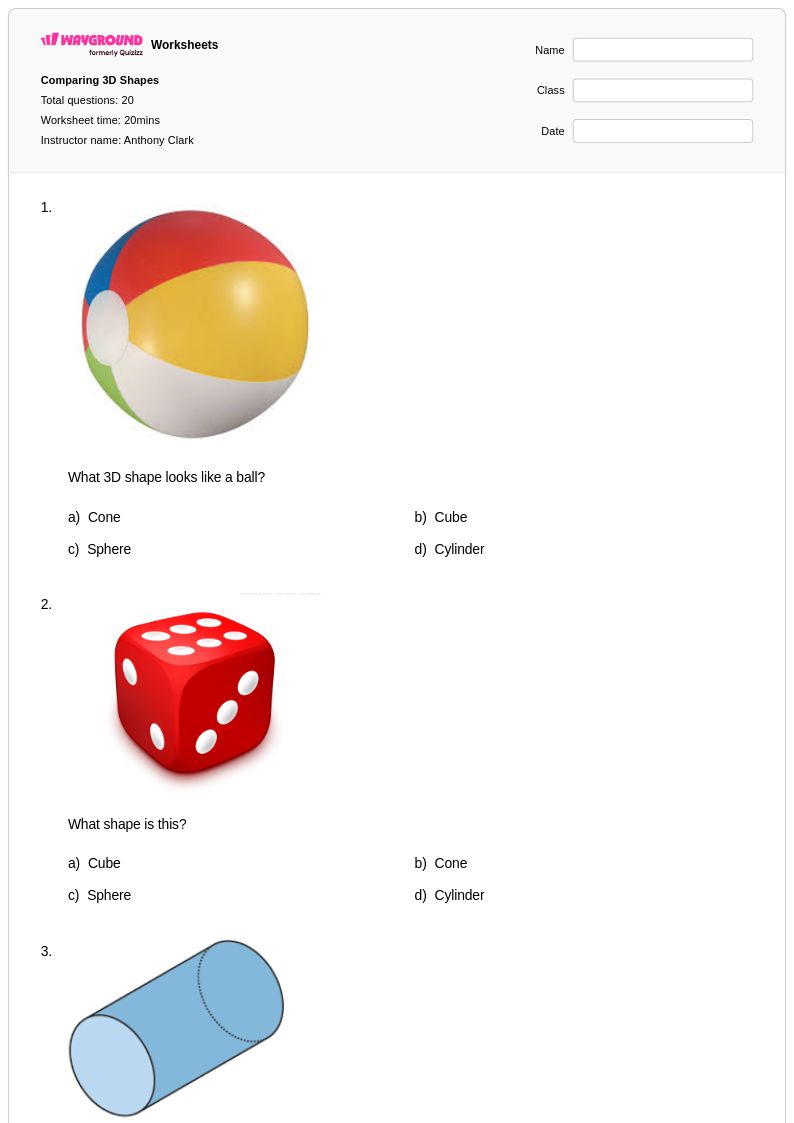
20 Q
1st - Uni
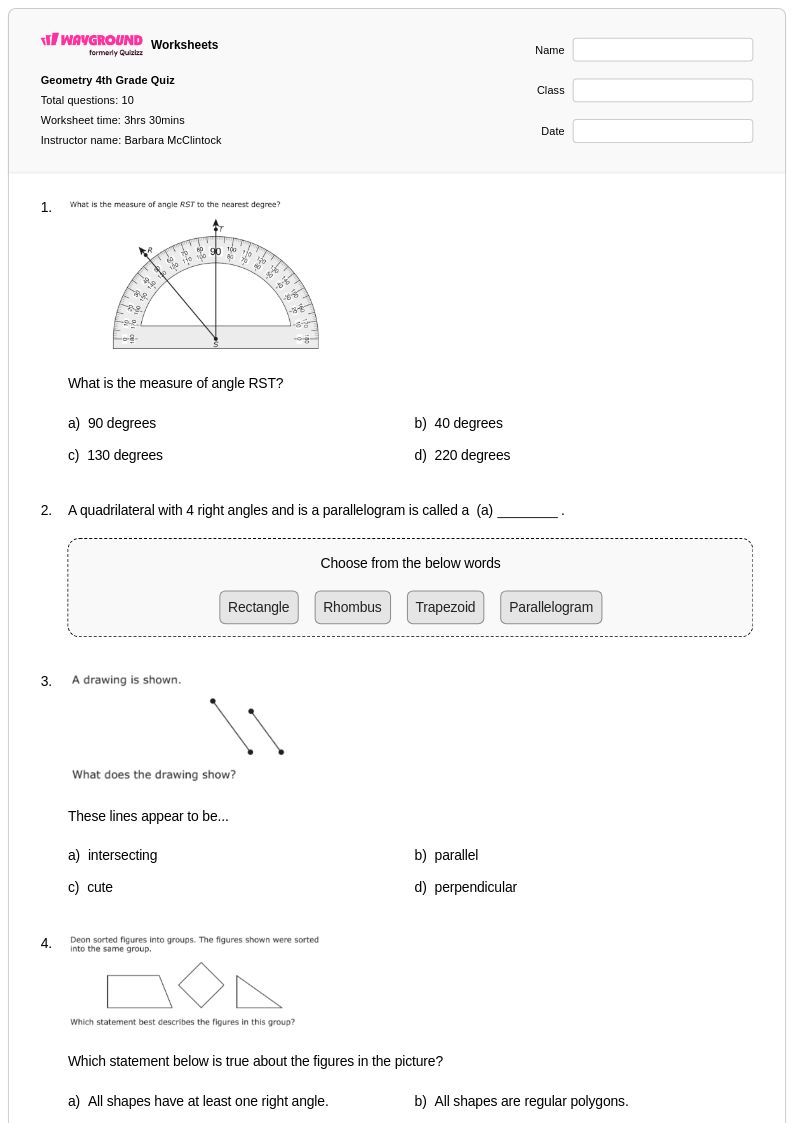
10 Q
4th
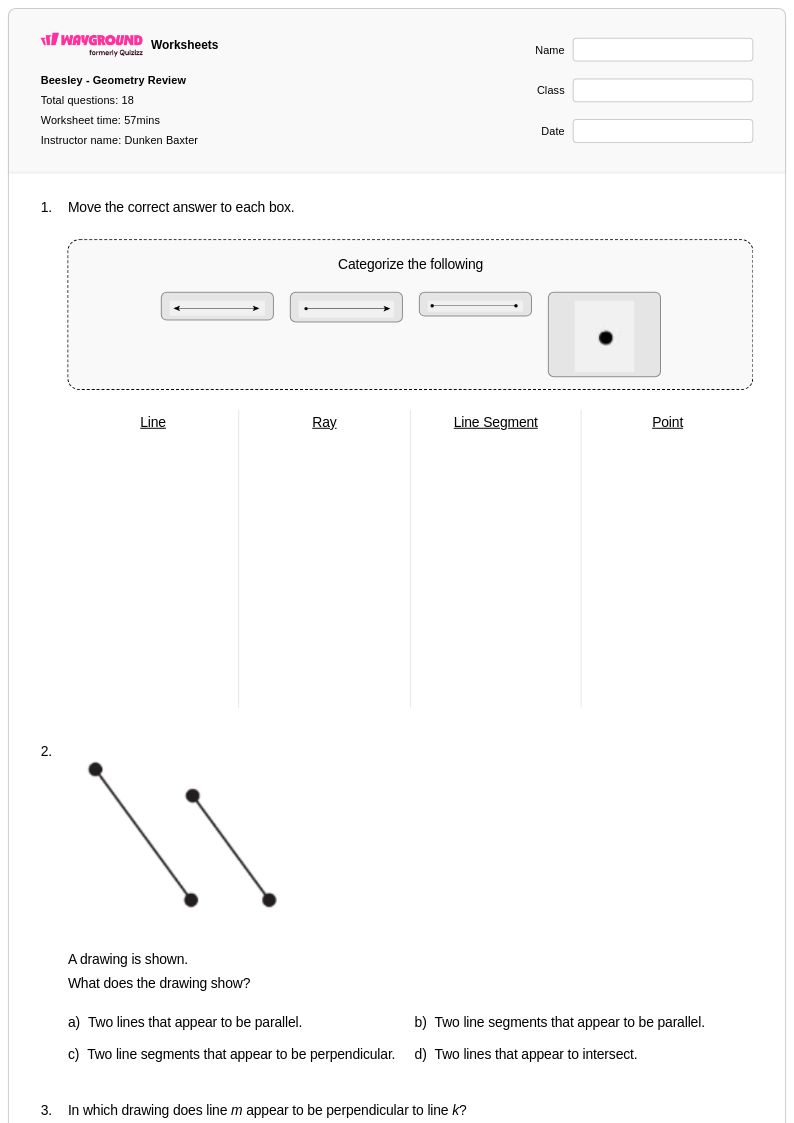
18 Q
4th
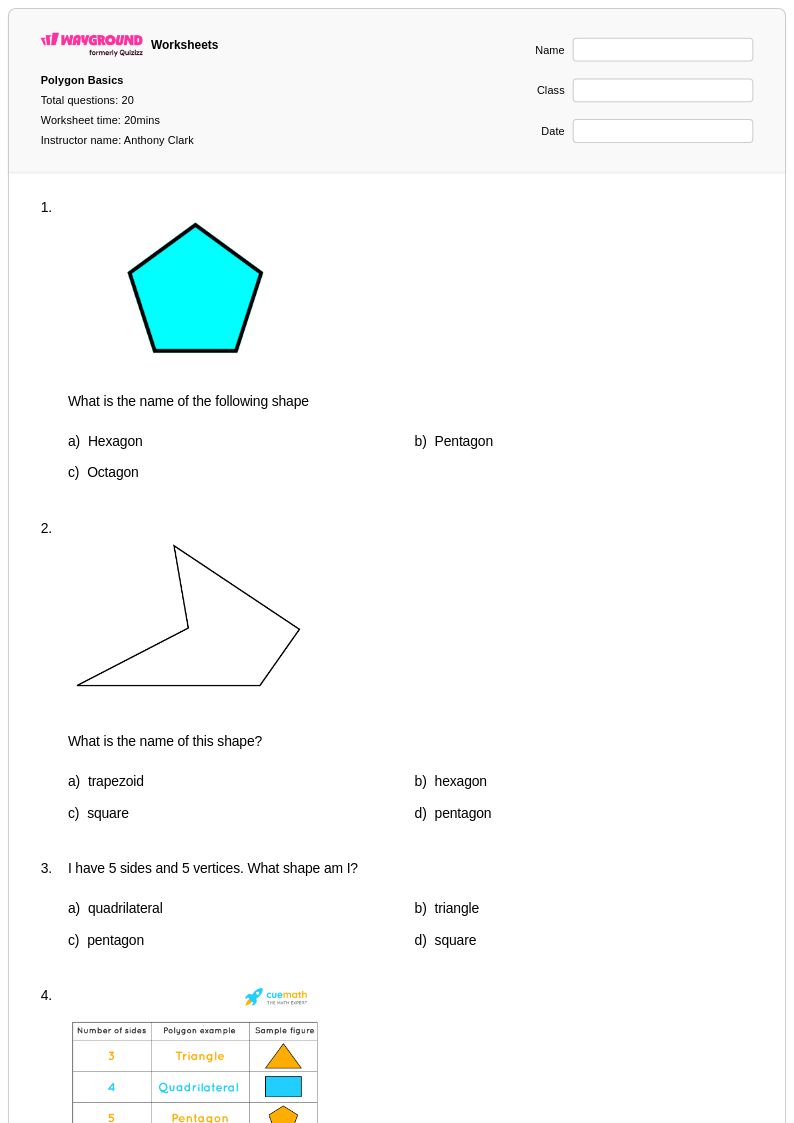
20 Q
3rd - Uni
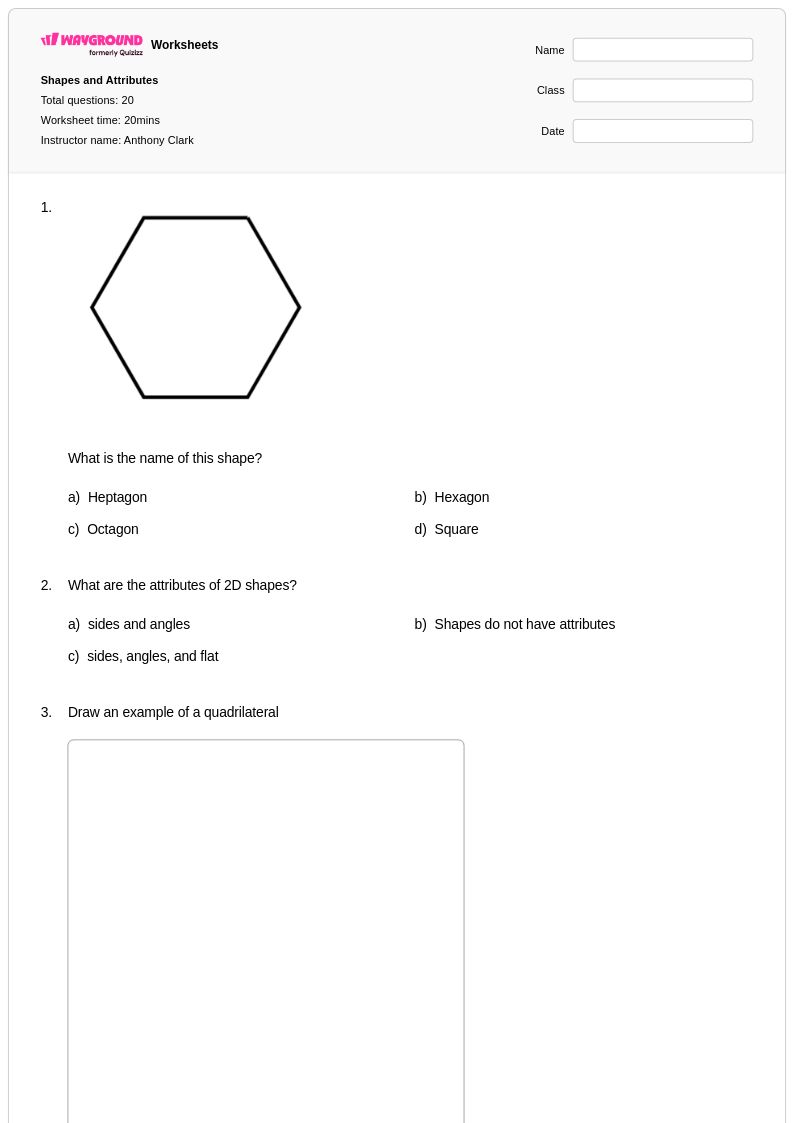
20 Q
3rd - Uni
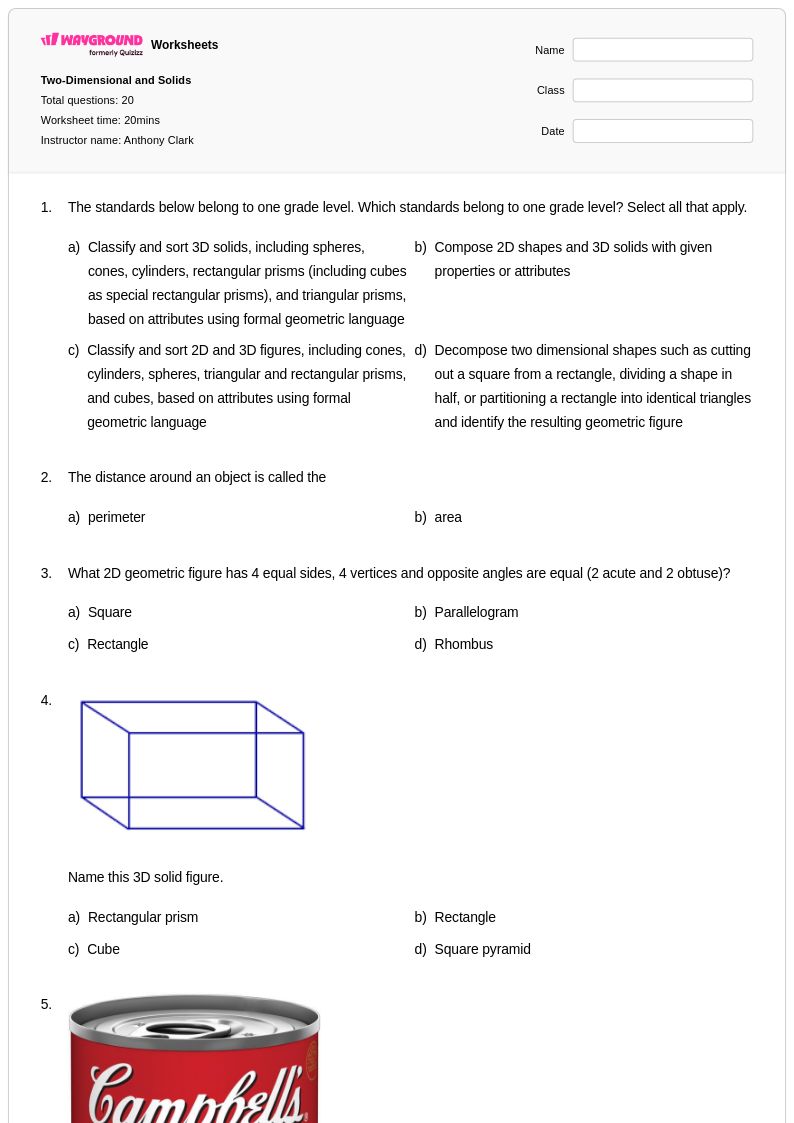
20 Q
3rd - Uni
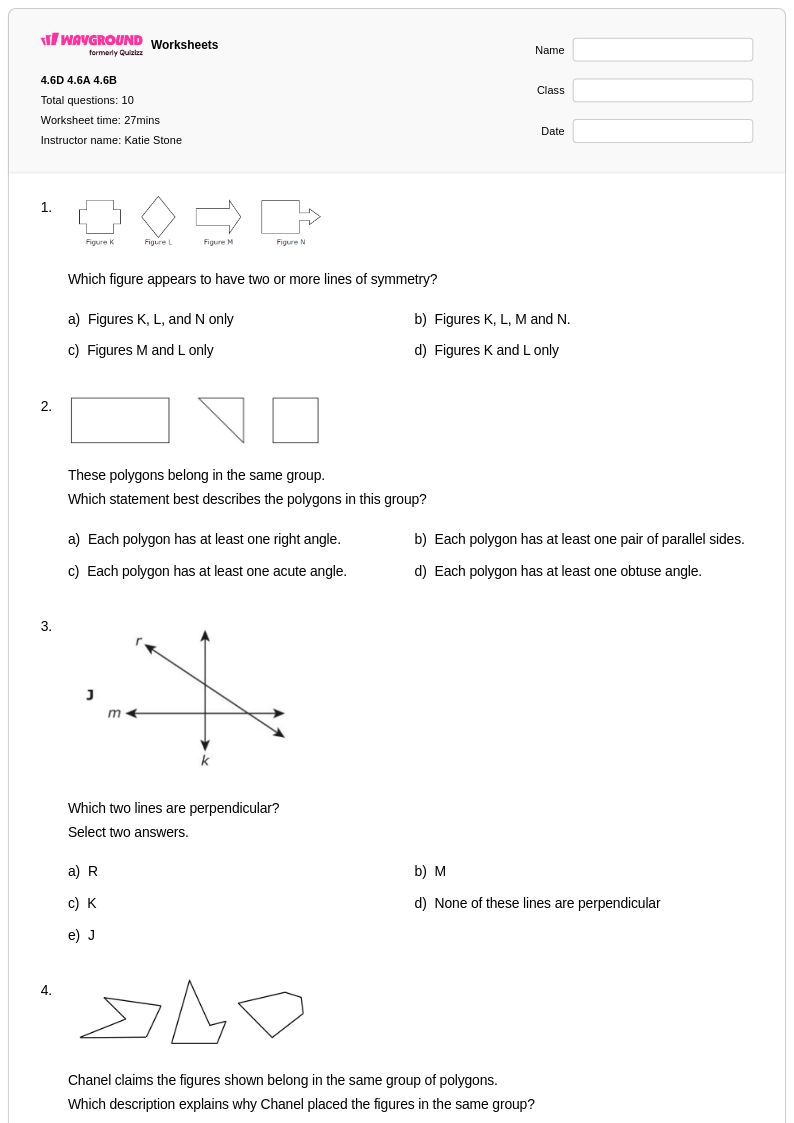
10 Q
4th
Explore Other Subject Worksheets for grade 4
Explore printable Nets of 3d Figures worksheets for Grade 4
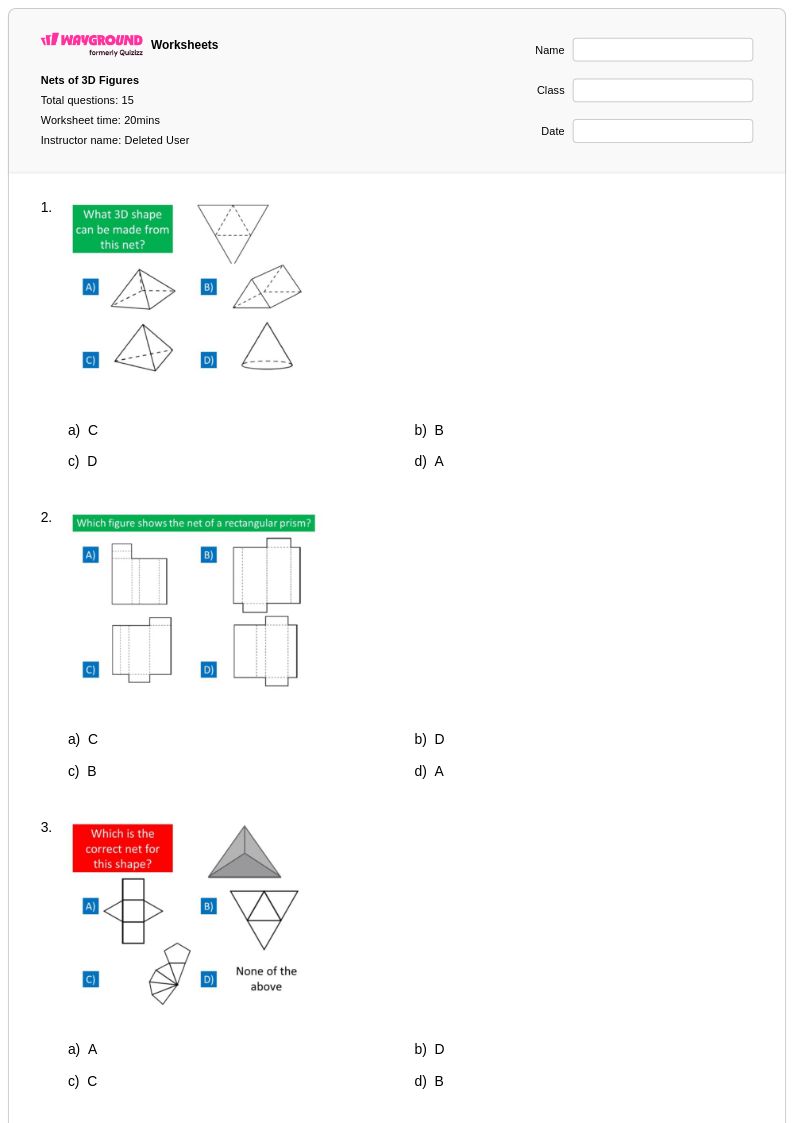
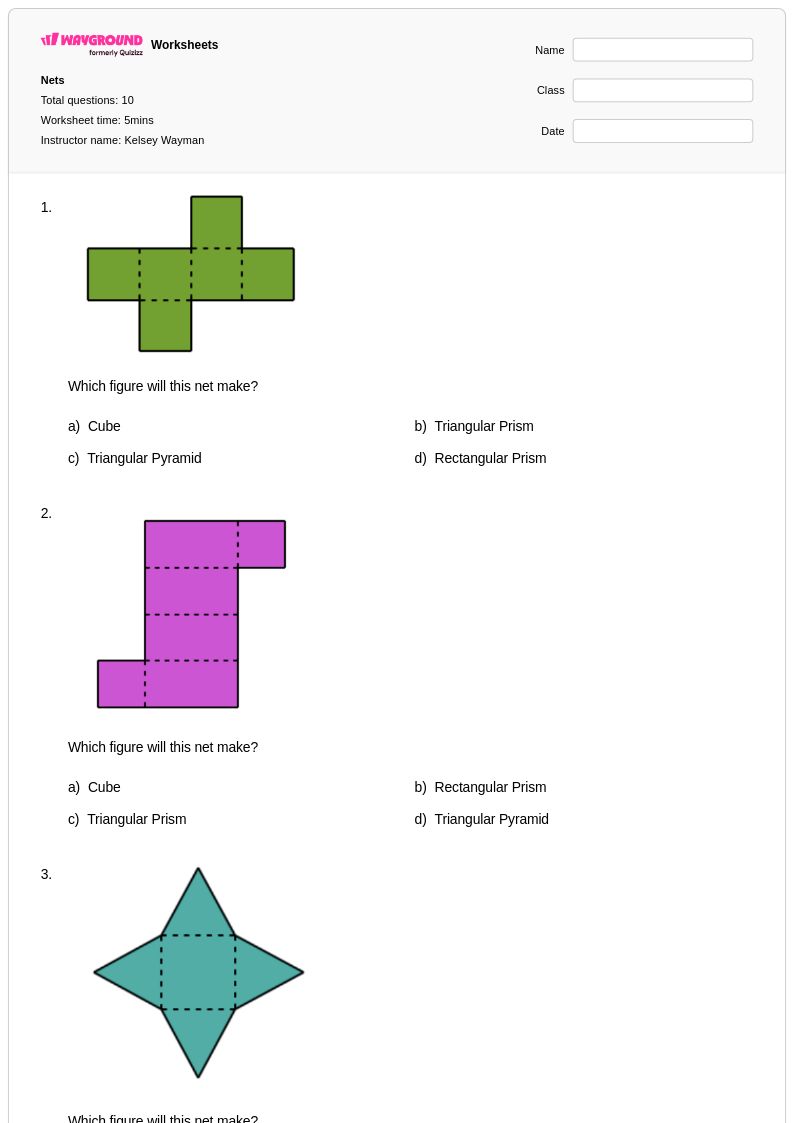
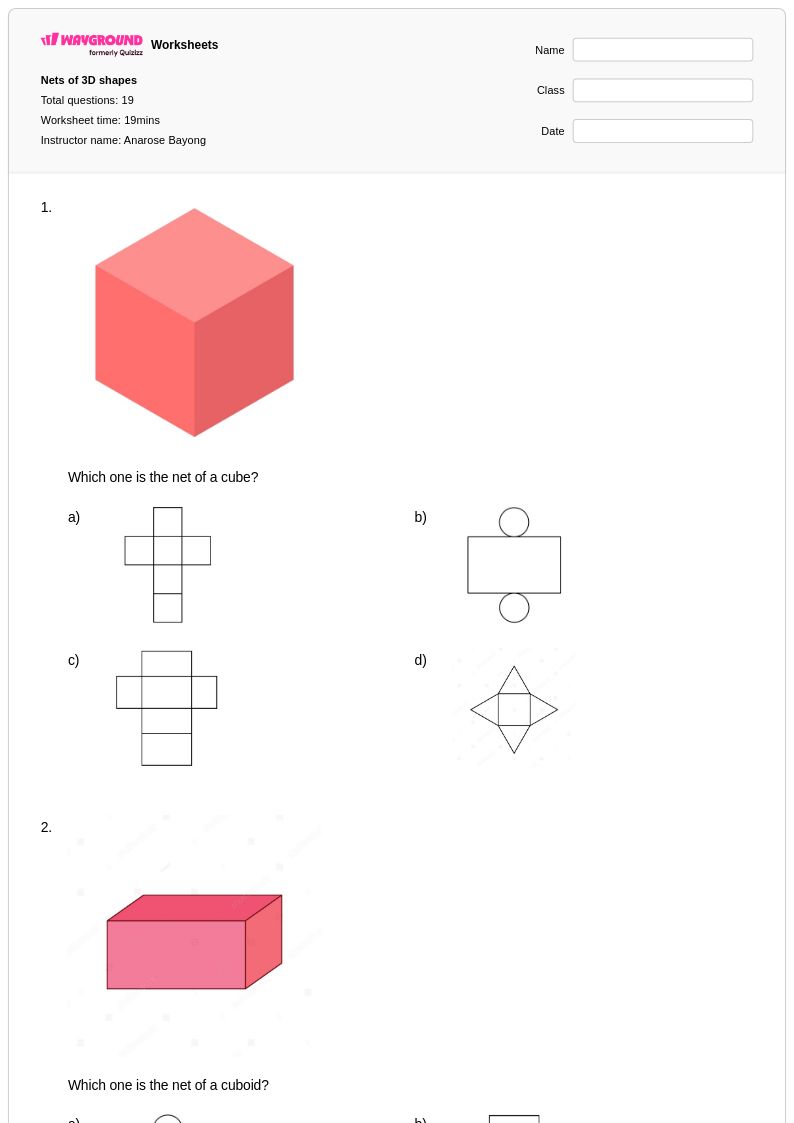
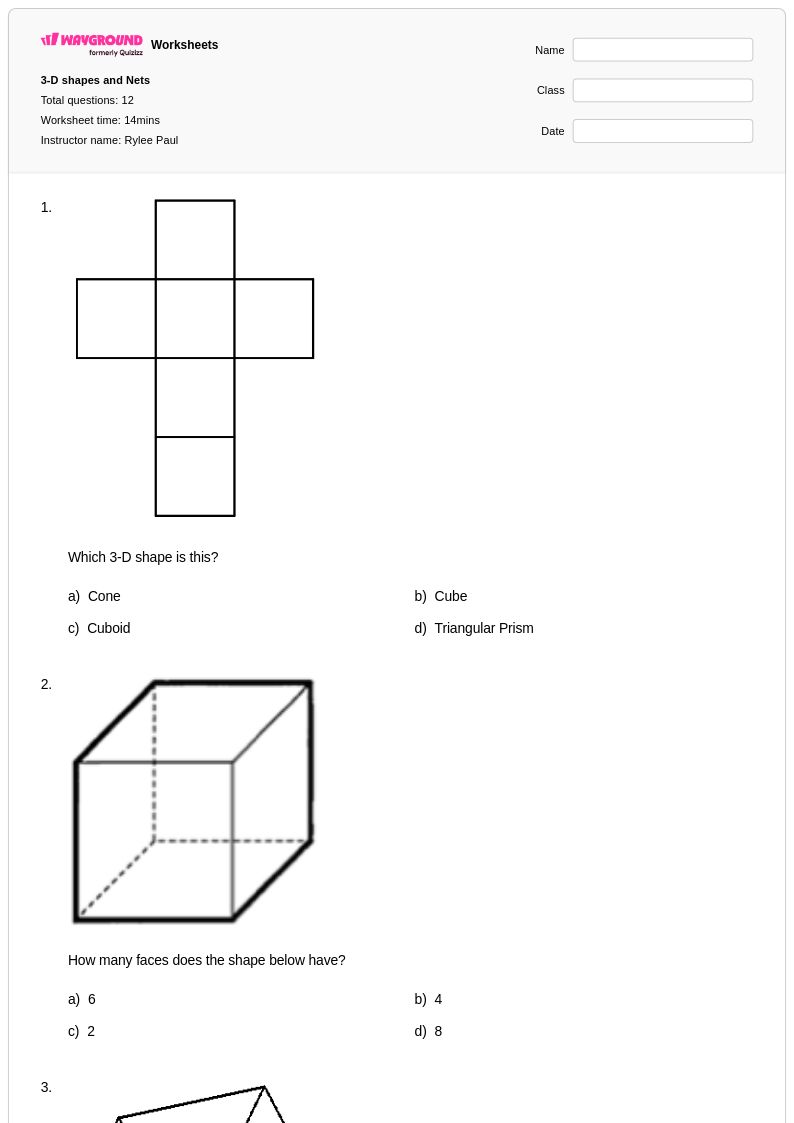
Grade 4 nets of 3D figures worksheets available through Wayground (formerly Quizizz) provide students with essential practice in visualizing and understanding how three-dimensional shapes can be unfolded into flat patterns. These comprehensive worksheets strengthen critical spatial reasoning skills by challenging students to identify which nets will fold into specific 3D shapes like cubes, rectangular prisms, triangular prisms, and pyramids. Students work through carefully structured practice problems that progress from simple cube nets to more complex geometric forms, developing their ability to mentally manipulate shapes and understand the relationship between 2D and 3D geometry. Each worksheet collection includes detailed answer keys and is available as free printable PDF resources, making it easy for educators to incorporate this fundamental geometric concept into their mathematics instruction.
Wayground (formerly Quizizz) supports teachers with an extensive collection of nets of 3D figures worksheets created by millions of educators who understand the importance of hands-on geometric learning. The platform's robust search and filtering capabilities allow teachers to quickly locate materials that align with specific curriculum standards and match their students' skill levels. These differentiation tools enable educators to customize worksheets for individual learning needs, whether providing additional practice for struggling students or offering enrichment opportunities for advanced learners. Available in both printable and digital formats including downloadable PDFs, these resources seamlessly integrate into lesson planning for initial instruction, targeted remediation, or independent skill practice, giving teachers the flexibility to address diverse classroom needs while building students' confidence in three-dimensional geometric concepts.
FAQs
How do I teach nets of 3D figures to fourth graders?
What exercises help Grade 4 students practice nets of 3D figures?
What mistakes do students make when identifying nets of 3D figures?
How can I use these Grade 4 nets of 3D figures worksheets?
How do nets of 3D figures fit into the Grade 4 math curriculum?
How can I differentiate nets-of-3D-figures practice?
What grade do students learn about nets of 3D figures?