
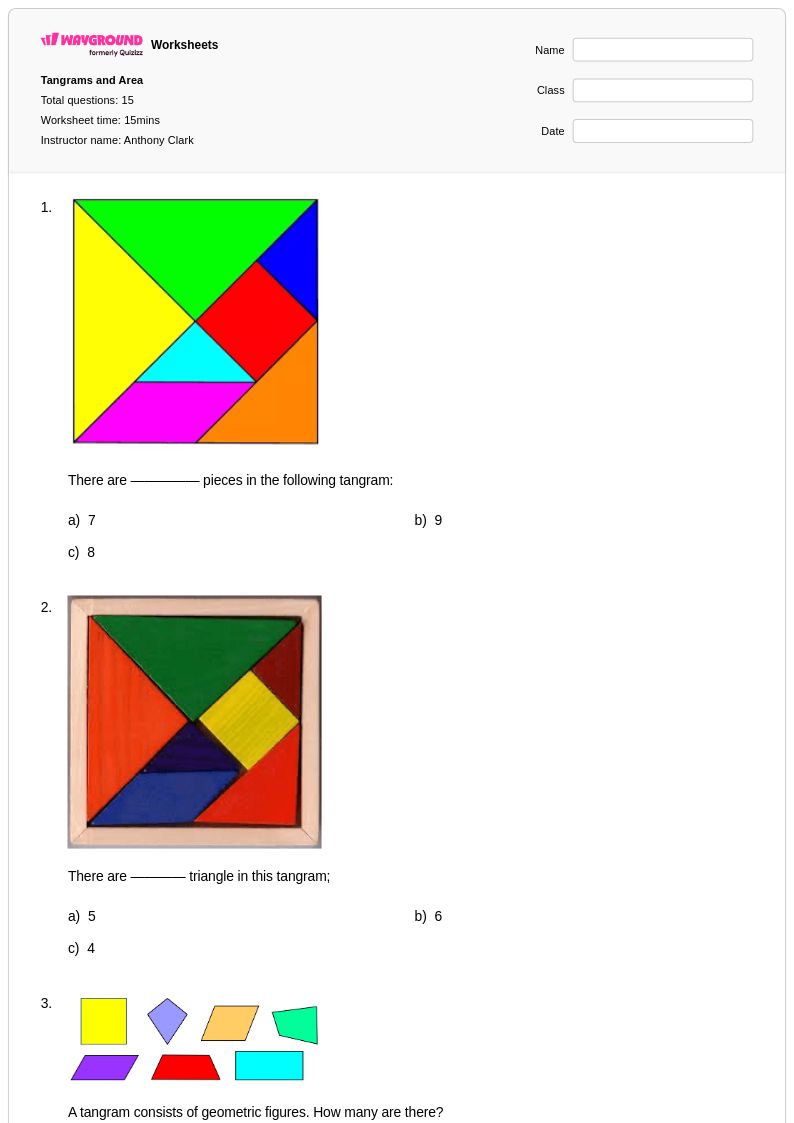
15 Q
4th - Uni
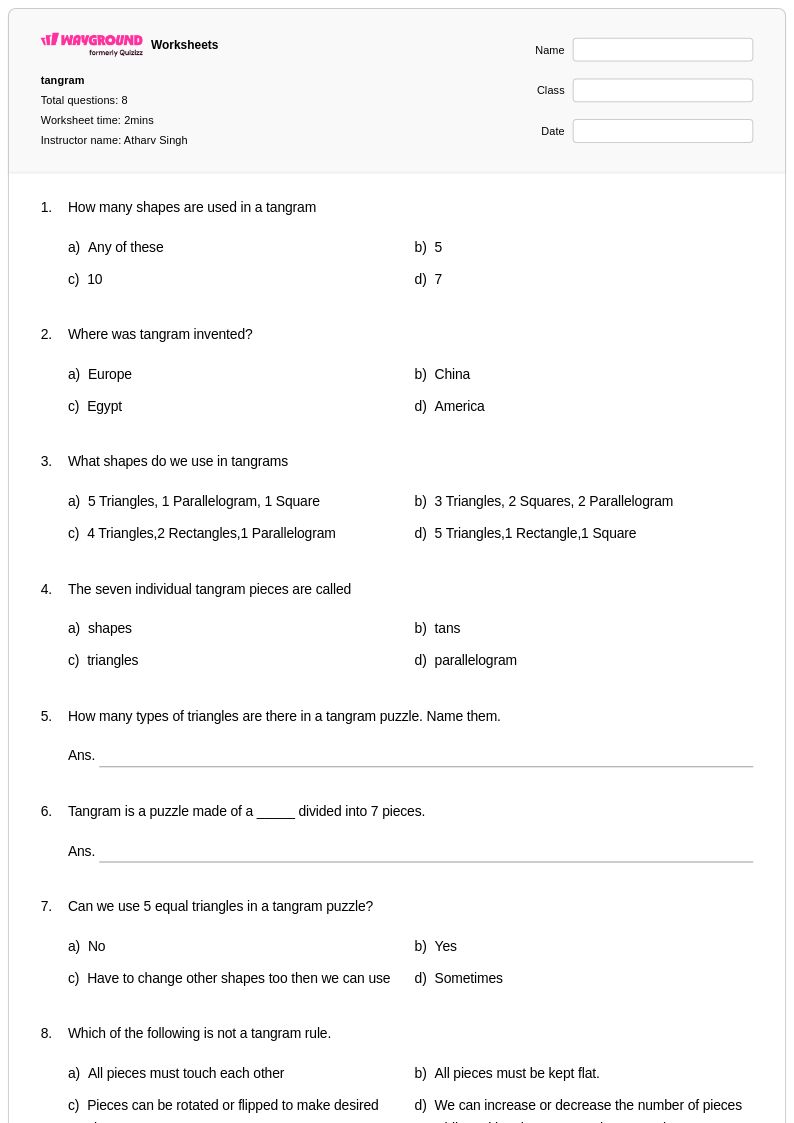
8 Q
4th - 5th
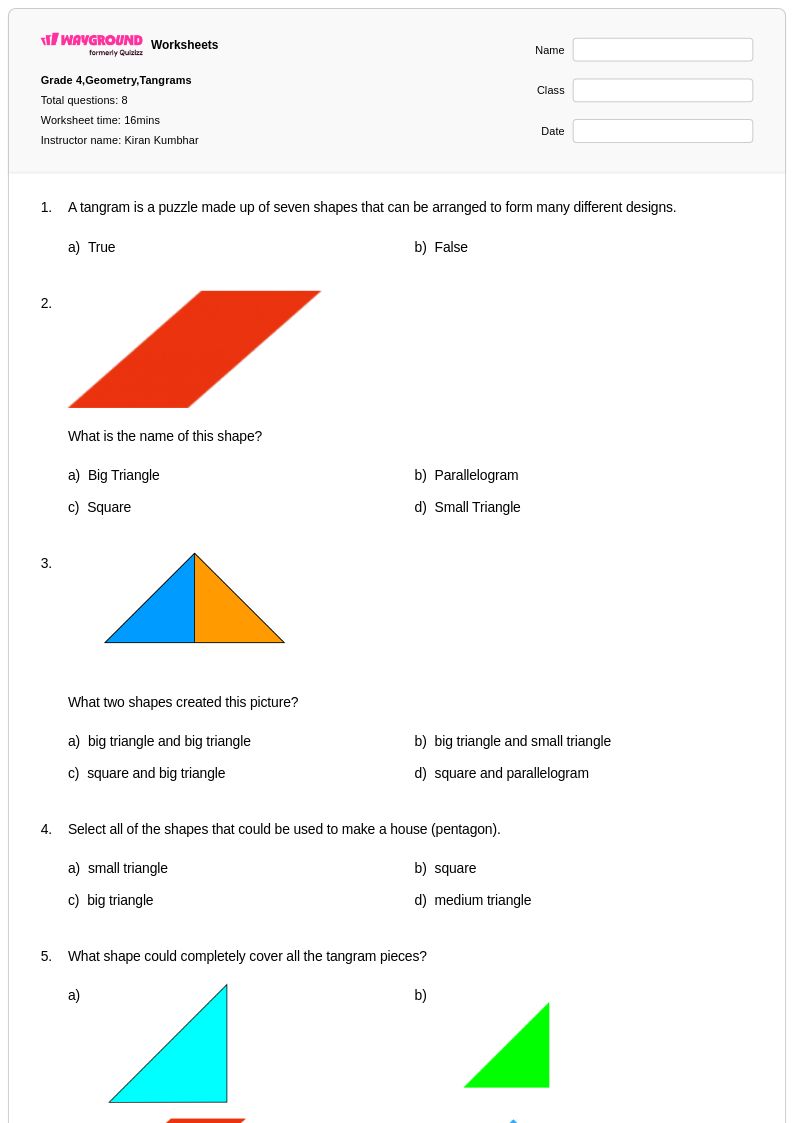
8 Q
4th
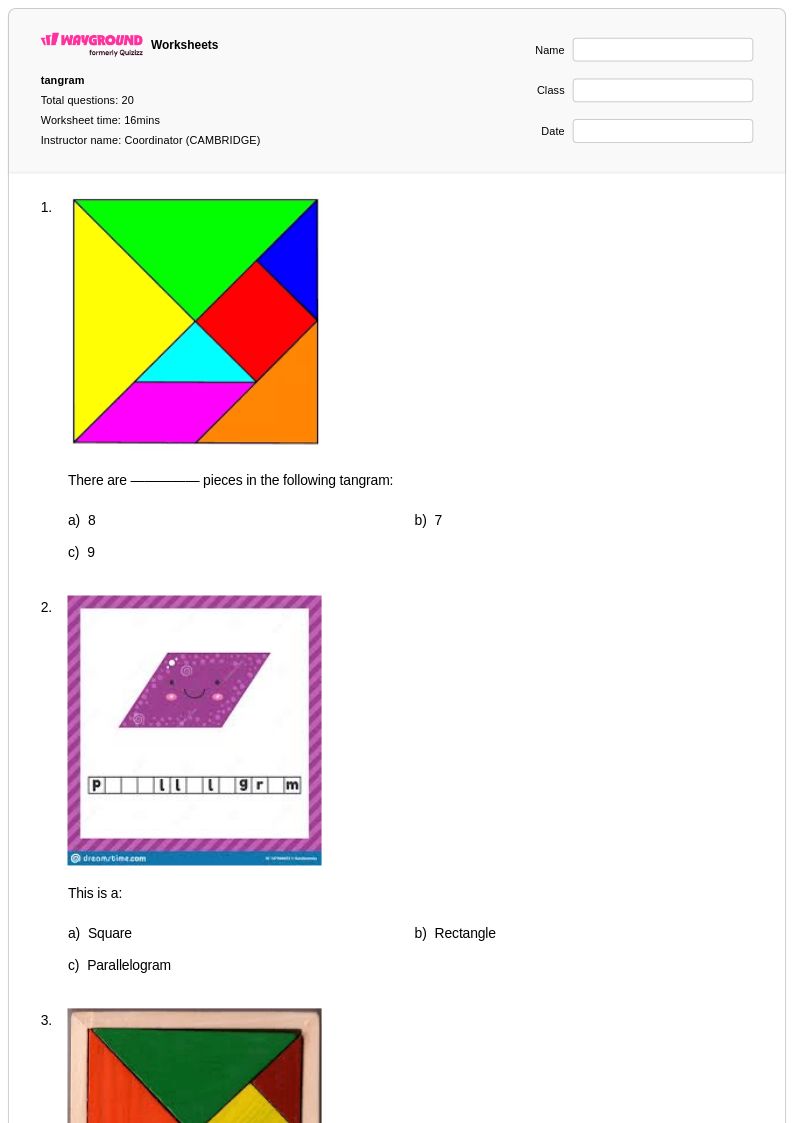
20 Q
2nd - Uni
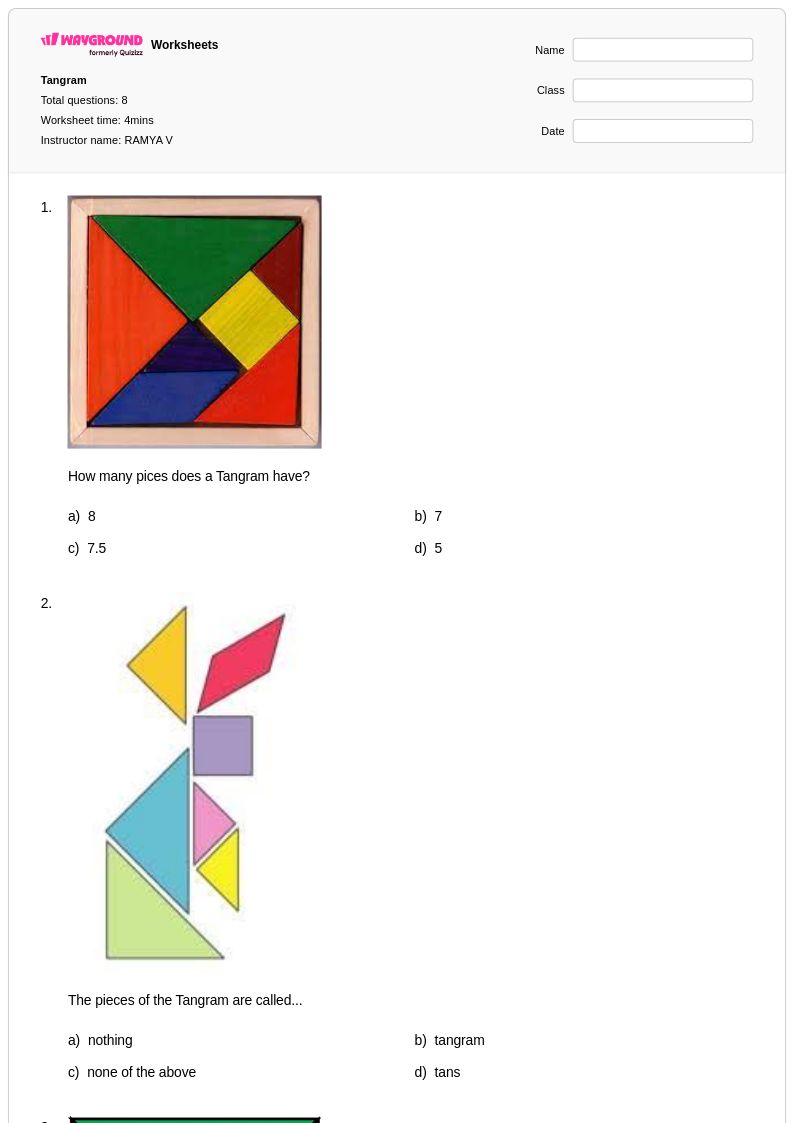
8 Q
4th
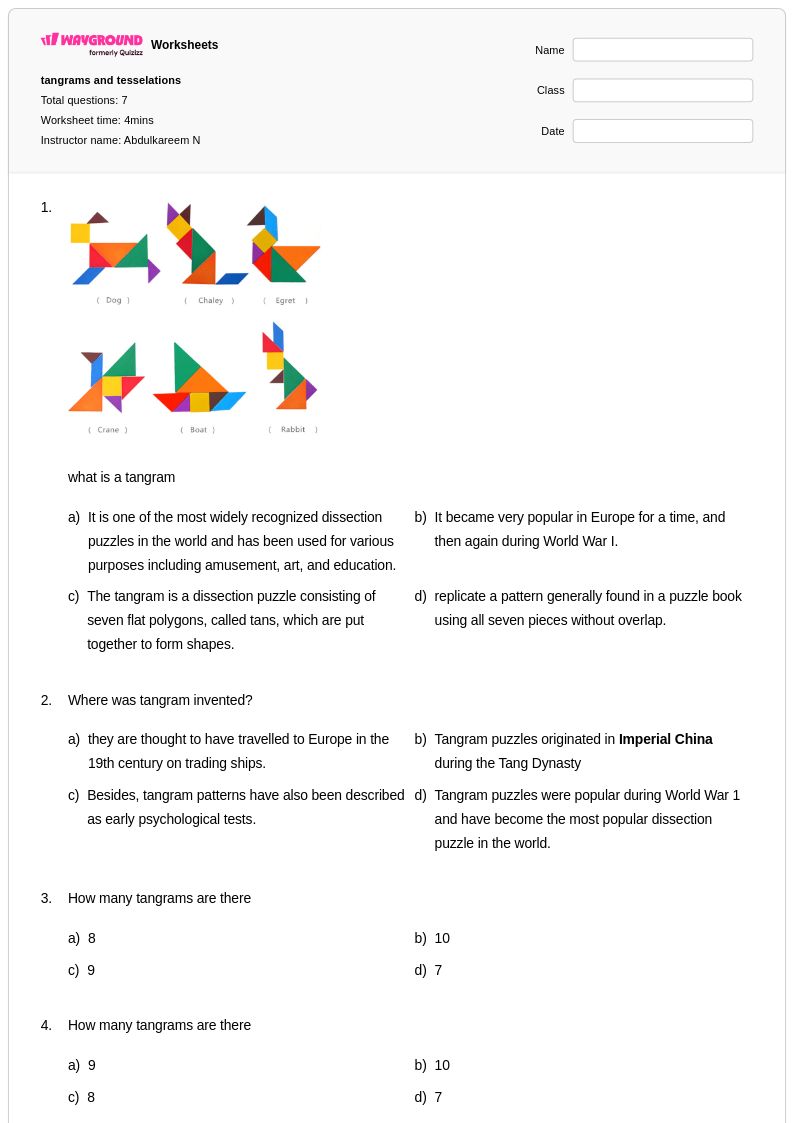
7 Q
4th
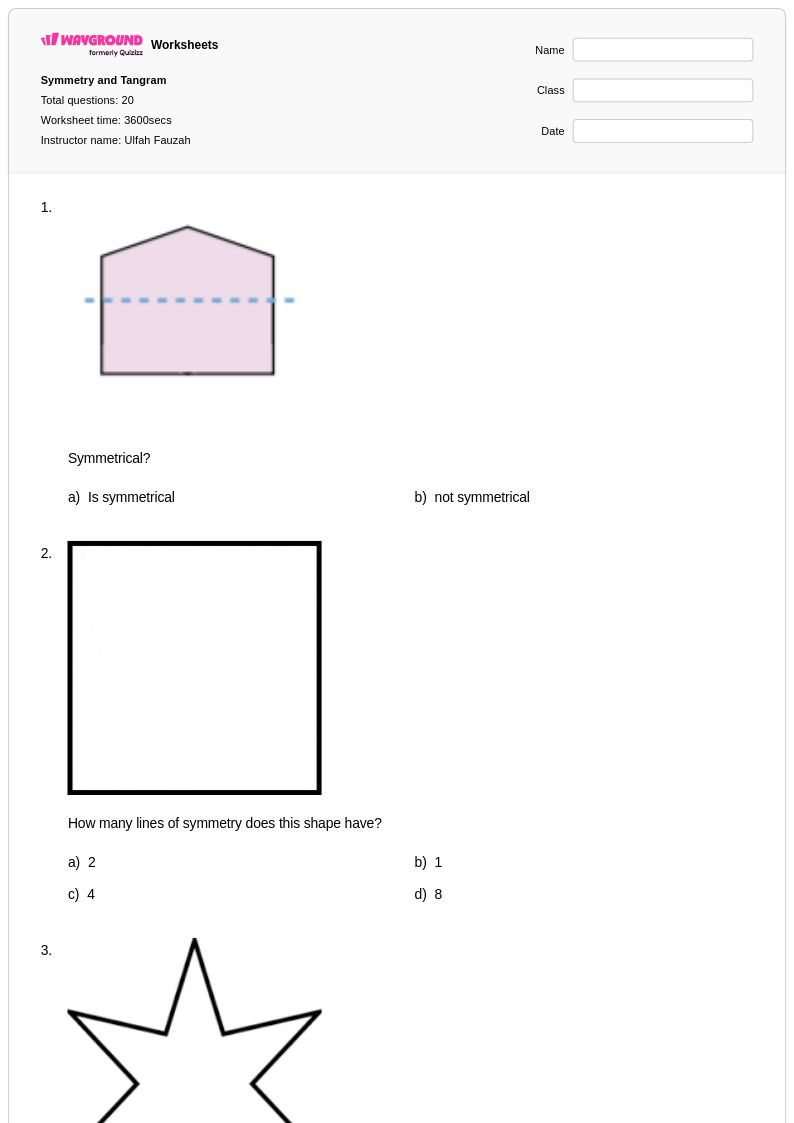
20 Q
4th
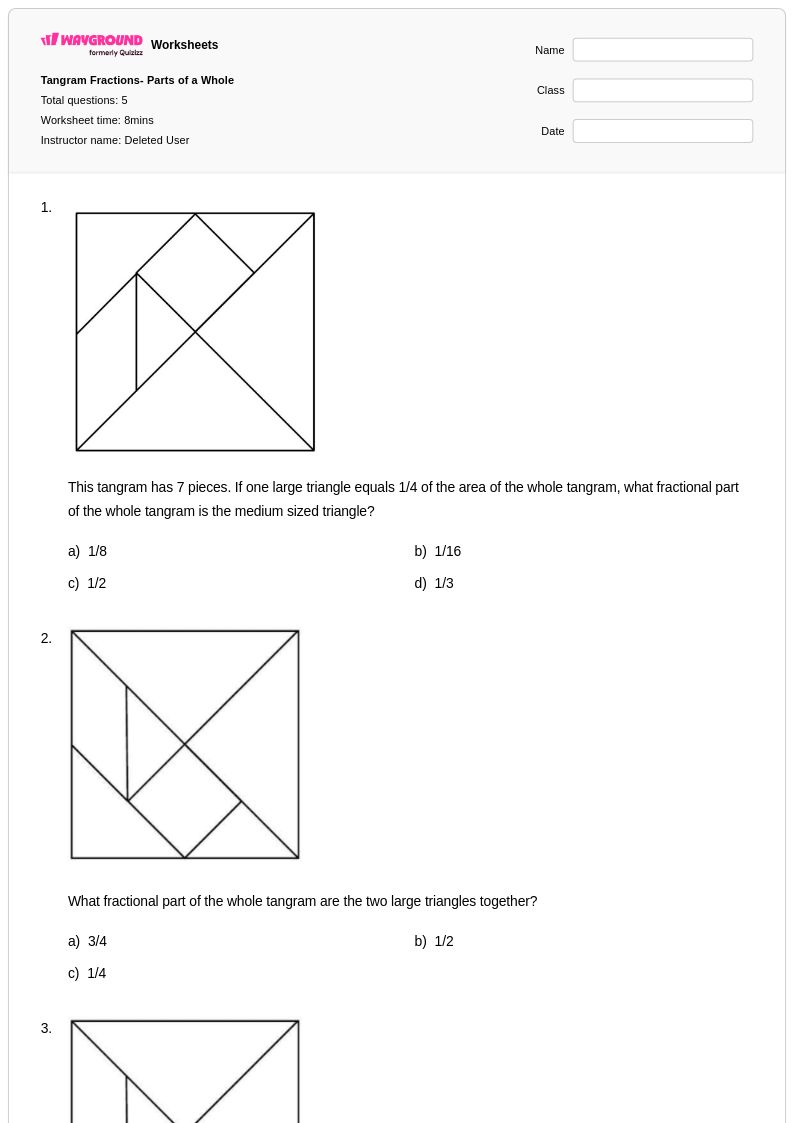
5 Q
4th - 6th
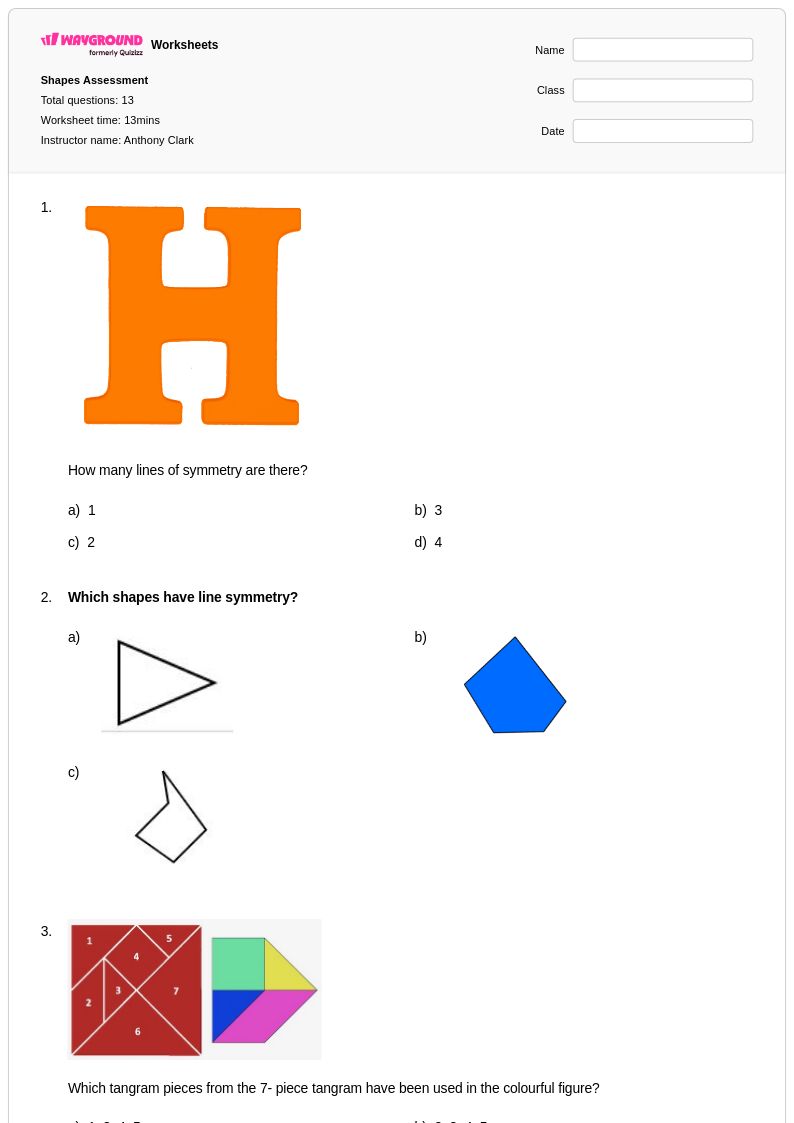
13 Q
3rd - Uni
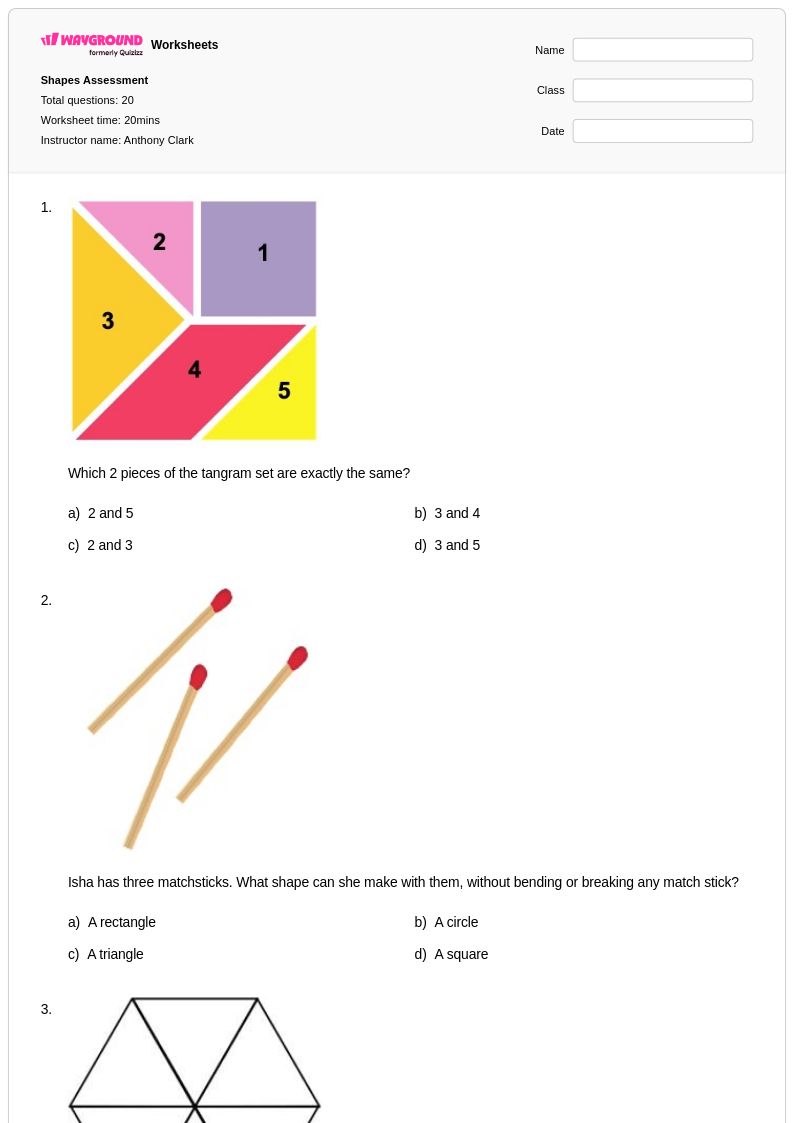
20 Q
3rd - Uni
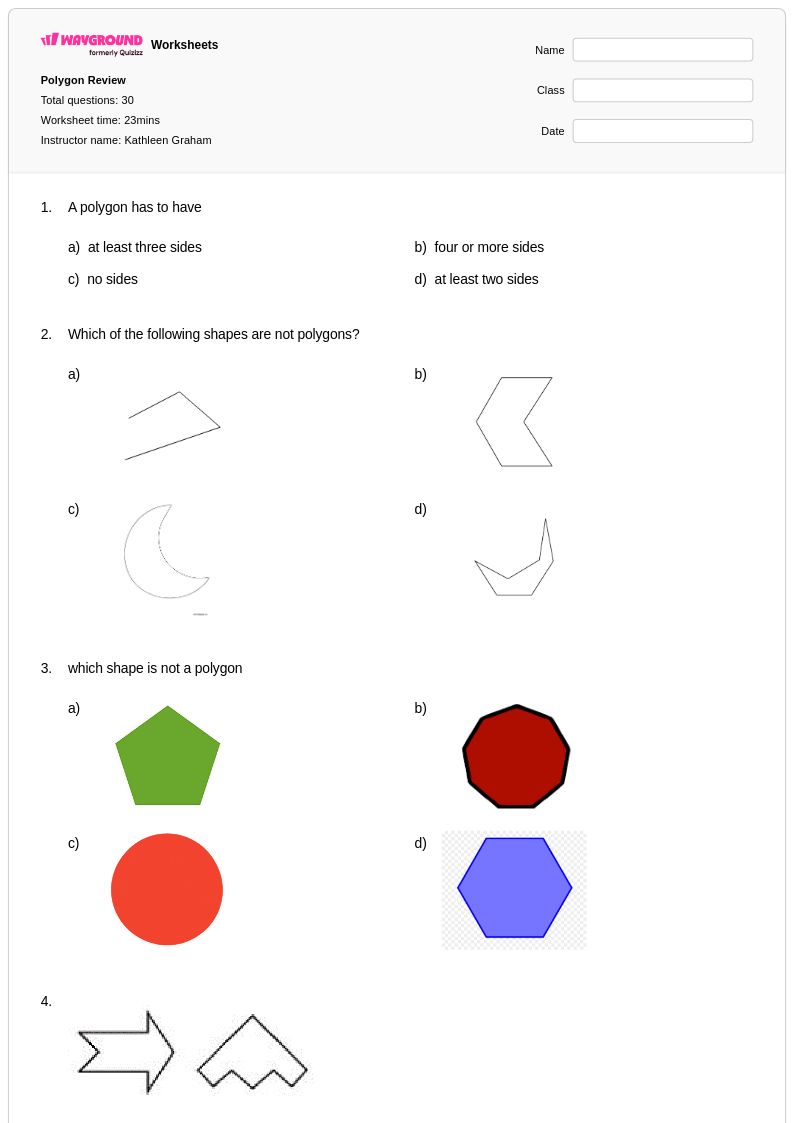
30 Q
4th
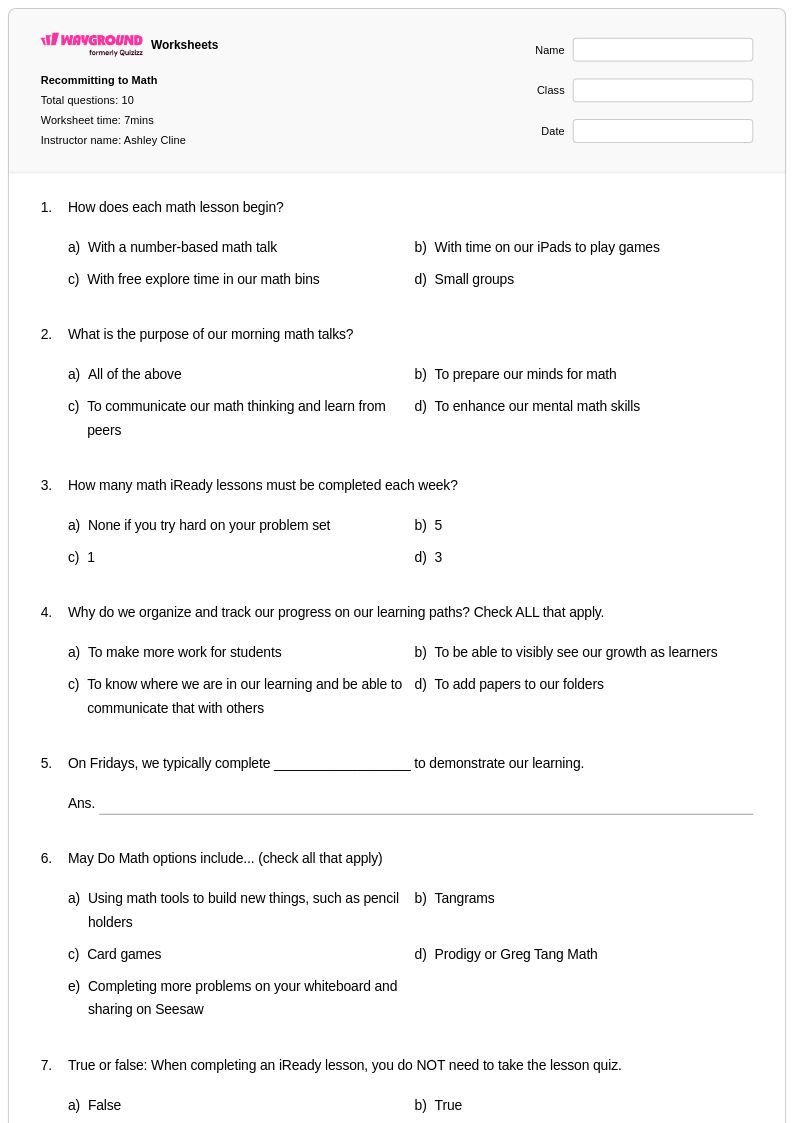
10 Q
4th - 5th
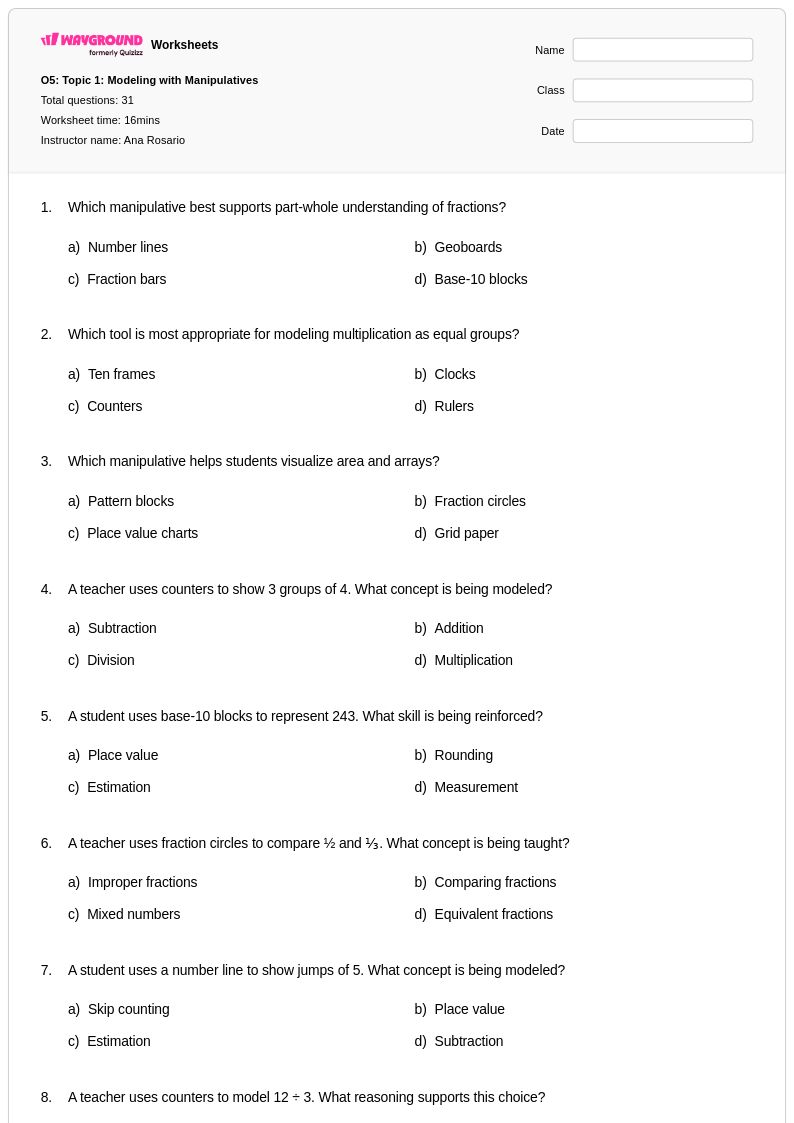
31 Q
1st - 5th
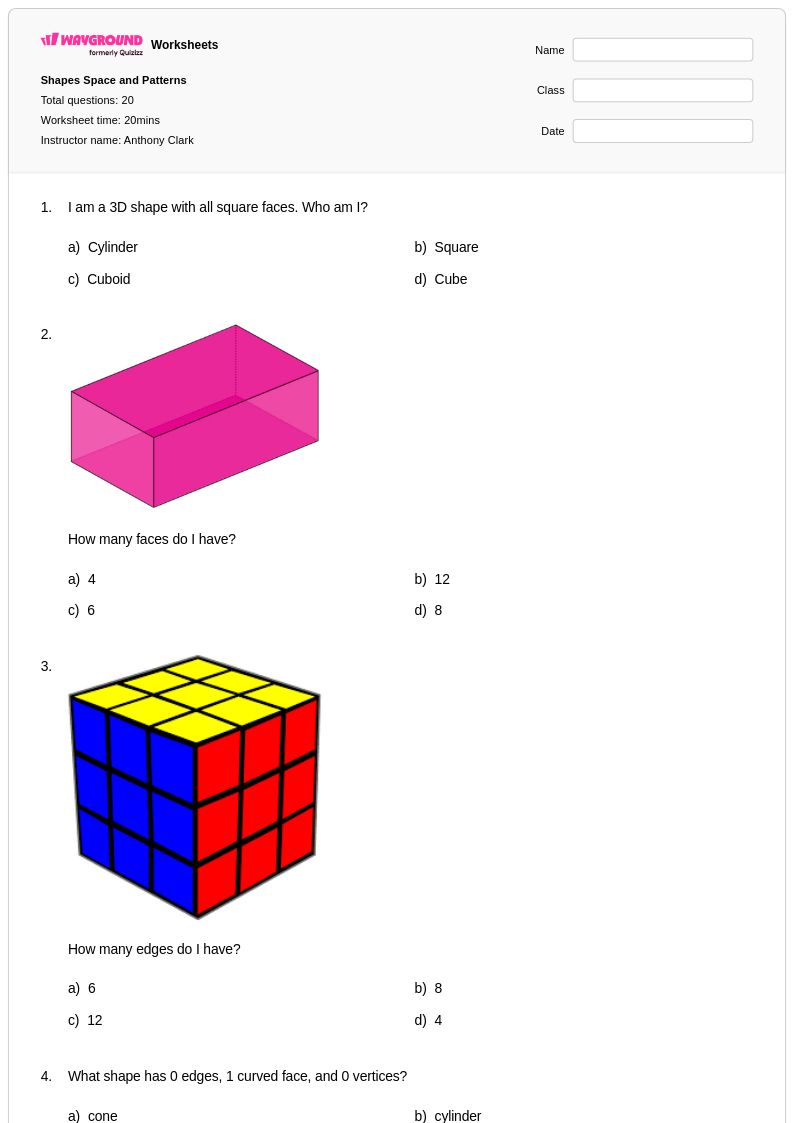
20 Q
3rd - Uni
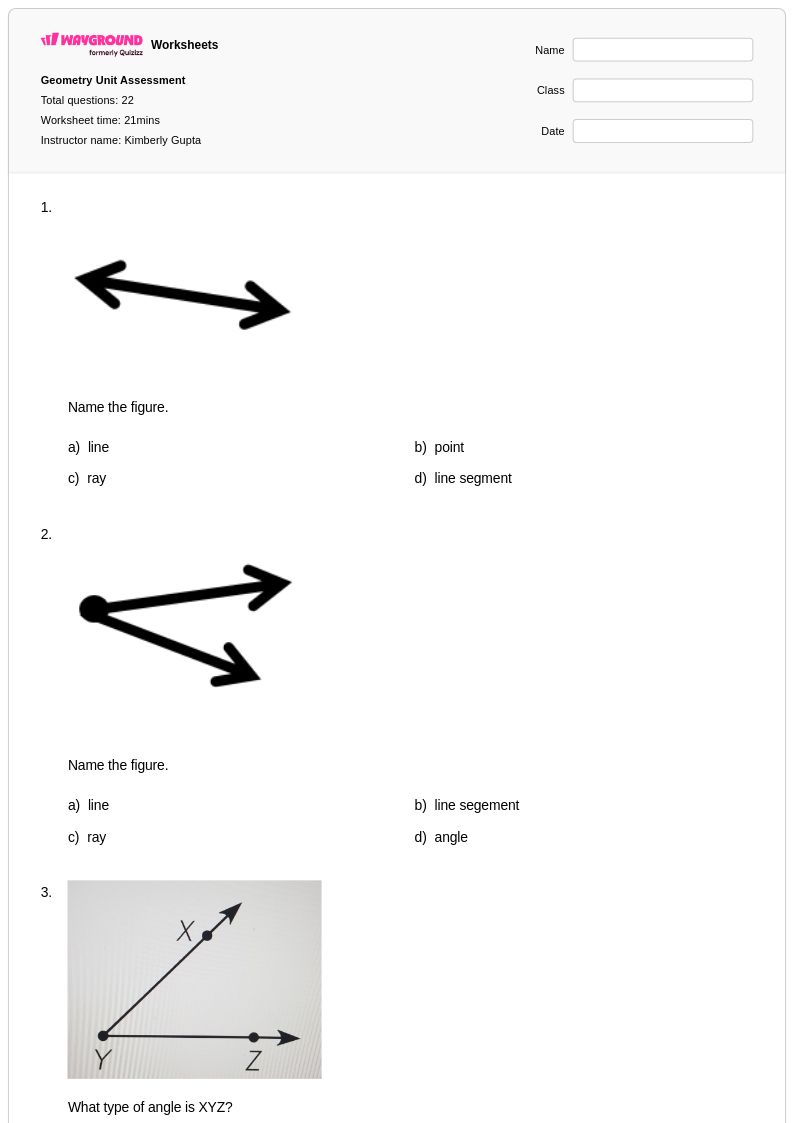
22 Q
2nd - 5th
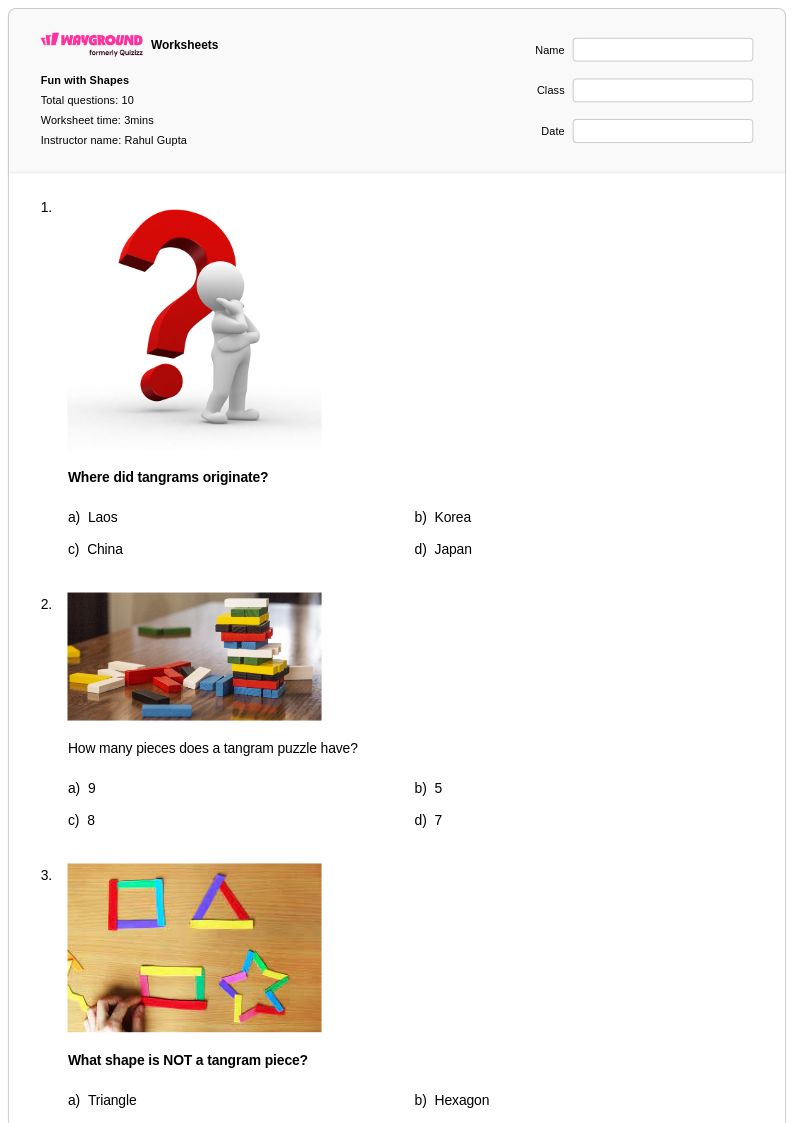
10 Q
KG - Uni
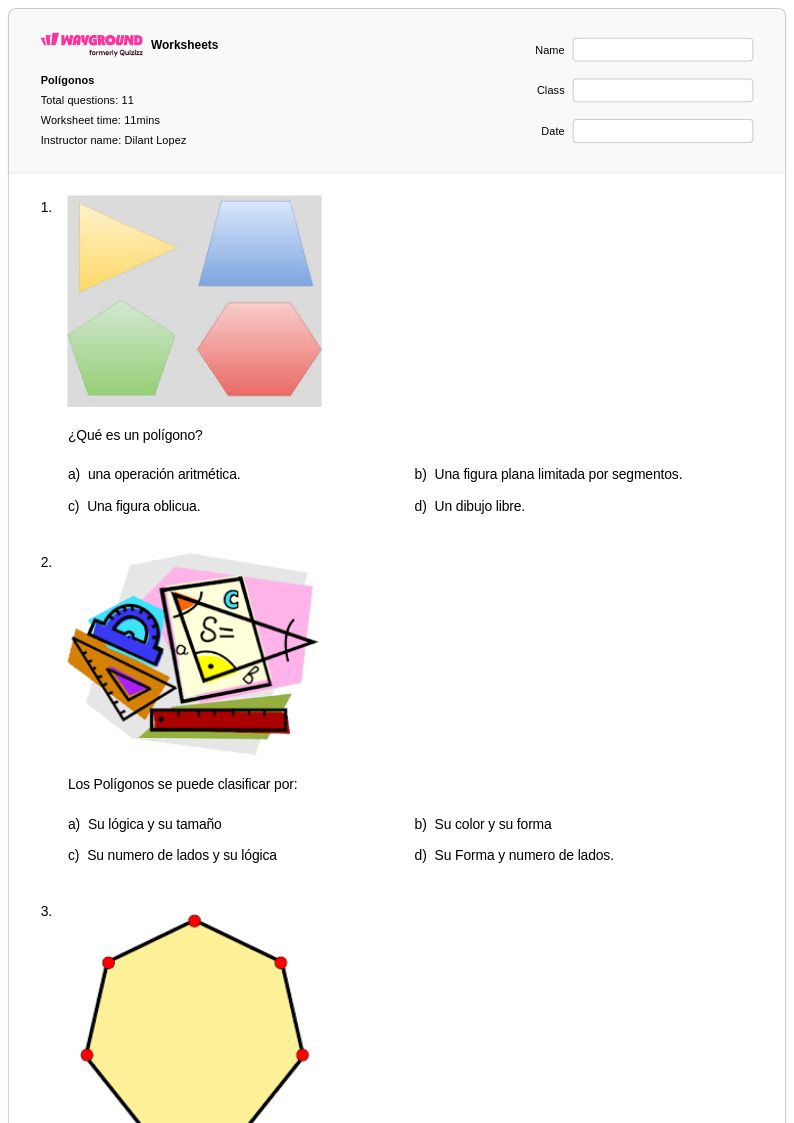
11 Q
1st - 12th
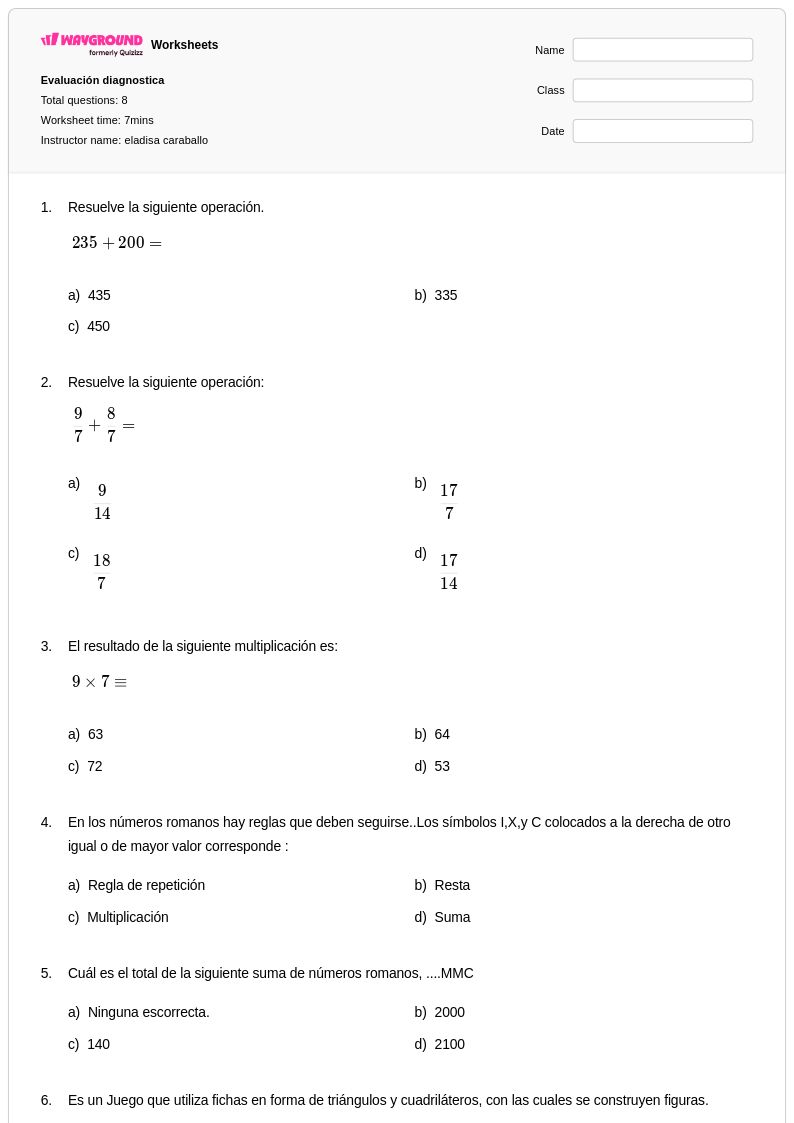
8 Q
4th - 5th
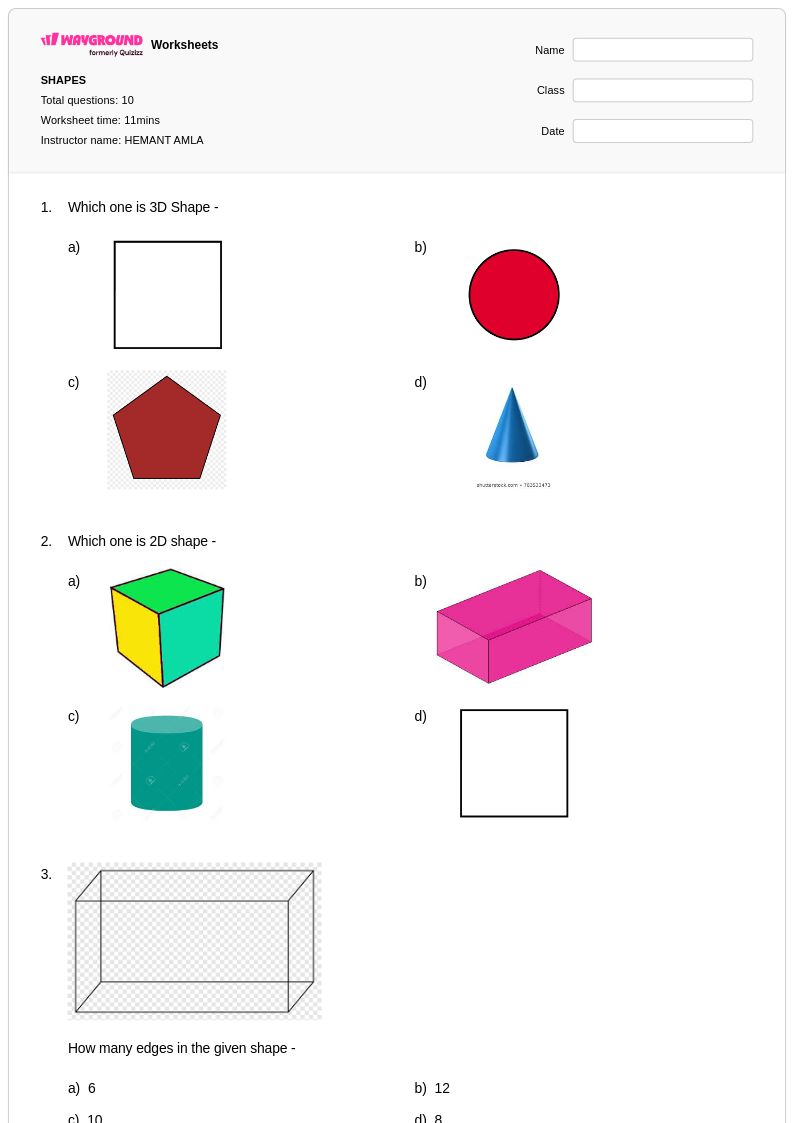
10 Q
3rd - 5th
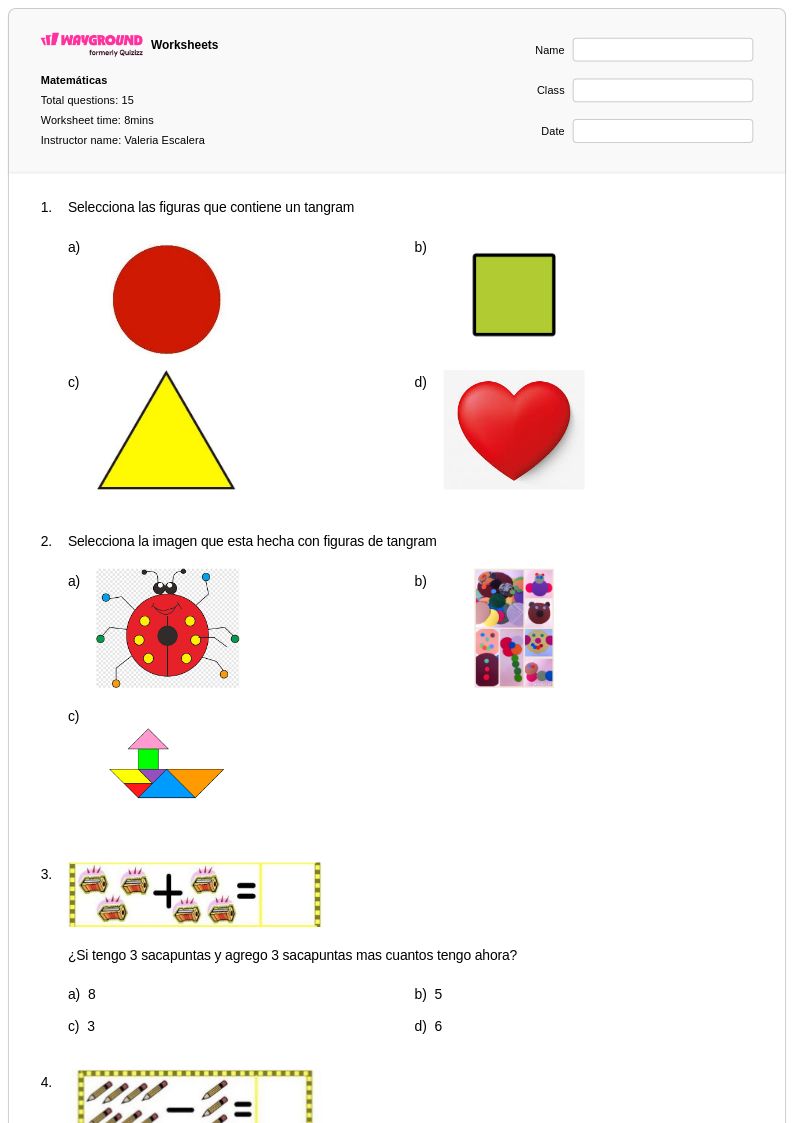
15 Q
1st - 5th
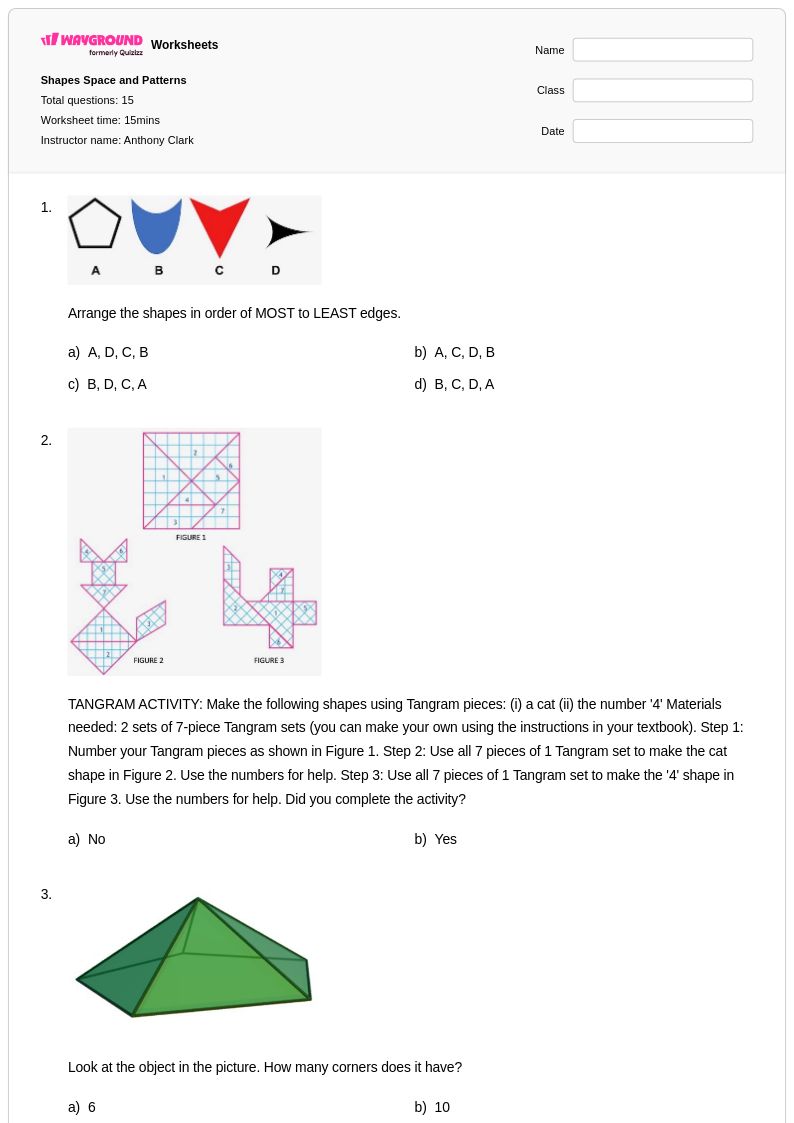
15 Q
3rd - Uni
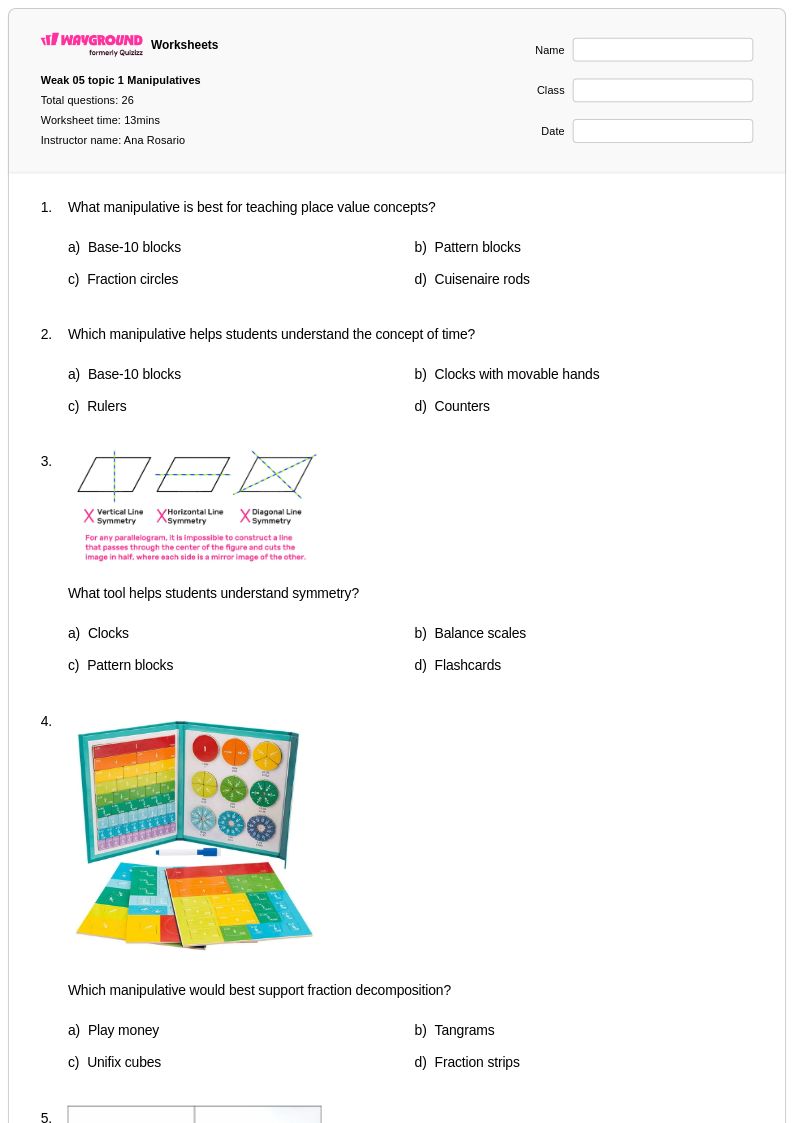
26 Q
1st - 5th
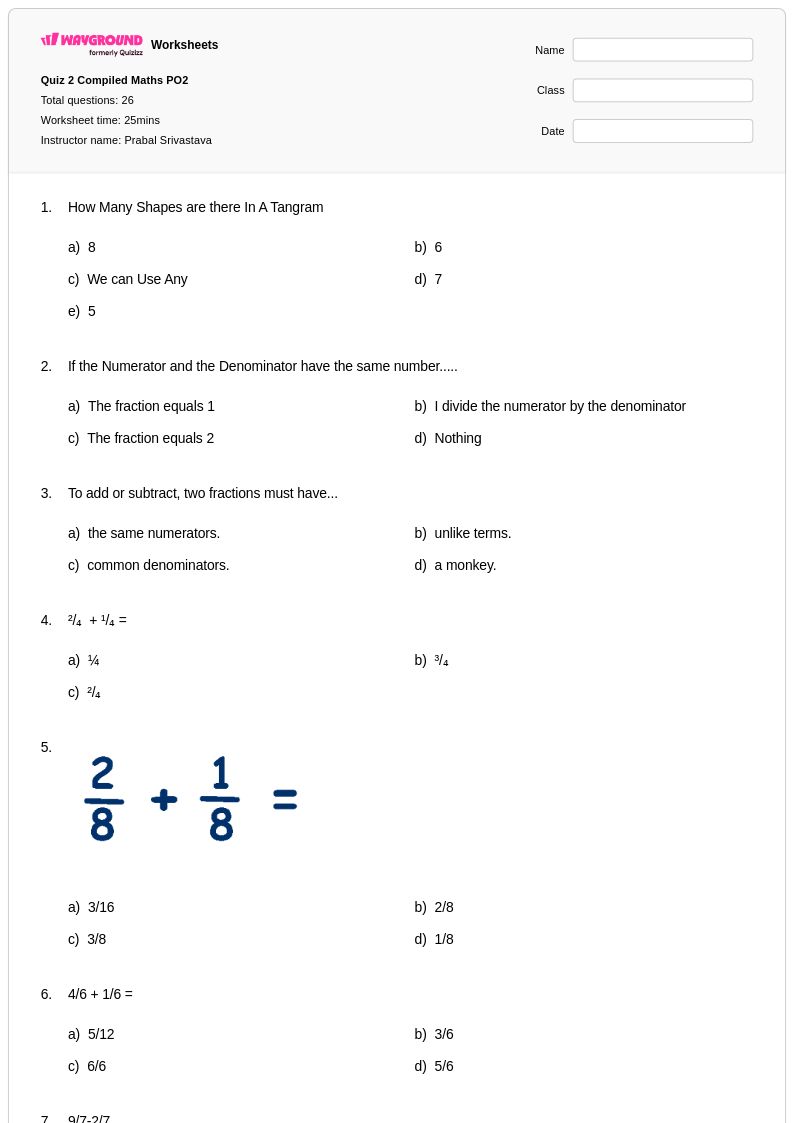
26 Q
4th - 7th
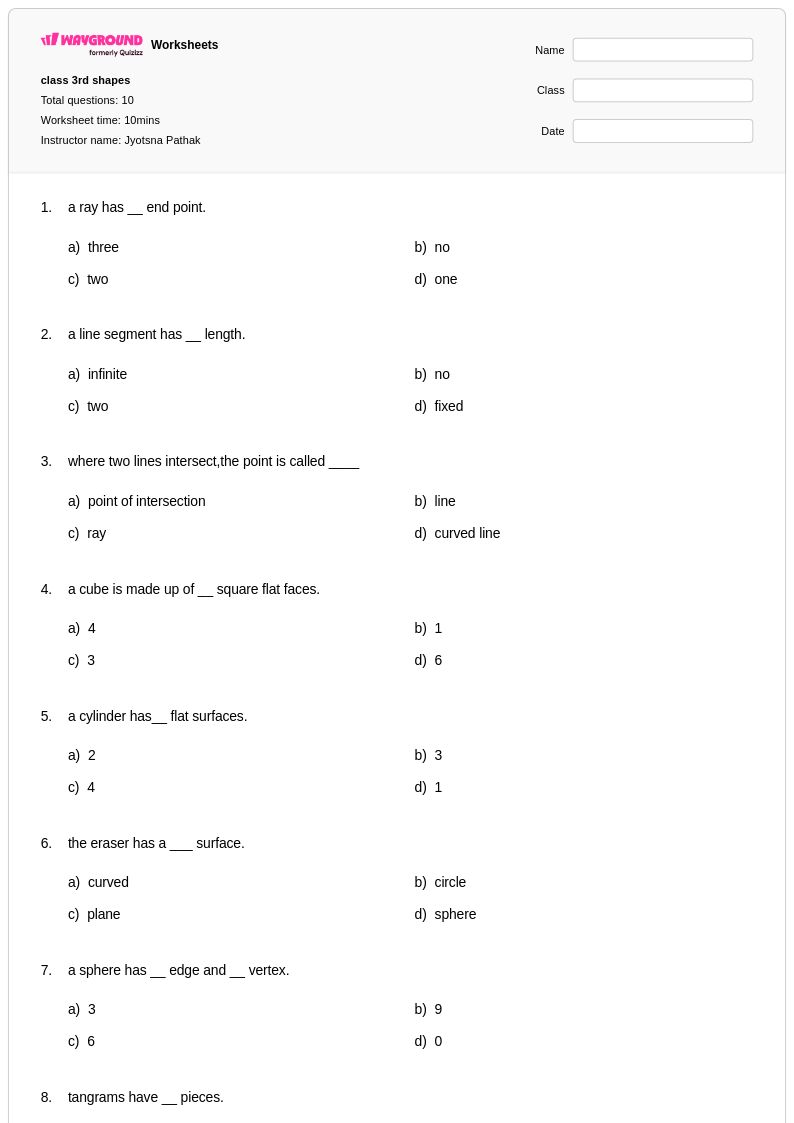
10 Q
1st - 5th
Explore Other Subject Worksheets for grade 4
Explore printable Tangrams worksheets for Grade 4
Grade 4 tangram worksheets available through Wayground (formerly Quizizz) provide students with engaging geometric puzzle activities that develop spatial reasoning, problem-solving skills, and understanding of shape relationships. These comprehensive worksheets guide fourth-grade learners through the ancient Chinese puzzle tradition while reinforcing essential geometry concepts including shape recognition, area, symmetry, and geometric transformations. Students work with the seven tangram pieces to create specific figures, analyze geometric properties, and explore how shapes can be decomposed and recomposed in different arrangements. Each worksheet collection includes detailed answer keys and is designed as free printable resources that teachers can easily distribute for classroom practice problems, homework assignments, or independent learning activities in pdf format.
Wayground (formerly Quizizz) empowers educators with millions of teacher-created tangram worksheet collections that feature robust search and filtering capabilities, enabling quick location of grade-appropriate materials aligned with geometry standards. The platform's differentiation tools allow teachers to customize worksheets for diverse learning needs, providing simpler tangram challenges for students requiring additional support and more complex geometric puzzles for advanced learners ready for enrichment. These flexible resources are available in both printable pdf format and digital versions, supporting various classroom environments and learning preferences. Teachers can efficiently plan geometry lessons, provide targeted remediation for students struggling with spatial concepts, and offer extended practice opportunities that strengthen visualization skills and geometric reasoning through systematic tangram exploration and manipulation activities.