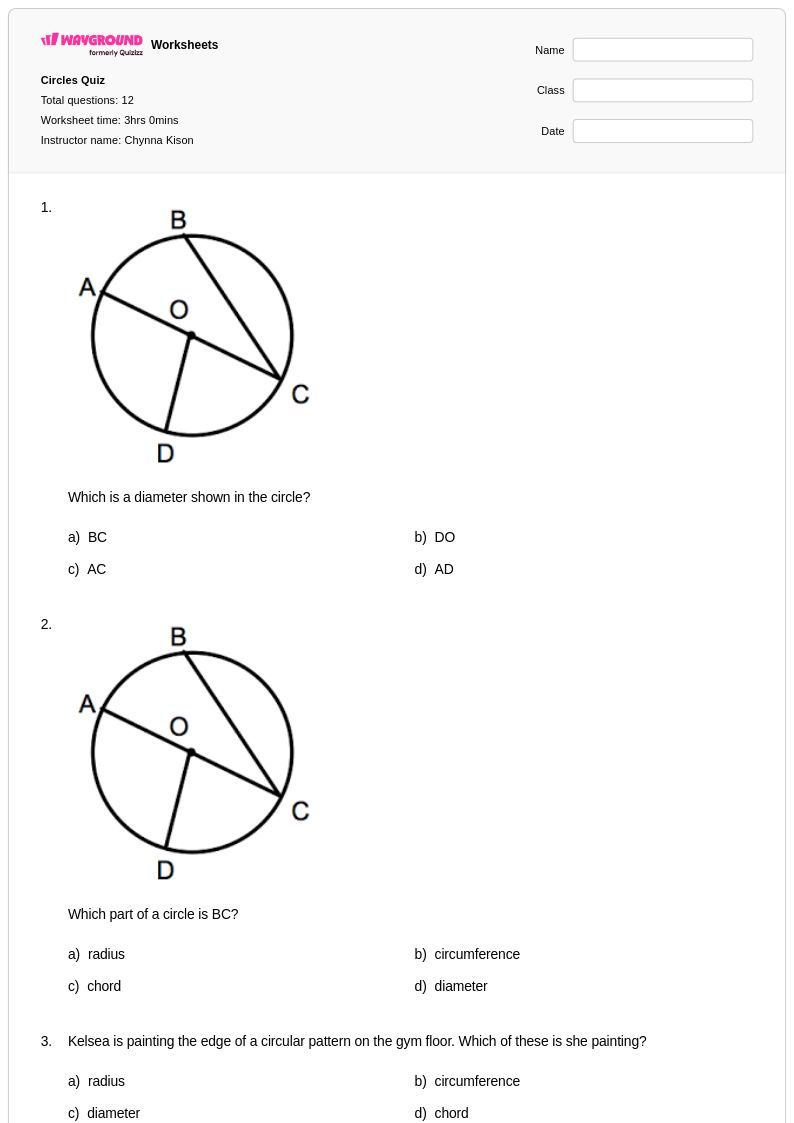
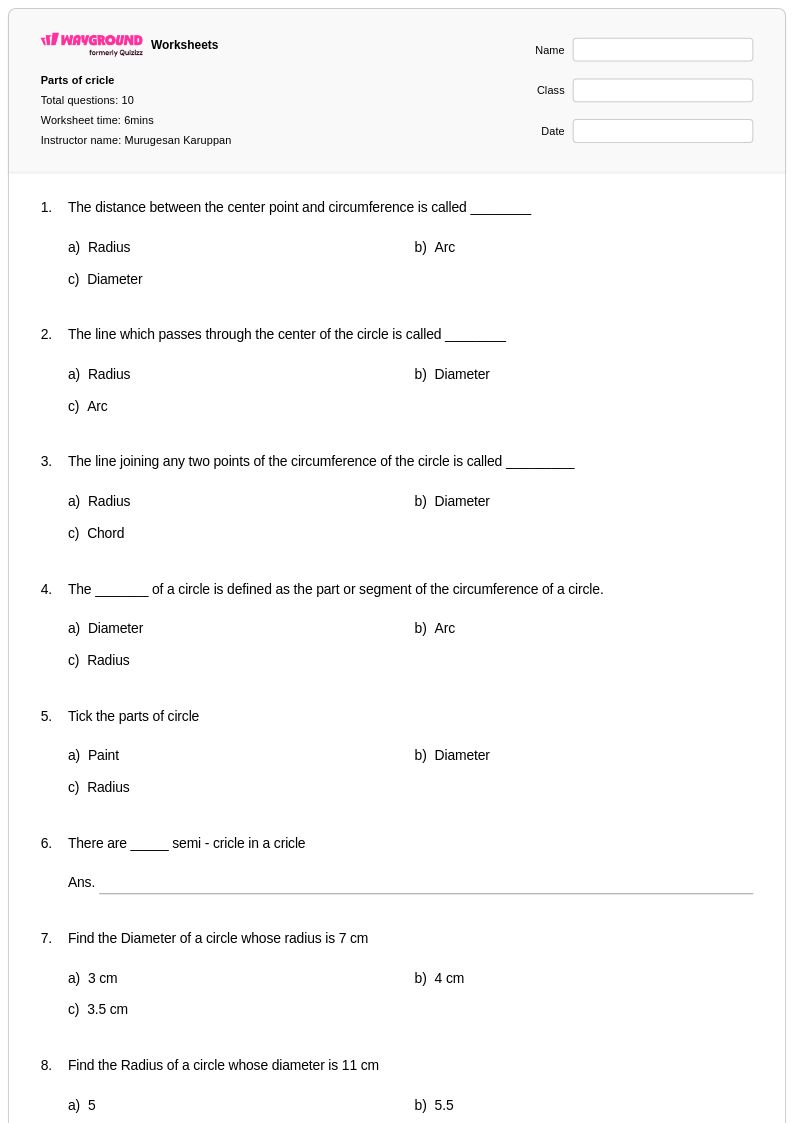
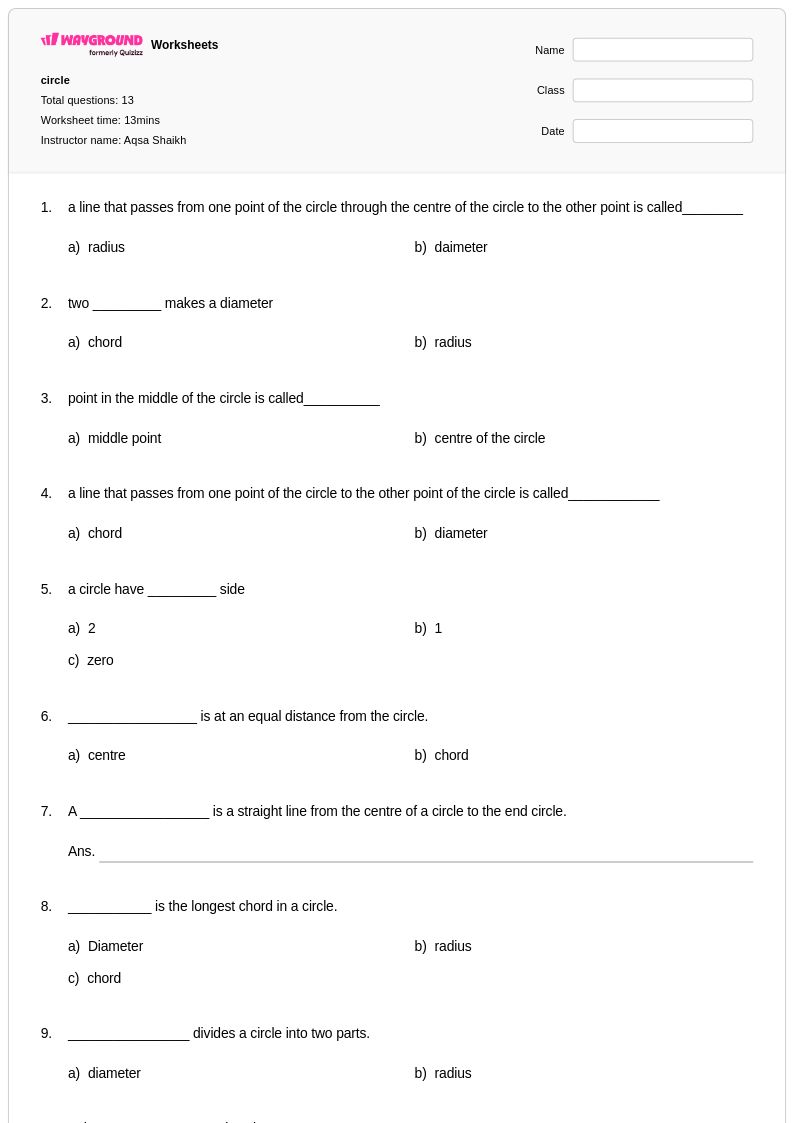
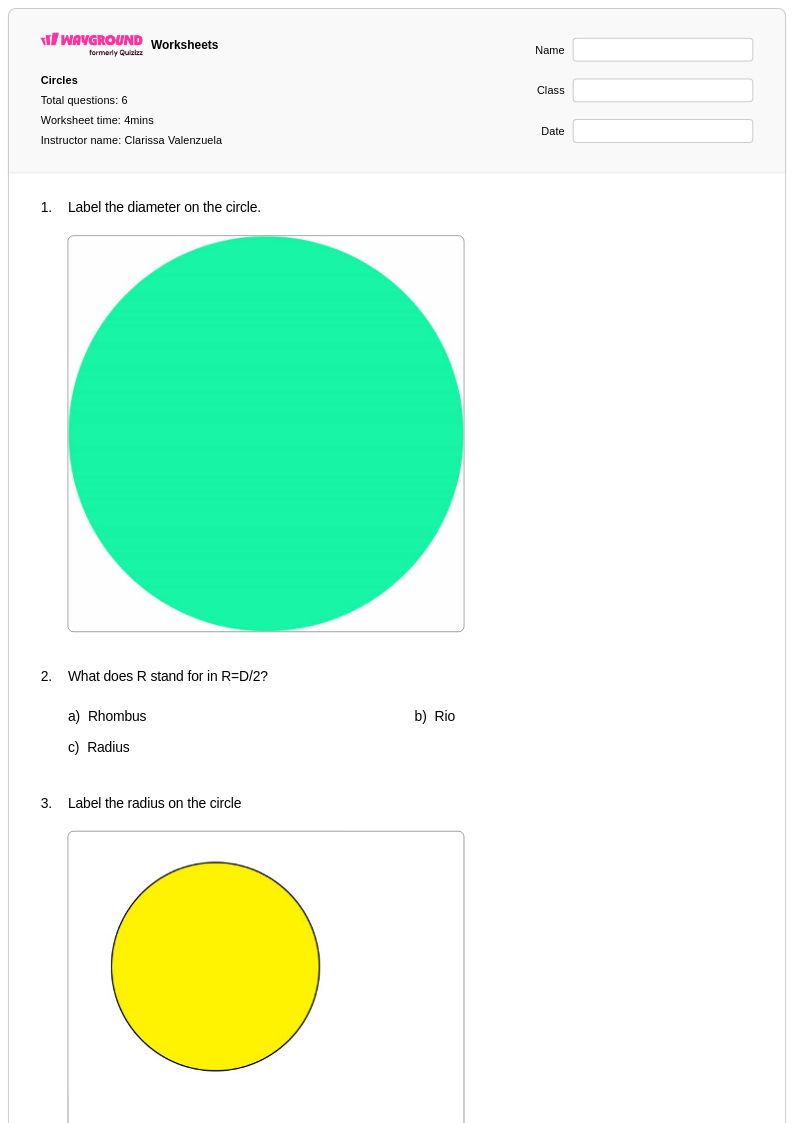
Explore free Grade 4 diameter worksheets and printables from Wayground that help students master circle measurements through engaging practice problems with comprehensive answer keys and downloadable PDFs.
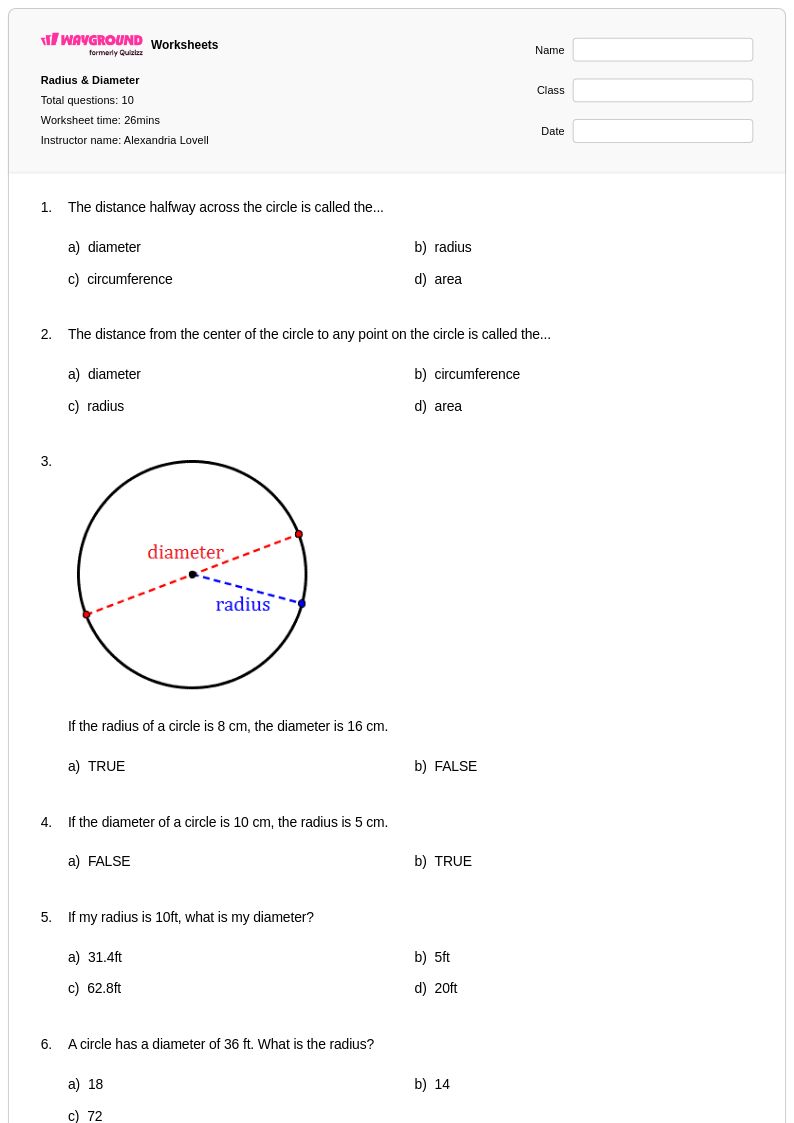
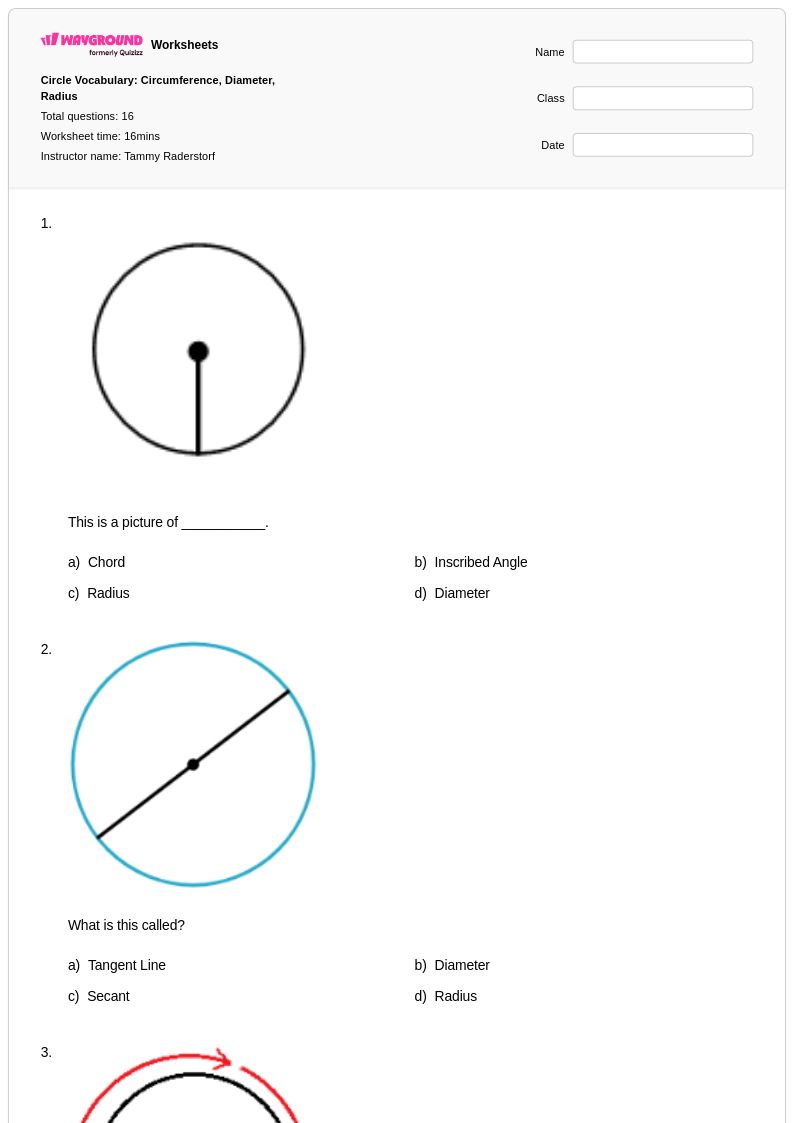
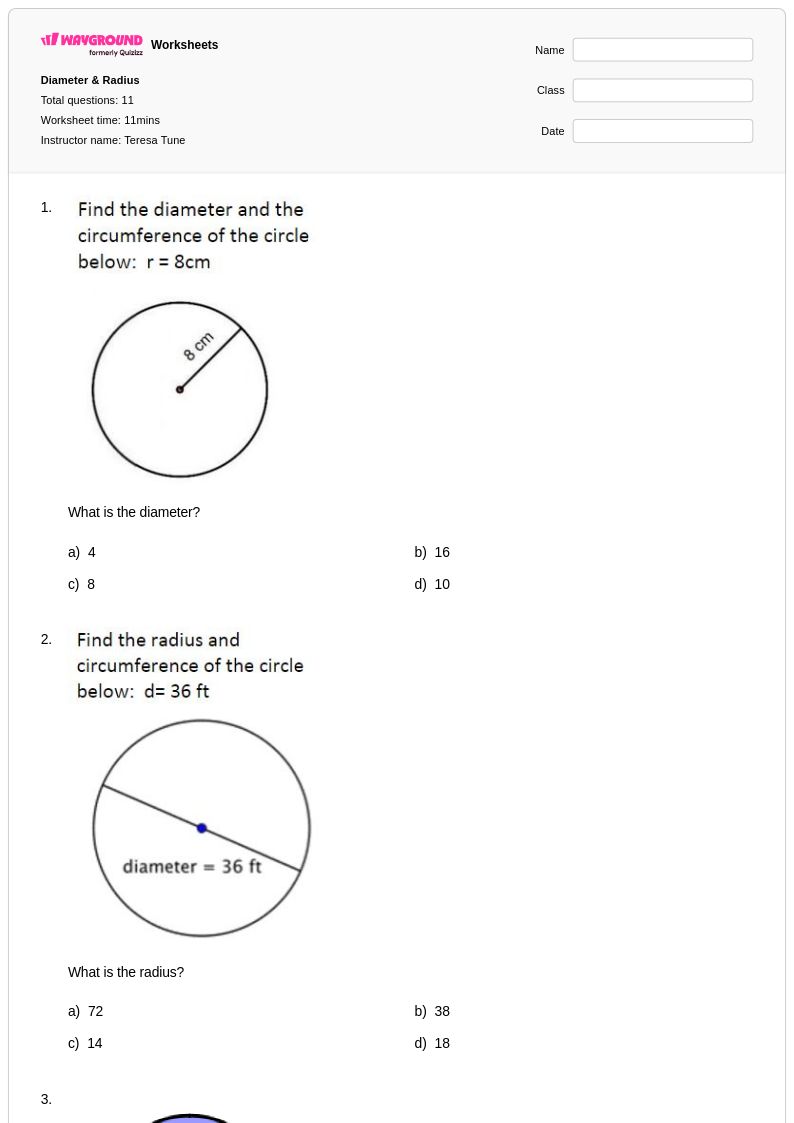
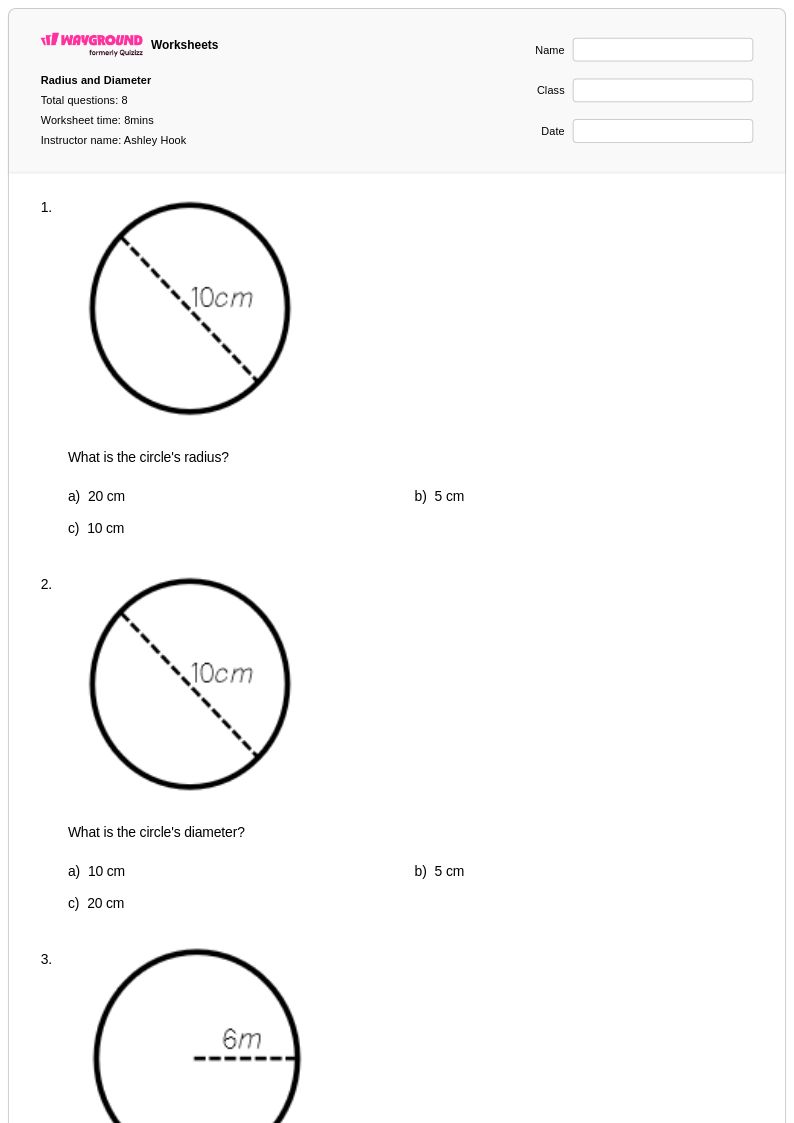
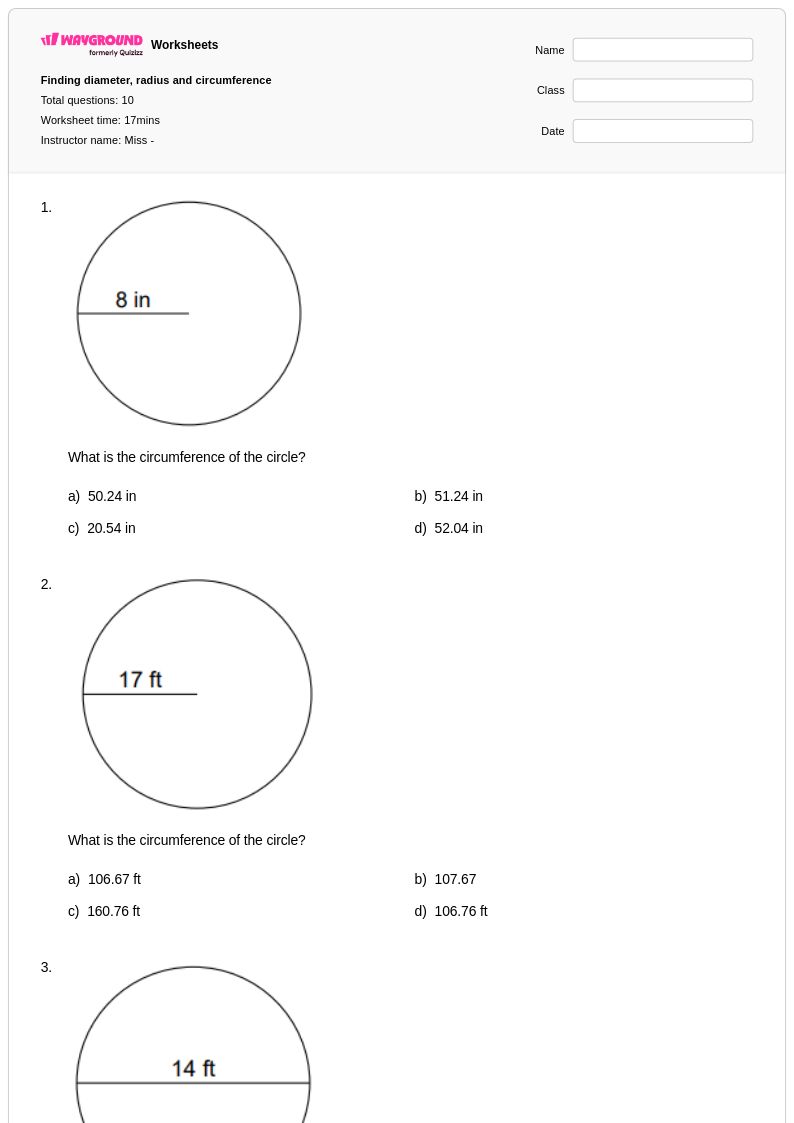
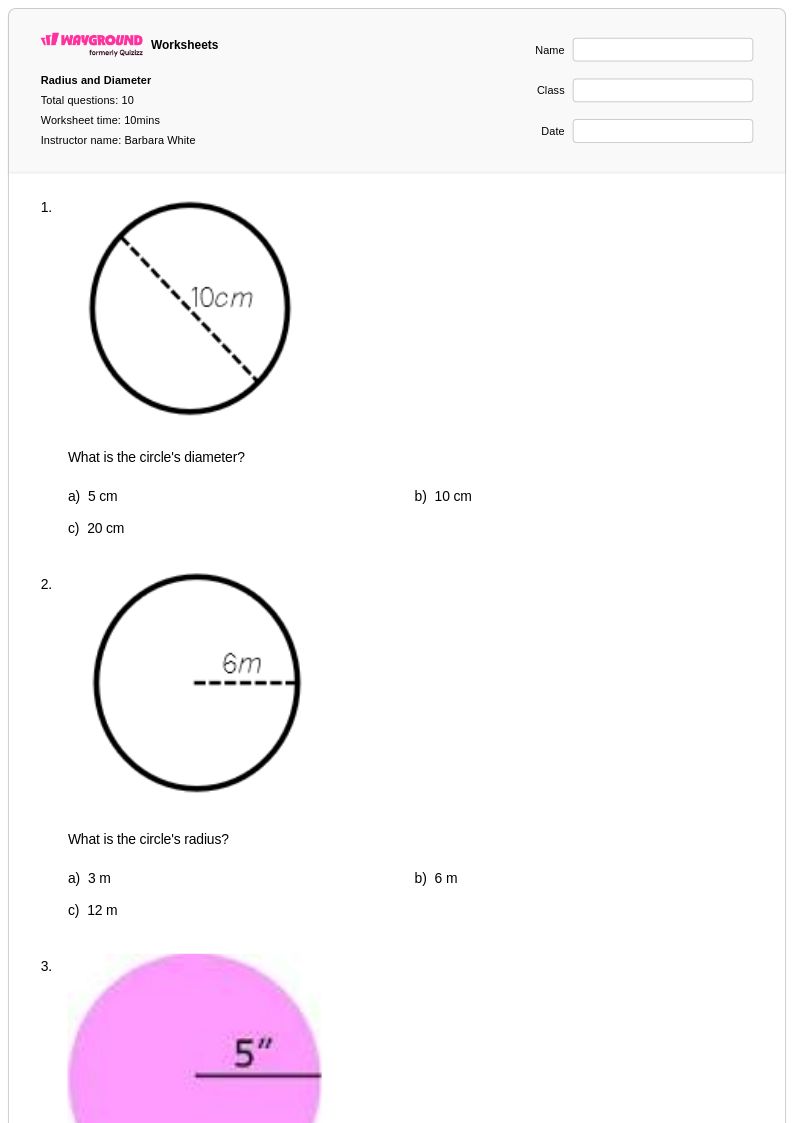
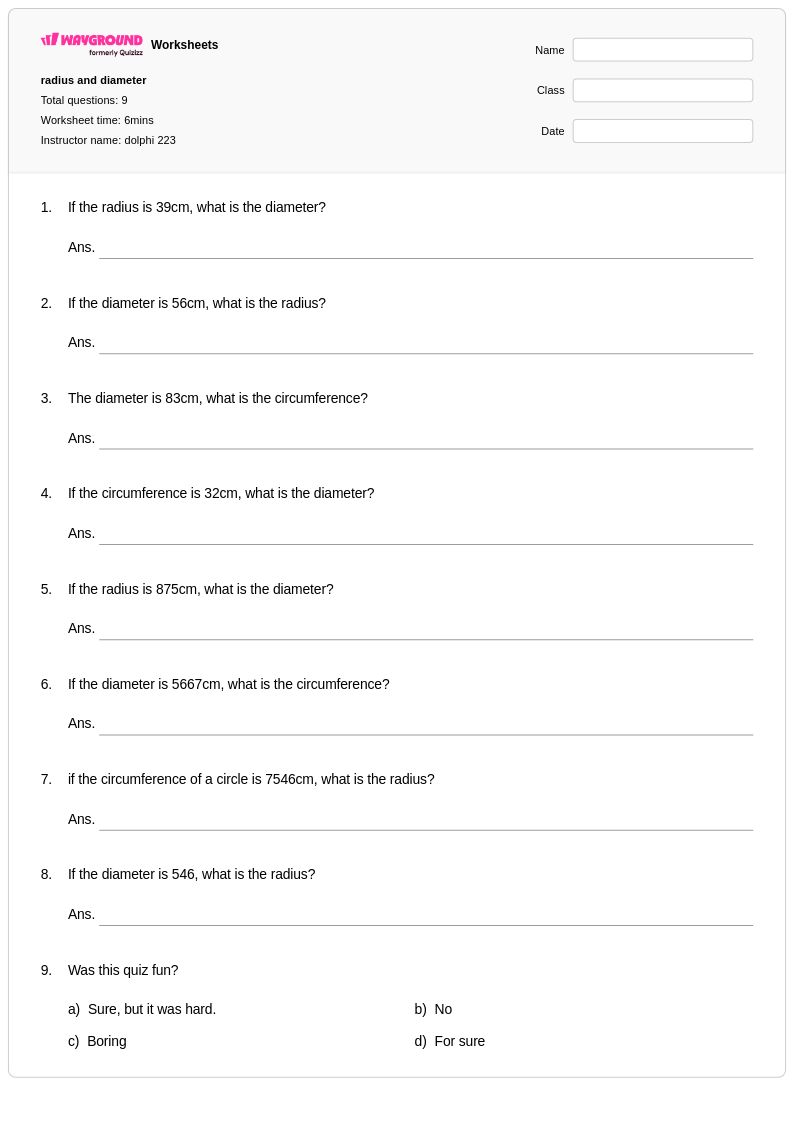
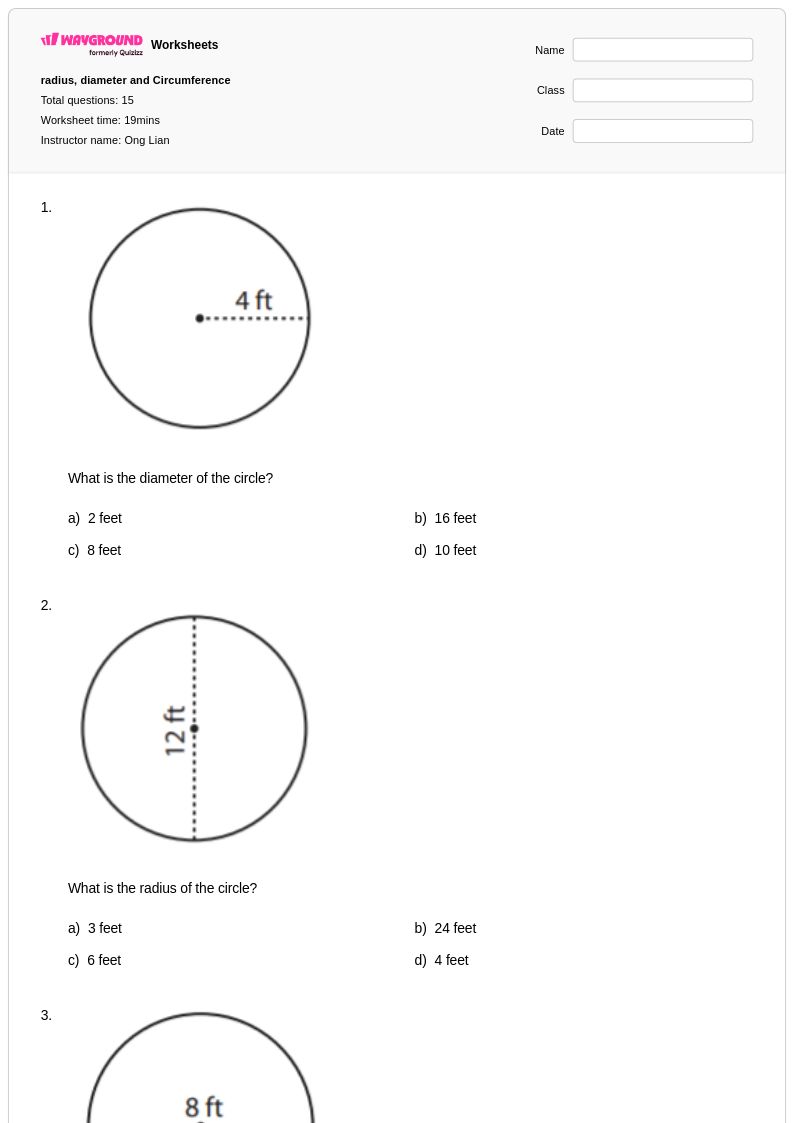
Grade 4 diameter worksheets available through Wayground (formerly Quizizz) provide students with essential practice in understanding this fundamental circle measurement concept. These carefully designed worksheets help fourth graders develop strong foundational skills in identifying, measuring, and calculating diameters across various geometric contexts. Students work through engaging practice problems that reinforce the relationship between diameter and radius, while building confidence in applying these concepts to real-world scenarios. Each worksheet comes with a comprehensive answer key, making it easy for educators to assess student understanding and provide immediate feedback. These free printables offer structured learning opportunities that strengthen spatial reasoning and measurement skills essential for continued success in geometry.
Wayground (formerly Quizizz) supports teachers with an extensive collection of millions of teacher-created diameter worksheets specifically designed for Grade 4 mathematics instruction. The platform's robust search and filtering capabilities allow educators to quickly locate resources that align with state standards and match their specific curriculum needs. Teachers can easily differentiate instruction by selecting worksheets with varying difficulty levels, customize content to address individual learning gaps, and access materials in both printable pdf format and interactive digital versions. These versatile tools streamline lesson planning while providing targeted options for remediation, enrichment, and daily skill practice, ensuring that every student receives appropriate support in mastering diameter concepts at the fourth-grade level.
FAQs
How do I teach diameter to 4th graders?
Start with the physical: have students draw a circle, fold it in half, and measure the fold line. That crease is the diameter. Once they see it as the longest straight line through the center, introduce the diameter-radius relationship (diameter = 2 × radius) with simple whole-number examples before moving to calculation problems. Grounding the concept in something they can touch first makes the abstract definition stick.
What exercises help 4th graders practice diameter?
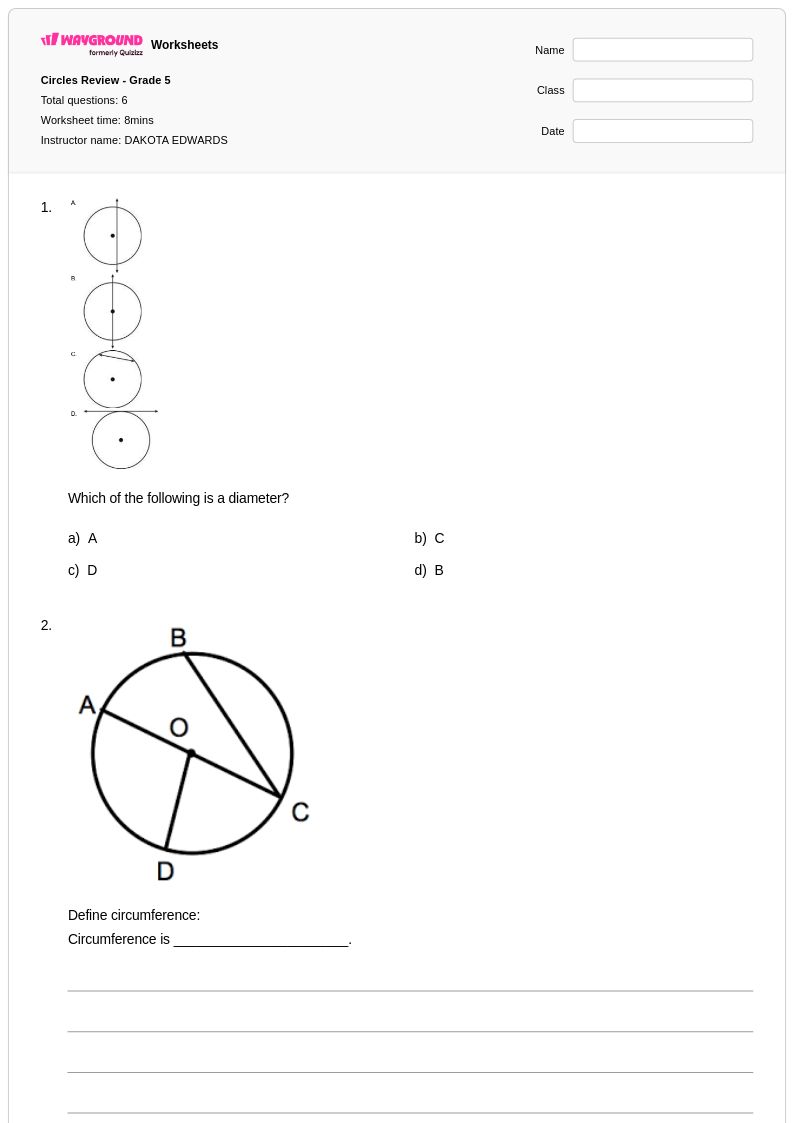
The most effective practice moves through three stages: identifying the diameter on a labeled diagram, measuring it on an unlabeled circle, and then calculating it from a given radius (or vice versa). Problems that use real-world objects, a clock face, a coin, a wheel, help students see why the measurement matters, not just how to find it.
What mistakes do 4th graders commonly make with diameter?
The most common error is confusing diameter with radius — students measure from the center to the edge and stop there. A close second is drawing a chord that doesn't pass through the center and calling it the diameter. When you see either mistake, ask the student to point to the center of the circle first, then trace the line through it to both edges. That one check catches both errors.
How do I use Wayground's diameter worksheets in my 4th grade class?
You can run the worksheet as a digital quiz hosted on Wayground, students complete it on a device and you get results instantly, or download the printable PDF and hand it out on paper, which works well for schools managing screen time. Either way, every worksheet includes a complete answer key. If you go the print route, the Wayground for Teachers app lets you scan or capture student work to grade it without re-entering answers by hand.
Is diameter aligned to Common Core standards in 4th grade math?
Diameter sits within Common Core's geometry progression for Grade 4, where students are expected to understand properties of geometric figures including circles. At this level, the focus is on recognizing and defining parts of a circle, center, radius, and diameter, and understanding that the diameter is always twice the radius. This builds toward the Grade 7 work of calculating circumference and area using diameter and radius in formulas.
How can I differentiate diameter practice for mixed-ability 4th graders?
For students who struggle with reading-heavy directions, Wayground's Read Aloud accommodation reads questions aloud so they can focus on the geometry rather than decoding text. For students who need visual clarity, you can generate an alternate version of the same worksheet with a larger font size or a dyslexia-friendly font — same problems, adjusted presentation. Students who need more time on measurement tasks can be given extended time per question without other students being notified.