
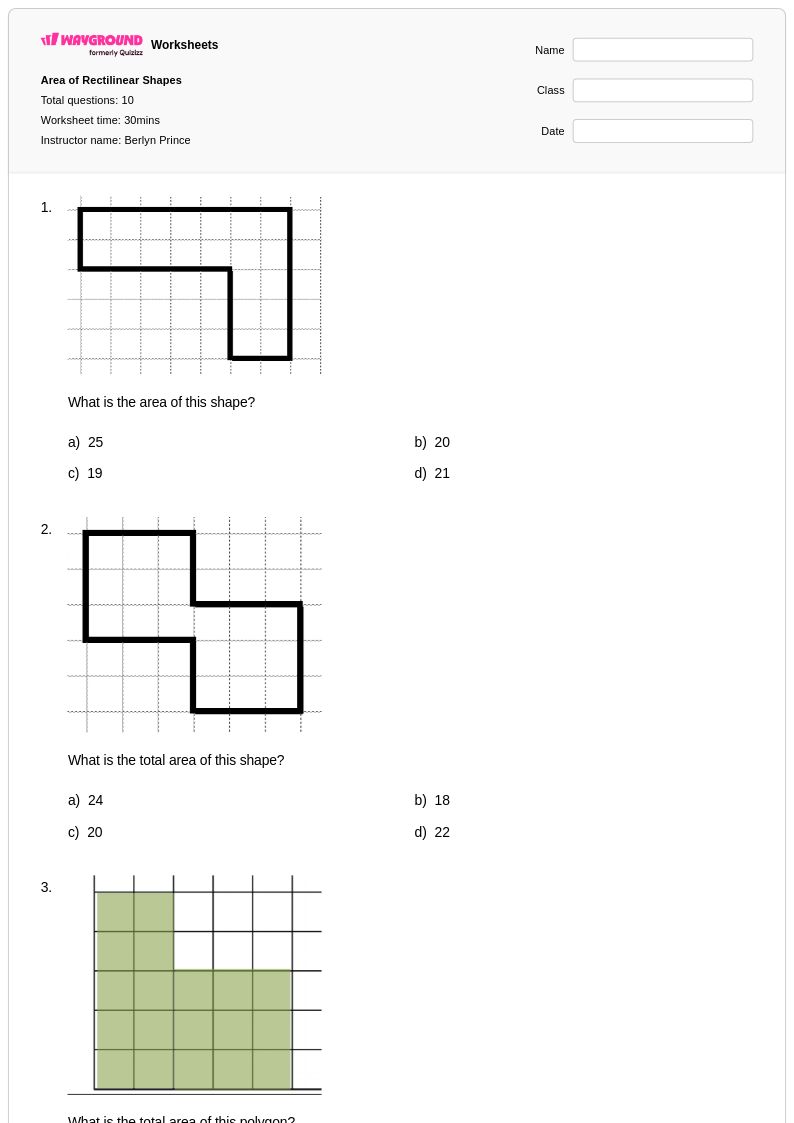
10 Q
3rd - 4th
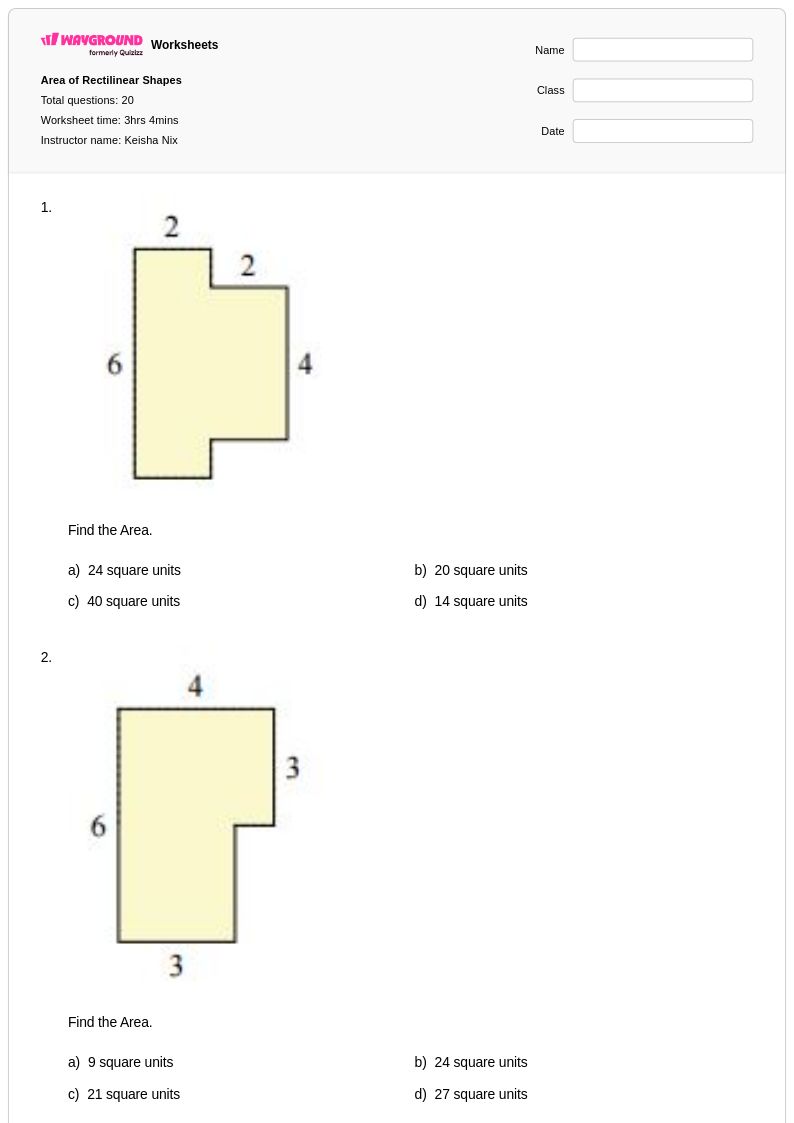
20 Q
4th
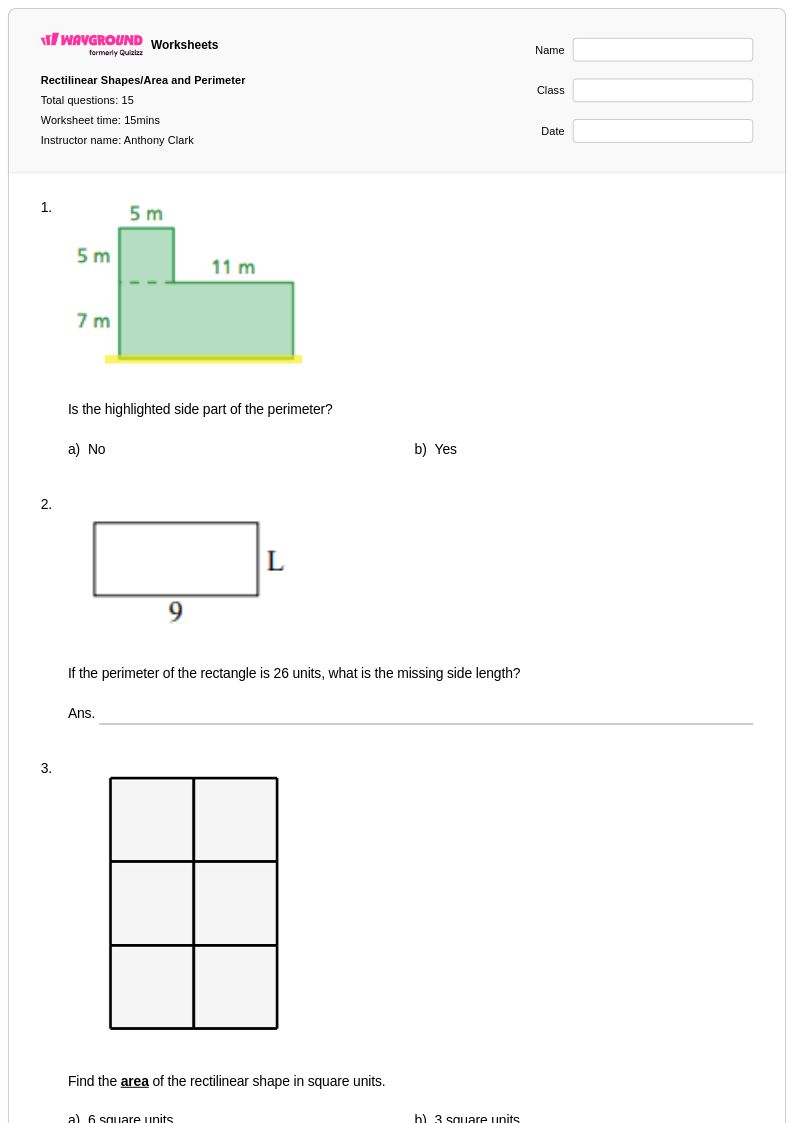
15 Q
4th - Uni
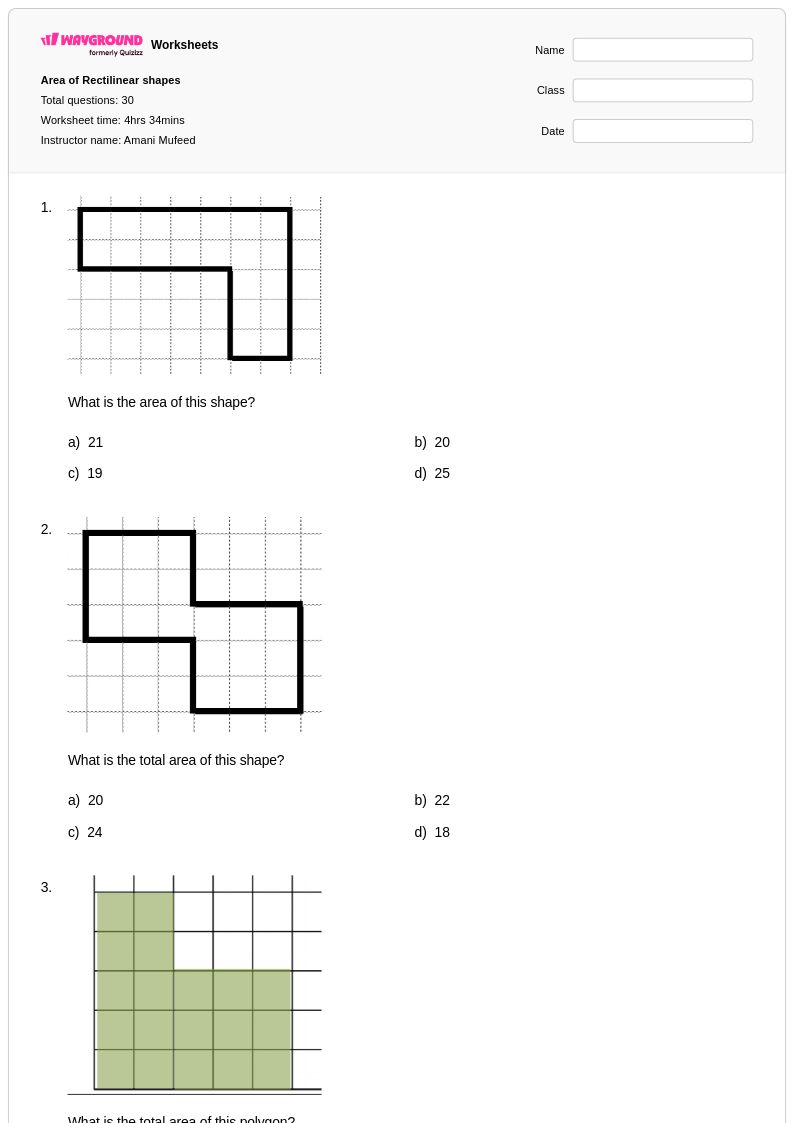
30 Q
4th
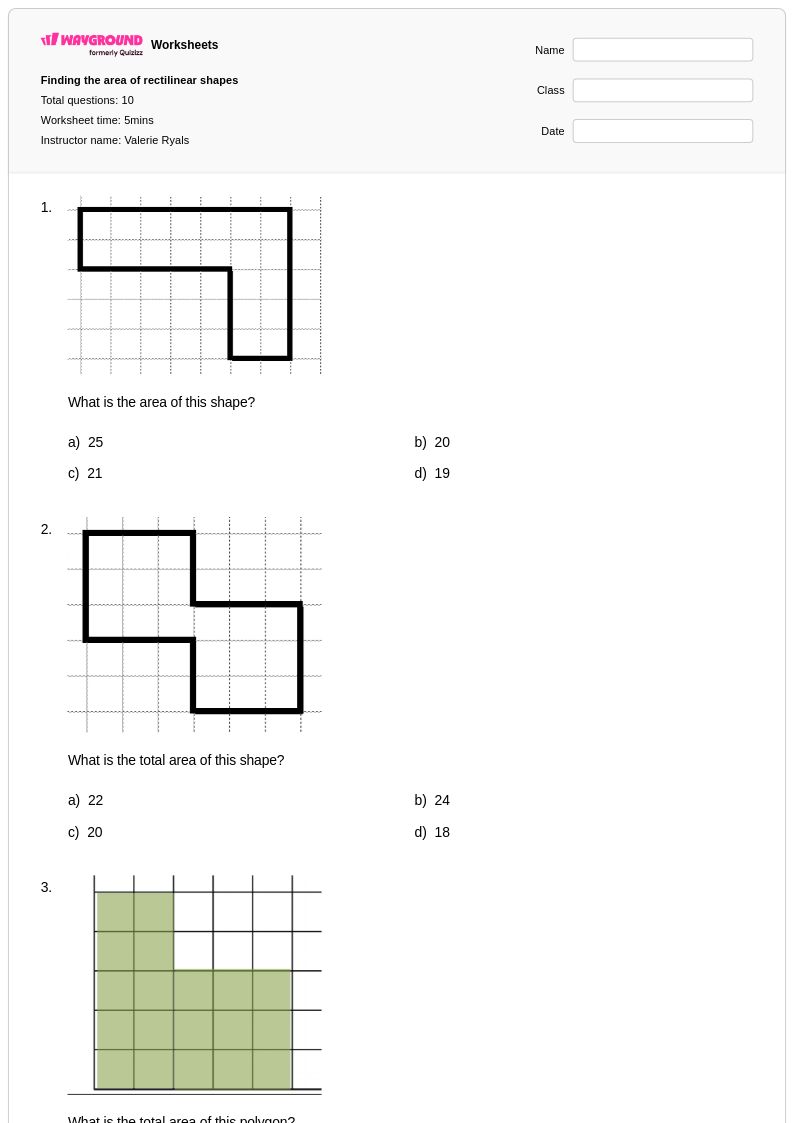
10 Q
4th
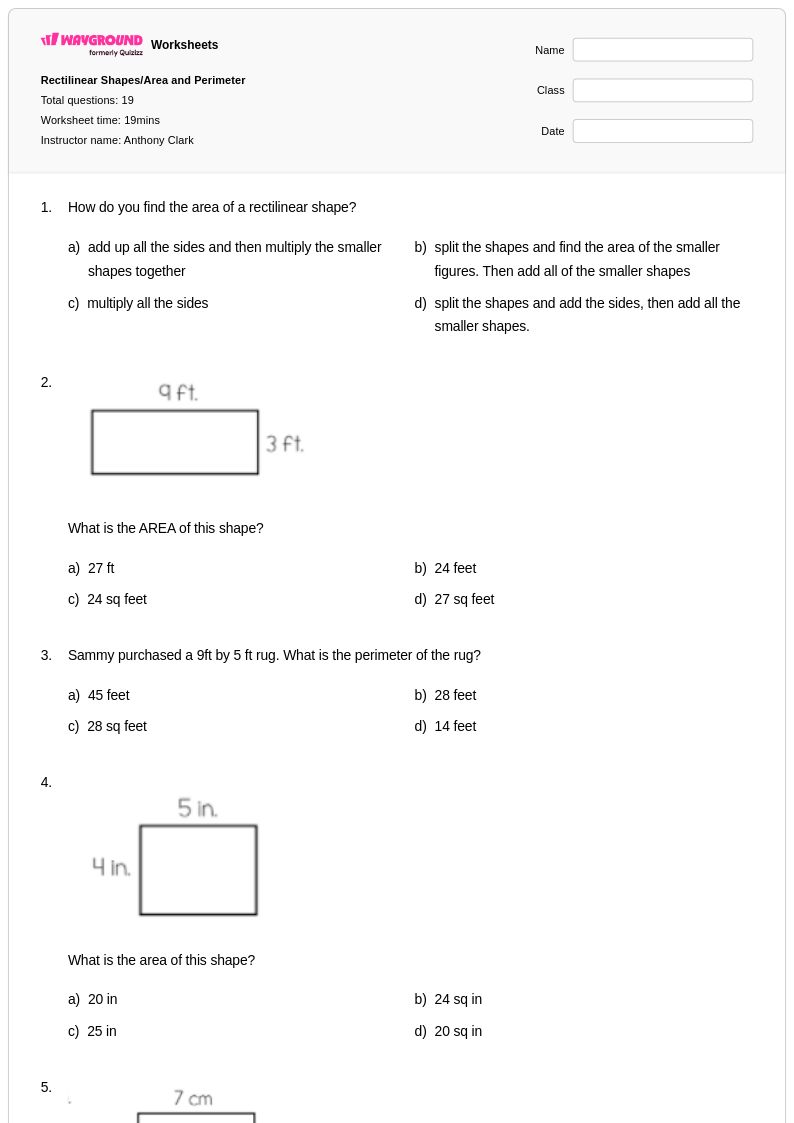
19 Q
4th - Uni
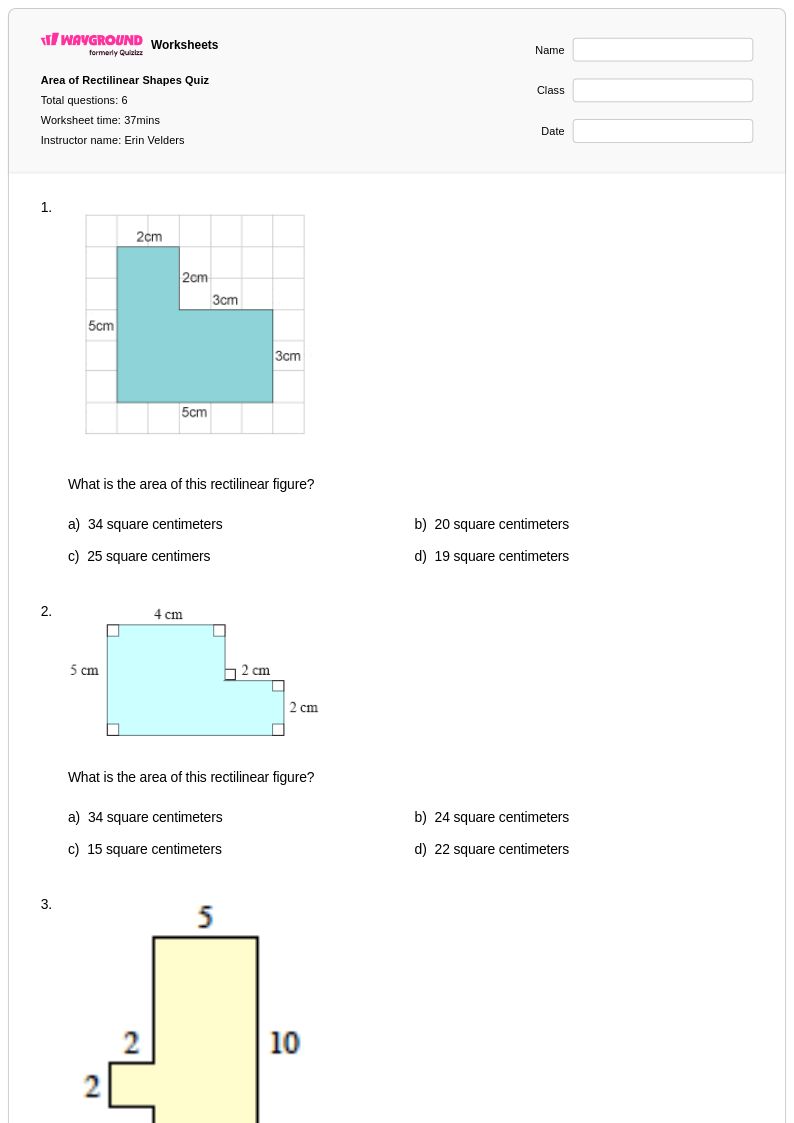
6 Q
4th
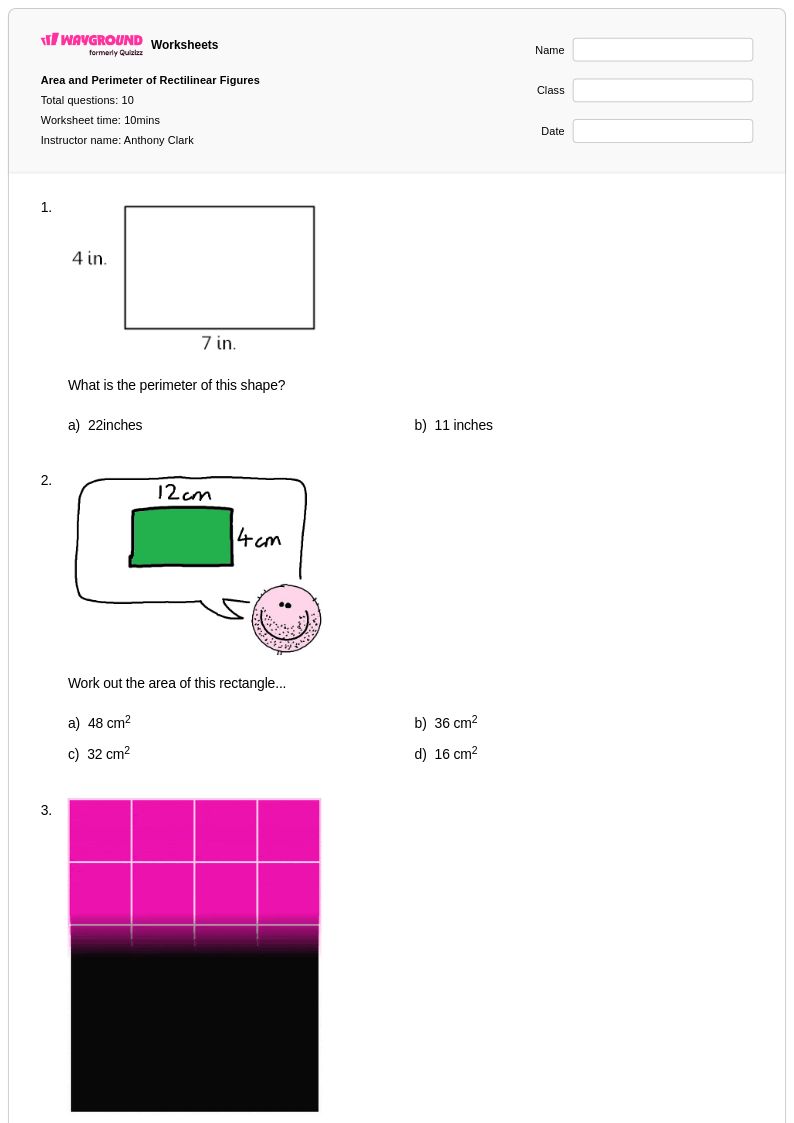
10 Q
4th - Uni
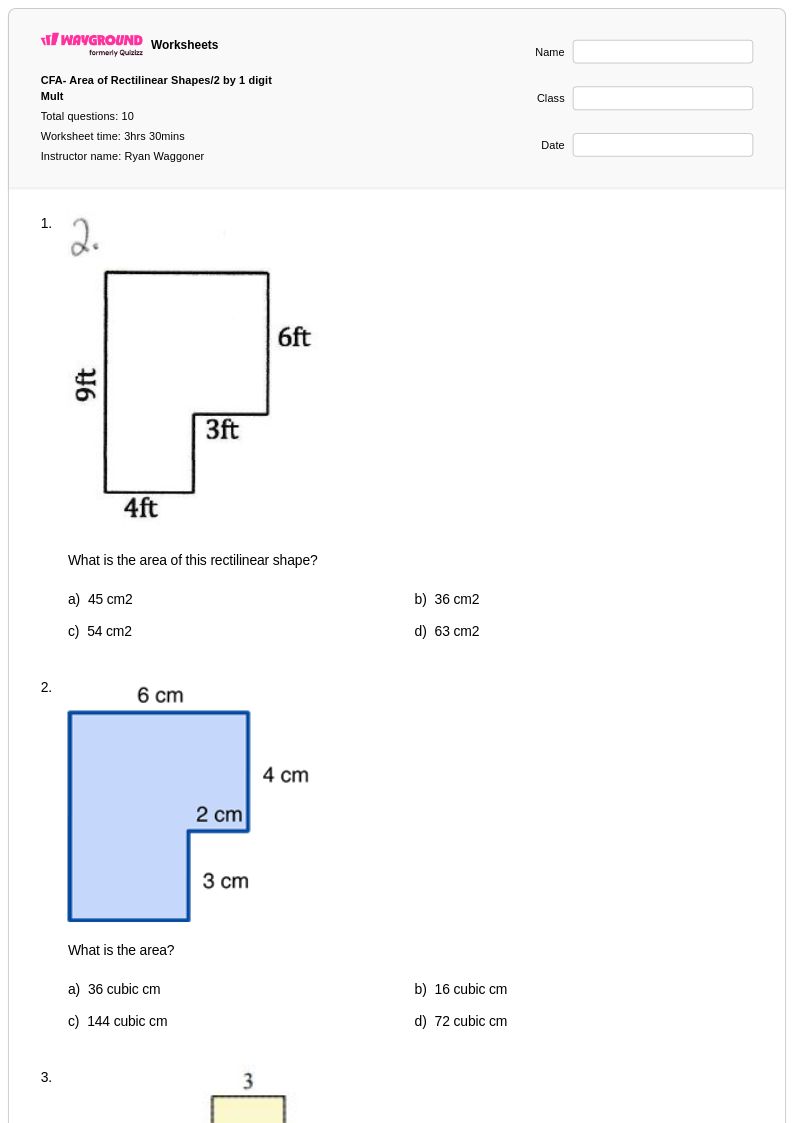
10 Q
4th
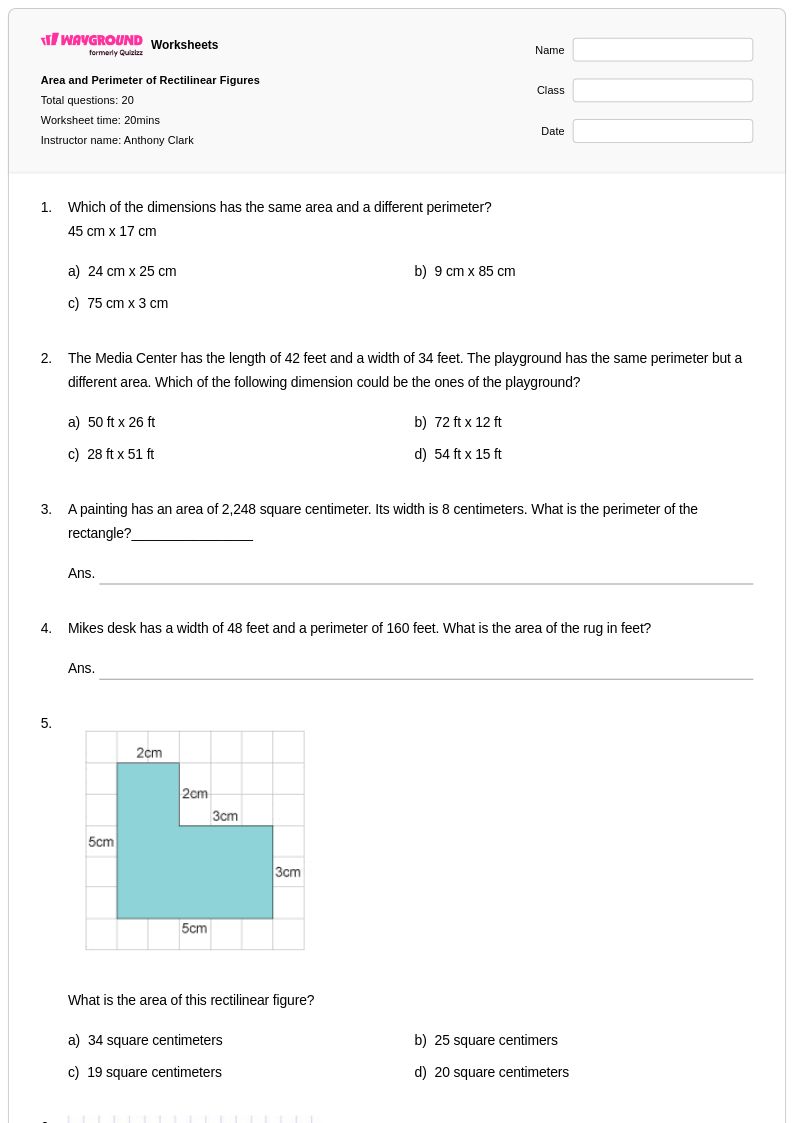
20 Q
4th - Uni
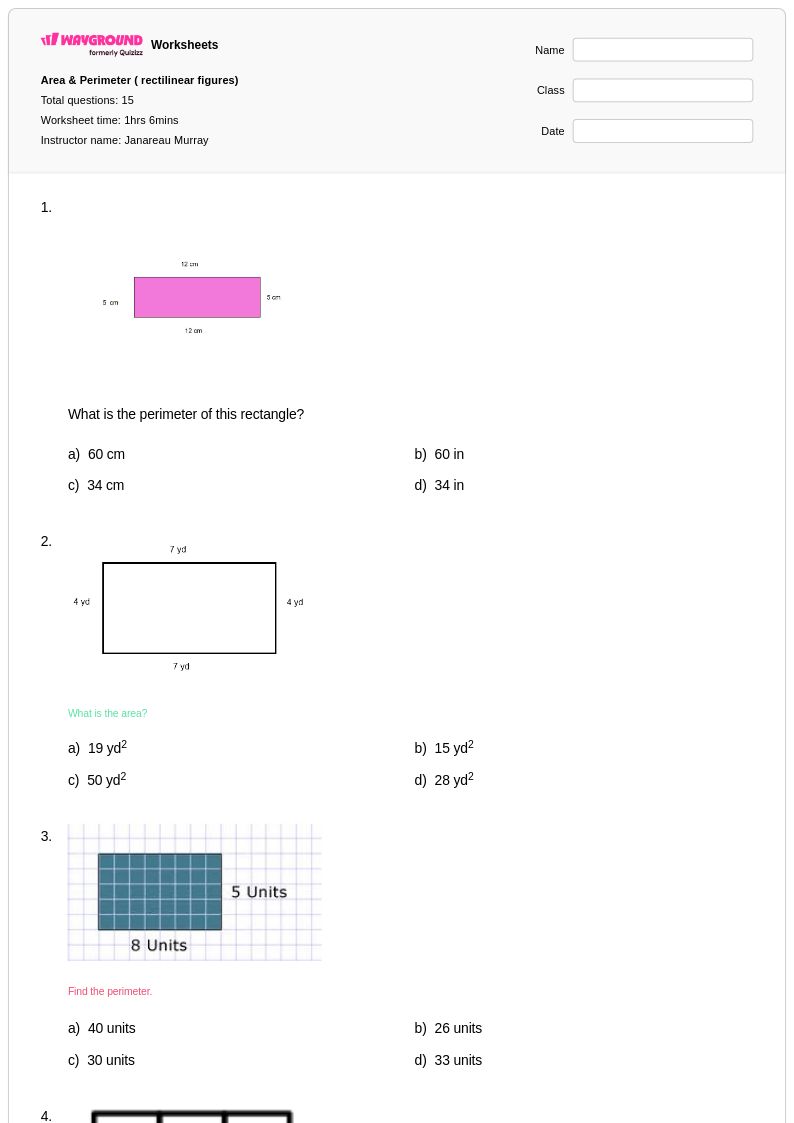
15 Q
4th
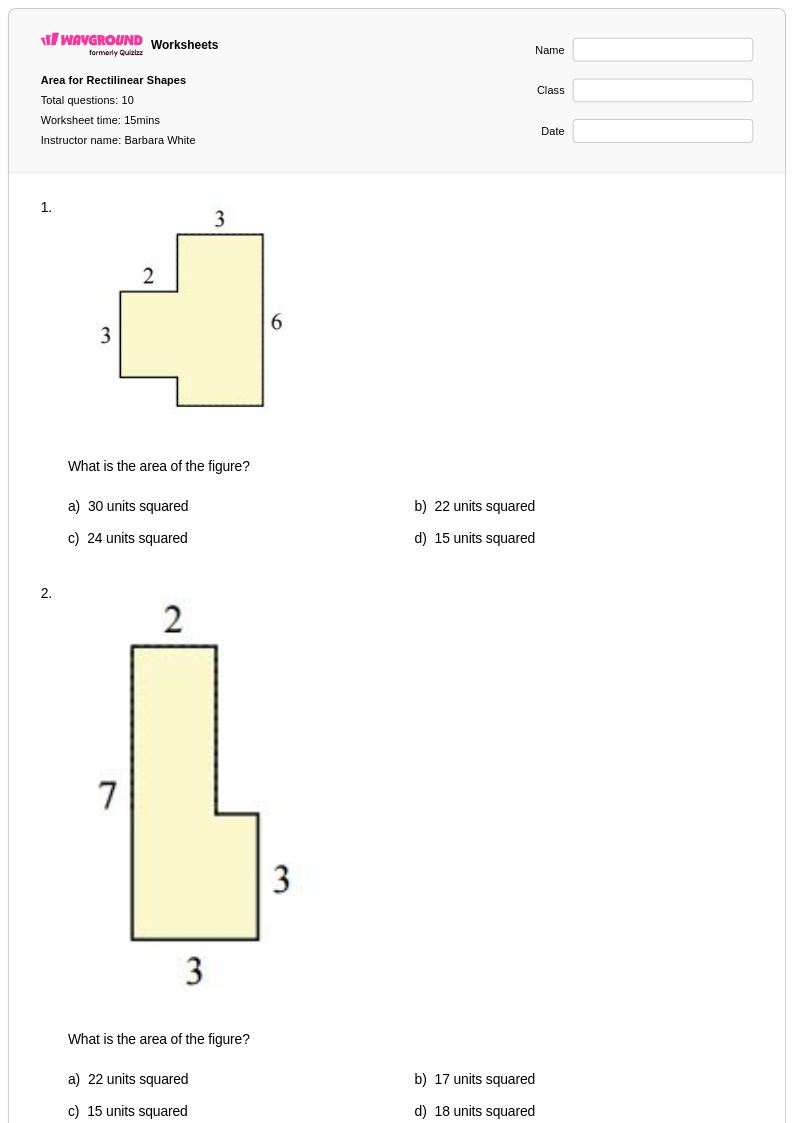
10 Q
4th - 6th
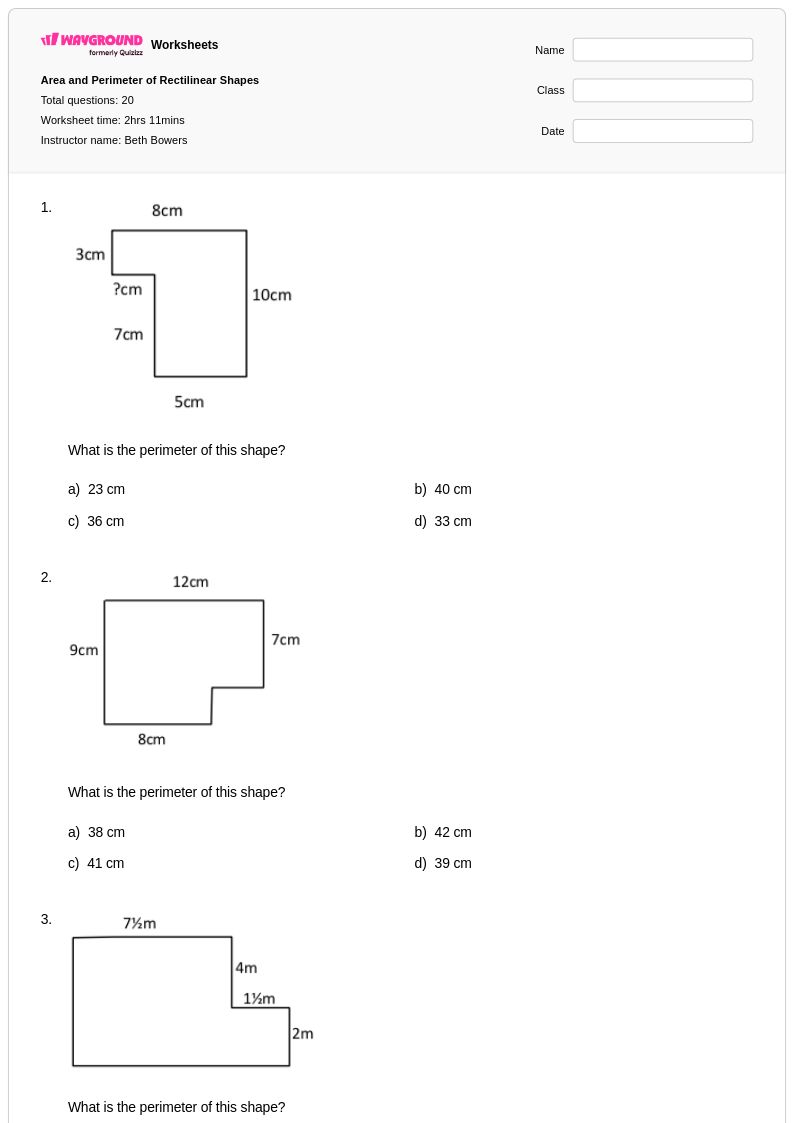
20 Q
4th
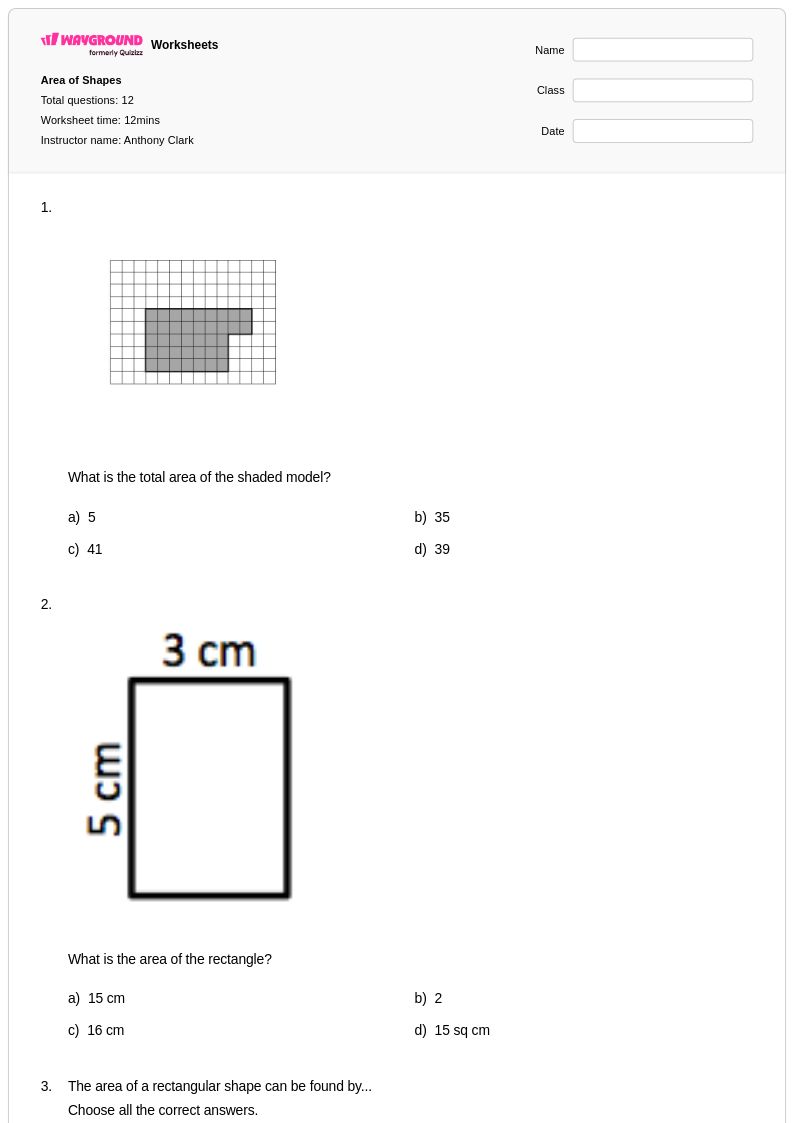
12 Q
3rd - Uni
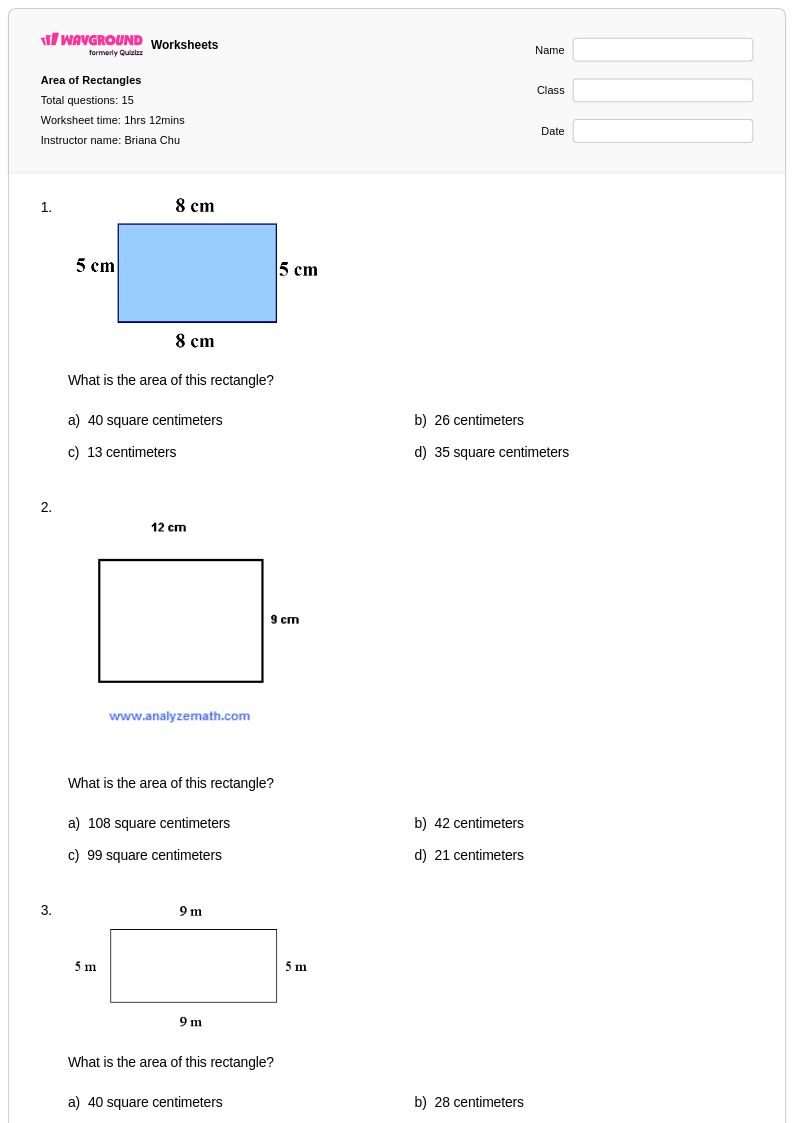
15 Q
3rd - 5th
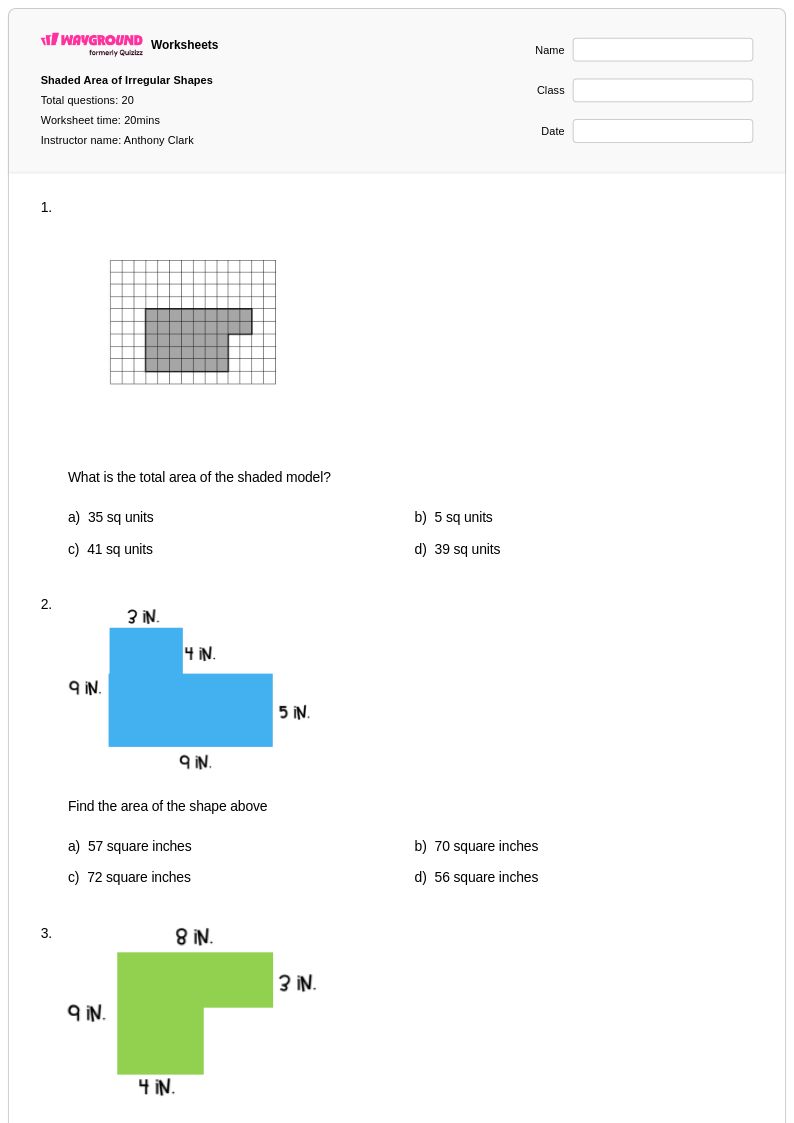
20 Q
3rd - Uni
6 Q
4th - Uni
22 Q
4th
20 Q
3rd - Uni
15 Q
4th - Uni
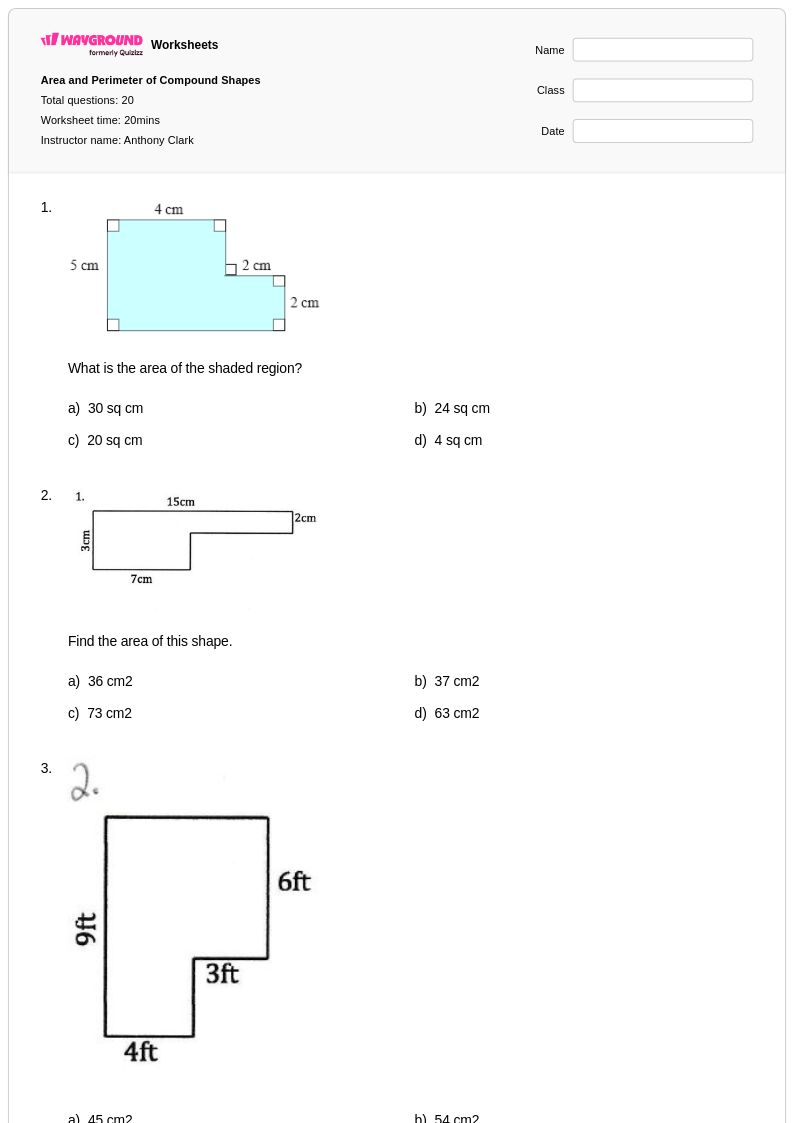
20 Q
4th - Uni
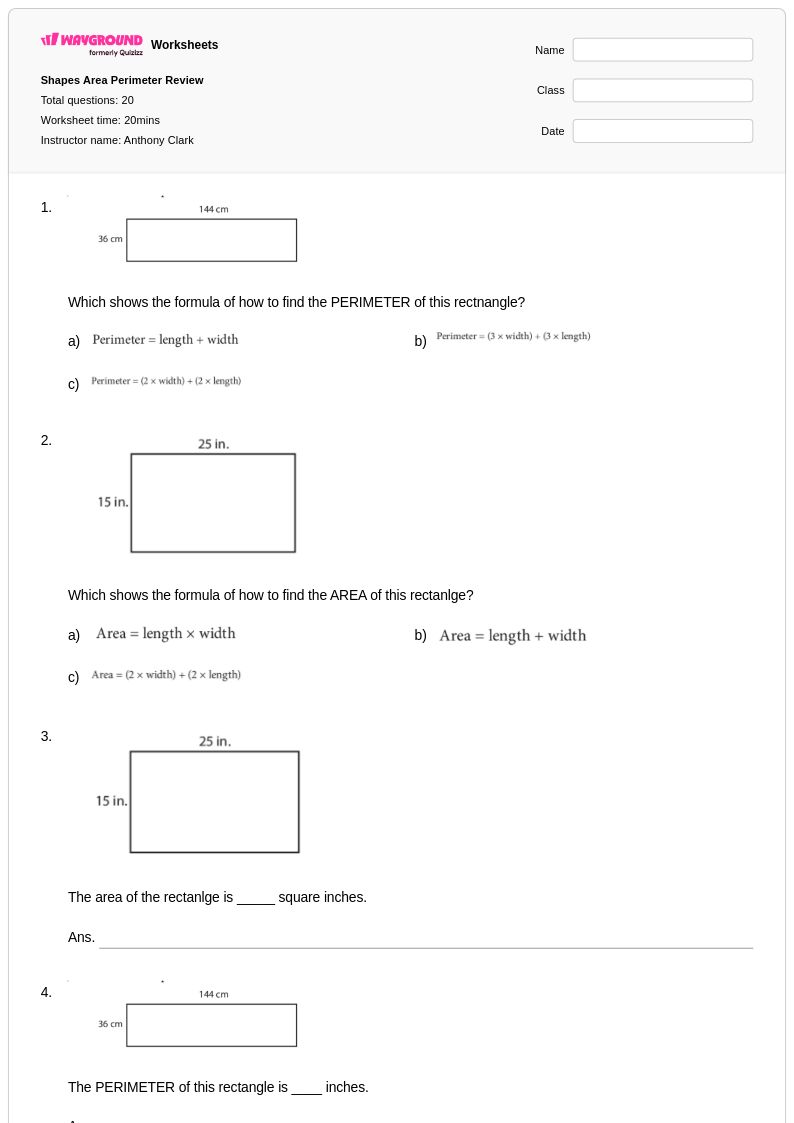
20 Q
4th - Uni
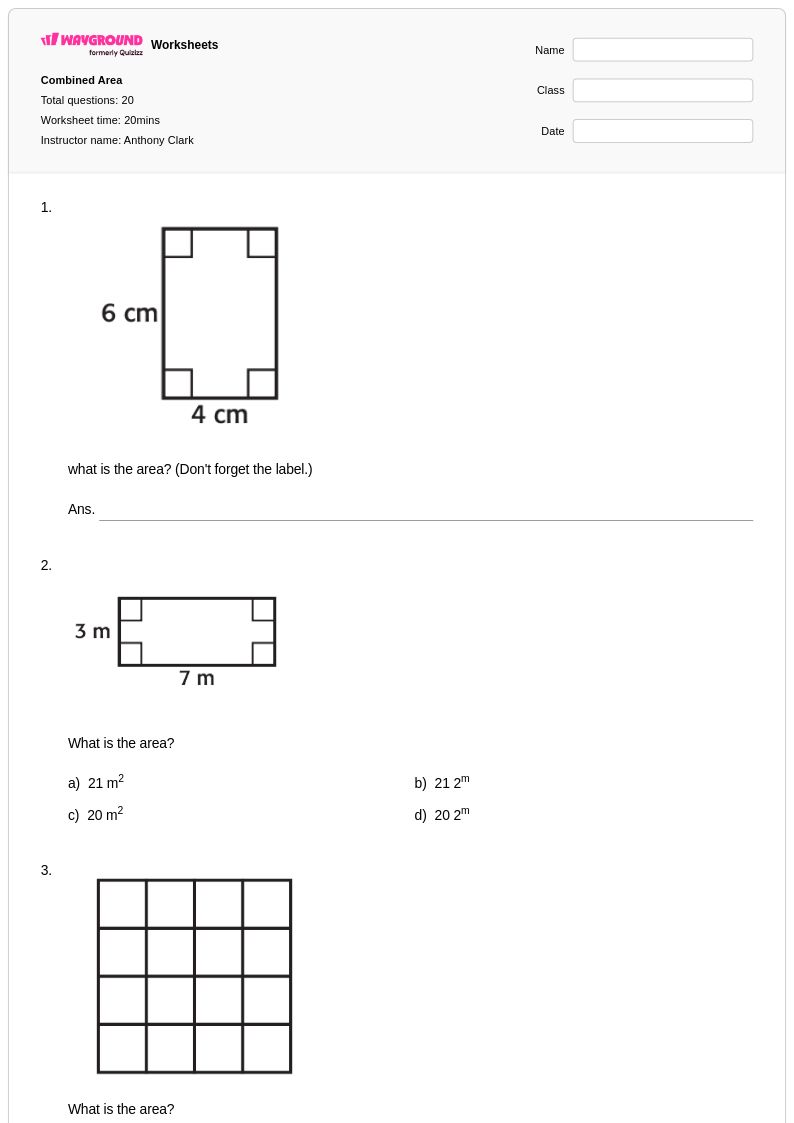
20 Q
4th - Uni
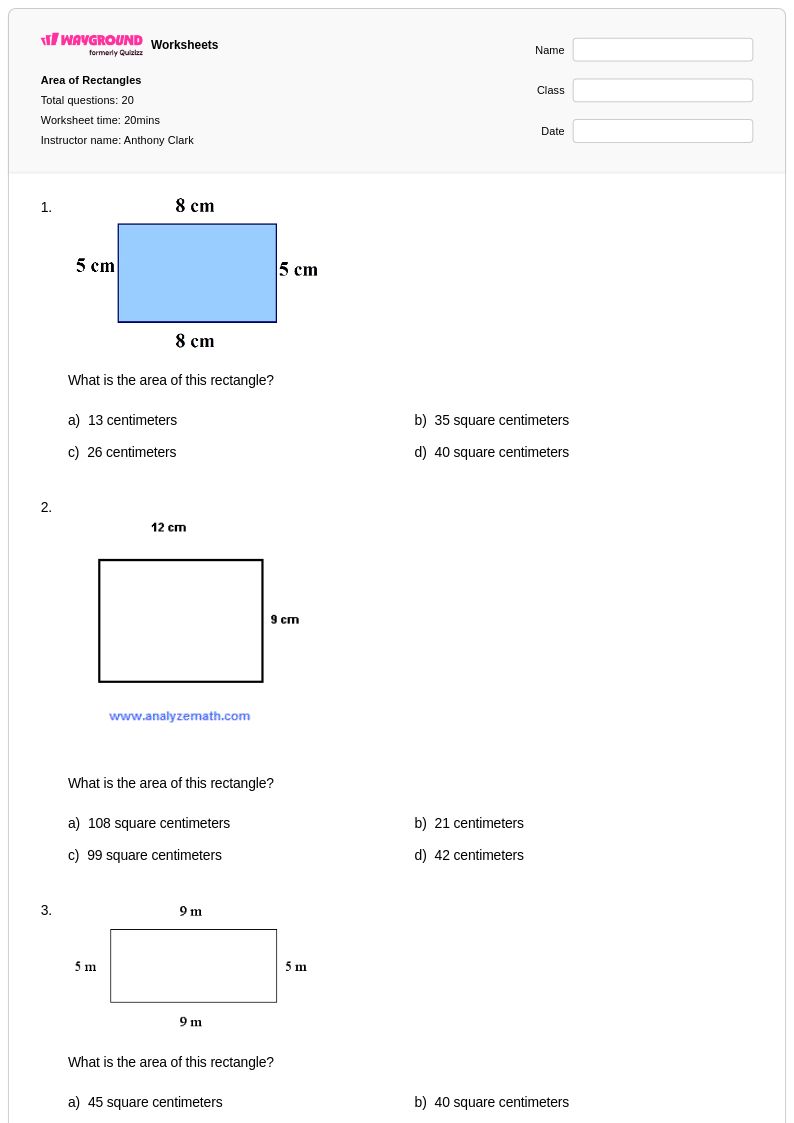
20 Q
3rd - Uni
Explore Other Subject Worksheets for grade 4
Explore printable Area of Rectilinear Shapes worksheets for Grade 4
Area of rectilinear shapes worksheets for Grade 4 students available through Wayground (formerly Quizizz) provide comprehensive practice opportunities for mastering this fundamental geometry concept. These educational resources focus on developing students' ability to calculate the area of complex polygons formed by combining rectangles and squares, including L-shapes, T-shapes, and other composite figures. The worksheets strengthen essential mathematical skills such as decomposing irregular shapes into familiar rectangles, applying area formulas systematically, and developing spatial reasoning abilities. Each printable resource includes carefully structured practice problems that progress from basic rectangular combinations to more challenging rectilinear configurations, with complete answer keys provided to support independent learning and immediate feedback. These free pdf materials serve as valuable tools for building fluency in area calculation while reinforcing understanding of square units and measurement concepts.
Wayground (formerly Quizizz) empowers educators with access to millions of teacher-created worksheet collections specifically designed for Grade 4 area of rectilinear shapes instruction. The platform's robust search and filtering capabilities enable teachers to quickly locate resources that align with curriculum standards and match their students' specific learning needs. Advanced differentiation tools allow educators to customize worksheets for various ability levels, ensuring appropriate challenge levels for remediation and enrichment activities. Teachers can seamlessly integrate these materials into their lesson planning, utilizing both digital formats for interactive classroom activities and printable pdf versions for traditional paper-based practice sessions. The extensive collection supports diverse instructional approaches, from guided practice during geometry units to independent skill reinforcement, helping educators address individual student needs while maintaining consistent progress toward area calculation mastery.
FAQs
How do I teach area of rectilinear shapes in Grade 4?
What are good practice activities for Grade 4 composite-area problems?
What errors should I watch for when students calculate rectilinear area?
How can I assign these Grade 4 area worksheets?
Is area of rectilinear shapes part of the Grade 4 Common Core progression?
How can I support mixed-ability learners with these area worksheets?