
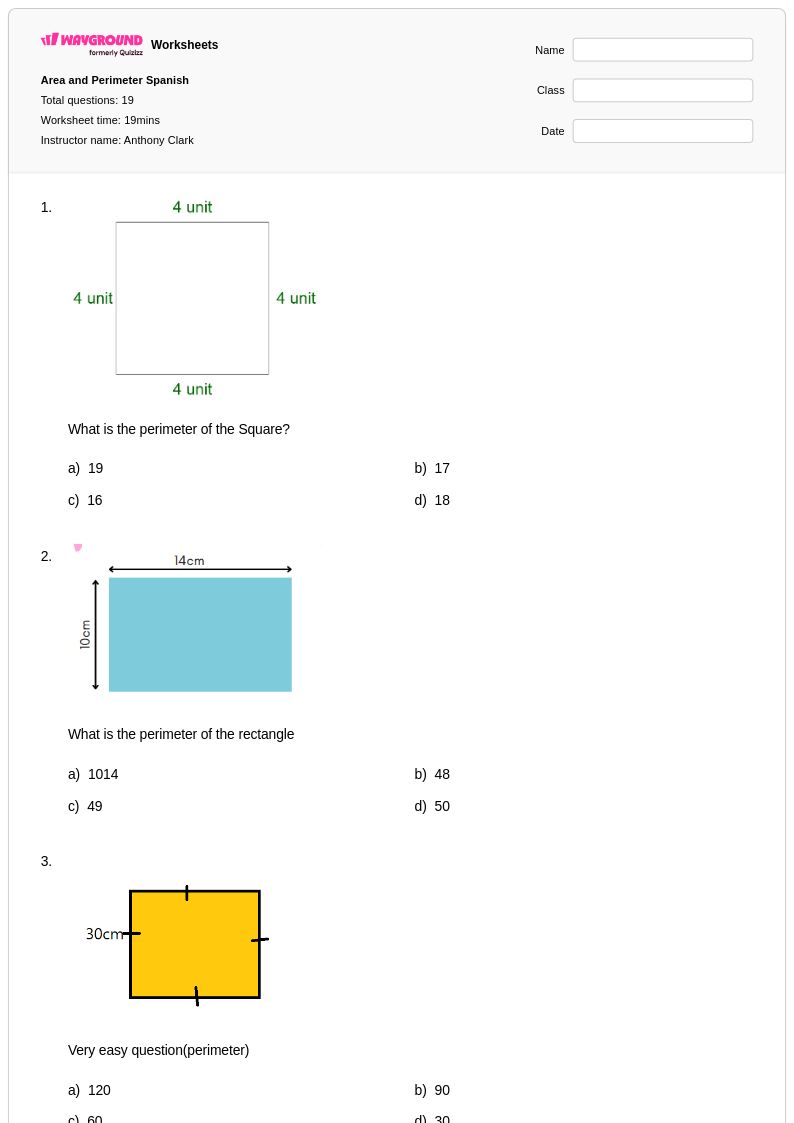
19 Q
4th - Uni
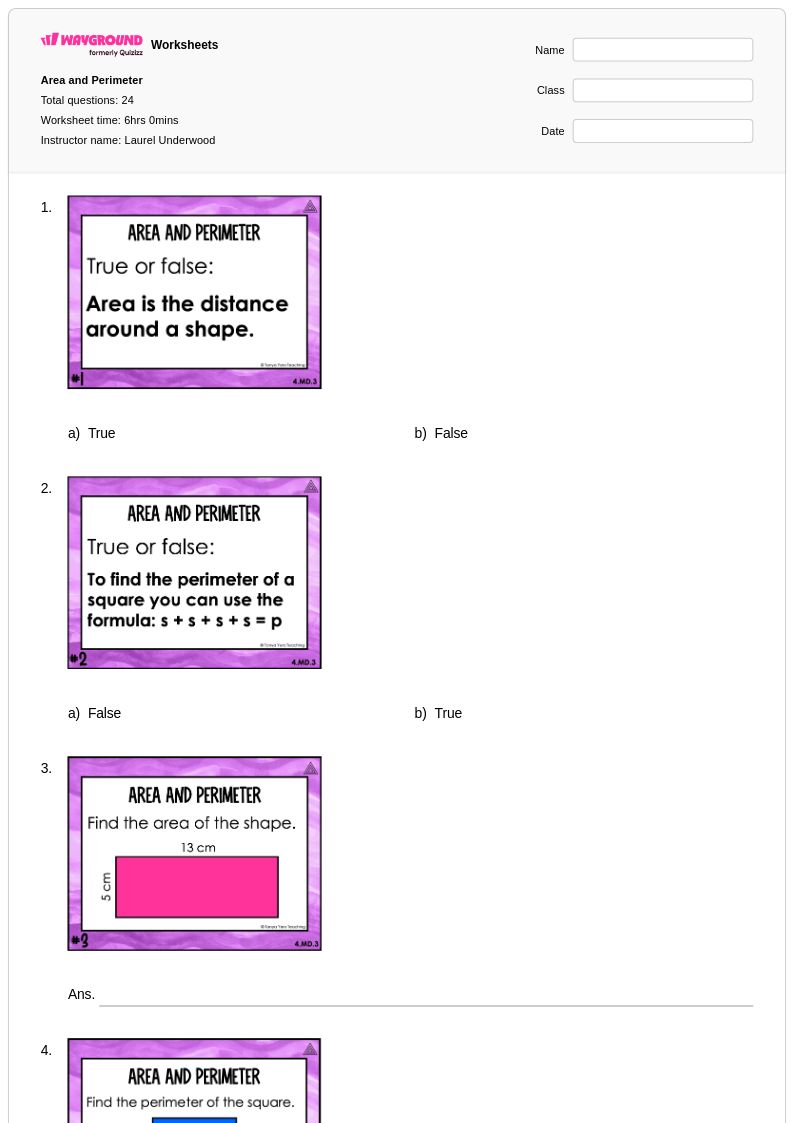
24 Q
4th
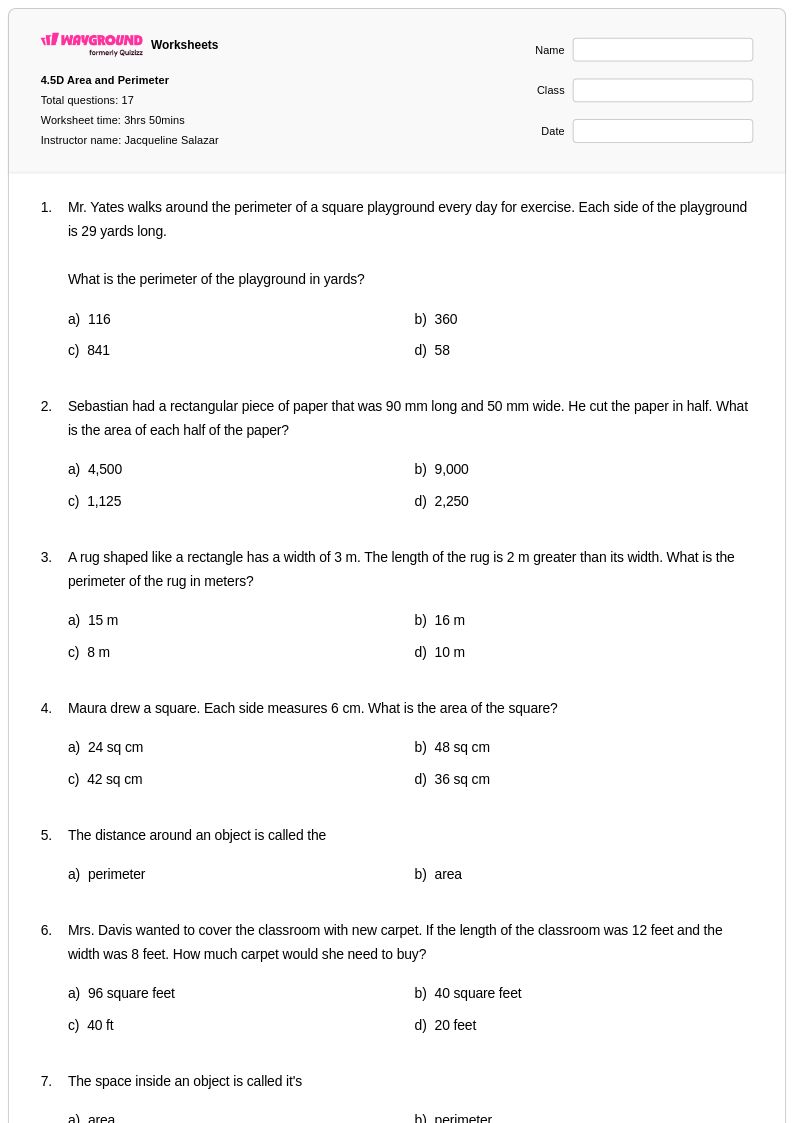
17 Q
4th
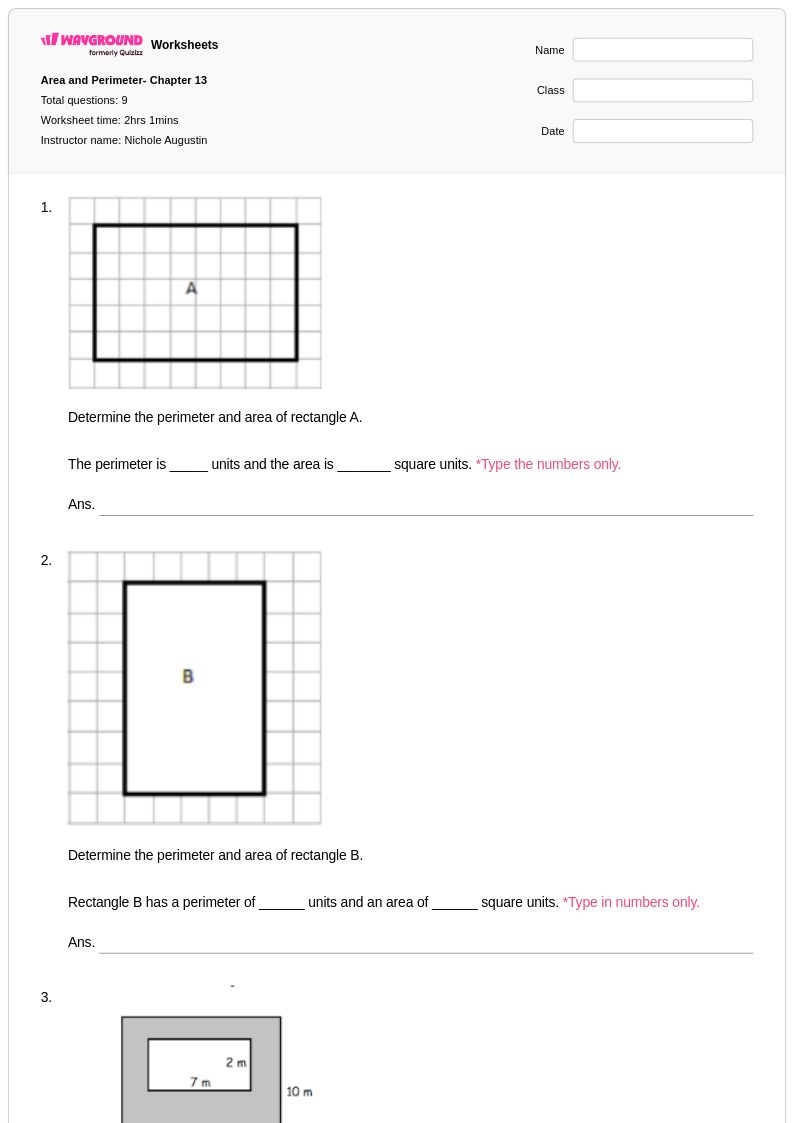
9 Q
4th
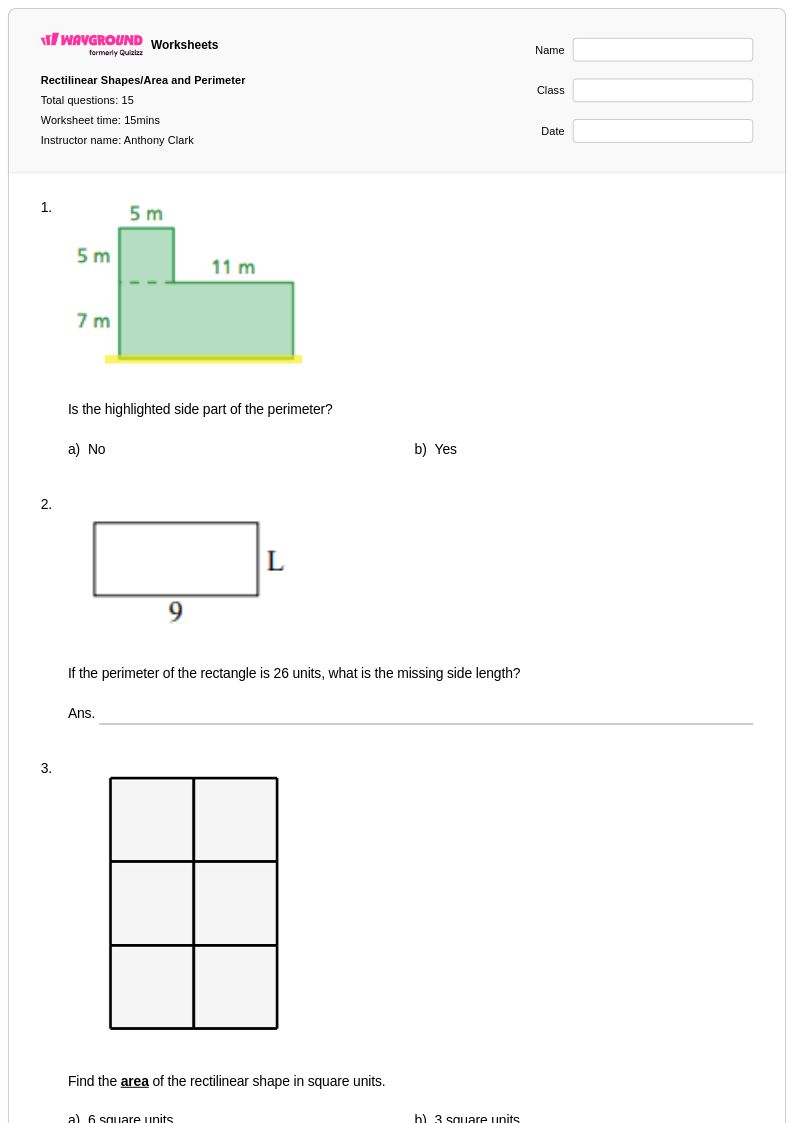
15 Q
4th - Uni
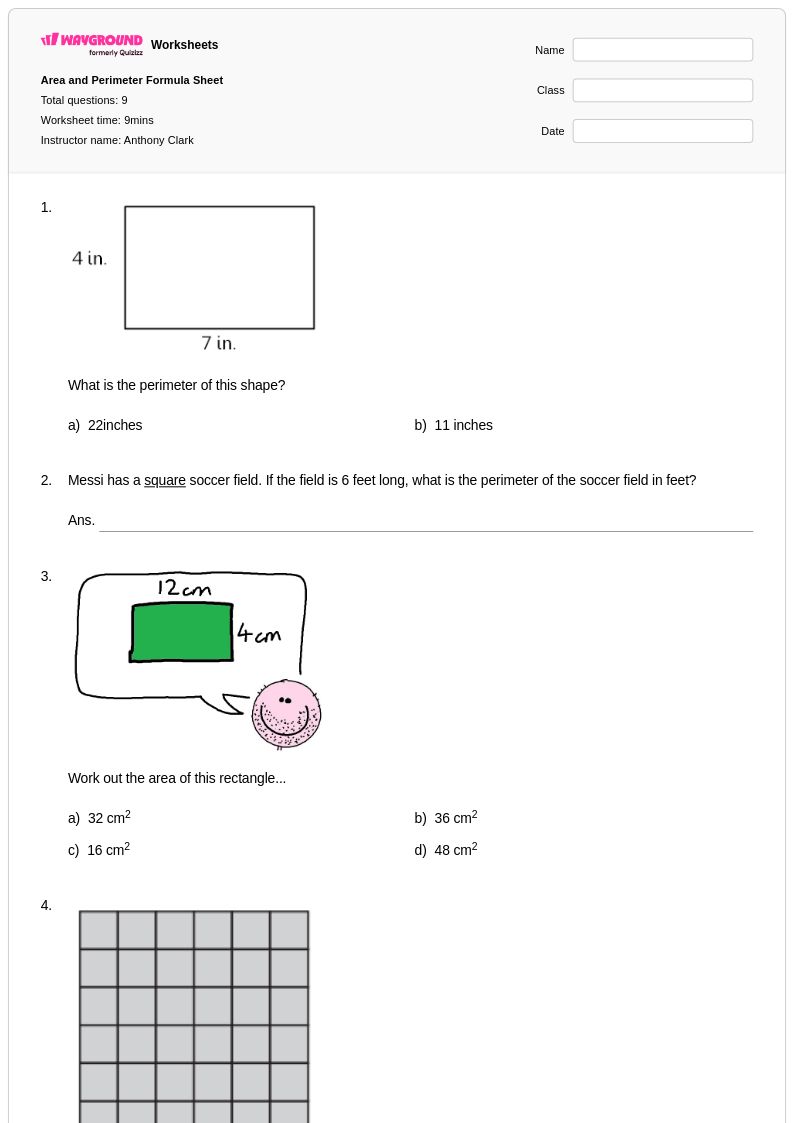
9 Q
4th - Uni
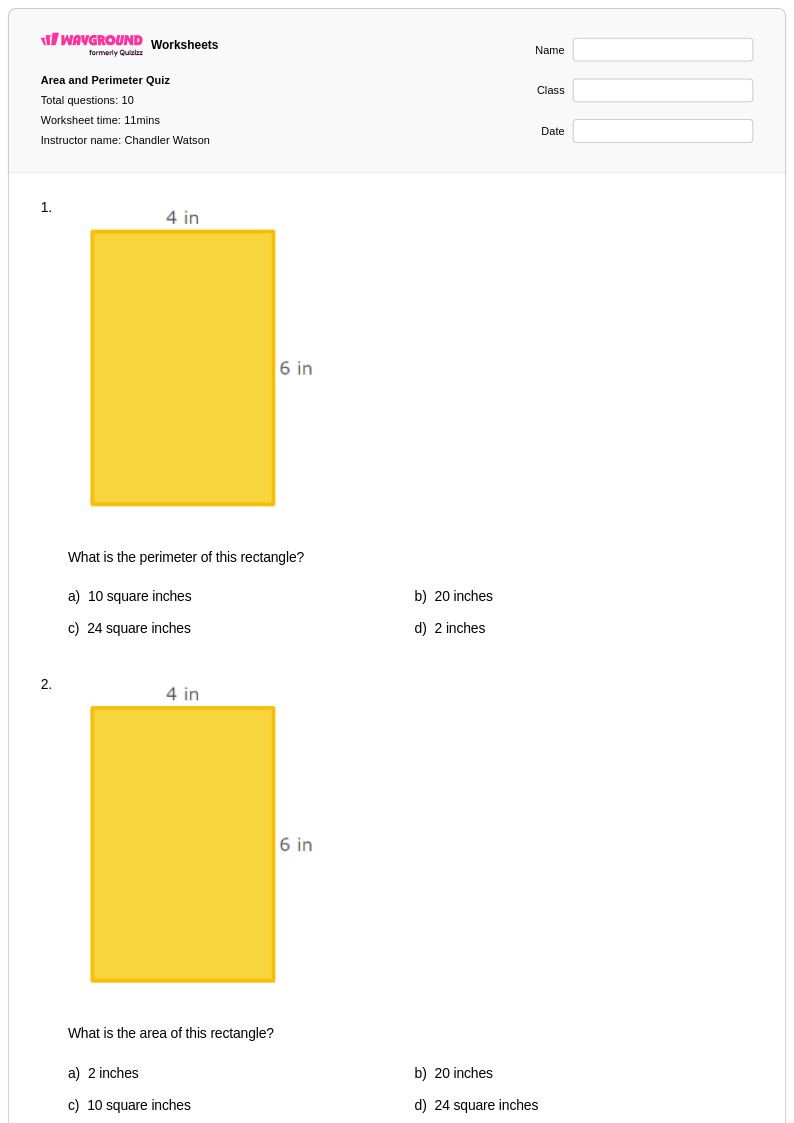
10 Q
4th
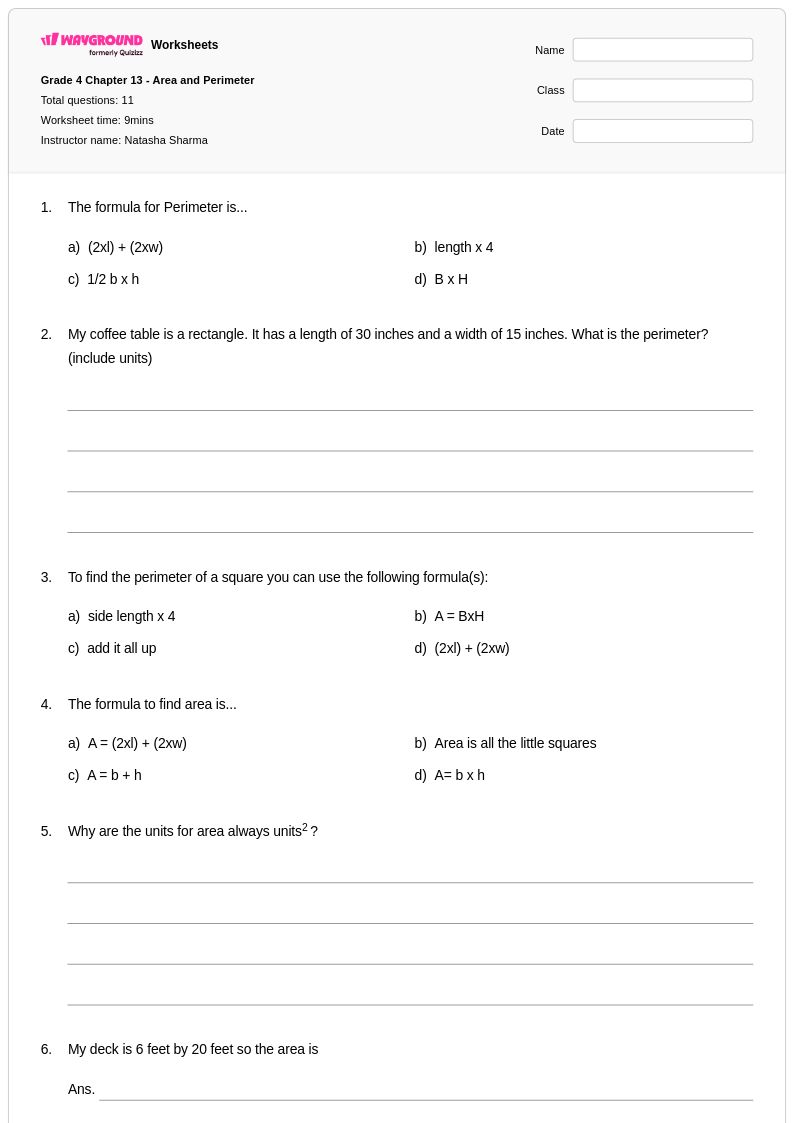
11 Q
4th
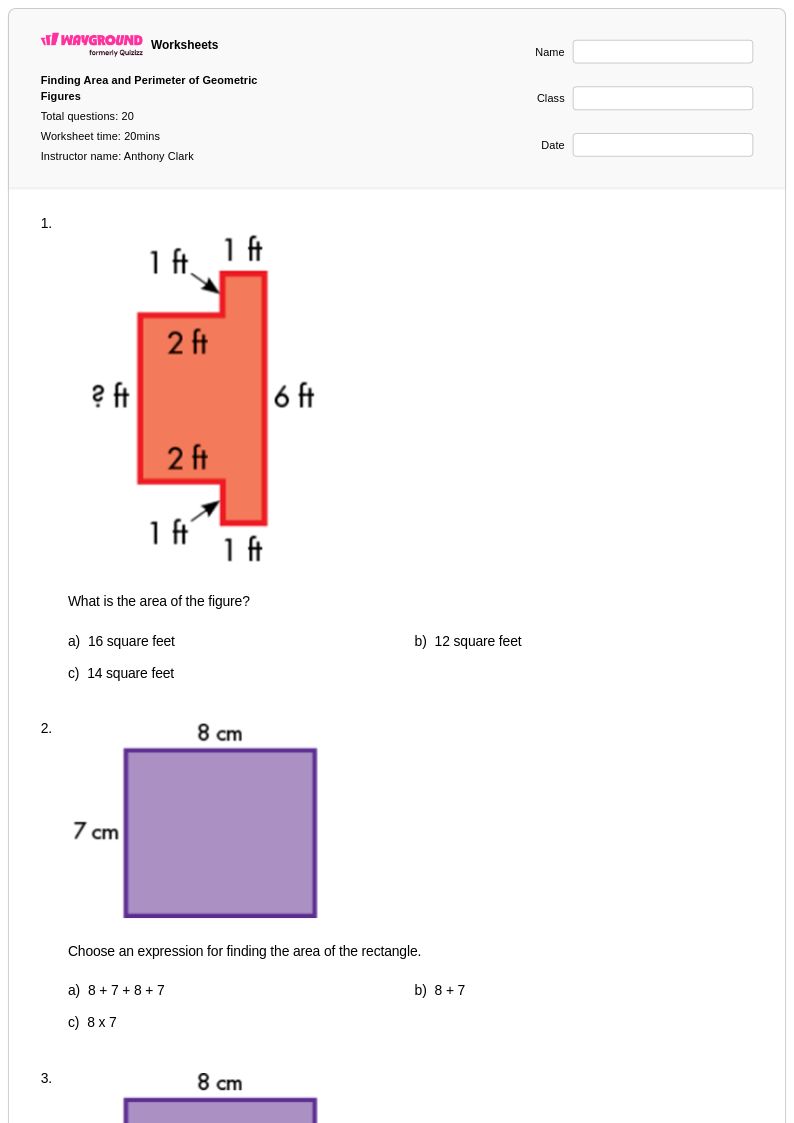
20 Q
4th - Uni
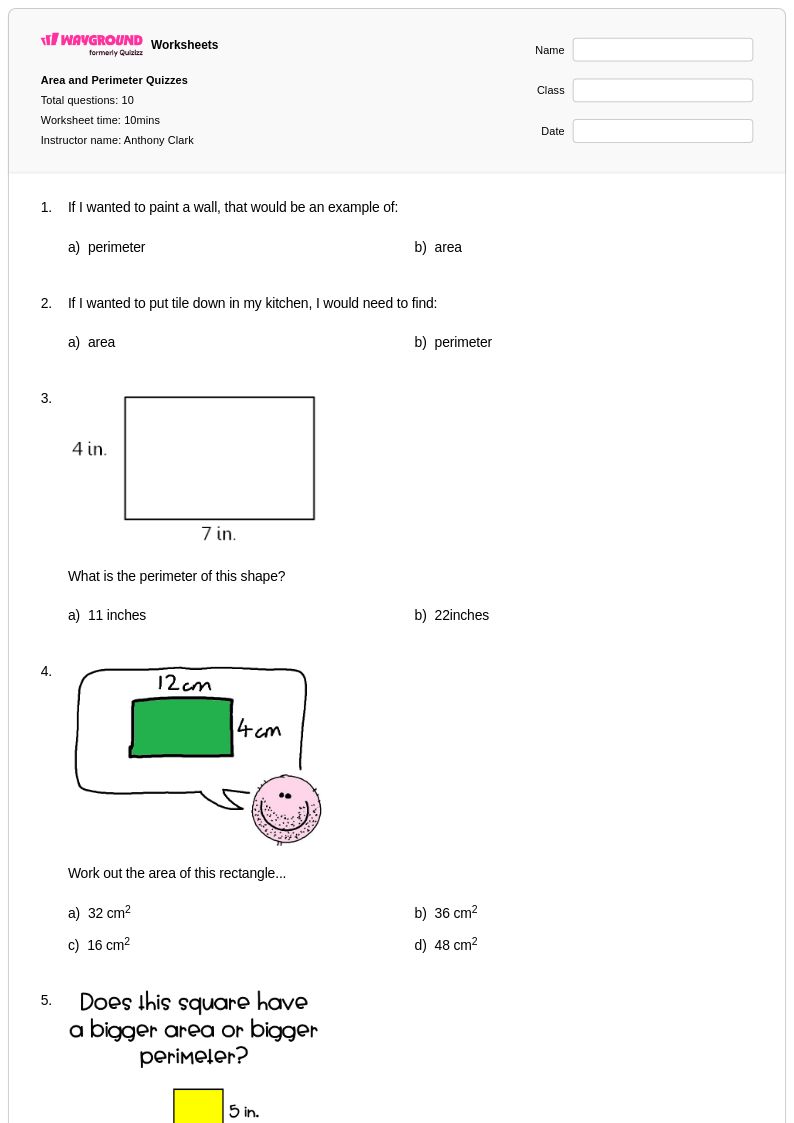
10 Q
4th - Uni
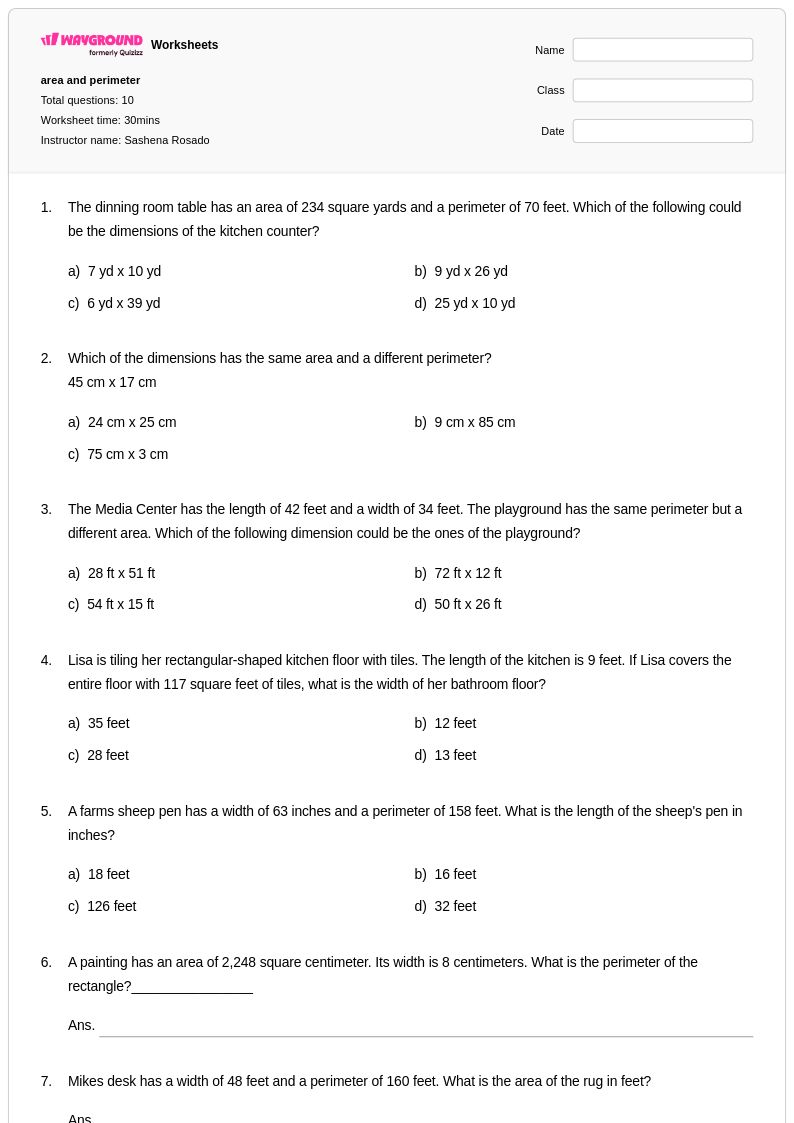
10 Q
4th
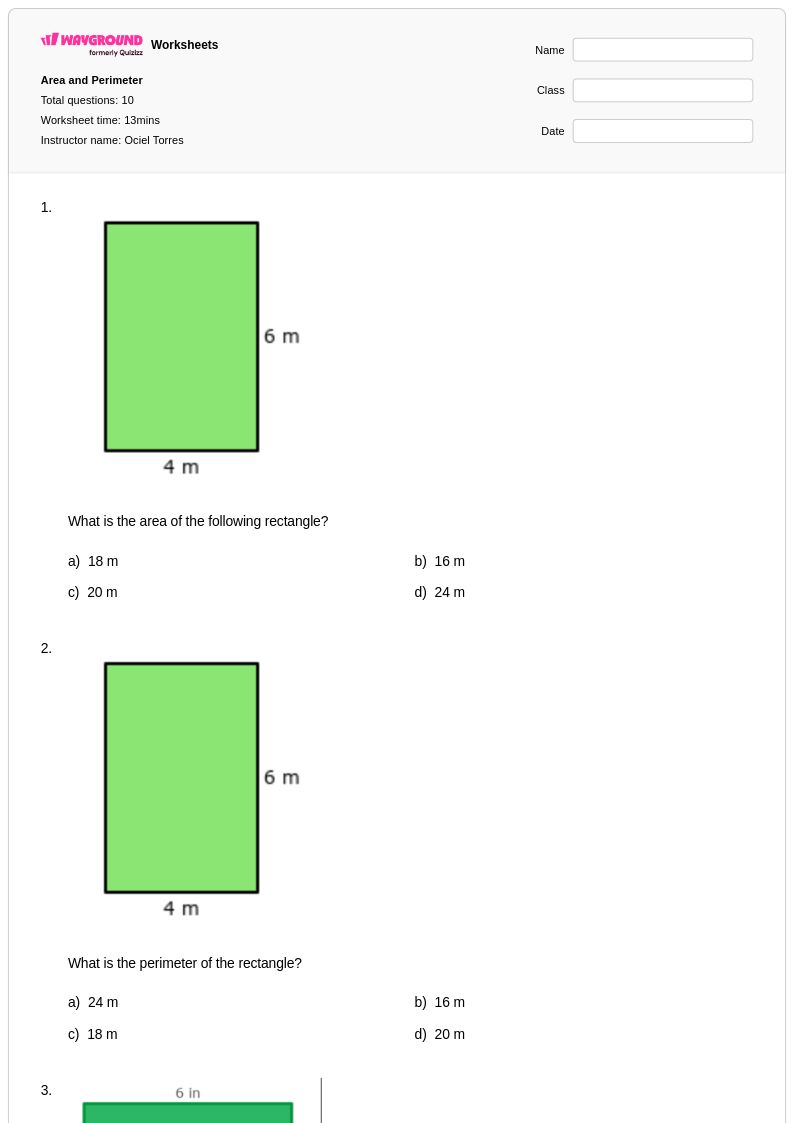
10 Q
4th
10 Q
4th - Uni
20 Q
3rd - 4th
14 Q
4th - Uni
20 Q
4th
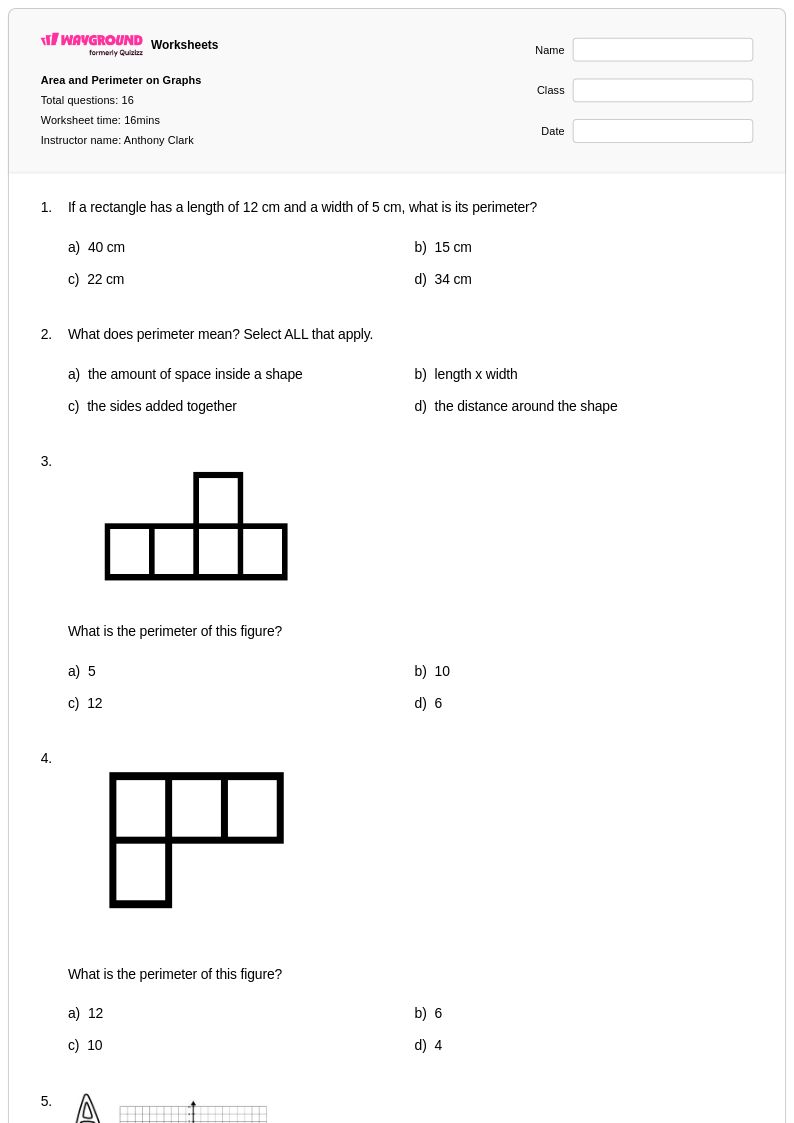
16 Q
4th - Uni
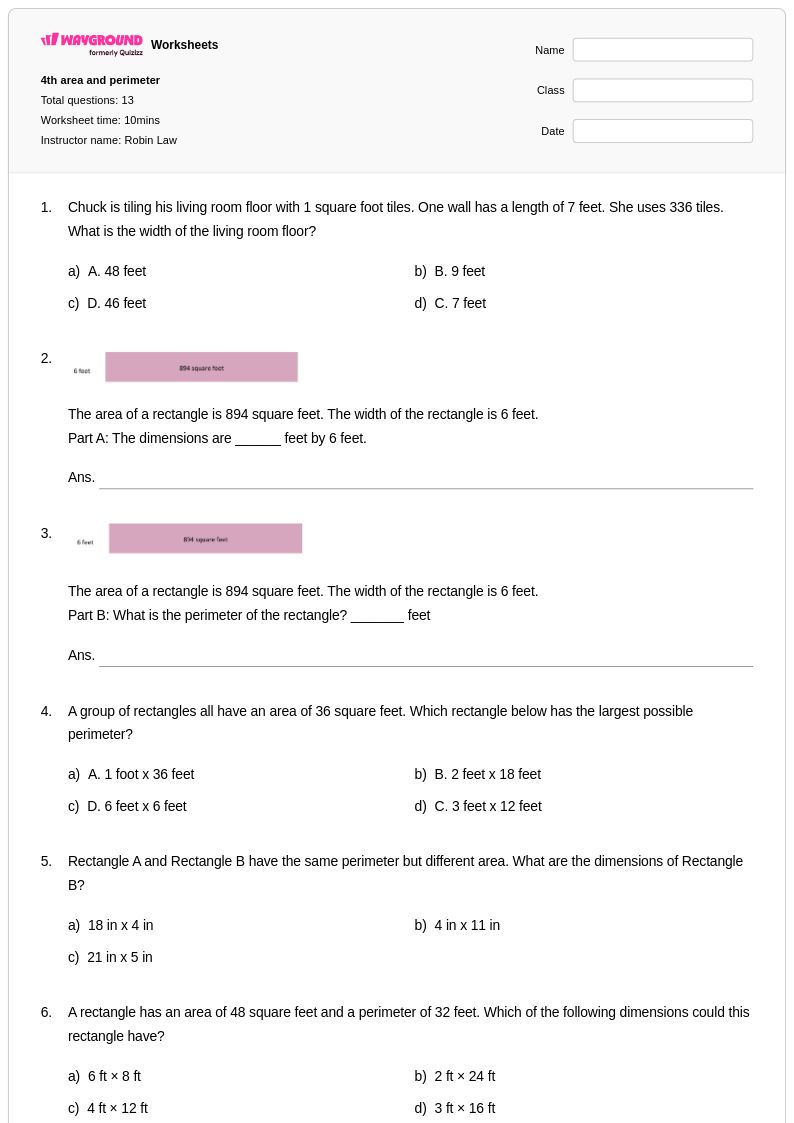
13 Q
4th
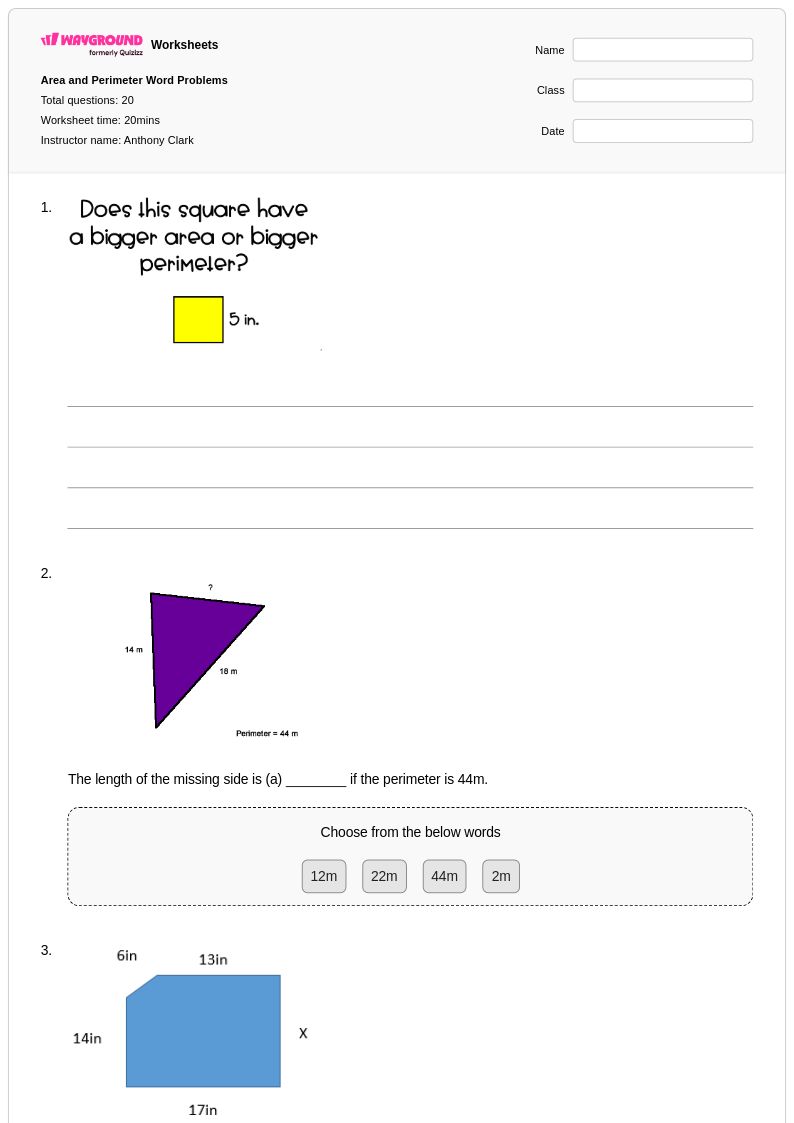
20 Q
4th - Uni
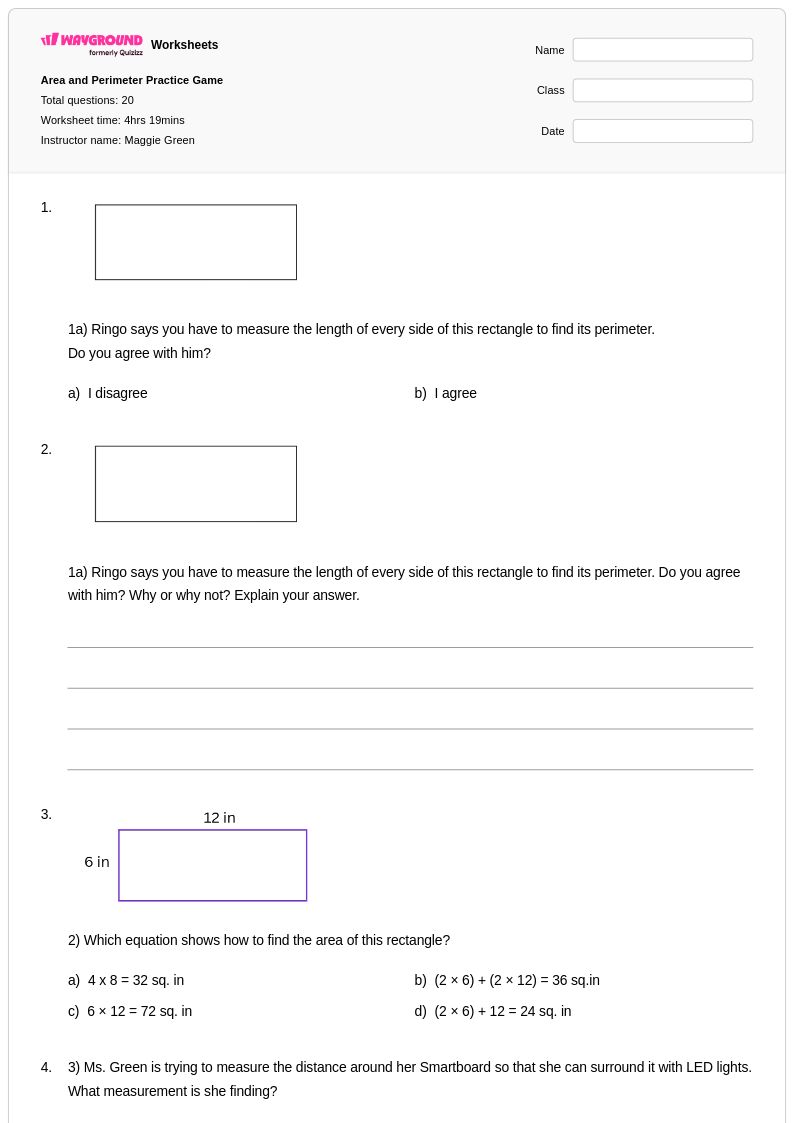
20 Q
4th
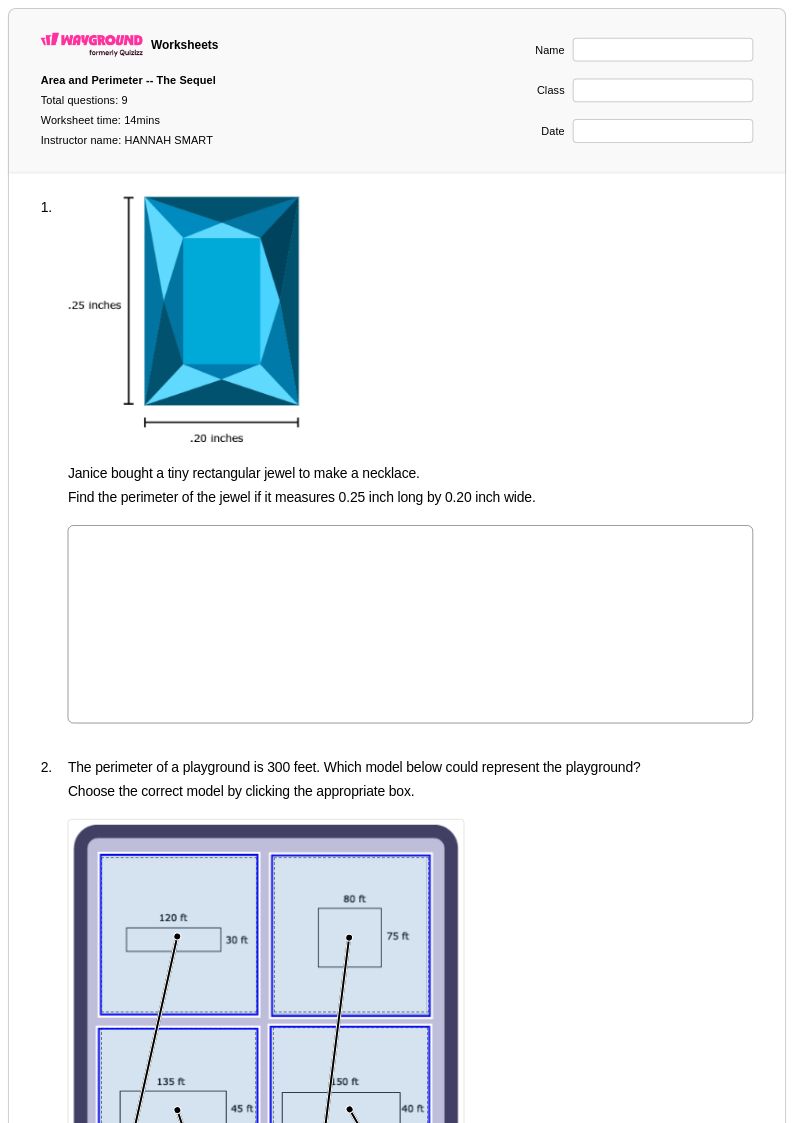
9 Q
4th
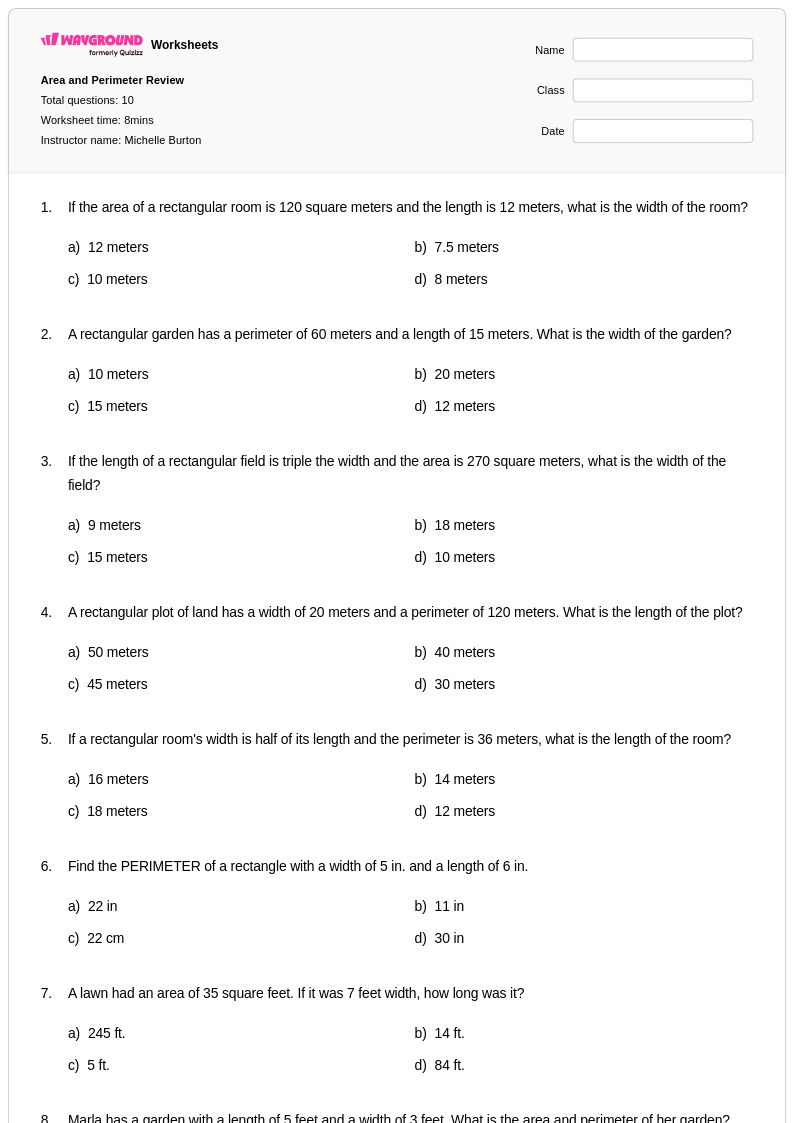
10 Q
4th
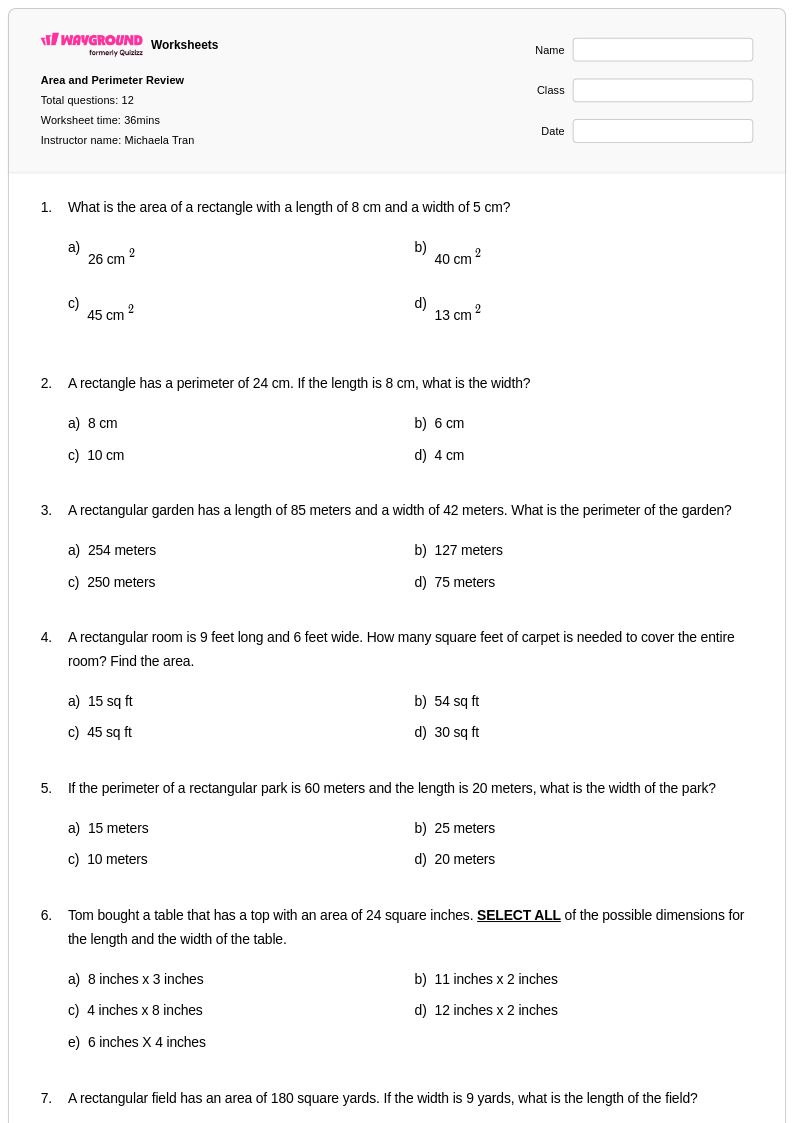
12 Q
4th
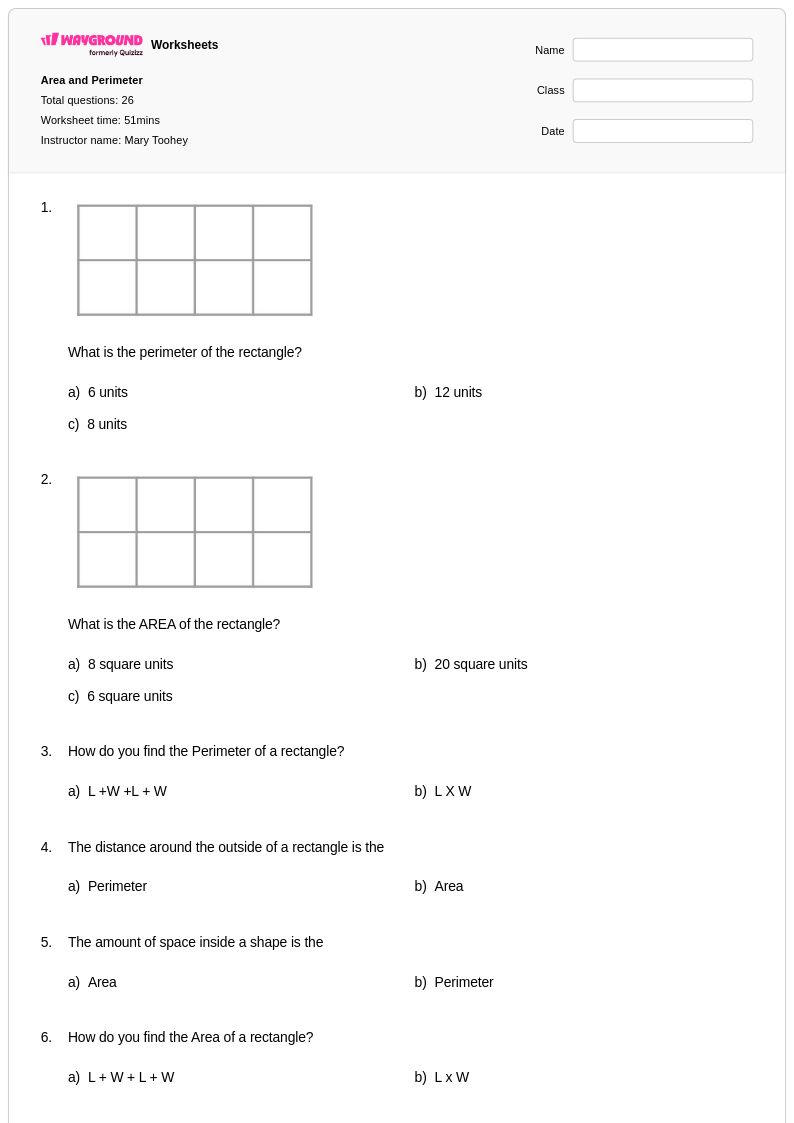
26 Q
4th
Explore Other Subject Worksheets for grade 4
Explore printable Area and Perimeter worksheets for Grade 4
Area and perimeter worksheets for Grade 4 students through Wayground (formerly Quizizz) provide essential practice in measuring and calculating the boundaries and surfaces of geometric shapes. These comprehensive printables strengthen foundational skills including finding the perimeter of rectangles, squares, and irregular polygons by adding side lengths, as well as calculating area using multiplication strategies and square unit counting methods. Students work through systematic practice problems that build confidence in applying formulas, interpreting word problems involving real-world scenarios, and distinguishing between linear and square measurements. Each worksheet collection includes detailed answer keys and free pdf formats that support both classroom instruction and independent study, allowing students to master these critical geometric concepts through repeated exposure and varied problem types.
Wayground (formerly Quizizz) empowers Grade 4 teachers with millions of teacher-created area and perimeter resources that streamline lesson planning and differentiated instruction. The platform's robust search and filtering capabilities enable educators to quickly locate worksheets aligned with specific mathematical standards and learning objectives, while customization tools allow for modifications that meet diverse student needs and ability levels. Teachers can seamlessly integrate these materials for skill remediation, enrichment activities, or regular practice sessions, utilizing both printable pdf versions for traditional paper-based work and digital formats for interactive learning experiences. This extensive collection supports comprehensive geometry instruction by providing varied problem formats, progressive difficulty levels, and assessment opportunities that help educators track student understanding and adjust instruction accordingly.
FAQs
How should I teach area and perimeter in Grade 4?
What exercises help fourth graders practice area and perimeter?
What area and perimeter mistakes are common in Grade 4?
How do I assign a Grade 4 area and perimeter worksheet on Wayground?
Is Grade 4 area and perimeter aligned with Common Core?
How can I differentiate Grade 4 area and perimeter worksheets?
What area and perimeter skills should a fourth grader know?