
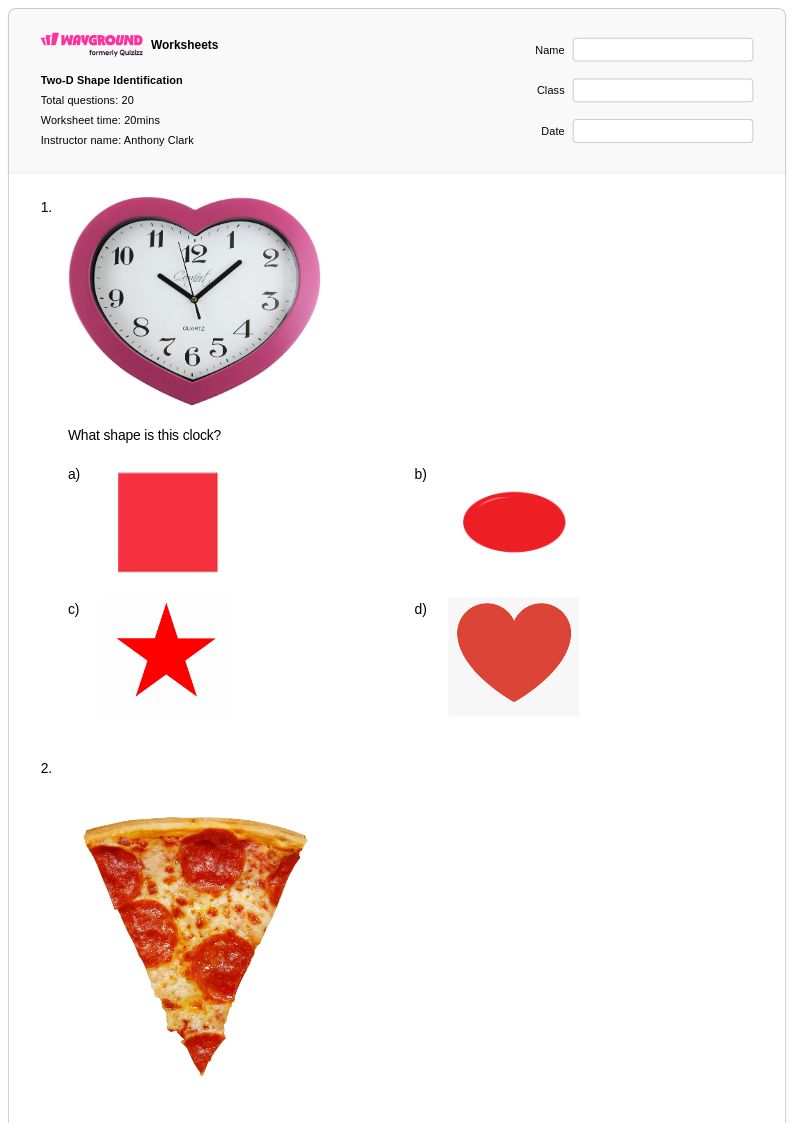
20 Q
1st - Uni
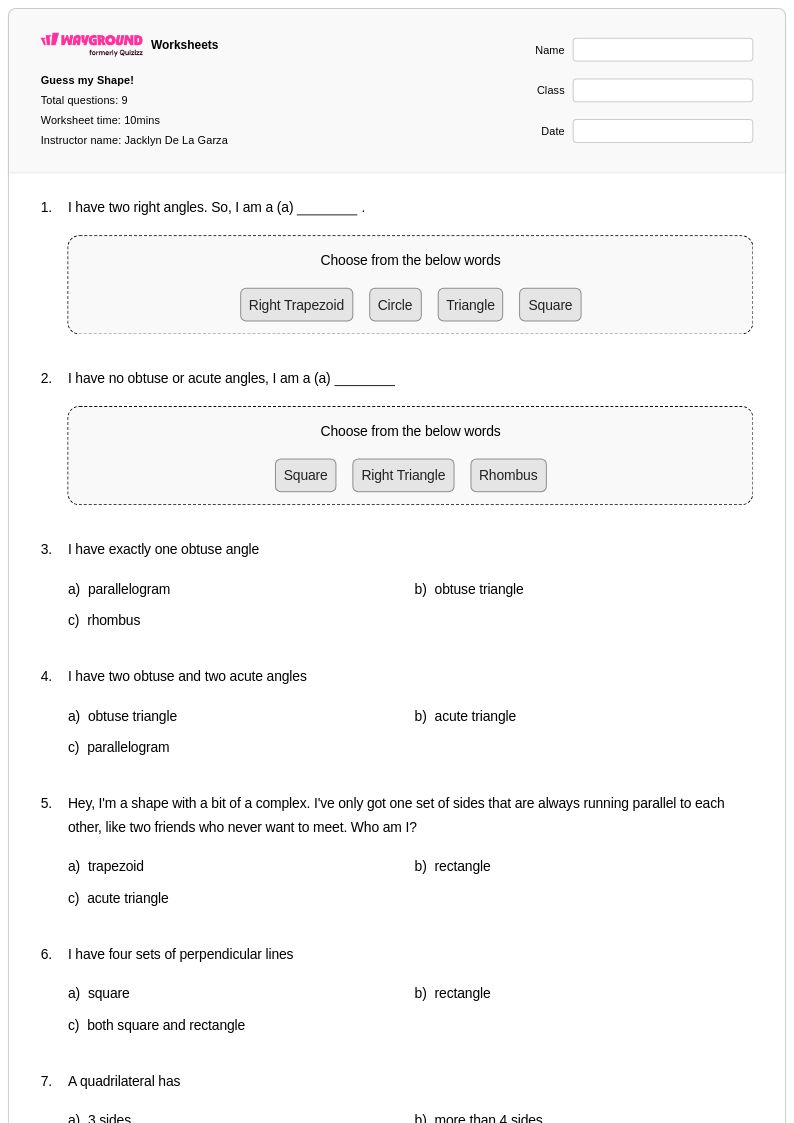
9 Q
4th
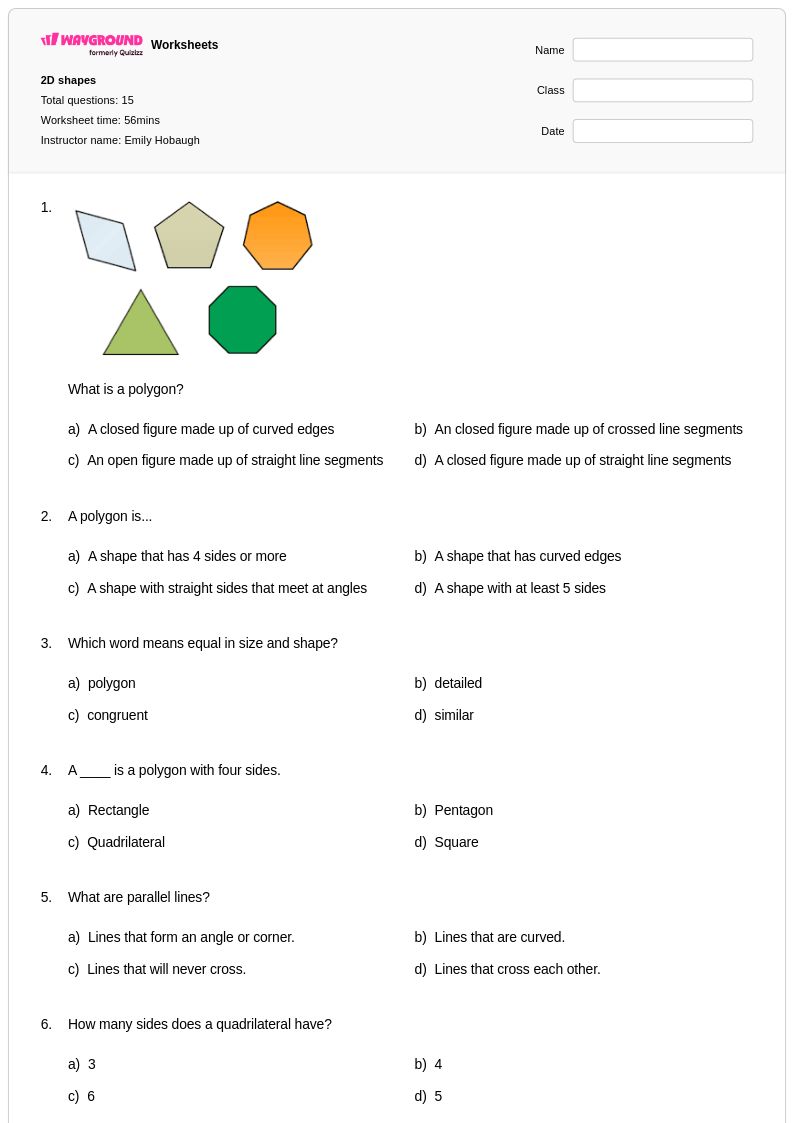
15 Q
4th
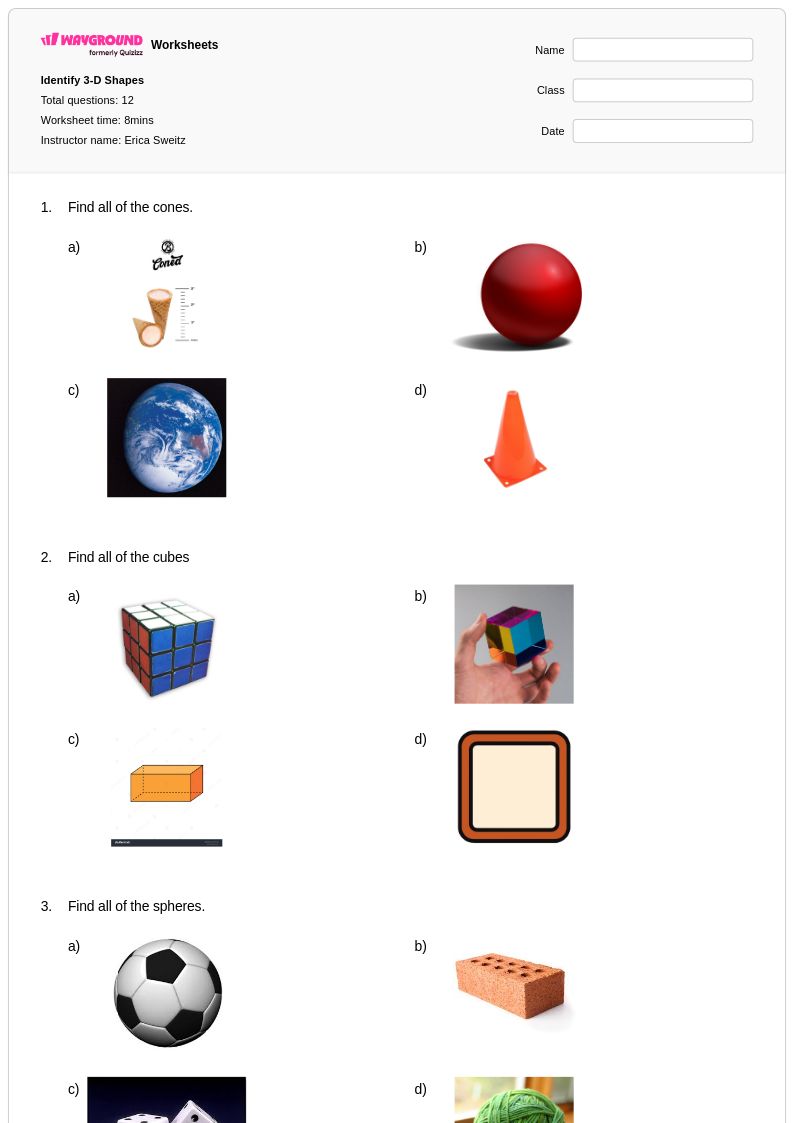
12 Q
1st - Uni
19 Q
1st - Uni
20 Q
3rd - Uni
20 Q
3rd - Uni
20 Q
4th - 5th
20 Q
3rd - 5th
20 Q
4th
20 Q
4th - Uni
15 Q
4th
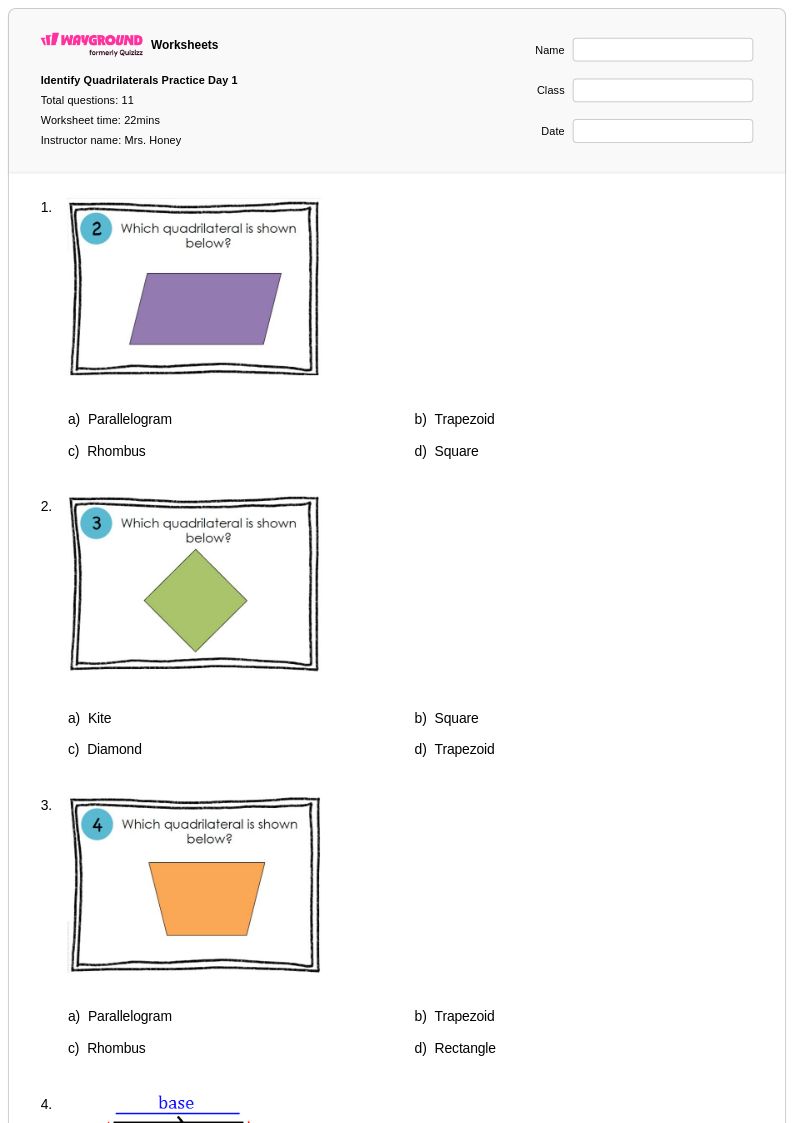
11 Q
4th
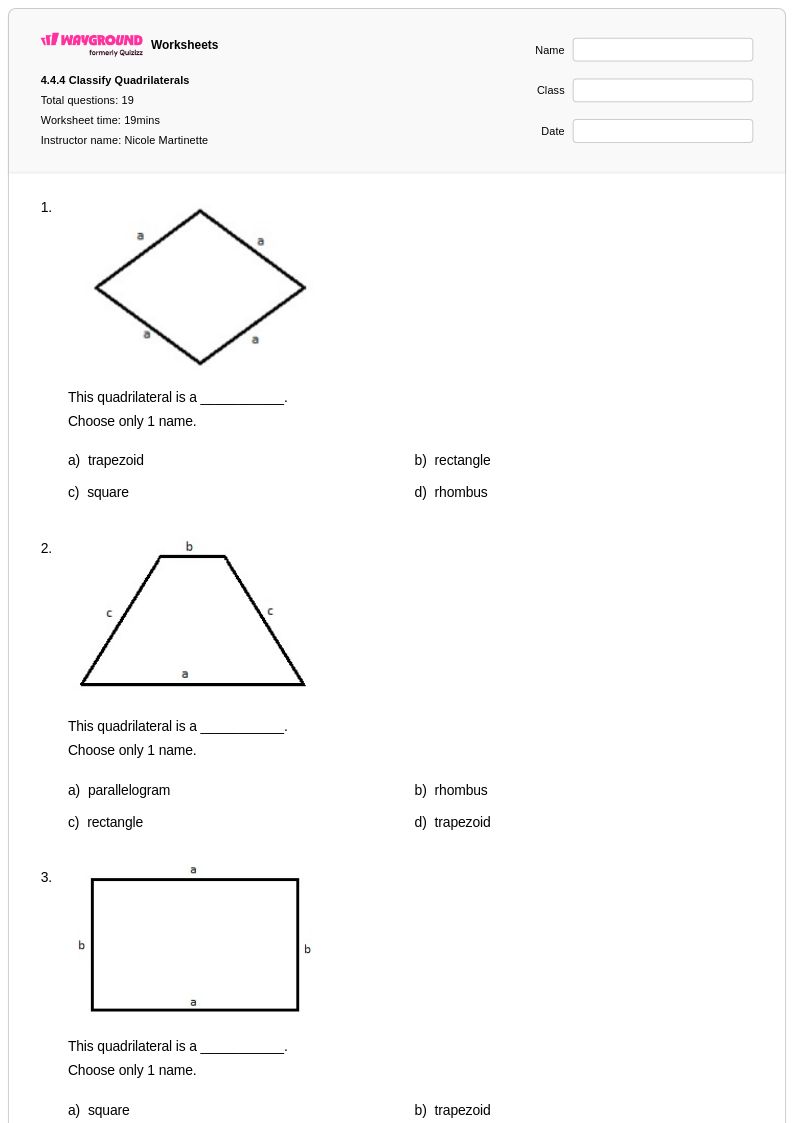
19 Q
4th
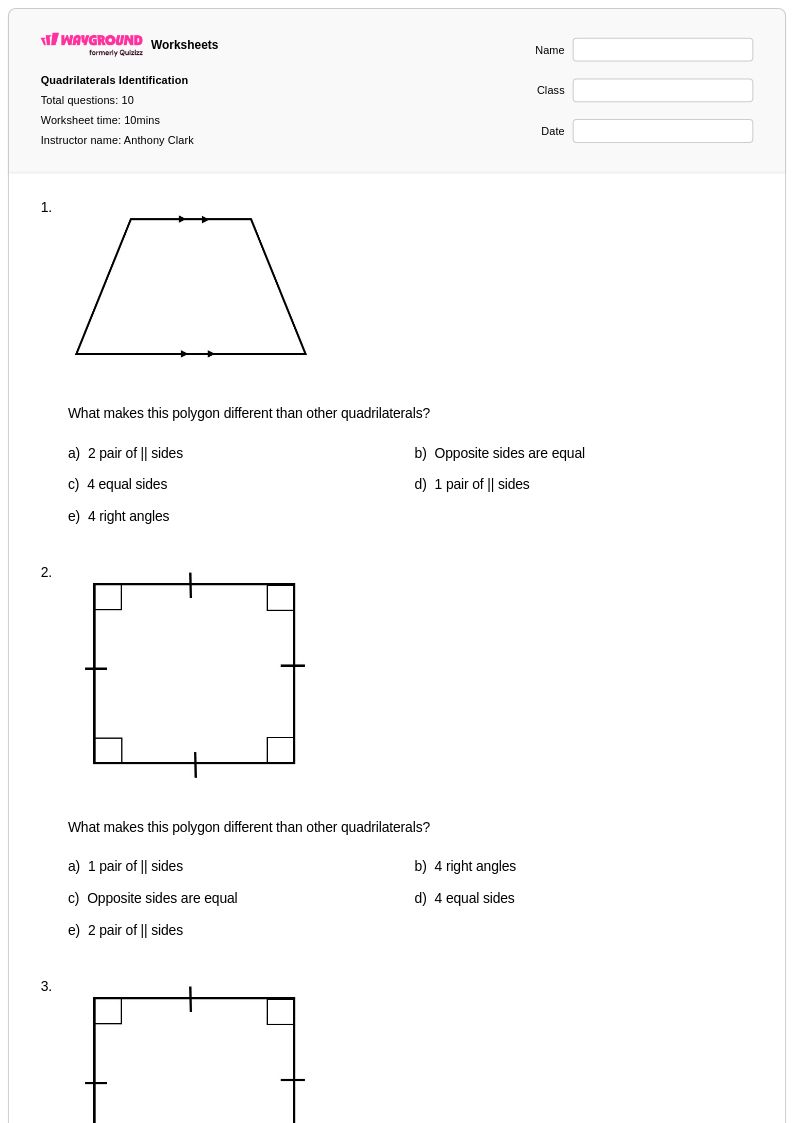
10 Q
3rd - Uni
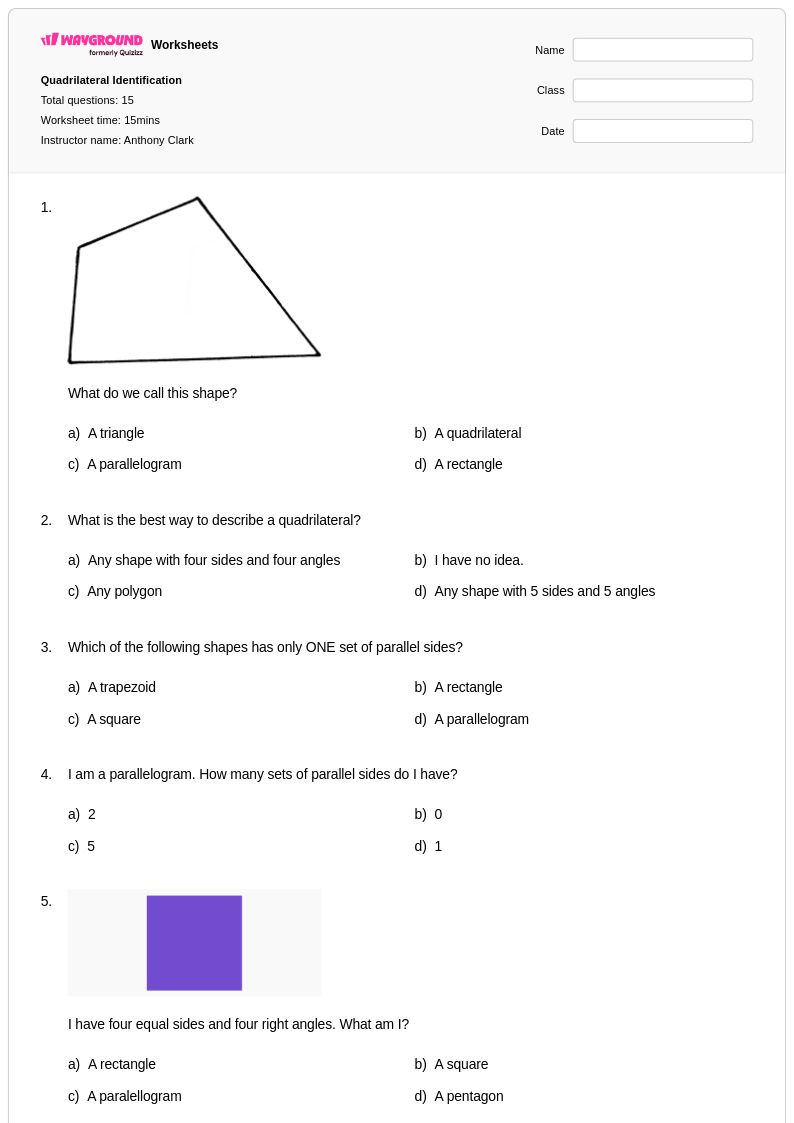
15 Q
3rd - Uni
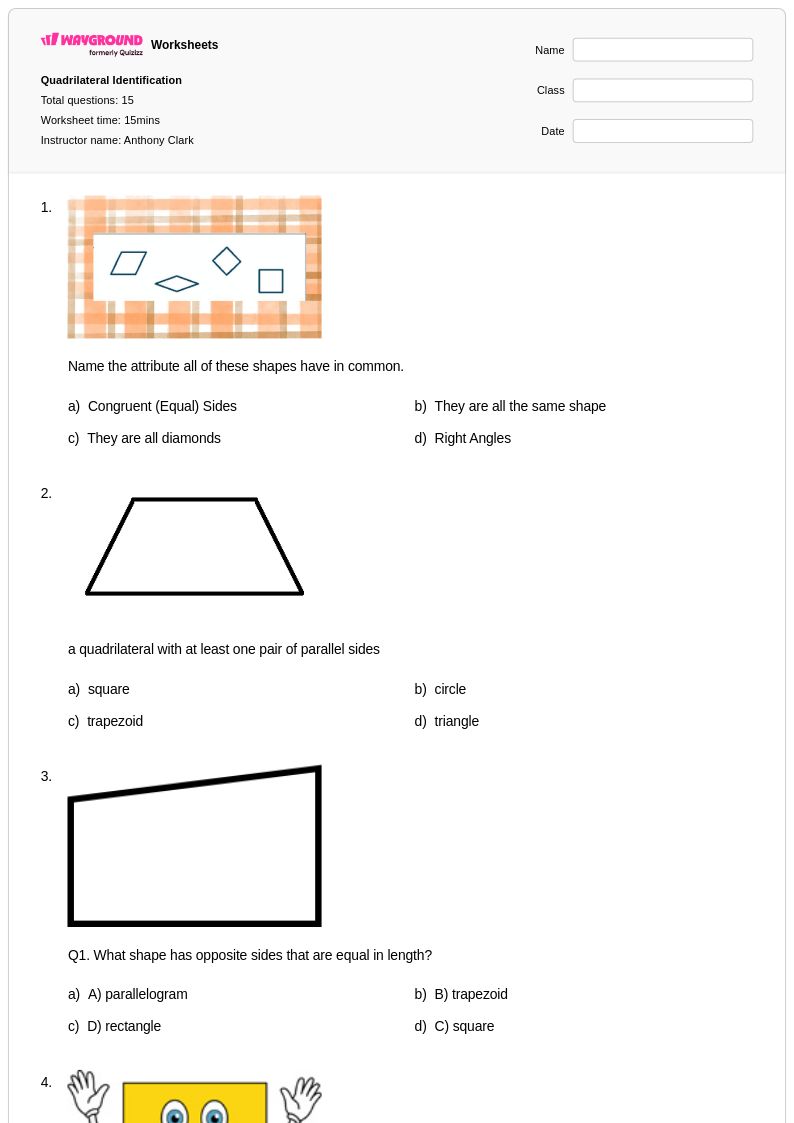
15 Q
3rd - Uni
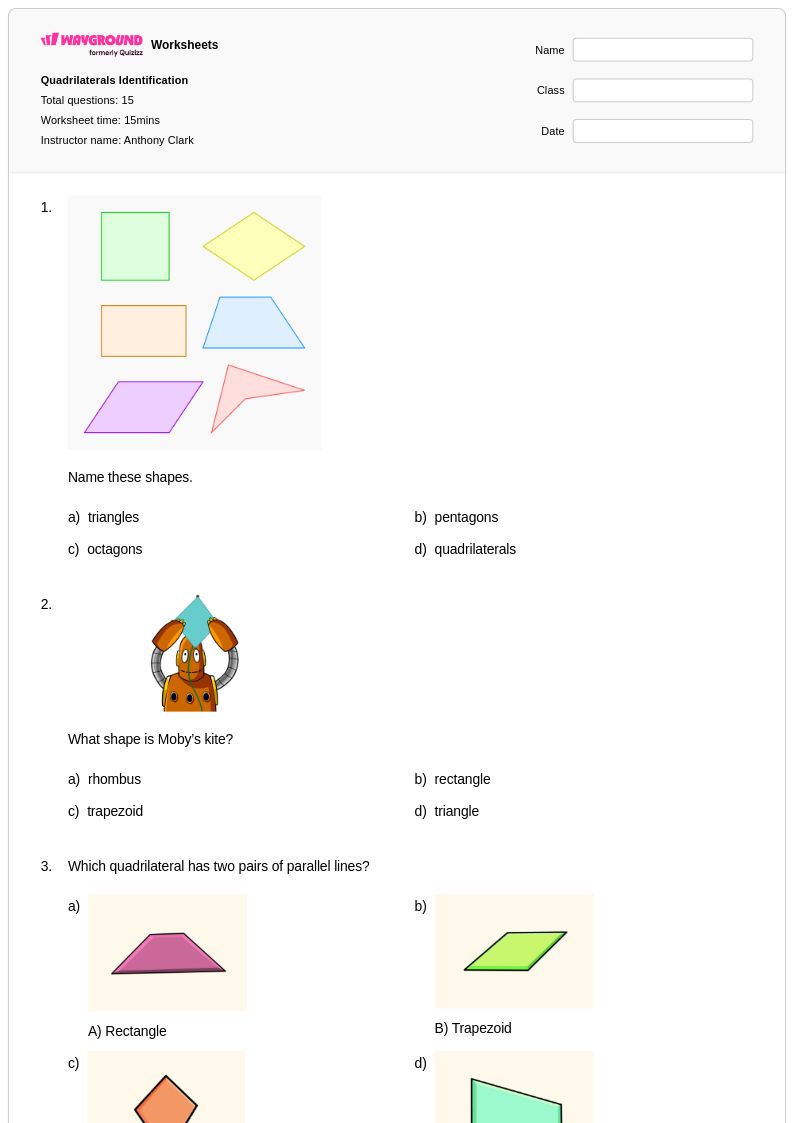
15 Q
3rd - Uni
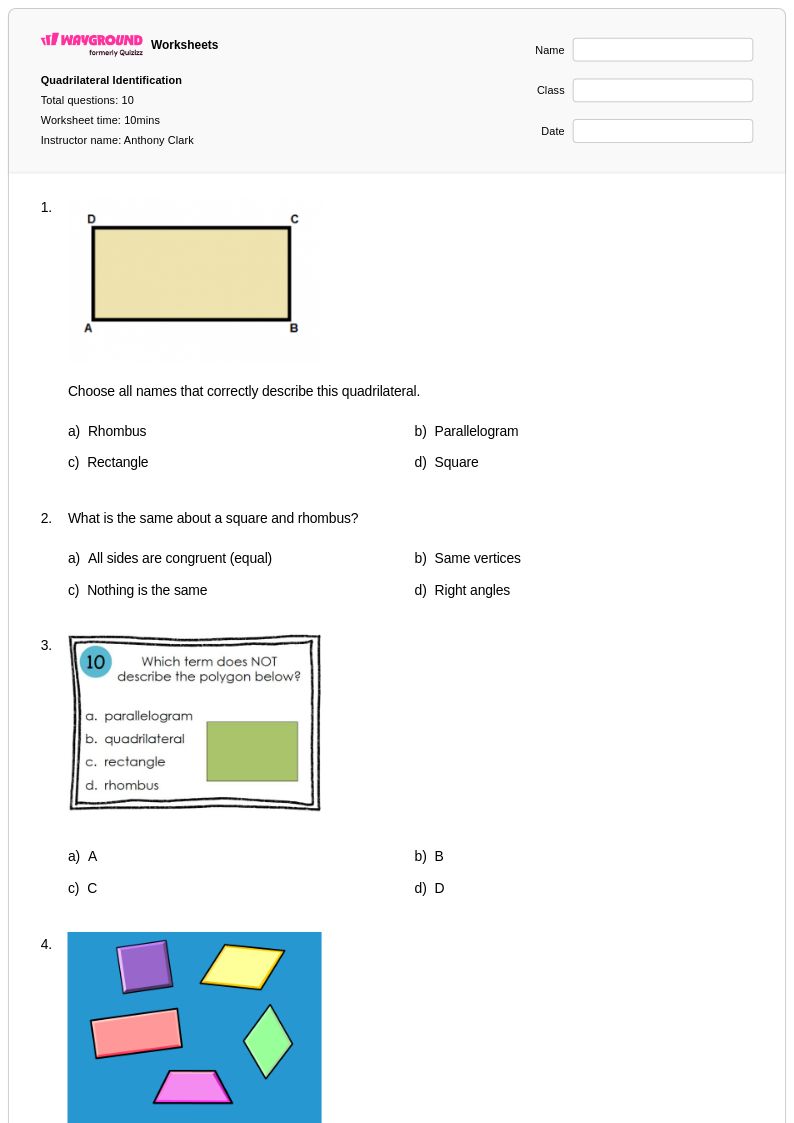
10 Q
3rd - Uni
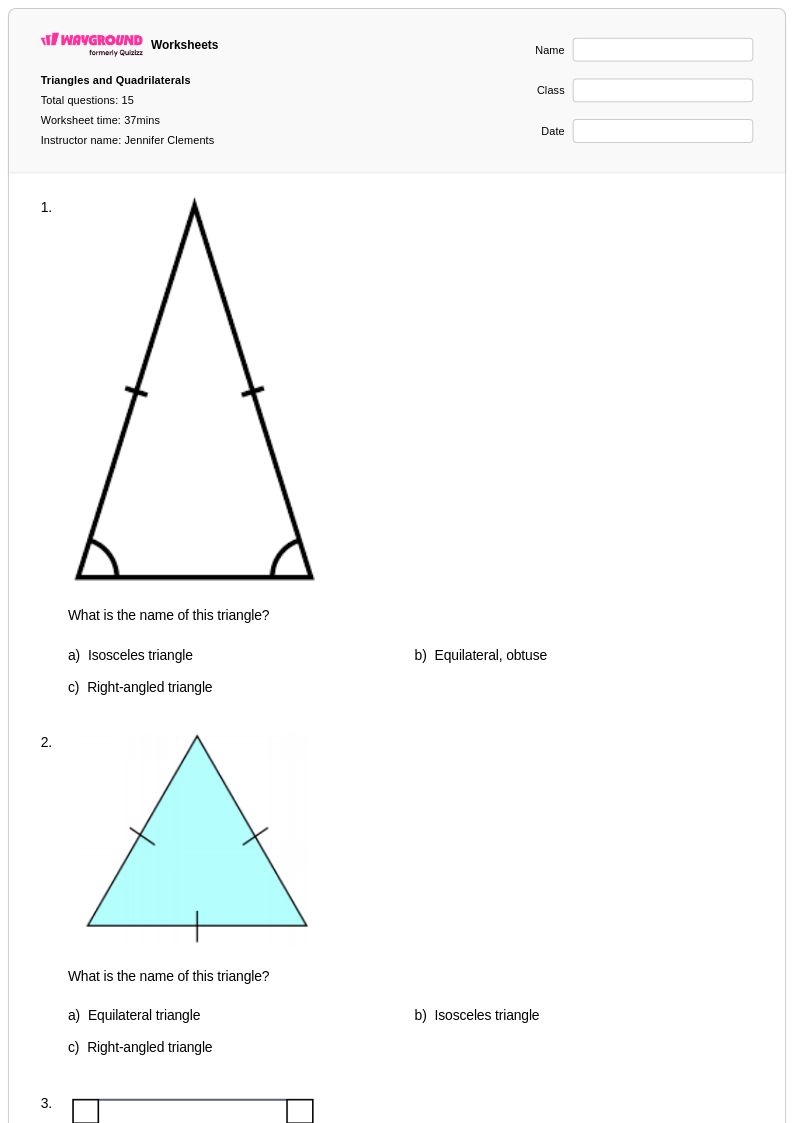
15 Q
4th - 5th
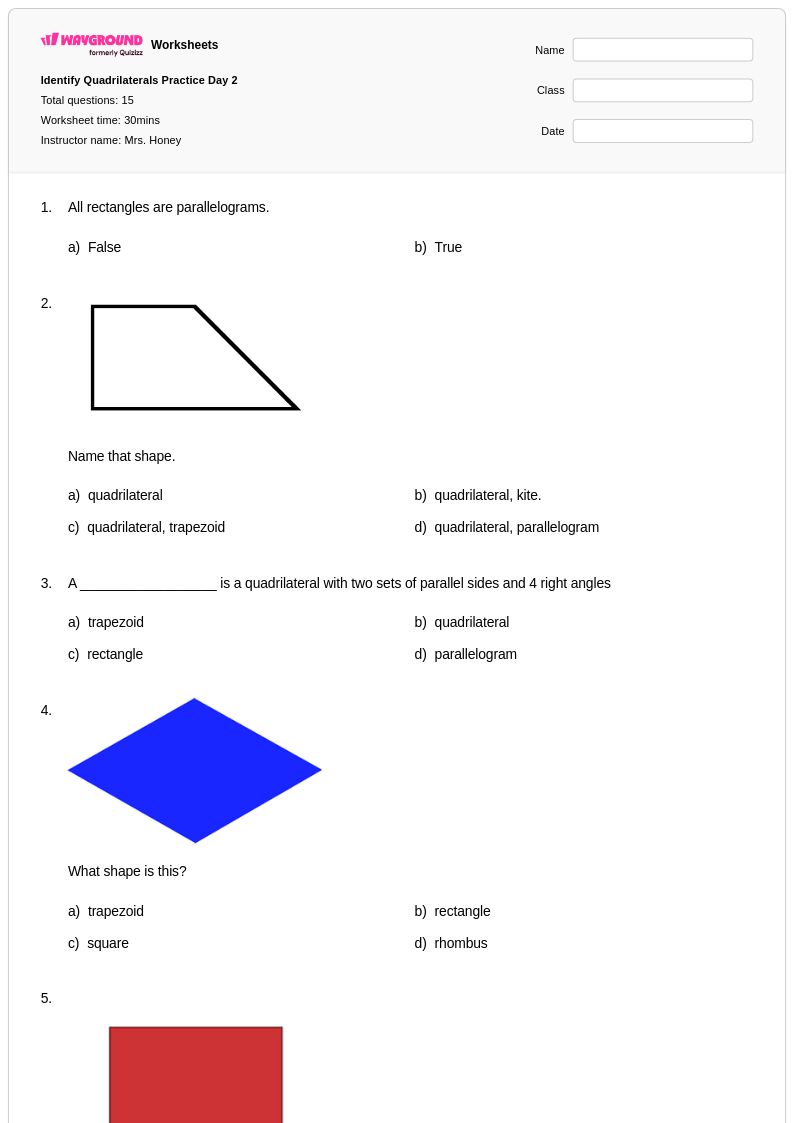
15 Q
4th
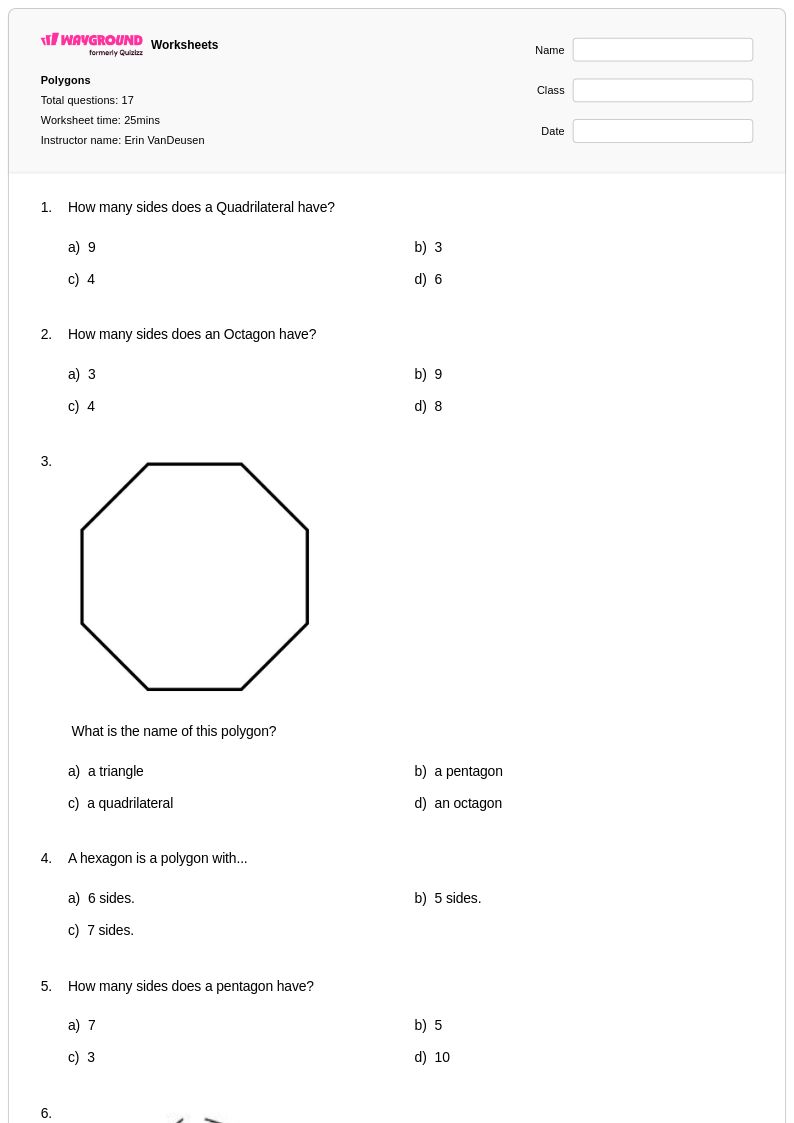
17 Q
3rd - 7th
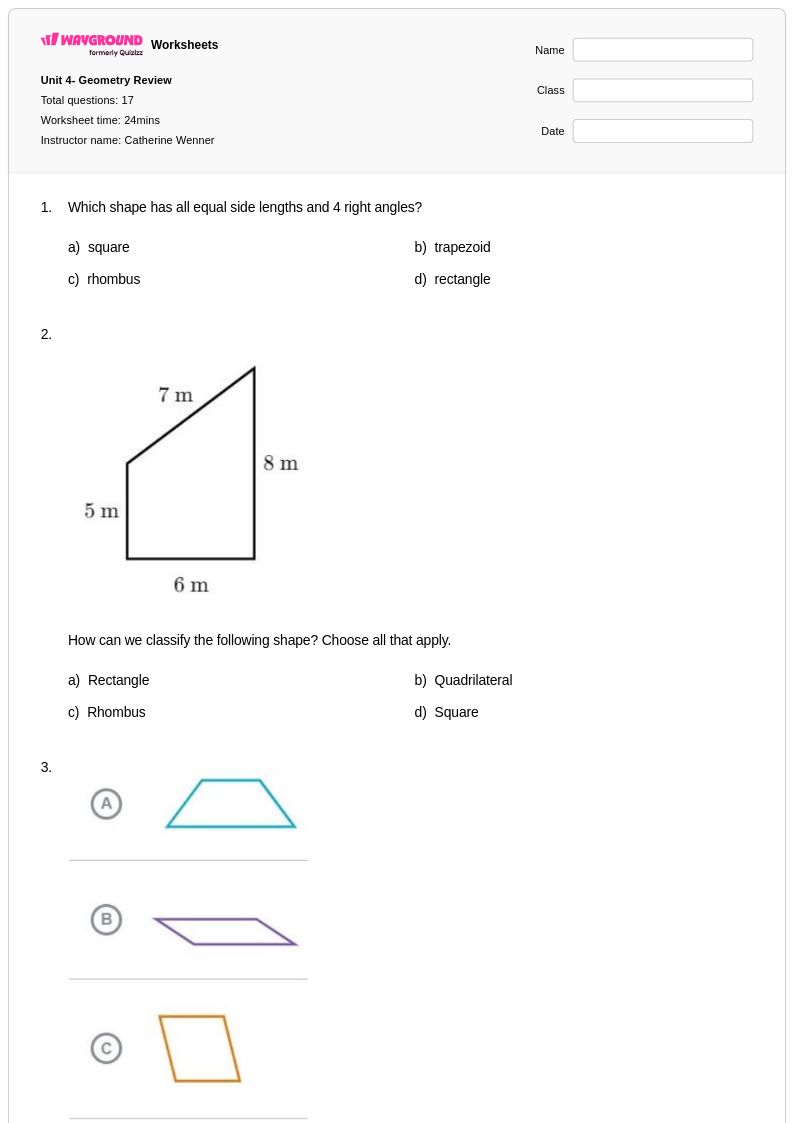
17 Q
3rd - 4th
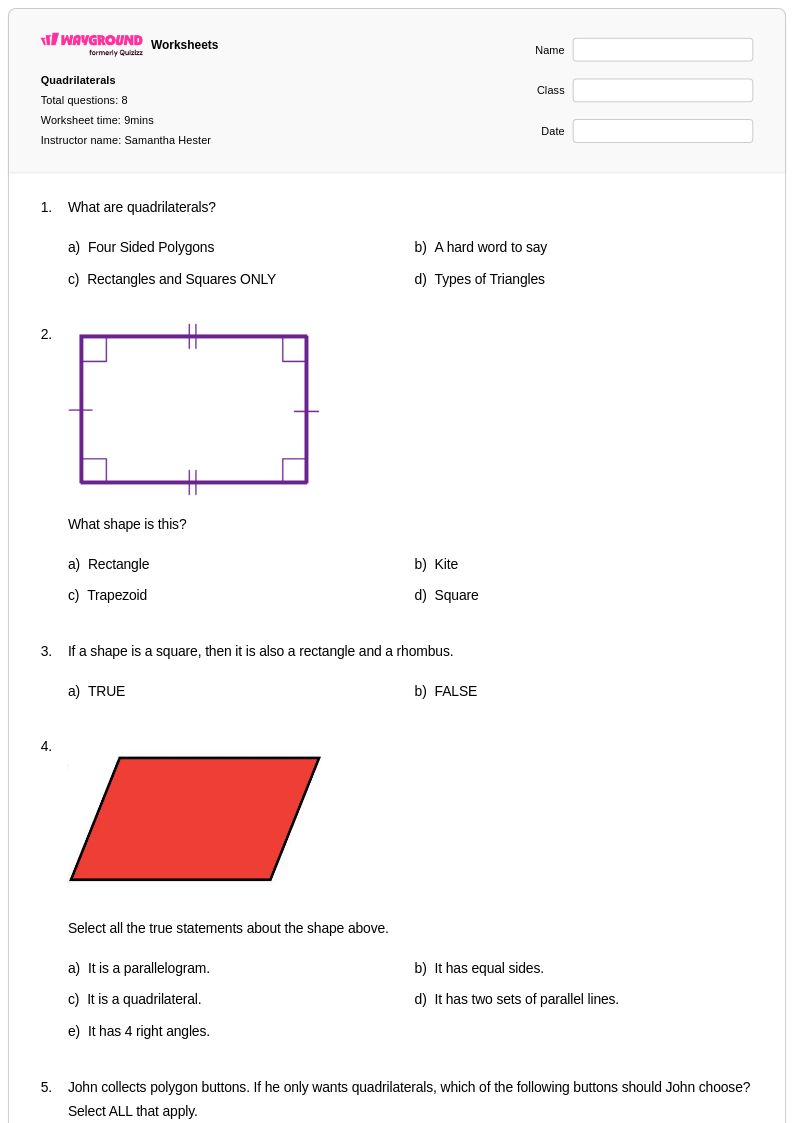
8 Q
4th
Explore Other Subject Worksheets for grade 4
Explore printable Shape Identification worksheets for Grade 4
Shape identification worksheets for Grade 4 students through Wayground (formerly Quizizz) provide comprehensive practice in recognizing, categorizing, and analyzing fundamental geometric forms that serve as building blocks for advanced mathematical concepts. These carefully designed resources strengthen students' visual discrimination skills as they work with two-dimensional shapes like triangles, quadrilaterals, pentagons, and hexagons, while also exploring three-dimensional forms including cubes, spheres, cylinders, and pyramids. Each worksheet collection includes detailed answer keys and free printable pdf options that support independent learning and self-assessment, with practice problems systematically progressing from basic shape recognition to more complex tasks involving shape attributes, classification by properties, and real-world shape identification scenarios.
Wayground (formerly Quizizz) empowers educators with millions of teacher-created shape identification resources that streamline lesson planning and accommodate diverse learning needs in Grade 4 mathematics instruction. The platform's robust search and filtering capabilities allow teachers to quickly locate worksheets aligned with specific curriculum standards, while built-in differentiation tools enable seamless customization for students requiring remediation or enrichment opportunities. Available in both printable and digital formats including downloadable pdf versions, these shape identification materials support flexible classroom implementation whether used for whole-group instruction, small-group practice, homework assignments, or assessment preparation, ensuring that every student develops strong foundational geometry skills through targeted skill practice and varied exposure to geometric concepts.