Explore Wayground's free diameter worksheets and printables that help students master circle measurements through engaging practice problems with comprehensive answer keys and downloadable PDF resources.
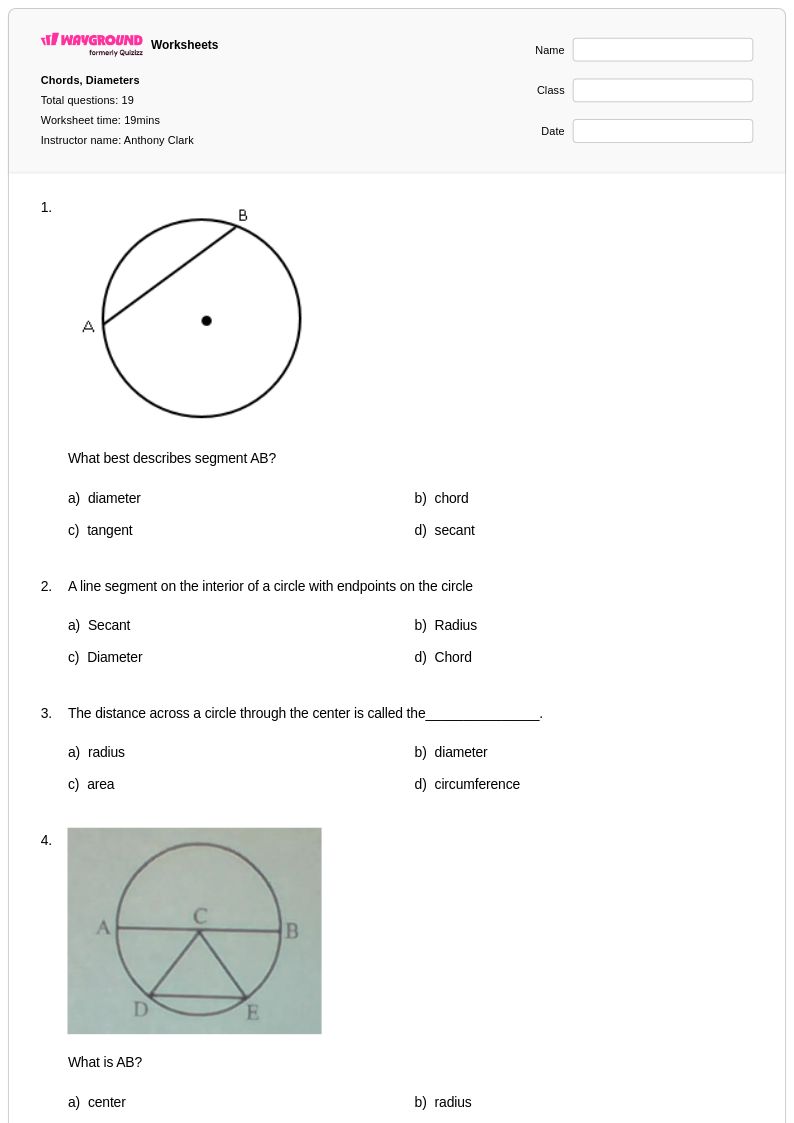
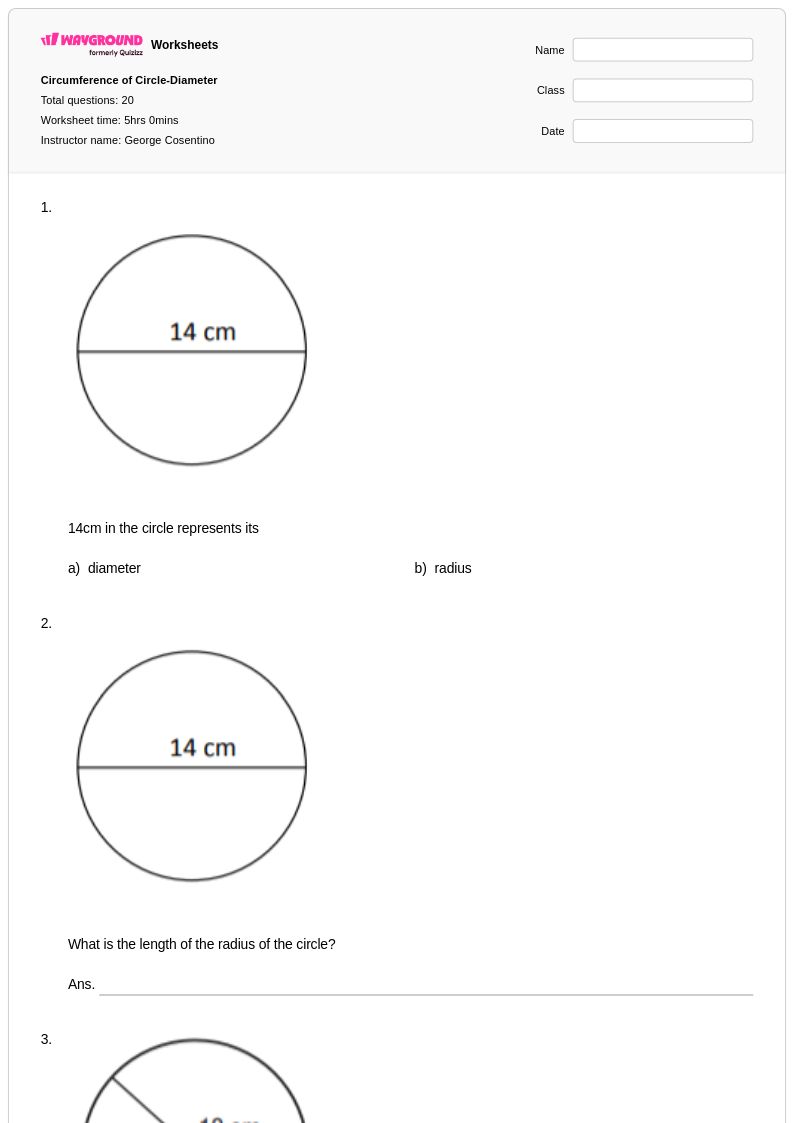
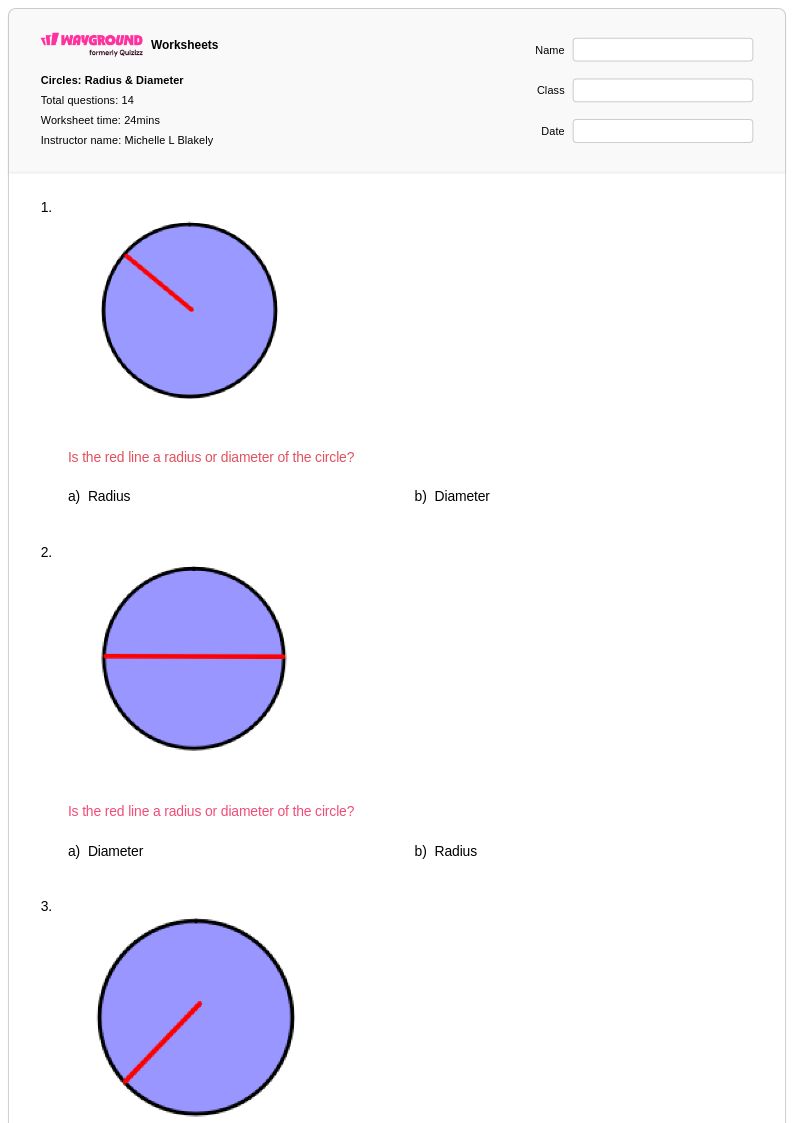
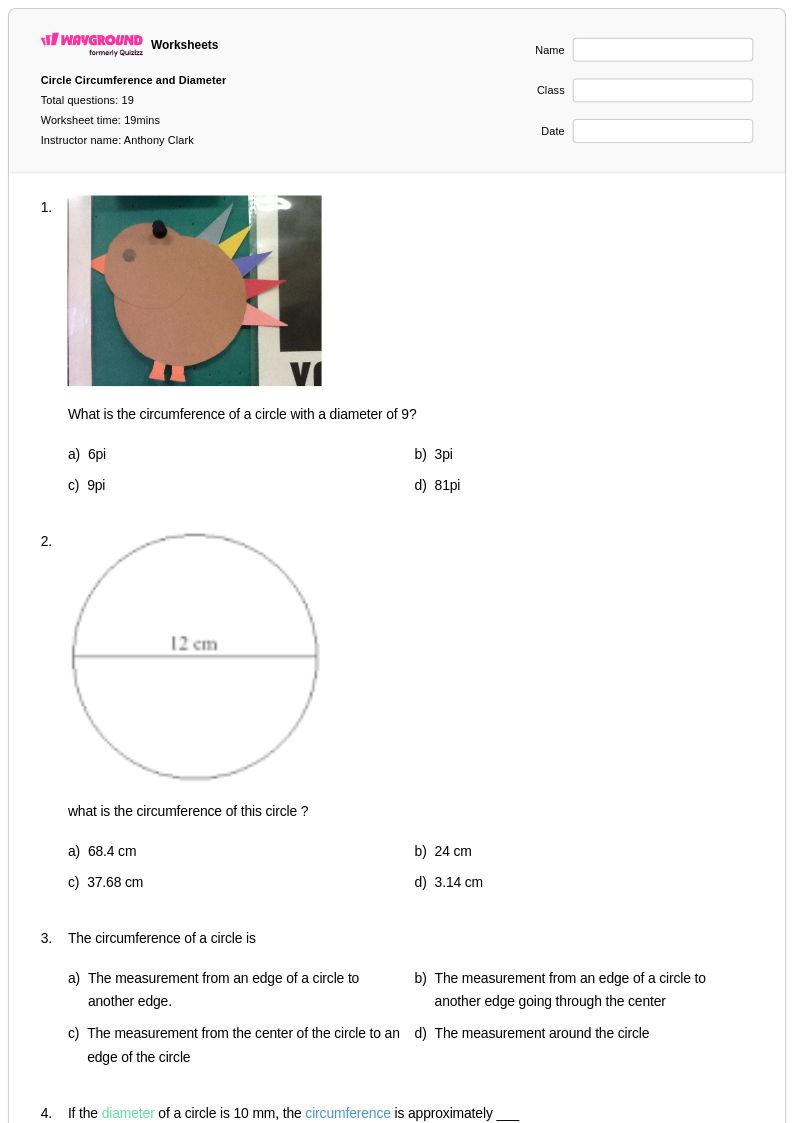
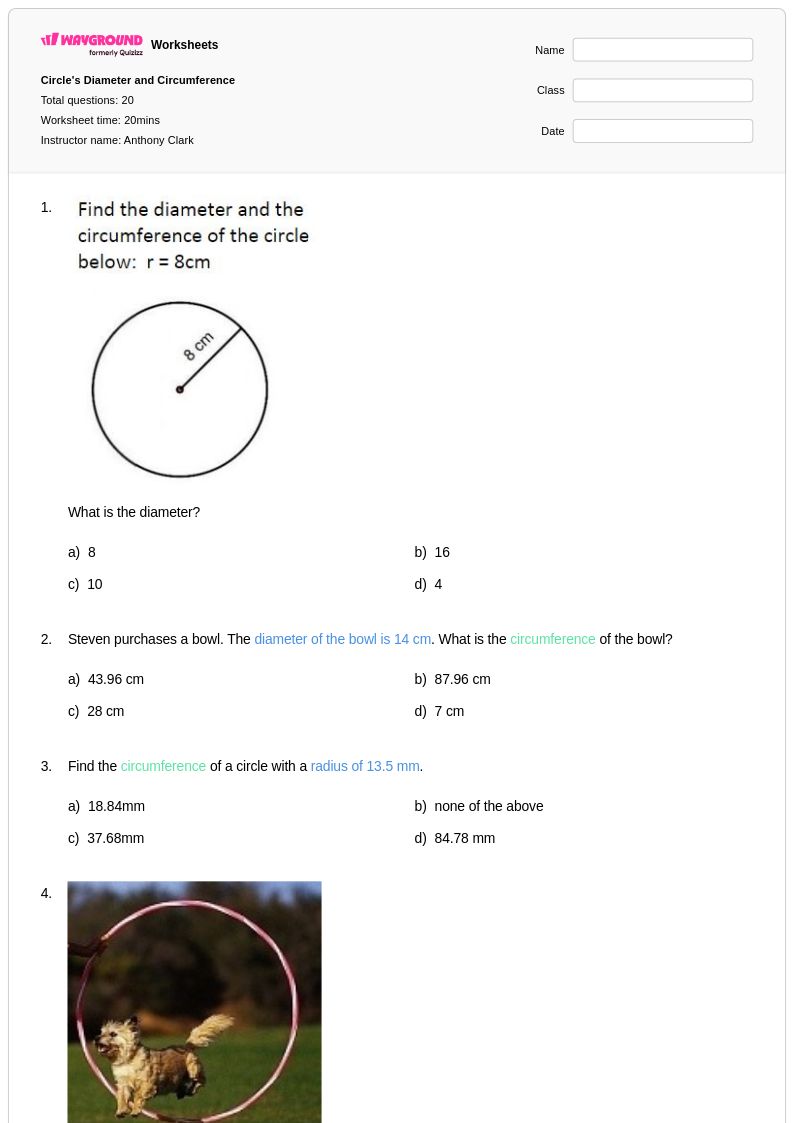
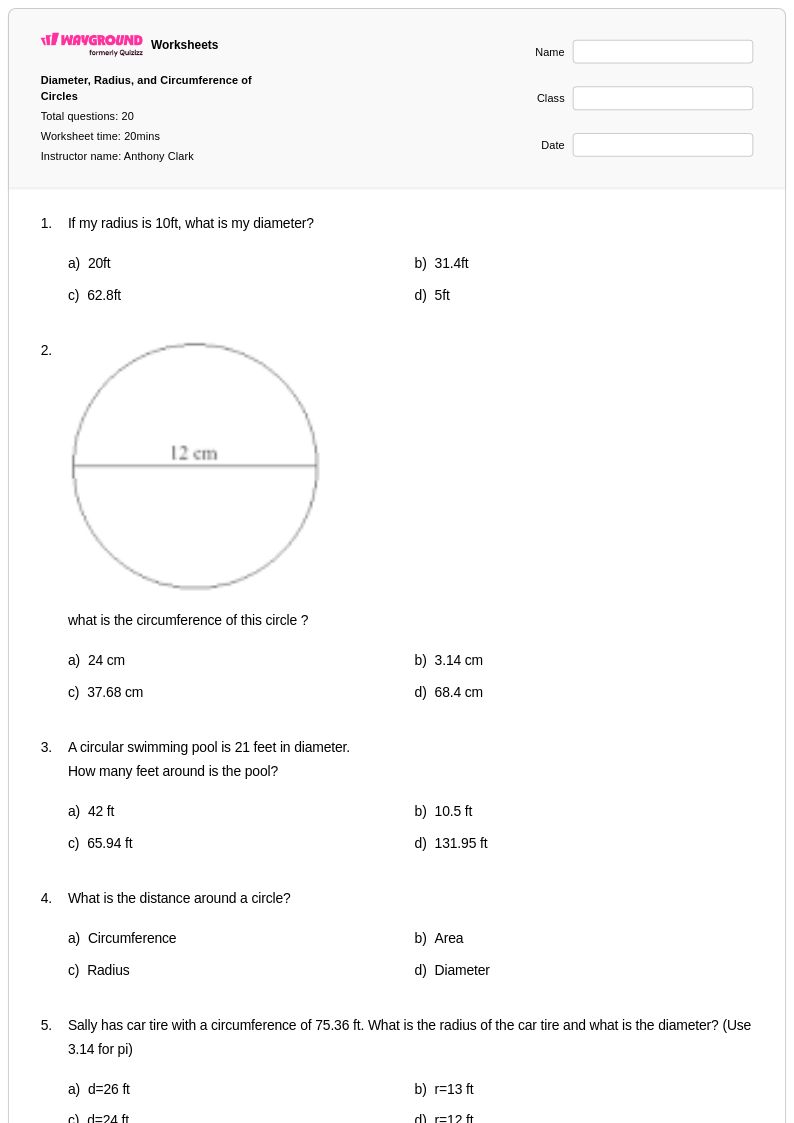
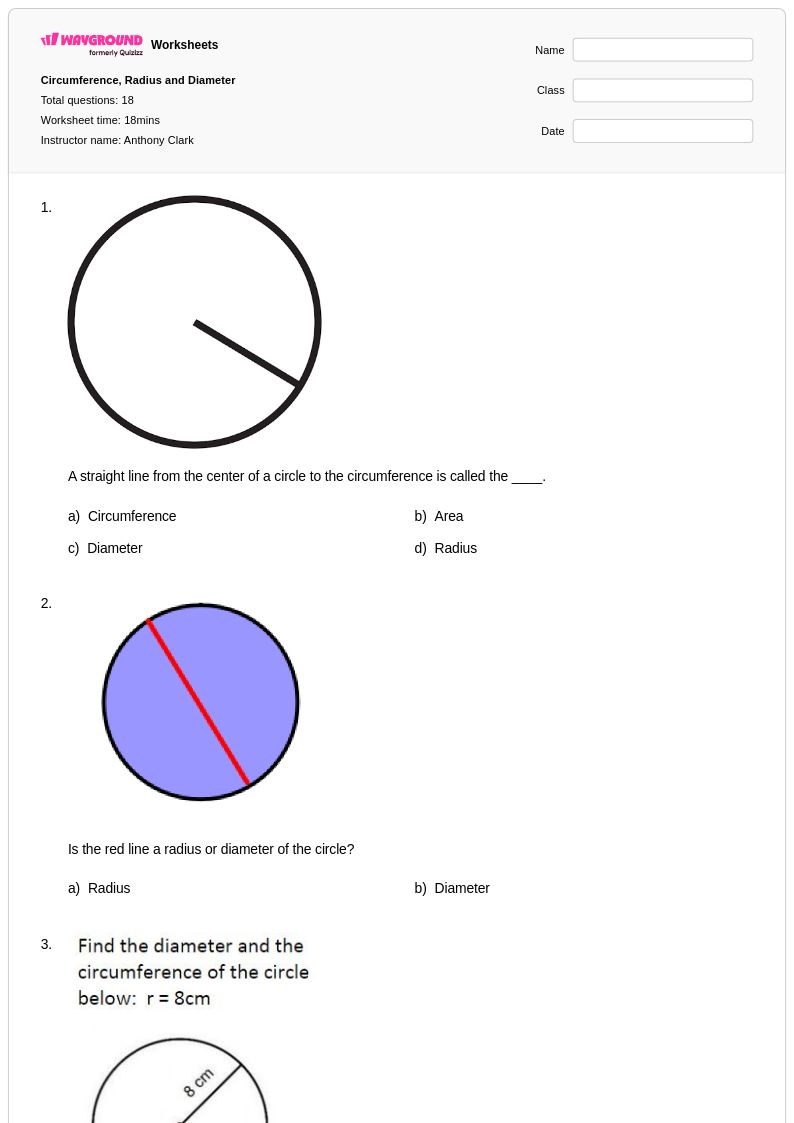
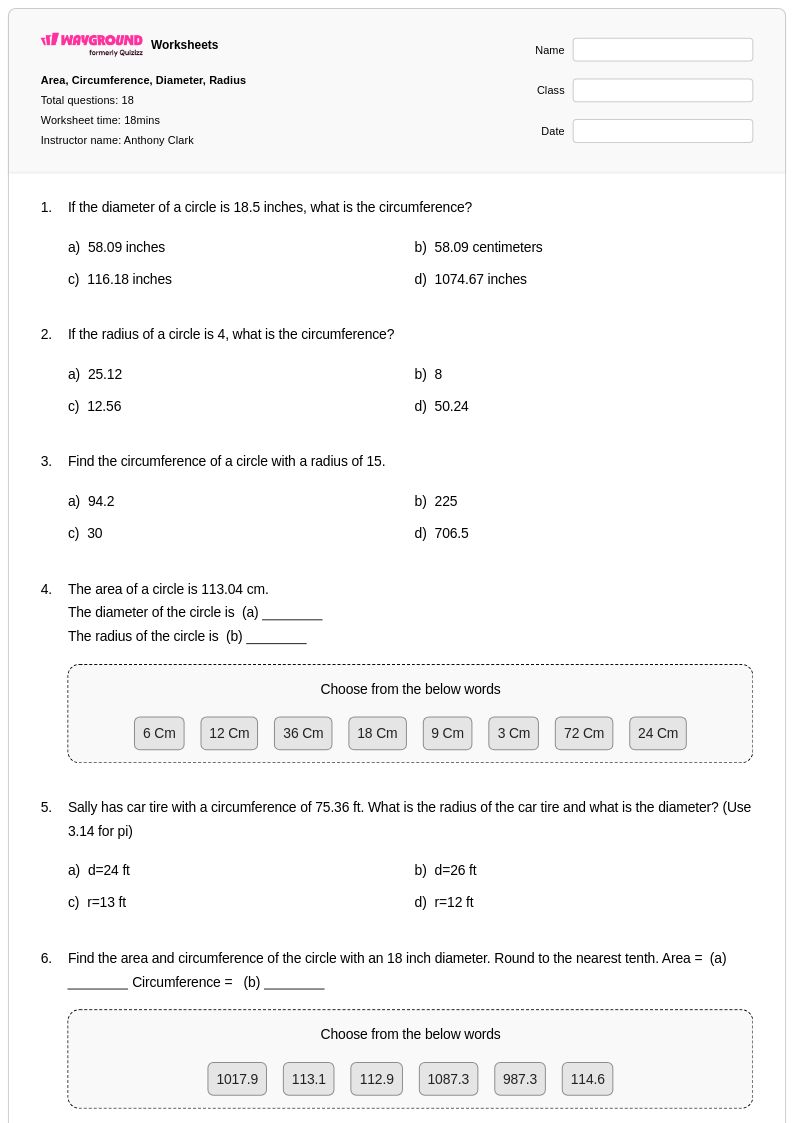
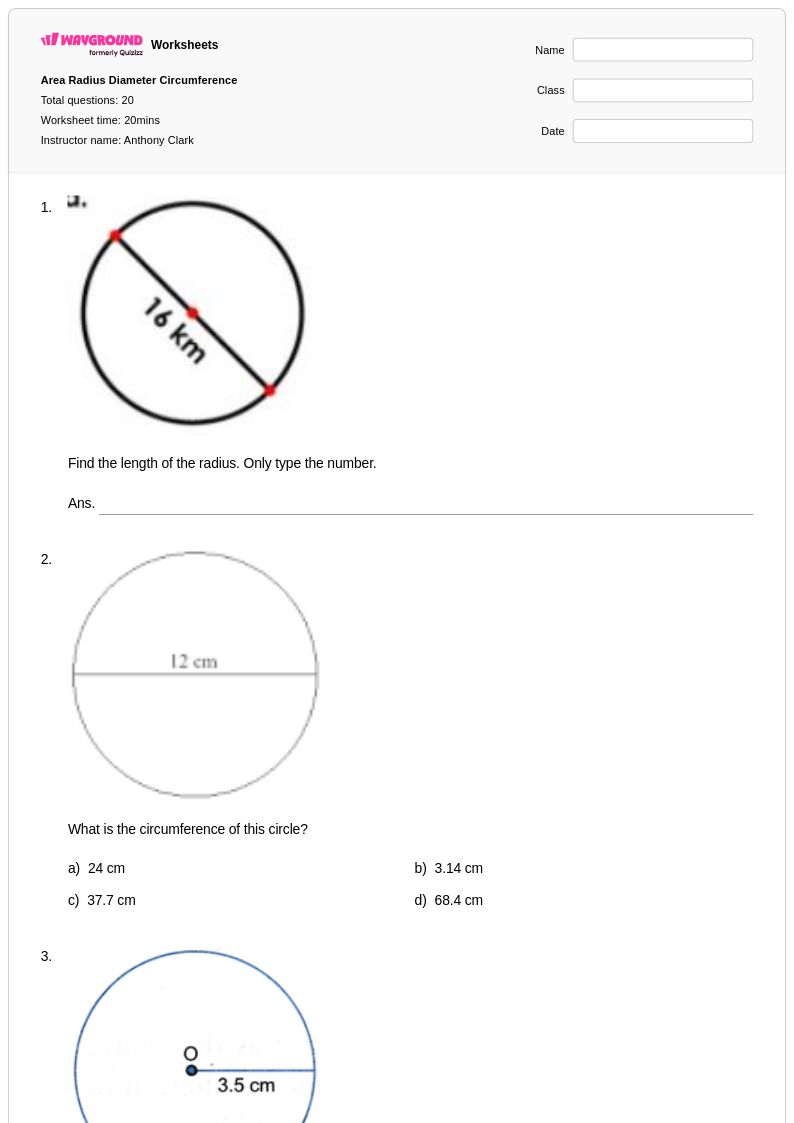
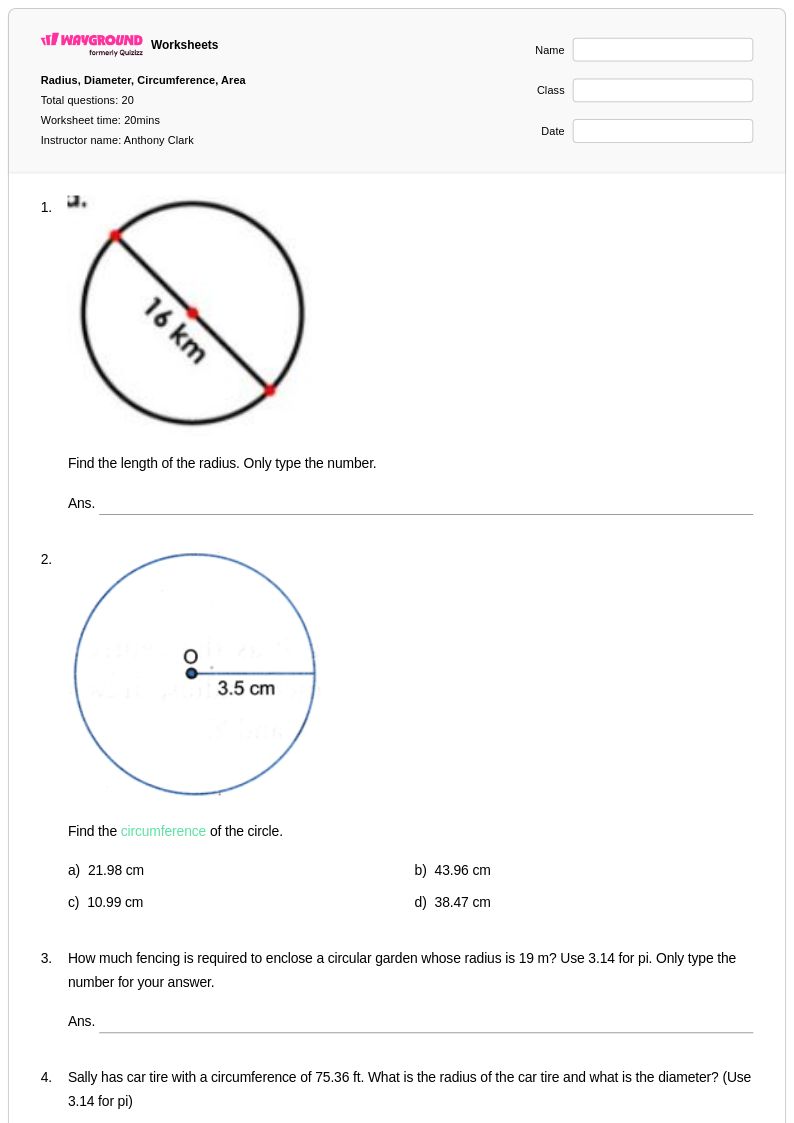
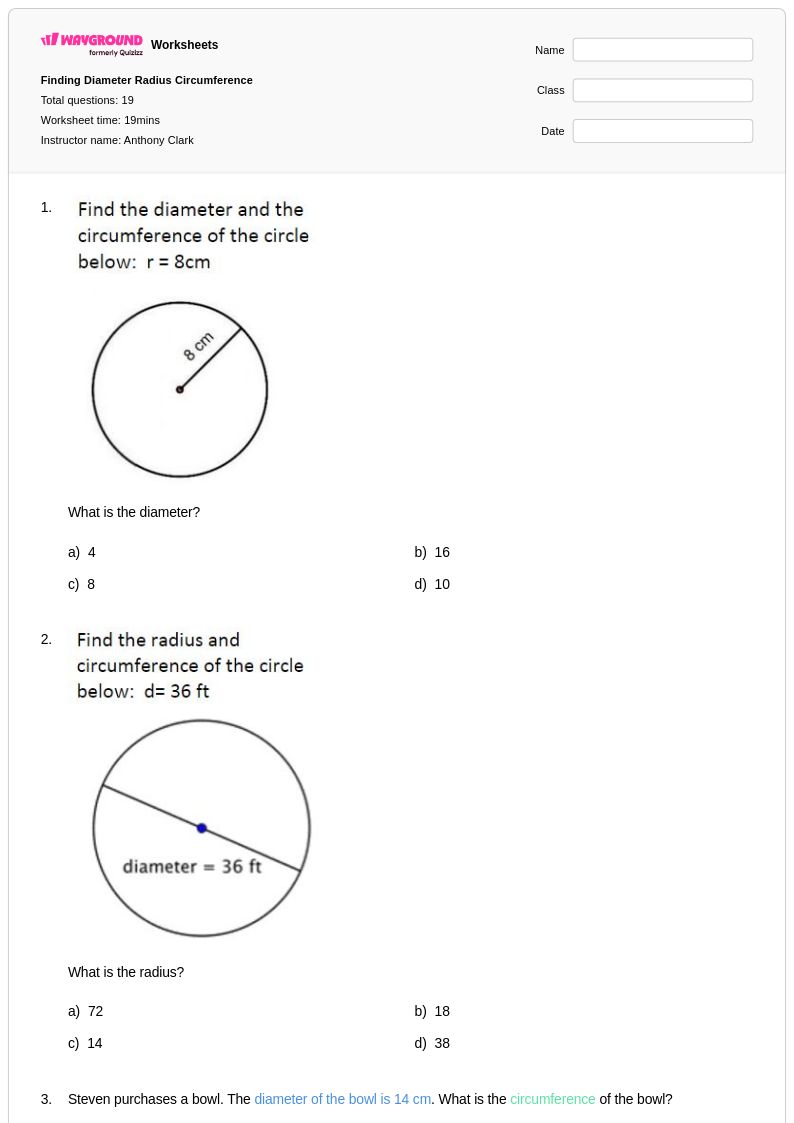
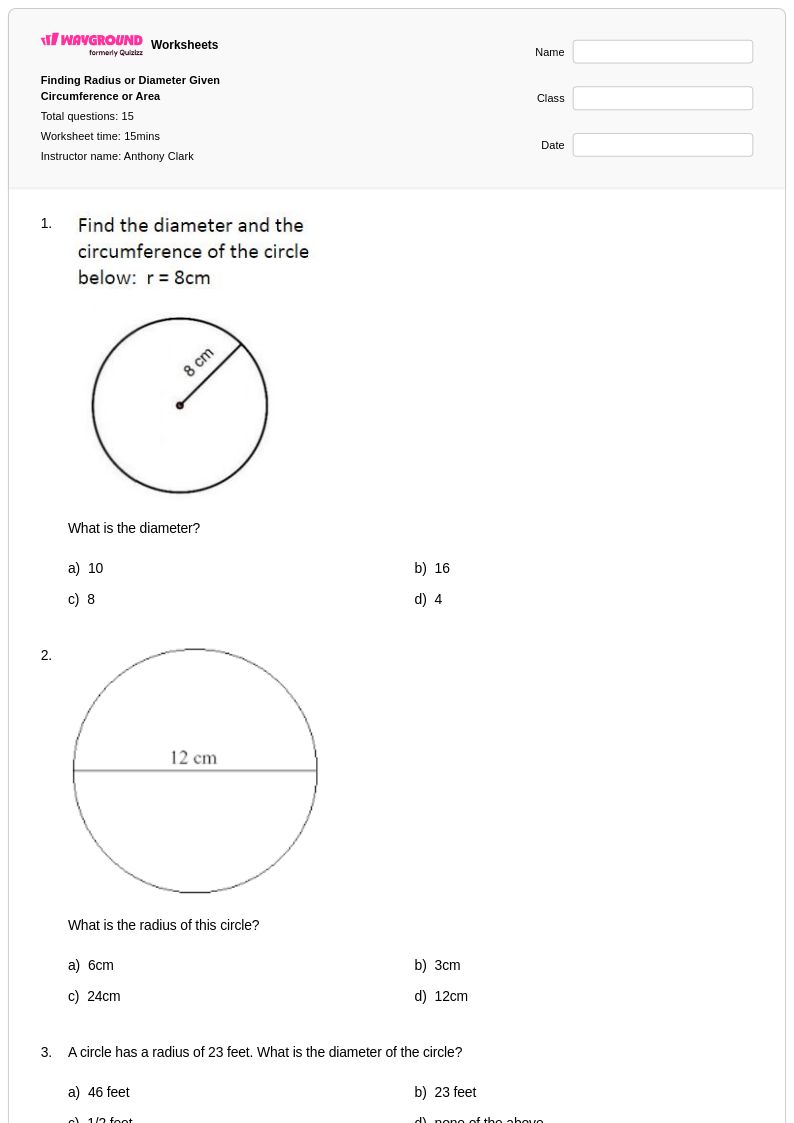
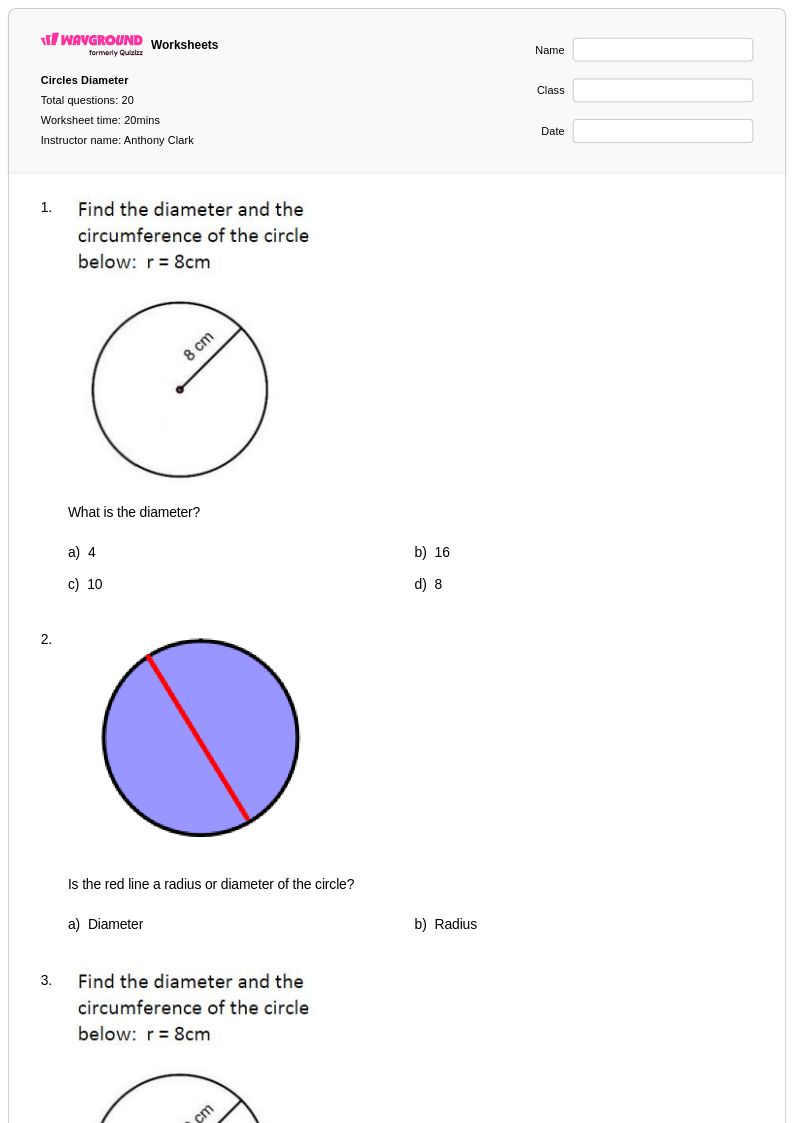
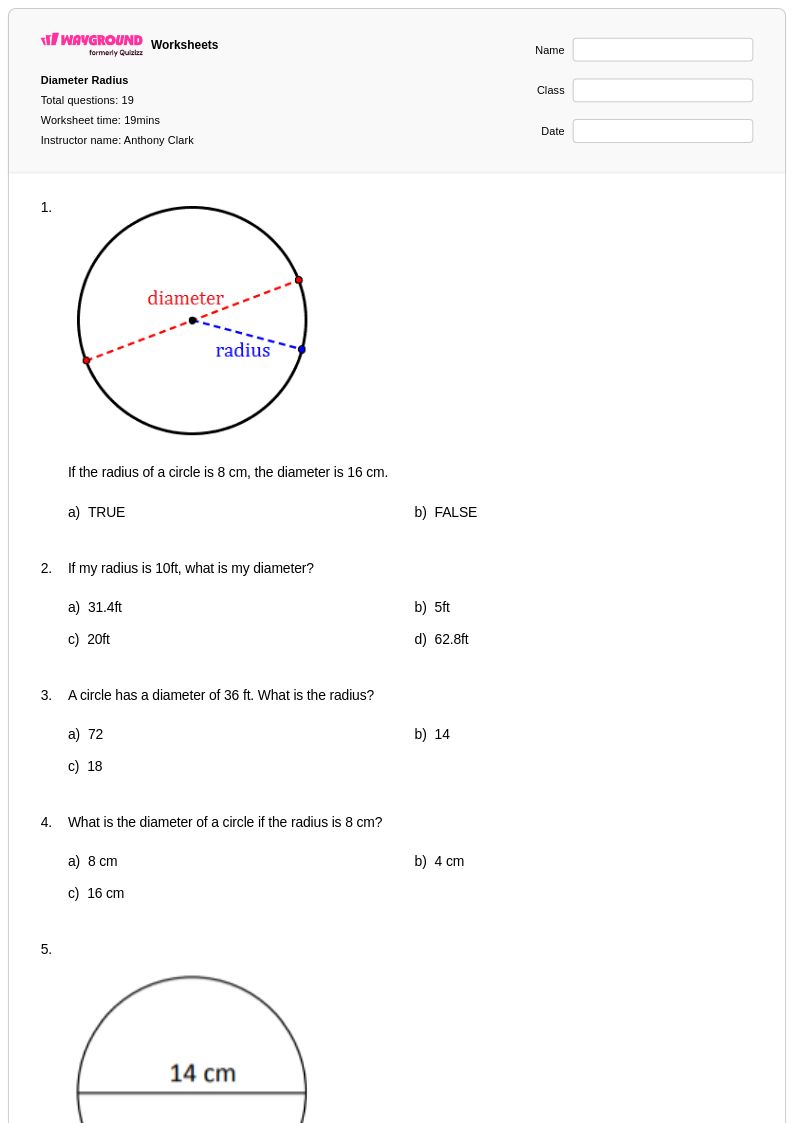
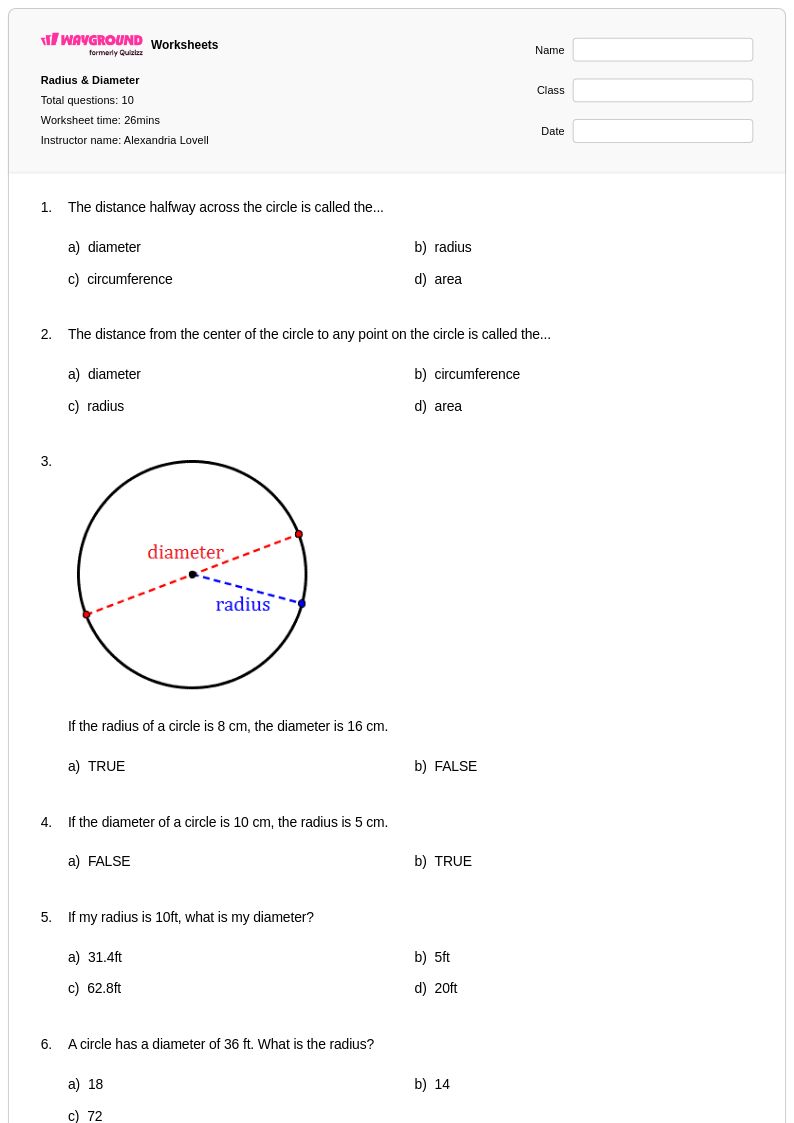
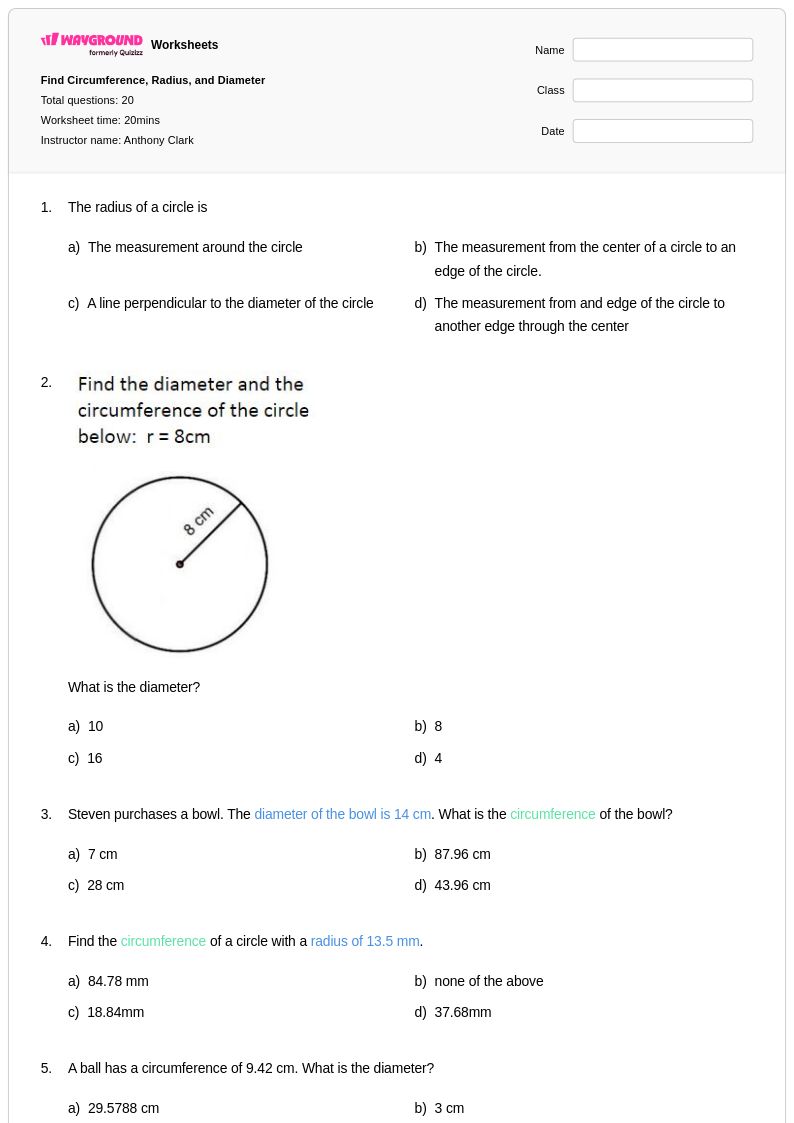
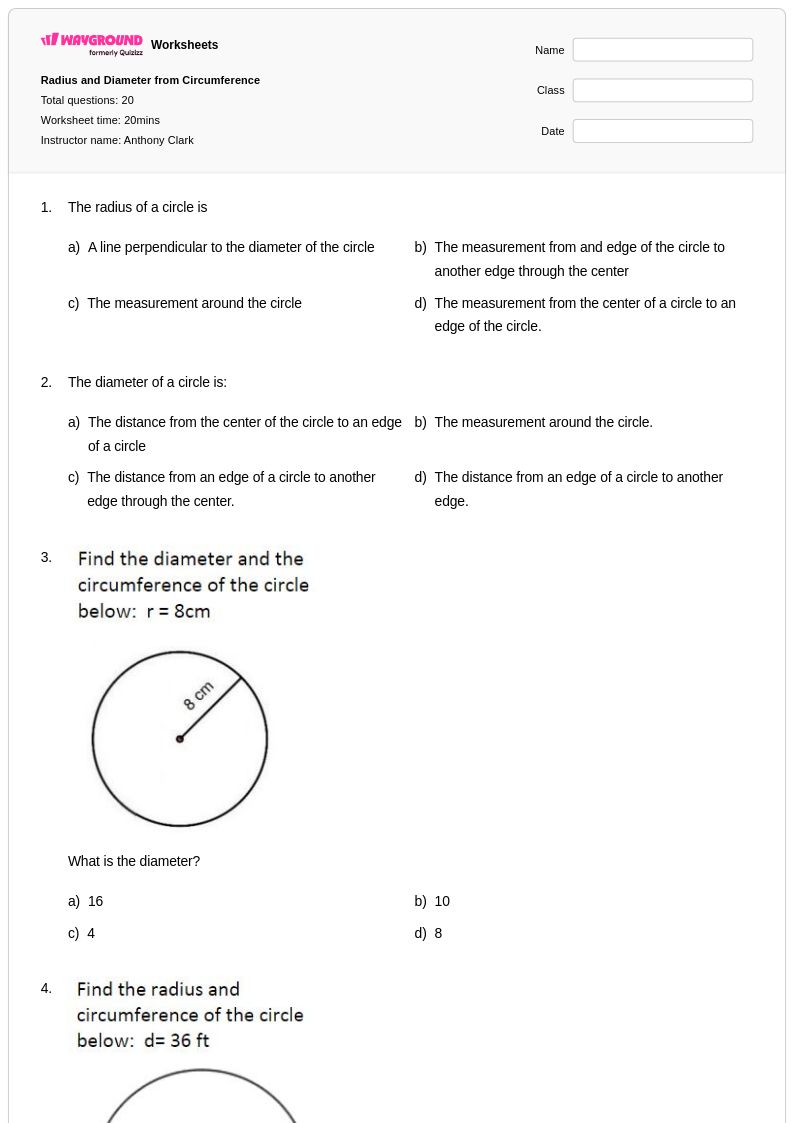
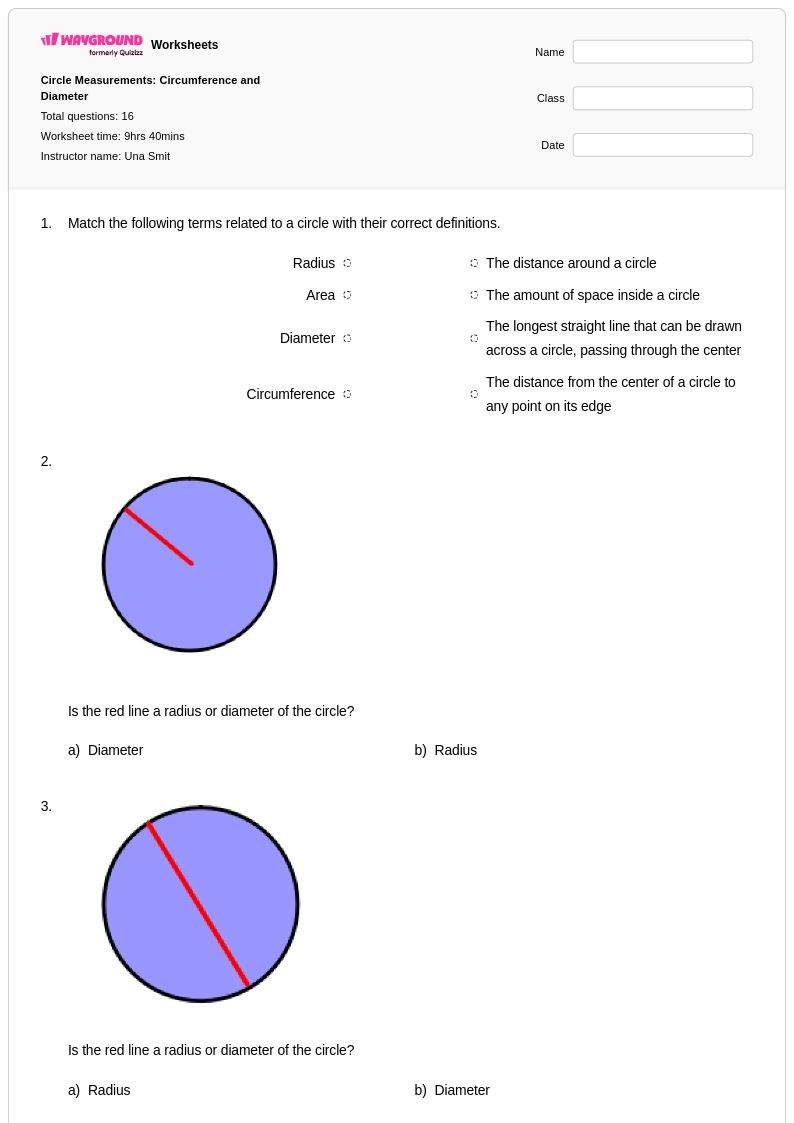
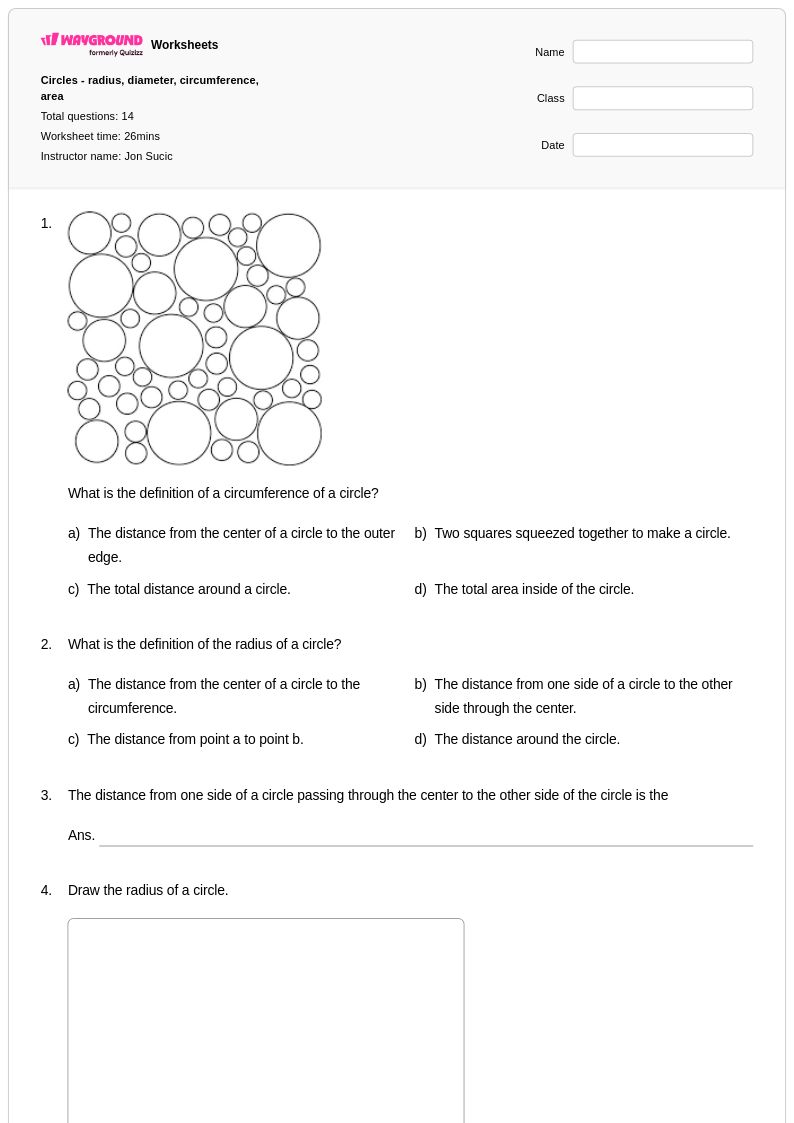
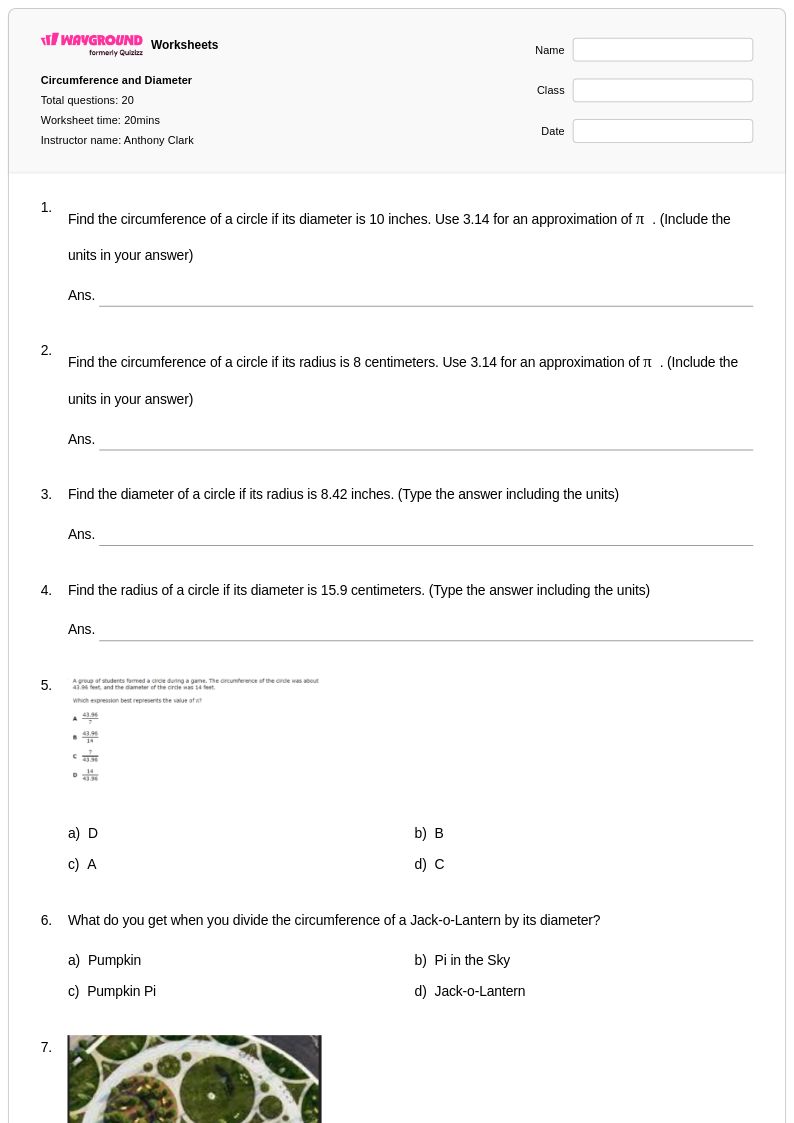
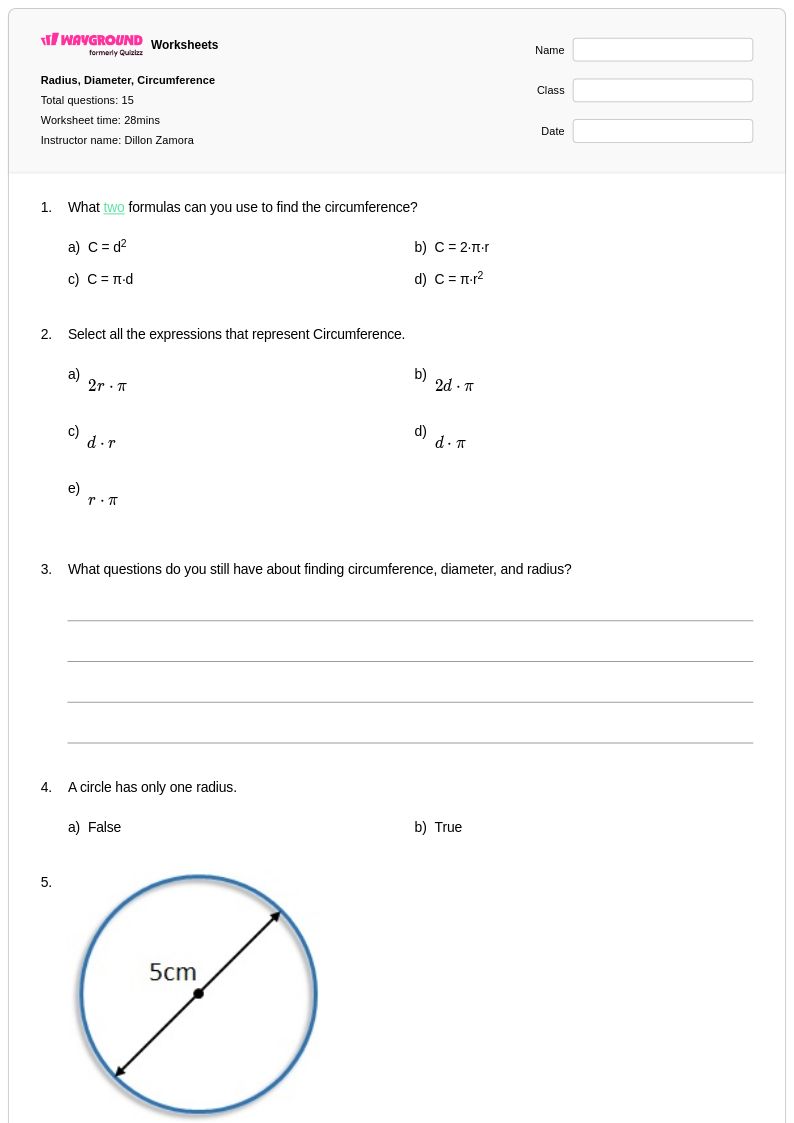
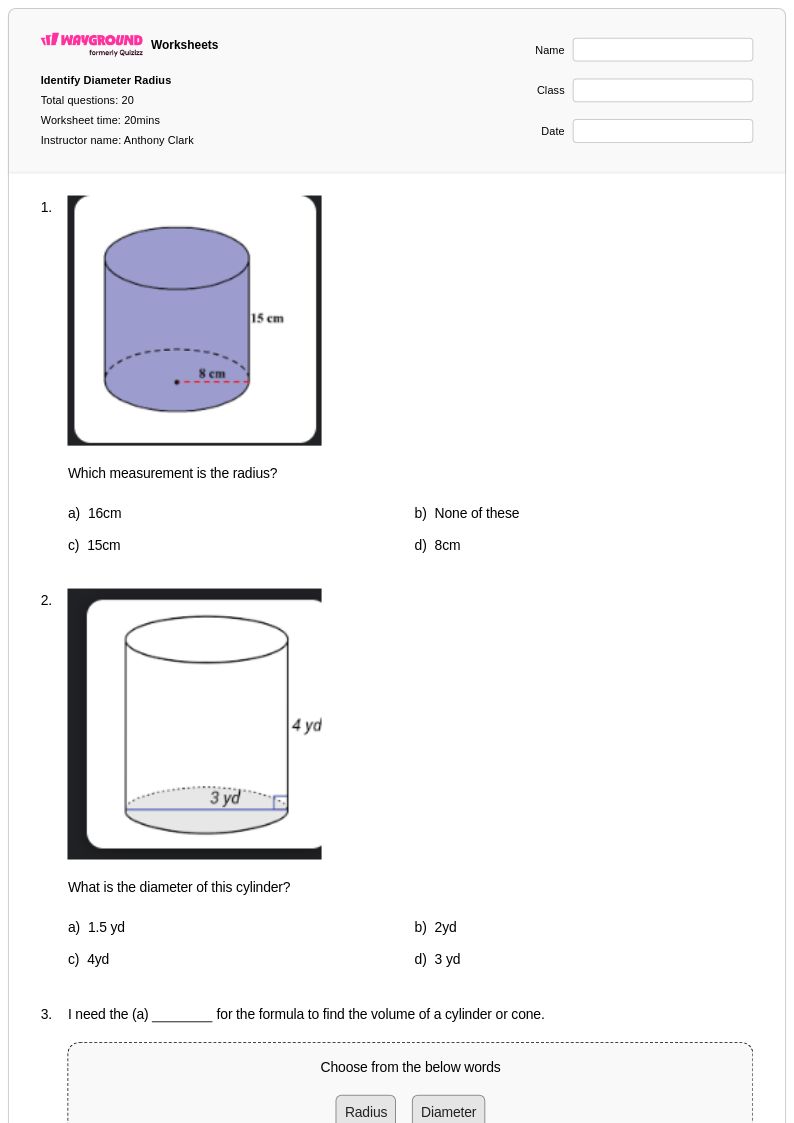
Diameter worksheets available through Wayground (formerly Quizizz) provide comprehensive practice opportunities for students to master this fundamental geometric concept. These expertly crafted resources focus on developing essential skills including measuring diameter using rulers and geometric tools, calculating diameter from given radius measurements, identifying diameter as the longest chord passing through a circle's center, and applying diameter relationships in real-world problem-solving scenarios. Each worksheet collection includes detailed answer keys and step-by-step solutions that support independent learning and self-assessment. Available as free printables in convenient PDF format, these practice problems range from basic identification exercises to complex multi-step calculations that reinforce the relationship between diameter, radius, and circumference.
Wayground (formerly Quizizz) empowers educators with access to millions of teacher-created diameter worksheet resources, supported by robust search and filtering capabilities that enable quick identification of materials aligned to specific learning objectives and educational standards. The platform's differentiation tools allow teachers to customize worksheets for diverse learning needs, while flexible formatting options provide both printable PDF versions for traditional classroom use and digital formats for interactive online learning environments. These comprehensive features streamline lesson planning by offering ready-to-use materials for skill practice, targeted remediation for students struggling with diameter concepts, and enrichment activities for advanced learners ready to explore more complex geometric relationships. Teachers can efficiently organize their diameter instruction knowing they have access to quality resources that support varied instructional approaches and assessment strategies.
FAQs
How do I teach diameter to students?
Start with the physical reality: have students fold a circular cutout in half and measure the fold line. That crease is the diameter. From there, build the vocabulary — diameter passes through the center, connects two points on the edge, and is exactly twice the radius. Once students can identify and measure diameter on paper circles, move to calculating it from a given radius and then to its role in circumference. Grounding the concept in something students can hold before they work with diagrams makes the abstraction stick.
What exercises help students practice diameter?
The most useful practice moves through three stages: identifying the diameter on labeled diagrams, measuring it with a ruler on unlabeled circles, and calculating it when only the radius is given (or vice versa). Multi-step problems that ask students to find circumference using the diameter they just calculated are a strong capstone. Wayground's diameter worksheets cover this full range, from basic identification to applied problem-solving.
What mistakes do students commonly make with diameter?
The most persistent error is confusing diameter with radius — students often halve when they should double, or double when they should halve. A second common mistake is drawing a chord that doesn't pass through the center and calling it a diameter. Reinforce early and often that the diameter must pass through the center point, and have students physically mark the center before drawing or measuring.
How do I use Wayground's diameter worksheets in my class?
Each worksheet comes with a complete answer key, so students can check their own work during independent practice. If you're running a digital session, you can host the worksheet as an interactive quiz on Wayground. If you prefer paper, download the PDF, print it, and use the Wayground for Teachers app to scan and grade student submissions — useful when you want students off screens without losing the efficiency of digital grading.
Is diameter aligned to Common Core math standards?
Common Core formally introduces circle measurement, including diameter, radius, and circumference, in Grade 7, where students learn that circumference equals pi times diameter and use that relationship to solve problems. Diameter work in earlier grades builds the geometric vocabulary and measurement skills that make the Grade 7 formulas meaningful rather than memorized. On these worksheets, students are developing the foundational understanding that diameter is twice the radius, which is the exact relationship Grade 7 relies on.
How can I differentiate diameter practice for mixed-ability students?
For students who struggle with the radius-diameter relationship, Wayground's reduced answer choices accommodation limits the options they see, lowering cognitive load while keeping the core concept intact. For students with reading challenges, the Read Aloud feature handles question text so they can focus on the geometry. On the worksheet itself, you can apply a larger font size or wider spacing for students who need more visual breathing room — all without creating a separate assignment.