Free Printable Shapes on the Coordinate Plane worksheets
Explore free printable worksheets and practice problems focused on shapes on the coordinate plane, helping students master plotting, graphing, and analyzing geometric figures with comprehensive answer keys available through Wayground's collection.
Explore printable Shapes on the Coordinate Plane worksheets
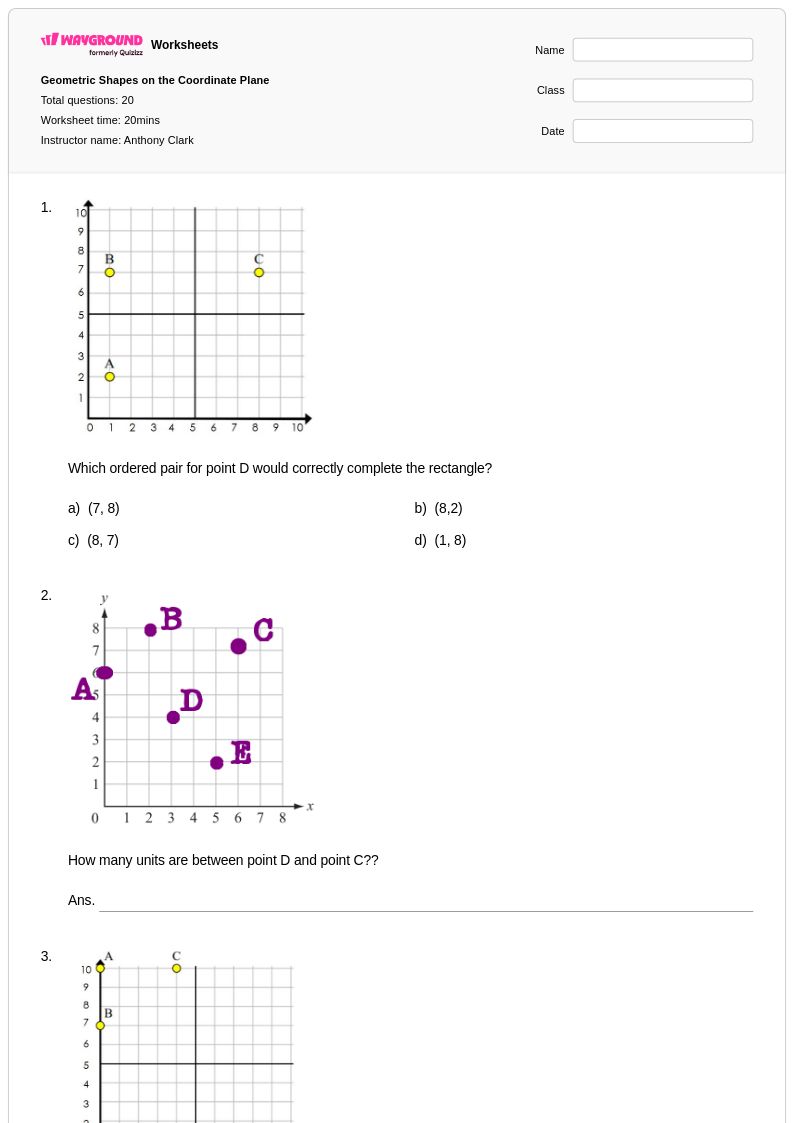
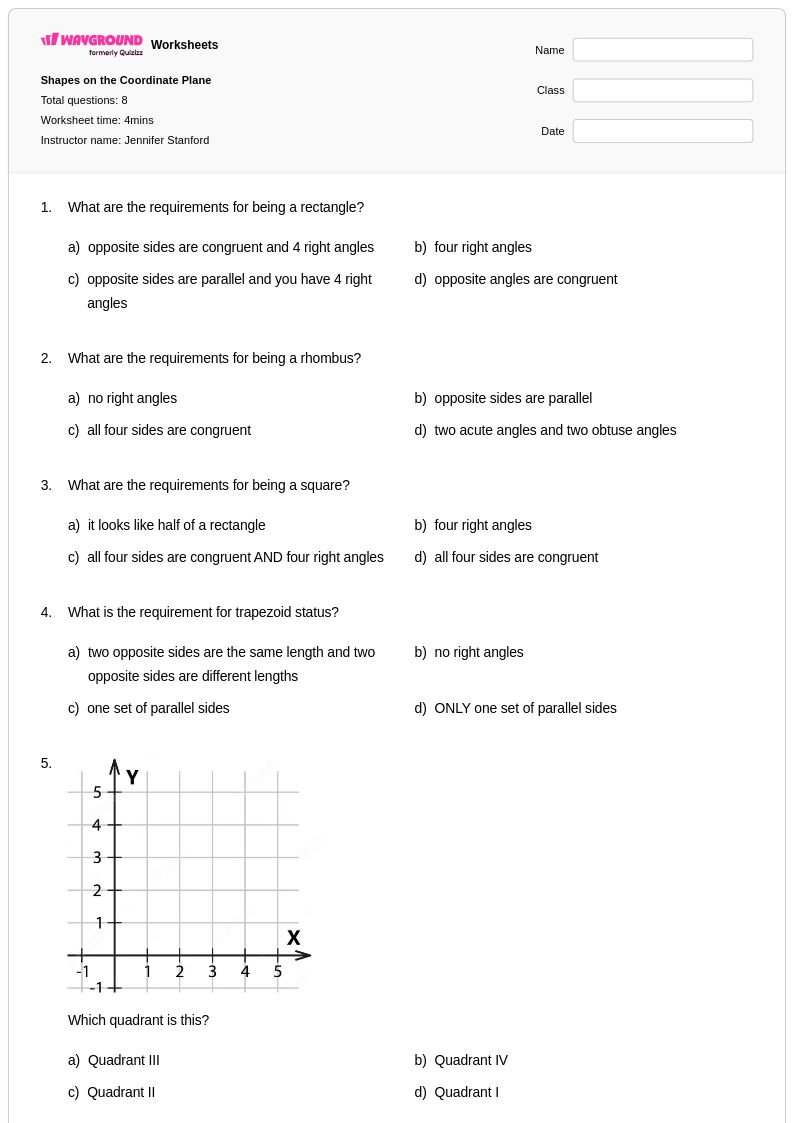
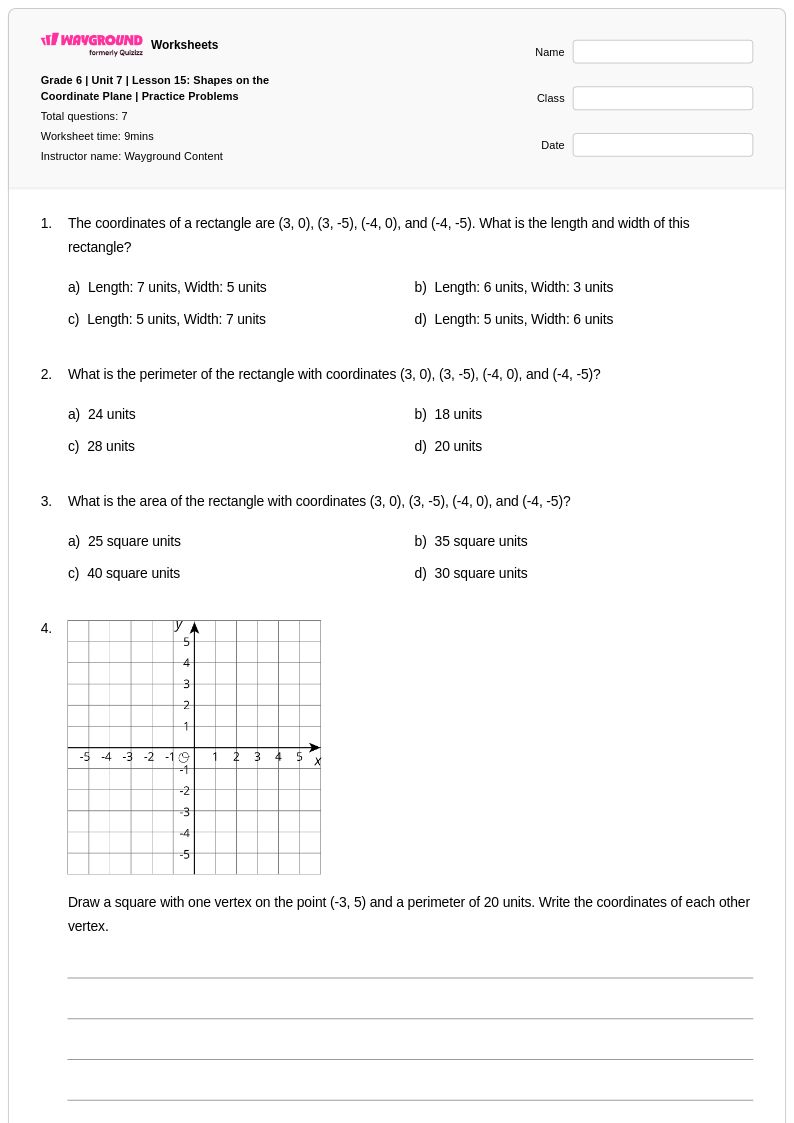
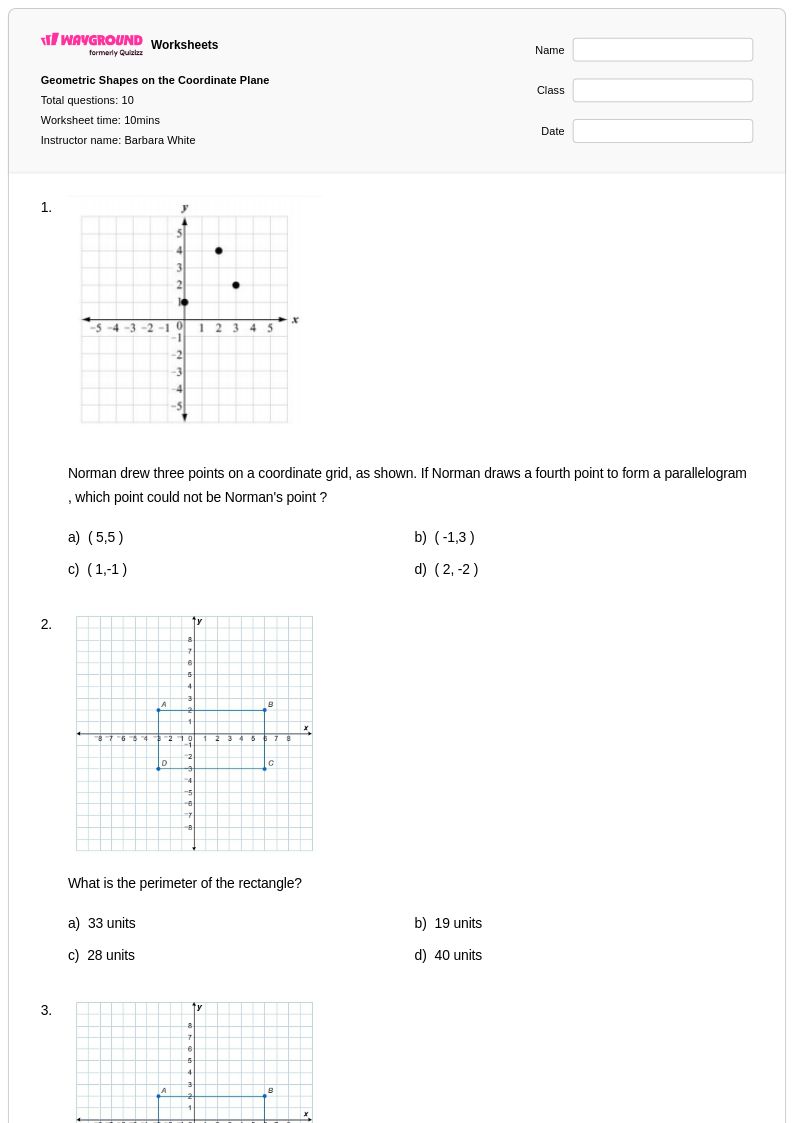
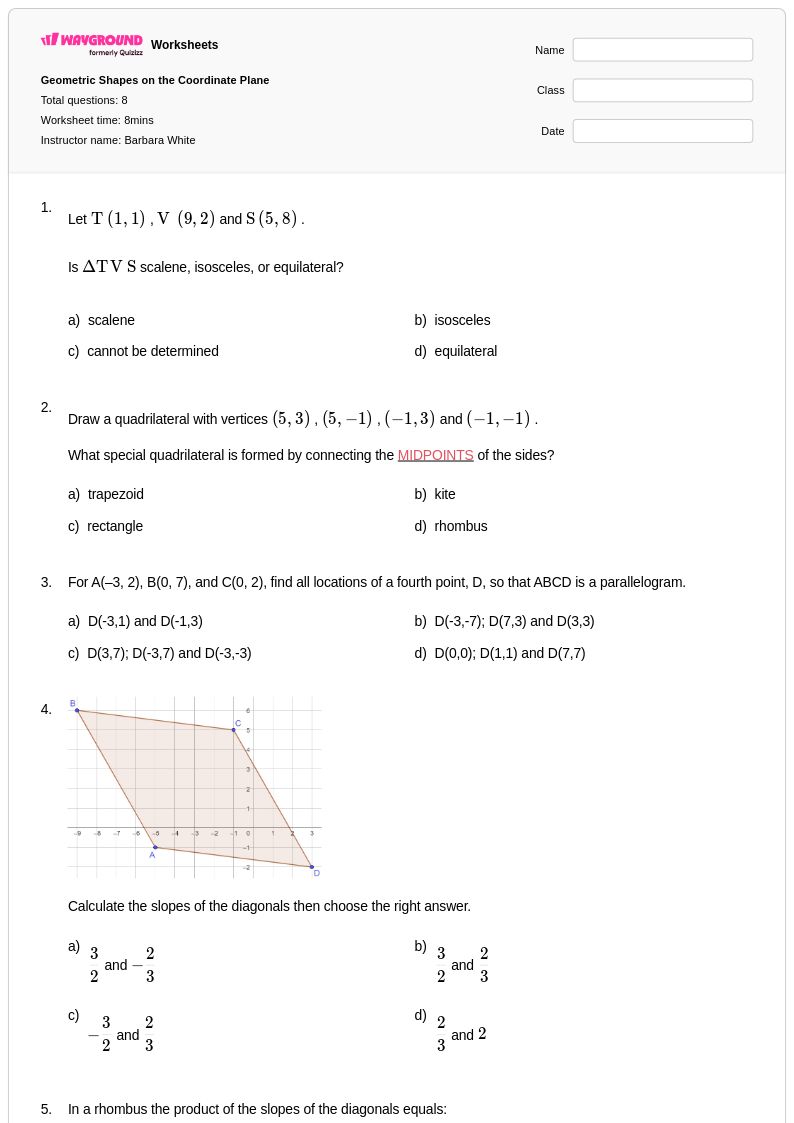
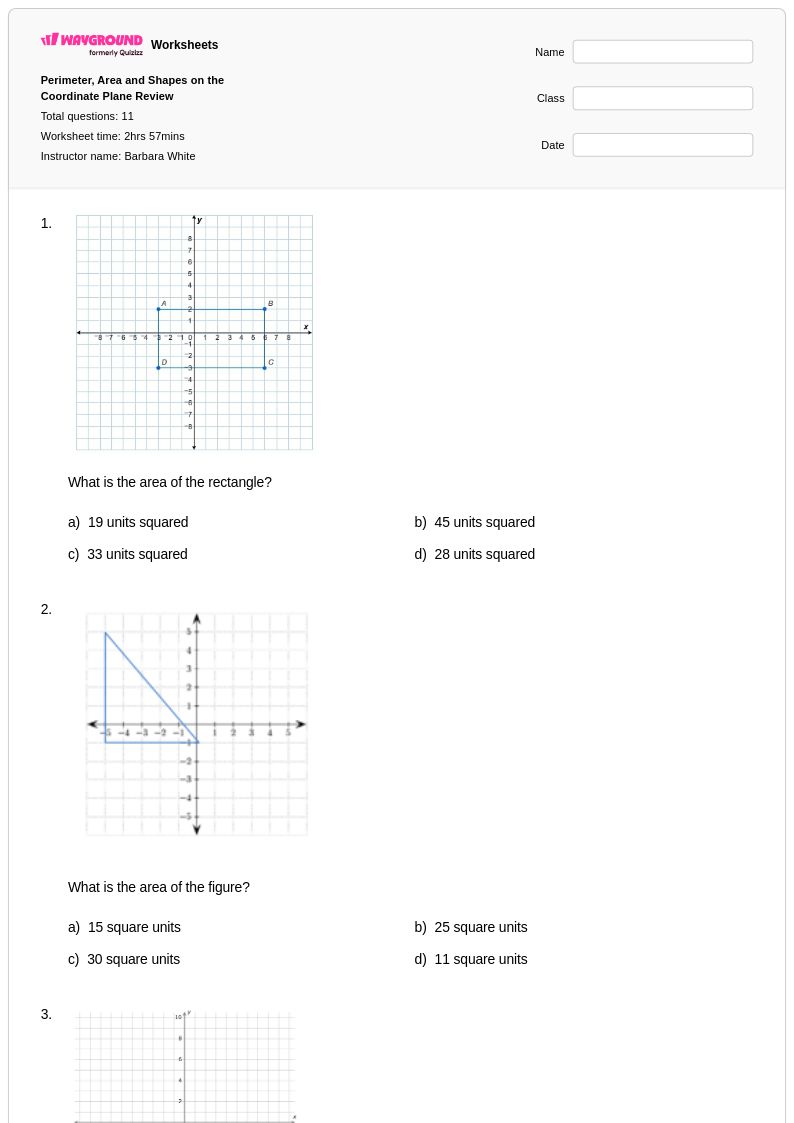
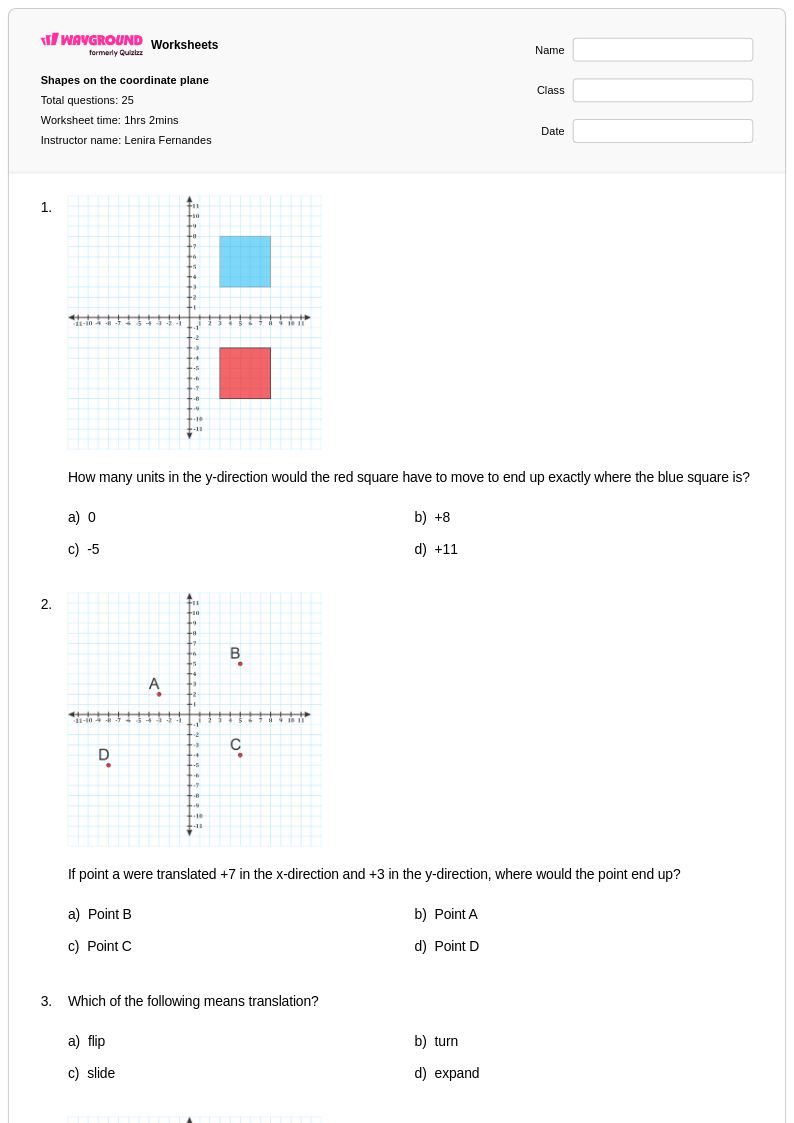
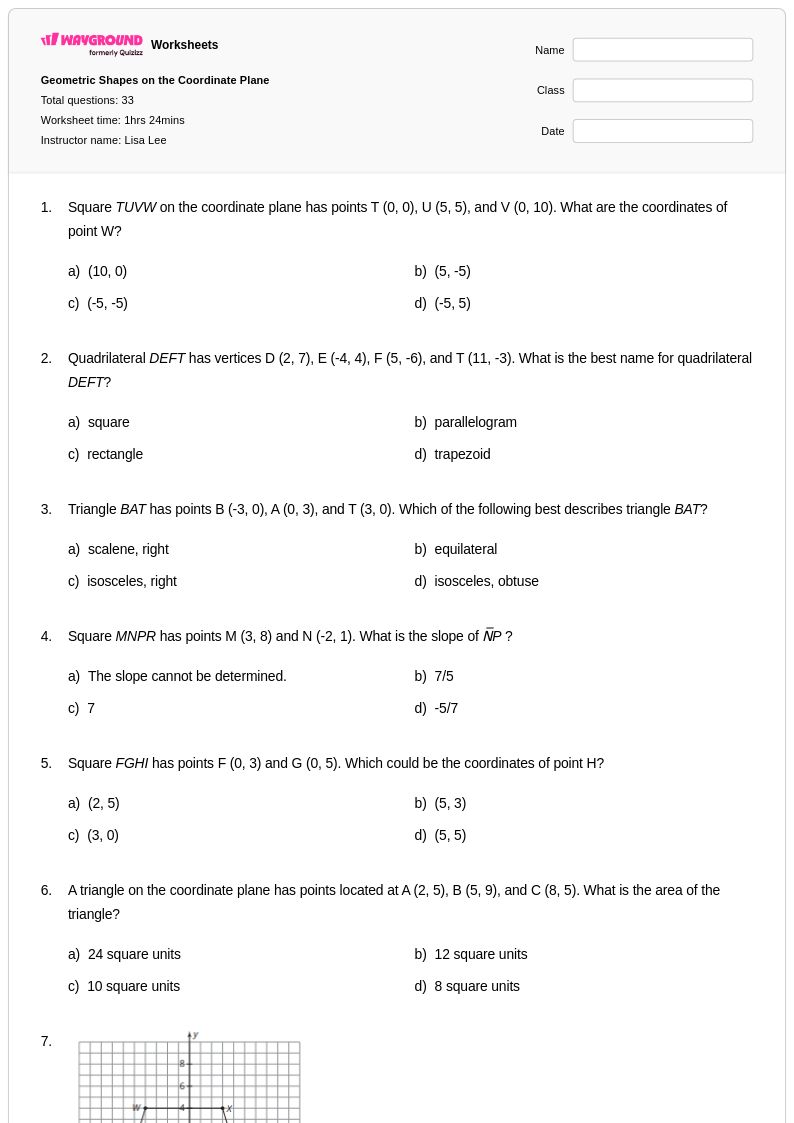
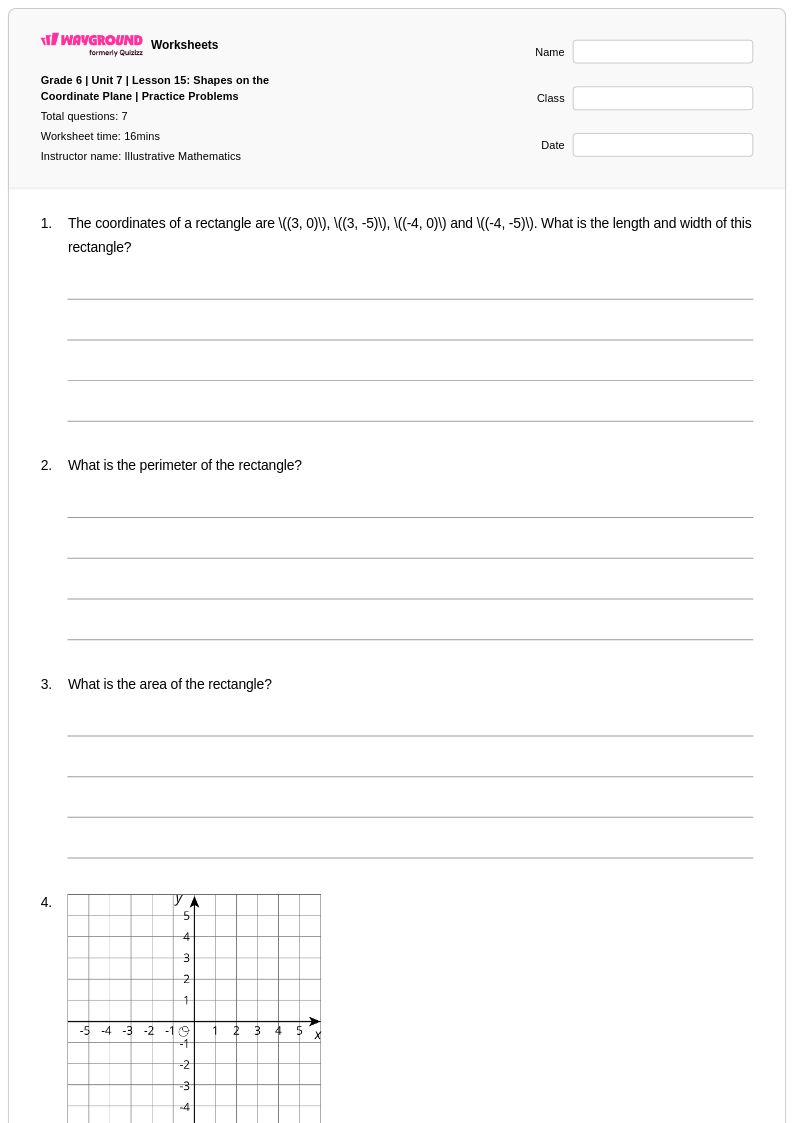
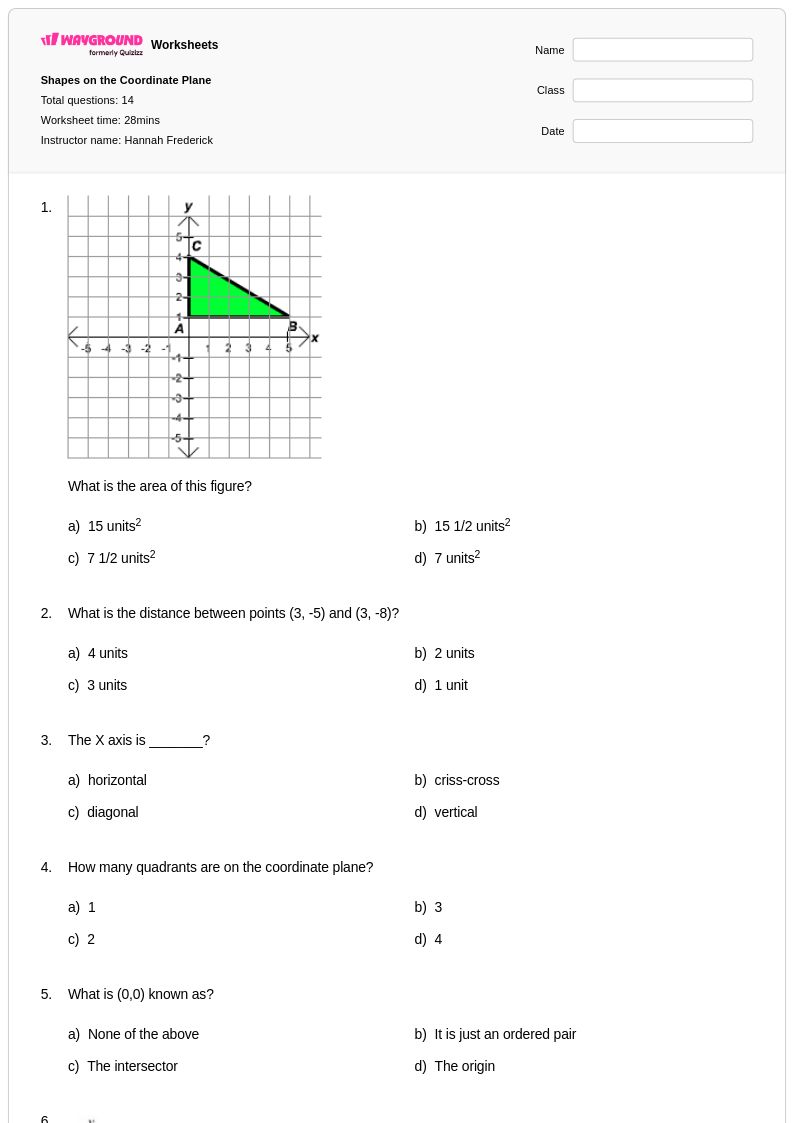
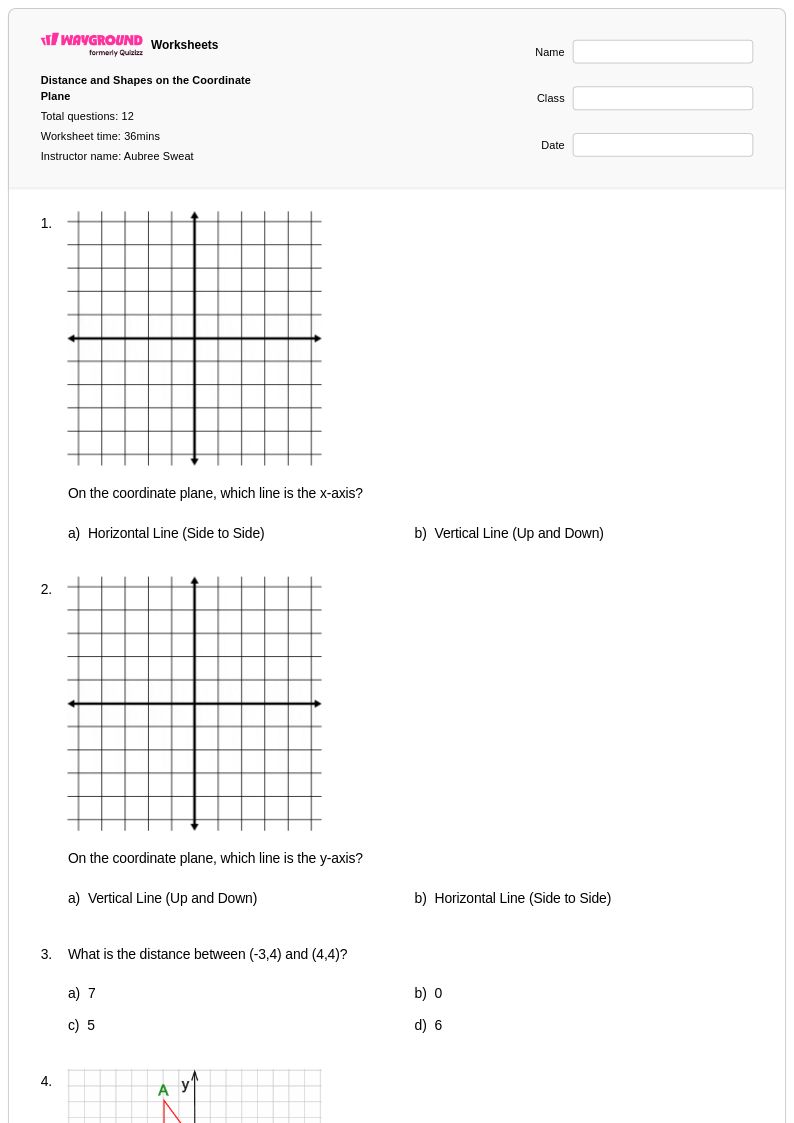
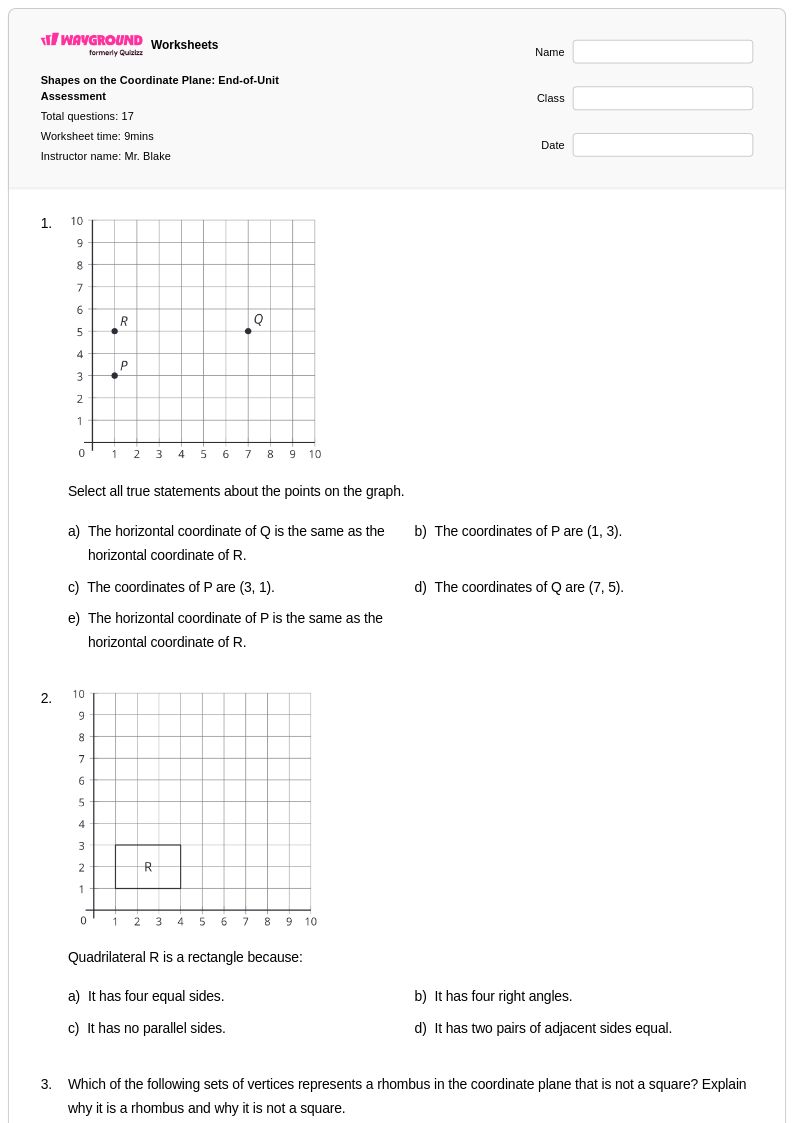
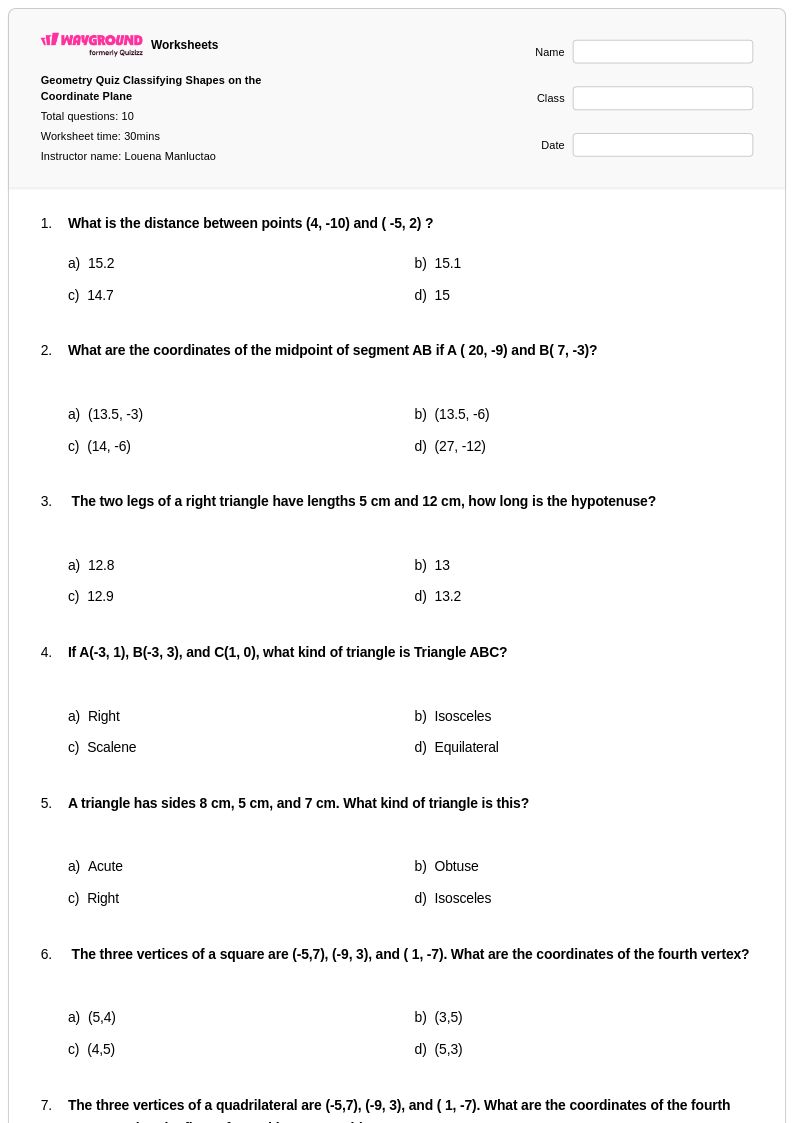
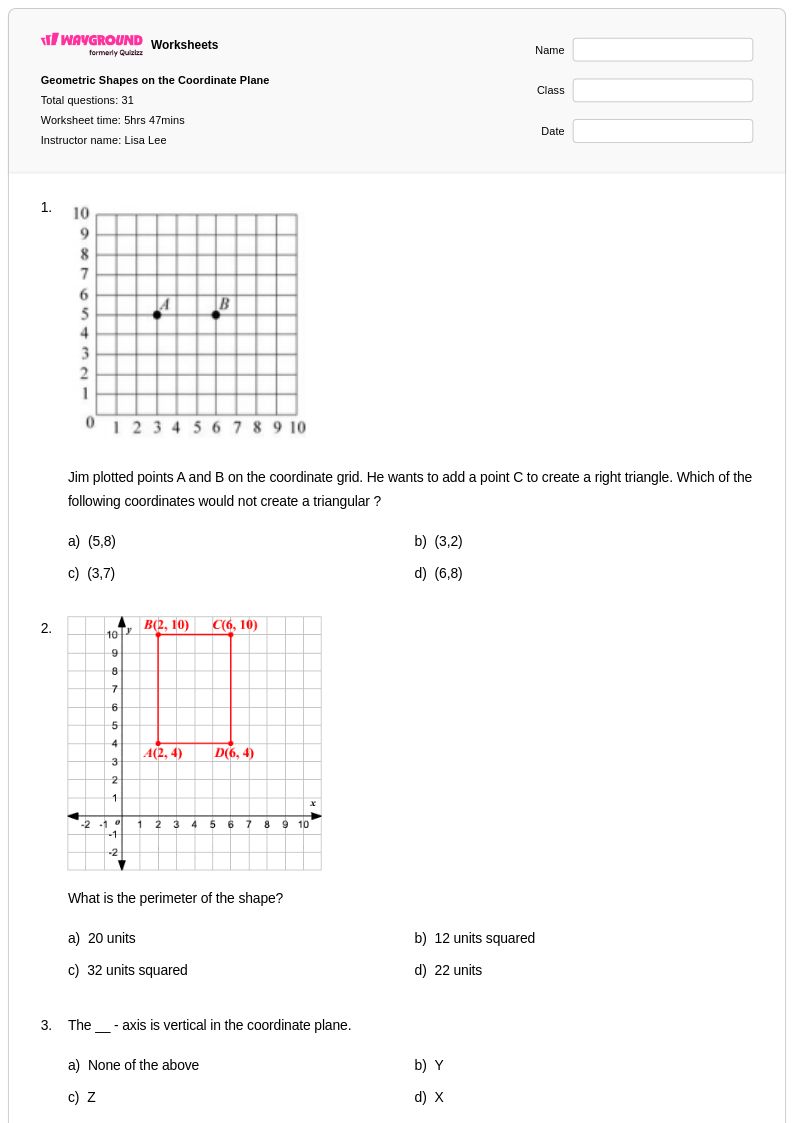
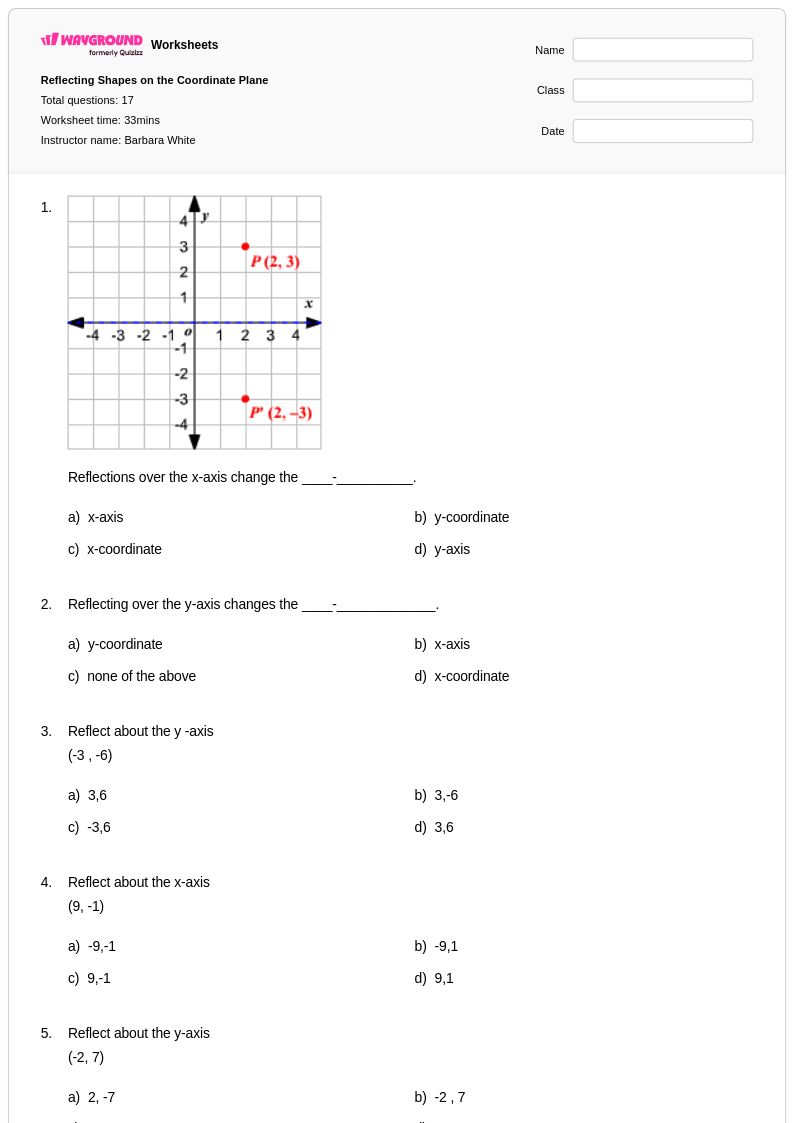
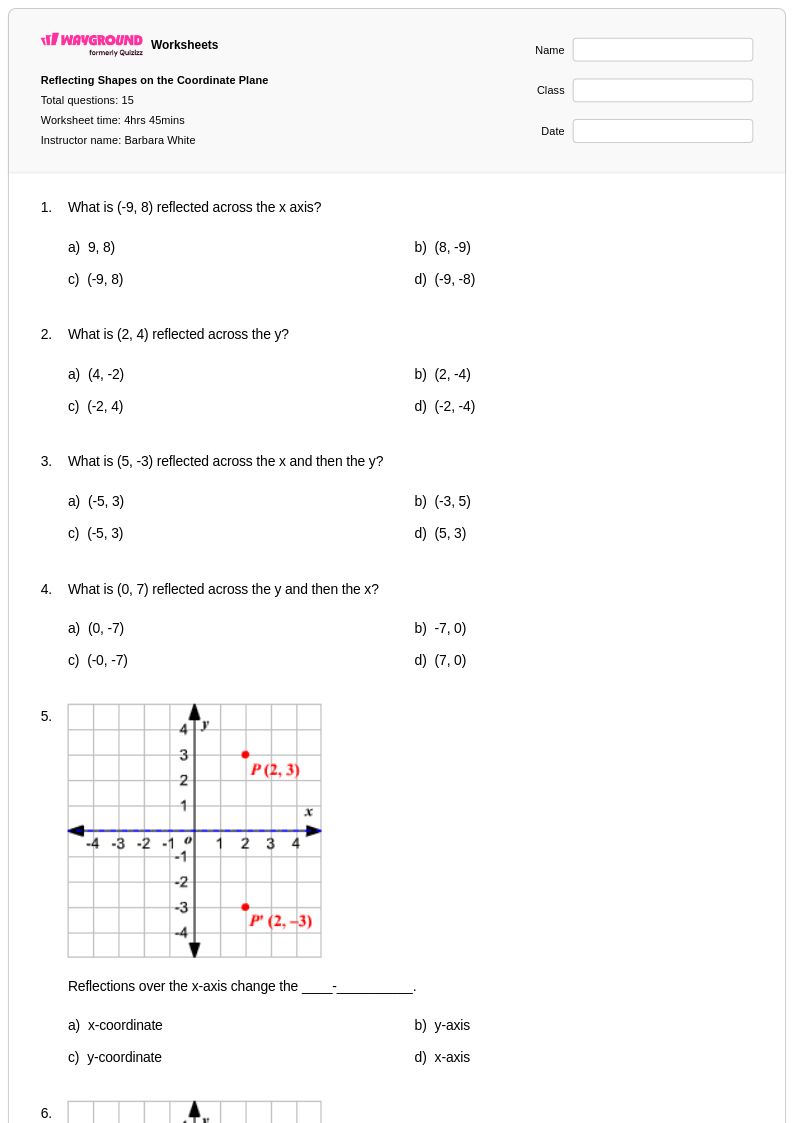
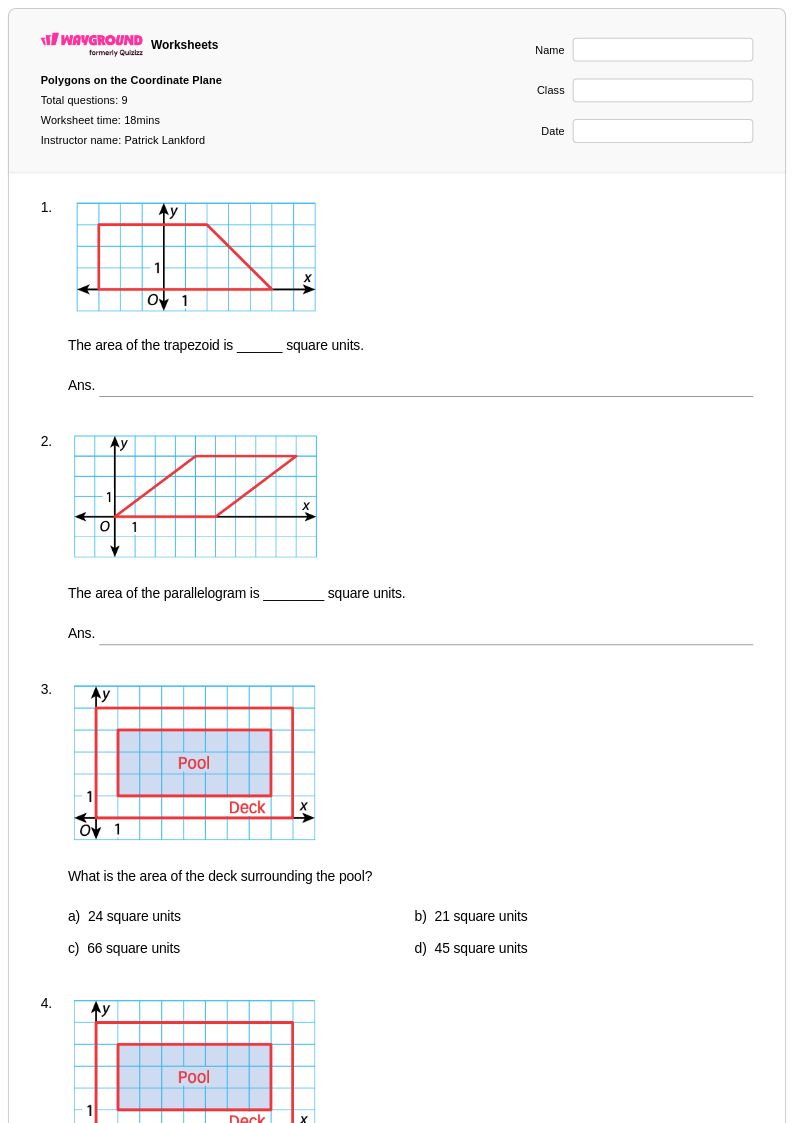
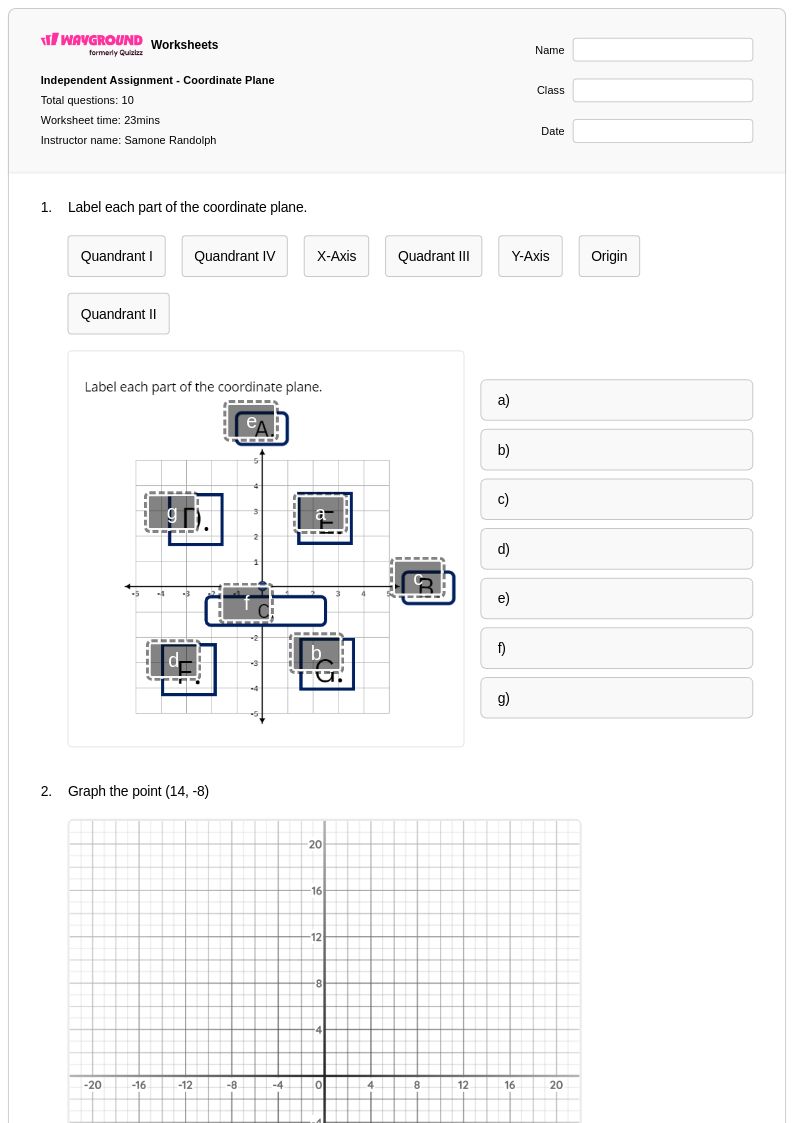
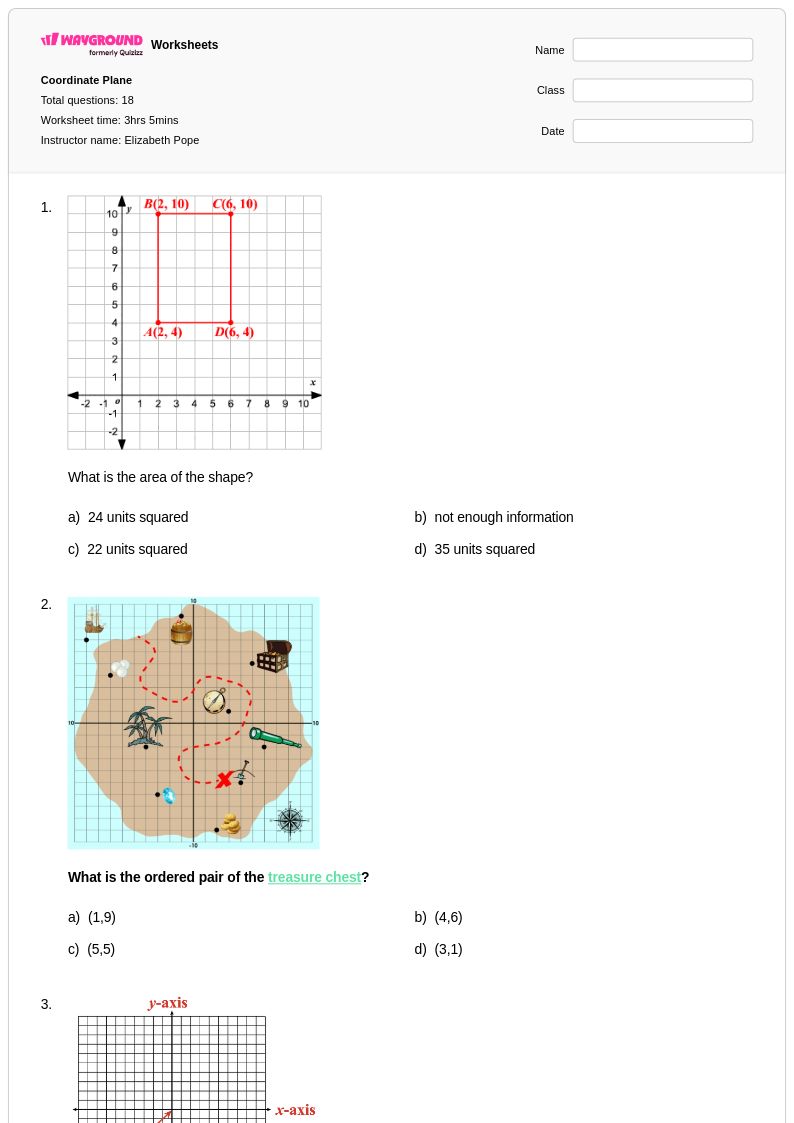
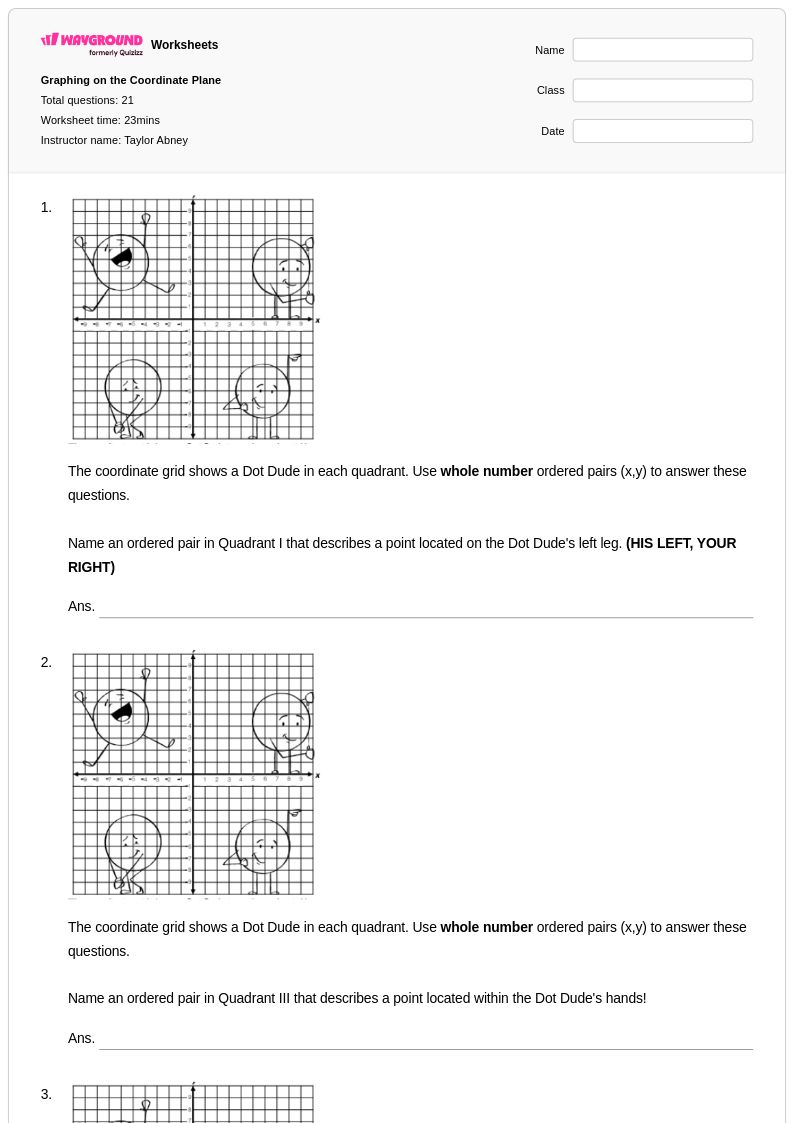
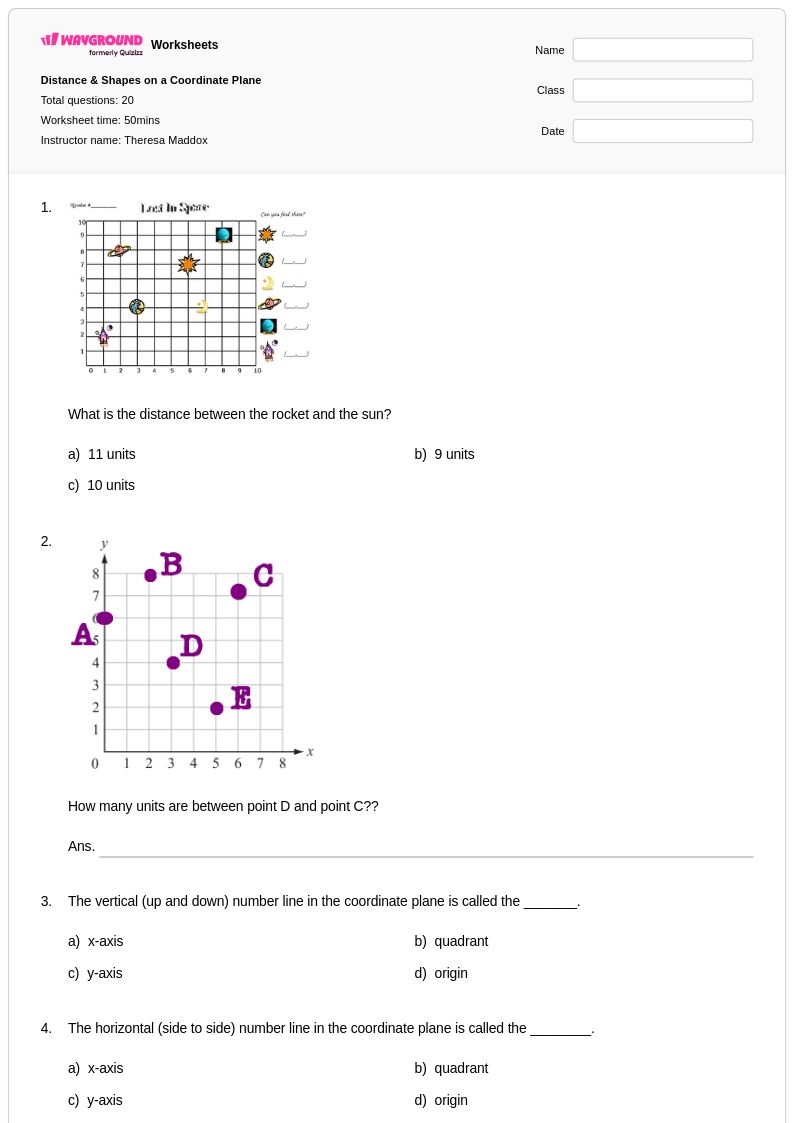
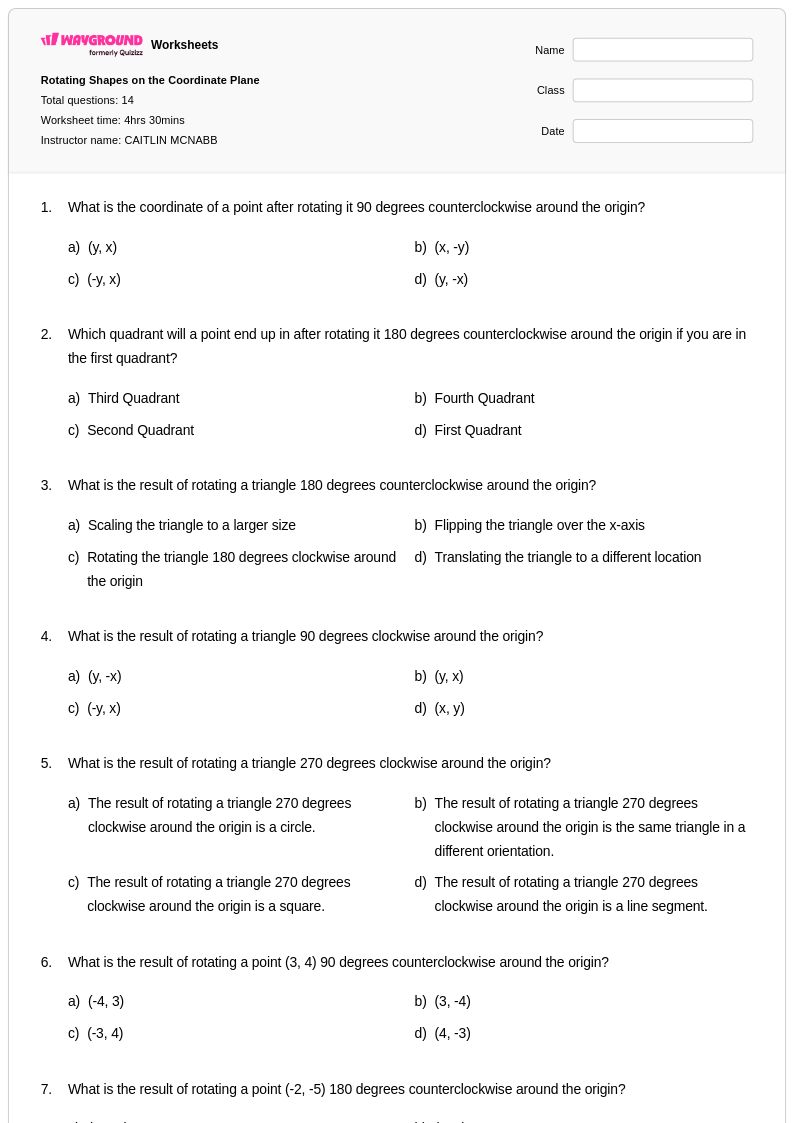
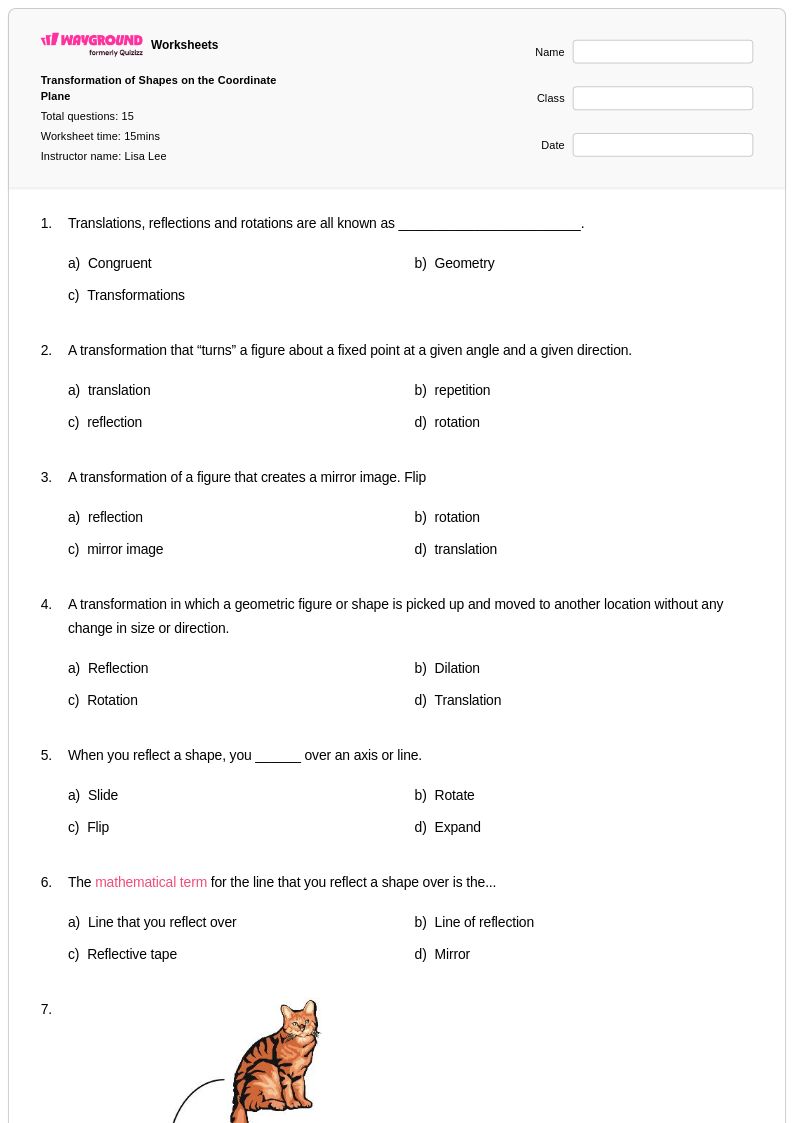
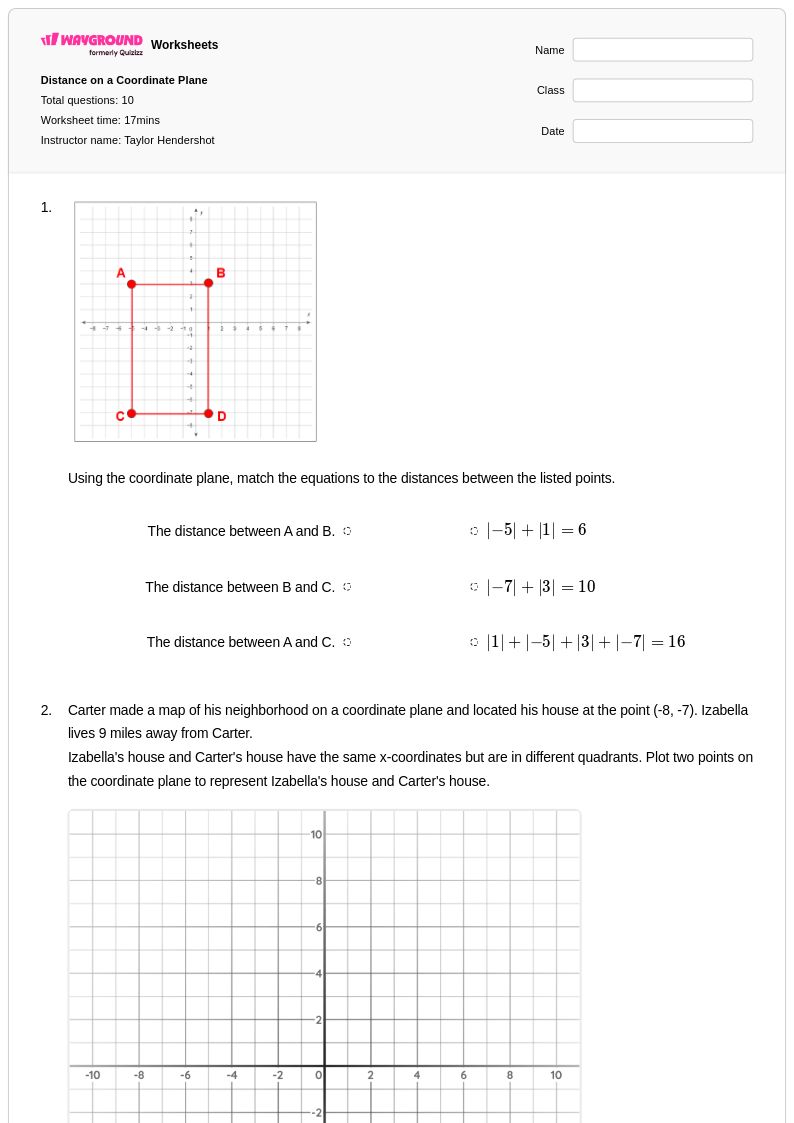
Shapes on the coordinate plane worksheets available through Wayground (formerly Quizizz) provide students with essential practice in visualizing and analyzing geometric figures within the Cartesian coordinate system. These comprehensive worksheets strengthen critical skills including plotting points, identifying coordinates of vertices, calculating distances between points, finding midpoints, and determining the properties of polygons positioned on coordinate grids. Students work through practice problems that require them to translate, reflect, and rotate shapes while tracking coordinate changes, building foundational understanding of geometric transformations. Each worksheet comes with a detailed answer key, and these free printables offer educators ready-to-use resources that seamlessly integrate coordinate geometry concepts with hands-on problem-solving activities.
Wayground (formerly Quizizz) supports mathematics educators with an extensive collection of teacher-created resources specifically designed for coordinate plane geometry instruction. The platform's millions of worksheets feature robust search and filtering capabilities that allow teachers to locate materials aligned with specific curriculum standards and learning objectives. These differentiation tools enable educators to customize content difficulty levels, select problems targeting particular coordinate plane concepts, and access materials in both printable pdf format and interactive digital versions. Teachers can efficiently plan lessons that progress from basic point plotting to complex polygon analysis, while using these versatile resources for targeted remediation, skill practice, and enrichment activities that meet diverse student needs in coordinate geometry instruction.
FAQs
How do I teach shapes on the coordinate plane?
Start with physical activities to make the concept concrete. Use the classroom floor or a large grid as a coordinate plane and have students “walk” to different (x, y) coordinates. Then, transition to graph paper with connect-the-dots activities that form simple shapes before introducing more complex tasks like calculating area or performing transformations.
What exercises help students practice coordinate geometry?
A good progression starts with plotting vertices to form a given polygon. From there, students can identify the type of shape from its coordinates. Next, introduce calculating side lengths and area. Finally, challenge them with geometric transformations like reflecting a shape across the y-axis or translating it three units to the left.
What are common student mistakes when working with shapes on a coordinate plane?
A frequent error is reversing the x and y coordinates, plotting (2, 5) at the location for (5, 2). Students also commonly struggle with negative coordinates, often plotting a point in the wrong quadrant. When calculating distance or slope, they may mix up the (x₁, y₁) and (x₂, y₂) values in the formula.
How can I use these coordinate plane worksheets in my class?
These worksheets are available as printable PDFs for hands-on practice or as interactive digital assignments on the Wayground platform. Each worksheet includes a complete answer key. For printed work, you can use the Wayground for Teachers app to quickly scan and grade student submissions.
How does coordinate geometry fit into the math curriculum?
Aligned with Common Core standards, this topic serves as a critical bridge between algebra and geometry. Students typically begin by plotting points in elementary grades. In middle school, they apply this skill to draw polygons, calculate distances, and perform rigid transformations (reflections, rotations, translations), which lays the essential groundwork for high school geometry and functions.
How can I support students who struggle with coordinate geometry?
For students needing support with visual processing, you can use Wayground's worksheet-level tools to increase font size or apply a dyslexia-friendly font for better readability. When assigning a worksheet digitally, you can enable Read Aloud for students who benefit from audio reinforcement or reduce the number of answer choices to lower cognitive load.