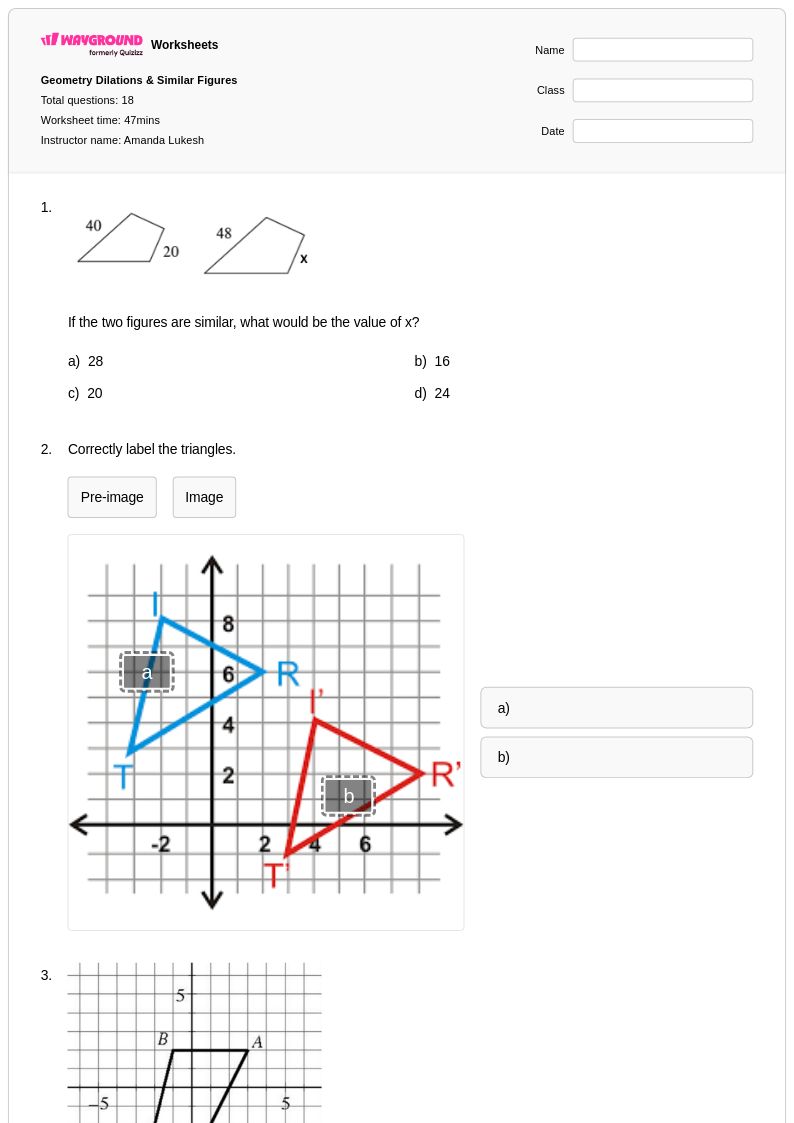
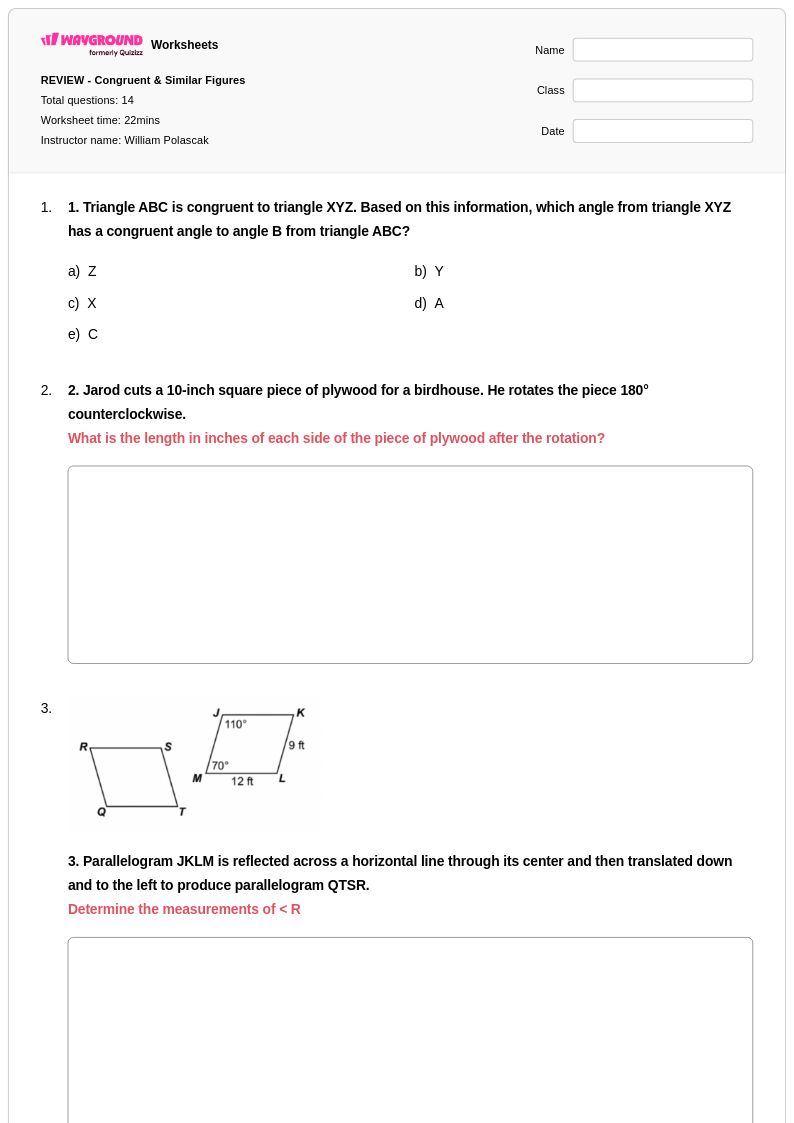
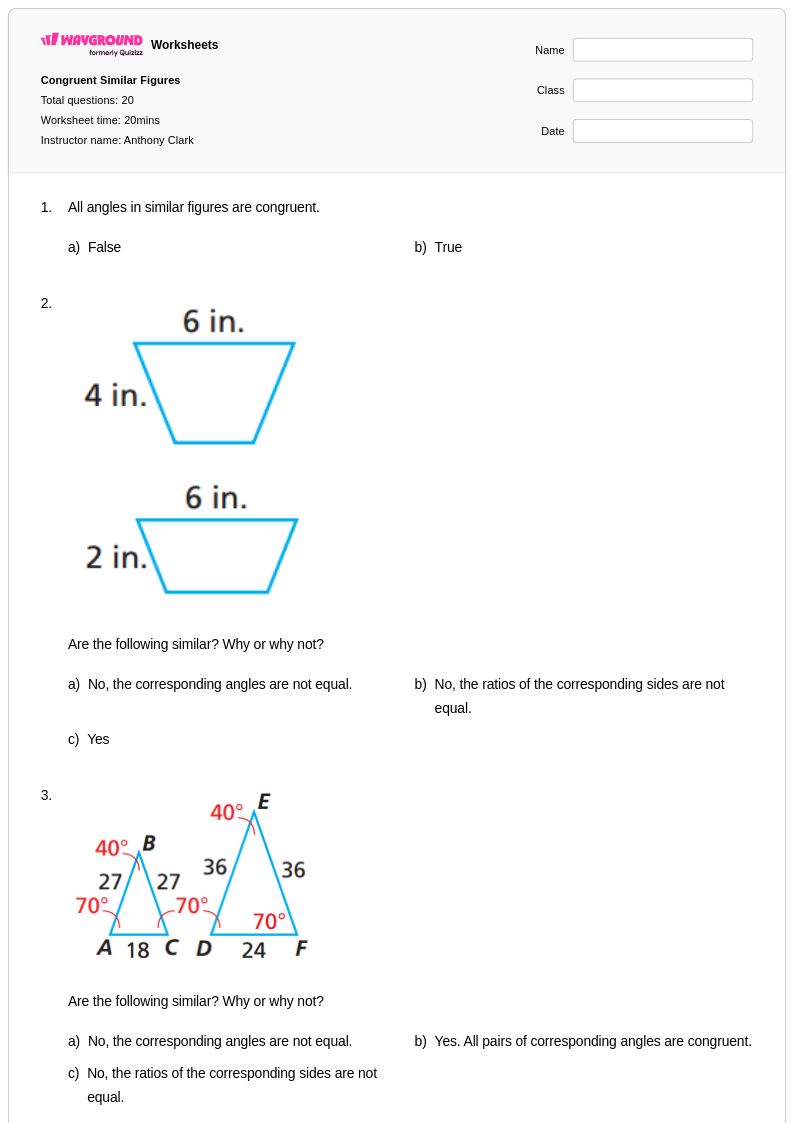
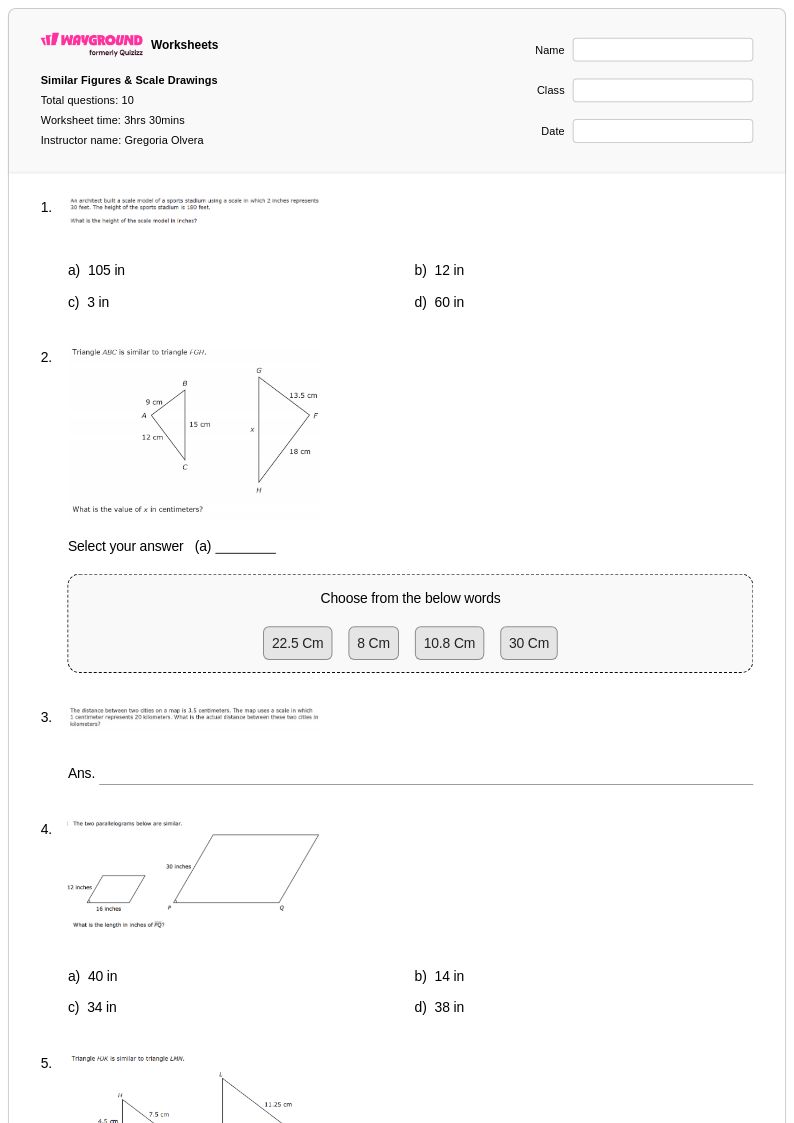
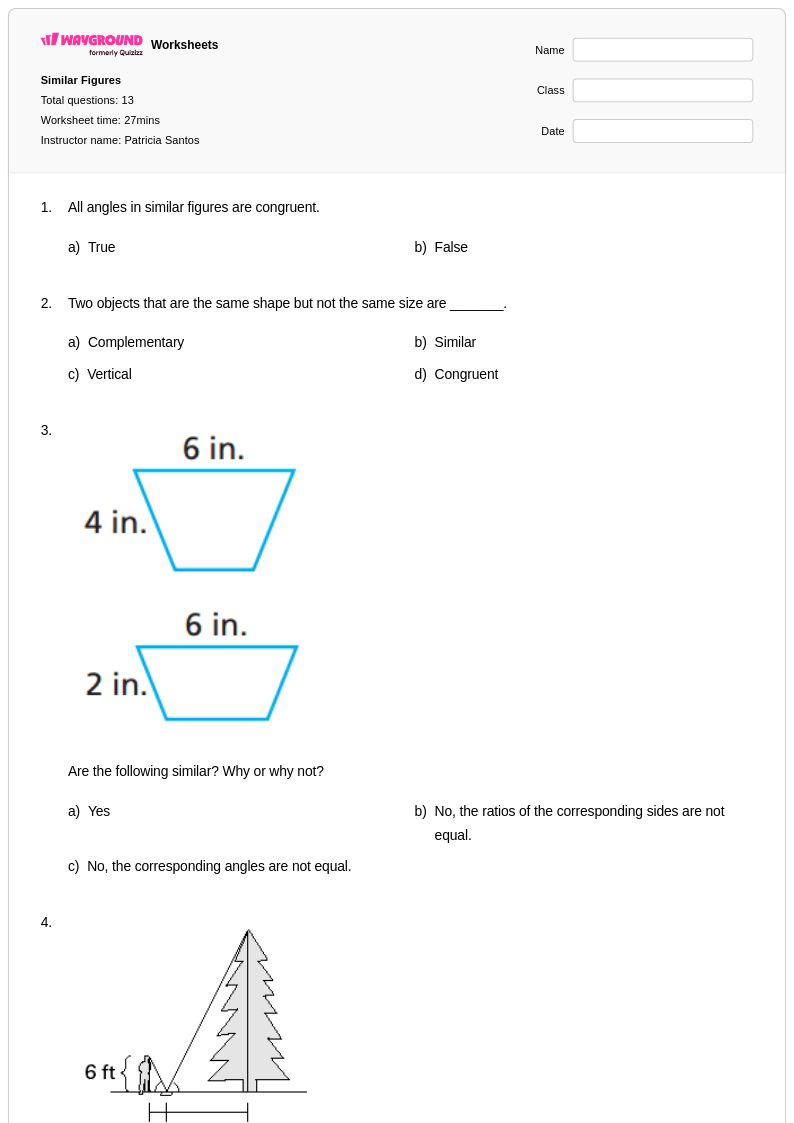
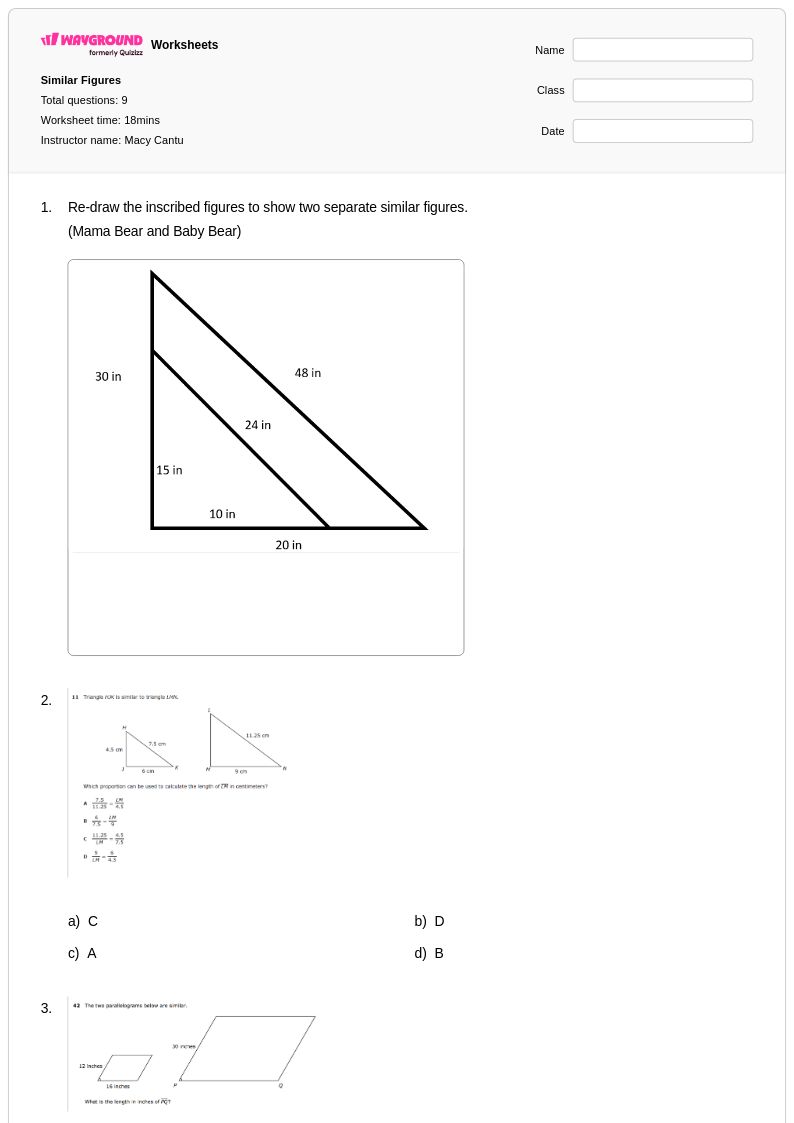
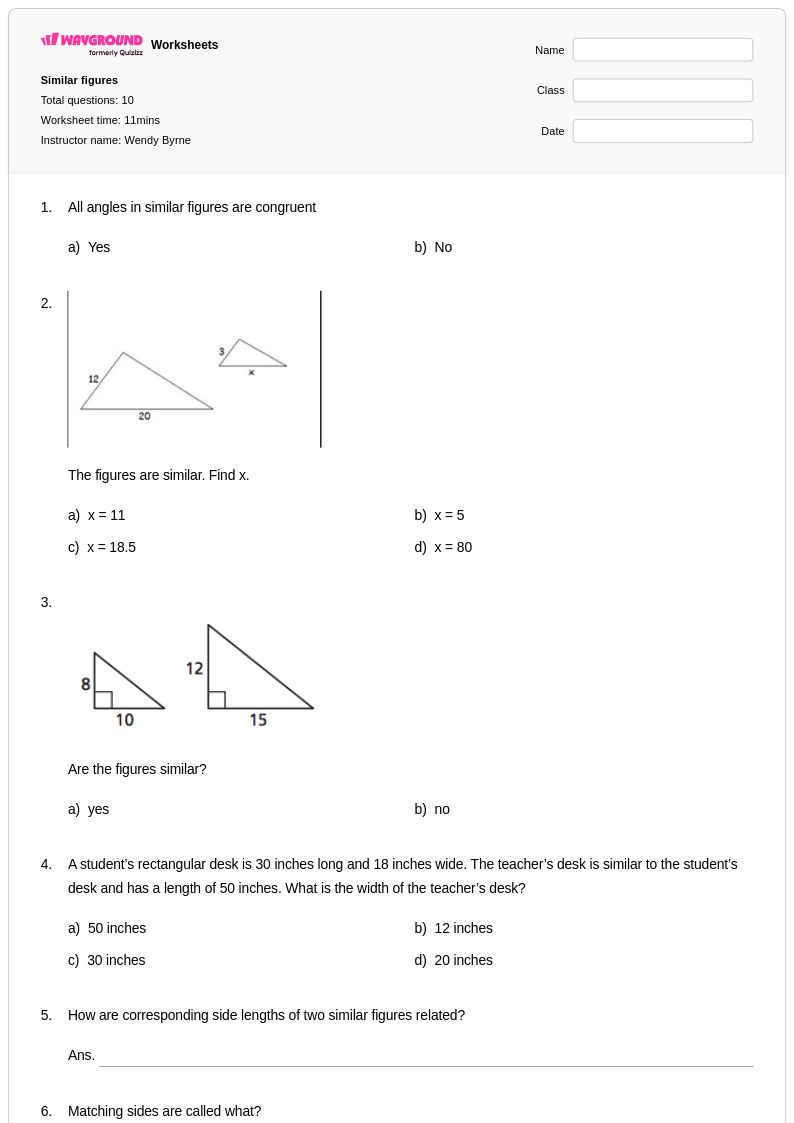
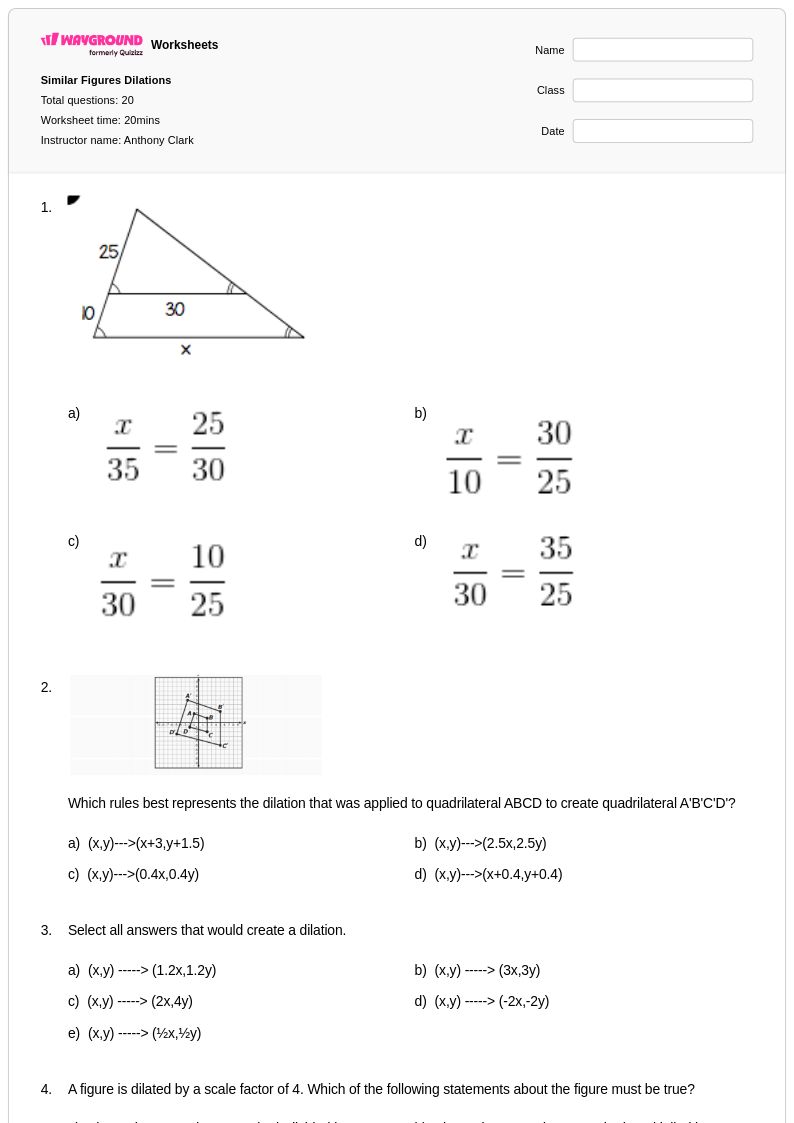
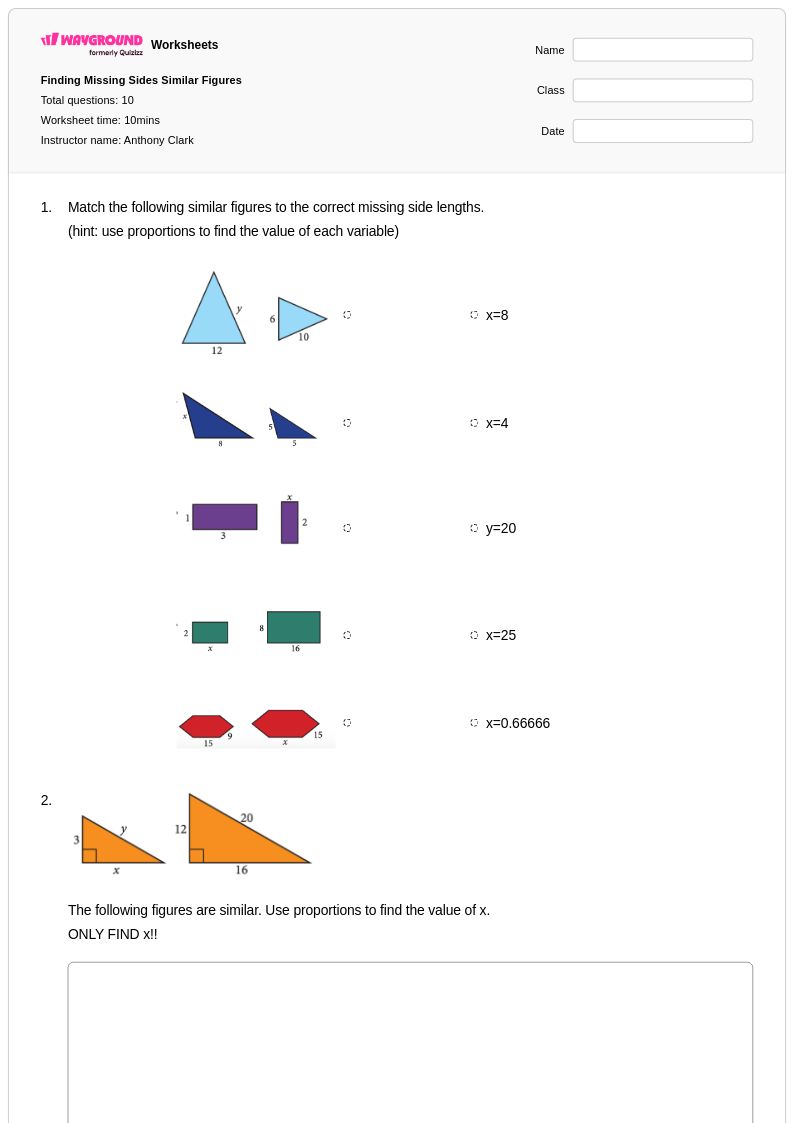
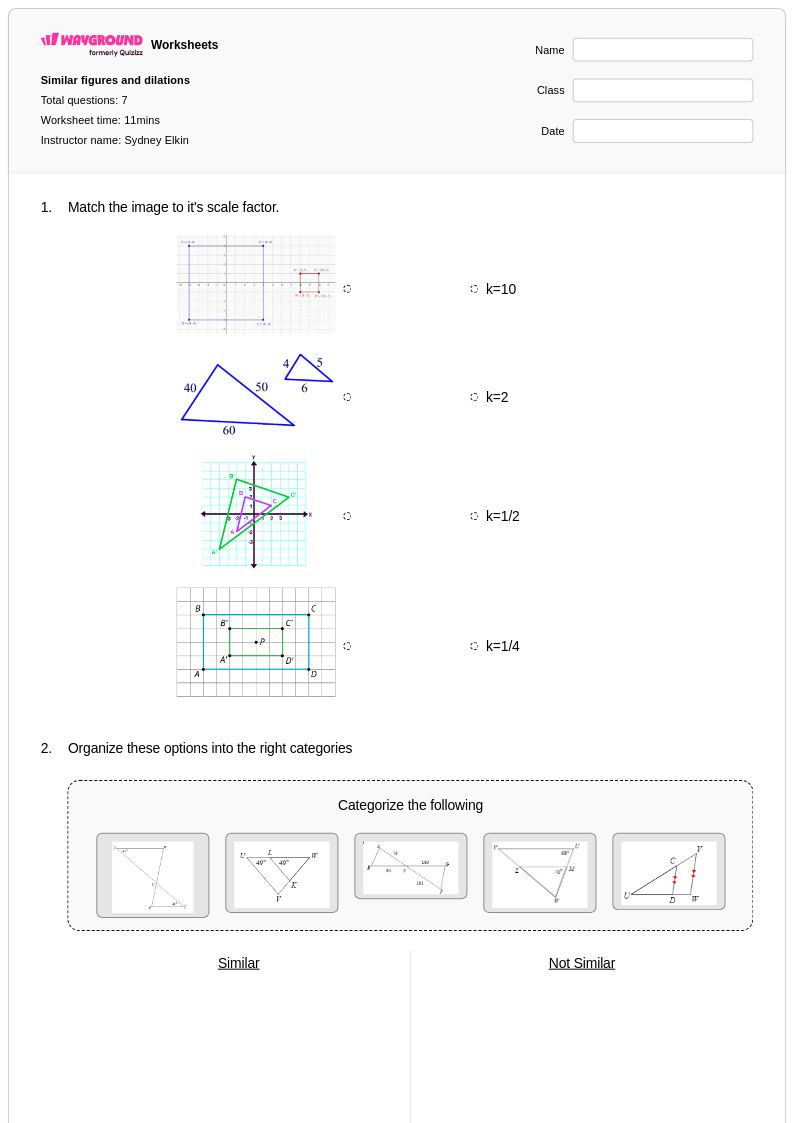
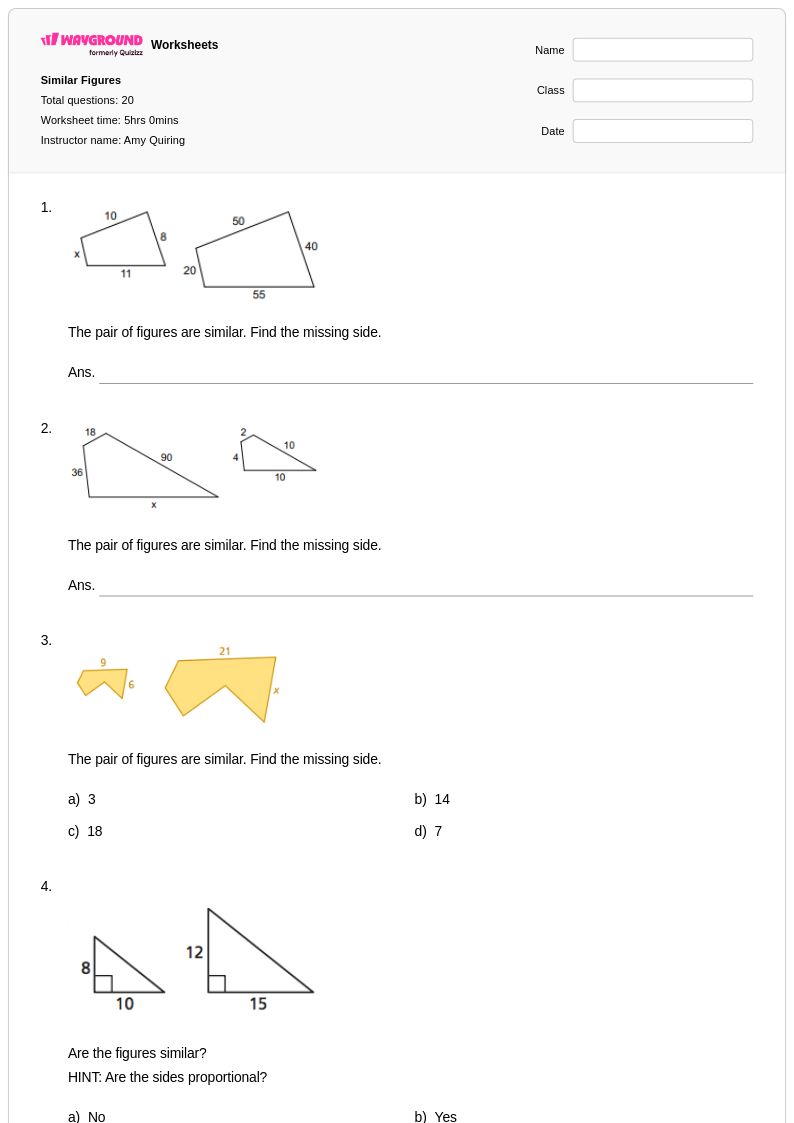
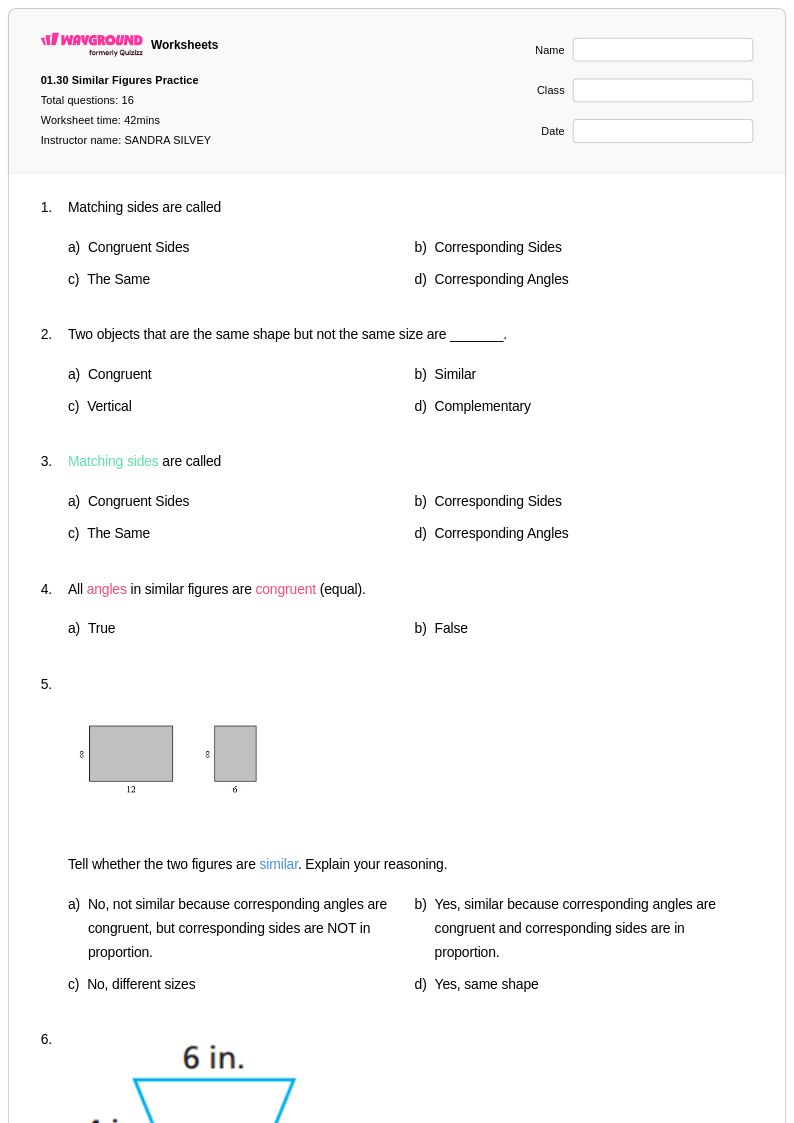
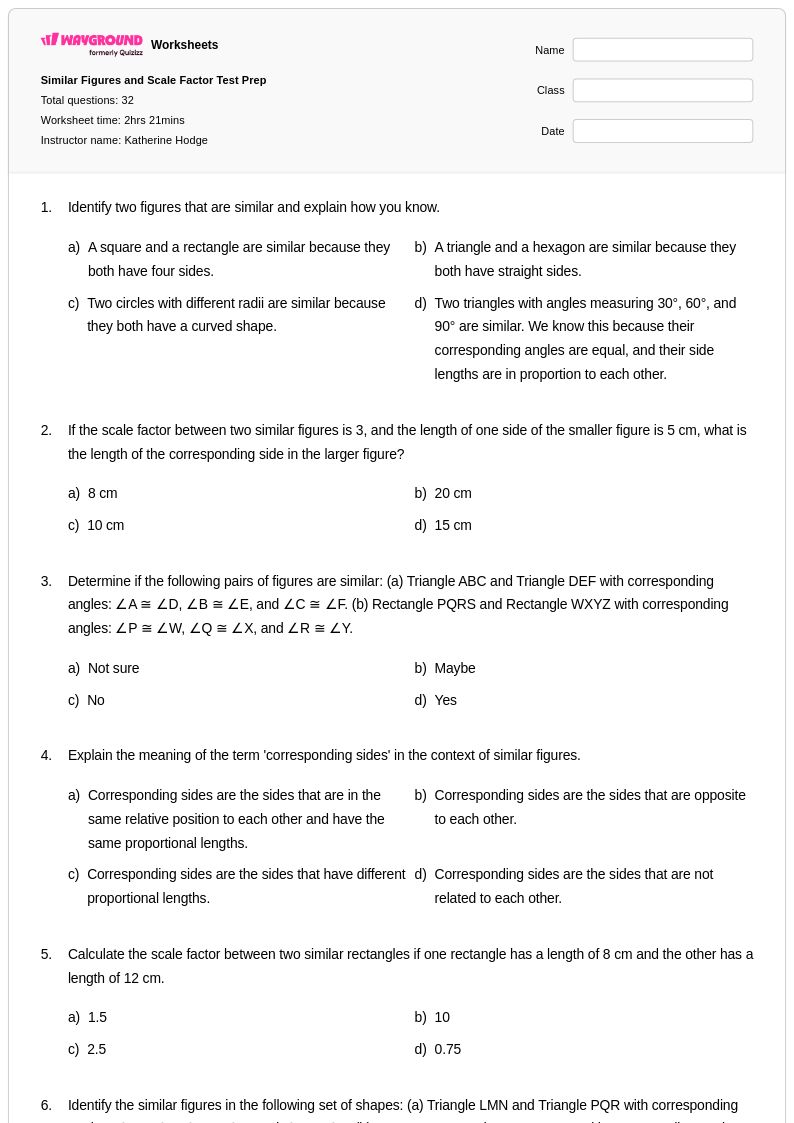
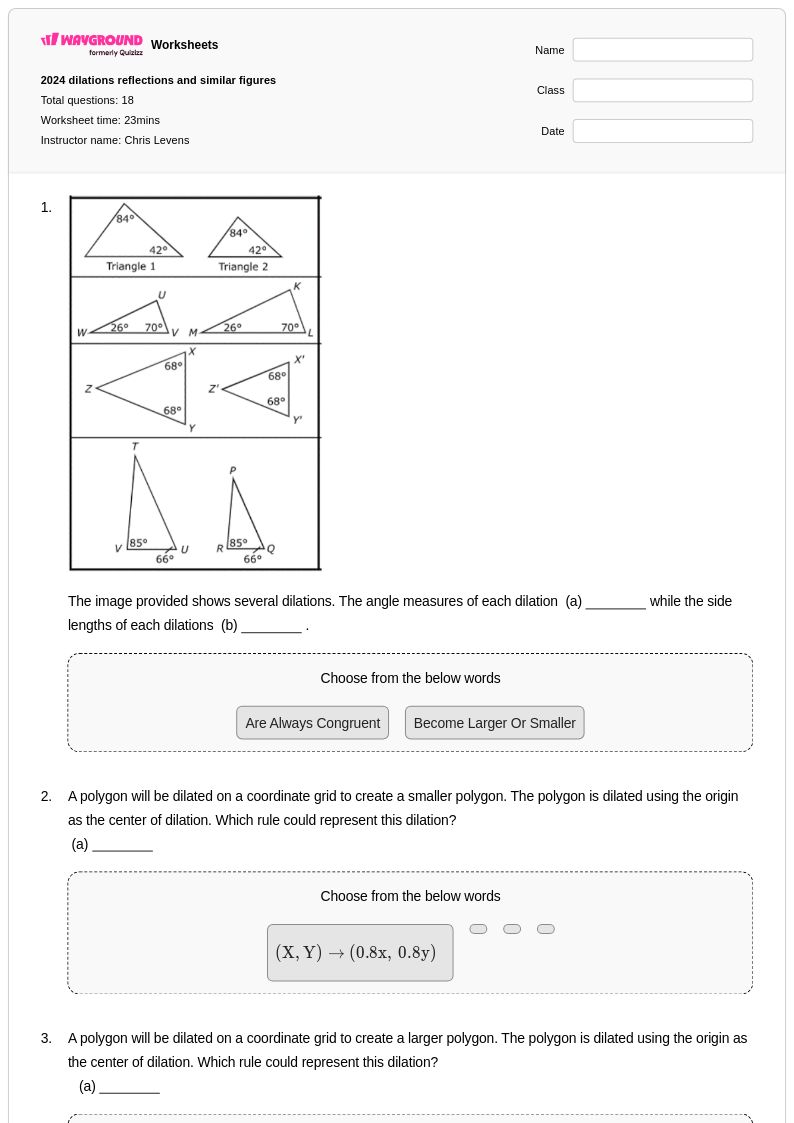
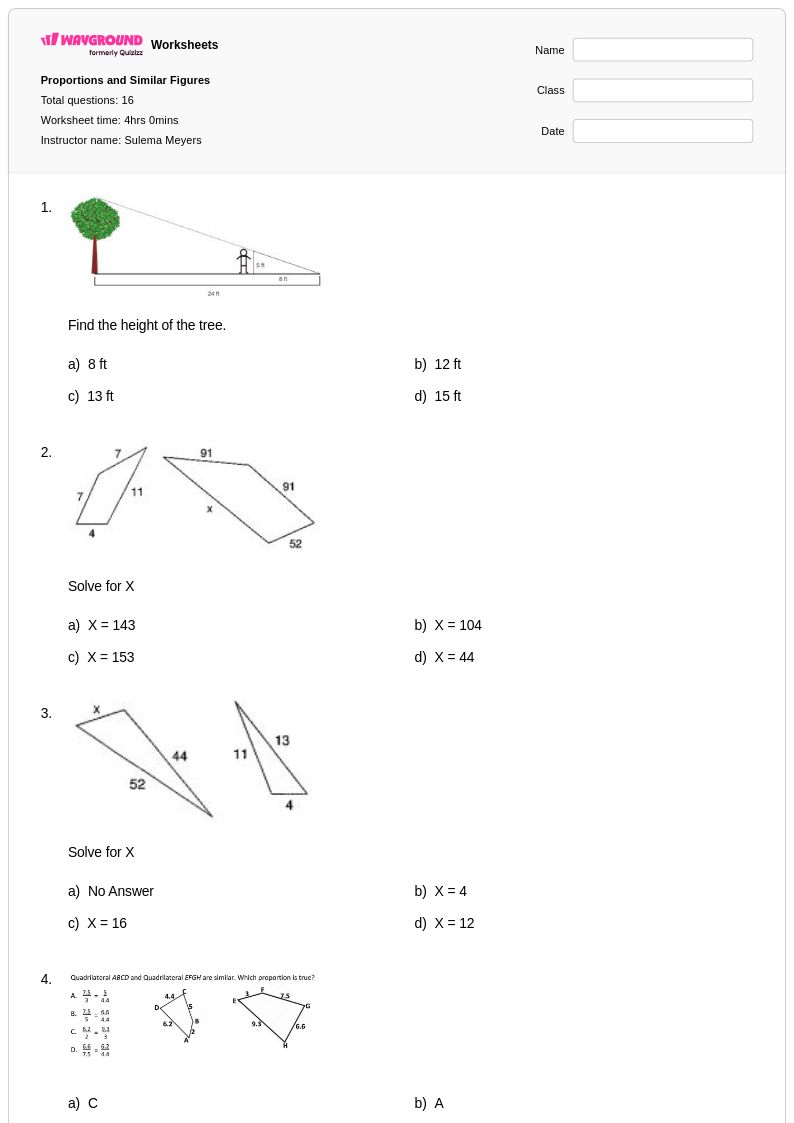
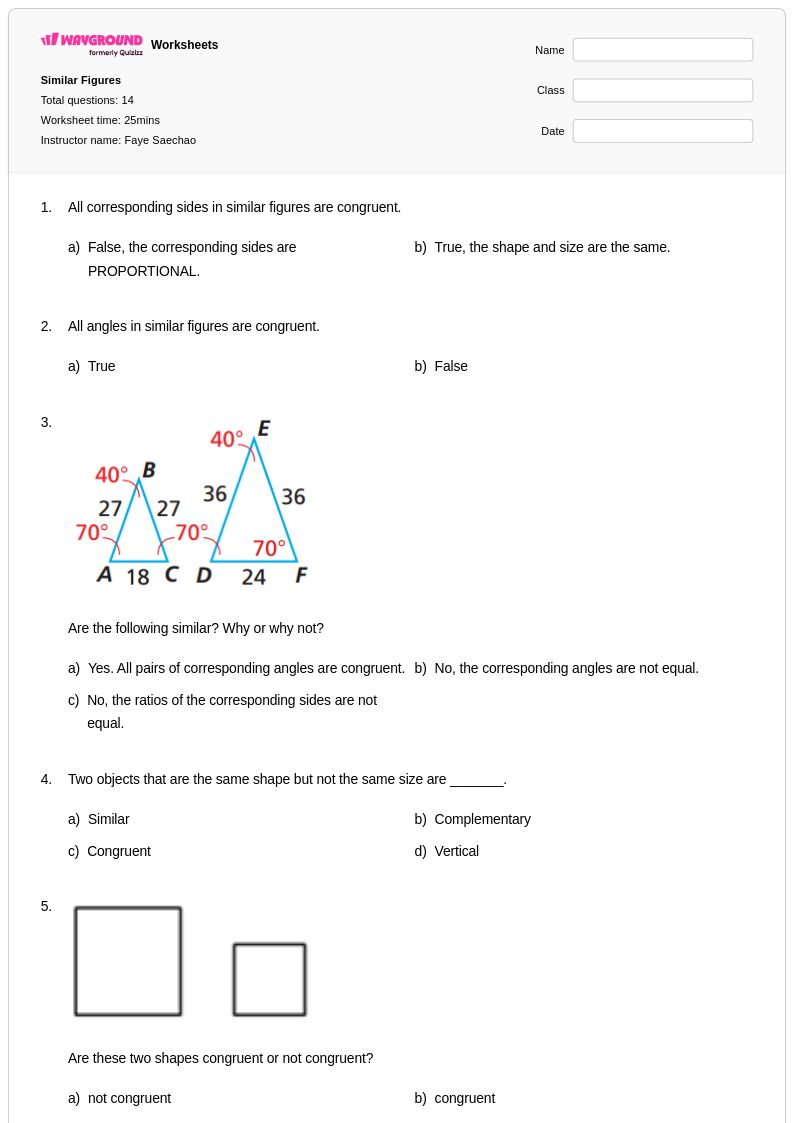
Explore Wayground's collection of similar figures worksheets featuring printable PDFs with practice problems and answer keys to help students master geometric relationships, proportions, and scale factors.
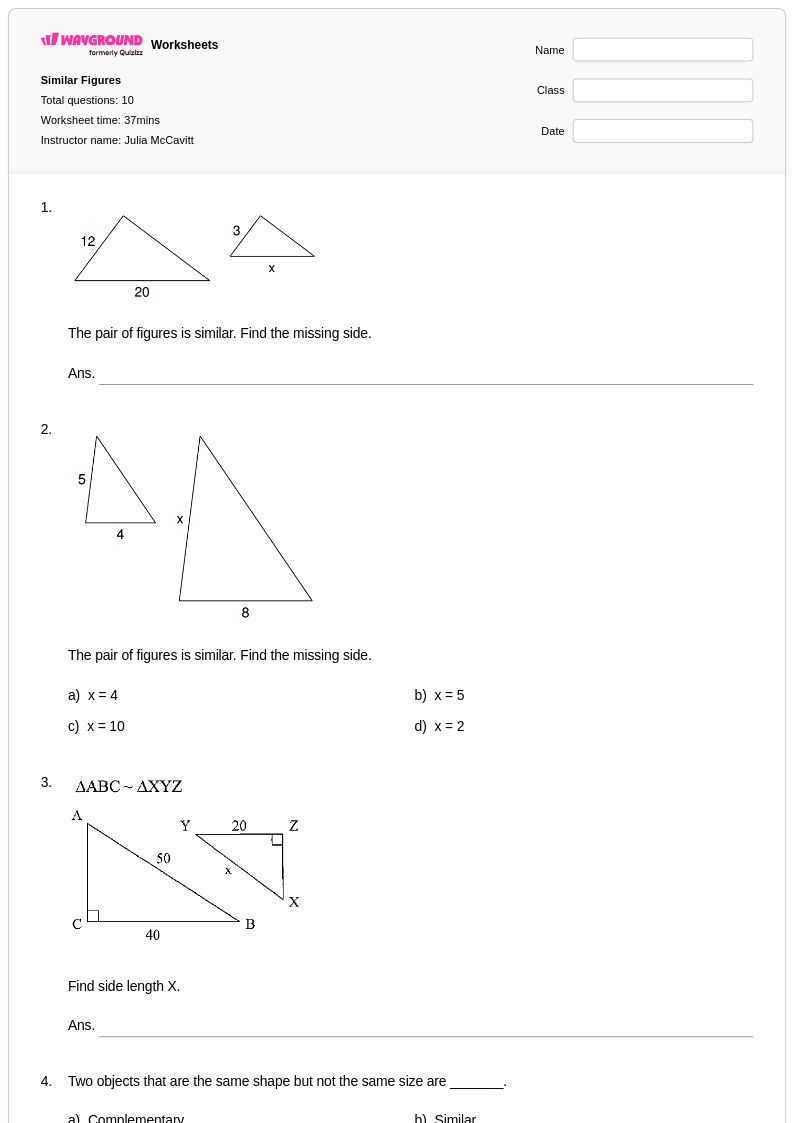
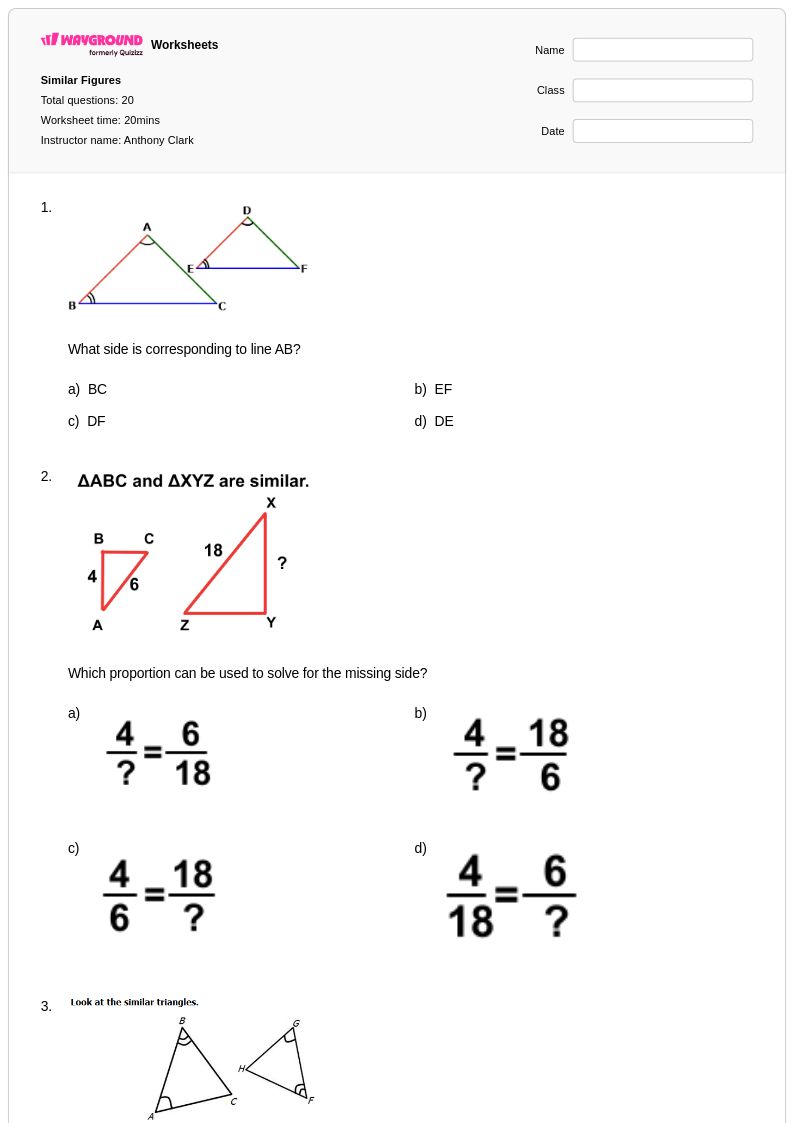
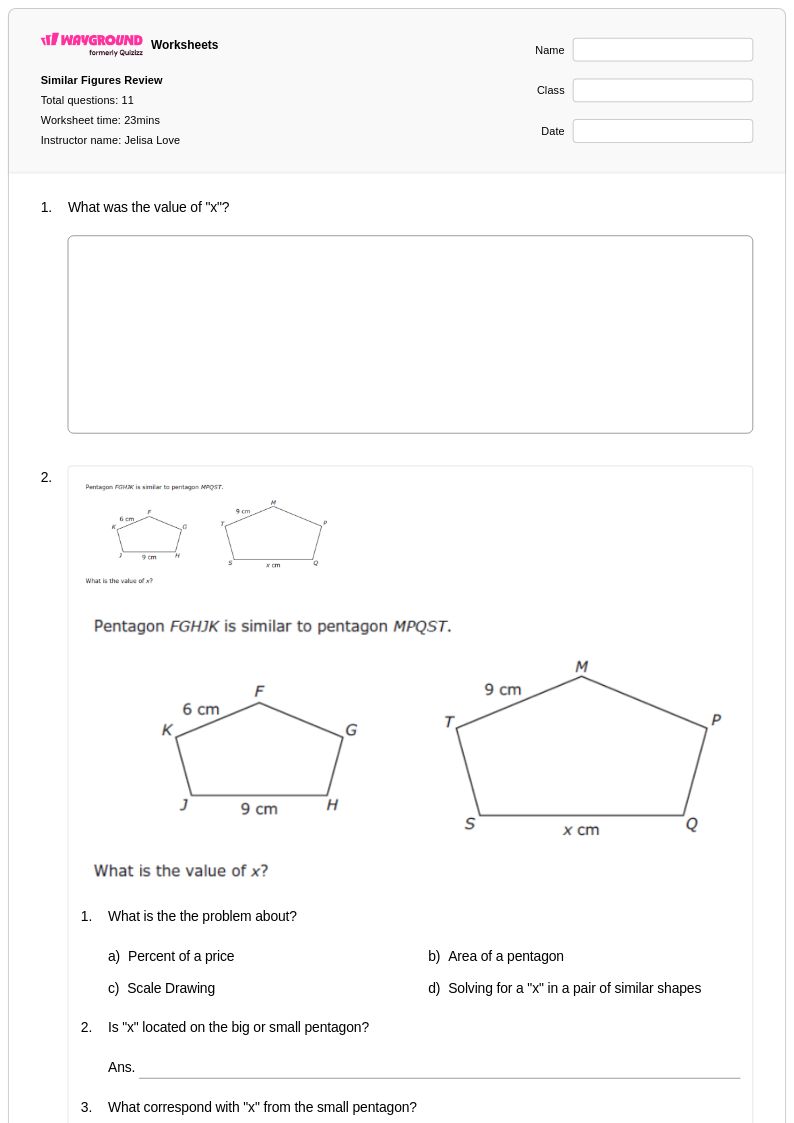
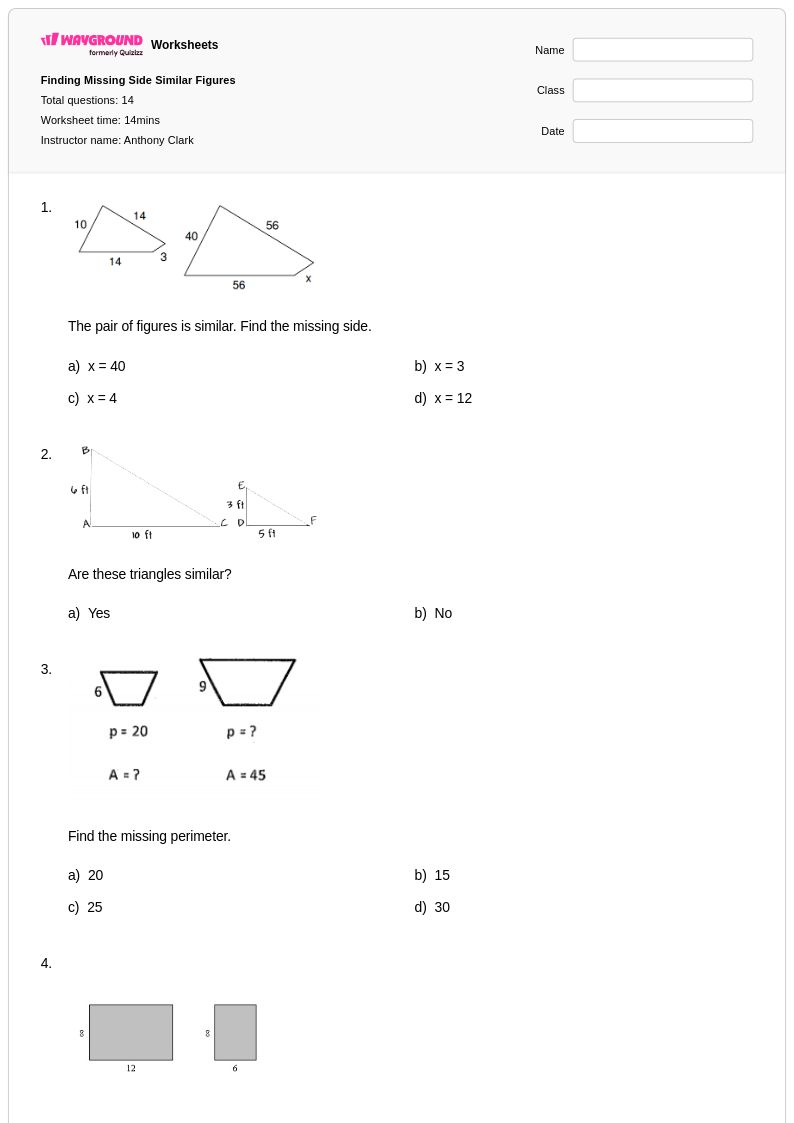
Similar figures worksheets available through Wayground (formerly Quizizz) provide comprehensive practice opportunities for students to master the fundamental concepts of geometric similarity, proportional relationships, and scale factors. These expertly designed worksheets strengthen critical mathematical skills including identifying corresponding angles and sides, calculating missing measurements using proportional reasoning, and applying similarity theorems to solve real-world problems. Each worksheet collection includes detailed answer keys that support both independent study and classroom instruction, while the free printable format ensures accessibility for all learning environments. Students engage with thoughtfully structured practice problems that progress from basic similar triangle identification to complex multi-step applications involving scale drawings and indirect measurement techniques.
Wayground (formerly Quizizz) empowers mathematics educators with access to millions of teacher-created similar figures worksheets that feature robust search and filtering capabilities, enabling quick identification of resources that align with specific curriculum standards and learning objectives. The platform's sophisticated differentiation tools allow teachers to customize worksheet difficulty levels, modify problem types, and adapt content to meet diverse student needs across varying mathematical proficiency levels. These versatile resources are available in both printable pdf format and interactive digital versions, supporting flexible lesson planning whether for whole-class instruction, targeted remediation sessions, or enrichment activities. The comprehensive worksheet library streamlines preparation time while ensuring students receive consistent, high-quality practice that builds confidence and mastery in geometric similarity concepts through systematic skill development.
FAQs
How do I introduce the concept of similar figures?
Start with the core idea of "same shape, different size." Use real-world examples like toy cars and real cars, or maps and the areas they represent. Have students compare photographs that have been enlarged or reduced to see that angles remain the same while side lengths change proportionally.
What types of problems help students practice similar figures?
Effective practice includes a variety of problems. Start with identifying corresponding sides and angles in pairs of similar polygons. Progress to setting up and solving proportions to find missing side lengths. Finally, incorporate application problems involving scale factors, scale drawings, or indirect measurement, such as finding the height of a tree from its shadow.
What are common student mistakes with similar figures?
A frequent error is incorrectly matching corresponding sides, especially when one figure is rotated or flipped. Students also commonly set up their proportions incorrectly, for example, by mixing up the numerator and denominator (e.g., big/small = small/big). Emphasize labeling corresponding vertices in order to avoid these mistakes.
How do I use this similar figures worksheet?
You can assign this worksheet in multiple ways to fit your classroom's needs. Host it as an interactive digital quiz on Wayground or download the printable PDF for students to complete on paper. Every worksheet includes a complete answer key for efficient grading. For paper submissions, you can use the Wayground for Teachers app to quickly scan and grade student work.
How does the concept of similar figures develop across grade levels?
In line with Common Core progression, the topic builds gradually. In middle school (Grades 6-7), students explore similarity through scale drawings and proportional reasoning. In Grade 8, the concept is formalized through the lens of geometric transformations, specifically dilations. By high school geometry, students use this foundation to prove triangles are similar using formal theorems like AA, SSS, and SAS.
How can I support students who struggle with similar figures?
For students who find this topic challenging, provide visual scaffolds. Use color-coding to highlight corresponding sides and angles on diagrams. You can also use Wayground's worksheet customization tools to apply a dyslexia-friendly font or increase font size and spacing for better readability. For digital assignments, consider enabling reduced answer choices to lower cognitive load on multiple-choice questions.