
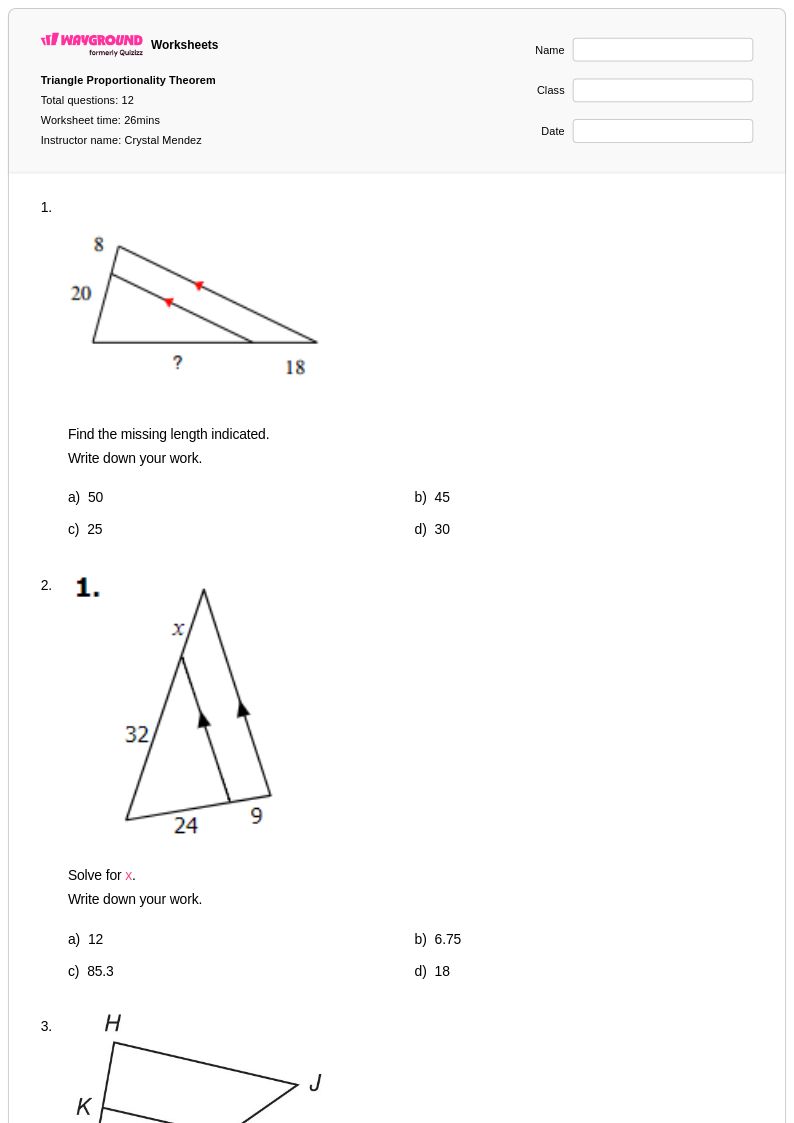
12 Q
10th
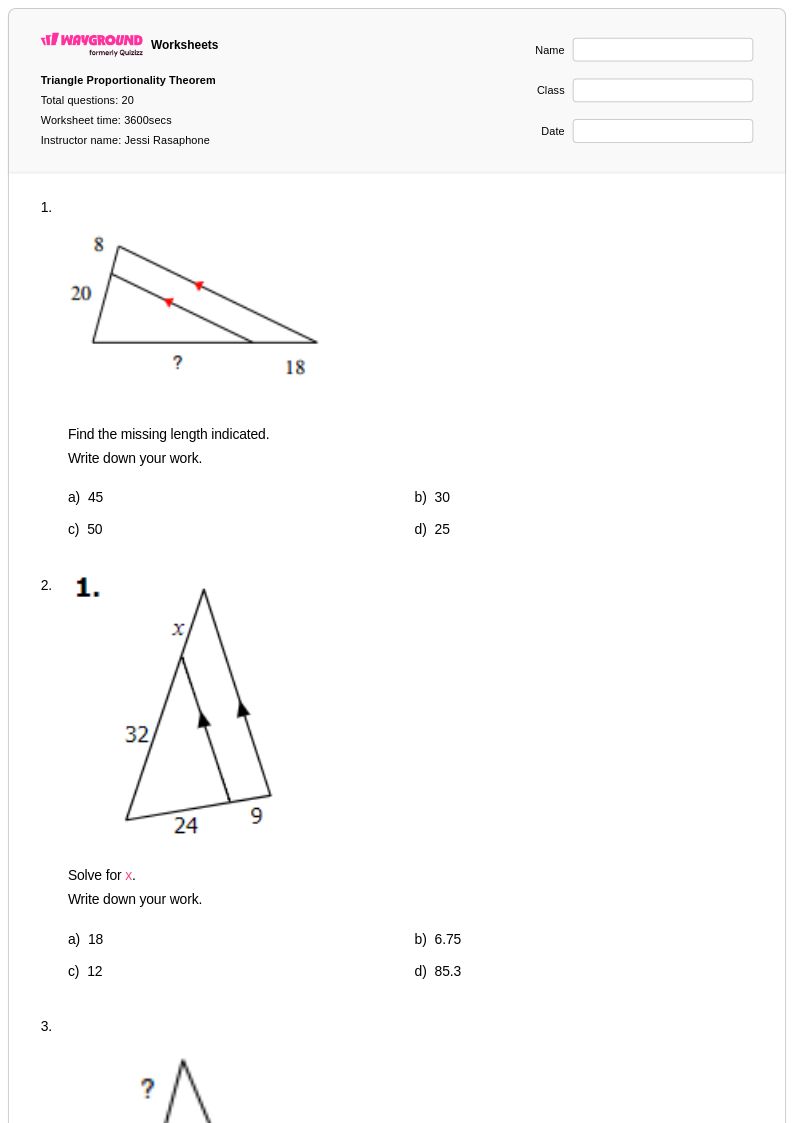
20 Q
9th - 10th
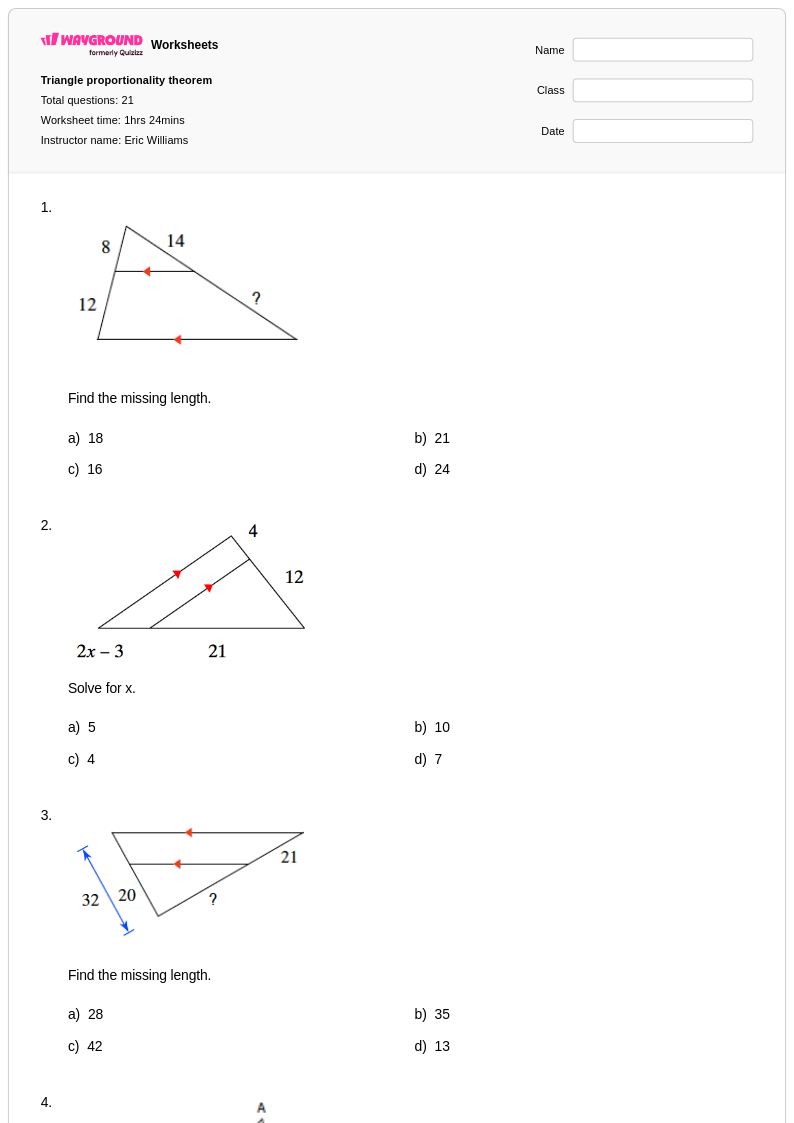
21 Q
12th
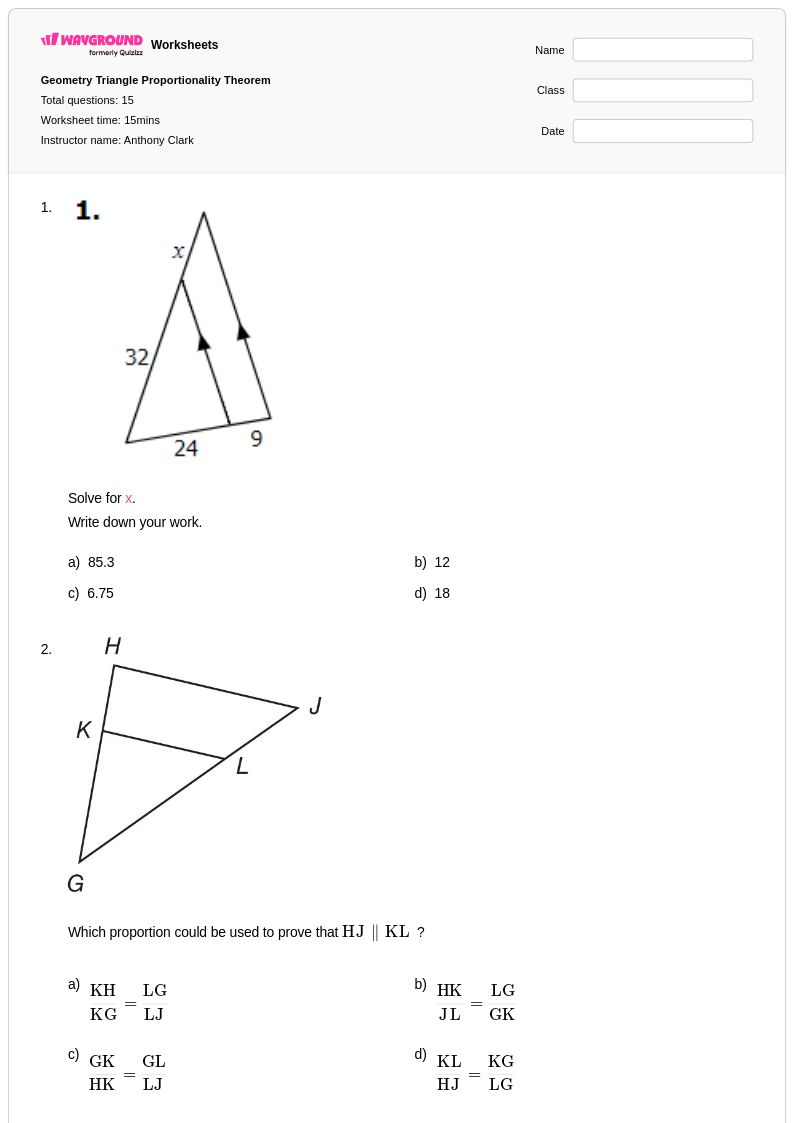
15 Q
10th - Uni
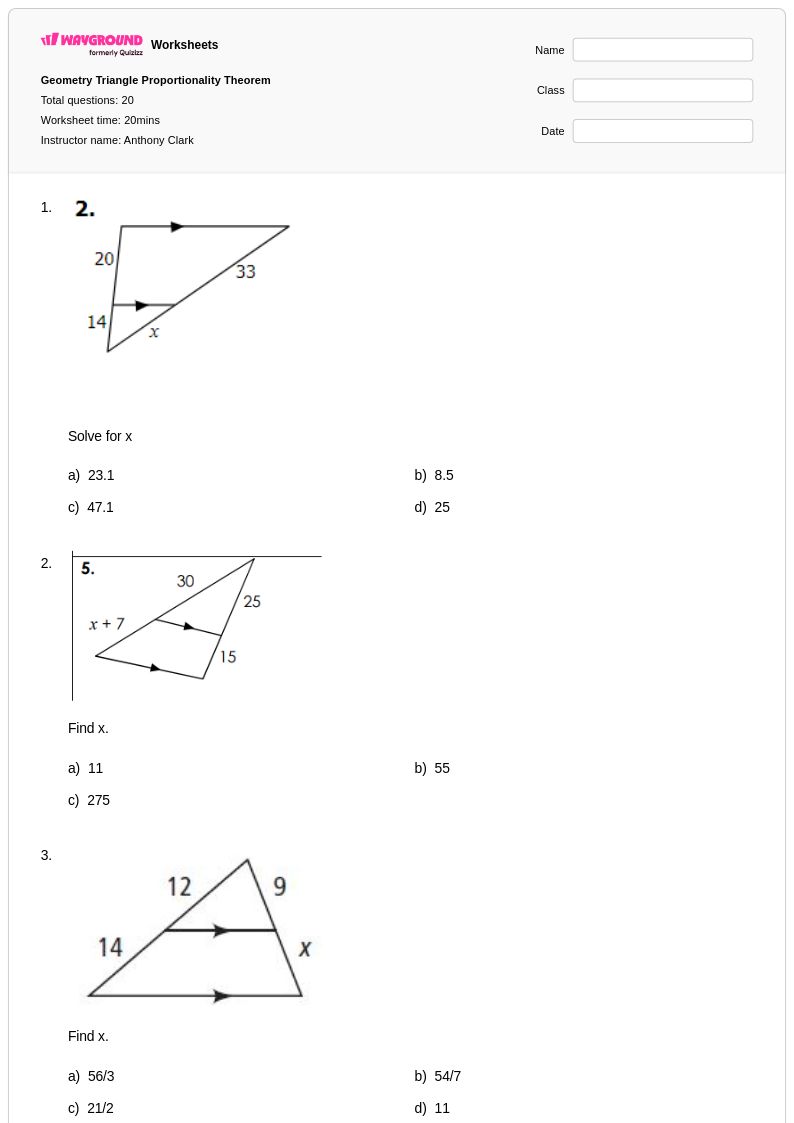
20 Q
10th - Uni
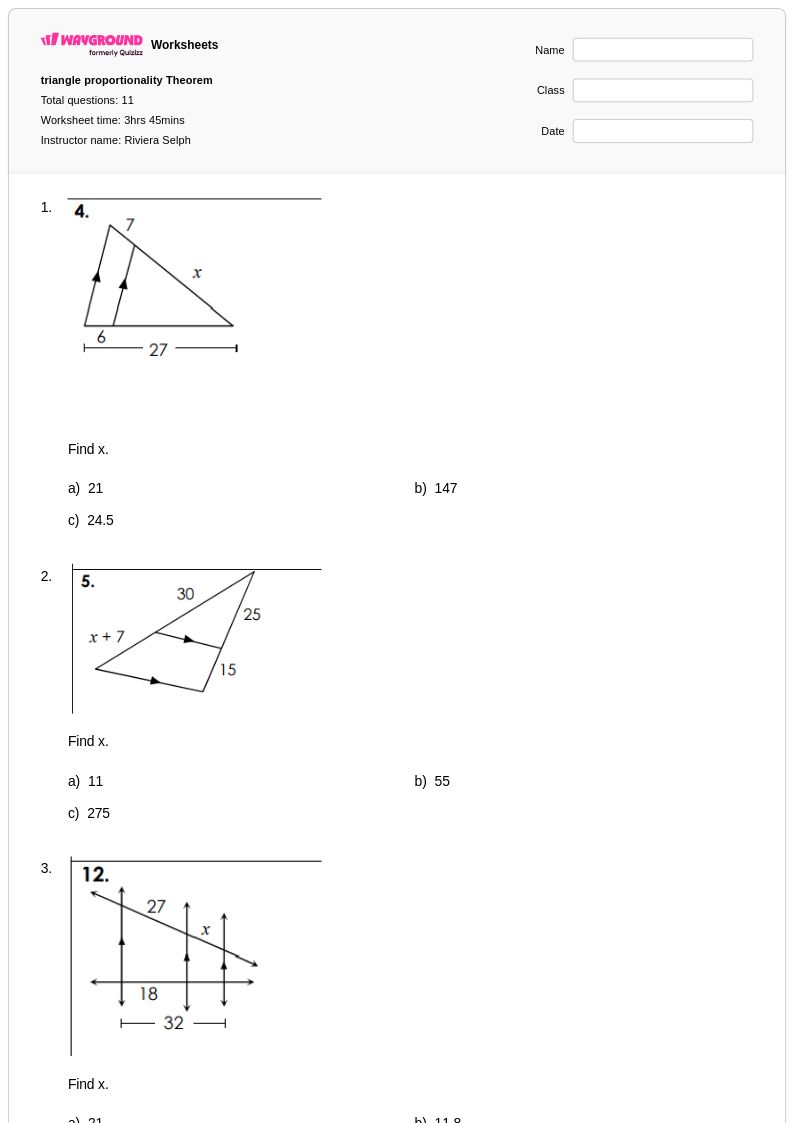
11 Q
12th
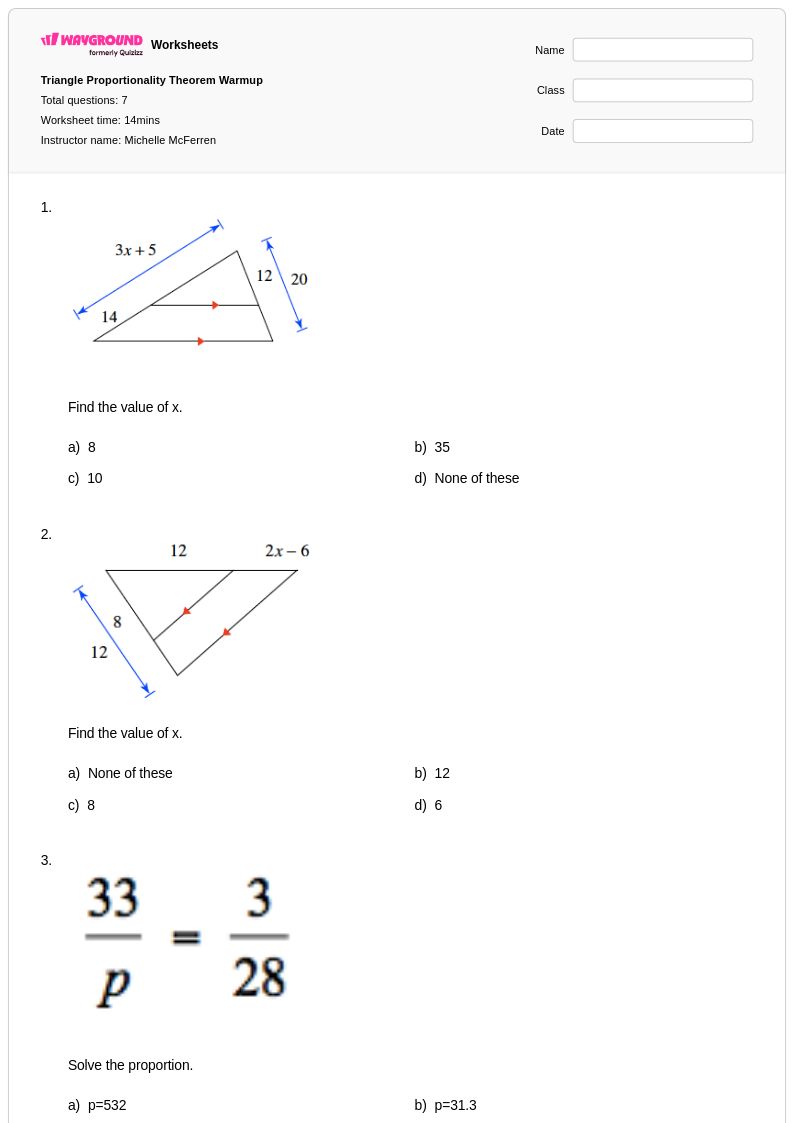
7 Q
9th - 12th
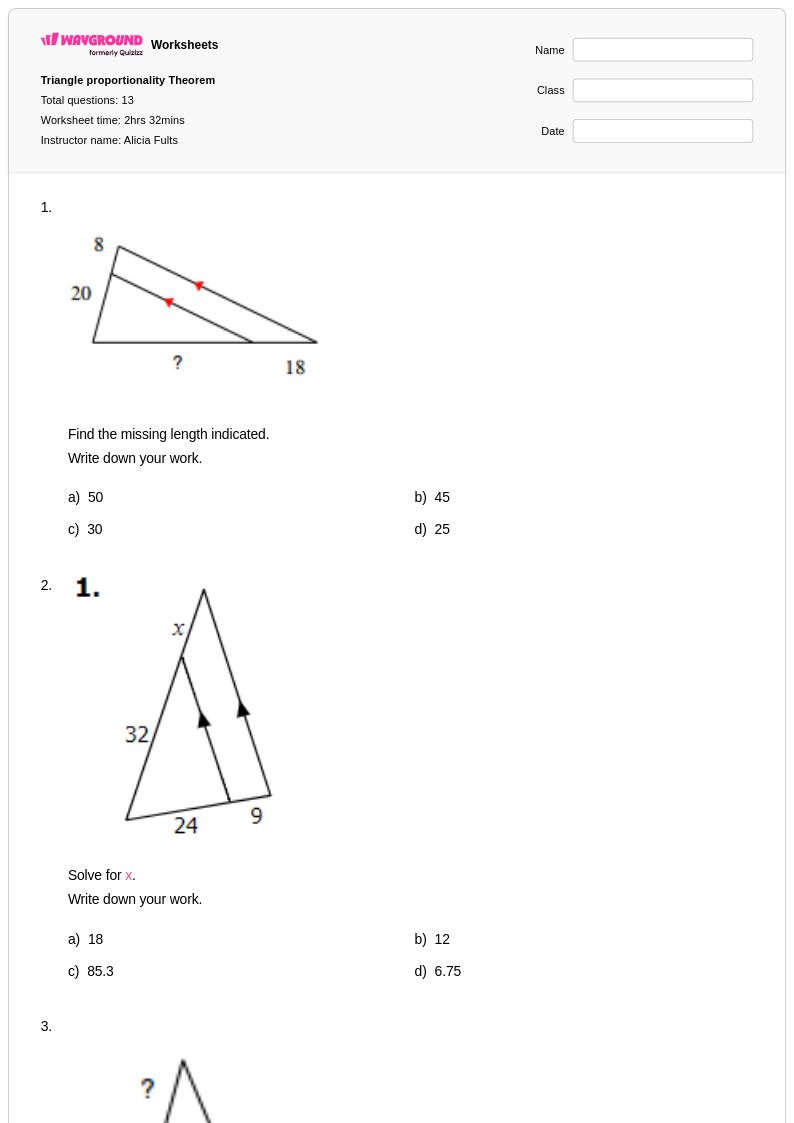
13 Q
9th - 12th
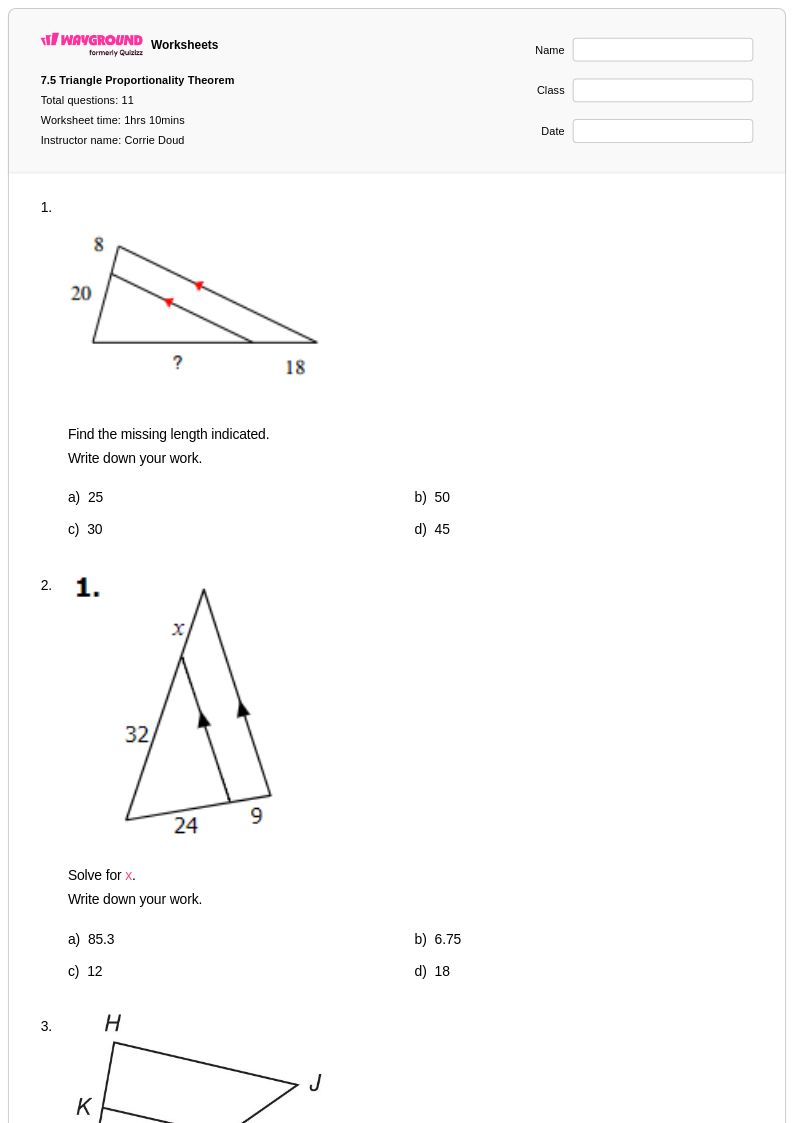
11 Q
10th
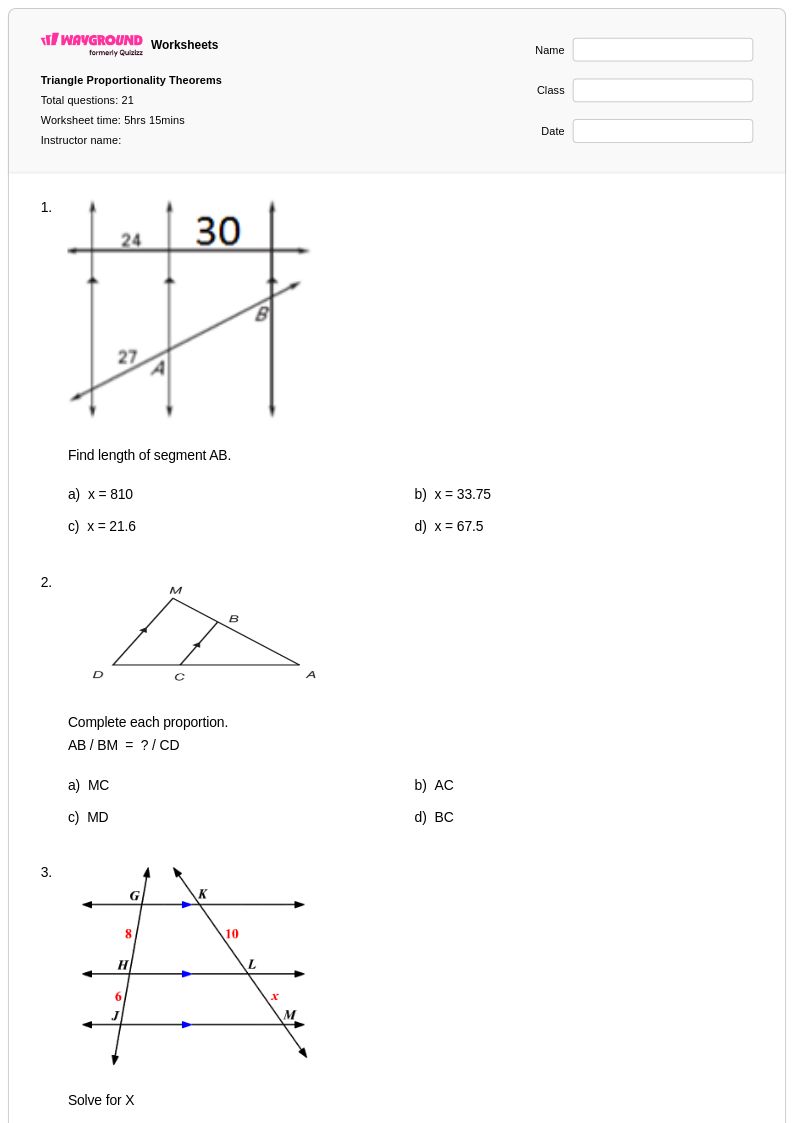
21 Q
9th - 12th
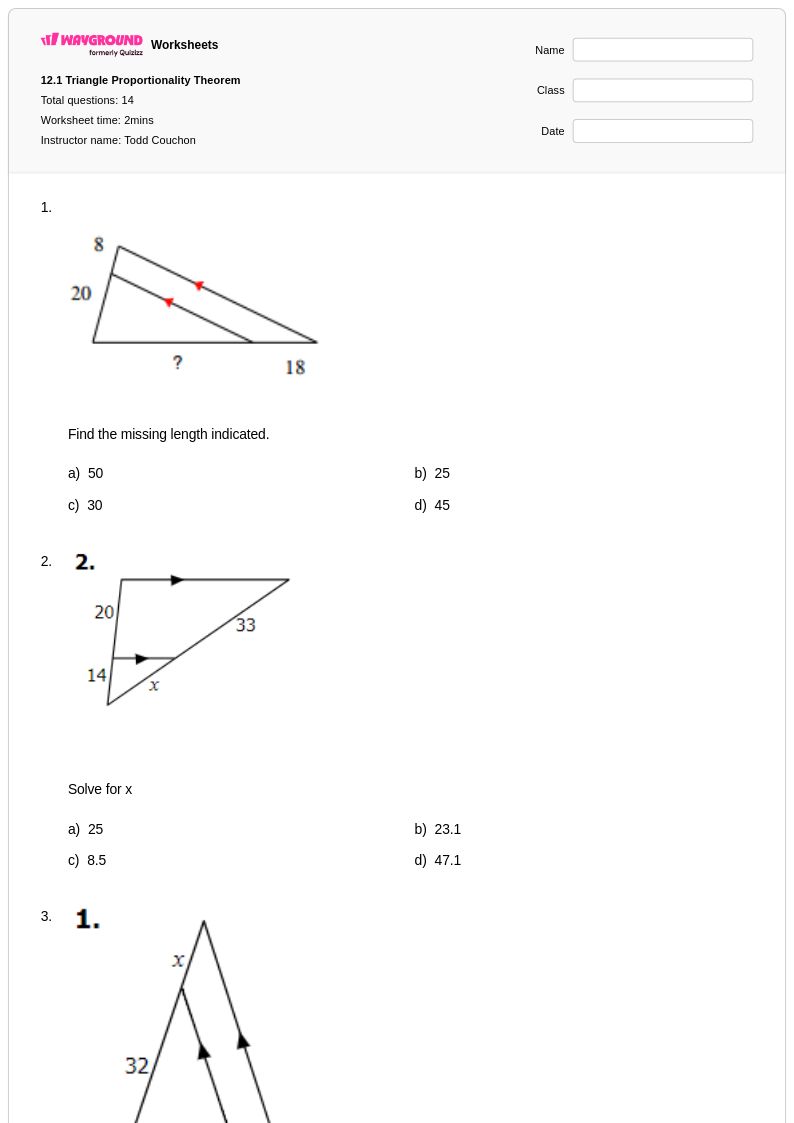
14 Q
9th - 10th
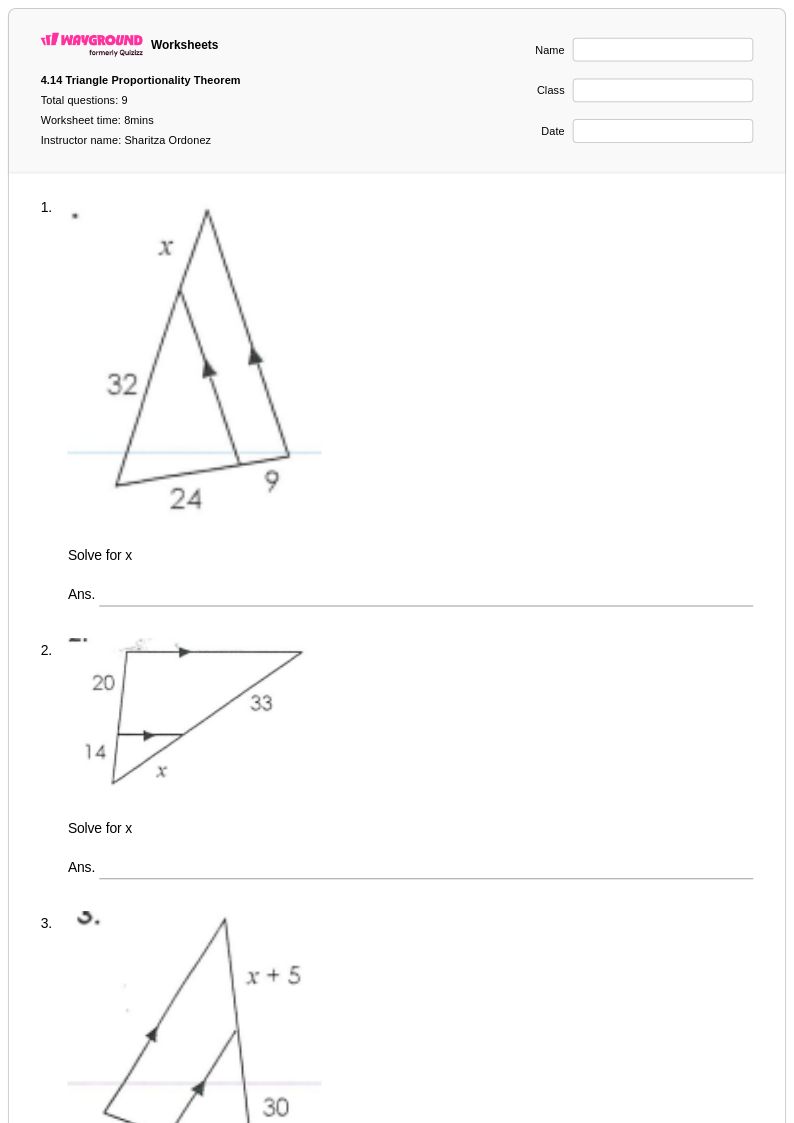
9 Q
10th
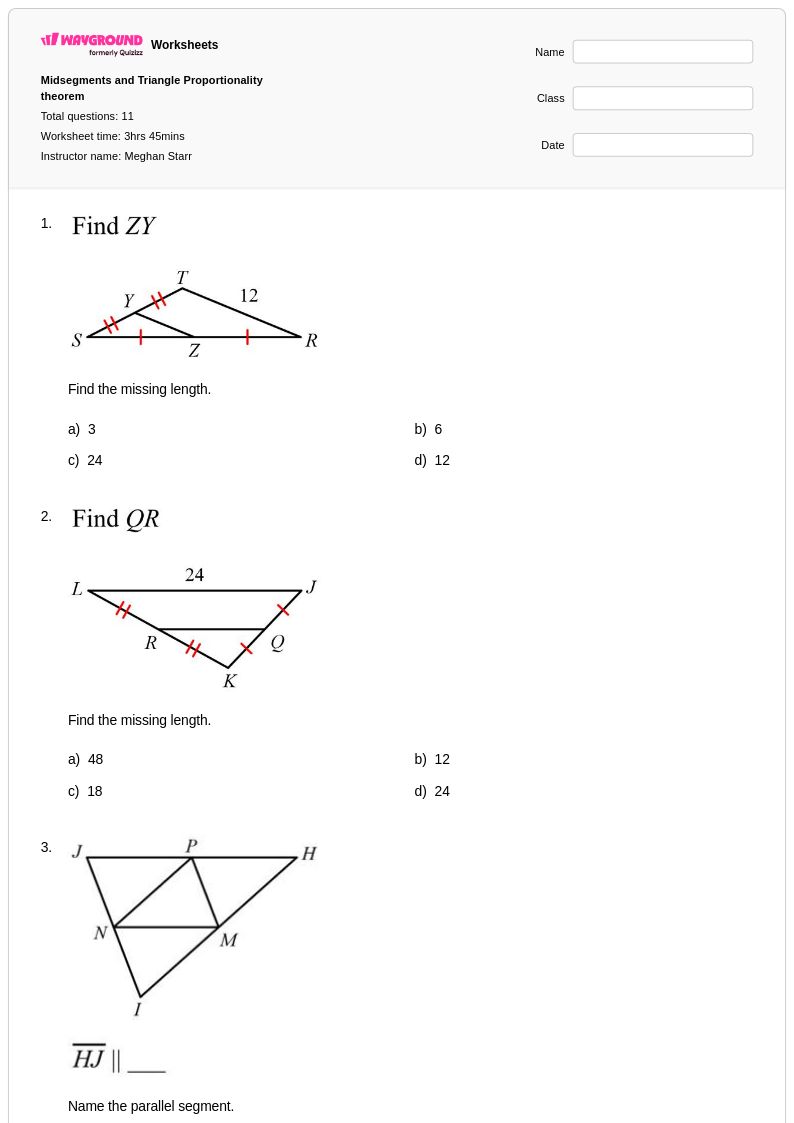
11 Q
10th
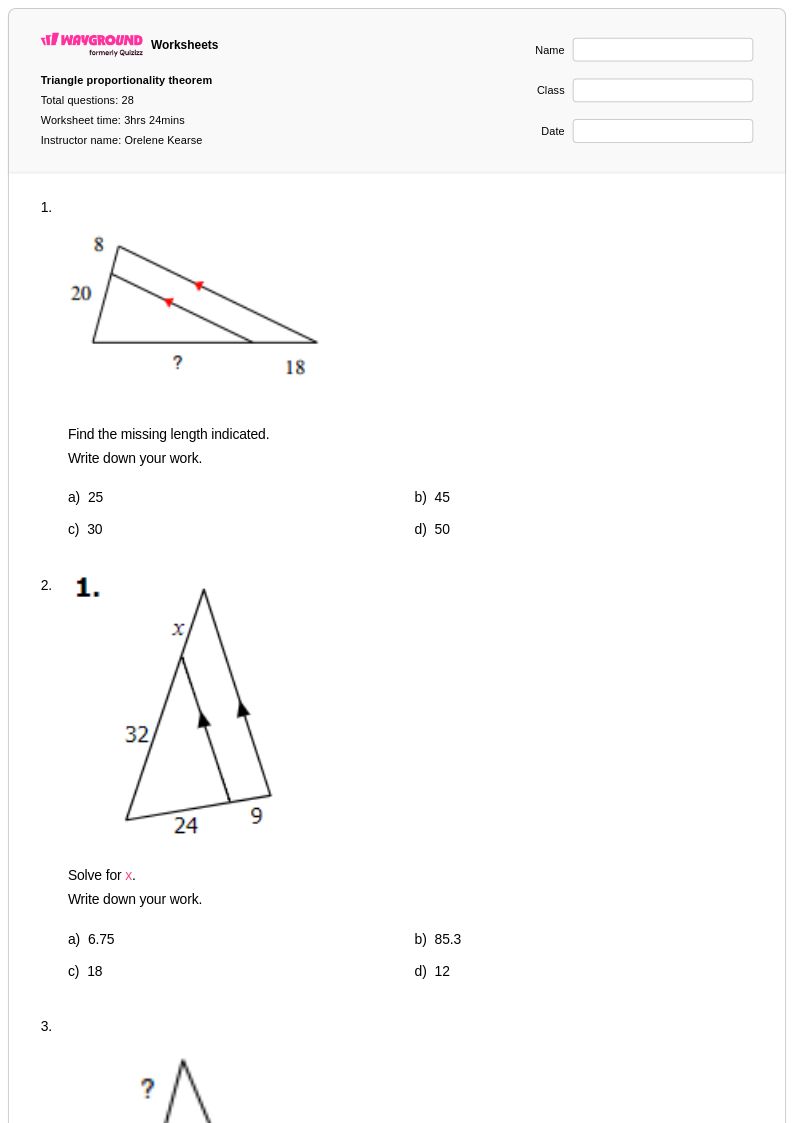
28 Q
10th
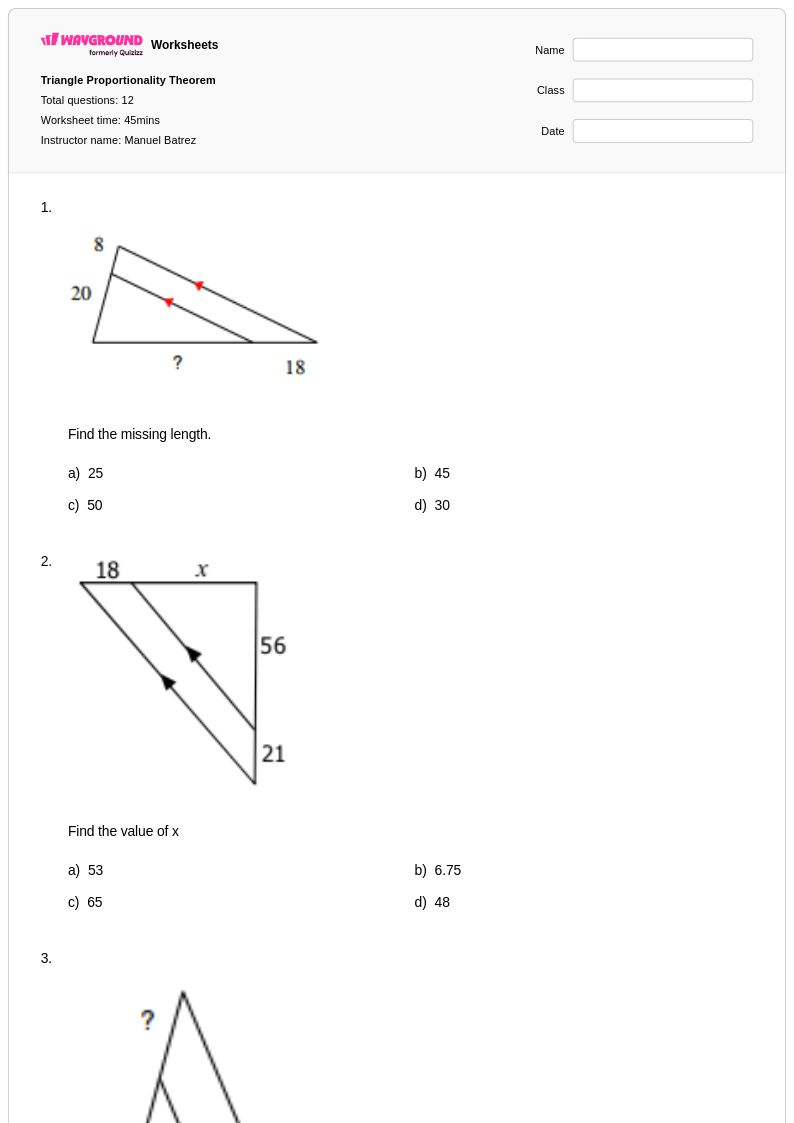
12 Q
9th - 12th
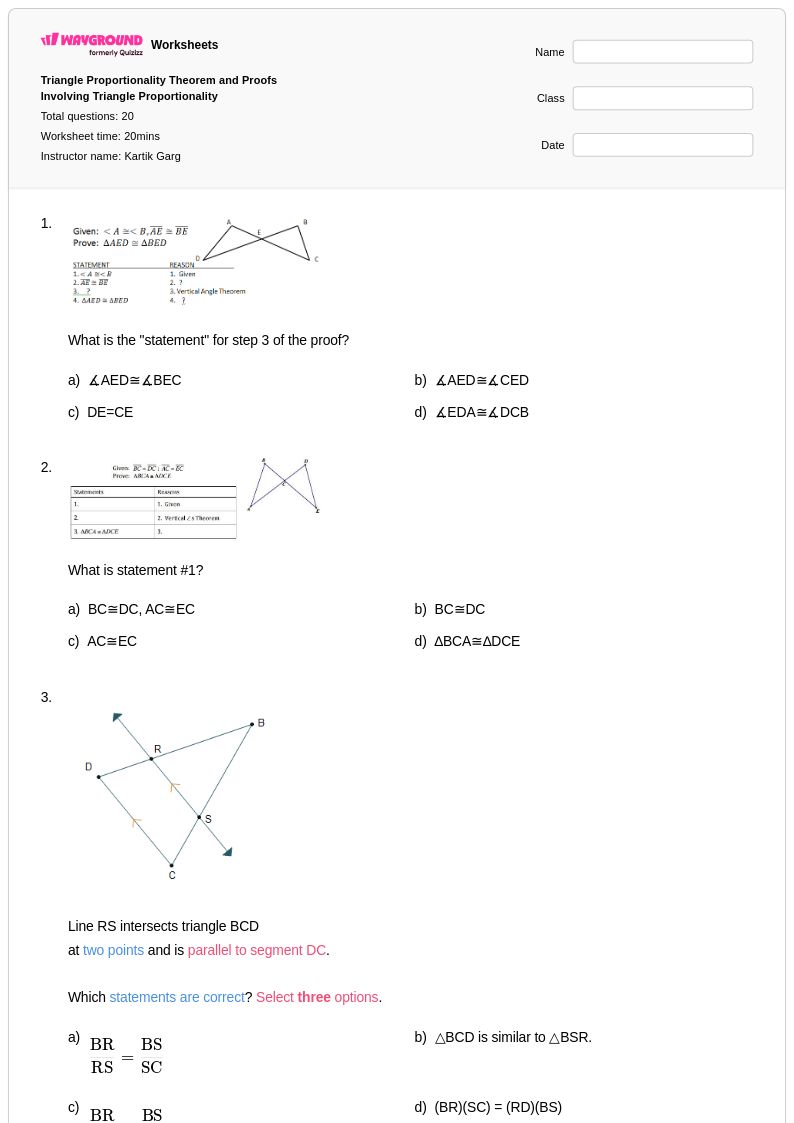
20 Q
9th - 10th
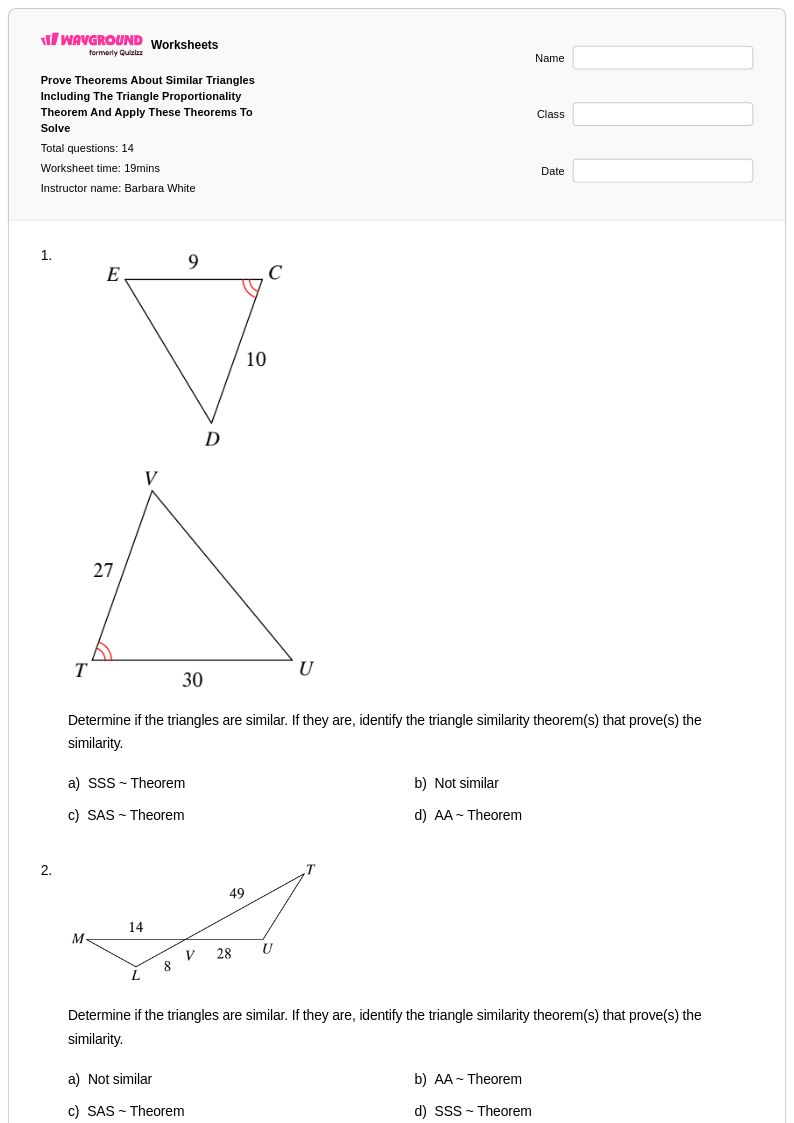
14 Q
9th - 12th
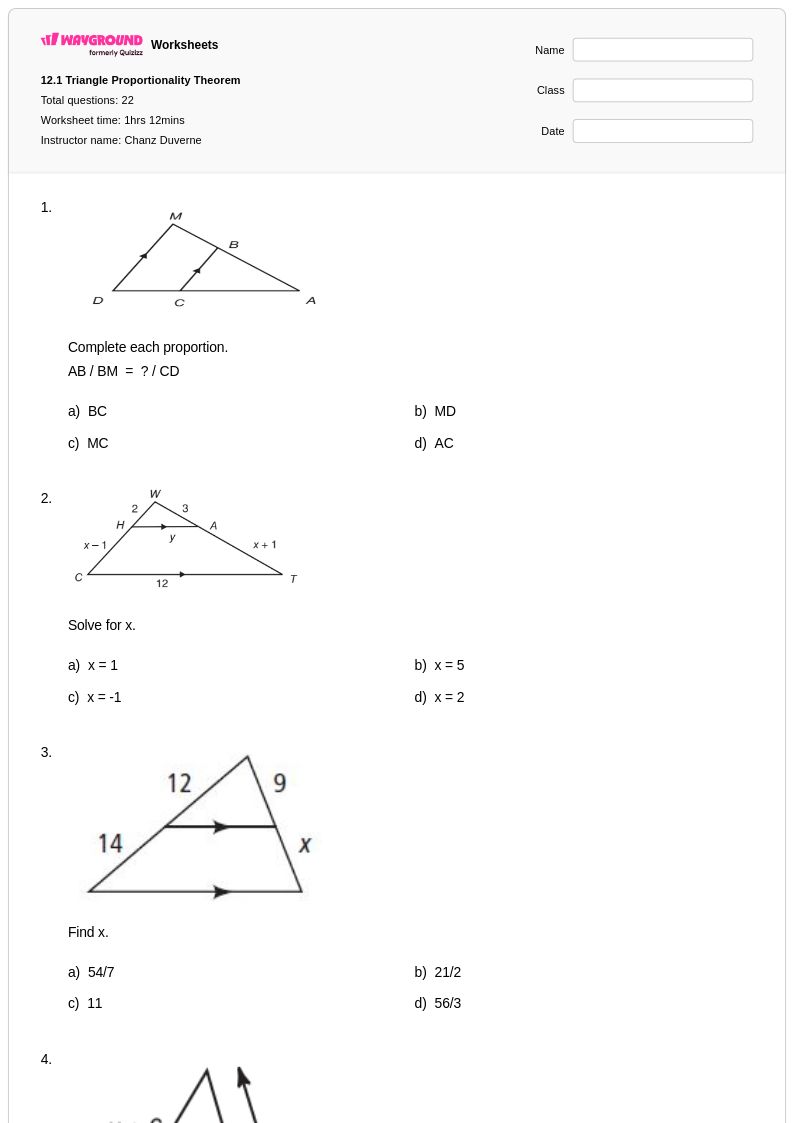
22 Q
9th - 12th
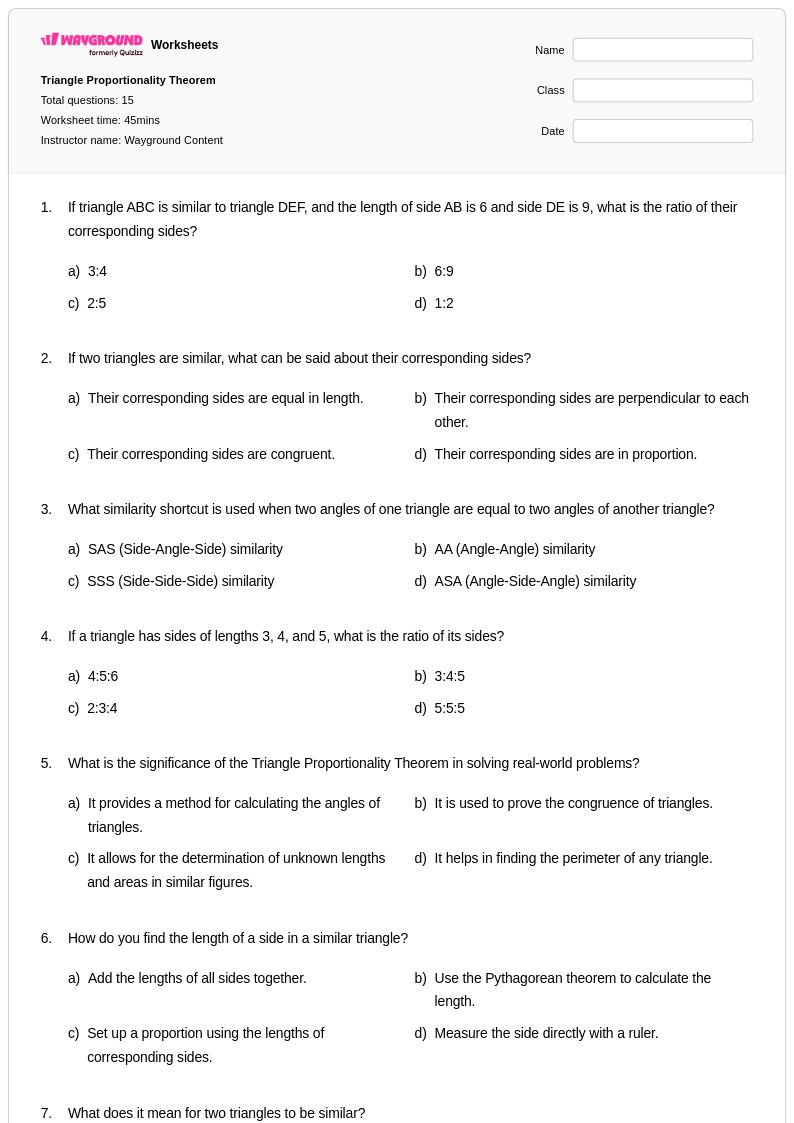
15 Q
10th
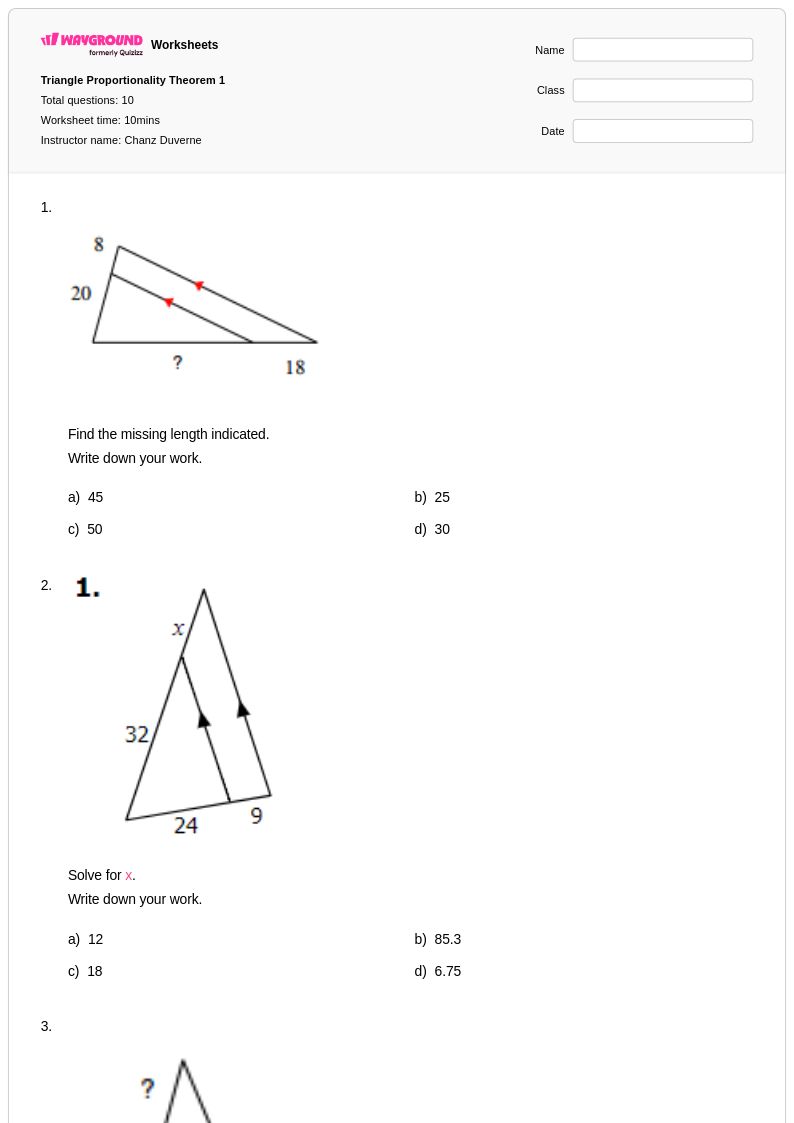
10 Q
9th - 12th
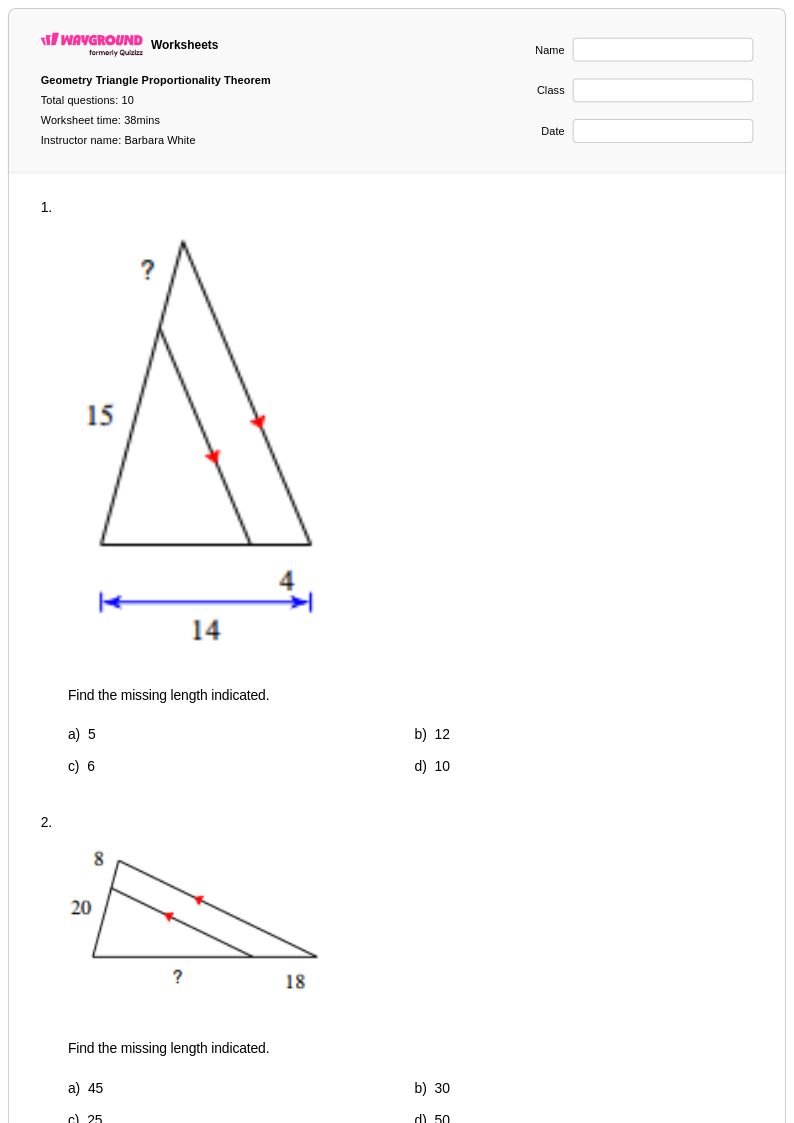
10 Q
9th - 11th
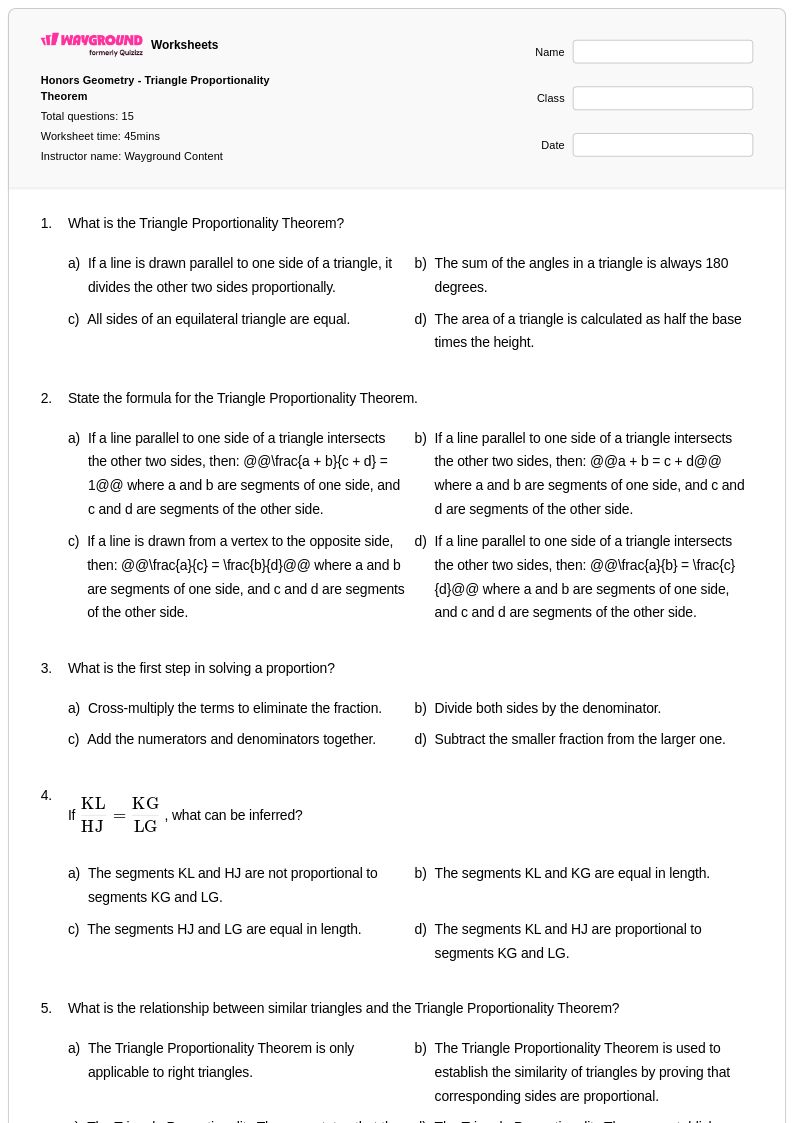
15 Q
10th
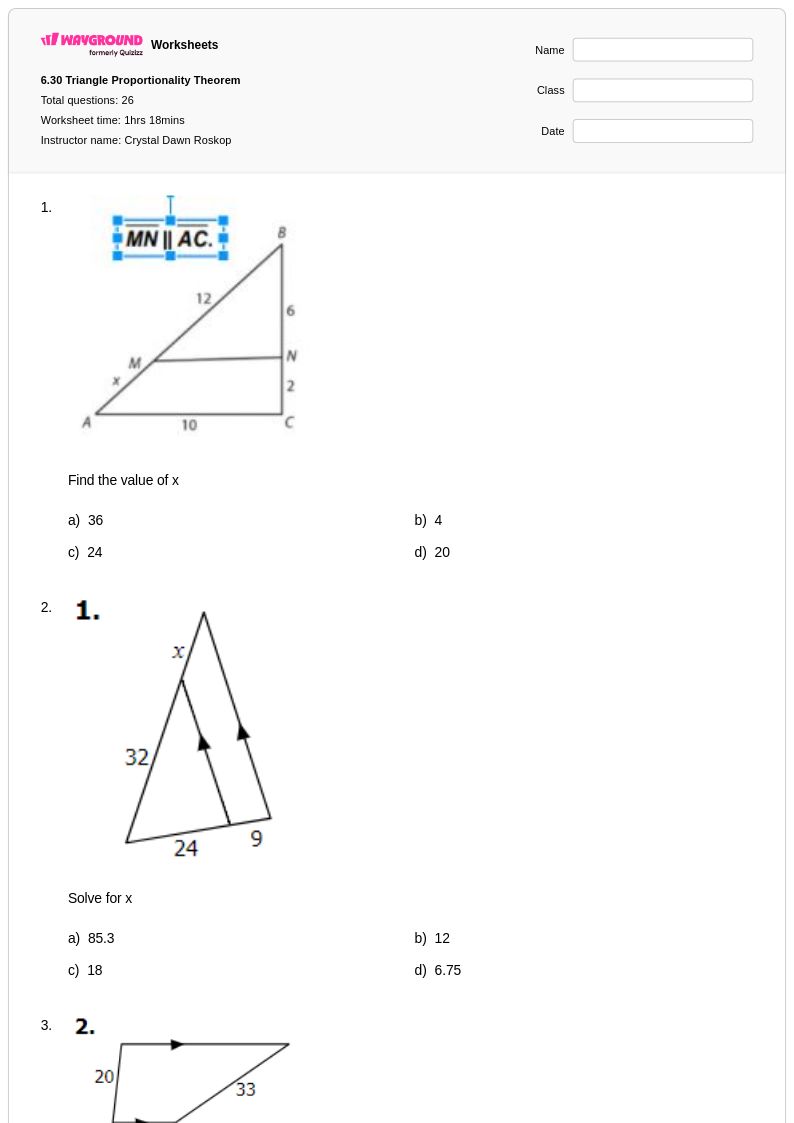
26 Q
9th - 12th
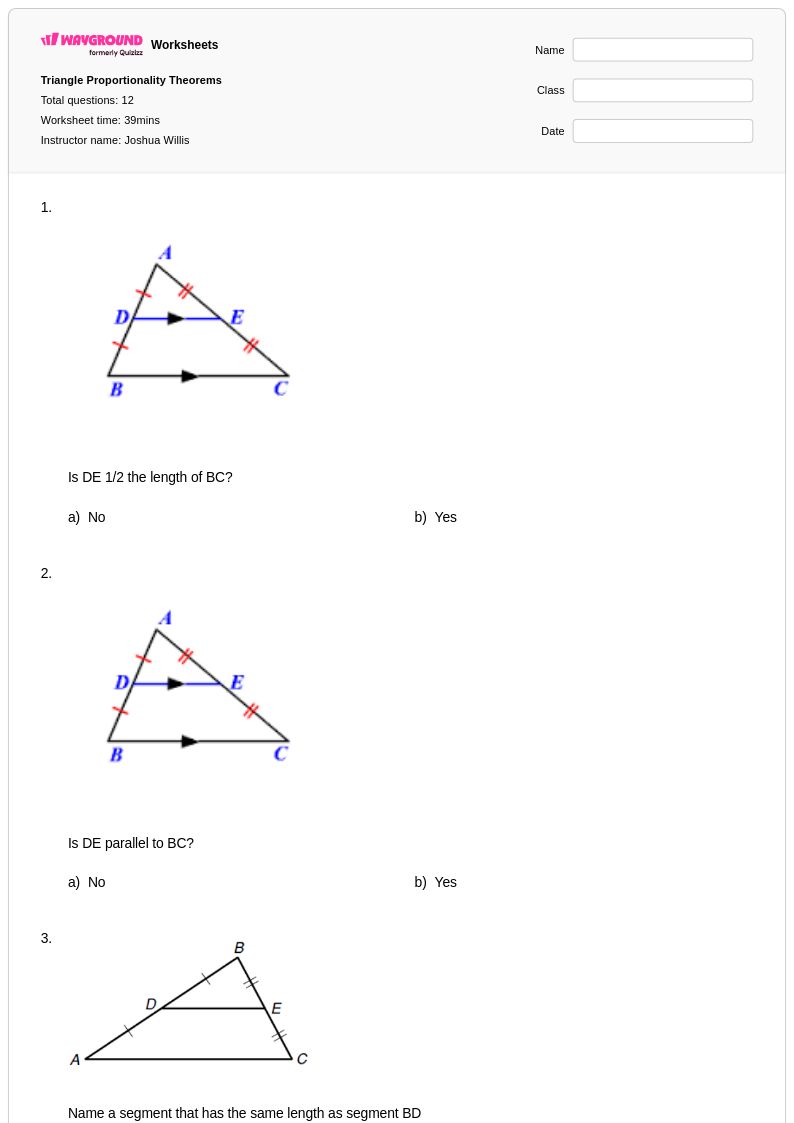
12 Q
9th - 12th
Explore Worksheets by Subjects
Explore printable Triangle Proportionality Theorem worksheets
Triangle Proportionality Theorem worksheets available through Wayground (formerly Quizizz) provide comprehensive practice for students learning this fundamental geometric concept that establishes the relationship between parallel lines and proportional segments in triangles. These expertly designed mathematics resources strengthen students' ability to identify similar triangles, calculate missing side lengths using proportional relationships, and apply the theorem's converse to prove that lines are parallel. The worksheets feature carefully structured practice problems that progress from basic proportion identification to complex multi-step applications, helping students master both the computational and proof-writing aspects of this essential geometry skill. Each worksheet collection includes detailed answer keys and is available as free printables in convenient pdf format, making them ideal for classroom instruction, homework assignments, and independent study sessions.
Wayground (formerly Quizizz) supports mathematics educators with an extensive collection of Triangle Proportionality Theorem worksheets created by millions of teachers who understand the challenges of teaching geometric proofs and proportional reasoning. The platform's robust search and filtering capabilities allow instructors to quickly locate resources that align with specific curriculum standards and match their students' skill levels, while differentiation tools enable teachers to customize content for diverse learning needs. These geometry worksheets are available in both printable pdf and interactive digital formats, providing flexibility for traditional classroom settings and technology-enhanced learning environments. Teachers can efficiently plan lessons, provide targeted remediation for struggling students, offer enrichment opportunities for advanced learners, and create comprehensive skill practice sequences that build students' confidence with proportional relationships and triangle similarity concepts.