
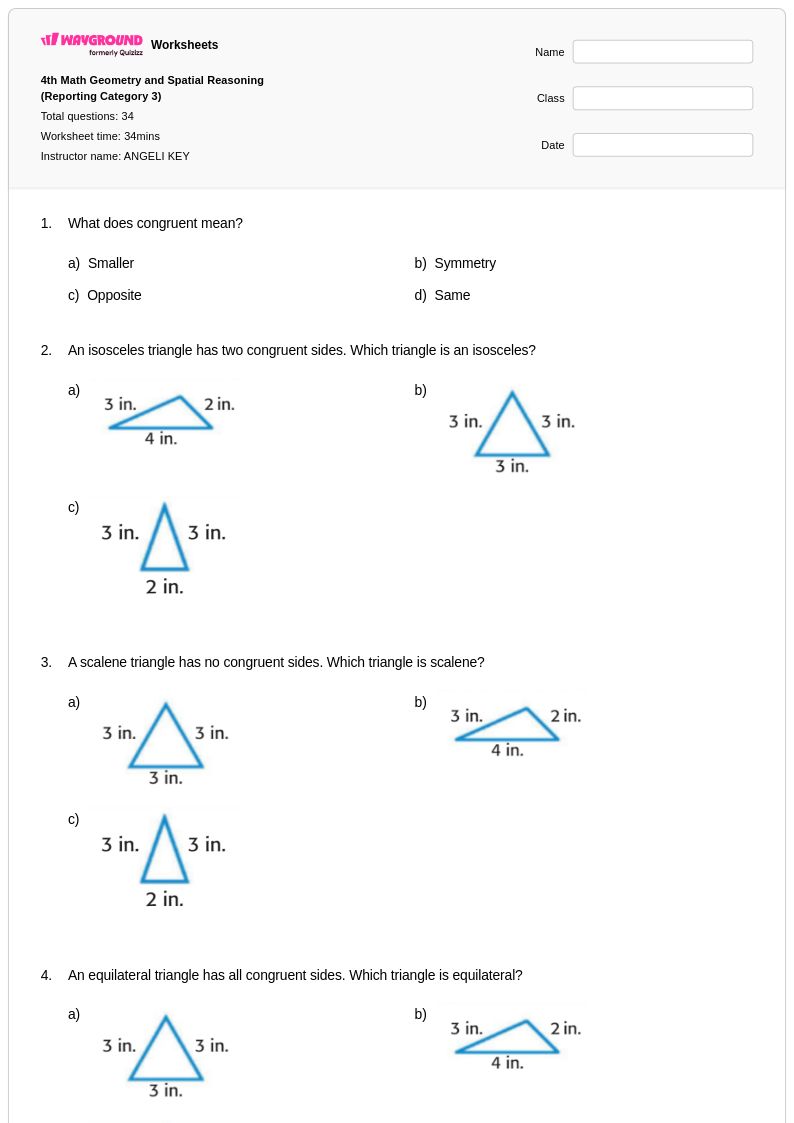
34 Q
4th
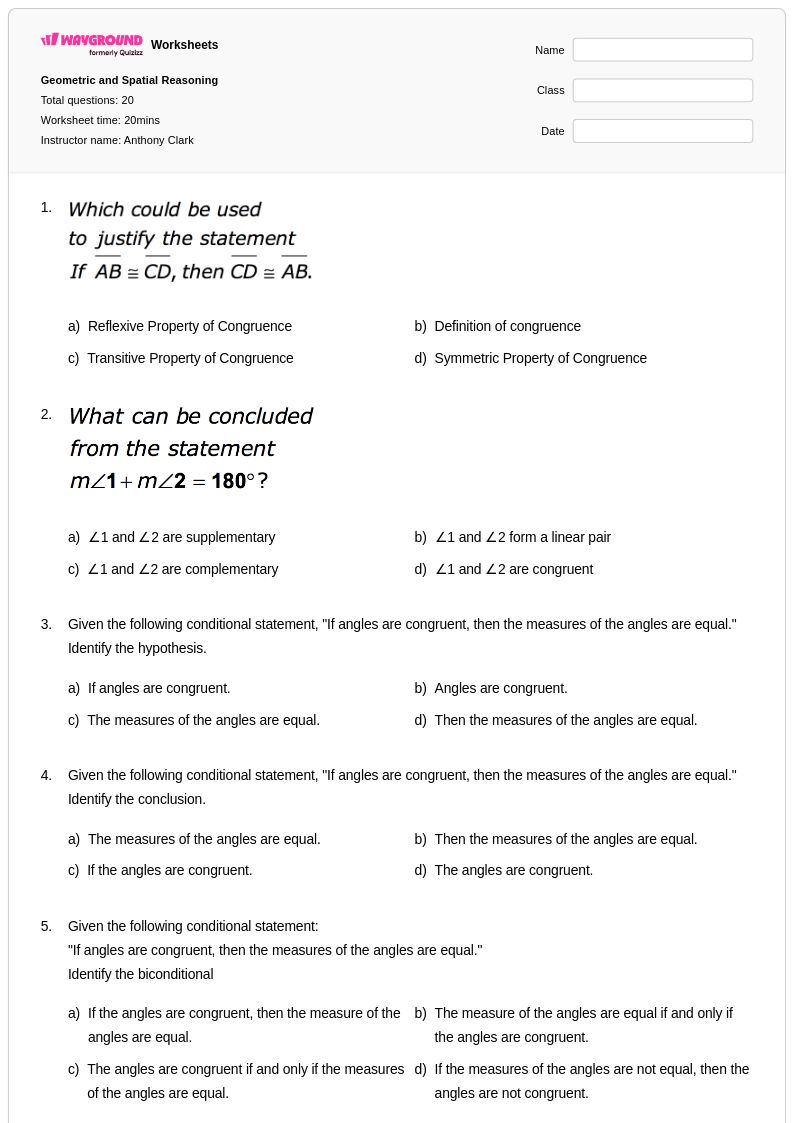
20 Q
10th - Uni
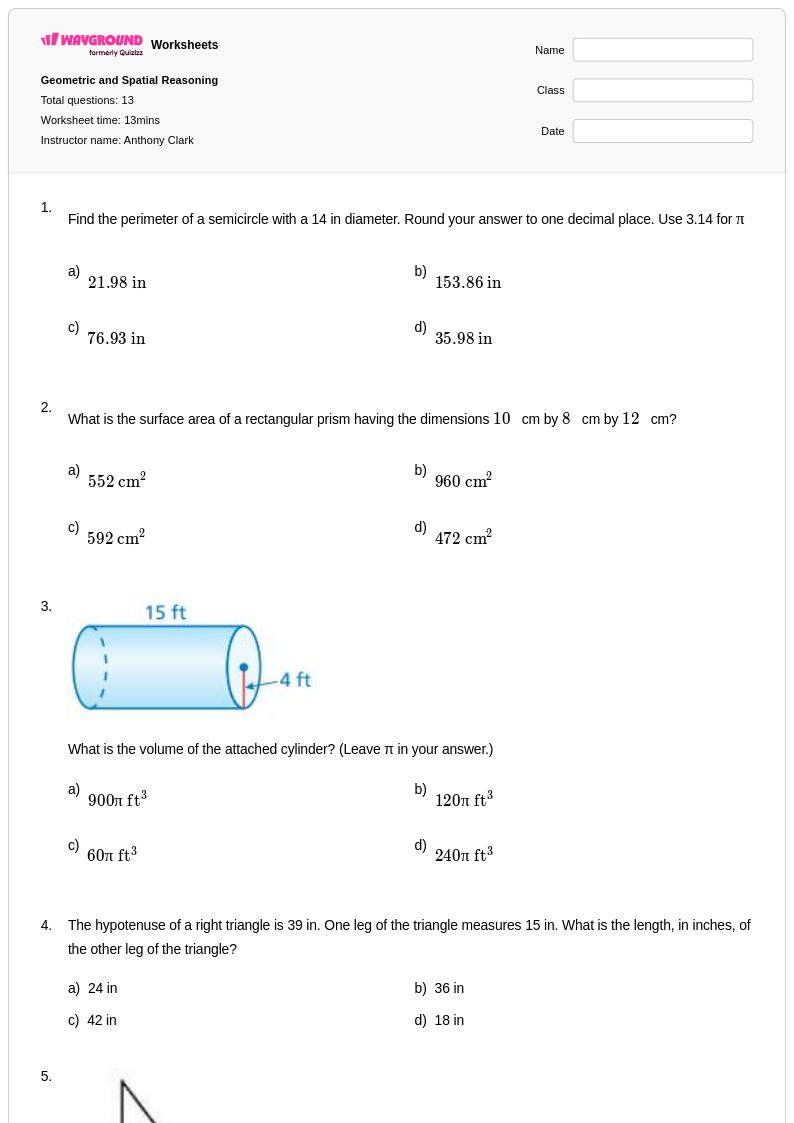
13 Q
10th - Uni
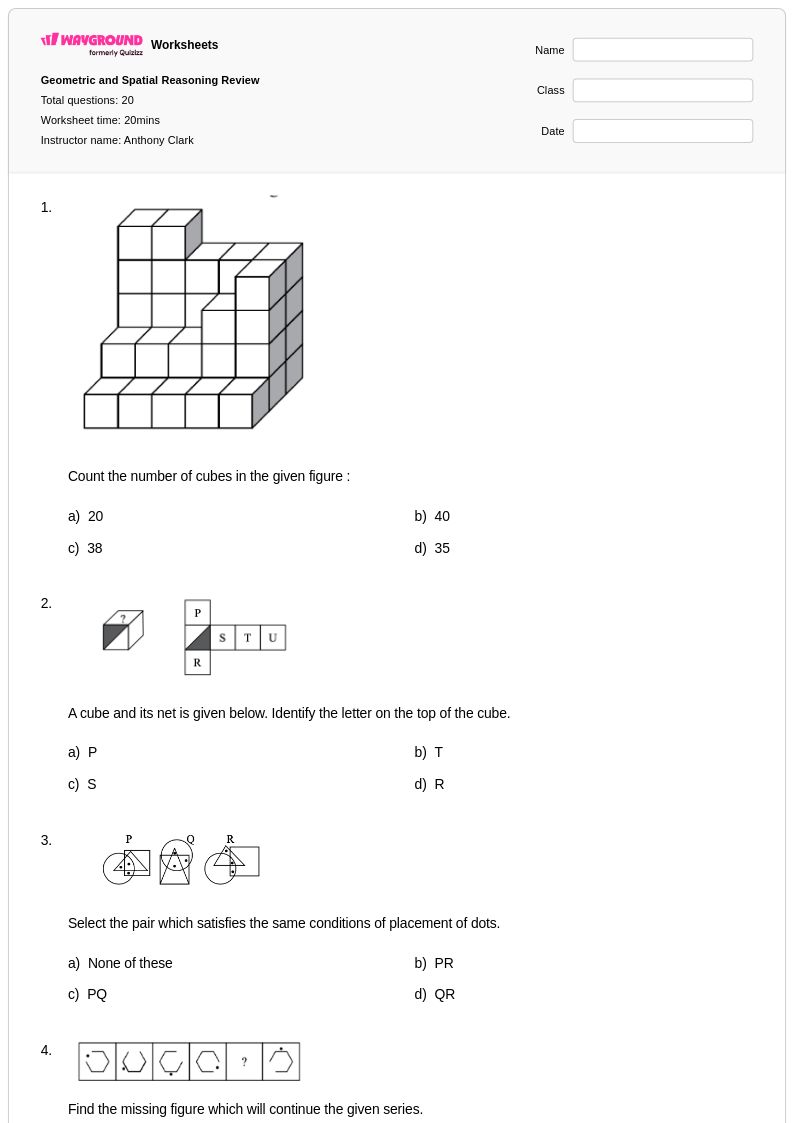
20 Q
7th - Uni
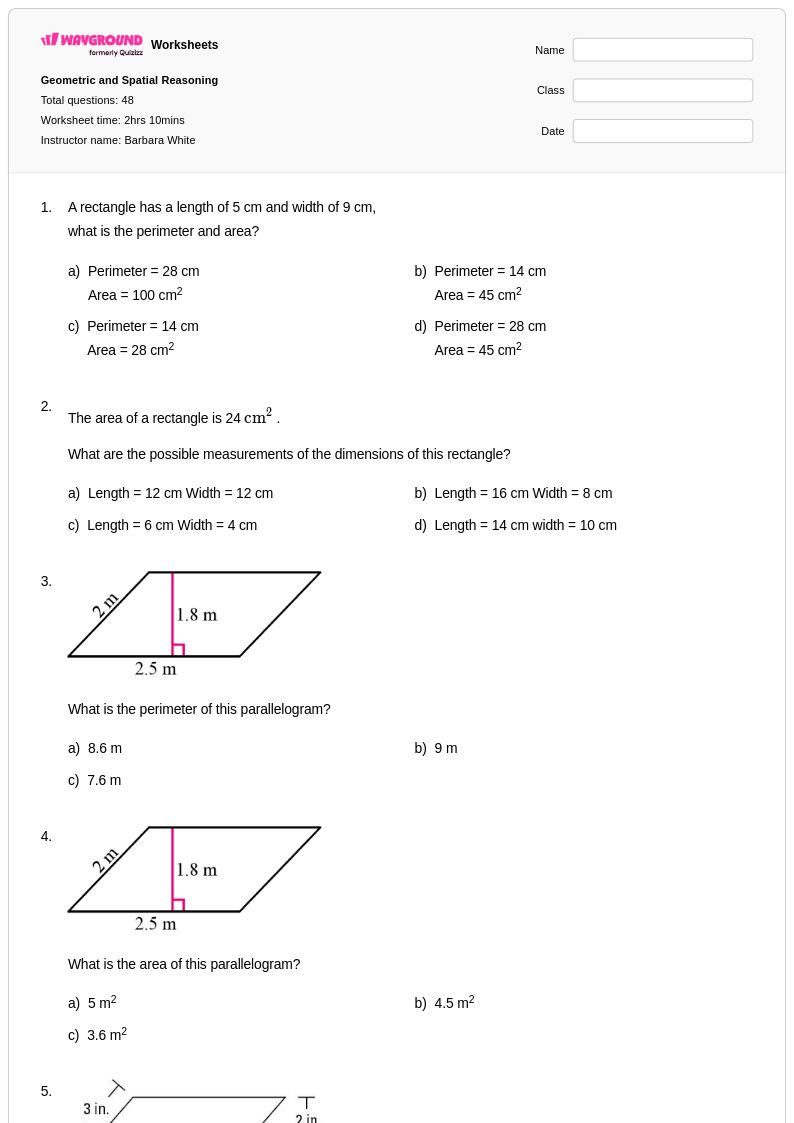
48 Q
7th
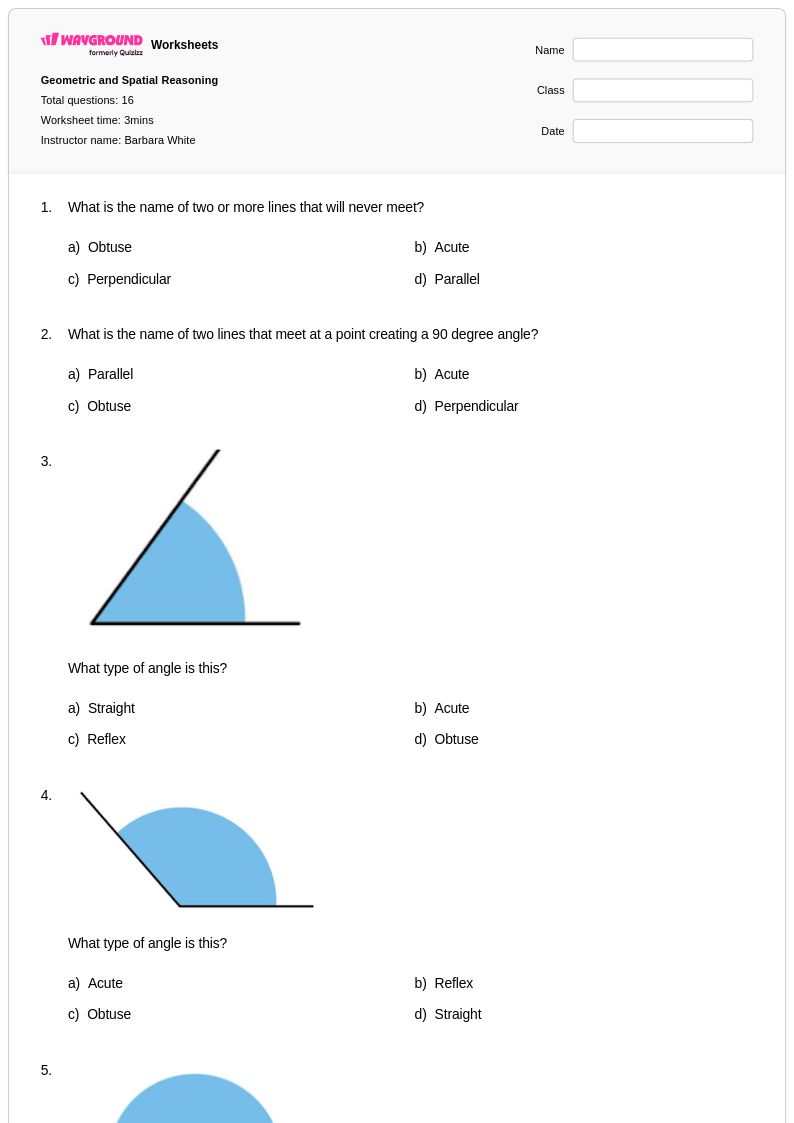
16 Q
7th - 8th
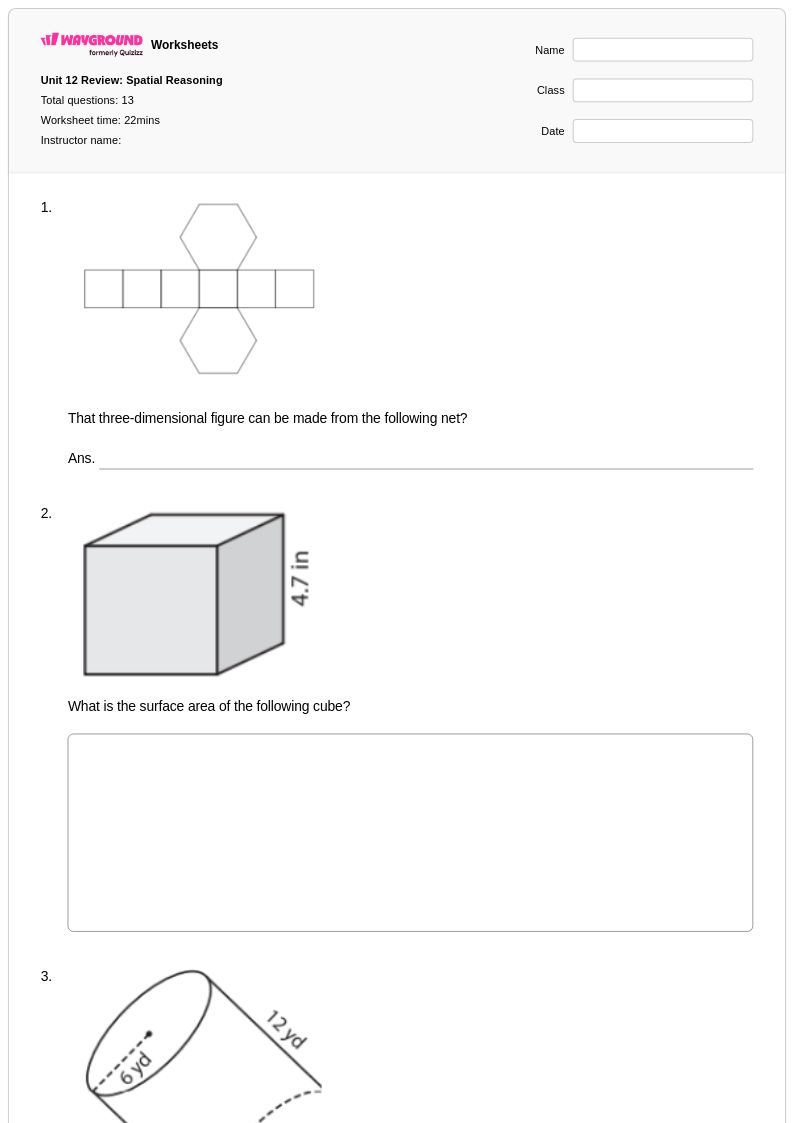
13 Q
10th
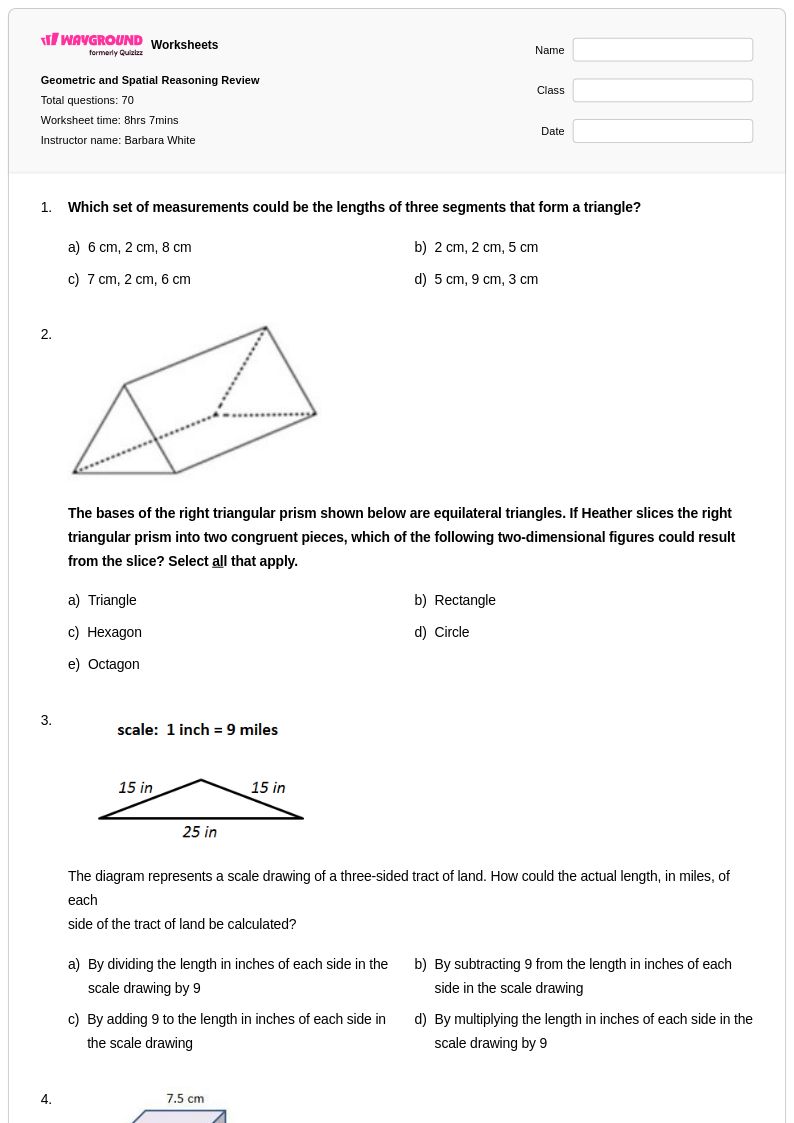
70 Q
7th
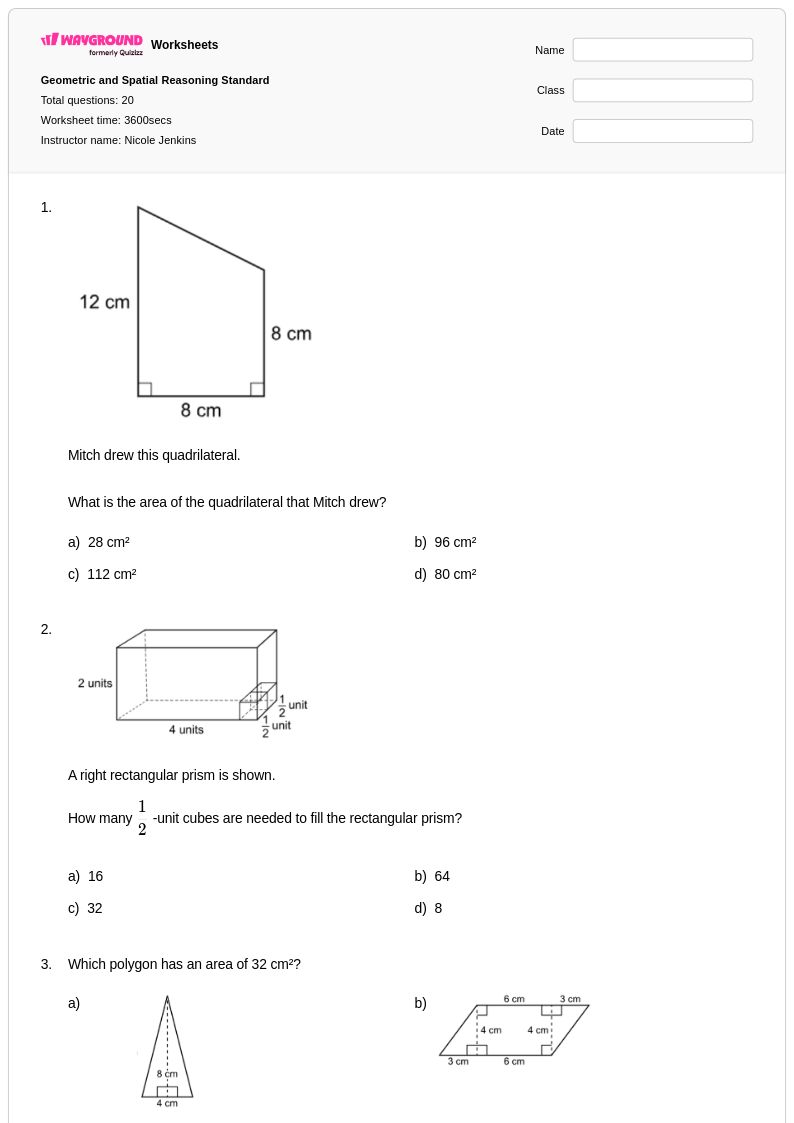
20 Q
6th
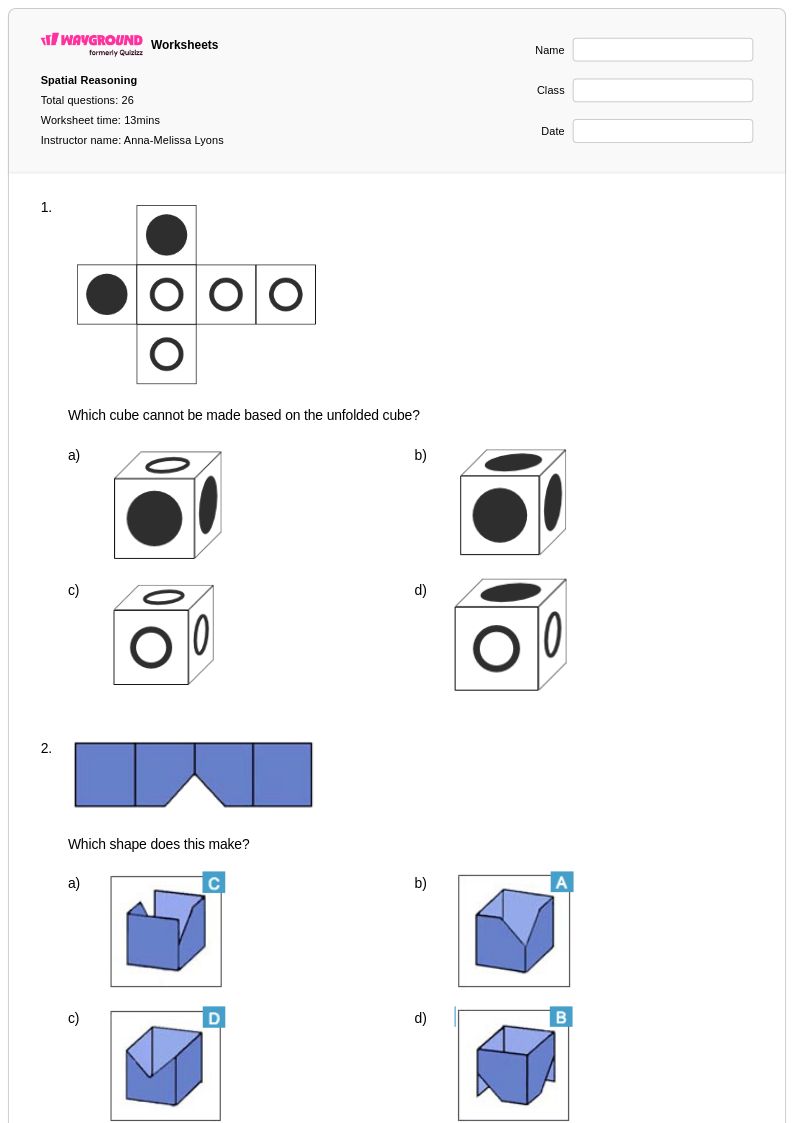
26 Q
6th - 9th
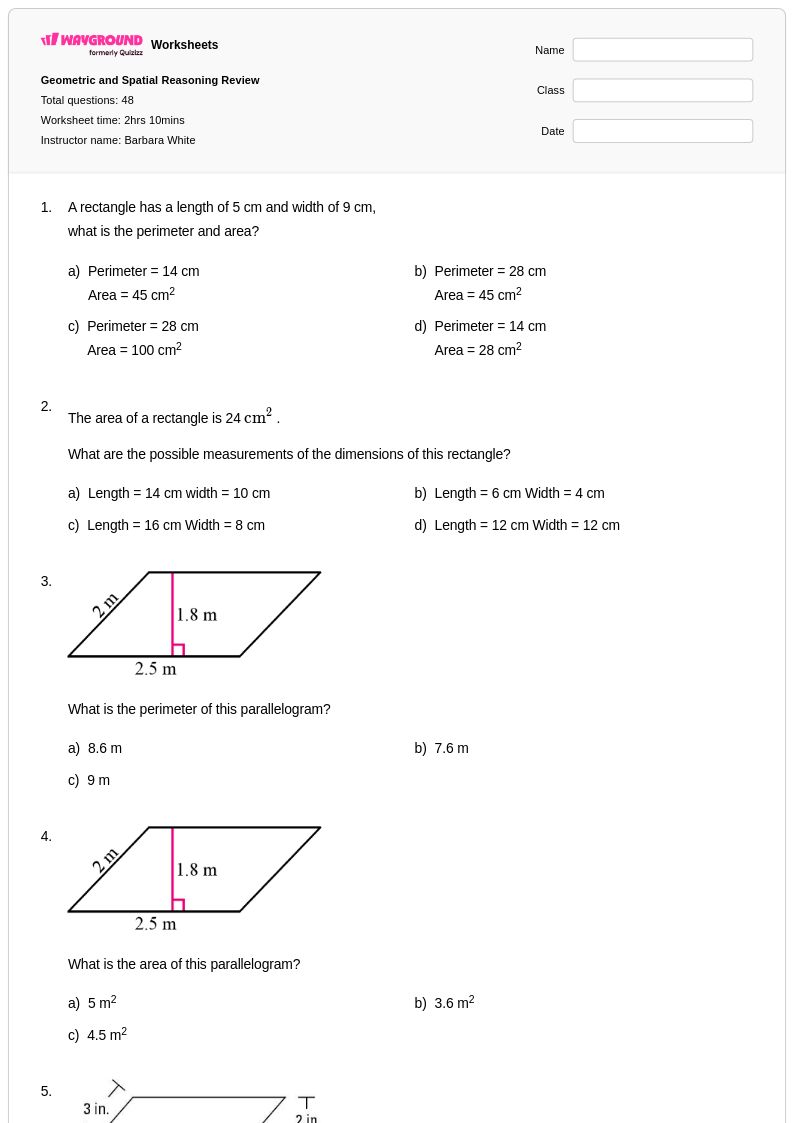
48 Q
7th
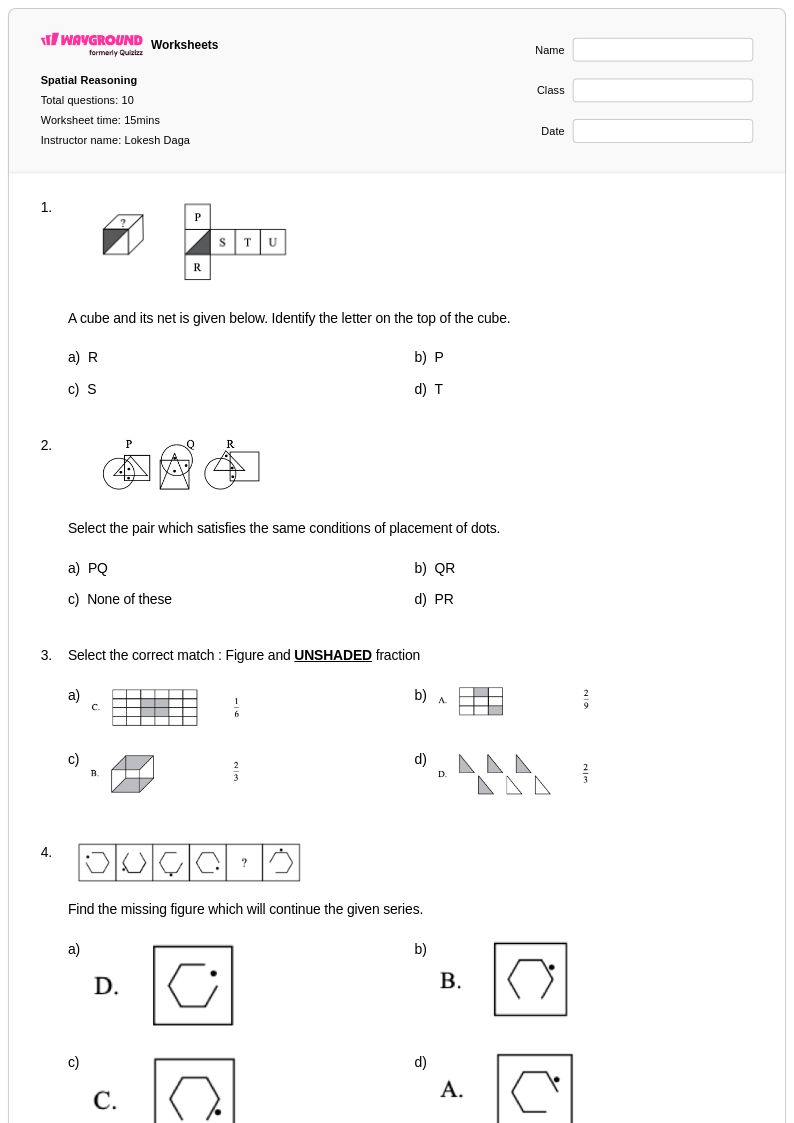
10 Q
4th - 5th
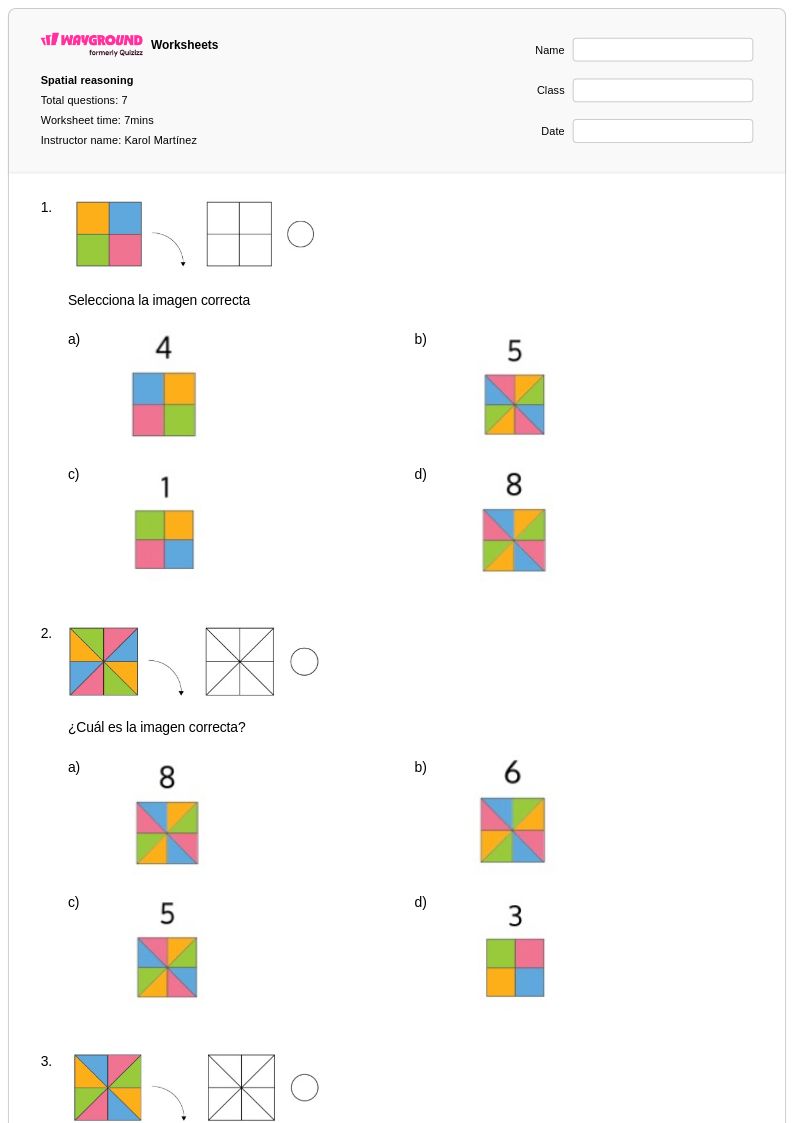
7 Q
3rd
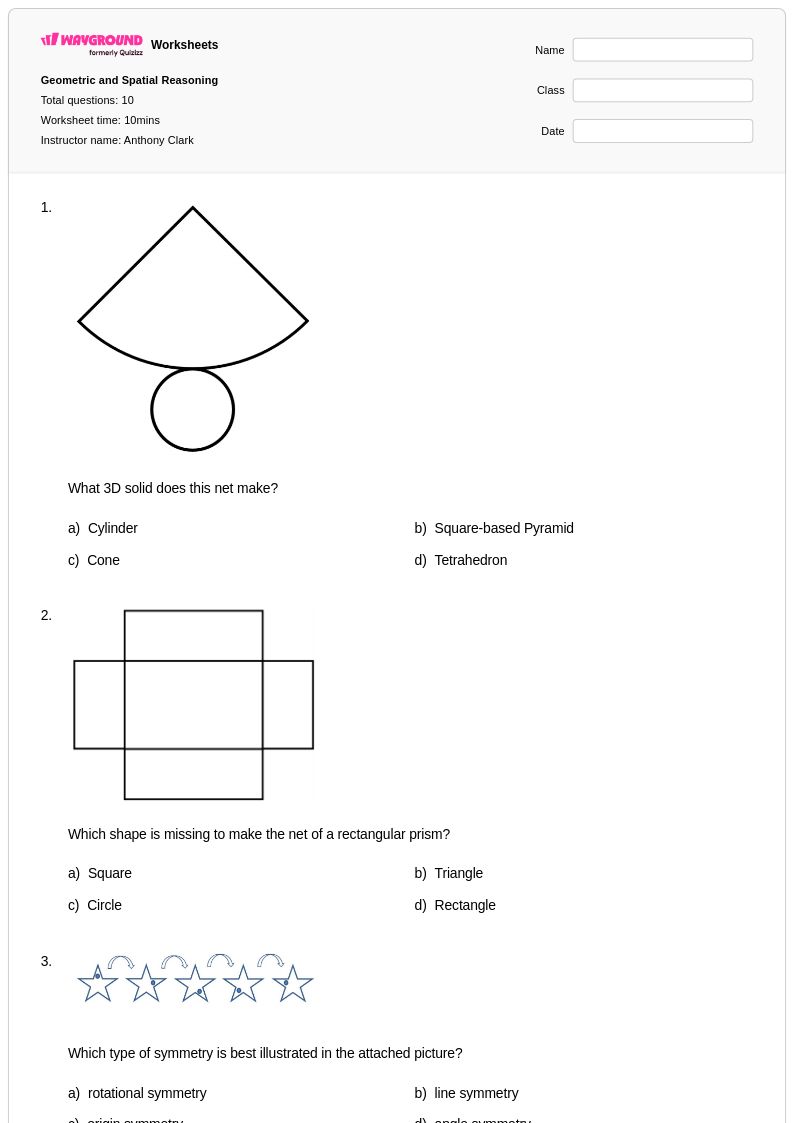
10 Q
10th - Uni
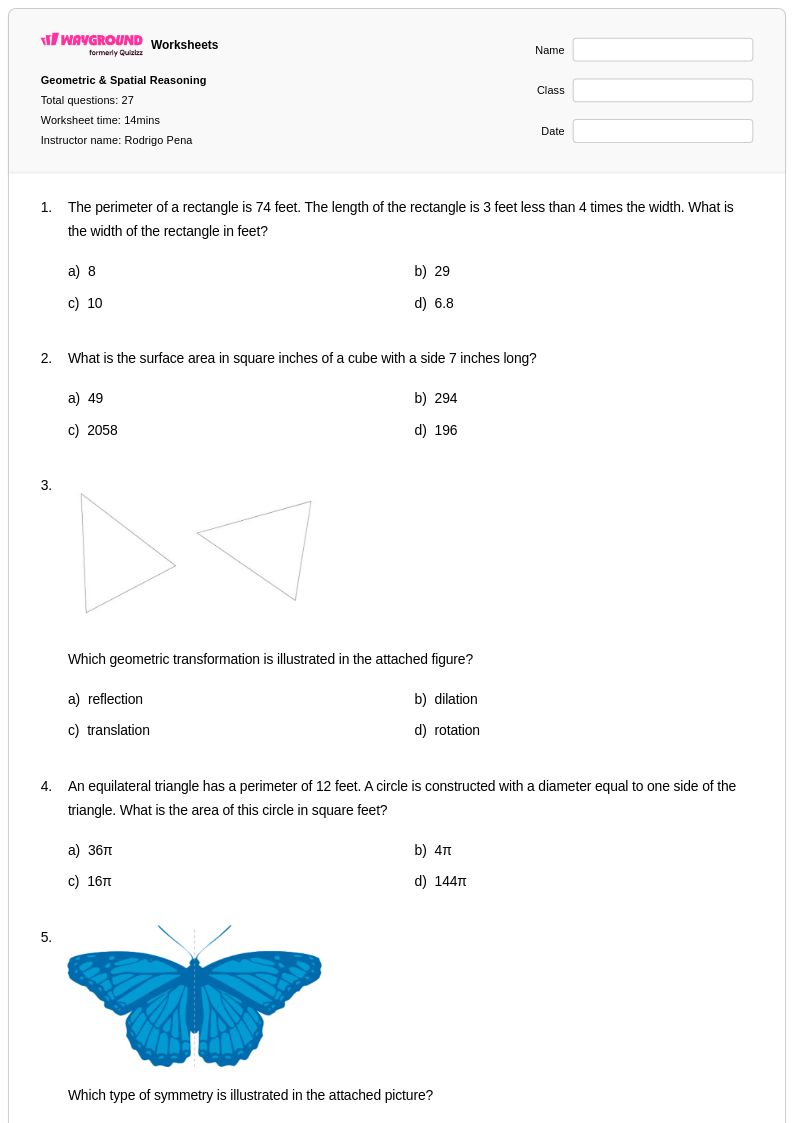
27 Q
12th
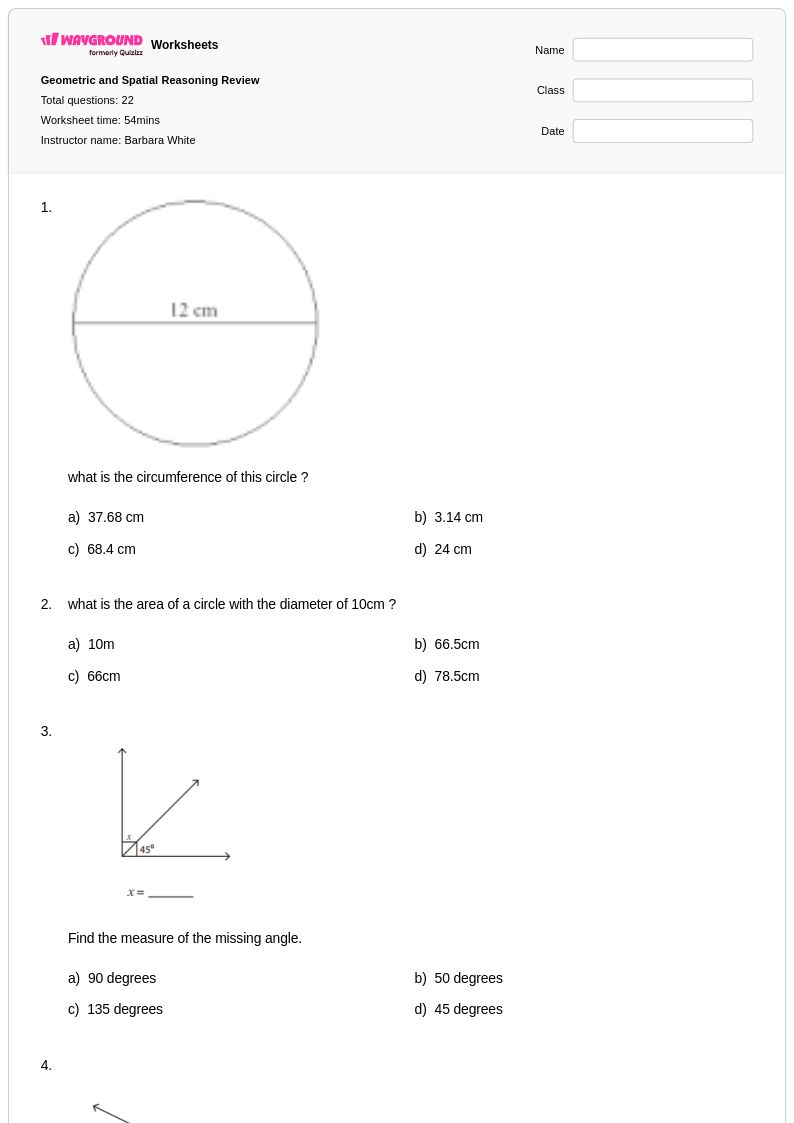
22 Q
6th - 8th
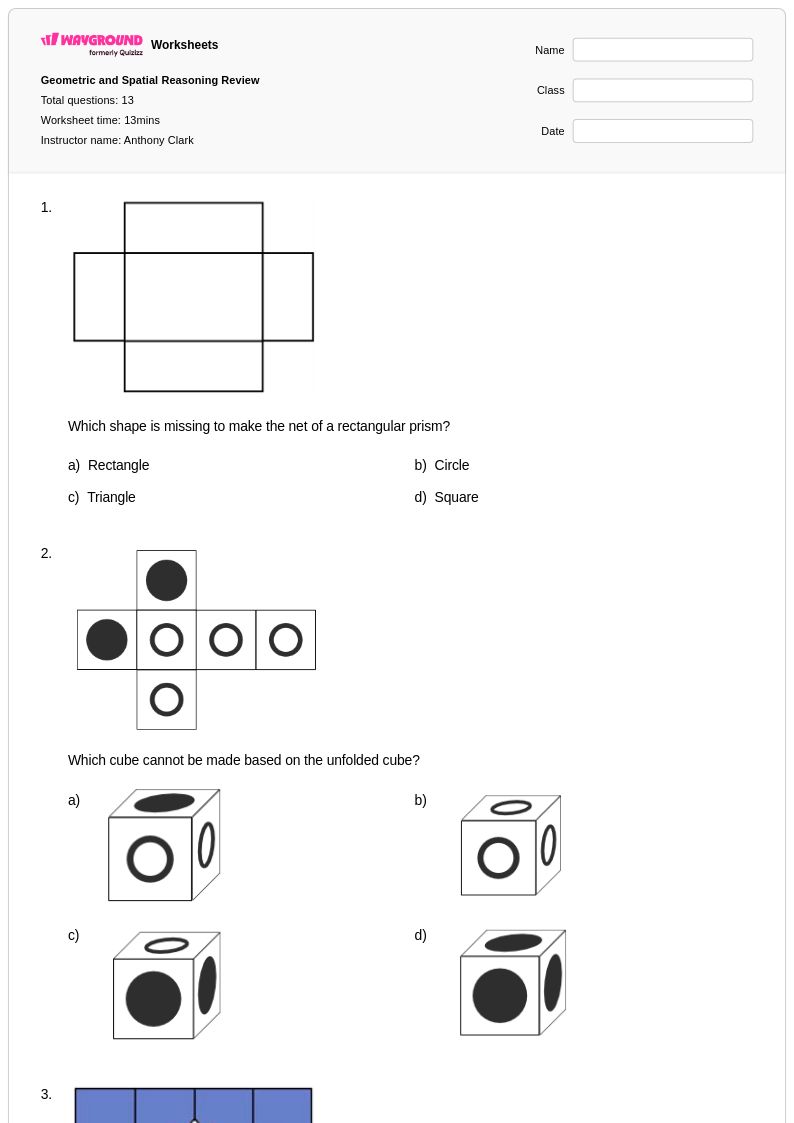
13 Q
7th - Uni
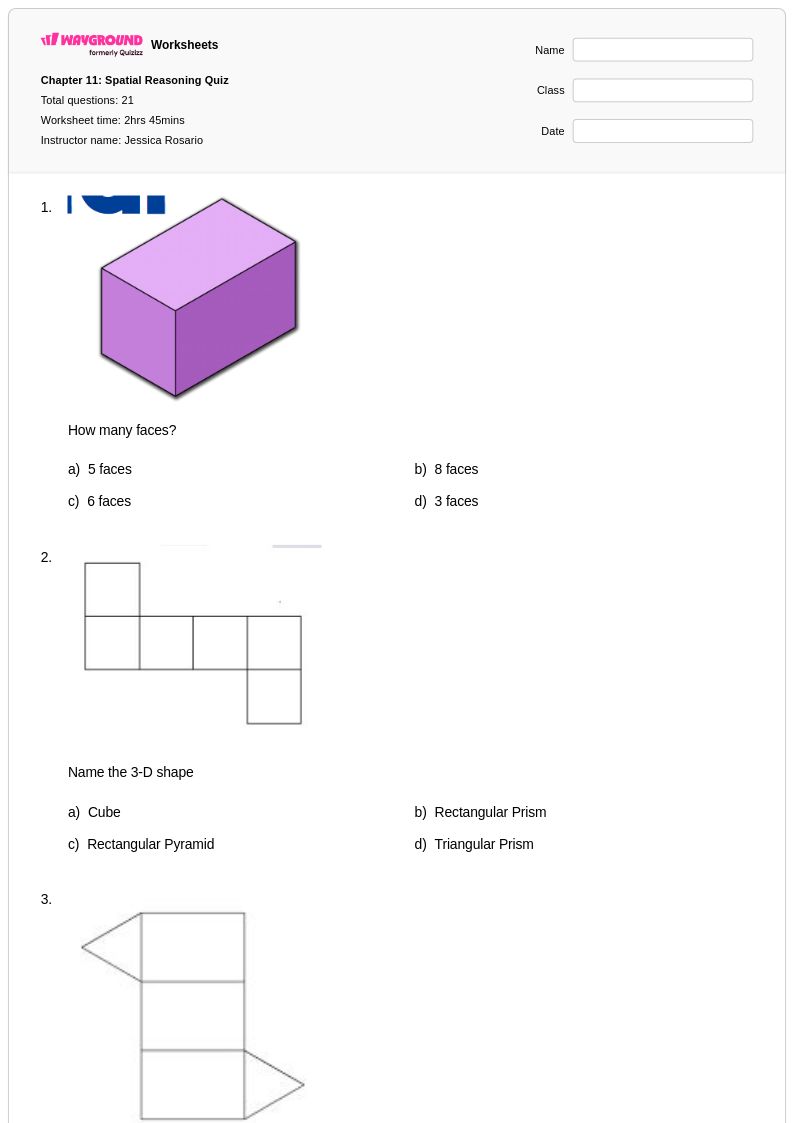
21 Q
9th - 10th
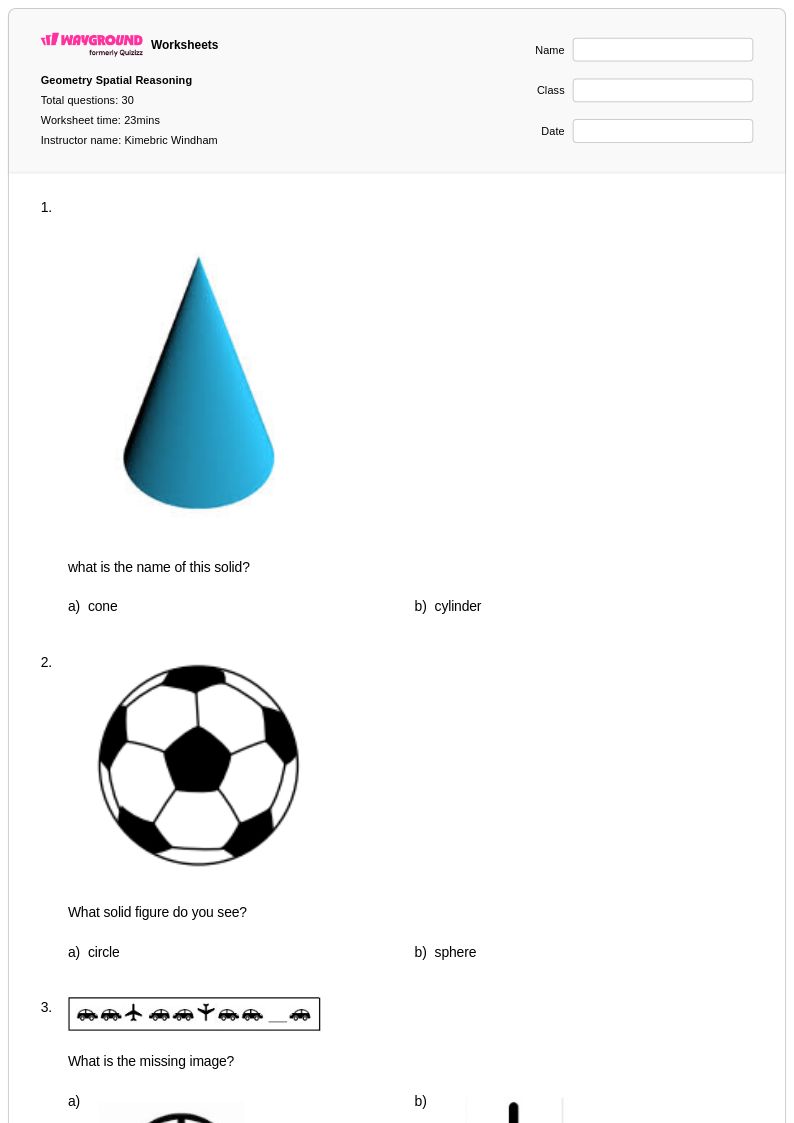
30 Q
9th - 11th
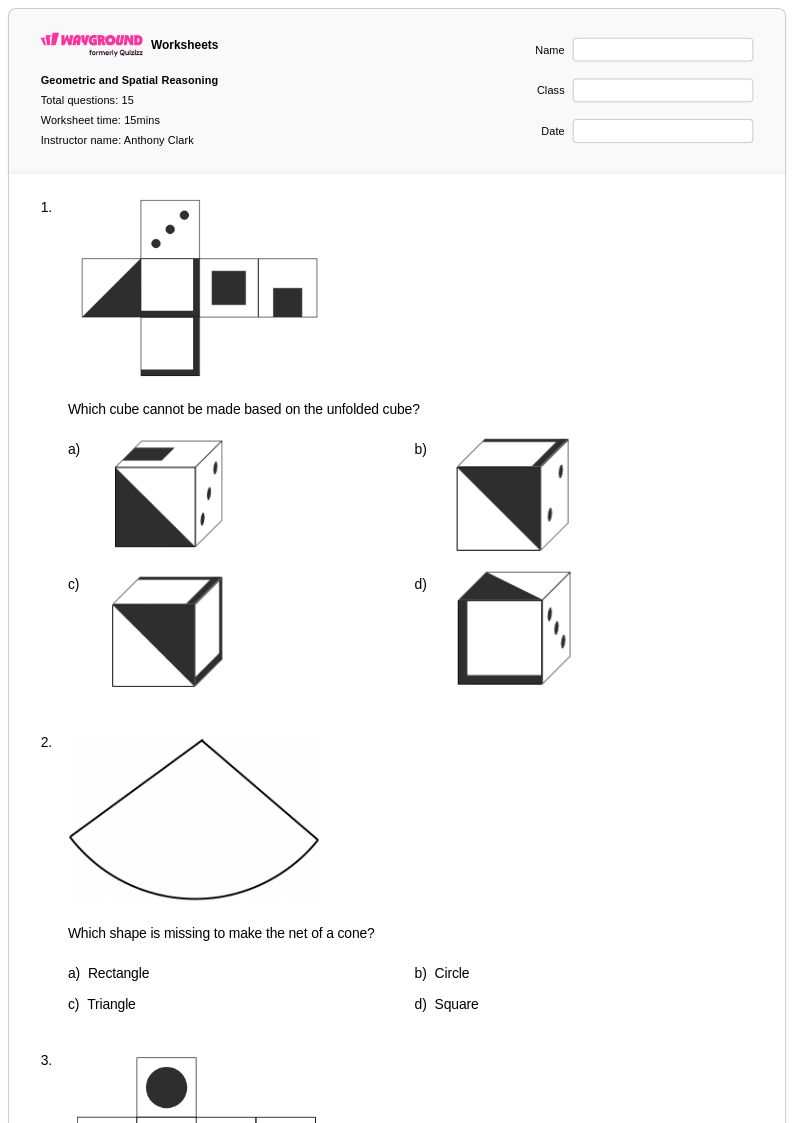
15 Q
10th - Uni
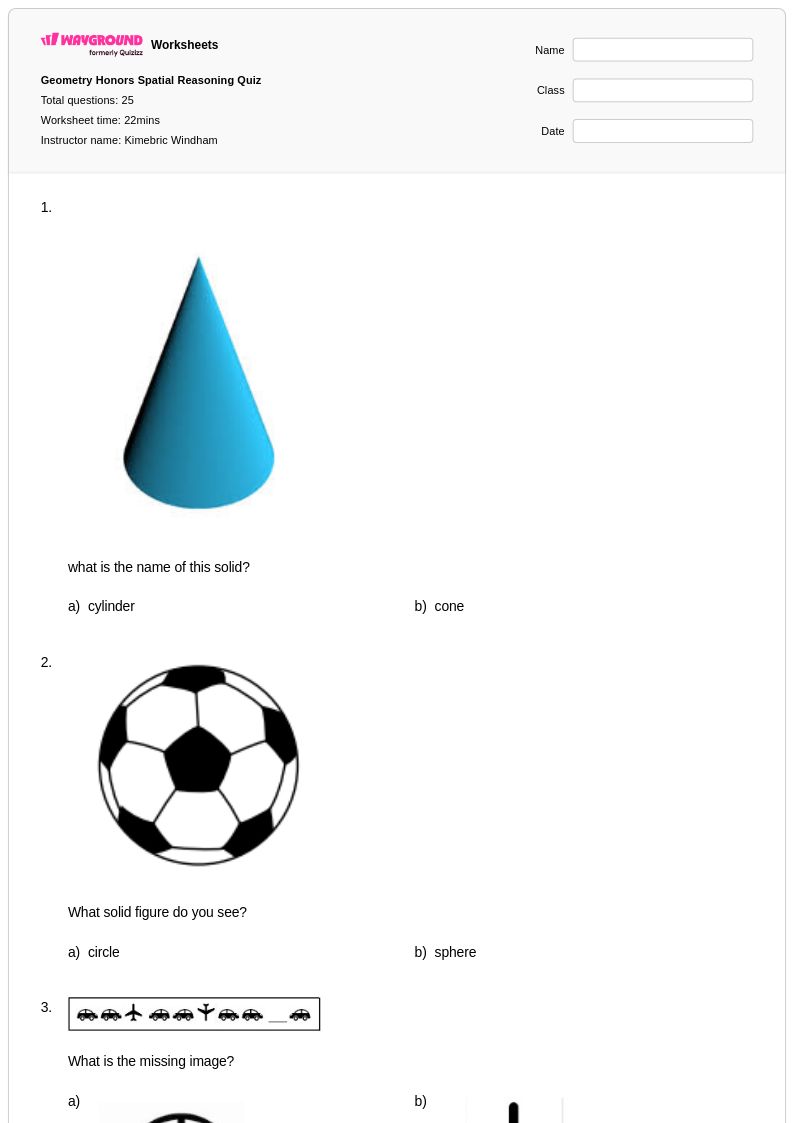
25 Q
9th - 11th
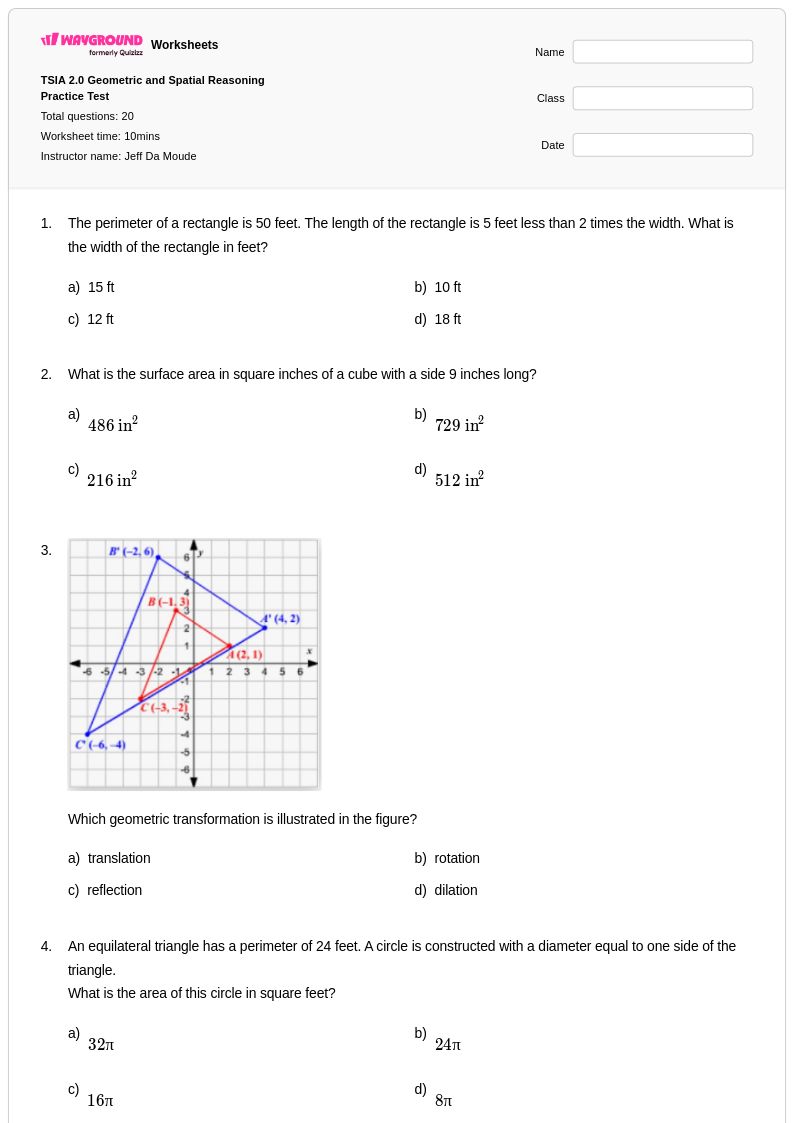
20 Q
9th - 12th
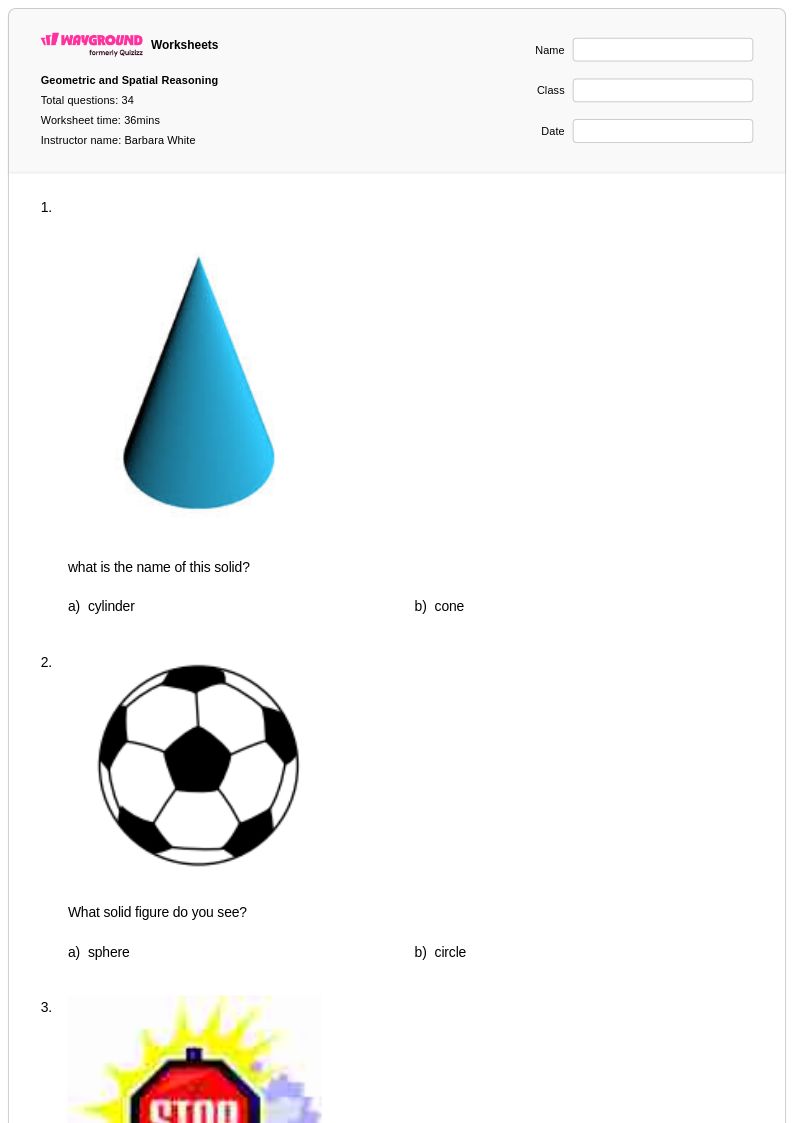
34 Q
2nd - 3rd
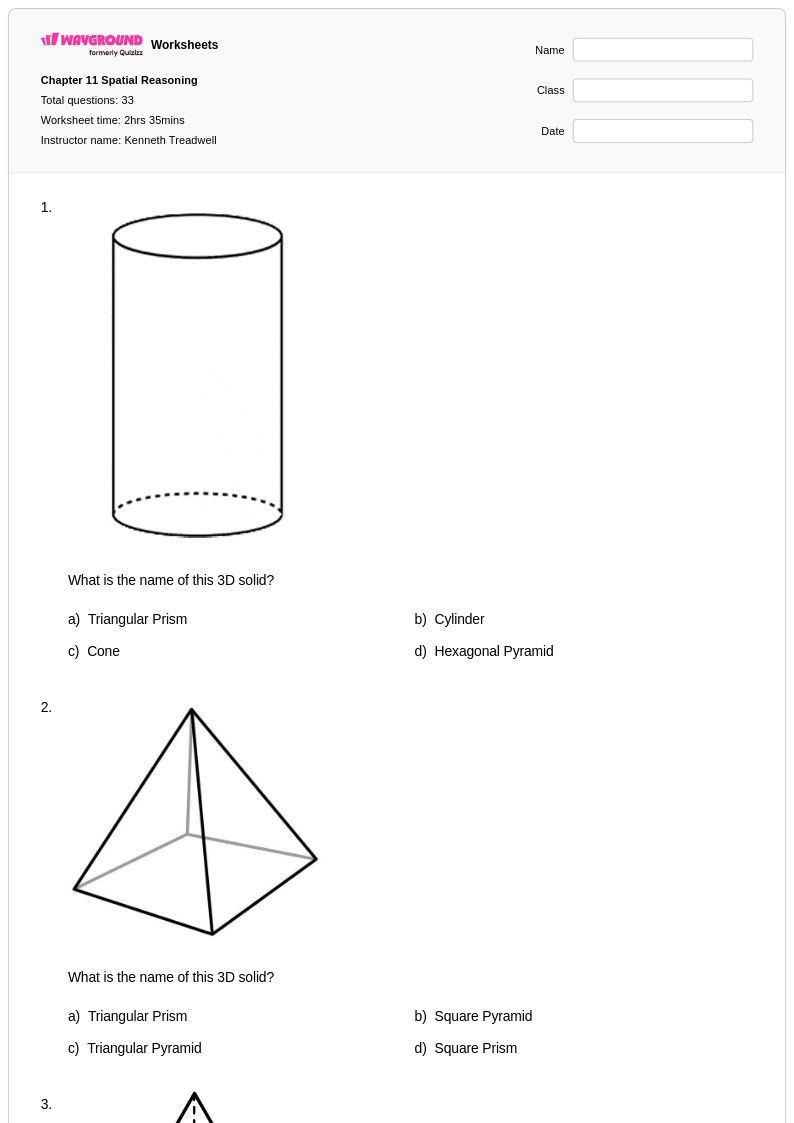
33 Q
8th - 12th
Explore Worksheets by Grade
Explore Worksheets by Subjects
Explore printable Spatial Reasoning worksheets
Spatial reasoning worksheets available through Wayground (formerly Quizizz) provide mathematics educators with comprehensive resources designed to develop students' ability to visualize, manipulate, and analyze geometric relationships in two and three-dimensional space. These carefully crafted practice problems strengthen essential skills including mental rotation of objects, cross-sectional analysis, perspective drawing, coordinate geometry applications, and spatial visualization techniques that form the foundation of advanced geometric thinking. Each worksheet collection includes detailed answer keys and is available as free printables in convenient pdf format, allowing teachers to seamlessly integrate spatial reasoning exercises into their geometry curriculum while providing students with structured opportunities to build confidence in manipulating abstract spatial concepts.
Wayground (formerly Quizizz) empowers educators with access to millions of teacher-created spatial reasoning resources that can be easily discovered through robust search and filtering capabilities, ensuring alignment with specific curriculum standards and learning objectives. The platform's differentiation tools enable teachers to customize worksheets based on individual student needs, while flexible formatting options support both printable pdf distribution and interactive digital engagement. These comprehensive collections facilitate effective lesson planning by providing ready-to-use materials for skill practice, targeted remediation for students struggling with spatial concepts, and enrichment opportunities for advanced learners, ultimately helping mathematics teachers create more engaging and effective geometry instruction that develops critical spatial reasoning abilities across diverse learning environments.
FAQs
How do I teach spatial reasoning in a geometry class?
What exercises help students practice advanced spatial reasoning?
What are common mistakes students make with spatial reasoning?
How can I use these spatial reasoning worksheets in my classroom?
How does spatial reasoning align with the math curriculum?
How can I support students who struggle with spatial reasoning?