
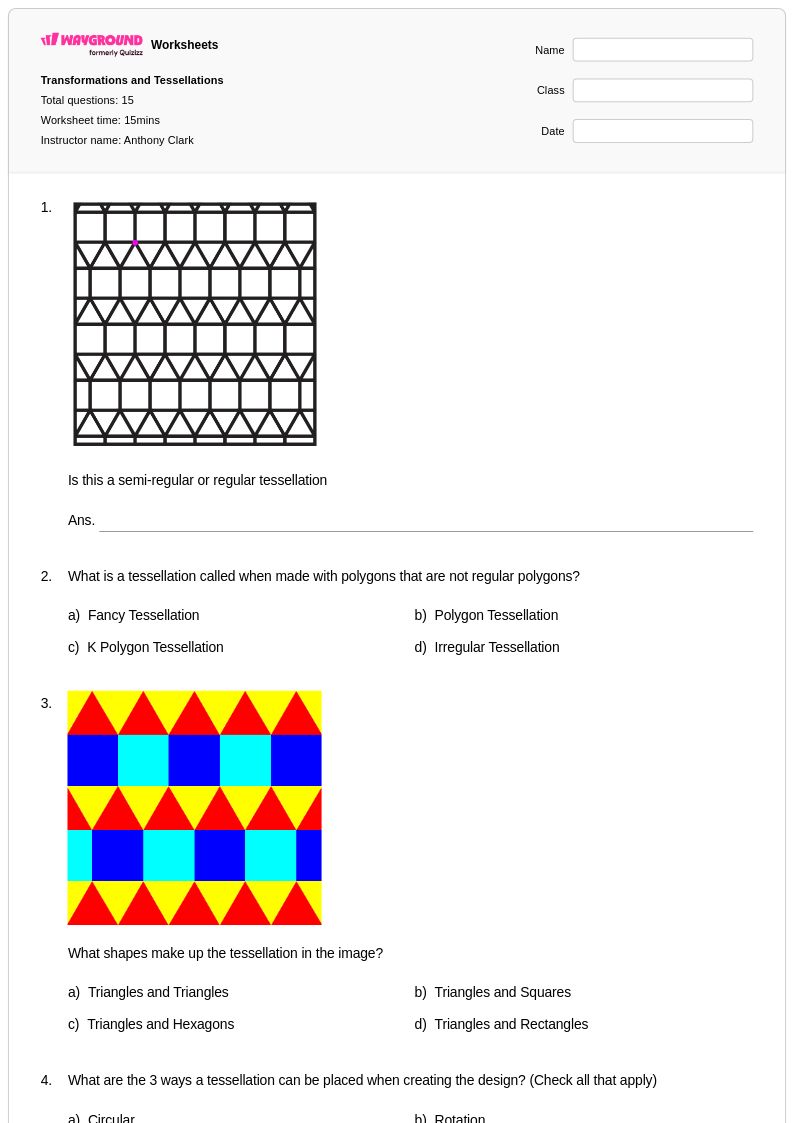
15 Q
4th - Uni
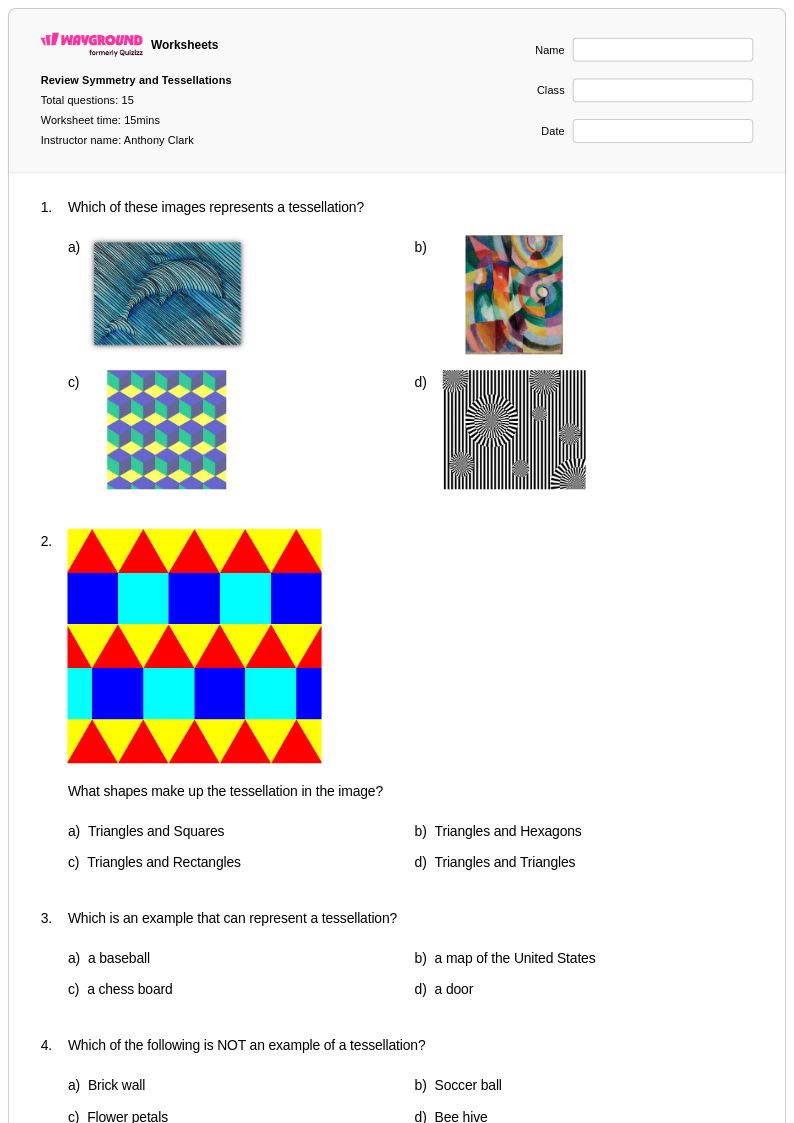
15 Q
4th - Uni
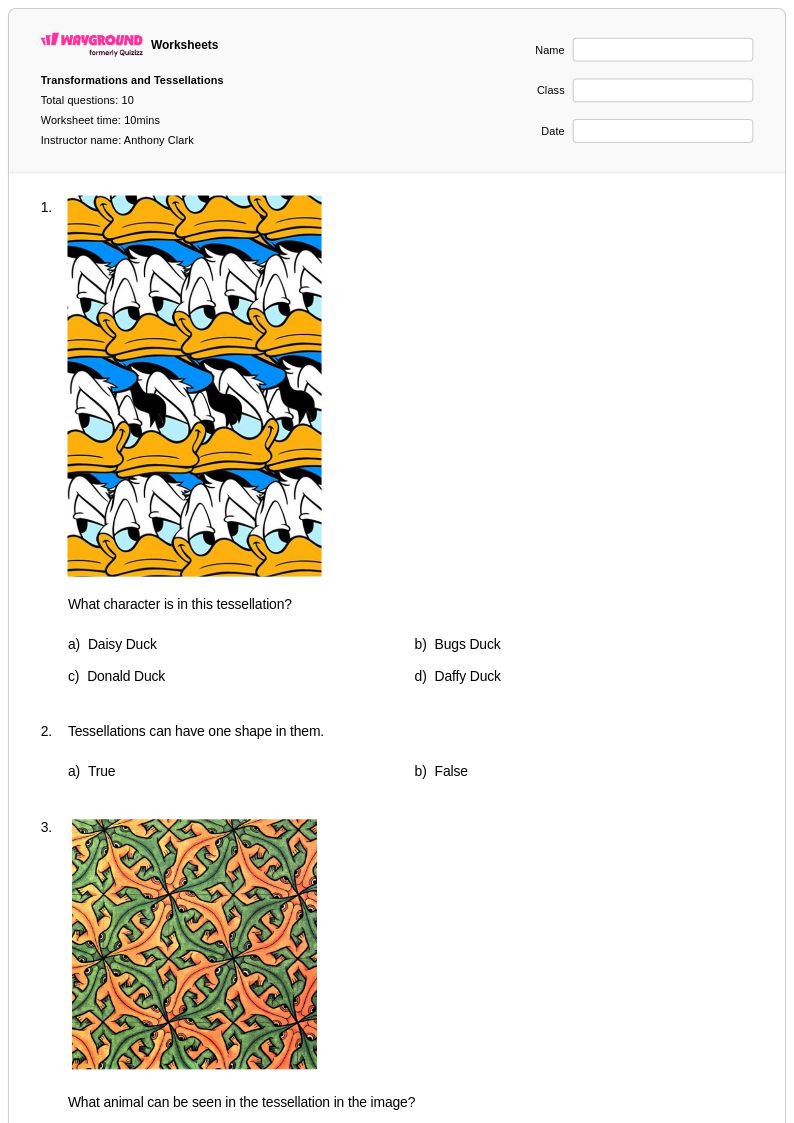
10 Q
4th - Uni
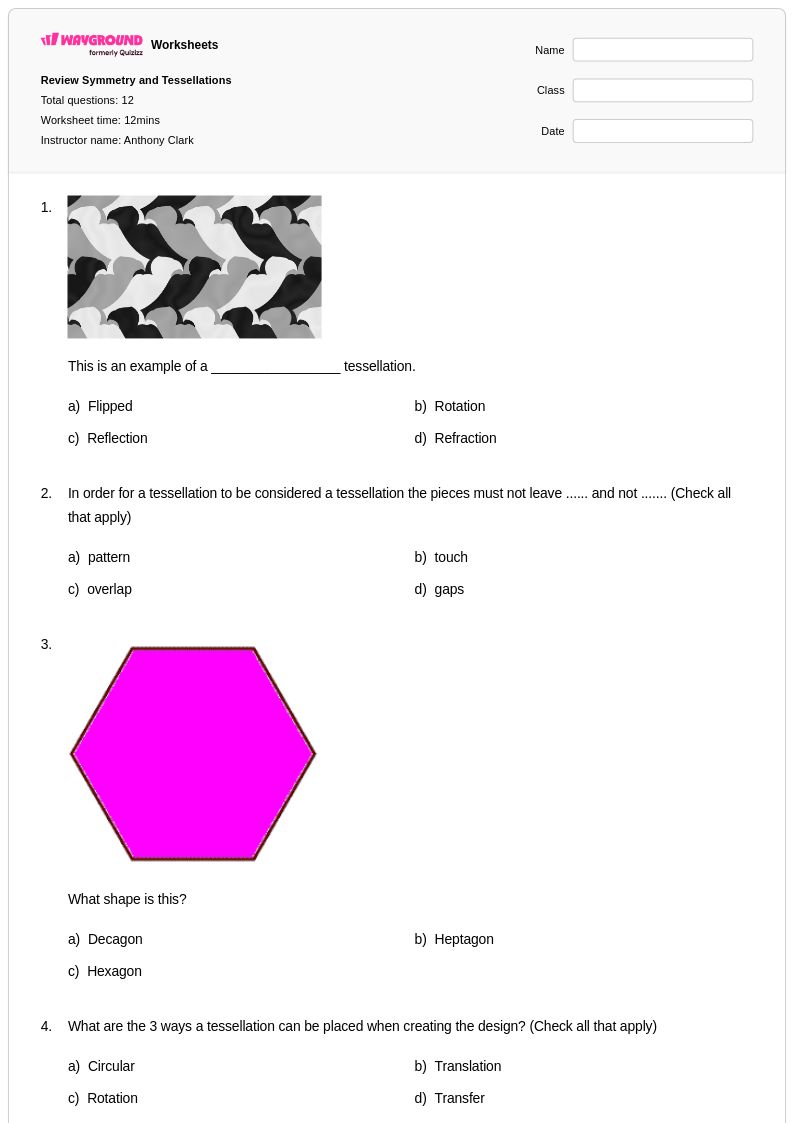
12 Q
4th - Uni
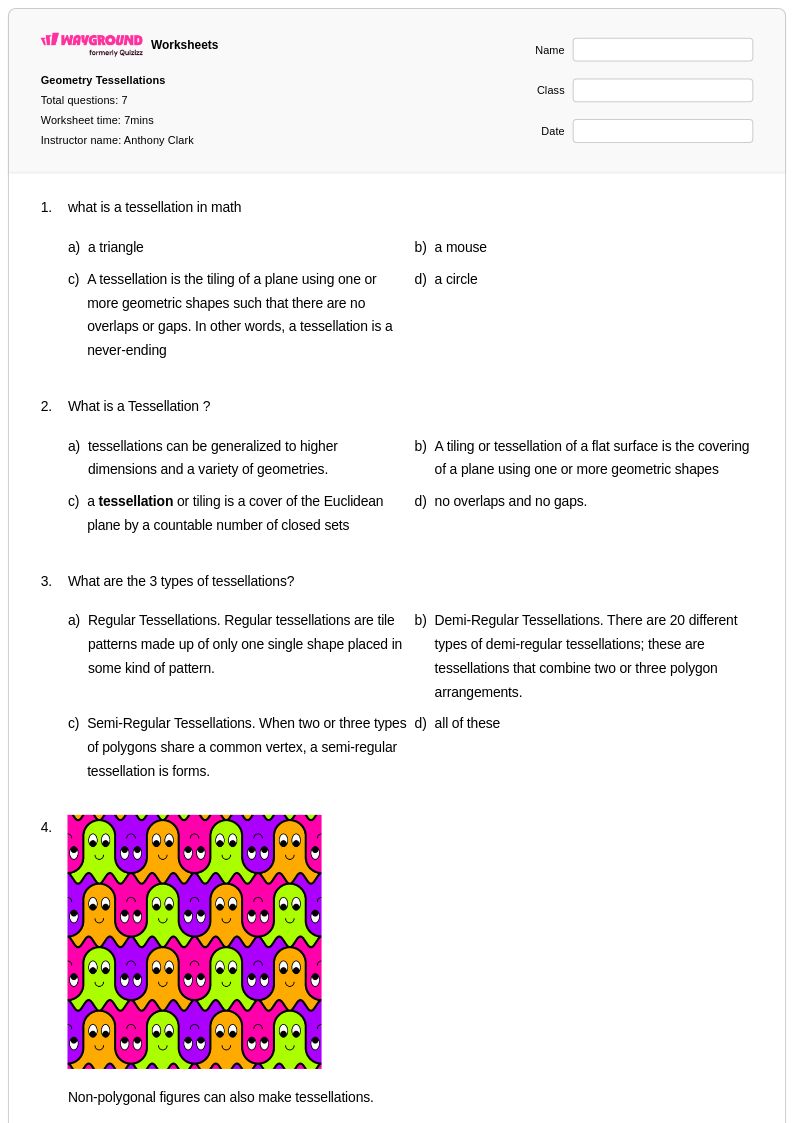
7 Q
4th - Uni
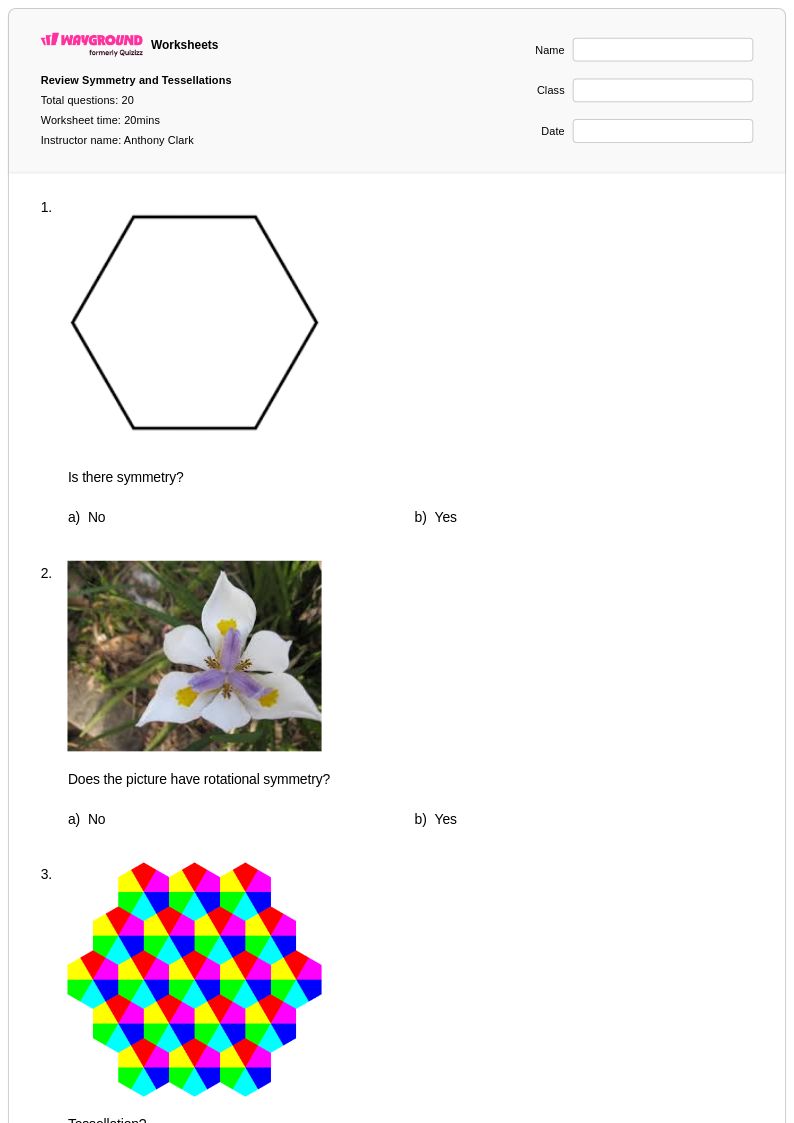
20 Q
4th - Uni
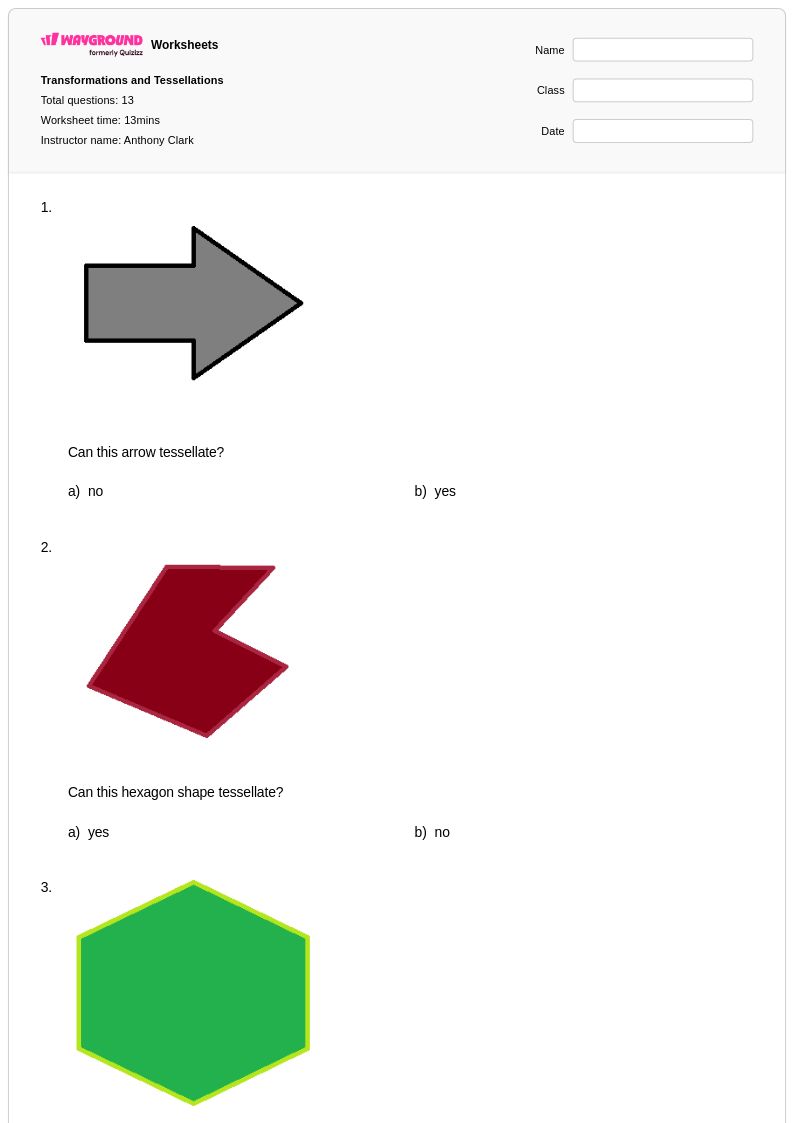
13 Q
4th - Uni
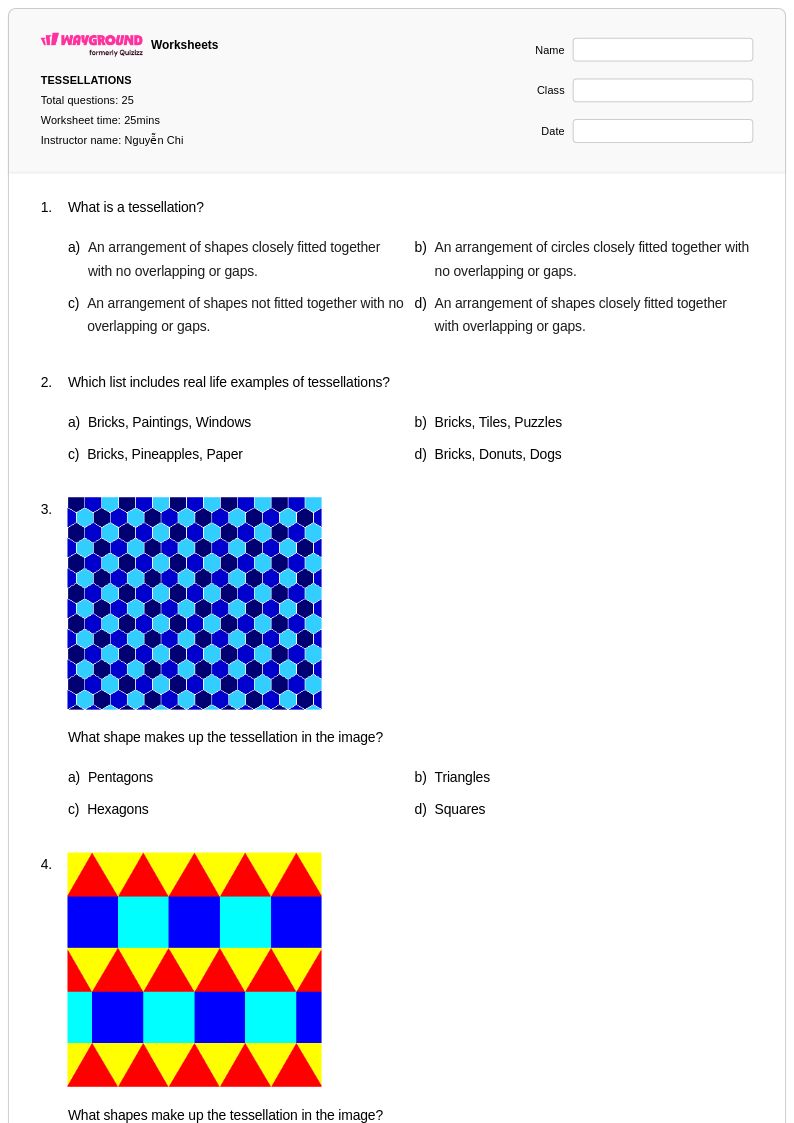
25 Q
1st - 5th
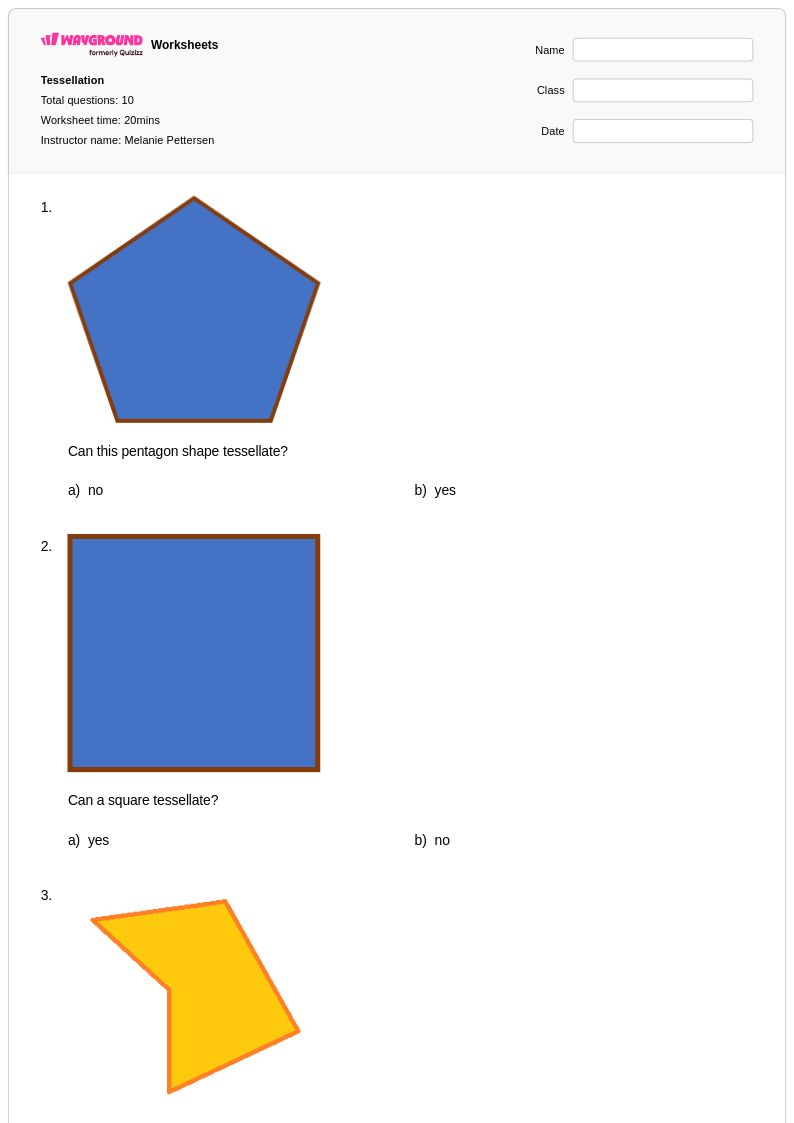
10 Q
2nd - 12th
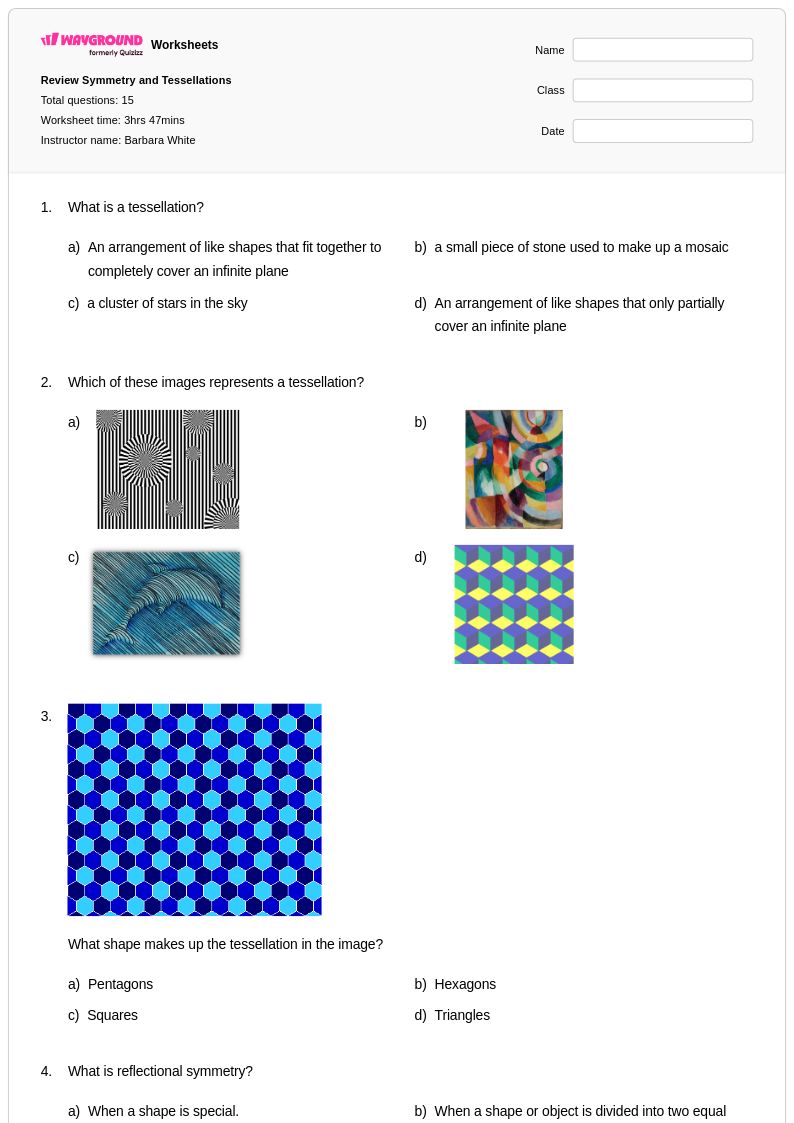
15 Q
5th - 8th
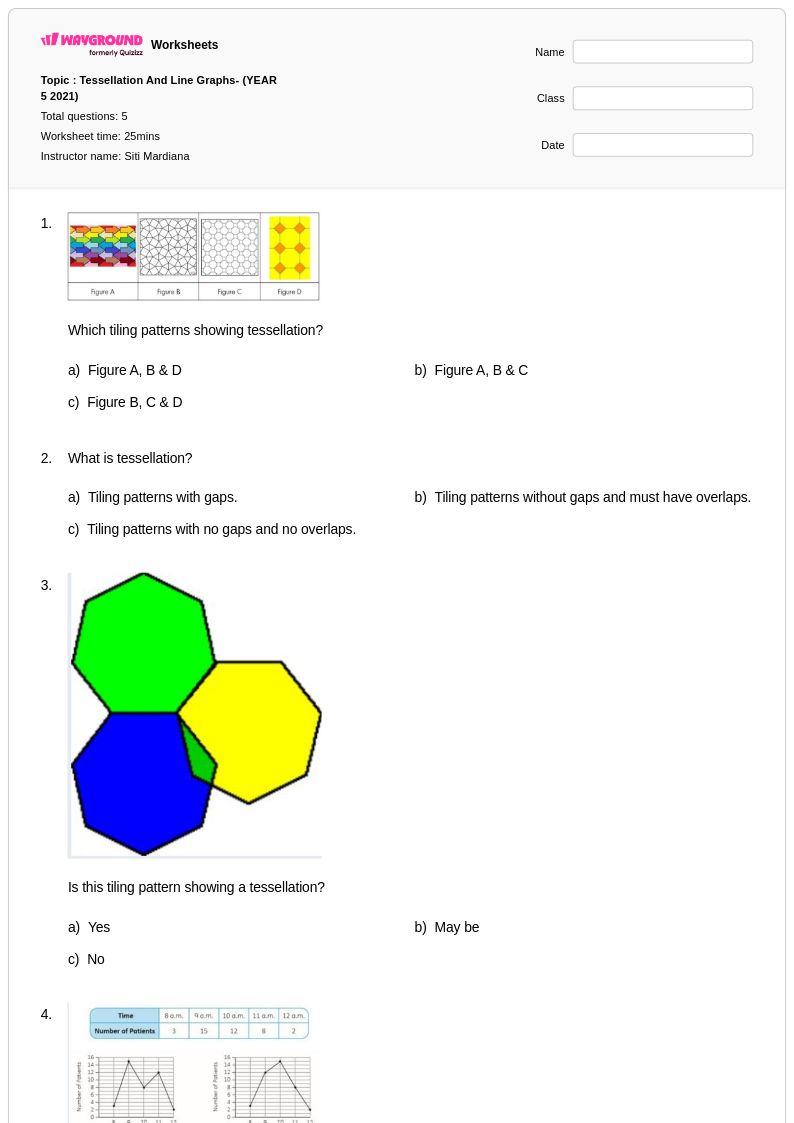
5 Q
5th
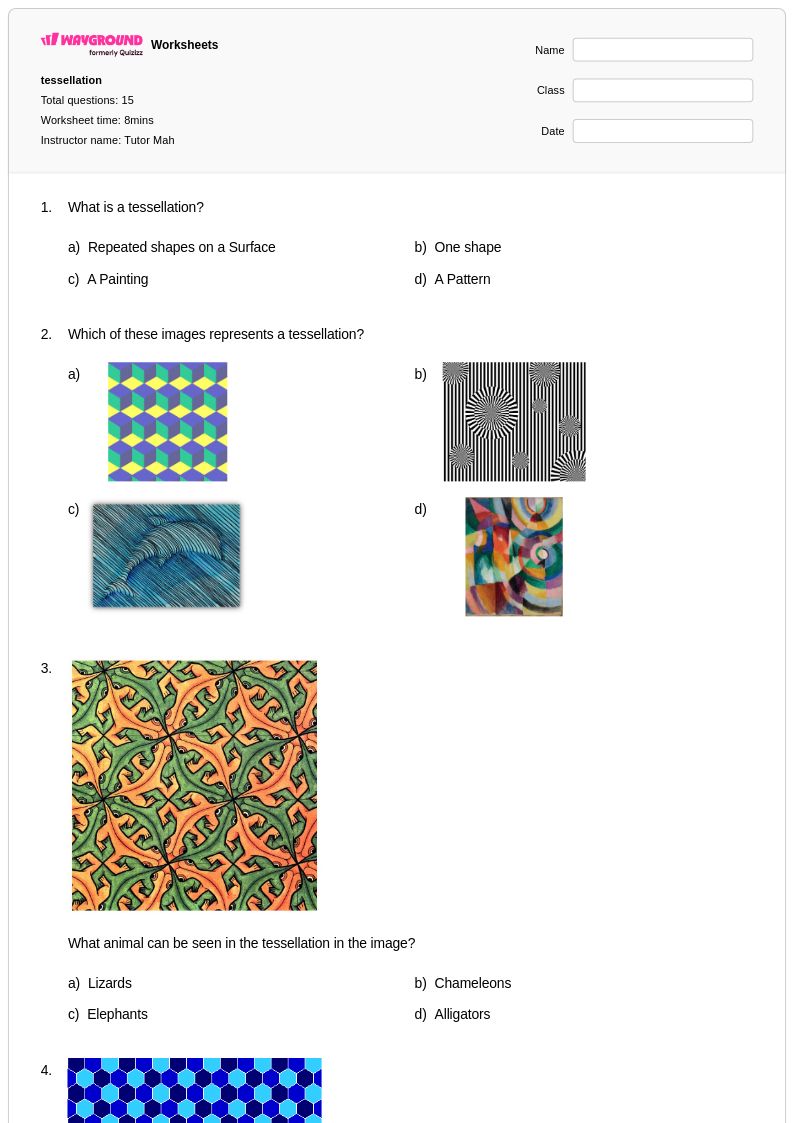
15 Q
5th
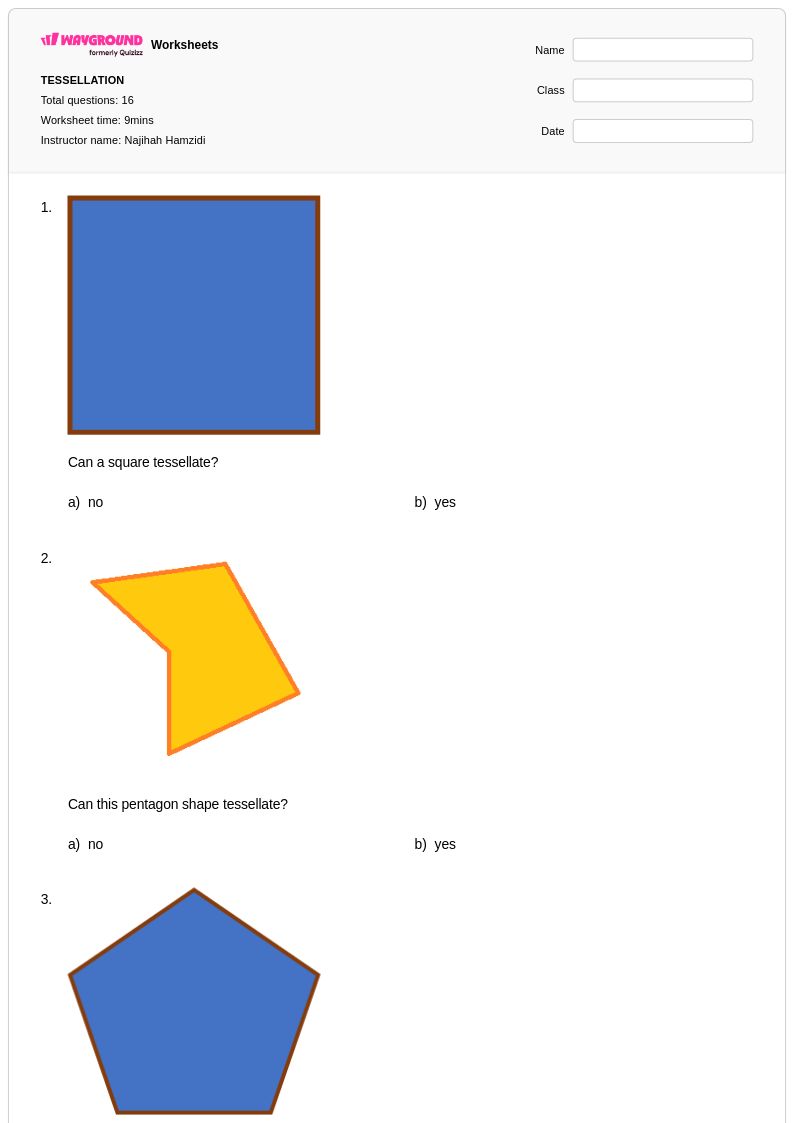
16 Q
5th
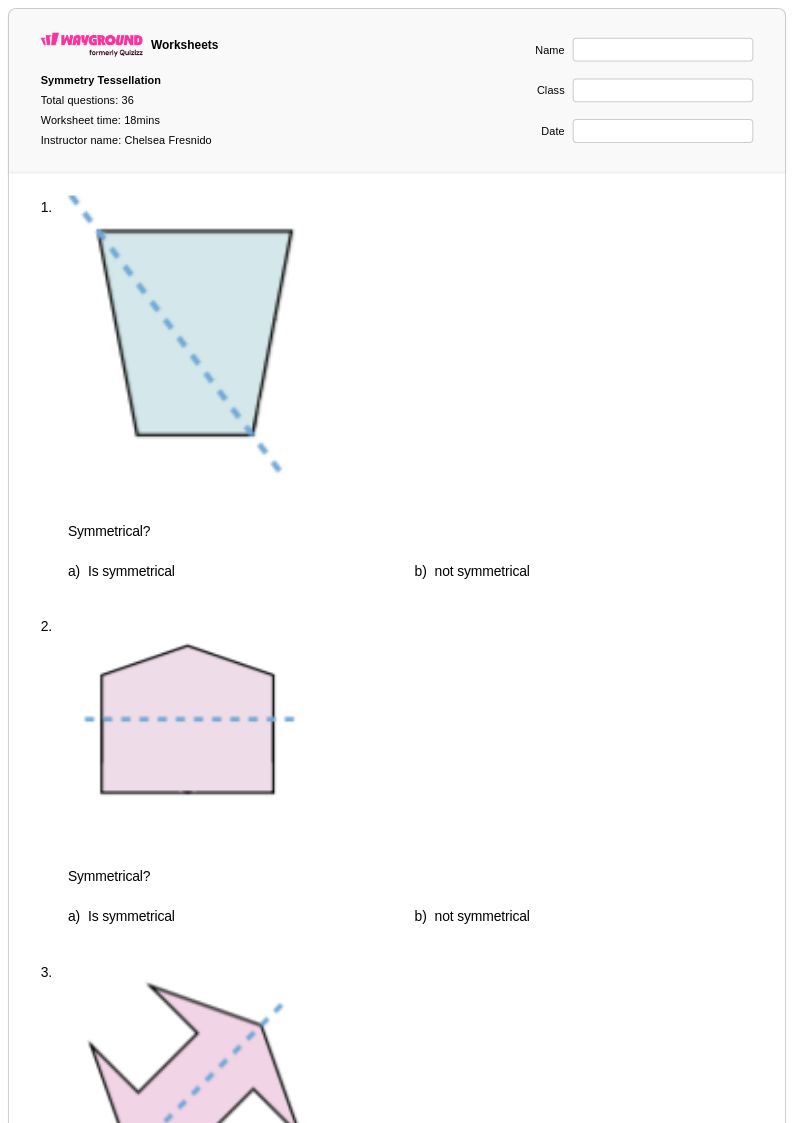
36 Q
1st - 5th
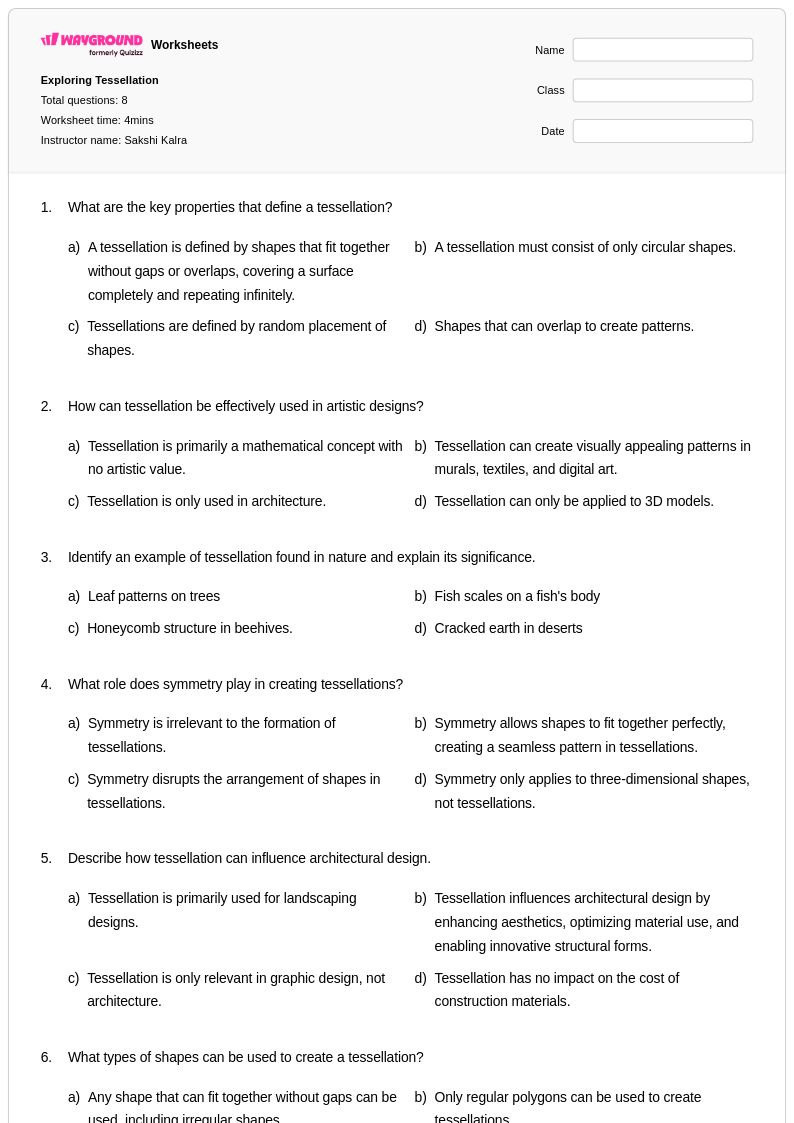
8 Q
5th
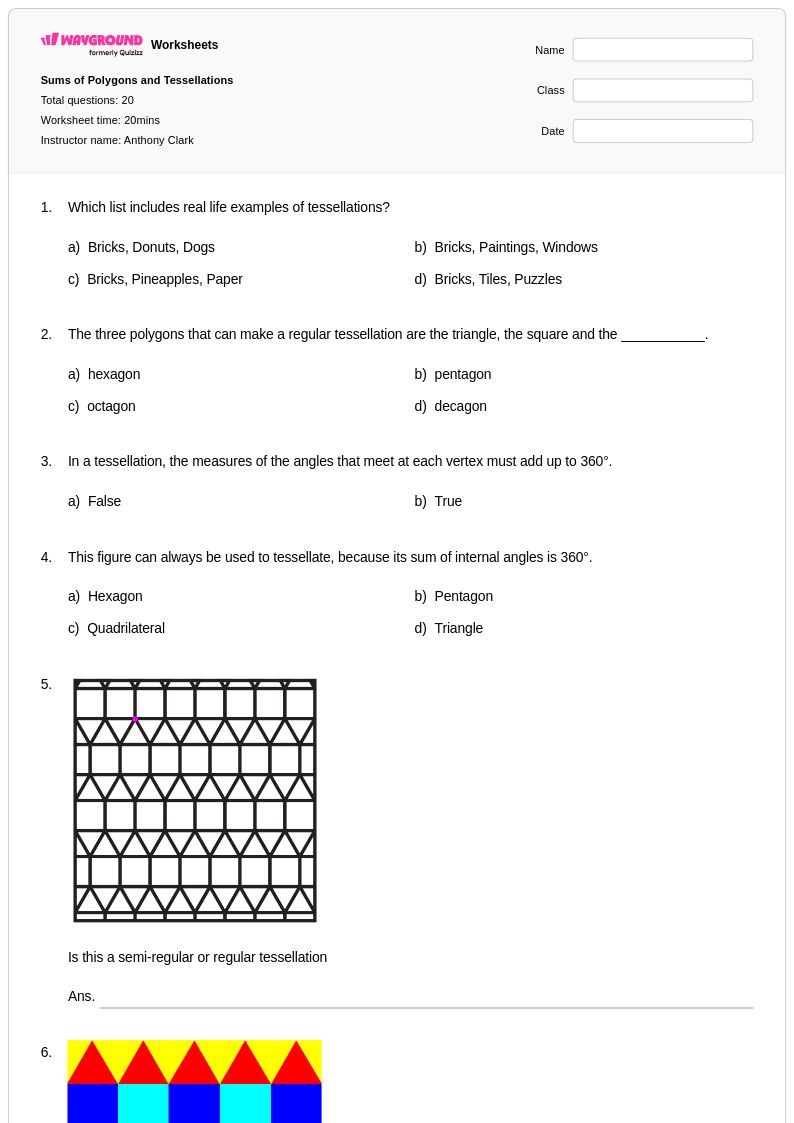
20 Q
4th - Uni
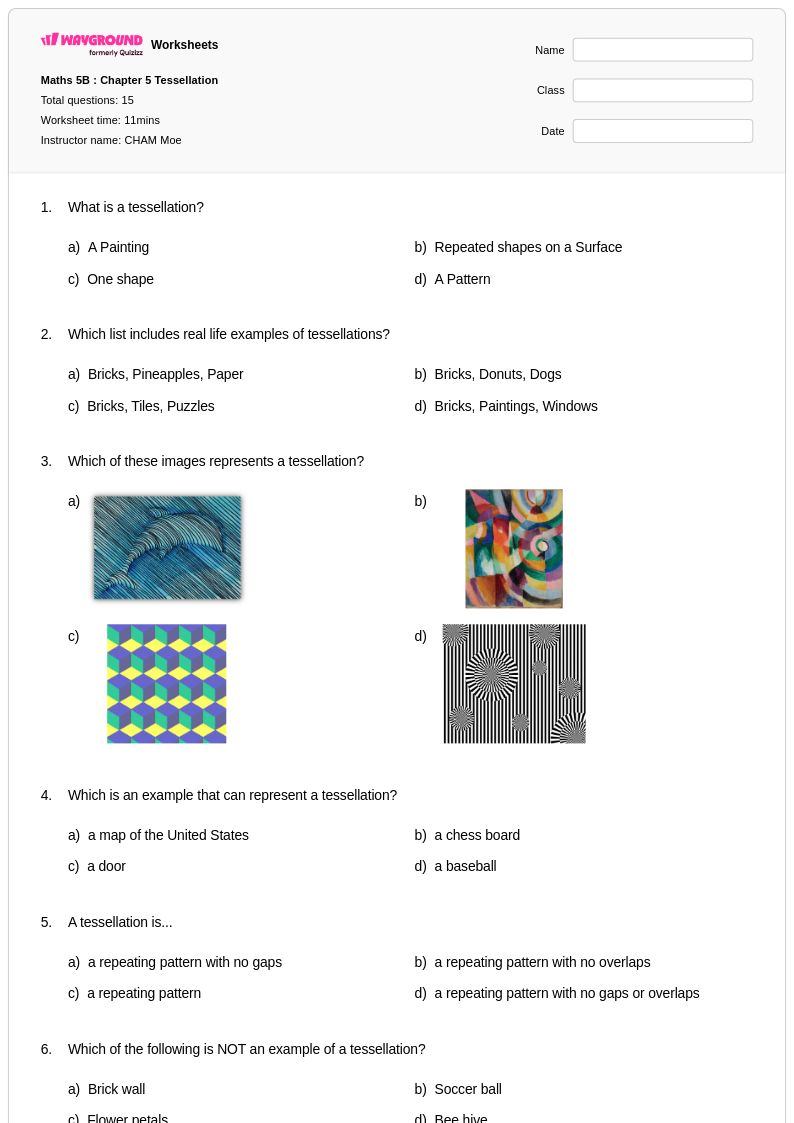
15 Q
5th
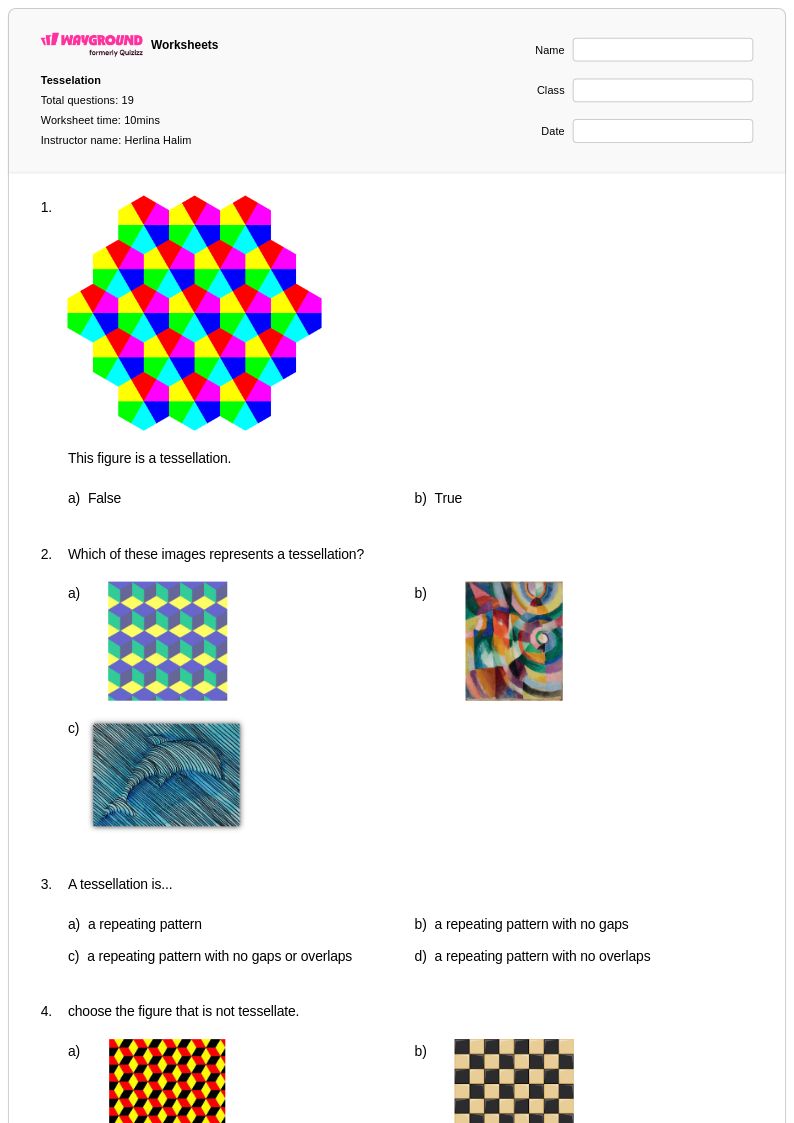
19 Q
5th
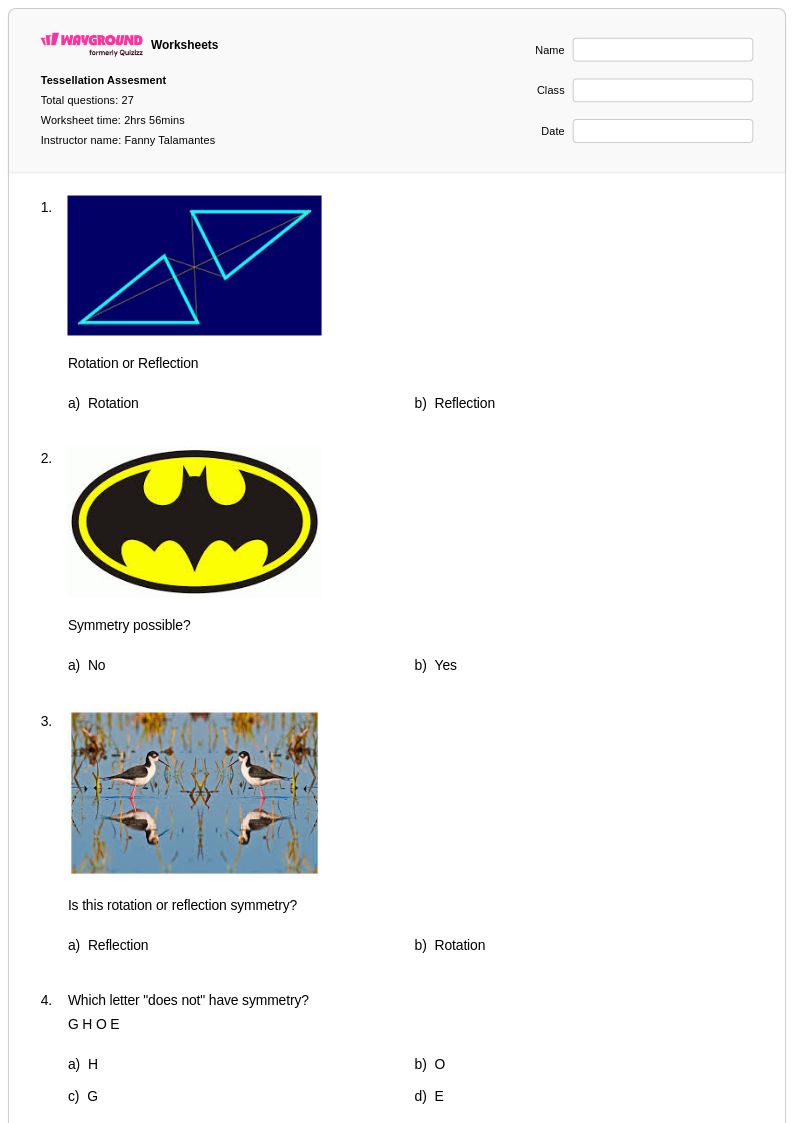
27 Q
5th
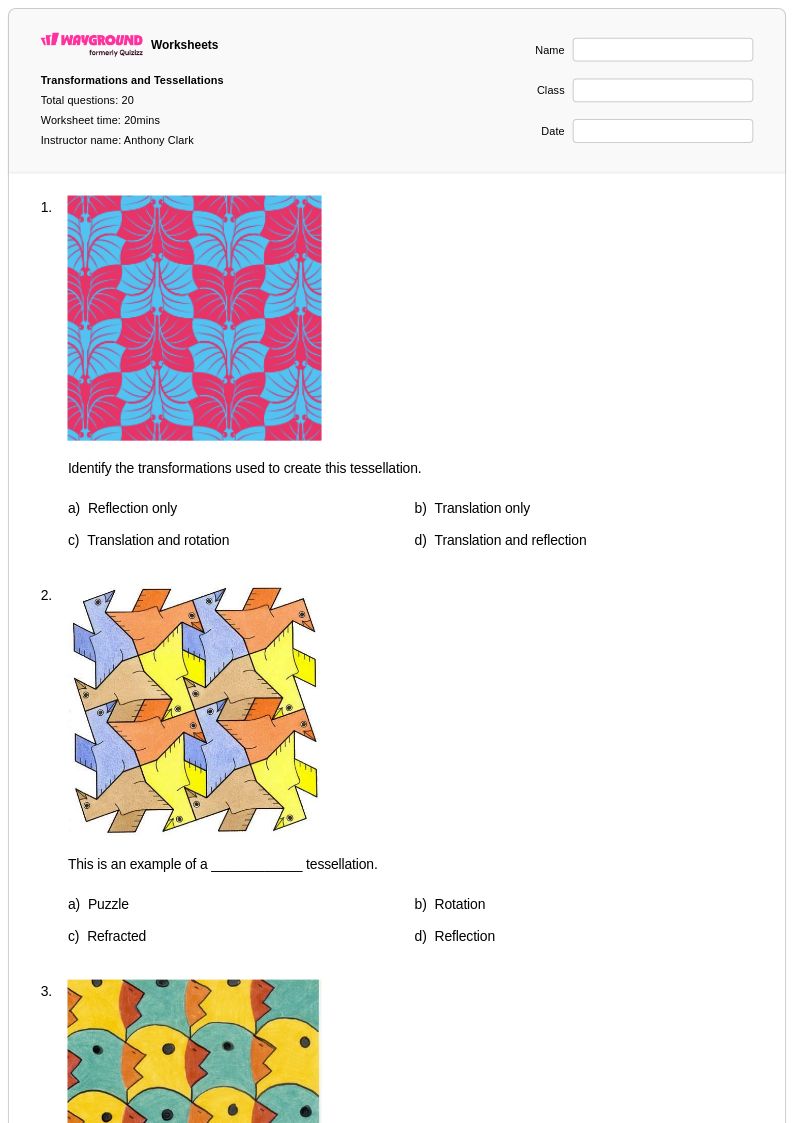
20 Q
4th - Uni
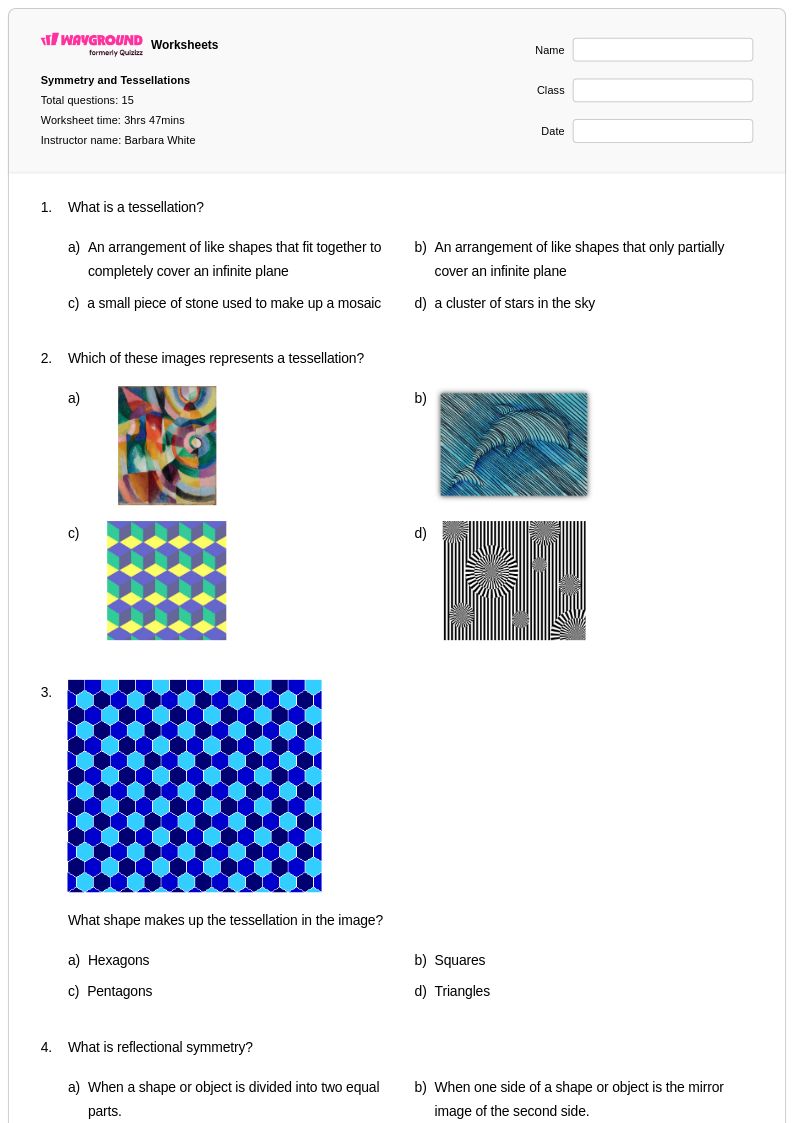
15 Q
5th - 8th
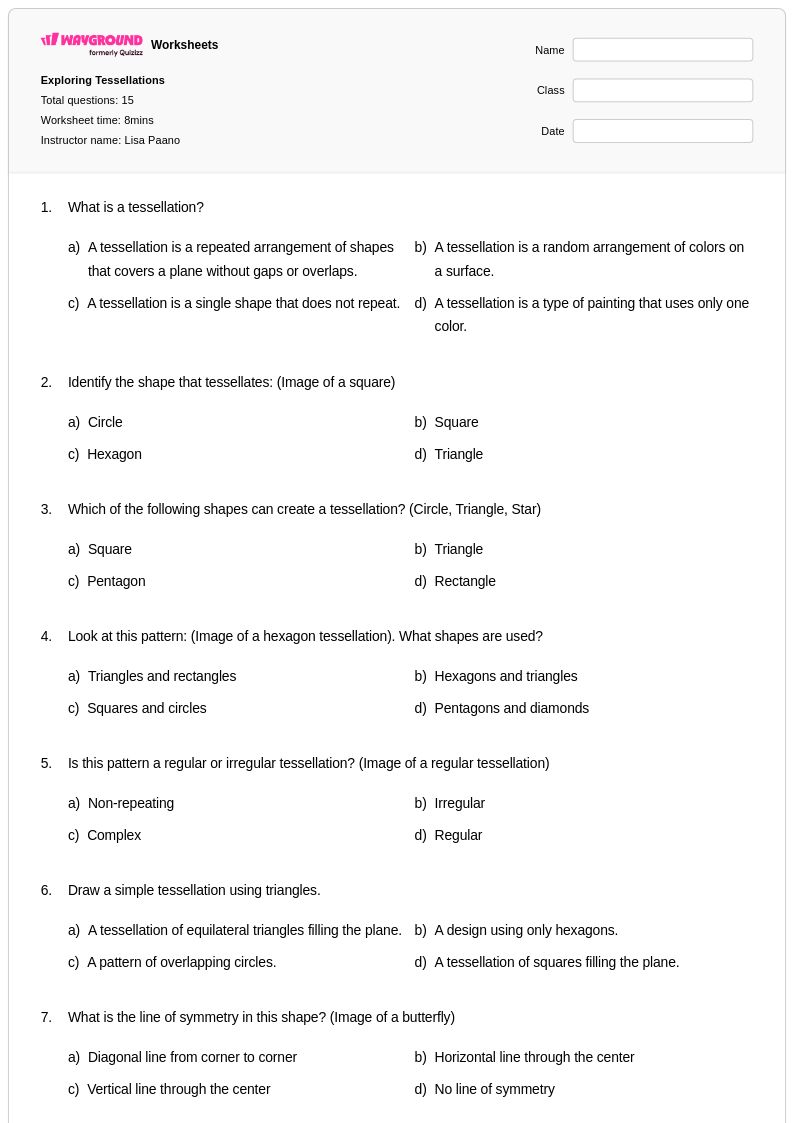
15 Q
5th
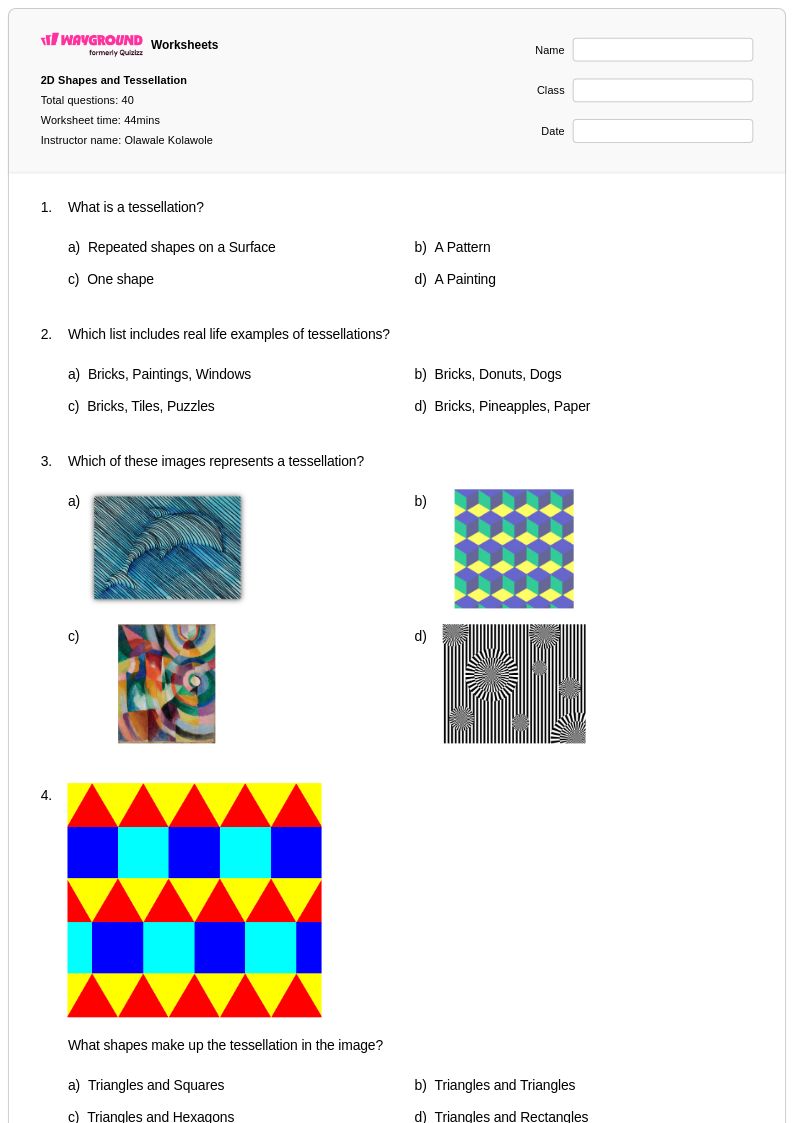
40 Q
4th - Uni
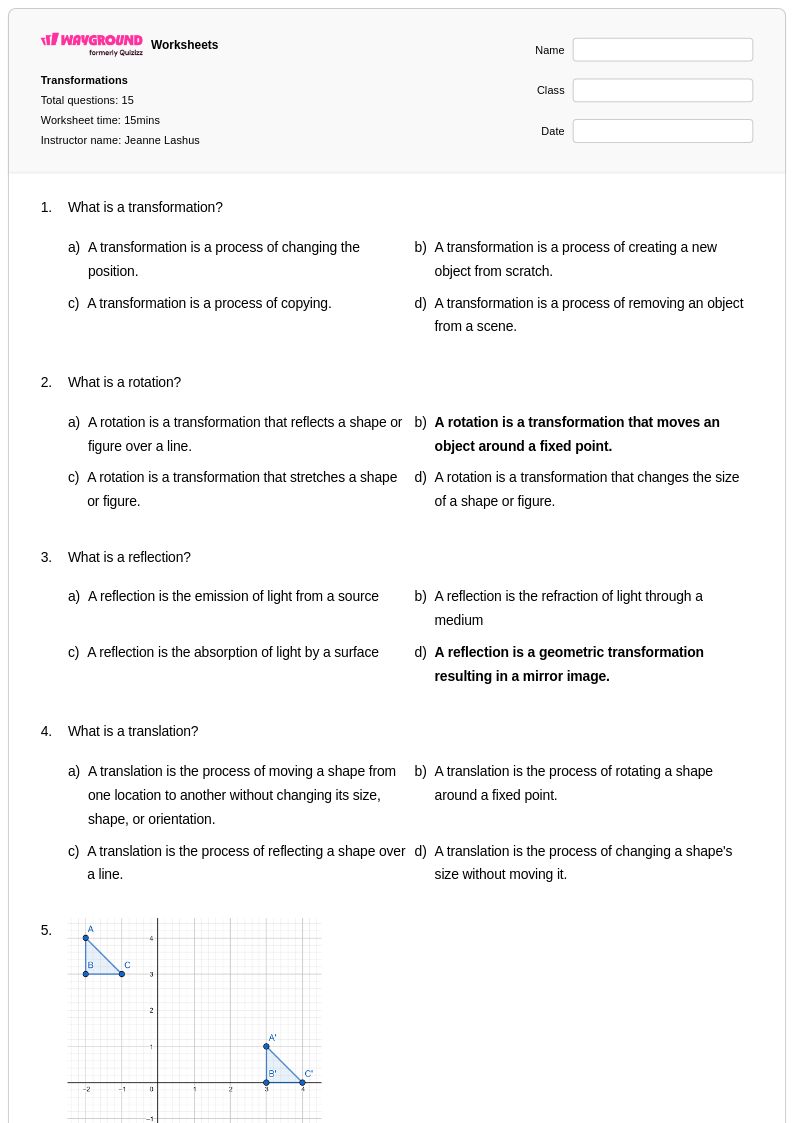
15 Q
5th
Explore Other Subject Worksheets for grade 5
Explore printable Tessellation worksheets for Grade 5
Tessellation worksheets for Grade 5 students available through Wayground (formerly Quizizz) provide comprehensive practice with geometric patterns and spatial reasoning skills essential for mathematical development. These carefully designed printables help students understand how shapes fit together without gaps or overlaps, exploring regular and semi-regular tessellations using polygons like triangles, squares, and hexagons. Students develop critical thinking abilities as they analyze pattern relationships, predict continuation sequences, and create their own tessellating designs through structured practice problems. Each worksheet includes detailed answer keys that support independent learning and self-assessment, while the free pdf format ensures easy classroom distribution and home practice accessibility.
Wayground (formerly Quizizz) empowers teachers with an extensive collection of millions of teacher-created tessellation resources that streamline lesson planning and differentiated instruction for Grade 5 mathematics. The platform's advanced search and filtering capabilities allow educators to quickly locate worksheets aligned with specific curriculum standards and learning objectives, while customization tools enable modification of difficulty levels to meet diverse student needs. Teachers can seamlessly transition between printable pdf formats for traditional classroom work and digital versions for interactive learning experiences, making these resources invaluable for remediation sessions, enrichment activities, and regular skill practice. The comprehensive nature of these tessellation worksheet collections supports both individual student growth and whole-class geometric understanding development.
FAQs
How do I teach tessellations to fifth graders?
What tessellation exercises are useful for Grade 5?
What mistakes do fifth graders make when analyzing tessellations?
How can I use a Grade 5 tessellation worksheet on Wayground?
How do Grade 5 tessellations connect to Common Core geometry?
How can I differentiate tessellation work in Grade 5?
What level of tessellation work is appropriate for Grade 5?