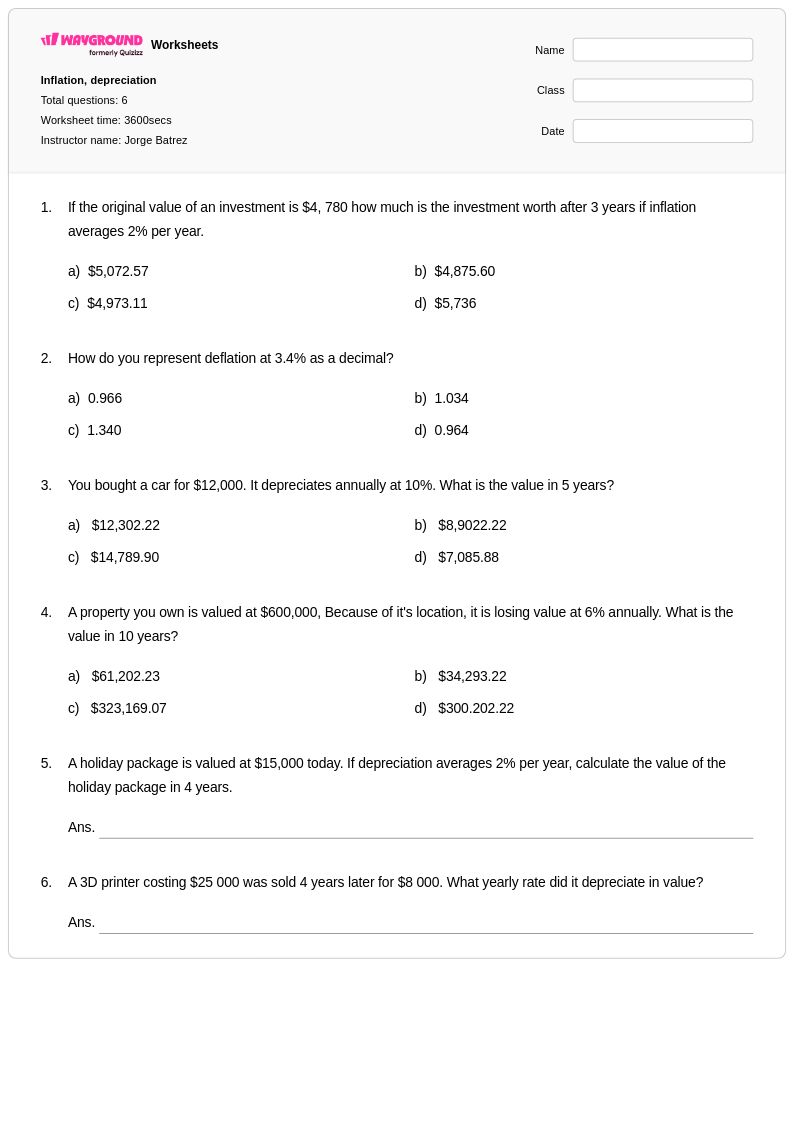
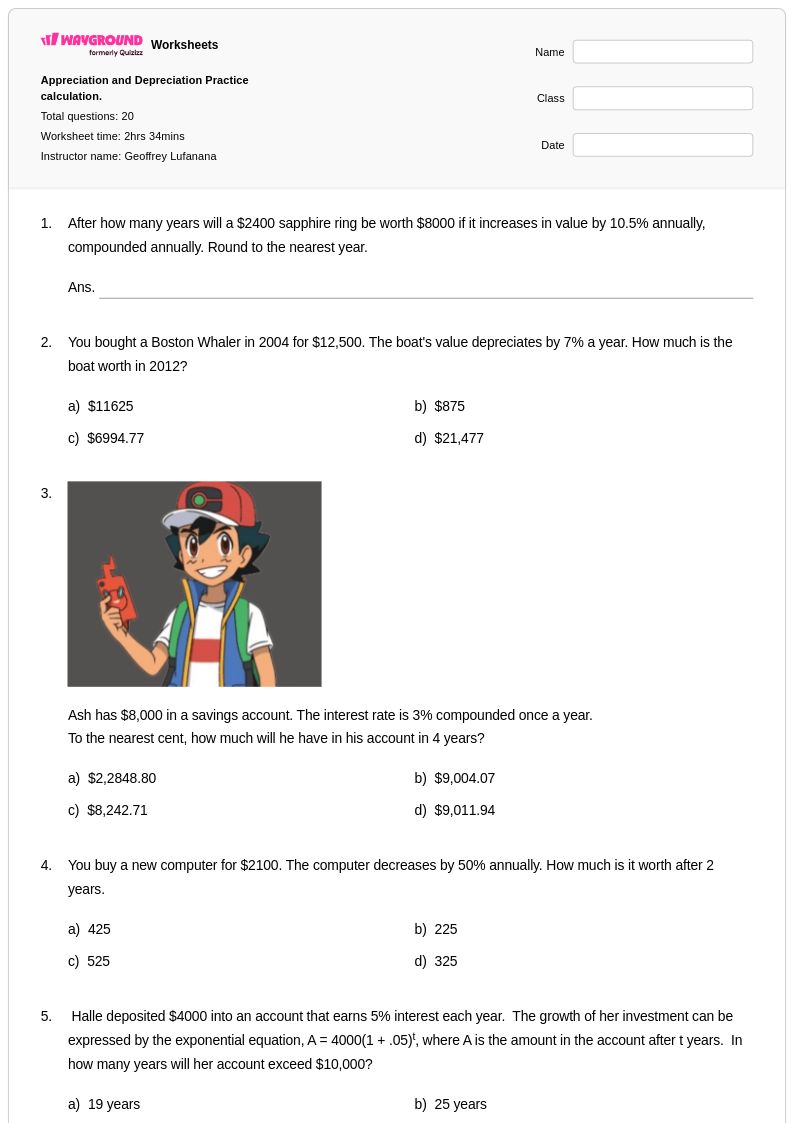
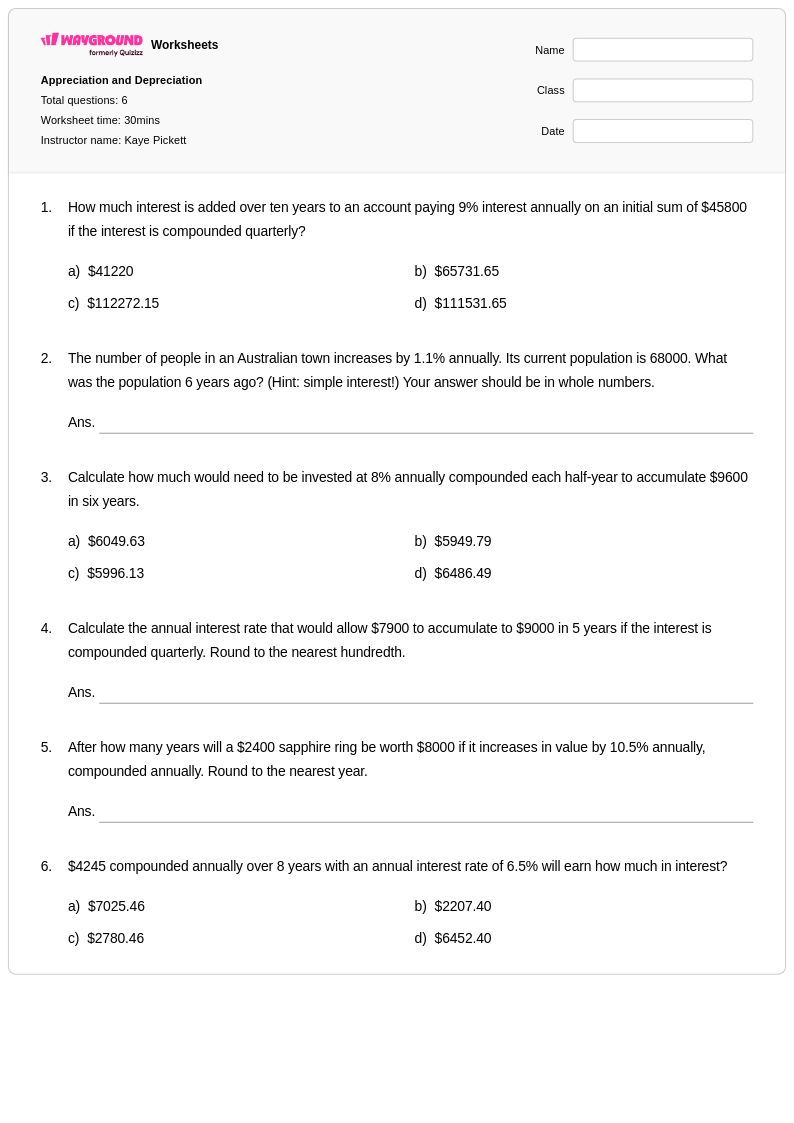
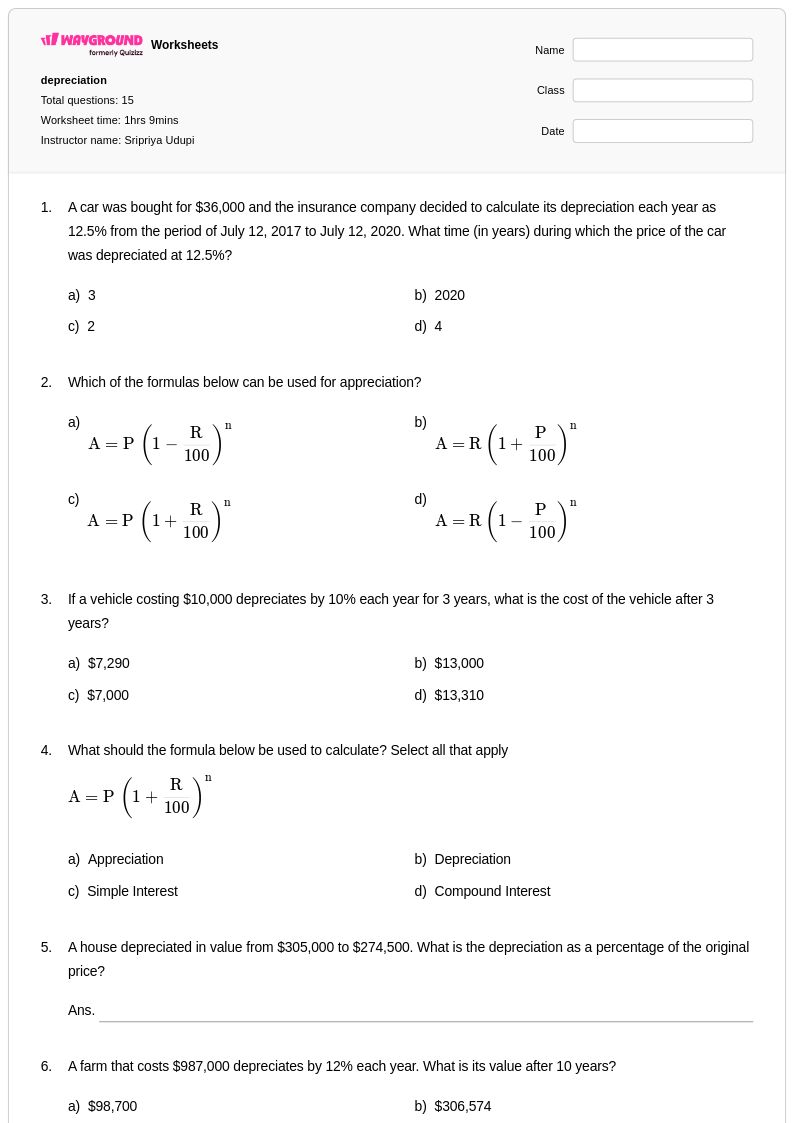
Free Printable Depreciation Worksheets for Grade 9
Grade 9 depreciation worksheets from Wayground provide comprehensive practice problems and printables with answer keys to help students master calculating asset value decline over time through engaging financial literacy exercises.
Explore printable Depreciation worksheets for Grade 9
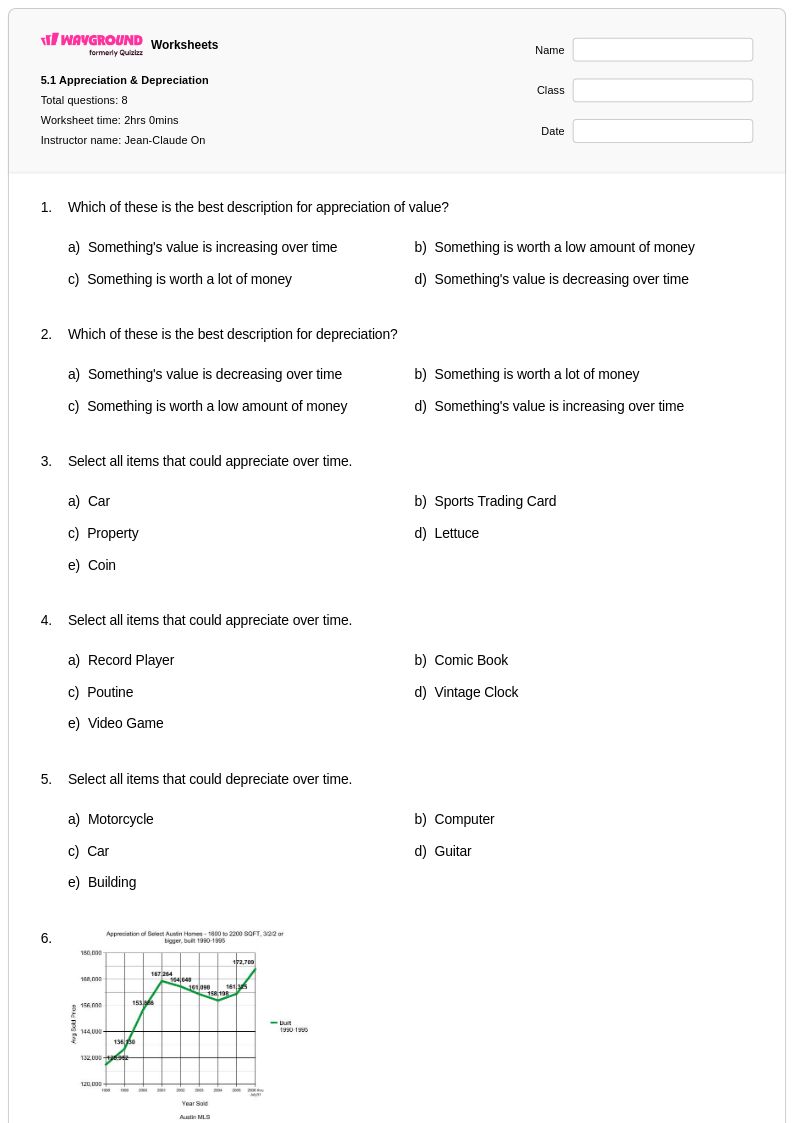
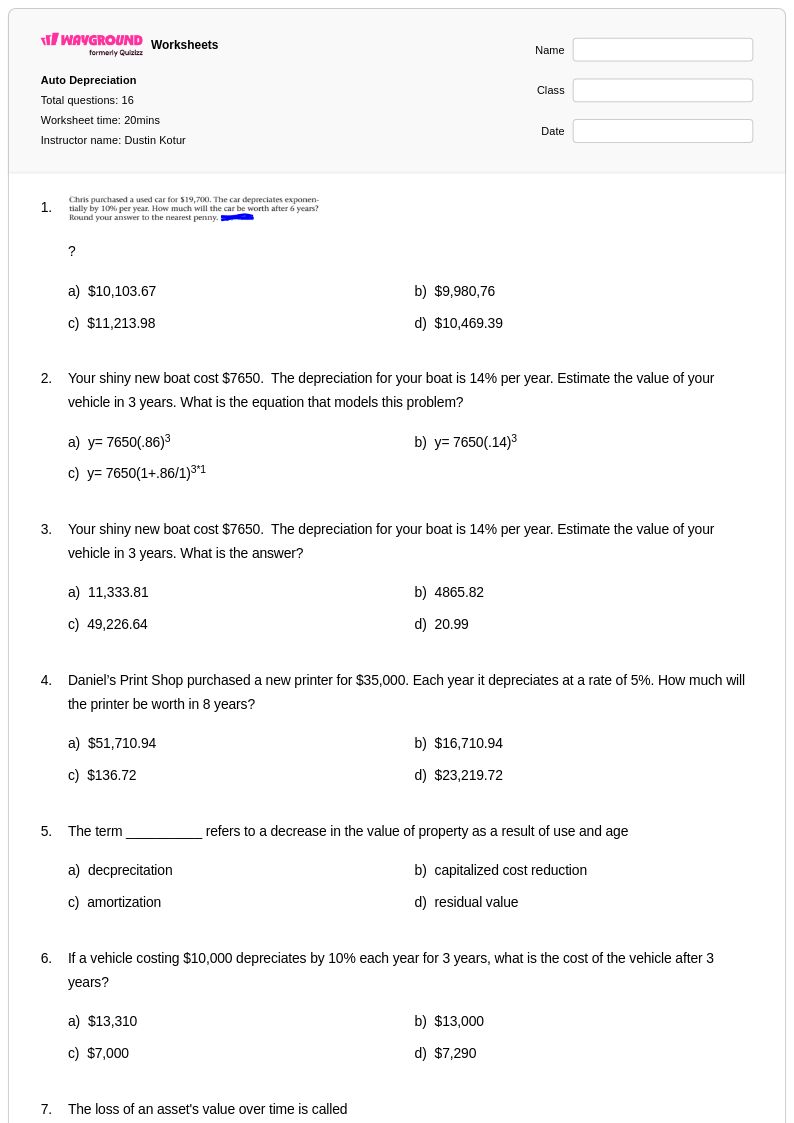
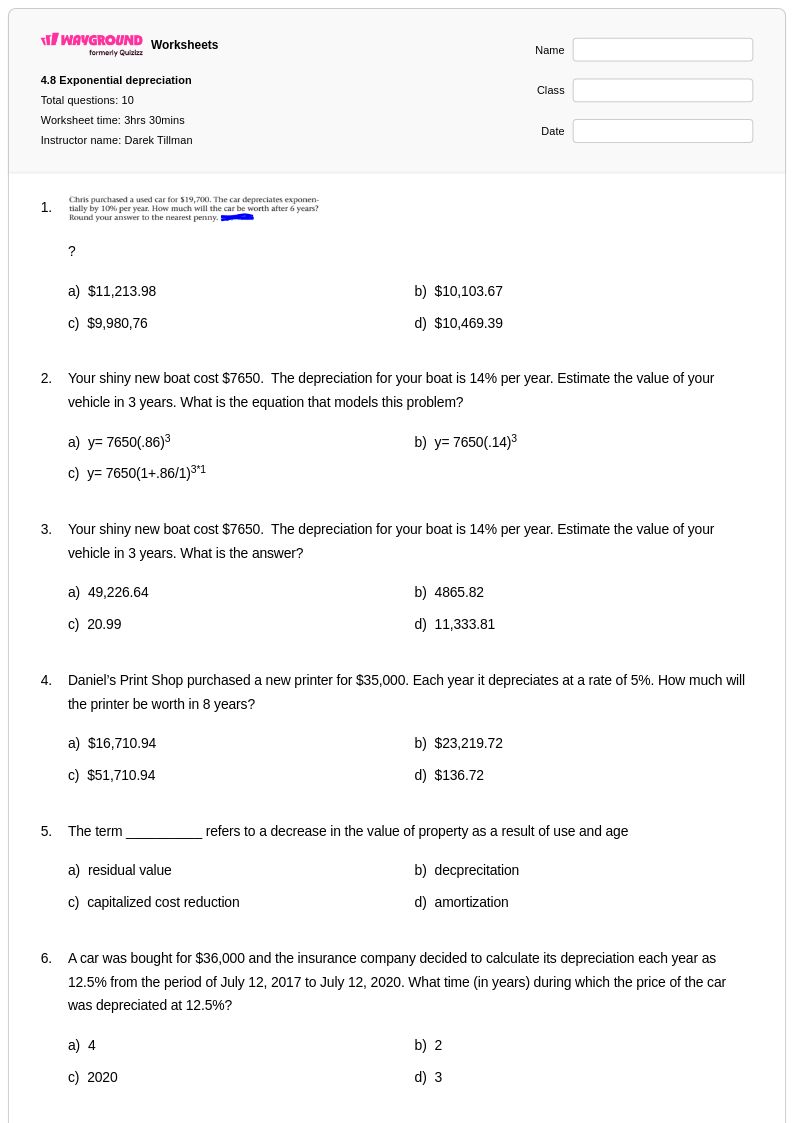
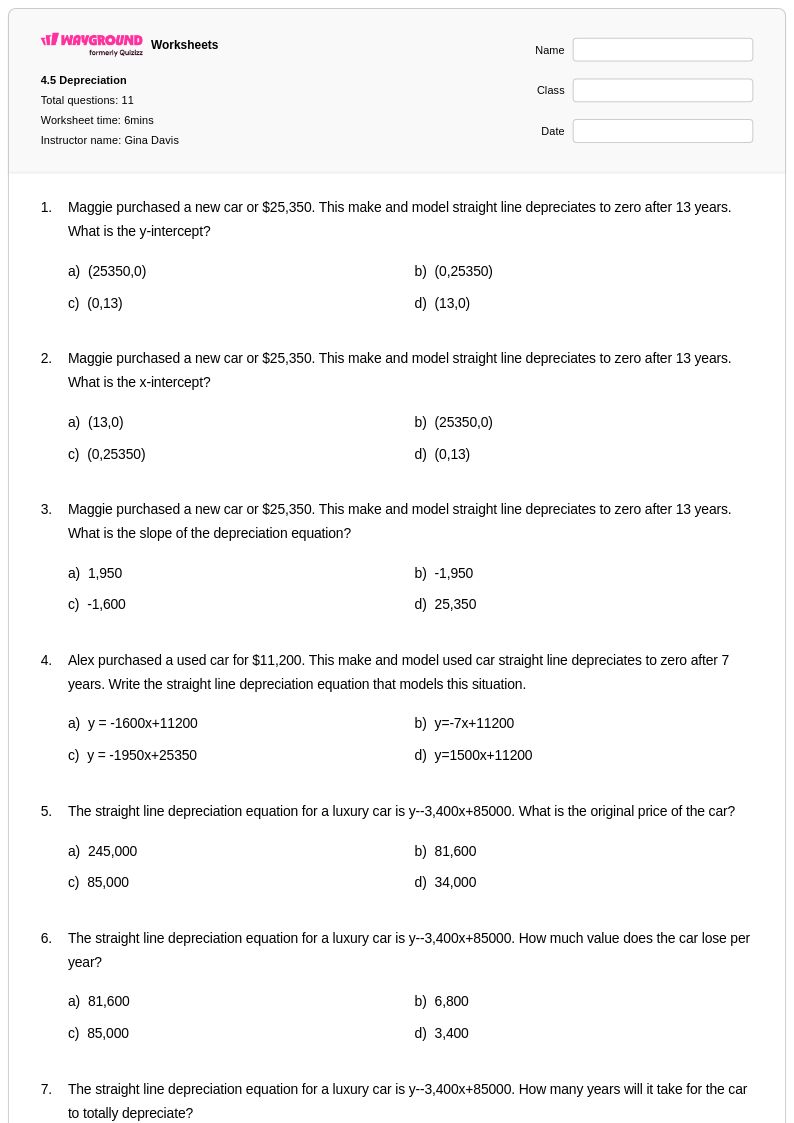
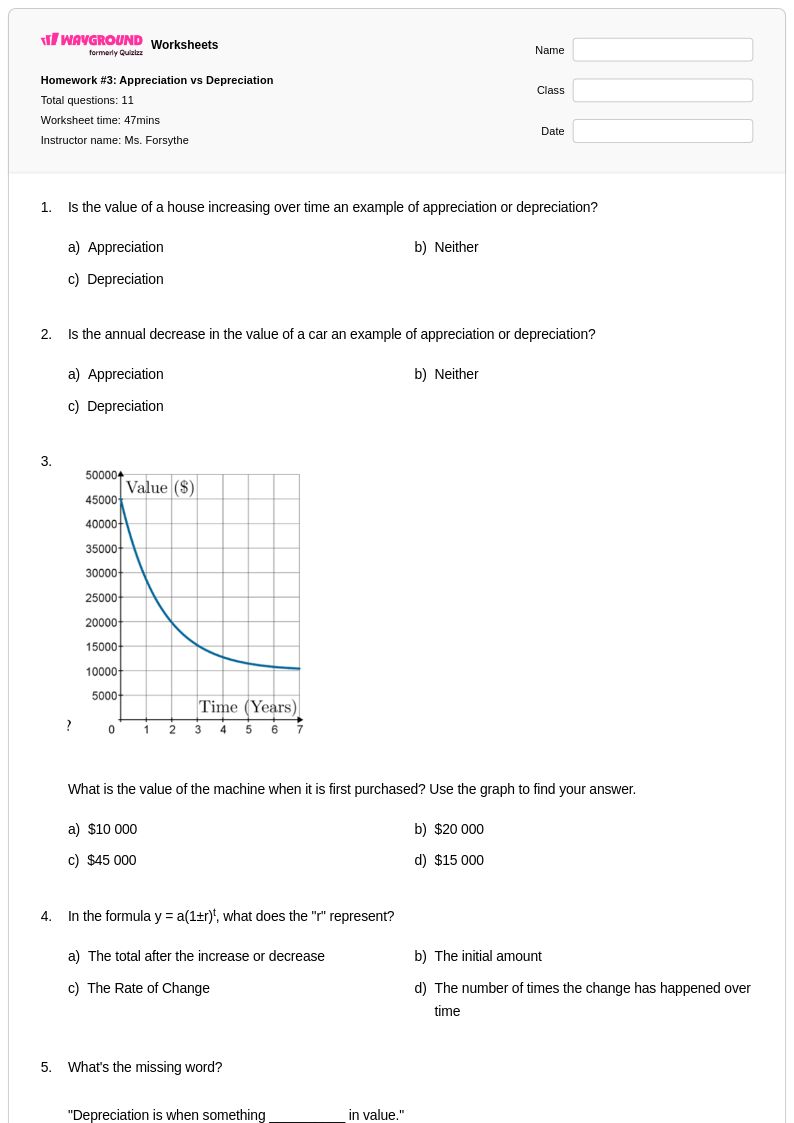
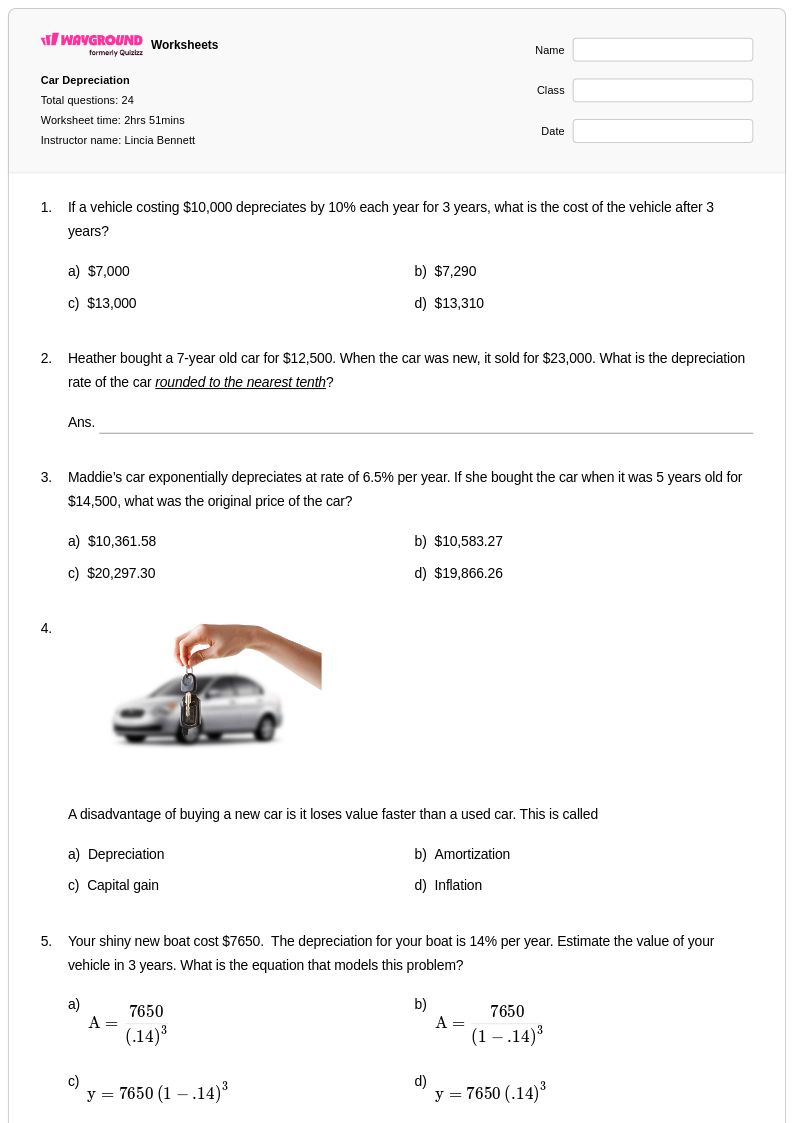
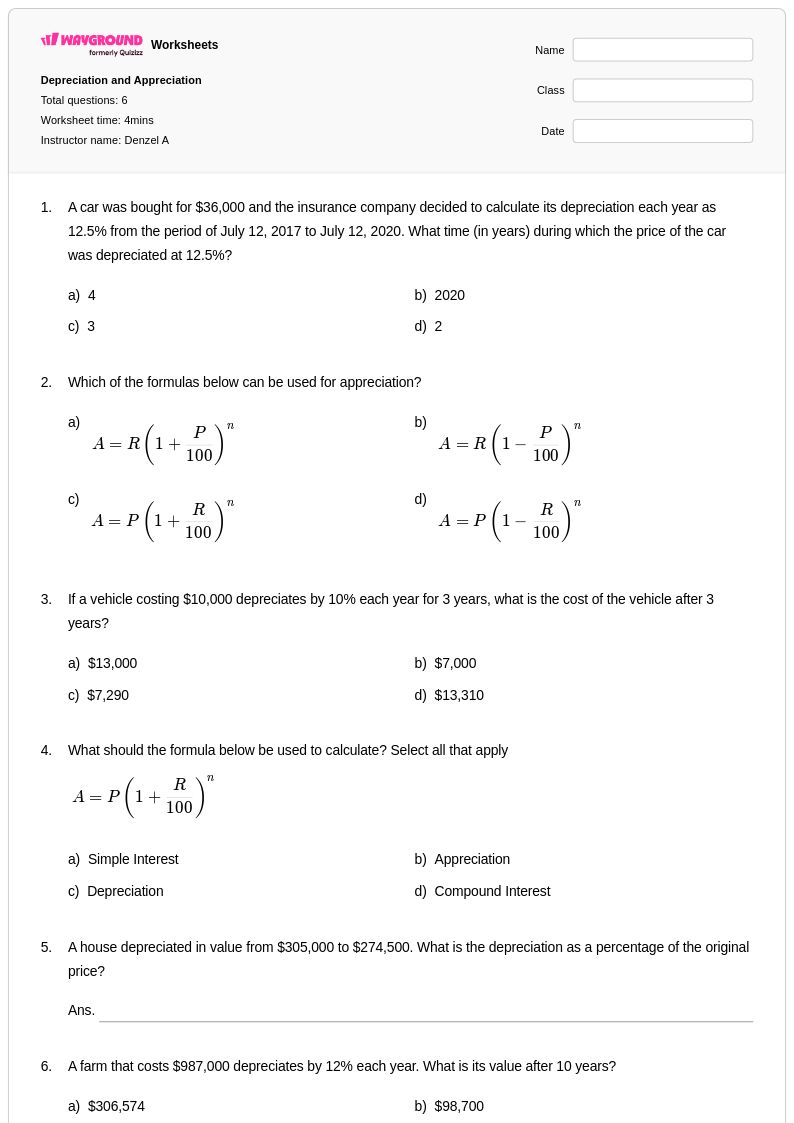
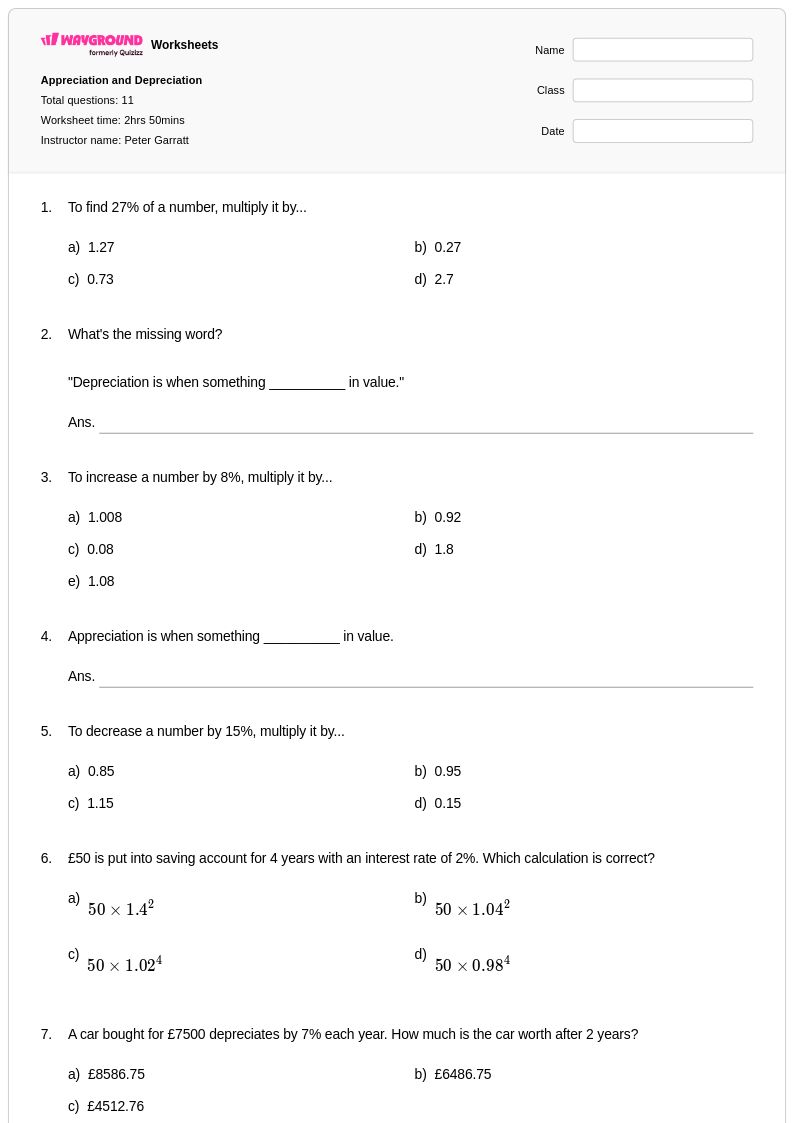
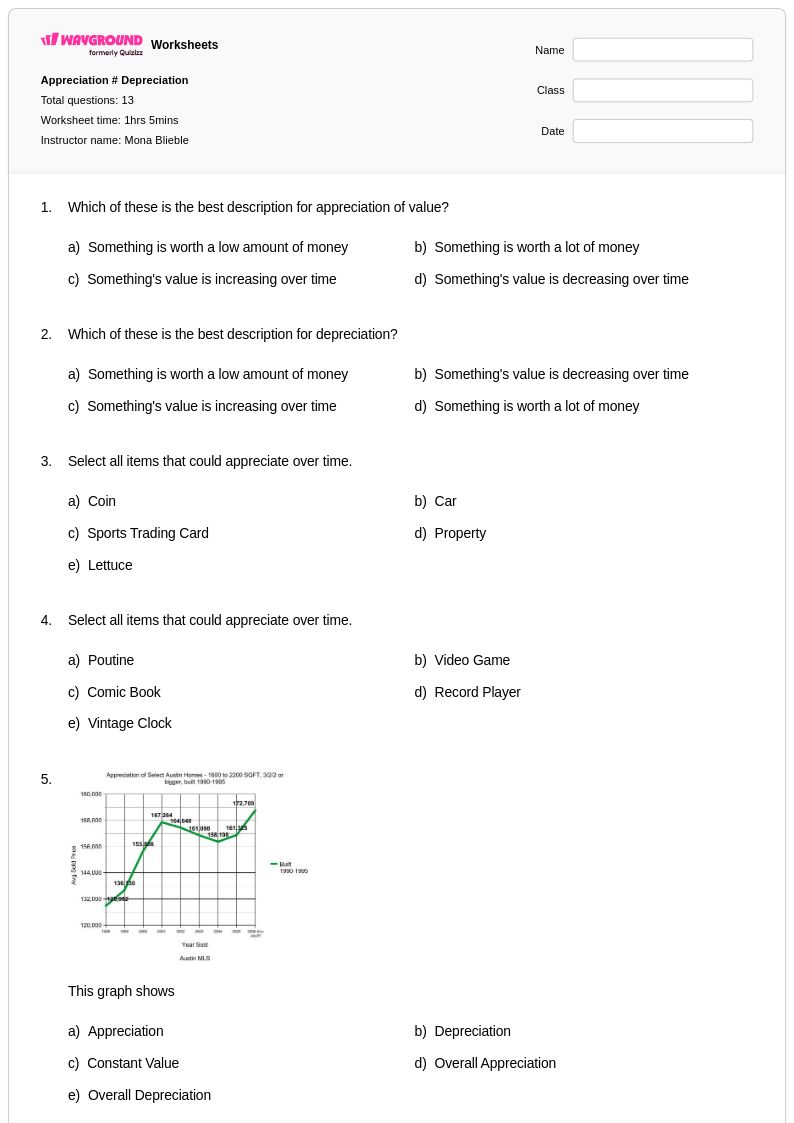
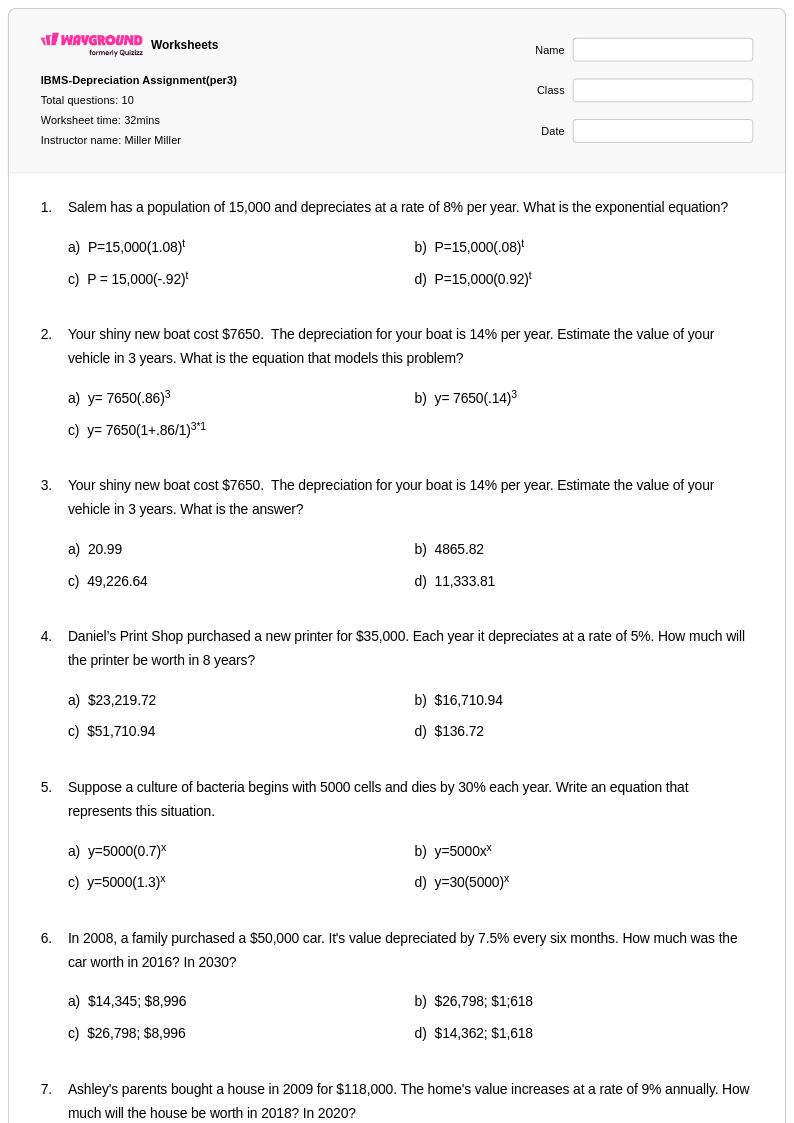
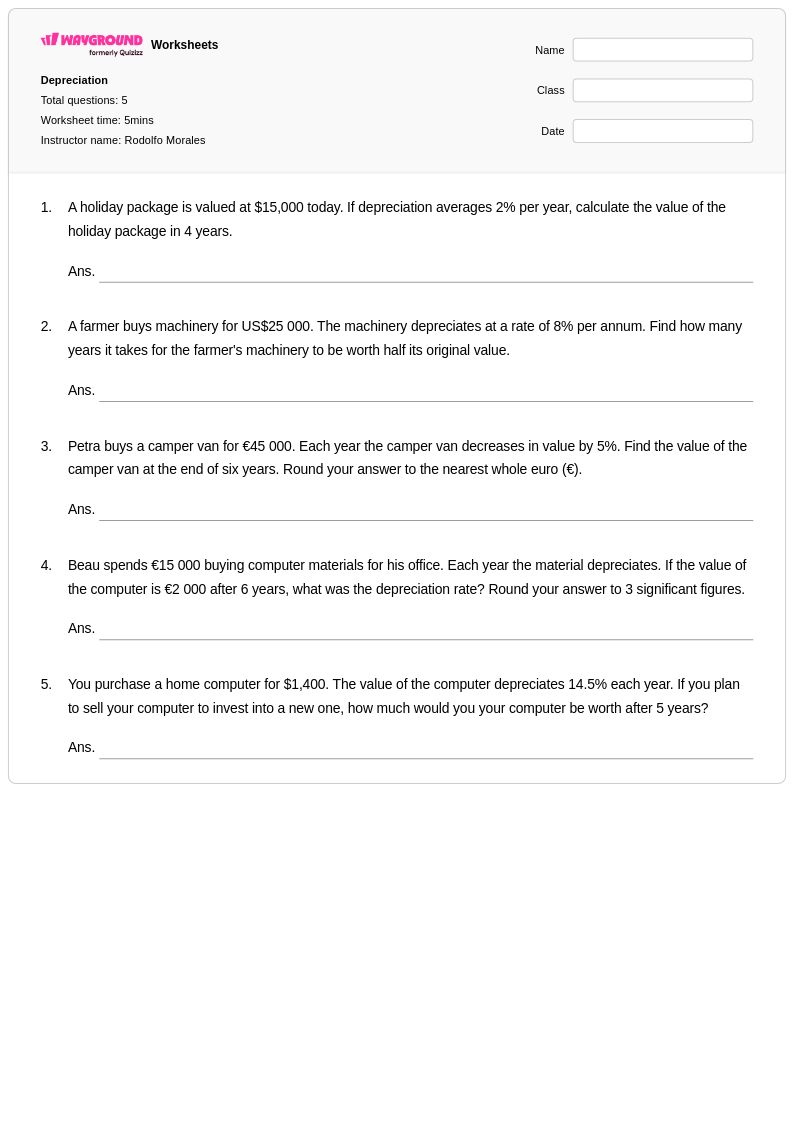
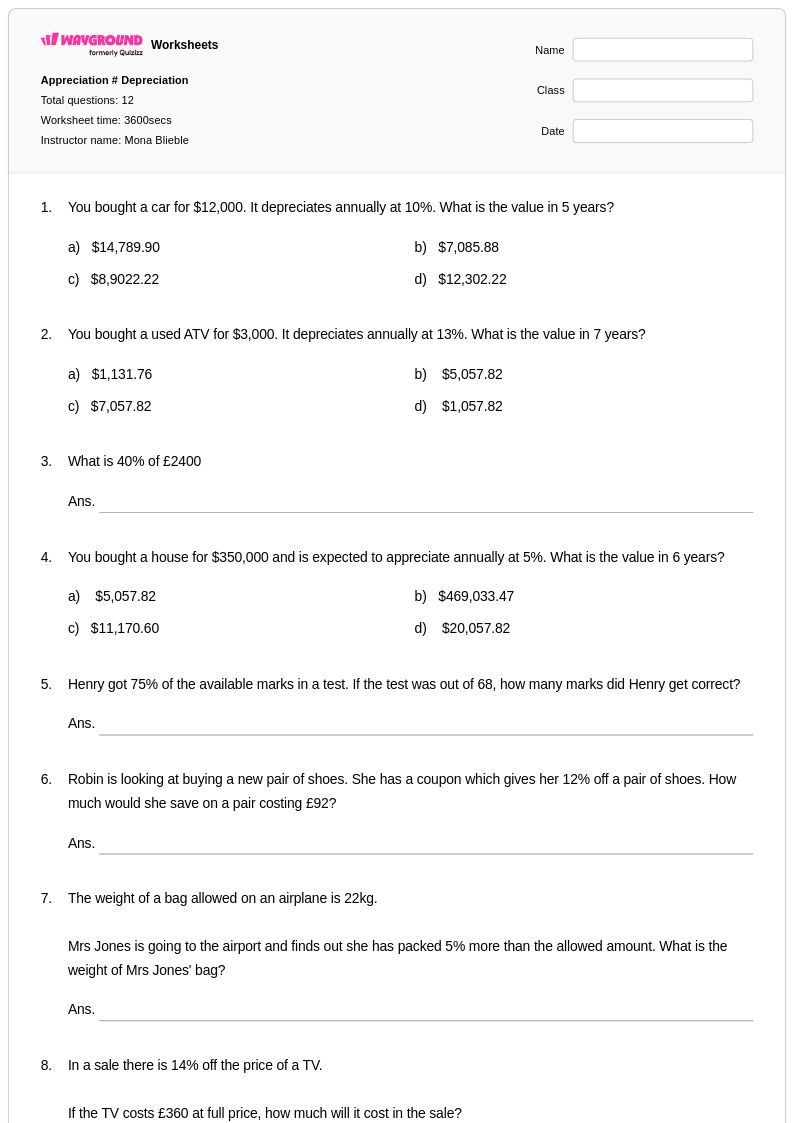
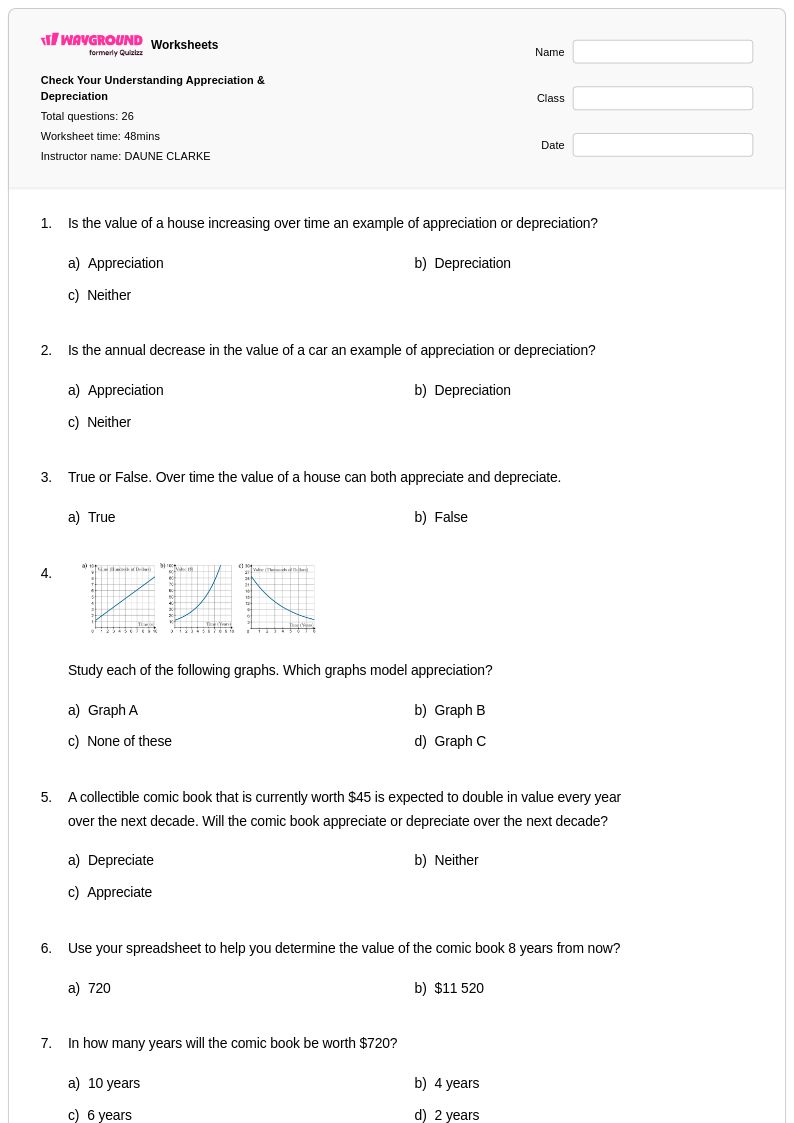
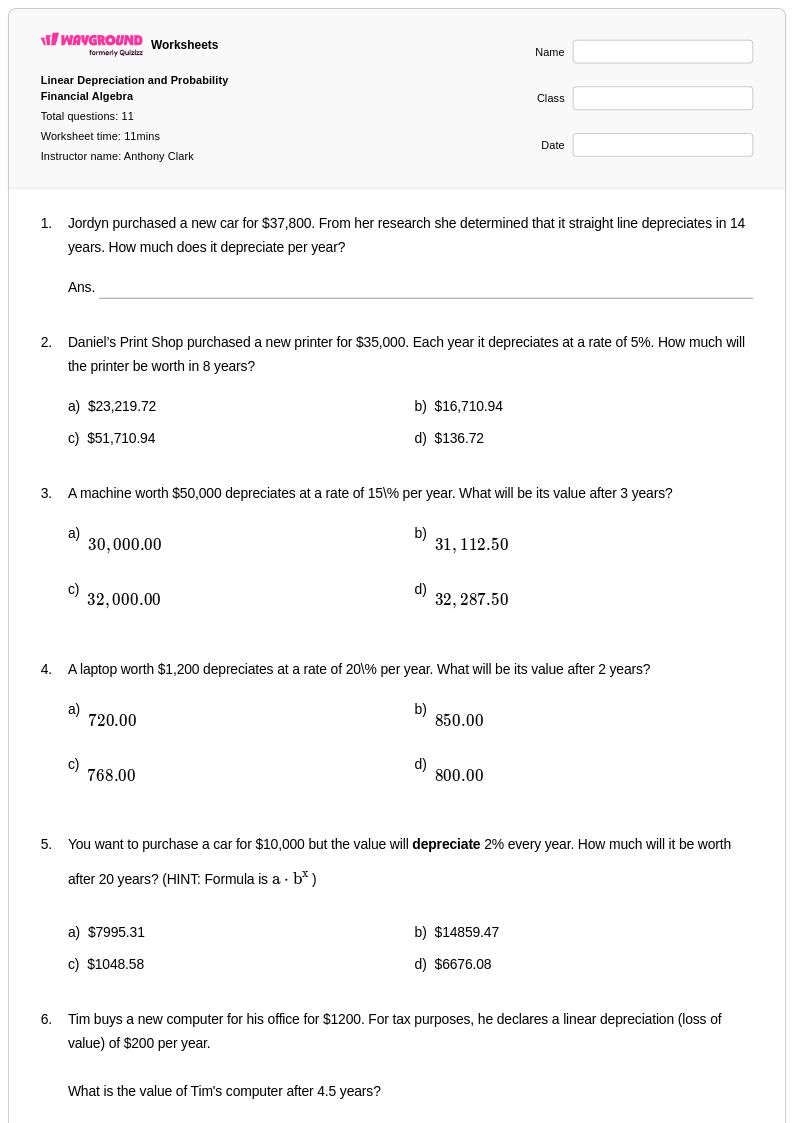
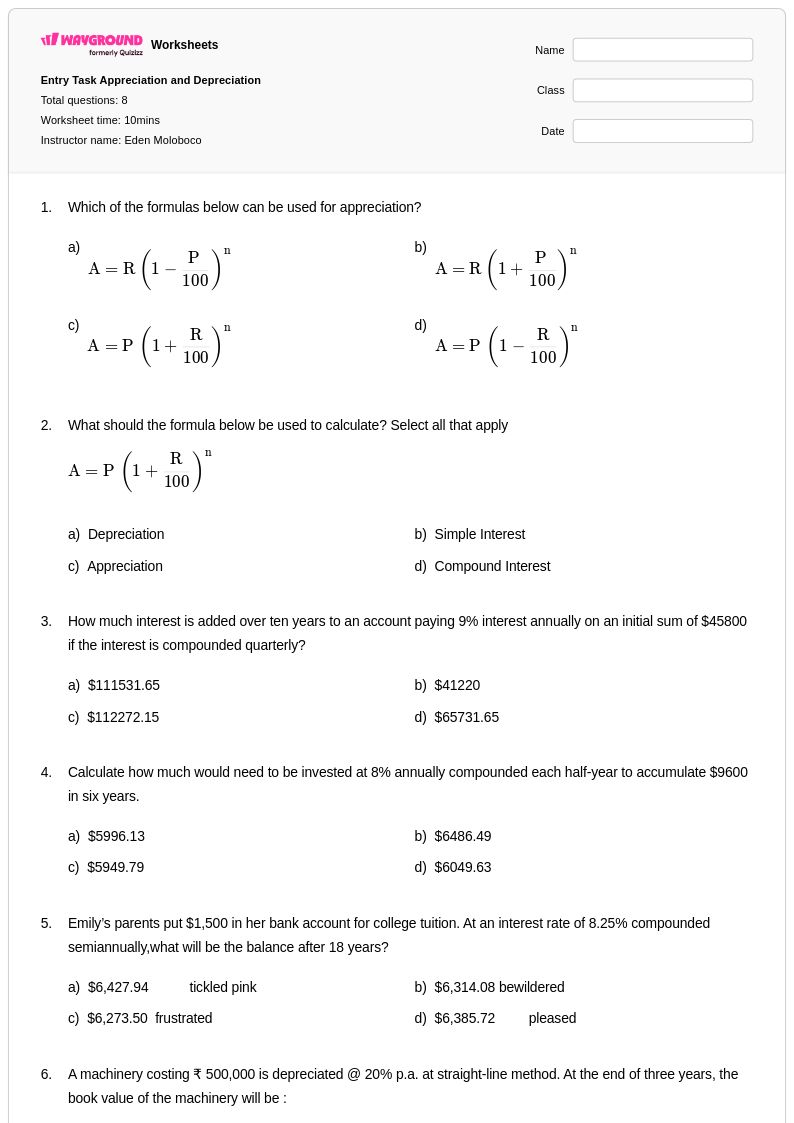
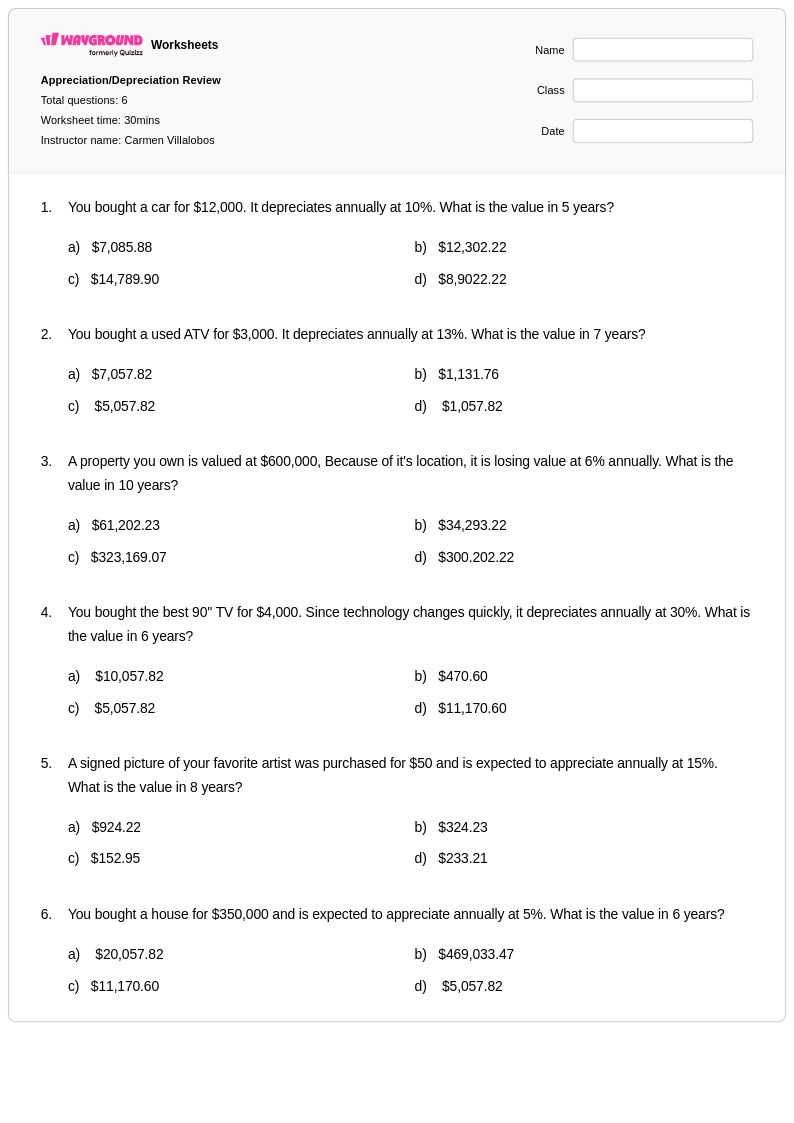
Depreciation worksheets for Grade 9 students available through Wayground (formerly Quizizz) provide comprehensive practice with calculating how assets lose value over time, a fundamental concept in financial literacy mathematics. These expertly designed worksheets guide students through various depreciation methods including straight-line, declining balance, and units of production approaches, helping them understand how businesses account for the decreasing value of equipment, vehicles, and other assets. Students work through real-world practice problems involving calculating annual depreciation expenses, determining book values, and analyzing depreciation schedules, with complete answer keys provided to support independent learning and self-assessment. The free printables cover essential skills such as applying depreciation formulas, interpreting depreciation graphs, and understanding the relationship between initial cost, useful life, and salvage value in pdf format for easy classroom distribution.
Wayground (formerly Quizizz) supports mathematics educators with an extensive collection of teacher-created depreciation resources, drawing from millions of worksheets that have been developed and refined by experienced instructors. The platform's robust search and filtering capabilities allow teachers to quickly locate materials that align with specific curriculum standards and match their students' skill levels, while differentiation tools enable customization for varied learning needs within Grade 9 classrooms. These depreciation worksheet collections are available in both printable and digital formats, including downloadable pdf versions, making them adaptable for traditional classroom instruction, homework assignments, or remote learning environments. Teachers can utilize these resources for initial skill introduction, targeted remediation for struggling students, enrichment activities for advanced learners, and ongoing practice to reinforce financial mathematics concepts throughout the academic year.
FAQs
How do I introduce depreciation to Grade 9 students?
Grade 9 students respond well to a vehicle example because most of them are aware that cars lose value. Open with a simple question: if a car costs $15,000 today and is worth $5,000 in five years, how much value did it lose each year? That gets them to straight-line depreciation intuitively before you introduce the formula. Once they're comfortable with equal annual loss, you can show declining balance as a contrast, more loss early, less later, and ask which method seems fairer for a car versus a piece of factory equipment.
What depreciation skills should Grade 9 students be practicing?
At Grade 9, the priority is straight-line depreciation: applying the formula correctly, identifying initial cost, useful life, and salvage value, and calculating annual depreciation expense. Students should also practice building a simple depreciation schedule across two or three years so they understand how book value changes over time. Declining balance can be introduced, but the focus should stay on conceptual understanding rather than complex multi-method comparisons.
What mistakes do Grade 9 students commonly make with depreciation?
The most common error is ignoring salvage value — students divide the full purchase price by the useful life instead of subtracting salvage value first. A close second is confusing book value with accumulated depreciation; they're related but not the same, and mixing them up leads to cascading errors in a multi-year schedule. A quick diagnostic: ask students to label each component of their calculation before they compute. That step alone catches most formula misapplications.
How do I use Wayground's Grade 9 depreciation worksheets?
Every worksheet comes with a complete answer key, which makes them practical for independent practice or homework — students can self-check without waiting for teacher feedback. For in-class use, the printable PDF works well for focused, paper-based practice sessions; you can grade submissions later using the Wayground for Teachers app by scanning student work directly. If your class uses devices, you can host the same worksheet as a digital quiz on Wayground so students get immediate feedback on each problem.
Is depreciation part of the Grade 9 math curriculum?
In most US states, depreciation appears in Grade 9 as part of financial literacy or consumer mathematics strands rather than in the core algebra sequence. Common Core does not address depreciation directly, but many state-level financial literacy standards introduce it at this grade as an application of linear functions — straight-line depreciation is, structurally, a linear decrease, which connects naturally to the slope and rate-of-change concepts Grade 9 students are developing in algebra.
How can I support struggling Grade 9 students with depreciation worksheets?
The biggest barrier for struggling students is usually the multi-step nature of depreciation problems — they lose track of which value to use at each stage. Wayground's reduced answer choices accommodation helps on multiple-choice items by narrowing the options, letting students focus on the math rather than the decision. For students with reading difficulties, the Read Aloud feature ensures word problems don't become a literacy barrier. You can also generate a version of the worksheet with larger font size or wider spacing directly in Wayground, which reduces visual clutter without changing the problem content.