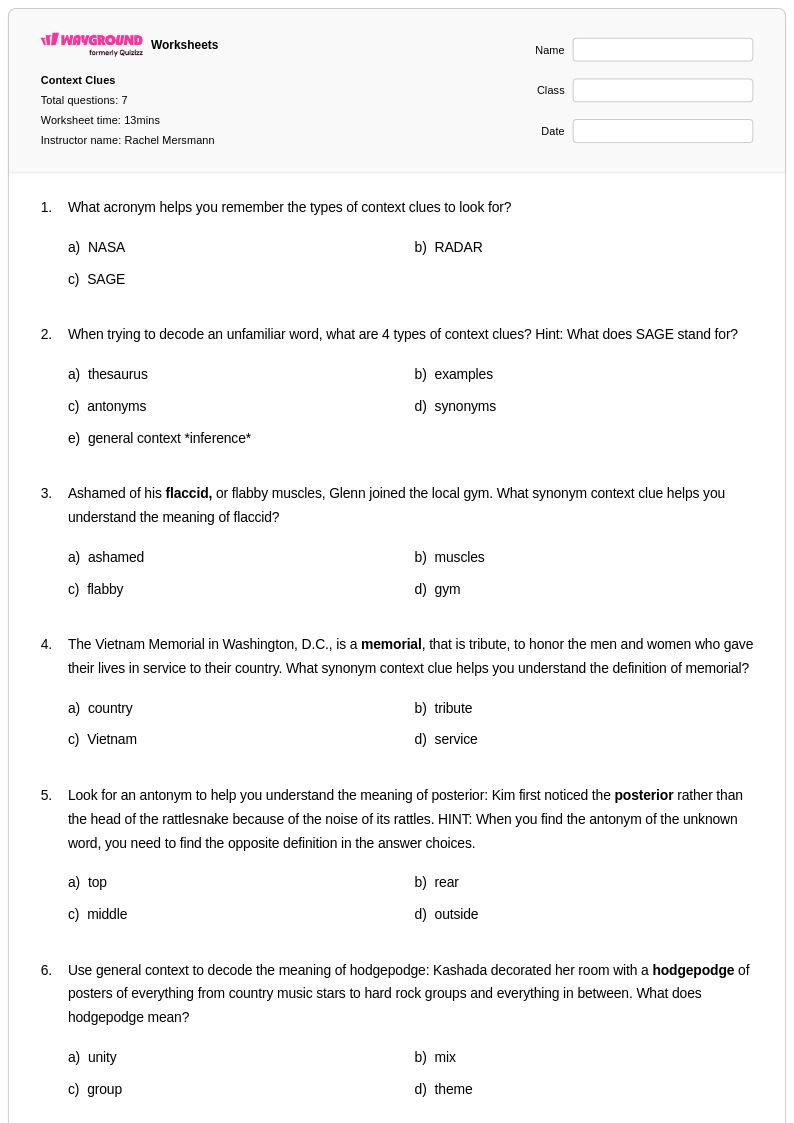
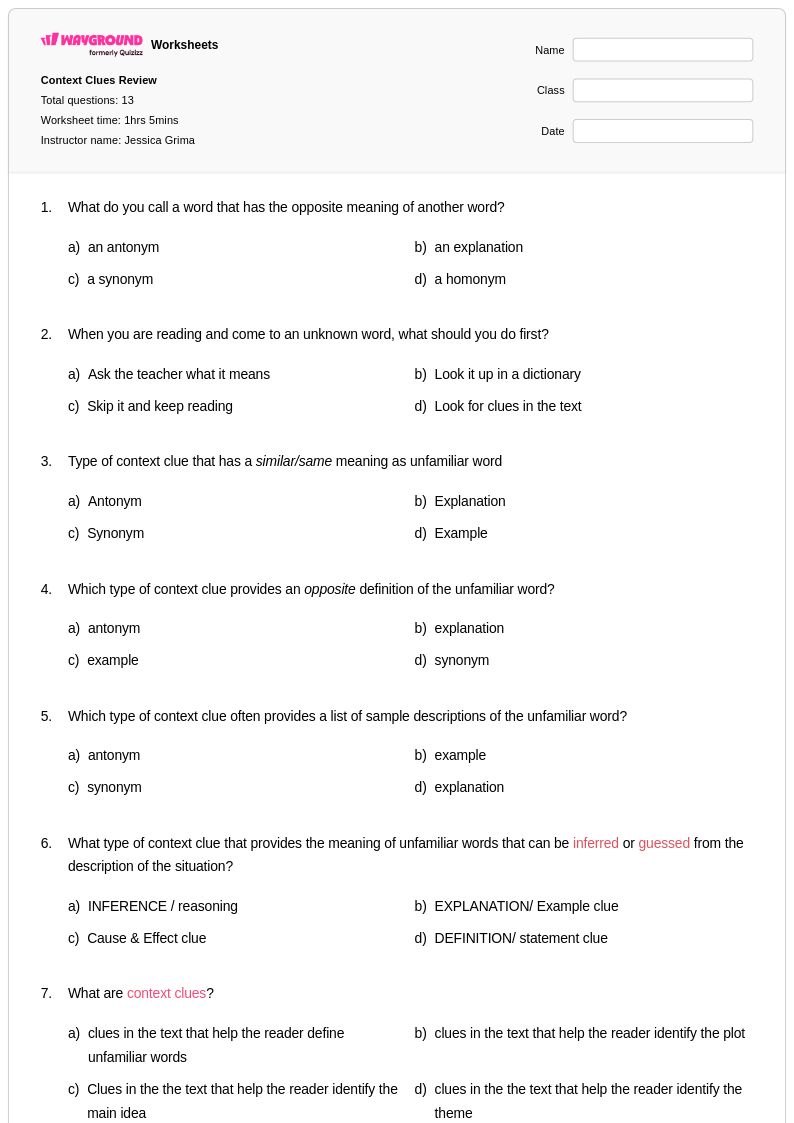
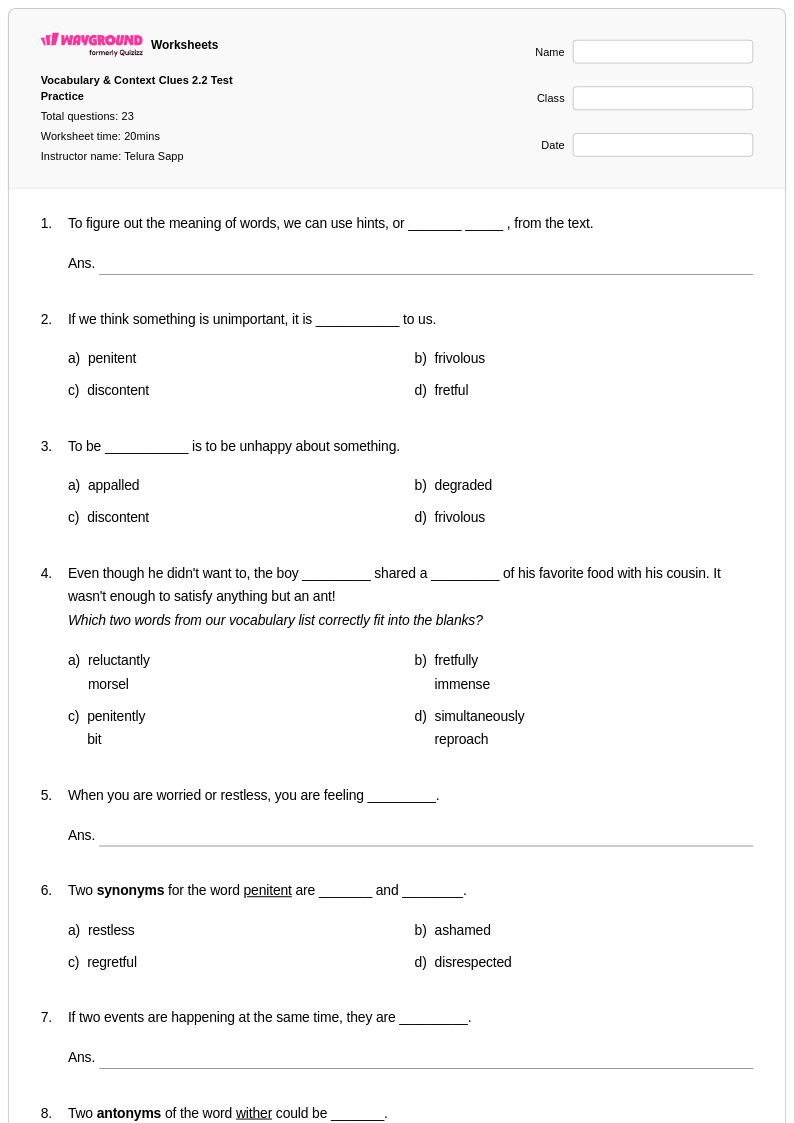
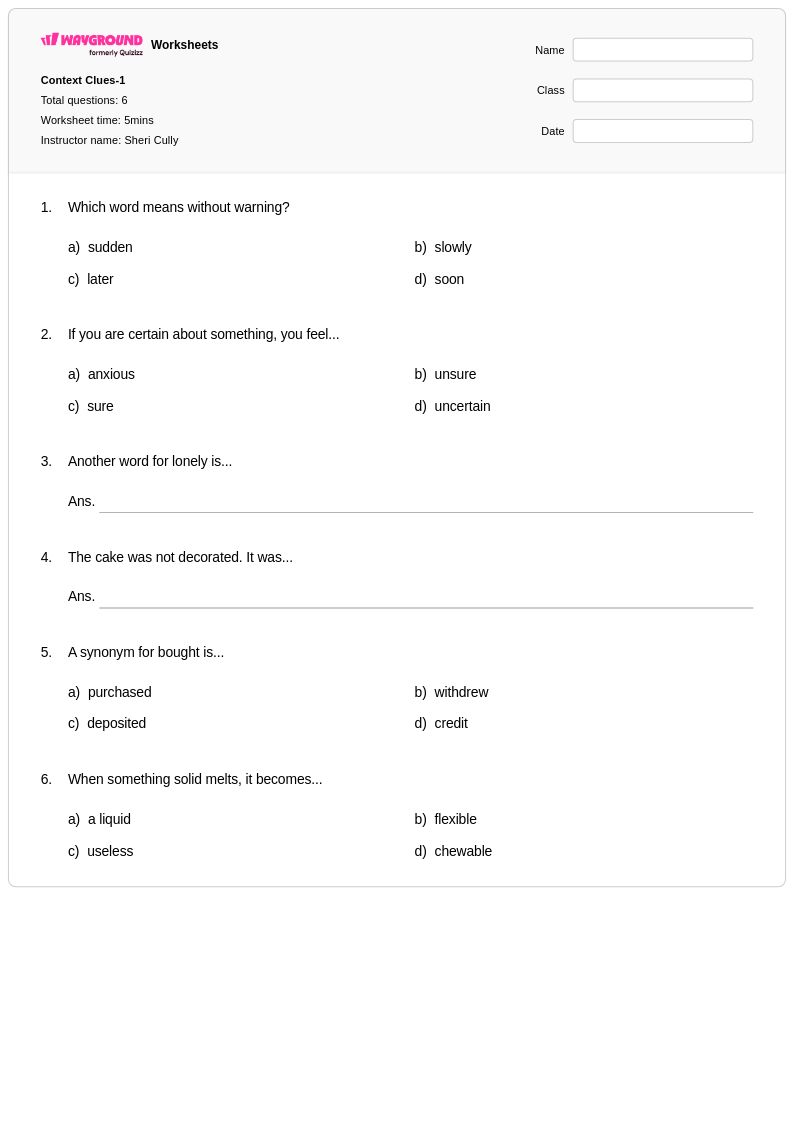
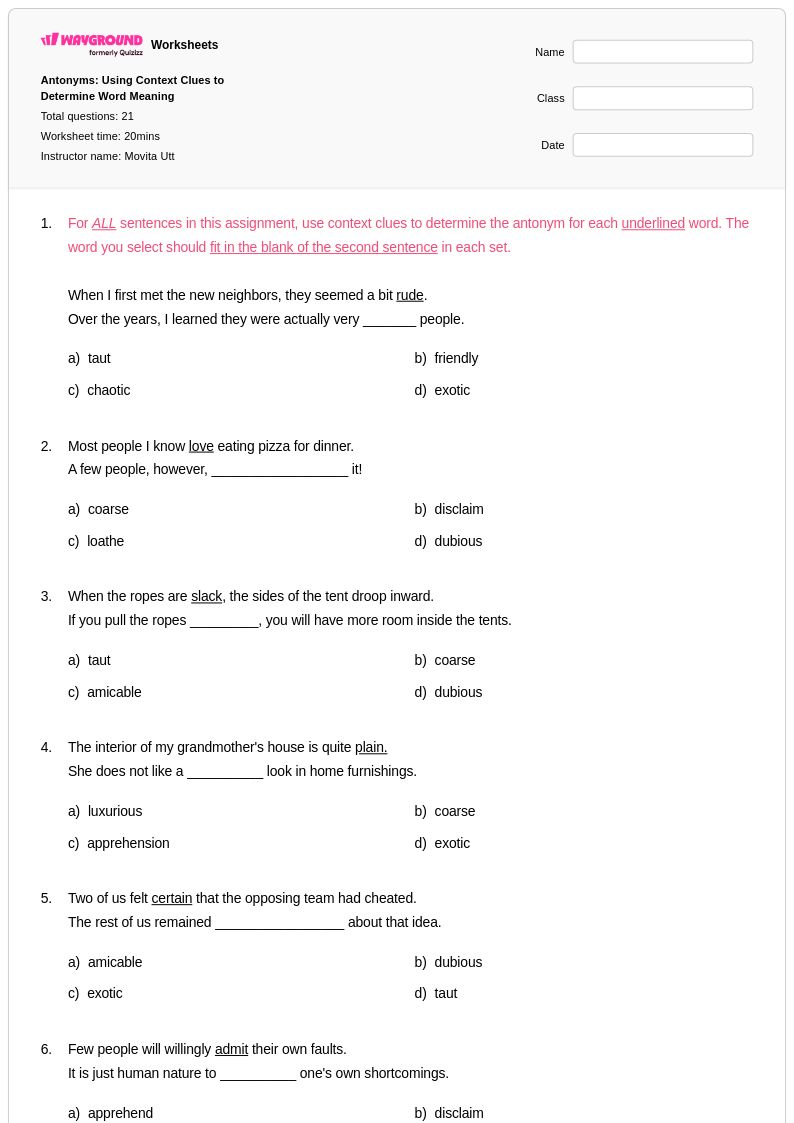
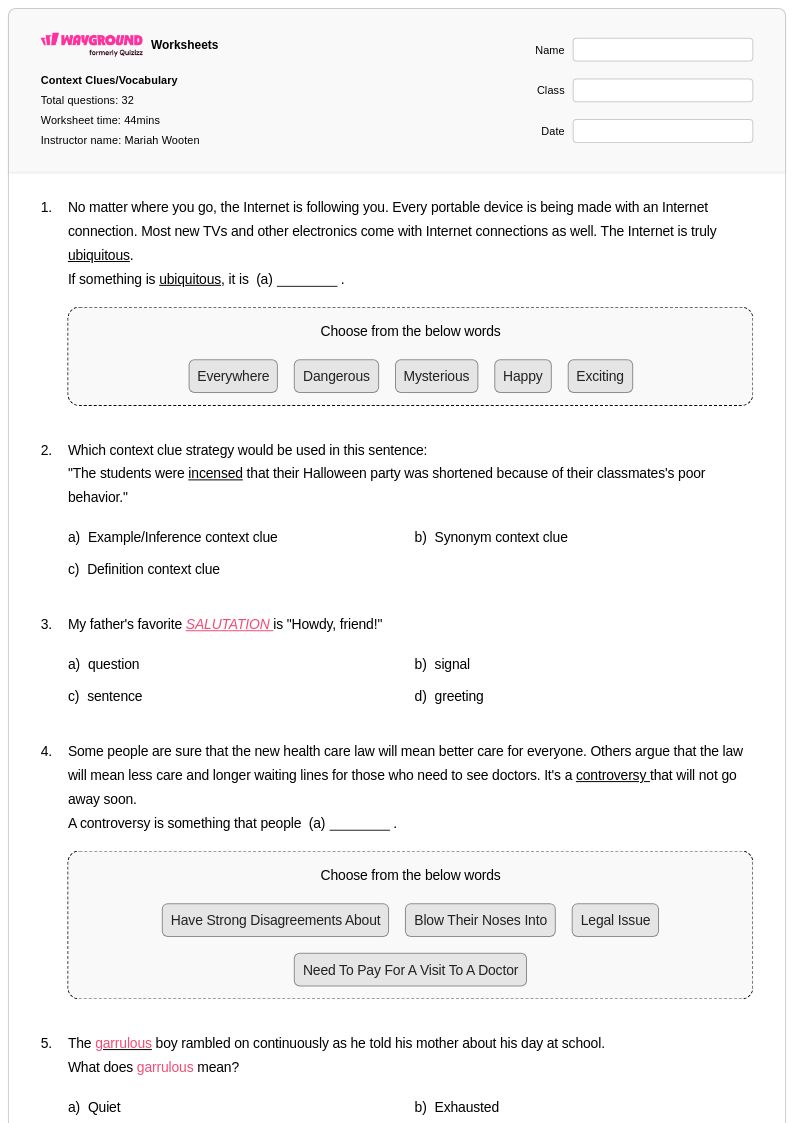
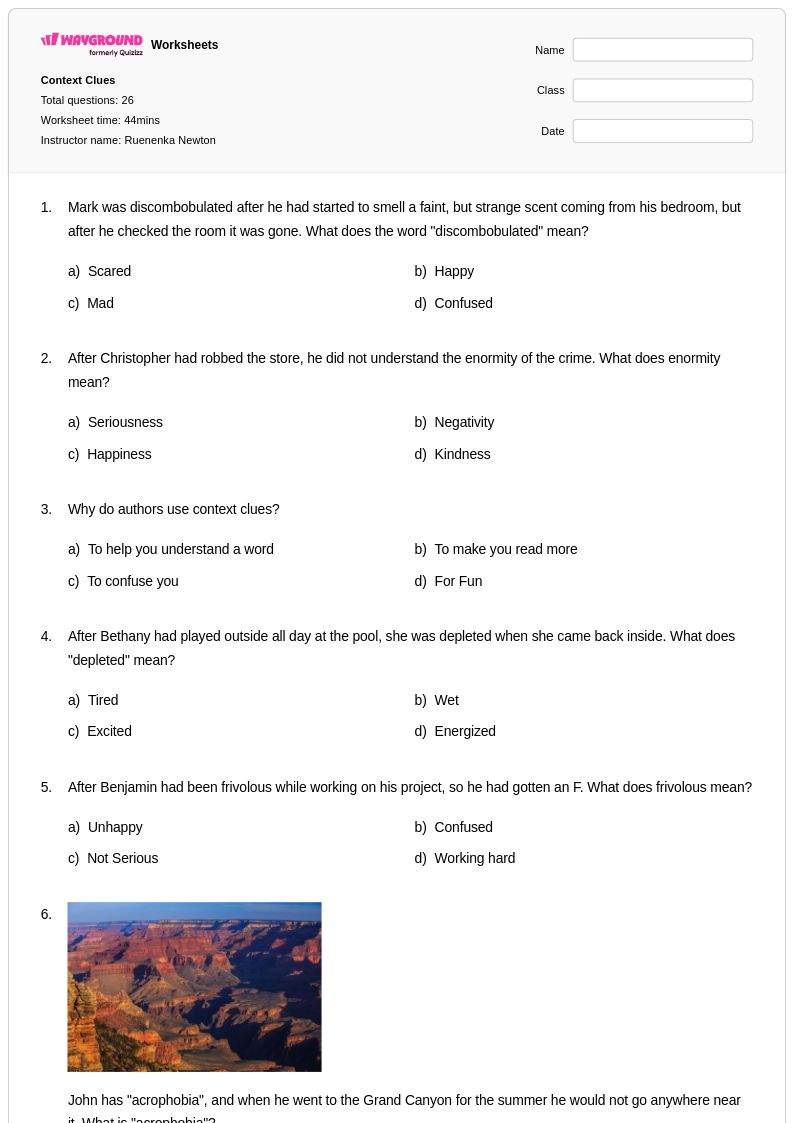
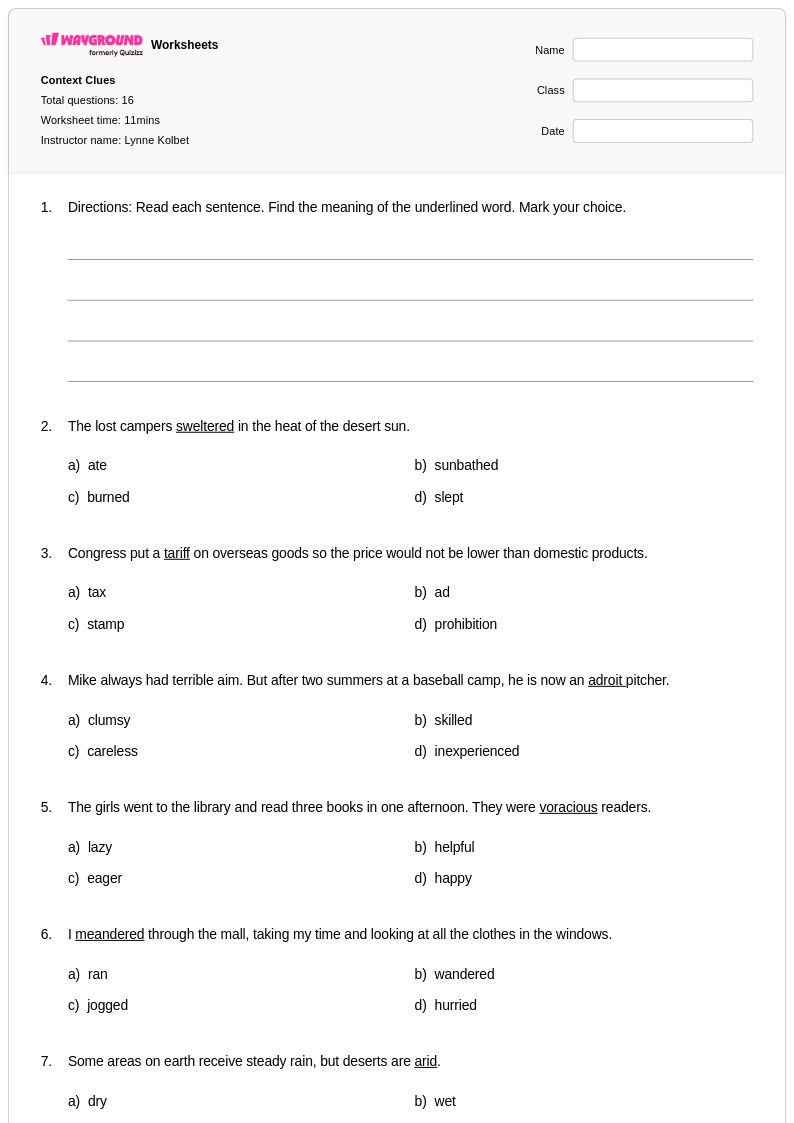
Free Printable Determining Meaning Using Context Clues Worksheets for Grade 7
Grade 7 students can master determining meaning using context clues with Wayground's comprehensive collection of free worksheets, printables, and practice problems featuring detailed answer keys to build essential vocabulary skills.
Explore printable Determining Meaning Using Context Clues worksheets for Grade 7
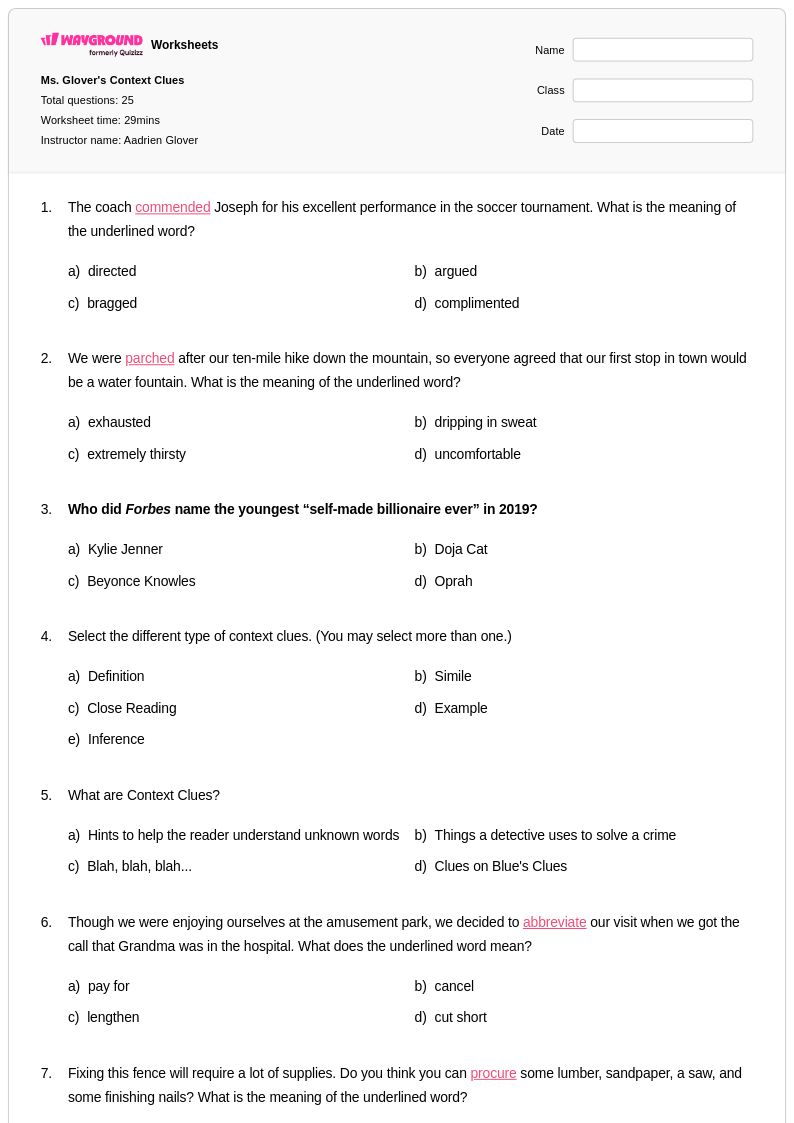
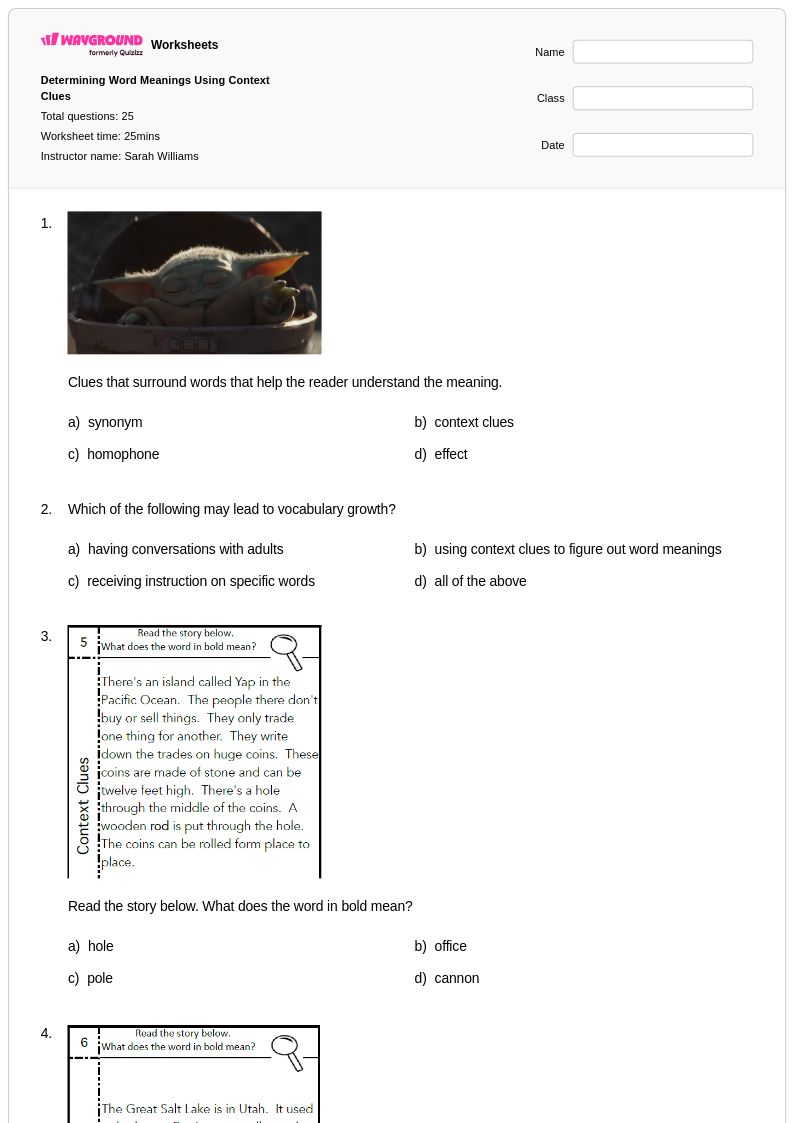
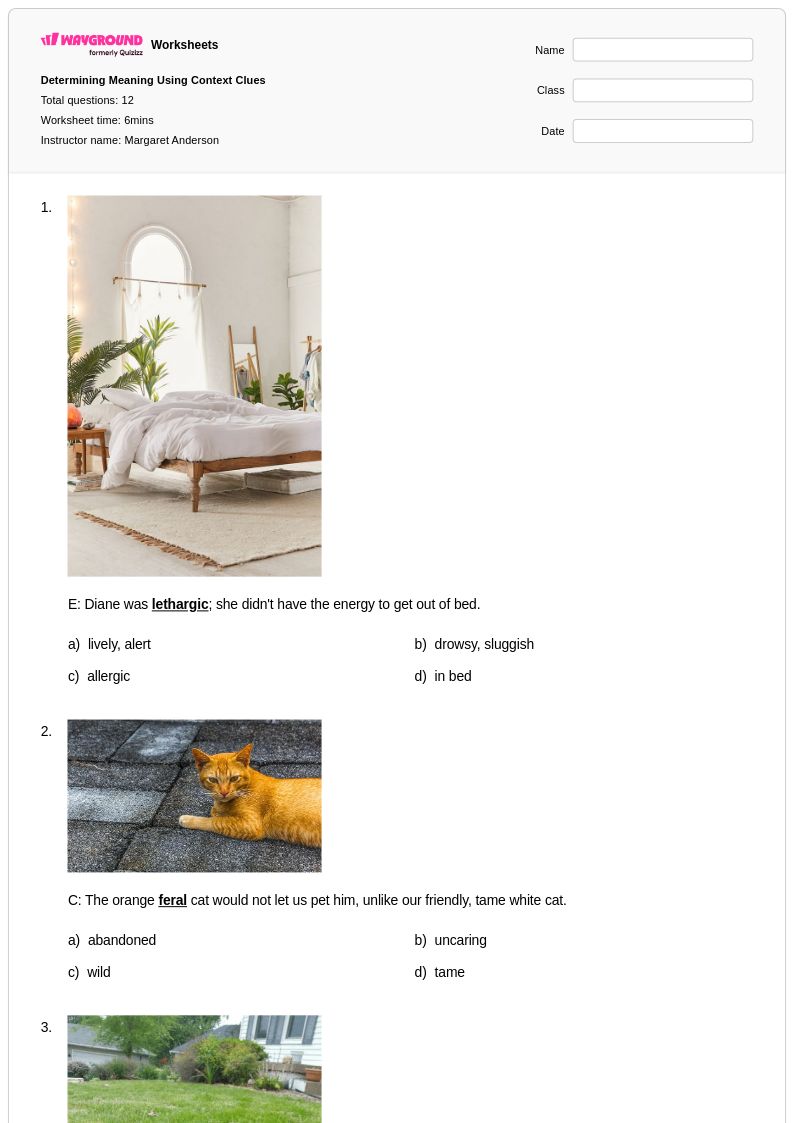
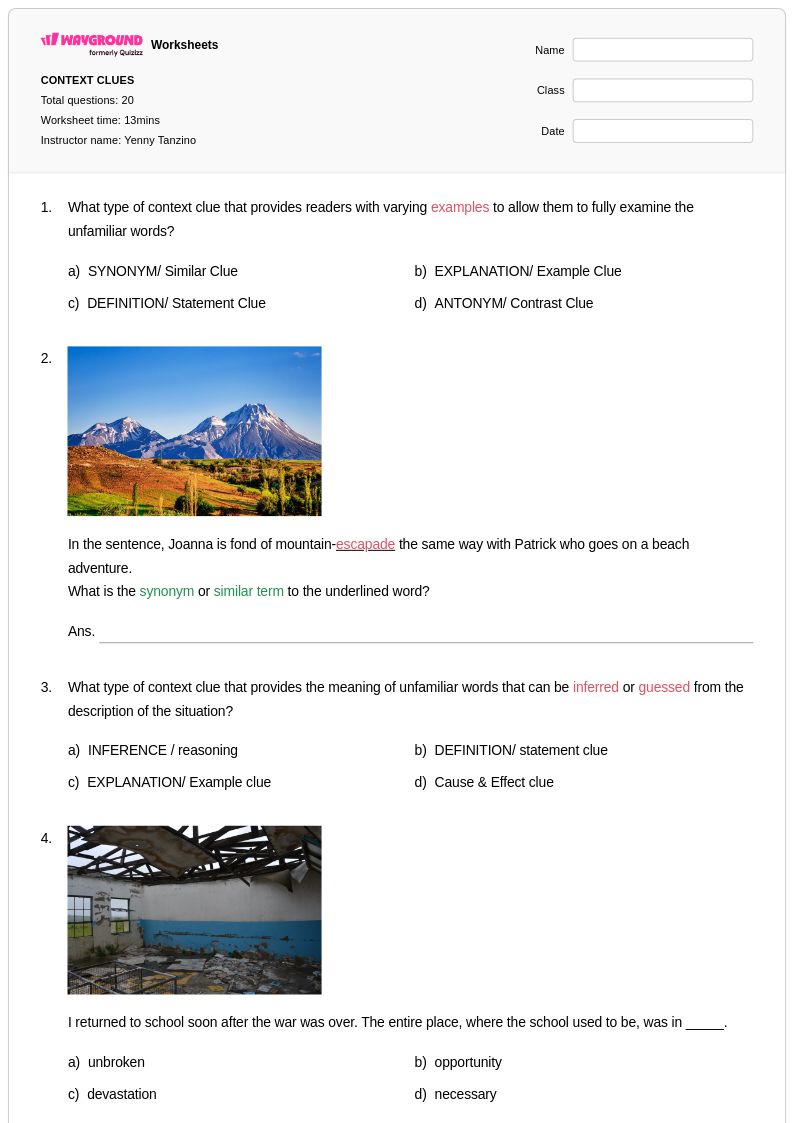
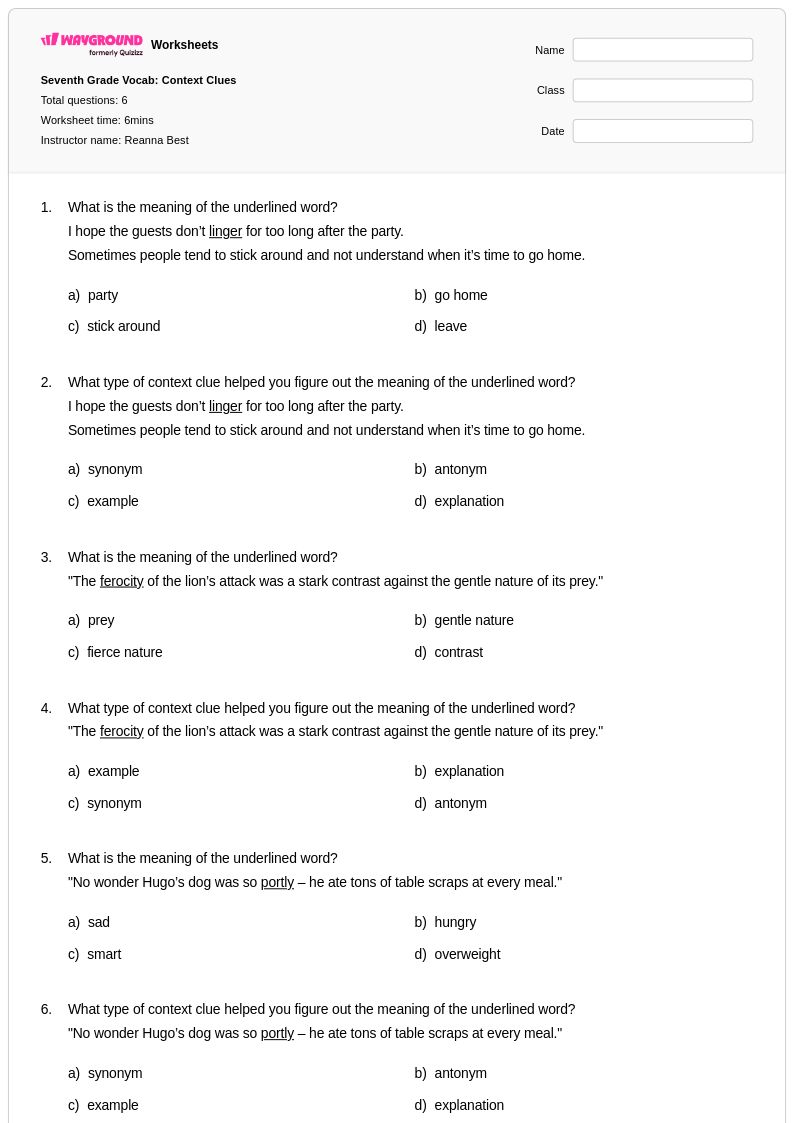
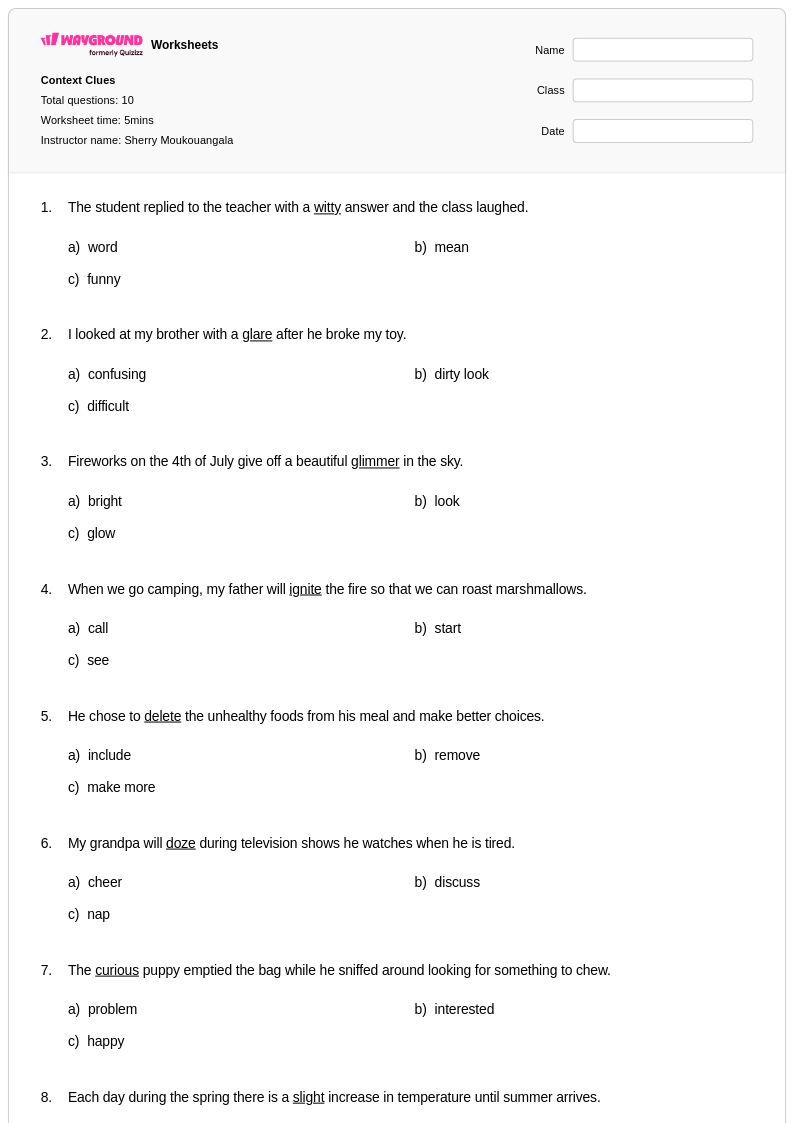
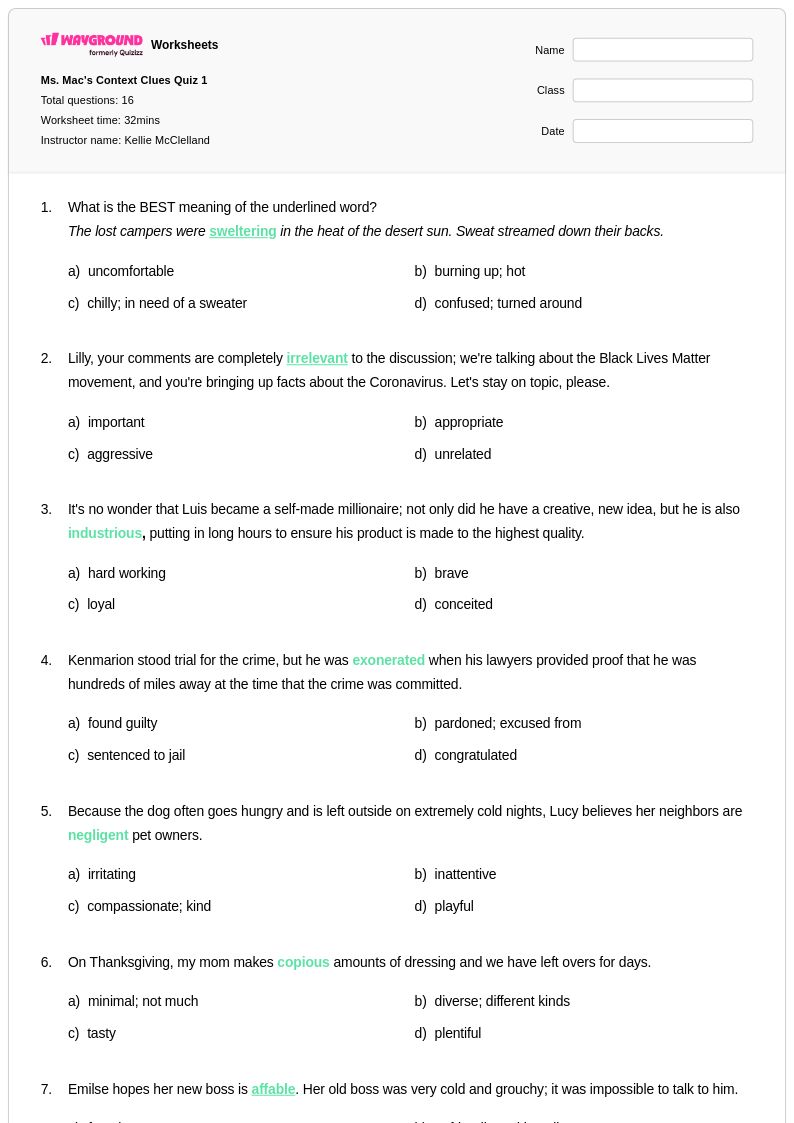
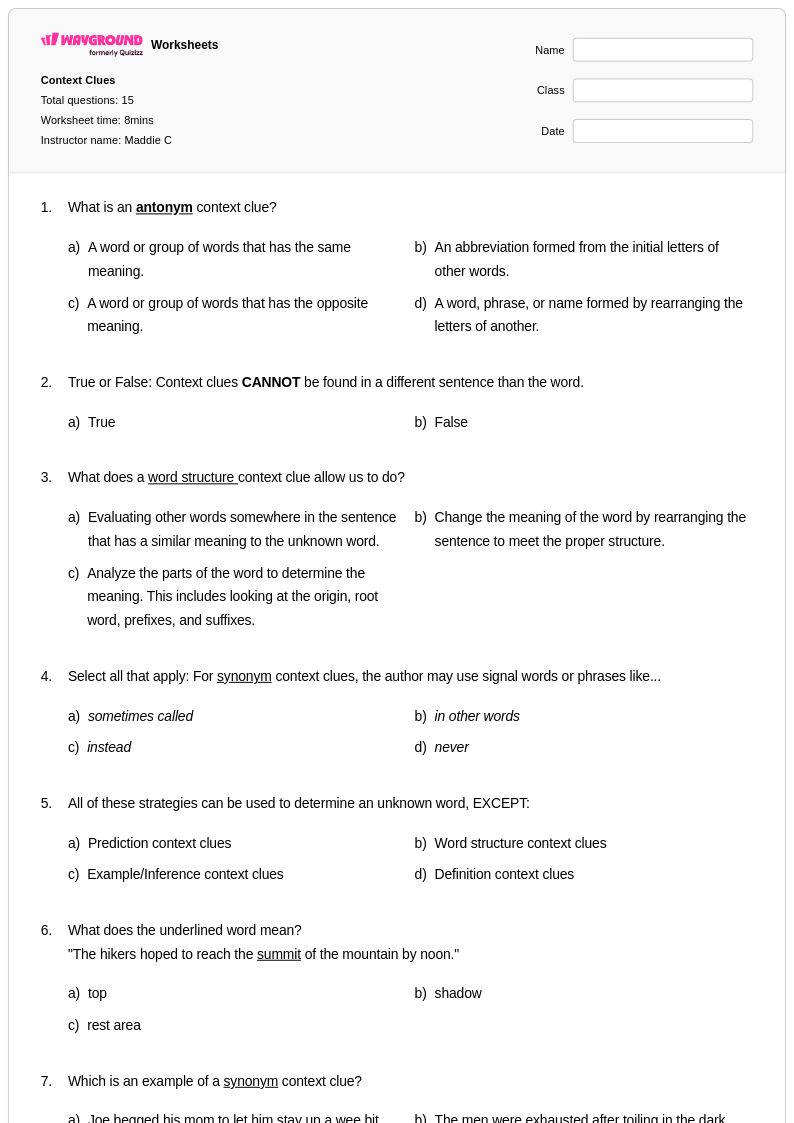
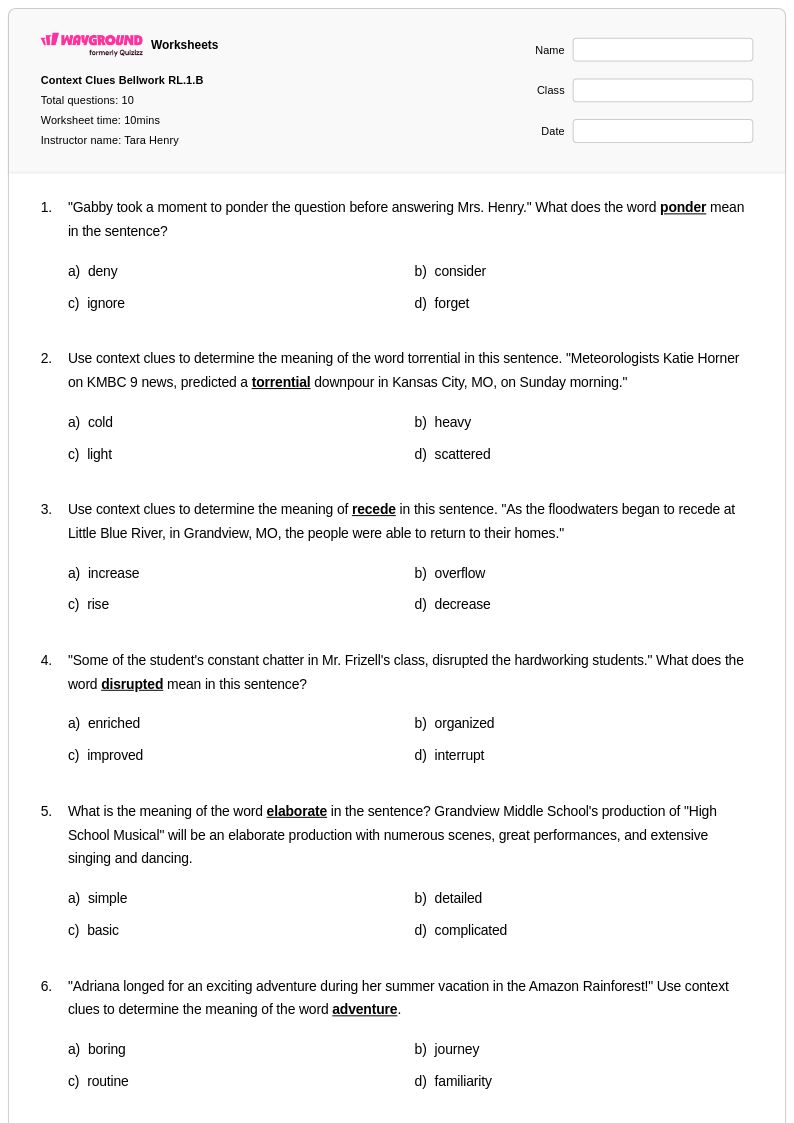
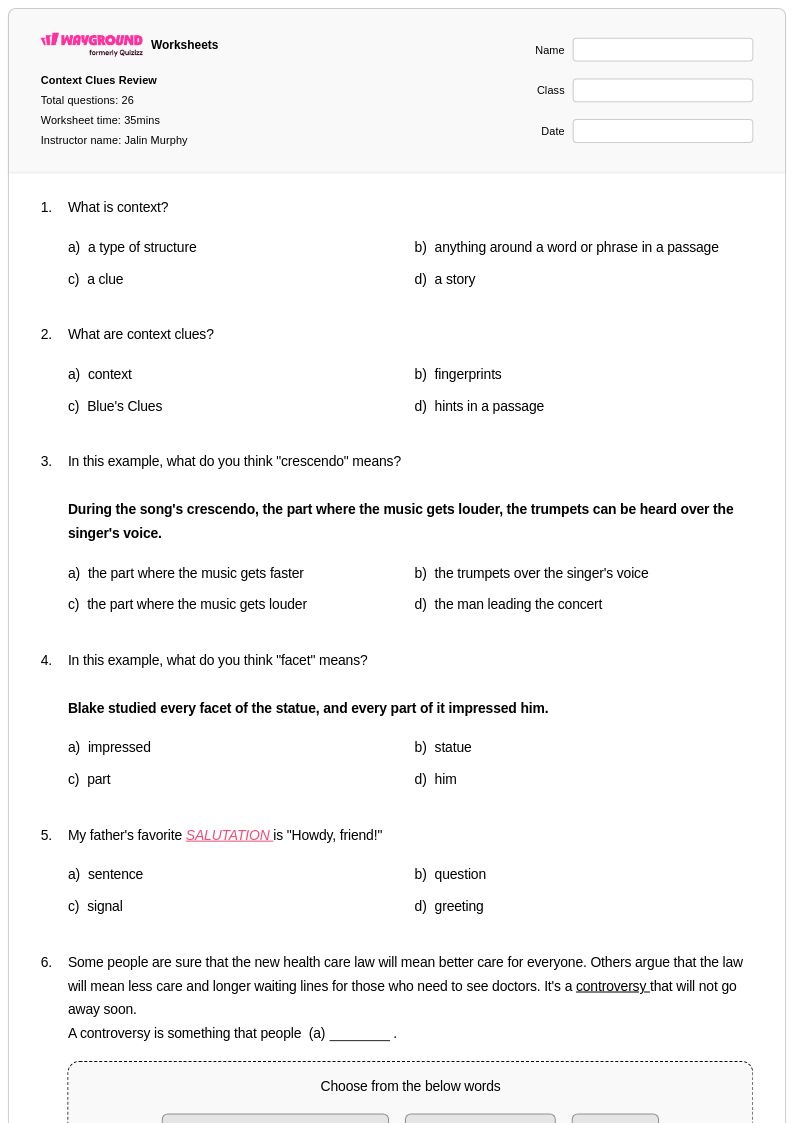
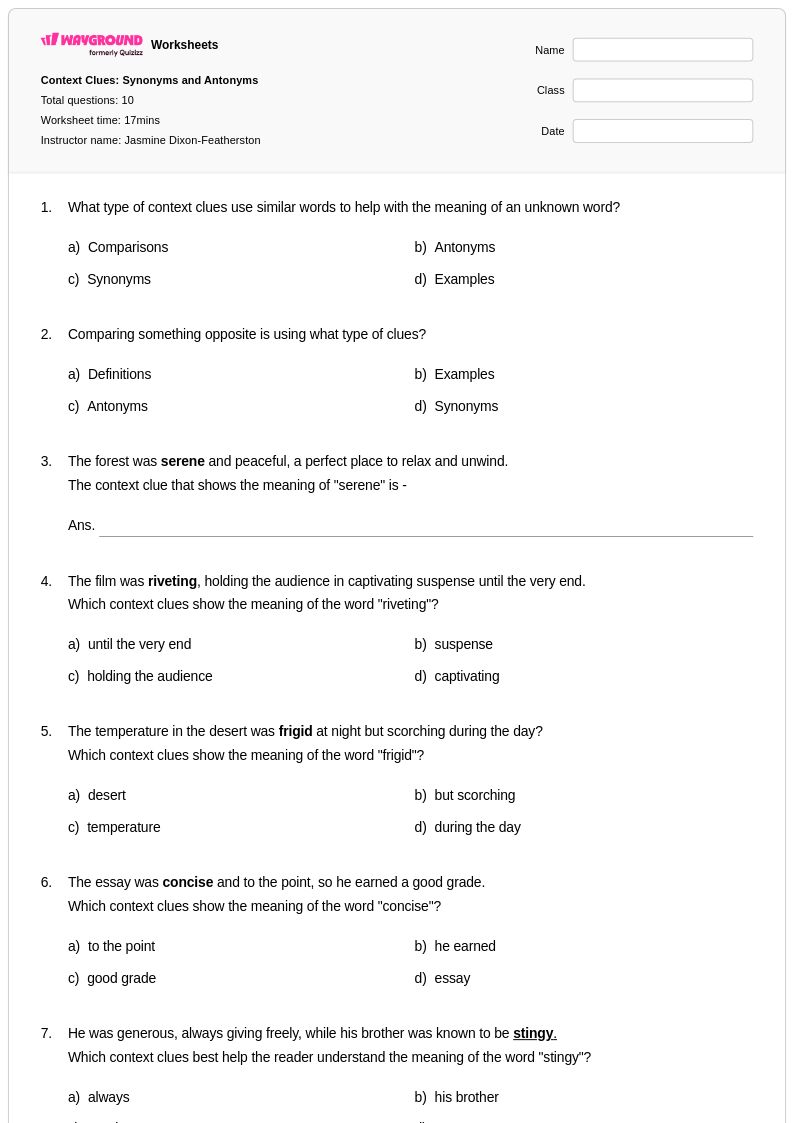
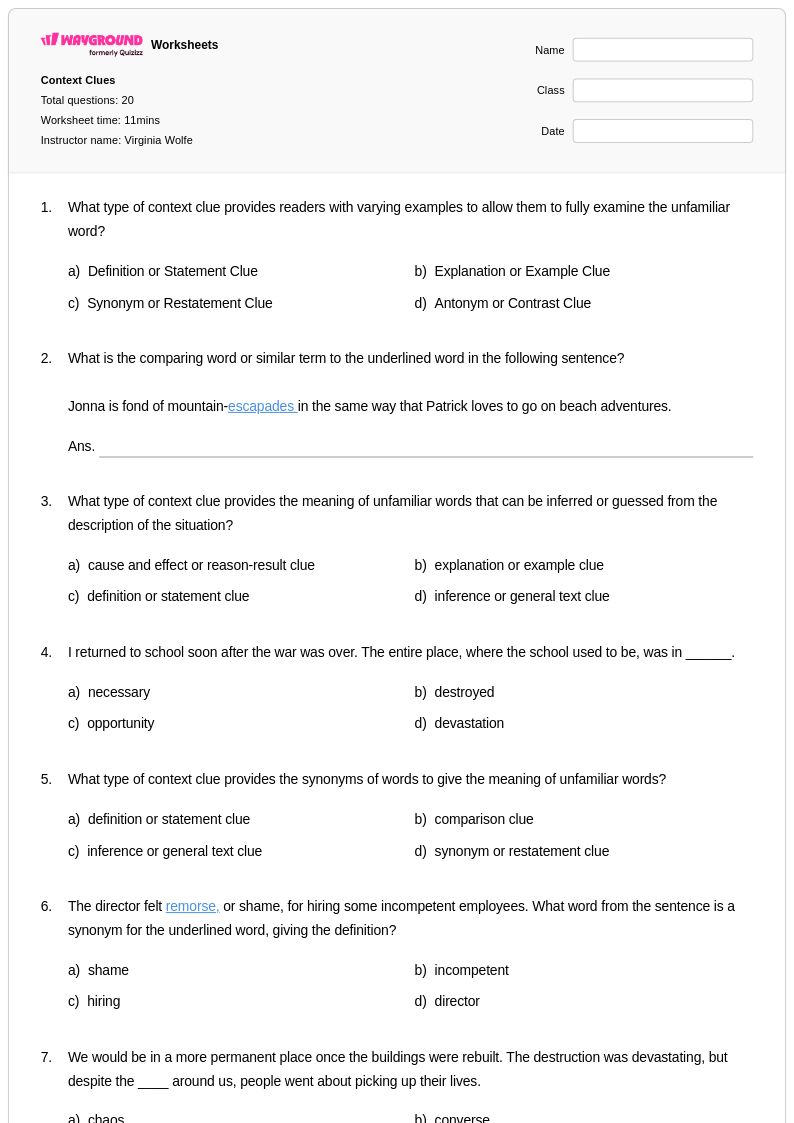
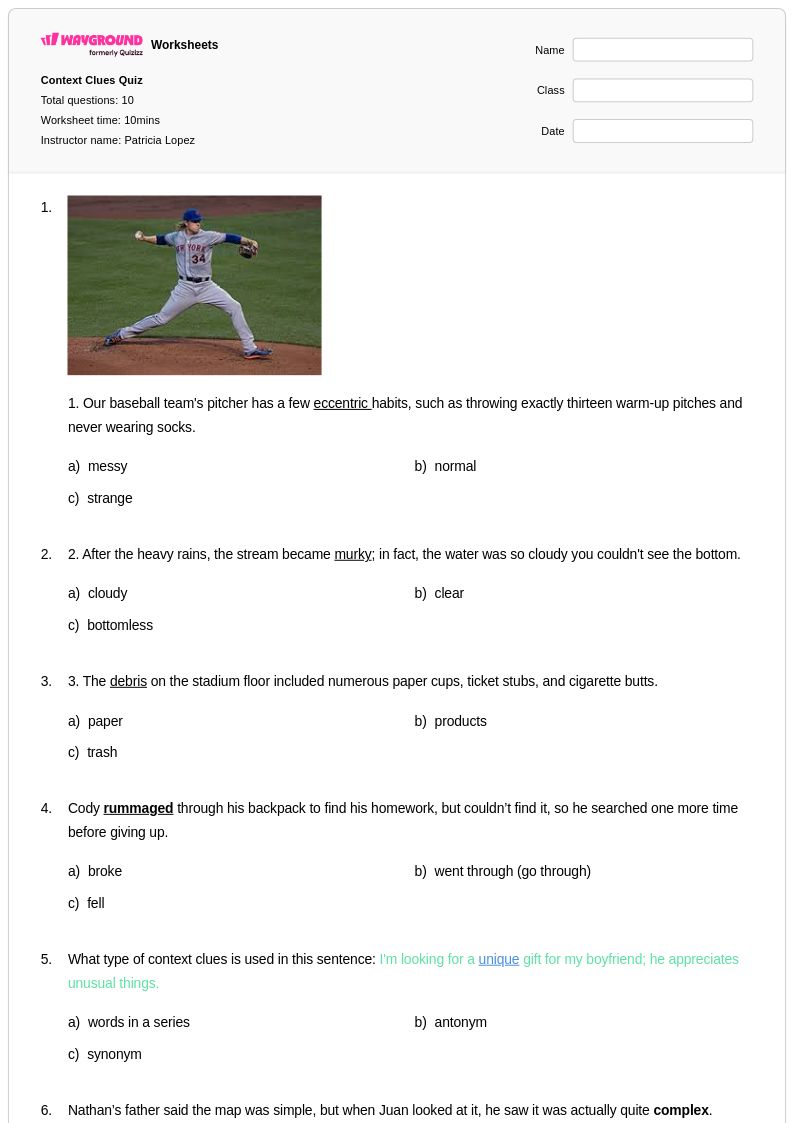
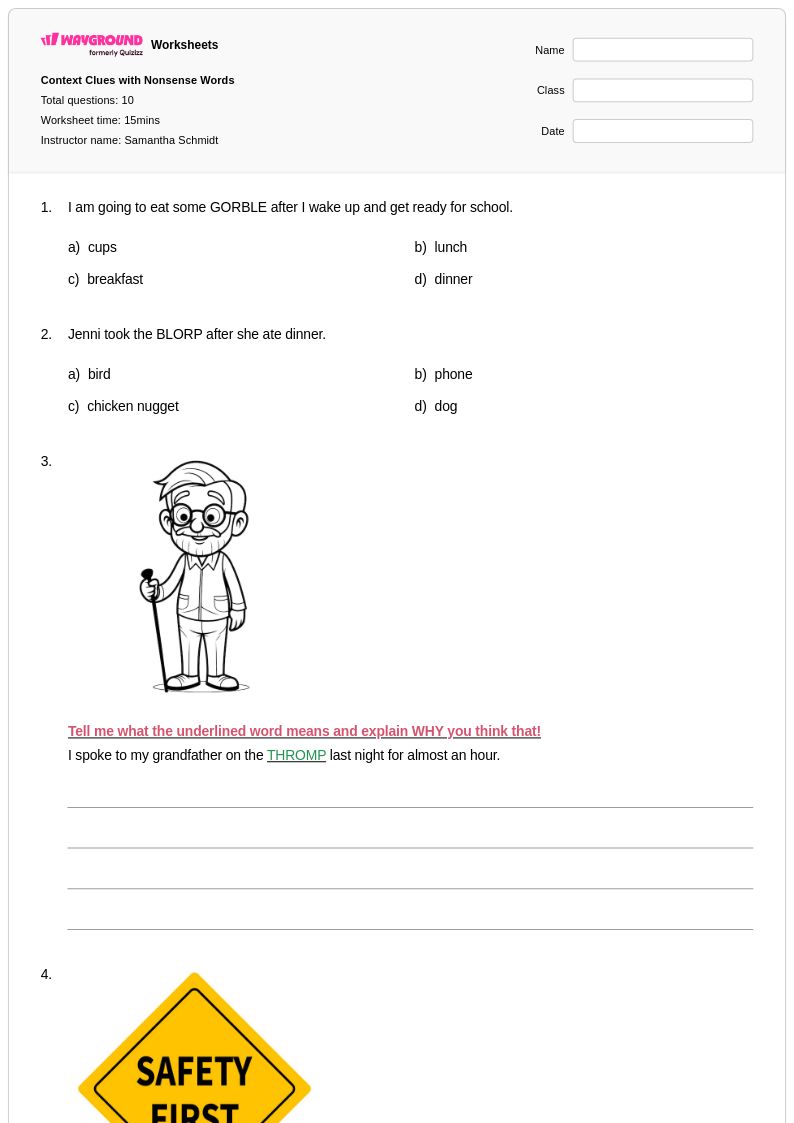
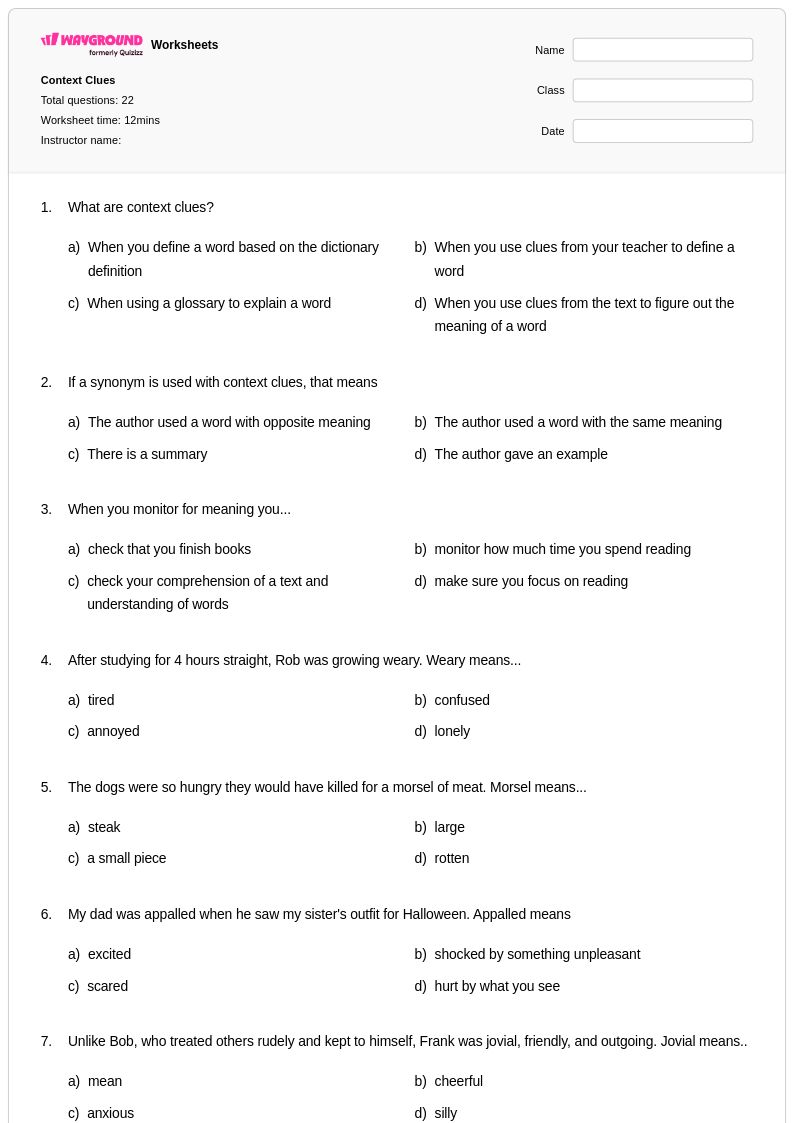
Determining meaning using context clues represents a fundamental reading comprehension skill that Grade 7 students must master to become proficient readers and critical thinkers. Wayground's extensive collection of context clues worksheets provides educators with comprehensive resources designed to strengthen students' ability to decipher unfamiliar vocabulary through surrounding textual evidence. These carefully crafted materials present students with diverse reading passages and practice problems that challenge them to identify definition clues, example clues, contrast clues, and inference clues within various literary and informational texts. Each worksheet includes detailed answer keys that enable teachers to efficiently assess student progress, while the printable PDF format ensures convenient classroom distribution and at-home practice opportunities that support independent learning.
Wayground's robust platform, formerly known as Quizizz, empowers educators with access to millions of teacher-created resources specifically focused on vocabulary development and context clue instruction for Grade 7 learners. The platform's sophisticated search and filtering capabilities allow teachers to quickly locate materials aligned with specific learning standards and differentiate instruction based on individual student needs. These versatile worksheet collections support flexible customization options, enabling educators to modify content difficulty levels and adapt materials for remediation or enrichment purposes as needed. Available in both printable and digital formats, including downloadable PDFs, these resources streamline lesson planning while providing teachers with reliable tools for targeted skill practice, formative assessment, and comprehensive vocabulary instruction that builds students' confidence in tackling challenging texts independently.
FAQs
How do I teach students to use context clues to figure out unknown words?
Start by explicitly introducing the four main types of context clues: definition clues (where the text directly defines the word), example clues (where examples hint at meaning), contrast clues (where an antonym or opposite is nearby), and inference clues (where students must synthesize broader passage meaning). Model each type using a think-aloud strategy with authentic texts before releasing students to practice independently. Gradually increase text complexity so students build confidence across a range of genres and sentence structures.
What exercises help students practice determining word meaning from context?
Effective practice exercises present unfamiliar vocabulary embedded in rich, authentic passages rather than isolated sentences, so students must actively analyze surrounding text to infer meaning. Activities that ask students to identify which type of context clue is present — definition, example, contrast, or inference — build both awareness and transferable strategy use. Repeated practice across varied text types, including fiction, nonfiction, and informational passages, strengthens the skill across reading contexts.
What mistakes do students commonly make when using context clues?
A frequent error is word substitution without comprehension — students guess a synonym that fits grammatically but doesn't reflect the actual meaning signaled by the surrounding text. Students also often ignore the broader sentence or paragraph context, focusing only on the words immediately adjacent to the unknown term. Another common misconception is assuming all unfamiliar words have a nearby definition clue; when they don't, students who haven't developed inference strategies will stall rather than synthesize meaning from the full passage.
How do I differentiate context clues instruction for struggling readers?
For struggling readers, begin with shorter, more controlled passages where the context clue type is explicit and unambiguous, such as direct definition clues set off by commas or dashes. Graphic organizers that prompt students to record the unknown word, the surrounding clues they noticed, their inferred meaning, and the clue type help scaffold the metacognitive process. On Wayground, teachers can enable Read Aloud so passages are read to students who struggle with decoding, ensuring the context clues strategy itself remains the focus rather than word recognition.
How can I use Wayground's context clues worksheets in my classroom?
Wayground's determining meaning using context clues worksheets are available as both printable PDFs and in digital formats, so they work equally well for in-person lessons, homework, independent centers, or remote and hybrid learning environments. Each worksheet includes a complete answer key, which reduces prep time and supports efficient feedback. Teachers can also host worksheets as a quiz directly on Wayground, enabling real-time tracking of student responses and immediate identification of which context clue types need additional instruction.
At what reading level should students begin formal context clues instruction?
Context clues instruction is typically introduced in early elementary grades when students encounter their first unfamiliar vocabulary in independent reading, but the strategy becomes a formal instructional focus in grades 3 through 8 as text complexity increases and academic vocabulary density grows. Upper elementary and middle school students benefit most from explicit practice distinguishing between clue types and applying inference strategies across informational and literary texts. The skill remains relevant through high school, particularly in content-area reading where domain-specific vocabulary demands are high.