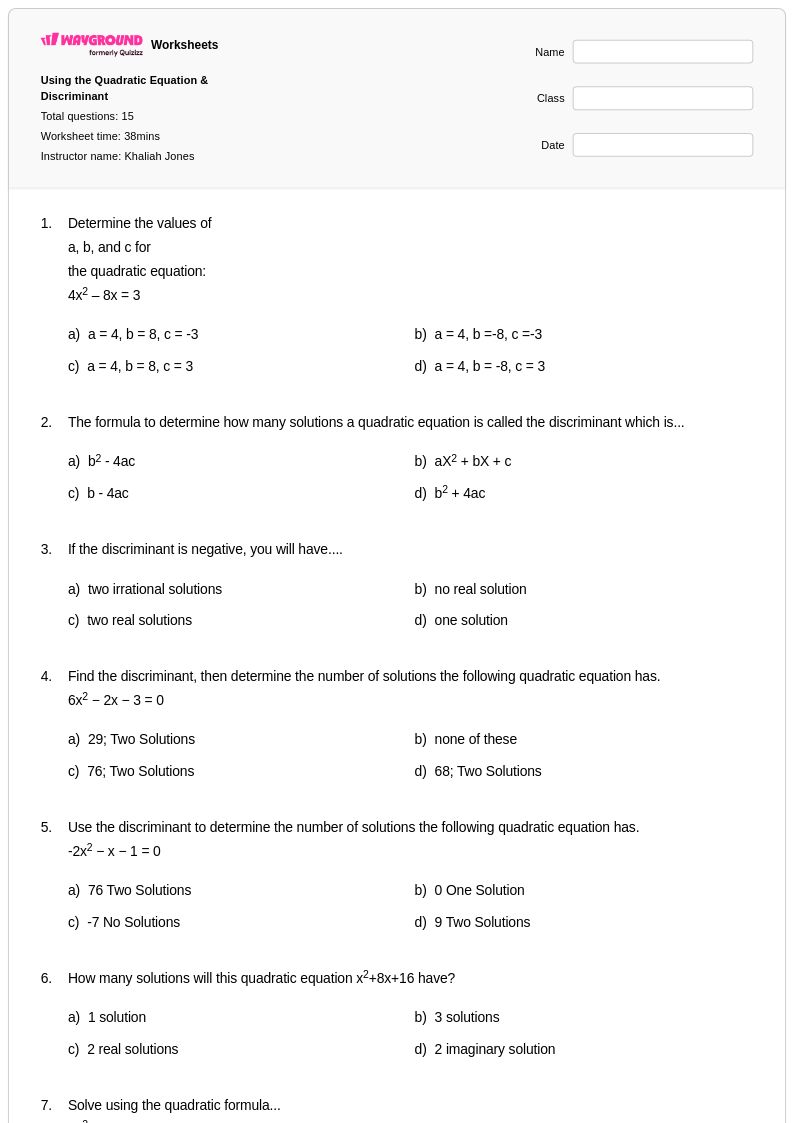
Free Printable Discriminant Worksheets for Grade 11
Free Grade 11 discriminant worksheets and printable PDFs help students master quadratic equation analysis through comprehensive practice problems with detailed answer keys for enhanced mathematical understanding.
Explore printable Discriminant worksheets for Grade 11
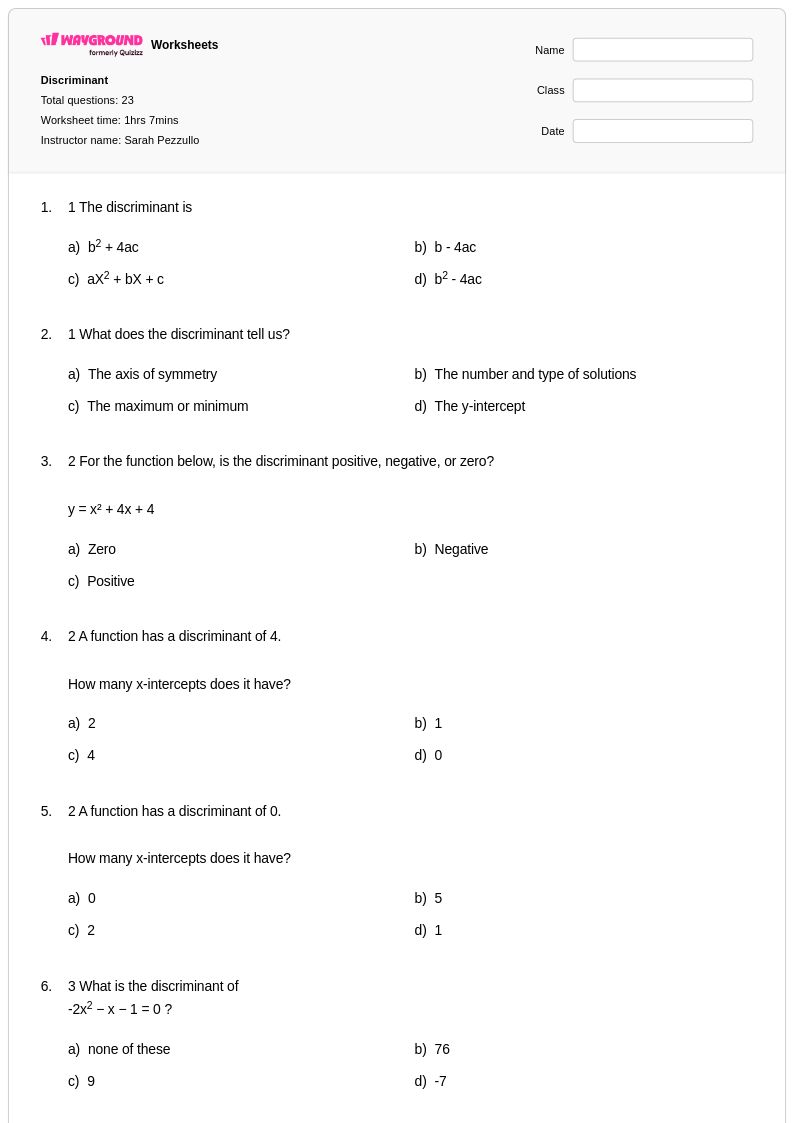
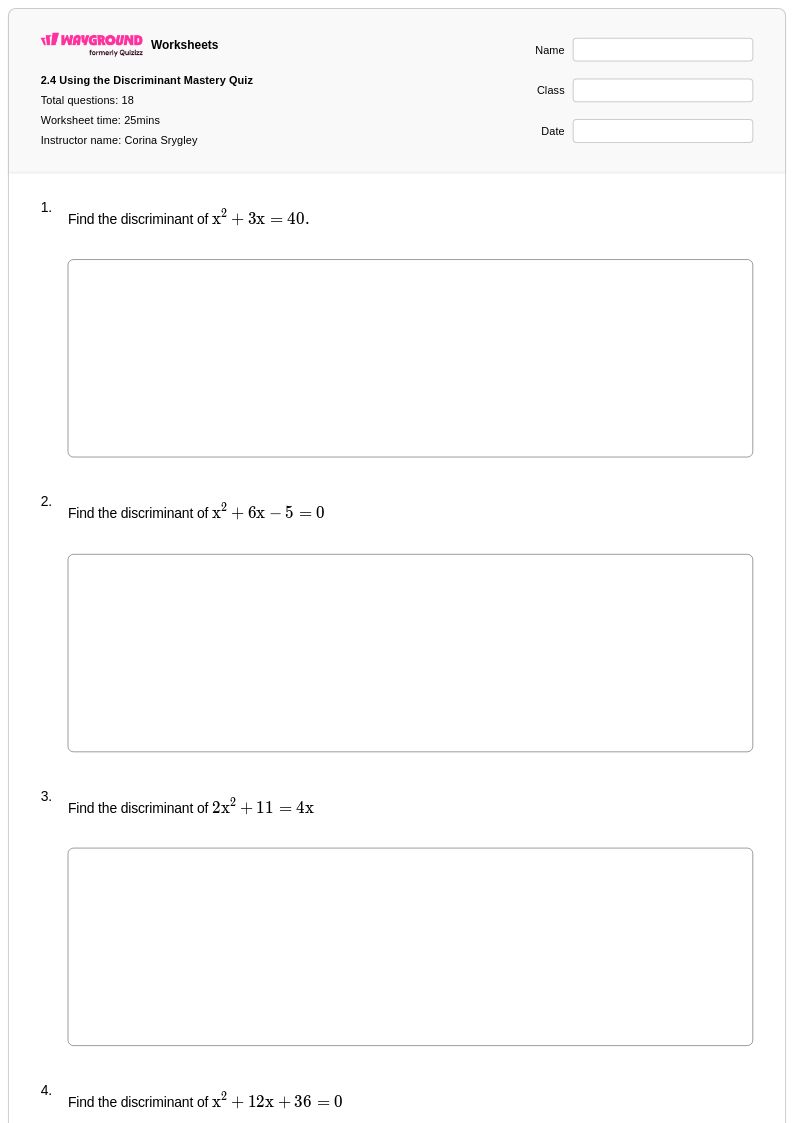
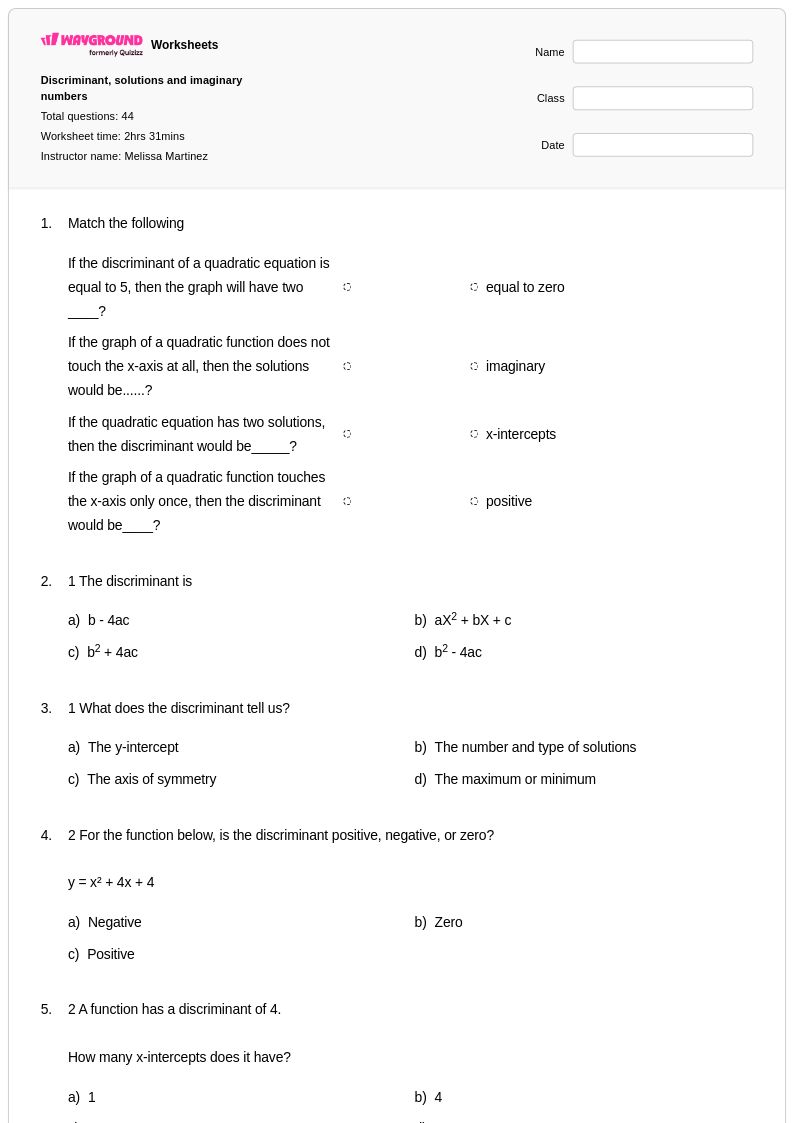
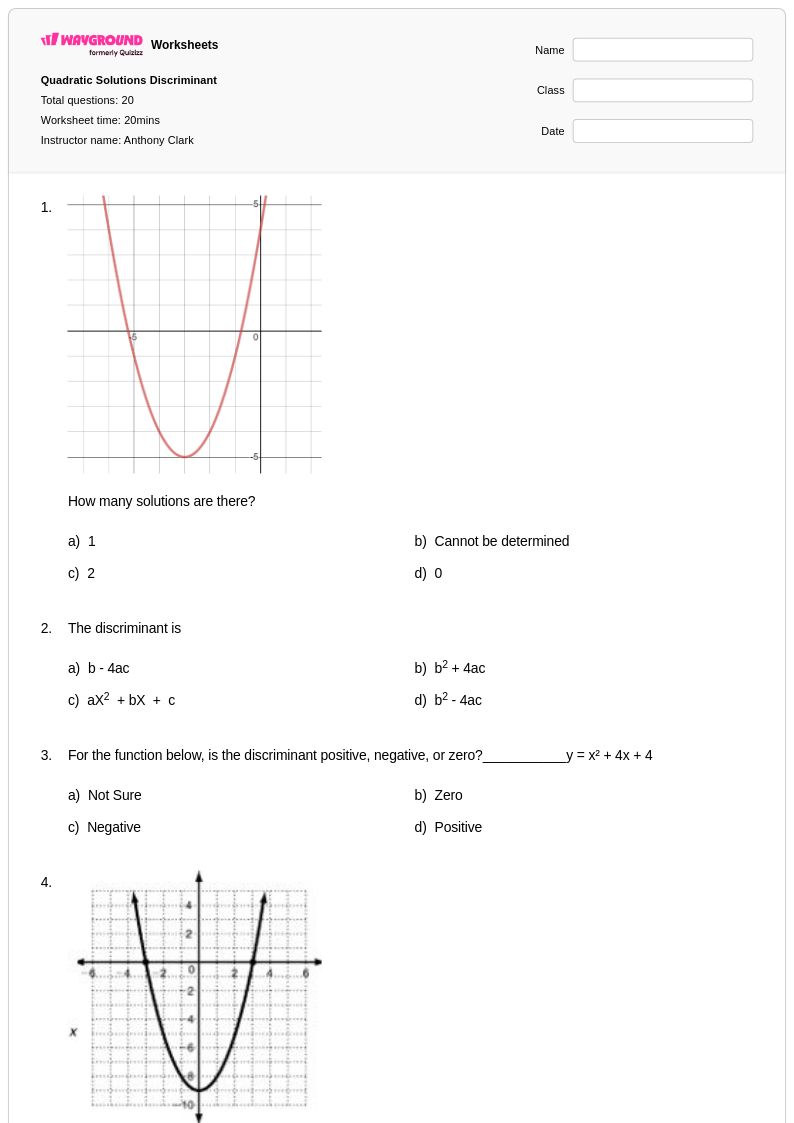
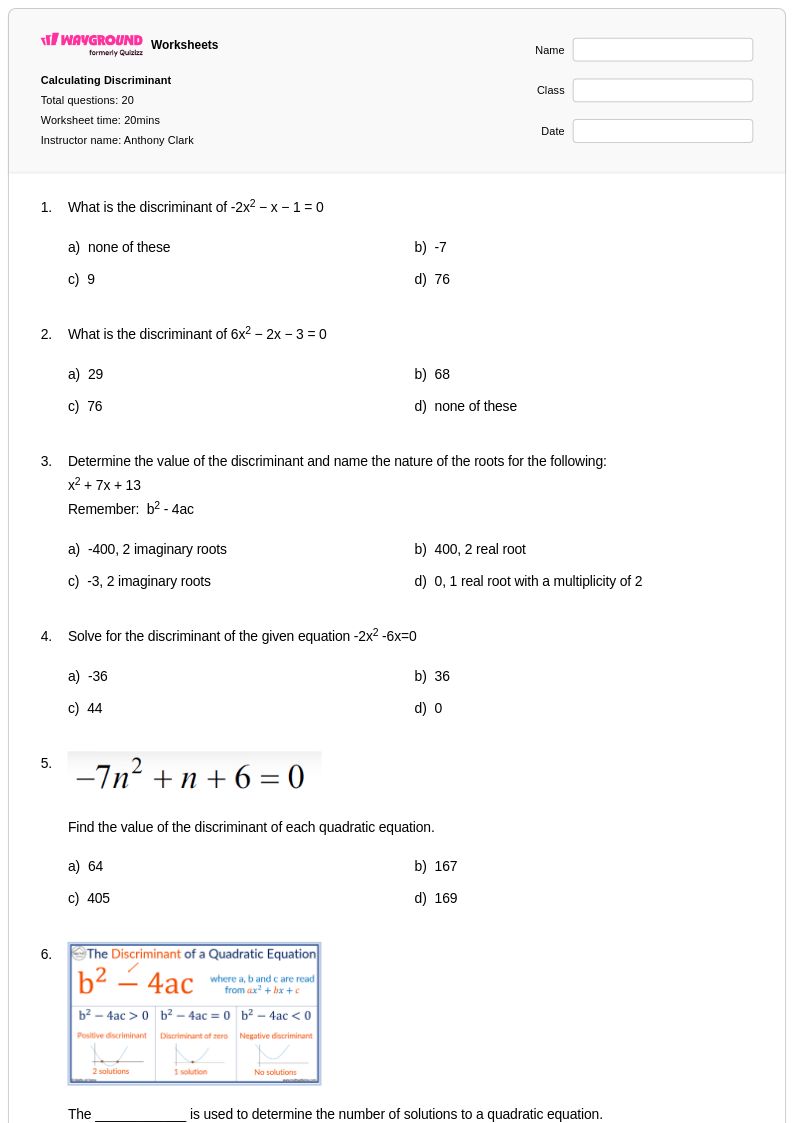
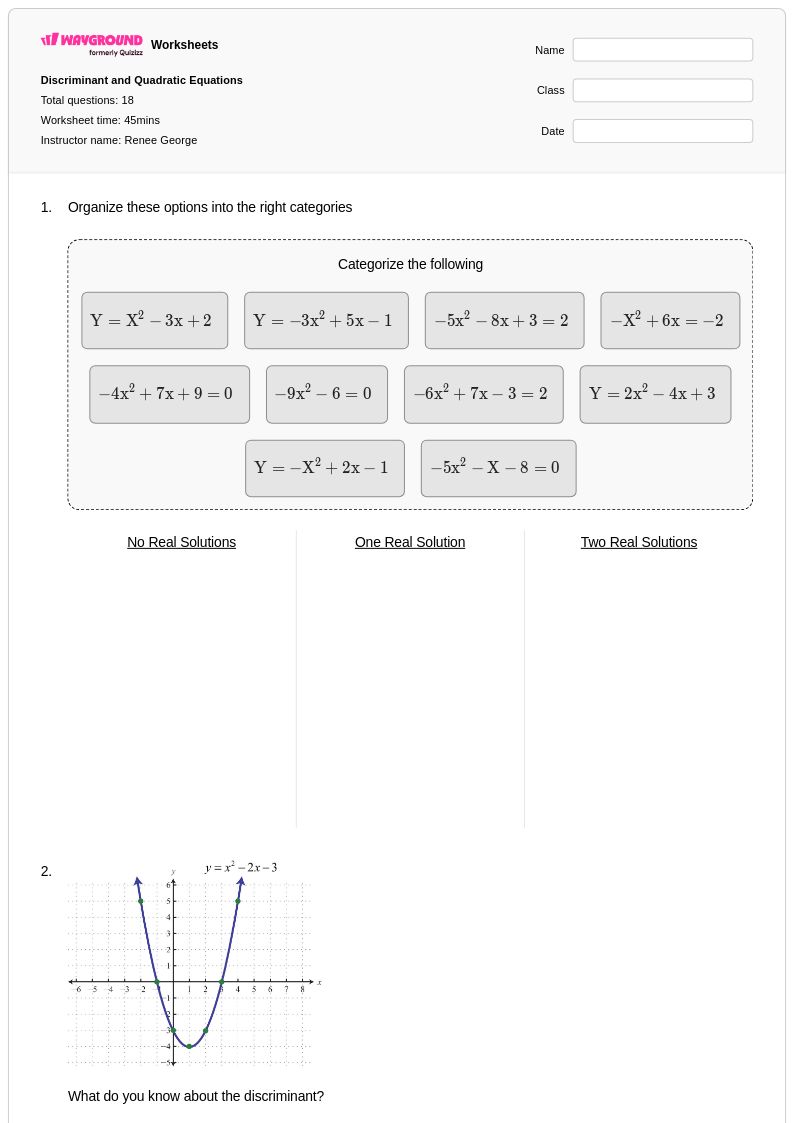
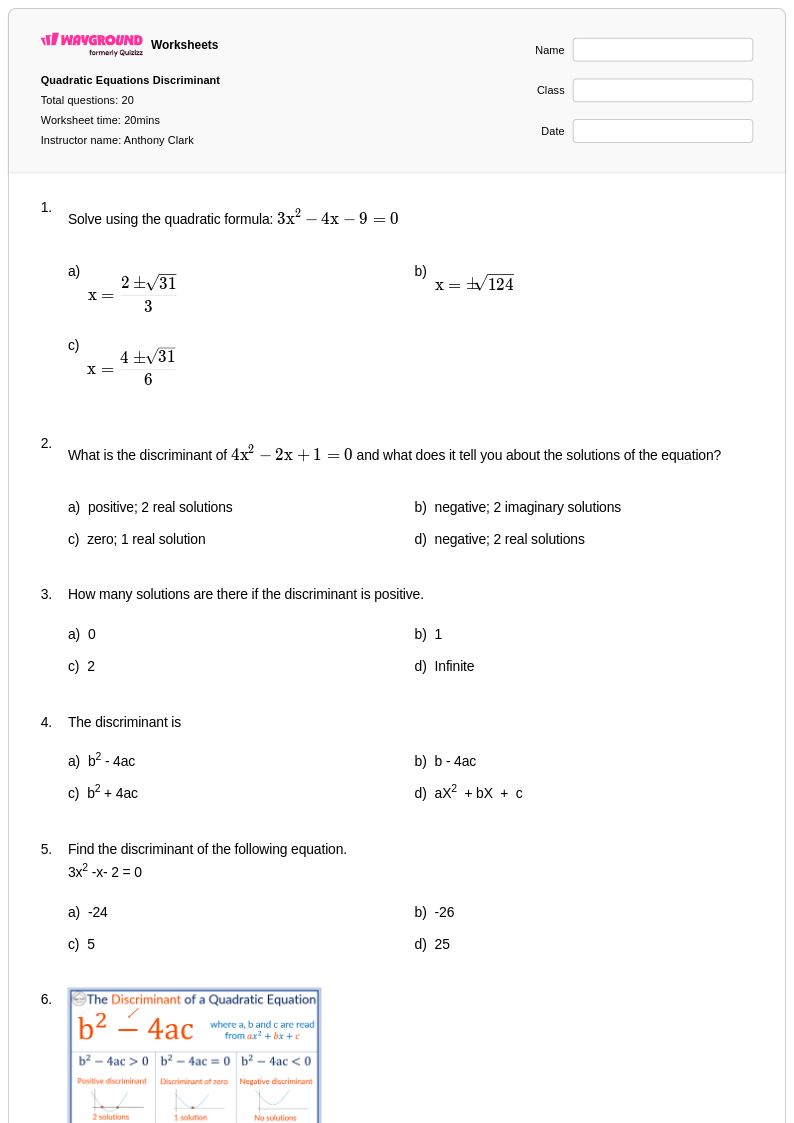
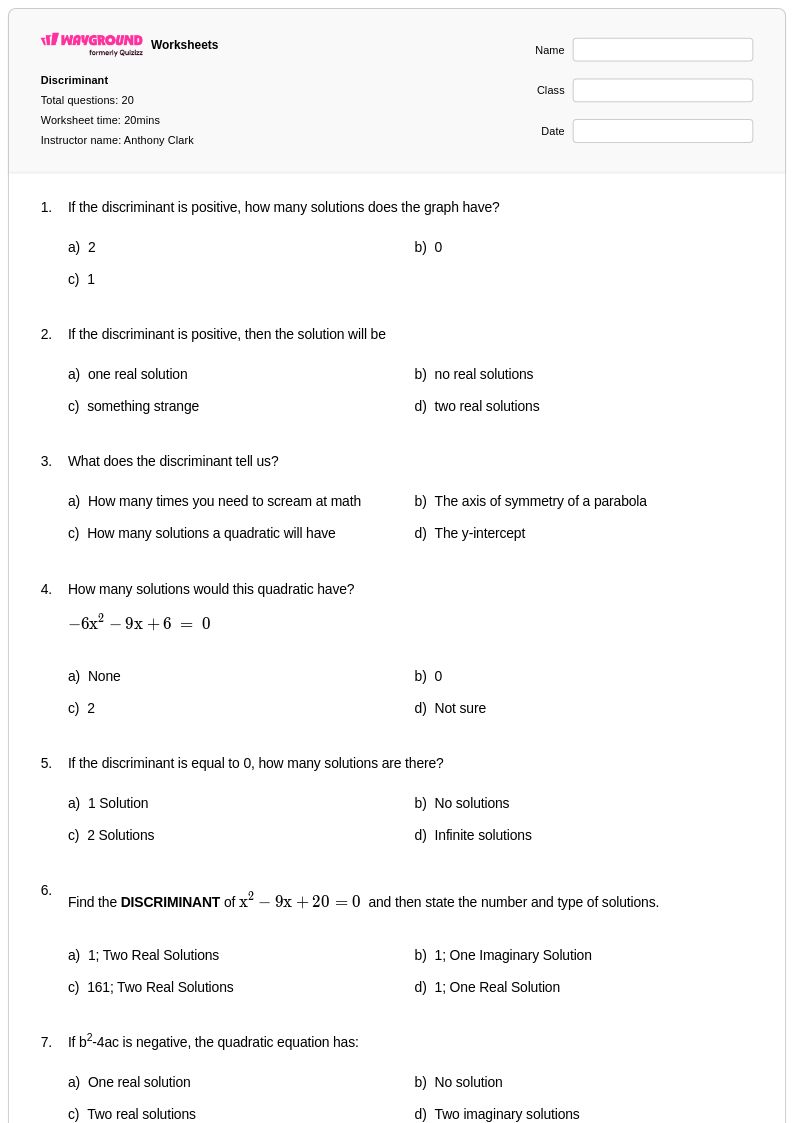
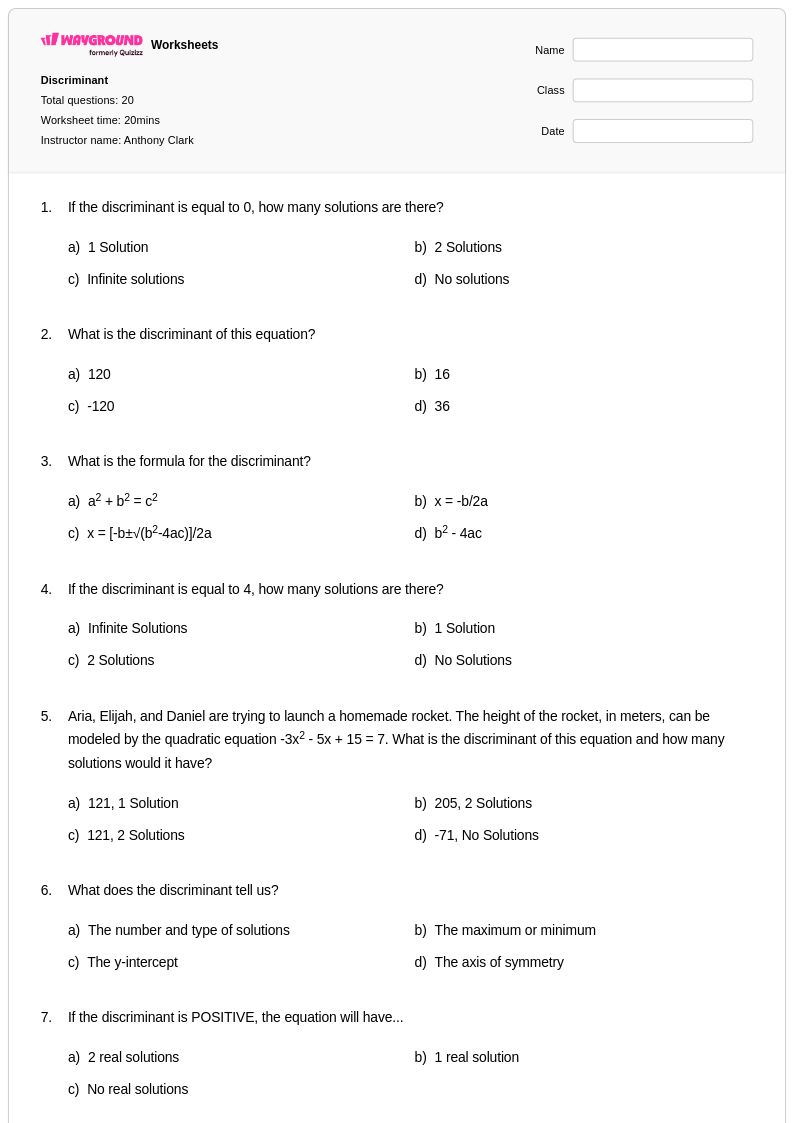
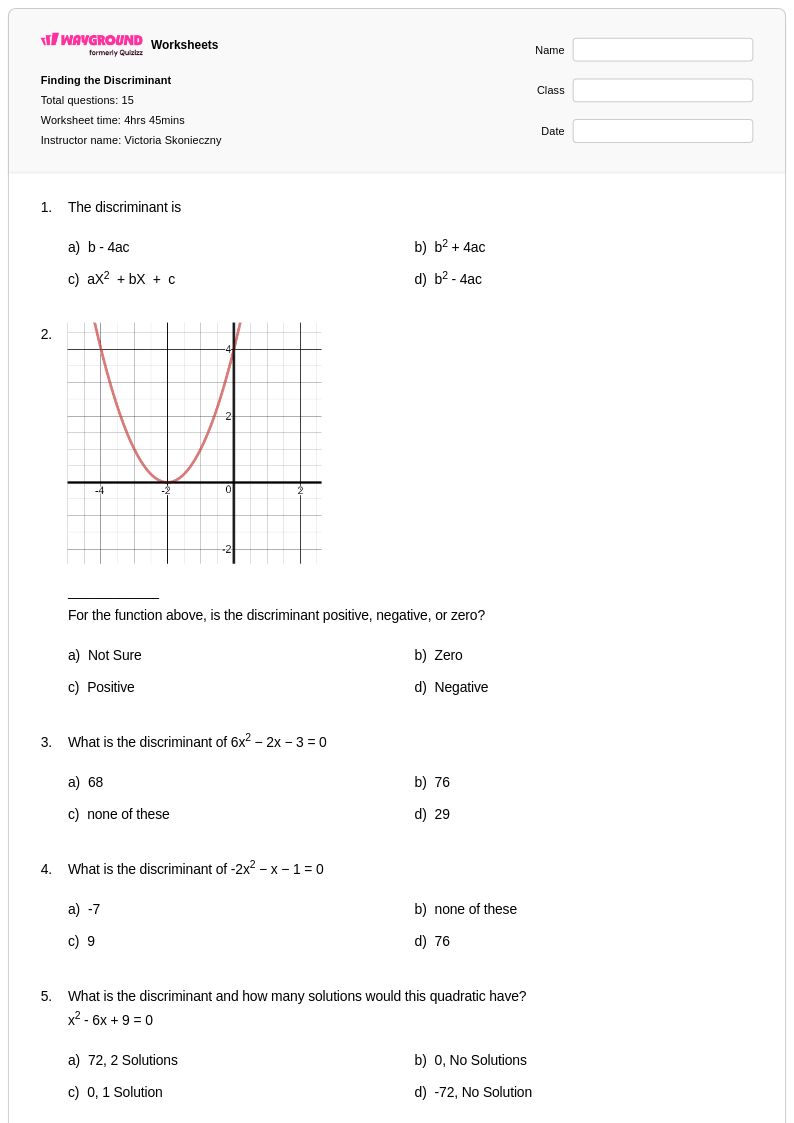
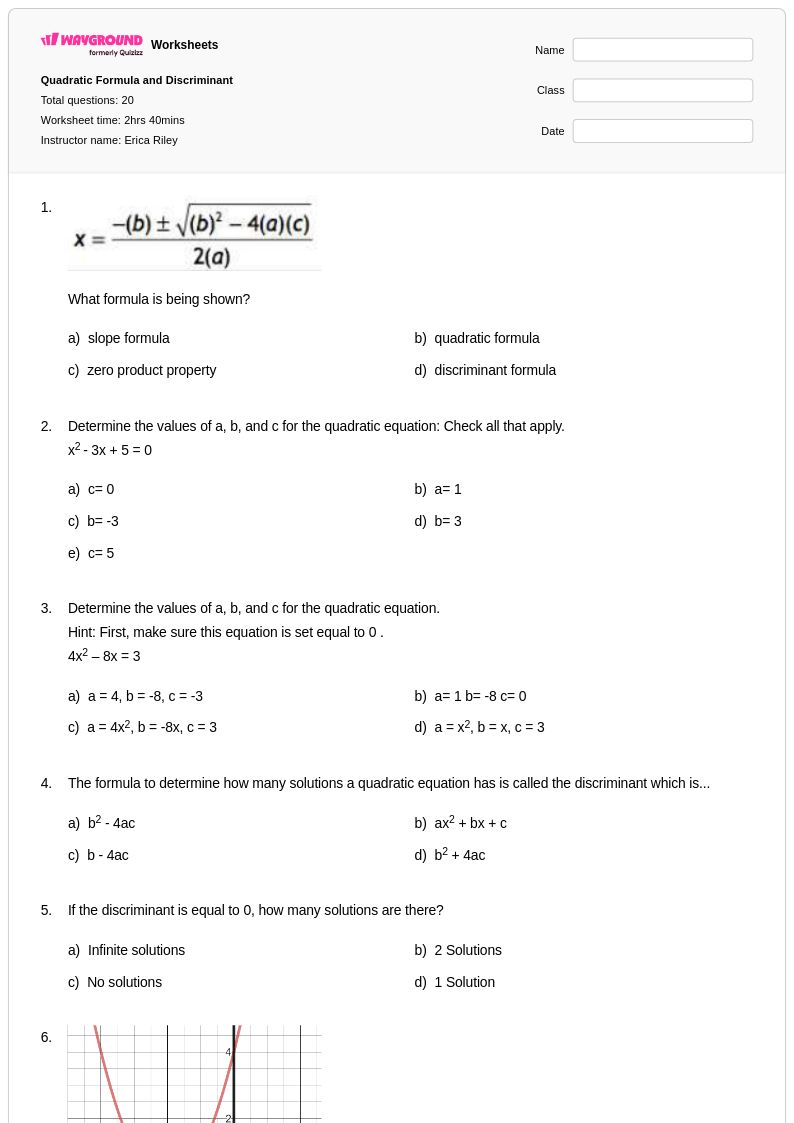
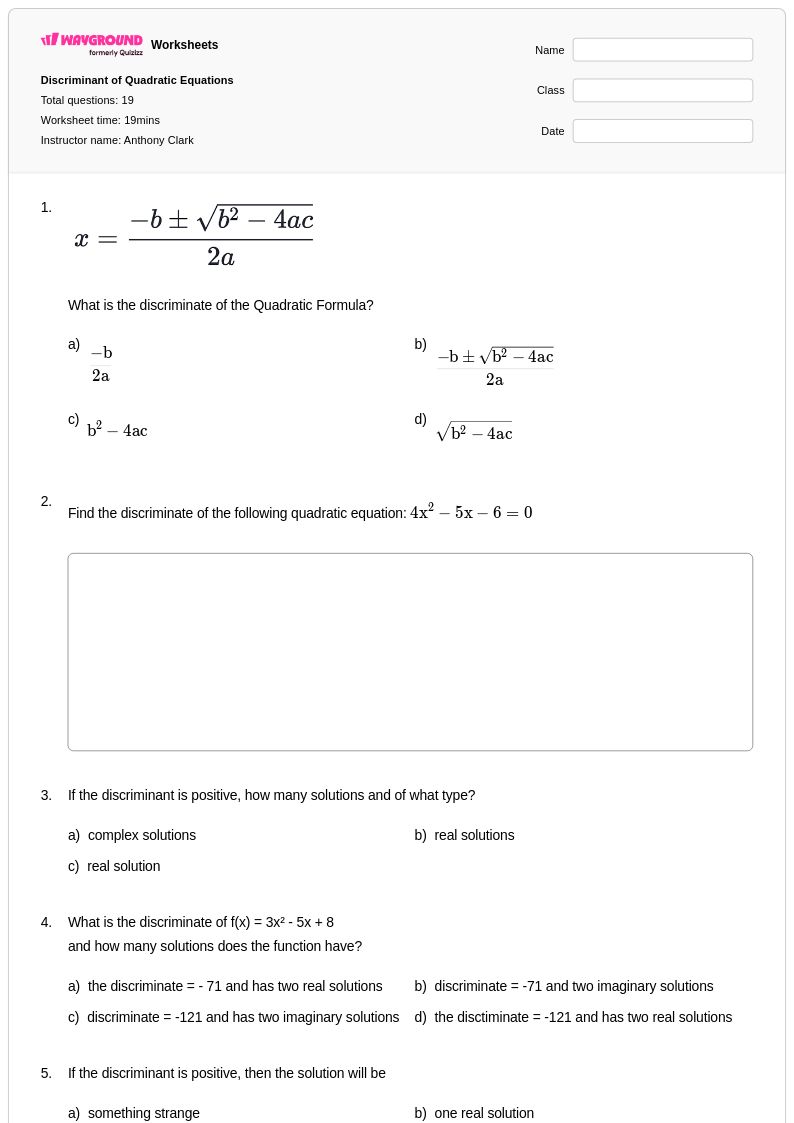
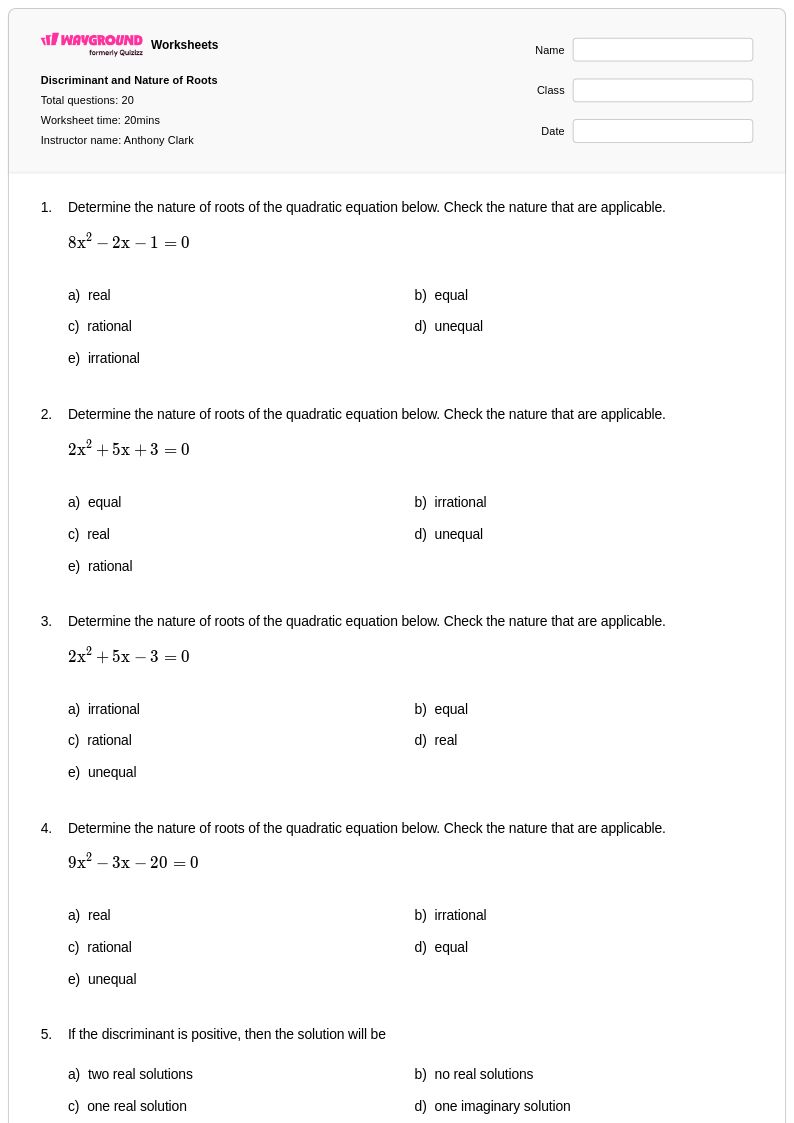
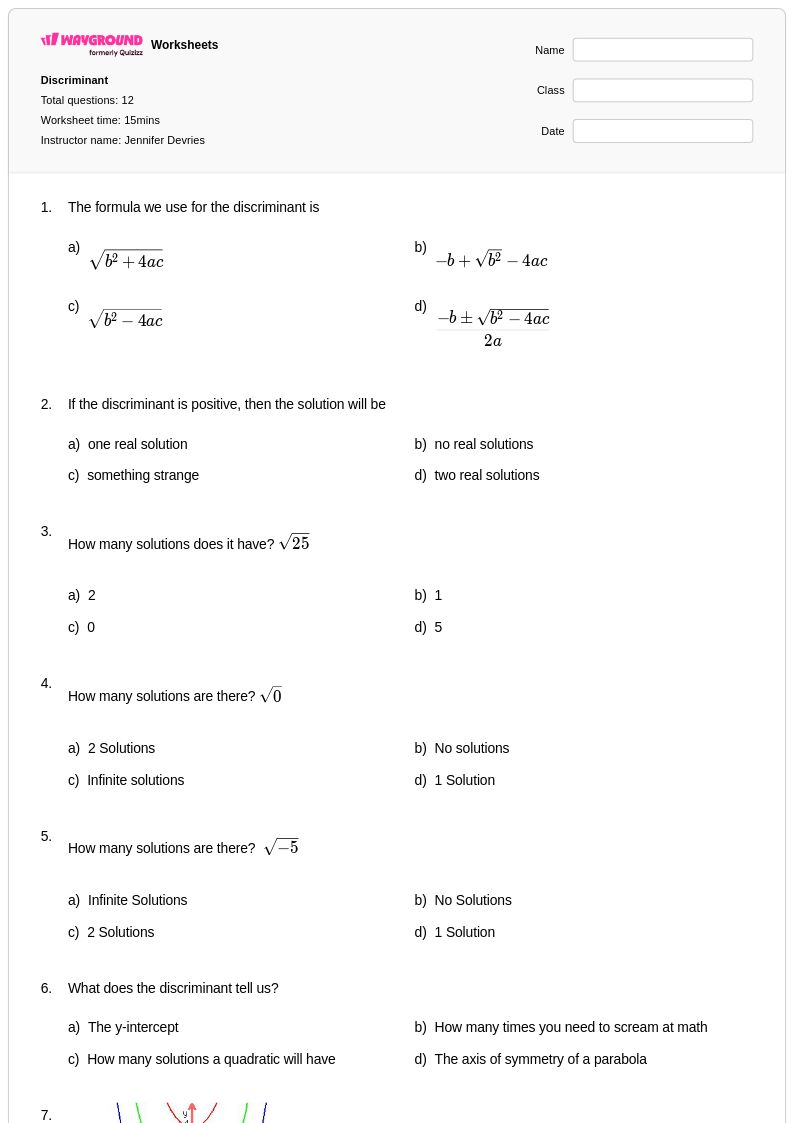
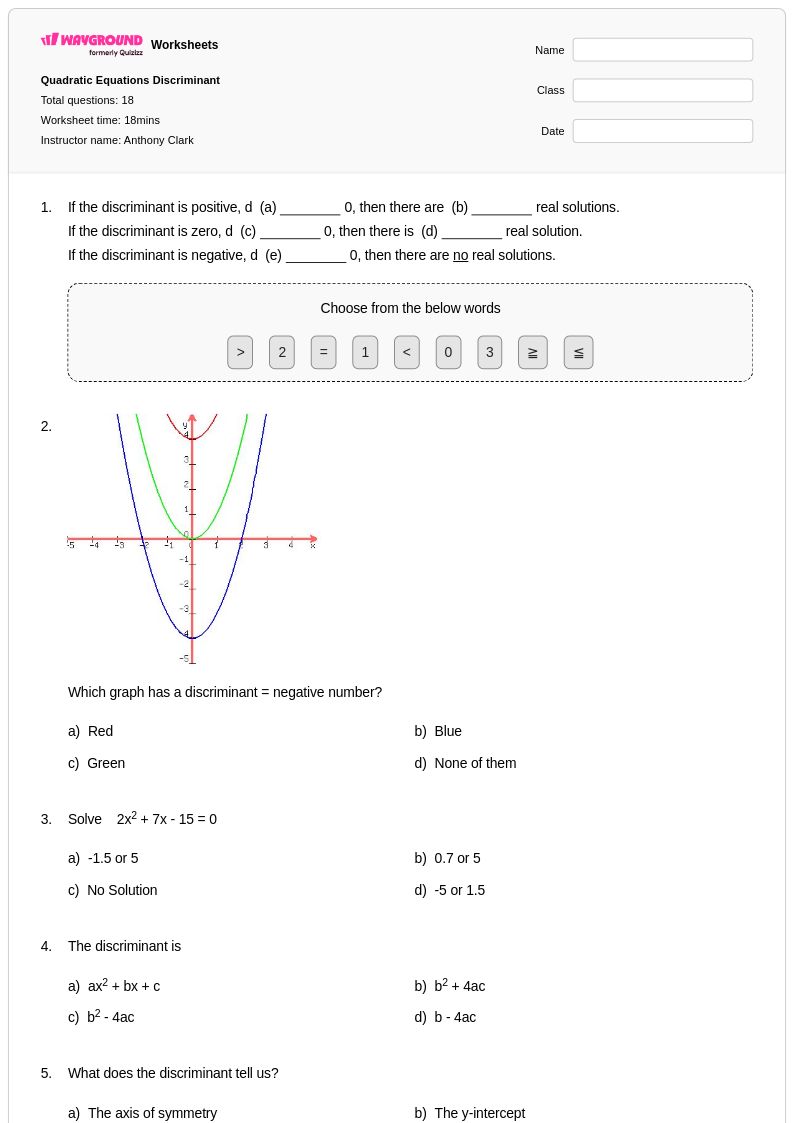
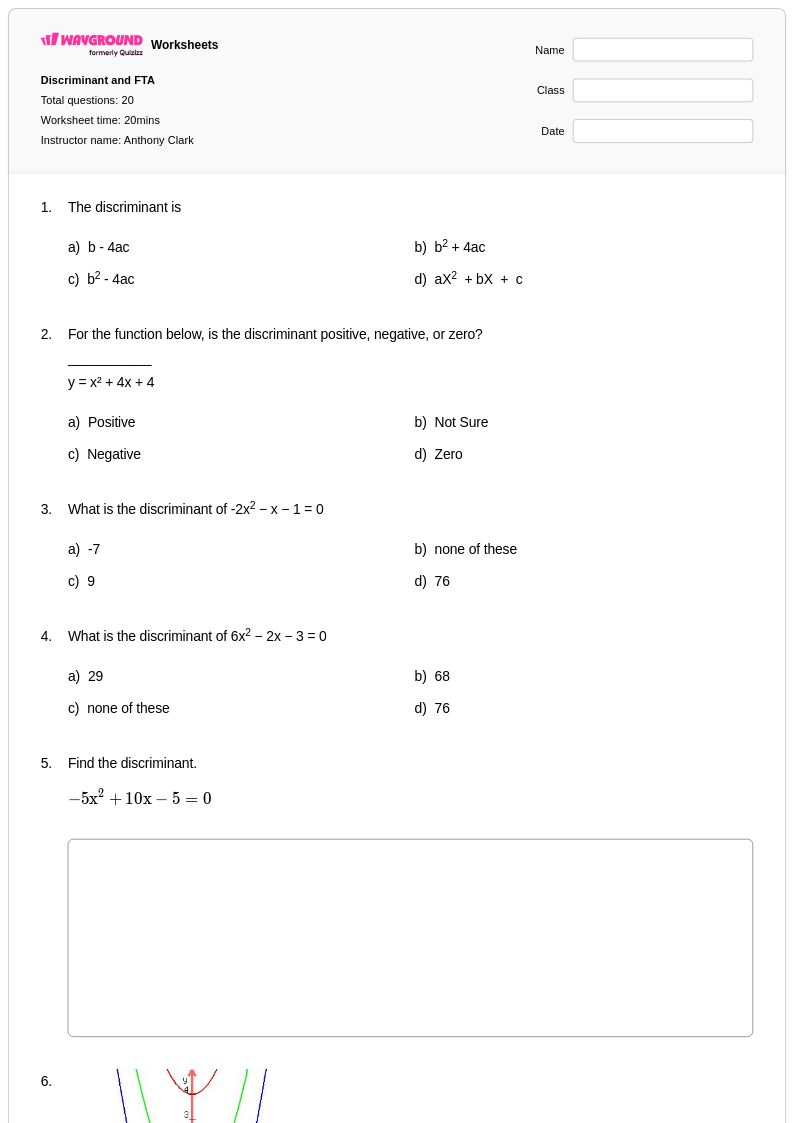
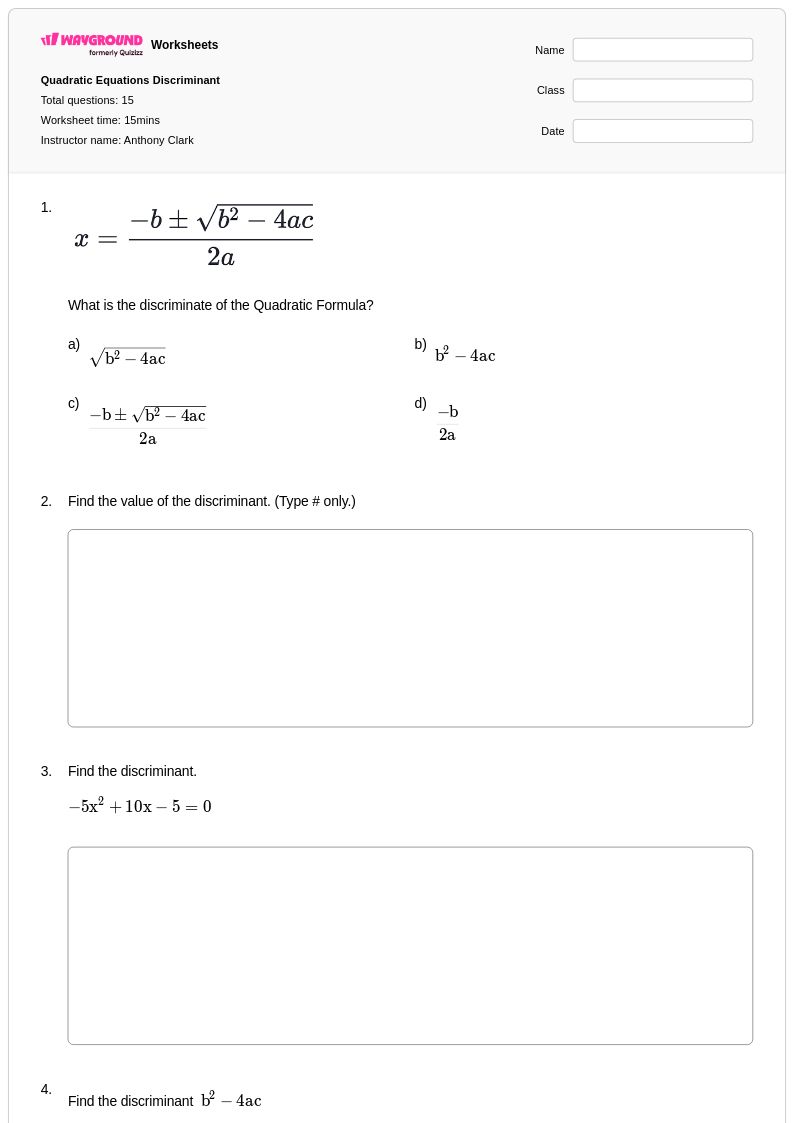
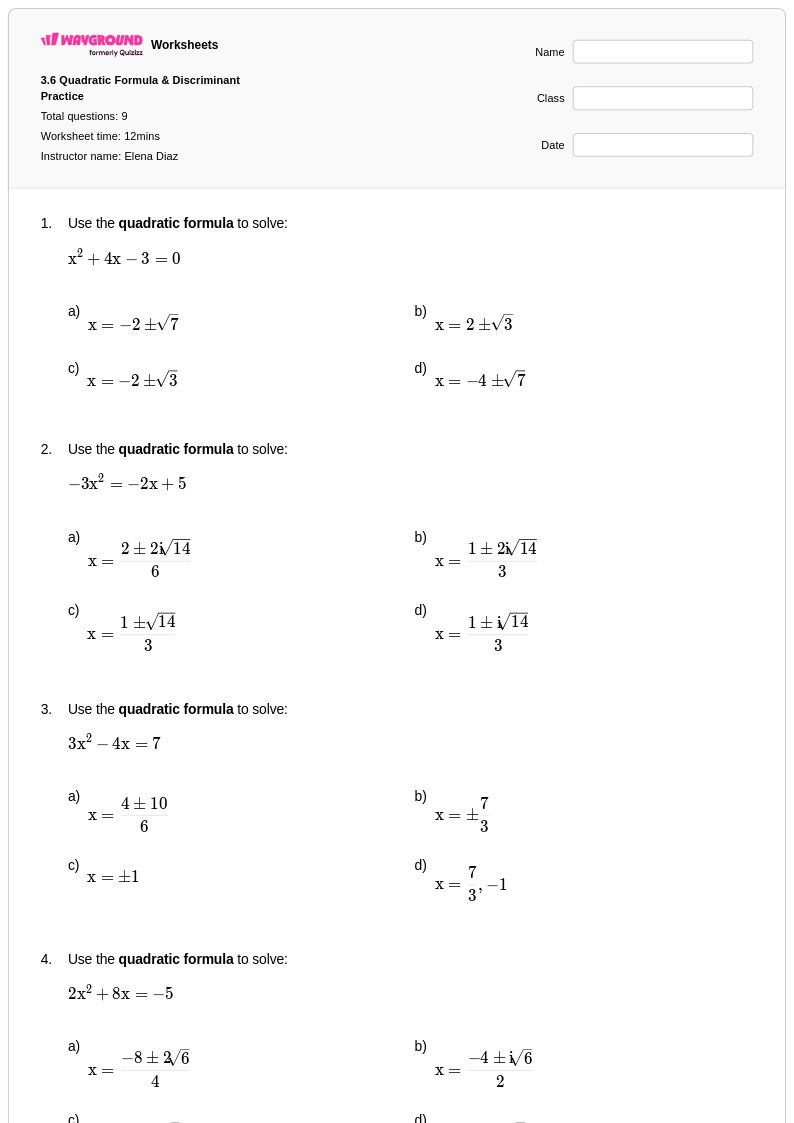
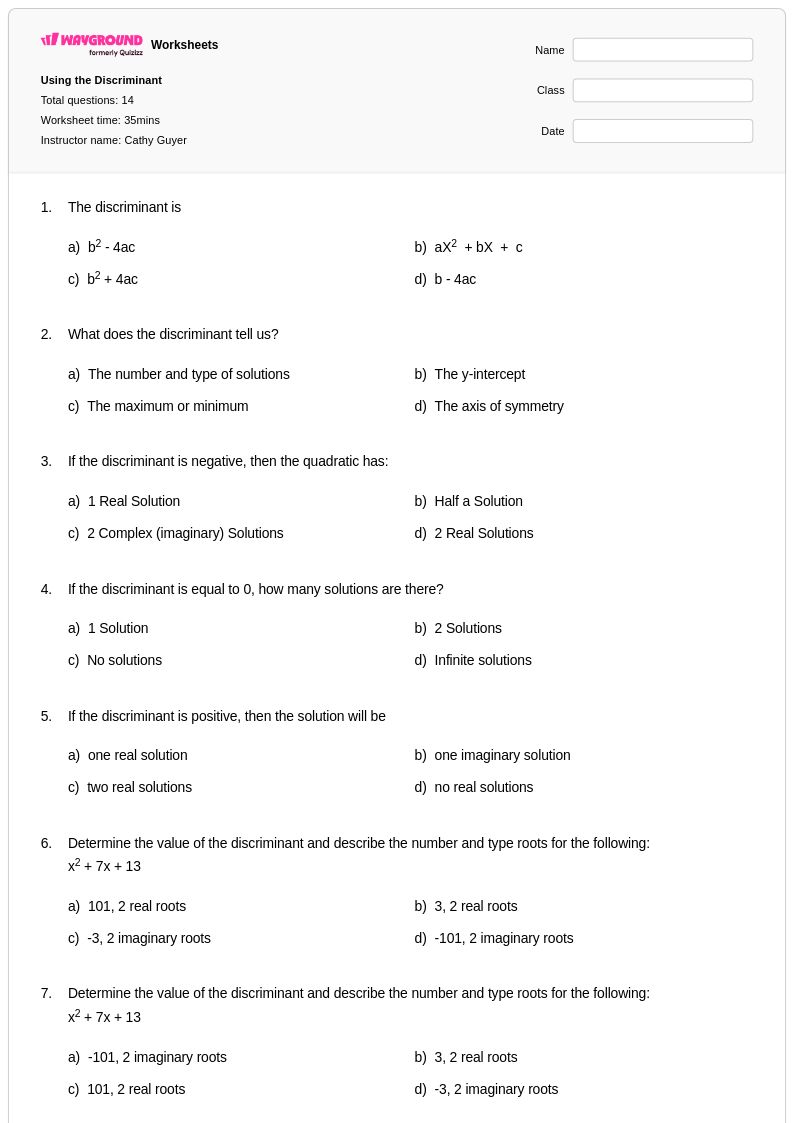
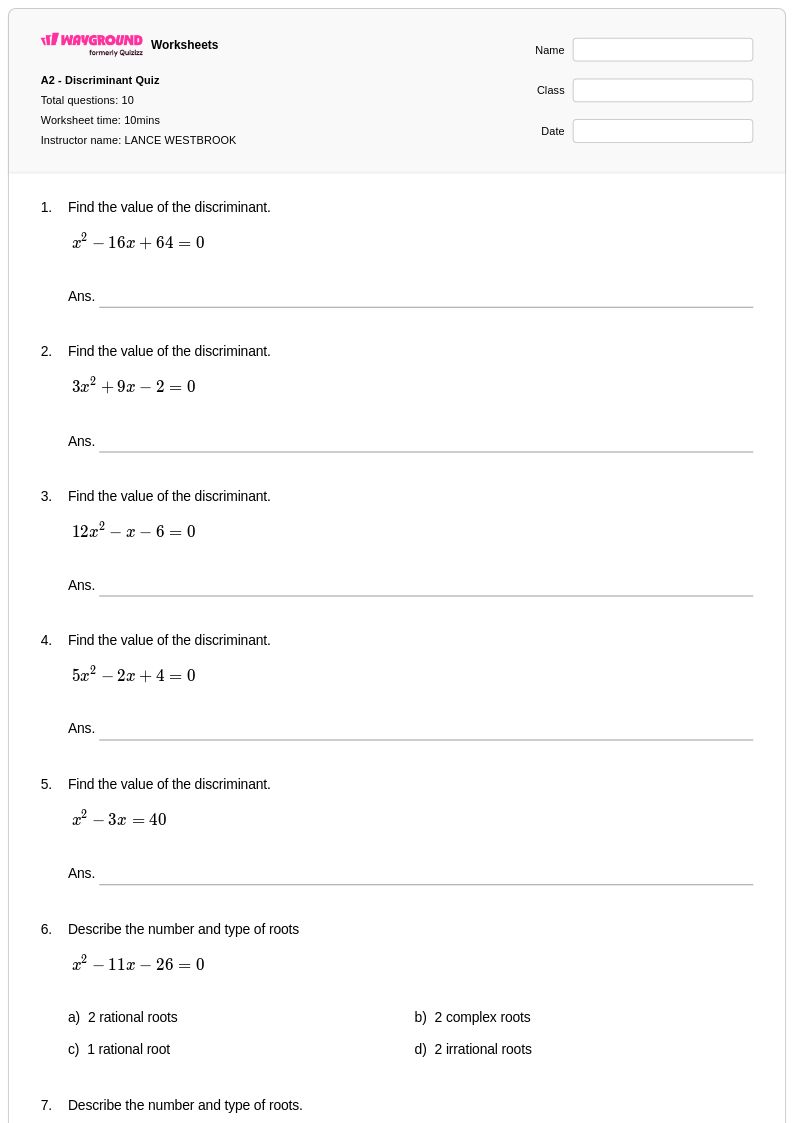
Discriminant worksheets for Grade 11 mathematics through Wayground (formerly Quizizz) provide comprehensive practice with this critical component of quadratic equation analysis. These expertly crafted resources help students master the discriminant formula (b² - 4ac) and develop proficiency in determining the nature and number of solutions for quadratic equations without actually solving them. Students strengthen essential algebraic reasoning skills as they learn to classify solutions as real and distinct, real and equal, or complex conjugates based on discriminant values. The collection includes structured practice problems that progress from basic discriminant calculations to more sophisticated applications involving parametric equations and optimization scenarios. Each worksheet comes with a detailed answer key and is available as a free printable pdf, making them ideal for both classroom instruction and independent study sessions.
Wayground (formerly Quizizz) empowers mathematics educators with an extensive library of millions of teacher-created discriminant resources that streamline lesson planning and enhance student learning outcomes. The platform's robust search and filtering capabilities allow teachers to quickly locate worksheets aligned with specific curriculum standards and tailored to diverse learning needs within Grade 11 mathematics courses. Advanced differentiation tools enable educators to modify existing materials or create customized versions that address varying skill levels, from foundational discriminant concepts to advanced applications in conic sections and polynomial analysis. These versatile resources are available in both printable and digital formats, including downloadable pdfs, providing flexibility for traditional classroom settings, hybrid learning environments, and remote instruction. Teachers can efficiently deploy these materials for targeted skill practice, remediation support for struggling learners, and enrichment opportunities for advanced students ready to explore deeper connections between discriminants and graphical representations of quadratic functions.
FAQs
How do I teach the discriminant at the Grade 11 level?
Grade 11 students should be moving past calculation and into application. A strong focus at this level is parametric problems: given an equation with an unknown parameter, find the values that produce two real roots, exactly one, or none. This requires students to set up an inequality or equation using the discriminant rather than just evaluating it — a meaningful step up in algebraic reasoning that connects the discriminant to optimization and constraint problems.
What practice exercises are most valuable for Grade 11 discriminant work?
Three problem types carry the most weight at this level: parametric discriminant problems (find k such that the equation has equal roots), problems connecting discriminant sign to the graph's position relative to the x-axis, and problems embedded in context — for example, determining whether a projectile modeled by a quadratic ever reaches a given height. Wayground's Grade 11 discriminant worksheets include structured problems that progress from basic classification to these more sophisticated applications.
What mistakes do Grade 11 students still make with the discriminant?
At this level, the arithmetic errors are mostly gone, but two conceptual problems persist. First, students working with parametric equations often forget that the parameter can appear in more than one coefficient — they'll substitute k for b but leave it out of c, or vice versa. Second, when classifying complex solutions, students sometimes write the roots as imaginary numbers but fail to recognize they come as conjugate pairs. Both errors reflect incomplete understanding of the structure of the quadratic formula itself.
How do I use these Grade 11 discriminant worksheets in my class?
You can assign them as printable PDFs for paper practice — which works well for in-class work where you want students off screens — or host them as digital quizzes on Wayground. Either way, the answer key is included. For paper submissions, the Wayground for Teachers app lets you scan and grade student work without manually re-entering responses.
How does the discriminant connect to the broader Common Core Algebra II progression?
Common Core's Algebra II expectations include working fluently with complex numbers and understanding the complete solution set of a quadratic. The discriminant is the analytical tool that makes this precise: it tells students not just whether solutions are real, but whether they're rational (a perfect square discriminant) or irrational. At Grade 11, students are also expected to connect algebraic results to graphical representations — a positive discriminant corresponds to two x-intercepts, zero to a tangent point, negative to a parabola that doesn't cross the axis at all.
How can I differentiate discriminant practice for Grade 11 students with varying skill levels?
For students still consolidating the basics, Wayground's reduced answer choices accommodation helps them focus on setting up the discriminant correctly rather than getting overwhelmed by the full solution space. For students ready for extension, the same worksheet can be assigned without scaffolding. If you have English language learners working through parametric word problems, Wayground's worksheet translation tool lets you provide the same problems in their home language — the math doesn't change, but the language barrier does.