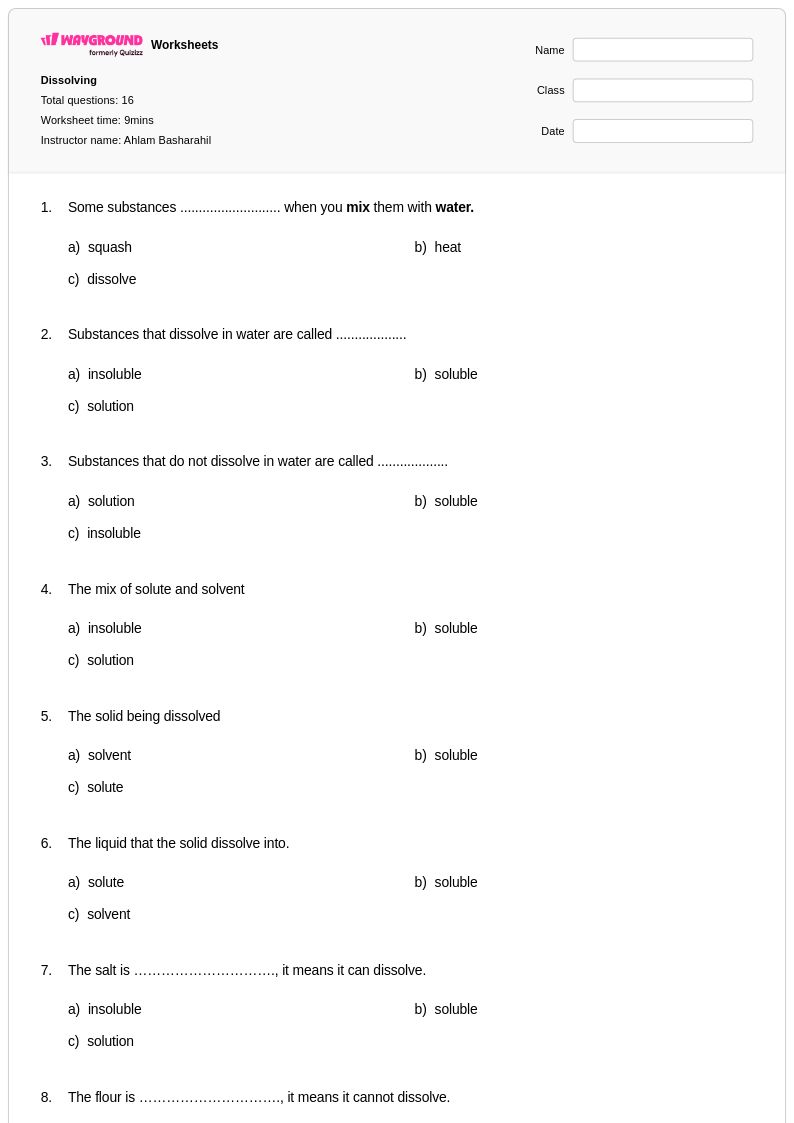
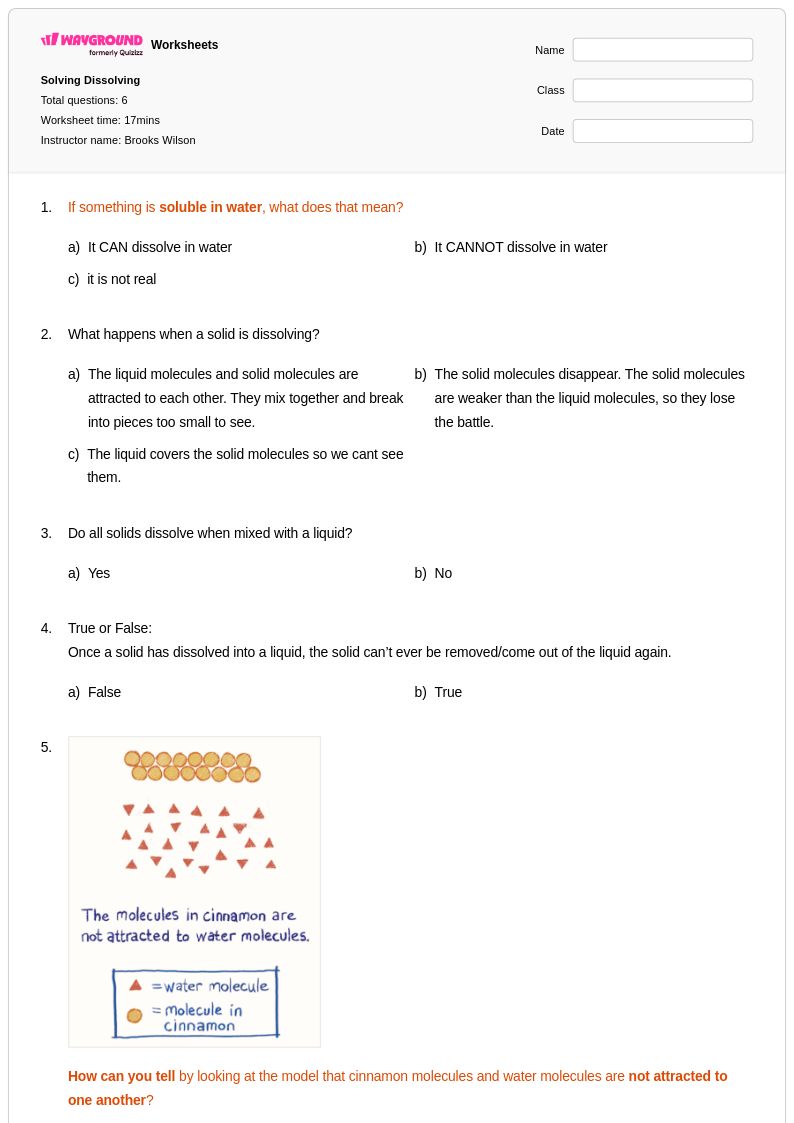
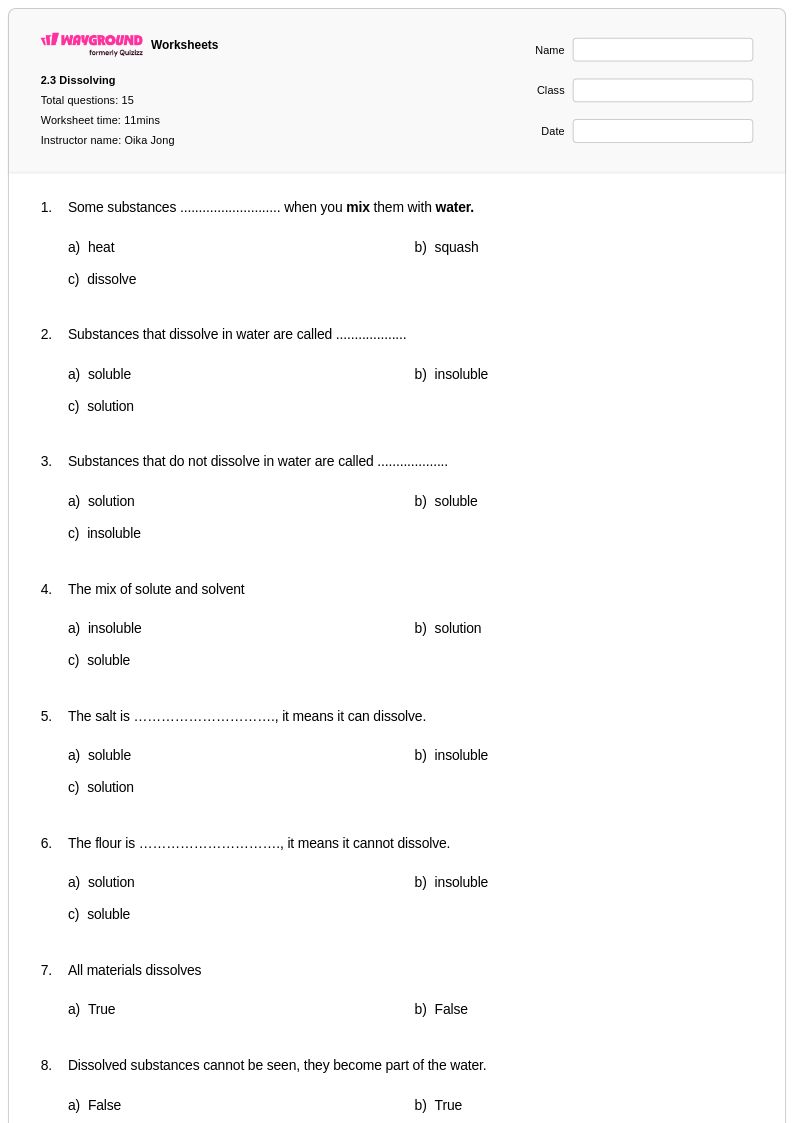
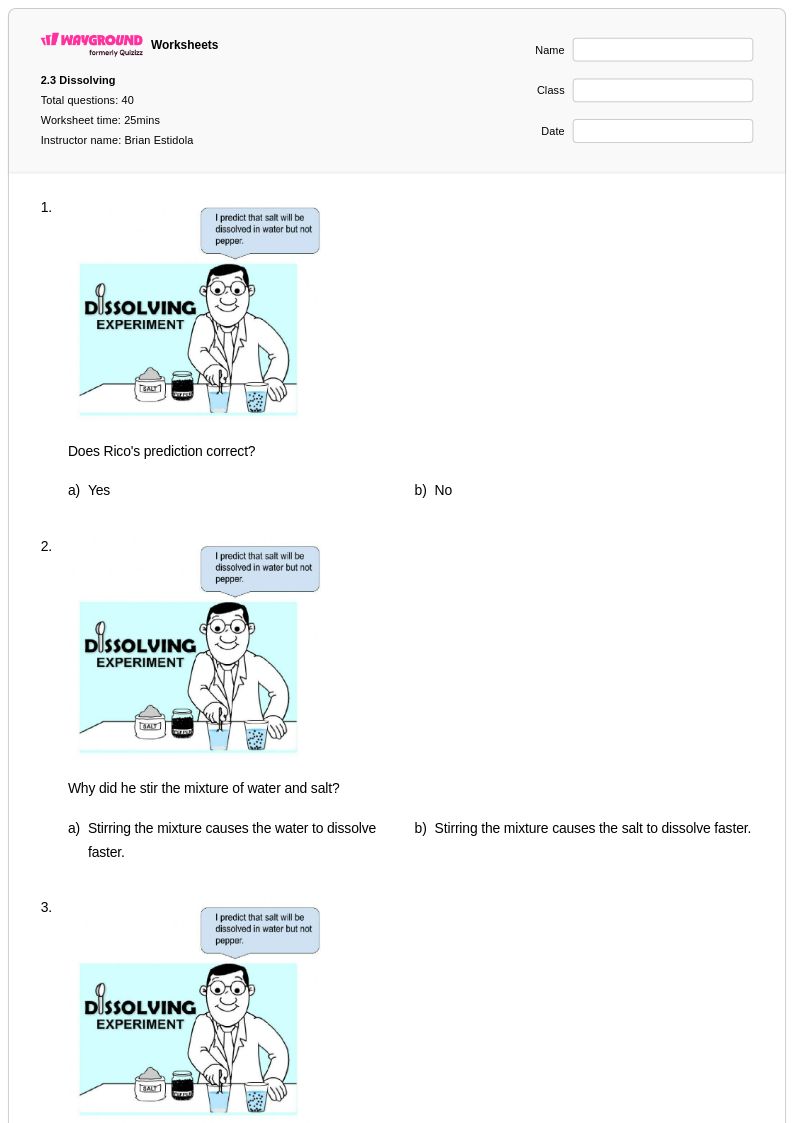
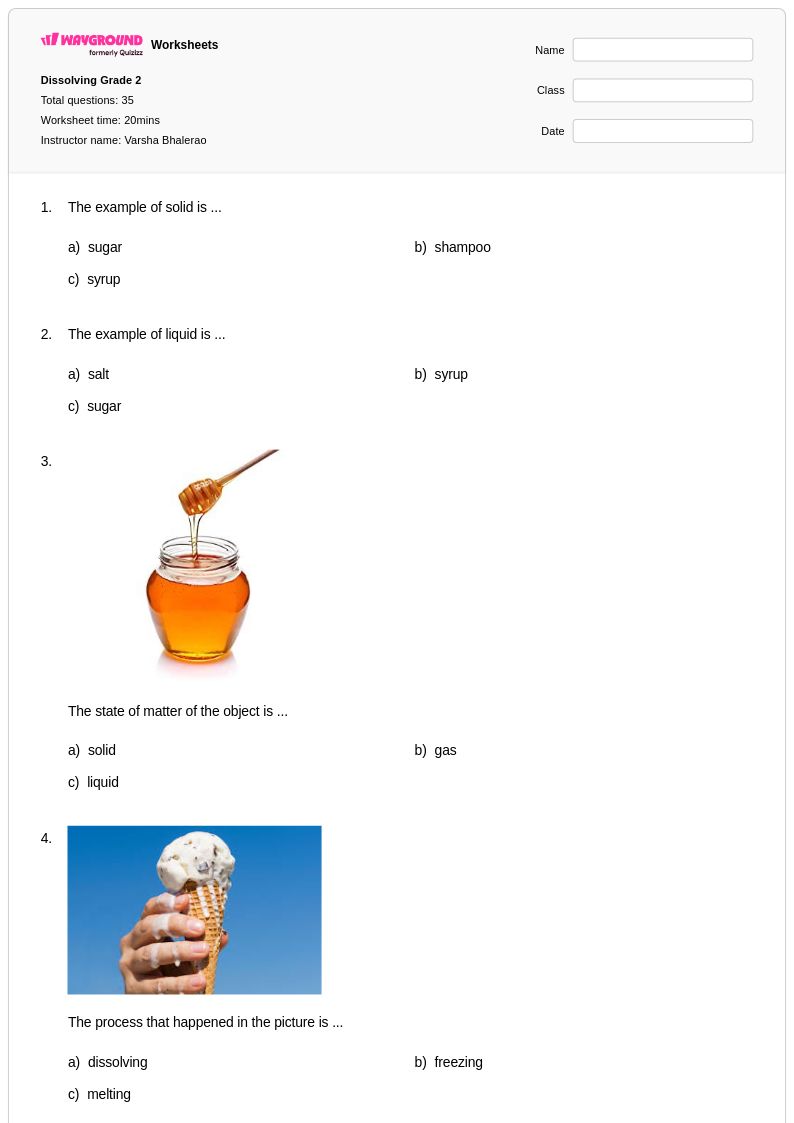
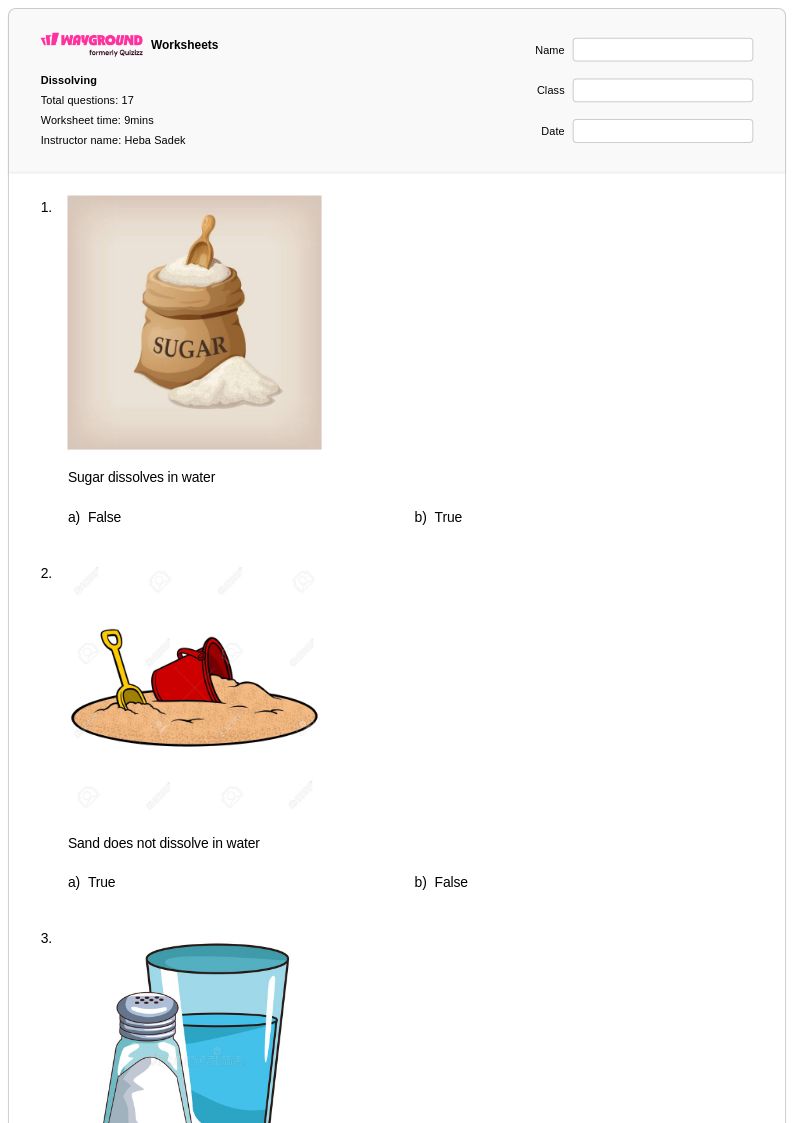
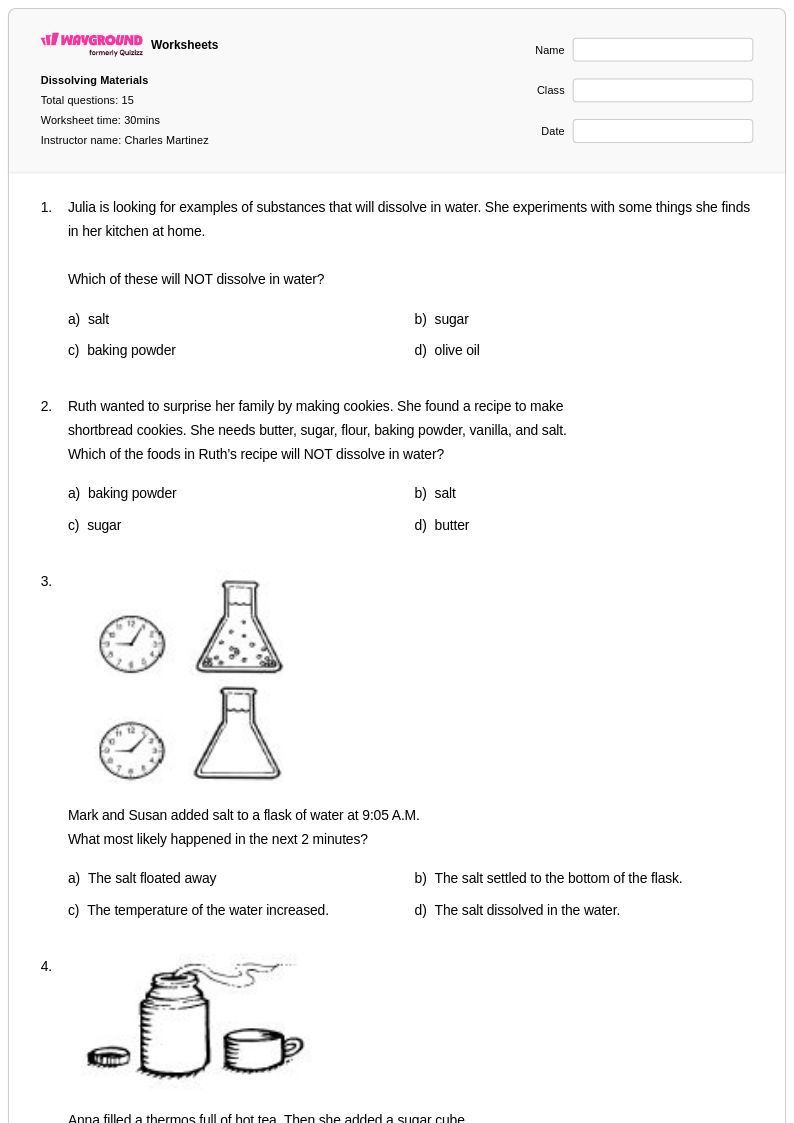
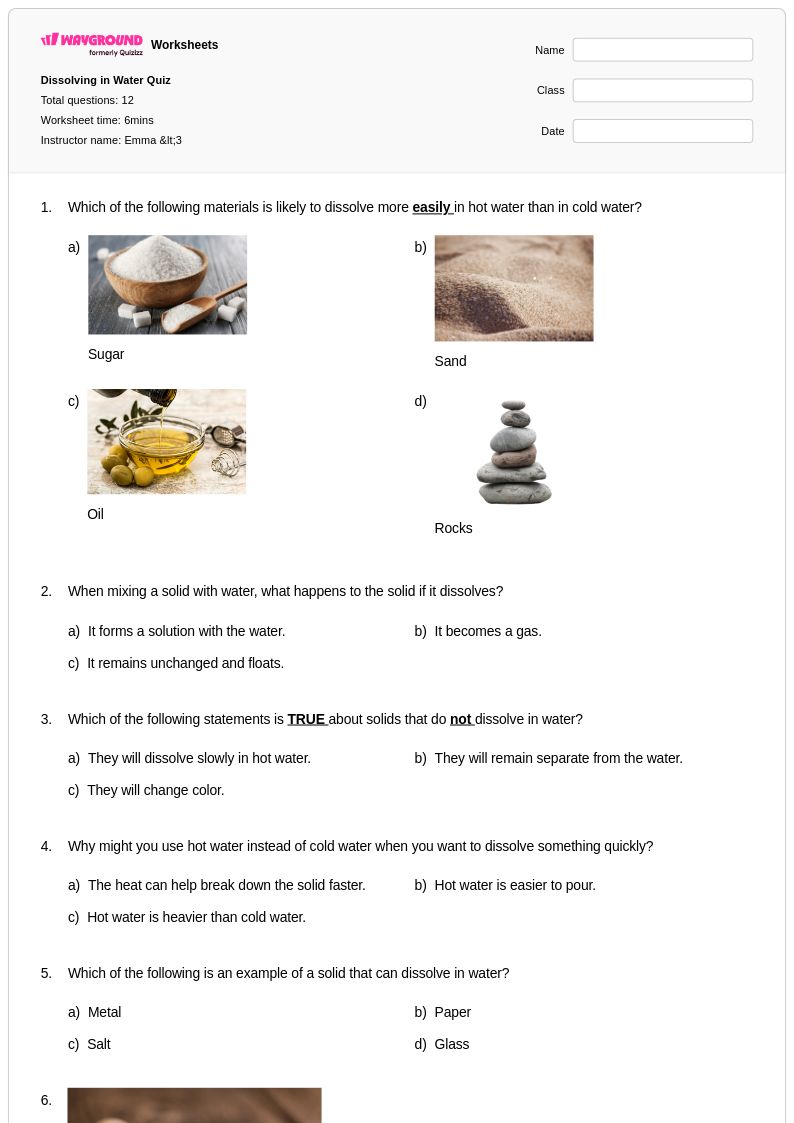
Grade 3 dissolving worksheets and printables help young scientists explore how different materials dissolve in water through engaging practice problems, complete with answer keys and free PDF downloads.
Explore printable Dissolving worksheets for Grade 3
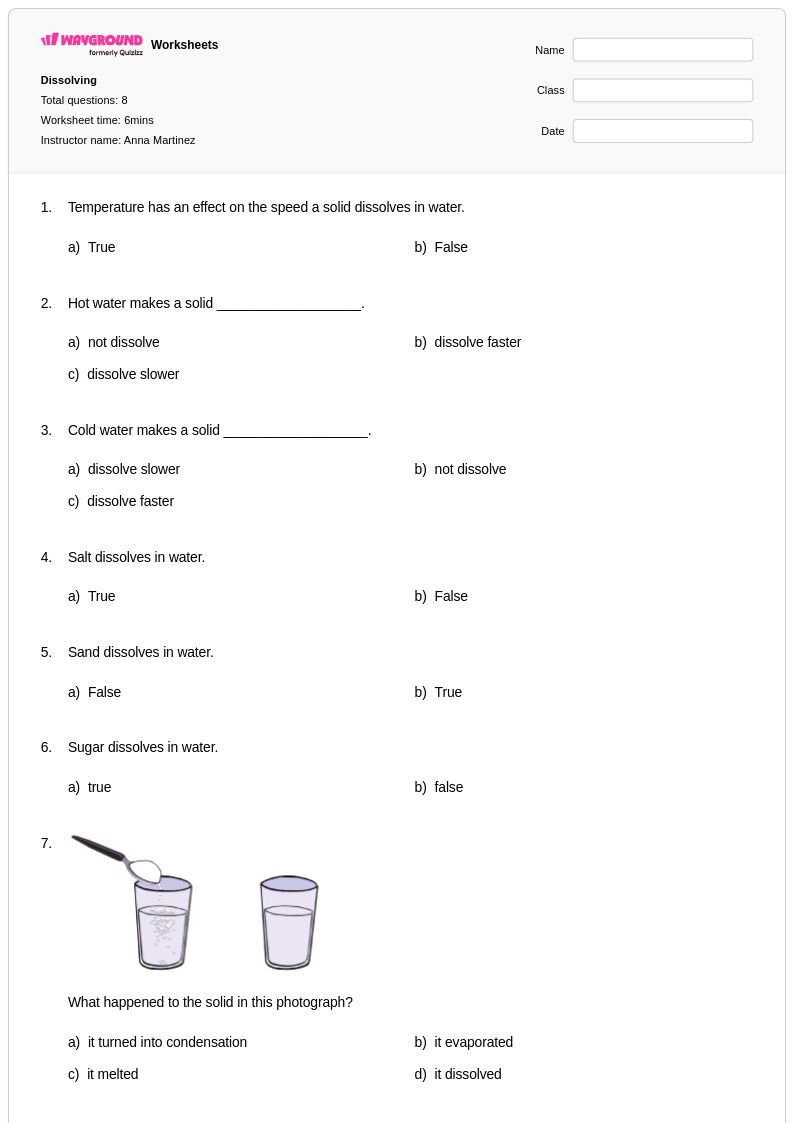
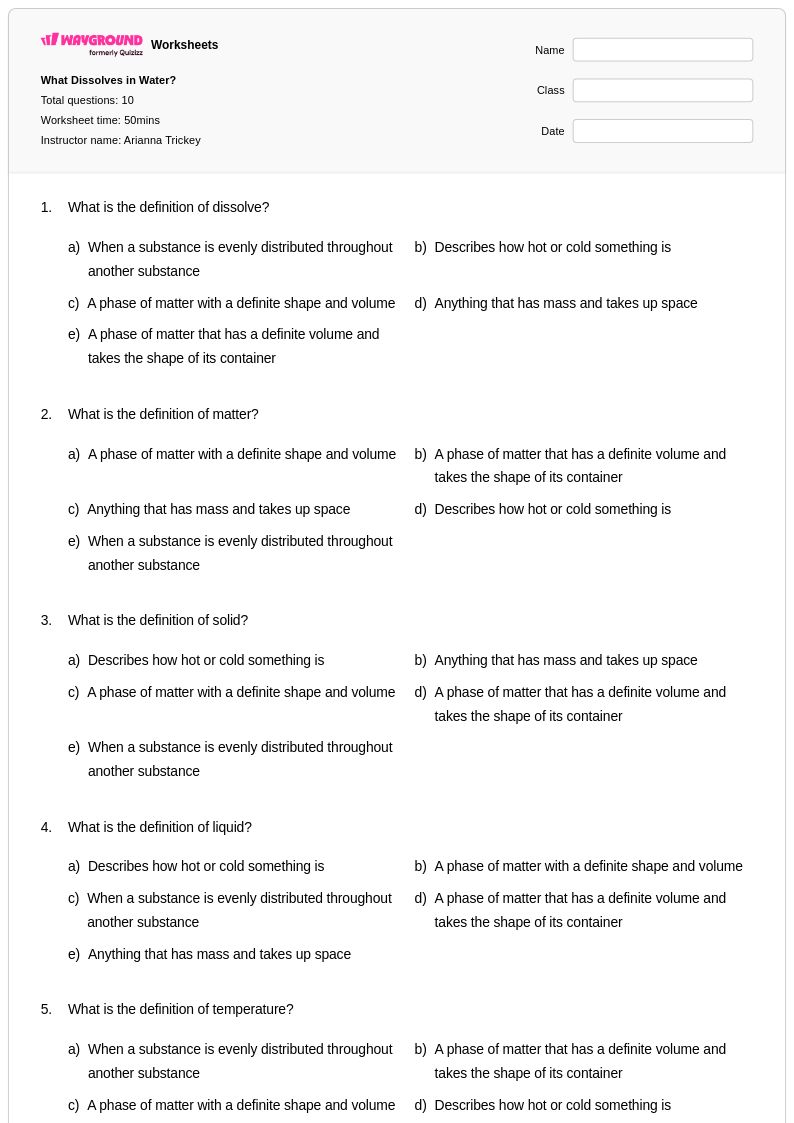
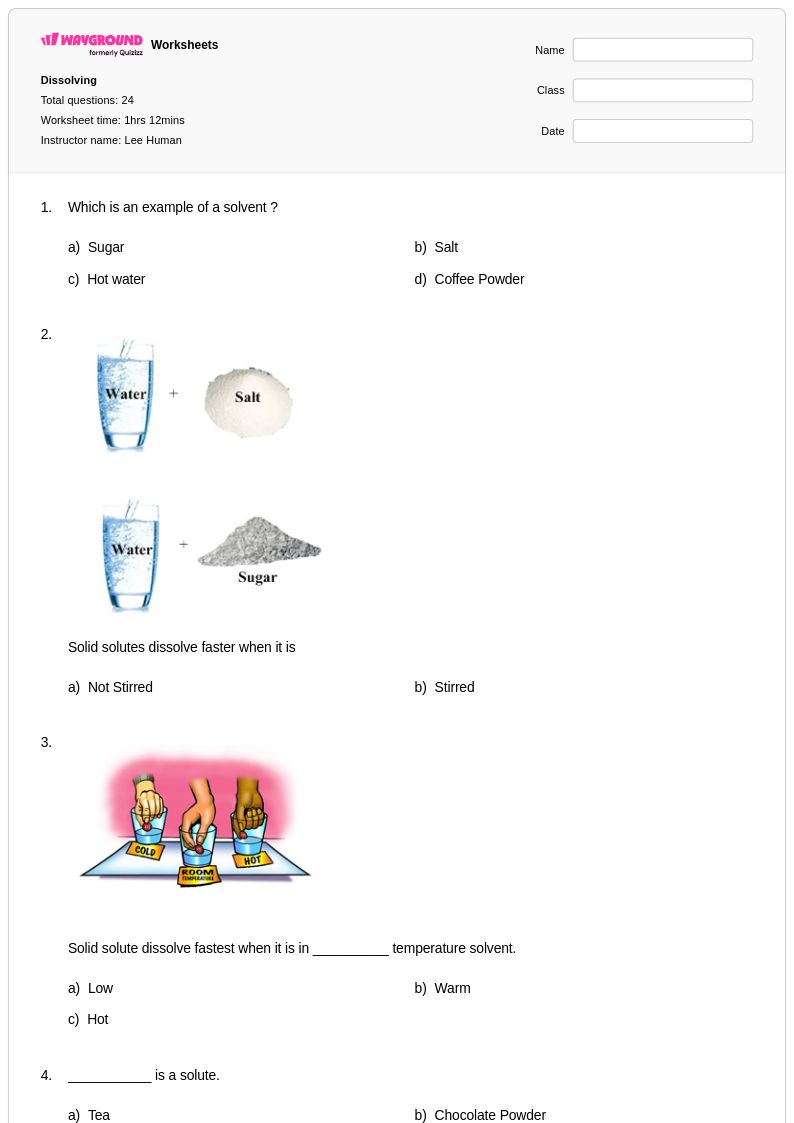
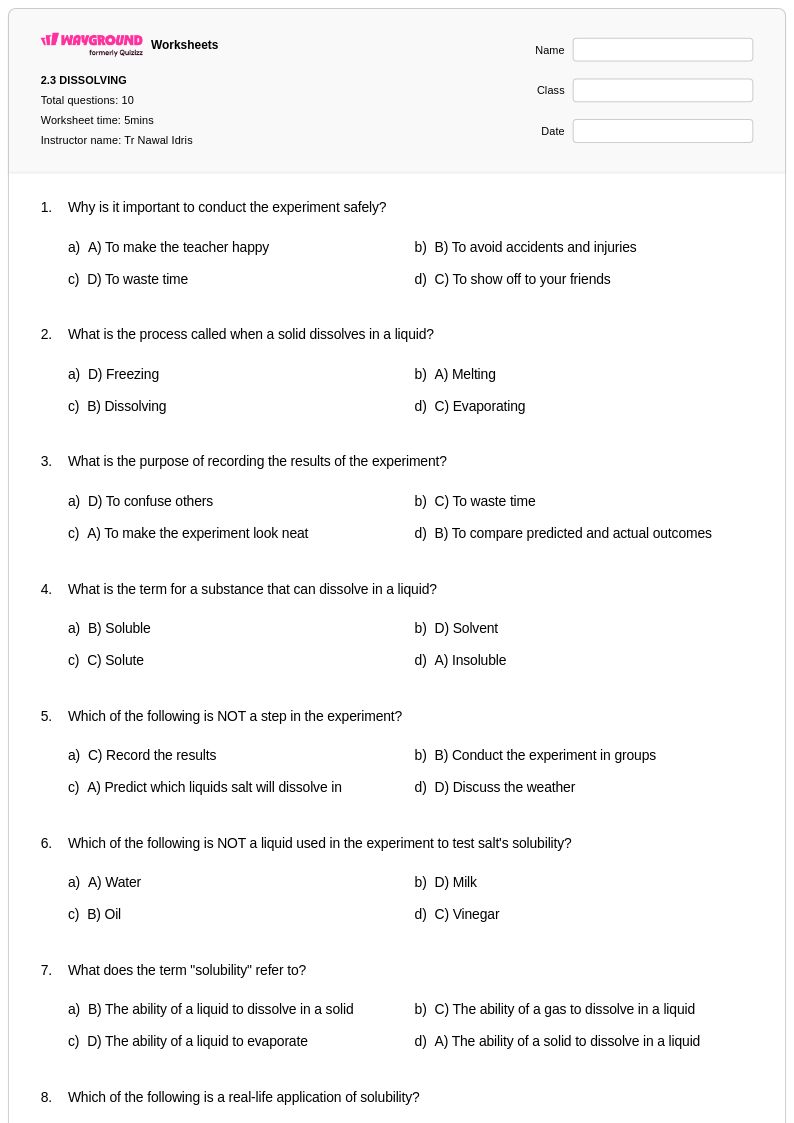
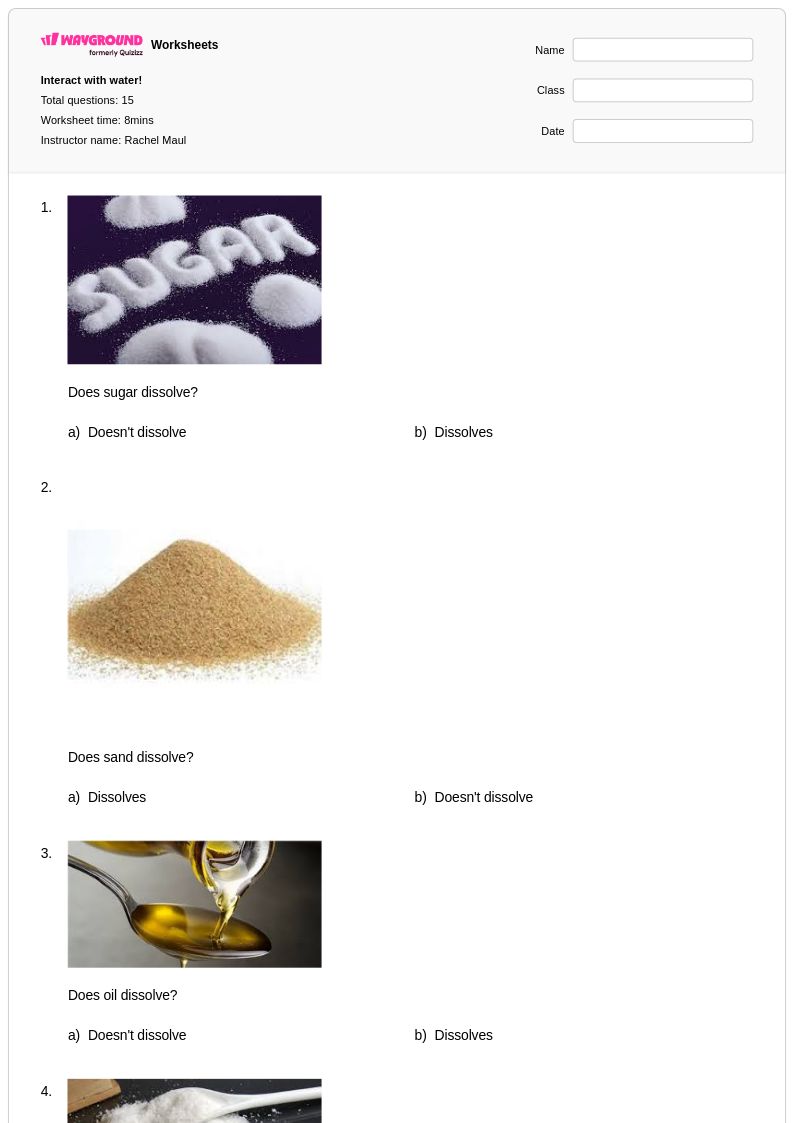
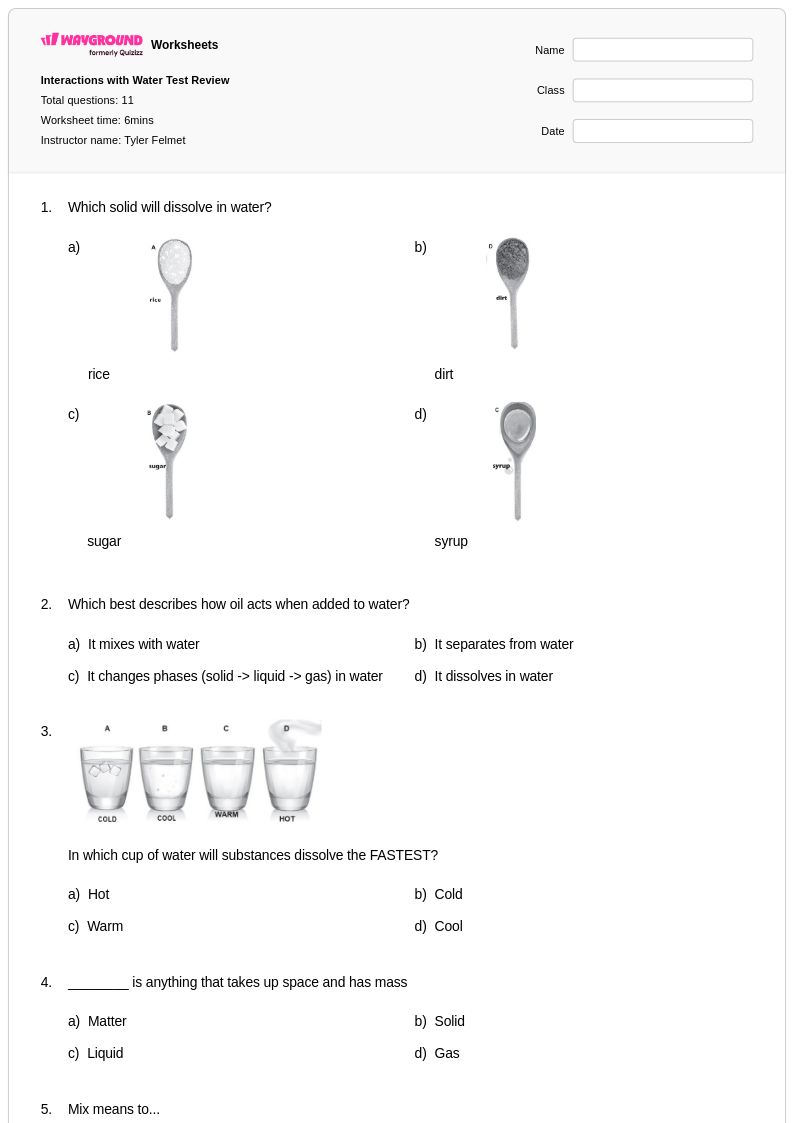
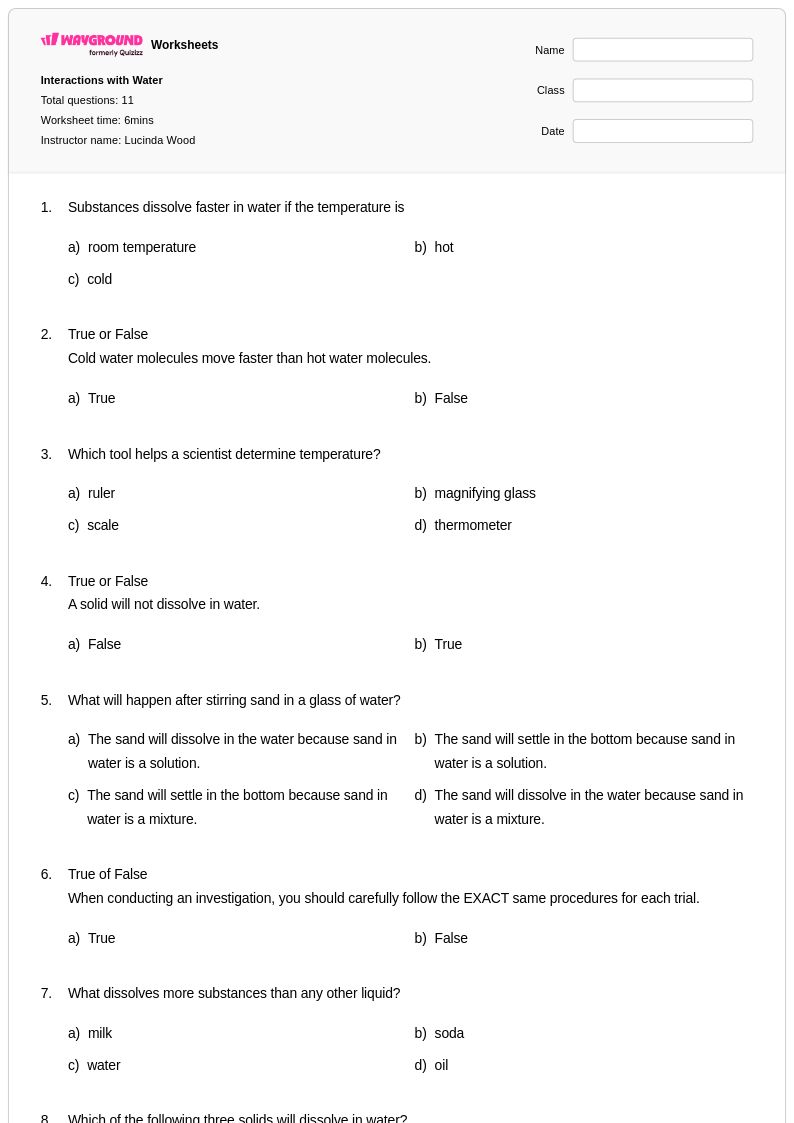
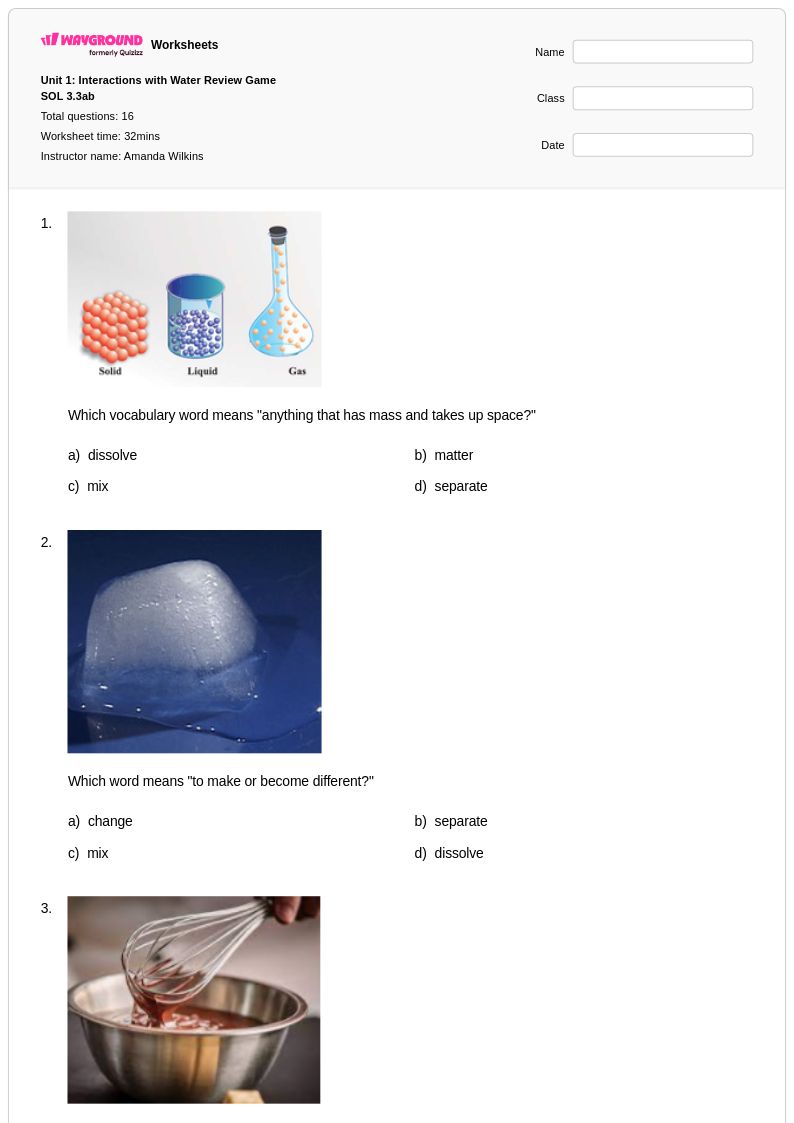
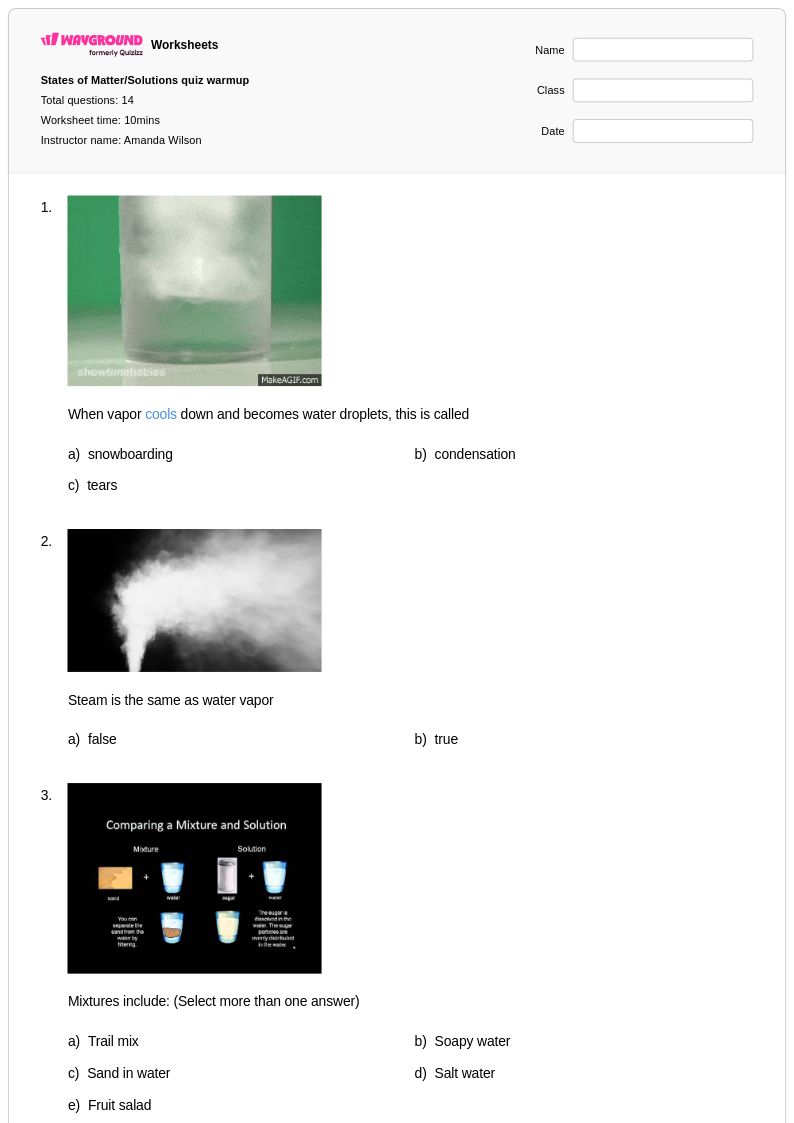
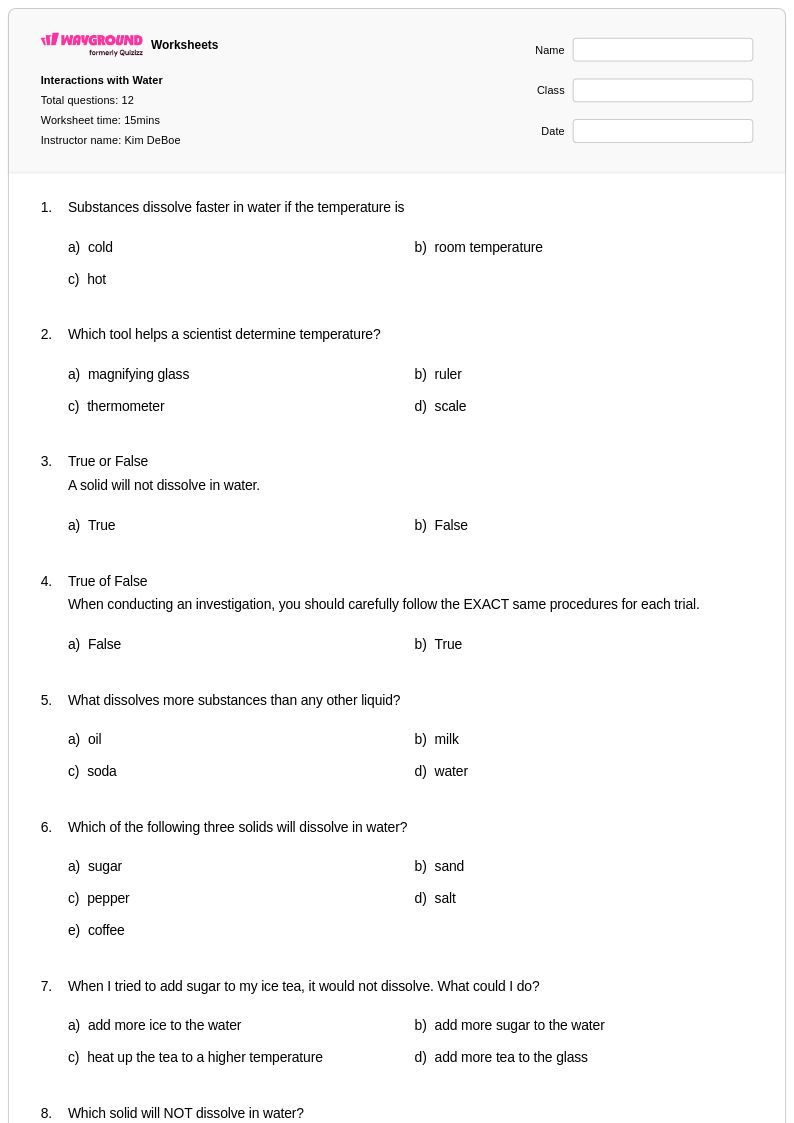
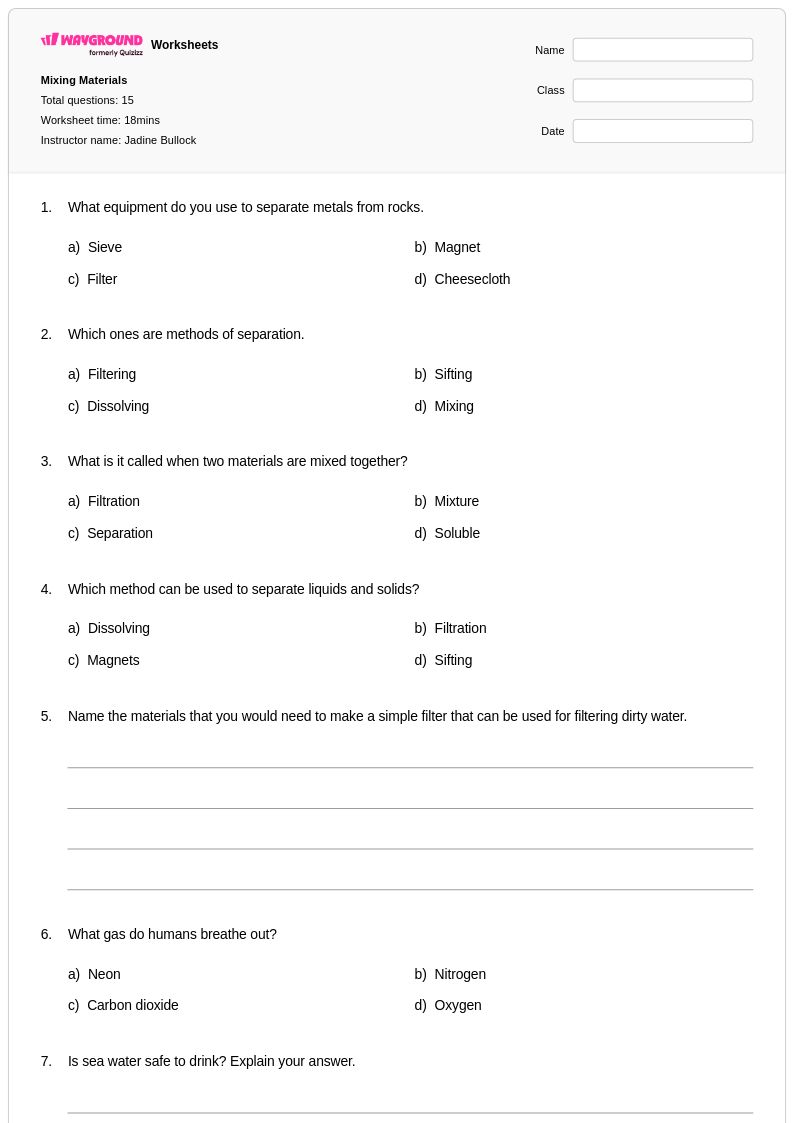
Dissolving worksheets for Grade 3 students available through Wayground (formerly Quizizz) provide young learners with engaging opportunities to explore fundamental chemistry concepts through hands-on observation and scientific thinking. These educational resources focus on helping students understand how different materials interact with water and other liquids, building essential skills in prediction, observation, and recording scientific data. The worksheets feature age-appropriate practice problems that guide students through experiments with common household items like salt, sugar, sand, and oil, encouraging them to hypothesize which substances will dissolve and which will not. Each printable resource includes clear instructions for safe exploration activities, data collection charts, and comprehensive answer keys that support both independent learning and teacher-guided instruction, making these free educational materials invaluable for developing early scientific literacy.
Wayground (formerly Quizizz) empowers educators with an extensive collection of teacher-created dissolving worksheets that seamlessly integrate into Grade 3 science curricula across diverse educational settings. The platform's robust search and filtering capabilities allow teachers to quickly locate resources that align with specific learning standards and match their students' varying ability levels, while built-in differentiation tools enable customization for remediation and enrichment activities. These dissolving worksheets are available in both printable pdf formats and interactive digital versions, providing flexibility for classroom instruction, homework assignments, and skill practice sessions. Teachers can access millions of carefully curated resources that support comprehensive lesson planning, from introducing basic chemistry vocabulary to reinforcing scientific method concepts, ensuring that students develop a solid foundation in understanding how matter behaves in different solutions.
FAQs
How do I teach dissolving and dissolution to my chemistry students?
Start by grounding students in the solute-solvent relationship before introducing variables that affect dissolution rates. Use concrete examples like salt dissolving in water at different temperatures to illustrate how surface area, temperature, and agitation each influence how quickly a solute dissolves. Once students can describe dissolution conceptually, move them toward predicting solubility outcomes and analyzing concentration at the molecular level.
What exercises help students practice understanding dissolving and solution chemistry?
Effective practice problems ask students to classify solutions as saturated, unsaturated, or supersaturated given a set of conditions, predict how changes in temperature or surface area will affect dissolution rate, and calculate or compare solute concentrations. Problems that connect molecular-level reasoning to real-world scenarios, such as why crushed tablets dissolve faster than whole ones, build the kind of applied understanding that transfers to assessments.
What mistakes do students commonly make when learning about dissolving?
One of the most common misconceptions is that dissolving means a substance disappears or is destroyed, rather than understanding that the solute particles are still present in the solution. Students also frequently confuse solubility with dissolution rate, assuming that a substance that dissolves quickly must also be highly soluble. Another recurring error is failing to distinguish between saturated and supersaturated solutions, often because students don't recognize that supersaturation requires specific conditions to maintain.
How can I differentiate dissolving worksheets for students at different skill levels?
For students who need additional support, focus practice on identifying solutes and solvents, classifying solution types with visual aids, and interpreting solubility curves before asking them to make predictions. Advanced learners can be challenged with concentration calculations, multi-variable dissolution scenarios, and questions that require molecular-level explanations. On Wayground, teachers can apply accommodations such as read aloud, reduced answer choices, and extended time to individual students without disrupting the rest of the class.
How do I use Wayground's dissolving worksheets in my classroom?
Wayground's dissolving worksheets are available as printable PDFs for traditional classroom use and in digital formats for online or hybrid learning environments, making them flexible for a range of instructional settings. Teachers can also host worksheets as a live quiz on Wayground, which allows for real-time student responses and immediate feedback. Each worksheet includes a complete answer key, so students can self-assess or teachers can use it to streamline grading.
How do I help students understand the difference between saturated, unsaturated, and supersaturated solutions?
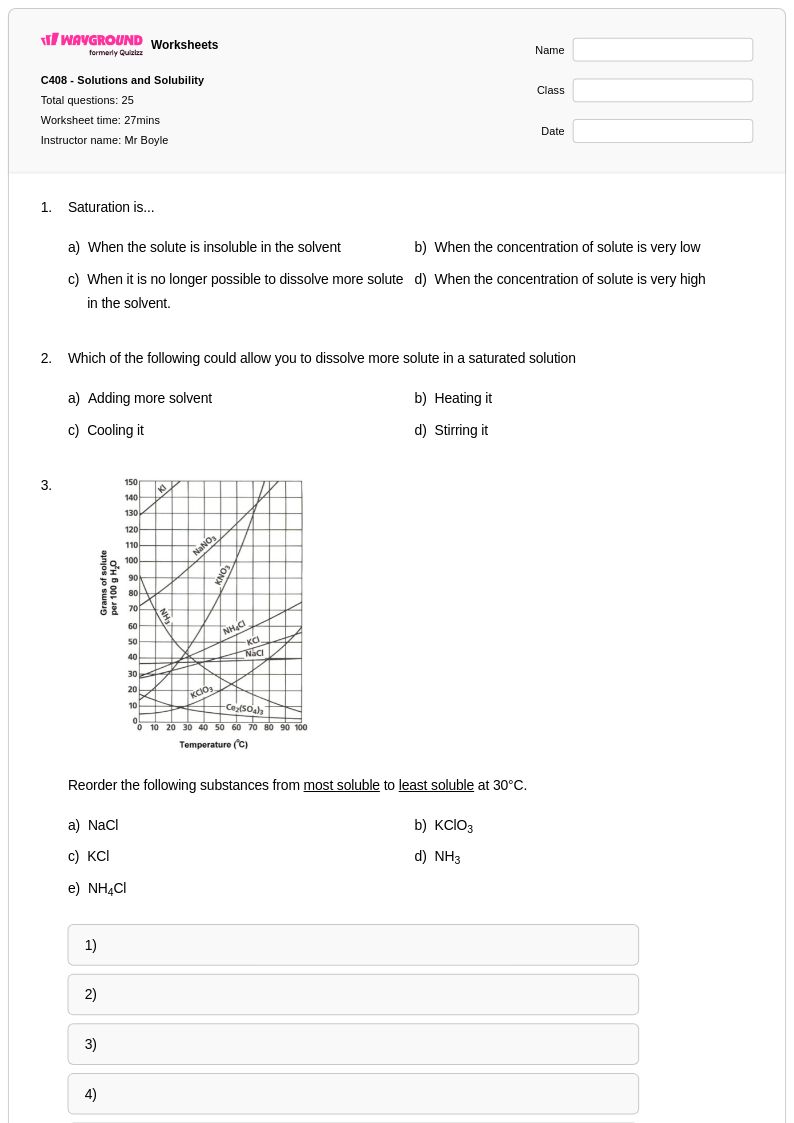
Use a concrete, stepwise approach: begin with an unsaturated solution where more solute can still dissolve, then demonstrate saturation as the point where no additional solute will dissolve at a given temperature, and finally explain supersaturation as a metastable state where more solute is dissolved than would normally be possible under standard conditions. Visual solubility curve graphs are especially effective here, as they allow students to read off saturation points at different temperatures and see the relationship directly. Connecting this to real examples, such as rock candy formation, helps anchor the concept.