
25 Q
3rd - 6th
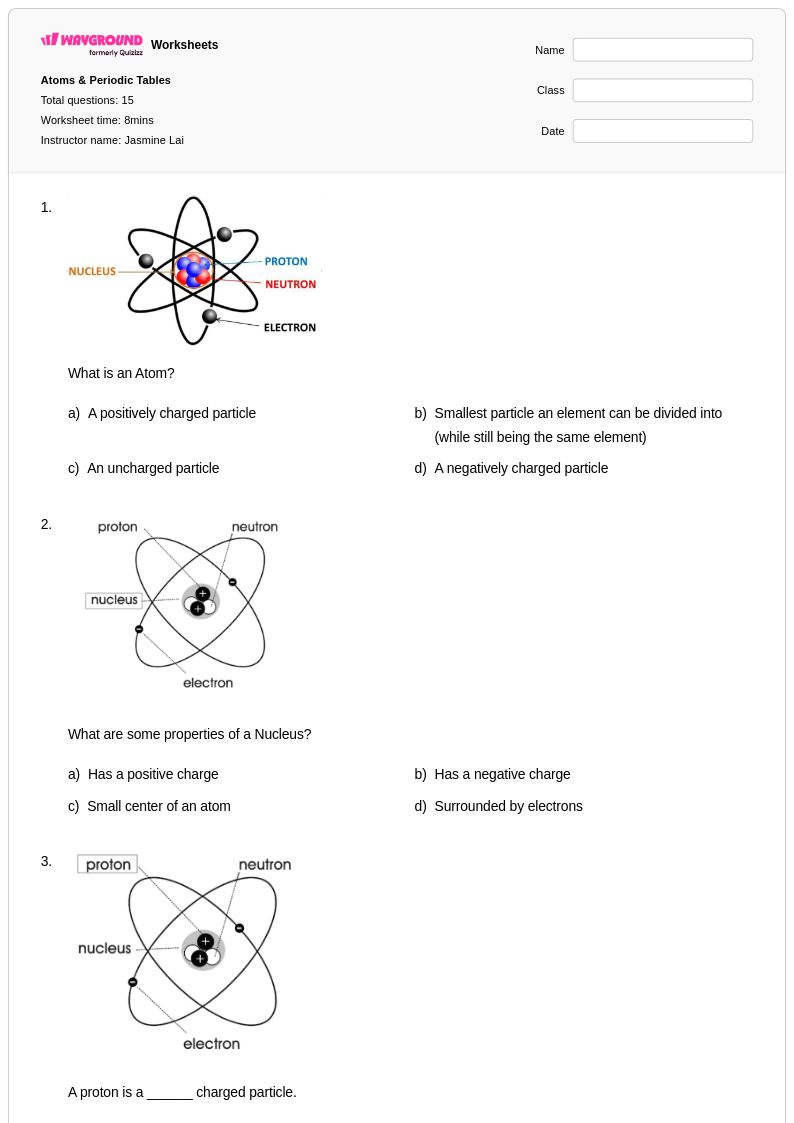
15 Q
3rd - 8th
22 Q
3rd - 6th
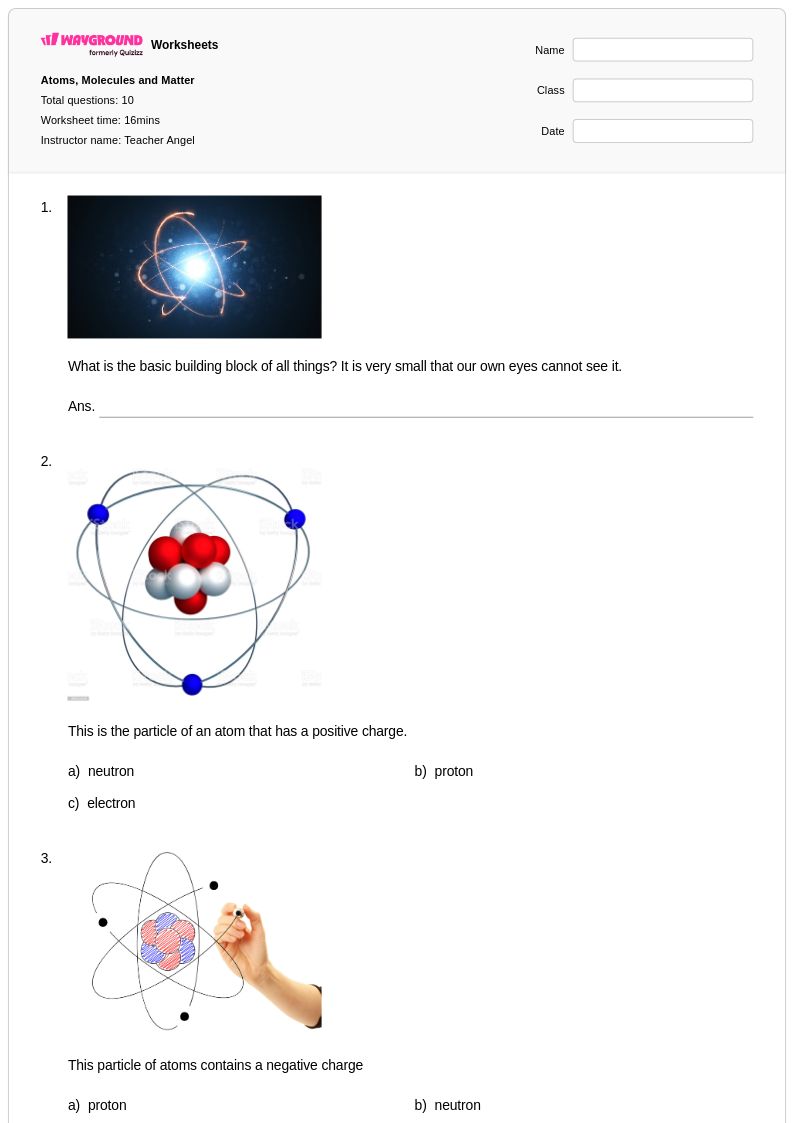
10 Q
1st - 3rd
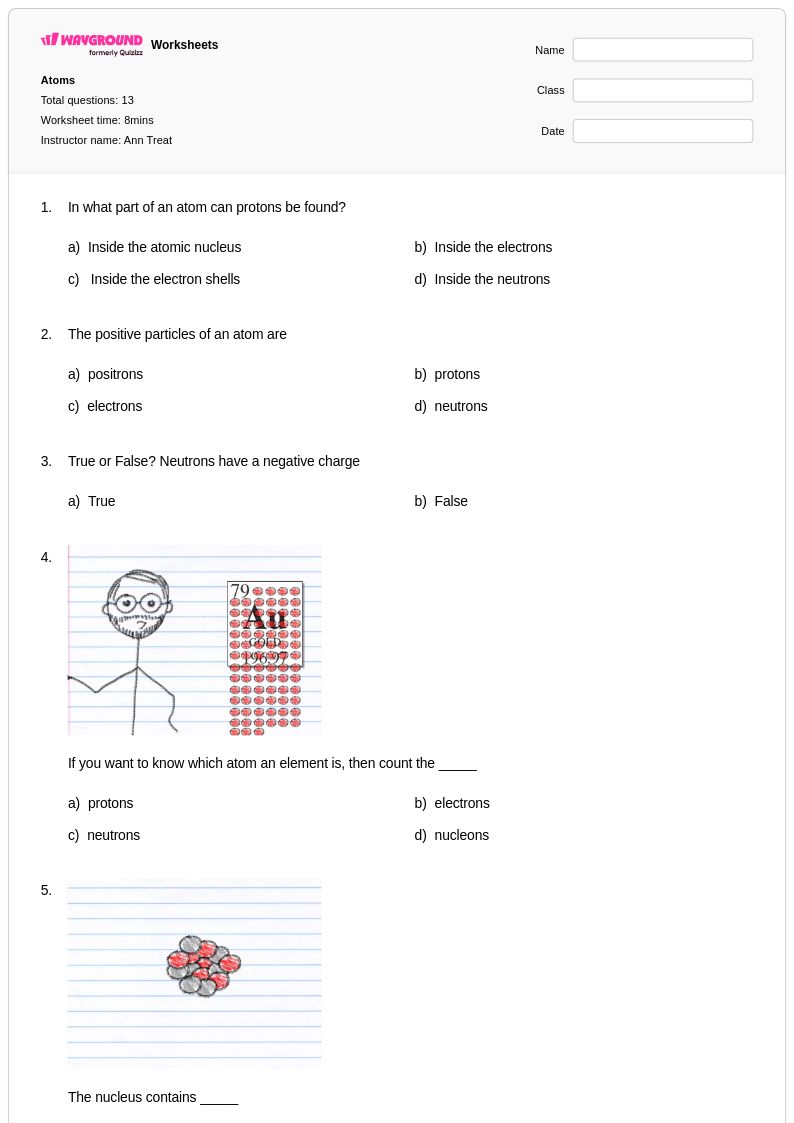
13 Q
1st - 5th
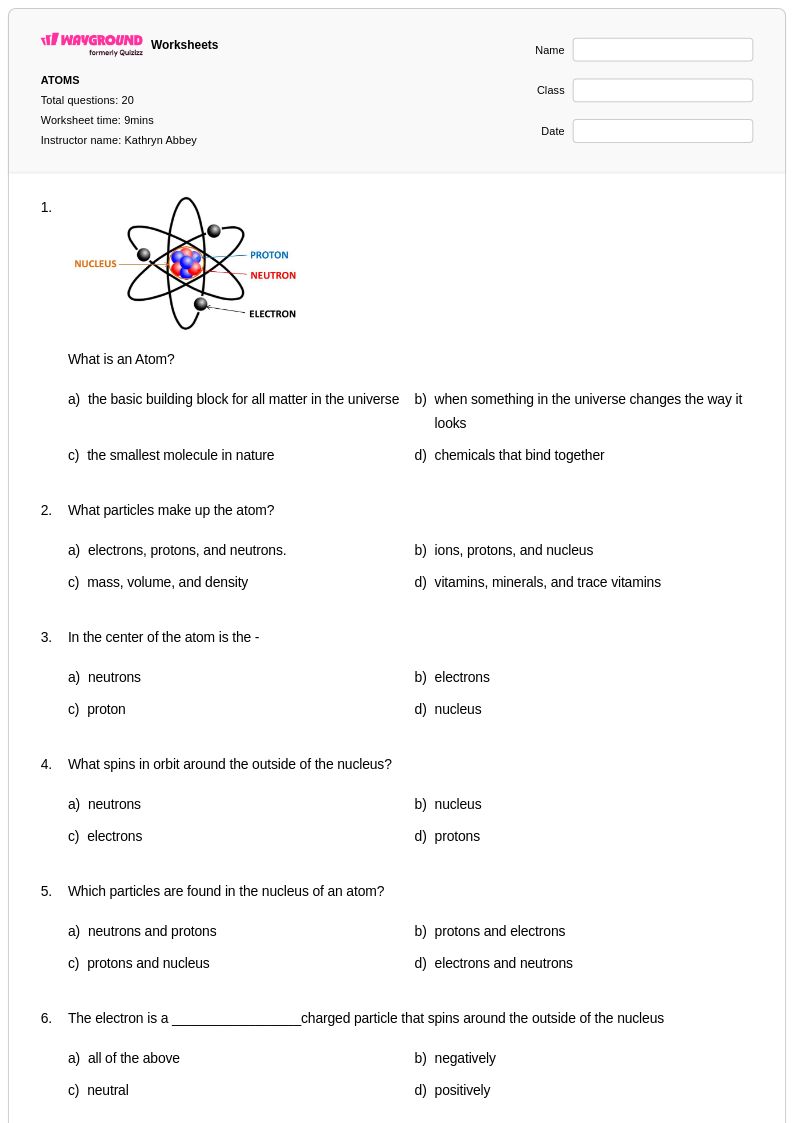
20 Q
3rd
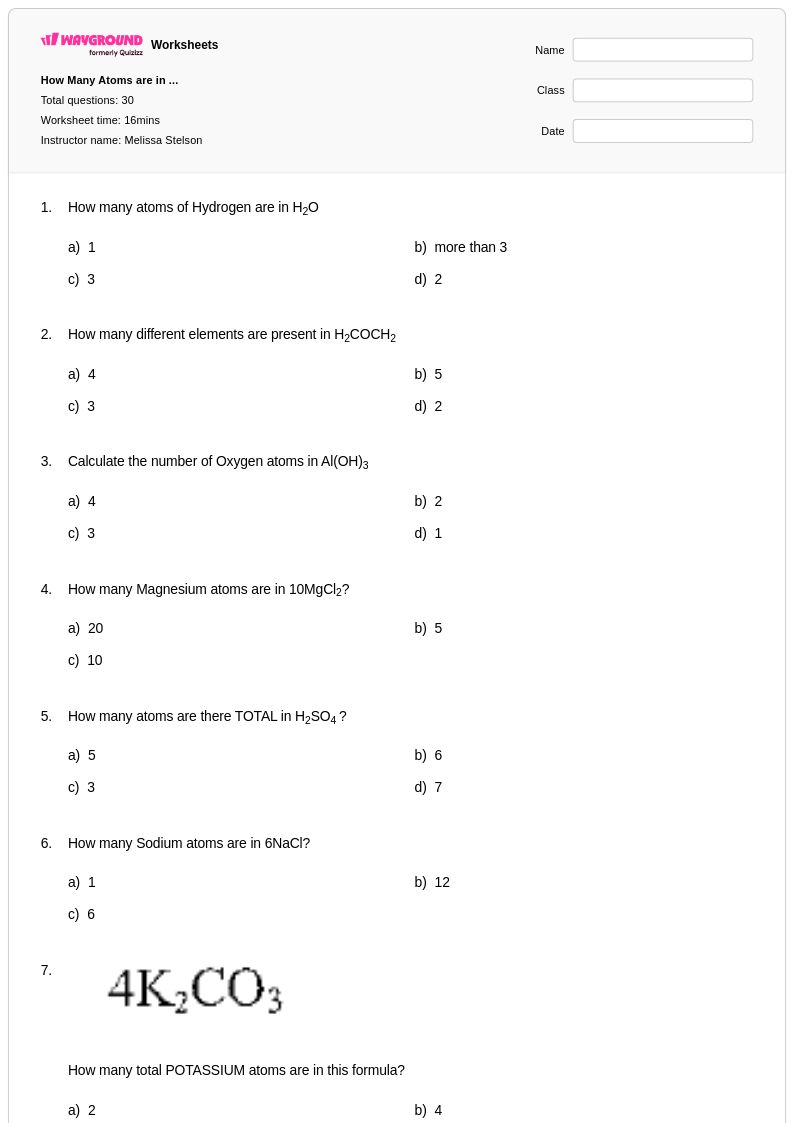
30 Q
2nd - Uni
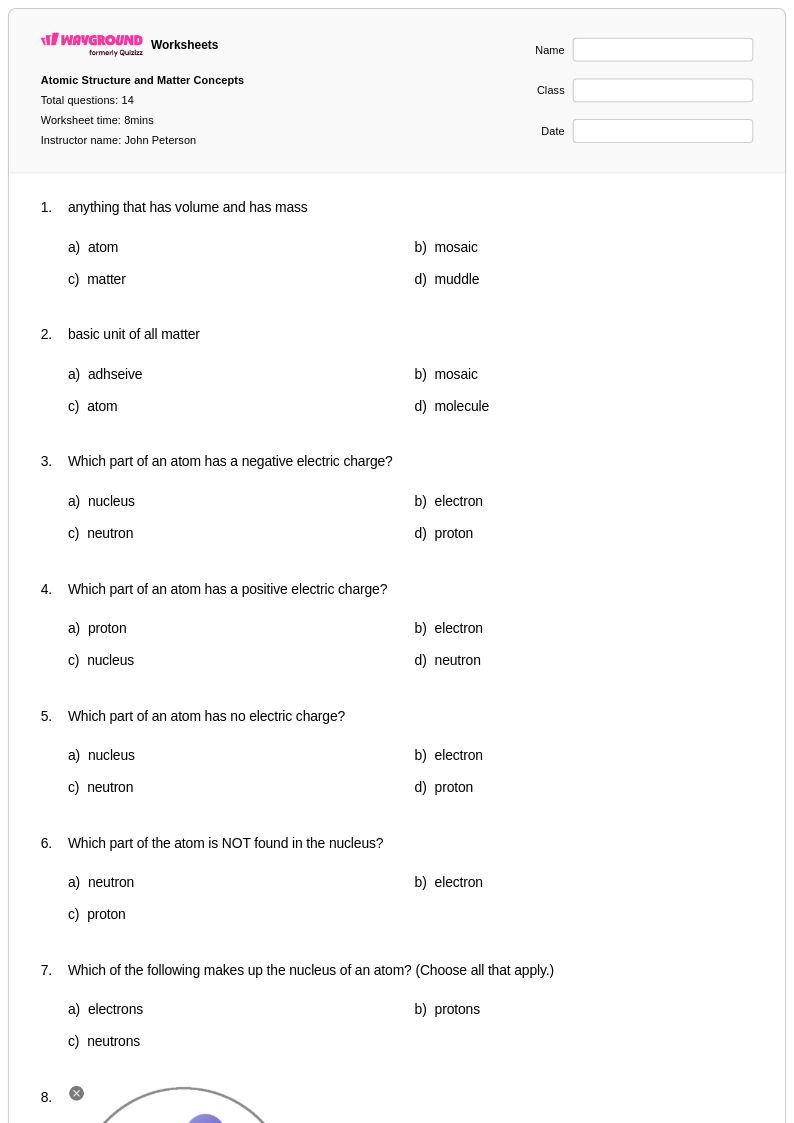
14 Q
1st - 5th
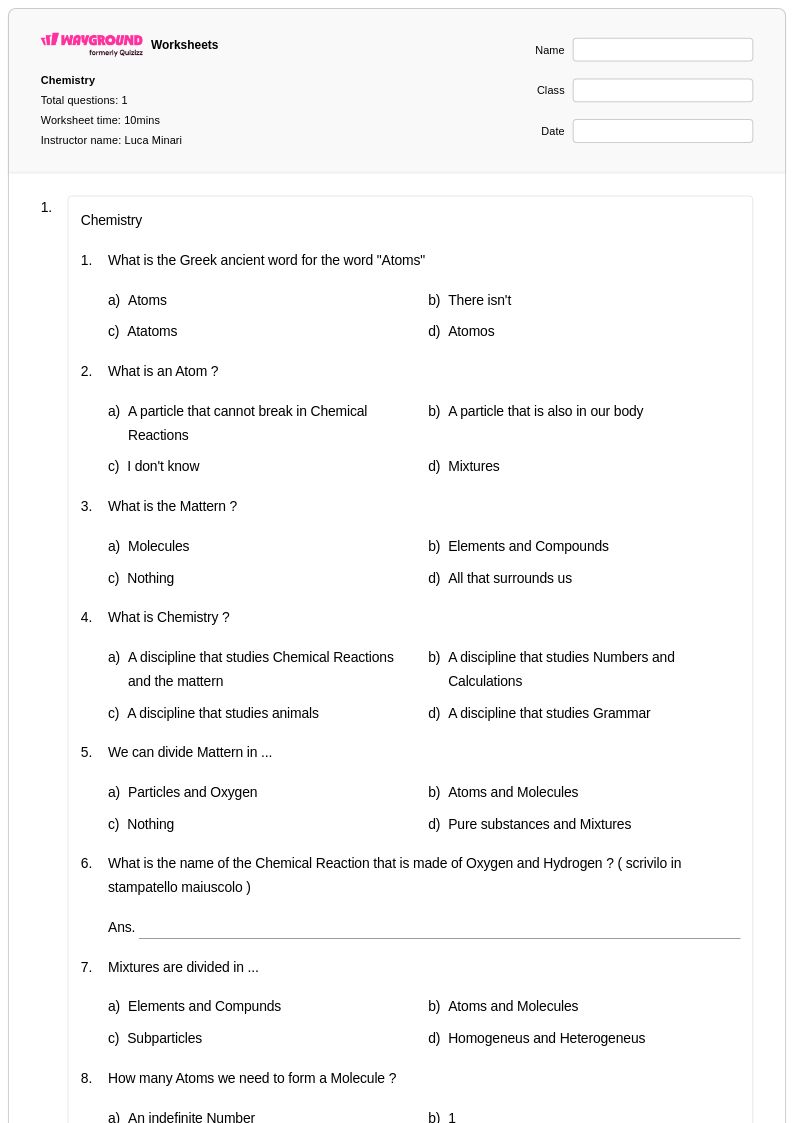
10 Q
3rd
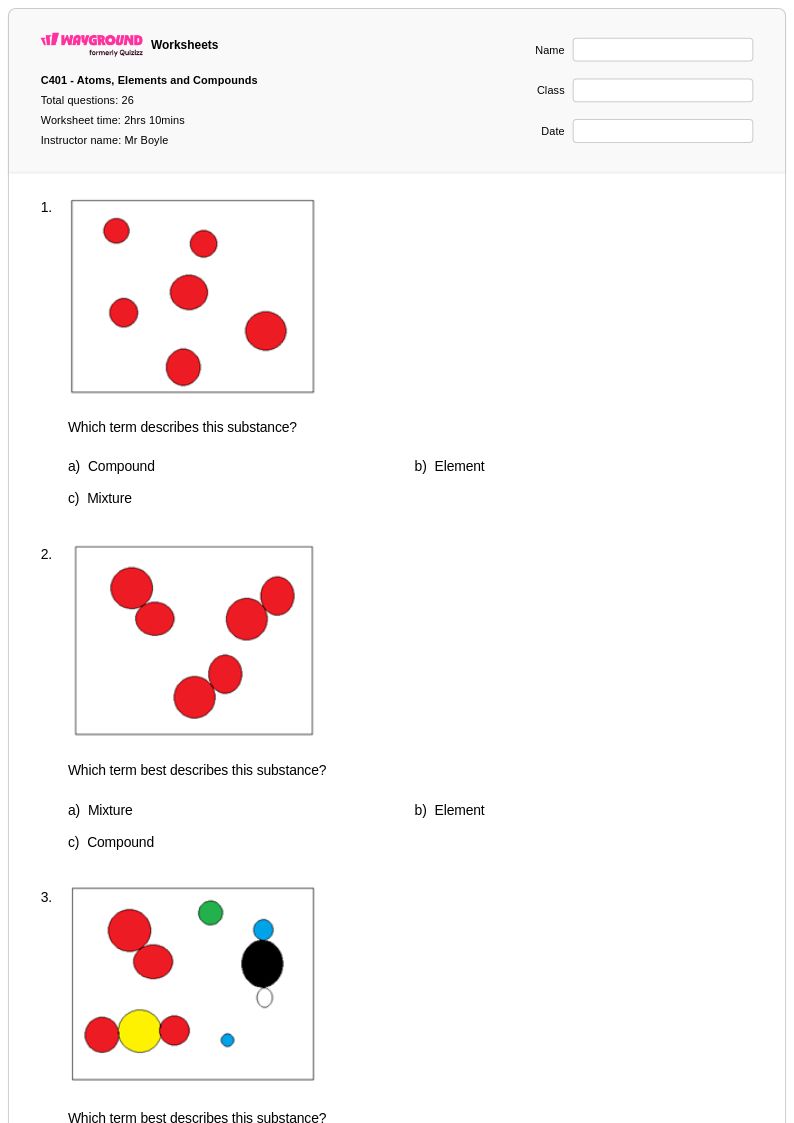
26 Q
3rd
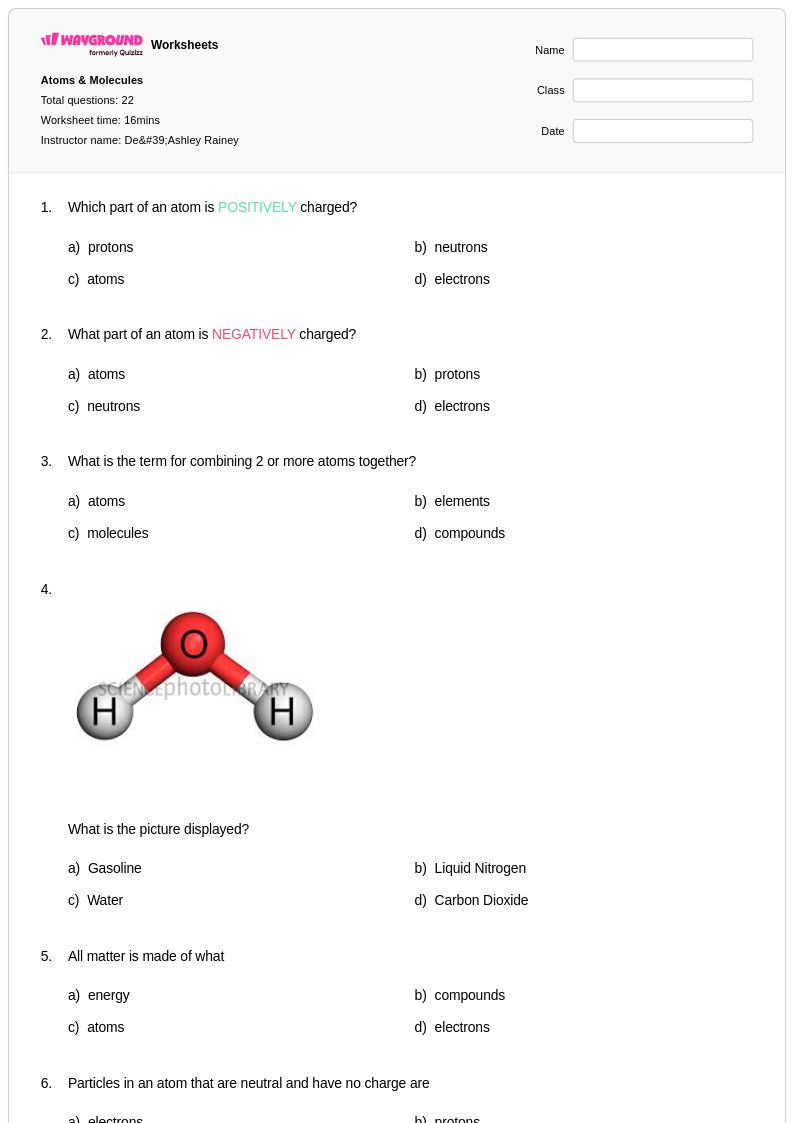
22 Q
3rd - 5th
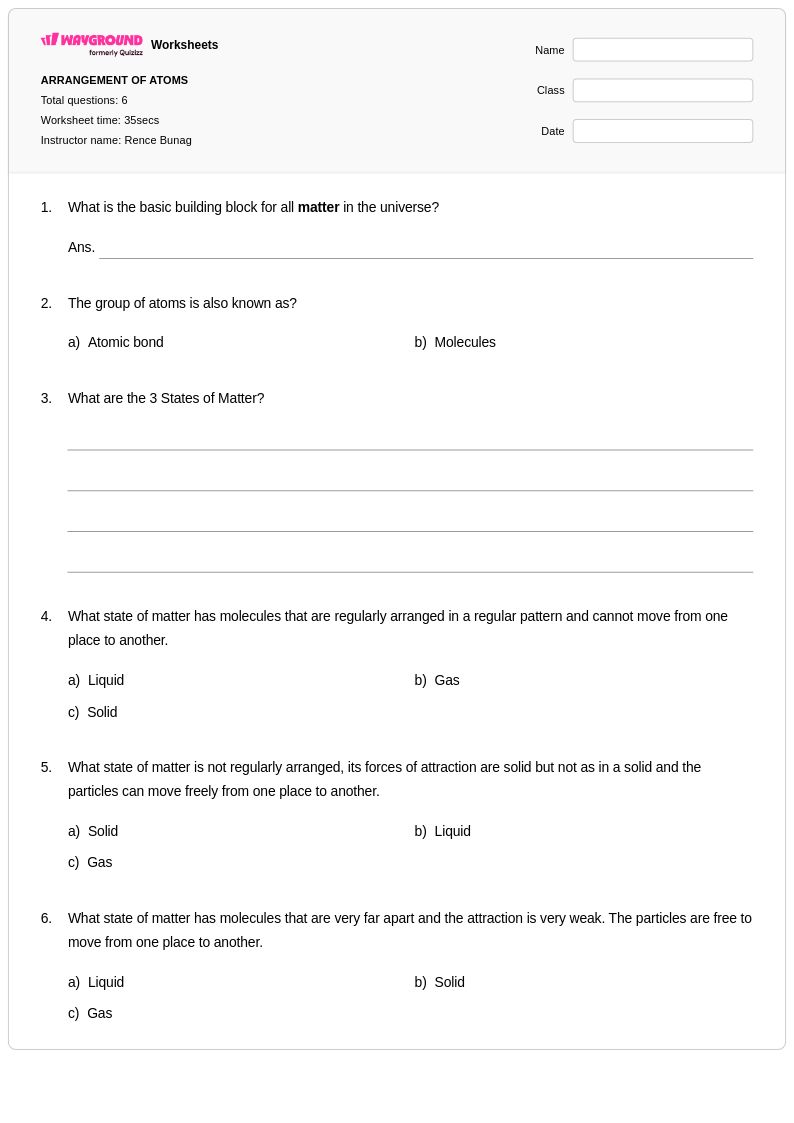
6 Q
3rd
10 Q
3rd - 5th
11 Q
3rd - 5th
17 Q
3rd
15 Q
3rd

14 Q
3rd
22 Q
3rd
12 Q
3rd
13 Q
1st - 5th
16 Q
3rd - 6th
25 Q
3rd
11 Q
3rd
12 Q
1st - 5th
Explore Other Subject Worksheets for grade 3
Explore printable Labeling Atoms worksheets for Grade 3
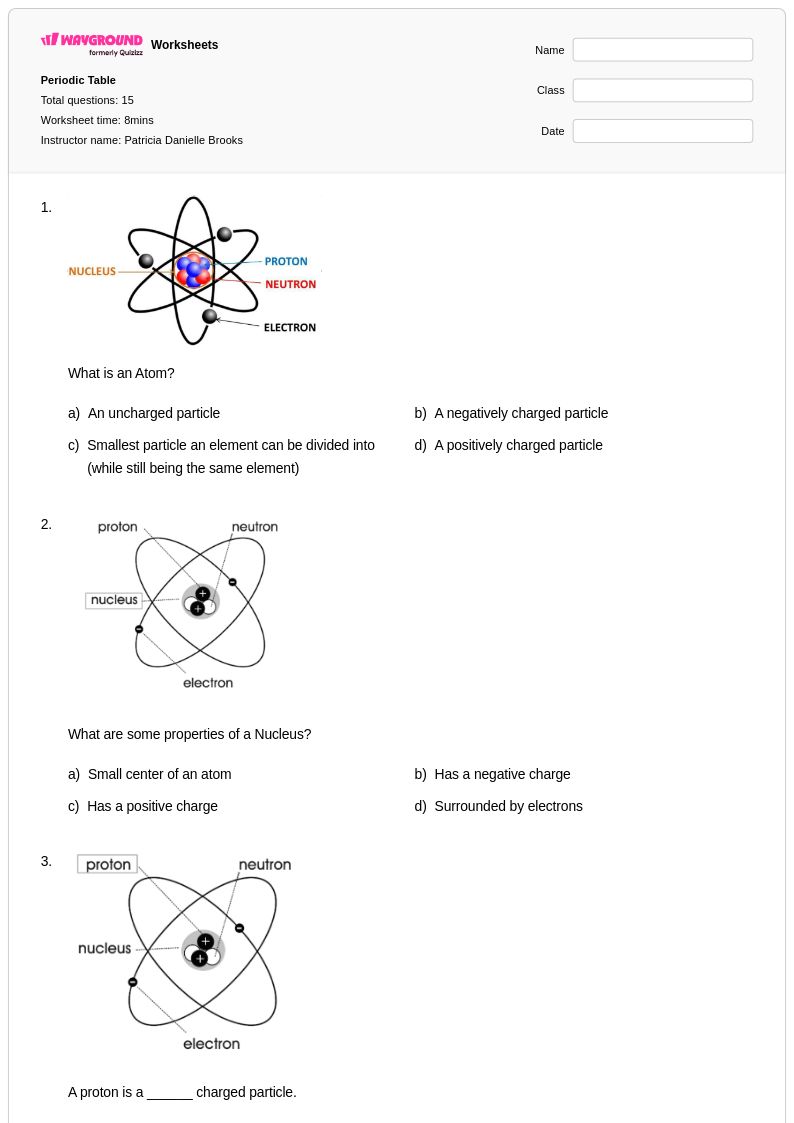
Labeling atoms worksheets for Grade 3 students available through Wayground (formerly Quizizz) introduce young learners to the fundamental building blocks of matter through age-appropriate visual exercises and hands-on practice problems. These educational resources help third-grade students develop essential scientific vocabulary and observational skills by identifying and labeling the basic components of atoms, including the nucleus, protons, neutrons, and electrons in simplified diagrams. The worksheets strengthen foundational chemistry concepts through engaging activities that make abstract scientific ideas more concrete and accessible, with each printable resource including a comprehensive answer key to support both independent learning and guided instruction. These free educational materials provide structured practice that helps students build confidence in scientific terminology while developing critical thinking skills necessary for future chemistry studies.
Wayground (formerly Quizizz) empowers educators with millions of teacher-created labeling atoms worksheets specifically designed for Grade 3 science instruction, featuring robust search and filtering capabilities that allow teachers to quickly locate resources aligned with curriculum standards and learning objectives. The platform's differentiation tools enable instructors to customize worksheets based on individual student needs, whether for remediation of struggling learners or enrichment activities for advanced students ready to explore more complex atomic concepts. These versatile resources are available in both printable pdf formats for traditional classroom use and digital formats for interactive learning experiences, making lesson planning more efficient while providing flexible options for skill practice across diverse learning environments. Teachers can seamlessly integrate these materials into their chemistry units to reinforce key concepts, assess student understanding, and create engaging learning opportunities that build scientific literacy from an early age.
FAQs
How do I teach students to label the parts of an atom?
What exercises help students practice identifying atomic structure?
What mistakes do students commonly make when labeling atoms?
How do I use Wayground's labeling atoms worksheets in my classroom?
How can I differentiate atomic structure practice for students at different skill levels?
At what grade level are labeling atoms worksheets typically used?